Wednesday, May 25, 2022

Pelosi Wonders Why Church Doesn't Punish Death Penalty Supporters

House Speaker Nancy Pelosi (Photo by Pablo Martinez Monsivais/Getty Images)

By    |   Tuesday, 24 May 2022 

House Speaker Nancy Pelosi, D-Calif., penalized by Roman Catholic Church Archbishop Salvatore Cordileone of San Francisco for her support for abortions, noted that the church doesn’t punish supporters of the death penalty.

Pelosi made her comments during a Tuesday interview on the  MSNBC show, “Morning Joe.” They came after the archbishop said she would be denied the sacrament of the Catholic Mass known as Holy Communion.

Pelosi was denied Communion because of "the grave evil she is perpetrating" by supporting abortion, the archbishop wrote in a letter released by the Archdiocese of San Francisco on Friday.

He also wrote that he has made "numerous attempts to speak with Speaker Pelosi" to help her understand "the danger to her own soul she is risking." Strongly hinting that Pelosi has not responded to him, the archbishop concluded, "She is not to be admitted to Holy Communion."

Pelosi now wonders why he hasn’t applied the same ban on Catholics who back the death penalty.

“I wonder about the death penalty, which I am opposed to,” she said. “So is the church, but they take no action against people who may not share their view.

“I come from a largely pro-life Italian-American Catholic family, so I respect people’s views about that. But don’t respect us foisting it onto others.”


GEORGE SOROS 

Remarks Delivered at the 2022 World Economic Forum in Davos

Since the last Davos meeting the course of history has changed dramatically. 

Russia invaded Ukraine. This has shaken Europe to its core. The European Union was established to prevent such a thing from happening. Even when the fighting stops as it eventually must, the situation will never revert to what it was before. 

The invasion may have been the beginning of the Third World War and our civilization may not survive it. That is the subject I will address this evening.

The invasion of Ukraine didn’t come out of the blue. The world has been increasingly engaged in a struggle between two systems of governance that are diametrically opposed to each other: open society and closed society. Let me define the difference as simply as I can. 

In an open society, the role of the state is to protect the freedom of the individual; in a closed society the role of the individual is to serve the rulers of the state.

Other issues that concern all of humanity – fighting pandemics and climate change, avoiding nuclear war, maintaining global institutions – have had to take a back seat to that struggle. That’s why I say our civilization may not survive. 

I became engaged in what I call political philanthropy in the 1980s. That was a time when a large part of the world was under Communist rule, and I wanted to help people who were outraged and fought against oppression. 

As the Soviet Union disintegrated, I established one foundation after another in rapid succession in what was then the Soviet empire. The effort turned out to be more successful than I expected. 

Those were exciting days. They also coincided with a period of personal financial success that allowed me to increase my annual giving from $3 million in 1984 to more than $300 million three years later. 

After the 9/11 attacks in 2001, the tide began to turn against open societies. Repressive regimes are now in the ascendant and open societies are under siege. Today China and Russia present the greatest threat to open society. 

I have pondered long and hard why that should have happened. I found part of the answer in the rapid development of digital technology, especially artificial intelligence.

In theory, AI ought to be politically neutral: it can be used for good or bad. But in practice the effect is asymmetric. AI is particularly good at producing instruments of control that help repressive regimes and endanger open societies. Covid-19 also helped legitimize instruments of control because they are really useful in dealing with the virus. 

The rapid development of AI has gone hand in hand with the rise of social media and tech platforms. These conglomerates have come to dominate the global economy. They are multinational and their reach extends around the world.

These developments have had far-reaching consequences. They have sharpened the conflict between China and the United States. China has turned its tech platforms into national champions. The United States has been more hesitant because it has worried about their effect on the freedom of the individual. 

These different attitudes shed new light on the conflict between the two different systems of governance that the US and China represent. 

Xi Jinping’s China, which collects personal data for the surveillance and control of its citizens more aggressively than any other country in history, ought to benefit from these developments. But, as I shall explain later tonight, that is not the case. 

Let me now turn to recent developments, Vladimir Putin and Xi Jinping met on February 4th at the opening ceremony of the Beijing Winter Olympics. They issued a long statement announcing that the cooperation between them has “no limits”. Putin informed Xi of a “special military operation” in Ukraine, but it is unclear whether he told Xi that he had a full-scale attack on Ukraine in mind. US and UK military experts certainly told their Chinese counterparts what was in store. Xi approved, but asked Putin to wait until the conclusion of the winter Olympics. 

For his part, Xi resolved to hold the Olympics in spite of the Omicron variant that was just beginning to spread in China. The organizers went to great lengths to create an airtight bubble for the competitors and the Olympics concluded without a hitch.

But Omicron established itself in the community, first in Shanghai, China’s largest city and commercial hub. Now it is spreading to the rest of the country. Yet Xi persists with his Zero Covid policy. That has inflicted great hardships on Shanghai’s population, by forcing them into makeshift quarantine centers instead of allowing them to quarantine themselves at home. This has driven Shanghai to the verge of open rebellion. 

Many people are puzzled by this seemingly irrational approach, but I can give you the explanation: Xi harbors a guilty secret. He never told the Chinese people that they had been inoculated with a vaccine that was designed for the original Wuhan variant and offers very little protection against new variants. 

Xi can’t afford to come clean because he is at a very delicate moment in his career. His second term in office expires in the fall of 2022 and he wants to be appointed to an unprecedented third term, eventually making him ruler for life.

He has carefully choreographed a process that would allow him to fulfill his life’s ambition, and everything must be subordinated to this goal. 

In the meantime, Putin’s so-called “special military operation” didn’t unfold according to plan. He expected his army to be welcomed by the Russian speaking population of Ukraine as liberators. His soldiers carried with them their dress uniforms for a victory parade. But that is not what happened. 

Ukraine put up unexpectedly strong resistance and inflicted severe damage on the invading Russian army. The army was badly equipped and badly led and the soldiers became demoralized. The United States and the European Union rallied to Ukraine’s support and supplied it with armaments. With their help, Ukraine was able to defeat the much larger Russian army in the battle for Kyiv. 

Putin could not afford to accept defeat and changed his plans accordingly. He put General Vladimir Shamanov, well known for his cruelty in the siege of Grozny, in charge and ordered him to produce some success by May 9th when Victory Day was to be celebrated. 

But Putin had very little to celebrate. Shamanov concentrated his efforts on the port city of Mariupol which used to have 400,000 inhabitants. He reduced it to rubble, as he had done to Grozny but the Ukrainian defenders held out for 82 days and the siege cost the lives of thousands of civilians.

Moreover, the hasty withdrawal from Kyiv revealed the heinous atrocities that Putin’s army had committed on the civilian population in a suburb of Kyiv, Bucha. They are well-documented, and they have outraged those who saw the pictures on television. That did not include the people of Russia who had been kept in the dark about Putin’s “special military operation”.

The invasion of Ukraine has now entered a new phase which is much more challenging for the Ukrainian army. They must fight on open terrain where the numerical superiority of the Russian army is more difficult to overcome. 

The Ukrainians are doing their best, counterattacking and penetrating Russian territory. This has had the added benefit of bringing home to the Russian population what is really going on. 

The US has also done its best to reduce the financial gap between Russia and Ukraine by getting Congress to allocate an unprecedented $40 billion in military and financial aid to Ukraine. I can’t predict the outcome, but Ukraine certainly has a fighting chance. 

Recently, European leaders went even further. They wanted to use the invasion of Ukraine to promote greater European integration, so that what Putin is doing can never happen again. 

Enrico Letta, leader of Partito Democratico, proposed a plan for a partially federated Europe. The federal portion would cover key policy areas. 

In the federal core, no member state would have veto power. In the wider confederation member states could join “coalitions of the willing” or simply retain their veto power. Mario Draghi endorsed Letta’s plan.

Emmanuel Macron, in a significant broadening of his pro-European approach, advocated geographic expansion, and the need for the EU to prepare for it. Not only Ukraine but also Moldova and the Western Balkans should qualify for membership in the European Union. It will take a long time to work out the details, but Europe seems to be moving in the right direction. It has responded to the invasion of Ukraine with greater speed, unity and vigor than ever before in its history. After a hesitant start, Commission President, Ursula von der Leyen, also has found a strong pro-European voice. 

But Europe’s dependence on Russian fossil fuels remains excessive, due largely to the mercantilist policies pursued by former Chancellor Angela Merkel. She had made special deals with Russia for the supply of gas and made China Germany’s largest export market. That made Germany the best performing economy in Europe but now there is a heavy price to pay. Germany’s economy needs to be reoriented. And that will take a long time.

Olaf Scholz was elected Chancellor because he promised to continue Merkel’s policies. But events forced him to abandon this promise. That didn’t come easy, because he had to break with the hallowed traditions of the Social Democrats. 

But when it comes to maintaining European unity, Scholz always seems to do the right thing in the end. He abandoned Nordstream 2, committed a 100 billion euros to defense and provided arms to Ukraine, breaking with a long-standing taboo. That is how the Western democracies responded to the Russian invasion of Ukraine. 

What do the two dictators Vladimir Putin and Xi Jinping have to show for themselves? They are tied together in an alliance that has no limits. They also have a lot in common. They rule by intimidation, and as a consequence they make mind-boggling mistakes. Putin expected to be welcomed in Ukraine as a liberator; Xi Jinping is sticking to a Zero Covid policy that can’t possibly be sustained. 

Putin seems to have recognized that he made a terrible mistake when he invaded Ukraine and he is now preparing the ground for negotiating a cease fire. But the cease fire is unattainable because he cannot be trusted. Putin would have to start peace negotiations which he will never do because it would be equivalent to resigning. 

The situation is confusing. A military expert who had been opposed to the invasion was allowed to go on Russian television to inform the public how bad the situation is. Later he swore allegiance to Putin. Interestingly, Xi Jinping continues to support Putin, but no longer without limits. 

This begins to explain why Xi Jinping is bound to fail. Giving Putin permission to launch an unsuccessful attack against Ukraine didn’t serve China’s best interests. China ought to be the senior partner in the alliance with Russia but Xi Jinping’s lack of assertiveness allowed Putin to usurp that position. But Xi’s worst mistake was to double down on his Zero Covid policy. 

The lockdowns had disastrous consequences. They pushed the Chinese economy into a free fall. It started in March, and it will continue to gather momentum until Xi reverses course – which he will never do because he can’t admit a mistake. Coming on top of the real estate crisis the damage will be so great that it will affect the global economy. With the disruption of supply chains, global inflation is liable to turn into global depression.

Yet, the weaker Putin gets the more unpredictable he becomes. The member states of the EU feel the pressure. They realize that Putin may not wait until they develop alternative sources of energy but turn off the taps on gas while it really hurts. 

The RePowerEu program announced last week reflects these fears. Olaf Scholz is particularly anxious because of the special deals that his predecessor Angela Merkel made with Russia. Mario Draghi is more courageous, although Italy’s gas dependency is almost as high as Germany’s. Europe’s cohesion will face a severe test but if it continues to maintain its unity, it could strengthen both Europe’s energy security and leadership on climate.

What about China? Xi Jinping has many enemies. Nobody dares to attack him directly because he has centralized all the instruments of surveillance and repression in his own hands, but it is well known that there is dissention within the Communist Party. It has become so sharp that it has found expression in articles that ordinary people can read.

Contrary to general expectations Xi Jinping may not get his coveted third term because of the mistakes he has made. But even if he does, the Politburo may not give him a free hand to select the members of the next Politburo. That would greatly reduce his power and influence and make it less likely that he will become ruler for life.

While the war rages, the fight against climate change has to take second place. Yet the experts tell us that we have already fallen far behind, and climate change is on the verge of becoming irreversible. That could be the end of our civilization. 

I find this prospect particularly frightening. Most of us accept the idea that we must eventually die but we take it for granted that our civilization will survive. 

Therefore, we must mobilize all our resources to bring the war to an early end. The best and perhaps only way to preserve our civilization is to defeat Putin as soon as possible. That’s the bottom line.

Thank you.


Palestine Asks ICC to Investigate Shireen Abu Akleh’s Killing

TEHRAN (FNA)- The Palestinian Foreign Ministry announced it has formally asked the International Criminal Court (ICC) to investigate the killing of veteran Al-Jazeera journalist Shireen Abu Akleh.

“We have documented [the crime] and submitted a file about it to the ICC prosecutor alongside other Israeli violations,” Palestinian Foreign Minister Riyad Al-Maliki told Anadolu news agency on Monday.

Al-Maliki called on The Hague-based court to add Abu Akleh’s death to other crimes committed by Israel against Palestinians to facilitate an official investigation and bring Israel to accountability.

On May 11, Abu Akleh, 51, was covering an Israeli military raid near the Jenin refugee camp in the occupied West Bank when she was shot dead. Eyewitnesses and colleagues who were present at the scene said she was killed by Israeli forces.

“Palestinians say the killing of Abu Akleh is war crimes indeed. They have referred the case to the ICC in addition to the dozens of other cases that have been filed over the last year or so…,” said Al-Jazeera’s Nida Ibrahim, reporting from Ramallah in the occupied West Bank.

Al-Jazeera says Abu Akleh was “assassinated in cold blood” by Israeli forces. The news network and the Palestinians have called for an independent and impartial probe into the killing, which has attracted global condemnation.

Mustafa Barghouti, general secretary of the Palestinian National Initiative, accused the ICC of a “double standard” in its handling of cases submitted by Palestinians.

“We have been providing information for the past 13 years but investigation has not been started yet. And in less than two months the ICC has sent 42 investigators to Ukraine,” Barghouti, a former Palestinian information minister, stated.

Barghouti added that there was a need for strong international pressure on the ICC to initiate its work and investigate the crimes, including the crime of killing Shireen Abu Akleh.

“What we also need here is real pressure on Israeli establishment, a serious effort to establish sanctions and punitive acts against Israel, not to allow it to continue to be above international law,” Barghouti continued.

Meanwhile, Israel’s military prosecutor has called on the army to conduct an in-depth investigation.

Al-Jazeera’s Ibrahim said that “this only means that the circles within the Israeli army are talking about the potential of opening an investigation.

“From our experience, it’s been very rare that the Israeli military opens investigations into killings of Palestinians and in the rare cases that it does, it almost never leads to an indictment," Ibrahim noted.

“When it does lead to an indictment, the sentence is usually light and Palestinians say it’s disproportionate to the crime. That’s why they’re hoping to get justice from the ICC,” Ibrahim added.

The Israeli media reported last week that the military had no plans to launch a criminal investigation into the killing of the Al-Jazeera journalist.

On Monday, the Israeli Army announced that if an Israeli soldier fired the lethal shot, it did not appear that the soldier was guilty of criminal misconduct.

“Given that Ms Abu Akleh was killed in the midst of an active combat zone, there can be no immediate suspicion of criminal activity absent further evidence,” said a statement citing Military Advocate Yifat Tomer-Yerushalmi on Monday.

Tomer-Yerushalmi will ultimately be responsible for determining whether any individual soldier will face disciplinary action. She stressed that Israel does not yet know whether Abu Akleh, a Palestinian-American, was killed by stray Palestinian gunfire or by an Israeli bullet aimed at a Palestinian fighter.

“The inability to inspect the bullet, which is being held by the Palestinian Authority, continues to cast doubt on the circumstances of Ms Abu Akleh’s death,” the statement added.

The army has stated it had zeroed in on one incident where an Israeli soldier using “a telescopic scope” fired at a “Palestinian gunman”.

However, a new video that begins moments before the shooting shows relative calm and quiet with no sounds of fighting, corroborating witness reports that there were no clashes or “active combat zone” between Israeli forces and Palestinian fighters at the time of the Al-Jazeera reporter’s killing.

Al-Maliki, the Palestinian foreign minister, accused Israel of “exploiting the lack of accountability” by the international community to commit more violations against Palestinians.

“Israel must be held accountable for its crimes,” he noted, going on to slam the “weakness and inaction of the international community” towards the Israeli violations.

“The international community contributed to creating the Palestinian cause, and it must contribute to putting an end to this suffering,” he added.

Al-Maliki cited Israeli plans to build thousands of illegal settlement units in the Palestinian area of Masafer Yatta in the Southern occupied West Bank as an example of Israel’s latest violations against Palestinians.

He said the Palestinians there “are reliving the Nakba as Israel attempts to expel them from their homes”.

The Nakba, or “catastrophe”, refers to the 1948 forced expulsion of nearly 800,000 Palestinians from their homes in historical Palestine to make way for the creation of the state of Israel.

‘Fireball’ explosion killed 5 workers after Florida company ignored safety rules, feds say

Cassandre Coyer, The Charlotte Observer
May 20, 2022

Florida power company admitted its responsibility in a 2017 explosion that caused the death of five workers after several safety procedures were ignored.

On May 5, the Tampa Electric Company pleaded guilty to a charge of willfully violating Occupational Safety and Health Administration standards resulting in a death. The company could face a half-million dollar fine, court documents show.

“All of us at Tampa Electric hold the families of our late colleagues and coworkers in our hearts. We have accepted full responsibility, and we hold ourselves accountable as we continuously work to improve our safety programs and safety culture,” Archie Collins, president and chief executive officer at Tampa Electric, told McClatchy News in a statement.

“I want to thank our dedicated employees at Big Bend, and throughout the company, for their efforts to honor the memories of those lost and injured, as well as their commitment to provide our customers with safe, reliable electricity – while maintaining a safety-first mindset every minute of every day,” Collins said in the statement.

The electric company (TECO) operated several power plants in Florida, including Big Bend Station, located just south of Tampa in Hillsborough County, court documents state.

On June 29, 2017, in the hours leading up to the explosion at the power plant, employees were asked to carry out what is usually considered routine maintenance on a slag tank.

Big Bend housed four, large coal-fire furnaces, prosecutors said, three of which would create a “molten by-product known as ‘slag’” that could reach 1,000 degree Fahrenheit.

The slag would fall to the bottom of the boiler and eventually drain into either of the two “slag tanks” attached to the boilers, court documents state.

Prosecutors said the slag tanks were designed to be filled with water so when the molten slag came in contact with it, it would cool down and harden until it became brittle.

Once brittle, employees could safely pulverize and eject the slag.

That day, “hardened slag had accumulated at the top and the bottom of the slag tank and could not be removed,” according to a news release from the U.S. Attorney’s Office for the Middle District of Florida.

Prosecutors said instead of shutting down the furnace, TECO brought in a contractor to perform high-pressure water blasting to clear the slag while plant operations continued as normal, the release states.

Several workers were unsure of the correct procedure and were not able to get answers before starting the water blasting, court documents show. When OSHA asked nine TECO operators who worked on the day of the explosion whether they had seen the standard procedure before, only one said they had seen it done — and only once.

Prosecutors said a job briefing was required before starting the blasting work — but it was not held that day.

A meeting would have helped “TECO to recognize that they were dealing with an uncommon simultaneous blockage that posed a unique danger and that should have prompted TECO to take appropriate measures to forego the work and shut down the unit instead,” prosecutors said.

Instead, at about 3 p.m. employees started water blasting at the blocked slag tank, failing to follow numerous safety procedures, court documents show.

After only minutes of operating the blasting gun, the slag tank exploded, “violently” expelling steam.

“Witnesses described seeing ‘black and hot rocks’ and that it ‘looked like a volcano and a jet dragster. It was a fireball with molten slag coming out. It was liquid slag/lava on fire.’”

Five employees were killed in the explosion.

About an hour after the explosion, workers were able to find the appropriate procedure in the company’s digital “library” — but a manager of operations stated that they “normally don’t follow [them] to the letter” and “view them as a guide.”

“Had TECO complied with OSHA’s workplace safety standards, conducted a pre-job briefing and followed its own procedure, these senseless deaths could have been prevented,” U.S. Attorney Roger B. Handberg for the Middle District of Florida said in the release. “Our hearts go out to the victims’ families as well as other TECO employees and contractors impacted by this catastrophic event.”

Court documents state that following the incident, TECO negotiated confidential civil settlements with relatives of the employees killed in the explosion as well as with others harmed by it.

In its plea agreement, TECO committed to adopt “an effective program to prevent and detect violations of law” by the time of sentencing.

 KULTURKAMPF

Laying Siege to the Institutions

Why conservatives must go on the offensive against the elite-supported, toxic ideologies undermining American life
May 24, 2022
The Social Order

The following is adapted from a speech delivered at Hillsdale College on April 5, 2022, during a two-week teaching residency there as a Pulliam Distinguished Visiting Fellow in Journalism.

EXCERPT

The lesson I’ve drawn from reporting on institutions that promote ideologies such as critical race theory and radical gender theory is that they have been captured at the structural level and can’t be reformed from within. So the solution is not a long counter-march through the institutions. You can’t replace bad directors of diversity, equity, and inclusion with good ones. The ideology is baked in. That’s why I call for a siege strategy.

This means, first, that you must be aggressive. You must fight on terms that you define. In responding to opponents of the Florida bill, for instance, don’t argue against “teaching diversity and inclusion,” but against sexualizing young children. And don’t pull your punches. We will never win if we play by the rules set by the elites who are undermining our country. We can be polite and lose every battle, or we can be impolite and deliver results for the great majority of Americans who are fighting for their small businesses, fighting for their jobs, fighting for their families.

Second, you must mobilize popular support. This requires ripping the veil off what our institutions are doing through real investigation and reporting so that Americans can make informed choices. We live in an information society, and if we don’t get the truth out, we will never gain traction against the narratives being constantly refashioned and pushed by the Left.

Less than two years ago, an infinitesimal number of Americans knew about critical race theory. Through investigation and reporting, we’ve brought that number up to 75 percent. The public now opposes critical race theory by a two-to-one margin, and it is being hounded out of schools and other places. This kind of action is a model for dealing with every ideology and institution that is undermining the public good and America’s future.

Remember that institutions don’t choose these ideologies democratically—they don’t ask people or employees to vote for them. They impose them by fiat, through bureaucratic, not democratic rule. So it isn’t surprising that the institutions lose big when we force their agendas into the political arena. What politician or campaign manager in their right mind would ignore an issue that is supported by a two-to-one margin? So-called conservative politicians who do ignore such issues—or who oppose bringing them up out of a false sense of decorum—aren’t on the people’s and the country’s side.

With public institutions like K-12 education, another crucial step is to decentralize them. It is centralization and bureaucratization that makes it possible for a minority of activists to take control and impose their ideologies. Decentralizing means reducing federal and state controls in favor of local control—and it ultimately means something like universal school choice, placing power in parents’ hands. Too many parents today have no escape mechanism from substandard schools controlled by leftist ideologues. Universal school choice—meaning that public education funding goes directly to parents rather than schools—would fix that.

Conservatives have for too long been resistant to attacking the credibility of our institutions. Trust in institutions is a natural conservative tendency. But conservatives need to stop focusing on abstract concepts and open their eyes. Our institutions are dragging our country in a disastrous direction, actively undermining all that makes America great.

To some extent, the institutions are now destroying their own credibility. Look at the public-health bureaucracy and teachers’ unions, which acted in concert to shut down schools and keep children needlessly masked—and for far too long. As a result, there has been an explosion in homeschooling, as well as in the number of alternative K-12 schools such as the ones Hillsdale College is helping to launch around the country. What is needed is to build alternative or parallel institutions and businesses in all areas. There is no reason, for example, why plenty of high-production-value children’s entertainment can’t be produced outside the ideological confines of the Walt Disney Company.

In conclusion, we make a mistake in thinking about politics simply in terms of a Left-versus-Right dynamic. That dynamic is significant, but where the opportunity really lies today is in focusing on a top-versus-bottom dynamic. An elite class, representing a small number of people with influence in the knowledge-based institutions, are acting in their own interest and against the interest of the vast majority of the American people—those who are still attached to the idea that America is a force for good and who think, to take just one example, that young children should be protected from the imposition of radical gender ideology.

In terms of the top-versus-bottom dynamic, the choice today is between the American Revolution of 1776 and the leftist revolution of the 1960s. The first offers a continued unfolding of America’s founding principles of freedom and equality. The second ends up in nihilism and demoralization, just as the Weather Underground ended up in a bombed-out basement in Greenwich Village in the 1970s.

Even those of us who are temperamentally predisposed to defense must recognize that offense—laying siege to the institutions—is what is now demanded.

Poll: Majority of Americans Want Option to Work Remotely

(Photo by Geoff Caddick/AFP via Getty Images)

By Peter Malbin | Tuesday, 24 May 2022 

The vast majority of Americans whose job can be done remotely say it’s important that their employers allow them to work remotely as they want.

Millennials are the group most likely to want a remote option. A huge number (84%) of millennials say remote work is important compared to 66% of Gen Z, 75% of Gen X, and 68% of boomers.

These are some of the findings of an annual Axios Harris 100 poll.

Americans want to keep at least some of the work flexibility they've come to enjoy during the COVID-19 pandemic, Axios notes. The Axios survey finds that over half (56%) of workers say they are likely to move to a hybrid or remote job for more work flexibility.

Those who are already working remotely or in a hybrid model are much more likely to say remote work is important to them.

A vast majority of remote workers (93%) and of hybrid workers (89%) say it's important compared to only 57% of those who are back in an office, according to the Axios survey.

Most Americans (83%) say the pandemic proved many jobs can be done just as effectively remotely as in person, Axios reports.

Even though executives think differently and still would like their employees back in the office, they have had to abandon rigid attendance rules, according to The New York Times.

With COVID-19 cases rising rapidly in nearly every U.S. state, office occupancy has remained fairly flat, just above 40%, since late March, according to The New York Times.

Companies looking to recruit may need to consider remote work benefits over pay, according to Axios.

More than 40% of workers say they are likely to switch to a more flexible job even if it means taking a pay cut, including more than half (57%) of millennials and roughly half (49%) of Gen Z.

The Axios Harris Poll 100 is an annual survey to gauge the reputations of the most visible brands in the country.

It is based on a survey of 33,096 Americans in a nationally representative sample conducted March 11-April 3, 2022.

IT'S PLANTING TIME 

Grow tomatoes, not carrots and other tips for keeping lead out of your garden produce

Chicago soil can contain high levels of lead and other heavy metals.

 Check out this guide to making gardening safer.

Curious City lead gardening
Maggie Sivit / WBEZ
WBEZ brings you fact-based news and information. Sign up for our newsletters to stay up to date on the stories that matter.

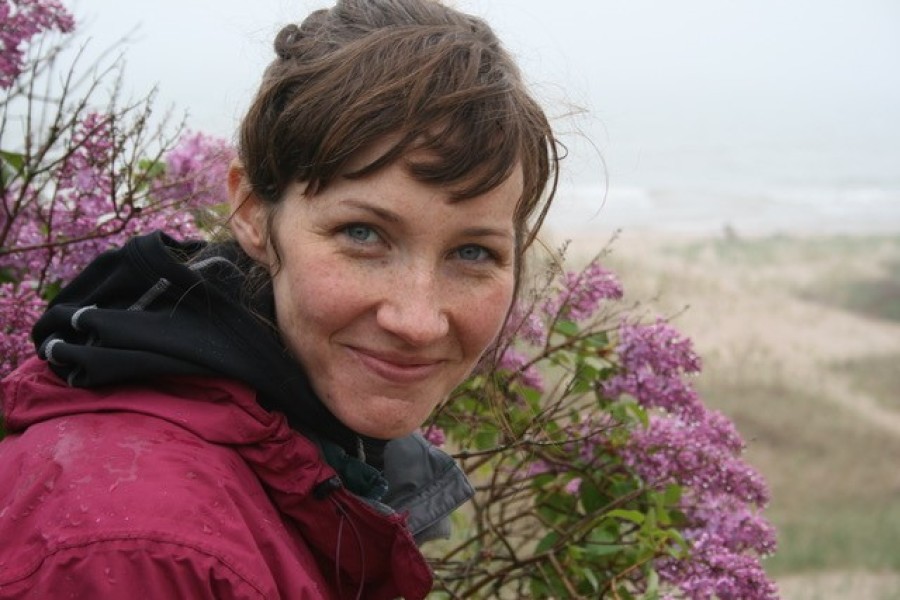
Kat Powers has grown herbs, tomatoes and native plants in her garden in Andersonville.

“I’ve been lucky enough to have dug up two backyards,” she said. She’s about to start planting a

new summer garden in Lincoln Square. This time the project is more “ambitious,” as she plans to grow tomatoes, eggplant, squash, peppers and maybe even some peas.

While Kat enjoys gardening and considers it a healing practice, she’s always wondered whether any of the pollutants in the soil, things like lead and other heavy metals, actually seep into the stuff she’s growing. And if they do, she wonders whether there are things she can do to try to minimize any health risks. So she wrote into Curious City to find out.

These are good questions because decades of industrial pollution from heavy industry, the use of lead paint on older homes (federal restrictions were not imposed until the late 1970s), gasoline exhaust and old plumbing infrastructure made with lead can all contaminate the soil. Once accumulated in the soil, heavy metals like lead lurk indefinitely and if ingested, can pose health risks including developmental issues in children and heart problems in adults.

Since lead occurs naturally in soil, we’ve all been exposed to a little lead. But “the dose matters,” said Gabriel Filippelli, a professor of earth sciences and director of the Center for Urban Health at Indiana University – Purdue University Indianapolis. In urban settings Filippelli says it’s possible to find as much as 100 times the natural levels of lead due to contamination. Plus, where there is lead, you usually find other heavy metal contaminants like mercury and arsenic.

In a recent study, Andrew Margenot, a University of Illinois crop sciences researcher took 2,000 soil samples from across Chicago backyards and parkways and found the city’s median soil lead level is 220 parts per million (ppm) — that’s ten times higher than the 20 ppm natural level. Margenot also found that 20 percent of the city exceeds the Illinois Environmental Protection Agency’s safe limit of 400 ppm for growing crops, and all of the city is well above the California EPA state limit of 80 ppm. Some areas on the South and West Sides exceed 1,000 ppm.

So what does that mean for gardeners like Kat and the city’s nearly 900 community gardens growing produce in that soil? Here’s what you need to know about how likely it is your produce might be contaminated with lead, how to get your soil tested and what you can do to minimize the risks of growing contaminated produce.

Maggie Sivit / WBEZ

How does lead get into your produce in the first place?

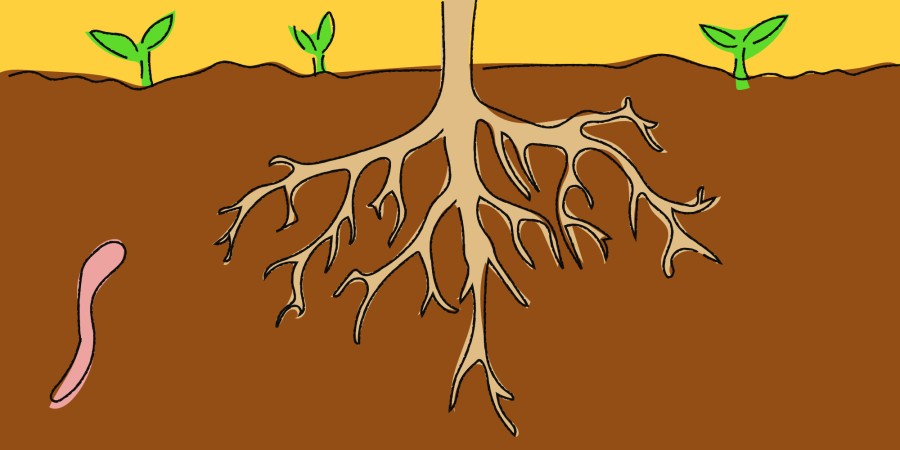
Lead finds its way into plants in two main ways. The first is through adhesion — that’s when dust from the soil containing lead sticks to the surface of plants like tomatoes or kale and can get into your body if you don’t thoroughly wash it. That’s a problem for some leaf and root vegetables that are difficult to wash thoroughly.

The second way lead can enter produce is by uptake. That’s when lead in the soil gets sucked up into a plant’s vascular system through its roots. That can happen in two ways, U of I’s Margenot said. First, harmful heavy metals closely mimic the shape and size of nutrients the plant wants — for example, to a plant, lead looks a lot like calcium and arsenic looks a lot like phosphorus. That allows them to enter roots undetected through ion transport channels designed to let in nutrients.

“These ion transport channels in the roots, they’re like tiny doors … like a puzzle piece, if the metal is the right size and fit, it’ll sneak in,” Margenot said.

Heavy metals can also bypass those ion transport channels completely and break in by building up on top of a root’s protective film barrier layer, which then breaks like a dam under the pressure.

Once inside the plant’s vascular system, heavy metals move around and accumulate in edible tissue, like leaves and fruit.

Maggie Sivit / WBEZ

Avoid the roots and shoots, go for the fruits

That old gardener’s adage turns out to be pretty good advice, Margenot said. The idea is that the most lead accumulates in a plant’s roots, with less in the leaves and even less in the fruits.

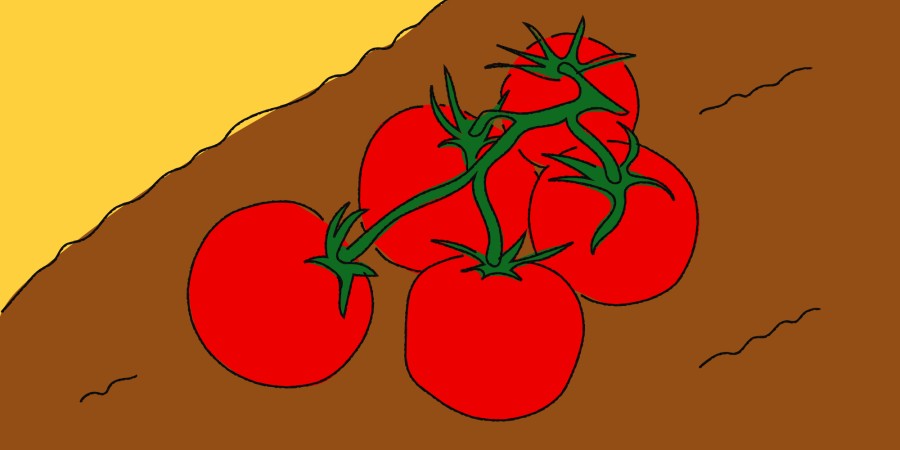
Tomatoes are a good example. In the first study of lead uptake in Chicago garden plants, Margenot found that even when the soil they were grown in had 1200 ppm of lead (the EPA says not to grow produce in soil with more than 400 ppm), lead levels were high in the plants leaves but low in the tomatoes.

Besides tomatoes, Margenot recommends growing fruiting vegetables, things like zucchini and cucumbers.

Peppers, melons and strawberries are also good options, Filipelli added.

Though his study didn’t address root vegetables, Margenot said he would avoid growing them altogether in Chicago soil.

“For root crops like carrots, or onions, or potatoes, even if you peel them, you still may have this higher lead in the tissue,” Margenot said. “So I think it’s fair to say that if you’ve got a high amount of lead in your soil, you just don’t want to put in root vegetables.”

How do you know if you should be concerned about the level of lead in your soil?

You can find your neighborhood on the soil lead level map Margenot created. If you’re in a hotspot, above about 200 ppm, you should definitely get your soil tested before planting crops, he said.

Gardener Amy Olson, who runs communications for the 1,800-member Chicago Community Gardeners Association, tests the soil in her Humboldt Park community garden every few years. She says their lead levels have remained below 100 ppm but it’s important to continue testing, especially when construction happens nearby.

“Lead contamination is kind of a given in Chicago,” she said. “Anytime someone starts a new community garden, getting a soil test with a heavy metal screen is an absolute necessity.”

If you’re gardening near an old home, a street or an old industrial site, it’s fairly likely your soil is contaminated, Margenot said. So it’s helpful to know the history of your yard — were there sheds or other structures in the past that have since been removed? When in doubt, Margenot said, avoid growing crops within 10 feet of streets and structures.

“Typically, most people’s backyards in Chicago have issues from paint chips that are falling off from old houses. So putting a garden bed right next to your house, if that house has paint from before 1980, that’s not a good idea,” he added.

Maggie Sivit / WBEZ

How can you test your soil?

The University of Illinois Extension maintains a list of commercial labs that test soil samples using a heavy metals panel that looks for lead, cadmium, arsenic, mercury, zinc and cobalt. Depending on the lab, tests can cost between $30-100 per sample.

Indiana University also offers free soil test kits and free soil testing.

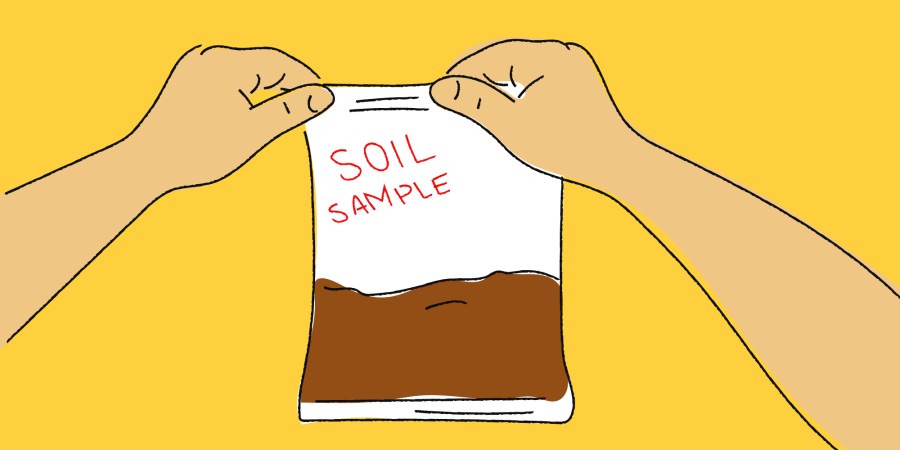
If you want to test your soil, there are a few important things to keep in mind. First, you should take your sample from the first couple of inches of soil, where lead concentrations tend to be highest. Make sure your sample is dry when you send it in. And don’t mix samples from different locations together. It’s a good idea to take distinct samples from areas of your yard you manage differently and to keep them separate when you send them to the lab. You can also send in samples from certain distances away from structures to see where the contamination drops off.

Soil tests can also tell you about your garden’s fertility — the essential nutrients that are present and your soil’s pH.

Maggie Sivit / WBEZ

There are some ways to reduce contamination and exposure

If you choose to plant directly in contaminated soil, you can minimize adhesion (that’s contaminated soil dust that sticks to the edible parts of plants) by “mulching the heck out of it” with straw or woodchips to prevent soil from being kicked up onto fruits or leaves when it rains, Margenot said.

But it’s much safer to avoid planting directly in heavily contaminated soil by building raised beds, filling them with fresh soil or compost, and using landscaping fabric to separate the bed from the ground.

It’s not a given that the soil you buy is safe to use either. You should test the soil you use to fill your raised beds yourself, or insist the company you’re buying from does a test, Margenot said. If you’re buying yard waste-based compost, it could contain high lead levels from the leaf tissue of decomposed grass clippings. A safer bet for clean soil is the Metropolitan Water Reclamation District, Margenot said.

“MWRD will give you biosolids, or composted human feces, which I know sounds wicked gross, but they’re always tested for lead and they’re actually very, very safe to use,” Margenot said. “I use them in my own garden and they’re a great compost.”

And it’s not just fruits and vegetables you have to worry about. Dust from lead-contaminated gardens can also be directly harmful to your health.

“You inhale that dust when you’re working the soil, and that goes right into your body,” Margenot said. “The fruit might be lead free, but the soil still presents a risk. I wouldn’t be comfortable working soil with a hoe above 400 ppm because of that dust.”

To stay safe, the University of Illinois Extension recommends always wearing gloves when gardening, wearing a mask to avoid soil inhalation, leaving shoes outdoors and carefully washing hands after gardening. Children should not be allowed to play in contaminated soil, as they are at higher risk of lead poisoning.

Courtesy Kat Powers

More about our question-asker

Chicago native Kat Powers has always been an avid gardener. She attributes her love of gardening to her mother, who grew drought-resistant plants in California in the mid-1980s and ’90s.

Kat said she’s often wondered about the ability of toxins to get into fruit and plant leaves since she started growing produce a decade ago at her previous home in Andersonville.

This summer, she’ll be planting an extensive garden with tomatoes, peppers, eggplants, squash, onions, lettuce and even a pergola of native grapes as part of a work exchange for a woman in Lincoln Square.

Regarding her question, Kat said, “I’m delighted to have it addressed because I’ve talked to a lot of people about it and everyone was like, ‘I had no idea that this was an issue.’ I’m definitely going to have to start testing the soil.”

When she’s not gardening, Kat works as a potter at Lillstreet Art Center and at Bistro Campagne in Lincoln Square.