Thursday, August 18, 2022

MEGA CULTURE
Huge megalithic complex of more than 500 standing stones discovered in Spain

Archaeologists says prehistoric site in Huelva province could be one of largest of its kind in Europe
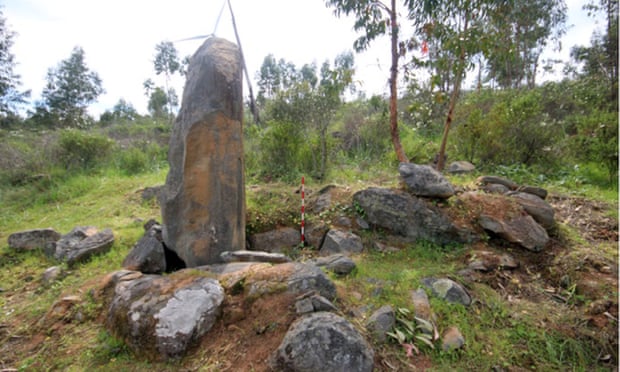
Side view of a menhir and stone platform at La Torre-La Janera megalithic site near Huelva. Photograph: Huelva Información

Agence France-Presse in Madrid
Thu 18 Aug 2022

A huge megalithic complex of more than 500 standing stones has been discovered in southern Spain that could be one of the largest in Europe, archaeologists have said.

The stones were discovered on a plot of land in Huelva, a province flanking the southernmost part of Spain’s border with Portugal, near the Guadiana River.


Spanning about 600 hectares (1,500 acres), the land had been earmarked for an avocado plantation. Before granting the permit the regional authorities requested a survey in light of the site’s possible archaeological significance. The survey revealed the presence of the stones.


Neolithic paintings in Spain reveal art was social activity for both sexes

“This is the biggest and most diverse collection of standing stones grouped together in the Iberian peninsula,” said José Antonio Linares, a researcher at Huelva University and one of the project’s three directors. It was probable that the oldest standing stones at the La Torre-La Janera site were erected during the second half of the sixth or fifth millennium BC, he said. “It is a major megalithic site in Europe.”

At the site they found a large number of various types of megaliths, including standing stones, dolmens, mounds, coffin-like stone boxes called cists, and enclosures.

“Standing stones were the most common finding, with 526 of them still standing or lying on the ground,” said the researchers in an article published in Trabajos de Prehistoria, a prehistoric archaeology journal. The height of the stones was between one and three metres.

At the Carnac megalithic site in north-west France, there are about 3,000 standing stones.

Alignments of Menhirs of Menec
in Carnac, Western France. Photograph: Andia/Alamy

One of the most striking things was finding such diverse megalithic elements grouped together in one location and discovering how well preserved they were, said Primitiva Bueno, co-director of the project and a prehistory professor at Alcalá University, near Madrid.

“Finding alignments and dolmens on one site is not very common. Here you find everything all together – alignments, cromlechs and dolmens – and that is very striking,” she said, hailing the site’s “excellent conservation”.

An alignment is a linear arrangement of upright standing stones along a common axis, while a cromlech is a stone circle, and a dolmen is a type of megalithic tomb usually made of two or more standing stones with a large flat capstone on top.

Most of the menhirs were grouped into 26 alignments and two cromlechs, both located on hilltops with a clear view to the east for viewing the sunrise during the summer and winter solstices and the spring and autumn equinoxes, the researchers said.

Many of the stones are buried deep in the earth. They will need to be carefully excavated. The work is scheduled to run until 2026, but “between this year’s campaign and the start of next year’s, there will be a part of the site that can be visited”, Bueno said.

'Spanish Stonehenge' emerges from drought-hit dam

By Silvio Castellanos and Marco Trujillo

CACERES, Spain, Aug 18 (Reuters) - A brutal summer has caused havoc for many in rural Spain, but one unexpected side-effect of the country's worst drought in decades has delighted archaeologists - the emergence of a prehistoric stone circle in a dam whose waterline has receded.

Officially known as the Dolmen of Guadalperal but dubbed the Spanish Stonehenge, the circle of dozens of megalithic stones is believed to date back to 5000 BC.

It currently sits fully exposed in one corner of the Valdecanas reservoir, in the central province of Caceres, where authorities say the water level has dropped to 28% of capacity.

"It's a surprise, it's a rare opportunity to be able to access it," said archaeologist Enrique Cedillo from Madrid's Complutense University, one of the experts racing to study the circle before it gets submerged again.

It was discovered by German archaeologist Hugo Obermaier in 1926, but the area was flooded in 1963 in a rural development project under Francisco Franco's dictatorship.

Since then it has only become fully visible four times.
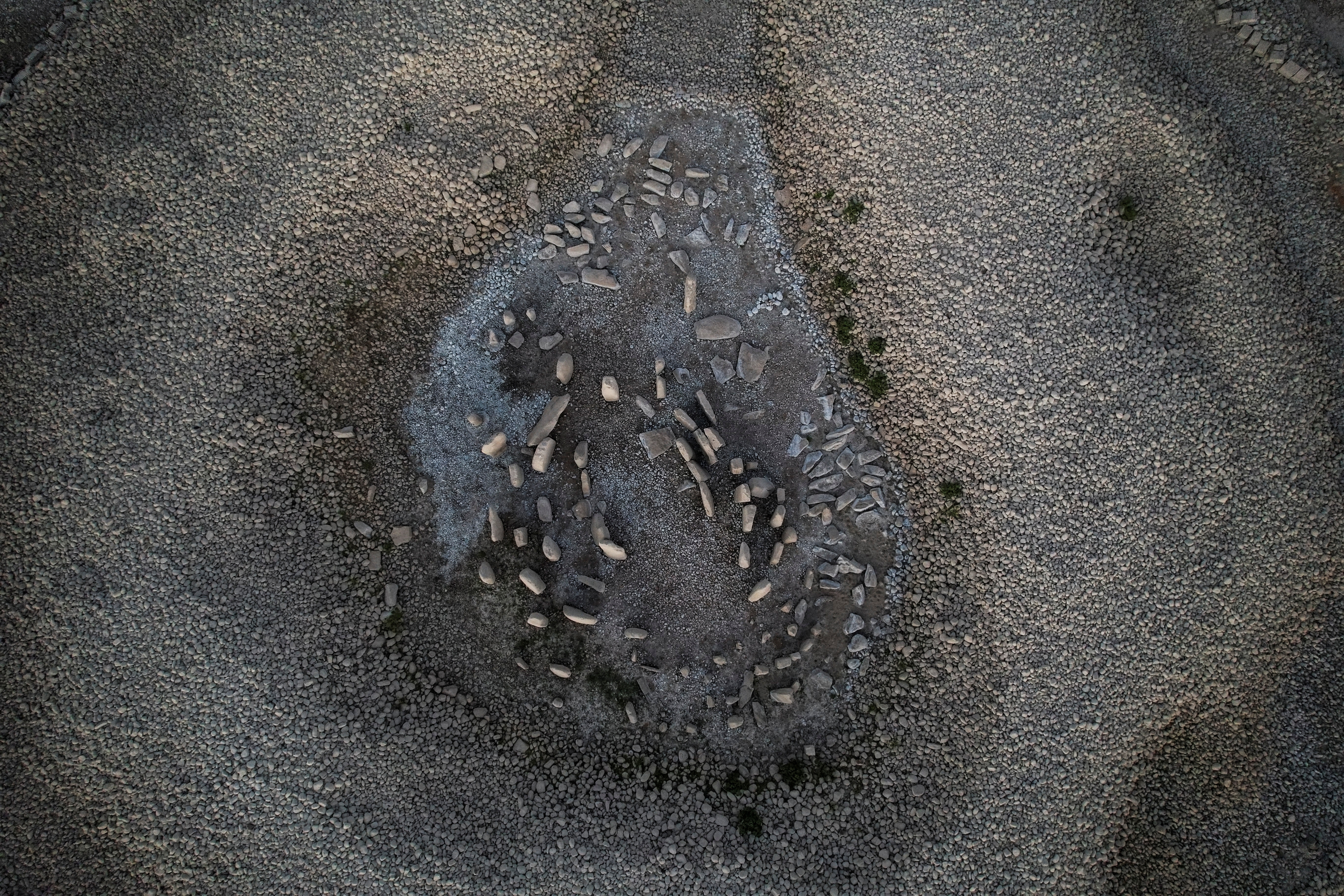


Ruben Argenta drives his boat towards the dolmen of Guadalperal, which can only be seen when the Valdecanas reservoir waters become low in the outskirts of El Gordo, Spain, August 3, 2022. REUTERS/Susana Vera

Dolmens are vertically arranged stones usually supporting a flat boulder. Although there are many scattered across Western Europe, little is known about who erected them. Human remains found in or near many have led to an often-cited theory that they are tombs.

Local historical and tourism associations have advocated moving the Guadalperal stones to a museum or elsewhere on dry land.

Their presence is also good news for Ruben Argentas, who owns a small boat tours business. "The dolmen emerges and the dolmen tourism begins," he told Reuters after a busy day spent shuttling tourists to the site and back.

But there is no silver lining for local farmers.

"There hasn't been enough rain since the spring... There is no water for the livestock and we have to transport it in," said Jose Manuel Comendador. Another, Rufino Guinea, said his sweet pepper crop had been ravaged.

Climate change has left the Iberian peninsula at its driest in 1,200 years, and winter rains are expected to diminish further, a study published by the Nature Geoscience journal showed.


Additional reporting by Susana Vera, writing by Anna Valderrama and Andrei Khalip; editing by John Stonestreet


Can technological fixes solve France’s water crisis, amid record droughts?

Cyrielle CABOT - 2h ago

Amid searing heatwaves, a historic drought has racked France since the end of July, causing water shortages in large parts of the country. Climate change is bound to make such droughts frequent, if not the new normal – so scientists are looking for technological fixes to find a way around the problem.


© Jean-Christophe Verhaegen, AFP

France’s worst drought since 1959 has emptied the water tables and vastly reduced water flow in the country's rivers. The French government has had to restrict unnecessary use of water. Around 100 towns lack the usual water supplies due to the drought, necessitating deliveries by water tanker and distributions of water bottles.

This vexed situation has prompted many to look at new ways of providing water, such as reusing wastewater and desalinating seawater. These measures have already been put in place in some countries – but face regulatory hurdles and environmental concerns in France.

Reusing wastewater


“France in particular, and EU member states more generally, need to catch up with other countries when it comes to recycling wastewater,” said Julie Mendret, an expert on water systems at the University of Montpellier. “At present less than 1 percent of treated water in France is reused. That figure is at 8 percent in Italy and 14 percent in Spain. This is a long way from the situation in some countries where a lot of wastewater is recycled back into the system, notably Gulf states such as the United Arab Emirates, Kuwait and Qatar. Israel a real pioneer in the field – (it) recycles 80 percent of its wastewater.”

>> Source of Thames dries up as heatwave scorches Britain

Traditionally, the water that ends up in France's taps has been extracted from groundwater, then purified. After it is used, the water is treated in purification plants before being discharged into waterways. But if it is recycled, it will go straight back into the pipes to go to homes and businesses instead of back into waterways.

France recycles 19,000 cubic metres of wastewater every day to irrigate crops and water golf courses. “We could extend this use to clean roads or water green spaces,” Mendret said. “Indeed, why not go further and produce drinking water by recycling water?”

In the Vendée département (administrative unit) on France’s Atlantic coast, the Jourdain project will soon experiment with this solution. Instead of being discharged into the sea, some of the water from the Sables-d’Olonne wastewater treatment plant will be recovered and treated before it is put back into the system providing drinking water. “This will be the first time such a process is used in Europe, after it has already been implemented in Singapore and Namibia,” Mendret pointed out.

>> France’s unprecedented drought shows climate change is ‘spiralling out of control’

France is held back by “unduly tight regulations”, as well as other obstacles to getting projects approved at a local level. Nevertheless, the French government in March expanded the use of recycled water, allowing for its use in fighting fires and indeed boosting parched supplies of groundwater. At the EU level, member states have agreed in principle to step up the use of recycled water.

“We won’t be able to recycle all the water,” Mendret said. “Sometimes it’s necessary to release it to keep nearby rivers flowing as they should and to protect biodiversity. You can’t solve one problem by creating another. Yet it remains a very interesting option, especially for coastal areas where wastewater is often discharged into the sea. That’s fresh water that’s just lost.”

Desalination, boosting rainwater use

Widespread use of rainwater is also going to be needed, said Fabienne Trolard, director of research at France’s National Institute of Research for Agriculture and the Environment. “In France, the overwhelming majority of water we use is potable; we can only use rainwater to water our plants,” Trolard said. “But in Belgium and Germany, households have for a long time been using double-circuit systems, whereby potable water is there only for drinking and showering and water for other uses comes in the form of rainwater, stored in individual tanks.”

If France put such a system in place, Trolard continued, “we could even reuse this grey [non-potable] water several times; they do it three or four times in some of our European neighbours and five or six times in Israel”.

>> ‘Humanity is bullying nature – and we will pay the price,’ WWF chief tells FRANCE 24

Two small towns, Rogliano in Corsica and the island of Groix in Brittany, are experimenting with another solution to the drought: desalinating seawater.

Like recycling wastewater, this technique is already widely used abroad. There are more than 17,000 desalination plants across the world, according to the International Desalination Association, which brings together scientists, industrialists and NGOs who favour the use of the technique. In total, more than 300 million people depend on desalination for their water needs.

>> 'Code red for humanity': Bombshell UN climate change report shows global warming accelerating

“The main users of desalination are Saudi Arabia and Israel, but Maghreb countries have also been investing massively in it,” Trolard said. “It’s not hard to see why they do it: These are arid countries where fresh water is in short supply – and this is one of the few solutions.”

In Jordan, a plant is due to be installed on the banks of the Red Sea in 2026, and is expected to produce between 250 and 300 million cubic metres of drinking water per year, or 750 million litres of water per day.

Yet desalination has its drawbacks. “These plants consume a lot of energy and so aren’t very economical,” Trolard said. “Above all, desalination produces brine that we don’t know what to do with.”

On average, every litre of fresh water produced by desalination produces 1.5 litres of saline sludge, which is usually discharged into the ocean, disrupting ecosystems.

>> How France’s wine industry is adapting to climate change

An array of small-scale solutions are used elsewhere in the world. Chile, for example, harvests water from fog every year. This technique has existed since pre-Columbian times and is very simple: Nets with very tight meshes are installed on foggy days. The droplets cling to the nets and then flow into containers. It is an inexpensive, environmentally friendly process – but, of course, only works under very specific weather conditions.

In the same vein, Laurent Royon, a researcher at the Interdisciplinary Future Energy Laboratory in Paris, is looking at the possibility of recovering dewdrops for use as fresh water. “This technique could be used everywhere, even in deserts, where it actually gets quite cold at night,” Royon said, referring to experiments under way in India, Morocco and Benin. Yet this technique is not very productive, with barely 0.5 litres per cubic metre harvested each night.

Moving icebergs?

Some scientists want to develop new methods for supplying fresh water instead of adopting ones already in use.

But some of these approaches are ultimately counterproductive, such as, for example, cloud seeding, which would allow rain to be triggered on command. Studied since the 1960s, particularly in China, the idea is to exploit the water present in the earth's atmosphere in the form of vapour in the clouds. Only 10 to 15 percent of the water contained in these clouds ends up falling as rain. By sending aerosols via small rockets or fireworks, for example, researchers are trying to increase the amount of rainfall. Not only is the effectiveness of this technique debated, but changing the weather could cause chain reactions elsewhere on the planet that would be difficult to anticipate.

Another unusual idea is to move icebergs, which are composed of fresh water. For nearly four decades, French engineer Georges Mougin has been looking at ways of moving these colossal blocks of ice to countries racked by drought. In 2010, his experiments concluded that it would take five months and 4,000 tonnes of oil to transport an iceberg from Canada to Spain’s Canary Islands. So this moonshot idea carries with it an array of technological, ecological and financial headaches.

>> Heatwaves threaten marine life as Mediterranean reaches record temperature

This article is translated from the original in French.
Jailed Saudi woman tweeter shrugged off risk: friend

Thu, August 18, 2022


A Saudi woman given 34 years in prison for tweets critical of the government knew people were informing on her but did not take it seriously, a friend said Thursday.

Salma al-Shehab, a member of the Shiite minority in the Sunni-ruled kingdom, had been studying for a doctorate in Britain and was arrested in January 2021 while on holiday.

On August 9 she was sentenced to 34 years in jail for aiding dissidents seeking to "disrupt public order" in the kingdom by relaying their tweets.

A friend of Shehab, who asked not to be identified for her own security, said she had not taken threats of denunciation seriously.

"We discussed people harassing her on Twitter and reporting her tweets to the security services online," the friend told AFP.

"She didn't think the authorities would be interested in someone with less than 2,000 followers," she added.

Shehab now has around 3,000 followers on Twitter.

A mother of two and a PhD candidate at Britain's University of Leeds, School of Medicine, she was also banned from travelling abroad for a further 34 years as part of the sentence.


The oil-rich Gulf state has cracked down on rights activists, many of whom have been jailed and banned from travel.

Women's rights activists have also been targeted.

The crackdown increased after Crown Prince Mohammed bin Salman became Saudi Arabia's de facto ruler in 2017.

The authorities have made available an app called "Kollona Amn" (Arabic for "We are all security") which allows "all citizens and residents in Saudi Arabia to play the role of police officer".

It is used to report accidents or crimes -- but can also be a tool to denounce political opponents.

Shehab tweeted mostly about women's rights in the conservative country.

She was jailed just weeks after US President Joe Biden visited Saudi Arabia, a controversial trip because of the kingdom's human rights record.

US State Department spokesman Ned Price told reporters on Wednesday that Washington regularly raised the issue of human rights with Riyadh.

"Exercising freedom of expression to advocate for the rights of women should not be criminalised," he said.

Rights group Amnesty International has called for Shehab's immediate and unconditional release. It described her jailing as "outrageous".

On its website, the University of Leeds said in a statement it was "deeply concerned" by the development, "and are seeking advice on whether there is anything we can do to support her".

ht/aem/srm/it

Google’s robotic waiters: Company showcases robot that takes commands

Google has showcased a new robotic assistant that can understand and respond to spoken or typed commands to fulfil an array of tasks such as fetching food and drinks and cleaning up spills. The robot makes use of technology similar to that which powers advanced chatbots, scouring millions of pages of text from the web to help it make sense of natural human language.

A phone that speaks 50 languages: "Open" is designed for people who cannot read or write

"Open" is a phone designed for people who cannot read or write. It speaks 50 languages. "For parents, it's very important. When you ask them their phone number, they can't say it, because they actually don't know their phone number", creator of the Open phone Alain Capo Chichi says.

Nine miners rescued after collapse in Colombia


Nine miners have been rescued from an illegal coal mine in Columbia.

Getty Images

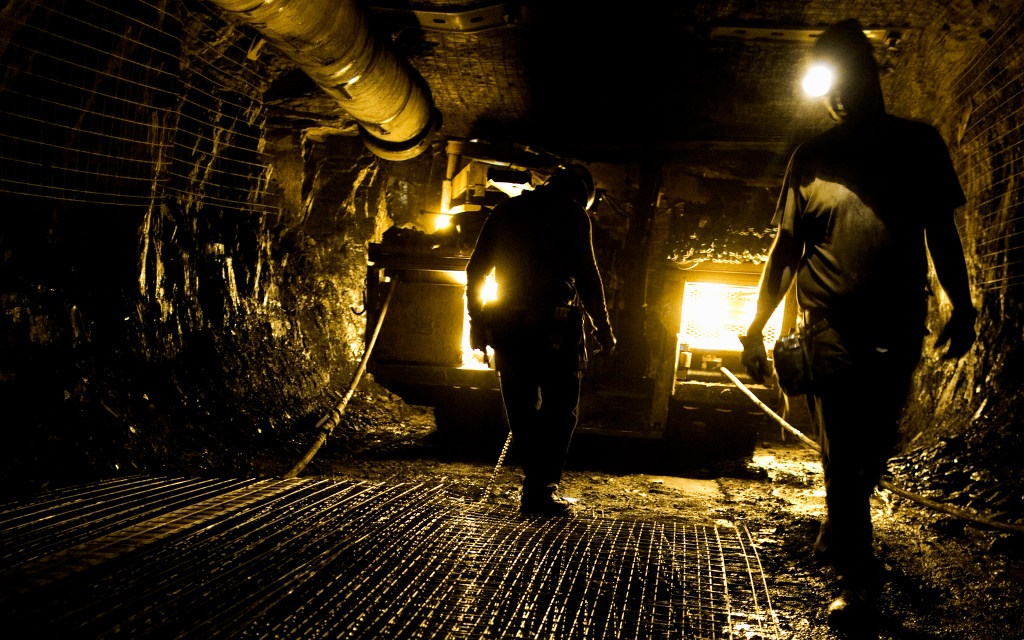
Colombian emergency crews on Thursday rescued nine miners from an illegal coal mine that collapsed the previous day, officials said.

The nine were brought to the surface from the pit in El Bosque in central Cundinamarca department.

"The nine workers were rescued alive," the National Mining Agency said on Twitter.

"The miners are in good health, receiving medical attention," it said.

With the miners trapped since Wednesday morning, rescuers managed to contact them in the rubble hours later and supply them with air.

Oil and coal are the main exports of Colombia, where mining accidents are frequent.

In 2021, the fourth largest Latin American economy recorded 148 deaths in mining incidents.

The rescue came as 10 miners have remained trapped in a Mexican coal mine for two weeks, with no signs of life.
World could save 700 mn tonnes of CO2 if people cycled more, study shows

Author: AFP|
Update: 18.08.2022 


Cycling 2.6 kilometres daily like in The Netherlands would also bring with it health benefits due to more exercise and improved air quality / © ANP/AFP/File


The world would save nearly 700 million tonnes of carbon pollution each year -- more than Canada's annual emissions -- if every person adopted the Dutch way of life and cycled on a daily basis, new research showed Thursday.

The transport sector currently accounts for a quarter of all fuel-related greenhouse gas emissions, which are warming the planet.

Half of those emissions are from passenger cars, and worldwide transport demand is predicted to triple by mid-century.

As they seek to decarbonise transport, governments and industry have turned towards electric vehicles, with 6.75 million units sold in 2021 alone.

Vehicle sales are tracked and published each year. However, it has been difficult to calculate the production and ownership of a much older, low-carbon technology: the bicycle.

An international team of researchers has now compiled the first global dataset of bicycle ownership and use by country dating back to the early 1960s, using statistical modelling to fill in any information gaps.

They found that between 1962-2015 global production of bikes outstripped that of cars, with China accounting for nearly two-thirds of the more than 123 million bikes manufactured in 2015.

Writing in the journal Communications Earth and Environment, the team showed that bicycle ownership was generally higher in upper-income and upper-middle-income countries -- but then so was the percentage of journeys undertaken by car.

This meant that high bicycle ownership does not necessarily lead to high bicycle use.

Among the 60 countries included in the dataset, the share of bicycle use for journeys was only five percent. Some countries, simply lack bicycle stocks, while others with high bike ownership, such as the United States, tended to view cycling as more of a leisure activity than a mode of transport.

- 'Going Dutch' -

The team calculated that if everyone emulated the Danish commute of cycling an average of 1.6 kilometres (1 mile) each day, the world could save some 414 million tonnes of CO2 a year -- equivalent to Britain's annual emissions.

"Going Dutch" and cycling 2.6 kilometres daily like people do in The Netherlands would save 686 million tonnes, and bring with it associated health benefits due to more exercise and improved air quality.

"A worldwide pro-bicycle policy and infrastructure development enabled modal shift like the Netherlands and Denmark can lead to significant untapped climate and health benefits," the authors wrote.

They said this dual benefit demanded better bicycle data collection, and said there was "an urgent need to promote sustainable bicycle use via supporting policy, planning, and infrastructure development."

The study's lead author, Gang Liu, a professor at the University of Southern Denmark's Department of Green Technology, said the research showed that bicycles had an important future role in lowering global transport's carbon footprint.

"Addressing such gigantic challenges requires not only technology-side strategies, such as lightweight design or electrification," he told AFP.

"But also needs demand-side strategies, such as alternative mobility patterns -- sharing mobility, on-demand mobility, and ride sharing -- and transport mode change, such as reducing short-distance car use by cycling."
Rail workers stage latest strike in UK as inflation hits four-decade high


Railway staff in Britain on Thursday staged the latest in a series of strikes, once again disrupting commuters and leisure travellers, as decades-high inflation hits salaries and prompts walkouts across various industries.


© Frank Augstein, AP
Rail workers stage latest strike in UK as inflation hits four-decade high

The latest action by rail workers, which will be repeated on Saturday, is part of a summer of strike action by the sector and others at a scale not seen since the 1980s under former prime minister Margaret Thatcher.

The dispute over pay rises and working conditions has shown little sign of resolution and is likely to be exacerbated by news this week that UK inflation topped 10 percent in July for the first time since 1982.

The global impact of the war in Ukraine on energy and food prices, and, to a lesser extent, post-Brexit trade frictions are blamed for the surging cost-of-living crisis in Britain.

Tens of thousands of railway staff are set to walk out over the two days, leaving a skeleton train service and stranding holidaymakers and commuters, even if home-working continues for many office staff after Covid restrictions were lifted.

Meanwhile, London transport workers serving the underground "Tube" and bus network will walk out on Friday, creating three days of travel misery in southeast England.

"It's extremely unreliable these days, so I'm finding I'm having to drive, park and pay a lot more," recruitment consultant Greg Ellwood, 26, told AFP at an unusually quiet Euston station in London.

"We're all just trying to make a living and get by... So I've got all the sympathy in the world for them," he added, referring to the strikers.
'Defend jobs'

Among the sectors also calling strikes are dockers at Felixstowe, Britain's largest freight port situated in eastern England, who will start an eight-day stoppage Sunday.

The waves of industrial action could continue into the autumn, since the Bank of England forecasts inflation will top 13 percent later this year, tipping the economy into a deep and long-lasting recession.


"We will continue to do whatever is necessary to defend jobs, pay and conditions during this cost-of-living crisis," Sharon Graham, head of major British union Unite, said this week.

"This record fall in real wages demonstrates the vital need for unions like Unite to defend the value of workers' pay," Graham said.

She hit out at suggestions, including from BoE governor Andrew Bailey, that pay rises were in part fuelling inflation.

"Wages are not driving inflation," she insisted ahead of the latest UK inflation data that showed rocketing food prices were the main factor behind July's spike.

Inflation has soared worldwide this year also on surging energy prices, fuelled by the invasion of Ukraine by major oil and gas producer Russia.

Mick Lynch, general secretary of the Rail, Maritime and Transport union (RMT), urged the UK government to get involved in talks over pay, jobs and conditions.

"Instead of waging an ideological war against rail workers, millions of voters would rather that the Government allow for a fair negotiated settlement," he said at a picket line at Euston.
Pay deals

But a transport department spokesperson blamed union leaders like Lynch for inflicting "misery" on millions, urging them to work with industry "to agree a deal that will bring our railways into the 21st century".

Some proposed strikes planned for the British summer have been halted after unions and companies agreed pay deals at the eleventh hour.

But while British Airways ground staff and plane refuellers at Heathrow airport have scrapped proposed walkouts, other sectors are holding firm.

More than 115,000 British postal workers employed by former state-run Royal Mail plan a four-day strike from the end of August.

Telecoms giant BT will face its first stoppage in 35 years and walkouts have recently taken place or are soon to occur by Amazon warehouse staff, criminal lawyers and refuse collectors.

Major UK business lobby group, the CBI, this week acknowledged workers' ongoing "struggle with rising costs like energy prices" and said employers were "doing their level best to support staff".

It also claimed, however, that "the vast majority" of companies "can't afford large enough pay rises to keep up with inflation".

Analysts are forecasting sector-wide stoppages to last beyond the summer as inflation keeps on rising.

It comes as teachers and health workers have hinted at possible walkouts should they not receive new pay deals deemed acceptable.

(AFP)
Scientists find simple, safe method to destroy SOME 'forever chemicals'

But it represents just the tip of the iceberg, since the US Environmental Protection Agency has identified more than 12,000 PFAS chemicals.

Issam AHMED
Thu, August 18, 2022 


"Forever chemicals" used in daily items like nonstick pans have long been linked to serious health issues –- a result of their toxicity and extreme resistance to being broken down as waste products.

Chemists in the United States and China on Thursday said they had finally found a breakthrough method to degrade these polluting compounds, referred to as PFAS, using relatively low temperatures and common reagents.

Their results were published in the journal Science, potentially offering a solution to a longstanding source of harm to the environment, livestock and humans.

"It really is why I do science -- so that I can have a positive impact on the world," senior author William Dichtel of Northwestern University told reporters during a news conference.

PFAS, or per- and polyfluoroalkyl substances, were first developed in the 1940s and are now found in a variety of products, including nonstick pans, water-resistant textiles, and fire suppression foams.

Over time, the pollutants have accumulated in the environment, entering the air, soil, groundwater and lakes and rivers as a result of industrial processes and from leaching through landfills.

A study published last week by Stockholm University scientists found rainwater everywhere on the planet is unsafe to drink because of PFAS contamination.

Chronic exposure to even low levels has been linked to liver damage, high cholesterol, reduced immune responses, low birth weights, and several kinds of cancer.

Although PFAS chemicals can be filtered out of water, there are few good solutions for how to dispose of them once they have been removed.
- 10 down, thousands to go -

Current methods to destroy PFAS require harsh treatments, such as incineration at extremely high temperatures or irradiating them ultrasonic waves.

PFAS' indestructability comes from their carbon-flouride bonds, one of the strongest types of bonds in organic chemistry.

Fluorine is the most electronegative element and wants to gain electrons, while carbon is keen to share them.

PFAS molecules contain long chains of these bonds, but the research team was able to identify a glaring weakness common to a certain class of PFAS.

At one end of the molecule, there is a group of charged oxygen atoms which can be targeted using a common solvent and reagent at mild temperatures of 80-120 degrees Celsius, decapitating the head group and leaving behind a reactive tail.

"Once that happens, that provides access to previously unrecognized pathways that cause the entire molecule to fall apart in a cascade of complex reactions," said Dichtel, ultimately making benign end products.

A second part of the study involved using powerful computational methods to map out the quantum mechanics behind the chemical reactions the team performed to destroy the molecules.

The new knowledge could eventually guide further improvements to the method.

The current study focused on 10 PFAS chemicals including a major pollutant called GenX, which for example has contaminated the Cape Fear River in North Carolina.

But it represents just the tip of the iceberg, since the US Environmental Protection Agency has identified more than 12,000 PFAS chemicals.


"There are other classes that don't have the same Achilles’ heel, but each one will have its own weakness," said Dichtel in a statement.

"If we can identify it, then we know how to activate it to destroy it."

ia/dw

Why China's economy is in trouble and what it means for you

Beijing this week slashed interest rates to boost demand after its zero-COVID policy and a property crash rocked the economy. China's woes will hurt global growth but could also help to cool inflation.

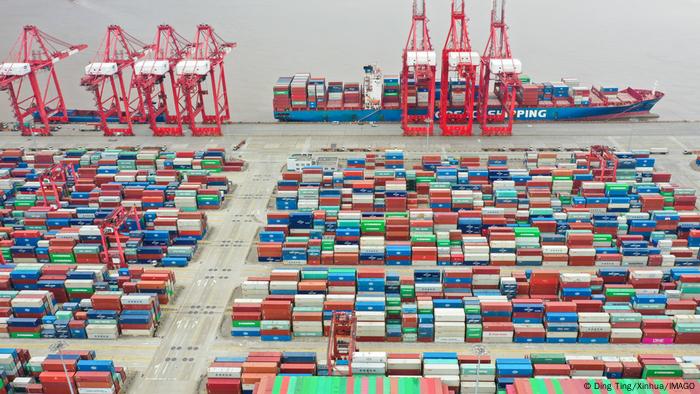
Operations at China's Shanghai Yangshan Port were severely disupted by a COVID lockdown in April

As growth in major global economies slows as a result of high inflation, exacerbated by the Ukraine war, many economists are hoping that China will again come to the world's rescue.

But this is not 2008, when China's then rapidly expanding economy and a huge stimulus unleashed by the Beijing government, helped Western countries to recover much faster from the financial crisis. This time, China's economic woes run deep. The government has all but given up on this year's target of 5.5% GDP growth and Premier Li Keqiang warned last month there was little appetite right now for more expansionary policymaking.

Business and consumer activity in the world's second-largest economy have been stymied by Beijing's zero-COVID policy that sparked monthslong lockdowns on workers in dozens of cities, forcing many businesses to shut. Chinese leaders are loathe to reverse the draconian policy now, for fear of unleashing a bigger crisis.

China can't learn to live with COVID

"China has effectively not lived with COVID like the rest of the world. So there would be economic chaos if the virus were suddenly to rip through the country," Jacob Gunter, senior analyst at the Berlin-based Mercator Institute for China Studies (MERICS), told DW. "There isn't any built-up immunity — as they refused to import the mRNA vaccines — they don't have a very advanced health care system and there's a lot of vaccine hesitancy."

Worse still, the recent government crackdown on the debts of property developers sparked a real estate crash that forced one of the country's largest builders, China Evergrande, to the edge of bankruptcy.

Chinese homebuyers have stopped paying mortgages on unfinished apartments, bank loans for property purchases have fallen for the first time in a decade and the amount of residential floor space — a measure of new construction activity — dropped by nearly half in the second quarter.

"The property crash is the bigger problem [compared with the zero-COVID policy]," said Craig Botham, China expert at the research house Pantheon Macroeconomics. "The economy has shown it can recover quickly from lockdowns, but the damage from falling asset prices in a sector worth 30% of GDP is far more pernicious. Households, banks, and local governments all have damaged balance sheets."

An Evergrand housing complex in Shenzhen on September 16, 2021

China's property developers relied on down payments to fund future real-estate projects

While refusing to unleash more monetary stimulus until inflation and the pandemic are under control, China's central bank this week slashed interest rates, after industrial production and retail sales grew lower than expected and oil demand fell 10% year on year in July.

China cuts while the world hikes rates

"It's the opposite of what's happening everywhere else in the world where countries are ratcheting up their rates," Gunter told DW. "China has the opposite problems that we have in the United States and Europe," adding that Chinese consumers are afraid to spend for fear of being sent into quarantine with no income.

Botham said the latest rate cuts were unlikely to make much difference to economic growth for two reasons.

"One is that they will only immediately impact bank funding costs, with no requirement to pass them through to the real economy. The second, and more important, is that loan demand has fallen off a cliff. I suspect the PBoC [People's Bank of China] felt like it had to do something, even though it knows whatever it does will have minimal impact," he added.

With the prospect of further stimulus on hold, the central government has sought to deflect attention away from Beijing, telling regional governments to do more to help stabilize growth and boost employment opportunities, which was met with skepticism.

"Local governments have balance sheets full of holes, and can’t do much more," warned Botham. "We need to see the central government step in. The Pantheon Macroeconomics analyst called for a shift away from supply-side to demand-side measures.

In May, Beijing announced 50 policy measures to help regions to rebound from lockdowns. They included tax relief for businesses and consumers and other subsidies. Li this week visited the southern tech hub of Shenzhen on what he said was an economic fact-finding mission ahead of this month's Politburo meeting.

Xi under pressure to boost demand

Pressure is already building on China's leaders after a state-backed newspaper called this week in a front-page report for new pro-growth policies. Citing Wen Bin, chief economist at China Minsheng Bank, Financial News said Beijing should use more stimulus to boost demand. The paper also called for more industrial policies and measures for the real-estate market which it said would drive a recovery in production and consumption.

Resistance to a fresh stimulus could ease in the next few months as President Xi Jinping seeks re-election as Chinese leader by the 20th National Congress of the Chinese Communist Party. The summit, which is due in November, according to Hong Kong newspaper Ming Pao, is likely to approve Xi's third term.

Unlike 2008, when China's 4 trillion yuan ($586 billion, €579 billion) monetary stimulus helped to stabilize the global economy, the impact of any future expansionary policies by Beijing is likely to be limited for the West, Botham told DW. But he said they could help to ease the cost-of-living crisis that was hurting growth in the West.

"It's safe to say it [China] won’t rescue the global economy in this cycle. Hopes for a new commodity supercycle driven by China will be dashed. However, the focus on supply-side policies, and the weakness of Chinese demand, will mean China exports disinflation and even deflation to the rest of the world over the next 12 months, helping cool global inflation."

Edited by: Hardy Graupner