Thursday, September 22, 2022

Hot gas bubble spotted spinning around Milky Way black hole

Agence France-Presse
September 22, 2022

The hot gas bubble is thought to orbit slightly outside the orange ring. 
(M. KORNMESSER European Southern Observatory/AFP)

Astronomers said Thursday they have spotted a hot bubble of gas spinning clockwise around the black hole at the centre of our galaxy at "mind blowing" speeds.

The detection of the bubble, which only survived for a few hours, is hoped to provide insight into how these invisible, insatiable, galactic monsters work.

The supermassive black hole Sagittarius A* lurks in the middle of the Milky Way some 27,000 light years from Earth, and its immense pull gives our home galaxy its characteristic swirl.

The first-ever image of Sagittarius A* was revealed in May by the Event Horizon Telescope Collaboration, which links radio dishes around the world aiming to detect light as it disappears into the maw of black holes.

One of those dishes, the ALMA radio telescope in Chile's Andes mountain range, picked up something "really puzzling" in the Sagittarius A* data, said Maciek Wielgus, an astrophysicist at Germany's Max Planck Institute for Radio Astronomy.

Just minutes before ALMA's radio data collection began, the Chandra Space Telescope observed a "huge spike" in X-rays, Wielgus told AFP.

This burst of energy, thought to be similar to solar flares on the Sun, sent a hot bubble of gas swirling around the black hole, according to a new study published in the journal Astronomy and Astrophysics.

The gas bubble, also known as a hot spot, had an orbit similar to Mercury's trip around the Sun, the study's lead author Wielgus said.

But while it takes Mercury 88 days to make that trip, the bubble did it in just 70 minutes. That means it travelled at around 30 percent of the speed of light.

"So it's an absolutely, ridiculously fast-spinning bubble," Wielgus said, calling it "mind blowing".


Astronomers detect hot gas bubble swirling around the Milky Way’s supermassive black hole


Peer-Reviewed Publication

ESO NEWS RELEASE 

The orbit of the hot spot around Sagittarius A* 

IMAGE: THIS SHOWS A STILL IMAGE OF THE SUPERMASSIVE BLACK HOLE SAGITTARIUS A*, AS SEEN BY THE EVENT HORIZON COLLABORATION (EHT), WITH AN ARTIST’S ILLUSTRATION INDICATING WHERE THE MODELLING OF THE ALMA DATA PREDICTS THE HOT SPOT TO BE AND ITS ORBIT AROUND THE BLACK HOLE. view more 

CREDIT: EHT COLLABORATION, ESO/M. KORNMESSER (ACKNOWLEDGMENT: M. WIELGUS) [[CREDIT MUST BE GIVEN TO THE CREATOR AND THE EUROPEAN SOUTHERN OBSERVATORY MUST BE MENTIONED IN THE MEDIA ARTICLE.]]

Using the Atacama Large Millimeter/submillimeter Array (ALMA), astronomers have spotted signs of a ‘hot spot’ orbiting Sagittarius A*, the black hole at the centre of our galaxy. The finding helps us better understand the enigmatic and dynamic environment of our supermassive black hole.

We think we're looking at a hot bubble of gas zipping around Sagittarius A* on an orbit similar in size to that of the planet Mercury, but making a full loop in just around 70 minutes. This requires a mind blowing velocity of about 30% of the speed of light!” says Maciek Wielgus of the Max Planck Institute for Radio Astronomy in Bonn, Germany, who led the study published today in Astronomy & Astrophysics.

The observations were made with ALMA in the Chilean Andes — a radio telescope co-owned by the European Southern Observatory (ESO) — during a campaign by the Event Horizon Telescope (EHT) Collaboration to image black holes. In April 2017 the EHT linked together eight existing radio telescopes worldwide, including ALMA, resulting in the recently released first ever image of Sagittarius A*. To calibrate the EHT data, Wielgus and his colleagues, who are members of the EHT Collaboration, used ALMA data recorded simultaneously with the EHT observations of Sagittarius A*. To the team's surprise, there were more clues to the nature of the black hole hidden in the ALMA-only measurements.

By chance, some of the observations were done shortly after a burst or flare of X-ray energy was emitted from the centre of our galaxy, which was spotted by NASA’s Chandra Space Telescope. These kinds of flares, previously observed with X-ray and infrared telescopes, are thought to be associated with so-called ‘hot spots’, hot gas bubbles that orbit very fast and close to the black hole. 

What is really new and interesting is that such flares were so far only clearly present in X-ray and infrared observations of Sagittarius A*. Here we see for the first time a very strong indication that orbiting hot spots are also present in radio observations,” says Wielgus, who is also affiliated with the Nicolaus Copernicus Astronomical Centre, Poland and the Black Hole Initiative at Harvard University, USA. 

Perhaps these hot spots detected at infrared wavelengths are a manifestation of the same physical phenomenon: as infrared-emitting hot spots cool down, they become visible at longer wavelengths, like the ones observed by ALMA and the EHT,” adds Jesse Vos, a PhD student at Radboud University, the Netherlands, who was also involved in this study.

The flares were long thought to originate from magnetic interactions in the very hot gas orbiting very close to Sagittarius A*, and the new findings support this idea. “Now we find strong evidence for a magnetic origin of these flares and our observations give us a clue about the geometry of the process. The new data are extremely helpful for building a theoretical interpretation of these events,” says co-author Monika Mościbrodzka from Radboud University.

ALMA allows astronomers to study polarised radio emission from Sagittarius A*, which can be used to unveil the black hole’s magnetic field. The team used these observations together with theoretical models to learn more about the formation of the hot spot and the environment it is embedded in, including the magnetic field around Sagittarius A*. Their research provides stronger constraints on the shape of this magnetic field than previous observations, helping astronomers uncover the nature of our black hole and its surroundings.

The observations confirm some of the previous discoveries made by the GRAVITY instrument at ESO’s Very Large Telescope (VLT), which observes in the infrared. The data from GRAVITY and ALMA both suggest the flare originates in a clump of gas swirling around the black hole at about 30% of the speed of light in a clockwise direction in the sky, with the orbit of the hot spot being nearly face-on.

In the future we should be able to track hot spots across frequencies using coordinated multiwavelength observations with both GRAVITY and ALMA — the success of such an endeavour would be a true milestone for our understanding of the physics of flares in the Galactic centre,” says Ivan Marti-Vidal of the University of València in Spain, co-author of the study.

The team is also hoping to be able to directly observe the orbiting gas clumps with the EHT, to probe ever closer to the black hole and learn more about it. “Hopefully, one day, we will be comfortable saying that we ‘know’ what is going on in Sagittarius A*,” Wielgus concludes.

More information

This research was presented in the paper “Orbital motion near Sagittarius A* – Constraints from polarimetric ALMA observations” to appear in Astronomy & Astrophysics (https://www.aanda.org/10.1051/0004-6361/202244493).

The team is composed of M. Wielgus (Max-Planck-Institut für Radioastronomie, Germany [MPIfR]; Nicolaus Copernicus Astronomical Centre, Polish Academy of Sciences, Poland; Black Hole Initiative at Harvard University, USA [BHI]), M. Moscibrodzka (Department of Astrophysics, Radboud University, The Netherlands [Radboud]), J. Vos (Radboud), Z. Gelles (Center for Astrophysics | Harvard & Smithsonian, USA and BHI), I. Martí-Vidal (Universitat de València, Spain), J. Farah (Las Cumbres Observatory, USA; University of California, Santa Barbara, USA), N. Marchili (Italian ALMA Regional Centre, INAF-Istituto di Radioastronomia, Italy and MPIfR), C. Goddi (Dipartimento di Fisica, Università degli Studi di Cagliari, Italy and Universidade de São Paulo, Brazil), and H. Messias (Joint ALMA Observatory, Chile).

The Atacama Large Millimeter/submillimeter Array (ALMA), an international astronomy facility, is a partnership of ESO, the U.S. National Science Foundation (NSF) and the National Institutes of Natural Sciences (NINS) of Japan in cooperation with the Republic of Chile. ALMA is funded by ESO on behalf of its Member States, by NSF in cooperation with the National Research Council of Canada (NRC) and the Ministry of Science and Technology (MOST) and by NINS in cooperation with the Academia Sinica (AS) in Taiwan and the Korea Astronomy and Space Science Institute (KASI). ALMA construction and operations are led by ESO on behalf of its Member States; by the National Radio Astronomy Observatory (NRAO), managed by Associated Universities, Inc. (AUI), on behalf of North America; and by the National Astronomical Observatory of Japan (NAOJ) on behalf of East Asia. The Joint ALMA Observatory (JAO) provides the unified leadership and management of the construction, commissioning and operation of ALMA. 

The European Southern Observatory (ESO) enables scientists worldwide to discover the secrets of the Universe for the benefit of all. We design, build and operate world-class observatories on the ground — which astronomers use to tackle exciting questions and spread the fascination of astronomy — and promote international collaboration in astronomy. Established as an intergovernmental organisation in 1962, today ESO is supported by 16 Member States (Austria, Belgium, the Czech Republic, Denmark, France, Finland, Germany, Ireland, Italy, the Netherlands, Poland, Portugal, Spain, Sweden, Switzerland and the United Kingdom), along with the host state of Chile and with Australia as a Strategic Partner. ESO’s headquarters and its visitor centre and planetarium, the ESO Supernova, are located close to Munich in Germany, while the Chilean Atacama Desert, a marvellous place with unique conditions to observe the sky, hosts our telescopes. ESO operates three observing sites: La Silla, Paranal and Chajnantor. At Paranal, ESO operates the Very Large Telescope and its Very Large Telescope Interferometer, as well as two survey telescopes, VISTA working in the infrared and the visible-light VLT Survey Telescope. Also at Paranal ESO will host and operate the Cherenkov Telescope Array South, the world’s largest and most sensitive gamma-ray observatory. Together with international partners, ESO operates APEX and ALMA on Chajnantor, two facilities that observe the skies in the millimetre and submillimetre range. At Cerro Armazones, near Paranal, we are building “the world’s biggest eye on the sky” — ESO’s Extremely Large Telescope. From our offices in Santiago, Chile we support our operations in the country and engage with Chilean partners and society. 

Links


Updated climate models clouded by scientific biases, researchers find

Peer-Reviewed Publication

INSTITUTE OF ATMOSPHERIC PHYSICS, CHINESE ACADEMY OF SCIENCES

Satellite captured cloudy Southern Ocean 

IMAGE: THE CLOUDY SOUTHERN OCEAN SHOWS AN IMPROVED RADIATION BUDGET IN THE LATEST IPCC CLIMATE MODELS, BUT THERE ARE STILL SIGNIFICANT BIASES IN THE SIMULATED CLOUD PHYSICAL PROPERTIES OVER THE SO. THOSE BIASES ARE LARGELY CANCELLED OUT WHEN THEY JOINTLY INFLUENCE THE CLOUD RADIATIVE EFFECT. THE CLOUD IMAGE IS CAPTURED BY FY-3D SATELLITE. view more 

CREDIT: NATIONAL SATELLITE METEOROLOGICAL CENTER OF CHINA METEOROLOGICAL ADMINISTRATION

Clouds can cool or warm the planet’s surface, a radiative effect that contributes significantly to the global energy budget and can be altered by human-caused pollution. The world’s southernmost ocean, aptly named the Southern Ocean and far from human pollution but subject to abundant marine gases and aerosols, is about 80% covered by clouds. How does this body of water and relationship with clouds contribute to the world’s changing climate?

Researchers are still working to figure it out, and they’re now one step closer, thanks to an international collaboration identifying compensation errors in widely used climate model protocols known as CMIP6. They published their findings on September 20 in Advances in Atmospheric Sciences.

“Cloud and radiation biases over the Southern Ocean have been a long-lasting problem in the past generations of global climate models,” said corresponding author Yuan Wang, now an associate professor in the Department of Earth, Atmospheric, and Planetary Sciences at Purdue University. “After the latest CMIP6 models were released, we were anxious to see how they performed and whether the old problems were still there.”

CMIP6, a project of the World Climate Research Programme, allows for the systematic assessment of climate models to illuminate how they compare to each other and real-world data. In this study, Wang and the researchers analyzed five of the CMIP6 models that aim to serve as standard references.

Wang said the researchers were also motivated by other studies in the field that point to the Southern Ocean's cloud coverage as a contributing factor to some CMIP6 models’ high sensitivity, when the simulations predict a surface temperature that rises too quickly for the rate of increased radiation. In other words, if improperly simulated, the Southern Ocean clouds may cast a shadow of doubt on the projection of future climate change.

“This paper emphasizes compensating errors in the cloud physical properties in spite of overall improvement of radiation simulation over the Southern Ocean,” Wang said. “With space satellite observations, we are able to quantify those errors in the simulated cloud microphysical properties, including cloud fraction, cloud water content, cloud droplet size and more, and further reveal how each contributes to the total bias in the cloud radiative effect.”

The cloud radiative effect — how clouds interfere radiation to warm or cool the surface — is largely determined by the physical properties of the cloud. “Cloud radiative effects in CMIP6 are comparable with satellite observations, but we found there are large compensating biases in cloud fraction liquid water path and droplet effective radius,” Wang said. “The major implication is that, even though the latest CMIP models improve the simulation of their mean states, such as radiation fluxes at the top of the atmosphere, the detailed cloud processes are still of large uncertainty.”

According to Wang, this discrepancy also partially explains why the model climate sensitivity assessments do not perform as well, since those assessments rely on model detailed physics — rather than the mean state performance — to evaluate the overall effect on the climate.

“Our future work will aim to pin down individual parameterizations that are responsible for these biases,” Wang said. “Hopefully, we can work closely with model developers to get them solved. After all, the ultimate goal of any model evaluation study is to help improve those models.”

Other contributors include Lijun Zhao and Yuk L. Yung, Division of Geology and Planetary Science, California Institute of Technology; Chuanfeng Zhao, Department of Atmospheric and Oceanic Sciences, School of Physics, Peking University; and Xiquan Dong, Department of Hydrology and Atmospheric Sciences, University of Arizona.

Chimpanzee stone tool diversity

New analysis of chimpanzee stone tools show diverse material culture

Peer-Reviewed Publication

MAX PLANCK INSTITUTE FOR EVOLUTIONARY ANTHROPOLOGY

Female chimpanzee cracking nuts 

IMAGE: FEMALE CHIMPANZEE CRACKING PANDA OLEOSA NUTS USING A GRANODIORITE HAMMERSTONE ON A WOODEN (PANDA TREE ROOT) ANVIL. view more 

CREDIT: © LIRAN SAMUNI, TAÏ CHIMPANZEE PROJECT

During fieldwork aimed at documenting the stone tool use of a group of wild chimpanzees in the Taï Forest in Cote d'Ivoire in early 2022, the researchers identified and 3D scanned a variety of stone tools used to crack different nut species.

It has long been shown that various chimpanzee groups possess different tool use cultures involving wooden and stone tools, however, only some groups in West Africa use stone tools to crack open nuts. By comparing the 3D models of different stone tools used by chimpanzees in the Taï Forest to those from another group in Guinea, the researchers showed that there exist notable differences between the two groups in terms of their material culture.

The study shows that this particular group of chimpanzees in Guinea uses stone hammers varying in the type of stone and sizes, and very large stone anvils, sometimes greater than one meter in length. These durable stone tools are widespread across the landscape; preserve different levels of damage related to their use and represent a lasting record of chimpanzee behaviours.

Stone tools used for nut cracking can differ between chimpanzee groups

This study highlights the fact that, although several groups of chimpanzees practice nut cracking, the tools they use can differ significantly from one another, potentially leading to group specific material signatures. These differences are driven by a combination of stone choice, stone availability, and the nut species eaten.

Previous research has shown, that by using stone tools, some groups of chimpanzees develop their own archaeological record dating to at least 4,300 years ago. “The ability to identify regional differences in stone tool material culture in primates opens up a range of possibilities for future primate archaeological studies,” says Tomos Proffitt from the Max Planck Institute of Evolutionary Anthropology, who led the research.

It has been hypothesised that a simple technology, like nut cracking, was a precursor to more complex stone technologies during the early stages of our own evolution more than three million years ago. Proffitt continues, “by understanding what this simple stone tool technology looks like, and how it varies between groups, we can start to understand how to better identify this signature in the earliest hominin archaeological record.”

Examples of chimpanzee hammerstones from Djouroutou, Cote d’Ivoire; illustrating their textured surface, three-dimensional surface, surface depth and surface gradient.

CREDIT

© Tomos Proffitt

People who distrust fellow humans show greater trust in artificial intelligence

Peer-Reviewed Publication

PENN STATE

UNIVERSITY PARK, Pa.— A person’s distrust in humans predicts they will have more trust in artificial intelligence’s ability to moderate content online, according to a recently published study. The findings, the researchers say, have practical implications for both designers and users of AI tools in social media.

“We found a systematic pattern of individuals who have less trust in other humans showing greater trust in AI’s classification,” said S. Shyam Sundar, the James P. Jimirro Professor of Media Effects at Penn State. “Based on our analysis, this seems to be due to the users invoking the idea that machines are accurate, objective and free from ideological bias.”

The study, published in the journal of New Media & Society also found that “power users” who are experienced users of information technology, had the opposite tendency. They trusted the AI moderators less because they believe that machines lack the ability to detect nuances of human language.

The study found that individual differences such as distrust of others and power usage predict whether users will invoke positive or negative characteristics of machines when faced with an AI-based system for content moderation, which will ultimately influence their trust toward the system. The researchers suggest that personalizing interfaces based on individual differences can positively alter user experience. The type of content moderation in the study involves monitoring social media posts for problematic content like hate speech and suicidal ideation.

“One of the reasons why some may be hesitant to trust content moderation technology is that we are used to freely expressing our opinions online. We feel like content moderation may take that away from us,” said Maria D. Molina, an assistant professor of communication arts and sciences at Michigan State University, and the first author of this paper. “This study may offer a solution to that problem by suggesting that for people who hold negative stereotypes of AI for content moderation, it is important to reinforce human involvement when making a determination. On the other hand, for people with positive stereotypes of machines, we may reinforce the strength of the machine by highlighting elements like the accuracy of AI.”

The study also found users with conservative political ideology were more likely to trust AI-powered moderation. Molina and coauthor Sundar, who also co-directs Penn State’s Media Effects Research Laboratory, said this may stem from a distrust in mainstream media and social media companies.

The researchers recruited 676 participants from the United States. The participants were told they were helping test a content moderating system that was in development. They were given definitions of hate speech and suicidal ideation, followed by one of four different social media posts. The posts were either flagged for fitting those definitions or not flagged. The participants were also told if the decision to flag the post or not was made by AI, a human or a combination of both.

The demonstration was followed by a questionnaire that asked the participants about their individual differences. Differences included their tendency to distrust others, political ideology, experience with technology and trust in AI.

“We are bombarded with so much problematic content, from misinformation to hate speech,” Molina said. “But, at the end of the day, it’s about how we can help users calibrate their trust toward AI due to the actual attributes of the technology, rather than being swayed by those individual differences.”

Molina and Sundar say their results may help shape future acceptance of AI. By creating systems customized to the user, designers could alleviate skepticism and distrust, and build appropriate reliance in AI.

“A major practical implication of the study is to figure out communication and design strategies for helping users calibrate their trust in automated systems,” said Sundar, who is also director of Penn State’s Center for Socially Responsible Artificial Intelligence. “Certain groups of people who tend to have too much faith in AI technology should be alerted to its limitations and those who do not believe in its ability to moderate content should be fully informed about the extent of human involvement in the process.”

New research shows U.S. Republican politicians increasingly spread news on social media from untrustworthy sources

Peer-Reviewed Publication

UNIVERSITY OF BRISTOL

A study analysing millions of Tweets has revealed that Republican members of the US Congress are increasingly circulating news from dubious sources, compared to their European counterparts.

The research, led by the Graz University of Technology (TU Graz) in Austria and the University of Bristol in the UK, showed Republican Congress members are sharing more links to websites classified as ‘untrustworthy.’

It is widely acknowledged that what politicians share on social media helps shape public perceptions and views. The findings are especially pertinent, with the US midterm elections coming up in November and much of the campaigning taking place on social media platforms.

First author Dr Jana Lasser, Complexity Researcher from TU Graz, said: “The amount of untrustworthy information shared by politicians on social media is perceived to be increasing. We wanted to substantiate this with figures, so we analysed millions of original tweets by politicians from the USA, Great Britain and Germany.”

The team of researchers collected more than 3.4 million tweets from politicians made between 2016 to 2022. Specifically, these were 1.7 million tweets from members of the US Congress, 960,000 tweets from British MPs and 750,000 tweets from German MPs. The links contained in the tweets were compared with a database from the company NewsGuard, which assesses the credibility and transparency of news websites against nine journalistic criteria and identifies relevant details about the website’s ownership, funding, credibility and transparency practices.

The findings showed that members of the Republican Party in particular shared significantly more links to websites classified as “untrustworthy” over the years. Compared to the period 2016 to 2018, the number of links to untrustworthy websites has doubled over the past two years.

Dr Lasser said: “In general, members of parties in the right half of the political spectrum in all countries studied share more of these links – but only Republicans show this significant increase. In the other countries, the share remains stable.”

Specifically, the percentage of links to untrustworthy websites posted by Republicans more than doubled between 2016 to 2018 and 2020 to 2022, from 2.4% to 5.5%.

Overall, Republican members of Congress post about nine times as many such links as Democratic members of Congress, for whom only 0.4% of the links contained in tweets point to untrustworthy sites.

In Europe, parliamentarians are even less likely to link to untrustworthy sites. Even among Conservatives, only 0.25% of the links shared by British Tory politicians and 0.18% of the links shared by MPs from the Christian Democratic Union of Germany (CDU) and the Christian Social Union in Bavaria (CSU), a centre-right Christian-democratic alliance, were untrustworthy. The only European party whose source selection for Twitter posts resembled that of the Republican MPs was the Alternative for Germany (AfD), a right-win populist political party.

“Repeating the analysis with a second, comparable database also produced very similar results. In such analyses, it is important to use different assessments of the credibility of news sources in order to exclude bias or partiality,” added Dr Lasser.

Corresponding author Professor Stephan Lewandowsky, Chair in Cognitive Psychology at the University of Bristol, said: “Politicians are part of the educated elite; their behaviour is a kind of compass of what is socially acceptable and what is not. When people in politics increasingly post misinformation or news from sources that are not very trustworthy, I think that is very problematic.

“Despite their high social standing, it is therefore important to take information shared by politicians critically and to question the sources.”

Paper

‘Social media sharing of low quality news sources by political elites‘ by Jana Lasser, Segun Taofeek Aroyehun, Almog Simchon, Fabio Carrella, David Garcia, Stephan Lewandowsky in PNAS Nexus

Hemp byproducts are good alternative feed for lambs, Oregon State study finds

Peer-Reviewed Publication

OREGON STATE UNIVERSITY

Hemp flower 

IMAGE: HEMP PLANT AT THE OREGON STATE UNIVERSITY NORTH WILLAMETTE RESEARCH AND EXTENSION CENTER. view more 

CREDIT: SEAN NEALON

CORVALLIS, Ore. – An Oregon State University study found that spent hemp biomass – the main byproduct of the cannabinoid (CBD) extraction process of hemp – can be included in lamb diets without any major detrimental effects to the health of the animals or their meat quality.

The findings are significant because the hemp byproducts, known as spent hemp biomass, currently have little to no economic value for the hemp industry, the researchers said.

Spent hemp biomass also has not been legalized as feed for livestock by the Food and Drug Administration due to the potential presence of THC and its potential impacts on animal health, so this finding is one step forward to getting that approval.

“To our knowledge, our study is the first to evaluate the effects of feeding spent hemp biomass to livestock,” said Serkan Ates, an associate professor in Oregon State’s College of Agricultural Sciences.

“The findings are important for both hemp farmers and livestock producers because they provide evidence that this byproduct of hemp can be used in livestock diets. If the Food and Drug Administration approves its use as an animal feedstuff, hemp farmers could have a market for what is essentially a waste product and livestock producers may be able to save money by supplementing their feed with the spent hemp biomass.”

The findings were recently published in the Journal of Animal Science.

Hemp was cultivated in the United States from Colonial times until it was banned in the 20th century because it was  regulated the same as marijuana. Hemp is the same species as marijuana but contains much lower amounts of THC, a psychoactive compound.

In recent years, hemp was legalized as an agricultural commodity, which led to a surge in farming. By 2021, 54,152 acres of hemp were planted in the U.S. and the total value of the crop was $824 million, according to the USDA

Hemp is a highly versatile crop that can be used in textiles, food, paper and construction materials, but until recently, it was predominately grown for CBD oil, which is extracted from the flowers and foliage of the hemp plant. According to the 2020 U.S. Department of Agriculture crop acreage data, 62% of cultivated hemp was grown for CBD extraction.

For the study, the Oregon State researchers fed male lambs two different amounts of spent hemp biomass (10% and 20% of total feed) and then withheld the hemp biomass for four weeks, a so-called withdrawal period. They then assessed weight gain, carcass characteristics, meat quality and health parameters of the lambs.

CAPTION

lambs

CREDIT

Celene Carillo

Their findings included:

The nutritional quality of spent hemp biomass is at par with alfalfa, which is commonly fed to lambs, and presents lower palatability and better digestibility.

  • Feed intake was negatively affected by feeding 20% spent hemp biomass in the short term but not in the long term, while feeding 10% spent hemp biomass increased feed intake long-term. Despite this, no effects on the weight of the lambs were observed.
  • Except for an increase in shrink and cook loss that also may affect the tenderness, other parameters related to carcass and meat quality were not affected by feeding spent hemp biomass.
  • Spent hemp biomass affected metabolism in a way that does not appear detrimental and improved the antioxidant capacity of the animals.
  • The liver of the animals was not affected but a decrease in liver clearance was observed, the ability of the liver to extract or metabolize a drug. The authors indicated that this last finding requires further investigation, since it could affect the clearance of other drugs that may be give to lambs.

“Although more research is still needed, spent hemp biomass can be considered a safe feed for ruminants and a good alternative to alfalfa for livestock, especially if it presents an economic benefit,” Ates said.

Co-authors of the paper were Nathan Parker, Massimo Bionaz, Hunter Ford andAgung Irawan, all of Oregon State’s Department of Animal and Rangeland Sciences; and Erminio Trevisi of Università Cattolica del Sacro Cuore in Italy.

The Oregon Beef Council funded this research, with additional support from the Global Hemp Innovation Center at Oregon State University and the USDA Agricultural Research Service.

Scientists Believe Evolution Could Save Coral Reefs, If We Let It

Research shows protecting “hot reefs” is key to saving coral reefs

Peer-Reviewed Publication

RUTGERS UNIVERSITY

Coral reefs can adapt to climate change if given the chance to evolve, according to a study led by Coral Reef Alliance, Rutgers University, the University of Washington and other institutions.

The recent study, published in the journal Nature Ecology and Evolution, finds that coral reefs can evolve and adapt to the effects of climate change—but only if we protect a sufficient diversity of coral reefs, particularly when it comes to temperatures.

“Evolution happens when corals that have already adapted to new environmental conditions breed with corals that have not yet adapted,” said Malin Pinsky, associate professor at Rutgers and a coauthor of the study. “As ocean temperatures rise, we need to keep corals in hotter waters healthy and protected so they can reproduce and spread their heat tolerance to other coral reef areas.” 

The study advocates for a conservation approach that protects coral reefs at local, regional and global scales, in a way that allows heat tolerance to spread.

The authors of the study said if humanity takes rapid and effective action to keep coral reefs healthy at local scales and addresses climate change, coral reef ecosystems may recover over the next century and thrive in the future. 

“The best part about these results are that they underscore the importance of our actions at local scales—we don’t have to just sit back and watch coral reefs suffer as our climate changes,” said Madhavi Colton, lead author of the study and former executive director of the Coral Reef Alliance. “This study provides guidance on how to design local conservation solutions that will have real, lasting impacts well into the future.” 

Coral reefs cover less than one percent of the earth’s surface, but they are one of the most biodiverse ecosystems on our planet. Home to about 25 percent of all marine life, coral reefs support an estimated one billion people with food, income and coastal protection. But threats to coral reefs continue to mount. Today, nearly 75 percent of all coral reefs are threatened by climate change and localized human activities.

Scientists predict 99 percent of coral reefs will be lost by the end of this century without concerted efforts to protect them.

“We simply cannot afford to lose coral reefs,” said Helen Fox, conservation science director at the Coral Reef Alliance and a collaborating author on the study. “It is imperative that we do what we can to save coral reefs now because we will be faced with combined global economic, humanitarian, and biodiversity crises if we do not.” 

The study was co-authored by Malin Pinsky, associate professor in the Department of Ecology, Evolution, and Natural Resources at Rutgers University, as well as Lisa McManus, who conducted the work as a postdoctoral researcher at Rutgers University and is now faculty at the Hawai‘i Institute of Marine Biology, and researchers from Coral Reef Alliance, University of Washington, Stanford University, University of Queensland, University of British Columbia and The Nature Conservancy. The research was funded by the Gordon and Betty Moore Foundation and The Nature Conservancy.

Groundbreaking discovery from South Africa challenges the recent re-interpretation of magma chambers

Peer-Reviewed Publication

UNIVERSITY OF THE WITWATERSRAND

Prof Rais Latypov +  Sofya Chistyakova 

IMAGE: PROF RAIS LATYPOV AND DR SOFYA CHISTYAKOVA view more 

CREDIT: N/A

Professor Rais Latypov from the School of Geosciences at Wits University and his research team have found field evidence for the existence of a 5-km-thick totally molten chamber within the ancient crust of South Africa. This suggests that a super-large, entirely molten and long-lived magma chambers occur, at least, in deep geological time, and that the classical view of ‘big magma tanks’ remains relevant.

The classical petrological view that magma chambers occur as ‘big tanks’ has faced some doubt in recent years, owing to a lack of conclusive evidence from geophysical surveys. In addition, thermal modelling indicates that the formation of a large magma body within the upper crust is physically problematic. These studies have concluded that molten magma chambers are either transient or non-existent in the geological history of the Earth.

“Although, modern geophysical surveys are indeed unable to conclusively identify any present-day magma chambers with a large volume of eruptible melt, it is too early to discard the existence of such chambers in Earth’s crust. In our study we present the ground-truth observations indicating that one of these large and molten chambers existed in the ancient Earth's crust of South Africa” says Professor Latypov. Latypov and his team’s findings have been published as a paper in Scientific Reports.     

Latypov asserts that the size of the resident melt column in the Bushveld chamber at one stage was “really staggering — over 5 km in thickness and over 380,000 km3 in volume. This amount of magma is several orders of magnitude larger than any known super-eruptions in the Earth’s history.” It is only comparable to the extrusive volume of some of the Earth’s large igneous provinces such as the Karoo flood basalts in South Africa.  

Key evidence comes from the Bushveld Complex in which the temporary chamber floor was found to gradually rise through a 4-km-high sloping step.  “Such development of magmatic layering implies that the resident melt column was thicker than the stepped relief of the chamber floor. This discovery is arguably the most fundamental constraint on the thickness of the resident melt column that has been ever derived from field mapping in fossilized magma chambers”, argues Dr. Sofya Chistyakova from Wits University.

It is quite conceivable that such magma chambers have developed throughout the entire Earth’s history. Even if some regions of the Earth’s crust are lacking such chambers, this does not automatically mean that ‘big tank’ magma chambers are absent from other regions.  

“Since layered intrusions — such as the Bushveld Complex — are rare throughout geological time, it is not surprising that geophysicists cannot now detect active examples of large and molten magma chambers in Earth’s crust”, says Chistyakova.    

Why does nature create patterns? A physicist explains the molecular-level processes behind crystals, stripes and basalt columns

The Conversation
September 21, 2022

Giant’s Causeway in Northern Ireland features around 40,000 exposed polygonal columns of basalt in perfect horizontal sections. 

Curious Kids is a series for children of all ages. If you have a question you’d like an expert to answer, send it to curiouskidsus@theconversation.com.

Why does nature always create a pattern? – Saloni G., age 16, Alwar, Rajasthan, India


The reason patterns often appear in nature is simple: The same basic physical or chemical processes occur in many patterned substances and organisms as they form. Whether in plants and animals or rocks, foams and ice crystals, the intricate patterns that happen in nature come down to what’s happening at the level of atoms and molecules.

A pattern in nature is any regularly repeated arrangement of shapes or colors. Some of the most striking examples include the hexagonal arrays of rocks at Giant’s Causeway in the United Kingdom, the beautiful fractal arrangements of florets on a Romanesco broccoli and the colorful stripes and spots on tropical fish.


Each bud of a Romanesco broccoli bunch is composed of a series of smaller buds, arranged in a consistent spiral pattern.
Creativ Studio Heinemann/Westend61 via Getty Images

Patterns like these begin to form at a small scale when materials undergo processes like drying, freezing, wrinkling, diffusing and reacting. Those changes then give rise to complex patterns at a larger scale that people can see.

Patterns in ice and rock

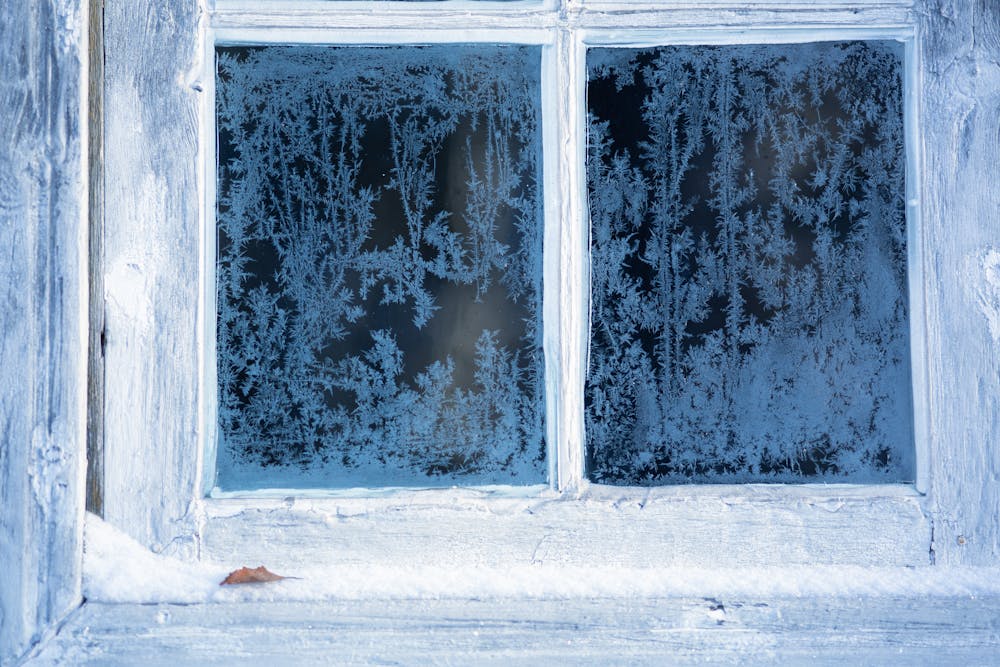
Imagine delicate frozen crystals on a windowpane during a cold day. What creates that pattern?

When water freezes, its molecules begin clustering together. Water molecules have a particular bent shape that causes them to stack into clusters shaped like hexagons as they freeze.

As the cluster grows, many outside factors, including humidity and temperature, begin to affect its overall shape. If the water is freezing on a windowpane, for example, small and random imperfections on the glass surface redirect the stacking and create the larger pattern.


Ice crystals on an old window in Norway.

Baac3nes/Moment via Getty Images

This same process of stacking molecules is responsible for the striking variety of snowflake shapes.

What about the amazing patterns of the basalt columns at Giant’s Causeway? These formed 50 million to 60 million years ago, as lava – hot rocky fluid from deep underground – rose to the Earth’s surface and began to lose heat. The cooling caused the top layer of basalt to contract. The deeper, hot layers resisted this pulling, creating cracks in the top layer.

As the lava cooled, the cracks spread deeper and deeper into the rock. The particular molecular qualities of basalt, as well as the basic physics of how materials fracture apart – laws of physics universal to all substances on Earth – caused the cracks to meet up with one another at certain angles to create hexagons, much like the stacking water molecules.

Eventually, the cooling basalt broke into the hexagon-shaped columns of rock that still create such an impressive pattern millions of years later.

Patterns in animals


The creation of complex patterns in living organisms also begins with simple mechanisms at the molecular level. One important pattern-making process involves the way diffusing chemicals react with one another.

Imagine how a drop of food coloring spreads in a glass of water – that’s diffusion


Drops of blue dye at different stages of diffusion in water.

Science Photo Library via Getty Images


In 1952, English mathematician Alan Turing showed that a chemical spreading like this within another chemical can lead to the formation of all kinds of patterns in nature.

Scientists have proved that this process reproduces the patterns of a leopard’s spots, a zebra’s stripes and many other animal markings.


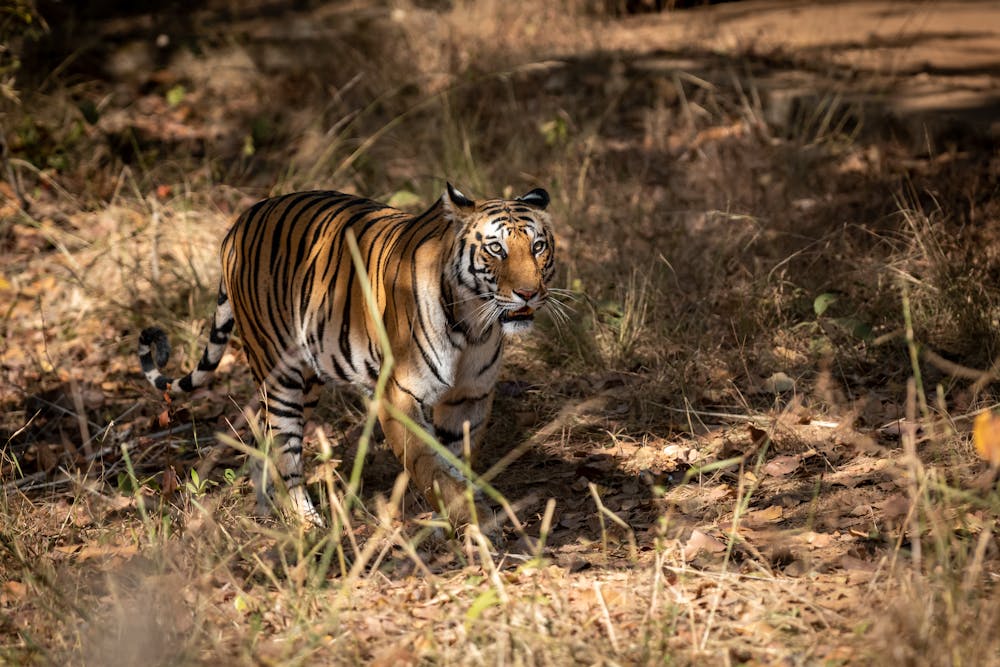
A tiger’s stripes can help it blend in with the surrounding environment – making it harder for prey to see.

Sourabh Bharti/iStock via Getty Images Plus

What makes these markings consistent from generation to generation? As animal species evolved, these chemical reactions evolved with them and became part of their genetic codes. This might be because the markings helped them survive. For example, a tiger’s stripes camouflage it while hunting in a forest or grassland, making it easier to surprise and catch its prey.

However, researchers are still working out the details of which particular chemicals are involved.

Scientists do not always know the purpose of a pattern, or even if there is one. The molecular processes involved are simple enough that they might coincidentally generate a pattern.

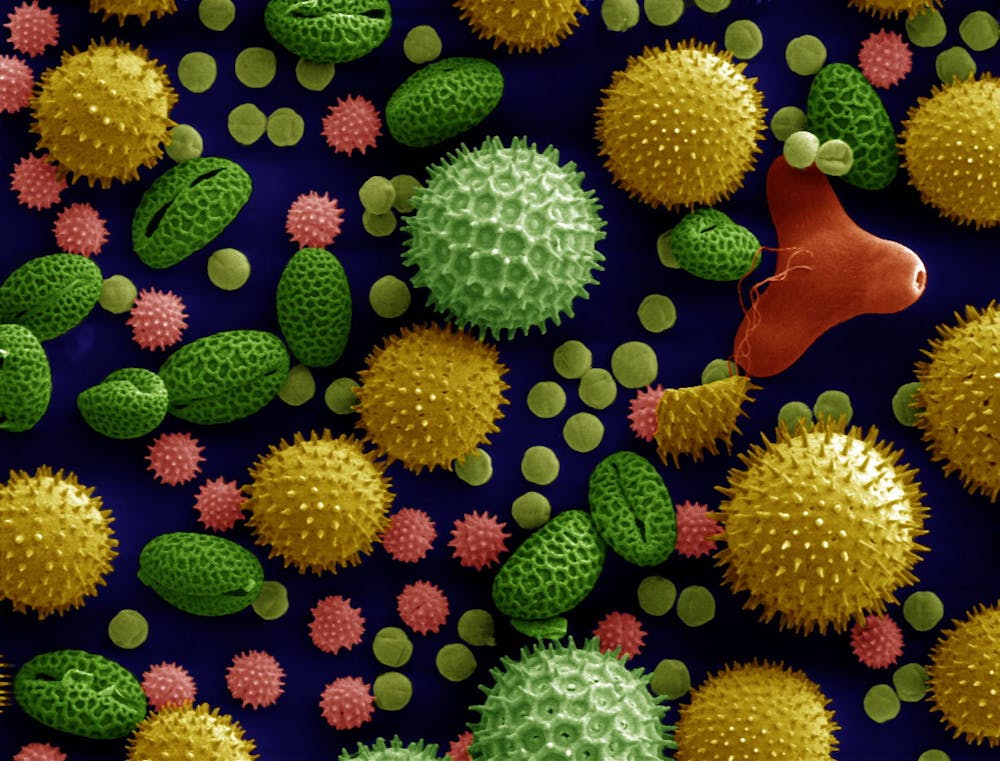
For example, in my research team’s work studying plant pollen grains, we have seen a huge variety of patterns, including spikes, stripes and many more.


The pollen grains of various common plants like sunflower, morning glories, prairie hollyhock, oriental lily, evening primrose and castor bean – magnified 500 times and colorized in this image – display intricate patterns.
Dartmouth Electron Microscope Facility

We don’t yet understand why a plant produces one particular pollen pattern rather than another. Whatever the ultimate use this and other patterns in nature may have, their variety, complexity and order are amazing.

Hello, curious kids! Do you have a question you’d like an expert to answer? Ask an adult to send your question to CuriousKidsUS@theconversation.com. Please tell us your name, age and the city where you live.

And since curiosity has no age limit – adults, let us know what you’re wondering, too. We won’t be able to answer every question, but we will do our best.

Maxim Lavrentovich, Assistant Professor of Theoretical Biophysics, University of Tennessee

This article is republished from The Conversation under a Creative Commons license. Read the original article.
Soup kitchens full as battle rages over Italy's poor

Agence France-Presse
September 22, 2022

Mario Conte, who runs the soup kitchen, fears Italy's poverty relief scheme will be scrapped after Sunday's elections
Alberto PIZZOLI AFP

Mario Conte's Salerno soup kitchen serves 140 hot meals every day but as soaring inflation hits Italy's poverty-stricken south, he is struggling to keep up with demand.

And with far-right leader Giorgia Meloni promising to abolish a poverty relief scheme if she wins Sunday's general elections, he fears things will only get worse.

"There will be a flood of people here," he warned as he handed out food at the San Francesco kitchen, not far from Salerno's palm-lined seafront, south of Naples.

The eurozone's third largest economy is suffering a cost-of-living crisis exacerbated by Russia's war in Ukraine.

But as usual it is Italy's south, long plagued by poverty and unemployment, which feels it hardest.

"I pay rent, the electricity bill, and then I've got nothing left for food," said 60-year-old Antonio Mela, a former barman who lives with his brother on a 500-euro state pension.

"Everyone is struggling here," he told AFP, as he took servings of pasta, pork and potatoes, and fruit.

Energy is a major concern in a country reliant on Russian gas, particularly here, in the Campania region. According to the Italian Poverty Observatory, the region has the greatest number of people struggling to pay electricity and gas bills.

Citizens' income


Rocco Papa, a spokesman for the Catholic Caritas charity which helps run the kitchen, said there was a "chronic" lack of work in Salerno, where one in 13 people are at risk of extreme poverty.

"The bringing together of many factors, the pandemic, the war, has seriously aggravated the situation," he said.

While this is a familiar story across Europe, Italy, with its low-skilled and rapidly aging population, is unique.

It was the only EU country where inflation-adjusted wages fell between 1990 and 2020, according to the Organization for Economic Cooperation and Development (OECD).

It is also one of just six EU countries without a national minimum wage, having instead, since 2019, the so-called "citizens' income".

Nearly 2.5 million people claim this benefit for the jobless, which works out on average at 550 euros a month, costing the state 8.3 billion euros this year.

The majority -- 1.7 million people -- live on Italy's islands or in the south, a region with a large shadow economy and where 10 percent of households live in absolute poverty.

But the benefit has been targeted by fraudsters, and some employers say it makes it impossible for them to find staff. They accuse young people of preferring to pocket easy money for sitting at home.

These payments have become one of the electoral campaign's most divisive issues, to the point that Meloni's far-right Brothers of Italy party, which led the last opinion polls, has vowed to ditch the scheme outright.

War on Poverty

"The citizens' income helped hugely," 70-year-old Conte said. For a while, many guests stopped coming.

Rising prices have brought new faces to his door, however: from divorced dads to struggling carers, whose badly paid, off-the-books work is no longer enough.

The number of people using soup kitchens in Salerno has doubled over the past few months, while a Caritas-run canteen in Castellammare outside Naples has seen a three-fold increase.

Conte feeds an extra 10 families with young children each morning.

This benefit was the brainchild of the populist Five Star Movement, which swept to power four years ago after winning big in the south.

Now trailing the right in the polls, Five Star has vowed to make the income "more efficient", to bring in a minimum wage and to tackle the gender pay-gap.

The centre-left Democratic Party (PD) also wants to keep a reformed version of the benefit. It has pledged similar other anti-poverty measures as well as with 500,000 new council houses and free school meals.

Favoring jobs

But for Meloni, the citizens' income is not the solution.

Poverty, she told a rally in Palermo, Sicily this week, "is fought by favoring growth and jobs".


She proposes instead a benefit for those most at risk: disabled people, the over 60s, and struggling families with small children.

Her right-wing coalition, which brings together the anti-immigrant League and right-wing Forza Italia, has also promised tax cuts to boost growth.

The last available polls suggest Five Star and the Democratic Party's support for the citizens' income may once again be winning votes in the south -- although not everyone here backs it.

"Young people have to work," said Mela, as he collected his food from the San Francesco kitchen. "It should be for families, not 30-year-olds.

"And they have to check who's cheating and who's not."

© 2022 AFP