Thursday, September 22, 2022

Mexico rattled by second earthquake this week

Mexican officials said Thursday's earthquake was an aftershock from a tremor several days ago. There were no reports of widespread damage.

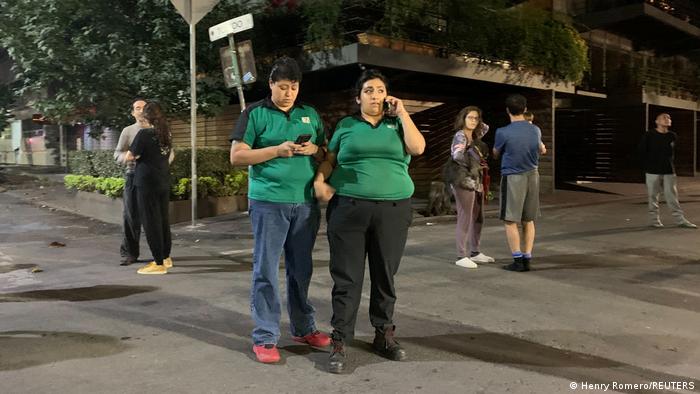
In Mexico City, an earthquake alert was activated, prompting residents to leave their homes

A powerful earthquake in Mexico's state of Michoacan unleashed landslides early Thursday morning and was felt in the nearby states of Colima, Jalisco and Guerrero.

The US Geological Survey said the tremor was centered 31 miles (50 kilometers) southwest of Aguililla at a depth of 15 miles (24.1 kilometers).

The epicenter was not far from a similar quake that occurred on Monday. Mexican President Andres Manuel Lopez Obrador said on Twitter that the quake was an aftershock from Monday's quake.

Mexico's civil protection authorities and the president both said there were no initial reports of damage in Michoacan or the surrounding regions.

However, in Mexico City, hundreds of kilometers away, a seismic quake alert was activated, prompting thousands of people to leave their homes in the early hours of the morning.

Mexico City Mayor Claudia Sheinbaum said one woman died after falling down the stairs, suffering a strike to the head as she stumbled, while a second victim suffered a heart attack.

"People lost their lives in Mexico City, according to the report by Claudia Sheinbaum. In the epicenter area in Michoacan, Colima and Jalisco no such misfortune," Lopez Obrador posted on social media.

]Mexico's marks severe earthquakes in September 

Every September 19, a national simulation for earthquakes takes place, a date which marks the anniversary of two of the largest and most destructive quakes in Mexican history, which occurred in 1985 and 2017.

Monday's quake left two dead and ten injured in the western territory of Mexico. In all, 1,000 aftershocks were recorded, with today's being the one of the highest magnitudes.

The 1985 quake resulted in more than 5,000 fatalities after the capital was struck by a magnitude 8.1 tremor.

Another quake on the same date in 2017, with its epicenter inland and far closer to Mexico City than Monday's tremor, caused more than 200 fatalities and some 1,300 injuries.

Mexico is on the so-called Pacific Ring of Fire, an area of volcanic and tectonic activity. It spans several continents, incorporating most of the west coast of the Americas and most of the eastern tip of Asia and some Pacific islands.

jsi/wmr (AFP, Reuters, AP, EFE)

  • Date 22.09.2022

DW RECOMMENDS

Spain bestows personhood status to heavily polluted lagoon

Lawmakers in Spain have voted to award the legal status of a person to an endangered saltwater lagoon. The Mar Menor is the first ecosystem in Europe to receive the designation and legal rights that go with it

Agricultural waste threatens Europe's largest saltwater lagoon, causing huge

 fish and crustacean die-offs

Members of the Spanish upper house of parliament decided by a large majority to give personhood status to the Mar Menor lagoon in Murcia, in southeastern Spain.

The initiative, already greenlighted by the lower chamber, was debated after campaigners collected half-a-million signatures backing the move to protect the threatened ecosystem.

What does the decision mean?

With the conclusion of the legislative procedure, the rights of the lagoon can be defended in court, as though it were a person or business.

It means that any citizen is now able now appeal to the judiciary in the case of a suspected violation against the lagoon.

It will now be legally represented by a group of caretakers that includes local officials, scientists and residents living nearby.

"The Mar Menor becomes the first European ecosystem with its own rights after the Senate approved the bill to give it a legal identity," tweeted Senate president Ander Gil after the vote.

The move to convey personhood status on the lagoon was backed by all parties except the far-right Vox group.

Why does the lagoon need protecting?

Ecologists have warned for years that the Mar Menor (Lesser Sea) is gradually perishing because of heavy runoff of fertilizer nitrates from nearby farmland.

Experts say that the presence of unusually high levels of nutrients alters the balance of the ecosystem, which is separated from the Mediterranean Sea by a 22-kilometer-long (13.7-mile-long) sandbar.

New life that thrives in the altered conditions quickly takes up oxygen from the water, causing fish to die in large numbers.

The process, known as eutrophication, is thought to be behind mass fish die-offs in August last year, when millions of dead fish and crustaceans began to wash up on the lagoon's shores.

Scientists recorded two similar pollution events in 2016 and 2019.

Last year, environmentalists submitted a formal complaint to the EU over what they called Spain's "continued failure" to protect the lagoon. They said it was on the brink of "ecological collapse."

rc/kb (dpa, AFP, AP 


UK lifts fracking ban in England

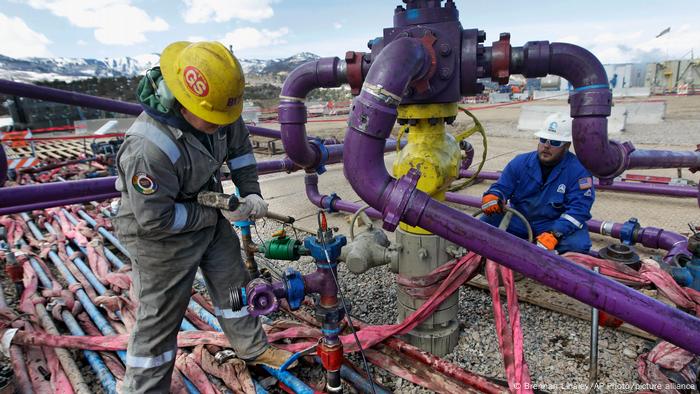
The UK government said it is ending England's moratorium on fracking. Environmentalists say the extraction method poses extreme dangers — including potentially causing earthquakes.

Fracking is a controversial procedure

The UK government on Thursday lifted England's moratorium on fracking, saying the move aims to shore up energy security as Russia cuts gas deliveries amid tensions over its invasion of Ukraine.

"To bolster the UK's energy security, the UK government has today lifted the moratorium on shale gas production in England," the Department for Business, Energy and Industrial Strategy (BEIS) said in a statement.

The UK had halted fracking, or hydraulic fracking, in 2019 over fears that the procedure could trigger earthquakes.

Thursday's announcement follows through on indications given by new Prime Minister Liz Truss two weeks ago that her government would allow fracking operations again to tackle growing energy shortages caused by Russia's actions.

What has the UK government said?

The BEIS not only announced an end to the fracking moratorium but also confirmed that it supported awarding 100 new licenses for oil and gas exploration next month.

It said that future fracking applications will be considered "where there is local support."

It added that developers would need licenses, permissions and consents, including regulatory approvals, before they can commence operations.

The UK's business and energy secretary, Jacob Rees-Mogg, said that strengthening energy security was a top priority "in light of [Russian President Vladimir] Putin's illegal invasion of Ukraine and weaponization of energy."

Rees-Mogg, a supporter of fossil fuel use and a climate change sceptic, said the UK aimed to become a "net energy exporter by 2040."

 "To get there we will need to explore all avenues available to us through solar, wind, oil and gas production — so it's right that we've lifted the pause to realize any potential sources of domestic gas," he said.

Touching on the earthquake danger, Rees-Mogg told parliament, "We need to revisit the seismic limits to ensure that shale gas extraction can be done in an effective and efficient way," adding that: "We know that shale gas is safe. It is safe in the United States."

Rees-Mogg has previously spoken out in favor of extracting "every last drop" of North Sea oil and gas.

What is fracking?

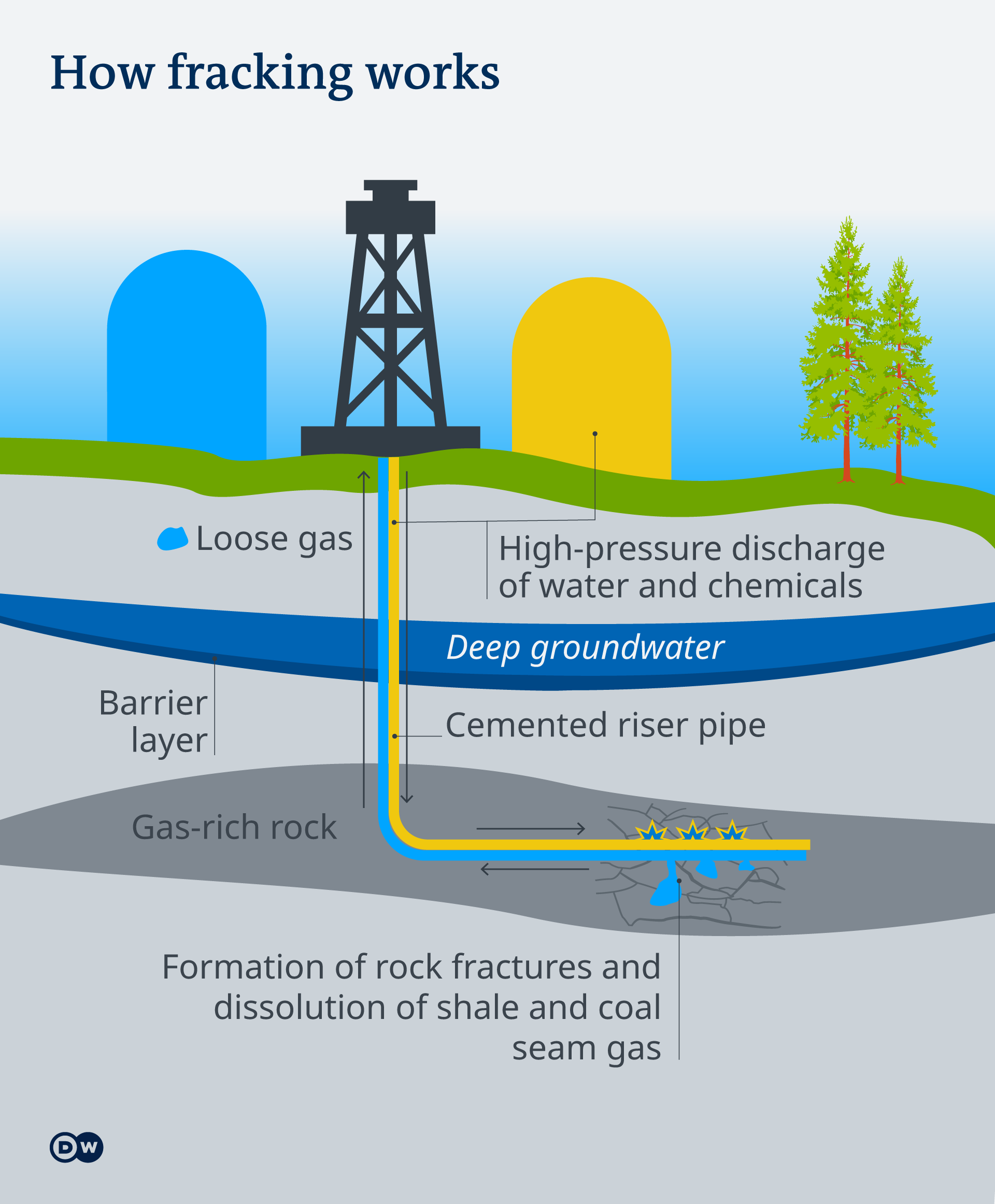
Fracking is a procedure to extract shale oil and gas from underground by blasting bedrock formations with a mixture of water, sand and chemicals under high pressure to create fractures through which petroleum and gas can flow.

Many environmentalists argue that the method pollutes water supplies, harms fauna and flora and can trigger earthquakes, as well as advancing global warming.

Experts also say that the resumption of fracking will not help reduce energy costs or boost energy security in the short term, as it will take years for operations to get underway. In addition, there is no guarantee that gas can be extracted on any meaningful scale.

The largest tremor caused by fracking in Britain took place at a site in Blackpool in northern England in 2011. That quake had a magnitude of 2.3.  

tj/kb (AFP, AP)

DW RECOMMENDS

  • Date 22.09.2022

Congo crisis in focus at UN General Assembly

The Democratic Republic of Congo and Rwanda aired their dispute over one of the armed groups causing instability along their borders to the world this week. The UN has conceded that its peacekeepers can't defeat the M23.

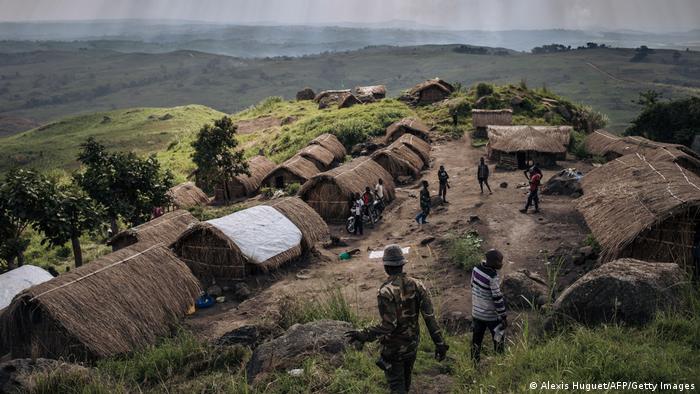
It is estimated that 120 armed groups are active in the east of the Democratic Republic of Congo

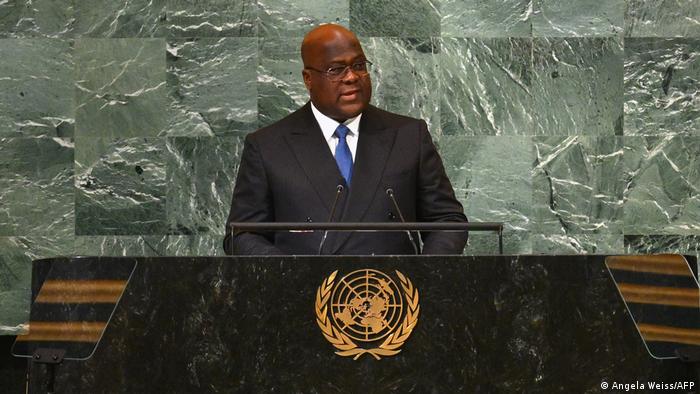
President Felix Tshisekedi of the Democratic Republic of Congo, in an address to the UN General Assembly, said the M23, a key armed rebel movement causing instability in his country, is supported by Rwanda.

"The involvement of Rwanda and its responsibility in the tragedy that my country and my compatriots, in the areas occupied by the Rwandan army and its allies of the M23, are no longer questionable," Tshisekedi said on Tuesday evening. 

The allegations are not new. Tensions between the two countries over the M23 flare sporadically.

The M23 had been relatively dormant for years but has resumed its attacks in eastern Congo. It has since intensified its activities in the region along Congo's border with Rwanda and, in June, captured the strategic town of Bunagana near the border to Uganda.

Congo suspects UN 'complicity'
\

President of the Democratic Republic of Congo Felix Tshisekedi addressed

 the 77th session of the UN General Assembly in New York on September 20, 2022

Tshisekedi also warned world leaders that any failure to take into account UN expert reports on the crisis  "will only encourage Rwanda to pursue its agression, war crimes and crimes against humanity in the DRC." 

It would also fuel the suspicions of the Congolese people on the impartiality of the UN and what Tshisekedi called "the complicity of some of its members in these crimes.”

Rwanda's President Paul Kagame, in his subsequent address to the assembly, highlighted the crisis in eastern Congo but refrained from responding directly to Tshisekedi.

Kagame has repeatedly denied the allegations over M23. The crisis in eastern Congo, he told the UN General Assembly, has continued for more than two decades and requires serious attention.

The deployment of UN peacekeepers is exposing Congo's neighbors to cross-border attacks that are preventable, he suggested. "There is an urgent need to find the political will to finally address the root causes of the instability in eastern DRC. The blame game does not solve the problem,” Kagame said.
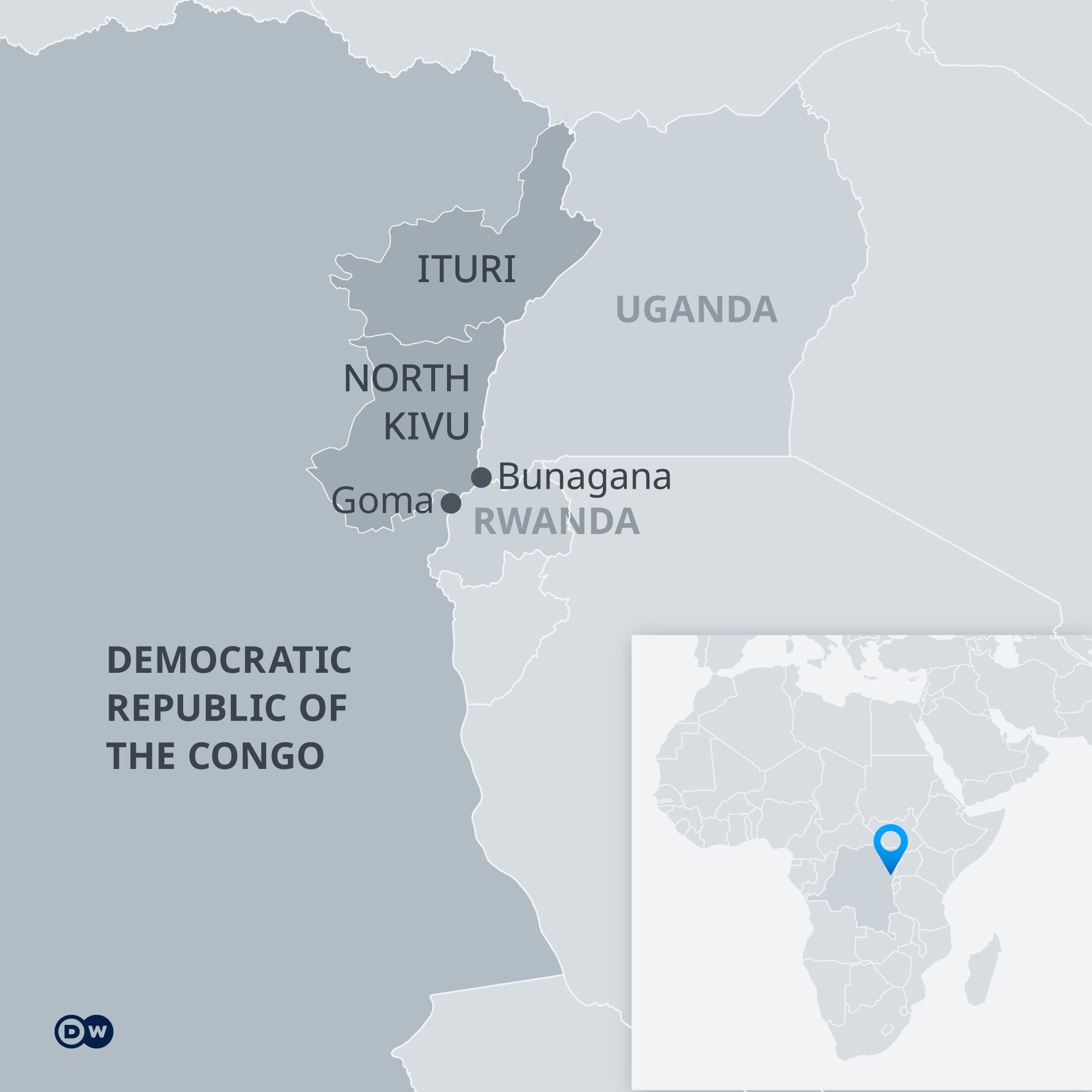

M23 attacks are concentrated on eastern Congo provinces bordering with Rwanda and Uganda

UN mission 'not able to beat M23' 

Tshisekedi and Kagame were speaking just days after the UN Secretary General Antonio Guterres conceded that the UN peacekeeping mission to Congo, MONUSCO, was no longer capable of defeating the M23. 

Guterres told French media that the UN "is not able to beat the M23."

"The truth is that the M23 today is a modern army with heavy equipment that is more advanced than the equipment of MONUSCO," he said.

The UN chief's comments were not unlike those that saw the MONUSCO spokesman Mathias Gillmann expelled from the DRC last month.

Kinshasa has increasingly questioned the value of the UN peacekeepers. Since 2019, pro-democracy movements and some elected officials have been calling for the departure of MONUSCO. In July, four UN peackeepers were among the 36 people killed in anti-UN protests in Goma and Butembo in eastern Congo.

The protesters accused MONUSCO of failing to stop the resurgence of violence. Civilian massacres are common, and the number of people displaced has run into the millions.

The UN Secretary General's remarks surprised and shocked some Congolese citizens and activists.

"He [Guterres] is probably passing the baton to the African Union, or perhaps the East African Community," Pierre Boisselet, coordinator of the Kivu Security Tracker, told DW. "In any case, he himself believes that there are other institutions, other configurations and other armies that are better equipped to deal with this threat of the M23."

What about negotiations?

MONUSCO is one of the largest and most costly UN peacekeeping missions, with an annual budget of around $1 billion (€1 billion). An estimated 120 armed groups, including M23, are active in eastern Congo. 

Bienvenu Matumo of LUCHA, a local citizens' movement, told DW that it is difficult for many Congolese people to understand why MONUSCO has been ineffective in their country. 

"If one force cannot help us eradicate the M23, neutralize the ADF, stop the actions of local armed groups, this force cannot be another force in the Kivu region," Matumo told DW. 
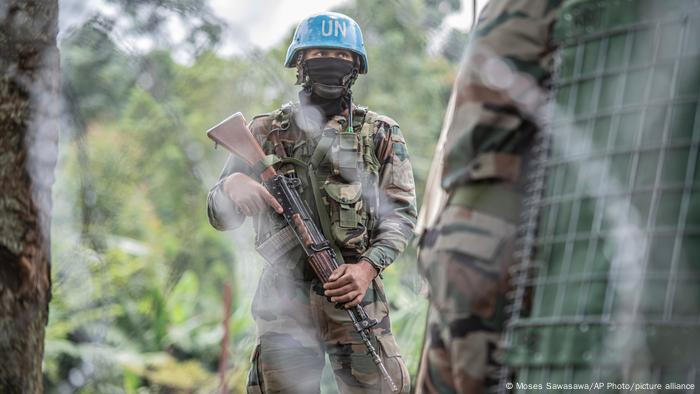
A MONUSCO peacekeeper in Kibumba near Goma in the Democratic Republic of Congo

The UN chief Antonio Gutteres has highlighted the need for negotiations to restore peace to Congo.

Matumo is however not convinced that negotiations between Congo and neighboring countries such as Rwanda are a viable solution. "You cannot negotiate with countries that are involved in aggression. We can't."

Pierre Boisselet of the Kivu Security Tracker is one of several analysts who suggest that that the UN is betting on regional negotiatons to end the crisis.

"The way I analyze this is that the [UN] secretary general believes that only a regional negotiation between the DRC, Rwanda and Uganda could resolve this situation," he said.

The UN may be unwilling to risk a situation of rupture with Rwanda, which may make it harder to mediate in the crisis, according to Boisselet.

Tshisekedi's government has already said it was not ready for negotiations with the M23. The Congolese leader told the UN General Assembly about the response to his efforts at diplomacy and negotiations.

"Despite my good will and the outstretched hand of the Congolese people to peace, some of our neighbors have found nothing better than to thank us by aggression and support for armed terrorist groups that are ravaging the east of the DRC," he said.

After addressing the UN, Kagame and Tshisekedi discussed the Congo crisis with French President Emmanuel Macron.

MONUSCO withdrawal imminent

MONUSCO was deployed in 2010 with a mandate to conduct offensive operations. The mission is expected to come to an end in 2024.

Rose Tuombeane, coordinator of the women's rights network Dynamics of Women for Good Governance, is concerned over the mission's failure to restore peace. MONUSCO should withdraw immediately to prevent an escalation in tensions, she believes.

"We have always asked for MONUSCO to be able to leave without conditions. An attempt should be made to speed up the process of their withdrawal. 2024 is too far away," Tuombeane told DW.
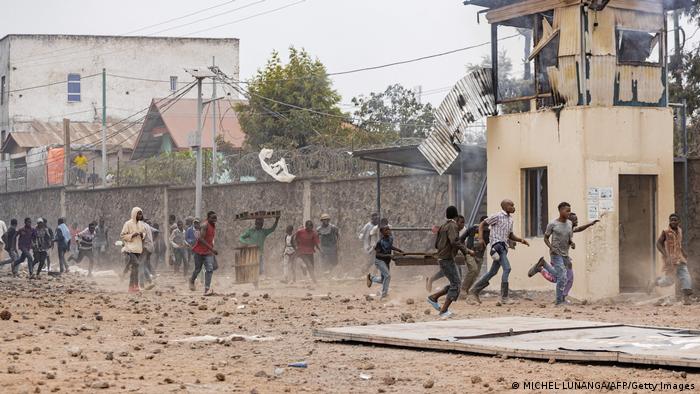
Protesters stormed a MONUSCO base in Goma on July 26, 2022

The acting spokeswoman of MONUSCO, Ndeye Khady Lo, told DW that the withdrawal is already underway. The mission was scaled down in 2014 and eight of its offices were closed in 2018. Over the past two years, it has withdrawn from Kasai and Tanganyika, two of the five provinces where its peacekeepers have been stationed.

The transition plan for the responsible, orderly and sustainable withdrawal of the mission was signed by the UN and the Congolese government a year ago, she said.

Political scientist Jean Claude Mputu told DW that once the mission ends, it would be up to the Congo to end the crisis.

"There are three things that need to be an alternative. The first is at the political level, secondly the thing to be done is that the Congolese army must be provided with sufficient resources and, finally, it is absolutely necessary to put an end to the impunity that reigns in this region and within the armed forces."

Saleh Mwanamilongo and Wendy Bashy contributed to this article.

Edited by: Benita van Eyssen
7 ways we can help slow climate change

While individual carbon footprints are dwarfed by global fossil fuel companies, we can do a lot to tackle the climate crisis and 'be the change we wish to see in the world.'

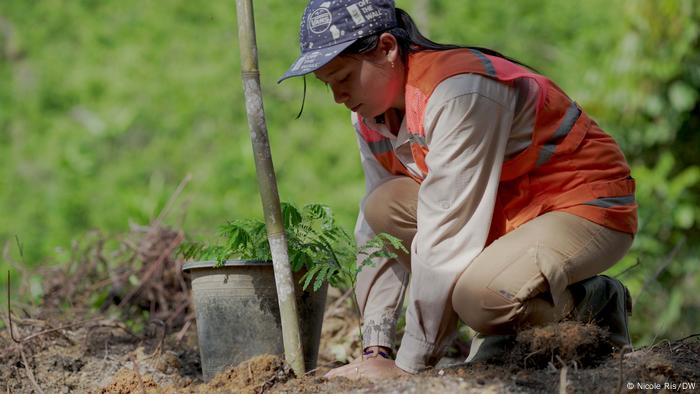
Planting a tree is one of numerous ways individuals can help to limit global heating

Many of us bemoan our inability to limit the wildfires, cyclones and flooding that are being experienced with more frequency and intensity due to climate change. There is a belief that polluting fossil fuel companies cannot be stopped, that governments will not regulate them, that emission reduction targets will never be met.

But individually — and in the end collectively — there are many things we can do to help limit the greenhouse gas (GHG) emissions that supercharge global heating.  

1. Ditch airplanes and petrol vehicles for buses, trains or bicycles

Transport generates around one fifth of the world's emissions, with road traffic as the worst offender.

One easy way we can cut emissions is to decarbonize our transport by ditching petrol cars for trains, bicycles, e-vehicles, and, whenever possible, walking — the ultimate zero-emission transport.

In cities, electrified transport options from e-scooters to e-buses are becoming a low-emission route from A to B. A petrol car pumps out over 10 times more carbon than an electric scooter — even when factoring in manufacturing and disposal emissions.

For the roughly 10% of the world's population who has ever boarded a flight, favoring trains over planes can also have a big impact. A typical rail journey between European cities emits up to 90% less CO2 than an equivalent flight.

2. Eat more plants instead of animals

Farming meat and dairy contributes around 15% of global GHG emissions — not to mention biodiversity loss, contamination of soils and pollution.

When the Intergovernmental Panel on Climate Change (IPCC) this year said that emissions need to be cut by half by 2030 to mitigate global heating, it stressed that a shift to "diets high in plant protein and low in meat and dairy" had the greatest potential to lower greenhouse gases.

So going vegetarian — or vegan — could be the way to go for those looking to mitigate their climate impact. 

boom in climate-friendly plant-based meats makes that choice even easier.

But so far plants only provide 2% of protein — though that's set to rise to 11% by 2035 and could be accelerated if more of us reduce our demand for meat and dairy, according to the Boston Consulting Group

Shopping at the vegan instead of meat butcher to help the climate

3. Pressure governments to take action

School kids at the Fridays for Future protests showed it's possible to take a collective stand for the climate. Politicians might not be doing enough, but they have had to listen as climate concerns drive voting intentions at elections around the world — including recently in Australia, with the new leader promising to significantly raise climate ambition (even if many believe the target remains inadequate).

And sometimes the courts also listen. In April 2021, young people from Fridays for Future successfully argued in a German higher court that a lack of climate action threatened their fundamental freedoms and was unconstitutional. As a result, the court forced the government to strengthen emission reduction targets — which it did a couple of months later.

With climate ranking as the top issue of concern among a rising generation of voters, many are pressuring politicians on climate via protests, social media campaigns, or writing to local representatives.

Demanding carbon neutrality by 2030 — the goal of a citizen initiative for a climate referendum in the German capital — is a good place to start.

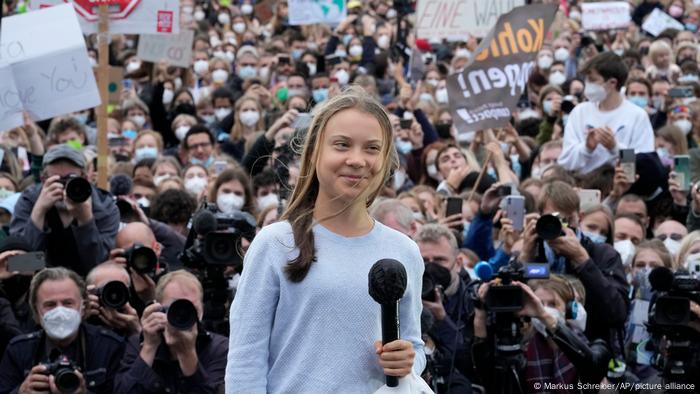
Climate activist Greta Thunberg spoke at a Fridays for Future climate strike

 in Berlin in 2021, the year the movement also won in court

4. Switch to green energy providers and (when possible) install renewables

Burning fossil fuels for energy is the largest source of global GHG emissions. This makes choosing green electricity from clean, renewable sources such as wind or solar a great way to cut a key source of climate wrecking carbon.  

And consumers have already made a difference. By 2019 in the European Union, renewable electricity generation doubled from 2005, making up 34% of all electricity generation. This means that coal, the highest emitting fossil fuel, no longer supplies most of the EU's electricity.

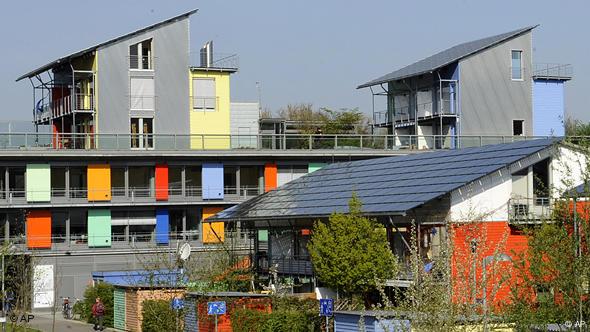
Those living in a house or even an apartment block can also try to install clean solar power on the roof, or electric heat pumps — where possible — as a substitute for gas heating. Some communities are even getting together to run their neighborhoods almost exclusively on renewable energy.


Freiburg in Germany's south is known as the solar city

5.  Turn off the lights, turn down the heating

Something as simple as turning the heating down can save a lot of energy. That's why the German government, faced with an energy crisis due to the nation's reliance on Russian gas, will limit heating temperatures to 19 degrees Celsius this winter in public buildings.

Shutting down your computer at night and eliminating "vampire" power by unplugging idle electronics is another climate change busting action we can achieve today. Even easier is to simply turn off the lights when we aren't in the room.

Using highly energy-efficient appliances — induction instead of gas stoves, for example — is another step forward. Better still, demand that your government switch off the night lights at monuments and buildings, a policy recently implemented in the German capital.

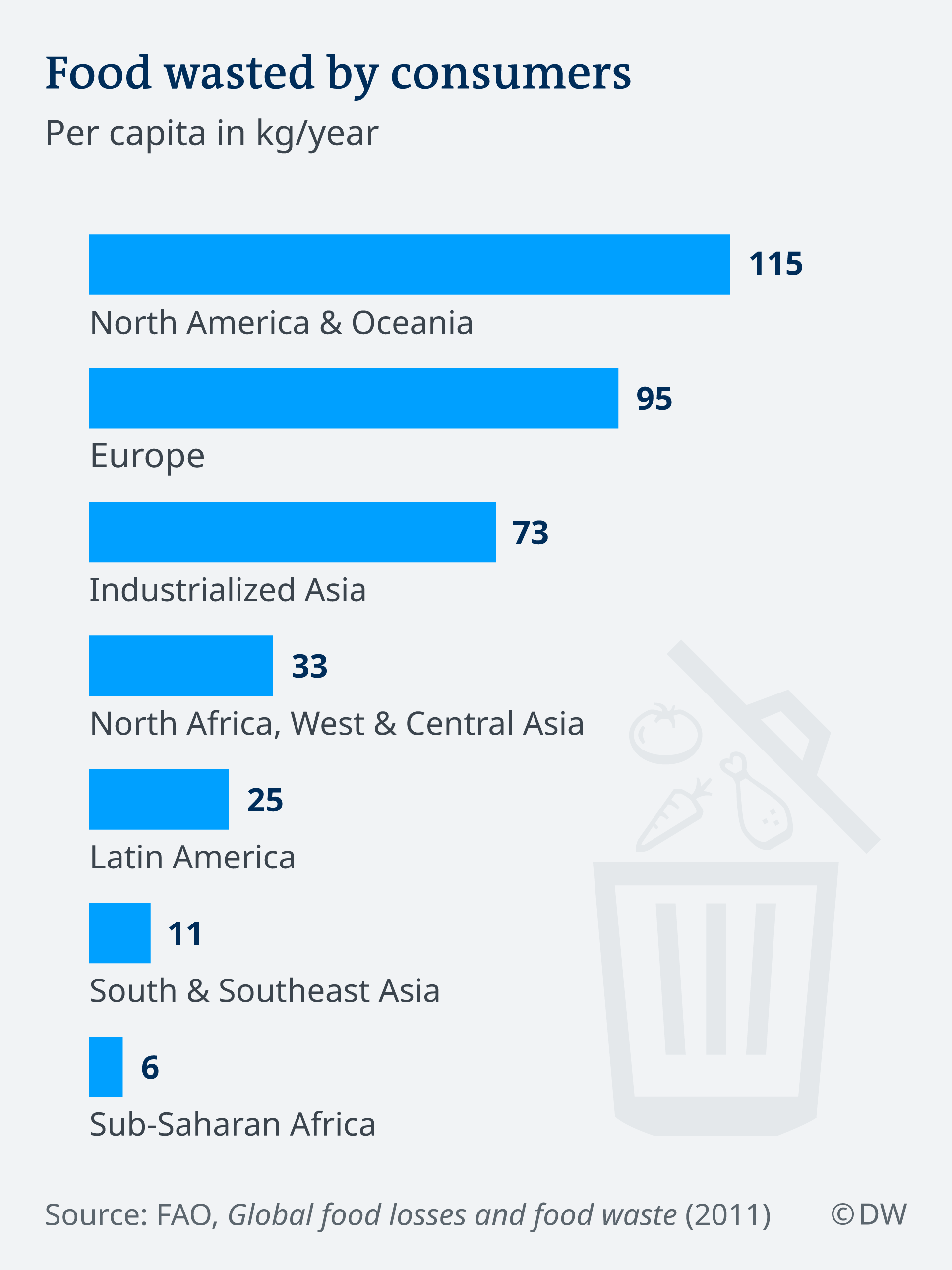
6. Waste less food

Meanwhile, around one third of food grown globally is thrown away. This food loss and waste is a massive carbon emitter when the production, transportation and handling of food is calculated — food that ends up in landfills also generates methane, a highly potent GHG over the short term. 

In the US, annual food loss and waste creates 170 million metric tons of carbon dioxide equivalent GHG emissions, and that's excluding landfill emissions. It's equivalent to the annual emissions of 42 coal-fired power plants.

So if we can't eat everything in the fridge, at least compost the rest — to fertilize the garden or for biogas.

Meanwhile, pressure supermarkets to stop throwing away extra food, instead offering it to foodbanks or charities; or ask restaurants to offer "doggy bags" for uneaten food — both measures are included in a food waste law recently passed in Spain.    


7. Plant trees

Trees are vital carbon sinks yet deforestation continues at alarming rates — logging of the Amazon forest, for example, rose by 20% in the last year. 

More than ever, planting trees is one of the best thing we can do as individuals to reduce CO2 in the atmosphere.

While also cleaning the air, increasing biodiversity and maintaining healthy soils, trees too save energy — especially in cities where more plants on the street keep things cooler and reduce the need for air conditioning — according to non-profit Become Carbon Negative.

So too in the winter, trees can shelter homes from the wind, helping to reduce heating costs by up to 25%.

Edited by: Jennifer Collins


CLIMATE CHANGE: FLOODING, DROUGHT, FIRE AND 
HEAT WAVES AROUND THE WORLD
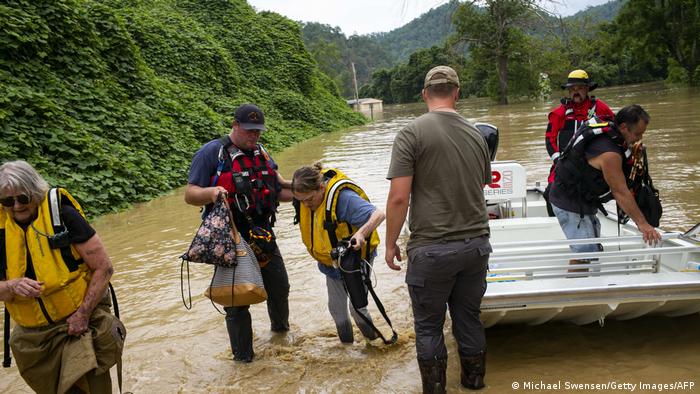
Heavy rains devastate communities in Kentucky, USA
Heavy rain has pummeled mountain communities in the US state of Kentucky. Water rushed down hillsides, swallowing towns, washing away homes and trapping hundreds of people. At least 30 people have been killed. US Vice President Kamala Harris said the flooding showed the urgency of crisis and announced $1 billion in grants to help states prepare for weather extremes worsened by climate change.
12345678910


Edmonton police spent $164K in overtime costs during convoy protests

The Edmonton Police Service spent $164,000 on overtime to cover six Freedom Convoy protests held in the city in January and February.


Edmonton police estimated about 1,000 to 2,000 people were in Edmonton on February 5 participating in a local convoy protest to show support for demonstrators in Ottawa, with several hundred more potentially on the way.
© Nicholas Frew/CBC

Janice Johnston - CBC

A police spokesperson said the overtime was incurred due to staffing shortages caused by COVID-19, along with the need to "maintain adequate staffing levels for the crowds."

"These were unbudgeted expenses that impact our operating budget that are not recoverable from any other entity," Cheryl Sheppard wrote in an email to CBC News, noting that "the results of this adequately resourced police operation over six weekends resulted in no injuries, no mass arrests and no riots."

Sheppard compared 2022 overtime costs to the preceding three years, revealing that more was spent on policing protests in 2019 for seven yellow-vest demonstrations and Greta Thunberg's visit and in 2020, which included a number of Black Lives Matter demonstrations.

EPS Protest Overtime costs

Exhaustive details about police planning and the execution of those plans for the Freedom Convoy protests were revealed in a 63-page package sent by the Edmonton Police Service to Haruun Ali, after he filed a formal complaint about EPS conduct during the protests.

Ali shared those documents with CBC.

The police chief dismissed Ali's complaint and Ali has since notified the Edmonton Police Commission that he plans to appeal the chief's decision.
'Peaceful and orderly'

The largest protest was the first one staged by protestors on January 29. According to the police documents, more than 5,000 vehicles and 9,500 pedestrians participated.

Despite the large numbers, police issued only two traffic violations. A subsequent report authored by Staff Sgt. Bill Krull described the protestors as "peaceful and orderly", though Krull also stated, "the drivers were constantly blaring their vehicle horns creating an intense level of noise throughout the downtown core which continued throughout the afternoon."

The Feb. 5 protest saw eight traffic violations issued.

The report authored by Krull said public pushback had increased by February 12 when the third Saturday protest was staged.

"The local Canada freedom protest/convoy environment was garnering the attention of local politicians and the public questioning the EPS policing response to the noise from the convoy vehicles driving in downtown Edmonton," Krull wrote.

The City of Edmonton was granted an injunction through court order to prohibit the constant blaring of horns in Edmonton for the Feb.12 protest.

Police decided to increase traffic enforcement, but according to the documents, based on legal advice, EPS opted to continue using the Traffic Safety Act and city bylaws for enforcement rather than the newly issued court order.
Counter-protestors

Tensions flared on Feb. 12 when counter-protestors blocked one side of River Valley Road. At the time, the counter-protestors complained about police actions.

An organizer told CBC that someone at the counter-protest was told that if they did not get off the road, they could be arrested and charged with mischief. The counter-protest ended without incident after the group moved to the sides of the road and traffic was able to get through.

"The counter-protestors attracted far more punitive measures than the right-leaning freedom convoy folks," said University of Alberta criminology Prof. Temitope Oriola.

"What struck me the most was the cumulative reverence, often deference, to the freedom convoy protestors … that essentially spoke to the ideation or underbelly of policing."

Leading up to the Feb.19 protest, the documents reveal police were concerned that counter-protestors could possibly block downtown streets and a railway.

As a result, the report notes, "patrol branches would be directed to send police wagons and resources to support a mass arrest protocol if activated."

However, there were no counter-protest blockades and no arrests were made.

The Feb. 19 convoy protest was the third-largest of the six and resulted in the most traffic violations (209) issued or mailed, including 71 noise violations.

Freedom Canada protest convoy data

There was a relatively small protest at the Alberta Legislature on Feb. 22 to mark the opening of the legislative session. That protest resulted in 108 traffic violations.

By the time the sixth and final protest was staged on Feb. 26, Krull noted, "The intensity of public and political scrutiny was far less than the previous weekend's events but there were still concerns about vehicle horns and lack of enforcement of the [City of Edmonton] court order."

There were 138 traffic violations issued including 30 for unnecessary noise.

An analysis of the numbers shows that the number of tickets issued increased as the size of the protests decreased.

Sheppard said that officers were able to see more violations taking place when there was less congestion and fewer people on the road. She also said that it was safer to conduct traffic stops when the convoy size decreased.

According to the Krull report, there was also increased attention paid to traffic enforcement.

"It is recognized that there were many public concerns that the EPS enforcement strategy was not aggressive enough to quell noise and traffic disruption," Krull wrote.

"The EPS command team believes that although not perfect for all, the outcomes achieved during these deployments were reasonable in balancing persons lawful right to protest versus other persons lawful enjoyment and safety."

The criminology professor agrees that policing protests is difficult. But Temitope Oriola believes the way EPS handled the six protests in January and February frayed the bond of trust with police for some members of the public.

"What it says to them is that the police may act, but it depends on who is protesting," Oriola said.
Kenney declines comment on cabinet minister lauding "freedom convoy" protesters
.


EDMONTON — Alberta Premier Jason Kenney is declining to weigh in on one of his cabinet ministers lauding protesters and “freedom convoys” fighting COVID-19 restrictions.


“I actually don’t monitor Twitter,” said Kenney, speaking to reporters in Toronto Wednesday, while pitching a renewed ad campaign to get more Canadians to move to Alberta.

“If you want to hear (Labour) Minister (Kaycee) Madu’s views or a clarification from him, I suggest you talk to him.”

Madu made the comments on Twitter Tuesday, reacting to news the federal government is debating whether to renew COVID-19 vaccine mandates and mandatory random testing for travellers when those rules expire at month’s end.

“It (the slate of restrictions) was never about science but about political control and power,” Madu tweeted.

“Thanks to all those citizens, freedom convoys, who had the courage to mobilize against these tyrannical policies. They endured a lot (of) hate (and) name calling, suffered and vilified on behalf of all of us. I thank them!”

Madu’s office didn’t respond to a request for an interview.

He has served in cabinet since the start of Kenney’s government in 2019 in three portfolios: municipal affairs, justice and now labour.

Madu became labour minister in late February, when Kenney removed him from the justice portfolio after an independent report determined Madu had tried — but failed — to interfere in the administration of justice by calling up Edmonton’s chief of police to complain about a traffic ticket.

Alberta had its own COVID-19 restrictions, gathering limits and vaccine mandates during the pandemic.

As justice minister in May 2021, Madu, who is also a lawyer, told reporters that while he doesn’t direct police and prosecutors, "it is my expectation that law enforcement and the Crown Prosecution Service will deploy all tools available to them to ensure that the (COVID) public health orders are enforced."


Kenney will cease to be in charge in two weeks, when United Conservative Party members pick a new leader and premier on Oct. 6.

Madu is backing leadership candidate Danielle Smith. Smith has promised to reject any COVID-19 rules and restrictions deemed harmful to Alberta's autonomy and well-being.


Alberta’s main U.S. border crossing at Coutts was one of a number of sites — along with downtown Ottawa — that were snarled earlier this year by “Freedom Convoy” protesters demonstrating against the Trudeau government and COVID-19 vaccine mandates.


The Coutts standoff paralyzed cross-border traffic for two weeks, ending in mid-February soon after RCMP made mass arrests and seized a cache of firearms and ammunition near the protest site.


A trial has been scheduled for June of next year for four men charged with conspiracy to commit murder at the blockade.

Opposition NDP justice critic Irfan Sabir said on Twitter: “Kaycee Madu needs to go. He should’ve been removed from the cabinet for interfering in the administration of justice (in the traffic ticket incident).”

Kenney agreed with Madu on the travel rules. At present, foreign nationals are typically not allowed to travel to Canada unless they have completed a primary series of approved COVID-19 vaccine.

Unvaccinated travellers allowed to enter Canada are subject to mandatory arrival tests and a two-week quarantine.

“It’s no secret that our government has been consistently opposed to unnecessary federal travel restrictions, specifically the ones that are still in place,” said Kenney.

He said he and other premiers made their concerns clear to Prime Minister Justin Trudeau that there was no scientific rationale for the rules. Kenney said Trudeau wanted to be seen taking action on the pandemic.

"It has been clear to me from the beginning that at least this latest round of travel restrictions were political and optical, not about reducing transmission," said Kenney.

"I think it’s become a huge inconvenience."

This report by The Canadian Press was first published Sept. 21, 2022.

Dean Bennett, The Canadian Press