Wednesday, July 26, 2023

UN talks seek to fix 'broken' global food system

Alexandria SAGE
Mon, July 24, 2023

The breakdown of a deal between Russia and Ukraine allowing the export of grain through the Black Sea is causing wheat prices to rise and putting more people at risk of hunger (STRINGER)

A three-day United Nations summit opened in Rome on Monday aimed at tackling a "broken" global food system where millions are starving, two billion are overweight or obese and the planet is suffering.

The food systems summit comes amid growing food insecurity around the world, with UN agencies warning of an increasing number of people suffering from chronic hunger.

"In a world of plenty, it is outrageous that people continue to suffer and die from hunger," UN Secretary-General Antonio Guterres said at the opening of the meeting.

"Global food systems are broken -- and billions of people are paying the price."


More than 780 million people go hungry around the globe, even as nearly one-third of the world's food is wasted or lost, he said.

And while 462 million people are underweight, two billion are overweight or obese, he added.

The summit brings together representatives from the UN's three food agencies headquartered in Rome -- the Food and Agriculture Organization (FAO), the International Fund for Agricultural Development (IFAD) and the World Food Programme (WFP) -- alongside heads of states, government representatives and delegates.

- Radical transformation -


Food systems include all activities related to producing, processing, transporting and consuming food, and making them more sustainable, efficient and equitable is a complex task.

Involving multiple sectors and actors, food systems are affected by varied trends such as urbanisation, climate change, technology and government policy.

Weather shocks, the Covid pandemic and conflicts including the war in Ukraine have helped push the number of people facing hunger up by 122 million since 2019, according to the WFP.

Between 691-783 million people faced hunger last year, with a mid-range of 735 million, WFP estimated in a report earlier this month.

Guterres reiterated his concern over Russia quitting the landmark grain deal that allowed cargo ships carrying Ukrainian grain to depart Black Sea ports.

"The most vulnerable will pay the highest price," of that move, he said, calling the previous agreement a "lifeline" for global food security.

The FAO has said that no less than a "radical transformation in how food is produced, processed, traded and consumed" is required to feed the world's growing population.

Guterres called for at least $500 billion per year to help needy countries scale up long-term financing to invest in higher performing food systems.

Doing nothing amounts to $12 trillion annually in social and economic costs, according to IFAD.

It compared the needed funds with the "$10 trillion in revenue generated by the global food industry or the $700 billion paid in agricultural subsidies by wealthy countries".

- 'Death sentence' -

Unsustainable practices in food production, packaging and consumption are also fueling climate change, Guterres said, "generating one-third of all greenhouse gas emissions, using 70 percent of the world's freshwater, and driving biodiversity loss on an epic scale".

The conference comes two years after the UN's first-ever summit on food systems in 2021 and ahead of a summit on sustainable development goals in New York in September.

Over the three days, countries will review progress in meeting past commitments, while identifying bottlenecks to progress, IFAD said.

But more money is key, summit director Nadine Gbossa said.

"Without financing this transition, it's a death sentence for the planet," she told journalists last week, adding that the private sector also plays a major role.

"The public health cost of malnutrition is one of the highest in the world."

ams/ar/lth
CRIMINAL CAPITALI$M
Corruption scandal puts billionaire BT shareholder under pressure

James Warrington
THE TELEGRAPH
Sun, 23 July 2023 

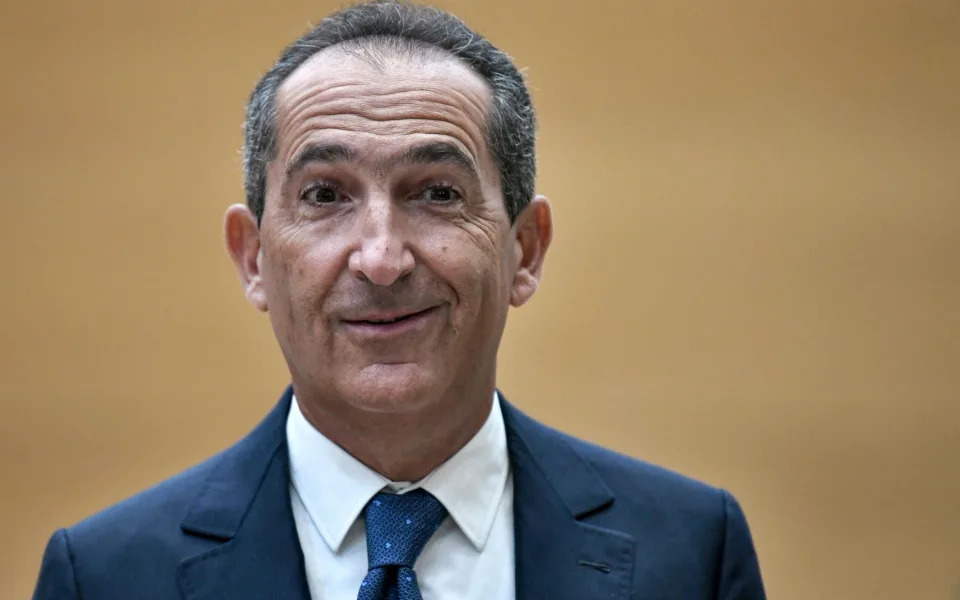
Franco-Israeli tycoon Patrick Drahi developed a reputation as corporate raider after years of executing debt fuelled acquisitions - STEPHANE DE SAKUTIN/AFP

“If you want to be successful, work hard, have fun and above all, listen and do not talk too much,” billionaire Patrick Drahi said in a rare interview in 2017.

The Franco-Israeli businessman appears to have taken his own advice. Despite building a fortune from his media and telecoms empire Altice, the tycoon has remained largely under the radar.

Virtually unknown in Britain until recently, Drahi has steadily been building his presence in the UK.


In 2019, he took control of iconic auction house Sotheby’s in a $3.7bn deal. And for the last two years he has tightened his hold over BT as his company has become the telecoms giant’s biggest investor.

Now, though, the reclusive billionaire is under the spotlight.

A major investigation into alleged corruption, tax fraud, forgery and money laundering by individuals and senior executives within his empire has provoked questions about governance at Drahi’s businesses.

Drahi and his company Altice have not been implicated but the scandal has prompted an internal investigation and sparked fears of reputational risk among staff.

At the heart of the scandal is Armando Pereira, the co-founder and former chief operating officer of Altice who is often said to be Drahi’s right-hand man.


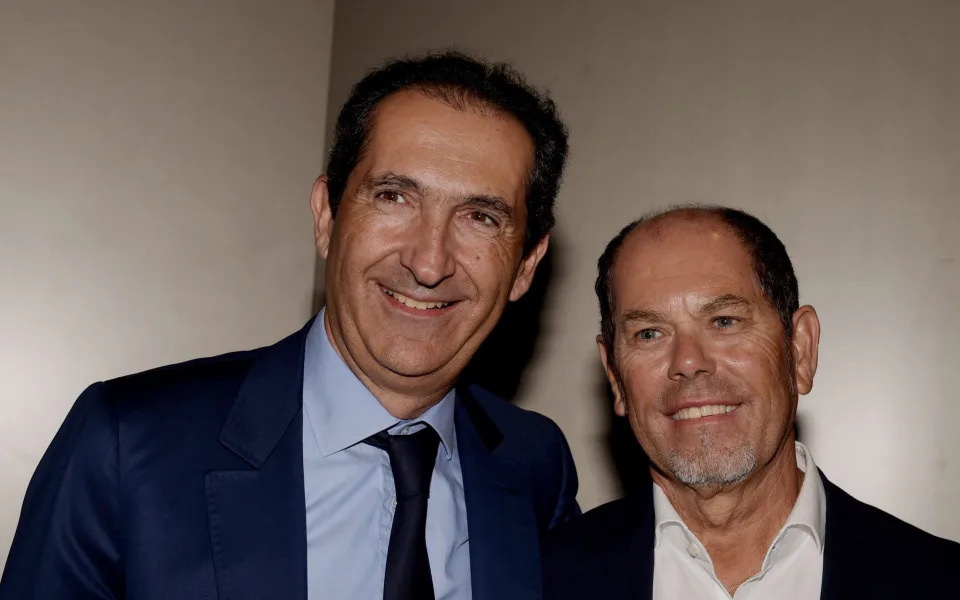
Patrick Drahi will face questions as to how much he knew of the allegations now facing his right hand man Armando Pereira - ERIC PIERMONT/AFP

Pereira was one of several figures arrested in Portugal earlier this month in a major probe dubbed “Operation Picoas”, during which officials raided dozens of offices, homes and law firms across the country.

The department of investigation and criminal action (DCIAP) said it had made three arrests and seized documents and possessions – including luxury cars – with a value of around €20m.

Prosecutors accuse Pereira of taking part in fraudulent property transactions and concealing profits from asset sales while working at Altice Portugal. One of the deals under investigation is the sale of four buildings in Lisbon for €15m.

However, officials believe this could be only the tip of the iceberg and the fraudulent schemes could extend to other areas including football TV rights.

Illicit gains could exceed €250m, at the expense of both Altice and the state, according to media reports.

Pereira, who is 71 and described by local press as Portugal’s richest man, has been held in custody and began testifying this week.

A lawyer for Pereira said his client had been the “target of a widespread attack in Portugal in recent days”.

“The communication surrounding this operation was done in such a way that it led to his being immediately found guilty in public opinion,” the lawyer said, adding that his team will demonstrate “the reality is not so simple”.

Pereira last week denied all allegations against him during an appearance in court.

Altice Portugal, which has not been accused of wrongdoing, said it had started an internal investigation of its procurement and real estate sales and has suspended payments to entities targeted by the authorities.

Pereira no longer holds executive roles at Altice. Still, the scandal has shaken the foundations of the telecoms empire he helped to build.

“It’s obviously bad because it throws into doubt the reliability of the organisation and the governance,” says François Godard, an analyst at Enders Analysis.

“It has the immediate effect of forcing the company to scrutinise everything. You stop all your dealings, you stop all new contracts, you look at existing contracts and you have to run checks on all supply agreements.”

Godard adds: “Even if in a few months’ time we see that it was limited to one person and a few suppliers, in the meantime the whole business has been disrupted.”

Drahi is now battling to contain the fallout from the scandal.

Altice insists that its operations in Portugal are separate from the rest of the group. However, there are already signs the shockwaves from Pereira’s arrest will spread through the wider business.

Alexandre Fonseca, Altice Group’s co-chief executive and US chairman, this week announced he was temporarily stepping down.


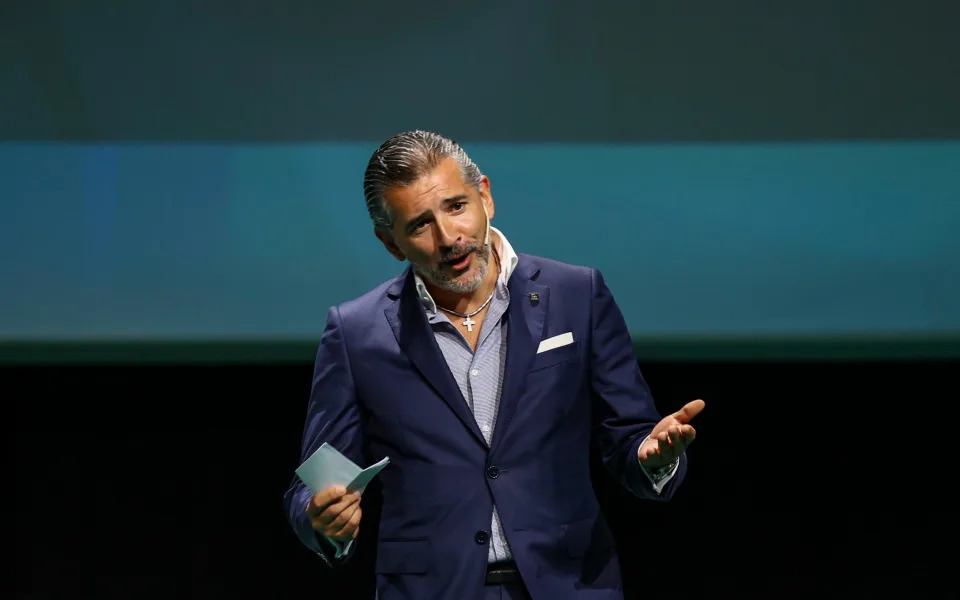
Alexandre Fonseca oversaw Altice's Portuguese operations before becoming co-chief executive of the whole business - Carlos Rodrigues/Getty Images

Altice said the move was designed to “fully protect and safeguard” the company during an investigation into events that happened while Fonseca was chief executive of the Portuguese division.

In a defiant LinkedIn post, Fonseca insisted he knew nothing about the corruption claims, following up with the Martin Luther King quote: “Injustice anywhere is a threat to justice everywhere”.

Altice USA chief procurement officer, Yossi Benchetrit, has also been placed on leave during an internal investigation, as have several employees in the group’s Portuguese operations.

Dennis Mathew, chairman and chief executive of Altice USA, wrote in an internal memo seen by The Telegraph: “We take this investigation very seriously and will continue to act diligently and with urgency to make decisions that are in the best interest of our employees, customers, and shareholders.”

He urged staff not to be distracted by “speculation and rumours” in the media.

However, in France, where Altice owns mobile network SFR and news channel BFM, employees are starting to worry.

Portugal has become strategically important for Altice France, with various suppliers based in the country.

Earlier this week, union chiefs met with Arthur Dreyfuss, chief executive of Altice France, and Mathieu Cocq, head of SFR, to express their concerns about the investigation and the potential impact on jobs.

One union, the CFDT, said it was worried about reputational damage from the saga, “particularly vis-à-vis creditors and future lenders, when the group will once again need to raise debt in 2025.”

The scandal may also reignite scrutiny of Drahi’s ownership of a large stake in BT through a subsidiary of Altice.

While the 59-year-old, who was born in Casablanca to Jewish parents, is not implicated in any wrongdoing and Altice insists it is a victim of a scandal, the fact that Drahi’s right-hand man has been accused will provoke questions of what the chief executive knew and when.

The uncovering of an apparent large-scale fraud at Altice will also lead to questions about governance within the group.

Officials are already on high-alert about Drahi’s stake in BT. His initial investment in BT sparked a national security review, though the government ultimately decided to take “no further action” without sharing details of why.

In May, the tycoon increased his holding to 24.5pc, just shy of a blocking stake that would hand him significant control.

The saga will shift the focus again to Drahi’s status as the biggest shareholder in a company that controls critical national infrastructure.

Godard says the scandal “adds to the case of people saying that his investment in BT should be scrutinised and the Government should never have authorised him to go higher”.

Drahi has developed a reputation as a low-profile but aggressive corporate raider.

After founding Altice in 2002 alongside Pereira and Bruno Moineville, Drahi built the group through a series of high-profile acquisitions, including French mobile network SFR and Suddenlink Communications in the US.

An unsolicited $3.2bn takeover bid for French satellite giant Eutelsat in 2021 failed, but highlighted Drahi’s continued appetite for dealmaking.

Years of takeovers fuelled by low interest rates saddled Altice with more than $50bn of debt.

But Drahi – a self-described penny-pincher – has also established a reputation as a ruthless cost-cutter, stripping out layers of management at the companies he acquires and replacing laid-off staff with outsourced contractors.

Goddard says: “I’m sure BT would prefer for it to be one person doing bad things as opposed to governance being called into question.

“BT will be happy once it’s over.”
UK bill waters down protections against ‘robo-firing’ in gig economy, say experts

Kevin Rawlinson
THE GUARDIAN
Sun, 23 July 2023 

Photograph: Anthony Devlin/PA

Protections for gig economy workers will be watered down should ministers succeed in pushing a controversial bill through parliament, experts have said.

The new law would weaken a relatively little-known right to force app-based firms to explain themselves when they make automated decisions, known as “management by algorithm”, before many workers had even realised they had it, they said.

Campaigners have criticised it as a “deregulatory race to the bottom” that will further disadvantage gig economy workers during the cost of living crisis.

Currently, people are able to see when companies such as Uber use the vast quantities of data at their disposal to automate decision-making. That was reaffirmed by a court in April, which found in favour of several drivers who were “robo-fired” by the taxi firm, then denied an explanation.

Yet few workers know about it, according to the Institute for the Future of Work (IFoW). And a bill that has already cleared several Commons hurdles would make it impractical for many to actually pursue it in future, the research group said.

The campaign group Connected by Data said: “This bill is part of a deregulatory race to the bottom that removes many of the current controls and safeguards over automated decision-making (ADM), data access and usage that protect UK consumers, workers and patients.”

It added: “In practical terms … gig-economy and big tech companies will be further empowered to subject workers to non-transparent ADM without human review safeguarding, more easily refuse workers access to data held on them by the company, and avoid consultation with workers around data-driven systems that affect them.”

The data protection and digital information bill proposed to make it easier for firms to charge people for access to the data used to automatically reach management decisions, and to refuse requests altogether on the grounds that they had defined them as vexatious, an IFoW spokesperson said.

He added that the spread of management by algorithm had “created real problems because, when management functions are replaced by automation, workers lose any sense of agency or redress”.

“Where it becomes complicated is where a person or groups of people are let go but, because there is no transparency, they do not know why.”

He referred to a ruling by the court of appeal in Amsterdam in the case of the UK-based Uber drivers. The judge found in favour of the workers, who claimed they had been “robo-fired” over what they called “spurious allegations of ‘fraudulent activity’” that were not meaningfully overseen by a human. Moreover, they said, they were “stonewalled” by the firm when they tried to find out how it had used its data to make the decision.

The campaign group Worker Information Exchange, which helped bring the case, said this week it received confirmation Uber would not appeal. But it claimed the firm was still not abiding by the ruling.

“The reason Uber is unlikely to go with the ruling is that they don’t want people looking at their algorithm for commercial reasons. That is a problem for workers,” said the IFoW. “Or Uber might offer data to an individual worker that is not in a form that would allow them to understand if any bias has been suffered. We have argued for collective access given, for example, to a union representative who is trained to read the data.”

Uber declined to comment on the passage of the bill. Instead it reissued the statement it offered when the Amsterdam court ruled, which read: “Uber has robust processes in place, including meaningful human review, when making a decision to deactivate a driver’s account due to suspected fraud.” This was despite the court finding its human review was not “much more than a purely symbolic act”.

The Department for Science, Innovation and Technology has been approached for comment.
Treat workers like adults and they’ll get the job done

Gene Marks
THE GUARDIAN
Sun, 23 July 2023 

Photograph: Brendan McDermid/Reuters

You know what the worst thing about working for someone else is? It’s wasting your time.

Many years ago I worked at a small pharmaceutical company. I did a lot of time-wasting. I was a senior accountant and I reported to the company’s chief financial officer. He was very old school. My hours were from 8am to 6pm and I was expected to always be at or near my desk during that period. My boss also worked the same hours, sometimes even longer. He stayed until the CEO left for the day, and it was expected that I would stay until he left for the day.

Was I busy? Sure, most of the time. But there were also plenty of times when I wasn’t. Times I could have left work much earlier and spent time with my family. This was in the 1990s so there wasn’t the internet. We had phones and I could easily stay in touch. Unfortunately, that wasn’t the culture of the company – and certainly not a consideration for my boss. So instead I had to spend countless days hanging around the office, literally twiddling my thumbs while my wife and very young children were at home as I waited for my boss to clock out for the day. What a waste of time.

Times have changed.


That’s according to workplace author Minda Zetlin, who recently pointed out that despite a reduction in work hours reported by the Bureau of Labor Statistics, employers continue to retain their workers, and are even looking to add. She believes companies are still recovering from the lack of employees as a result of the pandemic and are even hoarding employees. But the main reason behind this trend, she believes, is that more employers are recognizing the importance of their employees’ work-life balance.

“Making time to rest and have a good life outside work actually leads to greater productivity and more achievement than if you spend endless hours at your desk,” she writes on Inc.com.

People who know me know I have little patience for lazy, complaining, “quiet-quitting” workers, not just because their attitude negatively affects the efforts of their employer, but by behaving this way – regardless of the reason – they create significant challenges for themselves. Leaders want to surround themselves with hard workers who take pride in putting in whatever effort is required to get the job done. These are the people who succeed in their jobs and in their lives.

But I remember sitting around that office “working” when work wasn’t really necessary. My performance suffered each day I was forced to do this. If my boss had allowed me to spend more time with my family when things were slow I wouldn’t have been so miserable spending time at work when things were really busy. If he had recognized the importance of my work-life balance he would have had a much more productive and happier employee. The result? I left that job after two years and started my own little business. And I’ve been practicing what Zetlin has been preaching.

I don’t ask my workers to account for their hours. I don’t even have standard office hours for my business. All I care about is that they get their work done. If our clients are happy, I’m happy. If I try to reach a worker and they’re not immediately available, I’m good with a response back in a reasonable amount of time. As a service business – and like most service businesses – I make my money on billable hours. But I don’t impose quotas. I leave the decisions as to when and where to work up to my workers. They’re adults. They know their responsibilities.

And looking back at my time at the pharmaceutical company, I realize that’s why I was so unhappy. I wasn’t treated like an adult. I was forced to be somewhere even when I didn’t need to be there because my boss didn’t trust me to do my job otherwise. That lack of trust was the reason why I left. And because I don’t treat my workers this way my business has had very little turnover. People are happy.

The workday has changed and the workplace is different. The number of hours your employees work in a week is meaningless. What’s important is that they’re doing their jobs and providing your company value. Have that attitude and you’ll have a more profitable business – and happier employees.
UK
Trade groups demand Ofgem tackle energy brokers ‘ripping off’ small firms


Jillian Ambrose 
Energy correspondent
THE GUARDIAN
Sun, 23 July 2023 

Photograph: Stefan Rousseau/PA

A coalition representing 1m small businesses is urging the energy regulator to crack down on the rogue energy brokers who rip off firms, charities, care homes and faith groups by piling billions of pounds in hidden commission fees on to bills.

The business groups have written to Ofgem demanding it force gas and electricity suppliers to disclose how much they are paying the intermediaries who market deals on their behalf.

The trade associations claim that these secret commissions have inflated energy bills and compounded the cost crisis facing the small business sector, which employs almost 13 million people across the UK.

“We cannot afford to wait for further reviews on this issue,” said the letter. “We have the support of some of the biggest voices representing the UK’s most hard-hit sectors. If you continue to fail the business community by allowing this exploitation to continue, we will raise this direct with government.”

The letter, seen by the Guardian, has been signed by chief executives from UKHospitality, Care England, the British Retail Consortium, the Federation of Independent Retailers (FIR), the Association of Convenience Stores, British Independent Retailers’ Association, the Independent Care Group and the National Council for Voluntary Organisations.

Muntazir Dipoti, the national president of the FIR, said many of its members were struggling to stay in business.

“It is, therefore, critical that Ofgem takes action against these hidden charges to prevent even more retailers being left severely out of pocket,” he said.

The Confederation of British Metalforming wrote a letter earlier this year to the energy security secretary, Grant Shapps, seen by the Guardian, which described the situation as the “biggest mis-selling scandal since PPI [payment protection insurance]”.

It follows warnings from the Federation of Small Businesses and the British Chambers of Commerce that about a quarter of the UK’s small businesses are now locked into poor value energy deals that were struck when gas and electricity prices were at their peak at the end of last summer.

Almost a third of companies with a business energy supply contract use a broker to secure it, but unlike the intermediaries who market mortgages or insurance deals these energy middlemen are largely unregulated.

Lawyers at Harcus Parker and Leigh Day, which have launched class action lawsuits against energy suppliers, believe that in some cases secret broker commissions may have doubled small business energy bills. They have said that small businesses may have the right to claim back up to £2bn in hidden commissions.

Damon Harcus, who founded Harcus Parker, said: “The malpractice is so widespread, and it’s coming to light at a time when fuel costs are often what determines whether a company can survive. We have 5,000 companies which have come forward so far, and that number is growing.”

He added: “The regulator seems to believe that they can’t regulate brokers, or they shouldn’t. But it would be the easiest thing in the world to insist that suppliers are open about the commissions they pay. Failing to do so has given rise to an improper industry.”

Ofgem has promised for at least 10 years to take action against brokers who lock companies into poor value deals. After its latest review, in 2020, the regulator said it would force suppliers to disclose how much they were paying brokers in commission – but only for so-called “microbusinesses” of nine or fewer employees.

Business groups are calling for the regulator to extend this protection to larger small and medium businesses.

Ofgem said it had “listened loud and clear to calls to protect businesses of all sizes from sharp practice by energy brokers”.

A spokesperson said Ofgem had completed “the most detailed ever review” of the business energy market and would set out “a comprehensive package” of new proposals to tackle poor behaviour by energy suppliers later this week: “This will include immediate actions we can take within our existing rules and where we might need stronger powers.”
UK
Telegraph publisher hails profit rise amid subscription push as bidders circle


Holly Williams, PA Business Editor
Mon, 24 July 2023 


The publisher of The Daily and Sunday Telegraph has said the majority of its annual sales now come from subscriptions thanks to a digital push as it looks to weather wider pressure on newspaper revenues and cost hikes.

Telegraph Media Group (TMG) – which was put up for sale in June after talks between their billionaire owners, the Barclay family, and lenders collapsed – reported a 2% rise in subscriptions to 734,000 in 2022, thanks to an 8% hike for digital subscriptions.

Chief executive Nick Hugh said the group was “firmly on track” to achieve its target of reaching one million subscriptions in 2023, adding it was likely to hit the milestone ahead of the year-end goal.

In figures published for the first time for 2022, it said digital subscription revenues jumped 31% to £57.9 million, helped by price increases.

Overall, subscriptions accounted for 51% of total wider revenues last year, it said.

This has increased further to 52% so far in 2023 as TMG said the subscriptions growth momentum had continued – reaching over 974,000 as of June.

Last month, it emerged that the Daily and Sunday Telegraph and The Spectator magazine were being put up for sale after the Barclay family lost control of the titles following a bitter row over unpaid debts.


Lloyds Banking Group appointed corporate finance advisory firm AlixPartners as official receivers for B.UK, the overall holding company of the publications.

Potential bidders said to be interested in buying the Telegraph titles include the Daily Mail & General Trust, owner of the Daily Mail, Mail on Sunday, The i and Metro.

Other suitors are thought to include the German publisher of Bild, Axel Springer, while News UK may be another to enter the fray for The Spectator, according to reports.

There was no update on the sale process in the TMG accounts.

Revenues lifted 4% to £254.2 million in 2022, but the group – which bought the Chelsea Magazine Company in March – signalled that sales growth had increased to around 8% in 2023.

TMG said: “TMG remains confident in the strategy and expects that profitability will increase further in 2023, despite continued decline in print advertising revenues and well-documented inflationary pressures.

“Revenue (excluding Chelsea Magazine Company) is increasing at approximately double the rate of last year.”

It said industry challenges remain, but that its focus on growing subscriptions was helping provide “greater revenue visibility into future years”.

“Industry-wide structural decline in print circulation and advertising revenue continues at a consistent rate,” TMG said.

“Considering these trends and market conditions, the significant progress that has been made in growing subscriptions has reaffirmed the company’s commitment to its subscription-first strategy.”

Sir Frederick Barclay and his twin brother, Sir David Barclay, who died in 2021, bought the Telegraph newspapers in 2004 for £665 million.
UK
Sharp slowdown in private sector growth surprises economists

August Graham, PA Business Reporter
Mon, 24 July 2023 

The UK’s private sector appears to have slammed the brakes on growth so far this month, as it fell well short of expectations in a closely followed survey.

According to the purchasing managers index, the economy is still growing, but has fallen behind compared to previous months.

The survey, compiled by S&P Global and CIPS showed that it sank to its weakest point in six months.

It scored 50.7 in July, down sharply from 52.8 last month.


Supply chains improved rapidly this month, the survey indicated (Gareth Fuller/PA)

Although the figures indicate that the economy is still growing, anything over 50 is positive, it is a sharp slowdown and much worse than the 52.3 that experts had forecast.

The lower the figure goes the worse it is for the economy.

The companies who filled out the survey said that they had been hit by rising interest rates, still high levels of inflation and caution among customers.

It dampened the post-pandemic rebound in what households spend on leisure activities, the survey found.

“The UK economy has come close to stalling in July which, combined with gloomy forward-looking indicators, reignites recession worries,” said Chris Williamson, chief business economist at S&P Global Market Intelligence.

“July’s flash PMI survey data revealed a deepening manufacturing downturn accompanied by a further cooling of the recent resurgence of growth in the service sector.”

Dr John Glen, chief economist at the Chartered Institute of Procurement and Supply said: “Higher borrowing costs are here to stay and the private sector knows it.

“Interest rate hikes are not just affecting new orders today but spending plans long into the future.

“The biggest concern is increasingly not if the UK economy will enter recession but for how long.”

But there was some good news among the bad.

Manufacturers reported that the time it took their suppliers to deliver goods dropped at the fastest rate since January 1992 when records began.

It marks a normalisation in supply chains that brought down cost pressures for companies, and allowed them to reduce what they charged customers.

“The jigsaw pieces for a supply-led reduction in inflation are falling into place,” Dr Glen said.

“Global supply chains are returning to normal after years of pandemic shortages and rising costs.

“Stocks of unused goods built up to help manage Brexit, the pandemic and most recently global shipping disruption are finally being run down.

“Manufacturing input costs are falling and supplier performance is improving at the fastest rate we have ever seen.

“This renewed supply chain agility, combined with falling raw material and transportation costs, could not have come at a better time for business.”


UK  
Major banks' privacy policies allow them to monitor customers' social media accounts


Neil Johnston
The Telegraph 
Sun, 23 July 2023 

Social media apps on a phone

The country’s biggest banks have quietly introduced the right to monitor customers’ social media into their privacy policies, The Telegraph can disclose.

Despite public denials that they carry out checks on sites such as Facebook and Twitter, the four biggest high street lenders and several others have buried in the small print of their privacy policies that they may obtain information from social media accounts.

Banks are facing increasing pressure to reveal what checks they carry out on customers after Nigel Farage, the former Ukip leader, discovered the exclusive bank Coutts closed his accounts after it was deemed that his views “do not align with our values”. A dossier compiled on Mr Farage included examples of his posts on Twitter.

The Brexiteer is also demanding an apology from the BBC, after it inaccurately reported that his account was closed for commercial reasons, the day after its business editor sat next to Dame Alison Rose, the chief executive of Natwest, at a dinner.

Mr Farage has now lodged a complaint with the Information Commissioner over the briefing to the corporation about his account.

Banks are facing increasing pressure to reveal the checks they carry out on customers after what happened to Nigel Farage

It comes as the Telegraph can reveal that three more banks are being scrutinised by the Treasury amid claims accounts have closed because of customers’ political views.

The cases relate to Metro Bank, Yorkshire Building Society and American Express.

The specifics of the cases being looked at by officials are not known. However, the political parties Reform UK and the Brexit Party are both understood to have had difficulties with their accounts with Metro Bank. It recently emerged that Yorkshire Building Society closed the account of Reverend Richard Fothergill days after he wrote to the bank complaining about its messaging for Pride month. Richard Tice, the Reform UK leader, has also told The Telegraph that his American Express account was suspended for a number of weeks earlier this year.
Watching social media

Natwest, which is 39 per cent owned by the taxpayer and is the parent company of Coutts, did not answer questions about whether it regularly looks at customers’ social media.

However, in a 13-page privacy notice it said it may gather “information that you make public on social media”, including Facebook and Twitter. Coutts’ policy is identical.

Lloyds Banking Group, which also owns Halifax and Bank of Scotland, ignored questions about the issue, but admits in small print it may collect information from “published media and social networks”.

The banks do not refer to this in the terms and conditions for account closures.

HSBC also refused to deny that it monitored customers’ social media. In its 28-page privacy notice, it admits it could monitor information “that relates to your social interactions, such as your communications via social media, between individuals, organisations, prospects”. The bank said it would not comment on internal processes.

Barclays admits that in some circumstances “we collect information about you, such as from your actions on our social media pages or through the social media”, when explaining what data it holds.
Public information

When asked about the issue, Nationwide said it does “not actively or monitor social media profiles”, but online states that “in certain situations, we may use information that you’ve made public such as tweets or social media content too”.

Santander says it does not monitor customers’ social media accounts, but that it will check publicly available data sources.

Virgin Money said that it does “not ordinarily examine people’s social media accounts to fulfil our regulatory obligations”, unless this is relating to a complaint.

Metro Bank says it will “occasionally obtain [information] from publicly available sources, such as social media sites”.

Refinitv, which owns the World-Check Risk Intelligence database that is used by banks to search for regulatory red flags on potential customers such as terrorism, crime or political exposure, also looks at social media, but said this was for biographical information rather than risk factors.

UK Finance, the banking industry body, has admitted that lenders could run checks on customers using social media.

“Banks [are] allowed to monitor social media of their clients, well to the same degree as other people,” a source said last week. “They’ve also got more obligations to monitor their customer activity than many other businesses as they’re in the regulated sector.”
‘People will be horrified’

Mr Farage likened banks monitoring customers’ social media to Communist China.

“I don’t want to live in communist China, yet increasingly we are. The banks are out of control and need to be brought to heel. People will be horrified by this.”

Gareth Johnson, the MP for Dartford, said it was disturbing that banks had given themselves the green light to monitor social media.

“This smacks of a big brother approach from the banks. I cannot see what anybody’s social media activities have to do with their bank. Too often the banking sector seems to have lost its way recently which should worry us all.”

NatWest said: “It is not our policy to exit a customer on the basis of legally held political and personal views. Decisions to close an account are not taken lightly and involve a number of factors including commercial viability, reputational considerations, and legal and regulatory requirements.”

Barclays said it complies with legal and regulatory obligations and would only withdraw services “in exceptional circumstances”.

A Metro Bank spokesman said: “It is not our policy to close or refuse an account due to the political or personal beliefs of an individual or organisation.”

A request for comment was submitted to spokesmen for Yorkshire Building Society and American Express.


UK MPs challenge VC firms over record on female and minority-led firms

Joanna Partridge
Sun, 23 July 2023 

Photograph: Chon Kit Leong/Alamy

The venture capital industry has come under fire from MPs for its “unacceptable failure” to invest in businesses located outside London or south-east England, or those run by women and ethnic minorities.

Businesses founded exclusively by women were revealed to have received just 2% of all venture capital funding in 2022, while even less investment went to companies led by black or other minority ethnic executives.


Parliament’s Treasury committee is now urging the sector to implement rapid change, and is calling on the government to play its part.


Venture capital is a kind of financing provided by investors to start-ups or emerging companies, which are seen as having potential for high growth. The investment is usually offered in exchange for a share of the business but can be risky for investors.

The venture capital sector receives support from government through tax reliefs, which are aimed at encouraging investment in the UK.


The cross-party Treasury committee of MPs has criticised the unfair allocation of funding revealed by the diversity statistics and is calling on the industry and government to urgently improve the figures as well as transparency.

Data also showed that the overwhelming majority (80%) of venture capital investment flows to the “Golden Triangle” of London, Oxford and Cambridge, a situation the committee called “unacceptably concentrated”.


Nearly half of all venture capital funding goes to small businesses based in the capital, despite it only being home to under a fifth (19%) of such firms.

The committee said it can take companies based elsewhere in the UK longer to become established, and called on the government to extend tax reliefs which are currently limited to companies that are less under seven or 10 years old, saying this holds back economic growth and innovation.

The committee complained that it had still not received information from the Treasury on when venture capital tax reliefs with expiry dates would be extended.

Harriett Baldwin, chair of the committee, said the statistics showing that most venture capital finance failed to reach female and ethnic minority-led businesses demonstrated a “shocking dereliction of duty given the level of government support for the industry through tax reliefs”.

She added: “Firms must be compelled to reveal their diversity data when applying to these tax reliefs in an effort to increase transparency and drive change. Government incentives could also be tweaked to encourage more regional venture capital investment.”

The committee, which in recent days said it would renew an inquiry into sexism and misogyny in the City after a spate of sexual harassment allegations in the world of business, said it would be keeping a close eye on developments.

The MPs also have urged the Treasury to make collecting and publishing the diversity statistics of venture capital firms and their investments a requirement for eligibility.
British Airways owner backs Teesside green fuel maker

Oliver Gill
Mon, 24 July 2023 

british airways

The owner of British Airways has invested in a green aviation fuel producer based in Teesside as the airline industry races to meet net zero targets.

IAG, the FTSE 100 group behind the UK flag carrier, Aer Lingus and Spain’s Iberia, is to invest in Nova Pangaea Technologies, which is building its headquarters within the Teesside Freeport.

Nova Pangaea has developed technology to turn waste products such as wheat straw, sawdust and leftover wood trimmings into feedstock to create so-called sustainable aviation fuel (SAF).


SAF has a far lower carbon footprint than current jet fuel and is seen as the best way to cut the environmental impact of the aviation industry.

However, production is currently small-scale, and industry is pushing to rapidly ramp up supply to meet net zero targets.

IAG’s investment in Nova Pangaea will help the start-up establish its first commercial waste-to-fuel factory, with the airline group set to become a customer.

The size of the investment was not disclosed, though Nova Pangaea’s chief executive Sarah Ellerby called it “transformational”.

IAG’s backing comes as it races to meet a goal of fuelling 10pc of its flights with sustainable aviation fuel by 2030.

The Government has set a goal of decarbonising Britain’s airline industry by 2050 under its “Jet Zero” plan. SAF is seen as the fastest option for transition, with current planes able to run on the fuel.

Luis Gallego, the airline group’s chief executive, said: “Sustainable Aviation Fuel is the only realistic option for long haul airlines to decarbonise, which is why investment in this area is so critical.

“We are not just buying SAF, we are willing to invest in developing the industry, but we need governments in the UK and Europe to act now to encourage further investment.”

Nova Pangaea announced in November last year that it would build its headquarters and first commercial plant at Wilton International, an industrial site within Britain’s largest freeport at Teesside.

Tees Valley mayor Ben Houchen told The Telegraph that IAG’s investment marked a “huge coup for Teesside, bringing more of the cleaner, safer and healthier jobs of the future”.

He added: “Decarbonisation is one of the biggest issues facing the aviation industry today. If we’re truly serious about becoming the UK’s clean energy powerhouse and growing Teesside Airport responsibly, SAF is an opportunity that we need to grab with both hands.”


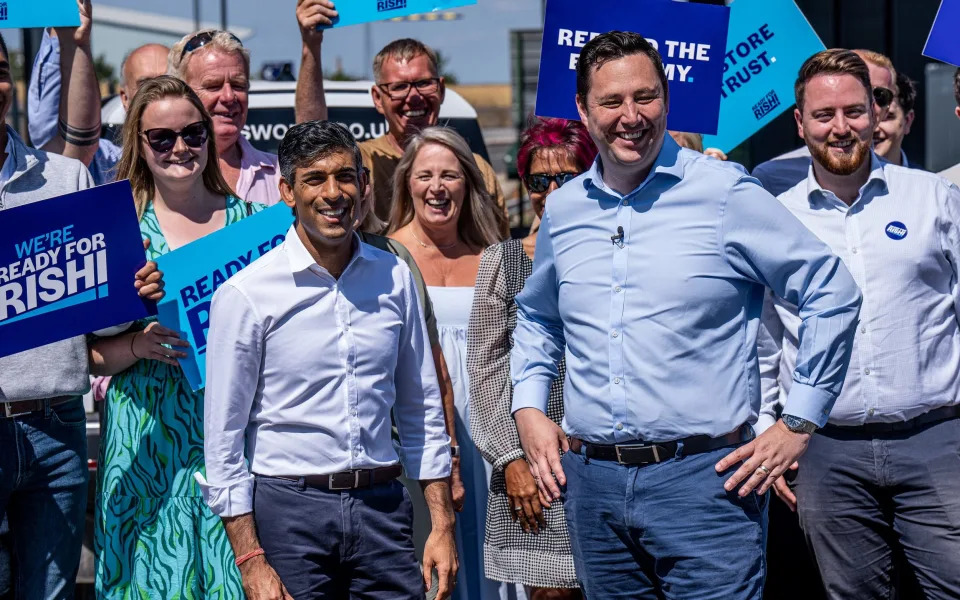
Ben Houchen (right) with Rishi Sunak at the Teeside Freeport in 2022 - Charlotte Graham

IAG’s investment in the area is a boost for the under-fire mayor who is facing allegations of sweetheart deals with two local businessmen at Teesworks, a 4,500-acre brownfield development that forms part of the freeport zone.

Michael Gove, the Levelling Up Secretary, has ordered an inquiry into the claims. Mr Houchen and others accused have all denied any impropriety and branded it a Labour “smear campaign”

However, the furore has threatened to overshadow plans to revitalise a region and has already prompted companies to rethink plans to build factories at Teesworks.

The claims do not relate to the Wilton International industrial site where Nova Pangaea Technologies will be based.

Ms Ellerby said: “Our facility will be the UK’s first commercial plant of its kind, and it will play a crucial role in decarbonising the aviation sector, as well as providing local employment opportunities.

“We are confident of beginning construction later this year and producing second-generation biofuels by 2025.”