Monday, October 02, 2023

NEW BRUNSWICK
Salmon group gives up trying to wipe out smallmouth bass


Local Journalism Initiative
Mon, October 2, 2023 

A group of wild Atlantic salmon conservationists that's been working for years to eradicate smallmouth bass from the Miramichi River watershed says it's abandoning the project, due to a lack of government action and problems posed by protesters and cottage owners they consider uninformed.

Instead, the Working Group on Smallmouth Bass Eradication in the Miramichi is calling upon the federal and provincial governments to uphold their responsibilities and get the job done.

“Smallmouth bass will now colonize the watershed,” working group spokesperson Neville Crabbe said in a news release Friday morning.

“They will eat trout, salmon, and other native species, and fight for habitat. The irreversible negative consequences of this invasion are the result of one of the most consequential environmental crimes in New Brunswick history; the illegal introduction of invasive smallmouth bass to Miramichi Lake.”

After years of false starts and disruptions, last September the group – which includes the Miramichi Salmon Association and the North Shore Mi’kmaq District Council, representing seven eastern Indigenous communities – completed one part of the eradication project – the application of the natural chemical rotenone to Lake Brook and a 15-kilometre stretch of the Southwest Miramichi River.

That operation, the group said, went according to plan, wiping out a few dozen smallmouth bass and hundreds of juvenile salmon – parr – along with an estimated 50 to 75 adult salmon.

The group said the move was necessary to help preserve the annual run of up to 25,000 returning salmon from the ocean. The large fighting fish is considered iconic in New Brunswick and sacred to Indigenous communities, whereas smallmouth bass was introduced, a fish native to the Great Lakes and St. Lawrence River that’s aggressive on the line but easy to catch.

Part 2 of the eradication program, now halted, would have applied the chemical to Miramichi Lake, part of the river's headwaters, which is about 170 kilometres southwest of its estuary at Miramichi.

But some cottage owners on the lake and Indigenous people from Wolastoqey communities in western New Brunswick have pushed back, arguing the heavy-handed method would do more harm than good.

Smallmouth were discovered in Miramichi Lake in 2008. Members of the working group called for decisive action from the federal government at the time, to no avail.

“We recommended using rotenone, a natural plant toxin that is safe, effective, and the most common method worldwide to deal with invasive fish,” said the working group’s release. “Instead, Fisheries and Oceans Canada chose to try and eradicate smallmouth by catching them. This approach failed, as predicted, and contributed to the spread of smallmouth outside Miramichi Lake.”

A federal official said Friday her department appreciated the hard work that the working group put into the smallmouth bass eradication project.

Isabelle Comeau, a spokeswoman for DFO, acknowledged that the invasive species poses a serious threat to fish, fish habitat, and species at risk.

But she also said her department had been working since 2009 – and continues to do so – to physically contain, control, and monitor smallmouth bass in both Miramichi Lake and the Southwest Miramichi River.

“This included maintaining a physical barrier at the lake outlet, and intensive removal activities in the lake, in the brook leading to the Miramichi River, and a 12-kilometre section of the [Southwest] Miramichi River,” she wrote in an email. “In addition, monitoring activities were conducted over time to characterize the spread of smallmouth bass in the watershed.”

Rotenone has been used before to eradicate invasive chain pickerel from Despres Lake, also part of the Southwest Miramichi watershed.

In October 2001, a rotenone treatment took place, with the provincial government leading the operation and DFO authorizing it. That eradication program was considered a success, but since then, regulations have changed.

On Friday, New Brunswick’s Department of Natural Resources and Energy Development pointed the finger at DFO, arguing it was responsible for removing invasive species from the watershed.

“The province has acted appropriately with an openness to collaborate and partner when asked,” wrote spokesperson Jason Hoyt in an email. “This was recently demonstrated as the Department of Natural Resources and Energy Development was integral to the recent Miramichi treatment operations and supported the proponent with staff and equipment for the duration of the project.

“It is too soon to comment on what next steps will be. DFO is integral to any discussion on smallmouth bass eradication in Miramichi Lake.”

DFO, however, insisted it couldn’t do the job alone. Comeau said while her department was the administrator of the aquatic invasive species regulations, management was a shared responsibility between federal and provincial governments.

“To ensure and maintain independent regulatory oversight, DFO cannot be the proponent of an eradication project in New Brunswick,” she wrote.

The working group remains frustrated that its efforts did not lead to the eradication of smallmouth bass, despite years of effort. It said it went beyond the call of duty, becoming the first non-government collective to lead an invasive fish eradication in North America and the first applicant to DFO’s new aquatic invasive species program.

"We engaged experts from Montana, California, and British Columbia to help devise a responsible plan. We participated in the Crown-led Indigenous consultation process, completed a provincial environmental assessment, and received a Fisheries Act authorization from DFO," the release states.

"In the end, we held 18 permits and licenses from 10 government agencies, an exhaustive process that took several years."

John Chilibeck, Local Journalism Initiative Reporter, The Daily Gleaner
More than 100 Amazon dolphins found dead as water temperatures reach 39C

David Millward
Mon, October 2, 2023 

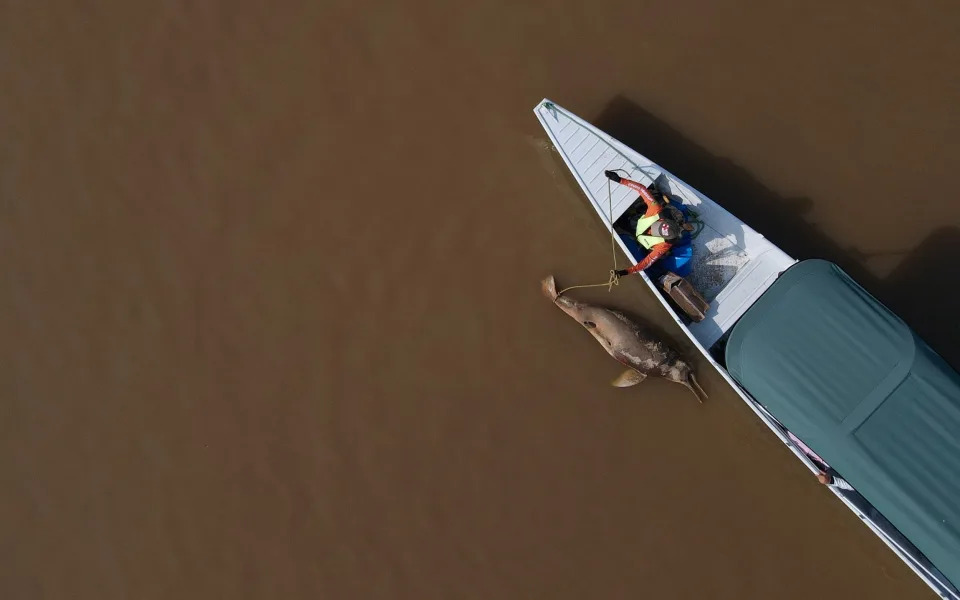
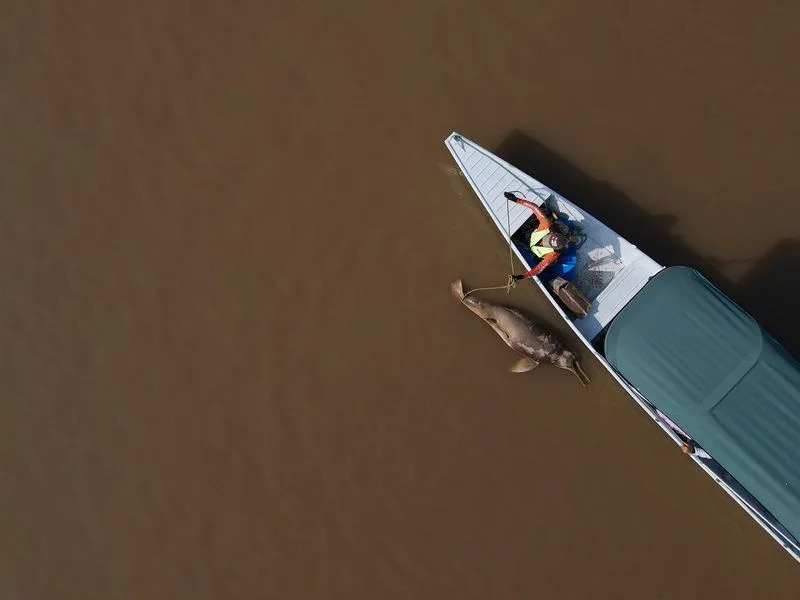
Scientific researchers find another dead dolphin floating on Lake Tefé in Brazil - Bruno Kelly/Reuters

More than 100 dead dolphins were discovered within a week in the Amazon rainforest after water temperatures soared to 39C (102F).

They were found in Lake Tefé, in Brazil, and scientists have attributed their deaths to an extreme heat and drought that has swept across the region.

The deaths were described as unusual by the Mamirauá Institute, which is funded by the Brazilian ministry of science.

“It’s still early to determine the cause of this extreme event but according to our experts, it is certainly connected to the drought period and high temperatures in Lake Tefé,” the institute told CNN.

Rescue mission

Experts are trying to save the surviving dolphins by shifting them to cooler lagoons.

“Transferring river dolphins to other rivers is not that safe because it’s important to verify if toxins or viruses are present [before releasing the animals into the wild],” said André Coelho, a researcher at the Mamiraua Institute.

The Amazon river dolphins, many of which have a striking pink colour, are unique freshwater species found only in the rivers of South America and are one of only a handful of freshwater dolphin species left in the world. Slow reproductive cycles make their populations especially vulnerable to threats.

At least 70 of the carcasses surfaced on Thursday when Lake Tefé‘s water became 10C higher than the average for this time of year.

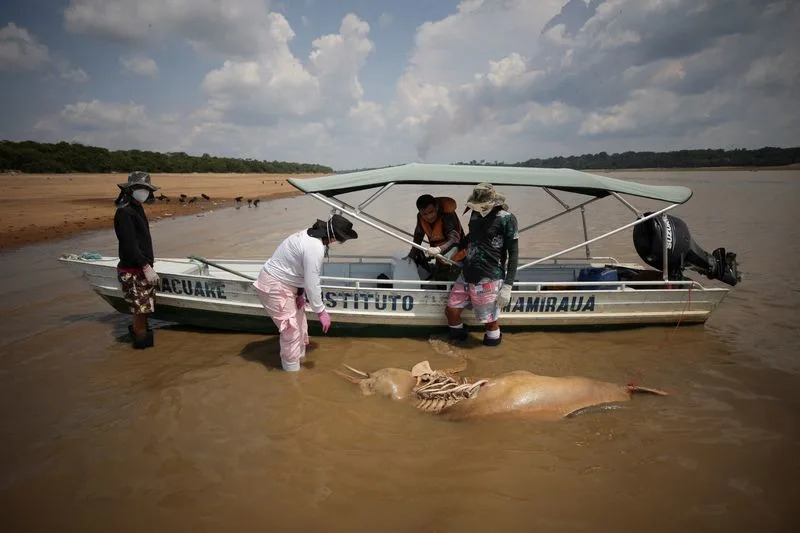
“We have documented 120 carcasses in the last week,” said Miriam Marmontel, a researcher at the Mamirauá institute.

Researchers from the Mamiraua Institute retrieve a dead dolphin at Lake Tefé - BRUNO KELLY/reuters

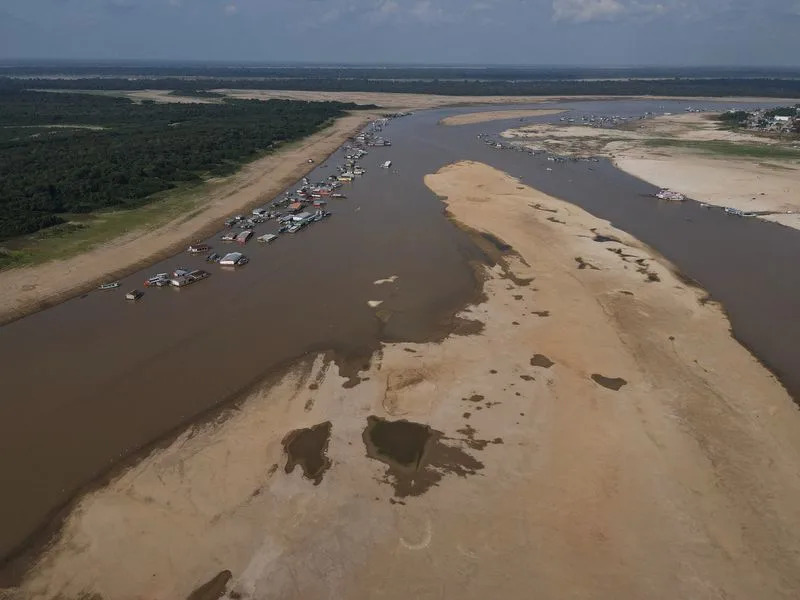
The combination of high temperatures and drought has been wreaking havoc in the region.

Transport and fishing have been hit by below-average water levels reported in 59 municipalities in the Amazon region.

In some parts of the country, temperatures have topped 40C, with a scorching spring following on from the country’s warmest winter in more than 60 years.

Only last month, zookeepers in Rio de Janeiro fed ice lollies to black spider monkeys to keep them cool and lions were given frozen meat.

Forest fires swept through the Bahia region in north-eastern Brazil as the National Institute of Meteorology categorised the heatwave as a “great danger”.
Records broken

Records have been broken in Peru, Bolivia, Paraguay, Argentina, and Brazil, with experts attributing the soaring temperatures to a “heat dome”.

Earlier this year vast swathes of the US sweltered in scorching temperatures, especially in the West where records were broken in seven states.

According to the research group Climate Central, 98 per cent of the world’s population was exposed to extreme heat at least once between June and August of 2023.

“In every country we could analyse, including the Southern Hemisphere where this is the coolest time of year, we saw temperatures that would be difficult – and in some cases nearly impossible – without human-caused climate change,” said Andrew Pershing, the group’s vice-president of science.

More than 100 Amazon dolphins found dead, heat and drought blamed

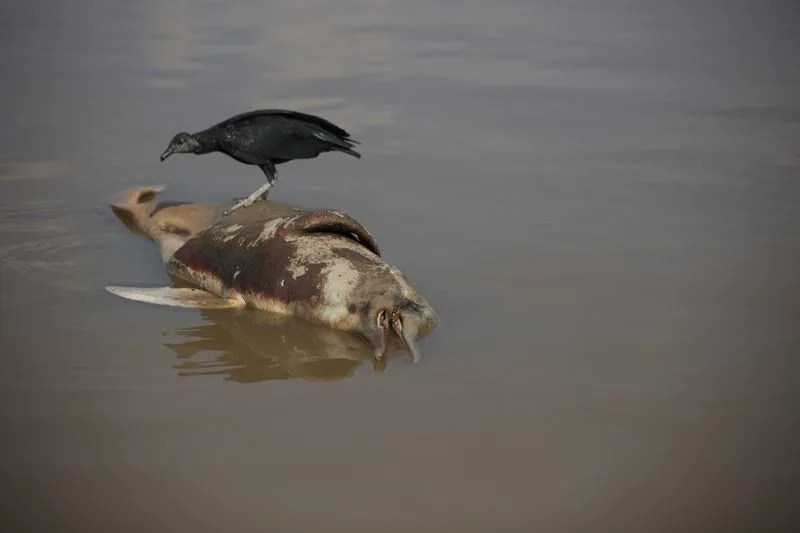
Dolphin was found dead at the Tefe lake affluent of the Solimoes river that has been affected by the high temperatures and drought in Tefe

Dolphin was found dead at the Tefe lake, affluent of the Solimoes river that has been affected by the high temperatures and drought in Tefe

: Dolphin was found dead at the Tefe lake affluent of the Solimoes river that has been affected by the high temperatures and drought in Tefe

 Dolphin was found dead at the Tefe lake, affluent of the Solimoes river that has been affected by the high temperatures and drought in Tefe

Dolphin was found dead at the Tefe lake affluent of the Solimoes river that has been affected by the high temperatures and drought in Tefe


Updated Mon, October 2, 2023 


By Bruno Kelly

MANAUS (Reuters) - The carcasses of 120 river dolphins have been found floating on a tributary of the Amazon River since last week in circumstances that experts suspect were caused by severe drought and heat.

Low river levels during a severe drought have heated water in stretches to temperatures that are intolerable for the dolphins, researchers believe. Thousands of fish have died recently on Amazon rivers due to a lack of oxygen in the water.

The Amazon river dolphins, many of a striking pink color, are unique freshwater species found only in the rivers of South America and are one of a handful of freshwater dolphin species left in the world. Slow reproductive cycles make their populations especially vulnerable to threats.

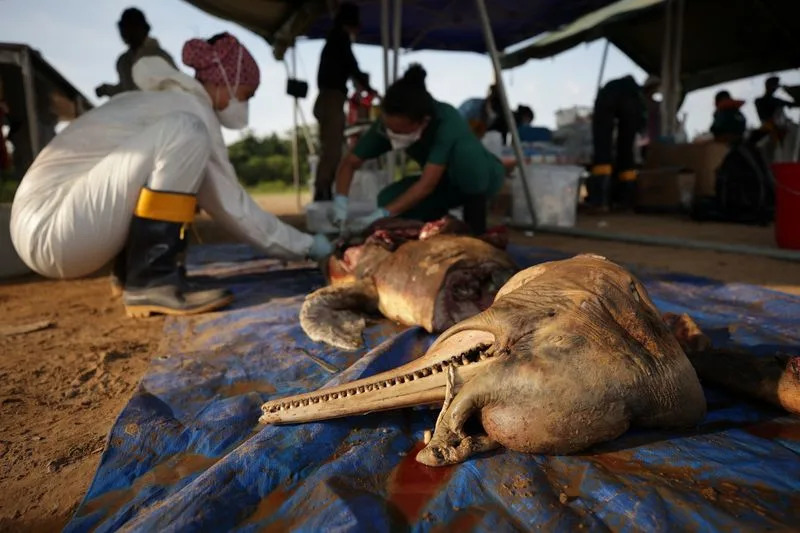
Amid the stench of decomposing dolphins, biologists and other experts in white personal protective clothing and masks worked on Monday to conduct autopsies on each carcass to determine the cause of death.

The scientists do not know with total certainty that drought and heat are to blame for the spike in dolphin mortality. They are working to rule out other causes, such as a bacterial infection that could have killed the dolphins on a lake formed by the River Tefé before it runs into the Amazon.

At least 70 of the carcasses surfaced on Thursday when the temperature of Lake Tefé's water reached 39 degrees Celsius (102 degrees Fahrenheit), more than 10 degrees higher than the average for this time of the year.

The water temperature fell off for a few days but rose again on Sunday to 37 C (99 F), worried experts said.

Environmental activists have blamed the unusual conditions on climate change, which makes droughts and heat waves more likely. Global warming's role in the current Amazon drought is unclear, with other factors such as El Nino at play.

"We have documented 120 carcasses in the last week," said Miriam Marmontel, a researcher at the Mamirauá environmental institute that focuses on the mid-Solimões river basin.

She said roughly eight of every 10 carcasses are pink dolphins, called "botos" in Brazil, which could represent 10% of their estimated population in Lake Tefé.

The boto and the gray river dolphin called the "tucuxi" are on the International Union for Conservation of Nature's red list of threatened species

"10% is a very high percentage of loss, and the possibility that it will increase could threaten the survival of the species in Lake Tefé," Marmontel said.

Brazil's Chico Mendes Institute for Biodiversity Conservation (ICMBio) has rushed veterinarians and aquatic mammal experts to rescue dolphins that are still alive in the lake, but they cannot be moved to cooler river waters until researchers rule out a bacteriological cause of the deaths.

(Reporting by Bruno Kelly; Writing by Anthony Boadle; Editing by Brad Haynes and Jonathan Oatis)
At Canada's largest Atlantic puffin colony, chicks are dying of starvation

CBC
Sun, October 1, 2023 

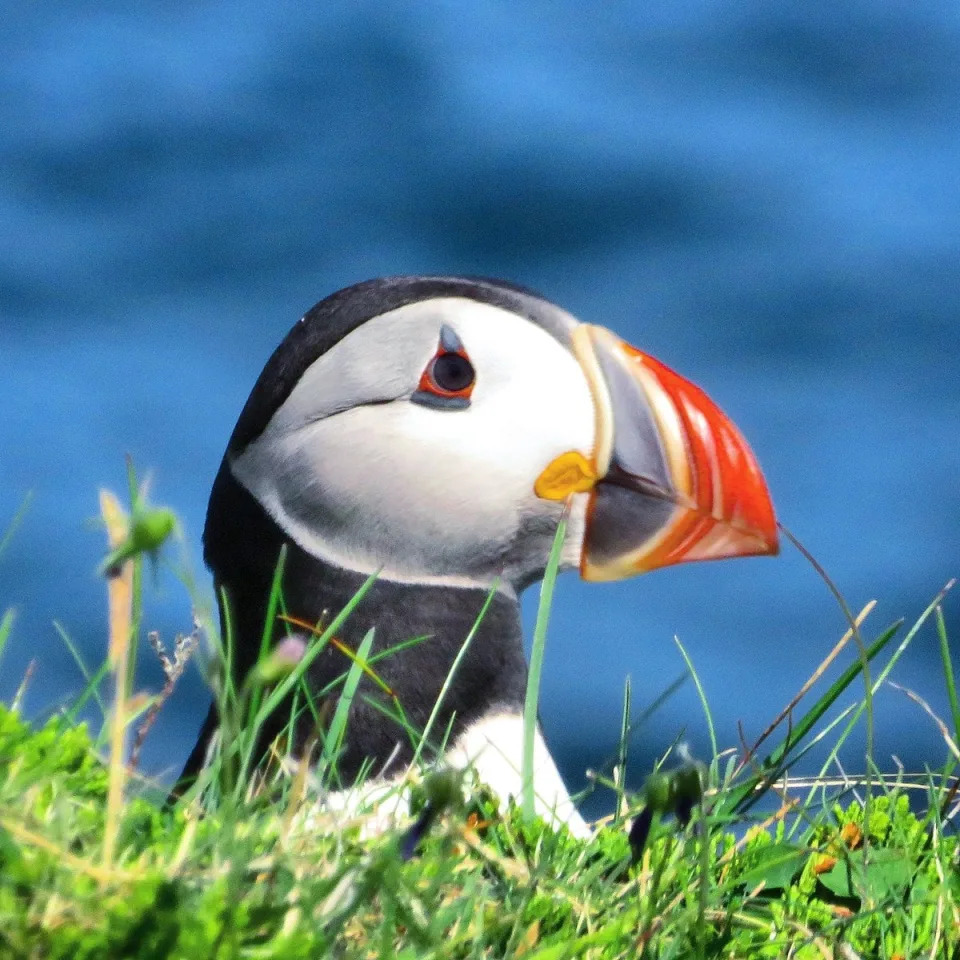
A puffin pokes its head out of its nest in Elliston. (Submitted by Mark Gray - image credit)

The volunteers who rescue Atlantic puffin chicks — called "pufflings" — knew something was wrong when so few strays from the Witless Bay Ecological Reserve on Newfoundland's Avalon Peninsula showed up this summer.

The fledglings emerge from their burrow at night to avoid predators, but some are attracted to the lights in the rapidly growing communities on shore. Members of a group called the Puffin Patrol capture the stranded pufflings and release them into the ocean.

"The Puffin Patrol wasn't finding very many birds," said Sabina Wilhelm, a wildlife biologist with Environment and Climate Change Canada.

"And the birds that were being found were actually very small in body weight."

Some were less than half the normal size for puffins their age.

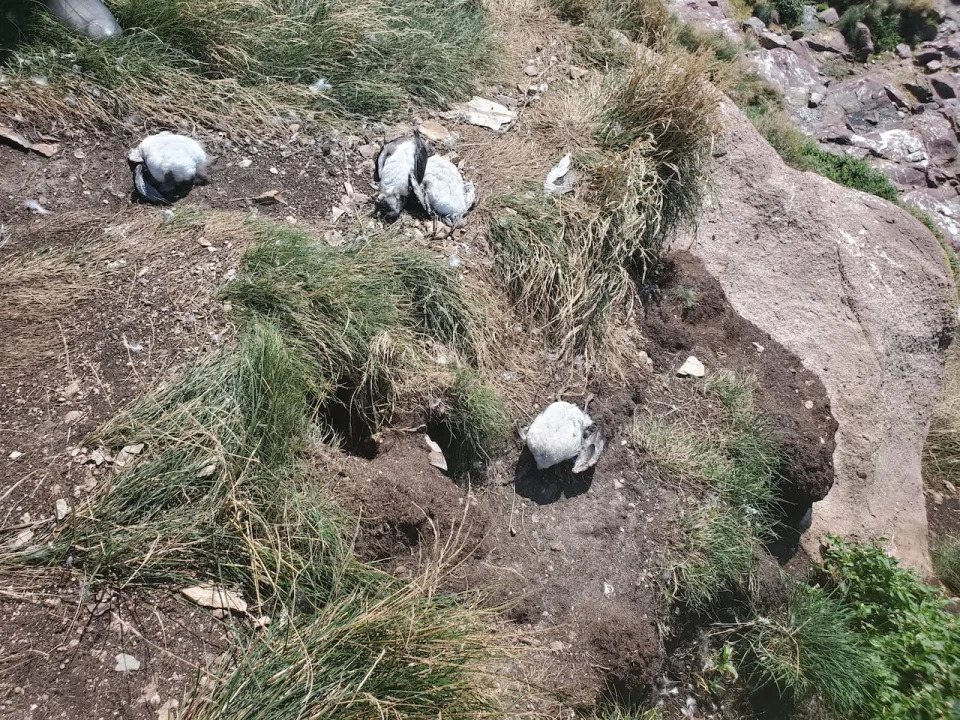
After searching a sampling of nests on the ecological reserve where Atlantic puffins congregate to breed each spring, Wilhelm and her colleagues discovered that many chicks had perished.

The grim discovery connects the fate of the Atlantic puffin — which is not only the official bird of Newfoundland and Labrador, but a ubiquitous image in the province — with serious problems in ocean ecology, including warming ocean temperatures and a struggling, complex food web.

Sabina Wilhelm and her colleagues were alarmed that the Puffin Patrol wasn't seeing very many birds this year, so they went searching for them, finding many birds.

Sabina Wilhelm and her colleagues were alarmed that the Puffin Patrol wasn't seeing very many birds this year, so they went searching for them, finding many birds. (Submitted by Sabina Wilhelm)

'They died of starvation'

Tests ruled out avian flu, which caused a massive die-off of birds in 2022.

"Just based on the the body mass and just picking up the dead chicks, that were just skin and bones, so essentially they died of starvation."

Adult puffins dive for food such as capelin, a forage fish that can make up as much as 50 per cent of their diet, and bring it back to the nest, a burrow in the cliffs.

But when food is scarce the adults feed themselves, and the chick is left to starve.

Another anomaly is that puffins bred later this year, said Wilhelm.

"Normally they start fledging in early August and by the end of August, early September, most of them are gone," she said.

"There seems to have been this mismatch between breeding activity and the fact that capelin kind of disappeared.… Other years there might have still been a lot of capelin in August. That just didn't happen this year."

Warmer ocean temperatures also work against Atlantic puffins, who can dive to a depth of only 50 metres to catch capelin and other forage fish such as sandlance and herring.

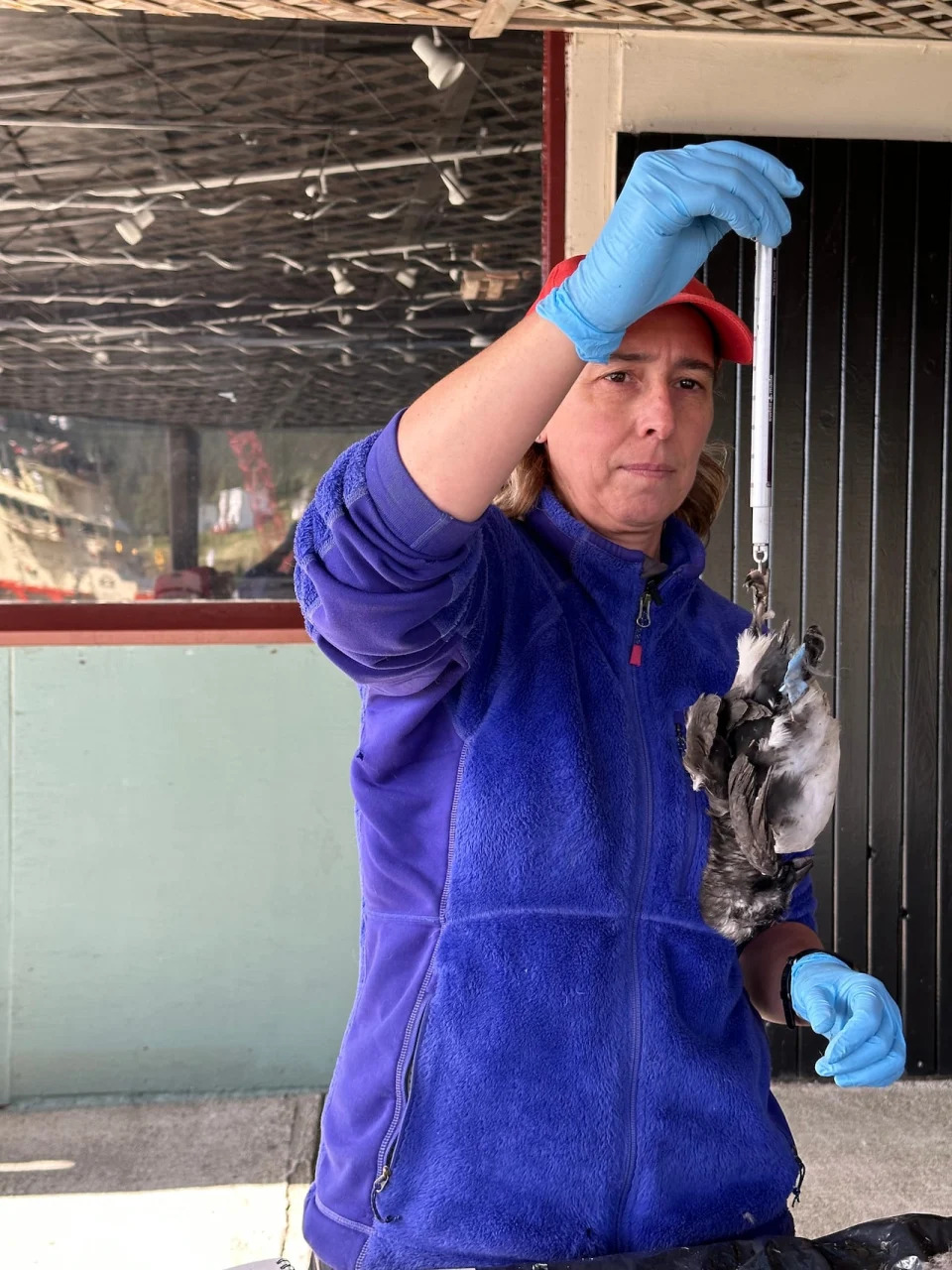
Wildlife biologist Sabina Wilhelm weighs and measures puffin chicks, or pufflings, who were found dead in their nests, having starved to death because capelin, their main food source, was not available this summer. Many of those gathered for testing were less than half their normal size.

Wildlife biologist Sabina Wilhelm weighs and measures puffin chicks, or pufflings, who were found dead in their nests, having starved to death because capelin, their main food source, was not available this summer. Many of those gathered for testing were less than half their normal size. (Chris O'Neill-Yates/CBC)

"So if the fish are moving downwards into the water column because the waters are warmer, then suddenly … they're not accessible to the puffins anymore because they can't dive that deep," said Wilhelm.

With more than 300,000 nesting pairs breeding at the Witless Bay Ecological Reserve, the Atlantic puffin population is robust overall, said Wilhelm.

Because they live well into their 20s, losing their offspring in one year does not spell disaster for the species. But the starvation of so many Atlantic chicks this year is a concern, said Wilhelm.

When tour boat operator Joe O'Brien noticed dead chicks floating on the water, he alerted Wilhelm and her colleagues.

O'Brien, a former fisherman, has been bringing tourists to the Witless Bay Ecological Reserve for 39 summers.

With so many species, from cod to seabirds to whales, relying on capelin for their survival, O'Brien says it's time for a new approach to managing this fishery.

"Should we be harvesting capelin at all?" asked O'Brien.

"Shouldn't that be a sign to to management that we should change our philosophy respecting the ocean?"


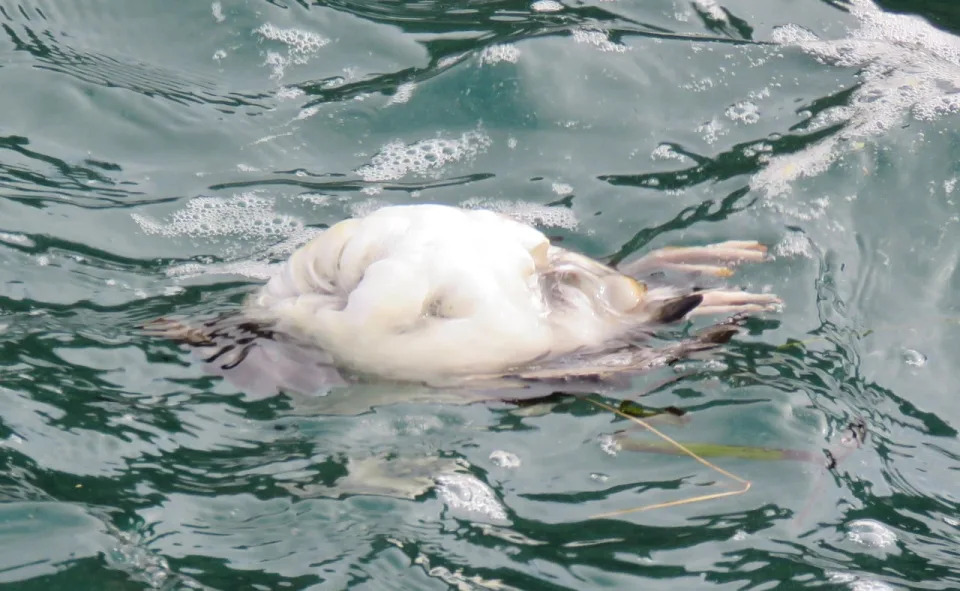
A dead Atlantic puffin chick floats in the water off Bird Island in the Witless Bay Ecological Reserve, Canada's largest Atlantic puffin colony. Some 300,000 nesting pairs return to the reserve every year to breed.

A dead Atlantic puffin chick floats in the water off Bird Island in the Witless Bay Ecological Reserve, Canada's largest Atlantic puffin colony. Some 300,000 nesting pairs return to the reserve every year to breed. (Chris O'Neill-Yates/CBC)

The Department of Fisheries and Oceans categorizes the capelin stock as "critical," yet it allowed a commercial fishery of 14,533 tonnes in 2023 for the second year in a row.

In its capelin management plan, DFO said, "Science shows the fishery's impact on capelin is small compared to predation by other species such as seabirds, cod and other fish."

Capelin are caught using a purse seine, which surrounds the fish, corralling them into the net and tightening it, similar to a drawstring, before it's hauled aboard a fishing vessel.

However, the species is a mere fraction of its abundance in the 1980s. As the principal food for cod, capelin overfishing is recognized as one of the key factors in the collapse of northern cod stocks more than three decades ago.

Valued for its eggs, or roe, female capelin is exported to China, the United States, Taiwan and Japan,

In the 2023 season, capelin sold for an average of 16 cents a pound, netting $4.5 million to fishermen in landed value, making it one of the least lucrative fisheries in the province.

"We're destroying them in mass volumes … only taking the females.… That's crazy," said O'Brien.

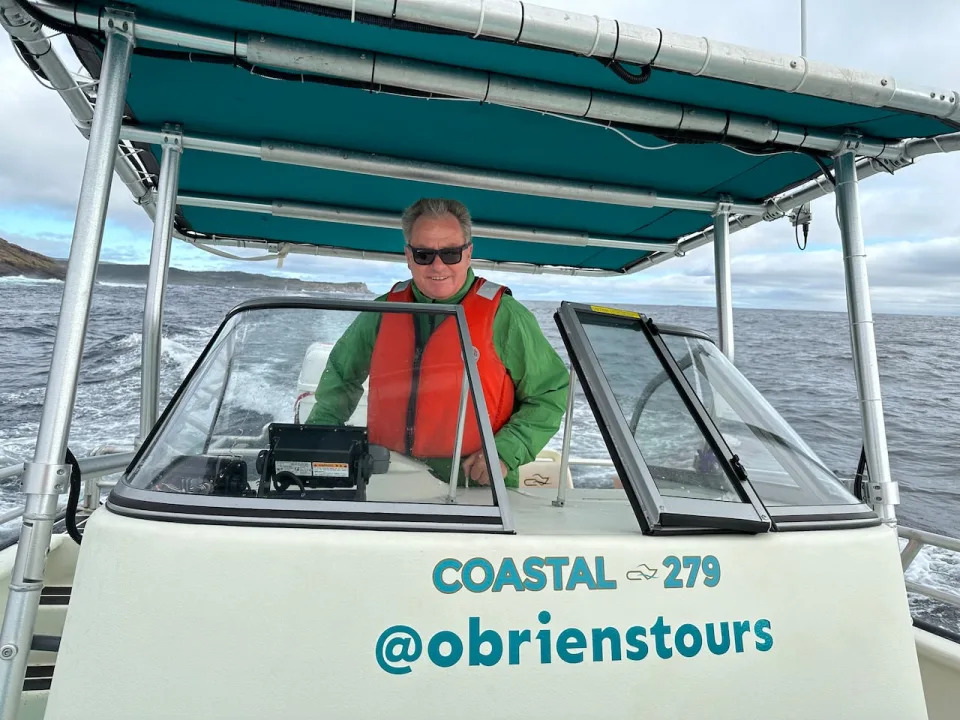
Tour boat operator Joe O'Brien noticed dead puffins floating on the water this summer near the Witless Bay Ecological Reserve, 30 kilometres south of St. John's.

Tour boat operator Joe O'Brien noticed dead puffins floating on the water this summer near the Witless Bay Ecological Reserve, 30 kilometres south of St. John's. (Chris O'Neill-Yates/CBC)

"Why are we catching one of the main sources of food for just about everything in the water?"

Capelin fishery 'incomprehensible'

Ian Jones, a marine bird biologist at Memorial University, is also concerned about the impact fishing capelin has on the entire ecosystem.

"When I hear these claims that somehow you can keep fishing a forage fish like this … it's incomprehensible to me," he said, adding that the fisheries "arguably don't bring in a whole lot of money."

The effects of fishing a forage species, a rapidly warming ocean due to climate change, increasing amounts of artificial light, seabird hunting and monofilament fishing nets are cumulatively stacked against seabirds' long-term survival, said Jones.

While Atlantic puffins can sustain some mortality because of their abundance, the Leach's storm petrel has seen a decline of about 50 per cent in recent years, said Jones.

"We haven't seen a bird disappearing at this rate since the passenger pigeon," said Jones.

Like the Atlantic puffin, the Leach's storm petrel is also affected by a growing amount of artificial light from communities, boats and offshore oil installations.

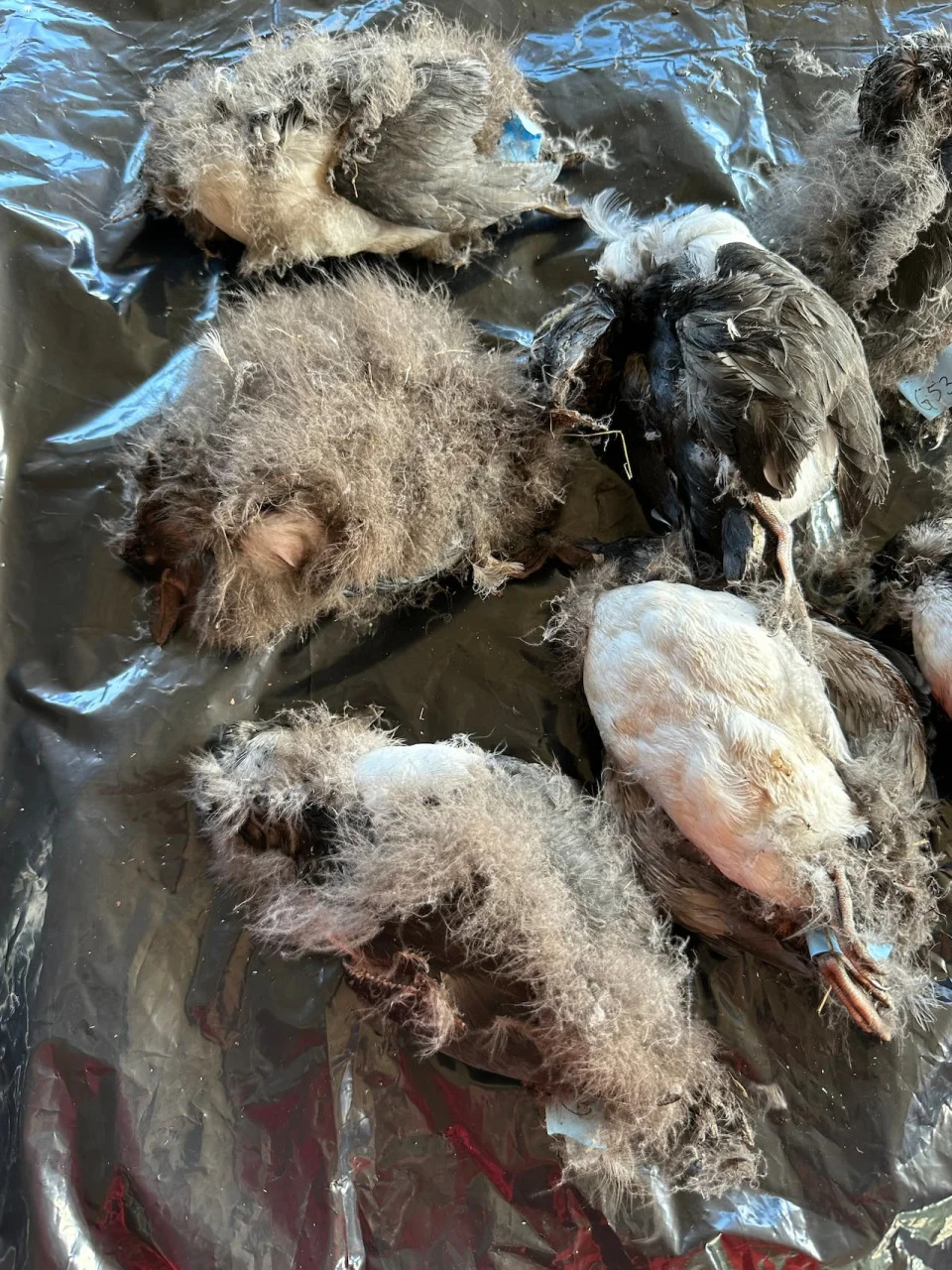
Wildlife biologists checked some burrows where Atlantic puffins nest and found a large number of pufflings dead in their nest from starvation. Adult puffins will feed themselves first, and the scarcity of capelin, a forage species of fish, meant there was not enough food to take back to the nest to feed their chicks. Capelin make up to 50 per cent of their diet.More

Wildlife biologists checked some burrows where Atlantic puffins nest and found a large number of pufflings dead in their nest from starvation. Adult puffins will feed themselves first, and the scarcity of capelin, a forage species of fish, meant there was not enough food to take back to the nest to feed their chicks. Capelin make up to 50 per cent of their diet. (Chris O'Neill-Yates/CBC)

"These seabirds that have evolved to survive in one of the harshest environments on Earth are faced with this completely disorientating artificial light," said Jones. "They don't successfully get out to sea so they basically strand on land and and die in very large numbers."

'Canary in the coalmine'

The United Nations calls light pollution "a significant and growing threat to wildlife" that contributes to the death of millions of birds globally.

Seabirds that migrate at night and go off course chasing artificial light are at risk of becoming exhausted, being eaten by predators, or colliding with buildings.

The impact of warming ocean temperatures is already being found in other Atlantic puffin populations.

"The worry is, is that these puffins are going to experience the same fate here in Newfoundland that they're experiencing in the Eastern Atlantic," said Jones, "with year after year of no chick surviving, the population begins to crash and then in some areas disappear."

Seabirds are a great indicator of the health of the ecosystem, says Wilhelm, and O'Brien says the puffin is warning us the ocean is under stress from climate change.

"The puffin is acting like the canary in the coal mine."
Hitting the Books: We are the frogs in the boiling pot, it's time we started governing like it.

To save the planet from climate change, we might have to kill off the internet as we know it.


Andrew Tarantola
·Senior Editor
Sun, October 1, 2023 

Climate change isn't going away, and it isn't going to get any better — at least if we keep legislating as we have been. In Democracy in a Hotter Time: Climate Change and Democratic Transformation, a multidisciplinary collection of subject matter experts discuss the increasingly intertwined fates of American ecology and democracy, arguing that only by strengthening our existing institutions will we be able to weather the oncoming "long emergency."

In the excerpt below, contributing author and Assistant Professor of Environment and Sustainability at the University at Buffalo, Holly Jean Buck, explores how accelerating climate change, the modern internet and authoritarianism's recent renaissance are influencing and amplifying one another's negative impacts, to the detriment of us all.


Excerpted from Democracy in a Hotter Time: Climate Change and Democratic Transformation, edited by David W. Orr. Published by MIT Press. Copyright © 2023. All rights reserved.

Burning hills and glowing red skies, stone-dry riverbeds, expanses of brown water engulfing tiny human rooftops. This is the setting for the twenty-first century. What is the plot? For many of us working on climate and energy, the story of this century is about making the energy transition happen. This is when we completely transform both energy and land use in order to avoid the most devastating impacts of climate change — or fail to.

Confronting authoritarianism is even more urgent. About four billion people, or 54 percent of the world, in ninety-five countries, live under tyranny in fully authoritarian or competitive authoritarian regimes. The twenty-first century is also about the struggle against new and rising forms of authoritarianism. In this narration, the twenty-first century began with a wave of crushed democratic uprisings and continued with the election of authoritarian leaders around the world who began to dismantle democratic institutions. Any illusion of the success of globalization, or of the twenty-first century representing a break from the brutal twentieth century, was stripped away with Russia’s most recent invasion of Ukraine. The plot is less clear, given the failure of democracy-building efforts in the twentieth century. There is a faintly discernable storyline of general resistance and rebuilding imperfect democracies.

There’s also a third story about this century: the penetration of the Internet into every sphere of daily, social, and political life. Despite turn-of-the-century talk about the Information Age, we are only beginning to conceptualize what this means. Right now, the current plot is about the centralization of discourse on a few corporate platforms. The rise of the platforms brings potential to network democratic uprisings, as well as buoy authoritarian leaders through post-truth memes and algorithms optimized to dish out anger and hatred. This is a more challenging story to narrate, because the setting is everywhere. The story unfolds in our bedrooms while we should be sleeping or waking up, filling the most quotidian moments of waiting in line in the grocery store or while in transit. The characters are us, even more intimately than with climate change. It makes it hard to see the shape and meaning of this story. And while we are increasingly aware of the influence that shifting our media and social lives onto big tech platforms has on our democracy, less attention is devoted to the influence this has on our ability to respond to climate change.

Think about these three forces meeting — climate change, authoritarianism, the Internet. What comes to mind? If you recombine the familiar characters from these stories, perhaps it looks like climate activists using the capabilities of the Internet to further both networked protest and energy democracy. In particular, advocacy for a version of “energy democracy” that looks like wind, water, and solar; decentralized systems; and local community control of energy.

In this essay, I would like to suggest that this is not actually where the three forces of rising authoritarianism x climate change x tech platforms domination leads. Rather, the political economy of online media has boxed us into a social landscape wherein both the political consensus and the infrastructure we need for the energy transition is impossible to build. The current configuration of the Internet is a key obstacle to climate action.

The possibilities of climate action exist within a media ecosystem that has monetized our attention and that profits from our hate and division. Algorithms that reap advertising profits from maximizing time-on-site have figured out that what keeps us clicking is anger. Even worse, the system is addictive, with notifications delivering hits of dopamine in a part of what historian and addiction expert David Courtwright calls “limbic capitalism.” Society has more or less sleepwalked into this outrage-industrial complex without having a real analytic framework for understanding it. The tech platforms and some research groups or think tanks offer up “misinformation” or “disinformation” as the framework, which present the problem as if the problem is bad content poisoning the well, rather than the structure itself being rotten. As Evgeny Morozov has quipped, “Post-truth is to digital capitalism what pollution is to fossil capitalism — a by-product of operations.”

A number of works outline the contours and dynamics of the current media ecology and what it does — Siva Vaidhyanathan’s Antisocial Media, Safiya U. Noble’s Algorithms of Oppression, Geert Lovink’s Sad by Design, Shoshana Zuboff’s Surveillance Capitalism, Richard Seymour’s The Twittering Machine, Tim Hwang’s Subprime Attention Crisis, Tressie McMillan Cottom’s writing on how to understand the social relations of Internet technologies through racial capitalism, and many more. At the same time, there’s reasonable counter-discussion about how many of our problems can really be laid at the feet of social media. The research on the impacts of social media on political dysfunction, mental health, and society writ large does not paint a neat portrait. Scholars have argued that putting too much emphasis on the platforms can be too simplistic and reeks of technological determinism; they have also pointed out that cultures like the United States’ and the legacy media have a long history with post-truth. That said, there are certainly dynamics going on that we did not anticipate, and we don’t seem quite sure what to do with them, even with multiple areas of scholarship in communication, disinformation, and social media and democracy working on these inquiries for years.

What seems clear is that the Internet is not the connectedness we imagined. The ecology and spirituality of the 1960s, which shaped and structured much of what we see as energy democracy and the good future today, told us we were all connected. Globally networked — it sounds familiar, like a fevered dream from the 1980s or 1990s, a dream that in turn had its roots in the 1960s and before. Media theorist Geert Lovink reflects on a 1996 interview with John Perry Barlow, Electronic Frontier Foundation cofounder and Grateful Dead lyricist, in which Barlow was describing how cyberspace was connecting each and every synapse of all citizens on the planet. As Lovink writes, “Apart from the so-called last billion we’re there now. This is what we can all agree on. The corona crisis is the first Event in World History where the internet doesn’t merely play ‘a role’ — the Event coincides with the Net. There’s a deep irony to this. The virus and the network ... sigh, that’s an old trope, right?” Indeed, read through one cultural history, it seems obvious that we would reach this point of being globally networked, and that the Internet would not just “play a role” in global events like COVID-19 or climate change, but shape them.

What if the Internet actually has connected us, more deeply than we normally give it credit for? What if the we’re-all-connected-ness imagined in the latter half of the twentieth century is in fact showing up, but manifesting late, and not at all like we thought? We really are connected — but our global body is neither a psychedelic collective consciousness nor a infrastructure for data transmission comprising information packets and code. It seems that we’ve made a collective brain that doesn’t act much like a computer at all. It runs on data, code, binary digits — but it acts emotionally, irrationally, in a fight-or-flight way, and without consciousness. It’s an entity that operates as an emotional toddler, rather than with the neat computational sensing capacity that stock graphics of “the Internet” convey. Thinking of it as data or information is the same as thinking that a network of cells is a person.

The thing we’re jacked into and collectively creating seems more like a global endocrine system than anything we might have visualized in the years while “cyber” was a prefix. This may seem a banal observation, given that Marshall McLuhan was talking about the global nervous system more than fifty years ago. We had enthusiasm about cybernetics and global connectivity over the decades and, more recently, a revitalization of theory about networks and kinship and rhizomes and all the rest. (The irony is that with fifty years of talk on “systems thinking,” we still have responses to things like COVID-19 or climate that are almost antithetical to considering interconnected systems — dominated by one set of expertise and failing to incorporate the social sciences and humanities). So — globally connected, yet divided into silos, camps, echo-chambers, and so on. Social media platforms are acting as agents, structuring our interactions and our spaces for dialogue and solution-building. Authoritarians know this, and this is why they have troll farms that can manipulate the range of solutions and the sentiments about them.

The Internet as we experience it represents a central obstacle to climate action, through several mechanisms. Promotion of false information about climate change is only one of them. There’s general political polarization, which inhibits the coalitions we need to build to realize clean energy, as well as creates paralyzing infighting within the climate movement about strategies, which the platforms benefit from. There’s networked opposition to the infrastructure we need for the energy transition. There’s the constant distraction from the climate crisis, in the form of the churning scandals of the day, in an attention economy where all topics compete for mental energy. And there’s the drain of time and attention spent on these platforms rather than in real-world actions.

Any of these areas are worth spending time on, but this essay focuses on how the contemporary media ecology interferes with climate strategy and infrastructure in particular. To understand the dynamic, we need to take a closer look at the concept of energy democracy, as generally understood by the climate movement, and its tenets: renewable, small-scale systems, and community control. The bitter irony of the current moment is that it’s not just rising authoritarianism that is blocking us from good futures. It’s also our narrow and warped conceptions of democracy that are trapping us.
Imperial, 
Alberta regulator knew for years about tailings seepage at mine: documents

The Canadian Press
Mon, October 2, 2023


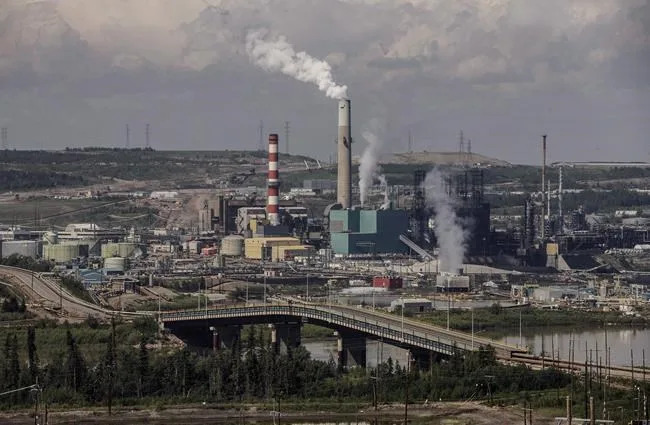
EDMONTON — Documents filed by Imperial Oil Ltd. show the company and Alberta's energy regulator knew the Kearl oilsands mine was seeping tailings into groundwater years before a pool of contaminated fluid was reported on the surface, alarming area First Nations and triggering three investigations.

"They knew there was seepage to groundwater," said Mandy Olsgard, an environmental toxicologist who has consulted for area First Nations.

"The (Alberta Energy Regulator) and Imperial decided not to notify the public and just manage it internally."

Imperial said in a statement that seepage was anticipated in Kearl's original design. Spokeswoman Lisa Schmidt said the company has kept both the regulator and area communities informed.

"We have been working to address the areas of shallow seepage from our operating lease area," she said. "We recognize there are concerns regarding water quality, and we take this very seriously."

Alberta Energy Regulator spokeswoman Lauren Stewart said the agency is committed to strong oversight of the Kearl site.

"It is of upmost priority that downstream water continues to remain safe, and any potential impacts to the public are both mitigated and communicated transparently," she said in an email.

"During this period, there were no signs that indicated the system was not functioning according to its intended design."

Olsgard points to groundwater monitoring reports filed by Imperial to the regulator. The 2020 and 2021 documents acknowledge tailings were seeping from the ponds that were supposed to contain them. The tailings were detected at monitoring wells within the mine's lease area, about 70 kilometres north of Fort McMurray.

Earlier studies suggest those results could have been influenced by natural variation or chemical processes in the soil. The 2021 document says little room for doubt remained.

"(Process affected water) seepage, or potential early arrival of (such water), was reported at 11 monitoring locations in 2021, indicated by trends and/or (control objective) exceedances in multiple (key indicator parameters)," it says.

Substances found at concentrations above desired limits included naphthenic acids, dissolved solids and sulphates — a common proxy for hydrocarbon residue. Oilsands tailings are considered toxic to fish and other wildlife.

In May 2022, the seepage was reported to First Nations and communities as discoloured water pooling on the surface. They received little information after that until last February, when the regulator issued environmental protection orders against Imperial — and then only after 5.3 million litres of contaminated wastewater escaped from a holding pond.

Olsgard said the regulator had reports of seepage as early as 2019. Imperial had instituted a "seepage interception system" in 2015.

Stewart acknowledged seepage had been confirmed.

"Imperial initiated, and (the regulator) confirmed, mitigation activities that included activation of the (seepage interception system) and adding more pumping wells," she said.

Four pumping wells activated in 2021 to contain the seepage "diverted" more than a billion litres of groundwater, says the report. After that, key parameters dropped or stabilized at "most" locations.

"These original interception pumping wells were first activated in early 2021 in response to the detection of process affected water above control objectives, in accordance with approved operating procedures," Schmidt said.

"Imperial shared this information with the (regulator) and communities in early 2021 and has provided annual updates."

Groundwater in the area moves at between three and 27 metres a year. Some evidence suggests tailings have seeped off the lease.

Data filed to the Oilsands Monitoring Program shows sulphates at a sampling station in the Muskeg River began climbing drastically in March 2022. Within a year, they were 18 times higher than the 2021 average.

That sampling station is south of the Kearl lease. The releases that trigged the protection order were on the north side.

Schmidt said those readings were unrelated to tailings.

Stewart said Imperial has increased its monitoring frequency and is working to understand the extent of the release.

The seepage at Kearl continues. Data posted on the regulator's website shows several test wells continue to show hydrocarbon levels in surface water that exceed provincial environmental guidelines.

"There is no indication of adverse impacts to wildlife or fish populations in nearby river systems or risks to drinking water for local communities," Schmidt said.

Over the summer, Imperial expanded Kearl's seepage interception with additional pumps and drainage structures. Monitoring continues.

“The (regulator) did not stop the seepage in 2022 and they didn’t acknowledge it since 2019," Mikisew Cree First Nation Chief Billy-Joe Tuccaro said in a statement.

"They say they have contained the seepage. They have not. The fact that they did not tell us about the seepage for nine months is the tip of the iceberg."

Both the Mikisew and the Athabasca Chipewyan First Nation use the area outside the mine lease for traditional activities such as hunting and gathering. Both nations are downstream of the mine and say they fear for their water quality.


On Wednesday, the regulator's board released a third-party report by Deloitte into how the agency handled communications around the releases. Although it found the regulator followed its rules, it concluded those rules were outdated, vague and had significant gaps.

Olsgard said Deloitte's investigation was specifically limited to events occurring after May 2022.

"They were not being given the authority to go back to 2019, when I think the groundwater was being contaminated."

Imperial's actions are also being probed by regulator staff as well as federal investigators.

Tuccaro said the regulator has denied Mikisew's request for a stop-work order at Kearl. He called that a double standard.

“The Alberta Utilities Commission and the Alberta government had no problem instituting a moratorium on renewable energy projects, but they won’t take simple regulatory measures in the face of a known human and environmental health problem.”

The Athabasca Chipewyan First Nation has called for the federal government to step in.

"We do not believe that the Kearl leak was an isolated incident, and we do not believe the regulator would inform the public if another incident occurred," the band said in a statement.

The First Nation also has called for a full technical audit of oilsands tailings facilities as well as a long-term study of health impacts.

Schmidt said Imperial acknowledges shortcomings.

"We recognize that our communication in the past has not met communities’ expectations and we are working with communities to improve our communications."

This report by The Canadian Press was first published Oct. 2, 2023.

Bob Weber, The Canadian Press
Environmental groups increasingly using competition law to fight fossil fuel sector

The Canadian Press
Sun, October 1, 2023 


CALGARY — Splashed across billboards and city buses, on newspaper spreads and Facebook feeds, the "Let's Clear the Air" ad campaign by the Pathways Alliance group of oilsands companies is a multi-million-dollar public relations blitz by an industry keen to show it's committed to helping fight climate change.

It's also the target of the latest strategy by Canada's environmental movement, which has expanded its war against the fossil fuel industry to a new battleground: the federal Competition Bureau.

In the last year, Canadian green groups have lodged at least four formal complaints with the bureau, the independent law enforcement agency tasked with protecting consumers by fostering a competitive marketplace.

The complaints allege false or misleading environmental claims by fossil fuel companies or — in the case of a complaint against RBC — those who finance them.

Under Canada's Competition Act, it only takes six signatories to a deceptive advertising complaint to compel the bureau to launch an investigation.

While no conclusion of wrongdoing has been reached in any of the ongoing cases, the environmentalists hope their new strategy will raise awareness of what they call "greenwashing" — a perceived tendency by companies to market their products and practices as more sustainable than they really are.

"We're at a point, I think, with climate change where there are very few actual deniers left out there," said Keith Brooks, program director of Environmental Defence, which is a co-signer to Greenpeace Canada's complaint against the Pathways Alliance as well as the lead complainant alleging deceptive marketing in a campaign by Enbridge Gas.

"Most companies now are agreeing that this is an issue and that we need to go as far as net-zero (emissions) ... but, you know, the problem is that if it's just words, and not backed up by real action, then it actually is a tactic to delay action."

In the case of the Pathways Alliance ad campaign, the oilsands industry is promoting its plan to achieve net-zero greenhouse gas emissions from production by 2050 — a plan that includes spending $16.5 billion to build what would be one of the largest carbon capture and storage projects in the world.

But environmentalists argue the ads are misleading because they don't make it clear that oilsands firms are actually planning to increase oil output overall — their net-zero goals only apply to the actual extraction process, not the product they produce.

In the complaint against Enbridge, as well as one against the Canadian Gas Association, activists take issue with the industry's depiction of natural gas as a "clean" energy solution, arguing that natural gas is a fossil fuel that contributes to global warming.

And when it comes to RBC, complainants say the bank's record of financing fossil fuel projects doesn't line up with its own public statements on the environment.

The Pathways Alliance said it was taken aback by the complaint against its ad campaign, which it says was only intended to let Canadians know the oilsands industry has heard their concerns about climate change and wants to be part of the solution.

"To get a complaint to the Competition Bureau, I think it did surprise us initially because we sort of feel we’re listening and responding to what’s being asked of industry," said Kendall Dilling, Pathways Alliance president.

There is some precedent for the Competition Bureau to intervene in cases related to a company's environmental claims.

In January 2022, Keurig Canada agreed to pay a $3 million penalty after a Competition Bureau investigation concluded the company's single-use "K-cup" coffee pods were not as recyclable as Keurig had made them out to be.

A few years before that, the bureau reached an agreement with Volkswagen that ultimately saw a total of $17.5 million in penalties paid by the automaker in the wake of a 2016 emissions-reporting scandal.

But Leah Temper with the Canadian Association of Physicians for the Environment — a group that has backed three Competition Bureau complaints — said Canada lags behind many other countries on this issue.

The EU, for example, recently passed a law that aims to crack down on greenwashing by banning the use of terms such as "carbon neutral" in product claims.

"If we look at what other jurisdictions are doing, they're being much more proactive in this area," Temper said, adding the federal government's ongoing review of competition policy in this country means now is the perfect time to raise these concerns.

"The Canadian Competition Bureau doesn't have a green task force, which is something a lot of our trading partners have."

The Competition Bureau says cracking down on deceptive marketing, including false, misleading and unsubstantiated environmental claims by companies of all types, is a priority for the agency.

It notes that as more Canadians demand products and services with a reduced environmental impact, there has been a noticeable increase in false, misleading or unsupported environmental claims by businesses.

But Joanne McNeish, an associate professor of marketing at Toronto Metropolitan University, said the fossil fuel industry in particular likely feels pressure to communicate not just to consumers, but to investors and governments, what it's doing on climate change.

"I think they feel that if they don't talk back, they leave a gap where only the activists are talking," she said.

And those activists, she added, are increasingly using modern, corporate tools — such as competition law — to fight their battles.

"Environmental activism used to mean, you know, getting in a ship and blocking a tanker. Now it's transitioning into more of a paperwork-bureaucracy-regulations kind of activity," she said.

"It's this sophistication of activism."

This report by The Canadian Press was first published Oct. 1, 2023.

Amanda Stephenson, The Canadian Press
3 New Brunswickers weigh in on Canada's future role in Afghanistan


CBC
Sun, October 1, 2023 

Deborah Lyons, a former Canadian ambassador to Afghanistan and Israel, says 'very troubling' things have been happening in the two years since the Taliban reseized control. (Murray Brewster/The Canadian Press - image credit)

More than two years after the United States military withdrew from Afghanistan, a diplomat hailing from Miramichi and a newcomer to Fredericton from Kabul are pleading with Canadians to bolster support for the country.

But hopes are dimming among other interested observers, including a New Brunswick father who lost his son in the fighting.

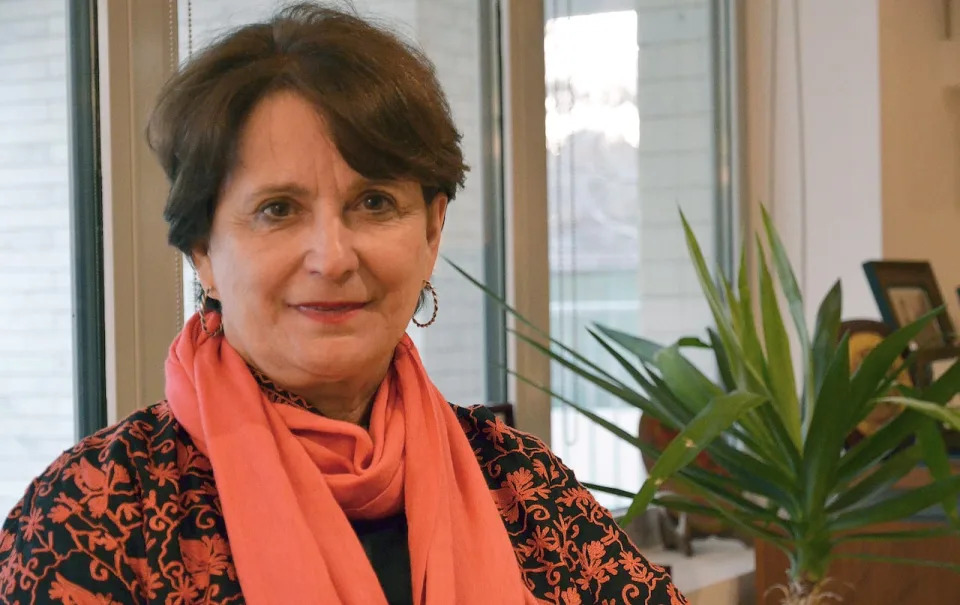
"It's a struggle to find our way forward, but we have to keep at it," said Deborah Lyons, former Canadian ambassador to Afghanistan and Israel.

"The Afghanistan story is not over. … It's a difficult chapter, but we all have to stay very engaged."

Afghan girls hold an illegal protest to demand the right to education in a private home in Kabul, Afghanistan on Aug. 2, 2022. For most teenage girls in Afghanistan, it’s been a year since they set foot in a classroom. With no sign the ruling Taliban will allow them back to school, some girls and parents are trying to find ways to keep education from stalling for a generation of young women.More

Afghan girls hold an illegal protest to demand the right to education in a private home in Kabul in August 2022. (Ebrahim Noroozi/The Associated Press)

Lyons served as Canada's ambassador to Afghanistan from 2013 to 2016 and as special representative of the secretary general of the United Nations for Afghanistan from 2020 to 2022.

"Very troubling" things have happened since the Taliban retook control, she said.

The situation for women is "just desperate."

"Afghanistan is the only country in the world that doesn't allow girls to get an education," she said, and recently, 60,000 Afghan women lost their jobs when the Taliban government disallowed beauty parlours.

The Afghanistan story is not over.… It's a difficult chapter, but we all have to stay very engaged. — Deborah Lyons, former Canadian ambassador to Afghanistan and Israel

Certain ethnic groups are also being excluded from society and the economy, said Lyons, and reprisals have reportedly been taking place against former government and military officials, even though the Taliban pledged this wouldn't happen.

"It's not a situation that any of us wanted to see in the 20 years of hard work by so many members of the international community," she said, adding it's not what many people in Afghanistan were hoping for either.

People are frustrated, she said, and that includes, "citizens of the countries that supported Afghanistan, that sent their people there to fight, in some cases, sadly, to die."

Cpl. Christopher P. Stannix of Halifax-based Princess Louise Fusiliers also died in the bombing.

Christopher Stannix, 24, a reservist with the Princess Louise Fusiliers, was one of six Canadian soldiers killed on Easter Sunday 2007, when their armoured vehicle struck a roadside bomb near Kandahar City. ((DND))

Nevertheless, Lyons believes it's important for Canada and other countries to keep sending assistance to Afghanistan for basics like food, shelter and medicine, and she believes it's necessary to engage with the Taliban "to find a way forward."

"You can meet with them, work with them, talk to them, try to find ways to bring about middle ground that will help the Afghan people," she said.

"That's what we're all striving for."

The Organisation of Islamic Cooperation also "desperately" wants to see the situation in Afghanistan change, she said, and Canada's ambassadors in the region could play a large role in finding ways to intervene constructively.

New ways to support Afghanistan could be presented this fall, she said, when Afghanistan's neighbour countries meet in Russia, a conference on supporting Afghan women is held in Montreal and a special report on Afghanistan is delivered to the UN.

The whole world community is appalled and frustrated with Afghanistan and by the "abhorrent" actions the Taliban have taken, said Ken Stannix of McAdam.

Stannix served 32 years in the Royal Canadian Air Force, retiring as a lieutenant-colonel. His 24-year-old son Christopher was one of six Canadian soldiers killed on Easter Sunday 2007, when their armoured vehicle struck a roadside bomb near Kandahar City.

McAdam Mayor Ken Stannix says about two thirds of the affected workers live in the village.

McAdam Mayor Ken Stannix's son died while serving with the Canadian military in Afghanistan 16 years ago. (Shane Fowler/CBC)

"It's very difficult that we spent so much there to see it backslide," he said.

But Stannix finds it difficult to imagine Canada could exert much influence at this point.

"I think they had the opportunity to change, they had the military strength to make that change, but the Taliban still had support within the community," he said.

"They've clearly demonstrated that they're adamantly opposed to western culture, Western ideas."

Stannix is in favour of supporting Afghan women, disadvantaged ethnic groups and those who want stronger democratic institutions, but he's wary of sending financial resources.

"Are they going to use that money or aid you might be giving them to spread the agenda of the Taliban?"

Lima Samim and several sisters are newcomers to Fredericton from Afghanistan. She says Canada could help Afghan women by providing educational opportunities.
 (Jacob Moore/CBC)

Lima Samim is part of a family of nine that moved to Canada from Afghanistan in August 2021, two days before the Taliban took over. She now lives in Fredericton with her four sisters.

No. of Afghans arrived in N.B. since August 2021, Government of Canada Bathurst35Fredericton200Moncton145Saint John215Total595


She still keeps in touch with other family and friends in her home country.

"Now women in Afghanistan don't have any rights," she said. "Some of them cannot even go outside.

"Of course I want support for them."

Samim is confident many women in Afghanistan want the same. There are women who oppose the Taliban, she said, at great personal risk.

Online education may be one of the best ways to help, she said.

If one woman in Afghanistan studies, she can share that knowledge with 10 or a 100 others, said Samim.

There are not many job opportunities for men in Afghanistan these days either, she said, and this heightens the need for humanitarian assistance.

But Samim shared Stannix's apprehension about money intended for humanitarian aid potentially being misused.

In her view, the key would be to find people in Afghanistan who are not affiliated with the Taliban and who are simply working to help people and use them to deliver aid.
CRYPTOZOOLOGY
New species of cobra-like snake discovered – but it may already be extinct

Wolfgang Wüster, Reader in Zoology, Bangor University, 
Tom Major, Postdoctoral Research Fellow, Bournemouth University
Axel Barlow, Lecturer in Zoology, Bangor University
Mon, October 2, 2023
THE CONVERSATION

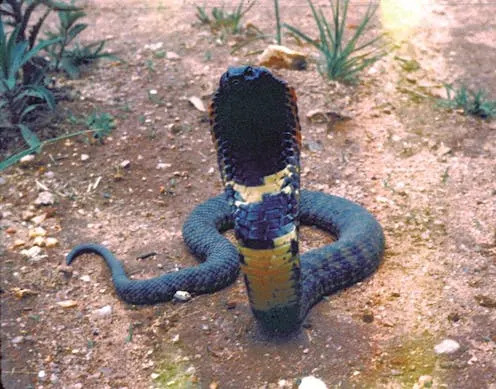
Hemachatus nyangensis in Nyanga National Park, Zimbabwe 
Donald Broadley, Author provided

Around the world, natural history museums hold a treasure trove of knowledge about Earth’s animals. But much of the precious information is sealed off to genetic scientists because formalin, the chemical often used to preserve specimens, damages DNA and makes sequences hard to recover.

However, recent advances in DNA extraction techniques mean that biologists can study the genetic code of old museum specimens, which include extremely rare or even recently extinct species. We harnessed this new technology to study a snake from the Eastern Highlands of Zimbabwe that was run over in 1982, and discovered it was a new species. Our research was recently published in PLOS One.

The Eastern Highlands of Zimbabwe, a mountain chain on the border with Mozambique, create a haven of cool and wet habitats surrounded by savannas and dry forest. They are home to many species that are found nowhere else.

Here, a mysterious population of snakes first drew the attention of scientists around 1920. An unusual snake displaying a cobra-like defensive hooding posture was spotted in the grounds of Cecil Rhodes’ (prime minister of the Cape Colony in the late 19th century) Inyanga Estate in Nyanga.

This snake had unusual markings with red skin between its scales, creating the effect of black dots on a red background when its hood is extended. None of the other cobras found in the area match this description.

More snakes like this were reported in the 1950s, but no specimens were collected.


A rare find


The mystery surrounding these sightings piqued the interest of the late Donald G. Broadley, now considered to be the most eminent herpetologist (reptile and amphibian expert) of southern Africa. In 1961, Broadley was given some severed snake heads and identified the mystery snake as a rinkhals (Hemachatus haemachatus), a species otherwise only found in South Africa, Eswatini (formerly known as Swaziland) and Lesotho.

A handful of specimens were observed and measured in later years, but the landscape has been drastically altered by forestry. The rinkhals from Zimbabwe has not been seen in the wild since 1988 and is feared to be extinct.

This population lives 700km away from other, more southerly populations, which made us suspect it may be a separate species. But the genetic material contained within the specimen from Zimbabwe was degraded, meaning we couldn’t do the DNA studies needed to confirm whether it is a different species from other rinkhals.

New technology

However, the latest DNA extraction and sequencing methods have been developed over the last ten years to help biologists study the remains of ancient animals. We used the new techniques to examine the Zimbabwe rinkhals specimen. Our study showed they represent a long-isolated population, highly distinct from the southern rinkhals populations.

Based on their genetic divergence from the other rinkhals, we estimate that the snakes in Zimbabwe diverged from their southern relatives 7-14 million years ago. Counting a snake’s scales can help identify what species it is. Subtle differences in scale counts, revealed by our analysis of other specimens, provided enough evidence to classify the Zimbabwe rinkhals as a new species, Hemachatus nyangensis, the Nyanga rinkhals.

The scientific name nyangensis means “from Nyanga” in Latin.

Hemachatus nyangensis has fangs modified to spit venom, although the behaviour was not reported from the few recorded interactions with humans. The closely related true cobras (genus Naja), some of which are known to spit venom, do so with the same specialised fangs that allow venom to be forced forwards through narrow slits, spraying it toward animals that are threatening them.

Venom in the eyes causes severe pain, may damage the eye, and can cause blindness if left untreated. Venom spitting appears to have evolved three times within the broader group of cobra-like snakes, once in the rinkhals, and twice in the true cobras in south-east Asia and in Africa.


A connection between human and snake evolution

Scientists think this defence mechanism may have evolved in response to the first hominins (our ancestors). Tool-using apes who walked upright would have posed a serious threat to the snakes, and the evolution of spitting in African cobras roughly coincides with when hominins split from chimpanzees and bonobos 7 million years ago.

Similarly, the venom spitting in Asian cobras is thought to have emerged around 2.5 million years ago, which is around the time the extinct human species Homo erectus would have become a threat to those species. Our study of Nyanga rinkhals suggests that the third time venom spitting evolved independently in snakes may also have coincided with the origin of upright-walking hominins.

If a living population of Nyanga rinkhals was found, fresh DNA samples would help us to more accurately determine the timing of the split between the two species of rinkhals and how this compares to hominin evolution. Technological advances may be giving us incredible insights into ancient animal lineages but they can’t make up for an extinction. We still hope a living population of Nyanga rinkhals will be found.

The possible relationship between venom spitting and our early ancestors is a reminder that we are part of the Earth’s ecosystem. Our own evolution is intertwined with that of other animals. When animals become extinct, we don’t just lose a species - they take part of our history with them.

This article is republished from The Conversation under a Creative Commons license. Read the original article.


The Conversation


Axel Barlow has no active funding. He has previously received funding from NERC and Horizon 2020.

Wolfgang Wüster receives funding from the Leverhulme Trust.

Tom Major does not work for, consult, own shares in or receive funding from any company or organisation that would benefit from this article, and has disclosed no relevant affiliations beyond their academic appointment.
Sea Lion Escapes Enclosure As Floodwaters Rose At Central Park Zoo


Hilary Hanson
Sat, September 30, 2023


A sea lion got a rare chance to splash around beyond her enclosure at New York City’s Central Park Zoo on Friday as severe rain inundated the region.

Sally, one of three sea lions at the Manhattan attraction, explored the zoo grounds after rising floodwaters allowed her to swim right out of her pool, The New York Times reported.

When images of the flooded enclosure went viral online, the zoo issued a statement assuring the public that the sea lions were safe, and that they weren’t running amok in the city.

A sea lion at New York City’s Central Park Zoo in July 2020.

A sea lion at New York City’s Central Park Zoo in July 2020.

“Zoo staff monitored the sea lion as she explored the area before returning to the familiar surroundings of the pool and the company of the other two sea lions,” said the statement, released Friday afternoon. “Water levels have receded, and the animals are contained in their exhibit.”

The statement also noted that even during her brief excursion, Sally “remained inside the zoo, never breaching the zoo’s secondary perimeter.”

The New York Police Department shared video that showed the marine mammals in their waterlogged enclosure.

People on social media couldn’t help but cheer on Sally’s adventure, and hope she and the other sea lions had a little fun.

All that said, swimming in floodwaters is not recommended ― for humans or sea lions ― as they can be filled with bacteria, human waste, and hazardous household and industrial substances, among other unsavory contaminants.