It’s possible that I shall make an ass of myself. But in that case one can always get out of it with a little dialectic. I have, of course, so worded my proposition as to be right either way (K.Marx, Letter to F.Engels on the Indian Mutiny)
Tuesday, October 03, 2023
Two Top Execs at South Africa's Port and Rail Operator Resign
Transnet train on the iron ore corridor (file image courtesy JBDodone / CC BY-NC 2.0 Deed)
The CEO and CFO of South African state logistics company Transnet resigned last Friday. The departure of Transnet’s CEO Portia Derby was a culmination of pressure from business and labor groups, which have expressed concern over a deepening operational crisis at the company.
One of the major pain points for Transnet has been with its rail management division. Shortages of freight trains and destruction of railway infrastructure have resulted in massive disruptions, especially for the iron ore industry, which relies on rail to deliver its product to seaports.
According to recent data by the lobby group Minerals Council of South Africa, the country’s mining output has fallen to below pre-pandemic levels with electricity outages and rail disruptions cited as the leading causes. Mining output and sales for the 12 months to May 2023 were down by an average of four percent year-on-year.
These problems saw Transnet declare an annual loss of $302 million in the 2022/23 financial year. Transnet said the financial year was challenging with cable theft and vandalism of railway infrastructure reaching “crisis levels.”. Operational inefficiencies have also become common especially at Durban, South Africa’s largest container port. Trucks congestion at the entrances of major ports is now a huge barrier to movement of goods.
Displeased with Transnet services, the Durban Chamber of Commerce recently wrote to the Public Enterprises Minister Pravin Gordhan requesting the resignation of the company’s senior management team.
“We would like to bring to your attention our concern regarding the current CEO and her executive team. The business community of e eThekwini has reached a point where we can no longer tolerate poor service delivery at the Port of Durban,” wrote the Chamber.
In the wake of Portia Derby’s resignation, Transnet Group said Michelle Phillips - currently the head of Transnet Pipelines - would take over as the acting CEO. In addition, Transnet’s chief financial officer Nonkululeko Dlamini also departed, taking up the same position at South Africa’s telecommunications company Telkom.
President Cyril Ramaphosa appointed Portia Derby in 2020 to head Transnet, filling a position which had remained vacant for almost two years. In 2018, Transnet fired its former CEO, Siyabonga Gama, for what the board described as “serious violations of his financial, procurement and fiduciary responsibilities.” Gama has denied the allegations.
On Sunday, the EU and the world’s first carbon import tax came into force. Until 2026, it will be in a transitional phase allowing stakeholders to collect useful information to refine the methodology for the levy’s definitive period, which follows thereafter.
The EU’s Carbon Border Adjustment Mechanism (CBAM) is a central pillar of the bloc’s Fit for 55 policy. It uses the amount of CO2 emitted during production of carbon-intensive products - steel, fertilizer and aluminum - to calculate the levy.
According to EU’s Commissioner for Economy, CBAM has two goals: to encourage industry worldwide to embrace greener technologies; and to prevent carbon leakage, or the relocation of production outside EU borders to countries with lower environmental standards. Essentially, it will equalize the price of carbon between goods produced in the EU and imports.
However, questions linger to the kind of disruptions the CBAM will cause in shipment of goods in and out of Europe.
“It’s the first such system in the world and its effectiveness is yet to be tested. Nevertheless, it’s likely to have profound implications for international trade and geopolitical dynamics pertaining to carbon emissions, especially if other major economies adopt similar systems,” argues Boston Consulting Group’s Associate Director Tim Figures, an expert in EU trade and regulations.
One likely result when CBAM is fully implemented is that high-carbon producers outside the EU will become less competitive in the EU market. Further, EU’s multinationals - which are highly reliant on offshoring - may have to rethink their operations.
But CBAM’s sting will be felt most by the EU consumers as the producers are likely to pass on the price. For example, Spain imported 14.5 billion tons of steel in 2022, half of which came from outside the EU. Assuming an average carbon intensity of steel and the current EU carbon price, Spanish steel importers could face annual tariffs of some $1 billion when CBAM is fully enforced in 2034, according to a computation by the BCG.
The perceived impact of CBAM to other countries is also critical. India is reportedly planning its own carbon tax modelled along the lines of the EU’s CBAM, which would apply to exports going to the EU only. The goal is for India to collect the tax proceeds itself instead of sharing it with the EU, reported the Hindu Businessline newspaper.
A countervailing tax on imports coming into India from the EU is also on the table, with Indian government officials examining legality of such a measure with WTO (World Trade Organization) rules. From the outlook, the countervailing tax framework appears retaliatory to the EU’s CBAM and could cause friction if not well managed.
Meanwhile, Africa is another region that will be on the receiving end of CBAM. The EU accounts for 27% of Africa’s agriculture exports, 25% of fertilizer exports, 15% of iron and steel exports and 35% of energy exports. Overall, the CBAM is forecast to reduce the GDP of the continent by around one percent, representing a fall of $25 billion at 2021 levels of GDP, according to a report by the African Climate Foundation and Firoz Lalji Institute of London school of Economics and Political Science.
For effective implementation of CBAM, the EU has to engage its major trading partners to resolve the levy’s sticking points.
Can You Insure a Coral Reef? With the Right Formula, the Answer is Yes
On October 7, 2020, Mélina Soto hunkered down in the Mexican port town of Puerto Morelos as Hurricane Delta struck the coast she calls home at 110 miles per hour. “The sound of the wind is like a screaming, up high in the sky,” she says. “You hope for the best, but you prepare for the worst.”
Soto is the Mexico national coordinator for conservation initiative Healthy Reefs, so her mind was primarily on Puerto Morelos’ coral reef. Rich with towering elkhorn and violet fan corals, turtles and rays, this ecosystem is part of the Mesoamerican Barrier Reef: 1,000km of coral that curls along the coasts of Mexico, Belize, Guatemala, and Honduras. “Puerto Morelos is a small town. But we all depend on the reef” says Soto. Many residents are fishers, employed in marine tourism, or academics at the town’s coral research campus.
Once the storm had passed and work begun to patch up Puerto Morelos, Soto led a brigade of volunteer divers that took these efforts out to the corals, too. Bit by bit, they pieced together the storm-shattered reef. “It was like a triage,” says Soto. Divers set about fixing 1,200 chunks of broken coral onto the reef with cement and ferried another 9,000 pieces to shore to be regrown in nurseries.
What made this possible was a flash of financial innovation. In 2019, Puerto Morelos’s home state of Quintana Roo purchased insurance to cover the reef, triggering emergency funding to repair it after a storm. It was a world-first. Now, similar insurance schemes are spreading to the Pacific, the Caribbean and the United States.
Increasingly, insurance is being considered a tool for securing natural capital against climate change. But as a wave of bleaching in 2023 affects global reefs, can this novel approach really protect corals against ever-warming seas?
Insurance products for a changing world
Worldwide, coral reefs provide ecosystem services to the value of $2.7 trillion annually. This includes livelihoods and food for one billion people, and flood defenses valued at $1.8 billion, because reefs are natural breakwaters that can absorb 97% of wave energy before it hits the shore. Hurricanes threaten this role because they break reefs apart, coat them in sand and debris, and turn the water into a cloudy soup. These conditions block the sunlight that corals’ symbiotic algae need to photosynthesize and supply them with food.
Reefs have evolved to cope with hurricanes, but frequent battering gives corals less time to recover. “With climate change, there are more hurricanes, [they’re] more continuous and stronger,” says Maria del Carmen García-Rivas, director of the Puerto Morelos Reef National Park, a marine protected area that encompasses the reef. Pollution and warming seas heap further pressure on these embattled ecosystems.
The idea that insurance could alleviate this strain first took hold in Quintana Roo in 2015, says Mike Beck. Back then, he helped pioneer this idea as the lead marine scientist for The Nature Conservancy (TNC). “All of it was completely novel,” says Beck, who is now director of the Center on Coastal Climate Resilience at the University of California Santa Cruz. “On the conservation side, it was [a case of] look, at this point, we need any kind of help we can get with reefs.”
Beck and his TNC colleague Fernando Secaira began exploring parametric insurance: unlike traditional indemnity insurance, which necessitate loss assessments that delay claims, parametric insurance provides pre-agreed payouts that are immediately triggered by an agreed parameter, such as a specific wind speed. This rapid payment is a boon for hurricane-damaged reefs that can only survive a few days without help.
In 2016, TNC began work to determine what damage to expect from different wind speeds, which helped them estimate the associated restoration costs. But they also needed the capacity to patch up the reefs: “Like with medical insurance, you need the hospital and the ambulance in order for it to work,” explains Secaira, who leads TNC’s climate risk and resilience efforts in Mexico. So, working with Mexico’s national park service and local researchers, TNC launched restoration training for volunteer divers in Quintana Roo. By 2018, this emergency ‘Guardians of the Reef’ brigade was ready to dive to the corals’ rescue.
The Guardians of the Reef have been trained to patch back together coral reef damaged by storms in Quintana Roo, Mexico (Image: Con Con)
Meanwhile, the cash for the insurance premium was raised by government and private-sector funding. The latter was collected via a tax on the beachside hotels that depend on the tourism that the reef underpins. In 2019, the state purchased a policy from insurance company Seguros Banorte and reinsurer Swiss Re. The policy covers 400km of coral, triggered by winds of 96 knots within 60km of the reef. In 2020, the first payout for almost $800,000 was made.
Beyond Quintana Roo
Increasingly frequent hurricanes make these costs unsustainable for states to pay. Transferring this risk to insurance companies is therefore an attractive option, while insurers benefit from the relatively high premiums.
However, these premiums can be reduced, explains Simon Young, the Climate and Resilience Hub’s senior director at insurance broker Willis Towers Watson (WTW). “If you’re looking at the probability of a certain wind speed, then the error bar on that is more limited,” he explains. “So, you can hold [insurers] much more to a price that reflects the risk than you can with more uncertainty.” The positive publicity linked to ecosystem insurance also gives insurance brokers leverage to negotiate favorable premiums, he adds.
Building on this success, a regional conservation funding institution called the MAR Fund purchased parametric insurance from AXA Climate in 2021, covering four Mesoamerican Reef locations in Mexico and Belize. Developed at the same time as the Quintana Roo scheme, the policy relies on a precise metric that categorizes wind speed and reef proximity into distinct bands, each corresponding to a percentage of the payout. The insurance aggregates several reef sites under one policy, which has also helped secure favorable premiums, according to Claudia Ruiz, MAR Fund’s reef rescue initiative coordinator.
In 2022, the fund received its first payout of $175,000 to repair hurricane damage to Belizean reefs, following Hurricane Lisa. This year, the policy was renewed for the third time and expanded to cover 11 locations, now incorporating Guatemala and Honduras. “This is a very innovative program,” Ruiz says. “It is working.”
A parametric insurance project for Hawaii was developed in 2022, while similar initiatives are being considered for the Pacific Islands and Indonesia.
These tools are also evolving to serve other ecosystems, like hurricane-hit mangroves in Mexico. WTW is currently exploring how tailored insurance products could “help support the mangroves themselves, but also the blue carbon that they are sequestering,” says Sarah Conway, director and head of WTW’s Ecosystem Resilience Practice.
Growing complexities
The nascent field has had some teething pains. For example, the 2020 payout to the state of Quintana Roo was held in a government gridlock for months before being released; TNC and others supplied interim cash to allow the time-sensitive restoration work to go ahead.
Meanwhile, the MAR Fund is trying to secure more sustainable funding streams for premiums: so far it has relied on grants from the UN Development Programme and others. “This programme cannot rely only on international cooperation funding” says Ruiz. Chip Cunliffe, the program and risk director for the multi-sector finance initiative Ocean Risk and Resilience Action Alliance (ORRAA), is familiar with this problem: “Who is going to pay the premium? I think that’s always one of the big questions.”
However, these challenges are eclipsed by something much larger. This year, warming oceans have brought widespread reef bleaching, when heat-stressed corals eject their vibrantly hued, symbiotic algae. Caribbean reefs haven’t been spared. Speaking at the end of a day diving on the Puerto Morelos reef, García-Rivas, director of the marine protected area, described an ecosystem sapped of color: “The bleaching is terrible, there are a lot of dead corals. This is critical – I think it’s an emergency.”
Can coral insurance evolve to respond to bleaching? It’s a complicated picture. Compared to the clearer cause-and-effect of hurricanes, where damage can be predicted by wind speed and proximity to the reef, Soto says the parameters of a bleaching event and ocean acidification are more difficult to define. They vary widely in scale and impacts even across individual reefs, depending on species composition and general health. Warming may also bring added threats like acidification and disease. These factors increase the risk for insurance companies, which would likely be reflected in higher premiums.
The uncertainty of ocean heatwaves and bleaching also creates a conundrum for potential policyholders: what to spend the payout money on? Reefs smashed by waves can be pieced together and regrown. But bleached corals, while not necessarily dead yet, have lost a critical life partner in the algae, which may or may not return. Restoring this delicate relationship requires a set of complicated and ultimately uncontrollable conditions in the wild.
Incentives for risk reduction
There are some voices in the nascent parametric insurance field who think instruments could in fact be designed to help bleaching reefs – under specific circumstances. In 2022, AXA Climate developed a bleaching insurance product for a hotel in the Maldives that is propagating sapling corals offshore. AXA Climate’s nature initiatives lead, Ariane Kaploun, elaborates: “Here, what was interesting is that the insurable value was the money that they had engaged to plant these new baby corals into the nurseries.” The clearly defined nature of this coral project made it possible to cost the damage of potential bleaching, and with funding, fix it directly.
Ultimately, the hotel chose not to buy AXA’s policy, but Kaploun thinks it could become a blueprint for designing future insurance products. Furthermore, García-Rivas says insurance payouts could help fund research to identify the resilient corals that remain after a bleaching event and propagate those to genetically buffer reefs against climate change.
“We are still in the early days of understanding how all the pieces fit together, such that we could construct a product that there is an actual buyer of,” says WTW’s Conway. “But it’s an exciting area where there is, we think, a role for parametric insurance to play.”
The ultimate defense against acidifying oceans and bleaching reefs is to reduce global carbon emissions. In the meantime, at the ORRAA, Cunliffe believes parametric insurance is growing: “We’re now working with probably over 60 projects, and the majority of them have a finance or insurance link to them.”
Beck is hopeful that investments in reef conservation will be increasingly guided by estimates that reflect the full value that coastal ecosystems provide for fisheries and tourism, and as sea and climate defenses. This could help build the case for protecting and restoring reefs preemptively before disasters hit. Beck suggests that insurance products could even be designed to offer premiums to policyholders who take this proactive approach: “When this really takes hold is when we’re offering different kinds of insurance-related incentives for the risk-reduction value of these [ecosystems].”
Back in Quintana Roo, it’s hurricane season. The dual threat of extreme weather and marine heatwaves has left reef rescuers like Mélina Soto desperate for solutions. “The bleaching is so intense that we will need more action,” she says. “We know that some of the corals that have been restored are bleached right now. That doesn’t mean they are dead: that’s why we are hoping for the best, that they might survive.”
Emma Bryce is a freelance journalist who covers stories focused on the environment, conservation and climate change.
This article appears courtesy of China Dialogue Ocean and may be found in its original form here.
Why Did So Many Nations Join Forces to Fight Somali Piracy?
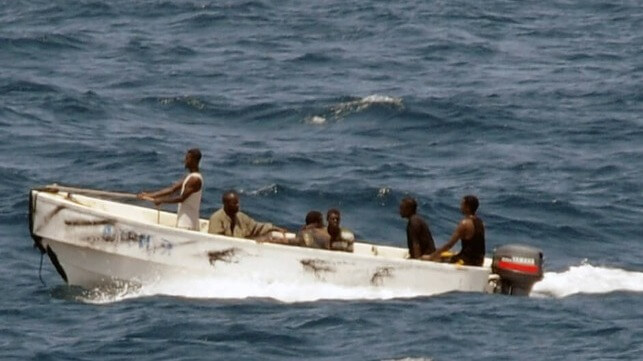
In 2011, pirates carried out 212 attacks in a vast area spanning Somali waters, the Indian Ocean, the Red Sea and the Gulf of Aden, actions that the World Bank said cost the world economy US$18 billion a year.
Armed pirates hijacked ships as far away as 1,000 nautical miles from the Somali coast. They held the ships and crews for ransom. The World Bank estimates that Somali pirates received more than US$400 million in ransom payments between 2005 and 2012.
The piracy problem appeared unsolvable. Anti-piracy naval missions undertaken by the world’s most formidable navies, and self-protection measures adopted by the shipping industry, didn’t seem to work. It was, therefore, generally held that the solution lay ashore: major state-building in Somalia to remove the root causes of piracy.
The only problem was that no one was willing to undertake such a mission in the wake of America’s failures in Afghanistan and Iraq.
And then there was an astonishing turnaround. The number of attacks fell to 10 in 2012 and only two ships were hijacked between 2013 and 2023.
For three decades, I have conducted research on international diplomacy, military strategy, use of force and peacebuilding. Together with a colleague specializing in military strategy, I analyzed the Somali piracy case. Academics and practitioners agree that four factors interacted to stop the pirates:
the conduct and coordination of several anti-piracy naval operations by the world’s most capable navies, including all five permanent members of the United Nations Security Council: the United States, the United Kingdom, France, Russia and China
the implementation of costly self-protection measures, not least the use of armed guards, by most flag states and shipping owners
development of a comprehensive legal toolbox enabling pirate prosecution and imprisonment
regional capacity-building making it possible to imprison pirates regionally and in Somalia.
The surprising thing is not that the four measures on their own proved sufficient to stop Somali piracy. What makes the Somali case special is the international community’s ability to agree to them and pay for their implementation.
The Somali case is important because it’s one of the few success stories in recent years where the use of limited force contributed to a sustainable outcome. Further, Somali pirates were stopped even though the conditions onshore in Somalia didn’t improve in any major way.
Collective action
Theoretically, the international community’s collective effort shouldn’t have happened because safety from piracy is a costly public good.
This means that it’s very expensive to provide but no one can be prevented from enjoying it once it has been produced. The result is a collective action problem that’s rarely overcome in international politics. Most actors prefer to free-ride rather than contribute to the production of the public good.
With respect to Somali piracy, all states and shipping owners had an incentive to leave it to others to solve the problem for them. The implementation of the four factors was very expensive for the states contributing to naval operations, and for shipowners who had to pay for self-protection measures, including hiring of armed guards.
Our study sought to understand how and why the collective action problem was overcome. The hope was to learn something that could help with overcoming similar problems in the future.
What worked
We found that three factors explain why the amount of free-riding was minimized in the Somali case.
The first was that the Somali pirates attacked ships belonging to all five permanent members of the UN Security Council and all the major shipping companies. This induced France to take the lead in military action against the pirates. The US subsequently led with respect to formulating a comprehensive strategy to implement the four factors presented earlier.
The involvement of European Union and the North Atlantic Treaty Organization (Nato) in the anti-piracy naval operations made it hard for member states not to contribute. A total of 18 member states contributed ships. China and Russia supported the American-led strategy and launched their own naval operations because their ships were attacked as well.
Second, the US established an institution, the Contact Group on Somali Piracy, tailor-made to formulate and implement a broad anti-piracy strategy. The US handpicked who would lead various working groups so that it contained all the actors – state and non-state – that were required to implement the necessary measures. These actors provided the expertise and the material resources required to implement the four factors presented earlier.
Third, the Somalia federal government and federal member states cooperated closely with anti-piracy efforts. They allowed the use of force against pirates in its national waters and on land. Somali authorities also cooperated with respect to the construction and running of pirate prisons paid for by international donors. This made it possible to overcome the piracy problem without engaging in the major state-building operation that had generally been viewed as a necessary condition for success when the piracy problem peaked in 2011.
Shared interests
Unfortunately, this success story will be hard to replicate. Somali piracy aligned great power, as well as private sector, regional and local state interests to an unusual degree. This is, for example, not the case in the Gulf of Guinea off the West African coast. Here, local states are less cooperative with respect to tackling piracy than Somali governmental actors were.
It’s also not the case with respect to tackling the coups in West Africa, where Russia, the three western members of the UN Security Council and regional states have conflicting interests.
It was the high degree of shared interests among the many actors involved that made the Somali anti-piracy campaign so effective.
Peter Viggo Jakobsen is a professor at the Institute for Strategy at the Royal Danish Defence College, and a professor (part-time) at the Center for War Studies, University of Southern Denmark.
This article appears courtesy of The Conversation and may be found in its original form here.
The opinions expressed herein are the author's and not necessarily those of The Maritime Executive.
‘Like building skyscrapers in Central Park’: Tokyo redevelopment plan sparks protests
Emiko Jozuka, Francesca Annio, Saki Toi and Daniel Campisi, CNN Mon, October 2, 2023
Tokyo resident Hiroshi Ono was shocked when he heard about plans to redevelop Meiji Jingu Gaien, the famous Meiji Shrine’s “outer garden,” which serves as one of the Japanese capital’s most beloved parks.
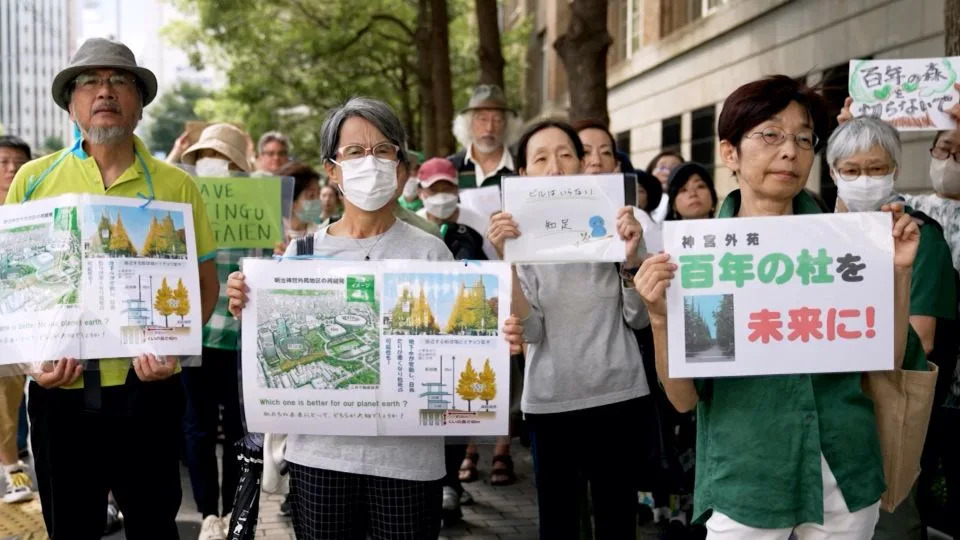
“The Jingu Gaien is ours — and our kids’ — cultural inheritance,” he told CNN last month at a rally organized to oppose the project. “Pushing through a redevelopment plan without properly consulting citizens is unfair. It felt like the decision was made behind closed doors.”
Located in the heart of Tokyo, the landscaped district lies just east of the Meiji Shrine, one of the Shinto religion’s most important sites. Completed in 1926, it was built exclusively with public donations and volunteer labor to commemorate Emperor Meiji, great-grandfather of the current Emperor Naruhito. It is also home to the Chichibunomiya Rugby Stadium, the sport’s spiritual home in Japan, and a baseball stadium where Babe Ruth famously played in 1934.
Its centerpiece, however, is the Ginkgo Avenue, a promenade lined with ginkgo trees, many over a century old, which campaigners argue are now at risk.
The 300-meter-long (984-foot) Ginkgo Avenue is lined with almost 150 ginkgo trees. - Daniel Campisi/CNN
In February, the Tokyo Metropolitan Government approved a 349-billion-yen ($2.3 billion) plan to redevelop a 28.4-hectare portion of the site. The project, which will take over a decade to complete, will see the aging rugby and baseball stadiums razed and rebuilt. A new hotel by the latter stadium will stand next to a pair of almost 200-meter-tall (650-foot) skyscrapers containing office space and upmarket serviced apartments, as well as another 80-meter (260-foot) tower.
Work officially commenced in March, and developers have since pledged to protect the iconic row of ginkgo trees and “preserve and improve” greenery around the proposed sports hub. But the plan has sparked public anger, demonstrations and even lawsuits from outraged Tokyo residents. Since last February, over 225,000 people have signed a petition calling for authorities to withdraw support for the project.
Last month the International Council on Monuments and Sites (ICOMOS), a UNESCO advisory body, issued a “heritage alert” for Jingu Gaien. Citing the potential destruction of approximately 3,000 trees and open park space, the organization warned of “irreversible destruction of cultural heritage.”
Tokyo authorities called the ICOMOS alert “one-sided,” though it subsequently asked the project developers to present a “more detailed” plan before felling any trees. Last Friday the real estate firm Mitsui Fudosan, which is leading the project, issued a response saying it would elaborate on conservation efforts and that plans to plant new trees would ensure Jingu Gaien is “sustainable for the next 100 years.” ‘Peoples’s forest’
Straddling Tokyo’s downtown Shinjuku and Minato districts, the Jingu Gaien contains a sacred “Eternal Forest,” while the Jingu Naien (or “inner garden”) was designed as a “forest for the people,” according to ICOMOS Japan.
From its creation until the end of World War II, the outer garden was owned by Japan’s national government (and managed by the shrine). But after the country’s surrender, the American occupation controlled the site until Meiji Jingu’s religious leaders took responsibility on condition that it remain open to the public, explained Naoko Nishikawa, a campaigner and editor-in-chief of Kenchiku, a Japanese architecture journal. Nishikawa believes that the commercial nature of the redevelopment “breaks the promise” of keeping the Jingu Gaien as a public space.
But Shinji Isoya, a landscape architect and member of the Meiji Jingu board of trustees, argued that the project is essential for the shrine’s management to generate income — especially as Japan‘s post-war constitution stipulates that, as part of the separation of religion and state, the so-called “religious corporations” that own Shinto shrines cannot receive funds directly from the government. Protesters gather for a demonstration at Meiji Jingu Gaien on September 15, 2023. - Daniel Campisi/CNN
Shinji says that, today, rental and lease income from the baseball stadium, the cafes along the Gingko Avenue and the Meiji Memorial Hall, an events venue, generate roughly 90% of the organization’s revenue. He added that private funding is essential, as closing the baseball stadium — even temporarily — for renovations will severely hamper shrine leaders’ ability to raise the funds needed to maintain operations and the Eternal Forest.
In an email to CNN, the Tokyo Metropolitan Government said the developers had stated their “commitment to protecting and conserving” Meiji Jingu’s inner and outer areas gardens, “while undertaking the necessary renovations and improvements” to make them “more accessible” for future generations. Mitsui Fudosan meanwhile said via email that it planned “to handle each tree with care,” and “preserve and transplant as many as possible.”
However, not everyone is convinced. During a recent press conference in Tokyo, lawmaker Hajime Funada, of the ruling Liberal Democratic Party, said that because the Meiji Jingu does not publicly disclose its finances, the corporation gives the impression it is “trying to preserve the inner garden by using the outer garden to earn money.” Cultural asset or commercial hub?
The Meiji Jingu Stadium, which is still used as the home of professional baseball team the Yakult Swallows, is something of an icon among sports fans — and has even featured in several manga and anime series.
According to Kiyotatsu Yamamoto, an associate professor in landscape planning and tourism at the University of Tokyo, opposition to the redevelopment has been fueled by authorities’ “lack of clarity” over the park’s value as a cultural asset.
He pointed to recent controversy over the neighboring Japan National Stadium, which was built for the Tokyo 2020 Summer Olympics. Although heralded in some quarters for eschewing carbon-intensive concrete, the project was constructed using timber from around 1,500 felled trees and is estimated to have cost around 157 billion yen ($1.4 billion). The proposed rugby stadium, the design of which remains subject to change, is depicted in a digital rendering. - Chichibunomiya Rugby Stadium Co., Ltd.
Rochelle Kopp, a Tokyo-based management consultant who organized the aforementioned petition, said that the public is “fed up” seeing trees “sacrificed” for large building projects. She also argued that city officials used the Olympic stadium as a “pretext” to remove building height restrictions that once applied to Jingu Gaien. This, she wrote in her petition plea, “paved the way” for the approval of skyscrapers on the proposed site.
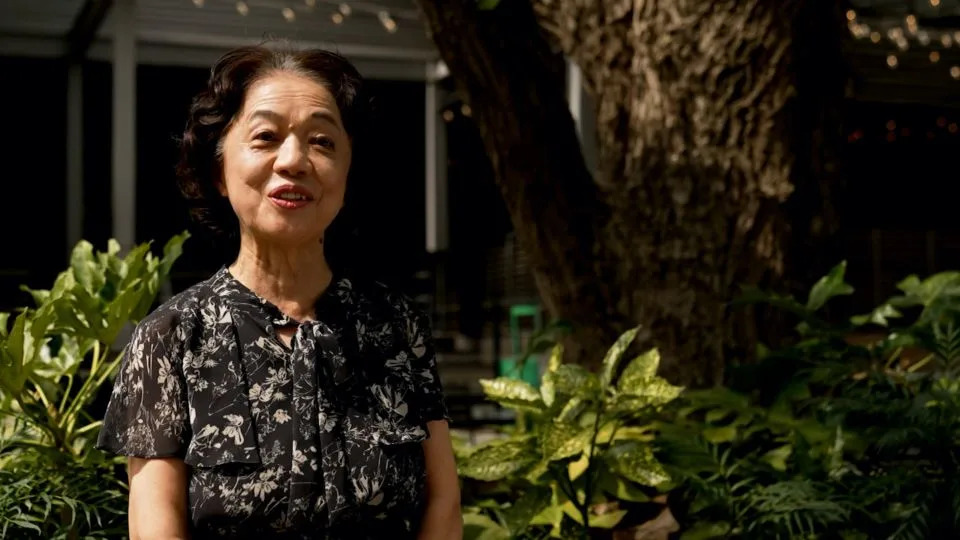
ICOMOS director Mikiko Ishikawa likened the plan to “building skyscrapers in New York’s Central Park” and a stadium next to its avenue of American Elms. She fears that plans to build the new baseball stadium’s foundations at a depth of 40 meters (131 feet), just 6 meters (20 feet) away from one side of the Ginkgo Avenue, will interfere with the trees’ roots and block their access to sunlight and water.
“The national government, local authorities, developers and citizens should all sit down together at one table and think about what we should do to protect this important park,” said Ishikawa. Blueprint for the future
Tokyo’s government has designated more than 30% of the city as “protected areas,” which include conservation zones and green spaces that help promote biodiversity. However, according to data published by the World Cities Culture Forum, parks and gardens occupy just 7.5% of Tokyo’s land, compared to 27% in New York and 33% in London.
Campaigners argue that more legal protections are needed to conserve scarce greenery in the Japanese capital. Work commenced at the Meiji Jingu Gaien site in March. - Daniel Campisi/CNN
Last week, Kopp filed another petition — this time calling for the city to renovate the two stadiums instead of razing and rebuilding them. Both she and ICOMOS director Ishikawa have urged authorities to designate the Gingko Avenue as a “place of scenic beauty” under Japan’s Law for the Protection of Cultural Properties.
The developers have previously promised to replant more trees than they fell, but architect and campaigner Nishikawa questioned the value of replacing decades-old trees with new saplings. (Studies have shown that large, old trees are disproportionately better at absorbing carbon dioxide from the atmosphere than younger ones.) She argued that, as the world confronts the climate crisis, Japan must place more value on urban conservation.
“It seems logical to redevelop an area if a factory there has shut down and can no longer be used, but Jingu Gaien has acquired cultural value over its 100-year history — so why does that (heritage) need to be tampered with?” she asked.
Nishikawa pointed to Kobe’s Koshien Stadium, which was built in 1924 and painstakingly renovated over the last 15 years, as an example of how historic structures can be updated rather than torn down. Speaking to CNN, ICOMOS director Mikiko Ishikawa likened the plan to “building skyscrapers in New York’s Central Park.” - Daniel Campisi/CNN
Yamamoto, the national parks expert, said restoring (rather than razing and rebuilding) public facilities can shift how people perceive architecture in Japan. Greater emphasis on renovation, he added, could help challenge the practice of designing buildings with finite lifespans — an approach to construction known in Japan as “scrap and build.”
Campaigners, meanwhile, argue that a lack of public consultation on the park’s future has deepened mistrust in developers and authorities, fueling concern about other green spaces in Japan.
“(Developers) will never capture the hearts and minds of the public with this current plan,” Kopp told CNN. “They need to go back to the drawing board and use a much more democratic process to decide the future of Jingu Gaien.”
Philadelphia journalist who advocated for homeless and LGBTQ+ communities shot and killed at home
MARYCLAIRE DALE Mon, October 2, 2023 Josh Kruger, left, then the Communications Director, the Office of Homeless Services at City of Philadelphia, at a tent encampment in Philadelphia, on Jan. 6, 2020. The journalist and advocate who rose from homelessness and addiction to serve as a spokesperson for Philadelphia's most vulnerable was shot and killed at his home early Monday, Oct. 2, 2023 police said.
(Jessica Griffin/The Philadelphia Inquirer via AP) (ASSOCIATED PRESS)More
PHILADELPHIA (AP) — A journalist and advocate who rose from homelessness and addiction to serve as a spokesperson for Philadelphia's most vulnerable was shot and killed at his home early Monday, police said.
Josh Kruger, 39, was shot seven times at about 1:30 a.m. and collapsed in the street after seeking help, police said. He was pronounced dead at a hospital a short time later. Police believe the door to his Point Breeze home was unlocked or the shooter knew how to get in, The Philadelphia Inquirer reported. No arrests have been made and no weapons have been recovered, they said.
Authorities haven't spoken publicly about the circumstances surrounding the killing.
“Josh cared deeply about our city and its residents, which was evident both in his public service and in his writing. His intelligence, creativity, passion, and wit shone bright in everything that he did — and his light was dimmed much too soon,” Mayor Jim Kenney said in a statement.
Kruger handled social media for the mayor and communications for the Office of Homeless Services from about 2016 to 2021. He left city government to focus on writing projects for news outlets and progressive causes.
He wrote at various times for Philadelphia Weekly, Philadelphia City Paper, The Philadelphia Inquirer and other publications, earning awards for his poignant and often humorous style.
On his website, he described himself as a “militant bicyclist” and "a proponent of the singular they, the Oxford comma, and pre-Elon Twitter.“
In a statement Monday, District Attorney Larry Krasner praised Kruger's contributions to the city.
“As an openly queer writer who wrote about his own journey surviving substance use disorder and homelessness, ... Josh Kruger lifted up the most vulnerable and stigmatized people in our communities — particularly unhoused people living with addiction,” Krasner said. “Josh deserved to write the ending of his personal story.” Philadelphia journalist shot dead by home invader Holly Hales Mon, October 2, 2023 Philadelphia journalist shot dead by home invader
Josh Kruger, 39, died after he was shot multiple times by an armed home invador who opened fire just before 1.30 a.m on Monday, according to police.
Emergency services rushed to the scene in the city’s Point Breeze neighborhood after reports of gunshots and screams.
Mr Kruger was found collapsed in the street on the 2300 block of Watkins Street with multiple gunshot wounds, according to the Philadelphia Inquirer.
He was brought by ambulance to Penn Presbyterian Medical Center but died at 2.15am.
Deputy Police Commissioner Frank Vanore said no arrests have been made and any possible motive remains unclear.
“Either the door was open, or the offender knew how to get the door open,” he told reporters.
“We just don’t know yet.”
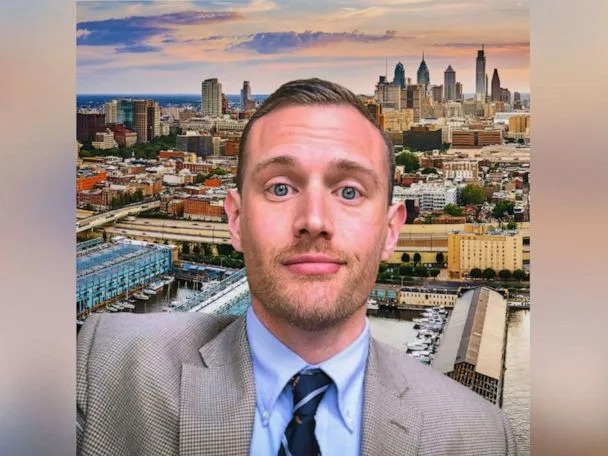
Josh Kruger was remembered for having 'shone bright in everything that he did’ (joshkruger.com)
Mr Kruger had worked for the city of Philadelphia for more than five years, primarily within communication and social media teams.
Philadelphia Mayor Jim Kenney paid tribute to him in an emotional statement.
“Josh cared deeply about our city and its residents, which was evident both in his public service and in his writing,” Mr Kenney said.
“His intelligence, creativity, passion, and wit shone bright in everything that he did — and his light was dimmed much too soon.”
In addition to his communications work, Mr Kruger wrote freelance articles about issues impacting the city’s LGBT+ community.
Philadelphia journalist fatally shot in his home Mirna Alsharif and Brittany Kubicko and George Solis Mon, October 2, 2023
A Philadelphia journalist and community advocate was fatally shot inside his home overnight, according to police.
Police were notified of a shooting at Josh Kruger's home in the 2300 block of Watkins Street at 1:28 a.m. Monday.
Kruger, 39, sustained seven gunshot wounds to the chest and abdomen. He was taken to a local hospital where he was pronounced dead at 2:13 a.m.
No arrests have been made, and a motive is still under investigation, police said.
Kruger was known in the Philadelphia community as a social justice advocate and a longtime journalist, writing for news outlets such as The Philadelphia Inquirer and The Philadelphia Citizen. He also worked for Mayor Jim Kenney's administration as a spokesperson for the Office of Homeless Services.
In a statement, Kenney said he was "shocked and saddened" by Kruger's death.
"Josh cared deeply about our city and its residents, which was evident both in his public service and in his writing," Kenney said in a statement shared with NBC News on Monday. "His intelligence, creativity, passion, and wit shone bright in everything that he did — and his light was dimmed much too soon."
As a community advocate, Kruger focused on uplifting the community's most vulnerable, including those experiencing homelessness, addiction and members of the LGBTQ+ community, according to District Attorney Larry Krasner's office.
"As an openly queer writer who wrote about his own journey surviving substance use disorder and homelessness, it was encouraging to see Josh join the Kenney administration as a spokesperson for the Office of Homeless Services," Krasner said in a statement. "Josh deserved to write the ending of his personal story."
"As with all homicides, we will be in close contact with the Philadelphia Police as they work to identify the person or persons responsible so that they can be held to account in a court of law," he said.
The investigation into Kruger's death is ongoing.
Philadelphia Journalist Who Shined Light on Marginalized Communities Is Fatally Shot in Home Christine Pelisek Mon, October 2, 2023
Josh Kruger was shot seven times in the chest and abdomen
Josh Kruger/XJosh Kruger
A Philadelphia journalist was fatally shot inside his home Sunday.
Police said Josh Kruger, 39, was shot seven times in the chest and abdomen around 1:30 a.m. inside his home on the 2300 block of Watkins Street in the Point Breeze neighborhood.
Kruger was transported to Presbyterian Hospital where he died at 2:13 a.m..
Deputy Police Commissioner Frank Vanore said there were no signs of forced entry.
“Either the door was open, or the offender knew how to get the door open,” he said, The Philadelphia Inquirer reported. “We just don’t know yet.”
Vanore said that after he was shot, Kruger ran outside for help, according to the Inquirer.
No arrests have been made, police said. Police found no weapon at the scene.
On his website, Kruger described himself as a “writer and communications expert known for weaving his unique lived experience with homelessness, HIV, Philadelphia’s ‘street economy,’ trauma, and poverty throughout his poverty and writing.”
Want to keep up with the latest crime coverage? Sign up for PEOPLE's free True Crime newsletter for breaking crime news, ongoing trial coverage and details of intriguing unsolved cases.
According to the website, Kruger had previously worked as a spokesperson for City Hall before “returning to journalism in 2021.”
“His writing has spurred government into action and shed light on communities and issues sometimes overlooked by traditional media,” the website states.
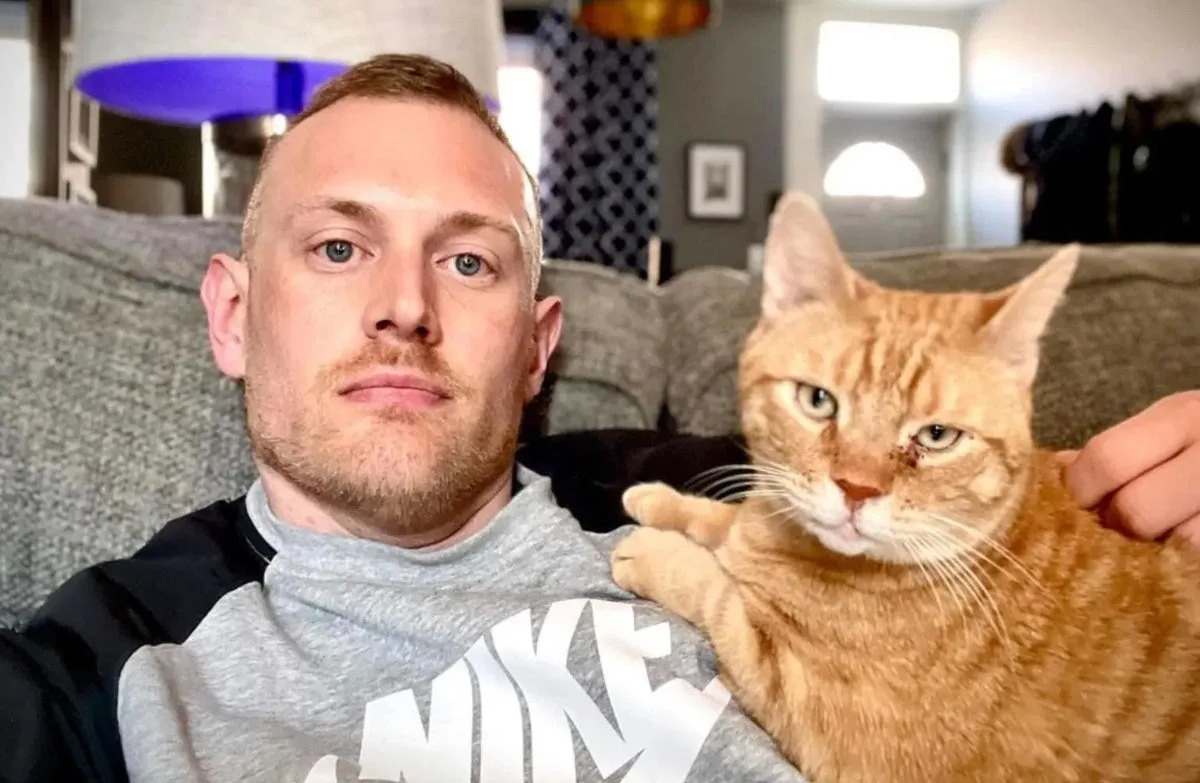
He also was a "militant bicyclist, Anglo-Catholic Episcopalian and parishioner at St. Mark’s Church on Locust Street, and lives with his best friend, his senior cat with one tooth named Mason,” the website states.
In a statement, Mayor Jim Kenney said he was "shocked and saddened" by Kruger’s death. "He cared deeply about our city and its residents, which was evident in his public service and writing," Kenney said. "Our administration was fortunate to call him a colleague, and our prayers are with everyone who knew him."
District Attorney Larry Krasner said in a statement Monday that Kruger “lifted up the most vulnerable and stigmatized people in our communities – particularly unhoused people living with addiction.”
“Many of us knew Josh Kruger as a comrade who never stopped advocating for queer Philadelphians living on the margins of society,” the District Attorney’s LGBTQ+ Advisory Committee said in a statement Monday. “His struggles mirrored so many of ours — from community rejection, to homelessness, to addiction, to living with HIV, to poverty — and his recovery, survival, and successes showed what’s possible when politicians and elected leaders reject bigotry and work affirmatively to uplift all people. Even while Josh worked for the Mayor, he never stopped speaking out against police violence, politicized attacks on trans and queer people, or the societal discarding of homeless and addicted Philadelphians.
Philadelphia journalist shot and killed in his home; no arrests made MARK OSBORNE Mon, October 2, 2023 Philadelphia journalist shot and killed in his home; no arrests made
Josh Kruger, a freelance journalist and former city employee, was shot and killed in his home early Monday, according to local officials.
Police responded to his home at about 1:30 a.m. and found Kruger shot seven times in the chest and abdomen. He was taken to Penn Presbyterian Medical Center, where he was pronounced dead, police said.
Kruger, who lived in the city's Grays Ferry neighborhood, was currently working as a freelance reporter, but was previously employed by the Philadelphia City Paper and Philadelphia Weekly. He had recent freelance bylines in the Philadelphia Inquirer and The Philadelphia Citizen.
There have been no arrests in the shooting, police said. No weapon has been recovered.
"Josh deserved to write the ending of his personal story," District Attorney Larry Krasner said in a statement. "As with all homicides, we will be in close contact with the Philadelphia Police as they work to identify the person or persons responsible so that they can be held to account in a court of law. I extend my deepest condolences to Josh’s loved ones and to all those mourning this loss."
Kruger was openly queer, according to the district attorney, and often wrote about LGBTQ+ topics, as well as drug abuse and homelessness.
"Many of us knew Josh Kruger as a comrade who never stopped advocating for queer Philadelphians living on the margins of society," the district attorney's LGBTQ+ Advisory Committee added in a statement. "His struggles mirrored so many of ours -- from community rejection, to homelessness, to addiction, to living with HIV, to poverty -- and his recovery, survival, and successes showed what’s possible when politicians and elected leaders reject bigotry and work affirmatively to uplift all people."
Kruger also previously worked in communications for the city, first in the mayor's office and then for the Office of Homeless Services and Department of Health.
"Shocked and saddened by Josh Kruger’s death," Philadelphia Mayor Jim Kenney wrote on X, formerly known as Twitter. "He cared deeply about our city and its residents, which was evident in his public service and writing."
He added, "Our administration was fortunate to call him a colleague, and our prayers are with everyone who knew him."
On his website, Kruger wrote he was an avid cyclist and lived "with his best friend, his senior cat with one tooth named Mason."
Tesla Autopilot arbitration win could set legal benchmark in auto industry
Rebecca Bellan Mon, October 2, 2023 Image Credits: Harry Langer/DeFodi Images / Getty Images
In a victory for Tesla, a California federal judge ruled over the weekend that a group of Tesla owners cannot pursue in court claims that the company falsely advertised its automated features. Instead, they will have to face individual arbitration.
U.S. District Judge Haywood Gilliam's ruling isn't a win for the defensibility of Tesla's advanced driver assistance systems, Autopilot and Full Self-Driving (FSD), but simply for Tesla's terms and conditions. The plaintiffs who filed the proposed class action in September 2022 did in fact agree to arbitrate any legal claims against the company when they signed on the dotted line, according to the judge. They had 30 days to opt out, and none chose to do so.
"In some respects, it probably does put down a marker that these types of claims will likely face these types of challenges," Ryan Koppelman, partner at law firm Alston & Bird, told TechCrunch.
Koppelman noted that arbitration is a common legal strategy used by companies to avoid individual claims and class actions like this one.
In this specific case, a fifth plaintiff did opt out of arbitration, but Judge Gilliam ruled to dismiss their claims, as they waited too long to sue, according to court documents.
"The statue of limitation aspect is interesting because the claims at issue here had to do with what the Tesla products will be capable of in the future, as well as what they were supposedly capable of at the time of sale," said Koppelman.
The plaintiffs in the case all claimed to have spent thousands of dollars on unreliable and dangerous technology that has caused accidents, some resulting in death. Tesla has denied wrongdoing and moved to send the claims to arbitration, after citing the plaintiffs' acceptance of the arbitration agreement.
Judge Gilliam also denied the plaintiffs' motion for preliminary injunction "prohibiting the defendant from continuing to engage in its allegedly illegal and deceptive practices." In effect, the plaintiffs asked the court to force Tesla to stop marketing their ADAS as providing "full self-driving capability"; to stop selling and de-activate their FSD beta software; and to alert all customers that Tesla's use of terms like "full self-driving capability," "self-driving" and "autonomous" to describe the ADAS technology was inaccurate.
Falsely advertising Autopilot and FSD
The original complaint, filed in September 2022, alleged that Tesla and its CEO Elon Musk have been deceitfully advertising its automated driving features as either fully functioning or close to being “solved” since 2016, despite knowing full well that the capabilities of Autopilot and FSD don’t live up to the hype.
The plaintiffs alleged that Tesla's ADAS cause vehicles to run red lights, miss turns and veer into traffic, all the while costing Tesla owners thousands of dollars.
Briggs Matsko, the named plaintiff in the lawsuit, said he paid $5,000 for his 2018 Tesla Model X to get Enhanced Autopilot. Tesla's FSD costs an additional $12,000.
The failed class action isn't the only time Tesla's so-called self-driving technology has come under scrutiny. Earlier this year, Musk was found to have overseen a 2016 video that overstated the capabilities of Autopilot.
Tesla's ADAS is also being investigated by numerous state agencies. California's Department of Motor Vehicles also accused Tesla in July 2022 of falsely advertising its Autopilot and FSD systems. The National Highway Traffic and Safety Administration (NHTSA) is actively probing 830,000 Teslas that include Autopilot. And the Department of Justice has requested information from Tesla regarding its Autopilot and FSD technology.
Government sues Union Pacific over using flawed test to disqualify color blind railroad workers
JOSH FUNK Mon, October 2, 2023 A Union Pacific train travels through Union, Neb. The federal government has joined a number of former workers in suing Union Pacific over the way it used its own vision test to disqualify workers the railroad believed were color blind and might have trouble reading signals telling them to stop a train. The new lawsuit was announced Monday, Oct. 2, 2023, by the Equal Employment Opportunity Commission. (AP Photo/Nati Harnik, File)
OMAHA, Neb. (AP) — The federal government has joined more than a dozen former workers in suing Union Pacific over the way it used a vision test to disqualify workers the railroad believed were color blind and might have trouble reading signals telling them to stop a train.
The lawsuit announced Monday by the Equal Employment Opportunity Commission on behalf of 21 former workers is the first the government filed in what could eventually be hundreds — if not thousands — of lawsuits over the way Union Pacific disqualified people with a variety of health issues.
These cases were once going to be part of a class-action lawsuit that the railroad estimated might include as many as 7,700 people who had to undergo what is called a “fitness-for-duty” review between 2014 and 2018.
Lawyers for the plaintiffs estimate nearly 2,000 of those people faced restrictions that kept them off the job for at least two years if not indefinitely. But the railroad hasn't significantly changed its policies since making that estimate in an earlier legal filing, meaning the number has likely grown in the past five years. More than three dozen lawsuits have been filed so far with many more cases still being reviewed by the EEOC.
Union Pacific has vigorously defended itself in court and refused to enter into settlement talks with the EEOC. The railroad has said it believes it was necessary to disqualify workers to ensure safety because it believed they had trouble seeing colors or developed health conditions such as seizures, heart problems or diabetes that could lead to them becoming incapacitated. They also noted federal rules require color vision testing.
“It is critical for the safety of our employees and communities where we operate that conductors and locomotive engineers correctly see and interpret the various signals that direct train movement,” railroad spokeswoman Kristen South said.
Often the railroad made its decisions after reviewing medical records and disqualified many even if their own doctors recommended they be allowed to return to work.
Railroad safety has been a key concern nationwide this year ever since a Norfolk Southern train derailed in eastern Ohio near the Pennsylvania line in February and spilled hazardous chemicals that caught fire, prompting evacuations in East Palestine. That wreck inspired a number of proposed reforms from Congress and regulators that have yet to be approved.
“Everyone wants railroads to be safe,” said Gregory Gochanour, regional attorney for the EEOC’s Chicago District. “However, firing qualified, experienced employees for failing an invalid test of color vision does nothing to promote safety, and violates the ADA (Americans with Disabilities Act).”
This lawsuit focuses on a vision test that Union Pacific developed called the “light cannon” test that involves asking workers to identify the color of a light on a device placed a quarter of a mile (.4 kilometers) away from the test taker. The EEOC said in its lawsuit that the test doesn't replicate real world conditions or show whether workers can accurately identify railroad signals.
Some of the workers who sued had failed Union Pacific's “light cannon” test but passed another vision test that has the approval of the Federal Railroad Administration. The other workers who sued had failed both tests but presented medical evidence to the railroad that they didn't have a color vision problem that would keep them from identifying signals.
The workers involved in the lawsuit were doing their jobs successfully for Union Pacific for between two and 30 years without any safety problems. The workers represented in the EEOC lawsuit worked for the company in Minnesota, Illinois, Arizona, Idaho, California, Kansas, Nebraska, Oregon, Washington, and Texas.
Attorney Anthony Petru, who represents a number of the former UP workers, said the “light cannon” test is so unreliable that the railroad's own experts have testified that it would disqualify a quarter of the workers with perfect vision.
“The last thing we would do is take any steps to try to put anybody in charge of a freight train who is unsafe because of their physical characteristics,” Petru said. “What we don’t want is employees who are safe, who could do the job safely, who could do the job competently to be precluded from working because the railroad perceives them as having a disability when they don’t.”
Petru said Union Pacific disqualified all these workers over these vision tests “without making the railroad safer in any way, shape or form” because there's no history of UP workers causing derailments or collisions when they couldn't discern between red and green.
The Omaha, Nebraska-based railroad is one of the nation's largest with tracks in 23 Western states.


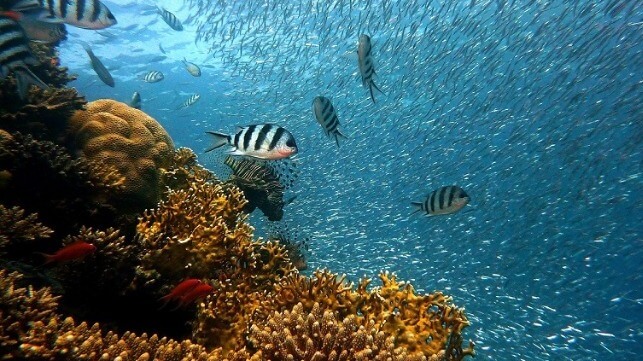
 The Guardians of the Reef have been trained to patch back together coral reef damaged by storms in Quintana Roo, Mexico (Image: Con Con)