Tuesday, October 03, 2023

Canada's banking watchdog wants to rein in ultra-long mortgages

Canada’s banking regulator said he’s concerned about the prevalence of ultra-long mortgages and that his agency is working with lenders to stem the ubiquity of such loans.

The country’s banks have about $250 billion (US$185 billion) of mortgages with amortization periods — the length of time permitted to pay off the loan — that sit at 35 years or longer, according to Peter Routledge, the superintendent of financial institutions.

“I think both banks — financial institutions — and borrowers would be better off if the prevalence of this product was less, and we’re consulting and will have something out in October to discuss how we might address that, and put in place a little more regulatory oversight to make this product a little less prevalent,” Routledge, who heads the Office of the Superintendent of Financial Institutions, told reporters in Toronto on Tuesday.

OSFI began a consultation on residential mortgages in January and Routledge said it will release draft guidelines next month. Canadian bank shares extended declines on Tuesday after his comments, with the S&P/TSX Commercial Banks Index dropping as much as 1.3 per cent Tuesday to its lowest intraday level in a month. 

Homeowners with variable-rate mortgages who have fixed monthly payments have seen the portion of their monthly payment that covers interest skyrocket as rates rise, and in many cases are now making only interest payments. When those loans come up for refinancing in coming years, they face the prospect of much higher payments should interest rates remain high.

The problem is “manageable,” Routledge said, noting that the $250 billion figure has declined from $280 billion earlier this year, with OSFI asking senior leaders at the banks what they are doing to “shrink this problem.”

SMALL PORTION

Routledge, who spoke earlier at the Global Risk Institute Summit, also pointed out that negatively amortizing mortgages are a relatively small portion of the total $2.1 trillion in Canadian residential mortgage debt that his organization monitors.

The Bank of Canada’s campaign to hike interest rates over the past year and a half hasn’t substantially tamed inflation. While housing sales volume has dropped, home prices haven’t come down significantly. OSFI has borrowing rules in place to ensure homeowners can continue to pay their mortgages, a prospect that’s become more daunting with elevated rates. 

Under the regulator’s “stress test,” borrowers seeking uninsured loans must qualify at a rate two percentage points higher than the bank’s offered rate or 5.25 per cent, whichever is higher. With most mortgage rates at commercial banks over 5 per cent, that means homebuyers need to show they can carry loans with interest rates of more than 7 per cent.

The government should make it even harder for Canadians to buy homes, Alberta Investment Management Co. Chief Executive Officer Evan Siddall said during a Canadian Club Toronto discussion Tuesday, adding that the state of unaffordability arose because “we glorify ownership.”

‘NO EQUITY’

“People buy houses and demand is massive, and there’s no supply. We allow people to buy houses with basically no equity,” said Siddall, who leads the $160 billion Alberta pension fund and previously headed up the Canada Mortgage and Housing Corp.

Siddall suggested increasing the minimum down payment to 10 per cent from 5 per cent.

“If you make it less attractive to own homes, houses won’t be as hot,” he said, adding that taxing capital gains on home sales would be the best measure to cool the market, but that such a move would be hugely unpopular. “So we’re stuck.”

 

'ET Canada' cancelled by Corus Entertainment, blames 'challenging' advertising market


The studio lights are going dark at "ET Canada."

Corus Entertainment said Wednesday it is ceasing production on the long-running Canadian arts and entertainment news magazine Oct. 6 after 18 seasons.

The media company blamed the impending demise on the cost of producing a daily show in "a challenging advertising environment."

"The show will no longer be produced and all social media and websites related to the brand will be decommissioned," a Corus spokesperson said in an emailed statement.

"Entertainment Tonight Canada," the name used when the show launched on Global Television in 2005, put a distinctly Canadian lens on the world of film, television and music. 

Over the years, its hosts have included former MuchMusic VJ Rick Campanelli and R&B singer Keshia Chanté. It is currently co-hosted by Sangita Patel and Cheryl Hickey, who has been with the show since its start.

Corus would not say how many people worked on the show, nor whether any could be employed elsewhere in the organization.

The spokesperson said that after Oct. 6, encore specials will air in the same time-slot until Oct. 31.

The end of "ET Canada" leaves CTV's weeknight show "ETalk," anchored by Tyrone Edwards, as the last-standing major entertainment news program

This report by The Canadian Press was first published Sept. 27, 2023.


TVO employees vote to reject 'final' contract offer as strike heads into 7th week

Workers at Ontario's public broadcaster have voted to reject what the company's management says is its "final" offer after nearly six weeks of labour action.

TVO CEO Jeffrey Orridge issued a statement saying he's disappointed Canadian Media Guild employees voted against the offer, prolonging the strike he says "now enters a new and uncharted phase."

Dozens of TVO employees walked off the job in August after CMG, the union representing around 70 journalists, producers and education workers at the Ontario organization, said it wasn't able to reach a fair agreement with the employer.

The latest offer included a wage increase of 7.5 per cent over three years -- 3 per cent retroactive to 2022, 2.75 per cent in 2023 and 1.75 per cent in 2024 -- as well as protections preventing the use of contracts to replace permanent and temporary workers.

CMG did not immediately respond to a request for comment and has not released the percentage of its membership that voted against the offer.

The union has said some of the main sticking points in bargaining were wages it described as well-below what's needed to catch up to inflation and temporary contract work.

This report by The Canadian Press was first published Oct. 1, 2023.


How will the U.S. auto strike impact Canada?

An ongoing strike by U.S. auto workers will impact Canada’s auto industry due to large-scale integration, but experts say it will take time for Canadian consumers to feel the effects of the labour action. 

Last week, the United Auto Workers expanded their strike, with 5,600 more workers across 38 General Motors and Stellantis parts distribution facilities joining the 13,000 who started striking on Sept. 14 at Big Three assembly plants.

Andrew Foran, an economist at TD Bank, said in an interview with BNNBloomberg.ca that so far, the UAW strike has affected four different assembly production sites in Missouri, Ohio and Michigan that typically produce mid-size pickup and SUV models. Those vehicles are commonly in high supply in the month of September, meaning consumer effects from that supply chain disruption will be delayed, he explained.

“It would likely require a fair amount of time before these strikes actually impacted Canadian consumers and U.S. consumers,” he said. 

The typical lag between production and when a vehicle arrives at the dealership is about one to two months, according to Foran. 

“If you tag that on top of the days of supply that these companies have for these models right now, it will likely take several weeks (of) strike action in order to actually impact the consumer looking to buy those models down the line,” Foran said. 

Foran cautioned that the picture could change if UAW updates its strike action. The union intends to announce on Friday morning how it plans to expand the strike as negotiations with the companies drag on.

DEALERS PREPARED IN ADVANCE

Huw Williams, director of public affairs for the Canadian Automobile Dealers Association, said in an interview with BNNBloomberg.ca that there is a “highly integrated auto sector in Canada” and what happens in the U.S. impacts dealers as well as manufacturing in Canada. 

According to Williams, dealers in Canada were aware the strike was coming and took action to “boost inventory” as much as possible. Dealears are monitoring the situation to see how it could impact supplies of vehicles and parts, he added.

“It's early days in the labour situation in the U.S. in terms of the extent of the strike, and also the length of the strike,” Williams said on Tuesday.

“Dealers, I would say, have not felt the strike yet but are cautiously guarded about the potential for it to have greater impact going forward as the strike spreads and as it lengthens.”

PRICE INCREASES POSSIBLE

If the U.S. strike continues at its current intensity for the next several weeks, Foran said its likely consumers will see “forward price action,” meaning wholesale buyers would see supply declines for the “foreseeable future” and likely would raise prices on those models.  

“Looking at the broader aggregate market, it would likely take several weeks for that to happen and it would only impact the models that are being impacted,” Foran said.

Based on the current form of the strike, Foran said increased prices would only be affected for “about six to eight consumer vehicle models.”

“They're typically midsize pickup trucks and SUV models, and none of them are in the top 10 best-selling models in Canada or the U.S.,” Foran said, adding that this was an intentional feature of UAW’s strategy.

“They didn't want to go after the best-selling models for the first action of the strike,” he said.

If UAW expands its strike action, that would impact a wider group of vehicle models, he said.

‘PINCH POINTS’ STILL EMERGING

Williams said it is difficult to determine exactly when consumers will be impacted by the strike, as it has “not expanded to a point where we can really tell where those pinch points would be felt.”

Anxiety levels among dealers are higher than when the strike began, he added.

“There's been some good news. Unifor settled with Ford here in Canada, so there are some good news sides of the equation,” Williams said.

“But again, the integrated nature of things makes it difficult.”

Over the past three years, Williams noted that consumers have faced lower inventory levels at dealerships.

“Since the beginning of the pandemic, inventory levels have reached beyond historic lows, really quite remarkable inventory lows,” he said. “Customers have switched their buying pattern to adjust from that.”


B.C. Rogers technicians give strong strike mandate amid concerns over Shaw job losses


Around 300 former Shaw technicians absorbed by Rogers Communications Inc. during the companies' merger have overwhelmingly voted to strike amid concerns over job security following recent layoffs and voluntary departures.

The union representing the workers, who are based in Vancouver, Richmond, Surrey and Langley, B.C., says those job losses call into question Rogers' commitment to create 3,000 new jobs in Western Canada over five years — a federally mandated condition of the $26-billion takeover.

In July, Rogers began offering voluntary departure packages and confirmed an unspecified number of employees were laid off as it integrated with Shaw and worked to eliminate duplication.

Jayson Little, a spokesperson for United Steelworkers union Local 1944, says Rogers is seeking to erode contractual language that prevents staff technicians' work from being performed by contractors at homes and businesses. Rogers did not immediately provide comment.

The union says its members will be in position to walk off the job in late October if the impasse hasn't been solved after receiving a 99.6 per cent strike mandate in last Friday's vote.

The two sides have been at the bargaining table since February as the union's members work under the terms of their previous collective agreement that expired on March 23.

This report by The Canadian Press was first published Sept. 28, 2023.

Unifor sets Oct. 9 deadline for contract talks with General Motors


Unifor has set Oct. 9 at 11:59 p.m. as the deadline for contract talks with General Motors as union leadership look to secure terms that will be accepted by both the company and union members.

Negotiations between the union and the U.S. automaker resumed this week after workers at Ford Motor Co. of Canada voted to approve a new contract last weekend. 

Lana Payne, president of Unifor, has hailed the Ford contract as life changing for workers as it makes historic wage gains and other benefit improvements.

The Ford contract, however, was only ratified by 54 per cent of workers, and skilled trades workers in Oakville and Windsor did not vote in favour, which has raised questions about how much support GM workers will give to similar terms.

"The skilled trades revolt at Ford will likely spill over into GM and Stellantis bargaining," said Larry Savage, chair of the labour studies department at Brock University, by email. 

He noted that voting at Ford showed a generational divide, with workers near retirement age more likely to oppose the tentative agreement based on concerns over pension improvements. 

But GM has a younger workforce demographic, in part thanks to the relatively recent hires at the company's Oshawa plant. The company shut down operations at the end of 2019, only to reopen it with many new workers in 2021. 

Younger workers secured numerous improvements in the Ford contract, including upfront pay gains, a shorter path to the full pay level, and a higher wage floor.

"For the next generation of autoworkers, this contract is a game changer, no doubt about it," said Jim Stanford, labour economist and director of the Centre for Future Work.

Unifor contract talks are also happening as the United Auto Workers union in the U.S. is also working to secure new contracts. 

The U.S. union started strike action against the Derioit Three on Sept. 15 before expanding it last week, and again on Friday. 

The aggressive stance of the union, both in its escalating strikes and its demands for 40 per cent wage gains, has raised concerns from some Unifor members that their union hasn't pushed hard enough. 

Stanford however cautioned against direct comparisons with what's going on in the U.S., noting that the UAW contract spans more than four years so the headline wage gain figure looks higher.

He also noted that the UAW hasn't secure a contract with any guaranteed gains yet. 

"The fact that the UAW strike is continuing will remind people that collective bargaining is hard, and you can't take anything for granted."

It's also still not clear yet how receptive the other two Detroit automakers will be to the terms reached with Ford, said Stanford. 

"Given the size of the economic gains in this agreement, it is not a foregone conclusion that either GM or Stellantis will roll over and accept it," he said. 

GM has said simply that it looks forward to "working with our Unifor partners to build a competitive future that also recognizes our employees’ contributions to our shared success."

The GM talks cover about 4,300 workers at the automaker's St. Catharines Powertrain Plant, the Oshawa Assembly Complex and the Woodstock Parts Distribution Centre. 

This report by The Canadian Press was first published Sept. 29, 2023.


Australia Helps Build Port in Tonga, Center of Competition with China

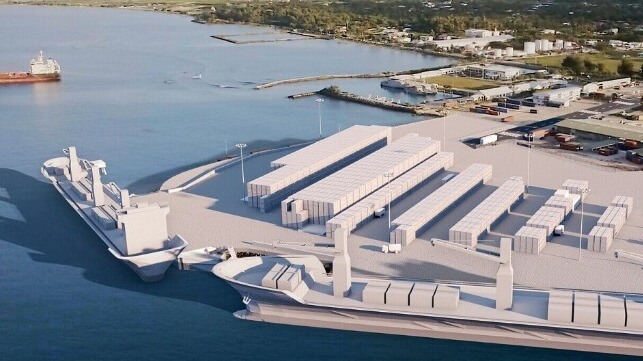
Design rendering for the future port at Nuku’alofa (McConnell Dowell)

PUBLISHED SEP 29, 2023 8:40 PM BY THE MARITIME EXECUTIVE


Australia has pledged it will provide $20 million to support much-needed upgrades to Nuku’alofa Port in the Kingdom of Tonga. The Asian Development Bank (ADB) had in 2020 approved a $45 million grant for the project, but a total of $88 million is needed for the completion. Australia has joined as a co-funder together with the government of Tonga.

The project is being built by New Zealand company McConnell Dowell and is due to be completed by mid-2025.

With around 98 percent of Tonga’s imports arriving by sea, Nuku’alofa port is a lifeline for the country. However, lack of maintenance and investment has seen the port’s cargo terminal - Queen Salote International Wharf (QSIW) - deteriorate over time.

The upgrade works are intended to expand the size of the wharfs to accommodate larger vessels. In addition, the project goals also extend to climate-proofing all critical infrastructure of the port.

Besides facing sea level rise now threatening most of the Pacific Island nations, Tonga is in a region vulnerable to natural disasters. The country is in a seismically active area, with earthquakes causing serious damage every 20 years. Tonga is also at high risk of cyclones hitting infrastructure every 1-5 years.

Tonga’s Minister for Infrastructure, Sevenitini Toumo’ua, lauded Australia’s contribution and said it would go a long way in supporting Tonga’s economic recovery and development.

U.S President Joe Biden also recently pledged to provide $200 million to Pacific Island nations. The funds will go into projects aimed at mitigating effects of climate change, countering illegal fishing and spurring economic growth.

According to a new report by the ANZ Bank, the Pacific Islands region faces a substantial infrastructure deficit to the tune of $12 billion through 2030. Climate shocks have caused the bill to skyrocket with roads, ports and telecommunication networks in constant need of repair.

The region is also part of the tug-of-war between China and its Western rivals for geopolitical influence, and Chinese state enterprises have been active in making infrastructure investments of their own in the Pacific Islands. Under the banner of the Belt and Road Initiative, these firms have invested hundreds of millions of dollars per year into roads, bridges, hospitals, industrial parks and other projects throughout the region. 

“As China’s engagement in the region has grown, there has been some – from our perspective – increasingly problematic behavior,” U.S. Secretary of State Antony Blinken said during a visit to Tonga in July. He warned of a pattern of "predatory economic activities and also investments that are done in a way that can actually undermine good governance and promote corruption."

Marine Plastic May Be Breeding Ground for Antibiotic-Resistant Bacteria

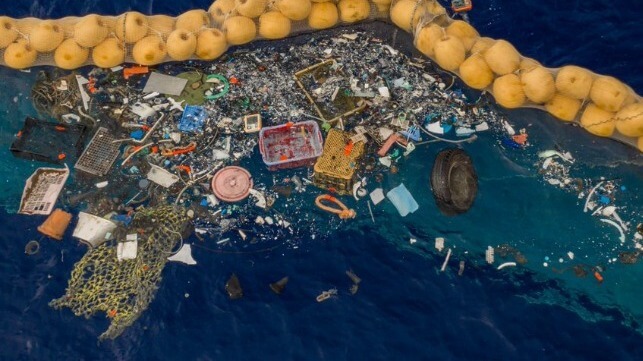
Floating garbage Ocean Cleanup
File image courtesy Ocean Cleanup

PUBLISHED SEP 28, 2023 8:50 PM BY GEMINI NEWS


Marine plastic waste may serve as a vector for the spread of antimicrobial resistance (AMR) from pathogenic bacteria, either to shellfish or directly to humans who are bathing in the sea or taking part in other recreational activities.

“The bacteria contained in sewage and wastewater discharged from households, hospitals and factories will form biofilms on plastic surfaces in the sea”, explains Gunhild Hageskal, who is a Senior Research Scientist at SINTEF. “Such bacteria may already possess resistant properties, but in any event, bacterial biofilms are known to act as incubators for antimicrobial resistance. The reason for this is that bacteria readily exchange so-called mobile genetic elements when assembled in large numbers at a single location”, she says.

There may also be antimicrobial and other chemical residues contained in the wastewater, and certain chemicals in the plastics themselves may influence the development of bacterial resistance.

Researchers at SINTEF will be investigating the extent of this problem as part of a project called PlastiSpread, which is a joint collaboration between SINTEF, NTNU and the University of Thessaly in Greece. The Norwegian part of the study will be carried out in Trondheim in close collaboration with Trondheim municipality and the wastewater treatment plants at Høvringen and Ladehammeren. In order to introduce a global perspective to this issue, a similar study will be carried out in Greece, where twice the amount of antibiotics are used as in Norway.

The PlastiSpread project has a budget of NOK 12 million and will be carried out between July 2023 and July 2027. It is being funded by the Research Council of Norway and coordinated by NTNU, with SINTEF as project partner.

This article appears courtesy of Gemini News and may be found in its original form here.

The opinions expressed herein are the author's and not necessarily those of The Maritime Executive.


The Surprising Link Between Piracy and COVID-19

Poverty, institutional incapacity and budget cuts fueled a surge in pandemic piracy

Suspected robbers under way in the Singapore Strait (Singapore IFC)

PUBLISHED OCT 1, 2023 10:22 AM BY THE MARITIME EXECUTIVE


By Jade Lindley and Dhiyaul Aulia Huda]

The Singapore Strait is experiencing a spike in maritime piracy attacks, with the incidence increasing from 12 attacks in 2019 to 38 in 2022, and an upwards trend continuing into 2023.

Southeast Asian waters are of geostrategic importance to global shipping routes, maritime trade, and networks of port hubs that are vital for state economics. The region’s archipelagic states, extensive coastlines, and congested chokepoints create ideal conditions for piracy.

What created the conditions for a surge in Singapore Strait piracy? Coinciding with the 2020–22 timeframe is of course the Covid-19 pandemic – a global health and economic crisis that triggered national restrictions affecting coastal and fishing communities in Southeast Asia. Further investigation into the link between the pandemic and increased piracy revealed heightened motivation to offend and decreased efforts to prevent attacks in known piracy hotspots.

Socio-economic pressures and poor economic conditions in coastal communities can motivate unemployed shipyard workers, seafarers and fishers into piracy. Similar to the 1997 Asian financial crisis and the 2008 global financial crisis, the Covid-19 pandemic included a shutdown of operations that caused a decrease in global trade and supply chain disruptions that led to Asia’s first regional economic contraction in decades. Among coastal communities, poverty, economic inequality, unemployment and commodity prices increased while households turned to crime, including piracy, to supplement their income.

Throughout the pandemic, the maritime sector was impacted by lockdowns, which increased financial vulnerability. The fishing sector experienced a decline in employment hours and decreased consumer demand. The economic welfare of fishers was damaged by decreased income opportunities due to fish market closures, including a decline in seafood exports by as much as 70 per cent during the early days of Covid-19. As such, approximately 2.7 million Indonesian fishers fell below the national poverty line.

Covid-19 also disrupted the operation of ports in Indonesia and Singapore, with governments adopting lockdown measures, travel restrictions and mandatory quarantine orders that reduced supply and restricted operations. Seafaring was particularly affected. The Seafarers Happiness Index for Q2 and Q3 of 2020 indicated that fatigue and financial woes impacted those both aboard vessels and ashore.

Why did the Singapore Strait experience a six-year high as a piracy hotspot in comparison to other parts of Southeast Asia, such as Indonesia? Our analysis found that the rise of piracy in the Singapore Strait can be attributed to three main causes. 

First, institutional capacity was weakened throughout Covid-19 due to the reallocation of resources from maritime security to healthcare and social security. This resulted in regional navies, coast guards and other maritime law enforcement agencies responsible for maritime security and surveillance operating with decreased funding, hampering regional maritime security efforts. Singapore reduced its defense budget in 2020, noting a 2.4 per cent reallocation of defense funds in part to deal with the pandemic.

Second, the Singapore Strait has a decentralized maritime security framework, as it is composed of the territorial waters of Singapore, Indonesia and Malaysia. The Singapore Strait’s maritime security architecture and surveillance, therefore, relies on cooperative mechanisms between the littoral states, which can result in sovereignty concerns and ambiguity over laws for the “right of hot pursuit”. Regime complexity in the governance of waters can result in regulatory gaps that hinder transnational approaches to combat piracy.

A final consideration is the geopolitical conditions that can result in the absence of capable guardianship. There was a decrease in maritime patrols in the Singapore Strait from December 2019, as the Indonesian navy was deployed to the South China Sea to advance Indonesia’s claim to the Natuna Sea against China’s assertions, creating an absence of maritime surveillance and increased opportunities for piracy in the Singapore Strait. Coastal surveillance was deprioritized as budget reallocations to combat Covid-19 resulted in decreased administrative capacity, causing weaknesses in law enforcement at sea. 

Examining Southeast Asia’s maritime piracy spike during Covid-19 helps shed light on how the pandemic contributed to piracy trends. Lessons learned can usefully inform future industry disruptions, such as supporting the livelihoods of fishing industry workers and maintaining capable guardianship to prevent future piracy surges.

This article is part of the ‘Blue Security’ project led by La Trobe Asia, University of Western Australia Defence and Security Institute, Griffith Asia Institute, UNSW Canberra and the Asia-Pacific Development, Diplomacy and Defence Dialogue (AP4D). Views expressed are solely of its author/s and not representative of the Maritime Exchange, the Australian Government, or any collaboration partner country government.

For more on the subject, see: Dhiyaul Aulia Huda and Jade Lindley, (2023) ‘The Impact of Covid-19 on Maritime Piracy in the Singapore Strait: A Routine Activity Theory Analysis’, Blue Security.

This article appears courtesy of The Lowy Interpreter and may be found in its original form here

The opinions expressed herein are the author's and not necessarily those of The Maritime Executive.


Australia Funds New Hydrogen Hub Project at Port Bonython

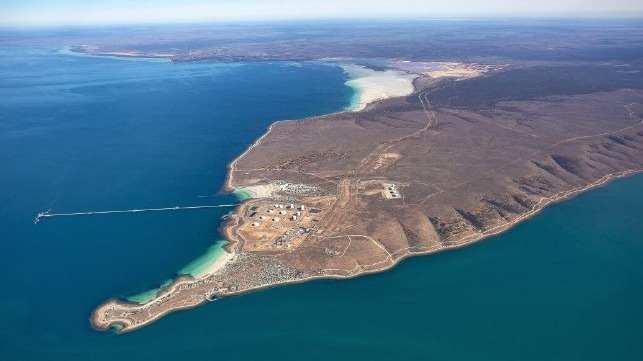
Port Bonython
Port Bonython (South Australian Government Financing Authority)

PUBLISHED SEP 27, 2023 2:53 PM BY THE MARITIME EXECUTIVE


The government of Australia and the state of South Australia have finalized a grant of US$64 million to fund the development of a hydrogen hub at Port Bonython, South Australia.

This hub could become Australia's first large-scale export terminal for hydrogen, and has the potential to draw on renewables and on natural gas for H2 supplies

“The global shift to clean energy and decarbonized economies is a huge economic opportunity for Australia,” said Prime Minister Anthony Albanese. “We are determined to grasp this opportunity and are investing half a billion dollars into regional hydrogen hubs all around Australia.” 

Port Bonython has an existing deep-water liquid fuel terminal, which could be used to facilitate large-scale exports of hydrogen, along with 1,700 hectares of developable land and world-class wind and solar resources. The plans to transform the current facility into a hydrogen hub include a 200 MW hydrogen power plant, an electrolyzer, and a storage facility. 

In addition to the grant, US$25 million will be contributed by the private sector. The redeveloped port hopes to host projects worth up to $8.3 billion and could generate as much as 1.8 million tonnes of hydrogen by 2030. 

The grant agreement comes after the South Australian government introduced a bill to streamline and coordinate development of hydrogen and renewable energy projects. The bill was designed to give investors confidence and to ensure that projects are implemented in a way that protects the environment, the interests of communities, landholders, and native title holders. 

Apart from Port Bonython, Australia is investing in future hydrogen hubs in Pilbara, Kwinana, Gladstone, Townsville, the Hunter Valley, Bell Bay, and Upper Spencer Gulf. 

Australia believes that the hydrogen industry will generate US$32 billion in economic activity and create over 16,000 jobs. “We’re working closely with industry to maximize this opportunity to grow a new industry, which has potential to create thousands of jobs and improve the standard of living for South Australians for generations to come,” said Peter Malinauskas, premier of South Australia.