Wednesday, October 04, 2023

Arizona to cancel leases allowing Saudi-owned farm access to state's groundwater

WASHINGTON (AP) — Arizona governor Katie Hobbs said this week her administration is terminating state land leases that for years have given a Saudi-owned farm nearly unfettered access to pump groundwater in the dry southwestern state.

On Monday, Hobbs, a Democrat, said the state had canceled Fondomonte Arizona's lease in western Arizona's Butler Valley and would not renew three other leases up for renewal there next year.

An investigation by the governor's office found that the foreign-owned farm had violated some of its lease terms. Hobbs called it unacceptable that the farm “continued to pump unchecked amounts of groundwater out of our state while in clear default on their lease.”

Fondomonte Arizona, a subsidiary of Saudi dairy giant Almarai Co., grows alfalfa in Arizona that feeds livestock in the water-stressed Gulf kingdom.

Through a spokesperson, Fondomonte said it would appeal the governor's decision to terminate its 640-acre (259-hectare) lease in Butler Valley. Altogether, Fondomonte farmed about 3,500 acres (1,416 hectares) in the rugged desert area west of Phoenix.

Fondomonte raised eyebrows when in 2014 it purchased nearly 10,000 acres (4,047 hectares) of land for $47.5 million about 20 miles (32 kilometers) away from Butler Valley in Vicksburg, Arizona. Since then, worsening drought in Arizona has brought renewed attention to the company's water use and the broader issues of foreign-owned farms and groundwater pumping.

The violations the governor's office detailed relate to the company's storage of hazardous materials, among other issues. On Monday, Hobbs' office said that Fondomonte was notified of the violations in 2016, but an investigation in August found the company had not fixed the problem seven years later. That gave Arizona's State Land Department grounds to terminate the lease.

The Arizona governor's office said the State Land Department decided not to renew three other leases the company had in Butler Valley due to the “excessive amounts of water being pumped from the land — free of charge.”

The department manages land owned by Arizona, which in Fondomonte's case, had been leased to the company. Butler Valley's groundwater is especially important because of state law that in theory allows for it to be pumped elsewhere. That makes its water of interest to cities like Phoenix, also dealing with water supply-related stress and a fast-growing population.

In Arizona, cities such as Phoenix and Tucson have restrictions on how much groundwater they can pump under a 1980 state law aimed at protecting the state’s aquifers. But in rural areas, little is required of water users to pump from underground aquifers besides registering wells with the state and using the water for activities, including farming, that are deemed a “beneficial use.”

Fondomonte also farms in Southern California’s Palo Verde Valley, an area that gets its water from the shrinking Colorado River. Those operations have attracted less scrutiny. Not all of Fondomonte's farms in Arizona are affected by the governor's decision. And it’s not the only foreign company farming in the Southwest. The United Arab Emirates-owned Al Dahra ACX Global Inc. grows forage crops in Arizona and California, and is a major North American exporter of hay.

Almarai’s holdings in the Southwest are just one example of the farmland the company and its subsidiaries operate outside Saudi Arabia. It farms tens of thousands of acres in Argentina, which has also faced severe drought conditions in recent years.

Foreign entities and individuals control roughly 3% of U.S. farmland, according to the U.S. Department of Agriculture. Canada is the largest holder — mainly of forestland.

Kris Mayes, Arizona’s Democratic attorney general, praised the governor for cracking down on the foreign-owned farm.

In April, Mayes announced that the state had rescinded permits that would've allowed Fondomonte to drill new water wells after inconsistencies were found in its applications. On Monday, Mayes called the governor's actions a "step in the right direction,” adding that the state should have acted sooner.

“The decision by the prior administration to allow foreign corporations to stick straws in the ground and pump unlimited amounts of groundwater to export alfalfa is scandalous,” Mayes said.

___

The Associated Press receives support from the Walton Family Foundation for coverage of water and environmental policy. The AP is solely responsible for all content. For all of AP’s environmental coverage, visit https://apnews.com/hub/climate-and-environment

Suman Naishadham, The Associated Press

How 70,000 Black children ended up being privately 'farmed' to British white families

Story by Sarah Ingram 

Metro
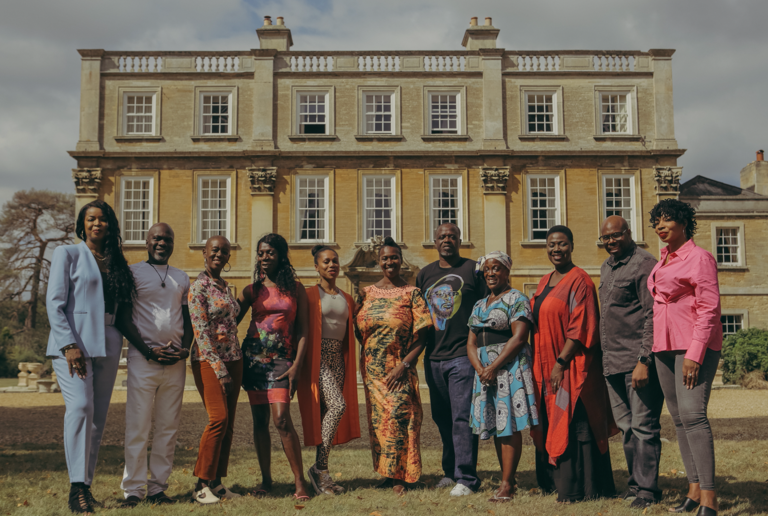

Documentary White Nanny Black Child , explores the story of unregulated fostering of Black babies and children into white families across the UK 
(Picture: Channel 5)© Provided by Metro


‘I’ve always been the only Black person in my family, in my street, in my school,’ says Remi.

She is one of tens of thousands Nigerian children who were privately fostered by white families in the four decades since 1955, in a controversial practice known as ‘farming’.

The placements left a generation of children bereft of community and confused about their identity, with many of them still grappling with residual trauma still today.

Seal, Kris Akabussi, Florence Olajide, Gina Yashere, Nelson Abbey, Adewale Akinnuoye-Agbaje, John Fashanu and Justin Fashanu were all privately fostered, and many of those that lived through this contentious unofficial policy have had to live with its impact for decades.

The phenomenon is heavily undocumented; a secret that Britain has buried and failed to deal with. But Remi is now telling her story as part of a new film, White Nanny Black Child, which explores the story of unregulated fostering of Black babies and children into white families across the UK.


Seal (L) and John Fashanu (R) – along with brother Justin -were both privately fostered (Picture: Getty)© Provided by Metro

Remi’s challenging childhood was spent being passed to and fro between foster carers and her biological parents. Her story is one of fear, insecurity and lack of agency. Taken in by a British family at six weeks old, her formative years were difficult and disjointed.

She recalls her foster mother having an argument with her biological parents about who would pay for the upkeep, and she was terrified she’d be taken away. She remembers screaming and crying; ‘I just knew that I was being taken away from my mummy’, before being placed with another foster family, who didn’t know how to look after her.

Remi adds that she was ‘unhappy all the time’ before being taken to live with her biological family in Nigeria as a teen, where, miserable, she completely shut down. A year later, her parents moved her back in with her original foster family.

Nine Nigerian-born people who were taken in by white families have told their stories as part of the documentary. Their experiences vary wildly; many were loved, some neglected and others abused. But however well they were treated in the home, they all shared a feeling of loss and confusion or faced racism, isolation and discrimination in public.
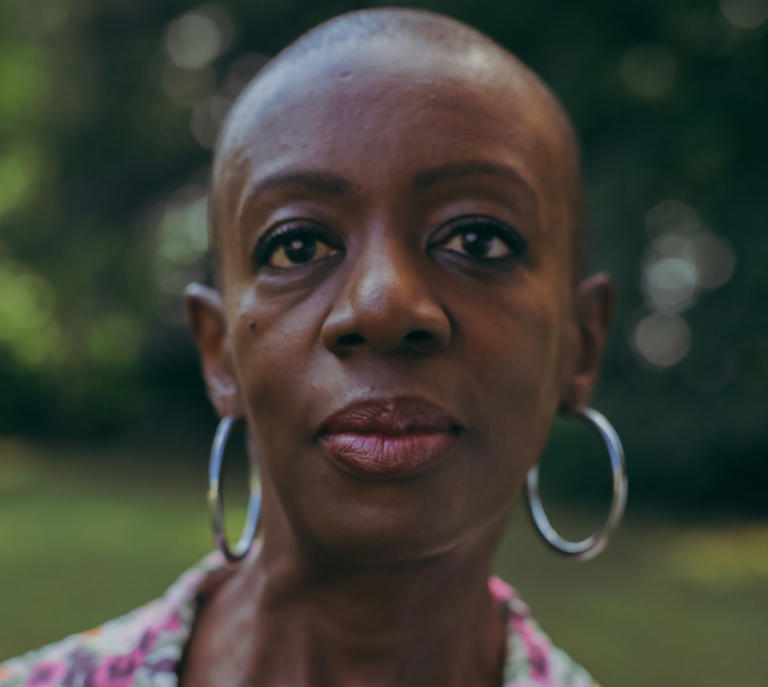

‘I just knew that I was being taken away from my mummy,’ says Remi
 (Picture: Channel 5)© Provided by Metro


The film, directed by Andy Mundy Castle, explores how these adults have been affected, taking it in turns to explore their past with the help of professional therapy.

It was a tough time for Black children growing up in postwar Britain. Landlords would post signs: ‘No coloured, no dogs, no Irish.’ Racial slurs were shouted in the streets and Enoch Powell made his infamous ‘rivers of blood’ speech, decrying immigration. Nigerian families, who had come to the UK on the promise of work and education, found a cold, grey and unwelcoming land.

More than 70,000 West African children were fostered unofficially by white British families between 1955 and 1995 as their parents studied and worked to give their children a better life.

Families looking for help would post in publications like Nursery World, sometimes with pictures or captions. One listing from 1974 read: ‘Pretty baby girl needs a new home.’

Sixty years on, these babies now grown are telling their stories. One of them, Ade, tells metro.co.uk that his early experiences affected him for the rest of his life.

He was taken on by a nanny at two months old while his mother – with no family nearby to help – studied to be a midwife. His parents spotted an advert in a New Cross newsagent, posted by a white woman called Pat.
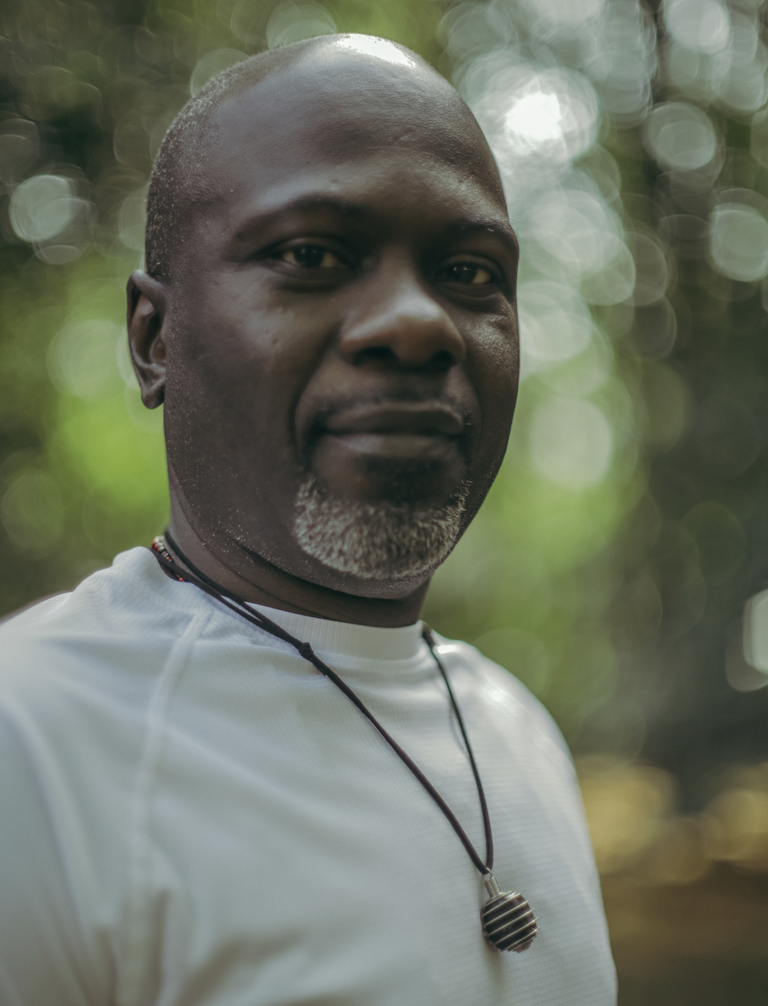

Ade had a good experience of the fostering process but says he struggled to find a place to call home
(Picture: Channel 5)© Provided by Metro

Desperate for childcare after Ade’s first placement went awry (that nanny used alcohol to get baby Ade to sleep) they agreed a price and Ade was sent to live with her by the seaside. Pat became ‘Hastings Mum’ and every weekend his parents would visit, or he would see his ‘London Mum and Dad’.

In general, he had a good experience of the fostering process. But Ade spent the majority of his adult life moving between Britain, Nigeria and America as he struggled to find a place to call home.

Ade has made peace with the process after talking it through with his dad, who has since passed away. But he says: ‘I always felt like I didn’t know where I belonged. Even the love and connection with my mother wasn’t as strong. I wanted and craved affection. The back-and-forth experience left me with the struggle of – was I Nigerian enough? I felt like I didn’t fit in. There was a sense of displacement, I couldn’t explain it but I didn’t feel grounded anywhere.’

Before his father’s death, Ade came to understand his parents’ decision, adding: ‘During that time, it was just what people did. They came over here for a better life. The UK gave an impression that there was a connection with Nigeria. And when they got here, they had to work and there was nobody to watch their child.

‘So even if they weren’t always happy with it, it was the choice they needed to make to take care of me and make the money. It was part of the culture. Coming back from Hastings, my dad used to ask my mum – are we doing the right thing? It was hard for them. I don’t fault them or judge them.’


Kris Akabusi (L) and Gina Yashere (R) were also privately fostered as children 
(Picture: Getty)© Provided by Metro

This nuance was important to director Andy Mundy-Castle, who believes the story has largely gone unreported because, really, there’s no one to hold to account.

He explains: ‘Both the families that took children in and the families handing over their children knew that something wasn’t quite right because this was being done behind closed doors. It wasn’t vetted. It wasn’t authorised and it wasn’t regulated by any local authorities or councils.’

But he wanted to bring this story to the light now as part of a wider conversation about migration and to broaden understanding around hardships people have to overcome when making an often treacherous journey to Britain

He says: ‘‘There are many nuances to this story and many sides to this story that affect all of us. It doesn’t just affect the people that were at the end of bad treatment. There were young, white British kids who would have, regardless of colour or race or ethnicity, treated this child that was brought into their family as a brother or sister. Now, if that child is suddenly stripped away, they still have to deal with the remnants of that.’

Children such as Gloria who was told at the age of 16 she would be taken to Nigeria.

Like Ade, Gloria was fostered at just two months old when her 27-year-old Nigerian mother trained to be a cardiographer in Britain. She grew up feeling lonely and isolated, ‘sad in the playground’ and ‘culturally alone’.

‘You don’t actually fit in anywhere… It’s like you’re just some sort of… embarrassment’, she tells the documentary, which shows her pulling her adoption documents from a cupboard full of papers.

Heartbreakingly, they read: ‘Since the placement of the child, [Gloria’s biological mother] has taken no interest in her, and has only visited on one occasion, and then on the insistence of the applicant who were at the time the infant’s foster parents.’

Gloria, who was eventually adopted by a family in Margate, was scarred by her formative years and skin, hair and figure, so different from her white peers, left her self-conscious and unhappy. When she did finally move to Nigeria, the language barrier was too great and she was derided for the way she spoke and what she wore. It was a ‘scary’ time, she remembers.
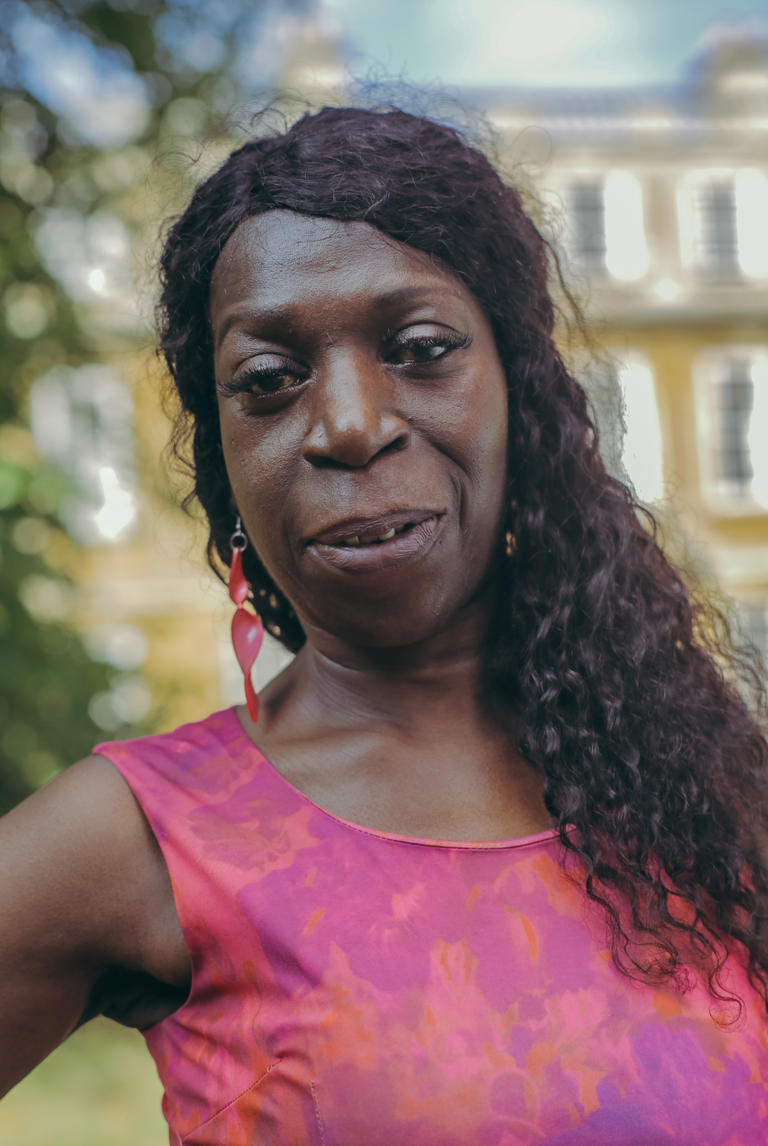

Gloria was eventually adopted by a family in Margate, but says she was scarred by her formative years
(Picture: Channel 5).© Provided by Metro

Gloria’s feelings of confusion, isolation and grief are shared by the eight other interviewees to different degrees. They talk of rejection, abandonment, self loathing and generational trauma. Even when secure in their home, they felt unsafe outside, with one, Richard talking of being chased out of town as a 12-year-old by a gang of racist adult hooligans.

Richard tells the film: ‘When I walk out of that house: [I was told] “Why don’t you go back to Africa you little Black this, you Black that.” So then I used to go home and tell my people, they’re like “We love you though, we don’t see you as being Black, you’re our son”.’

Private fostering continued into the early 2000s but it slowly came to an end after more stringent measures on safeguarding were implemented by law. For some, the changes came too late, like Yewande, whose story is the most harrowing of all. She tries to make sense of her parents’ decision to leave her in the care of an unknown family: ‘This is England. This is the home country. Everything that shone like gold was here. They trusted that things would be better. They trusted that white is right.’

But Yewande was beaten, tortured and sexually abused at the age of four when placed with a family in Leicester: ‘The only memories I really have of that place is being living in fear, really. I remember one time being beaten so bad that I pissed myself on the lino floor, and I was made to lick it up.

‘I remember them putting a cigarette out on my face. I remember sexual violation… I just remember darkness. Just dark the whole time, dark.’ Her memories of that time are sparse, but she says social services stepped in and she was taken to a children’s home, which she horrifyingly describes as a “paedophile ring”.

Yewande adds: ‘So, I grew up really feeling abandoned. I remember going into a phone box, picking up the phone and saying ‘Mummy, I promise I’ll be good, please, I promise, we’ll both be good, please, please, come and get us, please come and get us’.

It is a distressing and powerful watch. The other participants, appalled for Yewande, envelop her as a group and she sobs and howls into their embrace. It’s a poignant scene and a reminder that while the bonds of community can be disrupted for a time, they can never be truly broken.

NAG,NAG,NAG

To limit global warming, the USA should reduce meat consumption by 82%


From fried chicken wings to meatloaf to burgers, meat is an integral part of American food culture, but that's not without consequence for the environment. To reduce this impact, the USA would need to cut its meat consumption by 82%, according to a report by the NGO CIWF.

Whether it's corn, soybeans, wheat, cotton, or cattle and pig farming, the United States is the world's leading exporter of agricultural products. The country covers an area of 9.8 million sq km, but its usable agricultural area -- ie, the land devoted to cultivating crops and livestock -- is 3.6 million sq km, twice that of the European Union, according to figures from the French Ministry of Agriculture. More than two million farms, mainly family-run, contribute to this sector, which is of colossal importance to the US economy and which helps keep Americans fed.

From Turkey at Thanksgiving to burgers, meatloaf and more, animal proteins are legion in traditional American recipes. Indeed, the United States is the world's biggest meat-eating nation on a per capita basis, with people consuming 233.3 g per day. A survey carried out in May and reported by the magazine Newsweek found that 81% of Americans eat meat at least once a week. Some 41% of meat-eaters are of the opinion that it's healthy to eat meat. The same proportion (40%) also fail to see the environmental problem posed by their diet, since they reject the idea that a reduction in meat consumption could reduce greenhouse gas emissions.

However, in a recently published report, the NGO Compassion in World Farming (CIWF) gives a surprising figure: the USA would need to reduce its meat and poultry consumption by 82% for the fight to limit global warming to become effective, based on the EAT-Lancet Commission's model diet, optimized for human health and the health of the planet. The NGO claims the United States consumes twice the amount of meat as the entire African continent

The issue is all the more pressing in view of the fact that the world's meat consumption is set to continue rising. In a report detailing agricultural forecasts for 2021-2030, the OECD estimates that meat consumption will increase by 14% by 2030, requiring 4% more farmland. But it's not so much that we'll be eating more burgers or beef steaks, but more poultry meat. The European organization states that more than half of this increase is due to the rise in per capita consumption of poultry meat.

Yet the environmental consequences of food production are dramatic, and have already been quantified. On a global scale, experts consider that the food system is responsible for 27% of greenhouse gas emissions. As well as the production of meat and dairy products, another factor is the land farmed to feed livestock, monopolizing some 80% of the world's agricultural land.

© Copyright 2023 ETX Studio


CANADA

Defined-benefit pension plans may be poised for a comeback

Story by David Sali 
Financial Post

Unifor's deal with Ford that some employees be moved to a defined-benefit style pension could signal a new trend for labour negotiations.

wage increase of 15 per cent over five years was the first thing to catch most observers’ eyes last month when Unifor, the union representing 5,600 workers at Ford Motor Co. of Canada, ratified a new three-year contract with the automaker.

The historic raise was certainly worthy of making headlines. But it was another, less heralded, aspect of the deal involving employee pension plans that has some economists and experts predicting the agreement could signal a new trend in labour negotiations.

Ford agreed to transfer some union members currently enrolled in the company’s defined-contribution pension plan to the College of Applied Arts and Technology (CAAT) DBPlus Pension Plan — a defined-benefit style plan that shifts more of the burden for funding employee retirements to the employer.

Labour economist Jim Stanford called it a notable win for workers that could set the stage for a broader move toward defined-benefit pension plans as other unions and bargaining units — including those representing employees of fellow automakers General Motors Co. and Stellantis NV — look to negotiate their own deals.

“For at least a quarter century, private-sector employers have been doing anything they could do to get rid of defined-benefit pension plans,” Stanford, director of the Vancouver-based Centre for Future Work, said. “I think it’s interesting that this agreement was able to get one big global private company to say, ‘No, we’re going to shift back and look at a DB-style arrangement.’ I think that could be a sign of more to come in other private-sector operations.”


Unifor national president Lana Payne.
© Brandon Harder/Regina Leader-Post

Pension experts say the appeal of DB plans is clear. As opposed to defined-contribution plans, which function more like group registered retirement savings plans ( RRSPs ) in which employers match employee contributions and the market determines how big each retiree’s nest egg will be, defined-benefit plans are designed to provide employees with a guaranteed income for the rest of their lives once their working days are done.

DB plans are generally indexed to inflation and, as in the case of the CAAT plan, provide benefits to survivors and qualified dependants of members. If a fund isn’t generating large enough returns to cover pension benefits on its own, employers are typically on the hook to make up the difference.

It’s a good deal for labour, but management hasn’t always been as enthusiastic about the concept.

“The history of defined-benefit plans is that they’ve been collectively bargained,” lawyer Murray Gold, a senior partner who specializes in pensions and benefits at Toronto-based Koskie Minsky LLP, said. “The only two groups that have had them recently are unionized workers and senior executives. For the rest, it’s DC.”

While DB plans put more burden on employers to ensure they are fully funded, experts such as Stanford and Gold say macroeconomic factors have recently made them more affordable.

As the Bank of Canada has jacked up interest rates in a bid to rein in inflation, the price of bonds — a key component of DB funds — has dropped, making the idea of investing in such plans more palatable to employers. Meanwhile, bond yields have been rising, offsetting negative returns in other areas of the funds’ asset mix.

“Higher interest rates will make (DB plans) a bit of an easier pill to swallow,” Gold said.

DB pension plans are having a good year, according to a report released Oct. 2 from financial services firm Mercer. The company said 88 per cent of the DB pension plans in its client database were estimated to be in a surplus position at the end of the third quarter — up from 85 per cent three months earlier.

“2023 so far has been good for DB pension plans’ financial positions,” Ben Ukonga, leader of Mercer’s wealth practice in Calgary, said in a news release. “However, as we enter the fourth quarter, will the good news continue to the end of the year?”

If interest rates level off and eventually begin to fall, bond prices will likely rise. In that case, some observers wonder how long the window will remain open for a DB renaissance.

“The problem is, DB pension plans operate across decades, rather than across annual business cycles, and I think most employers get that,” Robert Hickey, an associate professor at Queen’s University who studies labour-management relations, said.

“So willingness to go back into a class of benefit that might seem like a good deal today, well, they probably are sophisticated enough to know that what looks good today could be very different a year from now.”

Several experts point to another key factor driving the DB resurgence: labour is having a moment. A tight job market has tilted the balance of power a bit more toward workers in recent contract talks, giving unions the leverage to successfully push for improvements to pension plans and other benefits.


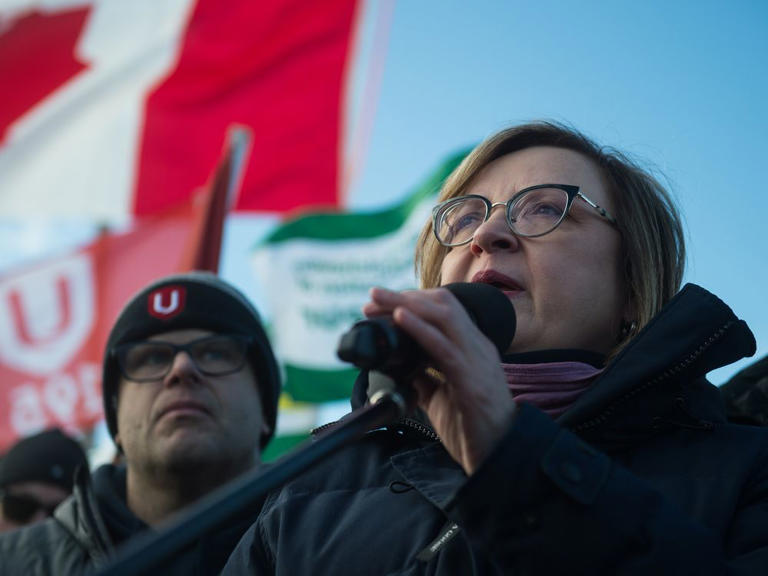
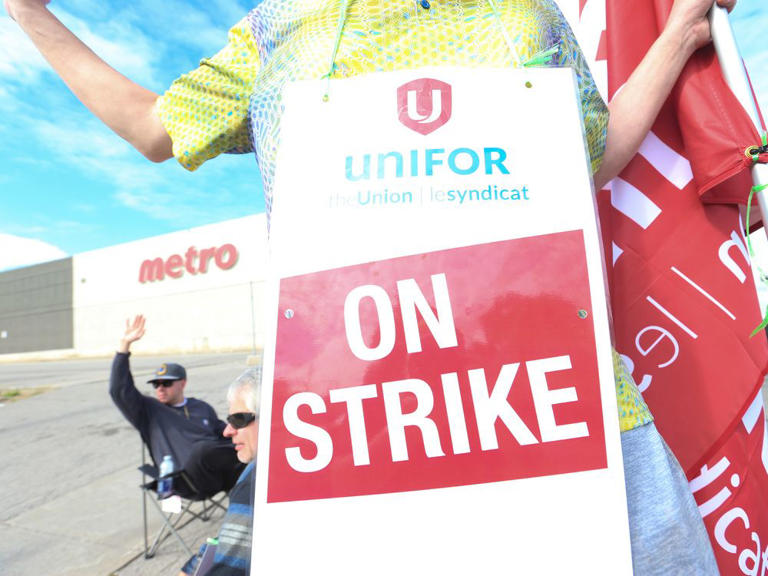
Striking Metro workers in August. A tight job market has tilted the balance of power a bit more toward workers in recent contract talks
.© Jack Boland/Toronto Sun/Postmedia Network

“The automakers used to be on death’s door, and now they routinely make tens of billions of dollars’ profit a year,” Stanford said. “And the workers look at that and they say, ‘You know what? I’ve had to tighten my belt a lot and these companies are raking it in. It’s time for them to give back.’”

Even in non-union shops, DB plans could be an attractive carrot for management to dangle in front of highly sought-after skilled talent, he added.

“These days, many workers have the opportunity to be a bit picky in what job they go to, and employers know it,” Stanford said. “Being able to tell prospective workers, ‘We’ve got a pension arrangement here that you can count on’ … I think that could be a big draw in the battle for scarce labour.”

Still, whether the new deal at Ford sets a template that other unions will follow remains to be seen.

Unifor, which represents workers at Ford, General Motors and Stellantis, is currently negotiating a new contract with GM.

Stanford said that while the union will stick to its pattern bargaining strategy in a bid to make gains similar to the ones it won from Ford, there’s no guarantee it will achieve the same success — especially considering only 54 per cent of union members who voted endorsed the agreement with Ford.

“Each round of bargaining, the union has to be able to pressure the remaining two companies to accept the same core terms as it negotiated with the first company,” he said. “The pattern system has worked very well for the unions over the decades, but you can’t count your chickens before they hatch.

“I think in the end, it’s very likely that the union will win this, but whether that takes a strike or not remains to be seen.”

Hickey agrees that a widespread shift to DB plans in union shops is no sure thing.

“It really comes down to bargaining power,” he said. “Does the labour movement in the private sector have the bargaining power to compel employers to take on risk and cost that they’ve spent the last decade trying to get out of? I think that’s the real question.”

LEAVE MY CPP ALONE, BITCH

Canada-India crisis: India's post-colonial era explains why it's on edge about Sikh separatism

Story by Noor Mirza, Researcher, Balsillie School of International Affairs •
The Conversation


India has reportedly told Canada to withdraw about 40 of its diplomats. Any Canadian diplomats in India past Oct. 10 are expected to lose their immunity. The high-profile diplomatic crisis has confirmed rumours of longstanding tensions between the two countries over the issue of Sikh separatism in the Indian state of Punjab.

Those tensions went global after Prime Minister Justin Trudeau alleged in Canada’s Parliament that the Indian government was complicit in the murder of Canadian-Sikh independence activist, Hardeep Singh Nijjar, on Canadian soil.

India vociferously denied Canada’s claims, labelling them “absurd” and “politically motivated” to “shift the focus from Khalistani separatists who have been provided shelter in Canada and continue to threaten Indian sovereignty.”

The facts so far

Here’s what we know about the diplomatic crisis now in the international spotlight.

Canada received information from its partners in Five Eyes — an intelligence-sharing pact between the United States, the United Kingdom, Canada, Australia and New Zealand — that there was foreign interference in the murder of Nijjar, a prominent member of the Sikh community in Surrey, British Columbia.

Nijjar, a Canadian citizen wanted in India for alleged terrorist acts, was part of the Khalistan movement calling for a Sikh homeland separate from India’s Punjab state. The movement is controversial because of its organized violence against Indian officials and terrorism-motivated tactics.

At the time of his death in June 2023, Nijjar had been organizing an unofficial referendum among the Sikh diaspora in North America, Europe and Australia to validate the call for an independent Sikh homeland.

The Indian government has accused Canada of harbouring anti-Indian extremists many times, most notably at the recent G20 summit in India, when Prime Minister Narendra Modi pulled Trudeau aside for a stern exchange.

Trade talks were subsequently halted between India and Canada following the tensions at the summit. India and Canada have each expelled diplomats from their respective countries, and India has suspended visas for Canadians as the diplomatic crisis deepens.

Still to be revealed

Many details haven’t been divulged about the ongoing standoff.

Trudeau has yet to reveal the “credible evidence” provided by Five Eyes linking India to the crime. While American officials support Canada’s efforts to investigate India over Nijjar’s murder and have rejected suggestions there’s a wedge between the U.S. and Canada over the issue, there is still no tangible substantiation of Indian involvement.

The FBI has warned American-Sikh activists that their lives are in danger, while U.S. Secretary of State Antony Blinken has called on India to co-operate with Canada and ensure “accountability” over the killing. But that doesn’t necessarily mean the Indian government had a hand in Nijjar’s murder.

At this point, the tit-for-tat diplomatic expulsions, visa restrictions by India and a Canadian travel advisory are retaliatory measures by two callow governments that are allowing respective domestic political anxieties to unfurl on the global stage.

Fraught history

India has a painful history with separatism after it gained independence from British colonialism in 1947. Partition carved the country up and created Pakistan.), a separate homeland for former Indian Muslims.

Shortly after that, diplomatic and later militaristic crisis over Jammu and Kashmir unfolded, which culminated in two wars between India and Pakistan and several armed engagements.

Even today, Jammu and Kashmir are contested territories with ongoing Kashmiri insurgencies that have had both Indian and Pakistani authorities on edge for more than 75 years.

Similarly, there are ethnic tensions and demands for self-determination in Manipur. The parallel rise of Naga nationalism in neighbouring Nagaland is also a thorny issue for Indian authorities.

Read more: Manipur violence: Why has India's government been slow to respond?

There are also a number of secessionist movements in northeast states, including Assam, aimed at establishing sovereignty for Indigenous people through armed struggle.

The rising threat of Khalistan — by no means new, but the most organized and successful in terms of funding from the India global diaspora — has heightened hysteria in India.

Existential crisis

On one hand, India is the largest democracy in the worldthe fifth-largest and fastest-growing major economy of the world, the fastest growing population in the world and a regional superpower.

On the other hand, India’s secessionist movements represent an existential crisis threatening everything India has worked towards for the past 76 years.

Nijjar’s murder, however, is also a matter of grave importance for Canada. If the Indian government was in fact involved in the murder of a Canadian citizen on Canadian soil, it would represent a serious violation of Canadian sovereignty that cannot be disregarded.

But it’s worth noting Trudeau’s Liberals have been losing ground to the Conservative Party of Canada in public opinion polls for months. Given the Sikh diaspora in Canada — the largest community of Punjabis outside India — has traditionally voted Liberal, some regard Trudeau’s focus on Nijjar’s murder as political opportunism.

But after Trudeau struck a deal to work together with the NDP — headed by Jagmeet Singh, a self-proclaimed Khalistani supporter — it would be difficult for him to disregard Sikh rights.

Trudeau may view the Nijjar incident as a lifeboat that could help keep him keep afloat as his popularity sinks. But that could easily have a disastrous impact with other segments of the Indian diaspora, especially Hindus who oppose Sikh separatism and might now be dealing with racist assumptions about Indians following the prime minister’s allegations.

It’s clear Trudeau has placed a domestic battle from a distant land in the international spotlight as he’s challenged a rising superpower.

But both Canada and India will need to calculate the risks and repercussions of such a high-profile diplomatic rift in a highly globalized world.

This article is republished from The Conversation, a nonprofit news site dedicated to sharing ideas from academic experts.

Read more:

Noor Mirza does not work for, consult, own shares in or receive funding from any company or organisation that would benefit from this article, and has disclosed no relevant affiliations beyond their academic appointment.

Governor General of Canada Mary Simon, has apologized for an Order of Canada award given to a former Nazi.
SCRATCH A UKRAINIAN CANADIAN NATIONALIST AND YOU FIND A NAZI

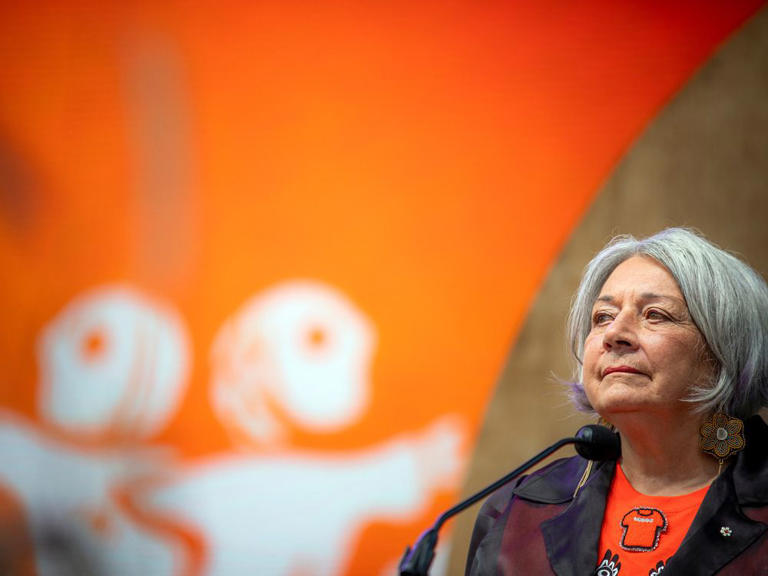
Governor General of Canada Mary Simon, seen here on National Day for Truth and Reconciliation.
© Provided by National Post

OTTAWA — Governor General Mary May Simon is apologizing for an Order of Canada award given to an Alberta man who served in the same Nazi unit as a man recognized in the House of Commons last month.

In a written statement, Rideau Hall said it regretted the award given to Peter Savaryn in 1987. Savaryn was Chancellor of the University of Alberta and President of the Progressive Conservative Party of Alberta in the 1980s. He also served with the Waffen SS, a voluntary Nazi unit in Ukraine during the Second World War.

“It is with deep regret that we acknowledge that Mr. Peter Savaryn was appointed to the Order of Canada in 1987, and we express our sincere apology to Canadians for any distress or pain his appointment may have caused,” reads the statement, which was first issued to Forward , a Jewish news organization.

Savaryn died in 2017 and as part of the constitution of the Order of Canada his award was automatically rescinded. He was also awarded Golden Jubilee and Diamond Jubilee medals, and Rideau Hall is considering whether they can be rescinded.

Last week former Speaker Anthony Rota resigned after calling on the house to recognize Yaroslav Hunka, a 98-year-old man from North Bay who also served with the Waffen SS.

“Mr. Hunka’s past involvement with the Waffen-SS and his recognition in the House of Commons have been a source of great concern to the Governor General,” reads the statement from Rideau Hall.

Rideau Hall said it is looking at the honours system, but also understands there may be future instances where something in a person’s past only comes to light after they are celebrated, and it is prepared to use the termination policy.

“The Chancellery is committed to working with Canadians to ensure our honours system is reflective of Canadian values. Historical appointments to the Order of Canada reflect a specific moment in time and would have been based on limited information sources available at that time.”