UK Plans First Commercial-Scale Deployment of Floating Wind in Celtic Sea
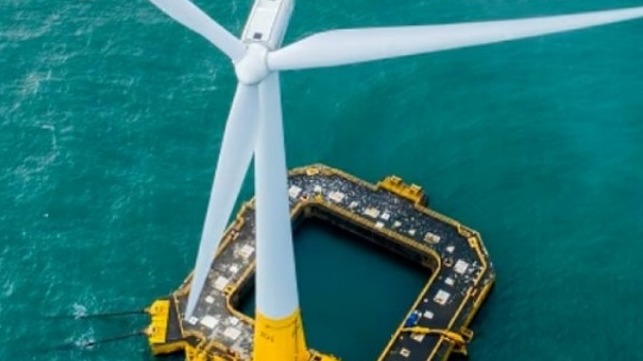
The UK is set to start the next phase of its development of offshore wind energy power generation looking to launch the first commercial-scale development of a floating offshore wind farm. Known as Round 5, The Crown Estate will start the leasing process in early 2024.
The industry stands at a crossroads in the UK. After having been an early developer and today having almost half as much operational capacity as the rest of Europe combined, they look to open up floating wind as the next phase of the industry’s development. The Crown Estate which manages which manages the seabed around England, Wales, and Northern Ireland, released further details today, December 7, for the leasing round for three commercial-scale floating wind projects in the Celtic Sea off the coast of South Wales and South West England.
They highlight that floating wind technology has the potential to open new areas of the seabed for wind power generation. The anchoring technology they highlight will permit wind farms to move to areas of greater depth, further from shore, where wind patterns are stronger and more reliable versus the existing fixed-base turbines.
"Floating offshore wind is a huge opportunity for Wales and the South West, with the potential to deliver billions of pounds of direct investment whilst bolstering our energy independence and net zero ambitions,” said Graham Stuart, the UK’s Minister of State for Energy Security and Net Zero. “Today's plans will build on the Government’s ambition to deploy up to 5GW of floating offshore wind by 2030.”
The first three wind farms planned for the Celtic Sea will have a combined capacity of up to 4.5 GW and are expected to be the first phase of commercial development in the region. The UK government declared its intention in 2023 to unlock space for up to a further 12GW of capacity in the Celtic Sea. By the 2030s, they predict the Celtic Sea could be providing 16 GW of renewable energy.
The Crown Estate notes that its goal is to support the development of the industry while creating the best value for the nation. They reported that the Round 5 program will adopt further changes to support the industry by enabling upfront investment in important workstreams to de-risk the process for developers. This will include investments in marine surveys to better understand the physical and environmental properties around the locations of the new wind farms. The Crown Estate has also outlined its intention to bring forward a new pilot fund to help accelerate supply chain projects.
The process for Round 5 will begin in early 2024 with pre-qualification questionnaires and an informational session on January 31 for prospective bidders to learn more details of the Round 5 tender.
South Fork Wind Becomes First Large U.S. Wind Farm to Deliver Power
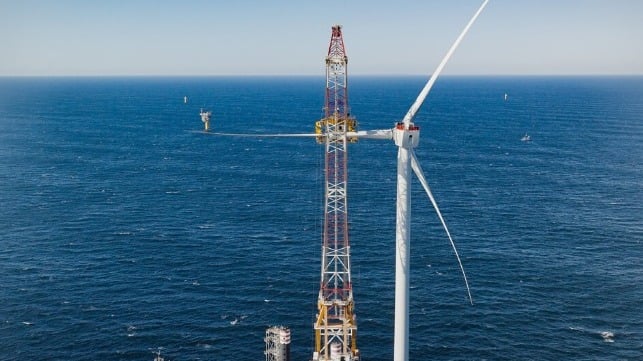
New York’s South Fork Wind marked the delivery of its first power achieving a milestone for the beleaguered industry that is facing well-publicized financial and operational challenges. While smaller in scale at just 12 turbines to generate approximately 130 megawatts, it is still considered to be the first commercial-scale wind farm in the United States.
The project, which is a joint venture between Ørsted and Eversource, is located approximately 35 miles offshore from Montauk, New York on the eastern tip of Long Island. It has completed the installation of its first two turbines, with one operational, and expects to complete the installation of the 12 turbines by early 2024. When fully operational, they expect the wind farm will power about 70,000 homes.
Officials noted that it was nearly eight years in the making to reach this point. The project was first approved by the Long Island Power Authority in 2017 two years after they issued the first request for proposal. The federal site review was completed in 2017 and the project spent between 2018 and 2020 working on its construction and operating plan before gaining final federal approval in January 2022.
With offshore work beginning in 2023, the wind farm marked several key milestones. Boskalis's Bokalift 2, handled the foundation installation with the first steel entering the water in June. The wind farm also has the first U.S.-built offshore wind substation. Weighing 1,500 tons and standing 60 feet, it was built in Texas by Kiewit Offshore Services and after being completed in May was shipped to the site for installation.
“South Fork Wind is not just a trailblazing project for the state, it’s also one of the foundations of America’s offshore wind energy industry,” said David Hardy, EVP and CEO Americas of the Ørsted Group.
The U.S.’s first offshore wind farm was constructed in 2015 to provide power for Block Island, Rhode Island. The five turbines have been providing power in place of diesel generators since 2016 from the wind farm which is also operated by Ørsted. Five years later, Dominion Energy completed the installation of two 12-megawatt turbines in 2020 as a pilot project 27 miles off Virginia Beach.
Last month, the federal Bureau of Ocean Energy Management highlighted that it had approved the sixth large offshore wind farm project in the United States with Empire Wind. Proposed as a joint development between Equinor and BP, the wind farm would be located about 12 nautical miles south of Long Island, N.Y., and about 17 nm east of Long Branch, N.J. Together these projects would have up to 147 wind turbines with a total capacity of 2,076 megawatts of renewable energy.
These projects however are currently in jeopardy. New York regulators rejected a proposal from Equinor and BP, along with another proposal from Ørsted to reprice the power agreements for Empire Wind along with Beacon Wind and Ørsted’s Sunrise Wind. The developers argued that the financial pressures required an increase in the electric offtake price to make the projects economical and have threatened to walk away from them which would be a major setback to New York’s plans. The state recently issued its next wind solicitation providing a path for these projects to be rebid in early 2024.
First power from South Fork is also good news for Ørsted which has been one of the most impacted companies by the changing fortunes of the offshore wind sector. The company has walked away from large projects in New Jersey and announced it would be taking a financial write-down of approximately $5 billion due to the financial, supply chain, and development problems in its U.S. wind portfolio.
Despite the setbacks, BOEM contends that it remains on track to complete reviews of at least 16 offshore wind energy project plans by 2025, representing more than 27 gigawatts of clean energy. The Biden administration has called for 30 MW of offshore energy production for the U.S. by 2030.
UAE Makes Second Major UK Wind Farm Deal Expanding Renewable Energy Role
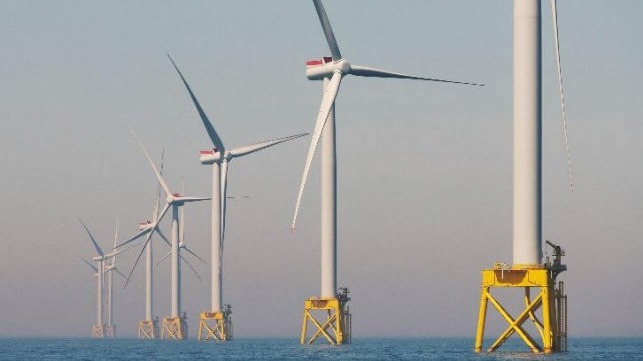
The UAE announced plans for its second large investment in the UK offshore energy sector forming a partnership with Iberdrola which is set to develop one of the largest wind farms in the UK sector. This initiative which is part of a broader cooperation between the UAE’s Masdar and Spain’s Iberdrola follows a similar agreement announced days ago for the UAE to invest with RWE in another of the UK’s largest wind farms and is part of a broader strategy by the UAE to enhance its image by investing in renewable energy projects ranging from Germany to Poland, the USA, Indonesia, Kazakhstan, and elsewhere.
HE Dr Sultan Al Jaber, the UAE Minister of Industry and Advanced Technology and Chairman of Masdar, is also serving as the President of the COP28 conference taking place currently in Dubai. They are seeking to use the conference to highlight the UAE’s emerging role as a global investor and developer in renewable energy projects.
Under the agreement signed today on the sidelines of the COP28 conference, Masdar will acquire up to a 49 percent stake in the East Anglia Three wind farm that Iberdrola is developing. Masdar highlights that it will become a co-developer sharing the risks of the project which is now under construction and expected to be fully commissioned in the fourth quarter of 2026 providing up to 1.4 GW of energy. Through a subsidiary, Iberdrola already has the first phase of the project at the site which is part of the East Anglia Hub macro-complex, which is expected to provide a total of 3.3 GW.
Iberdrola secured a 15-year agreement firm the UK government for the site's third phase project in July 2022. The contract provides for a price of £37.35 per megawatt hour which is half the new UK maximum price in the next round auction of £73 per megawatt hour and illustrates the challenges facing the offshore wind industry. Analysts believe the UAE is taking advantage of the current troubles in the industry to expand its role taking risks but also demonstrating confidence in offshore wind energy.
The final terms of the agreement for the investment in East Anglia Three will be reached by the first quarter of 2024 and part of a larger transaction that will see the two companies work together to jointly invest in future offshore wind and green energy projects in Europe and elsewhere. Masdar last year acquired a stake in Iberdrola’s Baltic Eagle wind farm being built in Germany. They noted that exploration is already underway for additional projects. The two companies anticipate the total value of the investments could reach €15 billion.
Masdar highlights that it has been active in the UK and Europe for more than a decade investing in projects including the London Array and Hywind, which is Scotland’s first floating wind farm. The company, which is jointly owned by Abu Dhabi National Oil Company (ADNOC), Mubadala Investment Company, and Abu Dhabi National Energy Company (TAQA), reports it is targeting a renewable energy portfolio capacity of at least 100 GW by 2030 and an annual green hydrogen production capacity of up to 1 million tonnes.
Iberdrola’s Executive Chairman, Ignacio Galán notes the growing opportunities in offshore wind and renewable energy. He highlighted that this week at COP 28 a total of 118 governments pledged to triple renewable energy capacity by 2030.
Changeable Seas for Offshore Wind in the Northeastern U.S.
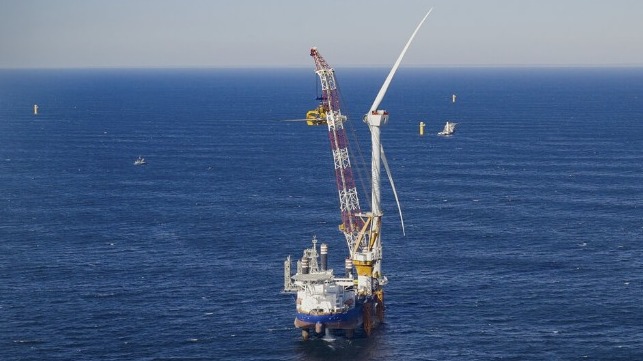
Offshore wind (OSW) is a key component of the Biden administration's renewable energy goals, which include the deployment of 30GW of offshore electricity by 2030 and 110GW by 2050. For perspective, the administration claims that 30GW would power over 10 million homes. The Northeast, with its favorable coastal shelf and prevailing wind conditions, has been at the forefront of offshore wind development in the United States. While federal and state permitting efforts have advanced on several projects and turbines have started to leave coastal ports for their offshore destinations, other planned installations have stalled recently due to changing economic conditions. Despite the economic obstacles to meeting the administration’s OSW goals, the Northeast and other coastal states continue to back offshore wind.
Recent Developments in Connecticut and Surrounding States
While economic headwinds have rattled project developers, Northeastern states are investing in OSW by employing partnerships and streamlining permitting to support and facilitate the development of coastal wind energy. They are also looking to the federal government for support. In a September 13, 2023, letter, six coastal states (Connecticut, Rhode Island, Massachusetts, Maryland, New Jersey, and New York) urged President Biden to deploy additional federal resources to support the OSW industry. The American Clean Power Association (ACP) has stated that it intends to work with the Biden administration to address bottlenecking in the federal permitting process. The ACP also indicated its support for the Reinvesting in Shoreline Economies and Ecosystem (RISEE) Act, which would provide hundreds of millions of dollars to states adjacent to OSW leases.
In Connecticut, specifically, the Department of Economic and Community Development (DECD) recently released its Offshore Wind Strategic Roadmap (Roadmap), outlining the State’s plans, initiatives, and steps to further OSW development. To achieve its lofty goal of 100% zero-carbon electricity by 2040, Connecticut outlined four key pillars:
1) Infrastructure/Real Estate. Build off the progress made with projects like the State Pier Terminal in New London and the Ports of New Haven and Bridgeport. These deep-water ports are crucial to expanding marshaling, operations and maintenance, and other supporting capabilities for OSW development.
2) Supply Chain. Increase regional capabilities and coordination across the OSW supply chain. The State will rely on its demonstrated expertise in composite materials and metal fabrication capabilities developed through its long history of government contract work.
3) Workforce. To achieve zero-carbon electricity, the DECD acknowledges that it must provide a local labor force to prepare for and connect with OSW-related jobs. To do this, Connecticut has partnered with other New England states to determine how to incorporate early education and workforce development initiatives to secure skilled personnel.
4) Research and Development. To encourage further research and development, Connecticut has partnered with UCONN, Yale, and investment institutions to promote research activities related to OSW.
To implement its Roadmap, Connecticut has established the Connecticut Wind Collaborative (CWC). The CWC will oversee the implementation of the pillars outlined in the Roadmap. The new non-profit organization will be comprised of OSW leaders from academia and across the government, private, and public sectors. Additional information about the CWC’s structure and authority will be released in the future.
Connecticut has also recently partnered with Massachusetts and Rhode Island to cooperate and coordinate on OSW development. An October 3, 2023, Memorandum of Understanding (MOU) between the three states outlines an approach to soliciting multi-state bids for OSW development that will benefit the states collectively. The MOU’s primary objective is to encourage collaboration between the states in hopes of leveraging buying power and making the development of OSW projects more cost-effective. While the MOU does not require any one state to work with the others on new proposals, it does ensure that each state will benefit equally from multi-state bids for any OSW project proposal, and requires each state to consider whether a bid can result in a multi-state project. MA Governor Maura Healey said the MOU will “amplify the many benefits of offshore wind for all three states, including regional economic development opportunities, healthier communities, lower energy bills and advantages to environmental justice populations and low-income taxpayers.”
The MOU also encourages good-faith coordination between the states when considering both independent and multi-state OSW projects. When considering a multi-state bid, applicants will be required to designate which states are impacted by the proposed project. Approval of a multi-state proposal may be contingent upon approval from all three participating states. The MOU clearly states that it is not meant to be seen as a legal authority binding the states to enter into contracts or other agreements.
The MOU’s objectives of collaboration and reducing costs for bidders are already being implemented. Connecticut’s recent Request for Proposal (RFP), published on October 27, 2023, provides a pathway to solicit multistate bids. In addition, the Connecticut RFP includes a provision that allows bidders to submit pricing at a rate indexed to the price of “listed macroeconomic factors and commodities” that will be fixed at some date in the future. The indexed pricing approach allows bidders to account for changes that may occur after the bid due date, but before the project reaches final close, by adjusting their proposed price up or down by no more than 15%. This flexibility is intended to ease the financial hardships many OSW developers are currently facing.
Financial Hardships
While the coastal New England states continue to solicit proposals for OSW development, several developers have run into commercial roadblocks that have substantially reshaped the economic analysis. Global events such as COVID-19 and the war in Ukraine have caused the scarcity of some materials and the skyrocketing costs of others. According to Building a National Network of Offshore Wind Ports, a publication released by The Business Network for Offshore Wind, there is now an estimated $22.5-$27.2 billion discrepancy between available financing and the financing required to construct the OSW facilities needed to achieve the administration’s OSW goals.
Other pressures driving development costs include the surge in demand for OSW globally, rapid increases in turbine sizes over the last decade, expansion of offshore wind into deeper waters requiring more costly technological solutions, historically-high interest rates and commodity input prices, and competition for construction materials in and outside of the OSW industry. Changing market conditions have had at least some impact on almost every OSW project currently under development.
In a constantly changing landscape, the current status of OSW projects in the Northeast continues to evolve:
| Project Name | State | MW | Developer | Project Status | Permitting Status |
| Vineyard Wind | MA | 800 | Avangrid | Under Construction | Received BOEM Record Decision |
| Beacon Wind | MA | 1200 | Equinor | Permitting stage | EIS review |
| Revolution Wind | RI | 704 | Orsted/ Eversource | Under Construction | Received Final Approval for DOI Construction |
| Park City Wind | CT | 800 | Avangrid | Stalled | Stalled |
| South Fork Wind | NY | 132 | Orsted | Under Construction | Received BOEM Record Decision |
| Sunrise Wind | NY | 924 | Orsted | Obtaining permits | EIS review |
| Empire Wind 1 | NY | 816 | Equinor | Permitting stage | BOEM released final EIS |
| Empire Wind 2 | NY | 1200 | Equinor | Permitting stage | BOEM released final EIS |
| Ocean Wind 1 | NJ | 1100 | Orsted | Canceled | Canceled |
| Ocean Wind 2 | NJ | 1150 | Orsted | Canceled | Canceled |
| Skipjack Wind | MD | 966 | Orsted | Conducting Surveys | EIS review |
| Coastal Virginia Wind | VA | 2590 | Dominion Energy | Obtaining construction permits | Received BOEM Record Decision |
Revolution Wind, set for construction south of Block Island, is one project proceeding intact and is estimated to deliver 400 MW of power to Rhode Island and 304 MW of power to Connecticut. Orsted and its then-partner Eversource locked in project costs prior to the current market instability and recently announced a final investment decision confirming that construction is expected to be completed by 2025. Eversource, however, is withdrawing from the wind sector, announcing in September that it would be selling its fifty percent interest in its three jointly-owned contracted OSW projects with Orsted: Revolution Wind, Sunrise Wind, and South Fork Wind. Currently, workers at the New London State Pier in Connecticut continue to assemble parts for the South Fork Wind turbines. These turbines can be seen off the coast of Montauk Point as the nation’s first commercial-scale OSW farm takes shape. At present, Revolution Wind and Sunrise Wind are also proceeding as planned.
The offshore wind market has changed, however, and other projects have stalled or been canceled. Orsted recently ceased development of the Ocean Wind I and II projects in New Jersey and will announce final plans to terminate, postpone, or continue other OSW projects in the United States in 2024. Also, citing unanticipated economic factors, Avangrid has terminated its power-purchase agreement for Park City Wind, which was expected to supply roughly 14% of Connecticut’s electricity. The project is expected to be rebid.
Despite these setbacks, state governments continue to explore OSW development and ways to alleviate some of the economic and logistical hurdles standing in the way of progress.