Thursday, January 18, 2024


ONE Continues Fleet Investments Ordering Its First Methanol-Fueled Ships
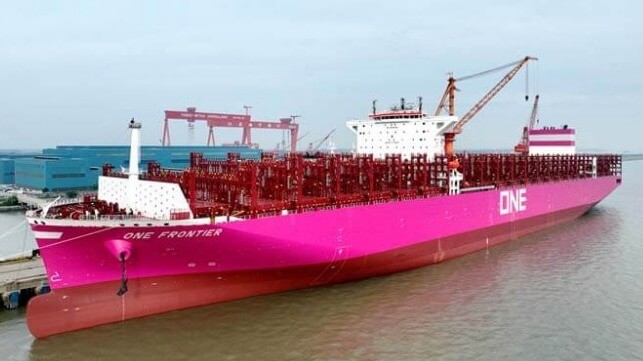
ONE containership
ONE Frontier is part of a current class of ships being delivered by Yangzijiang to Seaspan of ONE's operations (Yangzijiang)

PUBLISHED JAN 17, 2024 3:33 PM BY THE MARITIME EXECUTIVE


Ocean Network Express (ONE) is continuing to move forward with an aggressive fleet investment program announcing its next major order and this time it is for methanol dual-fueled containerships. The carrier, which was established seven years ago by three major Japanese shipping companies, mapped a strategy in 2022 that calls for an investment of $20 billion in its fleet and operations by 2030.

The new contract is being split between two Chinese shipyards, Jiangnan Shipyard and Yangzijiang Shipbuilding, which will jointly design the new class of vessels. Due to start delivery in 2027, the vessels will have a capacity of 13,000 TEU.

ONE is calling the vessels a significant milestone as its first fleet of methanol-dual fuel vessels and saying they will play a key role in reaching ONE’s sustainable goals as part of the Green Strategy. In addition to being methanol dual-fuel, the ships will include state-of-the-art technologies such as optimized hull form, waste heat recovery systems, and bow windshields. ONE said that selected vessels will also be equipped with an air lubrication system and shaft generator to help with exploring potential enhancements in fuel efficiency and the reduction of greenhouse gas (GHG) emissions.
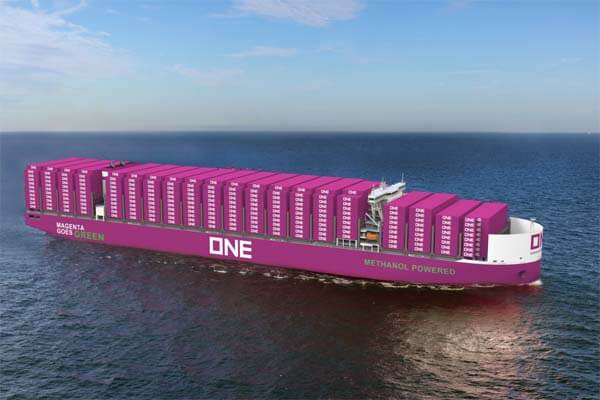
 

Rendering of the newly ordered methanol dual-fuel containerships (ONE)


The order comes as Yangzijiang Group’s New Yangzi Shipbuilding is in the midst of delivering a class of seven 15,000 TEU vessels to be operated by ONE and owned by Seaspan. The fifth vessel, ONE Focus, was delivered at the end of last week as part of a contract that was placed in 2022.

In December, ONE took delivery on the last of six ultra-large boxships each with a capacity of over 24,000 TEU built in Japan. Using this class, ONE set new records in November and December for the highest TEU levels loaded on a single ship. The record now stands at 22,000 TEU with the loading of ONE Innovation in Singapore on December 14.

The company in March 2023 hedged its move toward alternative fuels ordering 10 ammonia/methanol-ready containerships to be delivered in 2025 and 2026, each with a capacity of 13,700 TEU. This followed a previous order for 10 conventual-fueled containerships to be built by Hyundai Heavy Industries and Nihon Shipyard.

ONE emphasizes that the new ships are being built to meet customer demand and part of its long-term strategy to evolve into a vessel owner. The designs they said are adaptable for future changes in the global market. ONE is currently the sixth largest carrier with a capacity of approximately 1.8 million TEU according to Alphaliner. The company CEO Jeremy Nixon in 2022 said the strategy would be to invest in 150,000 TEU of capacity annually although some of the additions are being built to replace older ships. He had predicted that ONE would deploy its first alternative fuel vessel by 2030.

 

U.S. Navy Plans Deep Review of Shipbuilding Delays

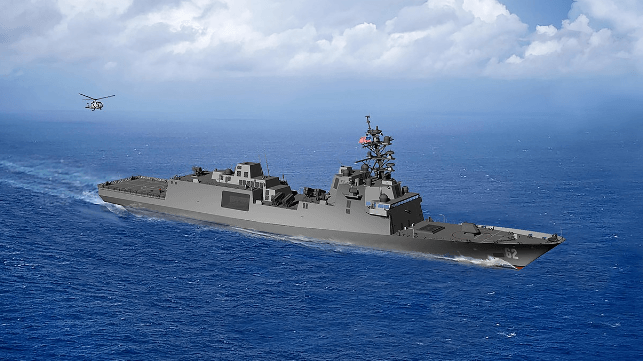
Constellation-class
The future Constellation-class frigate (illustration courtesy Marinette Marine)

PUBLISHED JAN 15, 2024 2:50 PM BY THE MARITIME EXECUTIVE


Following news that a next-generation frigate will be delayed, the U.S. Navy has announced a top-level review of its shipbuilding programs. Workforce challenges have plagued many American manufacturers, and the Navy says that it is feeling the impact in its acquisition pipeline. 

“I remain concerned with the lingering effects of post-pandemic conditions on our shipbuilders and their suppliers that continue to affect our shipbuilding programs, particularly our Columbia Class Ballistic Missile Submarines and Constellation Class Frigate,” said Navy Secretary Carlos Del Toro in a statement Thursday. "We will continue to work with industry and all other stakeholders to strengthen our national shipbuilding capacity, both naval and commercial."

Two top acquisition officials, head of NAVSEA Vice Adm. Jim Downey and assistant secretary Nickolas Guertin, will head the review. 

The announcement followed shortly after USNI News reported delays in the Constellation-class frigate program. The first-in-class vessel will likely be delayed by at least a year because of understaffing at the contractor's Wisconsin shipyard, a source in Congress informed USNI. A Navy program manager confirmed that there are "challenges within the schedule." The setback would push back the frigate's handover to 2027, the final year of the "Davidson window" prediction of peak risk for a Taiwan Strait contingency. 

An in-depth review of the staffing issues at the Constellation-class shipbuilder's yard is already under way. The Navy has provided supplemental funding to incentivize staff to stay in Wisconsin and complete the project, according to USNI. 

Welders are in high demand in shipyards and industrial enterprises across the U.S., and skilled craftsman may have their pick of employers, including yards in larger cities and warmer climates.


USN Launches New Task Group for Uncrewed Operations in the Middle East

uncrewed vessels
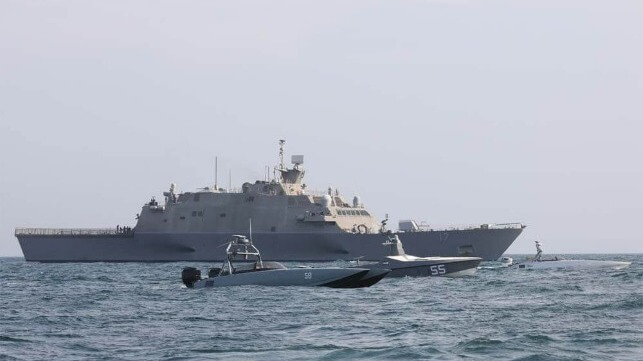
The new Task Group focuses on the deployment of the uncrewed vessels and integrating into crewed operations (USN)

PUBLISHED JAN 16, 2024 7:11 PM BY THE MARITIME EXECUTIVE


The US Navy reports as of the start of 2024 it has commissioned a new unit, Task Group 59.1, which focuses on the operational deployment of unmanned systems teamed with manned operators to bolster maritime security across the Middle East region. The group builds on the previous efforts developing uncrewed vessel operations in the Middle East and is designed to expand capabilities in an already very volatile area.

The group was officially commissioned in Bahrain as part of the U.S. Naval Forces Central Command’s Task Force 59. The task group, known as dubbed “The Pioneers,” will be under the command of Lt. Luis Echeverria, a surface warfare officer with over 60,000 unmanned operating hours at sea across 34 operations and exercises with Task Force 59.

“Task Group 59.1 is ready to take the capabilities of TF 59’s unmanned systems and charter new ground with manned and unmanned teaming concepts,” said Echeverria. “We are ‘the pioneers’ for the future of our Navy, and I couldn’t be more honored to lead this team.”

Established in September 2021, Task Force 59 is the Navy’s first Unmanned and Artificial Intelligence Task Force. It has tested, upgraded, evolved, and operated with more than 23 different unmanned systems according to NAVCENT. They did not specify which systems are being deployed with the group but noted that TF 59 integrates unmanned systems and artificial intelligence with maritime operations in the U.S. 5th Fleet area of operations to help ensure maritime security and stability in the Middle East region.


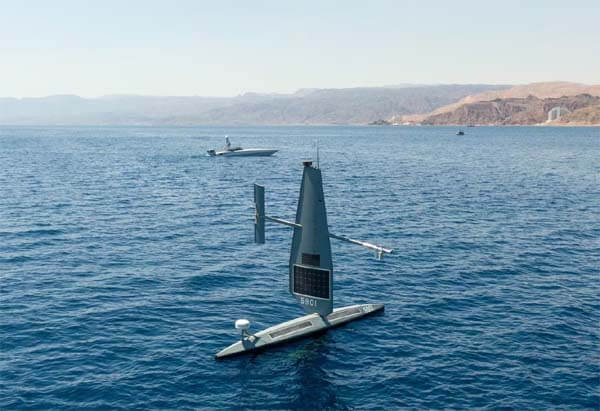
Devil Ray T-38 and Saildrone on earlier tests in the Gulf of Aquaba (USN)


“We are bringing budding, relevant technology to warfighters and doing it fast,” said Capt. Colin Corridan, Task Force 59 commodore. “Breaking the molds of the legacy acquisition model requires a level of connective tissue between industry partners and the end user operators, and 59.1 answers that bell. Our sailors will be there to ensure seamless integration of new tech introduced to operators while in the theater.”

U.S. Naval Forces Central Command/U.S. 5th Fleet’s area of operations encompasses about 2.5 million square miles of water area and includes the Arabian Gulf, Red Sea, Gulf of Oman, Gulf of Aden, Arabian Sea, and parts of the Indian Ocean. This area comprises 21 nations and includes three critical choke points at the Strait of Hormuz, the Suez Canal, and the Strait of Bab al Mandeb.

In recent months, Task Force 59 has conducted a series of unmanned exercises to advance lethality at sea. The exercises used live munitions fired from a T-38 Devil Ray unmanned surface vessel to strike a training target and they reported the munitions hit every time.

Forces from the U.S. 5th Fleet completed a four-day exercise in May 2023 that focused on unmanned systems and artificial intelligence integration into maritime operations. The prior month, the U.S. Navy sent the first unmanned surface vessel through the busy Strait of Hormuz, as part of its ongoing efforts to integrate drones into the fleet for a broad range of patrols and monitoring. The 41-foot vessel that looks like a speed boat was escorted by two U.S. Coast Guard cutters and according to reports was closely observed by the Iranians. The Iranians harassed and seized one uncrewed vessel used for monitoring, but the Navy defends its program saying it permits them to expand coverage and be seen at a lower cost of operations.


U.S. Navy Launches its First Purpose-Built Midsize USV

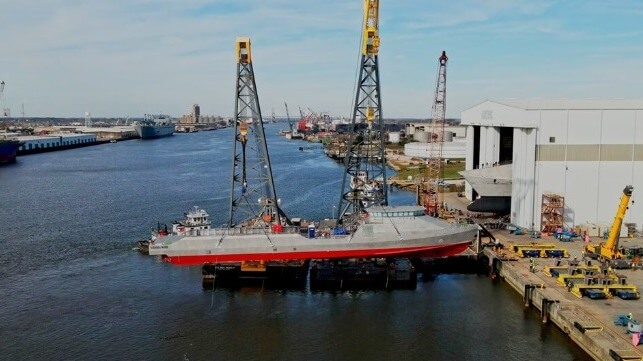
Vanguard at launch
Courtesy NAVSEA

PUBLISHED JAN 17, 2024 12:51 AM BY THE MARITIME EXECUTIVE


Austal USA has launched the U.S. Navy's first purpose-built midsize unmanned vessel, Vanguard, Naval Sea Systems Command announced last week. 

Vanguard is the third in a series of USV testbeds based on a commercial crewboat design. Vanguard is the first built from the keel up for this purpose; the first two were converted from existing vessels. The hull was launched on December 13, but NAVSEA delayed the announcement until January 11. Outfitting is still under way under the guidance of Austal and defense contractor L3Harris. 

The program is an extension of the "Operation Overlord" experiment, a joint Pentagon-Navy development project, and the Navy refers to the vessels as "Overlord USVs," or OUSVs. According to program manager Capt. Scot Searles, Vanguard will have "new, built-in capabilities that our previous OUSVs did not possess." When the vessel is completed, it will make the trip to San Diego to join near-sister ships Ranger and Mariner, which have just returned from a five-month transpacific voyage. 

The results of that voyage are promising, Searles told defense media on Tuesday. In August, Ranger and Mariner deployed to the Western Pacific with Sea Hunter and Seahawk, a pair of smaller trimaran USVs. The four vessels sailed a combined 46,000 nautical miles, and stayed in autonomous mode almost all of the time. Human crews were on hand to intervene when needed, but this was infrequent, he told USNI. About once every two weeks, an intervention would be required for one of the ship's systems, whether mechanical systems, comms links or autonomy systems. 

The autonomy suite only had to be deactivated 13 times for all four vessels over that time period. “We’re having to actually have a human step in and correct the autonomy less than one time per month," Searles told USNI. 

For the future Large USV (LUSV) program, Congress has required the Navy to demonstrate that certain key mechanical systems can operate for 30 days without human intervention. This includes a 720-hour "no-touch" continuous run requirement for the diesel generator. The first land-based test for a popular commercial engine model was completed in December, and it "demonstrated sufficient mechanical reliability."

LUSV's mission is to serve as a magazine ship, essentially an extension of a destroyer's missile carrying capacity. It will be a 1,500-ton vessel, far smaller than a conventional surface combatant, saving cost while expanding the service's vertical launch cell count.


MSC Captain Pleads Guilty to Being Drunk as Ship Arrives in UK

Felixstowe port UK
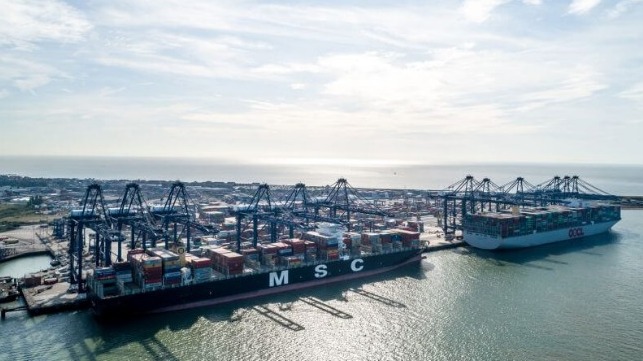
Pilot in Felixstowe boarding an arriving MSC containership suspected the captain was drunk and reported it to authorities (Felixstone file photo)

PUBLISHED JAN 17, 2024 12:39 PM BY THE MARITIME EXECUTIVE


The master of an MSC Mediterranean Shipping Company containership pleaded guilty in a UK court yesterday to operating his vessel while intoxicated. The police and court documents show that Captain Zbigniew Chowaniec, a 65-year old Polish national, was nearly four times over the legal limit for alcohol for seafarers at 07:00 on January 15 when his vessel arrived in the UK port of Felixstowe.

According to media reports, the pilot for the port boarded the MSC Roshney V (65,900 dwt) around 06:00 as the vessel was arriving from Antwerp. While guiding the vessel to the dock the pilot reported a strong smell of alcohol and became suspicious that the captain was drunk. 

After the vessel was secured, the pilot reported his suspicion to the port authorities. The port police boarded the vessel and met with the captain and arrested the master on the suspicion that he was heavily intoxicated while in command of the ship. The port police handed Chowaniec over to the Suffolk Police which performed a breathalyzer. Court papers indicated that he registered 93 micrograms per 100 with the legal limit for seafarers being just 25 micrograms. 

The vessel is one of the smaller ships operating in MSC’s fleet. Built in 2007 and registered in Liberia, it operates a route between Turkey and northern Europe. The ship had previously been in Felixstowe, moved to Antwerp, and was arriving back in the UK before proceeding to Turkey. The ship is 965 feet (294 meters) in length and has a capacity of 4,888 TEU.

Chowaniec appeared in the Suffolk Magistrate Court on Tuesday and pleaded guilty to the charge of being drunk. He surrendered his passport and was released on conditional bail. Sentencing is scheduled for February 12.

The containership departed Felixstowe on January 16 on its return trip to Turkey. 

Intoxication has been cited as a contributing factor in several recent causalities. One of the officers in a fatal accident with the Scot Carrier in 2021 was reported to have been drinking before his watch when they hit and sank a small Danish vessel killing two crewmembers. Danish and UK authorities cited drunken officers in the grounding of vessels in 2021 and 2022, and in 2023 a containership arriving in port at an excessive speed plowed into the dock in Kaoushiung, Taiwan with reports the pilot was drunk.

DECRIMINALIZE DRUGS

Record Amount of Cocaine Smuggled Through Belgian Ports in 2023

cocaine smuggling
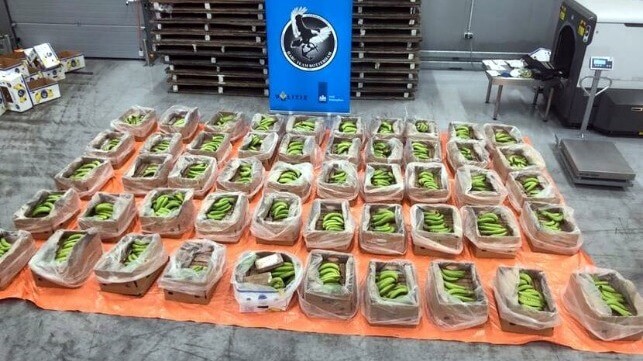
Dutch police made large seizures of cocaine mixed in with shipments of bananas (The cocaine was founding hidden in a container of bananas (Openbaar Ministerie)

PUBLISHED JAN 17, 2024 6:33 PM BY THE MARITIME EXECUTIVE


Belgium experienced another year of record seizures of cocaine being smuggled through the country’s ports in 2023, giving it the dubious honor of being the epicenter of the illegal trade from Central and South America. Belgian officials held a news conference along with their Dutch colleagues in the port of Flushing in the Netherlands to highlight their efforts while calling for more coordination to fight organized crime and the massive smuggling operations.

The data released by Belgium’s Minister of Finance Vince Van Peteghem showed just over a five percent increase in the amount of cocaine seized in Antwerp in 2023 as he emphasized the increased efforts by the country’s customs operation. According to his data, 116 tonnes of cocaine were seized in Antwerp up from 110 tonnes in 2022. He highlighted that it represents an increase of 50 tonnes since they began public reporting on the efforts in 2020. A further five tonnes were seized in the neighboring Belgium port of Zeebrugge in 2023.

Citing extraordinary circumstances, Van Peteghem said they would be continuing on the path taken to increase the seizures and work with colleagues in neighboring countries. “The fight against international drug trafficking requires a lot of expertise and energy from our customs,” the minister said during his briefing.

He said the seizures however were evidence of the success of the federal government’s investment in people and resources for the customs bureau. He cites the close cooperation in cross-border operations as well as the efforts working with the police. Yesterday, the police conducted large sweeps across Brussels and Antwerp reporting the arrest of 22 people including three police officers involved in the narcotics trade. They also seized cash, cars, and weapons with the police blaming increasing violence in the cities on organized crime rings such as the one they broke up yesterday.

Belgium cites Columbia, Ecuador, and Panama as the top countries of origin for the smuggling operations with the minister days that the same three countries continued to dominate the smuggling operations in 2023. 

While Antwerp has become the main gateway for the cartels smuggling cocaine onto the continent, the problem however is widespread. European Union officials point to Belgium, the Netherlands, and Spain, reporting that three-quarters of the seizures in 2021 happened in the three countries’ ports. A total of 303 tonnes was seized in 2021 according to the latest information from the EU. The Netherlands reported seizures of 59 tonnes in 2023 with almost 27 tones originating in Ecuador. 

Port officials highlight that one of the biggest challenges is the perishable trade, which has become a preferred host for the smugglers. They point to the rush to move refrigerated containers through the port and that they have become one of the primary locations for drug smuggling. Several of the largest seizures in Europe in the last years were all made mixed in with bananas. 

Belgium recently took its turn at the Presidency of the EU Council and used this role to launch an ambitious plan to increase efforts both at the ports and working with the governments of the Central and South American countries. Belgium intends to leverage the European Commission’s comprehensive roadmap that was launched in October last year during its leadership of the Council to intensify efforts to combat drug trafficking and criminal networks in European ports.


Australian Research Vessel Maps New Subsea Canyon in Antarctic Storm

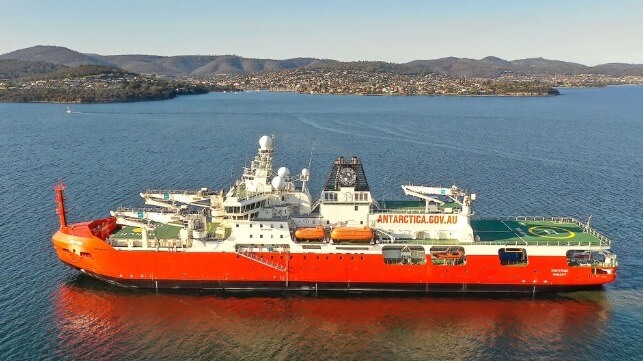
File image courtesy Australian Antarctic Division

PUBLISHED JAN 16, 2024 9:14 PM BY THE MARITIME EXECUTIVE


The Australian Antarctic Division (AAD) is celebrating the capabilities of its controversial new research ship RSV Nuyina after the discovery of a massive underwater canyon.

The icebreaker was on a normal resupply mission to the Casey research station when four-meter seas and 50-knot winds forced the operation to be put on hold. Rather than sit and wait for the weather to pass, the crew decided to use the time to map the seafloor at the nearby Adams Glacier, which is about 35 nautical miles away. The acoustics team had earlier spotted what might have been the tip of a canyon.

A total of 15 hours of mapping in front of Adams Glacier by a team of acousticians on board the icebreaker led to the discovery of a 2100 meter-deep, 9000 meter-wide canyon, extending more than 25 nautical miles off the glacier front. 

The crew used the ship's multibeam echosounder to map the canyon, and the data may yield insights into the geological and glacial history of the area.

The Australian Antarctic Division called the discovery a testament to the $500 million ship's value. “One of the specific objectives in building RSV Nuyina was to provide Australia with the capability to map the Antarctic continental shelf. Discovery and mapping of these deep glacial canyons is key to developing better models of the interaction between the Antarctic ice sheet and the ocean. This is just the beginning,” said Lloyd Symons, RSV Nuyina technology manager.

This was the second time AAD scientists had discovered an Antarctic seafloor feature using the ship’s acoustic instruments. Two years ago, on Nuyina’s maiden voyage to Casey, scientists mapped the nearby Vanderford Canyon, which is 2200 meters deep, 2000 meters wide and about 25 nautical miles long. 

Nuyina’s multibeam echosounder gives us much greater capability for detailed mapping of the seafloor than we’ve ever had before, and these two new discoveries suggest there will be many more to come,” said Alison Herbert, AAD senior acoustician.

 WW3.0

Philippines Plans to Upgrade Island Bases in the South China Sea

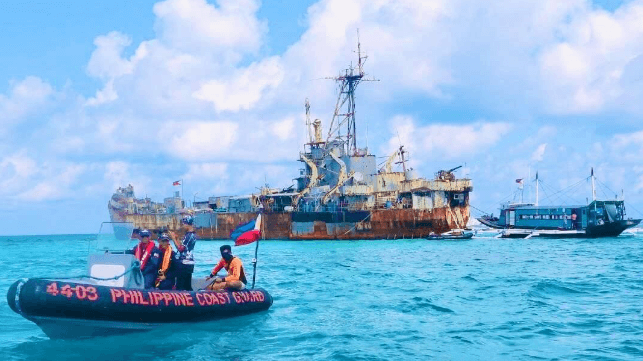
The decaying military outpost aboard a grounded World War II LST at Second Thomas Shoal (Armed Forces of the Philippines)

PUBLISHED JAN 16, 2024 5:58 PM BY THE MARITIME EXECUTIVE


In a decision that is sure to anger Beijing, the Philippine government says that it will upgrade facilities on multiple land features in its western exclusive economic zone, including areas contested by China. 

Gen. Romeo Brawner Jr., head of the Armed Forces of the Philippines, said Monday that the Philippines would like to pursue a construction program to improve conditions for troops to live on these remote islands and reefs, where they defend the government's claim to ownership and sovereignty over the region. "We’d like to improve all the nine [bases], especially the islands we are occupying," Brawner said.

The nine bases that Brawner referred to include Thitu Island, the largest Philippine-occupied land feature in the region, and Second Thomas Shoal, which is a major flash point for confrontations with China. The Philippine Navy maintains an outpost aboard a decaying, grounded landing ship on the reef, and it has been attempting to restore the structure. Security experts predict that the wreck will become uninhabitable in the near future, and that a replacement is necessary. However, the China Coast Guard has worked hard to prevent convoys with construction materials, supplies and personnel from getting through. China vocally opposes restoration or replacement of the structure, and it has repeatedly called on Manila to remove the station. 

"China has indisputable sovereignty over [the Spratly Islands] and the adjacent waters. We firmly oppose relevant countries illegal construction on the islands and reefs they have illegally occupied in [the Spratly Islands]," Chinese Foreign Ministry spokesperson Mao Ning said Tuesday, responding to Gen. Brawner's remarks. 

Brawner's proposed construction program mirrors China's island-building program in the region. China has developed a string of full-scale military bases in the archipelago, including several with military runways, hardened hangars, long-range radars and air-defense installations.

China claims ownership of the Spratly Islands and surrounding waters, including areas within the Philippine exclusive economic zone, like Second Thomas Shoal.  In 2016, the Permanent Court of Arbitration in the Hague ruled that China's historically-based claims to the South China Sea are without merit under international law. China has ignored the ruling and has deployed its "gray zone" forces - white-hulled coast guard cutters and militia-operated "commercial" fishing trawlers - to enforce its claims.


Philippine Coast Guard Rescues Crew from Ship After Cargo Shifts in Storm

cargo ship listing
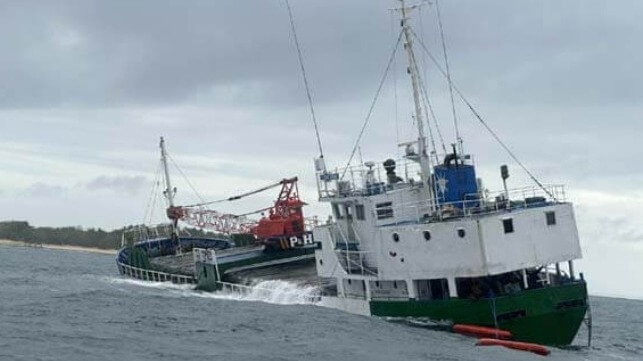
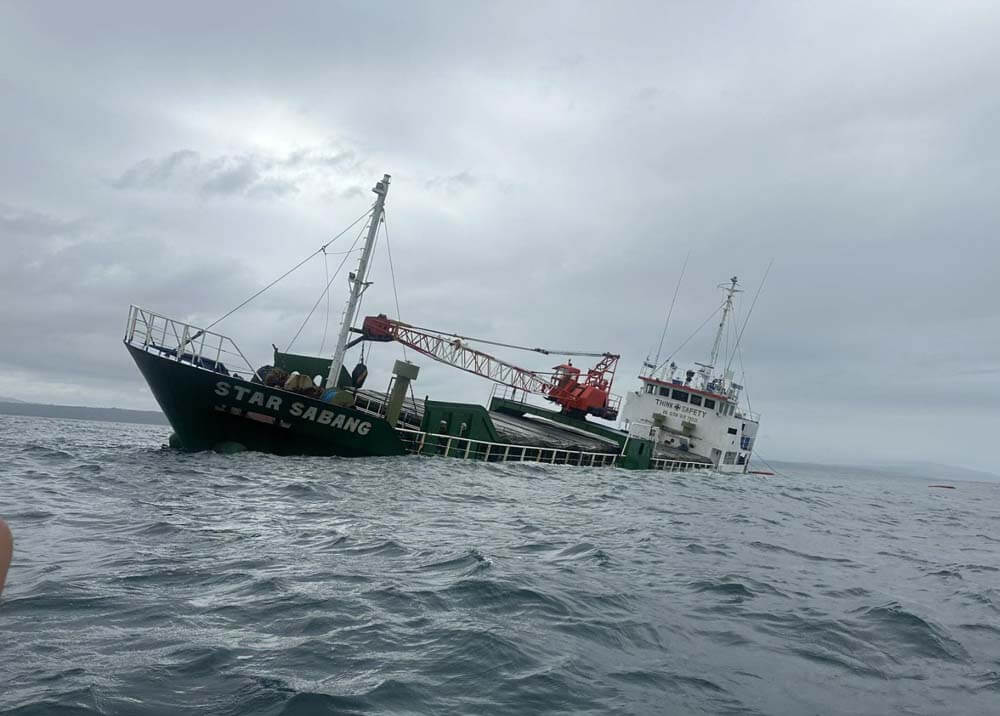
Star Sebang called for assistance after its cargo shifted in high seas (PCG)

PUBLISHED JAN 16, 2024 3:35 PM BY THE MARITIME EXECUTIVE


The crew of a small general cargo ship operating in the Philippines was rescued after their ship began listing in a storm in the southern Philippines in the Sulu Sea. The crew was rescued and brought to shore.

According to the media reports, the Star Sabang (500 dwt) began listing after encountering heavy waves and winds on the west side of the island of Mindanao. The vessel which is 321 feet (98 meters) in length was off Bayangan Island when according to the captain they were hit by huge waves and strong wind.


Star Sebang hit heavy seas causing the cargo shift (PCG)


The Coast Guard reports the vessel was carrying 170 tons of cement from Cebu to Zamboanga. The cargo shifted in the high seas causing the ship to assume a precarious list and begin to sink. The captain called the Coast Guard for assistance. The 13 crewmembers were rescued and taken to the island while they were continuing to monitor the vessel.

The owner of the vessel was reported to be attempting to tow the Star Sabang with another one of its ships. Media reports said the tow was underway but a video posted online shows the vessel rolling onto its side.


Two Firefighters Who Died Aboard Burning Con/Ro Were Lost in Smoke

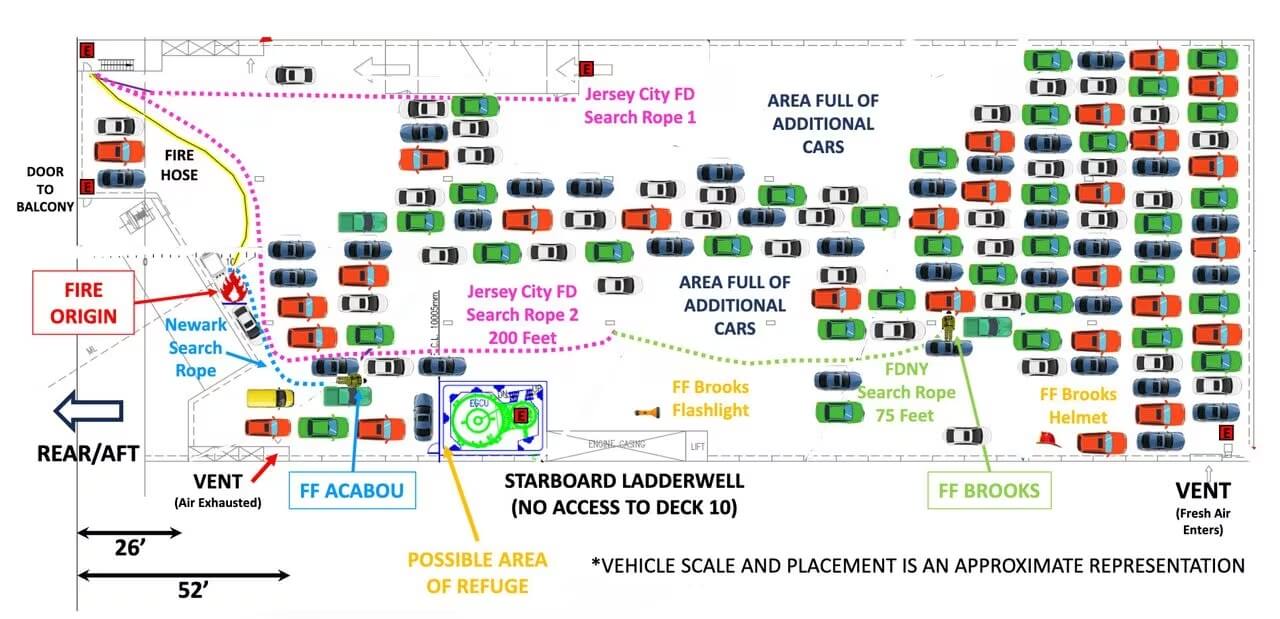
The suspected origin of the fire on Deck 10 (USCG)

PUBLISHED JAN 16, 2024 9:50 PM BY THE MARITIME EXECUTIVE


In a U.S. Coast Guard investigative hearing on Tuesday, a Newark firefighter testified that the two men who died aboard the con/ro Grande Costa D'Avorio last year got lost in the smoke as they attempted to exit the ship.

Oswald Robetto, a Newark Fire Department captain, was on Deck 10 with colleagues Augusto Acabou, Wayne Brooks, Jr. and a fourth firefighter during the response effort. Brooks was using a hose to apply boundary cooling on the overhead, he said. At this point, Batallion Chief Al Maresca radioed in and ordered the men to wrap up and come out of the compartment. 

They retreated through the smoke-filled interior, using the firehose to guide them to safety. As they moved along the deck, the smoke thickened, and Brooks' mask gave an alert that he was running low on air. He moved to the front of the line. 

As they moved along, Robetto encountered a kink in the hose, and he became confused: a kink should have been "impossible." 

"I got stuck and I hesitated," he said. He got disoriented and lost contact with the hose. In the thick smoke, he could not find it again, so he began hunting for a wall to follow to safety. His air was also running low, and he radioed for help. At this point, the firefighters had been working aboard the con/ro for about half an hour. 

Robetto made it out before his air ran out, but Acabou and Brooks remained behind. Their absence was only detected when the fire crew mustered. Both men died in the fire and their bodies were recovered later. 

In testimony, fire department officials told the Coast Guard that they had considerable difficulties with communications during the response. Their radio systems did not work well, and they had a hard time speaking with the crew because of language barriers. 

The battalion chief, Maresca, told the panel that he had never fought a shipboard fire before, nor did he have any training in this specialty. His initial impression of the situation was that it was a minor fire. Even after talking with the crew and having a look at the scene on Deck 10, "we didn't know where this fire was burning." 

After putting out two burning cars on Deck 10, the responders thought that the fire was out. “We weren’t fighting a fire. I thought nothing of it. There really was nothing going on until they [Robetto, Acabou and Brooks] got lost," said Maresca. 

The final outcome was tragic. Search teams found Acabou wedged tightly between two cars, near the exit. Brooks was found further in the hold, without his helmet, flashlight or radio. 

Courtesy NIOSH / USCG


Houthi Drone Hits American-Owned Ship, Causing Fire

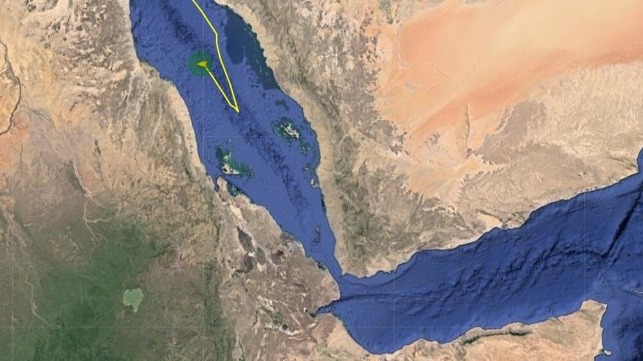
GENCO Picardy's last received AIS position in the Red Sea, January 15 (Pole Star)

PUBLISHED JAN 17, 2024 3:47 PM BY THE MARITIME EXECUTIVE


[Updated] The UKMTO has received a report of an attack on a merchant ship at a position about 60 nautical miles southeast of the Yemeni port city of Aden, in the middle of the western Gulf of Aden. 

The ship's master reported that the vessel had been hit on the port side by an aerial drone (UAV). The strike caused a fire on board, which the crew successfully extinguished. The vessel and the crew are safe, according to UKMTO, and are proceeding to their next port of call. 

"Vessels are advised to transit with caution and report any suspicious activity to UKMTO," the consortium advised.

Yemen's Houthi rebels have attacked shipping in the vicinity of Bab el-Mandeb dozens of times since November. In a statement on social media, Houthi spokesman Yahya Saree claimed responsibility for the attack and said that the vessel was the "American" bulker GENCO Picardy. The ship's owner and commercial manager is based in New York, its technical manager is located in India, and its flag registry is administered in Virginia.

"The naval forces of the Yemeni Armed Forces carried out a targeting operation against the American ship (GENCO Picardy) in the Gulf of Aden with a several of adequate naval missiles [sic], leaving direct hits. The Yemeni armed forces will not hesitate to target all sources of threat in the Arab and Red Seas within the legitimate right to defend dear Yemen and to continue supporting the oppressed Palestinian people," he said. 

U.S. Central Command confirmed the attack on the Picardy in a statement late Wednesday, and said that it was a single one-way attack drone originating from Yemeni territory. 

GENCO Picardy's AIS signal was last received by Pole Star satellite tracking in the southern Red Sea, on the opposite side of Houthi-controlled territory from the attack location. Last week the vessel had been headed southbound towards Bab el-Mandeb, but on January 15 it doubled back to a position north of 18 N, as recommended by the U.S. Maritime Administration. At that point, its signal disappeared from tracking (image at top).  

A GENCO employee declined to comment.

The Combined Maritime Forces (CMF) security partnership has advised all civilian shipping to stay well clear of Bab el-Mandeb and the Red Sea, but the shorter Suez route remains in use for many shipping firms. Major operators like Shell, Maersk, Hapag-Lloyd and others have abandoned the route, and almost all container ships are diverting around the Cape of Good Hope. 

[This story is evolving and will be updated as new information comes in.]


White House Re-Designates Houthis as Terrorists

THEY ARE THE REAL GOVERMENT OF YEMEN 

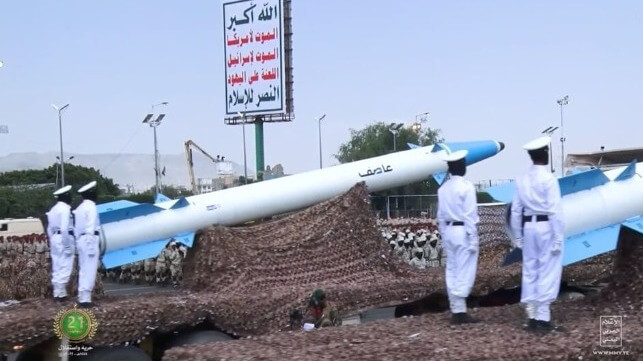
Houthi missiles on parade
File image courtesy Houthi Military Media

PUBLISHED JAN 17, 2024 6:20 PM BY THE MARITIME EXECUTIVE


The Biden administration has re-designated Yemen's Houthi rebel group as a terrorist organization, three years after lifting a Trump-era listing. 

The group is now back on the list of Specially Designated Global Terrorist (SDGT) entities, a lower-level designation. The Trump administration listed the group as both an SDGT and a Foreign Terrorist Organization (FTO) shortly before Biden took office, and Biden reversed it as one of his earliest acts as president.

Houthi leaders control Yemen's most populous areas, and the aid community had called loudly for restrictions on trade with the famine-stricken country to be lifted. 

At the time, the UN considered Yemen to be suffering from the world's worst humanitarian disaster. Designating the Houthi group and its officials as an FTO made it impossible to legally transact with them, and therefore difficult to move aid supplies into the country. 

“The [Trump-era] designations came at a time when the country was facing an unprecedented set of catastrophes. We had famine warnings where 16 million people – that’s one in two Yemenis – were close to starvation,” Norwegian Refugee Council official Saltana Begum told Al Jazeera at the time. “There was the threat that people like myself could be criminalized or prosecuted for delivering aid.”

Biden administration officials were receptive to aid NGOs' appeals and delisted the Houthi group swiftly. Biden also ended American support for the Saudi military campaign against Houthi forces. The group holds the strategic port of Hodeidah, the country's primary seaport, as well as the longtime capital of Sanaa. 

Recent events have forced the administration to reconsider. Houthi forces have attacked merchant shipping in the Red Sea dozens of times since November, claiming that they are acting in support of Palestinians in Gaza. Recent attacks have hit American and Greek merchant ships with no clear connection to Israel. The U.S. and the UK have hit back with airstrikes and missile strikes on Houthi positions, but have not yet succeeded in eliminating the threat. For the time being, the Combined Maritime Forces (CMF) and multiple maritime security firms have urged all shipping to avoid areas near Bab el-Mandeb, normally one of the busiest maritime choke points in the world. 

Biden's opponents have criticized him for lifting the FTO designation in the first place, and for reimposing only the less-stringent SDGT listing. 

“President Biden should have never removed the foreign terrorist organization designation. He is still bent on half-measures at every step of the way," said Sen. Roger Wicker (R-MS), ranking membver of the Armed Services Committee. "Further Houthi attacks on commercial shipping or U.S. sailors should be met with a response that makes last week’s strike in Yemen look small in comparison."