Tuesday, January 23, 2024

Did romantic love evolve by co-opting mother-infant bonding mechanisms?


A new theory suggests that romantic love evolved from mechanisms originally serving mother-infant bonding, challenging Fisher’s long-standing theory of independently evolved emotion systems that categorize sex drive, romantic attraction, and attachment as distinct systems. This theory article was published in Frontiers in Psychology.

Adam Bode proposes that the evolution of romantic love involved the co-opting of neurobiological and endocrinological systems integral to mother-infant bonding. The researcher presents several lines of evidence to support this theory.

To begin, there are significant similarities in the psychological aspects of mother-infant bonding and romantic love. Both involve intense emotional connections, a strong drive for physical closeness, and a deep focus on the loved one. This includes behaviors such as proximity-seeking, exclusive attention to the loved one, and a heightened sense of empathy and responsibility.

Further, studies have shown overlapping brain activity in the states of romantic love and mother-infant bonding. For example, regions rich in oxytocin and vasopressin receptors, which play crucial roles in emotional and social behaviors, are activated in both types of bonding. Notably, areas such as the ventral tegmental area and other parts of the brain’s reward circuitry are involved in both maternal and romantic love, suggesting shared pathways for bonding and attachment.

Hormonal patterns provide further evidence for this theory. Higher levels of oxytocin are found in individuals during the early stages of romantic relationships, similar to those in new mothers following childbirth. Oxytocin, given the nickname the “love hormone,” is known for its role in facilitating bonding and social recognition, both in parent-child and romantic relationships.

Behaviors observed in both mother-infant bonding and romantic relationships such as obsessive thinking, longing for emotional reciprocity, and mutually satisfying interaction patterns suggest common underlying mechanisms. For instance, the obsessive thoughts about an infant seen in new mothers parallel the preoccupation with a romantic partner in people experiencing romantic love.

The theory is further supported by similarities in the neuroendocrine responses in romantic love and mother-infant bonding. The interplay of neurotransmitters and hormones like dopamine, oxytocin, and possibly opioids in both states points to a shared neuroendocrine foundation that governs attachment and bonding behaviors.

Perhaps romantic love is an evolutionarily repurposed adaptation, deeply ingrained in human biology and fundamental to our social fabric. This theory presents a paradigm shift in understanding romantic love, proposing it as a complex evolutionary adaptation rooted in the fundamental mechanisms of human bonding.

Future research is encouraged to further explore and validate this theory, and to offer a more comprehensive understanding of the evolution of human bonding and relationships.

The paper, “Romantic love evolved by co-opting mother-infant bonding”, was authored by Adam Bode.
Personality traits and political opinions: New study sheds new light on our reactions to opposing views

by Stacey Coleen Lubag
January 21, 2024
in Political Psychology


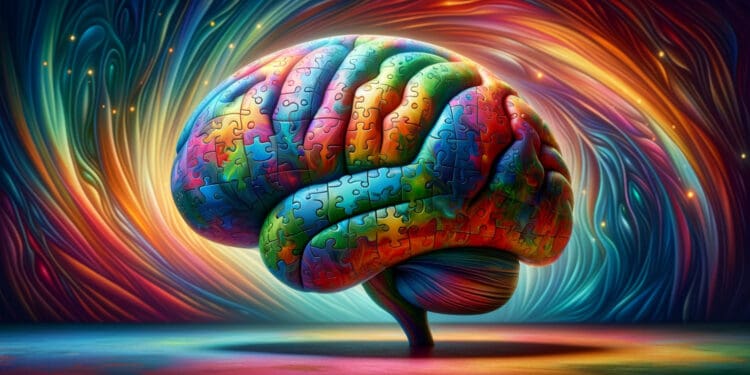
(Photo credit: OpenAI's DALL·E)

In an exploration of the intersection between personality and politics, a recent study published in the scientific journal Personality and Individual Differences reveals how our inherent traits might shape our reactions to political disagreements. The study found that traits like conscientiousness, extraversion, and agreeableness significantly influence how we handle conflicting political information — challenging previous assumptions about the role of openness in political engagement.

The study builds upon a rich background of research suggesting that personality impacts how people deal with conflict in social settings. The focus was on the Big Five personality traits: Openness, Conscientiousness, Extraversion, Agreeableness, and Neuroticism. These traits have long been thought to influence our cognitive, behavioral, and emotional responses in various scenarios, including how we process information that contradicts our political beliefs. Previous studies have indicated that exposure to opposing political views, instead of fostering tolerance, often leads to resistance, which in turn could contribute to the polarization of political attitudes.

Researchers behind the study had an interest in understanding the nuances of how individual personality differences shape reactions to political disagreement. With the rise of political polarization and increasing avoidance of political engagement, they aimed to investigate how personality traits influenced the way individuals resist or engage with opposing political views. The study’s goal was to provide insights into the psychological mechanisms driving political discourse and engagement.

To test their hypotheses, the study employed an online survey involving 936 Swiss citizens, recruited through German panel provider Gapfish, during a referendum campaign on a “burqa ban” initiative. Participants averaged an age of 41 and were 54% female to 46% male. All participants first completed a questionnaire to assess their personality based on the Big Five traits — and were then exposed to counterarguments that challenged their initial stance on the referendum. The survey asked participants to report their cognitive, behavioral, and emotional responses to these counterarguments, allowing for a direct correlation between personality traits and specific resistance strategies in a real-world political context.

Contrary to expectations, openness did not significantly influence any of the resistance strategies. Conscientious individuals were less inclined to actively resist opposing political views, especially exhibiting lower levels of negative affect. Extraverts tended to reinforce their existing views, often seeking social validation, while agreeable individuals primarily used avoidance strategies and steered clear of confrontational information. Notably, those high in neuroticism exhibited strong emotional reactions, particularly negative, to oppositional political information.

However, the use of short forms of scales to assess resistance strategies might have impacted the validity of the constructs being measured. Additionally, the reliance on self-reported measures could introduce biases in the responses. The use of a 10-item personality inventory, while efficient, may not have captured the full complexity and subdimensions of the Big Five traits.

Moreover, focusing solely on resistance to opposing political views may have overlooked more positive or nuanced responses to such information. It’s also important to note that the specific context of the study – a Swiss referendum – might limit the generalizability of the findings to different cultural or political settings.

“From a broader societal perspective, this study can shed new light on the psychological mechanism related to political extremism, including recent events such as the violent occupation of government buildings in the US and Brazil. In a world increasingly defined by political contrasts and ideological oppositions, knowing why and under which conditions citizens resist incongruent political views likely matters for scholars, public officials, and democracy practitioners alike.”

The study, “Dispositioned to resist? The Big Five and resistance to dissonant political views”, was authored by Chiara Valli and Alessandro Nai.
From cartoon lions to channelling dead dictators, here's how artificial intelligence is being used in elections around the world

By Amber Jacobs and Will Jackson
Posted Sun 21 Jan 2024 
Political campaigners all over the world have begun to experiment with using generative AI.
 (ABC News)
abc.net.au

Divyendra Singh Jadoun, an artificial intelligence (AI) expert based Rajasthan in northern India, gets asked to do two kinds of jobs for political campaigns.

"One is to enhance the image of their existing politician that they are endorsing," he told the ABC, "and the second one is to harm the image of the opponent party."

Mr Jadoun mostly uses AI tools to translate and dub content, something that's crucial in a country as linguistically diverse as India.

But recently, he has had to turn down some more controversial requests.
Divyendra Singh Jadoun has had to turn down requests to use AI to produce political misinformation. (Supplied)

"One is the deepfake video where we swap the face of one person over to the other," he said.

"There were requests that you had to swap the face of the opponent party leader [onto] someone who is a look-alike of him and is doing something like drinking.

"And the second are the audio deepfakes to clone the voice of the person for harming [their] reputation ... by spreading misinformation, saying this is a leaked call from the politician."

A record number of people globally are heading to the polls this year — with elections to be held in about 50 countries including the world's biggest democracies in India, the United States, and Indonesia.

And with easy-to-use AI tools that give users the ability to create and manipulate realistic looking fake images, video and audio, experts warn the world is likely to see a "tsunami of disinformation".
Misinformation rated globe's top risk

A report prepared for the World Economic Forum in Davos earlier this month found that misinformation, super-charged with artificial intelligence, was the top risk facing the globe in 2024.

It came after a year in which political campaigners around the world began to experiment with possible uses of new generative AI tools like ChatGPT, Midjourney and Stable Diffusion.

The Republican Party in the US made headlines in April with a video response released after President Joe Biden announced he would run again.

Titled Beat Biden it depicted a dystopian future under a Biden administration and used imagery generated entirely using AI.

Donald Trump's Republican Party rival Ron DeSantis also released a video that reportedly included fake images of Mr Trump hugging former White House chief medical adviser Anthony Fauci.

YOUTUBEThe US Republican Party published an attack ad using AI-generated imagery.

In Argentina, image-generation tools were used in the lead-up to October's presidential elections to create campaign material to flood social media and as physical posters.

They included images created by the campaign for candidate Sergio Massa depicting him in a variety of inspirational styles and scenarios, including riding a lion.

Supporters of the eventual winner, Javier Milei, used generative AI extensively as well, for example portraying Mr Massa as a Mao Zedong style-dictator and Mr Milei himself as a cartoon lion.


According to the Financial Times, audio deepfakes and AI-generated video were used in attempts to discredit Bangladesh's opposition in the lead-up to the country's national elections on January 7 this year.
New apps have 'democratised' AI

Darrell West, a senior fellow with the Brookings Institution's Centre for Technology Innovation in the United States, said the new applications had "democratised" AI.

"Generative AI brings very powerful AI algorithms down to the level of the ordinary person," he said.

"It used to be if you wanted to use AI, you had to have a pretty technical background and sophisticated knowledge.

"Now, because AI is prompt-driven, and template driven, anybody can use it.


"So we have democratised the technology, but it's in the hands of anyone and so we're likely to see a tsunami of disinformation in the upcoming elections."

Experts warn of AI's impact on 2024 US election as deepfakes go mainstream
Researchers say bogus claims will likely worsen during the next US election, as artificial intelligence becomes stronger and more accessible.
Read more

Mr West said AI could also be used during the administrative process of elections and weaponised to target swing voters.

“It's very easy to use AI to target very small groups of people," Mr West said.

"In most elections there is a relatively small undecided vote. What it can do is to identify [those] undecided voters, what are the issues or causes that they care about and develop targeted message designed to persuade those individuals.

"People can [also] use AI to tell people to go to the wrong polling place and show up on the wrong day.


"There are some states in the US where they're using AI to clean up their voting rolls, but it means that some legitimate voters are getting kicked off the ballot and so they're not being able to vote.”

And it's not just political campaigns using AI against each other — Mr West warned it could be a powerful tool for foreign actors

In December, Facebook owner Meta was forced to removed thousands of accounts based in China pretending to be Americans and posting about inflammatory issues like abortion.

And prior to Taiwan's recent election, the ruling Democratic Progressive Party accused Beijing of mounting a massive misinformation campaign in an attempt to influence the outcome.

"Foreign entities have a stake in many of the major elections [that] are going to take place in the next year in the United States, in India and Indonesia, and in the European Union," he said.

"In the United States for example, Russia, China, Iran, North Korea, the Saudis, the UAE and a number of other countries have a stake in this election."
AI being used ahead of Indonesian election

Ahead of Indonesia's presidential elections on February 14, AI content has been a big part of the three candidates' campaign strategies.

The Golkar party controversially produced an AI-generated video of its former leader, dictator Suharto who died in in 2008, delivering an entirely new speech.

"I am president Suharto, the second president of Indonesia, inviting you to elect representatives of the people from Golkar," the AI Suharto says.


The Prabowo Subianto-Gibran Rakabuming Raka team also admitted to using AI in a video promoting its policy to provide free milk for elementary school pupils, to get around rules against using children in election advertising.

Nuurrianti Jalli, an assistant professor at Oklahoma State University's School of Media and Strategic Communications, said AI was not just being used by the official campaigns.

"In Indonesia, AI is increasingly employed not just as a tool for political campaigns aimed at reaching voters more effectively, but it’s also being harnessed by individuals to create electoral content," Dr Jalli said.

"This dual application of AI reflects its growing significance in the political landscape, both as a campaigning instrument and a means for citizens to participate in the political discourse."
Nuurrianti Jalli is an assistant professor at Oklahoma State University's School of Media and Strategic Communications.(Supplied)

Dr Jalli pointed to examples of widely-shared misinformation including a video which purported to show presidential candidate Prabowo Subianto delivering a speech in fluent Arabic that went viral on TikTok, a face-swap photo of Ganjar Pranowo with a porn actress and a digitally altered photo of Anies Baswedan wearing the raiments of a Catholic priest.

However, she said it was too soon to assess how much impact the latest AI tech was having on Indonesian voters.

"However, the rather active participation in the comment sections of these materials suggests a high level of public engagement and interest," she said.

"This also suggests that these contents could potentially shape public opinion.


"If utilised effectively, as seen in previous elections with the use of buzzers, memes, and various forms of social media propaganda, latest AI technology and its content could have a notable impact on the Indonesia election results."

Inside the world of Indonesia's election 'buzzers'
There's a growing army of "buzzers" threatening democracy in the lead-up to Indonesia's 2024 elections.


Dr Jalli said tech companies should invest in AI algorithms and content moderation — in collaboration with local experts and informed by local nuances and context — to detect and counteract misinformation, while governments should create clear policies on the issues.

Civil society organisations needed to hold platforms and governments accountable and promote media information and literacy, she added.

"Users also play a part by critically evaluating the content they encounter and not to be highly dependent on AI tools," she said.

"I feel like the issue at the moment is how users of AI tend to place high trust in AI tools without realising its existing bias and potential misinformation."
Social media platforms are often used to spread misinformation. (Reuters)

Building resilient democracies


The developers of some AI apps and social media platforms have been taking steps to limit the harm their products can cause to democracy.

Facebook owner Meta in November last year announced it was barring political campaigns and advertisers in other regulated industries from using its new generative AI advertising products.

Then last week ChatGPT developer OpenAI announced a range of measures to ensure that its systems are "built, deployed, and used safely" including preventing them from being used for political campaigning and lobbying.

They also banned their systems from being used to deter people from participation in democratic processes.

"As we prepare for elections in 2024 across the world’s largest democracies, our approach is to continue our platform safety work by elevating accurate voting information, enforcing measured policies, and improving transparency," the company said in a blog post.


AI expert Aviv Ovadya is a researcher at the Berkman Klein Center for Internet and Society at Harvard.(Supplied)

However, AI expert Aviv Ovadya, a researcher at the Berkman Klein Center for Internet and Society at Harvard, said that to some extent the AI genie was out of the bottle.

"We are in a challenging position because not only do we now have tools that can be abused to accelerate disinformation, manipulation, and polarisation, but many of those tools are now completely outside of any government's control," Mr Ovadya told the ABC.

"While deepfake images and videos cause confusion and worse, what is even scarier is the way AI-driven text and voice software can essentially mimic talking to a real human — one which can take its time to build trust and influence.

"Many of the building blocks for this are now open source, so it's just a matter of time before they are significantly abused, and there is little that can be done by AI developers at that point; but if we act now, we might be able to ensure the next wave of AI is harder to weaponise.


"We need to be thinking about how to make society resilient to all of these sorts of attacks — not just preventing the technology from being developed at all."
Western Sydney University has utilised a citizens' assembly process to empower students.(Supplied)

Mr Ovadya said social media platforms should optimise their algorithms to promote "bridging" content that brings people together instead of dividing them, and implement authenticity and provenance infrastructure.

"The biggest thing one can do to make democracy resilient to AI however, is to improve democracy itself," he said.

He suggested alternative approaches such as "citizen assemblies" would make democracies less adversarial and be more resistant to misinformation.

"While Australia has not had a national citizens assembly yet, I've been very impressed by the work across Australia by organisations like newDemocracy and Mosaic Lab to run citizens' assemblies at the state and local level," he said.

"I am increasingly concerned that if we don't move more of the most polarising decisions to such processes, we won't be ready with more resilient forms of democracy in time for the impacts of AI — and perhaps it's already too late."
Posted 21 Jan 2024
Megafires are increasing with climate change, experts say — but could the emissions they pump out change the climate?

By weather reporter Tyne Logan
Posted Sun 21 Jan 2024 
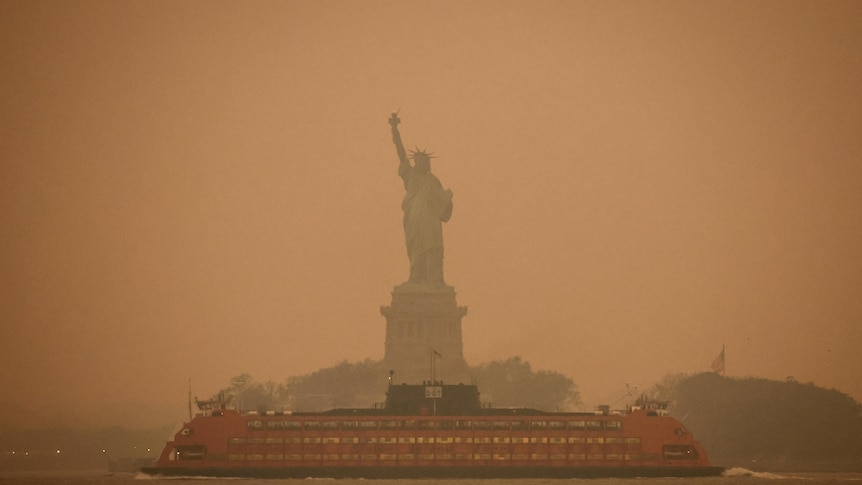
The Statue of Liberty was covered in haze and smoke caused by wildfires in Canada.(REUTERS: Amr Alfiky)

Just six days in to the northern hemisphere summer of 2023, the skyline in New York City was stained in a sepia smoke haze.

It was streaming from across the border, where, what became Canada's most widespread fires in history, were raging.

And the fires did not let up for months.

According to the latest public records, the Canadian wildfires of 2023 have razed 18.5 million hectares of land to date — nearly triple the previous record.
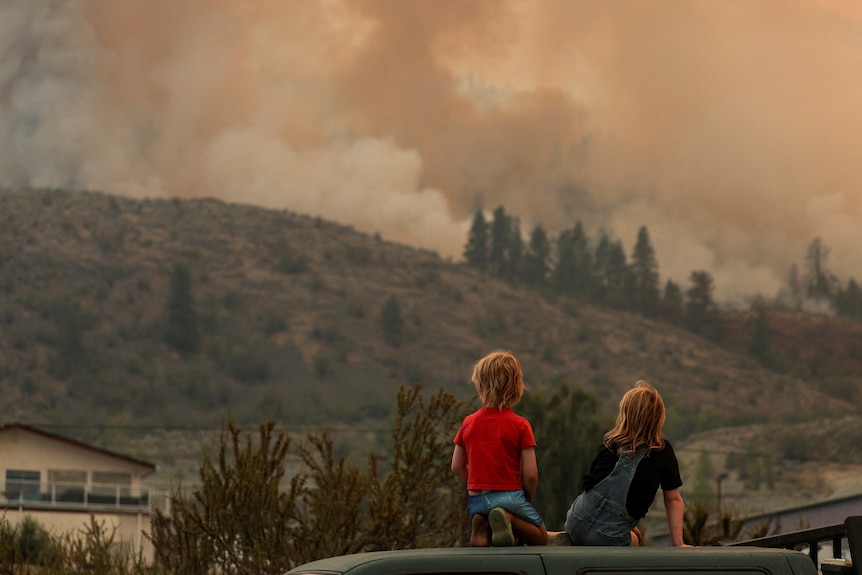
Locals watch heavy smoke from the Eagle Bluff wildfire after it crossed the Canada-US border.(REUTERS: Jesse Winter)

But the months of smoke billowing through the vast boreal forests also did something else.

They released huge quantities of carbon stored in trees and soils into the atmosphere, which some researchers now estimate to be equivalent to 2.4 billion tonnes of carbon dioxide.


To put that into perspective, it's three and a half times the annual emissions for all of Canada's economy, says senior research scientist Werner Kurz who, up until his recent retirement, led the National Forest Carbon Accounting System for Canada.


"2023 was basically a year that was so far off the scale in terms of the [Canada fire] emissions, that we will have to completely revise the way we draw our graphs because the y-axis has to basically be doubled in scale," he says.

"People always talk about unprecedented events, well these were truly unprecedented events."

The estimates are still preliminary with an error of roughly "plus or minus 20 per cent", according to Dr Kurz. But similar figures, between 1.76 and 2.9 gigatonnes, have also been reported by the 2023 Global Carbon Budget and European Union observation agency Copernicus.
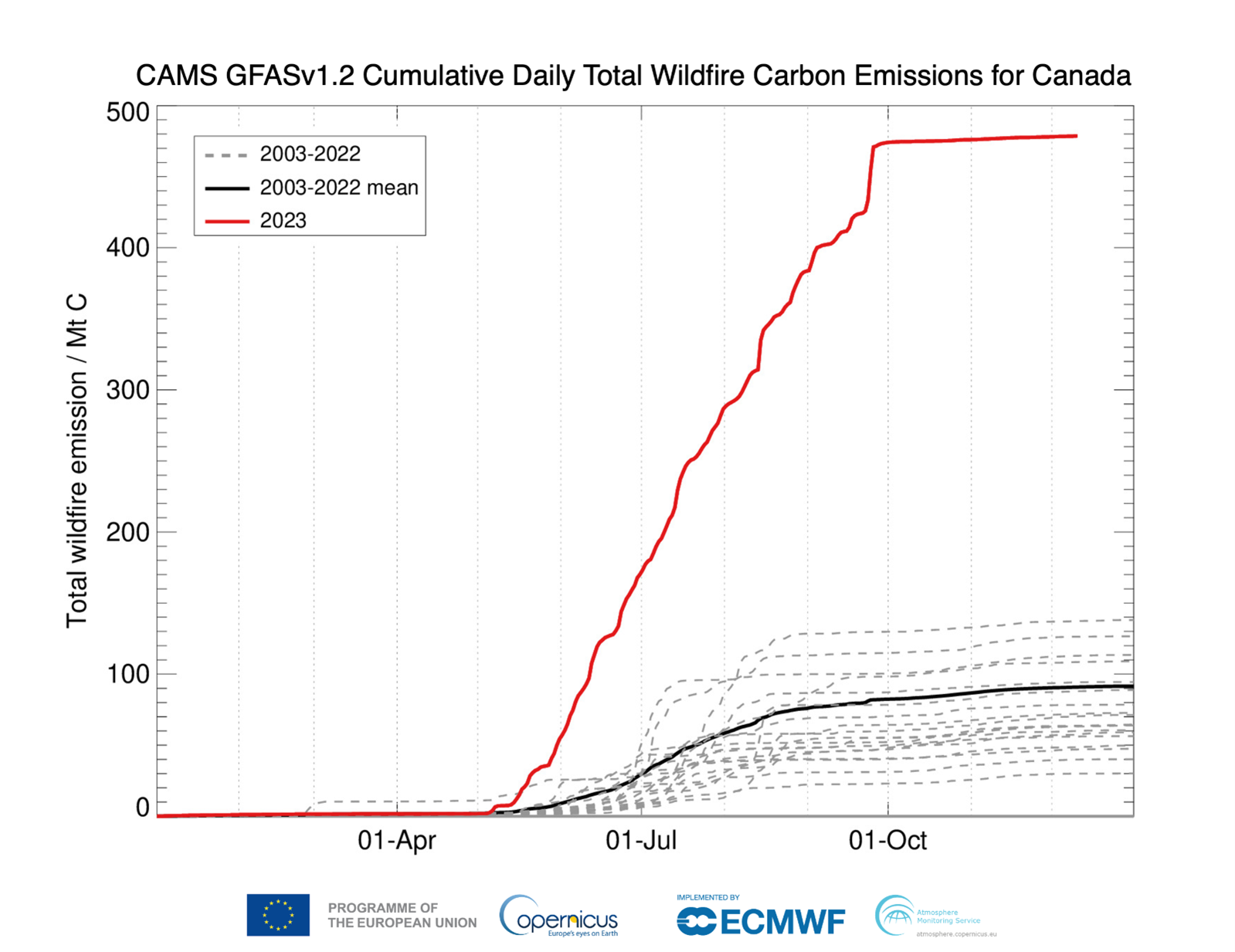
The EU's climate service, Copernicus, shows how far off the charts this year's wildfire emissions from Canada were compared to previous years.(Supplied: Copernicus Atmosphere Monitoring Service)

Researchers say the numbers are "remarkably high" not just on a local scale, but globally.

It's at least triple the estimated emissions from Australia's Black Summer Bushfires and equivalent to 6 per cent of the projected total carbon emissions for the world this year.

And they were far from the only significant fires. Severe wildfires also consumed swathes of forest and grasslands across Russia, Europe and the United States.

Experts have found climate change made the extreme fire weather experienced in eastern Canada twice as likely during this period.

But with that much CO2 pumped into the atmosphere, have these megafires contributed to climate change themselves?
Fires spark change in global carbon budget

The extreme nature of the northern hemisphere fire season of 2023 prompted an international group of leading scientists to make a change to their annual Global Carbon Budget for last year — considered to be the most comprehensive report of its kind.

For the first time, the carbon dioxide emissions from wildfires were presented in the budget breakdown.

According to estimates, approximately 7 to 8 billion tonnes of carbon dioxide was emitted, overall, from wildfires between January and October 2023.

Pep Canadell, CSIRO's chief research scientist and the executive director of the Global Carbon Project, says the higher-than-normal emissions came despite a less active fire season in the tropics and Africa.
Dr Josep (Pep) Canadell is the CSIRO's chief research scientist and executive director of the Global Carbon Project.(Supplied: Global Carbon Project)

"That was a big deal, and we know that we had to bring that number in," he says.

When it comes to the impact on the climate, Dr Canadell says these fire emissions — though significant — are barely a blip on the radar compared with the decades of accumulated emissions caused by the fossil fuel industry.

They do, however, form part of a broader change in the fire scale and prevalence that has climate scientists worried.
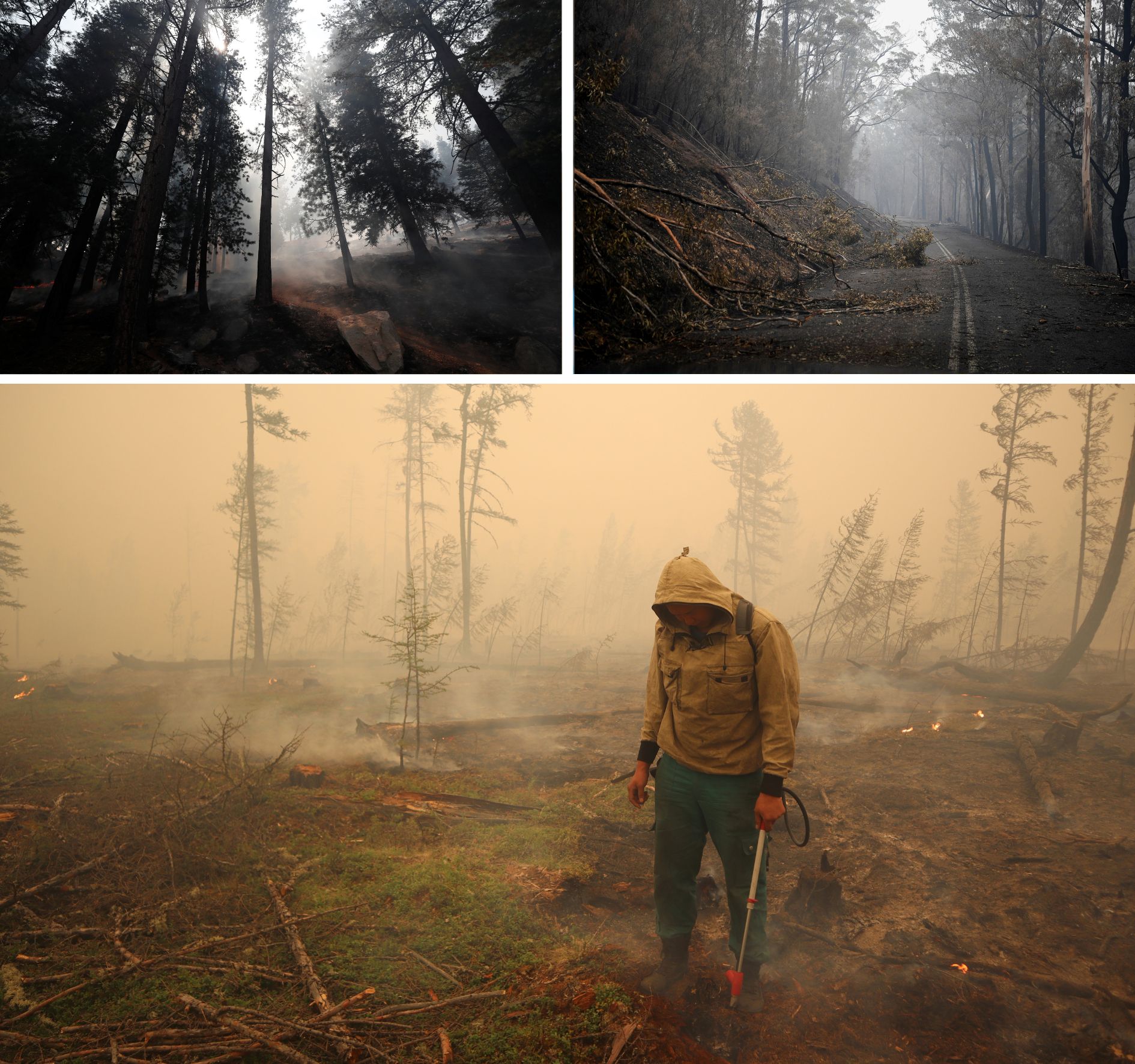
The burnt landscape in California, Australia and Siberia during their respective megafires between 2019 and 2021.(Reuters: Mario Anzuoni (top left), Trackey Nearmy (top right), Roman Kutukov (bottom) )

He says off the back of the megafires in Australia, California and Siberia over the last four years, there is legitimate concern that the world is at the precipice of a significant positive feedback cycle that will further add to the already sky-high CO2 emissions.

"This thing is just happening now," he says.

"We don't seem to have had a real impact in the observed global mean surface temperature change we report, yet.


"But if this continues into the future, which we expect it will continue and worsen, then there'll be a real contribution to the growth in atmospheric CO2."
Throwing out the balance

Historically, nature has been good at balancing the books on its fire emissions.

Dr Canadell says that over multi-decade timescales, the carbon absorbed in regrowth tends to balance out what was emitted during the fire.

Six months after fires ripped through Sarsfield in East Gippsland, the forest had started to grow back(By Kellie Lazzaro)

He points to the regrowth of Australian forests following the Black Summer bushfires as a good example.

"So we ran a study to look at the biomass recovery of the whole forested east, all the way down to the south, and 80 per cent of the areas that burned had almost recovered to the level they had pre-fire in two years," he says.


"That's quite exceptional."

The regrowth isn't the only way nature has been shown to correct the record on fire emissions.

In 2020, researchers found the iron-rich bushfire ash that was transported around the globe during the bushfires triggered an algal bloom the size of Australia in the Southern Ocean.

These algal blooms were so extensive that they may have temporarily offset a substantial amount of the fires' CO2 emissions, according to co-author of the study Richard Matear, an oceans and climate scientist with the CSIRO.
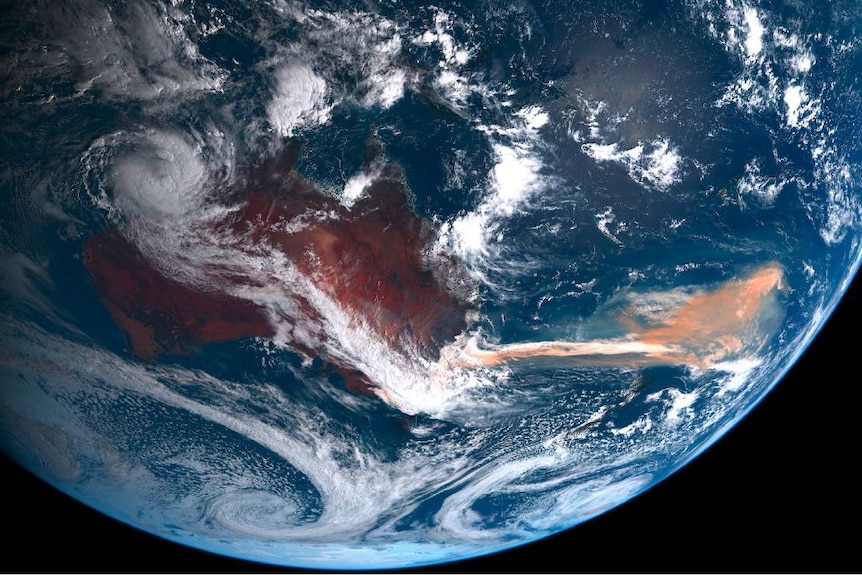
The enormous algae bloom in the Southern Ocean could be seen from space.
(Supplied: CSIRO/Richard Matear)

But that carefully balanced cycle of fires to regrowth is starting to be thrown out of whack, according to Dr Canadell.

"Over the last five to seven years, in some regions of the world, we begin to see a new fire regime," he says.

"What was a natural fire, regrow, fire, regrow pattern, is now beginning to see much more fire and therefore less time for regrowing.


"And that's when potential excess CO2 can remain in the atmosphere … and that, of course, will ultimately lead to more climate change."
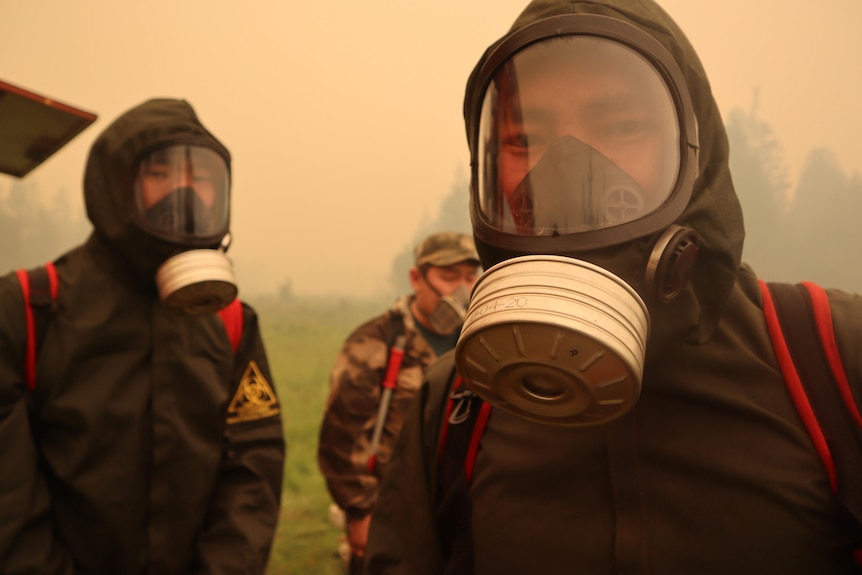


From June 2021, the taiga forests in Siberia and the Far East region of Rissua were hit by unprecedented wildfires
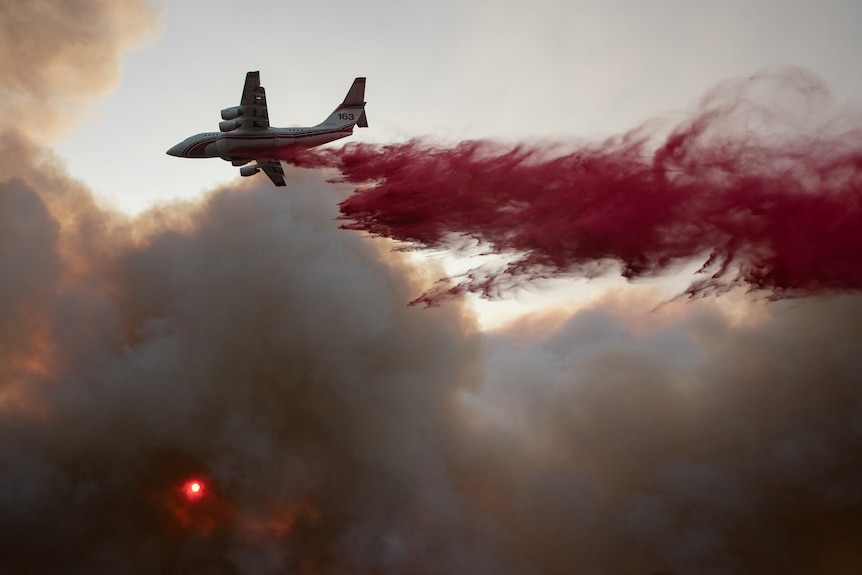


A plane drops red fire retardant on the fires in California, in September 2020.



Embers light up a hillside behind the Bidwell Bar Bridge in Oroville, California during the 2020 fires.


Smoke is seen as the Bobcat Fire burns in the Angeles National Forest near Los Angeles on September 17, 2020.
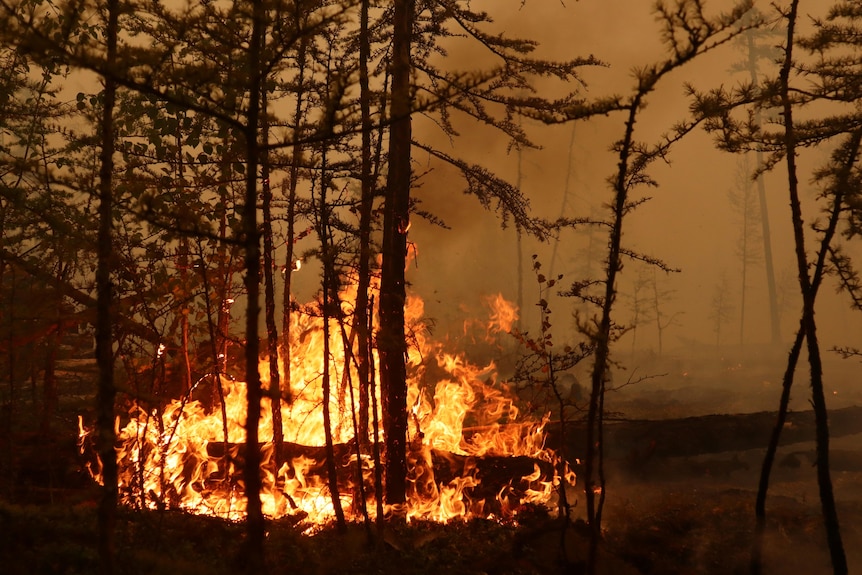


Fires tore through over 1.5 million hectares of land in Yakutia, Siberia.
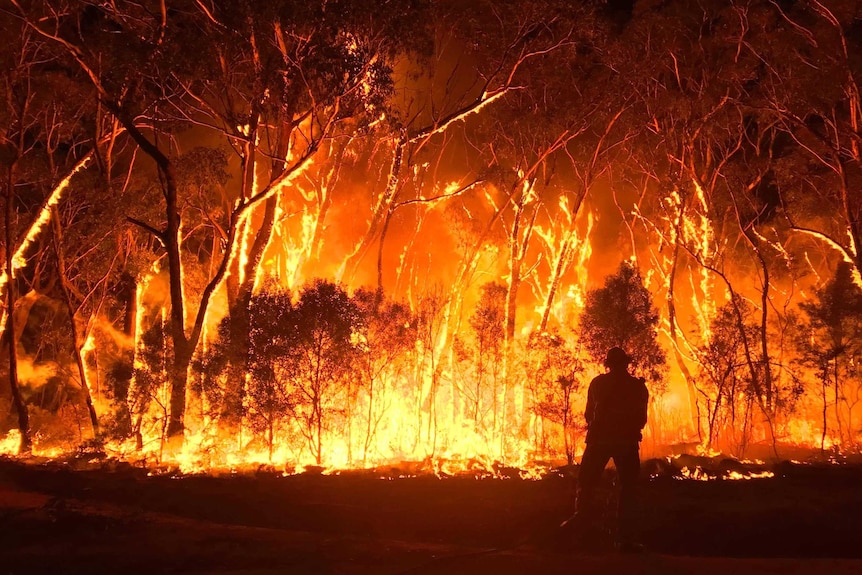
Firefighters tackle the massive Gospers Mountain bushfire during the Australian Black Summer Fires in 2019.

With increases in extreme fire weather one of the clear consequences of climate change around the globe, Dr Canadell says this is likely to continue.

In Australia, the frequency of megafire years — where more than 1 million hectares burn — has "markedly increased" since 2000, according to a paper published in Nature in 2021.

Burning the carbon sinks

Compounding the problem is not only how much is burning, but what is burning, says Dr Canadell.

While grasslands replace themselves almost immediately, and temperate forests relatively quickly, Dr Canadell says the peatland and boreal forests can take centuries to regrow — if at all.

"That's why the hotspots of Canada and Siberia are very important," Dr Canadell says.

"Because there's a huge imbalance between the old emissions going up very quickly, and an extremely slow regrowth, taking many, many decades to hundreds of years."

The forests of the northern hemisphere take centuries to regrow.
(Wildfire Service via Reuters)

That is why Dr Kurz says the Canadian fires this year are particularly devastating.

"These forests can be 50 to 250 years old," he says.

"It gets even more serious when you consider the consumption of forest floor and soil carbon because those are often even older than the biomass carbon."

He says the direct emission estimates from this year may only scratch the surface.

"This wood that was just killed will start to decompose, and we'll add further emissions to the atmosphere," he says.
Read more

"In subsequent years, there other factors that contribute to warming such as the soot and the black carbon that is spewed out by fires on snow surfaces in Greenland, Antarctica and the Arctic," Dr Kurz said.

"And then there also can be negative feedbacks from air pollutants that are added to the atmosphere that can contribute to cooling."

One research paper into Australia's 2019-20 bushfire found the copious amount of smoke had a temporary cooling effect across the southern hemisphere, by causing the clouds to become thicker and longer-lasting.

It found this may have also contributed to the onset of the rare triple-dip La Niña.

Studies like this are yet to be done on this year's Canada bushfire, however.

"But the bottom line is, having such huge emissions is another greenhouse gas that is eating away at our carbon budget," Dr Kurz said.

For Dr Kurz and Dr Canadell, it's just another reason for policymakers to heed the warnings about climate change and fossil fuel emissions before it gets to a point where they can't be turned around.

Posted 21 Jan 2024
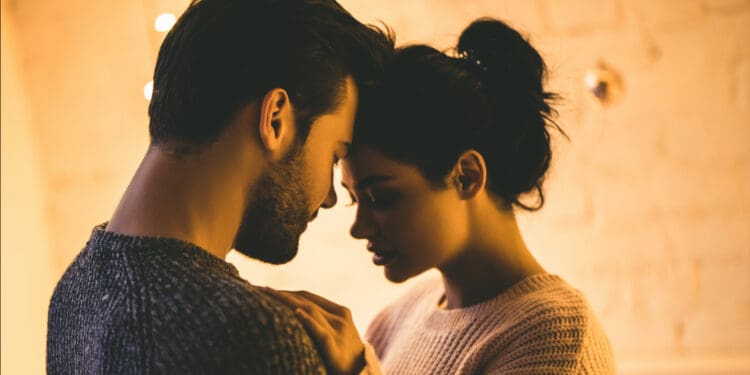
After decades of promising breakthroughs, no male birth control has made it to market. Why is it so elusive?

NOT 100% SAFE MEN ARE SNOWFLAKES

By Maani Truu
Posted Sun 21 Jan 2024 
Why in the year 2024 are the only two contraceptive options for men condoms or vasectomies?

 (Pexels: cottonbro studio)


Just days after Melbourne urologist Nathan Lawrentschuk opened up applications for a world-first clinical trial of a new form of male birth control, he had to close them again. "Every time we open the portal, it just gets bombarded," he says.

The draw card isn't money, study participants aren't allowed to be paid. While some could be driven by the scientific cause or an odd desire to provide regular semen samples, Lawrentschuk believes it is something more straightforward: "It speaks to the fact that there is a huge gap in the market."

In a world where birth control has long been the purview of women, the proposition certainly sounds revolutionary. A hydrogel that hardens after being inserted into the vas deferens, the same tube that is cut or closed in a vasectomy, blocking the sperm from exiting. Lawrentschuk calls it a "no scalpel vasectomy", but it also differs in another crucial way — the gel is designed to dissolve on its own after about two years.

"There's never really been anything like it in the market," says Lawrentschuk, who is the principal investigator on the ADAM study. "A lot of men would like to be in the driver's seat when it comes to knowing they've got full control over their contraception, and there's really been no product to date, other than having a permanent vasectomy, that's allowed them to do that."


Professor Nathan Lawrentschuk during the first insertion of the hydrogel that researchers say acts as a "no scalpel vasectomy".(Supplied: Epworth HealthCare)

The study, conducted by Epworth HealthCare, is currently in its second of three years. If successful, it will mark a major turning point in a decades-long saga marred by a slew of promising starts and just as many disappointing stops.

Since the female contraceptive pill was introduced more than 60 years ago, scientists have sought a similar solution for men. But as new contraceptive technologies have flowed onto the market for women, options for men have remained elusive. Today there are just two options: condoms, with a real-world failure rate of around 13 per cent, and permanent vasectomies (reversals exist but are expensive, costing up to $7,000, and are not guaranteed to work).

This is despite headlines regularly declaring imminent breakthroughs. In recent years these include the trial of a non-hormonal male pill known as YCT-529, a compound that blocks an enzyme sperm need to swim that has shown great promise in mice, and a topical gel that when rubbed on men's shoulders once per day temporarily lowers their sperm count.

"It's been 'five years away' since 1975," says Professor Robert McLachlan, an endocrinologist and leader in male hormonal contraceptive research. "If you're asking me when it's going to be at the local chemist? Well a very, very, very long time, if at all."

The reason for this delay, according to some experts, is not unresolved science — but money.
A disappointing history

"I've given basically the same interview in 1993, 2003, 2013, and 2023, and unfortunately nothing much has changed in the past 30 years," McLachlan says. "Except we do know, spoiler alert, that it works perfectly well."

Male birth control research is largely split into two camps: hormonal solutions, that stop or slow sperm production and in many cases mirror the well-established female oral contraceptive pill, and non-hormonal technologies that may impact sperm production, its movement out of the body (sperm transport) or its ability to swim (sperm motility).


Professor Robert McLachlan is hopeful that a hormonal male birth control could eventually make it to market. (Supplied: Robert McLachlan)

McLachlan began work on the former in the 1980s, decades after a "male pill" was first proposed. In his view, the science is settled — it works at preventing pregnancy, at least as well as its female equivalents. What went wrong is everything else.

By the 1990s, research into the use of testosterone to reduce sperm numbers was underway. With weekly injections, the majority of men's sperm counts dropped to "almost zero" and pregnancy rates were on par with what you would expect from existing contraceptives, McLachlan says. In other words, it worked, but the trade-off was side effects including acne, weight gain, and mood swings — symptoms that might sound familiar to many women on the pill.

Researchers then tried lowering the testosterone dose and adding progesterone and "lo and behold, 95 per cent of those men got sperm counts of zero or less than a million, which was so low as to give a reasonable level of contraceptive cover," McLachlan says.

The crescendo came in 2011 when the World Health Organization sponsored an international study into the use of this hormone combination as birth control. More than 300 men in monogamous relationships from around the world began receiving an injection containing the two hormones every 10 weeks.

But some participants reported mood changes, depression, and pain at the injection site. The WHO pulled the plug, concluding that the "risks outweighed the potential benefits".

"The whole thing crashed like a house of cards," says McLachlan, who co-authored the report on the study. "Not because it doesn't work, because the social, geopolitical, pharmaceutical, environmental, litigious environment in which we currently live meant everybody pulled out."
Research into a male birth control pill has been going on since the female contraceptive pill was released in the 1960s, but so far no trials have been successful. (Unsplash: Melany Tuinfosalud)

By the end of the prematurely aborted trial, 75 per cent of participants said they were satisfied with the method and willing to use it again if it became available. McLachlan says there's no way to know whether the mental health issues were related to the hormones, given how common depression is. This is one of the challenges inherent to trialling contraceptives: you can't have a control group as placebos don't prevent pregnancy.

"I remember the pharmaceutical people saying at the time, 'Listen, guys, we love you all and we get this, but here is the reality: it's very, very expensive to continue with it now, there are concerns about whether the side effects are true or not, the marketability, the drugs are probably not patentable … how would there be a recoupment of investment?'," McLachlan says.

"It basically killed the field."


The funding gap

"I wasn't a six-year-old saying I want to work in male contraception when I grow up," Heather Vahat laughs over the phone from Durham, North Carolina, where she heads up the Male Contraceptive Initiative.

Instead, her career began at a not-for-profit working with female contraceptive development, during which time she travelled throughout India and Kenya to ask women what they wanted from their birth control. "And the women kept saying, 'What about developing methods for men? That would be a great method for women."

The Male Contraceptive Initiative (MCI) was created to push for greater male contraceptive choice and now provides funding for international research into non-hormonal options. The not-for-profit has so far given more than $12 million in research grants for the development of non-hormonal, reversible male contraceptives, making them one of the largest funders of male birth control research.

Australia's complicated relationship with the pill
The culmination of birth control content on social media gives the distinct impression that young women today are well and truly fed up with the pill. In Australia, however, the research suggests a different reality.
Read more

According to Vahat, this in itself is a big problem. "There's not a lot of money in the space," she says. "We grant one and a half million dollars a year, and that's a rounding error in a pharmaceutical development budget."

For decades, pharmaceutical companies have largely steered clear of contraceptive development. A report published in 2022 described the pharmaceutical industry's current involvement in the space as "minimal". "Why the loss of engagement? It is possible that the novelty of male birth control is seen as too risky for profits, and the market underappreciated," it reads.

Vahat has her own theories about what might be going on. The first is simple: there are already a handful of effective options on the market, albeit only for half the population. "If you're not considering the side effect issues that women deal with, what's out there is good enough, there's choice," she says.

The second is due to the nature of the product. Unlike other pharmaceuticals created to treat people who are sick, and therefore likely more willing to endure necessary side effects, contraception is used by healthy people, meaning there's a low tolerance for adverse effects.

And third, she says, contraception is tied to foreign aid, which has meant philanthropic organisations and governments have traditionally stepped in during the expensive and risky development phase. (The hormonal IUD, Mirena, for example, was first developed by the Population Council, an international not-for-profit, before being distributed by pharmaceutical companies.) "If you are looking purely at numbers, it's always that game of where to invest your money," she says.

But something less tangible is going on, too. "There's the business case and then there is this myth — mythology is what we call it — that men aren't interested and women won't trust them, that has been going on for ages."

The reality is men have never had the chance to take the lead on long-lasting birth control, which has become so inextricably linked with women's bodies. "There's this one statement that just sticks with me, and it's that we've stopped thinking of men as reproductive beings," Vahat says.

There's also some evidence to suggest that the mythology that men won't take birth control is just that, a myth.

An online survey of men of reproductive age in Canada and the US published this year found three-quarters of respondents would be willing to use contraception. Decades earlier, in 2000, another survey across three countries found 44–83 per cent of men would definitely or probably use a hormonal birth control pill. And as it stands now, many men are already primarily responsible for handling birth control, through condoms or the withdrawal method.

As for women's trust in their partners, experts believe that is countered by the fact many of the proposed options are long-lasting and well-documented. If your partner only needs to have a procedure every two years, for example, they say it's relatively easy to ensure that has happened.

"In stable couples, there's no reason to believe men wouldn't be as committed as their partners because they don't want an unwanted pregnancy," McLachlan says. "It's a joint decision, so it's rather insulting to those men to say they wouldn't have been trusted."
What's at stake?

All of this discussion is taking place against a rising tide of disquiet — where once the pill signified women's liberation, turn to social media today and you'll see that many women see it as more of a burden. TikTok, Facebook groups, and YouTube are awash with hormonal horror stories — from depression to acne, and mood swings, the list goes on — and a growing chorus of calls for men to shoulder more of the responsibility.

In lieu of a long-lasting, reversible male contraception, there are signs that some men are taking matters into their own hands. In the 2013-14 financial year 22,200 Australian men had vasectomies under Medicare — by 2022-23, that number grew to 38,800, according to federal government data.

One of the doctors performing them is Dr Justin Low, the national director of vasectomy services at MSI Australia, the reproductive health service formerly known as Marie Stopes International. "It's a bizarre situation where you've got the most unreliable form but easily accessible contraception on one hand, and the most life-changing on the other, and nothing in between," he says. "So it's a big dilemma for guys who are trying to take control of their own fertility."

It's time to normalise vasectomies
It's fast, largely pain-free and takes a huge contraceptive responsibility off women — it's no wonder more and more men are choosing to get the snip.
Read more

Vasectomies — which have traditionally involved cutting the vas deferens, but can now be performed without a scalpel by suturing the tube closed — have traditionally been recommended for men who are finished having children. Recently, however, Low says he's seeing more young people in their 20s without children seeking out the procedure.

"Young men are coming to us saying 'I want control'," he says. "Yes you can put a condom on, but it's not safe, we know it's not great."

James, who did not wish to use his last name, told ABC News that he had his application for a vasectomy knocked back twice on account of his age. The 20-year-old was "pretty set on not having kids from a very young age" and decided on having a vasectomy after learning there were no other long-lasting and reliable options available.

But he was surprised to be told he would have to wait until he was older or undergo counselling to be considered for the procedure.

"Seeing people around my age having kids by accident fuels the fire even more," James says. "The thought is always there in the back of my mind that I want this done — and I should be able to get it done."

His next step is looking into freezing his sperm, which he believes, might make it easier for him to get the procedure. In the meantime, he keeps an eye out for headlines about new male contraceptive developments. "Unfortunately, everything I've read is only just a headline," he says. "They don't go into much depth about the timeline."

That's probably because nobody really knows what a timeline could look like. After so many false starts, even the most promising new developments are met with scepticism. "It won't be in my lifetime, I'm getting too old to see it all the way through now," McLachlan says of the search for a viable hormonal solution. "But the pilot light is not out."

For now, attention seems to have shifted away from a so-called "male pill" and towards the development of non-hormonal options.

"Can you imagine introducing the [female] oral contraceptive pill in 2024? Do you think it would get over the hurdle? Or would there be a little more pushback?" Lawrentschuk says. "It's only popular now because it's been around a long time and it's actually relatively safe."

As for the ADAM study — which doesn't involve any hormones — the team is "quietly confident that the research is heading in the right direction". So far there's been no evidence of long-term issues, and any side effects have been "extremely minor in the grand scheme of things".

So if things continue in this vein, when might we see the hydrogel on the market? "Realistically, somewhere around three years," Lawrentschuk says. "It seems like a long way off, but I don't think three years is too far away."

Posted 21 Jan 2024
Native violet recorded in Tasmania for the first time after bushwalker makes chance discovery
This native violet was found by Juliette Gaynor-Brown on the side of a walking track.(Supplied: Matthew Baker)

Juliette Gaynor-Brown was out walking in Tasmania's Ben Lomond National Park when she came across a small purple flower on the side of the track.

"I take photos of everything because I like plants," Ms Gaynor-Brown said.

Ms Gaynor-Brown is a member of the Tasmanian Rovers and was staying in one of the park's mountain huts last month when she went for a walk up to the plateau with some friends.

"On the way back down I saw it, and I knew it was violet but I didn't know what species it was," she said.

She took a photo and uploaded it to citizen scientist platform iNaturalist, where it caught the attention of experts.

It turned out the dwarf violet had never been recorded in Tasmania and was an endangered species found only in a handful of places in eastern Victoria and south-eastern New South Wales

.
Juliette Gaynor-Brown was out walking in Ben Lomond National Park when she came across the violet.(Supplied: Juliette Gaynor-Brown)


A 'lucky break'

Serendipitously, two of Australia's violet experts happened to be in Tasmania at the same time over the Christmas holidays, and went to the site of the discovery to take samples and confirm the species.

One of the experts, senior curator of botany with the Tasmanian Museum and Art Gallery Miguel de Salas, said it was a lucky break.
The violets were growing on the side of a walking track.(Supplied: Miguel de Salas)

"I saw this funny violet come through as an observation over the Christmas break, so I left a message for the user," he said.

Ms Gaynor-Brown was able to return to the spot to take additional photos for the experts to look at, who decided it was a special find.

"We both went up and had a look and found it is a new record Tasmania, it has never been seen here before," Dr de Salas said.

"It is a super rare violet called the dwarf violet, Viola improcera.

"It's only known in very few populations so it's a massive range extension and a really healthy population which is great news. It's a pretty exciting discovery."
Dr Miguel de Salas in the Tasmanian Herbarium, which houses 300,000 specimens.
(ABC Radio Hobart: Georgie Burgess)

'Hiding for 200 years'

Dr de Salas said the species was quite small and inconspicuous, and liked growing in areas where there had been human disturbance.

"It's been hiding for 200 years right next to a walking track, which shows you how well it hides," he said

.
The small violet is only found in a handful of other places on mainland Australia.(Supplied: Juliette Gaynor-Brown/iNaturalist)

"They like to grow on bare ground, and they like to spread onto disturbed ground.

"The ability to grow on the side of a track is what got it noticed in the first place."

He and his colleague got permits and collected samples of it earlier this month.

The samples were put in a plant press to dry out before being studied.

They will then be mounted and stored in the state's herbarium with 300,000 other specimens, and duplicates will also be sent to herbariums in other states.

It will be added to the state's list of threatened species and data Australia-wide will be updated to reflect that it is now found in Tasmania — including the chapter on violets in Flora of Tasmania.

"It also means we get a beautiful new plant which happens to be endangered so it's great news for its conservation," he said.

"It's important to spread the word because we currently know it from a single population, it may be more widespread and it's just never been noticed."


The pressed sample is almost ready to be studied and then mounted to be held permanently at the herbarium.(ABC Radio Hobart: Georgie Burgess)

Citizen science power


Dr de Salas said the discovery showed the power of citizen science.

He said time in the field was limited for experts, but platforms like iNaturalist provided extra eyes on the ground.

"Eyes on the ground are a really precious resource, and the fact that these citizen scientist platforms exist means we have a lot more eyes on the ground doing the looking for us," he said.

Orchids' amazing disguises
Dragons, fairies, spiders, birds and hammers — welcome to the weird and wonderful world of orchids and their intricate disguises.
Read more

"It takes relatively little time for me to review the observations that come through."

He said members of the public can take a photo of something interesting they've seen, and the platform will create an observation using GPS data and the time and date.

But, he advised against people taking samples of plants unless they had a permit.

Ms Gaynor-Brown, who is doing a masters in protected area conservation, started using iNaturalist about a year ago to improve her identification skills.
Solar panels on Japan's SLIM lunar lander fail to create electricity as needed

Japan's SLIM lunar lander made it to the moon on Friday but solar panels were not generating electricity as planned as of Friday afternoon. The lunar lander was still sending a signal but will run out of power in a matter of hours unless the solar panels begin charging the spacecraft. File Photo by JAXA/EPA-EFE

Jan. 19 (UPI) -- Solar panels on the Japan space agency spacecraft that successfully landed on the moon Friday were not generating electricity as planned as of Friday afternoon.

The landing made Japan the fifth nation to land on the lunar surface.

The Japan Aerospace Exploration Agency, known as JAXA, said in a Friday briefing that if that problem isn't quickly fixed, the Smart Lander for Investigating Moon, or SLIM, could be knocked out of commission.

That's because the onboard battery can only support the spacecraft functions for a few hours without the solar panels recharge.

The JAXA team is still receiving a signal from the robotic lunar explorer and is analyzing data to find the cause of the solar panels issue. They said it's possible the spacecraft isn't facing the planned direction.

They said it's possible if the lander's power lasts long enough the solar charger may start working as the solar angle on the moon changes. But it was unclear why the solar panels weren't functioning as intended. It's unlikely they were damaged in the landing because the rest fo the lander is operating as intended.

The Japan Aerospace Exploration SLIM arrived on the moon at 10:20 a.m. EST, but officials are now trying to deal with the solar panel problem.

"From the telemetry, what we see is the SLIM has landed," a JAXA spokesperson said. "We are now checking the status."

Japan joined the United States, Russia, China and India in making a soft landing on the moon. But the mission may not be able to be completed due to the solar panels issue.

SLIM lowered itself to about 10 miles above the moon's rocky ground before the landing, completing its four-month journey from Earth.

The spacecraft's cameras took photos of the moon's surface while on the descent and matched them to photos already loaded into its computer to detect its location. Japan space officials said SLIM was expected to land about 330 feet off the ground target on the rim of the Shioli Crater.

The landing could be a boon for Japan's space agency after recent failures. A small lander that took off from Earth in November 2022 never made it to the moon and in April 2023 the Hakuto-R spaceship crashed on the moon after a sensor failure.

Emma Gatti, a former NASA scientist and editor-in-chief of SpaceWatch Global called the Japanese landing "historic" given the size of the country and getting so close to its intended landing target, according to the BBC News.

Japan’s “Moon Sniper” craft successfully landed on the Moon.


The country’s Smart Lander for Investigating Moon (SLIM) used vision-based navigation (hence its nickname) to help it land on Friday. Ars Technica has a detailed explanation for how this all worked, while a translated video published on The Independent’s YouTube channel offers insight, as well.

Unfortunately, the craft’s solar panels malfunctioned, leaving it with only hours of battery left. A disappointing facet of the story. In the meantime, please enjoy this perfectly 80s arcade-style logo from Moon Sniper’s press materials (PDF).


I really want to play the Moon Sniper arcade game. 
Image: Japan Aerospace Exploration Agency

Muninn: First space mission for ESA’s Marcus Wandt begins

20/01/2024

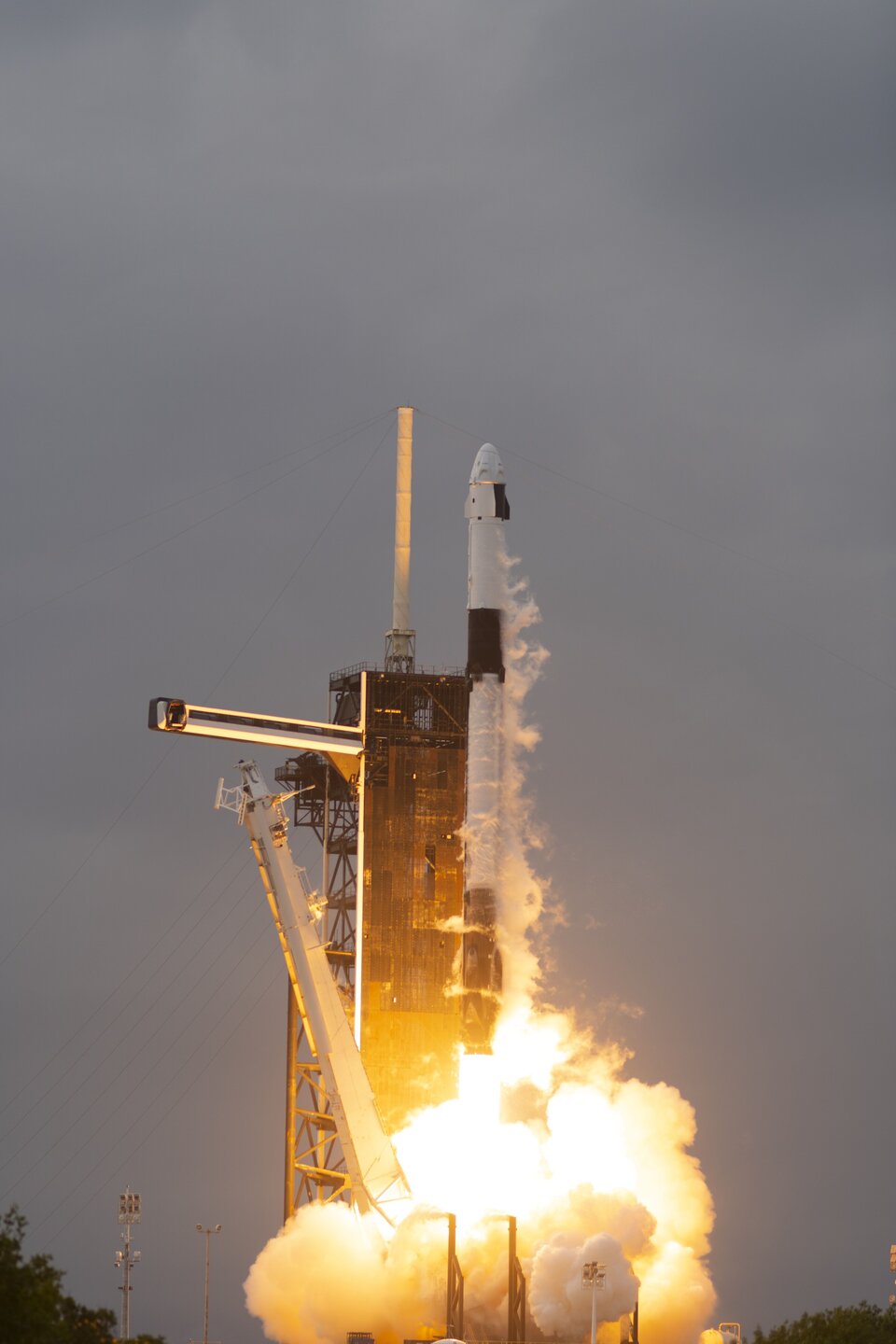
The Dragon spacecraft carrying ESA project astronaut Marcus Wandt and his colleagues Michael López-Alegría, Walter Villadei and Alper Gezeravcı docked to the International Space Station at 10:57 GMT (11:57 CET) Saturday 20 January.

Liftoff of Axiom Mission 3

The four astronauts are part of Axiom Mission 3 (Ax-3) and will live and work in orbit for up to two weeks. Marcus’s mission is called Muninn.

The crew spent around 36 hours catching up with the Space Station after their launch on 18 January at 21:49 GMT/22:49 CET (16:49 ET local time). Marcus became the fifth ESA astronaut to leave Earth on a Dragon spacecraft and served as a mission specialist during the journey.

Marcus is the first of a new generation of European astronauts to fly on a commercial human spaceflight opportunity with Axiom Space, and the second Swedish citizen to fly in space.

“I am immensely grateful and impressed by everyone who worked together to make this mission possible. I want to thank ESA for being bold and forward-thinking, and for paving the way to strengthen Europe’s presence in space with the support of Sweden and Axiom Space,” said Marcus on launch day.

As a project astronaut, Marcus’s job at ESA is linked to this specific flight opportunity on a fixed-term contract.

Two Scandinavians in orbit

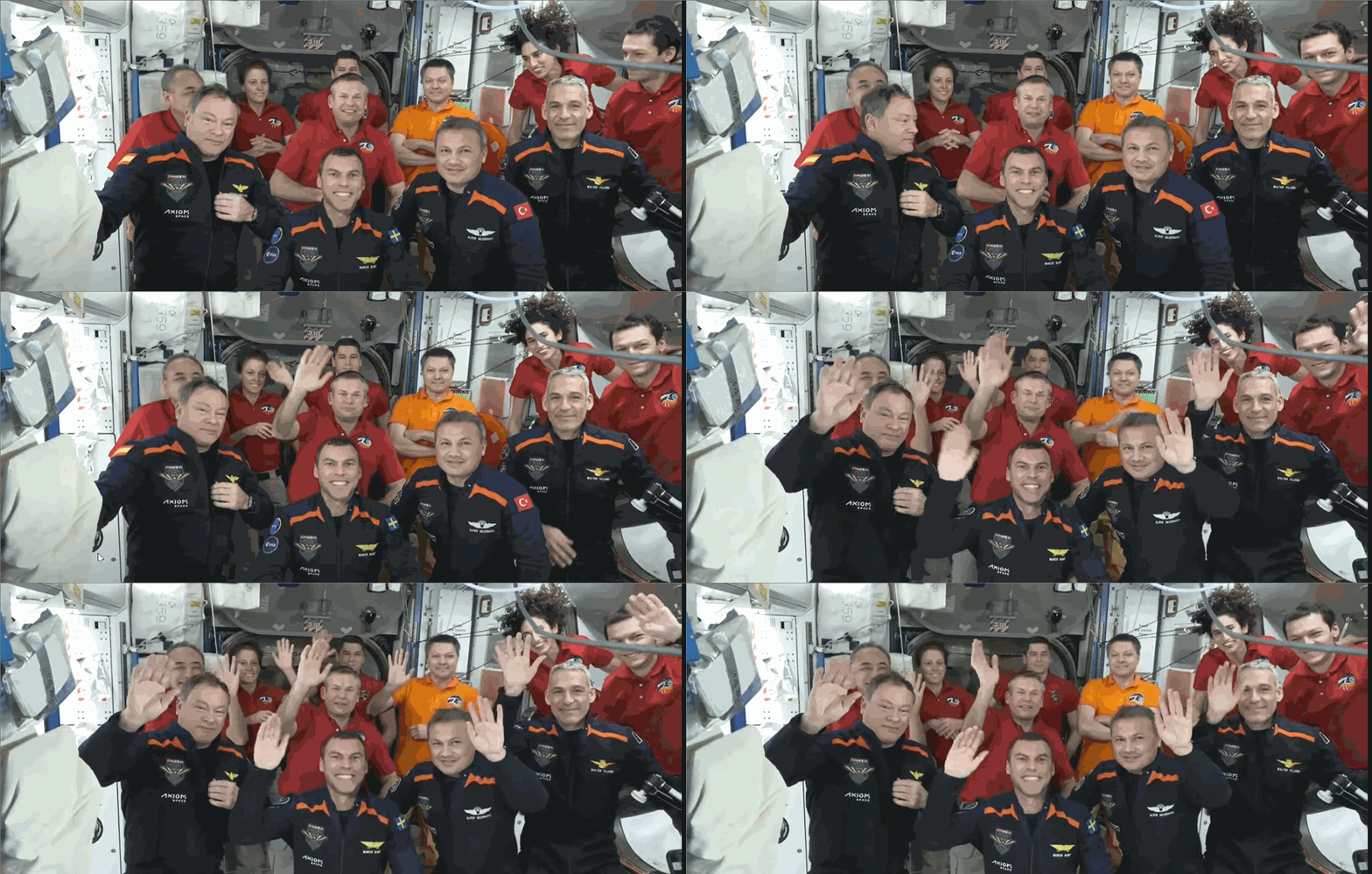
The Muninn mission officially began as a ’weightless’ Marcus went through the hatch of the Space Station’s Harmony module at 12:16 GMT (13:16 CET).

Welcome ceremony for Axiom 3

Marcus’s first mission to space takes its name from Norse mythology and the two raven accomplices of the god Odin – Muninn and Huginn. According to the myth, the ravens serve as messengers and advisors to their god, sharing all they see and hear. Huginn is the mission name of Danish ESA astronaut Andreas Mogensen.

Marcus was welcomed aboard by Andreas,  who is currently commander of the Space Station. This is the first time two Scandinavians are together in space, ready to gather new knowledge in orbit, deliver benefits to people on Earth and prepare  for future space exploration.

Action-packed mission

Marcus will devote much of his time in space to scientific activities and technology demonstrations that could shape the way we live and work on Earth. In total, he will run around 20 experiments and take part in five educational programmes on the Space Station.

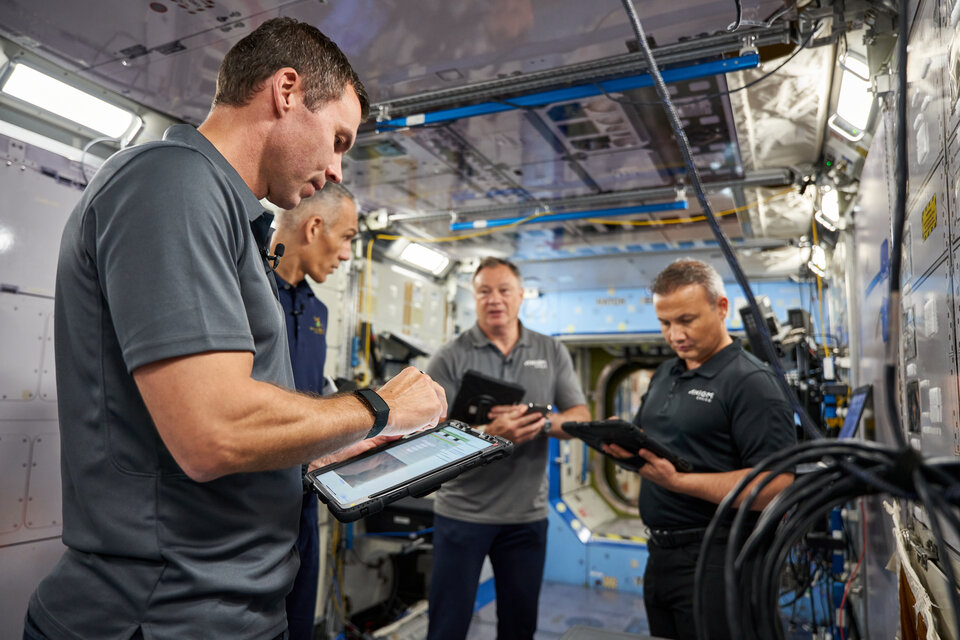
Marcus training on Space Station mockup

The Muninn programme is packed with European research and new experiments led by the Swedish Space Agency, ranging from studies into how the design of space habitats affects an astronaut’s stress levels to unravelling the changes in cellular structures and gene expression in microgravity.

Follow the Muninn mission

Follow Marcus’s journey on the Muninn website, check our launch kit in English or Swedish and connect with Marcus on his Instagram and X accounts.

Latest updates on the Muninn mission can be found on X via @esaspaceflight and on ESA social media channels. You can also shop the official Muninn collection online at the ESA Space Shop and tune into the official Muninn mission playlist.


AI FEARS OF HIROSHIMA AT DAVOS


GLOBAL ELITES SUDDENLY STARTING TO FEAR AI

GETTY / FUTURISM
Bear Mode

This time last year, the billionaires at the World Economic Forum conference in Davos, Switzerland were impossibly gung-ho about artificial intelligence. But now cracks are forming, and they sound somewhat concerned.

As the Washington Post and other outlets report, this year's gathering at Davos has featured a decidedly shifted tone as the world's most influential movers and shakers start to see just how dangerous AI might be.

"Last year, the conversation [surrounding AI] was 'gee whiz,'" IBM government affairs vice president Chris Padilla told WaPo. "Now, it’s what are the risks? What do we have to do to make AI trustworthy?"

Between the untold number of jobs lost to the AI frenzy and the risk of even more rampant disinformation in this year's American presidential election, business, government and economic leaders have begun openly wondering whether the world should — or perhaps even can, at this point — pump the brakes.

"Human beings must control the machines instead of having the machines control us," Chinese Premier Li Quang said during a speech at the conference. "AI must be guided in a direction that is conducive to the progress of humanity, so there should be a red line in AI development — a red line that must not be crossed."

AI Bomb

Even OpenAI CEO Sam Altman, attending Davos for the first time, took a more conciliatory tone when addressing increasing concerns about the technology he's shepherding into existence.

"The OpenAI-style of model is good at some things," he said, "but not good at sort of like a life and death situations."

The summit's gravest warnings, however, came from a surprising source: Salesforce CEO Marc Benioff, whose company has very much invested in the technology.

"We don't want to have a Hiroshima moment," Benioff said during a panel discussion. "We've seen technology go really wrong, and we saw Hiroshima, we don't want to see an AI Hiroshima."

In another interview, the CEO — whose company last year laid off 8,000 employees while paying actor Matthew McConaughey $10 million per annum for a sponsorship deal — admitted that he's long maintained the dangers AI poses to the world.

"I think AI has to be almost a human right," Benioff mused in a Yahoo Finance interview conducted in the Swiss Alpine town. "I've actually been saying... for decades that AI could be a creator of inequality."

It's undeniably good that CEOs have proven that they can read amid all the overwhelmingly bad press AI got over the past year — but then again, a quarter of those gathered at Davos also said they plan to fire people this year and replace them with AI, so let's not get ahead of ourselves.

More on CEOs and AI: As Google Pivots to AI, CEO Warns He Will Fire Even More Staff