Wednesday, February 21, 2024


Maine Selects Preferred Site for Port to Support Offshore Wind Industry
Maine Sears Island
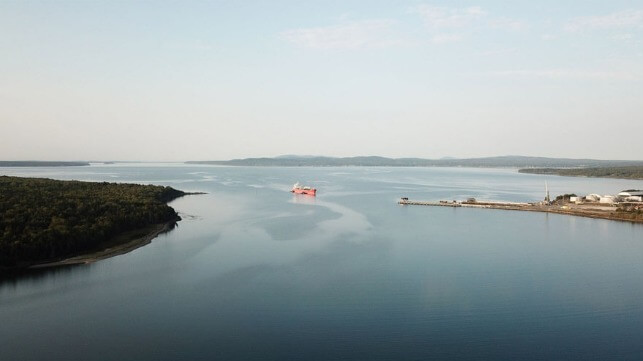
Governor selected Sears (left) with a plan to locate the wind port across from the existing energy terminal

PUBLISHED FEB 20, 2024 6:47 PM BY THE MARITIME EXECUTIVE


The State of Maine has selected a section of state-owned Sears Island, north of the city of Portland and located in Penobscot Bay as its preferred site for a port facility to support the offshore wind industry. The site would be about 100 acres in total, which is about one-third of the state-owned parcel or a little more than one-tenth of the entire island, with Governor Janet Mills saying that she believes it is the best spot to support the emerging industry.

The selection of the site followed an extensive review process led by the Maine Department of Transportation and Maine Port Authority to consider the state’s primary port development options, including multiple potential sites in the Port of Searsport, the Port of Eastport, and the Port of Portland. The state concluded that the Sears Island parcel is the most feasible port development site in terms of location, logistics, cost, and environmental impact based on input from port and offshore wind stakeholders, including the University of Maine, and technical and engineering analyses.

“This was not an easy decision, nor is it one that I made lightly. For more than two years, my administration has evaluated Sears Island and Mack Point thoroughly…,” said Governor Janet Mills. “Sears Island is the best choice for an offshore wind port because it is already owned by the state, designated for the purpose of port development, will cost less in the short-term and long-term, and is expected to result in less environmental harm.”

Sears Island is a 941-acre island off the coast of Searsport. In 2009, Sears Island was, by agreement, divided into two parcels, with approximately 600 acres, or two-thirds of the island, placed in a permanent conservation easement held by the Maine Coast Heritage Trust. The remaining one-third, or approximately 330 acres, was reserved by MaineDOT for future development.

The proposed port would be a purpose-built facility for floating offshore wind fabrication, staging, assembly, maintenance, and deployment. The governor cited that in addition to the state owning the land, it has the deepwater access necessary for a port facility. Unlike other possible locations, they do not expect it would require dredging. The estimated port construction cost on the Sears Island site is approximately $500 million.

Maine released its Offshore Wind Roadmap a year ago, citing the importance of developing the port facility. It builds on a 2020 study in which the governor directed MaineDOT to study the port needs to support Maine’s offshore wind industry. The study, delivered in November 2021, evaluated various locations in the Port of Searsport for an offshore wind port, including Mack Point and an area of state-owned Sears Island. 

The Bureau of Ocean Energy Management (BOEM) is moving forward with the review process for the offshore sites and a year ago released its draft area for potential commercial offshore wind leasing in the Gulf of Maine. The area is expected to be one of the later to be developed because the geography requires the use of floating wind turbines.

The port proposal is subject to extensive and independent State and Federal permitting processes, including assessments of environmental impacts and alternative sites. MaineDOT, on behalf of the State, intends to apply for permits later this year, which will also include additional opportunities for stakeholder and public input on the project.

Offshore Wind Majors Qualified for Norway’s First Auction in March 2024
Norway offshore wind farm
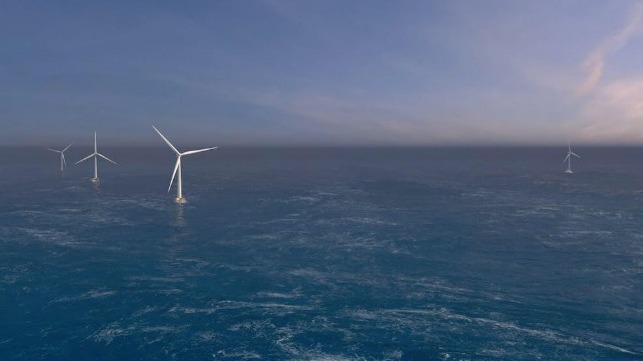
Participants have been selected for Norway's first offshore wind auction to proceed next month (Statkraft rendering of Sorlige Nordsjo II)

PUBLISHED FEB 16, 2024 7:10 PM BY THE MARITIME EXECUTIVE


Norway is set to launch its first offshore wind auction after announcing today that it has prequalified five applicants, including some of the largest developers in the offshore wind energy sector. The auction scheduled for March 18 comes nearly one year after the Norwegian Energy Ministry announced the first competition on the Norwegian continental shelf and as part of a long-term plan to transition Norway from the oil and gas sector to renewable energy.

Among the largest players set to participate in the auction are Aker Offshore, BP, and Statkraft which will make up one of the consortiums. Equinor and RWE will be a second bidder along with Shell, Lyse, and Eviny in a third partnership. Parkwind will be partnering with a division of Ingka, which is the largest franchise/operator of the famed Ikea stores. Energie is also qualified to bid.

Today’s selection follows the announcement last November that seven groups had submitted applications to participate in the auction. The ministry had said it wanted between six and eight bidders and it would consider if it was going to proceed if fewer applications were accepted. In the end, they elected to proceed with five applications while noting that it includes “strong actors” which they said demonstrates the interest in the development of offshore wind on the Norwegian shelf.

The ministry has reported that it was pleased with the strong interest. They noted it came despite significant cost increases for the global offshore industry in 2023. As a condition for prequalifying applicants needed to demonstrate that they would meet minimum criteria for sustainability and “positive ripple effects.”

Two companies, Mingyang Smart Energy and Hydroelectric Corporation, had also submitted applications. They however were not among the companies qualified to participate in the auction.

Today’s announcement clears the companies to participate in the auction for Sorlige Nordsjo, a concession located approximately 85 miles off Norway’s southern coast between Norway and Denmark. The surveys of the area have shown water depths of approximately 170 to 230 feet, which they believe could be developed either with fixed bottom or floating turbines. The government says there will be capacity for up to 3 GW while most of the companies in preliminary discussions suggested they would propose two equal phases.

The government in a 2012 study also proposed a second area known as Utsira Nord off the west coast which due to greater depth would require floating wind turbines. The auction for this site has been delayed while the government last year designated three additional areas also for assessments. The goal was to complete those studies by November 2024 so that they might move to auctions in 2025.

The Norwegian government has an ambition to award areas that have a total potential for 30 GW of offshore wind production by 2040.

 

Electrification Shipping on Track with €4M Investment in EST-Floattech

EST-Floattech
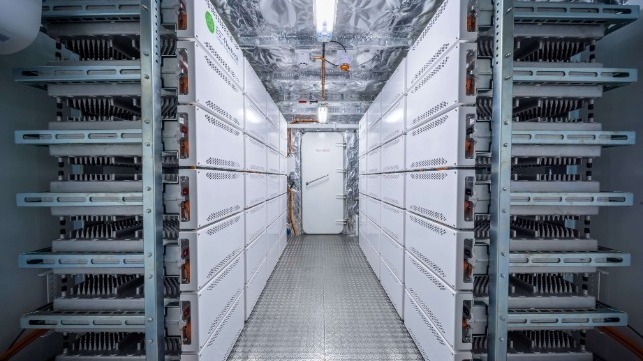
EST-Floattech Octopus Series battery room

PUBLISHED FEB 20, 2024 7:45 PM BY THE MARITIME EXECUTIVE


[By: EST-Floattech]

Developer of maritime battery systems EST-Floattech receives an investment of 4 million euros from Energy Transition Fund Rotterdam and existing shareholders Rotterdam Port Fund, PDENH, Ponooc, and Yard Energy. This was announced by Chantal Zeegers, the Alderman for Climate, Building, and Housing in Rotterdam. The ‘Energietransitiefonds Rotterdam’ is the investment fund of the municipality of Rotterdam.

EST-Floattech develops and produces high-quality lithium-ion battery systems for electric and hybrid propulsion of inland vessels, ferries, yachts, and more. Combined with in-house-developed software, the systems provide significant improvements when it comes to CO2 emissions, fuel costs, noise pollution, and air quality. Energy Transition Fund Rotterdam is investing 3 million euros, the fund's first investment in maritime battery systems. The existing shareholders are jointly investing 1 million euros.

An example of cooperation in the maritime ecosystem
As fund manager of Energy Transition Fund Rotterdam and investor in Rotterdam Port Fund, InnovationQuarter is closely involved in the investment. Rotterdam Port Fund is a private investment fund focused on innovation in the port sector. The fund played an important role in the realization of the transaction, which exemplifies the close cooperation within the South Holland maritime cluster. EST- Floattech contributes to this ecosystem through their many Rotterdam customers, including Damen and KOTUG. Innovation in electrification aligns with both the Regional Maritime Agenda 2030 and the Regional Energy Strategy for Rotterdam/ The Hague.

Great societal importance
The electrification of shipping has great social importance. Inland and maritime shipping together account for 16.5% of the Netherlands' CO2 emissions. Moreover, goods transported by water will increase significantly in the coming years. The EU is aiming for a 50% increase in transport via inland waterways and shorter sea routes by 2050 compared to 2015. For international shipping, volume growth of over 200% is even expected between 2023 and 2050. Currently, only 1% of the global fleet is electrified, and the sector needs to catch up tremendously to achieve net zero by 2050.

Since January 1 st , 2024, the European CO2 emissions trading system EU-ETS has been in place for larger ships, with smaller ships expected to follow in 2026. The increasing costs associated with CO2 emissions make electrification increasingly interesting within a rapidly growing market. As the second- largest player, there is a great opportunity here for EST-Floattech.

International growth
Lithium-ion batteries combine low weight with high energy density, low self-discharge, and long life. EST-Floattech's battery management system monitors charge status, discharge status, temperature, and other parameters to ensure efficient and safe battery operation. Fire safety is critical on ships. At EST-Floattech, safety is the highest priority, and the new Octopus Series battery system has been certified by classification bureaus DNV, Lloyd's Register, and Bureau Veritas.

For the aluminum housing, insulation material, electronic components, and the racks in which the battery cells are installed, EST-Floattech is working with Dutch partners. The investment will allow EST- Floattech to continue to grow nationally and internationally. The company is focusing on market leadership in Northwest Europe and is working with battery manufacturer DuraPower for access to Asia and Oceania. EST-Floattech also plans to focus on larger vessels in the future.

Joep Gorgels, CFO and CBDO of EST-Floattech: "The investment of Energietransitiefonds Rotterdam and the current shareholders in EST-Floattech not only brings new capital, which helps us take the next step towards growth, it also shows that the Netherlands believes in the power of innovation and sustainable energy. With InnovationQuarter, we have added a new partner, and together with Ponooc, Yard Energy, Rotterdam Port Fund, and PDENH, we continue to build a future in which we contribute to making the maritime industry more sustainable."

Chantal Zeegers, the Alderman for Climate, Building, and Housing in Rotterdam: "Rotterdam attracts companies that dare to invest in the energy transition. We are seeing this with EST-Floattech. Their innovative battery technology for ships contributes to the reduction of CO2 emissions in a sector where there is much to be gained. It is incredibly nice that through the Energietransitiefonds Rotterdam we can support companies like this."


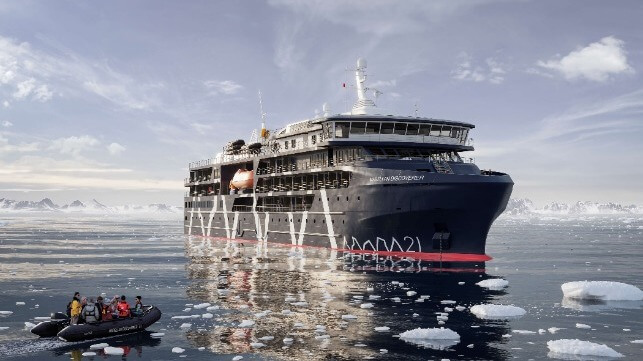
ABB to Power 1st Hybrid-Electric Expedition Cruise Ship Built in Americas

ABB
Magellan Discoverer – Image credit: Antarctica21

PUBLISHED FEB 20, 2024 7:55 PM BY THE MARITIME EXECUTIVE


[By: ABB]

ABB has been selected by the Astilleros y Servicios Navales S.A. (ASENAV) shipyard based in Chile to provide a power and propulsion system for Antarctica21’s newbuild boutique expedition ship Magellan Discoverer. Due for delivery in 2026, the vessel is the first hybrid-electric polar cruise ship featuring Azipod® propulsion to be built in the Americas. Accommodating up to 96 passengers and 67 crew members, the vessel will be operating in the Antarctic Peninsula, South Georgia and the Falkland Islands (Islas Malvinas).

ASENAV is the biggest private shipyard in Chile and Antarctica21 is a global leader in touristic operations focused on ‘fly & cruise’ expeditions to Antarctica. Both companies are important players in an expedition segment which recognizes technical innovation as key to balancing cost efficiency with environmental responsibility.

“This ship is born out of our unwavering commitment to meeting the rising expectations of our guests,” said Mr. Jaime Vásquez, President of Antarctica21. “Equipped with the latest technology, Magellan Discoverer strengthens our dedication to sustainability while offering seamless comfort for our travelers. With its modern elegance and advanced technical features, it supports our ongoing effort to provide unparalleled experiences in the spectacular Antarctic region.”

“Manufacturing the first hybrid-electric cruise ship in the Americas solidifies our position as a highly competitive shipyard on a global scale,” said Heinz Pearce, General Manager of ASENAV. “Alongside fostering new engineering solutions, we are constructing a vessel that meets the quality, comfort and sustainability needs currently demanded by the global tourism industry. With the support of our suppliers, such as ABB, we are now raising the standard in shipbuilding, leading the progress of an industry heading towards more sustainable development.”

The project further demonstrates ABB’s competitive advantage as a preferred supplier for electrification of expedition cruise ships. ABB’s scope of supply comprises the Azipod® propulsion system and a hybrid power plant featuring the Onboard DC Grid™ power distribution system, with battery bank from Corvus Energy. The ship’s energy storage system allows the engines to be switched off for silent operations in environmentally sensitive areas. Moreover, the flexibility of ABB’s Onboard DC Grid™ allows integrating a wide range of energy sources, such as fuel cells, ensuring the vessel is ready to comply with stricter emission regulations in the future.    

“We look forward to our collaboration with ASENAV and Antartica21,” said Juha Koskela, Division President, ABB Marine & Ports. “Every new reference for Azipod® propulsion and hybrid power systems is a victory for ship efficiency, taking the industry forward on the journey toward decarbonization.”

The leading propulsion solution for cruise ships and ice-going vessels for over three decades, Azipod® is a gearless steerable propulsion system, where the electric drive motor is housed within a pod outside the ship hull. Azipod® units can rotate 360 degrees, increasing maneuverability, safety and operating efficiency of the vessel, while cutting fuel consumption by up to 20 percent compared to conventional shaftline systems.

ECOCIDE

Disaster Recovery Teams Join as Mysteries Grow in Tobago Oil Spill

Tobago oil leak
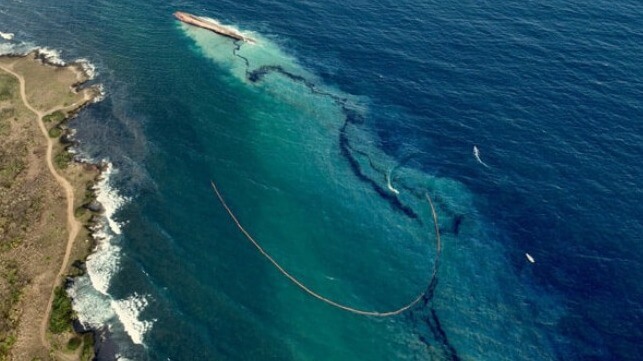
Image released last week by Tobago showing the oil leaking from the barge (TEMA)

PUBLISHED FEB 20, 2024 5:57 PM BY THE MARITIME EXECUTIVE


Two weeks after an oil barge being towed through the waters near the Caribbean Island of Tobago capsized and started what has been declared a “national disaster,” officials in the island nation of Trinidad and Tobago are continuing to work on the recovery effort. The Ministry of Energy and Energy Industries reported today that it has retained international disaster recovery teams and a subsea specialist while the search for the tugboat continues and now the police are investigating a bag of cocaine that washed ashore.

The barge, which is wedged upside down on a reef about 500 feet offshore, is believed to have been loaded with as much as 35,000 barrels of fuel oil according to Tobago officials. The spill has covered more than 10 miles of the island’s beaches along the southern and western coast but winds and currents have taken much of the oil out to sea. Countries ranging from Grenada to Venezuela have expressed concern that the oil was spreading and would reach their areas.

To aid in the ongoing oil recovery efforts which have included many volunteers, the Ministry reported today it has retained T&T Salvage and QT Environmental both licensed oil spill removal organizations to aid in the next phase of the operation. They will be overseeing a hydrographic survey and dive crews will be utilized to assess the situation and attempt to plug leaks in the barge. Based on the survey results, they will also help with the oil recovery program while also developing a plan to remove the oil from the barge and salvage the wreck.

Remote vehicle operator Subsea Specialists was also due to begin work today using its ROVs around the wreck. Those efforts were expected to continue through Friday.


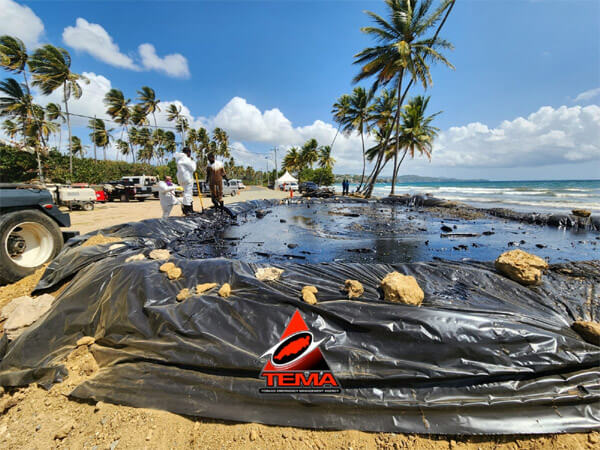
Cleaning operations continue along the shoreline (TEMA)


The government said the first priority is to stop the flow of hydrocarbons from the overturned barge along with the focus on containment. They are also looking to maximize the oil recovery expanding on the efforts of the teams and volunteers who have cleaned the beaches and assisted in placing containment booms.

The operations had to be suspended on a portion of the beach on Sunday when a black bag washed ashore. An inspection showed what the police now report is 1.1 kilos of cocaine. The police placed a value of $75,000 on the cocaine but have been careful not to say it was from the barge. They are still investigating to see if it is linked to the oil barge.

The government has not officially commented further on the identity of the tug or its owners only saying that it was continuing its investigation. They initially identified the vessel as the Solo Creed, a tug registered in Tanzania. Databases report it was sold last year but both the name and ownership remain unclear.

A maritime attorney in Trinidad speaking to the local newspaper the Trinidad Express said she has been conducting independent research and believes she traced the ownership to a Guyanese entity. Nyree Alfonse said she believes the cargo was for a consignee in Guyana which is similar to the government’s earlier statements that the tug and barge were bound for Guyana.

The lawyer said the trail shows the tug transited the Panama Canal in January and picked up the barge in Aruba. She however identifies the barge by the name Coolie Boy saying she thinks Gulfstream was an earlier name.As part of the investigation she wants to know if the tug encountered troubles or made an erroneous maneuver causing the barge possibly to ground or if the tug encountered possibly mechanical problems. No matter the cause, she is convinced the tug cut the lines to barge and fled.

She notes that the tug has turned off its AIS signal but believes it will be turned back on at some point. Furthermore, she suggested that the Panama Canal would have inspected the vessel’s documents before it was permitted to make the transit. The government has not commented further on its search for the tug and its owners.


New Norwegian Venture Orders First Methanol Hybrid Battery CSV

methanol-fueled CSV
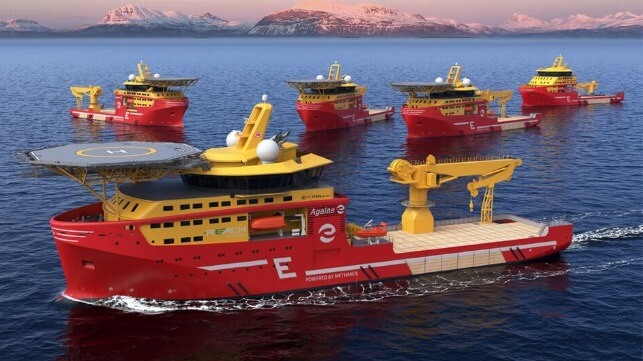
The first methanol dual-fuel CSV with a battery hybrid system was ordered with options for for additional vessels to all be built in Turkey (Eidesvik Agalas)

PUBLISHED FEB 19, 2024 8:31 PM BY THE MARITIME EXECUTIVE


The application of methanol-fueled propulsion continues to expand with a new partnership reporting it has ordered the first Construction Support Vessel (CSV) equipped with a methanol engine and battery hybrid system. According to Norwegian shipowner Eidesvik Offshore, which is partnering with shipowner Agalas, the vessel will be the most environmentally friend within its operating segments.

The two companies are forming a new venture to be called Eidsvik Agalas and placed an order for the CSV to be built at the Sefine Shypard in Turkey. They expect the vessel to be delivered in early 2026 and will be operating in the subsea and offshore wind sectors. Management of the vessel, including crewing, will be provided by Eidesvik, which will own 50.1 percent of the venture. They have also been granted options for four additional vessels.

According to the companies, the new venture and the vessels are well-timed to the market. They project that demand for vessels in the subsea segment is about to outpace supply. They also point to the expected significant growth in offshore wind during this decade.

Eidesvik highlights its long history as a pioneer in demonstrating new emission-reducing technology, including its first-mover adoption of LNG and battery technology in offshore vessels. With its newest addition to the fleet, Eidesvik says it will once again push boundaries.

NSK Ship Design and Agalas developed a highly flexible vessel that they said will incorporate
cutting-edge technology. The ship will measure approximately 328 feet (99.9 meters) in length with accommodations for 100 people. It will have a 150-metric tonne heave-compensated crane and approximately 900 square meters of deck area.

The vessel will feature a battery hybrid system alongside dual fuel gensets capable of operating on either methanol or MGO. The estimated build cost is approximately $88 million.

The newbuild will be equipped to perform inspection, maintenance, and repair (IMR) work. Upon delivery, she will enter into a three to five-year time charter with Reach Subsea.  

By adopting the technologies emerging in the industry, the new company looks not only to create a competitive advantage but also to establish a new standard for the segment. They expect it will help to accelerate decarbonization efforts in these market segments.


The Royal Navy is Working on GPS-Free Quantum Navigation

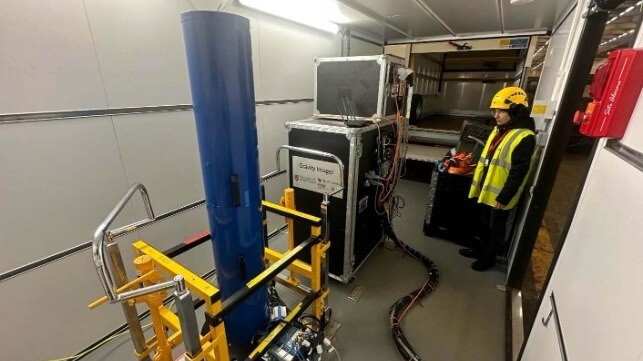
The Imperial College London team installed a prototype of their system aboard a UK military cargo ship for testing (Royal Navy)

PUBLISHED FEB 19, 2024 10:26 PM BY THE MARITIME EXECUTIVE


The UK's military technology agency is working on a quantum navigation device - an inertial navigation system that could provide GPS-like accuracy for vessels at sea, without any reliance on external signals. 

GPS has revolutionized the transportation economy, improving safety and efficiency while enabling new business models (like Uber). Modern shipping has come to rely heavily on GPS for navigation, collision avoidance and precision positioning. However, GPS is profoundly vulnerable to jamming by malicious actors, and it depends on the integrity of a satellite constellation. In the event of a severe solar flare event - or worse, a deliberate antisatellite attack - GPS navigation could be impaired. 

Military operators often rely on inertial navigation technology to supplement GPS, particularly for mission-critical applications. Submarines, aircraft and cruise missiles use inertial guidance to offset the known vulnerabilities of GPS systems. However, inertial guidance systems are an advanced form of dead reckoning, and all have some degree of drift: the longer the platform operates without getting a firm fix, the less accurate the estimated position is. 

Quantum navigation uses the same concept, but with far more precision. Quantum accelerometers are much more precise than the gyros traditionally used in inertial guidance, and if developed to operational readiness, UK defense researchers say that it could one day be used to provide GPS-free navigation.

Developed by researchers at Imperial College London in 2018, the quantum sensor uses a laser to measure the wave-like properties of ultracold atoms in a chamber. As the ship moves, the chamber moves, and the atoms inside have to move with it. Laser pulses track the movement of the atoms, and the data yields a precise record of the ship's accelerations. 

The Imperial quantum sensor was tested aboard the Royal Navy research vessel XV Patrick Blackett in 2023, and it underwent more testing this year aboard the UK defense sealift ship Hurst Point. The UK Ministry of Defence is bullish on the prospects of maturing the system in the next round of testing. 

“Quantum technologies have the potential to solve some of Defense’s most pressing problems, improve our operational advantage, and pave the way to new yet realized opportunities," said deputy chief technology officer Chester Butterworth in a statement. "We are advancing novel navigational techniques towards a fully resilient satellite-free capability.”


Iran Released Filipino Seafarer from Seized Oil Tanker St. Nikolas

Iran seized tankers
Iran has a history of bargaining for the crews, previously agreeing to also release the crew from two seizing Greek tankers (Image courtesy Mehr News / CC BY 4.0)

PUBLISHED FEB 20, 2024 12:12 PM BY THE MARITIME EXECUTIVE


The Philippines’ Undersecretary in the country’s Department of Foreign Affairs confirmed that one of the eighteen Filipino seafarers aboard the seized oil tanker St. Nikolas was released earlier in the month. He did not provide further details while also calling on the agency to replace the other crewmembers aboard the seized tanker.

DFA Undersecretary Eduardo Jose de Vega reports that the unidentified seafarer was released from captivity by Iran on February 4. No details were provided on how the release was arranged, but the Philippines authorities have repeatedly said they were working to free the eighteen crewmembers aboard the vessel. 

A week after the tanker was seized by Iranian forces in the Gulf of Oman, Greece was also successful in gaining the release of a cadet who was aboard the vessel. He was repatriated to Greece by the Ambassador arriving back on January 19. Since then, the shipping company, Empire Navigation, has said the crew is safe and being cared for while it was hopeful that additional releases would be coming shortly.

De Vega in his statement said the remaining crewmembers are aboard the tanker which is still in the Bandar Abbas anchorage since its arrival there after it was seized by Iranians on January 11. He said the workers are there “out of their free will” and that they are being paid double their salary. De Vega however called on the agency to replace them with other seafarers. 

In the past, the Iranians have permitted other Greek shipping companies to change out the crew aboard the tankers while they were being held in Iran.

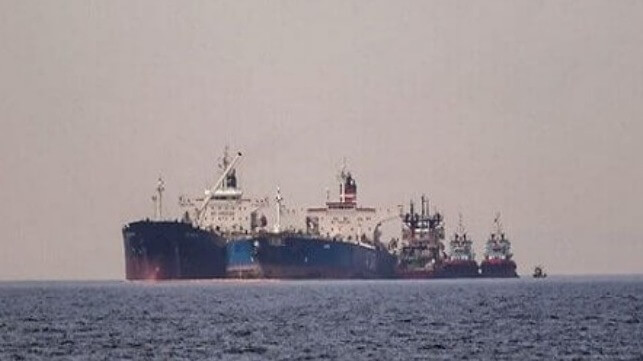
Iran seized the St. Nikolas, formerly known as the Suez Rajan, for the vessel and Empire Navigation’s role in the forfeiture of a crude oil cargo aboard the tanker to the U.S. in 2023. The U.S. had been successful in winning a court order and the tanker sailed from Southeast Asia to Houston. When other shuttle tankers refused to handle the offloading of the cargo, Empire Navigation supplied a second vessel which lightered a portion of the oil into a Houston refinery. Iran threatened retaliation against all the vessels involved in the operation.

Asked about the fate of the tanker, de Vega said the matter is in the Iranian courts. He said there was no indication that the vessel would be released.

The Philippine agencies have been active in trying to win the release of the crew from the St. Nikolas as well as the crew from the Galaxy Leader seized by the Houthis in November. Monday, February 19, marked the three-month anniversary since the Houthis seized the Galaxy Leader and its 25 seafarers in the Red Sea. The shipping industry issued a broadly supported statement calling for the immediate release of the crew.

Red Sea Crisis Takes a Toll on Egypt's Shaky Finances

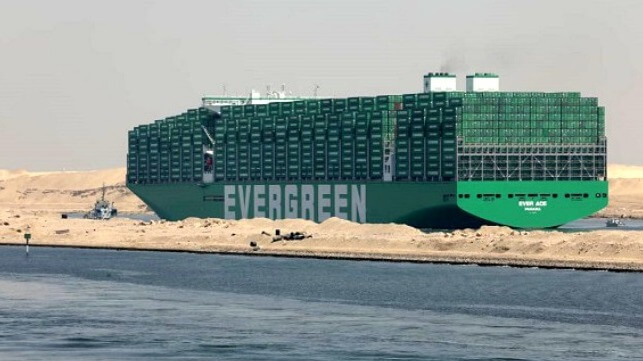
Ever Ace under way in the Suez Canal, a sight no longer seen. Evergreen is among the many shipping lines that now avoid the Red Sea and Suez Canal because of the Houthi threat (SCA file image)

PUBLISHED FEB 20, 2024 10:14 PM BY THE MARITIME EXECUTIVE


The effects of the Red Sea crisis are weighing on the national economy of Egypt, which gets a good share of its dollar currency for foreign exchange from the operation of the Suez Canal. Traffic on this strategic - and lucrative - waterway has dropped by half since the beginning of hostilities in the Red Sea, according to the nation's top leader.

"The Suez Canal, which used to bring Egypt nearly $10 billion per year, [its revenues] have decreased by 40 to 50 percent. And Egypt must continue to pay companies and partners," Sisi said at an oil conference Tuesday, according to AFP. 

Egypt faces a multitude of economic challenges. Deficit spending has driven its public debts up over the past 20 years, and external debt exceeded the $130 billion mark in 2020. It is import-dependent, especially for food, and a chronic current account deficit has dragged down the value of its currency. Inflation is running in the range of 30 percent, causing a crisis of purchasing power for the population at large. 

The conflict in Gaza has handed Egypt two economic shocks: a drop in tourism revenue from security-conscious visitors, and a drop in Suez Canal traffic from Houthi attacks to the south. The designated terrorist group has targeted vessels with any links to Israel's allies, even tenuous links, and the risk has driven away most of the well-recognized names in shipping. 

Egypt will likely get an economic aid package from the IMF shortly, and this will help plug the gap from the Suez Canal slowdown. The Egyptian government hasn't fully kept its past agreements with the IMF, but it will likely get more funding anyway - in part because it has such a key role in regional affairs, according to Ishac Diwan, an economist with the Paris School of Economics.

"It's a country that's very important geopolitically. The war in Gaza makes it, again, very important. The war has given new momentum in Western capitals to back the IMF and to vote for that loan at the IMF board. Egypt is just too big to fail right now," Diwan told NPR. 


Red Sea Crisis: Understanding a Shipowner's Rights

Maritime traffic in the Red Sea has declined as owners divert their vessels around the Cape of Good Hope (File image courtesy Pole Star)

PUBLISHED FEB 20, 2024 3:04 PM BY ROSIE GONCARE AND REEMA SHOUR


With the Red Sea Crisis continuing to unfold, Rosie Goncare, partner in the marine, trade and energy team, at law firm Hill Dickinson, and Reema Shour, senior knowledge lawyer at Hill Dickinson, discuss the legal implications of the crisis. They highlight the rights of the shipowner/carrier, and what carriers should know in case they face the risk of being unable to fulfil their shipping contracts.

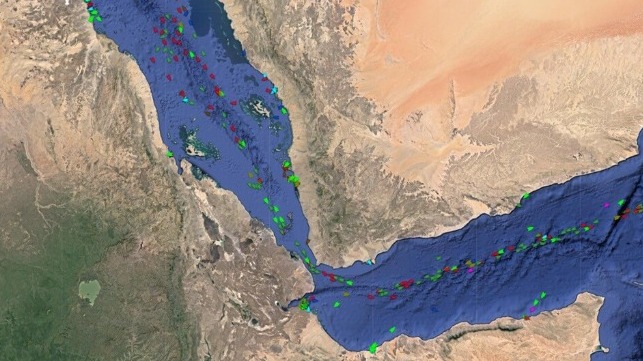
As the shortest sea route between Asia and Europe, the strait of Bab al-Mandab in the Red Sea is one of the world’s busiest shipping routes. Any vessel transiting through the Suez Canal or to or from the Indian Ocean must pass through this strait. Ongoing attacks by Houthi rebels in Yemen have resulted in great disruption, leading shipowners to avoid the area and divert their vessels via the longer Cape of Good Hope route. The diversion is estimated to add approximately 14-25 extra days to a voyage in comparison to the traditional Red Sea route.

The Red Sea attacks have serious political and commercial considerations, from disruption to global supply chains and the impact on consumers, to legal implications for the shipping industry. This article highlights some contractual issues that those in the shipping industry should be aware of in relation to this crisis.

Rights of the carrier: what do the contractual clauses say?

Deviation

Under the Hague/Hague Risby rules – international conventions governing the sea transportation of goods - a carrier is allowed to make a deviation from the agreed route to save life or property at sea. The charterparty may also incorporate an express liberty clause, which gives the carrier the right to deviate from the contractual voyage to another route, and to move containerized goods from one vessel to any other port.

The terms of the relevant charterparty should be checked to determine whether they permit deviation, and to what extent. In general terms, a deviation must be reasonable if the carrier is to avoid liability for any losses that result. In the context of the Red Sea attacks, the carrier will have to demonstrate that it was necessary for the safety of the vessel or cargo. 

However, it is important to understand that just because a charterparty allows the ship to change its route, this does not automatically mean that the bills of lading – documents issued by the carrier to the shipper in respect of the goods being shipped - also permit these changes. Therefore, the documents should be checked carefully.

Force majeure / Frustration

Since the attacks began, a number of international carriers have invoked force majeure (FM) provisions due to the increased danger of the situation, making it unadvisable to take the Red Sea route. FM provisions arise when parties are relieved from performing their contractual obligations as a circumstance beyond their control has arisen. In this case, many voyages on the Suez Canal/Red Sea route are being terminated or rerouted via the Cape of Good Hope.

The closest English law equivalent to force majeure is frustration. This refers to where an unforeseen event occurs after the contracts have been agreed, affecting the ability to fulfil the contract. A party claiming frustration will have to prove that the Red Sea situation has made further performance impossible, illegal, or radically different from that which was originally contemplated.

The scope and effect of these clauses will depend on the law that governs the contract. For example, in English law, it is unlikely that the defence of frustration will be available as it is usually necessary to demonstrate performance of the contract has become impossible: not just more difficult or expensive. Due to the alternative Cape of Good Hope route, contracts can still be performed.   

Safe port

The charterparty may incorporate a safe port warranty, which requires the charterer to only order the ship to a port with both physical and political stability. This warranty has a carve-out for ‘abnormal occurrence’. Insofar as the Red Sea attacks can be considered foreseeable, they may arguably not be considered an abnormal occurrence.  

If a time charterer nominates a port that is deemed unsafe, the owner is entitled to reject this. If the port is safe when the charterer nominates it but becomes unsafe afterwards, the time charterer can nominate a new safe port.  

By contrast, a voyage charterer may not be able to change the route without the owner’s consent. Instead, the charterparty will normally state that the vessel is to proceed to the nominated port, or as near to it as she ‘may safely get’.

With the Red Sea attacks, there is a safe route available and so the risk of an unsafe port can be avoided by taking the longer Cape of Good Hope route.

War risks

A charterparty will usually incorporate an express provision allowing for cancellation or termination in the event of an outbreak of war or war-like situation.

The Red Sea attacks may be covered by clauses addressing ‘hostilities’ and/or ‘warlike operations’. Generally speaking, if a vessel is being ordered to proceed to a war risk area, the war risks provision may provide that the owner has the right to refuse the order. It will be for the Master, in his reasonable judgment, to decide whether the vessel, cargo, and crew are likely to be exposed to war risks.

However, some charterparties may not allow the owner to refuse orders if war risk insurance is available. The war risk clauses can also affect whether the safe port provision applies and, unless the charter says otherwise, hire may continue to run during delays caused by war risks.

If the war risks clause is invoked and the cargo is discharged at a different port, the owner may be entitled to additional freight depending on the charter terms. Some war risks cover incorporates costs for detention or diversion. 

If charterers send the ship through a high-risk war zone, standard insurance cover might not be enough, and additional insurance, with extra fees, might be needed. While owners usually pay the standard insurance fees, who covers the extra insurance costs depends on the charter agreement.

The Red Sea as a high-risk area

On 18 December 2023, the Joint War Committee (JWC) issued an amendment to its Listed Areas, widening the area in the Red Sea that it deems high risk. Vessels must notify their insurers when sailing through such areas and pay an additional premium. Depending on how the situation develops, there may be concerns as to whether ports in the Listed Areas remain safe, whether such ports fall within the trading limits in the charterparty and whether the owners are entitled to deviate to another port.

Where the parties to the charterparty agree that the cargo should be delivered at an alternative port, it is important to check whether the bill of lading names a specific discharge port. If the bill of lading does not allow for discharge at a port other than the one specified, delivery at an alternative port may constitute a breach of the bill of lading contract.

Looking ahead

It is clear that the Red Sea attacks have presented legal, commercial, and practical challenges for carriers, charterers, and cargo interests. Those potentially affected should keep a close eye on developments and should review their contracts closely to determine their rights and liabilities in this context.

Rosie Goncare is a partner in the marine, trade and energy team at Hill Dickinson.

Reema Shour is a senior knowledge lawyer at Hill Dickinson.

The opinions expressed herein are the author's and not necessarily those of The Maritime Executive.


Danish Shipping Says Plan to End International Registry Would be Disastrous

Danish flag
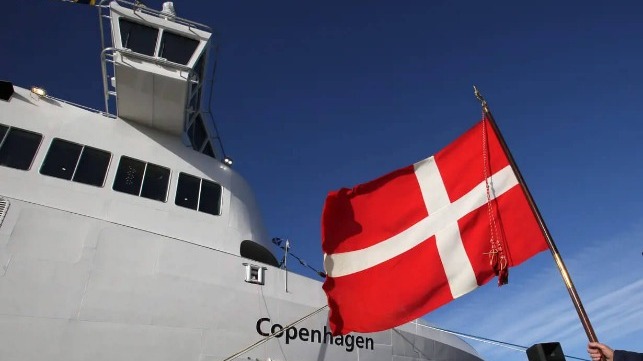
Danish shipping group says ending International registry would be the end of Danish seafarers (Danske Rederier)

PUBLISHED FEB 20, 2024 8:04 PM BY THE MARITIME EXECUTIVE


Danske Rederier, one of the oldest and most influential shipping trade groups, has come out swinging against a proposal that would eliminate tax benefits for Danish seafarers as part of a broader scheme to overhaul the government support provided to businesses. The group called the proposals that were presented to the Minister for Industry, Business and Financial Affairs Morten Bodskov a “disaster for Danish shipping.”

A committee of experts was tasked with examining the benefits and cost-saving alternatives for the government. Among the steps they listed in the proposal that they believe could save the government more than $300 million in direct subsidies, they called for the elimination of the Danish International Ship Registry. The scheme was launched in 1988 with broad government support to ensure the future of the Danish seafaring tradition says Danske Rederier highlights. Among the provisions, seafarers whether Danish or foreign citizens, do not pay taxes on their wages earned on Danish ships.

"It will be a disaster for Danish shipping to abolish the DIS scheme," said Anne Steffensen, CEO of Danske Rederier. “It is basically about maintaining Denmark as a large maritime nation with thousands of employees in Denmark. Abolition of the DIS scheme will lead to significant and massive flagging of Danish-flagged ships to neighboring countries and other maritime nations around the world.”

The group recently highlighted that Denmark remains among the top ship-owning and operating nations in the world. As of the start of 2024, they reported while slipping slightly both in operated tonnage and the number of ships under the Danish flag, the country is still ranked tenth worldwide. Danish companies they calculated operated a total of approximately 57.2 million tons, including 22.5 million tons under the Danish flag. This includes 748 ships and more than 100,000 people employed in the maritime cluster, including 7,500 Danish seafarers.

The group cites that the report did not establish a cost saving for the elimination of the benefits for seafarers. They also contend that it did not consider the broader effects for employment ashore and businesses supporting the shipping industry.

“Denmark is a small country, but a maritime superpower,” said Steffensen. “Danish owned or operated ships transport goods to and from all corners of the world.” 

The abolition of the benefits would result in significantly fewer Danish sailors and fewer ships under the Danish flag. Danske Rederier further concludes that without the DIS scheme, the Danish flag would not be competitive compared to other countries, such as Norway, Germany, and Singapore. They predict in the short-term Danish sailors would continue to sail under the flag of a neighboring country. In the longer term, they however said there will be fewer and fewer Danish sailors until they disappear completely.

“The DIS scheme is a crucial part of the framework conditions that make it possible for Danish shipping companies to fly the ships under the Danish flag, employ Danish seamen, and at the same time be competitive on the global market," says Steffensen.

They are calling strongly on the government and parliament not to implement the proposal to eliminate the DIS scheme. In addition to jeopardizing the maritime industry, they conclude it would also undermine Denmark’s role in setting the agenda on key issues such as the fight for ambitious global climate rules. 


Shipyard Worker Dies at Halifax Shipyard in Workplace Accident

Halifax Shipyard
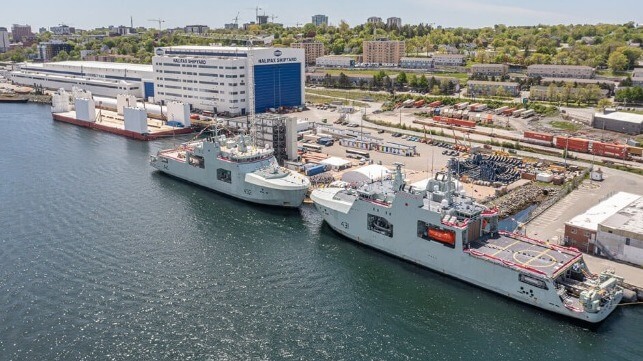
The accident took place at the Halifax Shipyard (Irving Shipbuilding file photo)

PUBLISHED FEB 20, 2024 4:25 PM BY THE MARITIME EXECUTIVE


There was an industrial accident on Monday at Canada’s Halifax Shipyard operated by Irving Shipbuilding. It is one of Canada’s largest shipbuilders and is heavily involved in government contracting as well as commercial shipbuilding.

“A 43-year-old man was struck by a piece of equipment and pronounced deceased at the scene,” the Halifax Regional Police said in a statement. “The investigation is in the early stages and investigators from the Integrated Criminal Investigation Division and the Department of Labour are investigating the incident.”

According to the reports, the police were called to the shipyard located on Halifax Harbor shortly before noon on Monday. The company later reported online that the afternoon and night shifts at the yard were canceled for the day while it said it would be providing onsite and remote counseling services. 

A Labour Department spokesperson confirmed to the news outlet CBC that as is a standard practice in these types of incidents a stop-work order was issued. They told CBC that the equipment involved in the incident would be undergoing a mechanical assessment.

“Irving Shipbuilding is saddened to share that a workplace accident occurred at the Halifax Shipyard on the morning of February 19, resulting in the loss of one of our teammates,” the company said in its statement while asking for privacy for those involved.

The company has a large building hall located in the harbor which it invested in the last decade to modernize the facility. The hall measures over 1,300 feet in length and is more than 150 feet in height to support indoor large shipbuilding operations.

“We are cooperating fully with the ongoing investigation being conducted by the Department of Labour,” Irving said in its statement. The company said it would also “learn from this tragedy.”

Unifor, the union for the shipyard workers also released a statement saying it was “mourning the tragic loss.” The union said it has trained investigators and health and safety experts who would work alongside the investigation and who also ensure proper steps are taken following a workplace injury or death.