Wednesday, March 27, 2024


A Global Carbon Tax on Shipping is Coming, Says ABS Chairman and CEO

ABS
Global Regulatory Framework is Essential for a Global Industry, Says Christopher J. Wiernicki in CERAWeek Appearance

PUBLISHED MAR 26, 2024 11:16 AM BY THE MARITIME EXECUTIVE


[By: ABS]

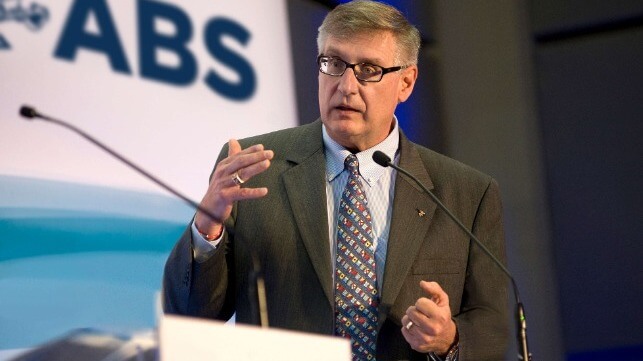
A universal, global carbon tax on shipping is coming, as alternative blue fuels made with carbon capture emerge as a critical step in the energy transition at sea. That was the message from Christopher J. Wiernicki, ABS Chairman and CEO, during an appearance at the CERAWeek energy conference.

“We need to recognize that there is an intermediate step in the energy transition,” he said. “Last year the conversations were focused on going from oil to a green fuel economy. Today, we are seeing the emergence of the blue economy that addresses carbon management, carbon capture, carbon pricing and carbon credits and offsets, as an essential stepping-stone. The EU has recognized the importance of this intermediate economy with Fuel EU Maritime, and I believe you will see a universal carbon tax emerging as the IMO and the EU will synch together.” 

Effective regulation under one global regulatory framework is going to be key to success in the energy transition at sea, he said.

“Commercial gravity alone will not get us to Net Zero by 2050. We will need ambitious measures, both carrot and stick. Fuel EU Maritime is one example, and a carbon tax is another. But a global industry needs a global approach, which is why IMO regulations are foundational for shipping. IMO has given us an investable roadmap with outcomes and signposts along the way. It has also introduced the shift from tank to wake to well to wake, which puts a completely new perspective on fuel choices when looking at lifecycle emissions performance. Even though the IMO is being challenged by regional lawmakers, everything really starts and stops with the IMO.”

Shipping’s transition is still only just beginning, he added, with much still to be decided in the coming decade of change.

“The next 10 years will determine what is desirable vs what is doable,” said Wiernicki. “It is way too early to declare fuel winners. The fuel technology readiness timeline will be incremental and go through a short game, a mid-game and a long game. Pace and speed will be driven by the boundary conditions of safety, fuel availability and scalability of infrastructure and, more specifically, by the cost of the electrolyzer and the cost of the carbon capture. We know these are the technologies with transformational potential, along with electrification and battery energy storage, green hydrogen and nuclear energy.”


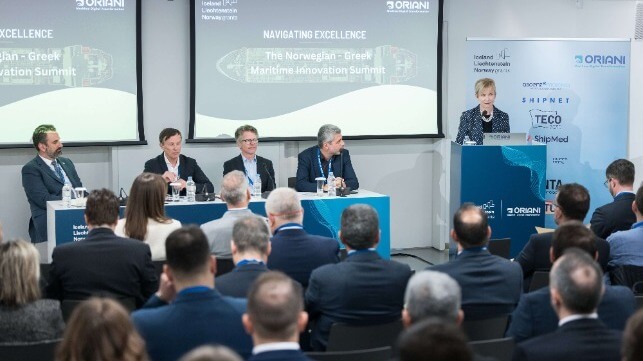
Navigating Excellence: The Norwegian – Greek Maritime Innovation Summit

Oriani Hellas
Ambassador's speech

PUBLISHED MAR 26, 2024 1:47 PM BY THE MARITIME EXECUTIVE


[By: Oriani Hellas]

A few Norwegians in Athens are always good for the booming Greek tourism economy, but what happens when more than a dozen carefully selected Norwegian maritime technologists come to Athens to share insights, connect with the customers, and participate in some insightful panel discussions? That happened just a few days ago in a unique location for a maritime technology conference.

Oriani Hellas organized, curated, and hosted the event Navigating Excellence: The Norwegian – Greek Maritime Innovation Summit, held on March 13th & 14th at the Museum of Cycladic Art in Athens Greece. The event, supported by a grant from Iceland, Liechtenstein, and Norway through the EEA Grants Greece 2014-2021, in the frame of the Innovation, Business Development and SMEs program, brought together industry leaders, innovators, and stakeholders to explore digital and technological solutions that are and will transform the maritime landscape.

A dynamic mix of startups and global leading companies took center stage, showcasing the diversity and depth of Norway's maritime technology landscape. From promising startups with fresh perspectives, to established industry players, the presence of these innovative entities led to a fruitful exchange of ideas and expertise.

As Her Excellency Ms. Lajla Brandt Jakhelln, Ambassador of the Royal Norwegian Embassy in Athens, pointed out opening the event...

“The strong advantage for European economies has always been our ability to innovate and we must not forget this advantage in order to take the European shipping industry to the next level. Competition from Asia is fierce. Finding the right technology is crucial. These technologies again need the support of digitization and big data...” Shipping is going through a period of MASSIVE change, at a much faster rate than ever before. Technology is being developed rapidly and while other industries are changing and adopting these tools, shipping is still traditional, and needs to catch up fast to ensure they remain competitive. We need technology, not only from a business perspective, where processes / people can become more efficient and more productive, but also to increase safety, to take better care of our crews, and to do everything we can to help save the planet.

Regarding the “unique location” which was the Museum of Cycladic Art in Athens, Philip Nielsen the Co-founder of ORIANI HELLAS, mentioned: “...This building (the museum) has the aroma of the sea, of the Aegean Sea where Greek shipping began thousands of years ago. The Cycladic civilization placed human beings at its center. Thissame heritage, these same principles and same values are carried by the successful Greek shipping of TODAY, where human is still at the center for everything, we do...”

Outcomes of the event:

Day 1:

Session #1 focused on "Vessel Performance", moderated by George Teriakidis, Area Manager at DNV Maritime. Topics discussed:

  • Hull Maintenance and its Role in Performance Optimization – Age Hojmark | CEO of Shipshave highlighted the critical importance of hull maintenance strategies in enhancing vessel performance, advocating for proactive approaches to achieve operational flexibility, cost reduction, and emission mitigation.
  • Smarter Hull Management - a Proactive Approach - Manolis Levantis | Global Data Science Team Leader at Jotun, presented the benefits of proactive approach in hull management, fouling prediction algorithm and Jotun’s proactive solutions.
  • “Practical Approach to Digital performance management” - Darri Gunnarsson | General Manager at Ascenz Marorka presented the value of performance monitoring, including real-life case studies and an overview of Ascenz Marorka’s solution.

Session #2, "Fuel Optimization," moderated by Mike Konstantinidis, Managing Director at ZeroNorth A/S, continued the discourse on maximizing fuel efficiency and reducing environmental impact. Topics addressed:

  • “Hydrogen Fuel Cells - a feasible pathway to zero emission ship operations” - Cristian Skajem | Head of Communications, Teco 2030 presented the core technology of TECO 2030’s Hydrogen Fuel Cells and ongoing projects, plans and prospects of the company.
  • “Quantifying Environmental Impact” - Tonje Sellevoll Imafidon | Commercial Director at Ecoxy AS presented the necessity for shipping companies to address their environmental impact, offering a solution to provide reliable emissions measurements data crucial for emissions reduction efforts.
  • “FuelOpt Solution”- Richard Engelhart Bjercke | CCO at Manta Marine Technologies focused on FuelOpt, an on-board hardware solution to optimize fuel consumption based on vessel data from multiple sources, by fixing the speed and consumption settig and taking out continuous user changes.

The day concluded with Session #3 on "Big Data," moderated by Dr. Ioannis Lagoudis, Associate Professor at UNIPI, exploring the transformative potential of big data in maritime operations. Panel topics:

  • “Using Data to improve efficiency: Drydocking and beyond” - John Wills | VP - Product Management at Shipnet, presented the untapped value of data in improving efficiency for the maritime industry and as an example, showed the audience the value of data management in optimizing their Dry-Docking procedure.
  • “Simplify, Improve and Optimize your IT Solutions.” - Where Rolf Nøstdah | Sales Manager at The Ship AS, presented their solution for improved data registration and information access from various systems in a simpler and more streamlined way, with a focus on the difficult to track area of in-port operations.
  • “How to build a solid digital strategy by leveraging your fleet’s data.”- Where Dionysis Asimakopoulos | Growth Manager at Kongsberg Digital, presented the crucial role of data collection in establishing a digital strategy for a shipping company, enabling enhanced safety, flexibility, and long-term viability.

One important element discussed during the event was that of collaboration, not only between vendors and clients but also among different vendors themselves. As John Vandoros, the General Manager of ORIANI, said regarding how digitalization with take-off in Greece; “The answer is through developing relations and getting people face to face to discuss the real issues of the end user...”. Meaning that, the most effective way to understand and resolve today’s complex maritime issues is by cultivating relationships and enabling a comprehensive understanding of the shipping companies’ requirements. As he also pointed out: “Frank discussions and realistic promises by the software companies (to their clients) will build trust and allow time for them to deliver the right solution”. In other words, by fostering a culture of transparency and realistic expectations, software companies can build strong relationships with shipping companies. This will allow them the necessary time and space to develop and deliver solutions that are truly tailored to today's market needs.

Day 2:

Session #4 on "Crew & Training" with moderator Katerina Skourtanioti, Managing Director at VENLYS, emphasizing the importance of human capital in maritime operations and its efficient training. Notable presentations included insights on:

  • “Next Generation Safety Culture Program” - Didrik Svendsen | CEO, Sayfr presented how SAYFR has developed a state-of-the-art platform to cultivate behaviors - all based in science. He discussed the importance of data-driven interventions and how Value Propositions for the Culture Change Processes have changed dramatically over the last few decades.
  • “Gamification Training for the Industry.” - Felix Gorbatsevich | CEO of PaleBlue explored the application of gaming engagement principles to workforce training and development, emphasizing the importance of enjoyable, interactive, and effective eLearning methods amongst a variety of digital training options, including Digital Interactive Training and Virtual Reality.
  • “Data in action: optimized decision making in crewing” - Agapitos Diakogiannis | CEO & Co-founder of Seafair presented his solution and the value of digital approach to crew management, emphasizing how systems should serve humans and not the opposite.

And closing, Session #5 "Crew Health & Safety" with moderator Constantinos Triantafyllou, the Head of Strategy & Development at HELMEPA, outlined the importance of our seafarers’ safety and healthcare in efficient maritime operations.

  • “Enhancing Maritime Safety with Dimeq Solutions” - Øystein Bondal | CEO of Dimeq presented his wearable sensor that connects to a smart platform with Man Overboard detection, location communication and a safety system that could lead to the transition to “smart vessels”.
  • “Digital Management of ships medicine chest”- Geir Østrem | CEO of ShipMed AS, addressed the challenge of ensuring vessels always maintain adequate and compliant medical supplies and equipment onboard, regardless of flag, voyage, or crew size. ShipMed’s solution can proactively manage and document compliance, keeping vessels ahead of existing regulatory requirements.
  • “Pioneering Maritime Healthcare with Data-Driven Innovation” - Laura Benzonana, PhD| CEO at Health4Crew, explained how shipping companies can take a proactive rather than a reactive approach to crew health and wellbeing, and how by choosing the right systems, you are able to access and analyze crew health data quickly in the event of a medical emergency.

As the experienced Capt. Dimitris Aslanoglou from Eletson Corporation wisely pointed out at the event’s closing remarks “...happier crews are safer crews...”.

To conclude, this gathering was not only about Norwegian companies showcasing maritime digital solutions. The summit provided Norwegian representatives the opportunity to gain firsthand knowledge of the intricacies of the Greek shipping industry. Likewise, Greek shipping executives had the chance to gain insights from Norwegian maritime solutions and operations through case studies and new technologies. An environment was created where both could engage in constructive dialogue and gain a deeper understanding of each other's operational dynamics.
 

UN, Aid NGOs Dismiss Biden Administration's Floating Pier for Gaza

biden
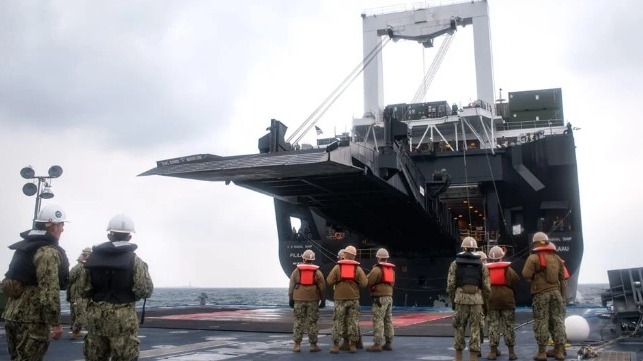
A Military Sealift Command ro/ro conducts an offload at sea for a Joint Logistics Over the Shore (JLOTS) exercise (USN file image)

PUBLISHED MAR 25, 2024 7:05 PM BY THE MARITIME EXECUTIVE


Aid agencies and UN officials have panned the Biden administration's plan to build a temporary pier in Gaza for emergency relief, arguing that trucking from Egypt would be more efficient - and that the same goods are already waiting on trucks at the border. 

“When I read about the pier, my reaction was: really?” Deepmala Mahla of CARE International told Devex. “First air drops, and now a floating pier, all when we have hundreds and thousands of [trucks with] food and other required material just miles away from the border, all ready to get in?”

According to Mohammed Abdel-Fadeil Shousha, governor of Egypt's North Sinai province, there are currently about 7,000 aid trucks waiting to transit an Israeli-operated checkpoint and enter Gaza from the south. The Israeli government has clamped down on aid truck transits for weeks, and it recently cut off all Northern Gaza access for UNRWA, the UN Palestinian aid agency. Israel accuses UNRWA of harboring members of terrorist group Hamas. 

UN Secretary-General Antonio Guterres has called on Israel to allow more aid into Gaza in order to head off an impending famine. 

"The only efficient and effective way to move heavy goods is by road. It requires an exponential increase in commercial goods," said Guterres on Sunday, speaking during a diplomatic trip to Cairo. 

Maritime transport can move far heavier goods than road transport can, but the volume is dependent upon port infrastructure. Since Gaza lacks commercial seaport infrastructure within its own borders, and its borders are closed, the White House has organized a sealift effort to deliver aid via a novel maritime route. The U.S. Navy, U.S. Army and Military Sealift Command will install a floating causeway and a receiving platform for lightering off Gaza's coast. This Joint Logistics Over The Shore (JLOTS) operation is in motion and should be in place within 60 days. No American boots will touch the ground, the White House insists. The total cost has not been released.

Commercial port infrastructure is already available and could be utilized, aid advocates say, if Israel would allow final-mile trucking past the land border. The full-service container terminal at Port Said is just four hours from Gaza, and the small multipurpose port of Arish is less than an hour from the crossing - but both are on the wrong side of the border. 

"[The food crisis is] not due to the lack of supplies, and it’s not due to the lack of partners who want to bring them in," Mercy Corps VP of Policy Kate Phillips-Barrasso told Devex. "It’s entirely due to the conditions that have been set with the entry of aid in through those land crossings — some of which, I might add, would not be different than the aid that would enter through a maritime corridor."

The decision to limit truck crossings lies in part with Israeli Security Minister Itamar Ben Gvir. In public comments, Ben Gvir has advocated restricting food and medical aid deliveries to Gaza until after Hamas agrees to release its remaining Israeli hostages. In late February, after a failed truck convoy operation, he argued that allowing humanitarian aid to enter the Gaza Strip is "madness" until the last Israeli abductees are safely returned. 

END LIVE CARGO SHIPPING

Australia Reports Large Number of Cattle Deaths Aboard Livestock Carrier

livestock carrier
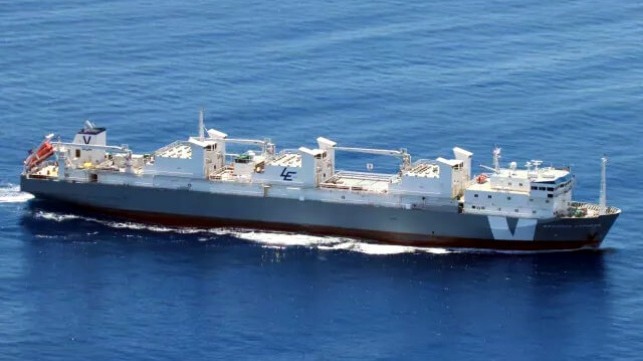
The deaths were voluntarily reported to Australian authorities after a trip to Indonesia (Vroon file photo)

PUBLISHED MAR 26, 2024 4:40 PM BY THE MARITIME EXECUTIVE


Australian authorities are investigating a large number of cattle deaths aboard a live export vessel, the latest incident that yet again puts focus on exports of livestock by sea. Animal rights groups have long called for the end to all live exports and coincidentally today a new report again highlighted the perceived issues in the trade.

By law, exporters must report to Australian authorities when mortality rates exceed half a percent of the shipment or three animals. The Australian Department of Agriculture, Fisheries and Forestry (DAFF) acknowledges it received a voluntary notification of livestock moralities aboard livestock carrier Brahman Express, which is currently on its return voyage to Australia. Unlike many livestock carriers, the vessel which is operated by Vroon, based in the Netherlands, was purpose-built in 2002 versus the older, converted ships. Registered in Luxembourg, the vessel is 5,600 dwt.

Shipping records show the vessel left Darwin on March 15 and was in Indonesia from March 19 to 24. After making a stop in Singapore, it is returning to Darwin where it is expected at the end of the month. The ship appears to regularly run the route between Australia and Indonesia, and although it was not reported how many animals were aboard, the vessel has a capacity of around 4,500 feeder cattle or 2,200 heavier-weight cattle.

“Prior to departure, the department undertook pre-export inspections to ensure that the livestock met requirements under the Export Control Act 2020 and importing-country requirements,” said DAFF in the statement. It added that although there is no suggestion that exotic animal disease is involved, it is investigating the incident as per normal procedures and as a matter of priority.

DAFF did not reveal the number of moralities, although Bloomberg quoted a spokesperson from Australian Livestock Exporters Council (ALEC) confirming that at least 100 animals had perished. ALEC added that the initial assumptions show the deaths could have been caused by Botulism, with the affected animals coming from a single property.

Despite the complaints from animal rights groups, live export remains a large trade. It is estimated that in the European Union, the trade amounts to more than $1.5 billion annually. Australia is Indonesia's biggest supplier of live cattle, shipping around 400,000 animals worth around $400 million to the country annually. In February, Indonesia issued permits to import around 650,000 head of Australian cattle this year.

In April last year, New Zealand banned all exports of livestock by sea owing to the rising cases of mortality and in a move intended to protect the country’s reputation for world-leading animal welfare standards. Australian groups are calling for similar regulations but so far Australia while imposing added restrictions on the trade has not stopped it.

The German animal welfare organization Animal Welfare Foundation together with the French environmental organization Robin des Bois, today published a new report highlighting what they called “serious deficiencies and dangers.”

The groups report that the number of licensed carriers is down from 78 to 64 in the EU over the past three years, but they still call the vessels “substandard” and cite overcrowding and other poor conditions. They report that only four of the vessels licensed by the EU were built for the trade while the others were converted after around 30 years of service. They calculate the average age of the carriers is 43 years and said half the vessels are in higher risk registries, ranked as black flags by the Paris Mou. 

The groups said the European Union and Commission must take responsibility.  They are again calling for the European Union to increase regulations and end the trade.


NGO T&E Alleges Carriers Are Profits from EU ETS Overcharging Shippers

EU port
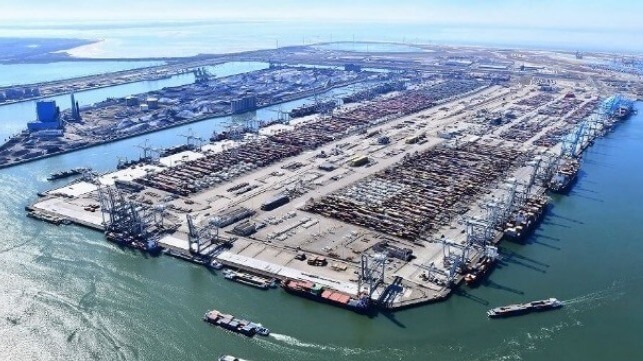
Starting in 2024 the EU introdcued its ETS system to charge shipping companies for their carbon emissions (Rotterdam file photo)

PUBLISHED MAR 26, 2024 5:57 PM BY THE MARITIME EXECUTIVE


The activist NGO Transport & Environment (T&E) issued a new study contending the major shipping carriers are “profiteering from the EU carbon emission charges,” introduced at the beginning of 2024. They are claiming the surcharges introduced by the carriers are more than the actual cost to the shipping companies from the new measures, while the major shipping companies cited in the report quickly responded saying the group’s study used inaccurate and incomplete data.

The EU became the first major region to impose fees on the shipping lines for their carbon emissions. The highly controversial action that caused a heated political debate was introduced this year and is being phased in over the next few years. Initially, the fee is being imposed on 40 percent of carbon emissions and steps up to 70 percent and then 100 percent in 2026.

Major carriers responded by introducing a surcharge fee for all shipments into the region. The carriers have said they would continue to access the fees and update them quarterly to reflect the actual prices charged by the EU and their experience with the costs of the ETS. 

T&E however analyzed 565 voyages from 20 different ships from Europe’s four largest carriers, Maersk, MSC, CMA CMG, and Hapag-Lloyd. While the report recognizes that the expenses of each voyage fluctuate, T&E contends that in 90 percent of the voyages it analyzed the carriers are charging customers more than the actual cost of the EU ETS. 

“Far from avoiding the ETS, shipping companies appear to be profiting from it,” alleges the report. They contend that Maersk is averaging a profit of as much as €60,000 per voyage while MSC realizes an average of €25,000, Hapag-Lloyd €23,000, and CMA CGM €14,000. They said that the individual profit may not be that high on a voyage while alleging on one trip Maersk was likely to make €325,000 extra from the fees.

Maersk responded saying the report is flawed and uses inaccurate and selective data. They called the methodology “flawed,” for the report while noting that the uses outdated surcharge estimates. The price of carbon has not been announced but T&E said in its footnotes that it used a “conservative estimate” based on an official carbon price of €90, which is higher than the current ETS price of €64.95.

“Economies of scale mean the shipping business can absorb pretty large price shocks. The Red Sea disruption is pretty much as bad as it gets and global trade still hasn’t ground to a halt. The ETS is peanuts in comparison,” said Jacob Armstrong in defense of the new policy. He concluded that “Cost is not a barrier to shipping decarbonization when the most ambitious green measures would add just cents to most consumer goods.”

Further, he seeks to dissuade the argument, especially of southern European ports, that shipments would be diverted to transshipment ports across the Mediterranean to avoid some of the fees. During the formulation of the ETS system, special consideration was taken into account to designate transshipment ports.

Armstrong responds, “Southern European governments are warning that the ETS will cost them business by ships evading their ports, but why would they if they’re making money from it?” 

He also argues that shipping costs have a marginal impact on the final cost of goods. He contends that this permits the carriers to charge the surcharges without fear from customers. 

T&E was a strong advocate for the EU ETS saying that the initiatives did not go far enough and needed to be faster while they argued that transportation overall is the slowest sector in decarbonization. In this report, T&E concludes that even the most ambitious climate measures would add just cents to most consumer goods.

The shipping industry recognizes that carbon fees are emerging and have called for a universal approach as opposed to piecemeal in individual jurisdictions. ABS Chairman and CEO  Christopher Wiernicki, concluded after the IMO's MEPC meeting last week that a universal, global carbon tax on shipping is coming. The industry and major carriers are working to adapt to the new rules and incorporate them into their operations. Carriers are still working to incorporate the costs into their operations and have promised to review and adapt to the systems.


India Joins Chorus of Support for Philippines' Maritime Sovereignty

CCG
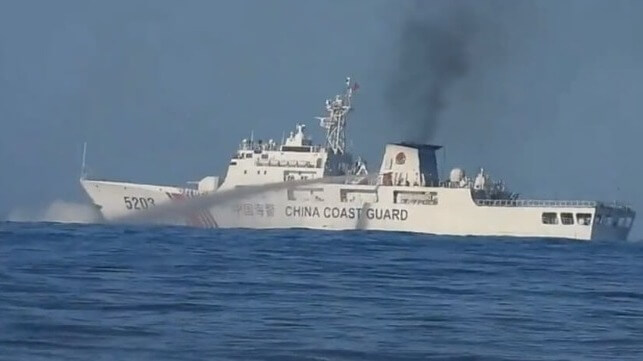
A China Coast Guard cutter deploys its water cannon to ward off a Philippine supply convoy (Philippine Coast Guard)

PUBLISHED MAR 26, 2024 6:53 PM BY THE MARITIME EXECUTIVE


India has joined the chorus of support for Philippine maritime rights in the South China Sea, and China is pushing back. 

On Tuesday, top Indian diplomat S. Jaishankar visited Manila to express firm support for the Philippines' sovereignty and to explore opportunities for defense cooperation. 

"It is essential that India and the Philippines cooperate more closely to shape the emerging world," Jaishankar said at a press conference.  "It's natural today that two countries whose trust and comfort is growing so rapidly that we will look at various new areas of cooperation. And certainly defense and security is one of them."

The Philippines is ordering India's BrahMos supersonic anti-ship missile system, and deliveries are expected to start as early as this month

Manila has sharply criticized China for its interference in the Philippine exclusive economic zone. The two sides' coast guards and fishing fleets often face off at disputed reefs, particularly at Second Thomas Shoal, where the Philippine military maintains a small garrison to prevent Chinese incursions. Just last weekend, Philippine mariners were injured when the China Coast Guard used water cannons to turn back a supply convoy headed for this outpost.

The U.S., EU, Japan, and many Western governments have expressed support for the Philippines' claims, and have criticized China's desire to annex a segment of the Philippine EEZ. China, for its part, has said that it would prefer to negotiate with the Philippines alone, without the support of its allies. 

“Maritime disputes are issues between countries concerned and any third party is not in a position to interfere,” Chinese Foreign Ministry spokesperson Lin Jian said Tuesday, in reference to India's statement of support. “We urge the relevant side to face facts of the issues of the South China Sea, respect the sovereignty and maritime interests of China and the efforts made by the regional countries in upholding peace and stability in the South China Sea."

China claims the vast majority of the South China Sea as its own, including Second Thomas Shoal and other features within the Philippines' 200-nautical-mile EEZ line. In 2016, the Permanent Court of Arbitration in the Hague ruled that China's claims were not consistent with international maritime law, and it issued a judgement in favor of the Philippines. China did not participate in the proceeding and has ignored the outcome. 


New Video Shows Damage From China Coast Guard's Water Cannon Attack

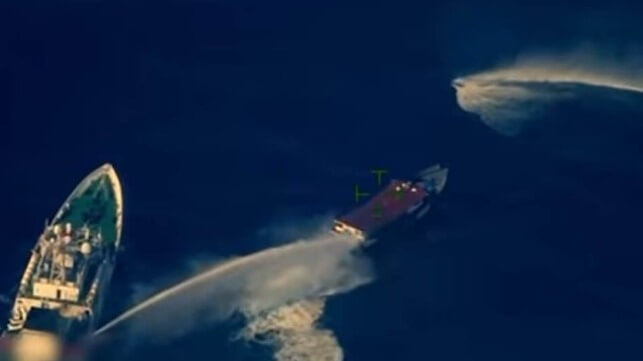
China Coast Guard cutters water cannon a Philippine supply boat
Image courtesy Armed Forces of the Philippines

PUBLISHED MAR 25, 2024 10:50 PM BY THE MARITIME EXECUTIVE


A new video obtained by media outlet GMA shows the extensive damage that the China Coast Guard inflicted on a Philippine supply boat near Second Thomas Shoal last weekend. The Unaizah May 4 was hit repeatedly by high-power water cannons, breaking the windows on the bridge, soaking the upper deck level and injuring multiple crewmembers. It is the second time that Philippine servicemembers have been injured by Chinese forces at the reef.

On Saturday morning, CCG cutters and Chinese maritime militia vessels worked to block a convoy consisting of two PCG cutters and the supply boat Unaizah May 4, according to the Philippine Coast Guard. The Chinese vessels used water cannon to disable the Unaizah May, and video shows powerful water jets blasting through the upper deck level of the supply boat, lashing the crew and jumbling their cargo. The footage shows extensive interior damage, including serious damage to the pilothouse. 

The supply boat required assistance from a nearby Philippine Coast Guard cutter, and it did not complete its mission. (A RIB launch did carry six personnel and a small quantity of cargo to the destination, the outpost on Second Thomas Shoal, according to the PCG.)

The altercation drew protests from Manila. The Philippine Department of Foreign Affairs summoned China's ambassador on Monday to convey its "strong protest against the aggressive actions undertaken by the China Coast Guard." It also demanded that China withdraw its vessels from the area around Second Thomas Shoal, which is within the Philippine exclusive economic zone.  

"China's aggressive actions call into question its sincerity in lowering the tensions and promoting peace and stability in the South China Sea," the ministry said in a statement. 

China claims the vast majority of the South China Sea as its own, including Second Thomas Shoal and other features within the Philippines' 200-nautical-mile EEZ line. In 2016, the Permanent Court of Arbitration in the Hague ruled that China's claims were not consistent with international maritime law, but Beijing refuses to recognize the court's legitimacy. 

“If China is not afraid to state its claims to the world, then why don’t we arbitrate under international law?” Philippine defense minister Locsin Teodoro told reporters in Manila on Monday. “No country believes [their claims]."

 CANADA

After Long Battle, Davie Secures its National Shipbuilding Strategy Order

Davie Shipyard icebreaker
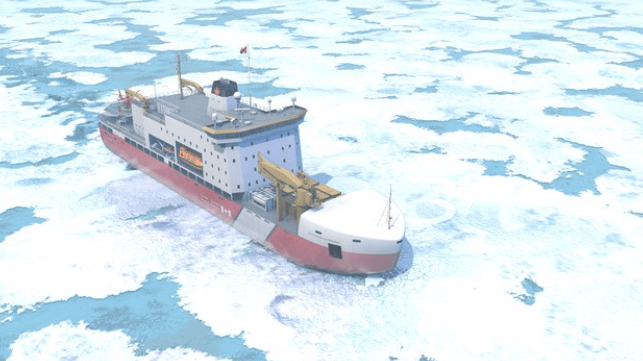
Illustration courtesy Davie Shipyard

PUBLISHED MAR 26, 2024 10:53 PM BY THE MARITIME EXECUTIVE


Davie Shipbuilding has secured its first contract under Canada's National Shipbuilding Strategy (NSS) for the design of the Canadian Coast Guard's six-ship Program Icebreaker series. The award vindicates Davie's decade-long effort to become a designated NSS shipyard and secure a share of the program. Details on delivery timeline and vessel cost have not been released.

"The new fleet will be symbolic of Canada’s Arctic presence and crucial to keeping our country open for business year-round," said Public Services Minister Jean-Yves Duclos in a statement.

The contract gives Davie the green light to set up project management and design offices for the Program Icebreaker, launch recruitment efforts to build its team, and begin talks with subcontractors.

Chantier Davie was inducted into the National Shipbuilding Strategy in early 2023, following a three-year period of negotiations on the terms of an umbrella agreement. The yard and the Canadian government have debated over whether the agreement's details may be released

The deal's initial C$8.5 billion phase includes six icebreakers and one polar icebreaker for the Canadian Coast Guard, plus two hybrid ferries. It represents a substantial part of the Canadian Coast Guard's fleet recapitalization program, and is urgently needed to replace aging and hard-to-maintain tonnage for Arctic operations.

The NSS was conceived in the late 2000s as a way to smooth out the boom-and-bust cycles of fleet renewal and provide a steady workflow to shipbuilders. In 2012, Irving Shipbuilding in Halifax won the program's larger "Combat" package, and Seaspan in Vancouver secured the "Non-Combat" package. 

Quebec-based Davie submitted bids for the NSS, but was not initially selected. It still sought ways to compete, and in 2019, the Canadian government reopened the program to new participants. The new tender sought yards qualified for icebreaker construction and ultimately selected Davie.

Davie's previous icebreaker contract - the conversion of three icebreaking offshore vessels for the Canadian Coast Guard - cost more than forecast and delivered later than expected, according to Canadian media. Going forward, the company has the support of icebreaker specialist Helsinki Shipyard, which Davie purchased last year. 


Decreases in social disparities in air pollution during lockdown suggest the need for sustainable policies


POHANG UNIVERSITY OF SCIENCE & TECHNOLOGY (POSTECH)
Reducing social inequities in air pollution exposure resulting from lockdown policies 

IMAGE: 

REDUCING SOCIAL INEQUITIES IN AIR POLLUTION EXPOSURE RESULTING FROM LOCKDOWN POLICIES

view more 

CREDIT: POSTECH


Is everyone equally affected by environmental pollution? This is the essence of ‘environmental justice,’ a concept that originated in the United States during the 1970s. It revolves around the idea of ensuring fairness and equity in environmental issues, preventing the disproportionate impact of environmental problems on specific groups or regions. The U.S. has made significant progress in reducing air pollution through stringent regulations and policies, turning its attention to addressing social disparities in air quality. However, there remains a gap in environmental justice research in Korea.


A research team led by Professor Hyung Joo Lee from the Division of Environmental Science and Engineering at Pohang University of Science and Technology (POSTECH), in collaboration with the California Air Resources Board, conducted a study on the air pollution impact of lockdown policies in the U.S. during the COVID-19 pandemic. The research aimed to analyze how these policies affected social inequities in air pollution exposures and provide insights for formulating environmental justice policies. The findings were published in the international environmental journal Atmospheric Environment.


Nitrogen dioxide (NO2), an air pollutant emitted from vehicles and industrial activities, serves as a crucial indicator of combustion-related air pollution. The team investigated the influence of lockdown policies on social disparities in NO2 air pollution.


The findings revealed a notable reduction in average NO2 concentrations in California, U.S., by approximately 34% post-lockdown, excluding weather-related influences. Non-urban areas experienced a 17% decrease, while urban areas saw a 50% reduction in NO2 levels, primarily attributed to the significant decline in traffic during the lockdown.


Furthermore, the research team analyzed shifts in social inequity related to air pollution, employing an environmental justice perspective. They identified socially vulnerable groups based on education level and race/ethnicity and assessed their exposure to air pollution, noting a substantial decrease in the disparity from 79% to 37%. This reduction was attributed to the fact that disadvantaged communities in the U.S. are more likely to reside in areas with elevated nitrogen oxide (NOx) emissions from vehicles such as diesel trucks, and in close proximity to roads, distribution centers, and ports. Consequently, these communities were more affected by the reduced traffic during the lockdown. The implementation of lockdown policies to curb the spread of the coronavirus not only resulted in a decline in average air pollution levels but also contributed to a reduction in social inequities linked to air pollution. This highlights the potential for policies regulating NOx emissions from internal combustion engines to lower the average concentration of NO2 and simultaneously narrow the disparity of air pollution exposures.


The team underscores the importance of learning lessons for future air pollution policies from the experiences in California. While the decrease in social disparities in air pollution exposure during the lockdown might be temporary, persistent reduction in these inequities can be achieved through targeted source controls via air policies. This requires a nationwide analysis of social inequities in exposure to each air pollutant and efforts to tackle the specific sources responsible for these disparities.


Professor Hyung Joo Lee stated, "Currently, Korea is primarily focused on lowering the average air pollution levels. He emphasized, “However, the simultaneous reductions of average air pollution levels and social inequities of air pollution are achievable. This can be accomplished by developing policies that incorporate environmental justice principles."


The research was conducted with the support from the BK21 FOUR program of the Ministry of Education and the National Research Foundation of Korea.


The behavior of ant queens is shaped by their social environment


Specialization of ant queens as mere egg-layers is reversible / Queen behavioral specialization is initiated and maintained by the presence of workers


JOHANNES GUTENBERG UNIVERSITAET MAINZ

black garden ant 

IMAGE: 

A BLACK GARDEN ANT QUEEN CARING FOR HER BROOD

view more 

CREDIT: PHOTO/©: ROMAIN LIBBRECHT


The queens in colonies of social insects, such as ants, bees, and wasps, are considered the veritable embodiment of specialization in the animal kingdom. The common perception is that the queen's only task is to lay eggs – and that this attribute is an inherent trait, not influenced by external factors. In contrast, recent research undertaken at Johannes Gutenberg University Mainz (JGU) has demonstrated that in certain ant colonies the social environment can play a crucial role in shaping the behavioral specialization of the queens. "With regard to the ant species we studied, it is social factors that control whether queens become specialized or not. Our findings challenge the widely accepted notion of social insect queens as inherently specialized egg-laying machines," stated Dr. Romain Libbrecht.

The research was conducted by the Reproduction, Nutrition, and Behavior in Insect Societies group at JGU under the supervision of Dr. Romain Libbrecht, an evolutionary biologist. The corresponding paper has recently been published in Functional Ecology. Dr. Romain Libbrecht currently works at the Centre National de la Recherche Scientifique (CNRS) in the Insect Biology Research Institute of the University of Tours.

Concept of insect societies as superorganisms consisting of specialized individuals

It is generally assumed that social insect colonies consist of queens that monopolize reproduction and sterile workers responsible for all non-reproduction-related tasks, such as the care of the brood, i.e., eggs and larvae. Libbrecht's team now questioned this basic assumption. They focused on ant species where the queens found new colonies alone and without the help of workers. "Interestingly, these founding queens are not yet specialized in terms of their behavior at this stage of their lives," Libbrecht pointed out. "They themselves assume all tasks in the nest, such as brood care, to ensure successful production of the first generation of workers."

In their experiments, Libbrecht's group studied the black garden ant Lasius niger that is native to Germany. They found the social environment to be a core factor in determining the behavioral specialization of founding queens. "The introduction of workers in the nests of founding queens suppressed the natural predisposition of the queens to look after their brood themselves. And, conversely, when we isolated queens specialized in egg-laying from their workers, they rapidly reverted to the brood care behavior observed in the case of founding queens, even after many years of specialization."

Revision of the accepted view of the division of labor in insect societies

Libbrecht emphasized that the behavior observed during the study challenges the traditional view of social insect queens as being intrinsically specialized in egg production. Instead, the findings demonstrate that the presence of workers not only triggers the egg-laying specialization of queens but also actively maintains it in established colonies. The discovery of such social control of queen specialization may reshape our understanding of the functioning of insect societies and their division of labor.

Romain Libbrecht was head of the Reproduction, Nutrition, and Behavior in Insect Societies group at the Institute of Organismic and Molecular Evolution (IOME) at Johannes Gutenberg University Mainz from 2016 to 2022. Since 2023, he has been a researcher at the Insect Biology Research Institute at the CNRS of the University of Tours. He is particularly interested in examining how organisms adjust their reproduction, physiology, and behavior in response to environmental conditions.


Related links:


Read more: