Wednesday, March 27, 2024


CRA fires 232 people for falsely claiming $2,000 monthly pandemic benefit

THAT'S ALOT OF GREIVANCES

Canada Revenue Agency

The Canada Revenue Agency has now fired more than 200 people for falsely claiming a federal income benefit during the COVID-19 pandemic.

The CRA says as of March 15, 232 employees "inappropriately applied for and received" the Canada Emergency Response Benefit and have been terminated, an increase of 47 since December.

The benefit, known as CERB for short, provided $2,000 per month to Canadians whose jobs were lost as a result of public health restrictions during the pandemic.

They must repay the CERB funds they received if they have not already done so.

The agency launched an internal review that identified 600 employees for further investigation but not all would have been ineligible for the benefit because some were students or term employees.

The CRA says the case-by-case reviews completed to date confirmed 133 employees properly received the benefit, leaving about 235 files still to be reviewed.

This report by The Canadian Press was first published March 26, 2024.

WORKERS CAPITAL

More domestic investment by Canada's pension funds would strengthen the economy: Brosseau

The co-founder of the firm leading the charge to encourage Canada’s pension funds to invest more at home says that increased domestic investment would strengthen the Canadian economy, and the funds themselves in turn.

Daniel Brosseau, partner at Montreal-based investment management company Letko Brosseau, told BNN Bloomberg that Canada’s pension plans should look at more than just near-term returns when deciding where to invest capital.

“Domestic investments have an enormous impact, which (pension funds) can't see because they're just looking at the returns on their investments,” Brosseau said in a Tuesday morning television interview.

“(They’re) missing out on the economic impact of the investments on the local economy, which is considerably larger… the wellbeing of the pensioners has something to do with the wellbeing of their incomes.”

Brosseau said he acknowledges that the fundamental responsibility of a pension plan is to secure the best returns for those who have paid into it, but added that “the question is then how this responsibility is filled.”

He said the Canadian stock market has outpaced most other emerging global market economies over the past 30 years and has been competitive against U.S. markets in recent decades if the “Magnificent 7” are removed.

“(For pension funds) to say that their ability to fulfil their obligations vis-a-vis their pensioners is dependent on not investing in Canada is a little bit of a stretch,” he added.

Pushback against open letter

Earlier this month, Letko Brosseau wrote an open letter to Finance Minister Chrystia Freeland and her provincial counterparts, urging them to “amend the rules governing pension funds to encourage them to invest in Canada.”

The letter was signed by nearly 100 business leaders, including Rogers CEO Tony Staffieri and Canaccord Genuity Group CEO Dan Daviau, but it has since been opposed by a number of other stakeholders.

Jim Leech, former president and CEO of the Ontario Teachers' Pension Plan, told BNN Bloomberg last week that pension funds must remain independent of government to guarantee the best returns for Canadians.

Brosseau said he finds those kinds of counterarguments to his firm’s point of view “quite constructive,” as they have opened a dialogue and allowed people to examine all sides of the issue.

“One of the objectives of the open letter was to initiate the discussion, and it's a very important discussion for Canada because of the size that this savings pool represents,” he said.

“It's in fact the largest institutional savings pool in Canada, and the only one that can take on the type of long-term equity risk that's required to build the country… we have to pay attention to this.”

'Canada needs a lot of investment'

Brosseau said that Canada lags behind the U.S. and its other G7 peers when it comes to domestic investment of any kind, which has created a competitive disadvantage and hampered Canadian economic output.

“Canada needs a lot of investment. We invest 10 per cent of GDP (gross domestic product) in non-residential investments; that's 30 or 40 per cent less than the U.S. does,” he said.

“For every dollar we invest in startups, the U.S. invests $40. In research and development, we're ranked amongst the lowest in the G7… so Canada has a lot of things to do.”

Brosseau argued that with that in mind, finding reasons to keep investment dollars at home shouldn’t be hard for Canadian pension funds, considering the many economic advantages Canada already has.

“Canada is the largest democratic country in the world by landmass, it's rife with resources, it has a well-educated population and its government and legal systems are sound,” he said.

“So if you can't find a way of making money with that… I don't know.”
Vale to negotiate financing with US government for iron ore briquette plant

Reuters | March 25, 2024 | 

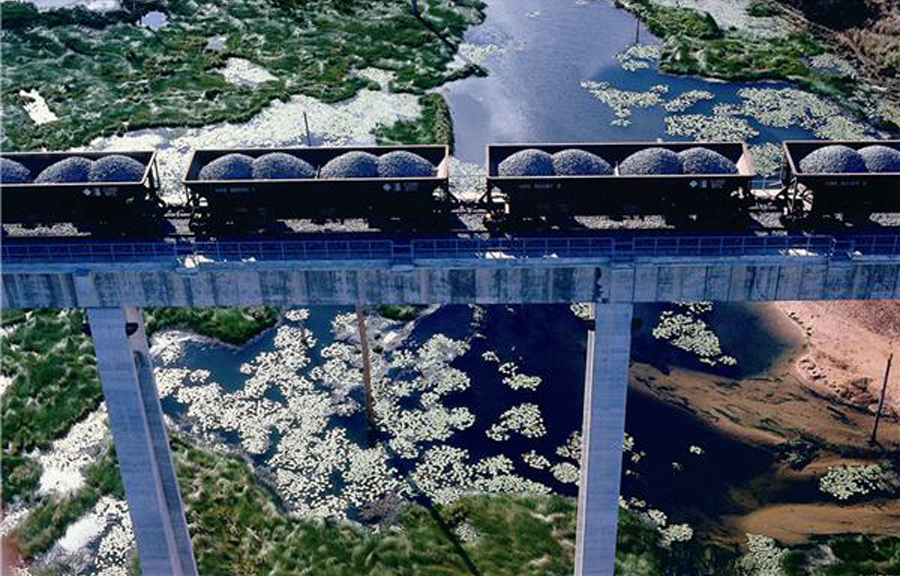
Railroad transporting iron ore from Vale’s Carajás complex in Brazil. Source: Vale

Brazilian miner Vale said on Monday it has been selected by the US government to begin negotiations for a potential financing for a new iron ore briquette plant in the country, according to a securities filing.


Vale said it will negotiate an award for up to $282.9 million for the project, which was selected by the Department of Energy through a program focused on technologies to reduce emissions.

The briquette, which is produced through the low-temperature agglomeration of high-quality iron ore, could be used to replace sinters, pellets and granules in steelmaking, cutting greenhouse gas emissions by up to 10% compared to the traditional blast furnace process.

Vale inaugurated its first iron ore briquette plant in Brazil in December, while it also mulls other units in its home country, as well as in Gulf of Mexico and in the Middle East.

(By Andre Romani; Editing by Steven Grattan)
How science may assist green metals exploration efforts

Staff Writer | March 26, 2024 


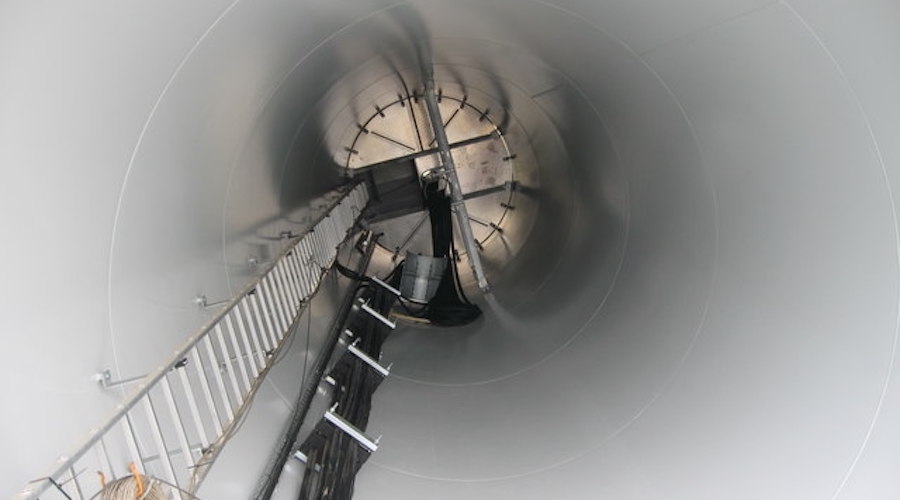
The inside of a wind turbine. 
(Reference image by Paul Anderson, Wikimedia Commons.)

A recent paper in the journal Science Advances sheds new light on how concentrations of metals used in renewable energy technologies can be transported from deep within the earth’s interior mantle by low-temperature, carbon-rich melts.


The article details how an international team led by Isra Ezad, a postdoctoral research fellow at Australia’s Macquarie University, carried out high-pressure and high-temperature experiments creating small amounts of molten carbonate material at conditions similar to those around 90 kilometres depth in the mantle, below the earth’s crust.

Their experiments showed carbonate melts can dissolve and carry a range of critical metals and compounds from surrounding rocks in the mantle—new information that may inform future metal prospecting.

“We knew that carbonate melts carried rare earth elements, but this research goes further,” Ezad said in a media statement. “We show this molten rock containing carbon takes up sulphur in its oxidized form, while also dissolving precious and base metals—‘green’ metals of the future—extracted from the mantle.”

Most of the rock that lies deep in the planet’s crust and below in the mantle is silicate in composition, like the lava that comes out of volcanoes.

However, a fraction of a percent of these deep rocks contain small amounts of carbon and water that cause them to melt at lower temperatures than other portions of the mantle.

These carbonate melts effectively dissolve and transport base metals like nickel, copper and cobalt; precious metals, including gold and silver, and oxidized sulphur, distilling these metals into potential deposits.

“Our findings suggest carbonate melts enriched in sulphur may be more widespread than previously thought, and can play an important role in concentrating metal deposits,” Ezad said.

To run their experiments, the researchers used two natural mantle compositions: a mica pyroxenite from western Uganda and a fertile spinel lherzolite from Cameroon.

Ezad explained that thicker continental crust regions tend to form in older inland regions of continents, where they can act as a sponge, sucking up carbon and water.

“Carbon-sulphur melts appear to dissolve and concentrate these metals within discrete mantle regions, moving them into shallower crustal depths, where dynamic chemical processes can lead to ore deposit formation,” the scientist pointed out.

In her view, this study indicates that tracking carbonate melts could give us a better understanding of large-scale metal redistribution and ore formation processes over earth’s history.

“As the world transitions away from fossil fuels to battery, wind and solar technologies, demand for these essential metals is skyrocketing, and it’s becoming harder to find reliable sources,” Ezad said. “These new data provide us with a mineral exploration space previously not considered for base and precious metals—deposits from carbonate melts.”
Chile opens lithium salt flats for investment, saves two for state control

Reuters | March 26, 2024 | 

Chile’s Atacama region. (Image by LMspencer | Stock Photo.)

Chile’s government on Tuesday opened up more than two dozen lithium salt flats to private investment, while reserving the prolific Atacama and Maricunga deposits for state majority control in lithium extraction.


The long-anticipated announcement sheds light on how President Gabriel Boric’s government plans to carry out a policy announced last year to boost state control over the South American country’s lithium industry, the world’s second-largest after Australia.

The opening to fresh projects could more than double Chile’s production of lithium, a key material for electric vehicle batteries, in a decade, said Finance Minister Mario Marcel.

“What we announced a year ago is starting to become a reality,” he told a press conference.

Officials said they would open a tender process in 26 salt flats in April, set to conclude in July, although not all would necessarily attract interest, officials said.

In another five salt flats, state-run companies are already beginning projects and seeking partners.

Only two companies currently extract lithium in Chile – Chile’s SQM and US-based Albemarle – both in the Atacama salt flat.

The Atacama salt flat has the world’s highest concentration of lithium in brine, and the Maricunga salt flat also has some of the highest levels in Chile.

The government appointed state-run copper giant Codelco to negotiate joint ventures with each company. So far, the miner has inked a preliminary deal with SQM set to run through 2060.

Codelco this month also completed the $244 million acquisition of Australia’s Lithium Power International, which owns the Salar Blanco project alongside Codelco’s own holdings in Maricunga.

Officials on Tuesday said the government is also interested in participating in lithium projects outside Atacama and Maricunga, without a majority stake.

Some projects led by private companies will require approval by local indigenous communities, depending on the potential impact in each region, officials said.

Mining Minister Aurora Williams noted that officials are still evaluating the creation of a national lithium company, part of the plan outlined last year, without a deadline for next steps.

Environmental protection will be granted to 30% of the salt flats, in areas that have yet to be determined, officials said.

(By Alexander Villegas, Daina Beth Solomon and Natalia Ramos; Editing by Sarah Morland and Sonali Paul)
World’s top uranium miner seeks to boost exports to US

Bloomberg News | March 26, 2024 | 

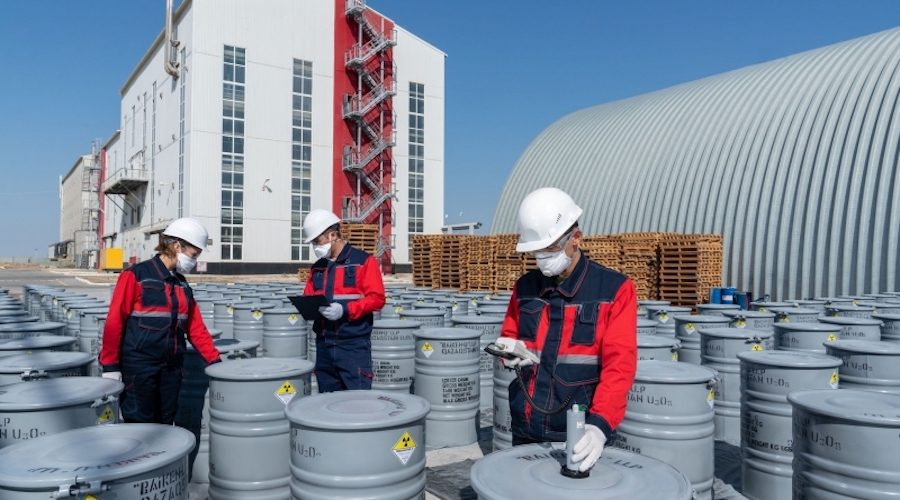
Kazatomprom operates through its subsidiaries, JVs and associates, 26 deposits grouped into 14 asset clusters, all of which are located in Kazakhstan.
 (Image courtesy of Kazatomprom.)

Kazakhstan, the world’s largest uranium miner, is conducting “active work” to boost exports of the metal to US energy companies.


The country’s energy ministry said cooperation in the energy sector had been discussed at a meeting with US Senator Steve Daines on Tuesday. The nation already has contracts to supply uranium products until 2032 with firms including Southern Co., Constellation Energy Corp. and Duke Energy Corp., it said.

Interest in the radioactive metal has surged amid a growing supply gap and increased demand as governments worldwide turn to nuclear power to counter climate change. In addition, the US is looking to ban imports of enriched Russian uranium — the kind used to fuel nuclear reactors and weapons — raising the appeal of potential alternative suppliers.

(By Nariman Gizitdinov)
Northern Star seeks to expand the already massive “Super Pit”

Cecilia Jamasmie | March 26, 2024 | 

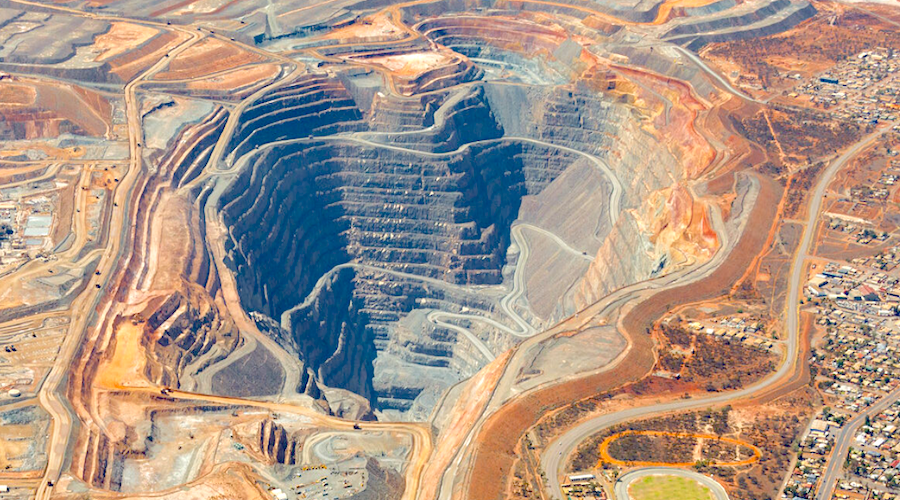
The Super pit is Western Australia’s biggest open pit gold mine. 
(Image courtesy of Northern Star Resources.)

Northern Star Resources (ASX: NST), the owner of Western Australia’s biggest open-pit gold mine, the Super Pit, is seeking approval for a significant expansion for the already massive operation.


The project would add seven years to the Super Pit productive life, keeping it open until 2034. The mine, formally named Fimiston Open pit, is one of the four assets that make up Northern Star’s Kalgoorlie Consolidated Gold Mines (KCGM) operations, about 600 km east of Perth.

The proposed expansion includes widening and deepening the current pit, as well as scaling up the Fimiston II tailings storage facility and building a new TSF (Fimiston III).

It also involves clearing of up to 1868 hectares (ha) of which 1,580 ha is native vegetation, the application to Western Australia’s environmental authority shows.

In total, Northern Star expects to increase the area of the development to 7,795 hectares, up from the currently approved 5,914 hectares, it said.

There has long been speculation about the fate of the Super Pit, but a few months after acquiring the asset in 2020, Northern Star provided a clear signal that was committed to continue mining until the mid-2030s.

The company, the top publicly traded gold producer in Australia, allocated last year A$1.5 billion ($982 million) to more than double processing capacity to about 27 million tonnes of ore per year by 2029 at its Kalgoorlie operations.

Soaring gold prices have sparked significant activity in the Australian bullion sector. Evolution Mining (ASX: EVN) in December agreed to buy an 80% stake in the Northparkes copper-gold mine in New South Wales from Chinese miner CMOC Group. That followed the high profile acquisition of Newcrest by gold giant Newmont (NYSE: NEM) for more than $15 billion.

Last month, Red 5 (ASX: RED) acquired Silver Lake Resources (ASX: SLR) to build a mid-tier gold producer valued at $1.5 billion, and Perseus Mining (ASX, TSX: PRU) is ready to take on OreCorp (ASX: ORR).
Fortune Minerals gets federal funding for Northwest Territories project, Alberta refinery

Staff Writer | March 26, 2024 | 

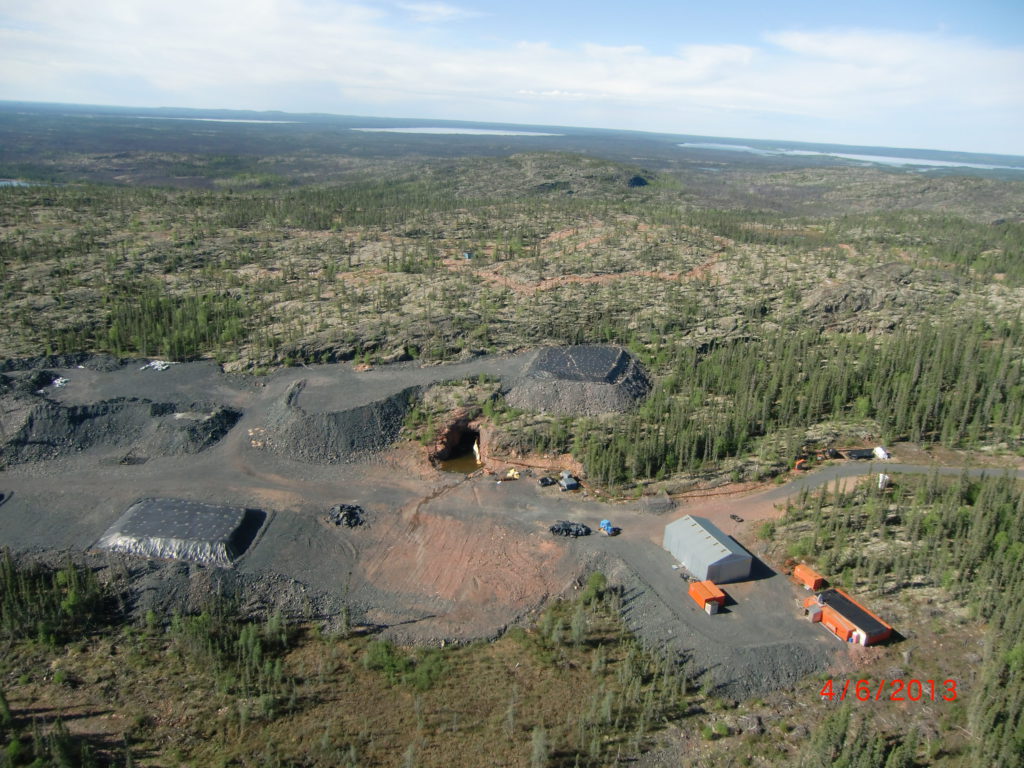
Aerial view of Fortune Minerals’ NICO cobalt-gold-bismuth copper project in the Northwest Territories. Credit: Fortune Minerals

The Canadian government announced on Tuesday a C$714,500 investment in Fortune Minerals (TSX: FT) for the production of cobalt sulphate and bismuth ingot products from the company’s planned mine in the Northwest Territories and refinery in Alberta.


A pilot-scale hydrometallurgical program will be designed to optimize processing conditions while ensuring that residues from the process are stable for safe disposal, Natural Resources Canada said in a news release, adding that the project will create job opportunities for skilled trades and professional occupations, including Indigenous communities, and introduce a new sustainable technology to other Canadian companies.

The investment aims to help Canada participate directly in the growing market of battery-grade cobalt and other concentrates instead of shipping concentrates overseas for value-added processing, NRC said.

Funding for this project comes from the Critical Minerals Research, Development and Demonstration (CMRDD) program. The CMRDD aims to advance the commercial readiness of emerging mineral processing unit operations and technologies that will support the development of zero-emission vehicle value chains in Canada by providing raw material inputs for use in batteries and permanent magnets.

“Today’s investment of C$714,500 for Fortune Minerals will help to advance the development of dynamic and competitive critical minerals value chains through an innovative new processing technology,” Canada’s Minister of Energy and Natural Resources Jonathan Wilkinson said in the statement.

“This means good jobs for workers, more investment in Canadian innovation and lower emissions across the country.”


NGO Sues UK Government Over International Fishing Quotas

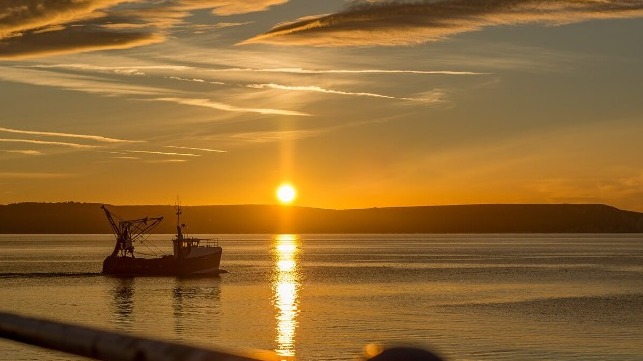
British trawler in Weymouth
Tim Hill / Pixabay

PUBLISHED MAR 24, 2024 11:12 AM BY THE MARITIME EXECUTIVE


UK’s environmental group Blue Marine Foundation has sued the British government for setting fishing quotas above sustainable levels. 

The charity claims that the government has set fishing quotas for more than half of UK stocks at levels exceeding what scientists recommend. The group says that this is illegal under post-Brexit fishing law, which requires that the management of UK’s fisheries is based on the best available scientific advice. The organization estimates that the sum of annual quotas for mackerel and the resulting catches have exceeded scientific advice by an average of 44 percent since 2010.  

Before filing suit, Blue Marine Foundation sent a letter to the Secretary of State for Environment and Food on January 24, but said that it did not receive adequate answers.

Every year, the UK, EU and Norway negotiate catch limits for their shared commercial fisheries in the North Sea and North Atlantic Ocean. The mackerel fisheries are the most valuable and are the largest proportion of the quota system. Other species covered by the arrangement include cod, whiting and monkfish.

Blue Marine says that in the quotas for 2023, the UK granted Norway access to its waters for a higher total allowable catch – well above past levels. In return, Norway would transfer over 24,000 tons of mackerel quota to the UK.

This quota is worth about $30 million. It was negotiated by the UK even though the stock was overfished, and was distributed for reasons that remain secret, according to Blue Marine. The usual mackerel share for Norway has been 22.5 percent in the last one decade. However, in the 2023 quota negotiation, the UK raised that share to 32 percent. This action reversed a long standing position that shares should not go beyond historic levels.

“It is not remotely clear what benefit the public is getting from over-allocating this valuable resource. It is time that the distribution of fishing opportunities is reformed to protect the marine environment and food security in ways which benefit our struggling coastal communities,” said Charles Clover, co-founder of Blue Marine.

Mackerel quota remains controversial because while the coastal states have agreed to the scientific limit, they have failed to agree on how to share the catch. This has seen individual countries self-declare their own figures, so the overall catch ends up exceeding the scientific limit, leading to 400,000 tons more fish being caught than was sustainable in 2023. Blue Marine says that this amounts to overfishing, and has a disproportionate impact on small fishing communities.

This case comes days after a report by Oceana UK released last week, revealed that industrial vessels suspected of using harmful fishing methods, such as bottom-trawling, spent more than 33,000 hours in UK’s marine protected areas in 2023.


Norway Grants Safety Permits to Build First Ammonia Bunkering Terminal

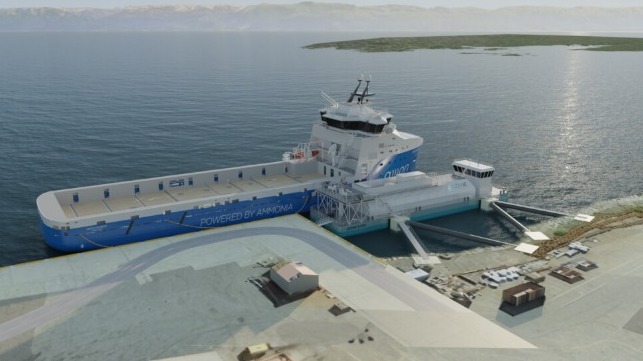
ammonia bunkering terminal design
Concept for the first ammonia bunkering terminal using a floating barge to supply ammonia to vessels (Fjord Base)

PUBLISHED MAR 25, 2024 5:07 PM BY THE MARITIME EXECUTIVE


The Norwegian Directorate for Civil Protection gave its approval for the construction of the planned ammonia bunkering facility at Fjord Base in Florø, Norway. The permit marks a significant milestone as it is the first permit for the building of an ammonia bunkering facility, coming just after a project in Singapore reported the first-ever bunkering of ammonia as a marine fuel and test aboard a vessel.

Yara Clean Ammonia and startup Azane Fuel Solutions launched their efforts two years ago in 2022 to develop the first network of ammonia bunkering stations planned for Scandinavia. According to the companies, the permit demonstrated how the planned ammonia bunkering terminal can meet the strict safety requirement of the Norwegian Directorate for Civil Protection (DSB).

Work with Fjord Base, operators of the largest offshore supply base for the oil and gas sector located in Florø, Norway, the planned terminal consists of a floating stationary barge with a capacity of 1000 cubic meters, or 650 tons, of ammonia. The permit allows for up to 416 operations annually, many of these expected to be bunkering operations for offshore supply vessels that regularly call at Fjord Base in Florø. 

“Now we finally know with certainty the safety zones we will have to operate under when bunkering ammonia,” said Steinar Kostøl, VP Projects & Products for Azane. The required safety zones are very encouraging and demonstrate how it will be possible to bunker ammonia in the biggest and busiest ports around the world.”

Yara Clean Ammonia, Azane, and Fjord Base report they will now commence work with their project partners to obtain a permit with the local municipality. They look to complete this next step before a final investment decision on the first project.  

The companies plan to develop a network of terminals in Scandinavia to meet the anticipated demand for ammonia as a marine fuel. They point to the early orders for ammonia-ready vessels as engine manufacturers work to complete the modifications to their engines and designs for the fuel supply system to commercialize ammonia-fueled propulsion. They also highlight that ENOVA, which operates the Norwegian Government’s Climate and Energy Fund to accelerate the development of new energy technologies, is planning a new round of ammonia grant tenders for ammonia-powered ships and ammonia infrastructure in 2024.

The Maritime and Port Authority of Singapore working with partners including DNV and fuel supplier Vopak started in October 2023 to complete testing and training to support the first ammonia bunkering operation. An initial load of three tonnes of liquid ammonia was loaded from Vopak’s Banyan Terminal on Jurong Island in Singapore on a demonstration vessel, an OSV converted by Australia’s Fortescue Group. 

The tests were carried out with the Fortescue Green Pioneer, a 3,100 dwt vessel built in 2010 and converted in 2023 to be able to operate on ammonia. According to the MPA, the fuel trial was conducted over a period of seven weeks and included rigorous testing of the vessel’s storage systems for ammonia, as well as the associated piping, gas fuel delivery system, retrofitted engines, and overall seaworthiness. A second bunkering of a further three tonnes of liquid ammonia will be loaded for the Fortescue Green Pioneer in the next few weeks.  Further tests and trials are planned as the validation process continues.