It’s possible that I shall make an ass of myself. But in that case one can always get out of it with a little dialectic. I have, of course, so worded my proposition as to be right either way (K.Marx, Letter to F.Engels on the Indian Mutiny)
Thursday, September 26, 2024
World’s oldest cheese reveals origins of kefir
Cell Press
image:
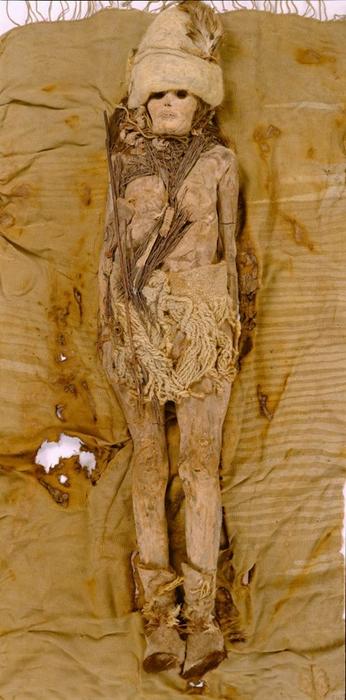
Tarim mummies from the present-day Xinjiang region of Northwestern China
For the first time, scientists successfully extracted and analyzed DNA from ancient cheese samples found alongside the Tarim Basin mummies in China, dating back approximately 3,600 years. The research, published September 25 in the Cell Press journal Cell, suggests a new origin for kefir cheese and sheds light on the evolution of probiotic bacteria.
“This is the oldest known cheese sample ever discovered in the world,” says Qiaomei Fu, the paper’s corresponding author at the Institute of Vertebrate Paleontology and Paleoanthropology, Chinese Academy of Sciences. “Food items like cheese are extremely difficult to preserve over thousands of years, making this a rare and valuable opportunity. Studying the ancient cheese in great detail can help us better understand our ancestors’ diet and culture.”
About two decades ago, a team of archeologists discovered mysterious white substances smeared on the heads and necks of several mummies found in the Xiaohe cemetery in Northwestern China’s Tarim Basin. These mummies dated back to about 3,300 to 3,600 years ago, from the Bronze Age. At the time, scientists thought these substances might be a type of fermented dairy product, but they couldn’t identify exactly what kind.
After more than a decade of advancements in ancient DNA analysis, a team led by Fu has unraveled the mystery.
The researchers successfully extracted mitochondrial DNA from samples found in three different tombs at the cemetery. They identified cow and goat DNA in the cheese samples. Interestingly, the ancient Xiaohe people used different types of animal milk in separated batches, a practice differing from the mixing of milk types common in Middle Eastern and Greek cheesemaking.
Most importantly, Fu and her colleagues managed to recover the DNA of microorganisms from the dairy samples and confirmed that the white substances were in fact kefir cheese. They discovered that the samples contained bacterial and fungal species, including Lactobacillus kefiranofaciens and Pichia kudriavzevii, both commonly found in present-day kefir grains.
Kefir grains are symbiotic cultures containing multiple species of probiotic bacteria and yeast, which ferment milk into kefir cheese, much like a sourdough starter.
Being able to sequence the bacterial genes in the ancient kefir cheese gave the team an opportunity to track how probiotic bacteria evolved over the past 3,600 years. Specifically, they compared the ancient Lactobacillus kefiranofaciens from the ancient kefir cheese with the modern-day species.
Today, there are two major groups of the Lactobacillus bacteria—one originating Russia and another from Tibet. The Russian type is the most widely used globally, including in the US, Japan, and European countries, for making yogurt and cheese.
The team found that the Lactobacillus kefiranofaciens in the samples was more closely related to the Tibetan group, challenging a long-held belief that kefir originated solely in the North Caucasus mountain region of modern-day Russia.
“Our observation suggests kefir culture has been maintained in Northwestern China’s Xinjiang region since the Bronze Age,” Fu says.
The study also revealed how Lactobacillus kefiranofaciens exchanged genetic material with related strains, improving its genetic stability and milk fermentation capabilities over time. Compared with ancient Lactobacillus, modern-day bacteria are less likely to trigger an immune response in the human intestine. This suggests that the genetic exchanges also helped Lactobacillus become more adapted to human hosts over thousands of years of interaction.
“This is an unprecedented study, allowing us to observe how a bacterium evolved over the past 3,000 years. Moreover, by examining dairy products, we’ve gained a clearer picture of ancient human life and their interactions with the world,” says Fu. “This is just the beginning, and with this technology, we hope to explore other previously unknown artifacts.”
###
This work was supported by the National Natural Science Foundation of China, the Chinese Academy of Sciences (CAS), the Feng Foundation of Biomedical Research, and the Fundamental Research Funds for the Central Universities.
Cell (@CellCellPress), the flagship journal of Cell Press, is a bimonthly journal that publishes findings of unusual significance in any area of experimental biology, including but not limited to cell biology, molecular biology, neuroscience, immunology, virology and microbiology, cancer, human genetics, systems biology, signaling, and disease mechanisms and therapeutics. Visit http://www.cell.com/cell. To receive Cell Press media alerts, contact press@cell.com.
Credit: Copyright: LI Wenying, Xinjiang Cultural Relics and Archaeology Institute
Food fermentation is the oldest production practice using microorganisms in human history. Milk fermentation, for example, can be traced back to 6000–4000 BC in India, and Mediterranean populations produced and consumed cheese as early as 7000 before present (BP).
Despite the long history of human consumption of fermented products, though, little has been known about the history of the use of fermentative microorganisms and the history of related cultural transmission. In particular, the evolutionary trajectories, especially functional adaptation, of these fermented microorganisms through long-term interactions with humans has been unclear.
Recently, a group of Chinese scientists has added to our knowledge of the dispersion of early dairy fermentation practices, however, by completing the world’s first metagenomic study of Bronze Age kefir cheese unearthed from Xiaohe cemetery—the most ancient dairy remains known to date. Molecular evidence obtained from ancient fermented dairy residues serves as a powerful tool for understanding past human-fermentative microbial interactions.
In this study, the scientists extracted high-quality genomes of Lactobacillus kefiranofaciens (L. kefiranofaciens)from three ancient cheese samples unearthed in Xiaohe cemetery in Xinjiang, dating back to about 3,500 years ago. The group’s findings were published online in Cell on Sept. 25, in an article entitled “Bronze Age cheese reveals human-Lactobacillus interactions over evolutionary history.” It was featured as a Cell Highlighted Paper.
“We has been working on this project for over 11 years,” said FU Qiaomei, the last corresponding author and director of the Molecular Paleontology Laboratory at the Institute of Vertebrate Paleontology and Paleoanthropology (IVPP) of the Chinese Academy of Sciences. The key is she designed probes to enrich Lactobacillus DNA, which increases the target DNA from <1% to 64-80% and enables the reconstruction of the whole genome of Lactobacillus.
“This is an unprecedented study, allowing us to observe how a bacterium evolved over the past 3,000 years. Moreover, by examining dairy products, we’ve gained a clearer picture of ancient human life and their interactions with the world,” says FU. “This is just the beginning, and with this technology, we hope to explore other previously unknown artifacts.”
History of the use and spread of kefir yogurt among ancient Xinjiang populations
The cheese sample excavated from Xiaohe Cemetery in Xinjiang is the earliest cheese product ever found. It was previously identified through paleoproteomics as kefir cheese—a fermented milk product made using kefir grains, which contain fermentative microbes.
By reconstructing the fermentation microbial community, the study confirms that the cheese was made using lactic acid bacteria and yeasts. The researchers also discovered that the milk used to make the cheese came from a clade of goats widely distributed in Eurasia during the post-Neolithic period, distinct from contemporary domesticated goats from inland East Asia.
This finding suggests that ancient peoples from the Tarim Basim probably learned kefir production techniques from Eurasian steppe populations.
The spread of dairy fermentation technology largely accompanied human migration and interaction, a process that drove the evolution of lactic acid bacteria. However, this study also reveals a new route of spread of L.kefiranofaciens by analyzing the phylogenetic relationships of ancient L. kefiranofaciens in Xinjiang.
The researchers found that the L.kefiranofaciens used in fermentation comprised two clades. The first mainly consisted of strains from Europe (e.g., the area occupied by modern Germany) and coastal areas and islands in Asia (e.g., the areas occupied by modern Guangdong, Taiwan Island, Japan, and Singapore). This distribution conformed to the dispersal route from the Caucasus to Europe on the one hand and to the coastal areas of Asia and Southeast Asia, on the other hand. The other clade mainly consisted of strains distributed in inland East Asia (including Tibet).
The reconstructed ancient strains are located at the base of the clade, suggesting an additional route of diffusion of kefir production technology from Xinjiang to inland East Asia through techno-cultural exchange.
The divergence of the two clades of L. kefiranofaciens is likely the result of the spread of their common ancestor initially domesticated in different populations, representing the migration and interactions that occurred during the use and domestication of fermentative microorganisms by different ancient populations.
“It is exciting to see how much information can be retrieved from these cheeses,” said YANG Yimin, a professor at the University of Chinese Academy of Sciences. “Organic residues open a window into past human behaviors and culture that were lost in history and records.”
Domestication and evolution of Lactobacillus by the Xiaohe population
This study also found that utilization and domestication by humans played an important role in the evolution of L.kefiranofaciens. Comparative analysis of the genomes of L.kefiranofaciens from the Bronze Age and modern times allows us to characterize the adaptive evolution of Lactobacilluskefiranofaciens over the past few thousands of years.
Extensive horizontal gene transfer is one of the main mechanisms of adaptive evolution in lactic acid bacteria. By comparing the functional profiles of ancient and modern L.kefiranofaciens, the study found three main trajectories of L.kefiranofaciens evolution: 1) adaptation to environmental stress, with the emergence of drug-resistance-related genes in modern strains; 2) enhancement of bacterial genome defense mechanisms, with modern L.kefiranofaciens showing gene clusters such as the R-M system and the associated toxin-antitoxin system, which can counteract the introduction of exogenous DNA and thus reduce related fitness costs; and 3) adaptations related to the human intestinal environment; for example, modern strains gained gene clusters that potentially interact with the host gut, likely due to their long-term interactions with humans.
This study also found that long-term human use and domestication of L.kefiranofaciens likely also influenced its evolution. Compared to Bronze Age L.kefiranofaciens, modern strains from Tibet show two horizontally transferred gene clusters associated with alleviation of the intestinal inflammatory response. This not only contributes to the survival of L.kefiranofaciens in the human gut but also promotes intestinal function.
Considering ancient populations could easily spread kefir production technology through kefir grains, the presence of these gene clusters is likely related to the preference among populations at the time for kefir grains carrying different clades of L.kefiranofaciens.
“Human-microbial interaction is always fascinating,” said LIU Yichen, one of the first authors and an associate professor at the IVPP Molecular Paleontology Laboratory. “Fermentative microbes played such an important role in the daily life of these ancient humans, and they propagated these microbes for thousands of years without knowing the existence of them for most of the time.”
By using ancient DNA information about fermentative microorganisms closely related to past human activities and culture, this study offers a novel framework for using ancient DNA to examine the cultural interactions of past humans.
The research was supported by the National Natural Science Foundation of China, the Chinese Academy of Sciences, the Peak Biomedical Fund, and the Fundamental Research Operating Expense Fund of the Central Universities.
The M25 dairy sample
The Bronze Age dairy remains (aged about 3500 BP) from tombs M25 of the Xiaohe cemetery
The Bronze Age dairy remains (aged about 3500 BP) from tombs M29 of the Xiaohe cemeter
Credit
Copyright: YANG Yimin, University of the Chinese Academy of Sciences, Beijing
Bronze Age cheese reveals human-Lactobacillus interactions over evolutionary history
Article Publication Date
25-Sep-2024
CLIMATE CRISIS
One in two El Niño events could be extreme by mid-century
University of Colorado at Boulder
With the climate pattern known as El Niño in full force from mid-2023 to mid-2024, global temperatures broke records for 12 months in a row. As one of the strongest El Niño events on record, it was likely the main culprit of unprecedented heat, floods and droughts worldwide.
In a new study published Sep. 25 in the journal Nature, a University of Colorado Boulder climate scientist and collaborators reveal that the planet could see more frequent extreme El Niño events by 2050 if greenhouse gas emissions continue to increase.
“It’s pretty scary that 2050 is not very far away,” said Pedro DiNezio, the paper’s co-lead author and associate professor in the Department of Atmospheric and Oceanic Sciences. “If these extreme events become more frequent, society may not have enough time to recover, rebuild and adapt before the next El Niño strikes. The consequences would be devastating.”
Shifting wind and soaring temperatures
El Niño occurs when water temperatures along the equator in the Pacific Ocean rise by at least 0.9 °F above average for an extended period.
The seemingly marginal temperature change can shift wind patterns and ocean currents, triggering unusual weather worldwide, including heat waves, floods and droughts.
When the area warms by 3.6°F above average, scientists classify the El Niño event as extreme. Since the U.S. National Oceanic and Atmospheric Administration began collecting data in the 1950s, the agency has recorded up to four extreme El Niño events.
During an extreme El Niño, the impacts on global weather tend to be more severe. For example, during the winter of 1997-98, El Niño brought record rainfall to California, causing devastating landslides that killed more than a dozen people. Over the same period, the planet lost about 15% of its coral reefs due to prolonged warming.
Last winter El Niño almost reached extreme magnitude, DiNezio said.
“El Niño events are difficult to simulate and predict because there are many mechanisms driving them. This has hindered our ability to produce accurate predictions and help society prepare and reduce the potential damage,” they said.
Prior research suggests that climate change is intensifying and increasing the frequency of extreme weather events, possibly linked to changes in El Niño patterns. However, due to limited data, scientists have yet to confirm whether El Niño will strengthen with warming.
DiNezio and their team set out to simulate El Niño events in the past 21,000 years—since the peak of Earth’s last Ice Age—using a computer model.
The model shows that during the Ice Age, when Earth’s climate was colder, extreme El Niño events were very rare. As the planet warmed since the end of the Ice Age, the frequency and intensity of El Niño have been increasing.
The team validated the model by comparing the simulated data with past ocean temperature data retrieved from fossilized shells of foraminifera, a group of single-celled organisms ubiquitous in the oceans long before human existence. By analyzing the type of oxygen compounds preserved in these fossilized shells, the team reconstructed how El Niño drove ocean temperature fluctuations across the Pacific Ocean for the past 21,000 years. The ancient record aligned with the model’s simulations.
“We are the first to show a model that can realistically simulate past El Niño events, enhancing our confidence in its future predictions. We are also proud of the robust technique we developed to evaluate our model, but unfortunately, it brought us no good news,” DiNezio added.
The model predicts that if society continues to pump greenhouse gases into the atmosphere at the current rate, one in two El Niño events could be extreme by 2050.
The control knob
Despite El Niño’s complexity, the model reveals that a single mechanism has controlled the frequency and intensity of all El Niño events as the planet has warmed since the last Ice Age.
When the eastern Pacific Ocean water warms from natural fluctuation, the winds that always blow east to west over the equatorial Pacific weaken due to changes in air pressure above the ocean. But during an El Niño, weakened winds allow warm water to flow east, and the warmer water weakens the winds even more, creating a feedback loop known as the Bjerknes feedback.
DiNezio’s research suggests that as the atmosphere warms rapidly from greenhouse gas emissions, the planet experiences a stronger Bjerknes feedback, leading to more frequent extreme El Niño events.
With the most recent El Niño now in the past, DiNezio emphasized that society needs to focus on taking measures to reduce the impact from future extreme El Niño events, including cutting emissions and helping communities, particularly those in the developing countries, become resilient to extreme weather.
“We now understand how these extreme events happen, and we just need the will to reduce our reliance on fossil fuels,” they said. “Our findings emphasize the urgent need to limit warming to 1.5 °C to avoid catastrophic climate impacts.”
Rechargeable lithium-ion batteries are growing in adoption, used in devices like smartphones and laptops, electric vehicles, and energy storage systems. But supplies of nickel and cobalt commonly used in the cathodes of these batteries are limited. New research led by the Department of Energy’s Lawrence Berkeley National Laboratory (Berkeley Lab) opens up a potential low-cost, safe alternative in manganese, the fifth most abundant metal in the Earth’s crust.
Researchers showed that manganese can be effectively used in emerging cathode materials called disordered rock salts, or DRX. Previous research suggested that to perform well, DRX materials had to be ground down to nanosized particles in an energy-intensive process. But the new study found that manganese-based cathodes can actually excel with particles that are about 1000 times larger than expected. The work was published Sept. 19 in the journal Nature Nanotechnology.
“There are many ways to generate power with renewable energy, but the importance lies in how you store it,” said Han-Ming Hau, who researches battery technology as part of Berkeley Lab’s Ceder Group and is a PhD student at UC Berkeley. “By applying our new approach, we can use a material that is both earth-abundant and low-cost, and that takes less energy and time to produce than some commercialized Li-ion battery cathode materials. And it can store as much energy and work just as well.”
The researchers used a novel two-day process that first removes lithium ions from the cathode material and then heats it at low temperatures (about 200 degrees Celsius). This contrasts with the existing process for manganese-based DRX materials, which takes more than three weeks of treatment.
Researchers used state-of-the-art electron microscopes to capture atomic-scale pictures of the manganese-based material in action. They found that after applying their process, the material formed a nanoscale semi-ordered structure that actually enhanced the battery performance, allowing it to densely store and deliver energy.
The team also used different techniques with X-rays to study how battery cycling causes chemical changes to manganese and oxygen at the macroscopic level. By studying how the manganese material behaves at different scales, the team opens up different methods for making manganese-based cathodes and insights into nano-engineering future battery materials.
“We now have a better understanding of the unique nanostructure of the material,” Hau said, “and a synthesis process to cause this ‘phase change’ in the material that improves its electrochemical performance. It’s an important step that pushes this material closer to battery applications in the real world.”
Lawrence Berkeley National Laboratory (Berkeley Lab) is committed to delivering solutions for humankind through research in clean energy, a healthy planet, and discovery science. Founded in 1931 on the belief that the biggest problems are best addressed by teams, Berkeley Lab and its scientists have been recognized with 16 Nobel Prizes. Researchers from around the world rely on the lab’s world-class scientific facilities for their own pioneering research. Berkeley Lab is a multiprogram national laboratory managed by the University of California for the U.S. Department of Energy’s Office of Science.
DOE’s Office of Science is the single largest supporter of basic research in the physical sciences in the United States, and is working to address some of the most pressing challenges of our time. For more information, please visit energy.gov/science.
Microscopic views of the manganese material show an ordered nanoscale structure separated by special disordered “antiphase boundaries.” The unique microscopic structure formed by the transformation process enhances the battery performance, allowing it to densely store and deliver energy.
Earth-abundant Li-ion cathode materials with nanoengineered microstructures
Article Publication Date
19-Sep-2024
Disclaimer: AAA
Research alert: First evidence of mitochondrial genetics' role in Gulf War illness
University of California - San Diego
A first-of-its kind study from researchers at University of California San Diego has revealed that Gulf War illness (GWI), a chronic fatigue illness affecting veterans of the 1990-1991 Gulf War, is linked to genetic variants in mitochondria, the energy-producing structures of cells. The findings shed new light on how GWI, which is thought to be triggered by environmental toxins, develops. The findings could also have implications for other diseases with environmental triggers, such as Parkinson’s disease and certain types of cancer.
Mitochondria have their own DNA, passed down through the maternal line rather than from both parents. The researchers found that the severity of GWI was directly associated with inherited genetic variants in mitochondrial DNA. Veterans with these genetic variants, which are known to be associated with other diseases involving mitochondrial dysfunction, scored significantly higher in measures of Gulf War illness severity. This suggests that people with these variants may be predisposed to more severe symptoms following a toxic exposure.
The findings support an emerging hypothesis from the research team that, contrary to the common understanding of GWI as an inflammatory disease, it is actually driven by mitochondrial dysfunction rather than inflammation.
The study was published August 21, 2024 in BMC Research Notes and was led by Beatrice A. Golomb M.D., Ph.D., professor in the Department of Medicine at UC San Diego School of Medicine, and Leann Bui, M.D., a resident physician in the Department of Obstetrics and Gynecology at Santa Clara Valley Medical Center.
Ice cores show pollution's impact on Arctic atmosphere
Dartmouth study solves marine mystery by tying ocean biomarker to pollution levels
Dartmouth College
image:
The Dartmouth-led study analyzed ice core data from Greenland and a 700-foot core members of the research team extracted from Denali National Park and Preserve in 2013. The Denali ice core contains a millennium of climate data in the form of gas bubbles, particulates, and compounds trapped in the ice.
A Dartmouth-led study on ice cores from Alaska and Greenland found that air pollution from the burning of fossil fuels reaches the remote Arctic in amounts large enough to alter its fundamental atmospheric chemistry. The findings illustrate the long reach of fossil fuel emissions and provide support for the importance of clean-air rules, which the team found can reverse the effect.
The impact of pollution on the Arctic began as soon as widespread fossil fuel usage took hold during the industrial era, according to a report in Nature Geoscience. The researchers detected this footprint in an unexpected place—they measured declines in an airborne byproduct of marine phytoplankton activity known as methanesulfonic acid, or MSA, captured in the ice cores when air pollution began to rise.
Phytoplankton are key species in ocean food webs and carbon cycles considered a bellwether of the ocean's response to climate change. MSA has been used by scientists as an indicator of reduced phytoplankton productivity and, thus, of an ocean ecosystem in distress.
But the Dartmouth-led team reports that MSA also plummets in environments high in emissions generated by burning fossil fuels, even if phytoplankton numbers are stable. Their models showed that these emissions cause the initial molecule that phytoplankton produce—dimethyl sulfide—to turn into sulfate instead of MSA, leading to a deceptive drop in MSA levels.
The researchers found precipitous drops in MSA that coincided with the start of industrialization. When Europe and North America began burning large amounts of fossil fuels in the mid-1800s, MSA began to plummet in Greenland ice cores. Then, nearly a century later, the same biomarker plummeted in ice cores from Alaska around the time when East Asia underwent large-scale industrialization.
"Our study is a stark example of how air pollution can substantially alter atmospheric chemistry thousands of miles away. The pollution emitted in Asia or Europe was not contained there," says Jacob Chalif, first author of the study and a graduate student in the lab of senior author Erich Osterberg, an associate professor of earth sciences at Dartmouth.
"By releasing all this pollution into the world, we're fundamentally altering atmospheric processes," Chalif says. "The fact that these remote areas of the Arctic see these undeniable human imprints shows that there's literally no corner of this planet we haven't touched."
The new study solves a yearslong marine mystery surrounding the significance of MSA, says Osterberg, who led the extraction of a 700-foot ice core from Denali National Park and Preserve that the researchers used in their analysis. Osterberg collected the core in 2013 with study coauthors and professors Cameron Wake at the University of New England, and Karl Kreutz and Dartmouth alumnus Dominic Winski '09—who also received his PhD from Dartmouth in 2018—at the University of Maine.
The Denali core contains a millennium of climate data in the form of gas bubbles, particulates, and compounds trapped in the ice, including MSA, which is a common target in ice-core analysis. For centuries, MSA in the Denali core underwent minor fluctuations, "until the mid-20th century when it falls off a table," Osterberg says.
Researchers in Osterberg's ICE Lab, initially led by study coauthor and Dartmouth alumnus David Polashenski '17, started investigating what the precipitous drop in MSA levels indicated about the North Pacific. Osterberg and study coauthor Bess Koffman, a professor at Colby College who was a postdoctoral fellow at Dartmouth, later tested numerous theories to explain why Denali MSA declined. Like the Greenland study, they first considered whether the MSA drop was evidence for a crash in marine productivity, "but nothing added up," Osterberg says. "It was a mystery."
Chalif picked up the project around the time when study coauthor and Dartmouth alumna Ursula Jongebloed '18, now a graduate student at the University of Washington, was re-evaluating a 2019 study on ice cores in Greenland reporting that MSA there underwent a steady drop beginning in the 1800s. That study tied the decline to a crash in phytoplankton populations in the subarctic Atlantic due to a slowdown in ocean currents.
But Jongebloed's work led to a study published last year reporting that declines in MSA found in the Greenland ice cores are not the result of the marine ecosystem crashing. Instead, they could be caused by pollution preventing the creation of MSA in the first place.
Chalif and Jongebloed connected at a conference in Switzerland in 2022 and discussed the Greenland and Denali MSA records. "We rethought all of our prior assumptions," Chalif says. "We knew that the declining MSA at Denali wasn't due to marine productivity, so we knew some kind of change in atmospheric chemistry must be involved."
They discussed the possible effect of nitrate pollution, which is commonly emitted through burning fossil fuels. Chalif started digging into the impact of nitrate on MSA that same evening.
"Pretty much to the year, when MSA declines at Denali, nitrate skyrockets. A very similar thing happened in Greenland," Chalif says. "At Denali, MSA is relatively flat for 500 years, no notable trend. Then in 1962 it plummets. Nitrate was similar, but in the opposite direction—it's basically flat for centuries then it spikes upward. When I saw that I had a eureka moment."
Their results showed that air pollution from the burning of fossil fuels disperses across the Atlantic and Pacific Oceans and inhibits the production of MSA in the Arctic. In addition to ruling out widespread marine ecosystem collapse, the findings open a new door to using MSA levels to measure pollution in the atmosphere, especially in regions with no obvious emissions sources, the researchers report.
"Marine ecosystem collapse just wasn't working as an explanation for these MSA declines, and these young scientists figured out what was really going on," Osterberg says.
"For me, it's a new way of understanding how pollution affects our atmosphere," he says. "The good news is that we are not seeing the collapse of marine ecosystems we thought we were. The bad news is that air pollution is causing this."
But the data from the Greenland core shows that the local atmosphere began to stabilize when European and American air pollution became more regulated, Osterberg says. MSA rebounded in the 1990s as levels of nitrogen pollution dropped. That's because nitrogen oxides, the type of pollution that affects MSA, dissipate within a few days, unlike carbon dioxide that lingers in the atmosphere for centuries.
"These data show the power of regulations to reduce air pollution, that they can have an immediate effect once you turn off the spigot," Osterberg says. "I worry about younger people resigning to an environmental crisis because all we hear about is bad news. I think it's important to acknowledge good news when we get it. Here, we see that regulations can work."
Erich Osterberg
Researchers in the lab of Erich Osterberg (pictured), an associate professor of earth sciences at Dartmouth, found that levels of methanesulfonic acid (MSA), an airborne byproduct of marine phytoplankton activity, were stable for centuries before plummeting in the mid-20th century. They initially investigated whether the precipitous drop indicated a crash in marine productivity in the North Pacific before finding that MSA also plummets in environments high in emissions generated by burning fossil fuels, even if marine ecosystems are stable.
Pollution drives multidecadal decline in subarctic methanesulfonic acid
Article Publication Date
23-Sep-2024
CLIMATE CRISIS
Lack of food — not money — drives poaching in East African national parks
Penn State
UNIVERSITY PARK, Pa. — National parks in East Africa protect endangered wildlife but sometimes do not support local human populations, according to Edwin Sabuhoro, assistant professor of recreation, park, and tourism management at Penn State. New research by Sabuhoro and two Penn State doctoral students from East Africa demonstrated that poverty and lack of adequate food supply drive most of the poaching and other illegal activities in one such park.
The researchers, led by Gasto Lyakurwa, doctoral student in recreation, park, and tourism, management at Penn State, surveyed 267 household heads in eight villages that border Mkomazi National Park in northern Tanzania. The survey focused on their use of park land and their family’s food security, financial security and educational security to understand which factors led to illegal park use. Their results were published in Conservation.
Mkomazi National Park comprises more than 1,250 square miles of protected habitat for rare and endangered wildlife including elephants, lions, buffalo and rhinoceroses. The park, created in 1951, displaced large numbers of people from the park land into surrounding regions two times — once in the early 1950s and again in the late 1980s.
Since the foundation of the park — and other protected areas throughout East Africa — the researchers said park officials and rangers have viewed local people as a threat, rather than as a potential conservation partner.
“For countless generations, the people in this area relied on that land for meat, traditional medicines, firewood, fish and timber,” Lyakurwa said. “These resources were essential to the people’s livelihood, but suddenly, they were cut off from the land. Even though local people told us they feel connected to the wild animals, they also made it clear that they are not likely to respect park boundaries if they cannot feed themselves or their children.”
Tourism in the park — driven largely by visitors who want to see the large mammals — generates income that is managed by the national government, the researchers said. Some park revenue is used to fund projects designed to improve the lives of the 45,000 people who live in the 22 villages near the park. Though many government programs have focused on improving infrastructure for health care and education, the results of this study indicate that alleviating food insecurity and poverty are the only ways to build cooperation between the parks and the villages, the researchers said.
Of the 267 families surveyed, 253 earned their livelihood through agriculture — either growing crops or raising grazing animals for food. The average annual household income for these families was $1,115 United States dollars, and 74% of household heads had been educated only through primary school.
When asked about if and why they used the park for illegal animal grazing or poaching, many villagers reported that they did use park land. The researchers compared these results to people’s statements about their family’s consistent access to — or “security” in — food, education and adequate finances.
Results showed that food security was the primary driver of illegal activity, while education security and financial security had minimal influence on poaching.
The researchers said the findings demonstrated that people poach for food, not to enrich themselves or to pay for their children’s education. To successfully protect wildlife and their habitat, parks need to address food security for residents, the researchers said.
“Communities are expected to support conservation, but they are facing deprivation,” Lyakurwa said. “Animals — especially elephants and lions — come out of the parks and trample crops and injure or kill people. Also, the people feel they need park lands to graze their own animals. It is easy to understand why they are not more supportive of park boundaries when their lives are at stake.”
In addition to existential concerns, many villagers told the researchers that they believe more money earned from tourism in the park should be used to support people in the area, but that much of the money is extracted to fund other projects around the nation. Sabuhoro said that this common frustration inspired him to help spearhead a regional effort to reduce conflicts between the needs of humans and wildlife.
“Traditionally, local people have been expected to comply with rules but have not been invited to participate in the planning or benefits associated with the parks,” Sabuhoro said. “Through the Human Wildlife Co-existence Research Network, we are trying to change that.”
Sabuhoro helps lead the network, which brings together non-governmental organizations, government officials, academics, park leadership and local people across East Africa to address ways conservation efforts can support the needs of local communities and local communities can support conservation efforts.
“People in each nation are expressing their own needs and developing their own solutions,” Sabuhoro said. “Last year, we held a conservation stakeholders meeting in Uganda. This year, we had a meeting in Tanzania, and next year we have meetings planned in Kenya and Rwanda.”
To support and expand the work of the Human Wildlife Co-existence Research Network, Sabuhoro sought to recruit and train a researcher from East Africa. After combing through many applications, he said that he found an ideal candidate in Lyakurwa.
Lyakurwa was born in Tanzania and previously worked as a park ranger there. This meant that he had the language skills, cultural knowledge and perspective needed to conduct studies like this one. Sabuhoro also emphasized that local connections are needed to build trust.
“Traditionally, western researchers studied African animals or people and then left without helping the local community understand the results of the study or providing any sustained tangible benefits,” Sabuhoro said. “When the researcher has local connections like Gasto does, there is more faith that the researcher will bring the knowledge back to the community.”
Lyakurwa agreed.
“They can hold me accountable because I am from there,” he said. “I believe that helps me get more honest and complete answers from people — both villagers and park rangers. All these people are trying to what is right in a difficult situation, but they need to feel safe to explain themselves.”
Sabuhoro said universities like Penn State play an important role in training local people like Lyakurwa and Mercy Chepkemoi Chepkwony, graduate student in recreation, park, and tourism management at Penn State and the other co-author of this research.
“By training local people in research methods and helping to develop and support meaningful research projects, we can help support management of parks in ways that are sustainable for humans and animals alike,” Sabuhoro said.
Illegal Activities for Survival: Understanding the Influence of Household Livelihood Security on Biodiversity Conservation in Tanzania
New Forest Service study backs conservation at a landscape scale to protect a near threatened bird species
Understanding landscape-scale habitat needs is vital for conserving the near threatened Kirtland’s Warbler
USDA Forest Service ‑ Southern Research Station
image:
A new study shows that home range and core area of several populations of Kirtland's Warbler in the Bahamas are tightly linked with the age of the vegetation and the way food resources are distributed in the environment.
Understanding the factors that influence how species select their habitats is crucial to inform conservation strategies, especially for vulnerable species. A new study about how wintering individuals of the Kirtland’s Warbler (Setophaga kirtlandii) in the Bahamas use available space and food resources showed that the home range and core area of several populations within this island are tightly linked with the age of the vegetation and the way food resources are distributed in the environment.
Factors like food availability, predation risk, and competition between individuals of the same species influence how species use space. With birds that migrate from breeding grounds in northern regions to nonbreeding grounds in the tropics, these factors may result in multiple space use strategies, for example having fixed home ranges instead of moving in flocks.
The near threatened (IUCN 2023) Kirtland’s Warbler tends to exhibit flexible space use on its Bahamas wintering grounds. This Nearctic-Neotropical migrant overwinters in the Bahamas during the November to April dry season, when its food resources (fruit and arthropods) decline at some sites. These changes force many individuals to move from food-poor to food-rich sites, and in drought years, these shifts may result in significant variation in the density of individuals across space.
Knowing the extent and degree of overlap of the non-breeding home range of this species in their wintering grounds in the Bahamas, and which areas are most intensively used, i.e. their “core areas,” can provide unique insight into the factors that most affect space and resource use of this species. Previous work has addressed some of these issues but did not consider the full extent of space used by individual birds. Resighting observations were also restricted to accessible study sites which likely resulted in an underestimation of warbler’s space use.
A team of scientists from the USDA Forest Service (Joseph M. Wunderle, Eileen Helmer, Javier E. Mercado, Dave Currie), Antioch University of New England (Michael E. Akresh) and the American Bird Conservancy (David N. Ewert) used radio telemetry to quantify size and overlap of space use by sedentary Kirtland’s Warblers in Eleuthera, the Bahamas, to identify some of the variables influencing non-breeding space use. They also related home range and core area size to factors known to influence these variables, such as bird sex and age class, year, winter period, forest age since disturbance, vegetation structure, fruit biomass and fruit shrub foliage cover.
Researchers found that the warbler’s sedentary non-breeding home range was larger than most other wintering Nearctic-Neotropical migratory passerine birds studied to date. “While it is currently difficult to make comparisons with other migrant species, finding that the home range of the Kirtland’s Warbler in the Bahamas was so relatively large was consistent with our prior observations that availability of the warbler’s food supply was so variable. It seems that food availability in the areas they forage is highly variable which sort of forces them to be more flexible in their use of available space and habitats,” commented Wunderle, lead author of the study. Further, except for adult females, which were found to have smaller core area sizes than juveniles or males, age class and sex differences were found to hold no relationship with home range and core area sizes.
The warblers’ ability to exploit other food resources, such as arthropods, likely explain why neither home range nor core area size were correlated with fruit biomass or fruit shrub foliage abundance. Despite this, researchers suggest that less abundant fruit in older vegetation areas likely force warblers to expand their foraging activities to more distant places, thereby driving the observed increase in home range and core size area with vegetation age. Because arthropods are more abundant in mid-to-mature forests, they suspect that sampling artifacts may have obscured the role of fruit availability in this respect.
“It was also interesting to see that the abundance of fruit shrubs could explain so much of the home range overlap observed,” added study co-author Helmer. This was different to what they observed for core areas, where average overlap was more limited, especially between early vs. midwinter sites. “That is often indicative of neighboring warblers being more territorial or avoiding interacting with other individuals of its own species,” further noted Wunderle.
Findings in this study prompted authors to highlight that management at a landscape scale, as on the breeding grounds, will be required to sustain sufficient patches with food resources for this near threatened warbler. Further recommendations included focusing conservation efforts in areas where fruit production and arthropod abundance are least affected by late winter droughts and on younger vegetation areas with reoccurring disturbances, as those tend to favor fruit shrub establishment.