Tuesday, December 31, 2024

De Beers Diamond Inventory Soars To Highest Since 2008 Financial Crisis As Prices Plummet

by Tyler Durden
Friday, Dec 27, 2024 - 

Three weeks ago the diamond industry, one of the world's most conservative and boring, was shocked by news that diamond giant De Beers (which accounts for 30% of global diamond production market share) was forced into a rare 10-15% price cuttaking wholesale diamond prices a stunning 40% lower in the past 2 years. That was the first major price cut since the start of the year and a "historically large reduction", according to Bloomberg.

Unfortunately, it is going from bad to worse for the diamond price setter, which in an attempt to keep demand artificially high has throttled supply, and the FT reported that De Beers has amassed its largest diamond stockpile since the 2008 financial crisis.

The company, which dominates the $80 billion diamond jewelry industry, has seen inventory levels hover around $2 billion throughout 2024.

The slump in demand has been attributed to weak sales in China, growing competition from lab-grown alternatives, and the lingering impact of the Covid-19 pandemic, which disrupted global marriage rates.

“It’s been a bad year for rough diamond sales,” CEO Al Cook said.

To mitigate the downturn, De Beers has cut production by around 20% compared to last year and reduced prices at its most recent auction of rough diamonds. These auctions involve selling uncut stones to a select group of certified buyers, known as sightholders, who are pivotal players in the diamond trade.

Still, even after the steep cut in prices, the company’s stones are still more expensive than the going rate in the secondary market. The company also removed some of the flexibility it had offered at previous sales, according to Bloomberg.

Revenue for De Beers fell to $2.2 billion in the first half of 2024, down from $2.8 billion in the same period of 2023. The decline comes as De Beers prepares to be spun off by its parent company, Anglo American, which promised to divest the diamond producer following a thwarted takeover bid by BHP. Anglo American CEO Duncan Wanblad has warned that the weak market complicates potential sale or public offering plans.

In response to market pressures, primarily the result of explosive sales from cheap lab-grown diamonds, De Beers launched a marketing campaign in October highlighting the unique appeal of natural diamonds. Cook outlined plans for the company to invest in advertising and retail, expanding its network of global stores from 40 to 100.

Competition from lab-grown diamonds, which cost a fraction of natural stones, has intensified, particularly in the US, the world’s largest diamond market. However, Cook expressed optimism for a global recovery in 2024, citing recent credit card data showing increased US purchases of jewelry and watches in October and November.

Industry analyst Paul Zimnisky projected a 6% rise in global diamond jewelry sales to $84 billion in 2025, offering hope for an eventual market rebound.


Diamond Mountain Casts A Long Shadow On The Sale Of De Beers

Tim Treadgold
Contributor
Tim Treadgold is an Australian journalist specializing in mining
Dec 26, 2024

Selling De Beers, the biggest transaction ever attempted in the diamond industry, just got a little harder with news that it is sitting on a $2 billion stockpile of unsold gems.

The De Beers business, which is 85%-owned by London-listed Anglo American, is one of the units being off loaded as part of a defence against an attempted takeover by arch-rival BHP.


Diamonds are getting harder to sell. (STR/AFP via Getty Images)AFP via Getty Images

Coal mines have already been sold by Anglo American with nickel and platinum assets poised to go.

But the crown jewel in the Anglo American stable of assets collected over the last 120 years is De Beers which rose to control the diamond industry but has since lost most of its pricing power.

The latest crop of problems started for De Beers with the creation of near-perfect laboratory grown gems which are undercutting prices for natural (mined) stones which dominate the De Beers offering, compounded by the Covid pandemic which cut overall jewellery demand.

Now comes news of the stockpile which has not previously been reported but was identified in a story published yesterday by London's Financial Times newspaper.



Too many diamonds. De Agostini via Getty Images)De Agostini via Getty Images

According to the FT the stockpiled amassed by De Beers is the biggest since the 2008 financial crisis when diamond demand dried up and De Beers stepped in as a buyer of last resort to remove excess material from the market with the objective being to support prices.

Similar moves have been made in the past by De Beers, which has long seen itself as the custodian of the diamond industry.

But the era of De Beers being big enough to dominate diamond mining, processing, and marketing, has passed with the entry of new miners such as Rio Tinto and the dramatic improvement in synthetic stones which even a skilled jeweler finds hard to tell apart from natural gems.

A slowdown in demand for diamonds in China, where conspicuous consumption runs against government policy, has added to the overall problems for the industry.

The FT quoted De Beers chief executive Al Cook saying: “It’s been a bad year for rough diamond sales”.

Tough trading conditions, and a buildup of the stockpile, will also be a problem for Anglo American as its tries to price De Beers for outright sale or a spin-off into a separate stock-exchange listed company.

Overall diamond sales by De Beers fell from $2.8 billion in the opening six months of 2023 to $2.2 billion in the first half of this year.

Anglo American chief executive Duncan Wanblad has acknowledged that the week state of the diamond market will complicate the De Beers sakes process.
More Stores

But it is understood that the disposal of De Beers, one way or another, will proceed, as will a plan to grow the retail arm of the business through the opening of more stores with the aim being to grow from 40 De Beers outlets today to 100 around the world.

Cook told the FT that as De Beers becomes an independent business it will focus as closely on marketing as it has traditionally focused on mining.

“This feels to me like the right time to be driving marketing and getting behind our brands and retail, even as we cut the capital spend on the mining side,” Cook said.


Tim Treadgold  has been covering the global mining and oil industries for more than 40 years from his hometown, the Australian resources capital of Perth


BMW, Yamaha Motor back US rare earths startup Phoenix Tailings

Reuters | December 31, 2024 | 

Credit: BMW i Ventures

BMW and Yamaha Motor have invested in US-based rare earths processing startup Phoenix Tailings, the latest move by manufacturers to boost production of the strategic metals outside of China.


Rare earths are a group of 17 metals used to make magnets that turn power into motion for electric vehicles, cell phones and other electronics.

The existing standard to refine these minerals, known as solvent extraction, is an expensive and dirty process that gradually became unpopular in the United States after it was developed in the 1950s but one that Chinese rivals have spent the past 30 years mastering.

Beijing has taken steps in recent months to curb exports, a move that has fueled a scramble across the West for replacement technologies. Phoenix says its process can produce rare earths from mined ore or recycled equipment with little to no emissions.

BMW and Yamaha’s venture capital investment divisions are among several investors – including venture capital funds Envisioning Partners, MPower and Escape Velocity – in Phoenix’s $43 million Series B funding round, which closed on Dec. 20, Phoenix CEO Nick Myers told Reuters in an interview.

Phoenix declined to disclose each investor’s funding.

The company will use the funding to build a $13 million facility in Exeter, New Hampshire, that can produce 200 metric tons of rare earths annually and should open by June 2025, Myers said.

The remaining funding will be used for research, engineering and business development.

The Massachusetts-based company, which has 33 employees, says it has signed supply contracts worth more than $100 million, although it declined to say with whom. If the Exeter facility is successful, Phoenix plans to build larger processing facilities elsewhere in the US.

That could help the company achieve its goal of going public within three to five years, Myers said.

MP Materials and Lynas Rare Earths are two of the largest non-Chinese rare earths miners and processors, although both have struggled amid Chinese competition.

Myers said he believes Phoenix can succeed because it does not operate a mine. The company is applying for US government loans and grants.

Myers added that he believes Donald Trump, who will become US president on Jan. 20, will be a “very strong benefit for onshoring manufacturing” and critical minerals companies.

Phoenix closed a $10 million Series A funding round in August 2021.

(By Ernest Scheyder; Editing by Susan Fenton)
Vale reaches $1.8 billion railway concessions deal


Reuters | December 30, 2024 |


Image from Vale.

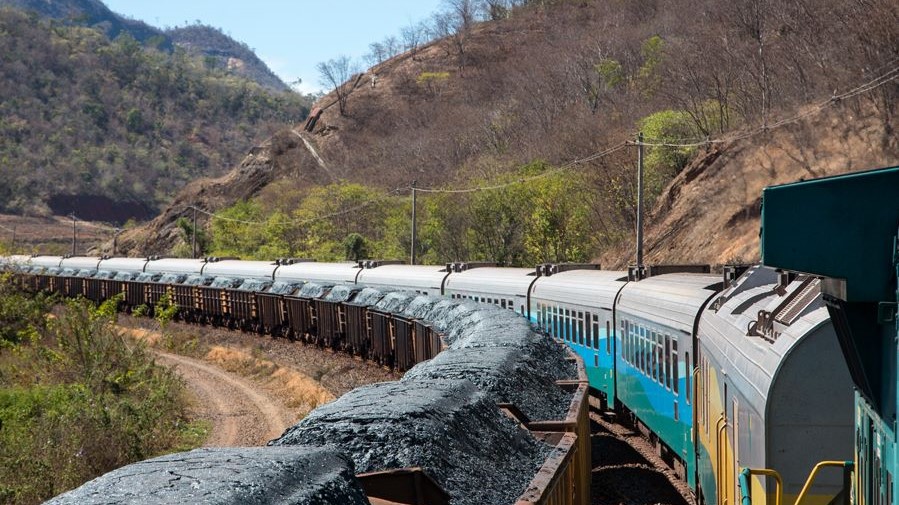
Brazilian miner Vale has reached an agreement with local authorities to pay up to some 11 billion reais ($1.78 billion) to renegotiate two railway concession contracts, the firm announced in a securities filing on Monday.


Brazil’s government has been aiming to remove discounts given to rail companies by the previous administration when some received early contract renewals.

In its filing, Vale noted that it has reached agreement on general terms with the government and land transport regulator ANTT for the renegotiation of the Carajas and Vitoria a Minas railways concessions, which in 2020 were extended through 2057.

The company added that the agreement still awaits additional approvals, and will lead to an increase of 1.7 billion reais in its provisions related to railways concessions.

($1 = 6.1778 reais)

(By Andre Romani; Editing by David Gregorio and David Alire Garcia)
Old mines and gold waste power surge in Pan African’s shares

Bloomberg News | December 31, 2024 | 

Credit: Pan African Resources

The best-performing South African miner this year is defying the country’s contemporary reputation for ever-more costly and lower-grade gold production.


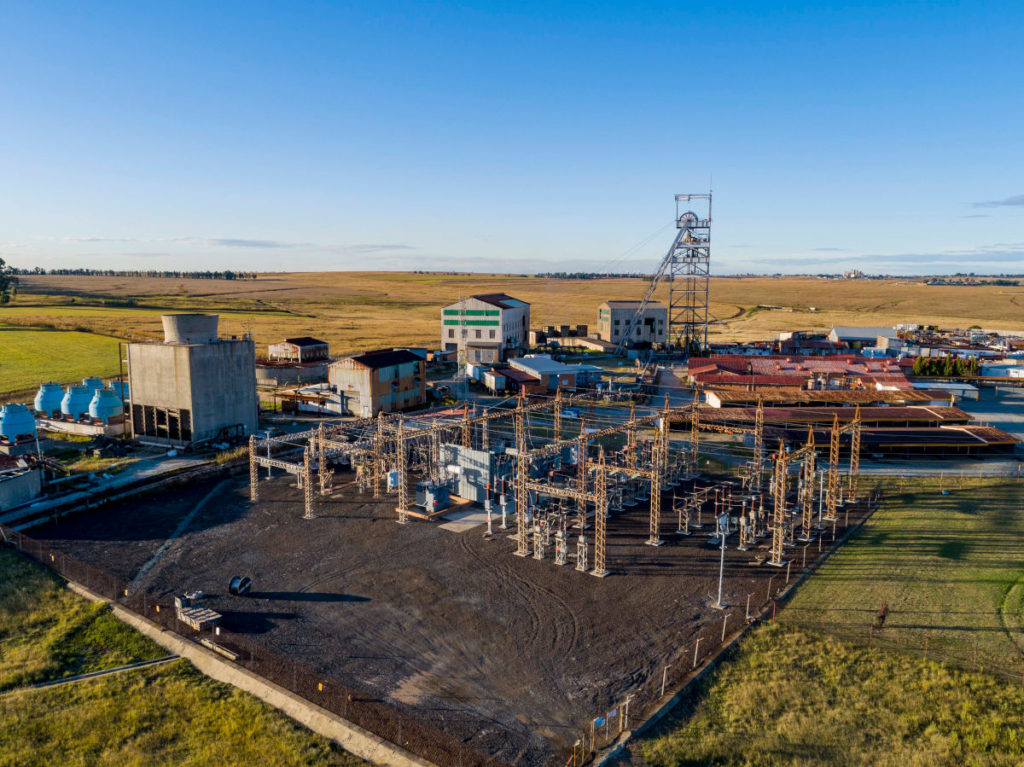
Pan African Resources Plc extracts the precious metal from waste dumps, known as tailings, left behind by decades of mining when South Africa was the world’s biggest gold producer. It’s also operating century-old underground shafts around Barberton, the site of the country’s first gold rush in the 1880s.

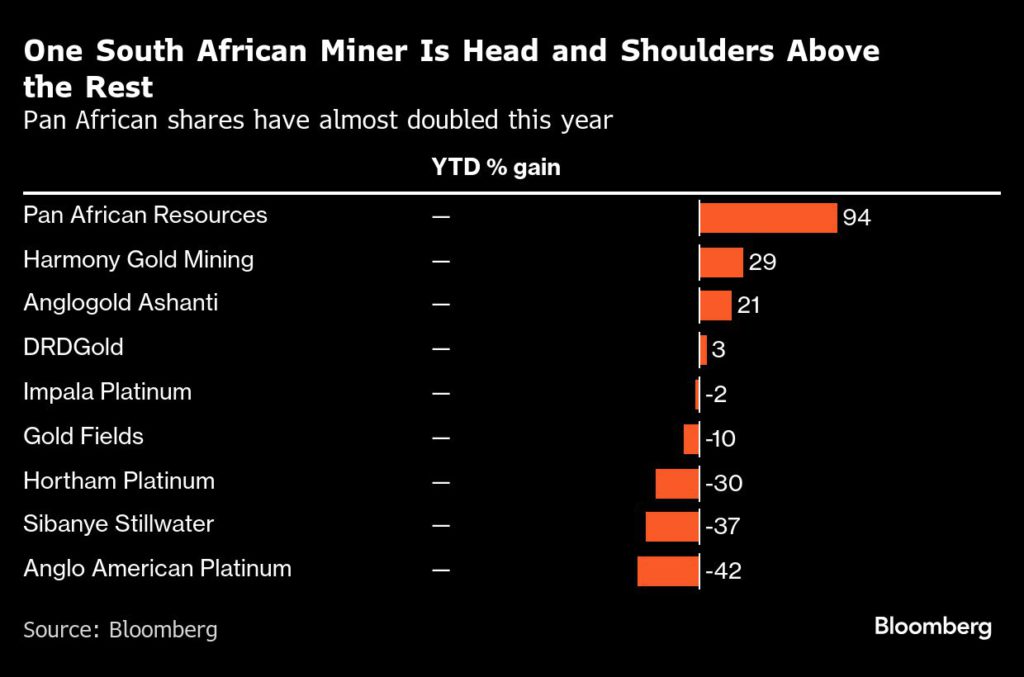
The stock has gained 94% in Johannesburg this year, more than triple the return of the next-best miner, Harmony Gold Mining Co. Ltd. It’s up by a similar amount in London, where it is listed on the Alternative Investment Market. The shares rose 0.3% in Johannesburg on Tuesday, hovering near the record high set earlier this month.

A gold price that’s been smashing through record after record – surging 27% since the start of the year and hitting an all-time high of $2,790.10 an ounce on Oct. 31 – has helped. Larger players haven’t scaled the same heights, partly because rising operational costs and weaker output across extensive global assets have offset the windfall of higher prices.


Pan African, which produced a relatively modest 186,000 ounces of the metal in 2023, has bolstered its portfolio of traditional deep mines with less expensive surface operations that process old tailings sites and will account for almost half of output in a few years.

“We can do what the major guys will find difficult to do, which is grow production – and low cost production – quite materially,” Pan African chief executive officer Cobus Loots said in an interview. The company’s third tailings project, Mintails, which is being ramped up, will provide an extra 50,000 to 60,000 ounces annually, he said. “I think the market’s quite excited about that.”

The miner’s “increasing production profile and decreasing cost profile” make it attractive relative to peers and insulate it from a lower gold price, according to Allan Gray Ltd., a Cape Town-based fund manager that increased its stake in Pan African to more than 17% in the quarter through September, making it the biggest holder of the shares, according to data compiled by Bloomberg.

“I don’t think the market has fully internalized the cash flow that Pan African will be generating once Mintails is up and running,” said Sean Munsie, a portfolio manager at Allan Gray.

New ore bodies

Pan African has owned the Barberton complex – a trio of mines 300 kilometers east of Johannesburg that have produced more than 8 million ounces of gold over almost a century and a half – since 2007. The main operation, Fairview, still has two decades of mining left and the company hopes to prolong that by deploying modern technology to find new ore bodies, according to Loots. The company has also extended the life at Evander, the firm’s other underground asset which was acquired from Harmony Gold Mining Co. Ltd. 12 years ago.

“When the guys started mining these ore bodies, nobody thought they’d be mining them 140 years later,” said Loots. “With our exploration, we keep finding new high-grade ore bodies to mine.”

The world’s biggest gold producer for more than a century, South Africa was knocked off top spot almost 20 years ago and now ranks in 12th place – mining about a tenth as much as it did at its peak in 1970. Harmony – which operates the deepest mine on earth and is up nearly 30% this year – today produces the most gold from the country.

While the underground mines are profitable at the current gold price — with a cost of production of around $1,400 an ounce, according to Loots — the much lower-cost tailings operation gives the company a buffer against gold price volatility, said Brendon Hubbard, a portfolio manager at Johannesburg-based ClucasGray Investment Management, which holds Pan African shares.

“The timing was good in terms of this gold move that we’re seeing at the moment,” said Hubbard. “So the profitability metrics of Pan-African look really, really good.”

(By William Clowes and Khuleko Siwele)

Artemis Gold’s Blackwater mine in British Columbia delayed to January

Staff Writer | December 31, 2024 

The Blackwater construction camp. Artemis Gold photo

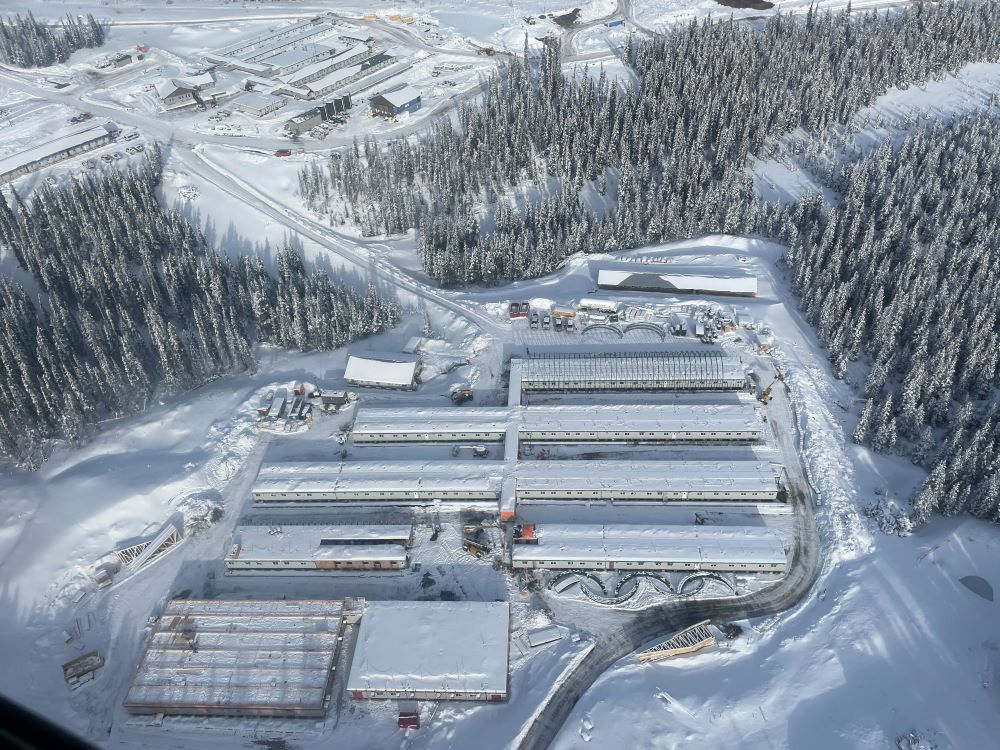
Artemis Gold (TSXV: ARTG) has pushed back the completion date for its Blackwater mine in central British Columbia after experiencing delays with setting up the process control network during the holiday season.


The company now expects to commence processing of ore through the ball mill and first gold pour in January 2025 after it completes final commissioning of the wet plant.

Shares of Artemis Gold traded 0.7% higher on Tuesday morning on the announcement, sending the Vancouver-based miner’s market capitalization above C$3 billion ($2.1bn).

Artemis had previously maintained its first pour target of year-end 2024 despite multiple construction delays. The delays, mainly caused by the BC wildfires during the summer, have led to a 7% rise in the project’s initial capital costs — to C$780-C$800 million.


The Blackwater mine, located 160 km southwest of Prince George, is expected to become the province’s first new gold mine since the Brucejack in 2017.

Once in production, it is expected to produce 500,000 oz. of gold equivalent in each of its first 10 years, generating annual free cash flow of about C$500 million at an all-in sustaining cost of $712 per oz.

Expansion plans are also underway to extend the life of mine to 23 years.
Study sheds light on how gold reaches the Earth’s surface

Mike Maharrey - MoneyMetals.com | December 31, 2024 | 


A close-up of a gold vein exposed in a mine shaft wall. Stock image.

Did you know gold is more plentiful than lead when you analyze the bulk composition of the Earth?


You’re probably thinking, ‘Wait a minute, I thought gold was rare!’

Well, you’re right!

Confused?

Let me explain.

Most of Earth’s gold is locked up in the mantle, the thick, middle layer of the planet located between the crust and the outer core. Pure gold in the mantle tends to stay there. In other words, the gold is there, but it is inaccessible.

But some of the gold is constantly working its way to the surface where miners can reach it.

This process is something of a mystery, an international team of researchers has used mathematical modeling to reveal the specific conditions that lead to the enrichment of gold-bearing magma.

This information could help mining companies streamline exploration efforts and cut costs.

Exploration accounts for 10 to 20% of the costs associated with mining gold. Startups and junior miners allocate more toward exploration than larger, more established companies. As of the first quarter of 2024, the average cost of mining an ounce of gold was just under $1,500.

Here’s how Forbes summarized the findings:


“A specific kind of sulfur existing under a very specific set of pressures and temperatures as found at a depth of 50 to 80 kilometers (or 30 to 50 miles) beneath active volcanoes causes gold to be transferred from the mantle into magmas that eventually move to the Earth’s surface.”

In a nutshell, when gold in the mantle is exposed to a fluid containing sulfur, the gold bonds to the sulfur molecules, creating a gold-trisulfur complex. This compound is highly mobile in molten sections of the mantle and can be driven to the surface by geological activity such as volcanoes.

This activity is prominent in what are known as “subduction zones,” areas where one tectonic plate is diving under another.

“On all of the continents around the Pacific Ocean, from New Zealand to Indonesia, the Philippines, Japan, Russia, Alaska, the western United States, and Canada, all the way down to Chile, we have lots of active volcanoes. All of those active volcanoes form over or in a subduction zone environment. The same types of processes that result in volcanic eruptions are processes that form gold deposits,” study co-author Adam Simon said.


“These results provide a really robust understanding of what causes certain subduction zones to produce very gold-rich ore deposits. Combining the results of this study with existing studies ultimately improves our understanding of how gold deposits form and can have a positive impact on exploration.”

According to the World Gold Council, an estimated 212,582 tonnes of gold have been mined throughout history. If every ounce of this gold was melted into a cube, it would only measure around 22 meters on each side.

The US Geological Survey estimates there are about 50,000 tonnes of minable gold in the ground.

So, while gold is plentiful in the earth, it is extremely rare at ground level. That scarcity is one of the characteristics that makes gold so valuable.

Gold heads for biggest gain since 2010 in mixed year for metals

Bloomberg News | December 31, 2024 

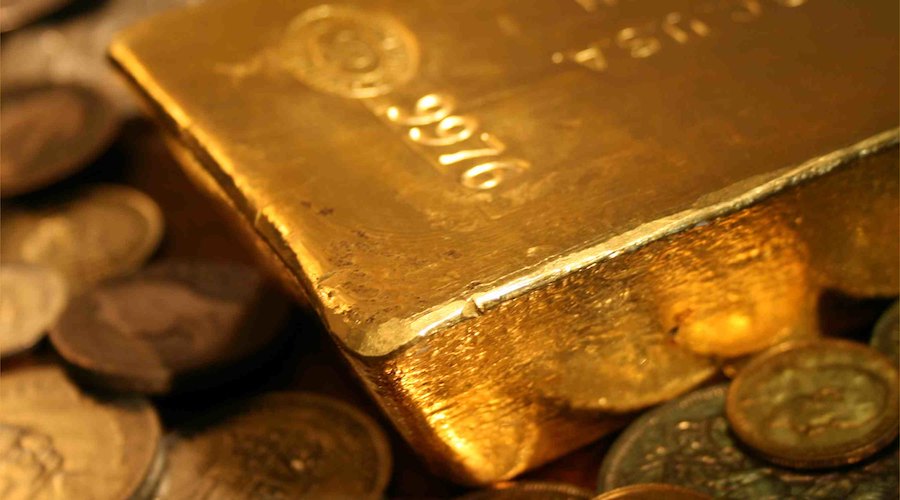
Bullion bar and coins. (Reference image by Bullion Vault, Flickr.)

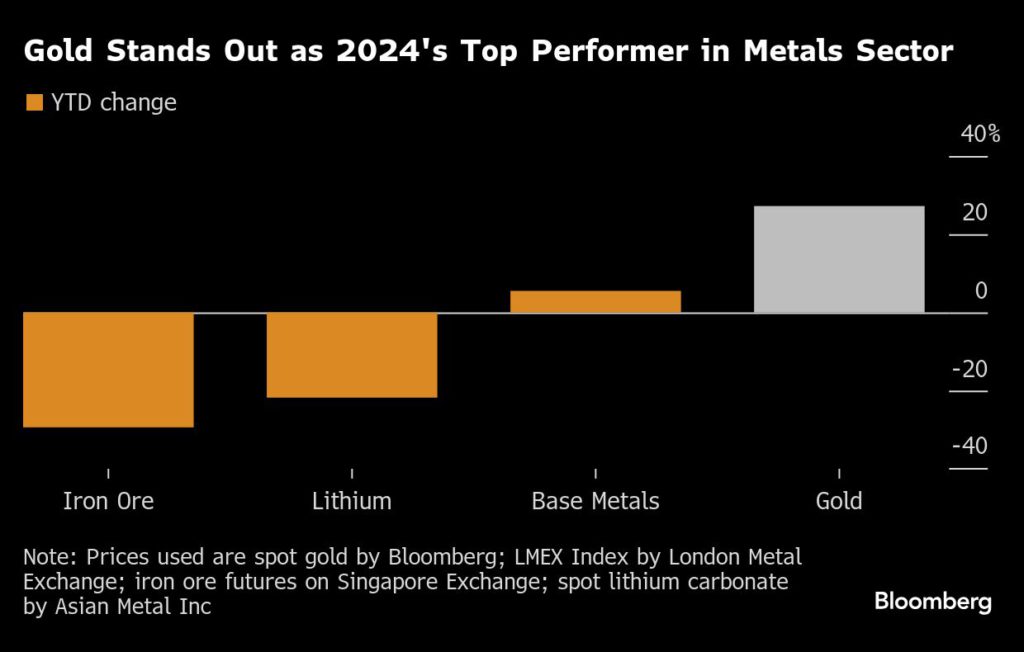
Gold is heading for its biggest gain in 14 years, with a 27% advance fueled by US monetary easing, sustained geopolitical risks and a wave of purchases by central banks.


While bullion has ticked lower since Donald Trump’s sweeping victory in November’s US presidential election, its gains over 2024 still outstrip most other commodities. Base metals have had a mixed year, while iron ore has tumbled and lithium’s woes have deepened.


The varied performances over 2024 highlight the absence of a single, overriding driver that’s steered the complex’s fortunes, while also putting the spotlight on how metals, both base and precious, may fare next year. For 2025, investors are focused on uncertainty around US monetary policy, potential frictions from Trump’s presidency and China’s efforts to revive growth.

Gold’s strong gains this year — which have seen the metal set a succession of records — may signal a possible shift in the market’s dynamics given they have come despite a stronger US dollar and rising real Treasury yields, both typically headwinds.

The precious metal has been “as remarkable as it’s been relentless, making it my biggest market surprise of 2024,” David Scutt, an analyst at StoneX Group Inc. said in a note. “The gold game looks to have changed.”

Other metals have struggled in large part because of China’s prolonged economic slowdown.The LMEX Index of six metals on the London Metal Exchange is on track for a modest annual gain, with softer Chinese demand offset by flashes of supply stress — especially in copper and zinc — that may linger into 2025.

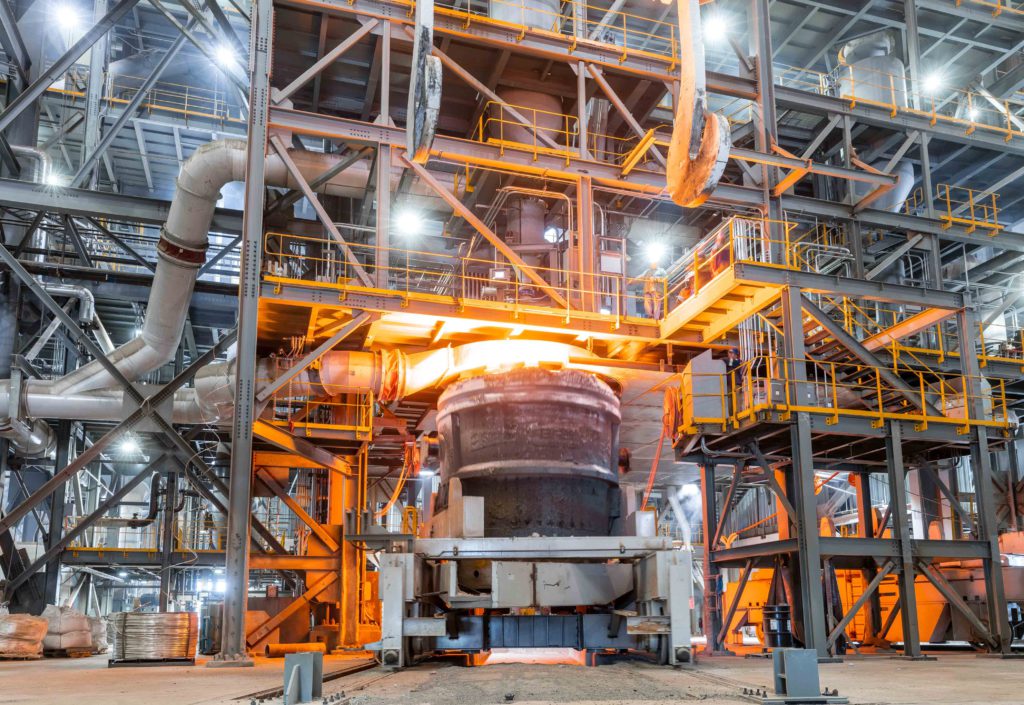
Iron ore has slumped as weak construction activity plunged China’s steel industry into crisis mode, with little relief in sight. Futures in Singapore fell about 28% this year, the biggest annual drop since 2015.

Lithium — used to make batteries — is on track for a second steep annual decline as a serious and ongoing global supply glut was compounded by turbulence for the electric-vehicle industry.

In Tuesday’s trading, spot gold rose 0.7% to $2,623.97 an ounce as of 10:40 a.m. in New York, compared with an October peak above $2,790; iron ore futures settled 0.4% higher at $100.97 a ton; and LME copper fell 1.1% to $8,814.00 a ton in London.
Nippon Steel offers Biden veto over US Steel output, report says

Bloomberg News | December 31, 2024 | 


Credit: US Steel

Nippon Steel Corp. offered to give the US government a veto over any reduction in US Steel Corp.’s production capacity in a last-ditch effort to get President Joe Biden’s approval for its takeover of the American steelmaker, the Washington Post reported.


The proposal is aimed at addressing concerns raised by the Committee on Foreign Investment in the US, or CFIUS, which said last week that the Japanese company’s takeover of US Steel would lead to a decline in American steel output, the newspaper said.


(By Doug Alexander)
Sanctioned Russian LNG Cargo Stranded at Sea


By ZeroHedge - Dec 27, 2024,

The LNG carrier Pioneer, carrying sanctioned Russian LNG, was unable to find a buyer after a four-month global search.

The ship was forced to return to the Koryak floating storage unit in Kamchatka, where the gas will likely be held until a buyer can be found.

The incident highlights the increasing challenges faced by Russia in exporting its energy resources due to Western sanctions and compliance concerns.


The shadow fleet of liquefied natural gas carriers transporting blacklisted Russian LNG has encountered a major setback, with at least one ship's cargo traveling around the world, finding no buyers as the cargo was deemed too risky.

Bloomberg reports that an LNG carrier called "Pioneer," carrying a sanctioned shipment of Russian LNG, circumnavigated the world for four months, failing to find a buyer willing to breach US restrictions.

"This vessel (called Pioneer) was spotted on satellite images picking up the first shipment from the Arctic LNG 2 facility in early August — despite camouflaging the move with misleading location information — but then spent well over four months hunting for a customer," Bloomberg's Stephen Stapczynski wrote on X.

According to ship-tracking data, Pioneer arrived at the Koryak floating storage unit in Kamchatka on Thursday after four months on the seas.

"The gas is likely to be held there until a customer can be found," Bloomberg noted.

Most of Russia's dark fleet consists of oil tankers. However, the West has increasingly targeted LNG carriers as Washington and Brussels race to sever Russian energy flows to Europe.

Regarding global LNG trading - buyers, sellers, charterers, financing banks, and insurers must be extra vigilant when running compliance checks to ensure their ships do not engage in Western-sanctioned activities, and this is likely why Pioneer could not find a buyer.

By Zerohedge.com
The West found a miles-long piece of evidence backing its claim Russia is purposely cutting undersea cables


Tom Porter
Updated Mon, December 30, 2024 


Finland accused a Russian ship of dragging its anchor to sever undersea cables in the Baltic.

Officials said the vessel, Eagle S, is part of a "shadow fleet" transporting sanctioned oil.

The EU believes Russia is responsible for incidents that have disrupted power and internet service.

Western nations have long suspected that Russia has been deliberately severing vital underseas cables — but without much to prove it.

That may have changed after officials in Finland pointed to an unusually vivid piece of evidence tied to a Russia-linked ship.

Finnish officials on Sunday said they found miles and miles of tracks on the bed of the Baltic Sea that indicate a Russia-linked tanker could be responsible for slicing a cluster of valuable data and power cables.

Sami Paila, the detective chief inspector of Finland's National Bureau of Investigation, said "dragging marks" from an aging tanker's anchor had been found beneath the Baltic Sea near the cables, Reuters reported.

"The track is dozens of kilometers in length," Paila said.

Germany's foreign minister on Friday cited the incident as a "wake-up call," saying it would be naive to consider it an accident.

The minister, Annalena Baerbock, pushed for further European sanctions on the so-called "shadow fleet" of ships tied to Russia.

Finnish officials boarded the Eagle S after the Estlink 2 subsea cable carrying electricity and four other cables carrying data were damaged on Wednesday.

Estlink 2 is one of two cables carrying electricity between Finland and Estonia. Officials have said it might not be functional again until August, Reuters reported.

The Finnish telecommunications firm Cinia said the damage caused disruptions in internet communications between Rostock, Germany, and Helsinki and could take weeks to repair.

This is the latest in a series of similar incidents in the Baltic region.

The Eagle S, registered in the Cook Islands, was carrying about 35,000 tons of unleaded gasoline loaded in Russian ports. It was traveling to Egypt when the Finnish coast guard stopped it.

Finnish officials say it's likely part of a "shadow fleet," a network of vessels registered through complex ownership deals that carry fuel in an effort to circumvent international sanctions on Russia's oil trade.

This is the first time a part of the fleet has been accused of involvement in subsea cable sabotage.

"The suspected vessel is part of Russia's shadow fleet, which threatens security and the environment, while funding Russia's war budget," Kaja Kallas, the chief foreign affairs official for the EU, said.

"We will propose further measures, including sanctions, to target this fleet," Kallas posted on X.

Russia has long denied any role in damaging subsea cables in the Baltic. The Russian embassy in the UK did not respond to a request for comment from Business Insider.

Internet cables between Germany and Finland and Sweden and Estonia were damaged in November. A Chinese vessel was detected in the vicinity when the damage occurred.

Estonia on Friday said it would be stepping up efforts to defend the undamaged Estlink 1 cable.

"We've decided to send our navy close to Estlink 1 to defend and secure our energy connection with Finland," Hanno Pevkur, Estonia's defense minister, said.

Miles-long anchor drag mark found on Baltic seabed after suspicious cable damage, Finnish investigators say

Associated Press
Mon, December 30, 2024 


The oil tanker Eagle S, alongside the Finnish coast guard ship Uisko and tugboat Ukko, in the Gulf of Finland on December 28, 2024. The Eagle S is flagged in the Cook Islands but was described by Finnish customs officials as part of Russia’s shadow fleet of fuel tankers.

Finnish investigators probing the damage to a Baltic Sea power cable and several data cables said they found an anchor drag mark on the seabed, apparently from a Russia-linked vessel that has already been seized.

The discovery heightened concerns about suspected sabotage by Russia’s “shadow fleet” of fuel tankers – aging vessels with obscure ownership acquired to evade Western sanctions amid the war in Ukraine and operating without Western-regulated insurance.

The Estlink-2 power cable, which transmits energy from Finland to Estonia across the Baltic Sea, went down on Dec. 25 after a rupture. It had little impact on services but followed damage to two data cables and the Nord Stream gas pipelines, both of which have been termed sabotage.

Finnish police chief investigator Sami Paila said late Sunday the anchor drag trail continued for “dozens of kilometers (miles) … if not almost 100 kilometers (62 miles).”

Paila added to Finnish national TV broadcaster Yle: “Our current understanding is that the drag mark in question is that of the anchor of the (seized) Eagle S vessel. We have been able to clarify this matter through underwater research.”

Without giving further details, Paila said authorities have “a preliminary understanding of what happened at sea, how the anchor mark was created there,” and stressed that the “question of intent is a completely essential issue to be clarified in the preliminary investigation.”

On Saturday, the seized vessel was escorted to anchorage in the vicinity of the port of Porvoo to facilitate the investigation, officials said. It is being probed under criminal charges of aggravated interference with telecommunications, aggravated vandalism and aggravated regulatory offense.

The Eagle S is flagged in the Cook Islands but was described by Finnish customs officials and the European Union executive commission as part of Russia’s shadow fleet of fuel tankers. Russia’s use of the vessels has raised environmental concerns about accidents given their age and uncertain insurance coverage.

In the wake of the cable rupture, NATO Secretary-General Mark Rutte said last week that the military alliance, which Finland joined last year, will step up patrols in the Baltic Sea region.

The Finnish Coast Guard said Monday that another tanker ship headed for a Russian port has engine failure and drifted, then anchored in the Gulf of Finland south of the Hanko Paninsula. The guard said it was notified Sunday night.

Registered in Panama, the M/T Jazz was en route to Primorsk, Russia, from Sudan, with apparently no oil cargo. Finnish authorities have dispatched a tugboat and a patrol ship to ensure that the vessel does not drift and to prevent any damage to the environment.

Regional director of the Coast Guard Janne Ryönänkoski said there was no immediate risk to the seabed infrastructure.

Earlier Monday, EU foreign policy chief Kaja Kallas said that “sabotage in Europe has increased” since Russia’s full-scale invasion of Ukraine in February 2022.

Kallas told the German newspaper Welt that the recent “sabotage attempts in the Baltic Sea are not isolated incidents” but “part of a pattern of deliberate and coordinated actions to damage our digital and energy infrastructure.”

She vowed that the EU would “take stronger measures to counter the risks posed” by vessels of Russia’s shadow fleet.

Finland, which shares a 1,340-kilometer (832-mile) border with Russia, abandoned its decades-long policy of neutrality and joined NATO in 2023, amid Russia’s war against Ukraine.


Germany calls for new sanctions on Russia's dark fleet that is 'damaging major undersea cables' nearly every month

Huileng Tan
Mon, December 30, 2024
Business Insider


German Foreign Minister Annalena Baerbock said ships are damaging undersea cables in the Baltic Sea nearly every month.Florian Gaertner/Photothek/Getty Images

Germany's foreign minister urged new European Union sanctions on Russia's dark fleet.

As part of a probe into a cut cable, Finland said last week it detained a ship that may be from the dark fleet.

The case is being investigated as "aggravated criminal mischief," Finnish police said.

Germany's foreign minister has called for further sanctions against Russia's dark fleet of oil tankers following damage to an underwater cable linking Finland and Estonia last week.

"Ships are damaging major undersea cables in the Baltic Sea almost every month," German Foreign Minister Annalena Baerbock told the Funke media group.

"Crews are leaving anchors in the water, dragging them for kilometers along the seafloor for no apparent reason, and then losing them when pulling them up," Baerbock said, per an AFP translation.

"It's more than difficult to still believe in coincidences. This is an urgent wake-up call for all of us," she added.

Baerbock urged new European Union sanctions against Russia's dark — or shadow — fleet of oil tankers that transport sanctioned Russian oil and energy products.

The EU has also sanctioned 79 vessels from Russia's shadow fleet. These ships are banned from accessing EU ports and services.

Many of these vessels are aging, operating under opaque ownership, and sailing without adequate insurance coverage. They pose environmental and financial risks to coastal countries. A heavy storm earlier this month caused two tankers to spill thousands of tons of low-grade fuel oil into the Kerch Strait, between the Russian-occupied Crimean Peninsula and Russia.

Baerbock's comments came after Finnish authorities detained the Eagle S oil tanker on Thursday as part of an investigation into the cutting of an undersea cable in the Baltic Sea. The cable transmits electricity from Finland to Estonia.

The case is being investigated as "aggravated criminal mischief," Finnish police said in a press release.

Finnish customs authorities and the European Union's executive commission said the tanker might be part of Russia's dark fleet of tankers.

The Kremlin declined to comment on Finland's seizure of the oil tanker on Friday.

"I cannot say anything for sure, for this is a highly specialized issue that the presidential administration is hardly in a position to comment on," Kremlin spokesperson Dmitry Peskov said in response to a question on the Finnish move.

On Friday, NATO Secretary General Mark Rutte said on X that he had spoken to the Finnish president about the investigation into the "possible sabotage of undersea cables."

"#NATO will enhance its military presence in the Baltic Sea," Rutte added.


NATO plans to build satellite links as backups to undersea cables

Jowi Morales
Mon, December 30, 2024 

Credit: Shutterstock

Because of the increasing number of undersea cable disruptions happening in the past couple of years, NATO is building on a system that will locate damage to undersea cables with an accuracy of one meter and find more routes that data can take if a disruption does occur in a particular line. This project will be called HEIST, says the IEEE in a report, which stands for Hybrid Space-Submarine Architecture Ensuring Infosec of Telecommunications.

The value of transactions transmitted through undersea cables exceeds $10 trillion in total, with Henric Johnson, the vice-chancellor of Blekinge Institute of Technology (BTH) and HEIST testbed coordinator, saying, “What we’re talking about now is critical infrastructure in the society.” BTH, located in Karlskrona, near the southern coast of Sweden, is one of the partners in the HEIST program. Engineers will work there to develop smart systems that allow cable breaks to be quickly located and develop protocols to quickly and automatically reroute the affected data to satellites.

“We have had incidents of cables that have been sabotaged between Sweden, Estonia, and Finland,” added Johnson. “So those incidents are, for us, a reality.”

Although it may seem that undersea cables are tough infrastructure because of the environment they’re in, these intercontinental connections are very fragile. That’s because these cables, about the thickness of a garden hose, lie on the seafloor instead of being buried underneath. Anything dragging on the ocean floor—a sea creature, a loose anchor, or a submarine—could easily damage or even sever these communications cables.

This shows how fragile our internet-driven world is, especially given that over 95% of global data traffic is carried through these undersea fiber optics. About a hundred cable cuts happen each year, with about 600 undersea cables globally, meaning that about 16% of global connections are down yearly. Although there are specially designed ships stationed worldwide to repair faults as soon as they happen, these often take days or weeks and could cost millions of dollars.

Satellites are the primary backups to undersea cables, but their bandwidth is far behind physical connections. For example, Google’s latest fiber-optic lines can hit 340 terabits per second. In contrast, the frequency used by most satellites—12 to 18GHz—can only handle about 5 gigabits per second or about 0.0015% of the maximum throughput of Google’s fiber connection.

Work is underway to upgrade satellites from radio transmissions to lasers, increasing the speed by about 40 times to 200 Gbps. Starlink already uses this technology to communicate between its satellites, while Amazon is also developing it for its own Project Kuiper. However, it still faces challenges, like poor visibility and targeting precision between the satellite and ground station.

Because this is a major NATO project, the alliance plans to open-source part of the process. Making it public would allow anyone interested to find holes and make many iterations. Gregory Falco, the NATO Country Director for HEIST, believes that this is the fastest way for the project to achieve its goals and help prevent any catastrophic loss of data transmission in case of deliberate attacks against these underwater infrastructures in international waters.
Safeguarding Global Trade: A New Era of Maritime Security

By ZeroHedge - Dec 29, 2024


The ongoing Red Sea crisis, marked by Houthi attacks on commercial and naval vessels, has severely disrupted global trade and caused significant economic losses.

Traditional military responses may not be sufficient, and a market-driven approach to maritime security involving private sector companies is emerging as a potential solution.

Private maritime security companies, insurance incentives, and technological innovation are key components of this new approach to safeguarding global shipping lanes.


The ongoing crisis in the Red Sea has thrust maritime security into the global spotlight, exposing vulnerabilities in our international shipping lanes and threatening the stability of global trade. Since November 2023, Houthi forces in Yemen have conducted over 100 attacks against commercial ships and warships, creating an unprecedented challenge for the maritime industry. This escalation has not only disrupted vital trade routes but also sent ripples through the global economy, affecting everything from shipping costs to consumer prices.

The scale of this crisis is significant. Transit through the Suez Canal, a critical chokepoint connecting the Red Sea to the Mediterranean Sea, has plummeted by over 50% compared to the previous year. This has caused the canal’s revenue to decrease by 60%, painting a stark picture of the crisis’s impact on global commerce.

The economic ramifications are equally severe. As ships are forced to reroute around the Cape of Good Hope, journey distances are increased, transit times are lengthened, and fuel consumption is boosted. Specifically, this detour adds approximately 4,000 miles to shipping journeys, resulting in 30% longer transit times and additional lead times of up to two weeks for shipments between Asia and Europe. The ripple effects are felt across industries, particularly those relying on just-in-time delivery systems.

While military intervention has been the go-to response for such crises, it’s time we considered a more sustainable, market-driven approach to maritime security. The private sector, with its capacity for innovation and efficiency, could offer solutions that are both more effective and economically viable in the long term.

One potential avenue is the expansion of Private Maritime Security Companies (PMSCs). These entities have already proven their worth in combating piracy, having been employed by numerous shipping companies. By creating a competitive market for maritime security services, we could drive innovation in threat detection and deterrence while potentially reducing costs through market efficiencies.

Insurance companies could play a pivotal role in this market-driven approach. By offering reduced premiums to vessels that implement enhanced security measures, they could create a financial incentive for ships to invest in their own protection. This approach aligns security interests with economic ones, hopefully leading to a more widespread adoption of security measures.

Technological innovation, spurred by market demand, could also revolutionize maritime security. The maritime security market, valued at $32.67 billion in 2023, is projected to grow to $49.49 billion by 2032. This growth potential could attract significant investment in developing advanced technologies for threat detection and response. The collaboration between BlackSky Technology and Spire Global to create a real-time marine tracking service capable of monitoring over 270,000 vessels worldwide is a perfect example of the potential for the private sector to find innovative solutions in maritime security.

Some critics have argued that a private sector solution to the Red Sea Crisis might lead to a fragmented approach to maritime security. However, this concern can be addressed through proper regulation and international cooperation. This approach is not about completely privatizing maritime security, but rather about using the strengths of both public and private sectors. Government oversight and international cooperation remain crucial, but it needs to be complemented by policies that encourage and facilitate private sector involvement in maritime security.

The challenges are significant, but so are the potential rewards. The fallout surrounding the Red Sea crisis has shown that a secure maritime domain is essential for global prosperity, and by harnessing the power of the market, we can work towards achieving this goal. It’s time for policymakers and industry leaders to come together and chart a new course for maritime security which embraces the private sector while maintaining the necessary oversight and coordination of governmental bodies.

The Red Sea crisis is a wake-up call. Let’s not just weather this storm, but use it as an opportunity to build a stronger, more secure maritime future for all.


By SchiffGold.com, via Zerohedge.com


Cleanup Underway After Bulkers Collide in China’s Yangtze off Shanghai

bulker
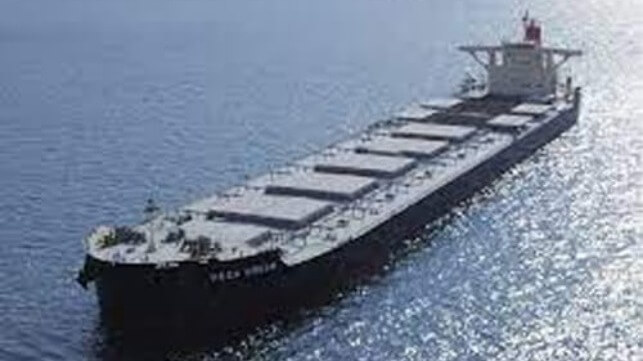
MOL's Capesize bulker Vega Dream was involved in a collision in China (MOL)

Published Dec 31, 2024 1:38 PM by The Maritime Executive


A fuel spill cleanup is underway as officials work to understand why two giant bulkers collided in China’s busy Yangtze River. There were no injuries to the crews and both vessels are reported to be stable although at least one has suffered hull damage.

The incident involved one of Japan’s giant 175,000 dwt Capesize bulkers. The Vega Dream was built in 2010 and operates under the Japanese flag for Mitsui O.S.K. The massive ship is 951 feet (290 meters) in length. It has been in the Shanghai area for the past week or longer.

Details of the incident were not reported, but the smaller Chinese-owned, Japanese-managed bulker Yangze appears to have been outbound from Shanghai sailing to Singapore. The vessel was built in 2022 and is 82,000 dwt with a registry in Singapore.

The bulkers were near Changjian close to the mouth of the river when the incident occurred. Both ships have been directed into an anchorage on the river for investigation.

The Maritime & Ports Authority of Singapore reports it has been in touch with the vessel and China’s Shanghai Maritime Safety Administration which is managing the situation. The Singapore-registered bulker is reporting hull damage and a spill of approximately 9 metric tons of fuel. The Shanghai MSA and several vessels deployed by the ship’s owners are working to contain and clean up the spill.

The Singapore authority reports it offered to assist if needed.