Tuesday, February 18, 2025

ISLAM  HOMOPHOBIA


First openly gay Imam shot dead in South Africa


Issued on: 18/02/2025 - 
Video by: FRANCE 24

A man regarded as the first openly gay Muslim imam has been fatally shot while sitting in a car in South Africa in what many are calling an assassination because of his teachings. Muhsin Hendricks was ambushed by two men in a pick-up truck while visiting the southern city of Gqeberha on Saturday

.


Germans protest military aid, arm supplies to Ukraine

Issued on: 18/02/2025 - 

Video by: FRANCE 24

The peace movement in Berlin has taken to the streets a few days before the general election. For three years, these activists have been denouncing the German government's arms supplies and support to Ukraine.

Video news


The German election explained through seven essential questions

THE CONVERSATION
Published: February 18, 2025 

The CDU’s Friedrich Merz is the most likely candidate for chancellor. EPA/Filip Singer


Germany is holding a federal election on February 23 – a snap vote called by chancellor Olaf Scholz when his coalition government fell apart at the end of last year. Parties are running to win seats in the national parliament, or Bundestag. And with an unusual level of interest from onlookers outside the country, including the world’s richest man, The Conversation asked Gabriele Abels, the Jean Monnet professor for comparative politics and European integration at the University of Tübingen, to prime us on the basics, via seven essential questions.

1. Who are the main parties running in this election?

The parties standing in the federal election are, from left to right on the political spectrum: Linke (the Left), SPD (social democrats), Greens, FPD (liberals), CDU/CSU (conservatives), AfD (right-wing extremist/populist).

There is also the Buednis Sahra Wagenknecht (BSW), but this party is not so easy to fit into the left-right spectrum. The BSW holds leftist positions on social policy issues but is also anti-migration and opposed to sanctions against Russia and against military support for Ukraine.

2. When will we know the results?

It will take several days after February 23 to confirm the final results of the election.

Based on the exit polls we will have fairly reliable results that evening but there may still be some uncertainty. It depends on how many people vote by post (a trend which is on the rise) and on how the smaller parties fare.

There are three such parties – Linke, FDP and BSW – hovering around a 5% vote-share in pre-election polls. This is the threshold for qualifying for any seats in parliament at all, so whether or not the three make it past 5% will have quite an effect on the overall composition of the Bundestag and the distribution of seats among the parties in parliament.

There is an additional rule: parties winning at least three districts (basic mandate clause) qualify for the Bundestag and will get seats according to their share of party votes. The Linke is investing its hopes in this option.

3. Who is most likely to become chancellor?


According to all opinion polls, the conservatives (CDU/CSU) will win the election and become the biggest party in government. This means that their lead candidate Friedrich Merz will become the next chancellor.

4. Will one party run the government?

No party will have enough seats to form a government alone, given that the German system makes it extremely difficult to do so, by design. A coalition needs to be formed comprising parties that together hold more than 50% of the seats in the Bundestag.


Even when we have the full results, forming a new government will, most likely, take some time. Talks between parties will start immediately after the election, but it might take several months to put a government together. It depends on the numbers at play and the political arithmetic – essentially the extent to which different combinations of parties agree or disagree on various policy positions.

Governments are formed of multiple parties in Germany. 
EPA/Hannibal Hanschke

During a period in the 1950s, when Konrad Adenauer was chancellor, there was an option to have a single-party government. But even he preferred a coalition. Other than that, there has always been the need to form a coalition after an election.

Unlike the Nordic countries, we in Germany do not have a tradition of minority governments since they are considered to be too weak and unstable. Germans prefer governments which are backed by a clear majority in the Bundestag.

5. Why does Germany have a system that makes coalitions the norm?

It is partly political culture to prefer stable majorities and emphasise compromise. But the proportional voting system and increased political fracturing also play a part in delivering many different parties into the Bundestag.

Until the early 1980s there were usually three parties (conservative, social democrats and liberals). Today, we have seven parties in the Bundestag. Proportional voting gives new parties more possibilities to win seats, while the 5% threshold is a barrier against excessive fragmentation.

6. We hear a lot about the AfD – but will it be in government?


No – at least, not this time. There is what we call a brandmauer (firewall), meaning that, so far, none of the other parties is willing to form a government with the AfD. The most likely partner would be the conservatives. Yet, their lead candidate Merz is very outspoken that cooperation with the AfD would mean selling out the conservative soul. Given that the AfD is becoming more and more radical, this is not likely to change in the near future.

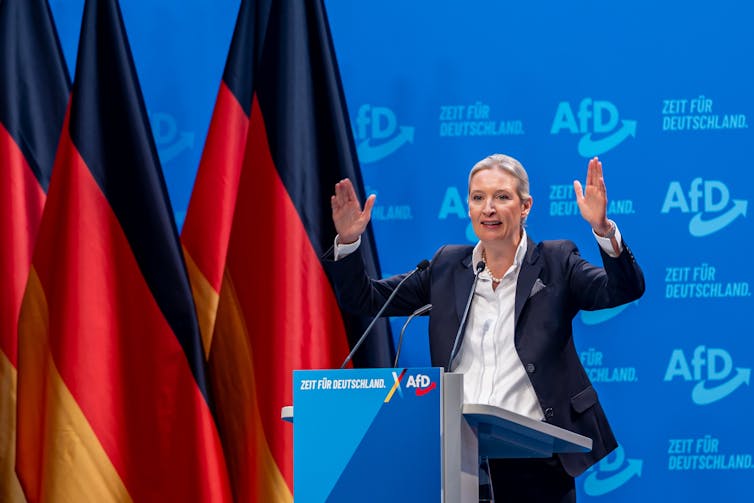
AfD co-leader Alice Weidel. EPA

However, there is already a level of cooperation between the AfD and other parties at the local level and even in some state parliaments, especially in East German Länder (states). Often, new patterns of coalition formation are tried out in Länder parliaments and later serve as models for the federal level. The AfD is hoping this will be the case for them.

7. How important is this election in historical context?


I would not call this election historic on the scale of the one that just took place in the US. But this election is nevertheless important – and is perceived as important by voters in terms of the future of Germany and its economy.

Migration and the economy are the top issues and there is a strong sense of frustration as well as a growing distrust in politics. The majority of voters are happy about the snap election given that the coalition led by Olaf Scholz was no longer efficient and there was constant in-fighting.

However, given that this election has been called at short notice, it’s not clear that turnout will match the current strength of feeling. There has not been much time to register for a postal vote and parties have had only a brief campaign window to win over voters. Which of them will be able to mobilise their voters and also non-voters (recently between 25% and 30% of the electorate will be a crucial deciding factor. Lately the AfD has been successful in terms of mobilising non-voters and also at mobilising young voters. That said, older voters make up the majority, so a lot hangs in the balance.


Author
Gabriele Abels
Jean Monnet Professor for Comparative Politics & European Integration, University of Tübingen


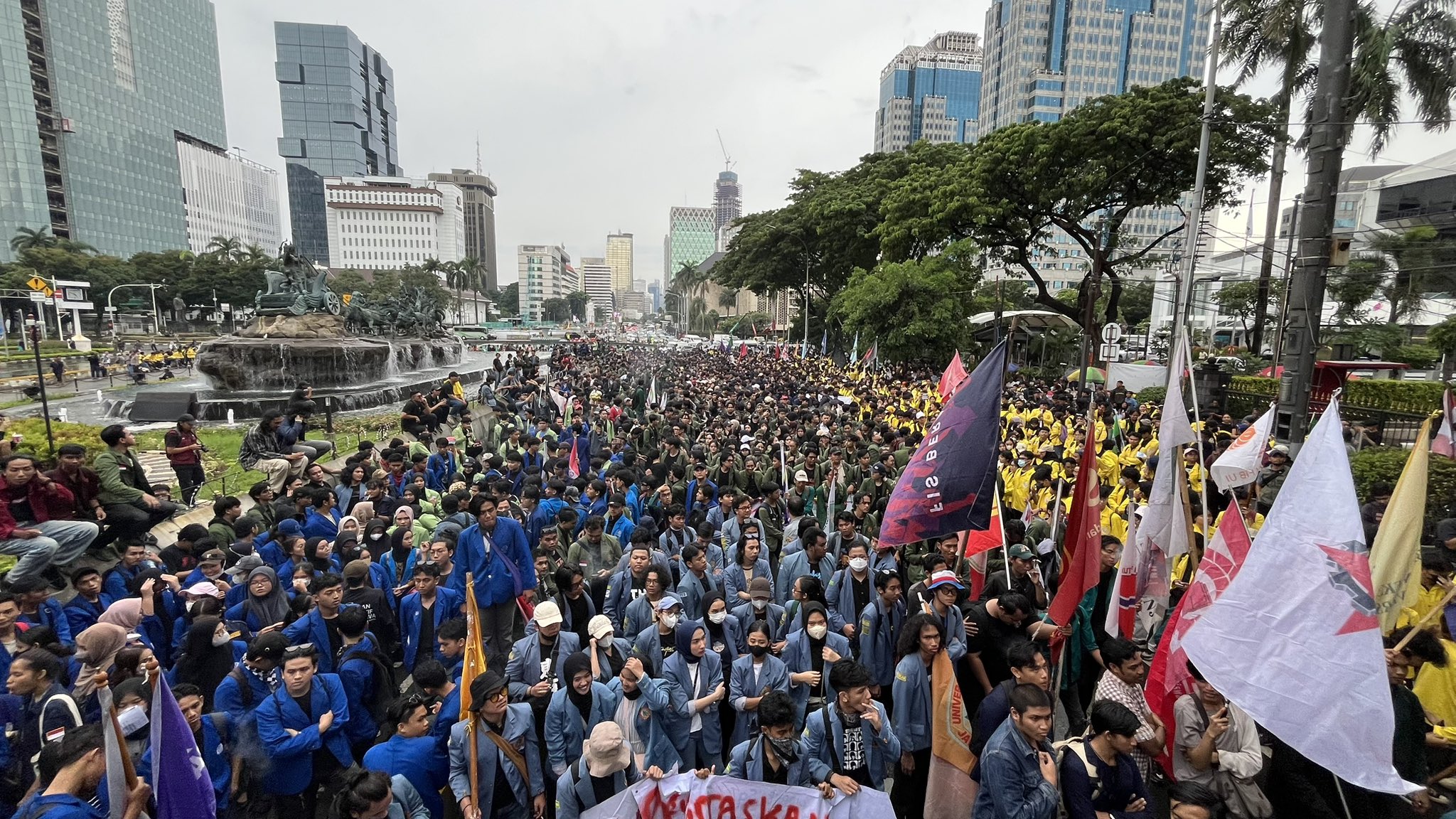
Indonesian students take to the streets against Prabowo's policies

The rallies, coordinated by the All-Indonesia Association of University Student Executive Bodies, oppose cuts in education, repressive policies and the management of the Danantara sovereign wealth fund. The hashtag #IndonesiaGelap went viral on social media, a sign of mounting dissatisfaction. In Surabaya, young people clash with police
.


Jakarta (AsiaNews) – Dissatisfaction with Indonesian President Prabowo Subianto's new policies has turned into street demonstrations by thousands of students.

The protests, coordinated by the All-Indonesia Association of University Student Executive Bodies (BEM SI), are accompanied by the hashtag #IndonesiaGelap (Dark Indonesia) vs "Indonesia Emas" (Golden Indonesia) promoted by the president.

In a few hours, the slogan has amassed over 785,000 posts on X. In Surabaya, East Java, a rally turned violent when students clashed with police.

The demonstration, which began yesterday, is expected to last three days. The protest is also trending on social media with images of the national coat of arms, the Garuda against a black background emblazoned symbolising what is happening in the country.

Mem appeared on social media already last year, mocking the expression, with sarcastic alternatives such as "Indonesia Cemas" (anxious Indonesia) or "Indonesia Lemas" (weakened Indonesia).

“Our nation's policies are growing increasingly repressive and harmful to the people,” the BEM SI said in a circular.

The student group is demanding transparency in the free nutritious meal programme (one of Prabowo’s main proposals), it opposes the revised Mining Law, rejects the so-called dual-function policy for the military (embedded in positions of political governance).

Protesters oppose recent budget cuts from the public administration and the education sector in favour of Prabowo administration's flagship programs, including the Danantara sovereign wealth fund, which is expected to manage more than US$ 900 billion for investments in renewable energy, advanced manufacturing and agriculture.

However, many Indonesians fear that these measures could further penalise public services and the weakest sections of the population.


Trump-Musk administration halts Agent Orange clean-up and UXO clearing in Vietnam 

February 18, 2025 


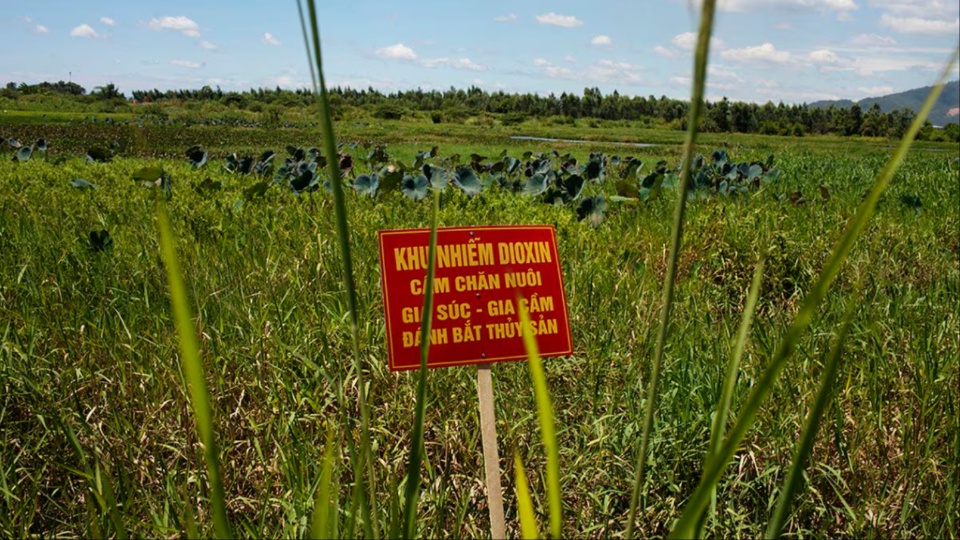
A warning sign stands in a field contaminated with dioxin near Danang airport, a former U.S. military base in Vietnam. The sign reads: 'Dioxin contamination zone - livestock, poultry and fishery operations not permitted.' | Maika Elan / A
P

HANOI—Quang Tri Province in central Vietnam is urgently appealing to the United States Embassy to restore funding for Unexploded Ordnance (UXO) and Agent Orange cleanup projects. These critical initiatives have been significantly impacted by funding cuts implemented by the Trump-Musk administration.

Since taking office, the Trump-Musk regime has drastically reduced foreign aid projects, with the exception of those that support Israel’s wars in the Middle East. This blanket reduction in aid included the cessation of U.S. support for vital projects aimed at addressing the devastating and lasting effects of the Vietnam War, specifically UXO clearance and Agent Orange environmental clean-up.

During the Vietnam War, from 1965 to 1973, the U.S. military conducted one of the most extensive aerial bombardment campaigns in history, dropping approximately 7.5 million tons of bombs on Vietnam. This staggering total amounts to three times the tonnage used in World War II. The munitions dropped included a wide array of deadly weapons such as conventional bombs, aerial mines, cluster bombs, white phosphorus, and napalm. Approximately 30% of these bombs failed to detonate, leaving large swathes of land contaminated with unexploded ordnance.

As of 2025, it is estimated that 20% of Vietnam’s land is still contaminated by UXO. These remnants continue to pose a severe threat to local communities, hindering development and endangering lives. Since 1975, approximately 100,000 Vietnamese have been killed or injured by UXO, with 40% of these victims being children who often encounter these deadly munitions while playing outdoors or assisting their families in farming activities.

From 1961 to 1971, the U.S. military also conducted extensive chemical warfare operations under Operation Ranch Hand, spraying more than 20 million gallons of herbicides over Vietnam, including 12 million gallons of Agent Orange. This toxic defoliant contained dioxin, a highly carcinogenic compound that contaminates soil, water, and the food chain. Nearly five million Vietnamese were directly exposed to these chemicals, and the effects continue to be felt across generations. Today, Vietnam is witnessing the health consequences of dioxin exposure among second and third generations of victims, including congenital disabilities, cancers, and other chronic illnesses.

Quang Tri Province is one of the most heavily affected areas in the country. The province has suffered significantly from both large-scale UXO contamination and the long-term environmental and health effects of Agent Orange. Since the end of the war, nearly 10,000 people in Quang Tri have been killed or injured in UXO accidents. Tens of thousands of tons of unexploded munitions remain buried beneath the ground, posing an ongoing danger to the local population.

Clearing UXO and remediating Agent Orange contamination is an expensive and complex task. Vietnam, as a developing country, lacks the financial and technical resources needed to complete this work independently.

After the 1996 normalization of relations between Vietnam and the United States, the U.S. government committed to assisting in cleaning up the remnants of the war it waged on this country. This included efforts to clear UXO, address environmental contamination from Agent Orange, and provide technical support for decontamination efforts. However, the U.S. has historically failed to provide adequate assistance for the human victims of Agent Orange exposure.

Quang Tri Province has been at the center of these cleanup efforts, with collaboration between local authorities and international organizations, including the Mines Advisory Group (MAG), Project RENEW, and Norwegian People’s Aid (NPA). These groups have worked tirelessly to make land safe for agricultural use and to educate communities about the dangers of UXO.

The recent freeze in foreign aid funding has forced thousands of specially trained workers—both Vietnamese and foreign—to abandon this critical work due to a lack of resources. The funding cuts have jeopardized years of progress, leaving contaminated areas unaddressed and communities vulnerable to further casualties.

The United States cannot ignore its legal, historical, and ethical responsibilities to address the consequences of its actions in Vietnam. The Vietnam War was an unprovoked conflict, and its aftermath remains a lasting tragedy.

It is imperative that the U.S. restores funding for UXO and Agent Orange cleanup projects to uphold its commitment to ensuring the safety, health, and well-being of those affected by the war. This renewed support would help prevent further deaths and injuries, promote economic development, and demonstrate a genuine commitment to reconciliation and justice.

We hope you appreciated this article. At People’s World, we believe news and information should be free and accessible to all, but we need your help. Our journalism is free of corporate influence and paywalls because we are totally reader-supported. Only you, our readers and supporters, make this possible. If you enjoy reading People’s World and the stories we bring you, please support our work by donating or becoming a monthly sustainer today. Thank you!

CONTRIBUTOR

Amiad Horowitz
 lives in Hanoi, Vietnam. He studied at the Academy of Journalism and Communications at the Ho Chi Minh National Academy of Politics with a specific focus on Vietnam and Ho Chi Minh.


Vietnam paves way for Musk's Starlink, seen as "olive branch" amid US tariff threats
FILE PHOTO: A SpaceX Falcon 9 rocket lifts off carrying 53 Starlink internet satellites, from the Kennedy Space Center in Cape Canaveral, Florida, U.S. May 18, 2022. REUTERS/Joe Skipper/File Photo

 Feb 18, 2025, 

HANOI - Vietnam plans to adopt rules that would allow Elon Musk's Starlink to provide satellite internet services in the country while maintaining full ownership of any local subsidiary, a draft of the regulations shows.

The change paves the way for Starlink to launch in Vietnam and follows protracted talks with its parent company SpaceX, a government official said.

It represents a sudden shift in stance and can be seen as "an olive branch" to SpaceX amid nervousness in Vietnam about tariff threats from U.S. President Donald Trump, according to a person familiar with the matter.

It's a "demonstration from the Vietnamese side that they can play the transactional diplomacy game if the Trump administration wants that," said the person.

All sources declined to be identified so they could speak more freely.

Attempts by SpaceX to enter Vietnam - a market of nearly 100 million people - were put on hold in late 2023 after the Communist-run country declined to lift a ban on foreign control of satellite internet providers - a precondition for Musk, who is now a key adviser to Trump.

The draft rules, set to be adopted by parliament in an extraordinary sitting on Wednesday, allow for full foreign control of operations for internet providers who have a network of low-orbit satellites, under a pilot scheme that would run until the end of 2030.


The provision is included in a 12-page resolution that seeks "to remove obstacles in scientific, technological and innovation activities". Projects submitted under the pilot scheme would require the approval of Vietnam's prime minister.

SpaceX and Vietnam's information ministry did not reply to requests for comment.

SpaceX has been expanding its network of suppliers in Vietnam. The Vietnamese government has said the company wants to invest $1.5 billion in the country.

If many Vietnamese firms and individuals were to subscribe to Starlink that could help trim the large surplus in goods and services that the country has with the United States, according to a person with knowledge of the discussions.

Its surplus last year hit a record high of $123.5 billion, the fourth biggest among U.S. partners, according to U.S. data.

Trump last Thursday directed his team to devise reciprocal tariffs on every country that taxes U.S. imports by April 1 and his aides have said countries with large imbalances will be closely scrutinised.

U.S. duties have the potential to seriously disrupt Vietnam's export-reliant economy, which counts the U.S. as its main market. Vietnam hosts many China-based manufacturers which have invested heavily in the Southeast Asian country after Trump's first administration imposed tariffs on China in 2018.

To narrow its surplus with the U.S., Vietnam has also separately offered to import more U.S. agricultural products, and is discussing other possible imports. REUTERS
Egypt announces first discovery of a royal tomb since King Tutankhamun's was found over a century ago


By Ahmed Shawkat
February 18, 2025 
CBS News

Egyptian officials announced Tuesday the discovery of the tomb of King Thutmose II, the last of the lost tombs of the kings of ancient Egypt's Eighteenth Dynasty, which reigned for over two centuries between about 1550 BC and 1292 BC. It's the first royal Egyptian tomb to be discovered since King Tutankhamun's final resting place was found in 1922.

A joint Egyptian-British archaeological mission discovered Thutmose II's tomb in the mount of Thebes area, west of Luxor and the renowned Valley of the Kings. The team and the Egyptian Ministry of Tourism and Antiquities, which made the announcement, said evidence was discovered that clearly indicates it was King Thutmose II's tomb during excavations of what had previously been known only as tomb No. C4.

The entrance and main passage into the structure were discovered in 2022, and internal excavations have continued meticulously since then.

Dr. Mohamed Ismail Khaled, Secretary-General of Egypt's Supreme Council of Antiquities, said when the mission first found the entrance to the tomb and its main passage almost three years ago, the team believed it could belong to one of the wives of the kings, given its proximity to the tomb of the wives of King Thutmose III and its proximity to the tomb of Queen Hatshepsut, which was prepared for her as a royal wife before she became ruler of the ancient kingdom. She ended up being buried in the Valley of the Kings, due to her ascent to the throne
.
Evidence of New Female Pharaoh11 PHOTOS

As the excavation work and examination of artifacts continued, the mission found new evidence that identified the owner of the mysterious tomb as King Thutmose II, suggesting also that his burial rites were carried out by Queen Hatshepsut, who was his wife and half-sister.


Khaled said parts of alabaster vessels found in the ruins have inscriptions bearing the name of King Thutmose II and identifying him as the "deceased king," along with the name of his wife, Hatshepsut, all of which he said had helped to confirm Thutmose II as the owner of the tomb.

He described the discovery as one of the most important archaeological finds in recent years. The artifacts discovered are important additions to the body of knowledge around the history of the area and the reign of King Thutmose II.

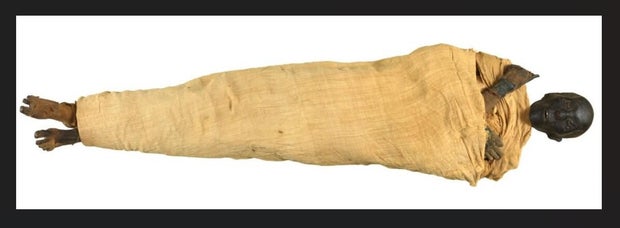
The mummy of King Thutmose II, who ruled during the Eighteenth Dynasty of ancient Egypt, is seen on display in a file photo provided by the National Museum of Egyptian Civilization.
COURTESY OF THE NATIONAL MUSEUM OF EGYPTIAN CIVILIZATION

The mummy of King Thutmose II was discovered during the 19th century, not far away at another archaeological site known as the Deir el-Bahari Cachette, to which the it was likely moved centuries after being looted by tomb raiders, according to the relatively new National Museum of Egyptian Civilization. His mummy is now on display, among those of other ancient royals, at the museum.

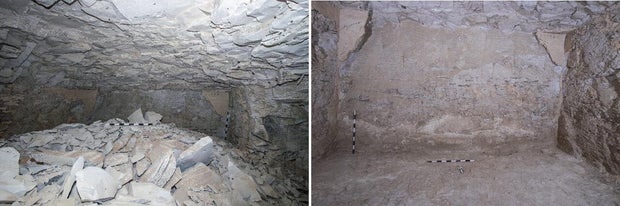
The tomb is in a poor state of preservation due largely to exposure to floods shortly after Thutmose II's death, according to Mohamed Abdel Badie, Head of the Egyptian Antiquities Sector at the Supreme Council of Antiquities and Head of the Egyptian team that has worked on the dig. Abdel Badie said initial studies also indicate much of the original contents of the tomb were moved to another location after the ancient floods.


He said the teams had discovered mortar in the tomb with remnants of blue inscriptions and yellow stars, and some paragraphs from the book of "Imydwat," which is one of the most important funerary books found in ancient Egyptian tombs, written to help guide the late royals through their underworld journey.

Photos shared by the Egyptian Ministry of Tourism and Antiquities on Feb. 18, 2025, show the inside of a tomb discovered in the mount of Thebes area, west of Luxor and the renowned Valley of the Kings, determined to have belonged to King Thutmose II, who ruled during ancient Egypt's Eighteenth Dynasty.
EGYPTIAN MINISTRY OF TOURISM AND ANTIQUITIES

Dr. Piers Litherland, head of the English team at the site, said the tomb is characterized by a simple architectural design typical of those chosen by the successive rulers of Egypt who came after Thutmose II.

Litherland said the mission would continue its survey work and try to determine where the rest of the contents from Thutmose II's tomb were relocated to, and to uncover any further secrets that may have been locked beneath the earth for millennia.


Archaeologists push to restore Syria’s war-torn heritage sites, including Palmyra

Some of Syria’s most renowned heritage sites coud soon undergo restoration as experts return to the sites decimated by nearly 14 years of war. Conservationists hope the historical and cultural significance of once-thriving landmarks such as the ancient city of Palmyra will help to draw international visitors and boost the country’s ailing economy.


Issued on: 18/02/2025 -
By:  FRANCE 24

01:32
The remaining standing columns at the Baths of Zenobia at Palmyra in central Syria on February 7, 2025. Palmyra is on the UNESCO elite list of world heritage sites that sustained damage throughout the 13-year civil war. © Omar Haj Kadour, AFP


Experts are returning to Syria’s war-ravaged heritage sites, hoping to lay the groundwork for restoring them and reviving tourism, which they say could provide a much-needed boost to the country’s decimated economy after nearly 14 years of war.

Once-thriving landmarks like the ancient city of Palmyra and the medieval Crusader castle of Crac des Chevaliers remain scarred by years of conflict, but local tourists are returning to the sites, and conservationists hope their historical and cultural significance will eventually draw international visitors back.

One of Syria’s six UNESCO World Heritage sites, Palmyra was once a key hub to the ancient Silk Road network linking the Roman and Parthian empires to Asia. Located in the Syrian desert, it is renowned for its 2,000-year-old Roman-era ruins. It is now marked by shattered columns and damaged temples.

Before the Syrian uprising that began in 2011 and soon escalated into a brutal civil war, Palmyra was Syria’s main tourist destination, attracting around 150,000 visitors monthly, Ayman Nabu, a researcher and expert in ruins told The Associated Press. Dubbed the “Bride of the Desert,” he said “Palmyra revitalized the steppe and used to be a global tourist magnet.”

The ancient city was the capital of an Arab client state of the Roman Empire that briefly rebelled and carved out its own kingdom in the third century, led by Queen Zenobia.

In more recent times, the area had darker associations. It was home to Tadmur prison, where thousands of opponents of the Assad family’s rule in Syria were reportedly tortured. The Islamic State group demolished the prison after capturing the town.

IS militants later destroyed Palmyra’s historic temples of Bel and Baalshamin and the Arch of Triumph, viewing them as monuments to idolatry, and beheaded an elderly antiquities scholar who had dedicated his life to overseeing the ruins.

Between 2015 and 2017, control of Palmyra shifted between IS and the Syrian army before Assad’s forces, backed by Russia and Iran-aligned militias, recaptured it. They established military bases in the neighboring town, which was left heavily damaged and largely abandoned. Fakhr al-Din al-Ma’ani Castle, a 16th-century fortress overlooking the city, was repurposed by Russian troops as a military barracks.

Nabu, the researcher, visited Palmyra five days after the fall of the former government.

“We saw extensive excavation within the tombs,” he said, noting significant destruction by both IS and Assad government forces. “The (Palmyra) museum was in a deplorable state, with missing documents and artifacts — we have no idea what happened to them.”

At the theater, the Tetrapylon, and other ruins along the main colonnaded street, Nabu said they documented many illegal drillings revealing sculptures, as well as theft and smuggling of funerary or tomb-related sculptures in 2015 when IS had control of the site. While seven of the stolen sculptures were retrieved and put in a museum in Idlib, 22 others were smuggled out, Nabu added. Many pieces likely ended up in underground markets or private collections.

Inside the city’s underground tombs, Islamic verses are scrawled on the walls, while plaster covers wall paintings, some depicting mythological themes that highlight Palmyra’s deep cultural ties to the Greco-Roman world.

“Syria has a treasure of ruins,” Nabu said, emphasizing the need for preservation efforts. He said Syria’s interim administration, led by the Islamist former insurgent group Hayat Tahrir al-Sham, has decided to wait until after the transition phase to develop a strategic plan to restore heritage sites.

The U.N.’s scientific, educational and cultural organization UNESCO, said in a statement that the agency had since 2015, “remotely supported the protection of Syrian cultural heritage" through satellite analyses, reports and documentation and recommendations to local experts, but it did not conduct any work on site.

It added that UNESCO has explored possibilities for technical assistance if security conditions improve. In 2019, international experts convened by UNESCO said detailed studies would need to be done before starting major restorations.

Beyond Palmyra, other historical sites bear the scars of war.

Perched on a hill near the town of Al-Husn, with sweeping views, Crac des Chevaliers, a medieval castle originally built by the Romans and later expanded by the Crusaders, was heavily bombarded during the Syrian civil war.

On a recent day, armed fighters in military uniform roamed the castle grounds alongside local tourists, taking selfies among the ruins.

Hazem Hanna, an architect and head of the antiquities department of Crac des Chevaliers, pointed to the collapsed columns and an entrance staircase obliterated by airstrikes. Damage from government airstrikes in 2014 destroyed much of the central courtyard and the arabesque-adorned columns, Hanna said.

“Relying on the cultural background of Syria’s historical sites and their archaeological and historical significance to enthusiasts worldwide, I hope and expect that when the opportunity arises for tourists to visit Syria, we will witness a significant tourism revival," he said.

Some sections of Crac des Chevaliers were renovated after airstrikes and the deadly 7.8 magnitude earthquake in 2023 that struck a wide area of neighboring Turkey and also Syria, Hanna said. However, much of the castle remains in ruins.

Both Nabu and Hanna believe restoration will take time. “We need trained technical teams to evaluate the current condition of the ruin sites,” Nabu said.

In Northwest Syria, more than 700 abandoned Byzantine settlements called Dead Cities, stretch across rocky hills and plains, their weathered limestone ruins featuring remnants of stone houses, basilicas, tombs and colonnaded streets. Despite partial collapse, arched doorways, intricate carvings and towering church facades endure, surrounded by olive trees that root deep into history.

Dating back to the first century, these villages once thrived on trade and agriculture. Today, some sites now shelter displaced Syrians, with stone houses repurposed as homes and barns, their walls blackened by fire and smoke. Crumbling structures suffer from poor maintenance and careless repurposing.

Looters have ravaged the ancient sites, Nabu said, leaving gaping holes in search of artifacts. Local visitors carve names and messages into centuries-old walls. Sheep enclosures dot the ruins, plastic debris blending with ancient stone.

Moustafa Al-Kaddour, a local resident, returned after eight years. Touring the ruins with family members he brought from Quneitra, he reflected on childhood memories.

“This is where we went to school,” he said, pointing in the distance. “In the middle of class, we used to leave and come here to see the ruins.”

“My feelings are indescribable,” al-Kaddour, who also saw his father for the first time in years, told the AP. “My brain still cannot comprehend that after eight years, by God’s will, we made it back home.”

He said the Assad forces had established a military position in the village, subjecting the ruins to heavy shelling and gunfire. The area was then controlled by rebels, who made the area off-limits to most Syrians and international tourists, unlike Palmyra, which still saw some visitors during the war.

The Dead Cities were added to UNESCO’s World Heritage List in 2011 as an open-air museum, said Nabu. Idlib province alone hosts “over 1,000 heritage sites spanning different time periods — about a third of Syria’s total ruins,” he added.

Beyond the bombings and air raids, looting and unauthorized digging have caused significant damage, Nabu said, adding that new construction near the ruins lacks planning and threatens preservation.

“Tens of thousands” of looted artifacts remain undocumented, he said. For those documented, authorities are compiling case files for international circulation in coordination with the Directorate of Antiquities and Museums to locate them and hopefully retrieve them.

(AP)

Australian central bank cuts benchmark interest rate for the first time since October 2020


ByROD MCGUIRK
 Associated Press
February 17, 2025, 


MELBOURNE, Australia -- Australia’s central bank on Tuesday reduced its benchmark interest rate for the first time since October 2020 as the nation’s inflation cools.

The Reserve Bank of Australia reduced the cash rate by a quarter percentage point from 4.35% to 4.1% at its first board meeting for the year.

The cut was widely anticipated after inflation rose only 0.2% in the December quarter and 2.4% for calendar 2024. Annual inflation peaked at 7.8% two years earlier.

The bank manipulates interest rates to keep inflation within a target band of between 2% and 3%.

“Inflation has fallen substantially since the peak in 2022, as higher interest rates have been working to bring aggregate demand and supply closer towards balance,” the board said in a statement.

Bank Governor Michele Bullock later advised against believing economic forecasts that several more rate cuts were expected this year. The board will next consider changing interest rates at its meeting on April 1.

“Some other central banks have cut interest rates quite sharply over the past year, but we have taken a different strategy to most,” Bullock told reporters.

“Our policy rate was not raised as much as many countries overseas. We judged that while inflation expectations remained anchored, we could take a bit longer to bring inflation back to the target band, but we could keep unemployment lower,” she added.

Unemployment in Australia remained at near-record low levels of 4% in December, up from 3.9% in November.

Bullock said U.S. plans to increase tariffs on trading partners had the potential to be bad for economic activity around the world.

“The tariff threats and what’s going on overseas is very uncertain and probably even worse, it’s unpredictable,” Bullock said.

The rate shift is a welcome development for Prime Minister Anthony Albanese’s center-left Labor Party government which will seek reelection at elections due by May 17.

Treasurer Jim Chalmers welcomed the independent board's decision.

“This is the rate relief Australians need and deserve,” Chalmers said in a statement. “It won't solve every problem in our economy or in household budgets but it will help."

Chalmers said his government had curbed inflation without the negative consequences experienced in other countries including of high unemployment, a shrinking economy and recession.

Twelve of the last 13 rate increases have taken place since the government was elected for its first three-year term on May 21, 2022.

The cycle began in the final days of the previous government’s tenure when the rate rose from a record low 0.1% to 0.35% on May 4, 2022.

The high cost of living and a shortage of housing around Australia are expected to be major issues in the upcoming election campaign.

The central bank had held the cash rate at 4.35% since November 2023. That was the highest rate since it fell from 4.5% to 4.25% in December 2011.
Senior Afghan Taliban Officials In Japan For Talks

This is the Taliban's first known diplomatic trip outside the Central Asia-Middle East region since the Taliban seized control of Afghanistan in 2021.


Associated Press
18 February 2025 


Senior Afghan Taliban Officials In Japan For Talks Photo: | Representative Image

Japanese officials said senior Afghan Taliban officials were in Japan for talks, as part of Tokyo's efforts to help Afghanistan build a more inclusive political system and protect human rights.

It's their first known diplomatic trip outside the Central Asia-Middle East region since the Taliban seized control of Afghanistan in 2021.

The unidentified Taliban senior officials were invited by grant-making organization Nippon Zaidan and were also set to talk with Japanese Foreign Ministry officials, Chief Cabinet Secretary Yoshimasa Hayashi told reporters Monday.

The Taliban officials were invited to help them better understand the need “to have a broad perspective toward their future nation building and to widely accept humanitarian assistance from the international community for vulnerable people, Nippon Zaidan said in a statement. It declined to give details of the visitors and their schedule.

Japan does not formally recognize the Taliban as Afghanistan's official government.

Hayashi noted the visit was initiated by a private organization but complements the Japanese government's effort to work with the international community to call on the Taliban to make policy changes that protect human rights.

Restrictions the Taliban impose on women and girls are a major hurdle to the Taliban being recognised as the official government of Afghanistan.

The trip was initially revealed by Latif Nazari, the Taliban's deputy economy minister, who posted on the X platform that “a high-level delegation” was heading to Japan and that the Taliban seek dignified engagement with the world as an active member of the international community

Cyprus-Egypt pipeline a reality, at last


by fm
18th February 2025

A decade after the idea was first put on the table, Cyprus and Egypt have finally agreed to transport natural gas from the island’s as yet unutilised offshore reserves to facilities on the North African coast for processing and re-export to international markets.

This means that Cyprus will at last abandon the over-ambitious plan to build its own liquefaction plant and save about 10 bln euros, which oil majors were reluctant to foot the bill for.

Instead, Egypt’s under-utilised plants at Damietta and Edku, some 240 kms south, can now work at increased capacity, reducing costs and making the Cyprus natgas more affordable.


Due to rapidly growing demand, Egypt too is seeking alternative sources of energy to fire up its power stations, as Cairo aims to become a regional energy exporter because its own output suffered declines in recent years.

“Cyprus’ energy plans are proceeding normally, with the signing of the (commercialisation) agreement and memorandum of understanding in Cairo, decisive for the future of our energy plans,” said President Nikos Christodoulides, after returning from Egypt.

The Cypriot president and Abdel Fattah El Sisi had extensive talks about cooperation on the sidelines of the Egypt Energy Show (Egypes), an event bringing together world leaders in the energy sector and policy makers dedicated to the sustainable energy transition.

Two agreements were signed for the transport of gas from the Cypriot fields of Aphrodite in Block 12 operated by U.S. giant Chevron and three gasfields in Block 6, operated by Italian Eni, to the natural gas liquefaction plants near Alexandria.

Egypt, along with Italian energy giant Eni and France’s TotalEnergies, have agreed to collaborate to commercialise the natural gas reserves discovered within Block 6 of the Cyprus exclusive economic zone (EEZ).

Export to Europe


According to ENI, the gas would be transported and processed in Egypt at “existing Zohr facilities, before being liquefied in the Damietta (liquified natural gas) LNG plant for export to European markets.”

First discovered in 2011, Aphrodite is estimated to hold 3.5-4.4 trln cubic feet. It is operated by Chevron, which bought the rights from Noble Energy, and is partners with BG Cyprus (Shell) and NewMed Energy 30%.

Frank Cassulo, Chevron’s International Exploration and Production’s vice president issued a statement, saying that it will “provide the basis to move forward with related commercial arrangements.”

Cassulo reaffirmed Chevron’s commitment to developing the Aphrodite project, emphasising its strategic importance both for Cyprus and for Chevron’s eastern Mediterranean portfolio.

The approved development and production plan (DPP) includes the establishment of a floating production unit (FPU) within Cyprus’ EEZ and a pipeline to export gas to Egypt. Chevron’s extensive resource base in the eastern Mediterranean, estimated at 45 tcf of gross resources, offers significant expansion opportunities to meet growing natural gas demand in the coming decades.

ExxonMobil future plans

In Cairo, Christodoulides also met with ExxonMobil’s vice president for global exploration, John Ardill, who briefed the Cypriot president on the U.S. energy giant’s drilling activities in Block 5 and future plans from Block 10.

“We will soon have results. He will visit Cyprus during the second week of March to inform us in person, and the energy plans of the Republic of Cyprus are progressing normally,” Christodoulides added.

“This agreement paves the way to bring Cyprus’ gas to the market in a timely fashion, contributing to energy security and competitiveness of energy supply,” said Claudio Descalzi, Eni’s CEO.

“This project leverages Egypt’s existing infrastructure, including export facilities, which are a key enabler for developments in the region. Egypt and Cyprus reaffirm their roles in the emerging energy hub of the eastern Mediterranean, which is set to play an increasing role in the global gas supply in the near future.”

Discovered in 2022, Cronos is estimated to hold more than 3 tcf in natgas reserves, while Block 6 encompasses further potential resources under exploration and appraisal, including the Zeus field also discovered in 2022.

Block 6 is operated by Eni holding a 50% interest, while TotalEnergies holds the remaining 50%. Eni also operates Block 8 and has participating interests in Blocks 7 and 11.

Eni has been present in Egypt since 1954. The company is currently the country’s leading producer with an equity production of approximately 280,000 barrels of oil equivalent per day in 2024. It also has a 50% share in the Damietta LNG Plant.
Trump's aid cuts stop South African HIV vaccine trials in their tracks

Scientific officer Anathi Nkayi works in the research lab at the University of Cape Town's Institute of Infectious Disease and Molecular Medicine, in Cape Town, South Africa on Feb 17.
PHOTO: Reuters

February 18, 2025 12:55 AM

JOHANNESBURG — South African lab technician Nozipho Mlotshwa was waiting for the test results for a potential HIV vaccine, which has eluded scientists for decades, when the order came from the United States Agency for International Development (USAID) to stop work.

The first round of vaccines she and her colleagues made in Johannesburg had produced an immune response in rabbits, which was promising but not conclusive — so they tweaked the formula and sent off four new versions for pre-clinical tests.

"This was very exciting. We were getting quite good results," Mlotshwa, 32, told Reuters in the lab in the Antiviral Gene Therapy Research Unit at the city's University of the Witwatersrand.


Now the animal blood samples containing their results are sitting untouched in a freezer.

A trial of an earlier, separate vaccine candidate, which was about to be tested on humans in South Africa as well as Kenya and Uganda, is also on ice.

Both trials are among the casualties of US President Donald Trump's decision to dismantle the USAID.

They are part of a wider South African-led HIV vaccine development scheme known as BRILLIANT and funded entirely by a US$45 million (S$60 million) grant from USAID. It is unclear if or when the project could resume. The US State Department did not immediately respond to a request for comment.

"It feels like you're building something and you could really make a huge difference," Nigel Garrett, Chief Scientific Officer at the Desmond Tutu Health Foundation, a partner in the project, said.


"And then it's wiped away."

The project is one of many research efforts worldwide to be hit by Trump's actions since taking office last month. Others include halting efforts to protect food crops from pests and diseases and blocking publication of a paper on the monkey pox outbreak.

'Holy grail'

HIV's ability to mutate quickly has confounded efforts to create a vaccine ever since it was first identified in 1983. The researchers in Johannesburg are using the mRNA technology that created some Covid-19 vaccines.

Several other mRNA-based HIV vaccine candidates worldwide have reached clinical trials. BRILLIANT is unique in being Africa-led, aiming to develop capacity for producing vaccines in Africa.

For the past year the Johannesburg team had been working with genetic sequences from two South African patients who have HIV but whose bodies produce a rare type of antibody that neutralises the virus. They are trying to simulate that immune response.

"We were gaining momentum," said Patrick Arbuthnot, director of the research unit, adding: "a HIV vaccine is the holy grail of the field".

Trump in January ordered a 90-day pause in all foreign development assistance pending assessment of its consistency with his America First foreign policy.

Separately, he has targeted South Africa with an executive order to cut all funding to the country, citing disapproval of its land reform policy and its genocide case against US ally Israel.

The US foreign aid freeze has affected programmes across the globe, stranding shipments of life-saving medical supplies, including HIV drugs, and leaving disaster response teams unable to deploy. Waivers for "life-saving humanitarian assistance" have been hampered.

'Good for the world'

Because South Africa has the world's largest population of people living with HIV, at more than eight million, it is a hub for research on the virus.

"Most of the landmark and groundbreaking studies have been conducted in this country. But these have been good for the whole world," said Ntobeko Ntusi, CEO of the South African Medical Research Council, which is spearheading the HIV vaccine search.

Ntusi said he did not expect funding for projects like BRILLIANT to resume, given the executive order on aid to South Africa. The council gets about a third of its funding from US federal sources, for research that is mostly on HIV and tuberculosis but covers other areas including maternal and infant mortality and antimicrobial resistance, he said.

Garrett said the shot that was ready for testing on humans was a mix of two vaccine substances developed in the US and the Netherlands which have shown promise but never been tested together.

They are now sitting in storage.

"We had a huge opportunity, good funding. It's difficult for other funders to fill that gap," he said.



Hamas says 'ready to relinquish power' in Gaza, provided employees integrated and armed resistance preserved

Abdul Latif al-Qanoua, Hamas's spokesperson, said that Hamas does not oppose the establishment of a committee to oversee Gaza’s administration.


Sally Ibrahim
Gaza
18 February, 2025
NEW ARAB


Hamas insists that these approximately 40,000 employees, who form the backbone of Gaza's governmental institutions, including healthcare, education, and security, be integrated into the new administration's structure without discrimination.
 [Getty]

The Palestinian Islamic Hamas movement is willing to step aside from governing the war-torn Gaza Strip, provided that a technocratic government is formed to manage the coastal enclave's affairs, according to an official at the movement.

Speaking to The New Arab, Abdul Latif al-Qanoua, Hamas's spokesperson, said that Hamas does not oppose the establishment of a committee to oversee Gaza's administration.

However, he emphasised that Hamas must approve the committee's members and its mandate, further stating that the notion of Hamas completely withdrawing from governance is "inaccurate."

"Hamas prefers the formation of a national unity government that includes all Palestinian factions without Hamas," he added. "However, if such an arrangement proves unattainable, Hamas supports the creation of a 'Community Support Committee' to ensure the continued provision of essential services in Gaza."
Will the PA return to Gaza?

A well-informed source revealed that Hamas has communicated to the Palestinian Authority (PA) its readiness to transfer governance in Gaza on the condition that the Hamas's employees, appointed after the Islamic movement took over the strip in 2007, are retained in their positions and their salaries and rights are safeguarded.


According to a source close to Hamas, who prefer to remain anonymous due to the sensitivity of the topic, the issue of retaining employees remains one of the primary obstacles for a final agreement.

Hamas insists that these approximately 40,000 employees, who form the backbone of Gaza's governmental institutions, including healthcare, education, and security, be integrated into the new administration's structure without discrimination.

In that regard, the Islamic movement requested formal guarantees, either from the PA or through regional mediators, to ensure the continued payment of these employees' salaries.

Hamas fears a repeat of the 2017 reconciliation agreement, brokered by Egypt, which collapsed due to the PA's failure to fulfil its commitments on salaries and administrative integration.

Another source within Hamas noted to TNA that Egypt and Qatar are currently playing a crucial role in bridging the gap between Hamas and the PA as intense negotiations are underway to establish a technocratic government capable of managing Gaza's affairs while preventing a political or security vacuum.

Egypt, in particular, has reportedly conveyed to Hamas that any agreement must have the approval of the PA and international stakeholders to ensure its sustainability and to prevent further sanctions and restrictions on Gaza.
The future of armed resistance

Beyond the issue related to employees, another major point of contention remains security and the future of armed resistance in Gaza.

While the PA demands complete control over Gaza's security apparatus, Hamas firmly rejects any move that could lead to the dismantling of its military wing, the Al-Qassam Brigades.

Hamas's spokesperson, al-Qanoua, further clarified that Hamas is open to cooperating with a new government regarding civilian and administrative affairs, but will not permit any interference in resistance activities.

"The resistance's weapons are not up for negotiation. We are willing to work within a framework that ensures internal stability while respecting the sacrifices of our people," al-Qanoua said.

Al-Qanoua stressed that Hamas remains committed to facilitating any efforts aimed at achieving Palestinian reconciliation but insists on safeguarding the principles of resistance.

"Any attempt to undermine the weapons of the resistance, the Al-Qassam Brigades, or other military wings is a red line that cannot be crossed," he asserted.

These developments occur while Gaza faces escalating humanitarian and economic challenges due to the ongoing Israeli blockade and deteriorating living conditions after more than 15-months of an Israeli genocidal war.

Analysts believe that mutual guarantees must be established for any agreement to succeed. These would include improving the economic situation in Gaza, easing restrictions on movement and trade, and finding a compromise on contentious issues such as the future of security forces and the resistance's military capabilities.