Monday, February 24, 2025


The worst year in shutdowns: a blow to democracy and human rights in Africa

It’s official, 2024 was the worst year on record for internet shutdowns. From people’s movements to contentious elections, as political escalations continued to make headlines in Africa, authorities increasingly defaulted to internet shutdowns to disempower and disconnect people.

Launching today, February 24, 2025, Access Now and the #KeepItOn coalition’s new report, Emboldened offenders, endangered communities: internet shutdowns in 2024, exposes how authorities imposed at least 296 internet shutdowns in 54 countries, causing chaos across borders, exacerbating trauma during conflict, and fracturing the lives of millions of people around the globe. The findings reveal that 21 shutdowns impacted 15 countries in Africa — the highest number of shutdowns ever recorded in a single year for the region.

For the second year in a row, authorities and warring parties wielded an unprecedented number of internet shutdowns as a weapon of war and a tool for collective punishment — hurling communities into digital darkness, and concealing grave human rights abuses. As internet access becomes consistently weaponized, restricted, and precarious, we are seeing pervasive patterns of crushing censorship and an urgent need for greater accountability. No single stakeholder can end internet shutdowns alone. The time to act is now.Felicia Anthonio, #KeepItOn Campaign Manager at Access Now

Key regional findings:

  • The new offendersComorosGuinea-Bissau, and Mauritius shut down the internet for the first time in 2024, while hacker group Anonymous Sudan claimed responsibility for cyberattacks that disconnected people in Chad;
  • The triggers: protests were the leading trigger for shutdowns in 2024, with authorities in nine countries imposing 12 shutdowns during protests and political instability. This was followed by shutdowns to control information (4) and election-related shutdowns (3);
  • The entrenched offenders: despite the Ethiopian government’s claims about restoring internet services, people in Tigray and Amhara continued to suffer from the effects of shutdowns beginning in 2020 and 2023 respectively, with connectivity well below pre-conflict levels. Uganda continued to block access to Facebook for the fourth year in a row; 
  • The emerging offenders: authorities in Kenya blocked Telegram during national exams for the second year in a row, and shut down the internet amidst protests that also impacted connectivity in Burundi and Rwanda. In Mozambique, authorities imposed curfew-style shutdowns and platform blockings following protests, while in Equatorial Guinea, authorities imposed a shutdown in July 2024 in Annobón that continues to persist; and
  • The positives: The African Commission on Human and Peoples Rights (ACHPR) passed resolution 580 0f 2024 calling on member states to ensure open and secure internet access before, during, and after elections and refrain from shutting down the internet during democratic processes. Authorities in Mauritius also rescinded an order to block social media platforms following pressure from civil society organisations. 
The right to freedom of expression, access to information, and peaceful assembly are at risk now more than ever. As civil society, we will continue to hold authorities to account and raise the alarm on human rights abuses that fester in the darkness of internet shutdowns. During protests, elections, exams, and conflicts, authorities must respect human rights and #KeepItOn.Bridget Andere, Senior Policy Analyst at Access Now

In 2024, shutdowns were imposed across Africa in: Burundi, Chad, Comoros, Equatorial Guinea, Ethiopia, Guinea, Guinea-Bissau, Kenya, Mauritius, Mozambique, Nigeria, Rwanda, Senegal, Tanzania,  and Uganda. 

Access the full reportglobal snapshot, and shutdowns dashboard

Report: In record year of internet shutdowns, Myanmar leads

February 23, 2025 
By Tommy Walker
VOA

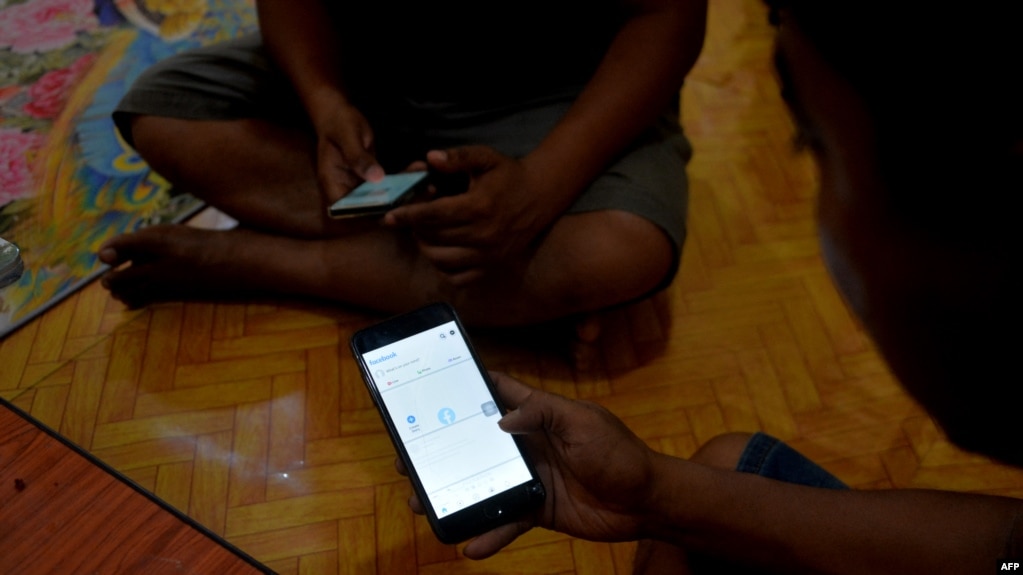
Young men use their mobile phones in Naypyidaw on March 16, 2021, as Myanmar military authorities ordered telecommunication companies to restrict services on their mobile data networks.

Bangkok —

In a record year for internet shutdowns, countries in the Asia-Pacific region imposed the most restrictions, according to a new report.

Myanmar is the worst-affected country worldwide, with 85 shutdowns last year, research by the digital rights group Access Now found.

Its report, released Monday, Feb. 24, shows authorities worldwide imposed at least 296 shutdowns in 54 countries. Conflict — followed by protests, school or university exams and elections — was the biggest trigger, Access Now found.

For the Asia-Pacific region, the report finds 202 shutdowns in 11 countries or territories. It is the highest number ever recorded by Access Now in a single year for the region.

The three countries with the worst record are all in Asia: 190 cases in Myanmar, India and Pakistan accounted for around 64% of all recorded shutdowns in 2024. India, often referred to as the biggest democracy in the world, had 84 recorded cases.

VOA contacted Myanmar’s military administration, and the Washington embassies for India and Pakistan for comment. As of publication, VOA had not received a reply.

Raman Jit Singh Chima, the Asia Pacific policy director at Access Now, warned of a rise of digital authoritarianism in Asia.

“Shutdowns destabilize societies, undermine digital progress, put entire communities at risk, and provide a cloak of impunity for human rights abuses,” he said in a statement. “Authorities from Myanmar to Pakistan are isolating people from the rest of the world with impunity, reflecting the rising digital authoritarianism in Asia.”

Access Now collects data on shutdowns, which include cables being cut, equipment confiscated, platforms being blocked, and orders to telecommunication companies.

'Rebirth' of radio

Since seizing power in a coup in February 2021, the junta in Myanmar has regularly blocked access to the internet. The junta says the blocks are to maintain “stability” and prevent what it calls the spread of disinformation and fake news.

At the same time, the junta has jailed dozens of journalists and revoked media licenses.

Out of the 85 shutdowns imposed in Myanmar last year, 31 coincided with documented human rights abuses and at least 17 correlated with airstrikes on civilians, the Access Now report found.

The record puts the country among the worst for digital rights for the fourth consecutive year, the report found.

Toe Zaw Latt, a veteran journalist from Myanmar, told VOA it was “no surprise” that the country tops the list.

“Myanmar has one of the worst censorship [records] on digital platforms,” he said. “[The military does this] so most of the people can’t access independent information or internet mainly, especially young people. They just want one version of truth, the army’s version of truth.”

Zaw Latt said the junta is trying to prevent “independent access of information on the internet.”

A journalist for decades, Zaw Latt is also secretary of the Independent Press Council Myanmar. He said the internet blocks have seen a “rebirth” in radio.

“Globally, radio is dying but it’s having a rebirth in Burma because it’s cheap and accessible,” he said, using the country’s former name. “Even some people go back, very primitive, back to print because of these internet shutdowns.”

Still, Zaw Latt said, it is not possible to completely cut off the internet, “because people will find a way.”

Alongside shutdowns the junta has passed laws to further control the information narrative.

On Jan. 1, a cybersecurity law was enacted in Myanmar, banning the use of Virtual Private Networks, or VPNs, that people use to access blocked or censored content. The law penalizes those who share information from banned websites. Experts say it’s another attempt from the junta to suppress public information.


SEE ALSO:
Myanmar's new cybercrime law will suppress information, say analysts


Two other Asian countries — Malaysia and Thailand — also made the list for the Southeast Asia region for the first time.

Thailand was included after it shut electricity and internet connections on its border with Myanmar following an attempt to crack down on scam centers that have lured thousands into forced labor and scammed billions from internet users worldwide.



SEE ALSO:
Thailand cuts power, fuel and internet supply to parts of Myanmar


Overall, press freedom in East Asia continues to see a decline, according to Reporters without Borders. The global watchdog reports that 26 out of 31 countries in the Asia-Pacific region have seen a decline in press freedoms between 2023 and 2024.


Why is Turkey sending thousands of tonnes of eggs to US buyers?

Eggs.
Copyright Canva.
By Eleanor Butler
Published on 


A preliminary agreement between the two countries means 15,000 tonnes of eggs will be sent to the US by July.

Turkey has started to export masses of eggs to the US this month in response to an outbreak of bird flu across the Atlantic.

"A total of 15,000 tonnes of eggs - equivalent to 700 containers - will be shipped," Ibrahim Afyon, chairman of the Egg Producers Central Union in Turkey, told Reuters.

"The export will take place through our member companies with the required authorizations, while two firms will coordinate the process," Afyon said.

The shipments began this month and will continue until July, under a preliminary agreement, he added.

The Turkey-US deal is expected to generate around $26 million (€24.9mn) in export revenue, said Afyon.

Bird flu

The US is currently working to tackle an outbreak of H5N1 avian influenza, also known as bird flu, which is affecting domestic egg supply.

Although bird flu has been present in the US for years, the virus began to infect dairy cattle in 2024.

The US' Centers for Disease Control and Prevention (CDC) still maintains that bird flu represents a low risk to the general public, although one human patient has died from the virus.

With farmers slaughtering hens to limit the spread of the disease, supermarkets have faced egg shortages and prices have been soaring.

 In 2024, egg prices rose 65% and then another 15% in the month of January alone.

It's estimated that about 162 million chickens, turkeys and other birds have been wiped out by the flu since 2022.

DOGE layoffs

To complicate matters further, the United States Department of Agriculture (USDA) said on Wednesday that it had accidentally sacked several agency employees working on the state's response to the outbreak.

The job cuts were part of a wider plan to cut government costs, spearheaded by the new Department of Government Efficiency (DOGE) under the leadership of Elon Musk.

The USDA is now seeking to rehire individuals who saw their contracts terminated.

 Columnists


How Donald Trump has betrayed UK as well as Ukraine. We must increase defence spending


By Christine Jardine
Published 24th Feb 2025,


The UK will have to dig deep to help Ukraine defend itself, for the sake of our own security as well as theirs

It doesn't seem like three years since we woke to the news that the invasion of Ukraine, which Putin promised wouldn't happen, had started. While realising immediately that we were entering a difficult phase in international relations, I doubt if many of us understood that, three years on, we would be looking at a changed world order.

That Europe would be facing the reality of a hostile power on our borders and the shape of our traditional defence mechanism – Nato – under threat. Or that the 80-year-old special relationship between ourselves and the US, which was forged in war and shaped modern Europe, would be hanging by a thread. But here we are.

In February 2022, we saw only too clearly the immediate impact the invasions had on the people of Ukraine. When Volodymyr Zelensky became the first foreign head of state to speak, via video link, to the House of Commons, we were aware that our future economic and political stability could depend on how effectively we helped Ukraine defend itself. It was emotional.

A changed world

The outpouring of support and welcome for Ukrainian refugees was, of course, genuine, but also not entirely altruistic for those very reasons.

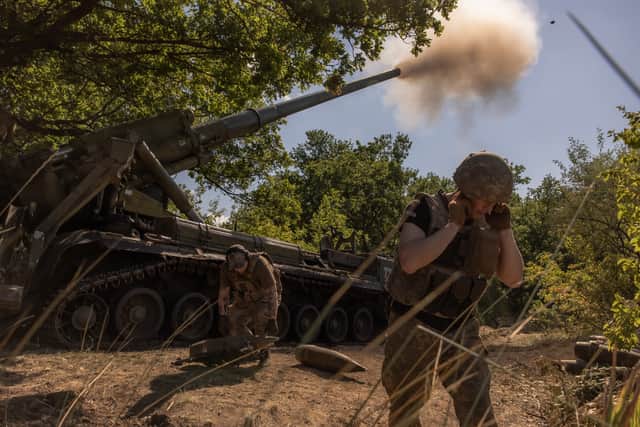
Ukrainian troops fire artillery shells towards Russian positions in Donetsk (Picture: Roman Pilipey) | AFP via Getty Images


Suddenly we face a changed world. One in which Donald Trump’s actions amount to little more than a stitch-up that betrays Ukraine, our European allies, and ourselves. We will have to dig deep to protect our own security and that of our neighbour.

Strong leadership

Prime Minister Keir Starmer has committed the UK to a peace-keeping force in Ukraine, even though we do not know yet what that could look like.

My own party, the Liberal Democrats, has made it clear that, in this new and dangerous world in which our oldest ally is threatening to turn its back on Europe in favour of a Pacific strategy, we must look to provide the strong leadership our continent now needs.


To protect ourselves, we must increase our defence spending as soon as possible to 2.5 per cent of gross domestic product. We must not stop there.

Politicians from all parties must get round the table and build a consensus on how we increase that spending and ensure our mutual protection.

Three years ago we promised to stand with Ukraine, to protect their people and their sovereignty. We listened to Zelensky and answered his calls. But all of that was just the beginning. The real challenge has just started.


Christine Jardine is Scottish Liberal Democrat MP for Edinburgh West


Ursula von der Leyen arrives in Kyiv with €3.5 billion in fresh aid for weapons


Copyright Evgeniy Maloletka/Copyright 2024 The AP. All rights reserved

By Jorge Liboreiro
Published on 24/02/2025 - 

Ursula von der Leyen's ninth visit to Kyiv since the start of the full-scale invasion to meet with Volodymyr Zelenskyy comes amid US attempts to negotiate end to war bilaterally with Russia.

Ursula von der Leyen arrived in Kyiv by train on Monday morning to mark the third anniversary of the start of Russia's war against Ukraine and as Donald Trump's big push for negotiations rattles European allies, stoking fears a rushed deal could leave the entire continent vulnerable to the Kremlin's expansionism.

The president of the European Commission is expected to unveil a €3.5 billion package of financial aid to inject additional liquidity into Ukraine's strained budget and facilitate the purchase of military equipment from its domestic industry.

The €3.5 billion is an advance on a larger €50-billion assistance fund that the European Union established in early 2024, dubbed "the Ukraine Facility".

While Brussels has managed to cover Ukraine's financial needs for the entire year, the supply of weaponry after the summer remains uncertain.

"We must speed up the immediate delivery of weapons and ammunition. And this will be at the heart of our work in the coming weeks," von der Leyen told a group of media outlets, including Euronews, on her way to the city.

"We believe in a free and sovereign Ukraine on its path towards the European Union."

Von der Leyen is also set to announce an initiative to integrate Ukraine and Moldova into the bloc's electricity market by the end of the year.


She is joined in Kyiv by her College of European Commissioners, who are scheduled to meet with their counterparts from the Ukrainian government to deepen ties.

Other Western leaders, such as European Council President António Costa, Spanish Prime Minister Pedro Sánchez and Canadian Prime Minister Justin Trudeau, will also be at the Ukrainian capital to mark the solemn anniversary. They will jointly meet with Ukrainian President Volodymyr Zelenskyy to reaffirm their solidarity and support.

The visit is the ninth von der Leyen has made to Ukraine since the start of the full-scale invasion, but comes against a sharply different backdrop from her previous trips.

European capitals are nervously watching as Donald Trump's attempts to launch a peace process between Ukraine and Russia have upended three years of transatlantic policy.

Tensions are running high after Trump lashed out at Zelenskyy, calling him a "dictator without elections" and blaming the invasion on Ukraine, rather than Russia. The remarks, which aligned with the Kremlin's talking points, prompted outrage in Europe and cast serious doubts about Trump's ability, or willingness, to moderate peace talks.

Despite the backlash, the Republican president has shown no appetite for toning it down.

"I've been watching this man (Zelenskyy) for years now, as his cities get demolished, as his people get killed, as the soldiers get decimated," Trump said last week in an interview. "I've been watching for years, and I've been watching him negotiate with no cards. He has no cards, and you get sick of it. You just get sick of it. And I've had it."

Zelenskyy later said he would be willing to step down as president if it meant peace and NATO membership for his country. "I'm focused on Ukraine's security today, not in 20 years, and I have no intention of staying in power for a decade. This is my focus and my greatest aspiration," he said in a press conference.

Since Trump held a 90-minute phone call on 12 February with Vladimir Putin, uncoordinated with allies, Brussels has been trying to find its place in the fast-moving chain of events to ensure its interests and concerns are taken into account.

Last week saw a flurry of diplomatic activity, with calls and meetings between European leaders to close ranks and solidify political unity. More talks are already under way: Macron will fly to Washington to meet face-to-face with Trump and Costa will host an emergency summit of all 27 EU leaders on 6 March.

During that summit, von der Leyen intends to present a "comprehensive plan" to scale up arms production and defence capabilities across the bloc, which could also "benefit" Ukraine by bringing fresh weaponry into the fight against Russian troops, she said.

It's unclear if the blueprint will suffice to convince the White House that Europe deserves a seat at the negotiating table. Despite the continent seeing its long-term security intrinsically linked to Ukraine's stability, so far it has been sidelined from the negotiations.

US Secretary of State Marco Rubio has tried to reassure democratic allies by keeping them updated on his contacts with Russia and insisting the outreach does not represent an abrupt departure in America's foreign policy. Rubio has said Europeans would be invited to the table when the time comes to grant sanctions relief to the Kremlin.

On her way to Kyiv, von der Leyen raised the bar for offering Putin any concessions. "We will increase punitive sanctions against Russia unless they demonstrate true willingness to achieve a lasting peace agreement," she said.

"A free and sovereign Ukraine is in the interest of the entire world."


French lawmakers back tax on ultra-rich proposed by Ecologist Party

National Assembly in Paris. 14 January 2025.
Copyright Thibault Camus/AP
By Eleanor Butler
Published on 

Supporters say the levy would tackle inequality in France, although some fear the effect on investment, business expansion and jobs.

French lawmakers in the National Assembly have voted in favour of a 2% wealth tax on the assets of the super-rich.

The bill, adopted by 116 votes to 39, was proposed by the Ecologist Party and supported by green and left-wing MPs on Thursday evening.

Lawmakers from the far-right National Rally party abstained, while turnout from the centrist government was low.

Although the bill has passed a key legislative hurdle, it’s not expected to pass through the Senate.

Tackling tax optimisation

The so-called “Zucman tax”, named after economist Gabriel Zucman, would impose a minimum tax on the richest 0.01% of France’s citizens.

More specifically, it would apply to around 4,000 people in France with assets of more than €100 million.

This could bring in between €15 and €25 billion per year, according to the proposal.

Proponents also underlined that this minimum tax would only apply to citizens who aren’t paying enough tax already, topping up gaps in contributions.

Due to tax optimisation strategies, they argued that the super rich in France are currently paying proportionally less tax than the majority of citizens.

The bill therefore includes provisions targeting trusts and holding companies that are often used to lower tax contributions.

The ethics and the economics

“Tax immunity for billionaires is over,” lawmaker Éva Sas of the Ecologist party said, commenting on the vote’s passage.

Amélie de Montchalin, Budget Minister in the incumbent government, took a different approach, labelling the proposal "confiscatory and ineffective".

The tax “would have one grave consequence for our country and that is that the investment, entrepreneurship and corporate growth that we are trying to promote because it’s good for the French, for jobs and everyone’s wealth, would drop, and that’s not tolerable,” Montchalin said on Friday in an interview with media channel TF1.

Montchalin added that the government is currently working on an alternative strategy to tackle tax optimisation strategies.

Macron, wealth champion?

While the driving aims of President Emmanuel Macron have shifted over his two-term tenure, France’s leader has continuously presented himself as a pro-business champion.

Since 2017, the President has reduced the corporate tax rate, made it easier for firms to hire and fire workers, and scrapped the ISF wealth levy.

In 2018, the ISF was replaced with the IFI, which only taxes real estate assets and not investments.

Supporters of the move argued it would boost investment in more useful parts of the economy and encourage wealthy individuals to remain in the country.

This would then drive economic growth and job creation.

A committee reviewing the tax reform in 2023 nonetheless found that it had not affected the redirection of wealth away from real estate.

France is currently home to the world’s fifth richest man and the CEO of LVMH, Bernard Arnault - worth around $195bn or €186bn.

Sunday, February 23, 2025

Strategies of the Philippines, China, and the US in the South China Sea in 2025 and Future U.S. Policies on Alliances and the Indo-Pacific Region


2025 FEB24
Expert :
Lee Jaehyon / Center for Regional Studies ; 
Publication and Communications Department

The year 2024 was a violent and dangerous year as far as disputes in the South China Sea (SCS) are concerned. This pattern of disputes will continue in 2025, with potential variations. The Philippines and China will remain constants in the dispute while U.S. involvement in the dispute will have two options under Donald Trump’s leadership: continued engagement or significant disengagement. The U.S. stance on this matter is crucial, as it affects the unfolding of the SCS conflict and the regional balance of power.

Through the U.S.’s commitment to the dispute, one can gauge the second Trump administration’s alliance policy and strategy toward China, which, in turn, sheds some light on how to negotiate with the new U.S. administration and what regional countries should do to maintain peace and stability in the region. Regardless of the direction of U.S. policy toward the disputes in the SCS and the broader region, South Korea must strengthen its role in regional strategic issues and move beyond its image as a passive actor in the regional strategic theater.

To that end, Korea should invest more in maritime security cooperation with ASEAN countries, particularly the Philippines. This should be reflected in the Plan of Action (PoA) for the Comprehensive Strategic Partnership (CSP) with ASEAN, which will be drafted in 2025. Additionally, strategic cooperation among regional middle powers is recommended to reinforce the regional rules-based order and offset potential U.S. disengagement in the region.


The Philippines: Resistance Will Continue


There is no ground for one to believe that the Philippines will back down in the South China Sea (SCS) in 2025. In 2024, the Philippines took significant initiatives to enhance its maritime capabilities. First, the Marcos administration announced the Re-Horizon 3 initiative, a $35 billion program aimed at improving its defense capabilities. This initiative is the third and final stage of the Philippines’ recent defense modernization program, which began in 2013 and is scheduled to acquire new patrol boats, corvettes, missile systems, and radar technology, and to improve maritime domain awareness (MDA) and intelligence, surveillance, and reconnaissance (ISR) capabilities.

Alongside these upgrades, the Philippines, jointly with the United States, launched “Task Force Ayungin” in 2024 to assist ISR activities in the Spratly Islands. Additionally, in April, the Philippines signed a Reciprocal Access Agreement (RAA) with Japan, and in May, a new security cooperation framework, “S-Quad” consisting of the Philippines, the United States, Japan, and Australia, was launched.

As far as the Philippines is concerned these efforts will continue for several reasons. First, the SCS issue is fundamentally a matter of inalienable national sovereignty for the Philippines. Especially in 2024, China took offensive actions at Second Thomas Shoal and Sabina Shoal, preventing the Philippines from exercising its sovereign rights, such as resupplying the BRP Sierra Madre, a ship wrecked near Second Thomas Shoal to indicate Philippine sovereignty.

Second, domestic politics matters. President Ferdinand Marcos Jr. tries to fan up his political popularity by taking an uncompromising stance on the SCS dispute. His predecessor, Rodrigo Duterte was more reconciliatory towards China in the SCS, and Marcos attempted to differentiate himself from his predecessor and to accumulate support. More importantly, he will face a political showdown in May—the midterm elections. Given the ongoing political dispute between him and Vice President Sara Duterte, the daughter of former President Duterte, Marcos has a good reason to take a firmer stance on the SCS issue as a political tactic to outmaneuver his vice president.


China: Proactive Assertiveness Will Persist


China has no appetite to temper its stance in the South China Sea (SCS), at least as long as President Xi Jinping is in power. As was the case for the Philippines, the SCS dispute is also a matter of national sovereignty for China. Xi himself has made this clear on multiple occasions. For instance, just before his visit to the UK in 2015, he stated, “The islands and reefs in the South China Sea are Chinese territory since ancient times. They are left to us by our ancestors. The Chinese people will not allow anyone to infringe on China’s sovereignty and related rights and interests in the South China Sea.” Any concession to the Philippines in the SCS under Xi’s leadership would undermine his domestic political base.

Second, China seems to view that its salami-slicing tactic works, and that time is on its side. Despite all the criticisms, there has been virtually no real and physical resistance towards China’s land reclamation activities in the South China Sea for over a decade since 2013. Between 2013 and 2016, China reclaimed 13 km² (3,200 acres) across 20 islands in the Paracels and seven islands in the Spratlys. Three of these—Subi Reef, Mischief Reef, and Fiery Cross Reef—now host Chinese military facilities, including barracks, runways, aircraft hangars, and weapons systems such as anti-submarine missiles, surface-to-air missiles, and radar systems. Additionally, China has deployed Y-8 maritime patrol aircrafts and Y-9 airborne early warning aircraft to these islands.

Third, and related to the second point, those opposing China in the SCS lack effective ways to respond to its activities. China’s gray zone tactics conducted by maritime militia forces presumably backed by the Chinese Navy and Coast Guard, make it difficult for Southeast Asian navies and coast guards to respond effectively. The huge gap between China’s naval and air force capabilities and those of Southeast Asian nations further discourages successful countermeasures.

While the United States and its allies may extend helping hands to Southeast Asian countries. The US-led Freedom of Navigation Operations (FONOPs) is an example, but the operation has no concrete evidence that it contributed to stopping the Chinese activities in the SCS. Furthermore, with the notable exception of the Philippines, other Southeast Asian countries try to keep tensions low-profile or use diplomatic channels such as the Vietnam-China 3+3 meetings to manage disputes.


The United States: At a Crossroads Between Engagement and Disengagement


The South China Sea is an important battleground in the strategic competition between China, a power that wishes to include the SCS under its wing and to expand its influence beyond, and the US, a power that hopes to contain China within the continent. Nevertheless, Trump’s return to the White House introduces a major twist in this broad strategic direction and prevents an easy projection of how the US actions in the SCS dispute will unfold in 2025.

Option 1: Engaging the Philippines and the SCS Disputes

The first option for the second Trump administration is of course extending helping hands to the Philippines and maintaining strong engagement in the region, including the South China Sea (SCS) dispute. Given Trump’s long-held criticism of China, the new U.S. administration may view the issue as a way to put pressure on China. On top of this, there is said to be broad bipartisan consensus on the threats China poses to U.S. global supremacy, a concern that has persisted for quite some time. It was during Trump’s first administration that the Indo-Pacific Strategy was first announced in 2017. Also, there were more frequent Freedom of Navigation Operations (FONOPs) conducted under Trump’s first term than during the Biden administration.

If the United States under Trump extends assistance to the Philippines, it will not necessarily be because the country is strategically important or because the administration has a strong commitment to making its presence in the region felt, but rather because it is a good way to counter Chinese influence and its challenge to the US. The first Trump administration announced the “30-Year Shipbuilding Plan,” which earmarked $167 billion to increase the number of navy ships to 355, which had fallen to a lowest of 271 ships in 2015, down from 565 in 1988. Defense Secretary-designate Pete Hegseth confirmed during a congressional hearing that he would reintroduce the plan. Naval assets mean more means for the US to extend assistance to the Philippines to counter China in the SCS.

If the second Trump administration maintains assistance to the Philippines, it will keep the existing schemes and add some additional measures. However, a key question for other regional middle powers, including South Korea, is that a large portion of these additional contributions would have to come from regional countries. South Korea is likely required to continue and expand its recent military and maritime cooperation with the Philippines which will be a financial and strategic burden for the country.

Option 2: America-First Isolationist Posture or Deal-Making

The second option is pulling the US out of the region, including the SCS. Trump may not find the merit of engaging in the SCS dispute and assisting the Philippines in the SCS especially if he perceives that this contribution by the US would not repay for the benefits of his middle-class supporters. This would not necessarily mean a clear-cut, total U.S. retreat from the SCS. The US is likely to issue diplomatic rhetoric regarding the SCS and maintain a certain level of bilateral military and defense cooperation with the Philippines. However, this approach will fall short of the moves made under Biden’s leadership and will fall far short of the Philippines’ expectations. Alternatively, the US could ask the Philippines to pay the bill for extending assistance to the Philippines in the SCS by pulling economic strings attached.

As emphasized numerous times, Trump’s isolationist predisposition earns support from the domestic audience especially the economically downtrodden middle class in the Rust Belt. The U.S. global supremacy and hegemony buttressed by the maintenance of global military alliances and curbing Chinese influence in the Indo-Pacific theatre is, in Trump’s political calculation, hard to relate to the real benefits of the U.S. middle class. If that is the case, the Trump administration will retreat from the Southeast and SCS theatre as was the case in his first term.

Instead, the region is more likely to face trade and tariff pressures from the US rather than assistance given that some Southeast Asian nations maintain large trade surpluses with the United States.

One remaining option is deal-making. The United States has invested substantial financial and military resources in the Philippines, including $128 million in military infrastructure at U.S. bases in the Philippines (2024); $500 million annually for training, education, and asset transfer programs; The cost of bilateral military exercises such as Balikatan, Sama Sama, and Kamandag, which mobilized 15,000 U.S. troops in 2024.

Additionally, the Philippines has increased its trade surplus with the United States over the past 10 years, now reaching $10 billion. In 2021, there were more than 2 million overseas Filipino workers in the US, sending $37.2 billion back home which accounts for 2% of the Philippines’ GDP. All these can be Trump’s leverage in deal-making against the Philippines.


Options for South Korea: Turning Threats into Opportunities with Proactive Initiatives


The dispute and tensions in the South China Sea (SCS) will persist in 2025. Both the Philippines and China have no reason to change their course. The big question mark is on the US’s policy. If the Trump administration views U.S. engagement in the dispute as an effective way to curb China, then the United States will likely maintain its current posture or even increase its engagement. If Trump views U.S. engagement in the dispute does not bring real (domestic) political benefits to him, then the US is likely to scale down its assistance to the Philippines or produce a bill to offset the U.S. burden to the Philippines. In the former case, the U.S. commitment to the region, its promises to regional allies, and its Indo-Pacific strategy will continue. In the latter case, there will be a substantial shift in U.S. commitments to regional allies and its Indo-Pacific strategy which in turn have fundamental impacts on regional rules-based order and the balance of power.

In both cases, the burden on regional countries, including South Korea, will increase. If the United States maintains its commitments to the Philippines in confronting China, regional middle powers will be asked or requested to make more contributions. If the United States retreats from the region and from the SCS dispute, regional middle powers countries may need to fill the vacuum left behind by the US to sustain the region’s peace and stability, particularly in assisting the Philippines against China. Already, some regional middle powers, such as Japan and Australia, have expressed the view that regional middle powers need to consolidate strategic cooperation to support regional order should the United States pull back.

South Korea needs to double down its efforts to build strategic cooperation on the one hand with regional middle powers and on the other hand with Southeast Asian countries where South Korea has lots of economic and sociocultural stakes. South Korea should be more proactive in engaging with regional middle powers in the discussion of the future of the regional order. In 2025, South Korea and ASEAN are set to draft the Plan of Action (PoA) for the ASEAN-Korea Comprehensive Strategic Partnership. This document must include strong emphasis and concrete initiatives for maritime security cooperation between South Korea and ASEAN.

Finally, one big concern remains when South Korea upgrades such strategic commitment¾China. The first step should be improving bilateral relations with China, including expanding and consolidating communication channels. No mutual understanding can be reached without bilateral dialogue. In the long term, South Korea must work to change China’s perception. Korea’s new activism in the regional security issues is not to target a certain country, but to make a due contribution of Korea as a middle power for peace and stability including protecting individual country’s national sovereignty, which corresponds to China’s Five Principles of Peaceful Coexistence, as outlined in the concept of a “Community of Common Destiny for Mankind.” Avoiding China’s or any other major powers’ backlash is not a solution. South Korea has its own strategic position, and it must make it clear that this apply equally to all countries


This article is an English Summary of Asan Issue Brief (2025-06).
(‘2025년 필리핀, 중국, 미국의 남중국해 분쟁 전략과 미국의 동맹 및 지역 정책의 향배’, https://www.asaninst.org/?p=98065)


About Experts

Lee Jaehyon
Center for Regional Studies ; Publication and Communications Department

Dr. LEE Jaehyon is a principal fellow at the Asan Institute for Policy Studies. He is a member of the advisory group for the Korean Coast Guard. Dr Lee is also a Vice President of the Korean Association of Southeast Asian Studies. Dr Lee’s research focuses on ASEAN, Southeast Asian politics, regionalism, and non-traditional and human security issues. Recently, he has been expanding research to include Indo-Pacific and superpower rivalry in the region. His publications include “South Korea and the South China Sea: A Domestic and International Balancing Act” (2016), “What Asia Wants from the US: Voices from the Region” (2018), “Southeast Asian Perspectives of the United States and China: A SWOT Analysis” (2022). He translated “The Pivot: The Future of American Statecraft in Asia” by Kurt Campbell into Korean. Dr Lee received a B.A. and M.A. from Yonsei University and his PhD in politics from Murdoch University, Australia.

THE ASAN INSTITUTE FOR POLICY STUDIES