The Deepening Deterioration Of The Situation In Afghanistan – Analysis
By Anbound
By Zhou Chao
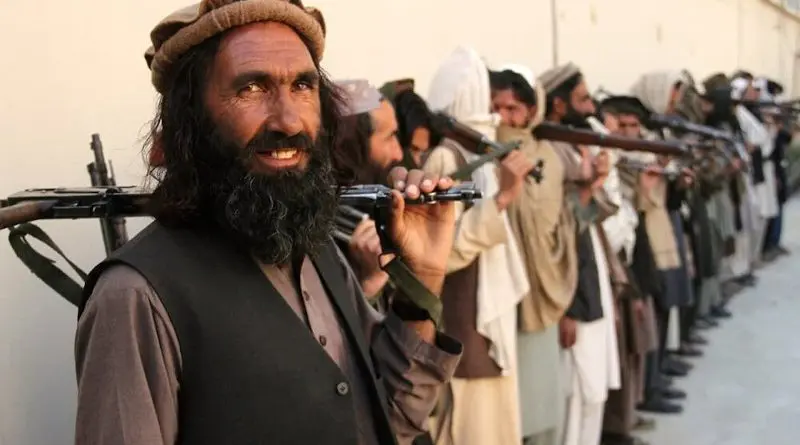
Since the United States’ hasty withdrawal from Afghanistan in 2021, the Taliban quickly overthrew the pro-Western government that had been supported by the U.S. and other Western nations, establishing their own regime. Subsequently, the international community maintained a long-standing stance of non-recognition and isolation towards the Taliban authorities, and the Chinese government also did not officially recognize the Taliban. However, the Chinese government and the Taliban authorities have had considerable practical contact, with China formally accepting the Taliban’s appointed ambassador to China, and Chinese companies beginning to reinvest in the Afghan region.
In 2023, China’s Central Asia Petroleum and Natural Gas Company (CAPEIC) signed an investment agreement with the Afghan authorities totaling USD 540 million. In 2024, China and Afghanistan signed a cooperation agreement for a key supporting project of the Mes Aynak copper mining, the Baghdara hydropower project, with a total investment of USD 10 billion. In the summer of the same year, there was an official announcement on the commencement of the construction of a new road from the Kabul-Gardez intercity highway to the entrance of the Mes Aynak copper mine, marking a significant step forward in the China-invested mine project.
Since the Taliban took control of the Afghan government, analyses have consistently pointed out that the internal situation in Afghanistan has not fully stabilized. Internal conflicts in Afghanistan still show signs of resurgence, and the Taliban remains isolated internationally, with economic difficulties also intensifying. However, some Chinese analyses suggest that this situation might actually present an opportunity for China to increase its investment in Afghanistan.
Recently, Transparency International, in its 2024 report, stated that Afghanistan ranked 165th out of 180 countries in terms of public sector corruption. According to the report, Afghanistan scored 17 out of 100 on the Corruption Perceptions Index, 3 points lower than its score in 2023. The country had previously scored 20 points in 2023 and 24 points in 2022. Although the Taliban regime’s scores have decreased in recent years, it still remains better than the situation under the previous government. In March 2024, the Taliban authority publicly stated that all forms of corruption within government departments had been eradicated and that Afghanistan would welcome foreign investment with efficiency, integrity, and a proactive attitude. Overall, the feasibility of investing in Afghanistan seems to have been strengthened. However, a series of developments in Afghanistan’s internal situation since the second half of last year suggest that the possibility of the situation worsening significantly should not be underestimated.
For the Taliban regime, its governance is based on Islamic law, with Supreme Leader Hibatullah Akhundzada controlling core policies through religious edicts. Military and political leaders are required to obey his decisions. Beneath the Supreme Leader, the Taliban regime is primarily divided into four factions:
1. Kandahar Faction (Akhundzada, etc.): Representing the traditional Pashtun forces, this faction emphasizes religious orthodoxy.
2. Haqqani Network: An independent military-economic group closely linked to cross-border armed organizations.
3. Doha Faction (led by Mullah Abdul Ghani Baradar, among others): Advocates for limited openness to gain international recognition, but its influence has significantly weakened in recent years.
4. Local Warlords: Some local commanders have gained more autonomy in areas such as taxation and security, creating centrifugal tendencies against the central Taliban government.
Outside the Taliban regime, there are still opposition forces in Afghanistan. The more active ones include ISIS, former Afghan government officials, and opposition armed groups led by former Northern Alliance commanders.
Since last year, in terms of Afghanistan’s internal political and security situation, the Taliban authorities have primarily faced two major challenges.
Firstly, there is a growing trend of internal power struggles within the regime. Taliban spokesperson Zabihullah Mujahid recently stated on social media that there are indeed differences of opinion within the Taliban, but he insisted that these differences would not escalate into violent conflict or open clashes. However, observers have pointed out that serious divisions have already emerged within the Taliban leadership and are continuing to intensify.
Several months ago, the Taliban’s Interior Minister, Sirajuddin Haqqani, disappeared after traveling to the UAE, while the Deputy Foreign Minister, Abbas Stanikzai, fled to the UAE after issuing harsh criticisms of the Taliban’s senior leadership.
Related analyses suggest that Afghanistan’s supreme spiritual leader Akhundzada, is continuously consolidating power, strengthening the Kandahar faction’s control over Afghanistan’s highest authority. Meanwhile, the senior leadership of the Haqqani Network is being increasingly marginalized, leading to intense struggles between the two factions. The internal conflict within the Taliban seems to be intensifying, which could directly exacerbate instability in Afghanistan. A recent commentary in Pakistan’s Dawn newspaper even pointed out that there is a risk of the Taliban’s highest leader being overthrown.
Secondly, the strength and destructive power of opposition forces have increased. The Taliban has made slow progress in establishing an inclusive government and has shown excessive bias toward the Pashtun, which has caused strong dissatisfaction among other ethnic groups in the country. Opposition armed groups have seized this opportunity to gain widespread support from Tajik, Hazara, and other ethnic communities, frequently operating in the northern and central regions of Afghanistan. Among them, the organizations led by Ahmad Massoud, leader of the National Resistance Front (NRF), and Yasin Zia, leader of the Afghanistan Freedom Front (AFF), have been the most active.
Previously, the AFF has even launched attacks in Kabul, causing casualties among several Taliban members, demonstrating its strong combat capabilities and a determined spirit of resistance. Meanwhile, the NRF has been steadily expanding its forces in its operational areas, strengthening military training, and enhancing its stance against the Taliban. The resurgence of opposition forces, coupled with the intensification of internal struggles within the Taliban, is likely to accelerate the deterioration of Afghanistan’s internal situation.
Moreover, negative factors outside the political and security situation are also quite evident.
According to a report from the World Bank, Afghanistan’s GDP has declined by 26% over the past two years, with the economy continuing to suffer from a recession, high unemployment, and a large portion of the population losing their sources of income, resulting in a dire living situation. In such an economic environment, sectors like infrastructure development, education, and healthcare in Afghanistan have struggled to develop effectively, leading to a worsening quality of life for the people.
In terms of international recognition, despite the Taliban authorities actively engaging in diplomatic activities, expanding foreign relations, and increasing interactions with Russia, Turkey, China, and some Gulf countries, they recently held high-level meetings with India and even sent delegations to Japan, the international community’s recognition of the Taliban government remains minimal. The Taliban authorities are finding it difficult to secure the necessary aid to improve the internal situation, and a significant portion of the population, in search of a livelihood, either flee abroad or align with armed groups, ultimately creating a vicious cycle.
Furthermore, the worsening relationship between Afghanistan and Pakistan is also worth noting. Data released by the United Nations shows that the operational capabilities of Pakistan’s largest terrorist group, the Tehrik-i-Taliban Pakistan (TTP), have significantly increased, severely worsening Pakistan’s security situation. The report indicates that between July and December 2024, the TTP launched over 600 terrorist attacks against Pakistan, including attacks originating from Afghan territory.
Despite the Taliban’s assurances that Afghan territory will not be used for terrorism against any country, the Afghan Taliban continues to provide logistical support, operational space, and financial backing to the TTP, including funding for TTP leadership and establishing new training centers in Afghanistan’s Kunar, Nangarhar, Khost, and Paktika provinces. Afghanistan’s support for the TTP severely impacts Pakistan’s security, further escalating tensions between the two countries. Recently, Pakistani authorities have made it clear that they do not rule out the possibility of fully deporting the millions of Afghan refugees still residing in Pakistan. Should Pakistan take formal action, the influx of millions of refugees would further strain Afghanistan’s social resources and exacerbate the country’s already volatile situation.
Another important point to consider is that, with the deepening deterioration of the situation in Afghanistan, it is certain to create a regional spillover effect. Refugees and armed militants are likely to spread to neighboring countries, which would, in turn, have a negative impact on the entire Central Asian region.
Final analysis conclusion:
Since the Taliban’s return to power, the international community generally acknowledges that violence within Afghanistan has decreased. However, existing analyses also point out that the Taliban regime has failed to effectively integrate internal forces, and its relationship with its most important neighbor, Pakistan, continues to deteriorate. Now, with the intensifying infighting within the Taliban leadership, the possibility of a deepening internal crisis in Afghanistan cannot be overlooked. If this trend continues to escalate, the regional spillover effects could be quite significant.
- Zhou Chao is a Research Fellow for Geopolitical Strategy programme at ANBOUND, an independent think tank.

Anbound Consulting (Anbound) is an independent Think Tank with the headquarter based in Beijing. Established in 1993, Anbound specializes in public policy research, and enjoys a professional reputation in the areas of strategic forecasting, policy solutions and risk analysis. Anbound's research findings are widely recognized and create a deep interest within public media, academics and experts who are also providing consulting service to the State Council of China.