Monday, March 10, 2025

UPDATED

US Tanker Busts into Flames After Being Hit by Containership off England
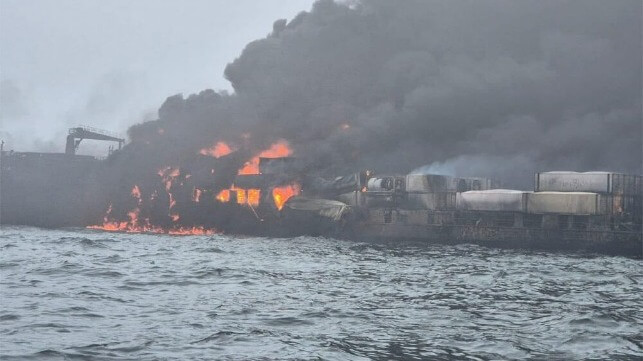
tanker fire and containership
Containership hit the anchored Stena tanker off the coast of the UK (MCA)

Published Mar 10, 2025 11:03 AM by The Maritime Executive


[Breaking News] A rescue and fire control operation is underway off the eastern coast of England after a container vessel hit a tanker that was anchored offshore with reports of a massive fireball after the allision. Reports are that 32 crewmembers have been evacuated and brought to shore from the two ships with at least 13 being reported as causalities.

The UK Maritime and Coastguard Agency received reports of the ships being evacuated at 0948 local time. The vessels were reported to be near Hull, England. Four lifeboats from the Royal National Lifeboat Institution were dispatched along with helicopters and assistance from commercial vessels in the area. One of the Windcat crew vessels supporting the offshore wind industry reportedly provided transportation to shore for some of the causalities.

The Stena Immaculate (49,792 dwt) was reported to have been at anchor in the Immingham Anchorage having arrived from Greece. The vessel is operated by Crowley under the U.S. flag and owned by Stena Bulk. It is on a long-term charter as part of the U.S. Department of Defense Tanker Security Program. Stena told CNN that the 20 crewmembers from the vessel have been accounted for and are safe.

Crowley issued a statement confirming that all of its crewmembers are safe and reported the Stena Immaculate was loaded with Jet A-1 fuel. The vessel suffered a ruptured cargo tank causing the fuel to be released. They said there were multiple explosions and that the vessel was abandoned.

The tanker was struck by the Portuguese-flagged containership Solong, which is managed from Germany. The vessel is 9,300 dwt and 461 feet in length (141 meters) with a capacity of approximately 800 TEU. The vessel was sailing from Scotland to Rotterdam. The video also shows significant fire damage to the containership.


The circumstances of the incident remain unclear but the Guardian newspaper is quoting the UK Met Office saying there were likely areas of fog and low clouds in the region. They were predicted to be lifting as winds increased and the temperature rose. The forecast was for a hazy day.

UK Transport Secretary Heidi Alexander issued a statement thanking the emergency service workers who helped with the evacuations and are assisting in the ongoing operation.

Information from the scene of the incident is spotty as it is approximately 10 miles offshore. The RNLI last reported that three of its lifeboats remain on the scene and the firefight is ongoing. HM Coastguard in a statement said "an assessment of the likely counter pollution response required is being enacted."

Additional statements are expected from the authorities as the day continues.


What we know about the North Sea tanker collision


By AFP


March 10, 2025


View of the North Sea between the turrets of the entrance to the old pier in Withernsea, on the east coast of England near where a collision between a tanker and a cargo ship caused multiple explosions - Copyright GETTY IMAGES NORTH AMERICA/AFP BRUCE BENNETT

Jet fuel caught fire and leaked into the North Sea on Monday after a cargo ship reportedly carrying sodium cyanide hit a tanker chartered by the US military off the British coast.

More than 30 people were injured, but all the tanker crew were reported rescued.

Here is what we know about the collision between the tanker Stena Immaculate and the container vessel Solong, which set off a major pollution alert on the British coast.


– Fuel tanker hit while anchored –


The Stena Immaculate, which was carrying the fuel, was at anchor about 10 miles (16 kilometres) off the eastern England port of Hull when it was “struck by the container ship Solong”, according to Crowley Maritime, the US shipping firm managing the tanker. The alarm was raised at 0948 GMT.

The Lloyd’s List maritime news outlet said the Solong was carrying 15 containers of sodium cyanide, a flammable gas.

A massive fire erupted and engulfed both vessels. Crowley Maritime said the tanker was carrying jet-A1 fuel and the US Defense Department has confirmed that the US military had chartered the vessel.

The tanker “crew abandoned the vessel following multiple explosions onboard” said Crowley Maritime, which is based in Jacksonville, Florida.

Around 32 people were brought ashore on three vessels, according to Grimsby port director Martyn Boyers. Stena Bulk, a Swedish company that owns the tanker, said all of the crew on the vessel were alive.

The 140-metre (460 feet) Portuguese-flagged “Solong” is owned by German company Reederei Koepping and was going from Grangemouth in Scotland to the Dutch port of Rotterdam, according to the Vessel Finder website.


– Ships ablaze –


Images showed flames and a thick cloud of black smoke rising from the wreck of the two ships. The UK Coastguard was coordinating a rescue and emergency pollution operation after Crowley Maritime said the impact had “ruptured” the tanker and set off a fire.

The Royal National Lifeboat Institution (RNLI) rescue service said there were reports of “fires on both ships”.

The government Marine Accident Investigation said it had a team at the scene already “gathering evidence” and assessing “next steps”.

A plane, lifeboats from coastal stations and other nearby vessels were in the rescue operation, the coastguard said.


– Humber traffic suspended –


Associated British Ports (ABP), which operates ports in Hull and Immingham, the stricken region, said it had halted all vessel movements in the Humber estuary that flows into the North Sea.

– Relatively rare –


The North Sea has busy shipping lanes but accidents are relatively rare.

In October 2023, two cargo ships, the Verity and the Polesie, collided near Germany’s Heligoland islands. Three people were killed and two others were listed as missing.

On October 6 2015, the freighter Flinterstar, carrying 125 tonnes of diesel and 427 tonnes of fuel oil, sank after colliding with the tanker Al Oraiq eight kilometres (five miles) off the Belgian coast.

A major oil spill hit the North Sea in January 1993 when the Liberian tanker Braer suffered engine damage while going from Norway to Canada. It ran aground off Scotland’s Shetland Islands and released 84,500 tonnes of crude oil.

– Proper lookout? –

David McFarlane of the Maritime Risk and Safety consultancy said there were 200 to 300 ship collisions around the world each year, but most are just a “slight bump” in a port.

“The collision regulations… state that all ships must maintain a proper lookout at all times. And clearly something has gone wrong here, because if a proper lookout had been maintained, this collision would have been avoided,” McFarlane told AFP.

When the flames die down investigators will look for the video data recorders on the two ships — the equivalent of a plane’s “black box” information recorders.

These should have information from the ships’ radar as well as voice recordings of the bridge teams. McFarlane said this would help investigators find out if there was communication between the two ships.

burs-tw/jkb/js


North Sea tanker and cargo ship collision injures 32


By  AFP
March 10, 2025

Akshata Kapoor, Olivier Devos

A major rescue operation was under way after a collision between an oil tanker and a cargo ship in the North Sea Monday which sparked a huge blaze and left 32 people injured.

The injured had been brought ashore for treatment “in three vessels”, the Grimsby port director Martin Boyers told AFP, adding that “ambulances were queueing on the quay”.

The operation was being coordinated by the UK Coastguard after “reports of a collision between a tanker and cargo vessel off the coast of East Yorkshire”, a Coastguard spokesperson said.

The spokesman added the Coastguard was carrying out an assessment of the likely counter pollution response required.

Images on UK television channels showed a huge plume of thick, black smoke and flames rising from the scene about 10 miles (16 kilometres) off the coast.

There were reports of “fires on both ships” that UK lifeboat services were responding to, the Royal National Lifeboat Institution (RNLI) confirmed to AFP.

There were also reports that “a number of people had abandoned the vessels”, RNLI added.

The International Maritime Organization confirmed to AFP “the current focus is on the firefighting and search and rescue operation”.

UK Transport Secretary Heidi Alexander said she was “concerned to hear of the collision between two vessels in the North Sea this morning and am liaising with officials and HM Coastguard as the situation develops”.

She also thanked all the emergency services which rushed to the scene.

The alarm about the collision near the port city of Hull in East Yorkshire was raised at 0948 GMT.

A Coastguard helicopter, aircraft, lifeboats from four towns and other nearby vessels were part of the large rescue operation, the Coastguard added.

Swedish tanker company Stena Bulk confirmed it owned the oil tanker involved in the accident, adding that it was operated by Crowley, a US-based maritime company.

The tanker was named as the Stena Immaculate by online ship tracking service Marine Traffic, which said the vessel was anchored near its destination, Immingham, near Hull.

It had travelled from Greece loaded with petroleum products, according to Bloomberg.

An Associated British Ports (ABP), which operates the Port of Hull and Immingham, said it was “aware” of the incident and was “assisting” the Coastguard.

The MarineTraffic shipping tracker said the cargo ship involved was the Portuguese-flagged “Solong”, owned by the German company Reederei Koepping.


– Collisions rare –


Vessels with firefighting capabilities have been dispatched to the scene off the northeast coast.

Collisions remain rare in the busy North Sea.

In October 2023, two cargo ships, the Verity and the Polesie, collided near Germany’s Heligoland islands in the North Sea.

Three people were killed and two others are still missing, considered dead.

The Isle-of-Man-flagged Verity, which was carrying steel from the northern German port of Bremen to Immingham, sank.

In October 2015, the Flinterstar freighter — carrying 125 tonnes of diesel and 427 tonnes of fuel oil — sank after colliding with the Al Oraiq tanker eight kilometres (five miles) off the Belgian coast on October 6, 2015.


At Least 32 Casualties in Fiery North Sea Collision Between Oil Tanker and Cargo Ship

Advocates expressed concern for wildlife as emergency crews completed rescue and firefighting efforts.
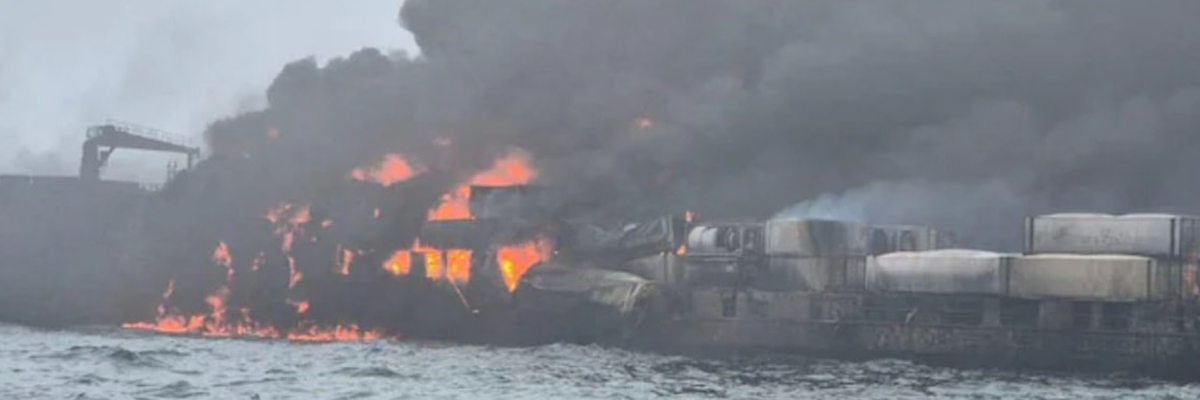


An oil tanker and a cargo ship collided off the British coast in the North Sea on March 10, 2025.
(Photo: @SputnikIntl/X)

Julia Conley
Mar 10, 2025
COMMON DREAMS


This is a developing story... Please check back for possible updates...

British emergency workers on Monday were responding to a collision between an oil tanker and a cargo ship off the eastern coast of the United Kingdom in the North Sea.

At least 32 casualties were "brought ashore in Grimsby," a port town in Lincolnshire, reportedThe Guardian, and the two ships were believed to be a U.S.-flagged tanker called the MV Stena Immaculate and a cargo vessel called the Solong, which was headed for Rotterdam in the Netherlands.

Photos and videos posted on social media showed the vessels on fire and surrounded by thick black smoke.


Martyn Boyers, chief executive of the Port of Gimsby East, told the BBC that a "massive fireball" was seen erupting around the time of the collision.

"They must have sent a mayday out—luckily there was a crew transfer vessel out there already," said Boyers. "Since then there has been a flotilla of ambulances to pick up anyone they can find."

Boyers toldSky News that "a haze and a smog" had been reported off the coast on Monday.

"It's been very foggy, and the fog has never lifted. So I would imagine that at that time, when the accident took place, that there would have been fog," said Boyers. "Having said that all these vessels now... they've got every, every bit of kit that's known to man about how to navigate and radars and everything. So it's a very, very unusual and tragic accident."

His Majesty's Coastguard, the U.K. maritime agency, reported that an alarm was raised about the crash about 10 miles off the coast of East Yorkshire at 9:48 am local time.

The Solong appeared to have struck the oil tanker when it was anchored, according to tracking data.

The BBC reported Monday morning that all members of the Stena Immaculate crew had been accounted for and were safe; it was not clear whether there were still people in the Solong's crew who still needed to be located.

Climate campaigners have warned against continued oil extraction in the North Sea; in January, advocates celebrated as grassroots campaigners and groups won a lawsuit stopping two fossil fuel projects by Shell and Equinor from moving forward there.

David Steel, manager of the Isle of May National Nature Reserve, noted that the disaster happened just as seabirds' breeding season is about to begin.

"Seabirds pouring back into the North Sea as they head to colonies down east coast," said Steel, "and this is a breaking headline we didn't need today."


Battleship USS Texas Gets a Permanent Home

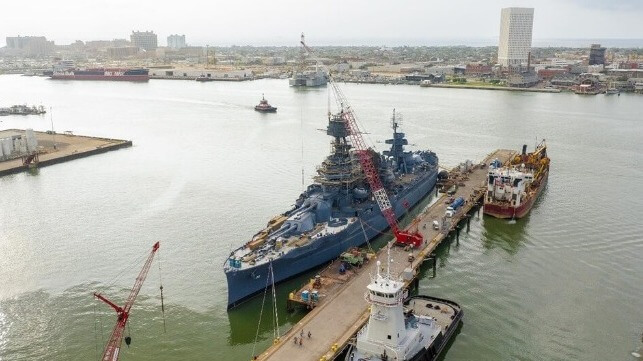
USS Texas at Gulf Copper (Battleship Texas Foundation)

Published Mar 9, 2025 8:56 PM by The Maritime Executive


After months of debate, the historic battleship USS Texas has finally found a permanent berth at the port of Galveston. A disagreement between the port authority and the foundation that manages Texas led to uncertainty about the giant WWII warship's future, but it has been resolved to the satisfaction of all parties, and the battleship will soon move to its new home at Galveston's Pier 15. 

USS Texas is the only surviving battleship that served during both world wars. Commissioned in 1914, she served on escort duty through WWI. During WWII, she saw action in both the Pacific and the Atlantic theaters, providing shore bombardment with her 14-inch guns during the landings in Morocco, Normandy, Iwo Jima and Okinawa - the most ambitious and costly amphibious operations of the war. 

USS Texas retired after WWII, and she has been in the care of the State of Texas' Battleship Texas Commission since 1947. Like all older museum ships, she began to develop issues with leakage, and in 2022 she transited to the nearby Gulf Copper yard to begin a two-year comprehensive refit. Gulf Copper bought a larger (used) drydock to accommodate Texas, completed all below-the-waterline work, and successfully refloated the aging vessel. 

However, Texas did not immediately have a place to go. Talks between the Battleship Texas Foundation and the board for Galveston Wharves (Port of Galveston) broke down in October, and the port authority called off negotiations. USS Texas was originally slated to berth in the area of piers 19-21, but this would have put her on the busy and narrow shipping channel, raising a variety of concerns about safety of navigation and hurricane preparedness (related to storm surge concerns). Port director and CEO Rodger Rees told the Houston Chronicle that the conversation was "not getting anywhere," so the board pulled the plug in late October.

The two sides resumed discussions in November, and eventually settled on nearby Pier 15. The site is an industrial wharf that has low utilization and does not figure prominently in port expansion plans, according to Galveston Wharves. It is still within walking distance of the port's busy cruise terminals, and the slip is located off the main channel. 

"After years of hard work and dedication, we’re thrilled to have the support of the Wharves Board to bring Texas to Pier 15 in Galveston- just a short walk from Pier 21 and the historic Galveston Strand. Texas, the last ship of its kind, will promote tourism, educate future generations, and create a visitor experience worthy of her crew and legacy," said the Battleship Texas Foundation in a statement. 


Spanish Navy Monitors Transit of Russian Attack Submarine

Russian tug and sybmarine
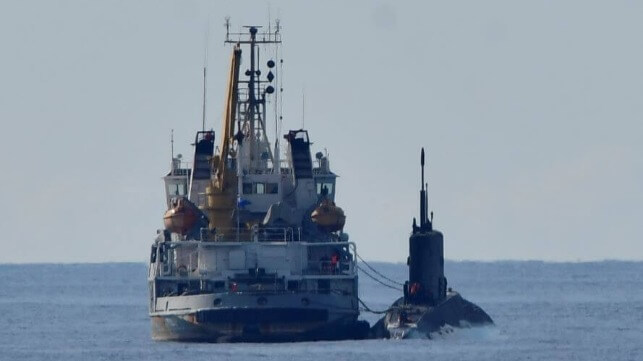
Russian attack submarine was accompanied for part of the trip by a Russian tug (Spanish Navy)

Published Mar 10, 2025 2:46 PM by The Maritime Executive


The Spanish Navy is reporting that it tracked a Russian attack submarine entering the Mediterranean and accompanied for part of the trip by a Russian tug. It was a part of the regular NATO efforts in the region where activity by Russians has been watched more intently this year as more ships were entering the Mediterranean as the political situation in Syria unfolded. 

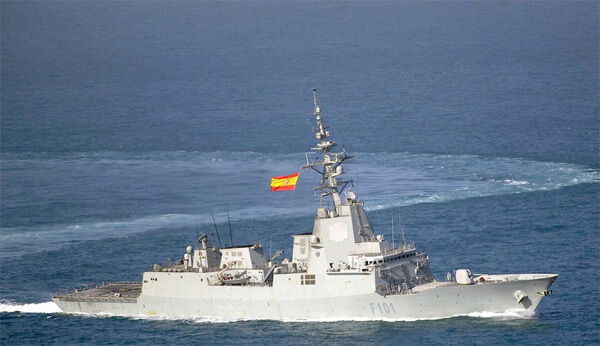
The Spanish frigate Álvaro de Bazán (5,800 tons displacement) part of the F-100 class was assigned the monitoring operation. It operates as part of Standing NATO Task Force No. 2 (SNMG2). NATO maintains two escort groups (SNMG) and two minesweeping groups (SNMCMG) responsible for the waters ranging from the Mediterranean to the Black Sea, the Baltic Sea, the Northern Flank, and the Southern Corridor (from the Strait of Hormuz to the Suez Canal), including the coasts of Somalia.

Few details were released on the monitoring, but the Spanish Navy identified the submarine as Krasnodar, of the KILO II class. The subs are diesel-electric attack submarines built in 1980 and operated by the Soviet Union. The Spanish only said that it was “in the waters of the Eastern Mediterranean.”

The submarine was traveling with the Russian tugboat Evgeniy Churov. According to the report, it accompanied the submarine on its way to the port of Alexandria, Egypt. The monitoring of the merchant vessel ended when the Russian vessels separated and each took a different course.


Álvaro de Bazán tracked the Russian vessels (Spanish Navy)


European Security & Defense reported in February that the sub and the tug had been observed off Portugal after having made their way from Northern Europe and the Baltic. The Royal Danish Navy tracked the vessels at the beginning of February as they transited west. 

According to the report, the Krasnodar and another Russian submarine Novorossiysk were both based in the Black Sea until 2022. The Novorossiysk was seen at the end of the year leaving the Mediterranean so if the Krasnodar remains in the Mediterranean, the news outlet said Russia would be restoring its presence in the region.

NATO and the West have been closely watching the Russian retreat from Syria and the steady stream of vessels moving into and out of the Tartus naval base. European Security & Defense speculates on possible new bases of operation for the submarine.

Spain highlights the tracking was part of its ongoing solidarity with the other NATO member countries, thereby supporting deterrence and collective defense at and from the sea.


Portuguese Navy Sail Training Vessel Sinks at the Pier

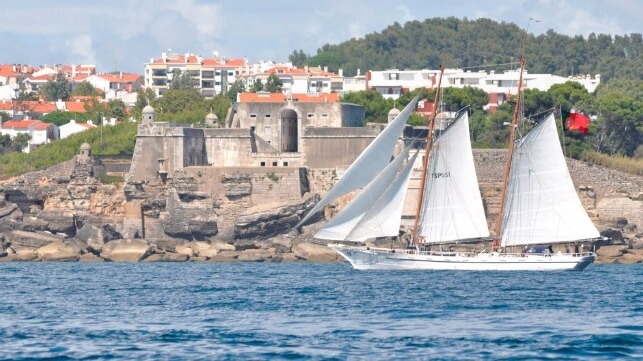
NRP Polar, 2017 (Marinha file image)

Published Mar 9, 2025 10:14 PM by The Maritime Executive


[Brief] A Portuguese Navy training ship has gone down at its pier at the Lisbon Naval Base, according to the service.

"At the Lisbon Naval Base, the NRP Polar, a sailboat used for training, had a rapid entry of water, which resulted in its loss of buoyancy. There are no personal injuries to report from this incident," the Portuguese Navy said in a statement last week. 

No environmental risk is expected, but a boom has been placed around the sunken vessel as a precautionary measure. Dive operations are already under way to find the source of the flooding and prepare the hull for refloating. 

An investigation into the cause of the casualty is under way. 

NRP Polar (ex name Anne Linde) is a gaff-rigged schooner built in 1977. It was a charter vessel until 1983, when the Portuguese Navy acquired it for cadet training. The 75-foot vessel can accommodate 12 trainees at a time. 


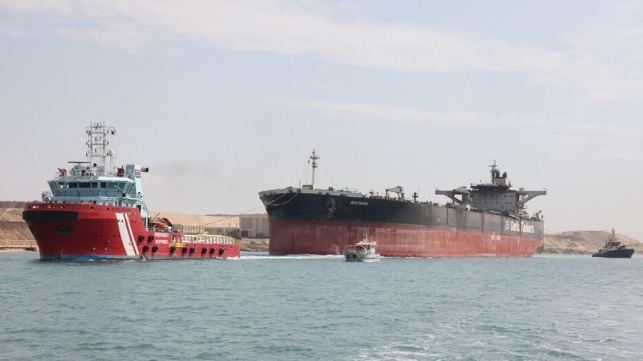
Sounion Tanker Damaged by Houthis was Towed Through Suez Canal

burnout Sounion transiting Suez Canal
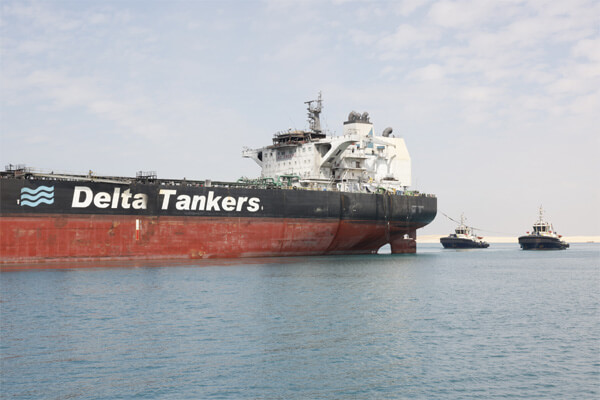
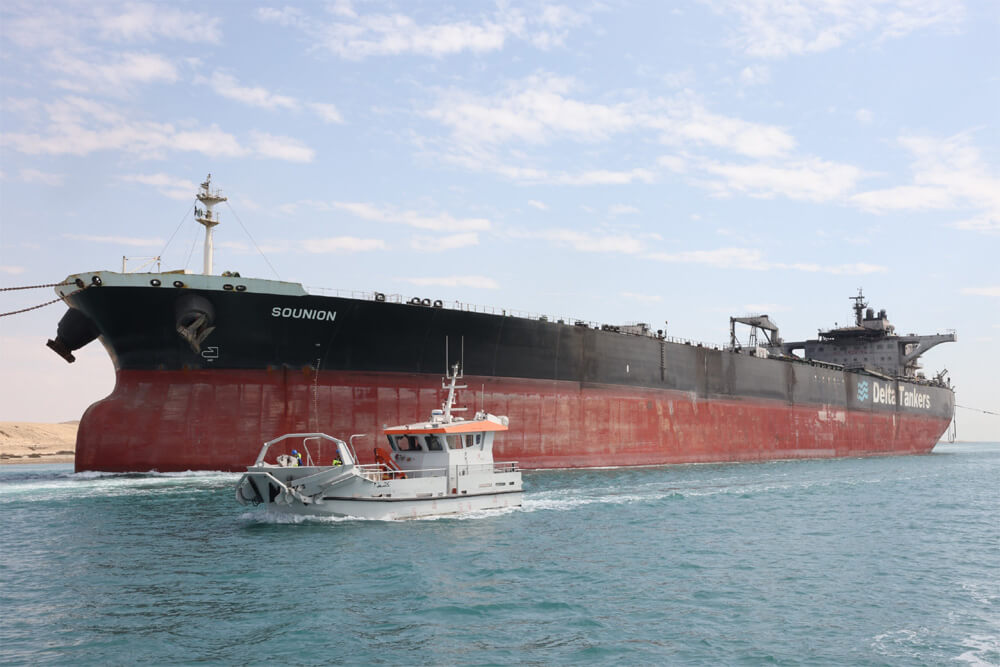
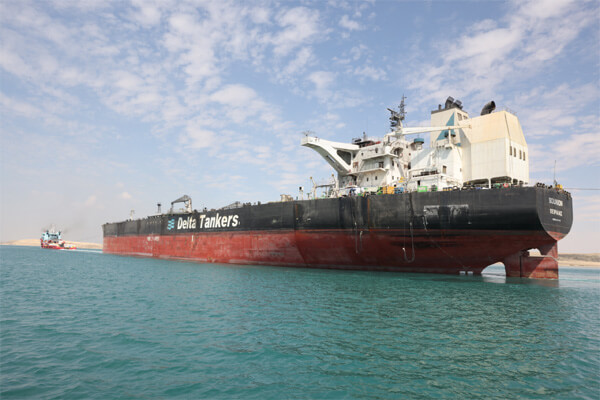
Towing Sounion through the Suez Canal as a dead ship took approximately 24 hours (SCA photos)

Published Mar 10, 2025 1:51 PM by The Maritime Executive


The tanker Sounion which drew worldwide attention in August 2024 after it was damaged by the Houthis in multiple attacks off Yemen transited the Suez Canal today. The Canal Authority is reporting it was a carefully planned, complex operation to bring the heavily damaged vessel through the canal on its way to Greece.

Offloading of the 150,000 tons of crude aboard the tanker was completed in December 2024 after nearly a month-long operation managed by Ambrey and Mega Tugs. The tanker run by Greece’s Delta Tankers was northbound in the Red Sea when it was struck in August and disabled. After the crew abandoned the tanker, the Houthis went aboard and set off multiple explosions starting oil fires and destroying the bridge in addition to the previous flooding and damage to the engine room. 

The Suez Canal Authority reports it oversaw the offloading operation after the vessel was towed into the port south of the canal. The Authority’s pollution control vessel Kasht 2 was positioned nearby during the offloading while the operation was monitored by teams in case of pollution.


Bridge and control systems were destroyed by the Houthis (SCA)


Planning for the transit took weeks according to Lieutenant General Osama Rabie, Chairman of the Suez Canal Authority. He highlights that the 274-meter (899-foot) tanker has no steering control and was a challenge as a large dead ship tow.

The tanker was being towed by the Aigaion Pelagos, a large anchor handler operated by Megatugs of Greece. The Suez Canal Authority assigned its largest tug, Baraka, along with the Mohamed BashirSuez 1, and Suez 2 to the transit. Tug Suez 2 was attached at the stern to act as a rudder to help guide the tanker.


The transit began Saturday, March 8, and took approximately 24 hours. They initially positioned the dead ship to enter the Suez Canal and then conducted the transit in stages. They paused in Great Bitter Lake while the southbound convoy passed. It continued in stages pausing for crew changes. In total 13 pilots were used to guide the Sounion.

The tow operation reached the northern terminus of the canal on March 10. The Aigaion Pelagos is holding north of the canal with the authority saying it has been told the tow is heading to Greece.

Houthi Forces Threaten to Resume Attacks on Shipping

Sounion attack
File image courtesy Houthi Military Media

Published Mar 10, 2025 3:44 PM by The Maritime Executive


Yemen's Houthi rebels have set a deadline for Israel to lift its blockade on food aid deliveries to the Gaza Strip, and have pledged to resume attacks on shipping on Tuesday if the demand is not met. 

On March 2, Israel shut down international food aid convoys to Gaza in order to apply more pressure on the terrorist group Hamas, which continues to hold 24 living Israeli hostages and 34 deceased hostages' remains. The cutoff of aid affects Gazans at a population level, as the destruction of the territory has left hundreds of thousands of Palestinian Arabs dependent on humanitarian assistance for survival.

Last weekend, Israel cut off electricity supplies to Gaza's sole desalination plant at Deir el-Balah, which supplies water to about 600,000 displaced people. The plant has recourse to generators and to solar power, but the loss of a utility grid connection makes its future (and the local water supply) more tenuous. A spokesman for the terror group Hamas accused Israel of committing "collective punishment and a full-fledged war crime" by withholding food, water and electricity.

Yemen's Houthi rebel faction - backed by Iran - agreed to cease its attacks on shipping in the Red Sea in January when Israel and Hamas reached a ceasefire agreement. Given the recent breakdown in the ceasefire arrangement, the Houthis warned Friday that attacks in the Red Sea could resume imminently if Israel does not restore access for food trucks in Gaza. 

Houthi militants have been attempting to rearm after more than a year of constant engagement with U.S. forces in the Red Sea, and have sought to supplement Iranian-supplied weaponry with a new Russian government supply relationship. Russia, which has been working to renew its diplomatic ties with the United States, has reportedly been in talks to provide the Houthis with the P-800 Oniks supersonic antiship missile - a munition that Soviet ngineers designed to attack U.S. Navy destroyers, like the ones that engage with Houthi forces in the Red Sea. 


Bulker Holed in Collision on China’s Busy Yangtze

holed bow on bulker
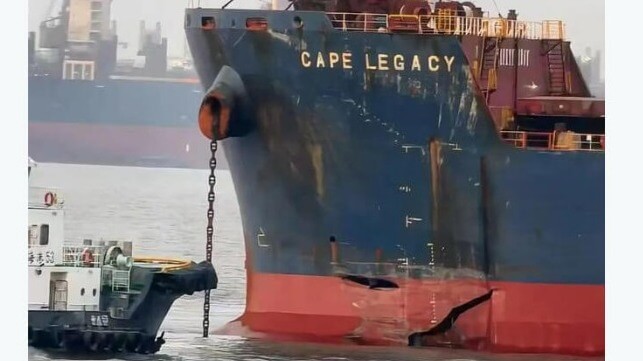
Holes sustained in the collision on the Yangtze (Internet)

Published Mar 10, 2025 4:44 PM by The Maritime Executive


[Brief]  Chinese media is reporting that two inbound bulkers in the busy Yangtze estuary collided causing damage to the vessels. Pictures circulating online showed two large gashes above the waterline on a bulker managed from Cyprus with Israeli ownership interests.

According to the media reports, the Chinese-owned bulker Feida 138 (12,800 dwt) was inbound from the south channel. The larger dry bulk carrier Cape Legacy (180,000 dwt) was inbound for the north channel. The vessels made contact Saturday afternoon with media reporting a flurry of vessels responding.

Pictures show the Cape Legacy, which is owned by Israel’s Mano Maritime with two gashes in the hull as well as several scrapes. Reports said no one was injured and the crew was able to control the vessel. It is reportedly carrying a cargo of iron ore. The vessel was been operated by a subsidiary of Man since 2015 and is registered in the Marshall Islands.

Feida 138 is a smaller, domestically owned dry bulk carrier. It is 134 meters (440 feet) in length. It was moved to an anchorage. It is unclear how much damage the vessel sustained.


German Strikes to Close Kiel Canal and Impact Port of Hamburg

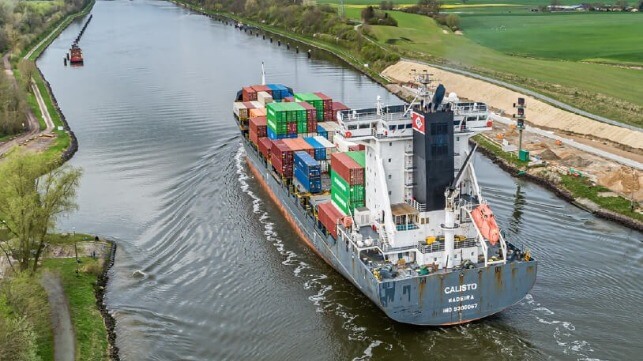
Kiel Canal
Germany's Kiel Canal will be closed for three days impacting the Port of Hamburg and regional shipping (WSV)

Published Mar 10, 2025 4:10 PM by The Maritime Executive


Germany’s trade union Ver.di Nord (United Services Union) is launching a broad and escalating strike in Northern Germany this week which will close the Kiel Canal and impact parts of the Port of Hamburg. Officials are warning even after the three-day strike there are expected to be lasting repercussions and delays.

A vital waterway for short sea and feeder shipping in the Baltic region, the Kiel Canal was due to close Monday evening, March 10, and will remain closed through the day shift on Thursday, March 13. Ships have been ordered to clear the canal with no new shipping being permitted to enter the canal for most of the day on Monday to provide time for ships to clear the waterway. The gates at both ends of the canal were due to be closed by 2200 Monday evening.

“Nothing will be moving,” warned a spokesperson for Ver.di. “No ships will be able to go in or out.” In addition, the spokesperson said, “Ver.di has called on the employees of the Waterways and Shipping Office to go on a warning strike so that the federal government can also feel the effects.”

The so-called warning strike is a short-term, limited action by the union under German law. It is done to call attention to their cause which in this case is contract negotiations for public service employees. Announcing the strike, the union lamented that offers had not been put forth ahead of the negotiations. The next round of contract talks is scheduled for March 14-16.

The union says wants the terms of the new contract to help to increase the attractiveness of jobs in the public sector, combat staff shortages and reduce the burden on employees. Ver.di is demanding a pay increase of eight percent in total, but at least 350 euros per month. They are also demanding higher bonuses for stressful shift work, three additional days off, and a new type of "my time account" to give employees more time independence. 

The new round of strikes began over the weekend with reports that all 13 of the country’s major airports would be going on strike. The Hamburg Airport is reported to have already closed as of Sunday during an unannounced strike.

Ver.di is calling for theatres, daycare centers, and public swimming pools to close, garbage collection to be suspended, and most municipal services to be halted. The scope of the strike is set to increase daily.

The Kiel Canal calls itself “the world’s most frequented artificial waterway.” It provides a direct route between the North Sea and the Baltic, reducing the trip by 260 nautical miles which equates to saving 14 to 18 hours of transit time. The canal is approximately 50 nautical miles and takes six to eight hours to transit. Ships will either have to wait for it to reopen or make the trip around Denmark in the congested sea lanes.

“After reopening, major delays should be expected for all west- and eastbound traffic heading towards the Kiel Canal. The period of congestion cannot be predicted, as it will depend on the volume of ships waiting to transit,” ship agency and logistics company GAC Group warned customers in an alert.

The local branch of Ver.di is calling on employees at the Port of Hamburg to join this week’s action. The port is already warning of anticipated delays noting that one in three containers handled in Hamburg passes through the canal.


Strike action grounds thousands of flights in

Germany


By AFP
March 10, 2025


The German airport workers strike affected 3,400 flights, impacting around 500,000 passengers - Copyright AFP/File Fabrice COFFRINI

Strike action grounded thousands of flights in Germany on Monday, including all connections to and from Berlin, as the service sector union called on workers to walk out for better pay.

Some 3,400 flights were affected by the industrial action, impacting around 500,000 passengers, the German airport association ADV said.

At Frankfurt, the country’s busiest airport, operator Fraport said no passengers would be able to board and that disruptions would “almost certainly” affect transit travel, according to German daily Bild.

Airports in Bremen, Cologne, Dortmund, Duesseldorf, Hamburg, Hanover, Leipzig, Munich and Stuttgart were also affected.

The Verdi union said Friday it was calling on public sector workers and some 23,000 employees of ground handling service providers to walk out to send a message to management.

“We regret the inconvenience that this strike will cause for passengers,” said the union’s deputy chair Christine Behle.

“But without the pressure of industrial action, there will be no movement in the negotiations.”

The union’s demands include a pay rise of eight percent or at least 350 euros ($380) more per month, and higher bonuses for particularly stressful activities.

The union said that “we are forced to go on this warning strike because the employers have not yet made an offer in the ongoing collective bargaining negotiations for public sector employees and have shown no willingness to meet our legitimate demands.”


Emotive marketing for sustainable consumption?


International research team tests effects of social media posts on valuation of chocolate


University of Göttingen


Does triggering certain emotions increase willingness to pay for sustainably produced food? In social media, emotional messages are often used to influence users' consumer behaviour. An international research team including the University of Göttingen investigated the short- and medium-term effects of such content on consumers' willingness to pay for bars of chocolate. They found that in the short term, provoking certain emotions increases willingness to pay, but the effect weakens after a very short time. The results were published in the journal Q Open.


Food and its production can have social and ecological costs that impact globally on both current and future generations. For example, cocoa cultivation is often associated with child labour and deforestation. Supermarket shelves display chocolate bars labelled with promises of sustainably sourced cocoa. However, their market share remains comparatively low. To encourage more sustainable consumption, social media is increasingly using emotive messages. The researchers therefore investigated whether emotional content has a positive effect on purchasing behaviour: to do this, the team randomly divided over 2,000 participants into four groups. They showed each group different social media posts about cocoa cultivation in the form of videos – either factual with information about deforestation or child labour, or with the same information but reinforced with emotional elements.


The study shows that triggering emotions increases the willingness to pay for sustainable chocolate in the short term. Participants who were confronted with emotional content were more willing to spend more money on chocolate with a sustainability label or promise. “This effect is due, in particular, to negative emotions such as fear, anger or sadness, which are triggered by images of child labour or deforestation,” explains lead author Dr Liza von Grafenstein at the research institute IDinsight in New Delhi. However, the effect weakened noticeably within two weeks. The emotional reaction diminished, and after some time, participants who had seen emotional content rated sustainable labels and sustainability claims even lower than those who only received factual information.


“The results suggest that emotional content in social media campaigns can be an effective way to promote sustainable consumption in the short term,” explains Dr Sarah Iweala, Research Associate at Göttingen University’s Marketing for Food and Agricultural Products research group. Dr Anette Ruml, German Institute for Global and Area Studies in Hamburg, adds: “However, the timing of the campaigns must be strategically chosen to maximise their influence on real purchasing decisions.”


“Our results also show, however, that purely factual information is at least as effective, especially in the medium-term," emphasises Dr Stefan Pahl of the United Nations Industrial Development Organization in Vienna.


Original publication: Liza von Grafenstein et al. Emotional priming for sustainable consumption? The effects of social media content on the valuation of chocolate. Q Open (2025). DOI: 10.1093/qopen/qoaf003


Can a joke make science more trustworthy?


According to a new study published in JCOM, an appropriate use of humor can make science communication more effective


Sissa Medialab

Cartoons and tweets used in the experiments 

image: 

Examples of the tweets seen by participants

view more 

Credit: Alexandra L. Frank, Michael A. Cacciatore, Sara K. Yeo and Leona Yi-Fan Su


Politicians learned this lesson a long time ago: a well-placed joke is a valuable tool for capturing public attention and building trust. Scientists, however, are much more reluctant to use humor when engaging in science communication. They may fear that a lighthearted approach could make them seem less authoritative and, consequently, make scientific findings appear less credible.

The good news, however, is that science itself seems to contradict this assumption. A new study led by Alexandra Lynn Frank, a doctoral student at the Grady College of Mass Communication at the University of Georgia, has found that, in the communication of scientific content, humor—by eliciting mirth in the audience—“can both have positive impacts on the likeability of a communicator, as well as enhancing perceptions that the message is an appropriate and legitimate source of scientific information.”

Frank and her colleagues’ study adds to the growing body of research that has investigated the use of humor (such as stand-up comedy) in science communication in recent years. It examines humor “in the context of social media posts from scientists.”

“Our study aimed to bridge this gap by enhancing our understanding of how individuals react to anthropomorphism and satire while providing practical insights for scientists and science communicators,” Frank explains.

The research focused on artificial intelligence-related content, presented through cartoons posted on Twitter/X by a fictional scientist, Dr. Jamie Devon. The type of humor used fell into three categories: satire (a mild, Horatian type), anthropomorphism (using animals or objects behaving like humans), or a combination of the two.

The study employed an online survey with an embedded experiment (participants were aware they were taking a survey but not that they were part of an experiment). To ensure the representativeness of the 2,212  participants, they were selected using quota sampling aligned with U.S. Census data.

Participants were shown one of eight versions of a fictional Twitter/X conversation initiated by Dr. Devon. The tweet included a cartoon about artificial intelligence (AI), and the humor element was varied across four conditions: no humor (control), anthropomorphism, satire, and a combination of both. After viewing the content, participants reported how much mirth (i.e., perceived humor) they experienced, how likable they found the scientist and evaluated the legitimacy of the content as an appropriate form of science communication.

“Politicians, entertainers, and advertisers often use humor because people tend to like and connect with people who can make them laugh. When people find something funny, they’re usually less likely to argue with or reject the message or the person delivering it. Our research supports this idea. We found that humor can aid scientists’ communication efforts, but only if people think they’re funny,” Frank explains.

This means that humor must be effective and genuinely elicit mirth from the audience; otherwise, it could have the opposite effect. “However, it is important to note that recent research conducted by my coauthors indicates that harsh forms of satire can be perceived as aggressive, which may undermine the credibility of the source of scientific information.”

Sarcasm or aggressively targeting someone, for example, is highly discouraged. This is why studies like Frank and her colleagues’ work are important: “Our research aims to provide valuable insights to aid these professionals in developing public communication strategies,” Frank explains, concluding: “When used responsibly, humor is a powerful tool that can humanize scientists and create meaningful connections with the public on social media. By leveraging humor, scientists can simplify complex concepts, making them more relatable and easier to understand. This approach not only fosters goodwill but also has the potential to dispel misinformation in a friendly manner. Moreover, humor can spark curiosity, motivating people to seek out additional information on important scientific topics.”

Frank and colleagues' work was supported by the NationalScience Foundation under Grant DRL-1906864. Any opinions, findings, and conclusions or recommendations expressed in this work are those of the author(s) and do not necessarily reflect the views of the National Science Foundation.