Monday, March 24, 2025


Author introduces children to their plant relations and what makes up a healthy ecosystem


Wednesday, March 19th, 2025 

Image

Image Caption

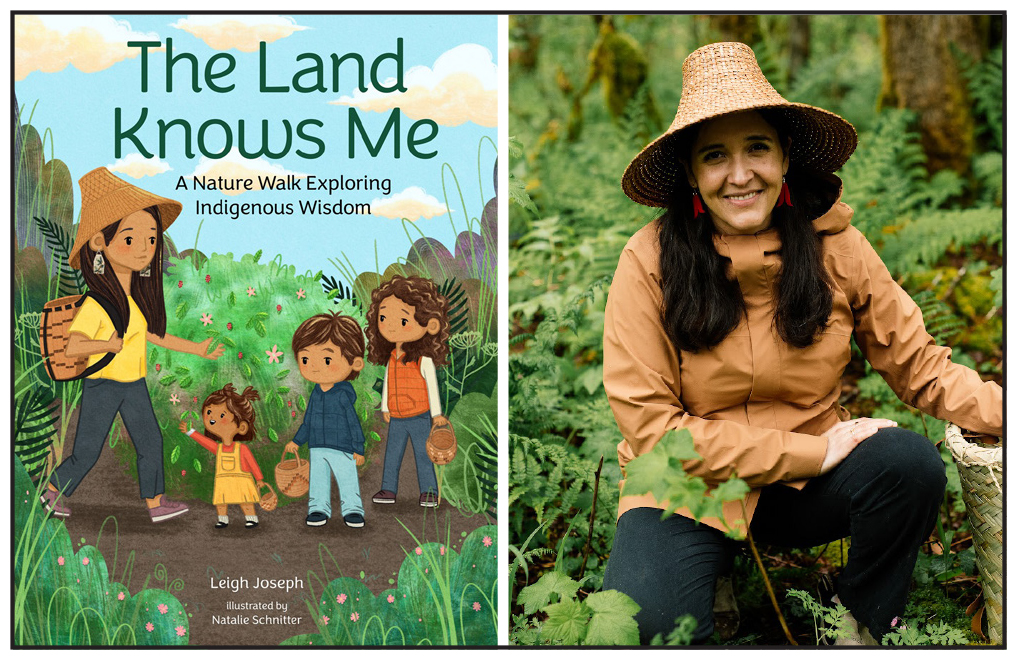
Author Leigh Joseph. Photo by Alana Paterson
By Shari Narine
Windspeaker.com Books Feature Writer
Local Journalism Initiative Reporter

Both on the page and in real life, Leigh Joseph is giving her children an opportunity that wasn't there for her grandparents. 

As the characters in her first children's book, The Land Knows Me: A Nature Walk Exploring Indigenous Wisdom, Joseph takes her son, daughter and niece through the Pacific northwest rainforest, and in a respectful way introduces them to their relations, the plants and everything, like pollinators, that makes an ecosystem healthy.

“It's been really important, since I've had kids, as I reflected on the fact that my grandparents’ generation just didn't have the opportunity in the same sense to go out and to learn on the land with family. They had their residential school experiences and everything that came after that in terms of their survival and still not feeling safe to go out on their own homelands,” said Joseph.

Through vibrant colourful illustrations by Natalie Schnitter and with the help of a language expert from Joseph’s community of Skwxwú7mesh (Squamish) First Nation, the 42-page book is a combination of English and Squamish words for the names of plants and relations.

Respect for the plants and land as sacred beings and as a place of the ancestors is also prominent throughout the pages as the children introduce themselves to the plants, give gifts to the land and harvest in a sustainable manner.

In fact, that connection is why Joseph chose to call her book The Land Knows Me instead of I Know the Land.

“It's important to me because I wanted to centre the land just as much as the characters in the book and to centre this idea that the more time we spend on the land, on walks like shown in the book… that relationship is built. And then that land reflects them back and knows them and they feel that comfort there on that land,” said Joseph.

Joseph is an ethnobotanist, which is explained in the book as someone who “loves and studies plants.” More fully, an ethnobotanist studies the relationship between people and plants, focusing on how different cultures utilize and perceive plants for a variety of purposes.  Joseph is also a university professor at Simon Fraser University.

The Land Knows Me is Joseph’s second book. Her first book, Held by the Land: A Guide to Indigenous Plants for Wellness (2023), came about through the academic work she did with the community.

“I just saw what a wonderful tool it was, and it was a tool that my community had been asking for, like a resource,” she said.

When Robin Wall Kimmerer’s Braiding Sweetgrass was adapted as a young readers’ edition, it gave Joseph the idea of producing a book that could engage children with plants and the land.

She reached out to her publisher, Quarto Publishing Group, “and from there the process unfurled,” said Joseph. “The hope is that young readers and their families can learn together, as well as take the book out with them seasonally on the trail or see plants outside and then come back and learn about them in a kid-friendly way.”

Joseph called upon the beloved books of her childhood to guide her in the writing process. She worked with development editors on how to blend science and cultural knowledge through story at the appropriate age level.

Joseph sent illustrator Schnitter reference photos of plants and the landscape around Squamish, as well as of her family. Joseph also provided guidance for the book cover, which included ensuring she wore a cedar hat and beaded earrings, “tweaking skin tones,” and adjusting clothing to ensure there were “some really clear visual cues” so The Land Knows Me was a “visibly Indigenous book from the Pacific northwest.”

That distinction was important to her as a member of Skwxwú7mesh First Nation.

“When I'm writing as an Indigenous author, I want to be really aware of grounding what I'm sharing in my own story and experience but writing it in a way that is more broadly accessible to other Indigenous communities who have an interest in the topic, as well as non-Indigenous readers,” she said, confident that the story will resonate with people from different regions.

For Squamish readers, Joseph hopes they’ll get joy and pride from seeing their words and landscapes portrayed in The Land Knows Me. For other Indigenous Nations, she hopes the book inspires another author to write about the land in their community.

For non-Indigenous readers, she hopes the book leads to “conversations about what respecting natural spaces looks like with their kids, have creative, fun adventures with their kids and just really look at ways of building those relationships while also considering some cultural teachings that are embedded in the book as well.”

As for children, Joseph still remembers her favourite childhood books and “I hope that there's kids out there that listen to the story and just let their imagination take them on this walk and that it's something that stays with them in some way in their life, just even a little part of it. And to me that would be the best outcome.”

The Land Knows Me, which was published earlier this month, is available for purchase wherever books are sold, including Amazon, Indigo, and independent bookstores nationwide.

Local Journalism Initiative Reporters are supported by a financial contribution made by the Government of Canada.


New book interprets Piikani and Secwepemc rock paintings

Image
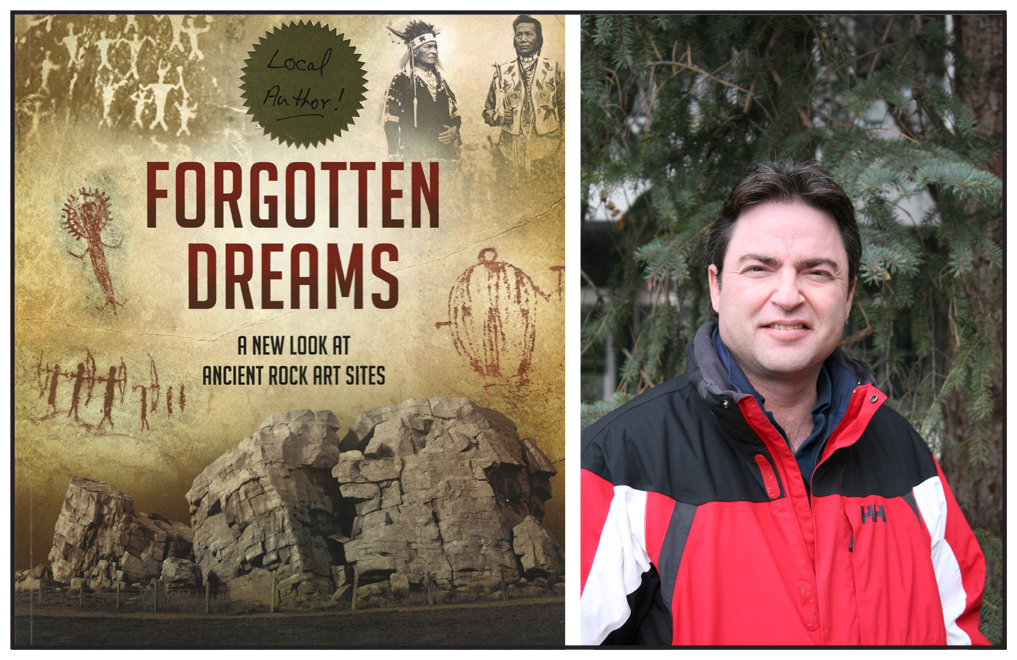
At left is a book cover featuring images of pictographs. At right a man in a red jacket stands in front of a spruce tree.

Image Caption

At left is the book cover of Forgotten Dreams: A New Look at Ancient Rock Art Sites. Photo supplied by author and publisher Brad Himour, seen at right.

Summary

Wednesday, March 5th, 2025 


“I started talking with the Elders about how we could try to preserve these sites without physically altering them at all, because the Elders wanted a non-invasive, non-intrusive approach.”— author Brad Himour
By Shari Narine
Windspeaker.com Books Feature Writer
Local Journalism Initiative

Piikani Nation Elder Harley Bastien calls technology “a double-edged sword,” but he’s quick to say that the DStretch software enhancement program is a positive thing. The program allowed Bastien and other Elders to interpret paintings on rocks in southwestern Alberta and southeastern British Columbia.

Bastien is one of about 30 Elders who collaborated with former Parks Canada archeologist Brad Himour on the book Forgotten Dreams: A New Look at Ancient Rock Art Sites.

Himour took photographs of the rock art and used NASA-developed DStretch technology to enhance even the faded parts of the pictographs. Elders were able to view the photographs and provide interpretations.

Recording events on stone is one of many traditions impacted when Europeans arrived on Indigenous lands, said Bastien. Then with the onset of Indian residential schools, grandparents no longer had the opportunity to pass the oral traditions of such activity and the history down to their grandchildren.
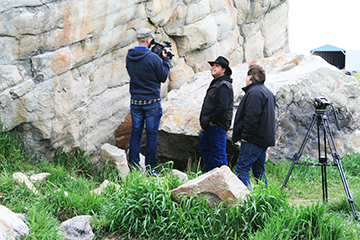
camera crew at rock site
Piikani Nation Elder Harley Bastien (centre) at Big Rock provincial historic site in Okotoks, Alberta.  (Photo: Brad Himour)

“When you are talking about this type of knowledge, traditional old-time knowledge, a lot of it has been lost. But the thing about the Blackfoot, (the knowledge) wasn't totally wiped out. There was fragments of it that was still around,” he said.

For the Piikani, a member of the Blackfoot Confederacy in southern Alberta, one or two people in the tribe were chosen to record events on stone using ochre processed into paint.

“The painters would have to have been people of high stature, who got the right to go out and record these events that took place. That's kind of how they were chosen, how it was done,” said Bastien.

“As far as I know that tradition is gone. At least here in Blackfoot country. I don't know of anyone who does that.”

However, there are still some from the Piikani Nation who make the trek to land that is now privately owned where they collect the traditional powders that formed the red ochre paint.

“They go up there and now say prayers and lay down tobacco. But the old way has died with the Elders,” said Bastien.

Himour began limited work to preserve the rock art in 2008 when he was with Parks Canada.

“I started talking with the Elders about how we could try to preserve these sites without physically altering them at all, because the Elders wanted a non-invasive, non-intrusive approach, that (the sites) would be left in their natural state,” said Himour.

In 2009, he discovered DStretch technology. Now the enhanced photographs can be taken to Elders for their interpretation. Himour points out that many of the pictograph sites are in hard-to-access locations.

Himour took all the photos in Forgotten Dreams on his own time and points out that 90 to 95 per cent of the pictograph sites are not located in national parks or national historic sites or on federal lands. The pictographs highlighted in the book are instead protected by provincial historical resource legislation in Alberta and B.C.

“It really became kind of an area of interest for me,” said Himour. “I've always enjoyed Indigenous storytelling, Indigenous cultural awareness and cultural preservation.”

Himour and Bastien have worked together on and off for two decades. In 2023, they began Eagle and Raven Consulting, bridging the gap between business, industry and Indigenous communities and fostering inclusion of Indigenous knowledge and moving reconciliation forward.

Himour is clear that while the photographs in the book are under his copyright, the Indigenous knowledge shared by the Elders is owned by them and their families.

That’s an important statement, said Bastien, because it also provides “legal protection of that knowledge being expropriated (and) that in turn protects the text of the Elders and their knowledge.”

Bastien was joined by Piikani Elder Morris Little Wolf to interpret the Blackfoot paintings based on “our instincts.” Some paintings were viewed in person, but the majority were viewed through photographs.

“For Blackfoot people, because when a person has some knowledge (and) gets put into a situation like that, it kind of rekindles something inside a person… (It) almost transports you back in some sort of a way and that’s what we’re doing (in interpreting),” he said.

Himour also worked with Secwepemc Elders.

Secwepemc storytelling or myths and legends, as noted by Elders Xavier and Marge Eugene in Forgotten Dreams, included “fairytales, hunting tales, warrior tales, information on our gathering places and often our ‘spirit stories’ gained from a vision quest or ceremony. There is always a story behind a pictograph.”

Forgotten Dreams focuses on 18 pictograph sites. It also explains the methodology of how pictographs were made.

Himour said one of the intentions of Forgotten Dreams is to underscore the diversity in pictographs, “depending on which nation and what their cultural traditions were. They're each very different and unique and distinct from each other.”

He points out that there are “thousands and thousands” of pictograph sites throughout western Canada with more than 800 just on Kootenay Lake and Arrow Lakes and in southeastern B.C.

The Elders he worked with, said Himour, “really wanted to participate in the project, primarily for the educational aspect. They want this knowledge passed on to future generations.”

Bastien said he would love to see Forgotten Dreams in classrooms, both on and off reserve.

Forgotten Dreams: A New Look at Ancient Rock Art Sites was self-published by Himour with 500 copies printed. The book can be purchased on https://forgottendreamspictographs.com/.

There is reduced pricing for books ordered by First Nation communities, tribal councils, and Indigenous and non-Indigenous educational institutes, such as colleges, universities and schools.

Himour said to contact him at forgottendreamspictographs@outlook.com for the reduced price.


U.S. violating international law with talk of making Canada its 51st state, says National Chief


Thursday, March 6th, 2025 

Image

Image Caption

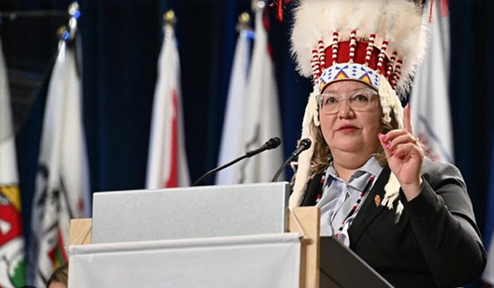
Assembly of First Nations National Chief Cindy Woodhouse Nepinak
Assembly of First Nations National Chief Cindy Woodhouse Nepinak released the following statement demanding action on U.S. tariffs impacting First Nations.

“As National Chief, I stand with First Nations across Turtle Island in strongly condemning the United States government's imposition of tariffs,” said National Chief Cindy Woodhouse Nepinak. “The short-sighted actions of President Trump and statements about forcing Canada to become part of the U.S. through economic coercion are a violation of international law, which protects the right to self-determination of all First Nations. 

“Our lands hold vast deposits of critical minerals, forests and freshwater supplies that sustain communities on both sides of the Medicine Line. That is why we are again calling for First Nations to be included in Team Canada discussions between First Ministers,” added National Chief Woodhouse Nepinak. “Excluding First Nations from these crucial conversations that impact our Treaty rights is no longer acceptable in 2025. It is not Team Canada without Treaty Rights holders at the table.”

“Canada must walk the talk of anti-colonialism by holding up the principle of equality of all peoples and the right to self-determination of First Nations. Ignoring well-established Treaty and Aboriginal rights that have been upheld by Canada’s highest courts is not a winning strategy, particularly as it relates to agreements regarding natural resources, water, and Arctic sovereignty.”

“It is time for First Ministers to unlock their doors and bring the First Peoples of this land into the conversation,” continued National Chief Woodhouse Nepinak. “Let’s show President Trump you can still win by being inclusive, respecting rights, and honouring treaties. We also call on First Ministers to ensure First Nations, our businesses, and tourism operations are supported in any Buy Canada initiative or emergency assistance package being considered in response to this new era of U.S. colonialism.”

“As Canadians cancel hundreds of millions of dollars in travel plans to the U.S., we invite all citizens to reconnect with each other and explore First Nations destinations here at home instead,” concluded National Chief Woodhouse Nepinak. “Not only will this save your family money on the exchange rate and send a message to Trump, but it will also help build our nation through truth and reconciliation. In the coming weeks, we will continue meeting regularly with AFN leadership, Jay Treaty Border Alliance representatives, Canadian officials at the United Nations, federal Ministers, and Native American Tribal leaders in the U.S.”


Reasserting Sovereignty: Defending Treaty Nations and challenging the governments of Canada and Alberta

Thursday, March 13th, 2025

Image

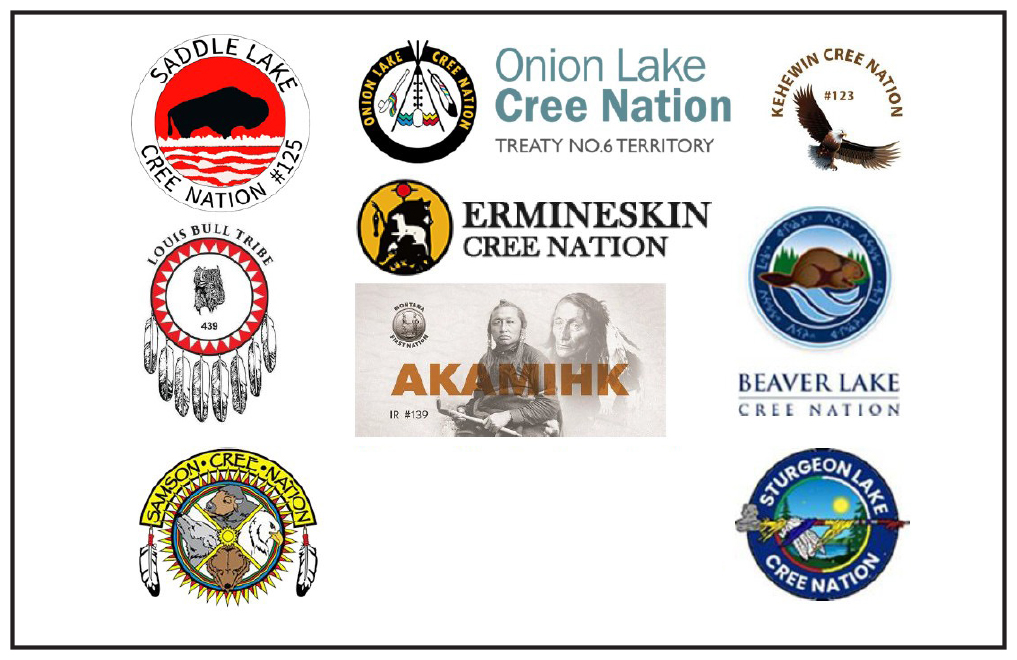
Photo is of each First Nation logo associated with the statement,

Summary

A statement from:
Okimaw Jason Whiskeyjack, Saddle Lake Cree Nation
Okimaw Vernon Watchmaker, Kehewin Cree Nation
Okimaw Henry Lewis, Onion Lake Cree Nation
Okimaw Sheldon Sunshine, Sturgeon Lake Cree Nation
Okimaw Gary Lameman, Beaver Lake Cree Nation
Okimaw Vernon Saddleback, Samson Cree Nation
Okimaw Joel Mykat, Ermineskin Cree Nation
Okimaw Desmond Bull, Louis Bull Tribe
Okimaw Ralph Cattleman, Montana First Nation

We, the tribal peoples of Onihcikiskwapiwin—Saddle Lake Cree Nation, Kehewin Cree Nation, Onion Lake Cree Nation, Beaver Lake Cree Nation, Sturgeon Lake Cree Nation, Ermineskin Cree Nation, Louis Bull Tribe, Samson Cree Nation and Montana First Nation of Treaty No. 6 Territory, as represented by our onikaniwak, hereby make it known to the settler society and Crown governments that, when our ancestors entered into Treaties with the Crown in 1876, they did so to establish a binding and formal relationship based on mutual recognition and shared commitments.

Not mere legal agreements: the Treaties were made through our laws, governance structures, and spiritual traditions that have guided our peoples since time immemorial. Treaty No. 6 is a sacred covenant, witnessed by kise manito, lasting for as long as the sun shines, the grass grows, and the waters flow.

Increasingly we feel that we must bring these understandings to the forefront as all levels of government purport to assert sovereignty, thereby ignoring our existence without clearly and formally recognizing us, the First Peoples on our own lands and territories. As federal and provincial governments navigate the increasingly erratic political climate nationally and abroad, we remind them – there is unfinished Treaty business on the table. Treaty business that requires our free, prior and informed consent and not the manufactured consent of non-rights holding regional or national organizations.

Treaties Are a recognition of our Sovereignty—Not a Grant of Rights

The Treaty-making process did not create new rights—making Treaty is recognition of pre-existing rights and a commitment to respect them, without any interference. This is confirmed in the Treaty of Niagara and the Two Row Wampum that is also found in petroglyphs on our lands, carrying oral traditions of Treaty teachings. The Crown required our consent through Treaty making to enter our territories and we agreed to share our lands, laws and way of life. Our ancestral leaders, matriarchs and headmen, entered into these agreements based on our own laws and governance structures, establishing an ever-enduring relationship. At no point did we surrender jurisdiction and Inherent authority over our lands, resources, and ways of life.

Canada and the Crown’s ongoing Treaty obligations

When Alberta became a province in 1905, it did not supersede the Treaty or the permanent relationship it conferred. The Treaty relationship remains between our Peoples and the Crown, with all parties bound by the sacred commitments. Canada did not replace the Crown as a Treaty partner but inherited the legal obligations and remains responsible for upholding the Treaty responsibility.

Treaties were made through oral agreements, traditions, and our governance structures. These understandings remain central to the Treaties full meaning, true spirit and true intent. The Crown’s written record does not override the oral commitments and shared understandings that our ancestors upheld when entering Treaty.

The Province of Alberta’s claims of jurisdiction over Treaty lands relies on the 1930 Natural Resources Transfer Agreement (NRTA). The NRTA was passed without our free, prior and informed consent does not override Treaty rights. Treaties remain the highest authority governing our relationship with the Crown, and no unilateral provincial or federal policy changes that.

Premier Danielle Smith’s stated claims of sovereignty and ownership violate the fundamental principles of the Treaty relationship. Her alliance with 'Take Back Alberta' demonstrates an agenda that desires to assert control over our lands that were never ceded nor surrendered to the province.

We call upon King Charles III, our ally through Treaty, to uphold the Crown’s binding Treaty obligations, which remain in full force and effect. We demand that the Government of Canada fulfill its legal obligations by publicly rejecting Alberta’s overreach and reaffirm that Treaty lands remain under the jurisdiction of our peoples.

Canada must assist us to prevent Alberta from continuing to encroach and overreach on matters that require our free, prior and informed consent. We seek support from all international community and legal bodies to remind Canada of its duty to uphold the Treaty agreements we made with the Imperial Crown.

A global call to Defend the Treaty relationship and demand Honour of the Crown

We call upon:

  1. The Crown, through King Charles III, Great Britain and Canada, to uphold the binding Treaty obligations.
  2. The Government of Canada to intervene on Alberta Premier Danielle Smith’s overreach to our lands, resources and Treaty obligations.
  3. All allies and Treaty supporters to reject Alberta’s encroachment and undermining of the Treaty relationship
  4. The international community, including the United Nations Special Rapporteur on the Rights of Indigenous Peoples, to ensure Canada respects its legal obligations.
  5. Investors and businesses to recognize that economic stability depends on respecting Treaty rights and tribal peoples’ sovereignty.

Our lands continue to be governed according to Treaty, and we will ensure that the obligations and protections enshrined in those Treaties are upheld.

We will enforce our Treaty rights through legal, diplomatic, and international channels to prevent any further violations by Alberta or Canada.

We will continue to resist all activities that undermine our lands, rights, and responsibilities for future generations.

On behalf of the tribal peoples of Onihcikiskwapiwin—Saddle Lake Cree Nation, Kehewin Cree Nation, Onion Lake Cree Nation, Beaver Lake Cree Nation, Sturgeon Lake Cree Nation, Ermineskin Cree Nation, Louis Bull Tribe, Samson Cree Nation and Montana First Nation of Treaty No. 6 Territory.


 RESIDENTIAL SCHOOLS BY ANOTHER NAME

Proposed settlement for ‘Indian hospitals’ about more than financial compensation: lawyer


The federal government announced a proposed settlement worth more than a billion dollars for former patients of what were once called Indian hospitals on Thursday but a lawyer involved in the process says it is about much more than money.

“It’s the apology that is the most important part of any of these settlements,” Steven Cooper, a lawyer with Alberta-based Cooper Regal which is one of the firms representing former patients, told Nation to Nation. “I’ve sat in with survivors, residential school survivors and other survivors with nobody in the room knowing whether they were eligible for anything.

“And yet the sense of relief, outflow of emotion, the crying, the hugging – that’s really what it’s all about. People believe us, we can tell our story now.”

Indigenous patients at these institutions were forced to undergo sexual abuse, forced confinement and substandard healthcare.


Read More: 

Canada signs multi-billion deal with survivors of ‘Indian hospitals’


If certified by a federal court, claimants will be eligible for compensation anywhere from $10,000 to $200,000 depending on level of abuse suffered.

There is also $150 million for a healing fund, $235.5 million for a research and commemoration fund and Indigenous Services Canada is also putting forward $150 million for mental health supports.

The hospitals operated from 1936 to 1981.

Cooper said because compensation is not capped it should be able to flow more quickly once claimants are approved.

Indigenous issues being ignored by Liberals

Toronto Metropolitan University professor Pam Palmater says many important Indigenous issues are being ignored in the Liberal leadership campaign as U.S. President Donald Trump’s threats to Canada are taking up most of the oxygen.

“All of them (leadership candidates) are so distracted by this tariff war and it’s huge, it’s an issue and we need to deal with it,” she said. “It’s going to affect jobs and lives. However, it can’t be at the expense of our ongoing reconciliation efforts. They (Liberal government) still have so much to do.”

Palmater said the federal government still has a number of outstanding Indigenous issues to deal with including long-term reform in First Nations child welfare, ensuring all Indigenous communities have access to safe drinking water and fulfilling commitments on land and treaty rights.

A northern Ontario NDP MP says the federal government is missing a golden opportunity by failing to include Indigenous people in its fight against U.S. President Donald Trump’s tariffs.

“I have been speaking to many Indigenous leaders that I know who understand the threat,” Charlie Angus said. “Because it’s a threat not just to the nation but the nation of course is on Indigenous land and Indigenous rights have to be first and foremost protected.”

Angus is part of an organization called Pledge for Canada which is calling for a boycott of American goods as part of a response to U.S. President Donald Trump’s tariff and annexation threats.


As elver fishery season set to launch, N.S. First Nation rejects federal rules

The harvest of baby eels, called elvers is set to begin at midnight. Mar. 21. Photo: APTN file.


The fishing season for baby eels is set to begin at midnight in the Maritimes, but at least one First Nation says it won’t abide by federal rules that limit the lucrative catch.

In a Mar. 5 letter, Chief Bob Gloade of Millbrook First Nation told the federal Fisheries Department his community won’t use Ottawa’s recently developed smartphone app to log fishers’ harvests — and doesn’t recognize Ottawa’s jurisdiction to oversee the fishery.

Canadian baby eels — also known as elvers — are fished in Nova Scotia, New Brunswick and Maine and shipped live to Asia, where they are grown to maturity.

After several chaotic and sometimes violent fishing seasons, Ottawa developed an application that allows enforcement officials to monitor the catch of juvenile eels from the point they’re caught until they’re sent to border crossings.

However, Gloade says the Millbrook fishers won’t use the app, and cites a 1999 Supreme Court of Canada decision that allows for Mi’kmaq communities to earn a moderate livelihood from fishing.

That court decision, however, also says Ottawa has the right to regulate fisheries for conservation purposes, but Gloade says his community will run its own regulatory system because it believes the elver stock is healthy.

The federal management plan for the 2025 elver season allocated 50 per cent of the 9,960-kilogram total catch to new entrants from First Nations, shifting quota away from non-Indigenous, commercial licence holders.

The regulated elver fishery wasn’t opened last year, with the federal minister citing violence and unlicensed harvesting on the rivers.


Patty Hajdu keeps role as Indigenous Services Minister in new Carney cabinet

child welfare reform

Indigenous Services Minister Patty Hajdu speaking to media outside the House of Commons with AFN National Chief Cindy Woodhouse Nepinak in October. Photo: Mark Blackburn/APTN.


Patty Hajdu will stay on as minister of Indigenous Services Canada (ISC). Her role was announced at Rideau Hall in Ottawa on Friday morning where Mark Carney was sworn in as prime minister.

Hajdu has been minister of ISC since 2021. She’s recently come under fire from First Nations for her handling of the Jordan’s Principle file.

Carney pared down his cabinet to 23 from 37 under Justin Trudeau.

Gary Anandasangaree holds on to his role as minister of Crown-Indigenous Relations and Northern Affairs and also becomes the minister of  Justice Canada and Attorney General of Canada.

David McGuinty keeps his job at Public Safety, meaning he’s still in charge of the RCMP.

Joanne Thompson is the new minister for Fisheries and Oceans Canada, better known as DFO, and will deal with Mi’kmaw fishing rights along with salmon farming issues on the west coast.

Terry Duguid is now minister of Environment and Climate Change.

Mi’kmaw MP Jaime Battiste, who withdrew from the Liberal leadership race and immediately endorsed Carney, did not get a role in cabinet.

Here is the full list of cabinet appointments:

Dominic LeBlanc, minister of international trade and intergovernmental affairs and president of the King’s Privy Council for Canada
Mélanie Joly, minister of foreign affairs and international development
François-Philippe Champagne, minister of finance
Anita Anand, minister of innovation, science and industry
Bill Blair, minister of national defence
Jonathan Wilkinson, minister of energy and natural resources
Ginette Petitpas Taylor, president of the Treasury Board
Steven Guilbeault, minister of Canadian culture and identity, Parks Canada and Quebec lieutenant
Chrystia Freeland, minister of transport and internal trade
Kamal Khera, minister of health
Rechie Valdez, chief government whip
Steven MacKinnon, minister of jobs and families
Rachel Bendayan, minister of immigration, refugees and citizenship
Élisabeth Brière, minister of veterans affairs and minister responsible for the Canada Revenue Agency
Arielle Kayabaga, leader of the government in the House of Commons and minister of democratic institutions
Kody Blois, minister of agriculture and agri-food and rural economic development
Ali Ehsassi, minister of government transformation, public services and procurement.

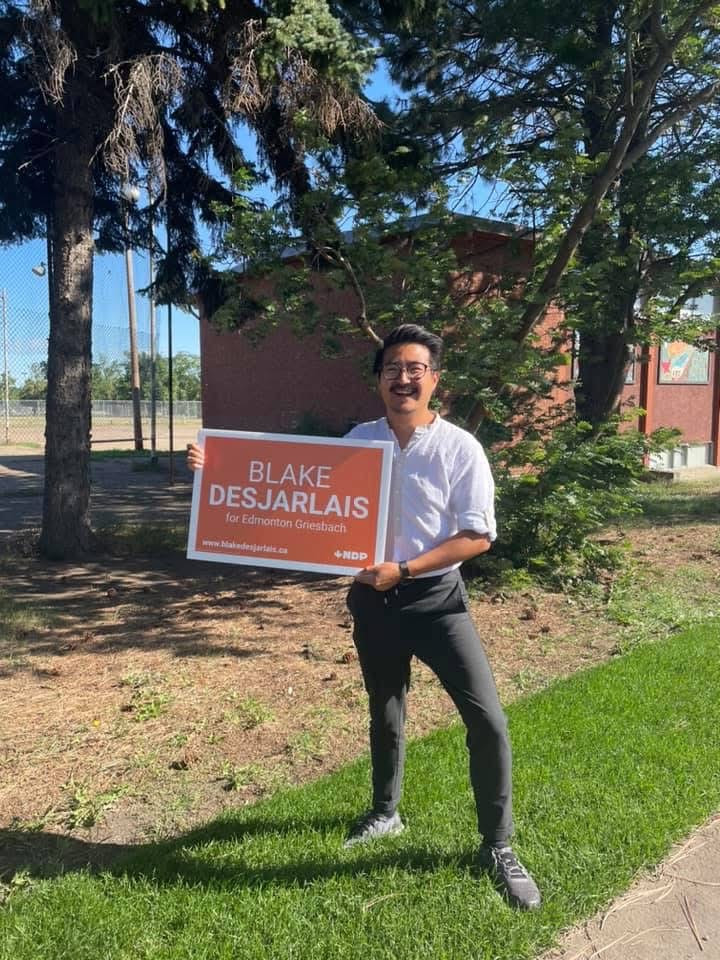
RE-ELECT BLAKE DEJARLIS 

MY METIS, TWO SPIRIT, SOCIAL DEMOCRAT, MP


It's official - join us!


Tansi Friends,

It's official. Mark Carney's office has confirmed to CBC that he will visit the Governor General at 12:00 EST tomorrow - kicking off an early federal election campaign.

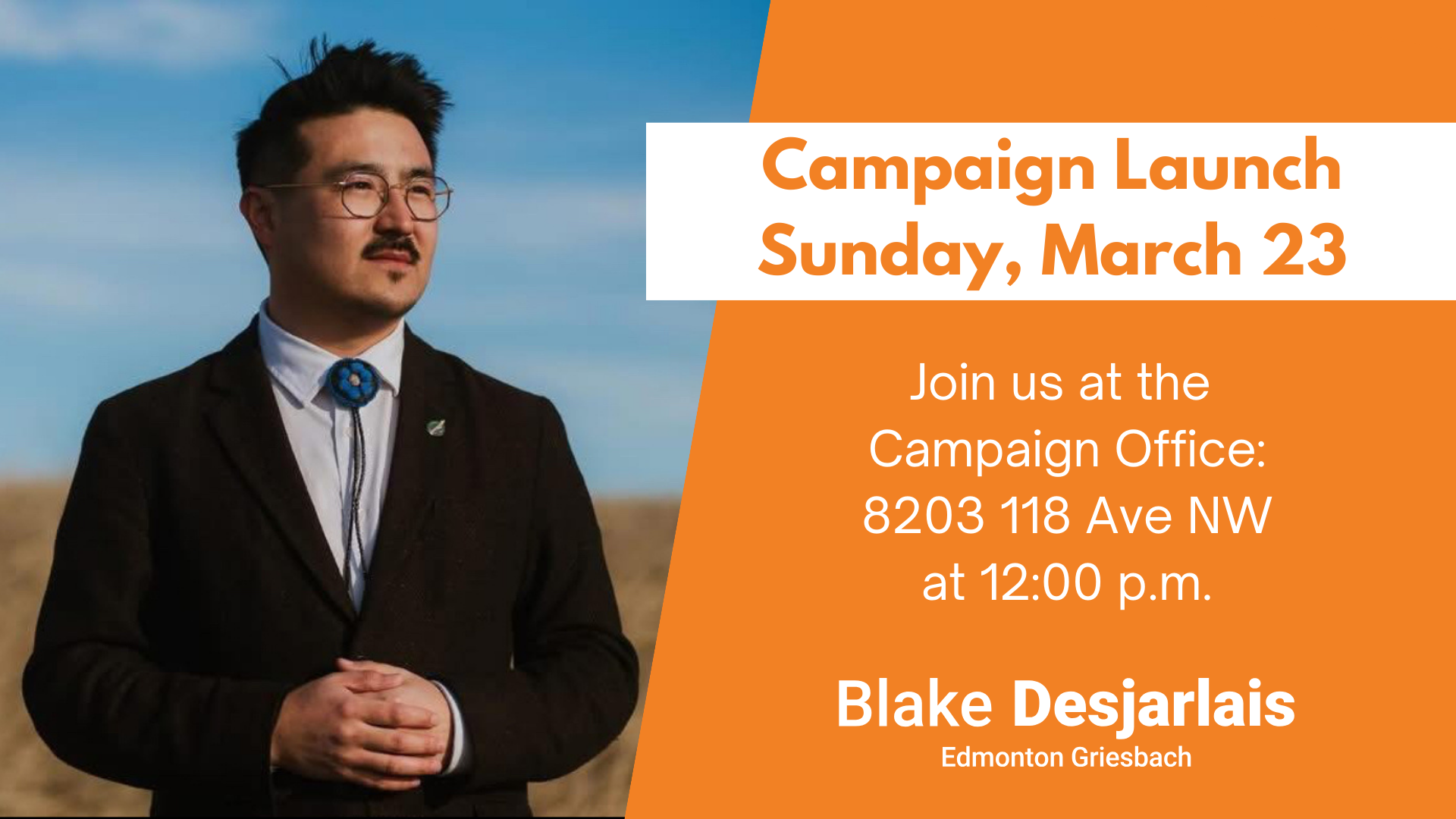
Please come and join us at our Campaign Launch event happening at our 2025 Campaign Office, 8203 118 Ave NW from 12:00 p.m. to 1:30 p.m. 

Everyone is welcome! You don't need to live in Edmonton Griesbach to come and join our team. Parking next to the office is limited, but street parking in the neighbourhood is free.

After the campaign launch wraps up we will begin delivering over 1500 lawn signs all over Edmonton Griesbach - which means we need your help!

We are ready. Our campaign office is open, our team is working hard and we remain focused on reaching as many of our neighbours in Edmonton Griesbach as possible.

If you can't make it tomorrow, we would love for you to join us on the campaign.

Whether it's canvassing, phoning, delivering signs or more - know that we have volunteer shifts every single day. You can find a list of volunteer opportunities at this link.


Getting out and building community is one of the best antidotes to the anxiety I know many are feeling these days. 

I truly hope you will consider joining us tomorrow! 

- Blake

P.S. We have almost reached our financial goal for this campaign. But every dollar still helps. Considering chipping in today to ensure we have a fully funded campaign right across Edmonton Griesbach!


Lawn Sign Season!

Have you reserved your lawn sign for the election yet? 1500 of your neighbours already have! Help show your support and help us turn Edmonton Griesbach orange!

Request your sign now now and our team will deliver it after the election is called.
Reserve your Lawn Sign

Volunteers Build Community Power

Can't make it this weekend!? We are phoning and out knocking on the doors every day, organizing our community towards unity, positivity and a better future.

Now is not the time to give up hope. It’s time to get involved. 

Join our community powered movement.

We have phoning, texting and other volunteer shifts available too, and will need help in a variety of roles during the campaign. Join us!

Sign up to Volunteer

And of course we need donations!


Don't forget you can get up to 75% of your donation back in tax credits.

Every dollar you donate stays locally right here in Edmonton Griesbach to help re-elect Blake Desjarlais as our MP! 
Donate Now
Sign up to Volunteer
Reserve your Lawn Sign


Prof says U.S. threats to Canada will dominate federal election at the expense of Indigenous issues


A First Nations professor at McGill University says people shouldn’t expect Indigenous issues to play a prominent role in the upcoming federal election.

“Right now, in an unprecedented political climate that it is in international relations and foreign affairs that dominate conversations in politics these days,” Veldon Coburn, a member of the Algonquins of Pikwakanagan and part of the Indigenous Relations Initiative at McGill told Nation to Nation. “All across Ottawa, it is the reorganization and realignment of trade alliances, shoring up our allies where we have good friends in the international community and our domestic affairs are focused on essentially buttressing the economy.”

Coburn said that, as was the case during the Liberal leadership race, U.S. President Donald Trump’s threats to annex and impose tariffs on Canada will take up most of the campaign oxygen at the expense of other issues.

After being as much as 20 points or more behind the Conservatives for most of the past year, recent polls show the Liberals surging after the departure of former prime minister Justin Trudeau and under new leader Mark Carney.

Coburn said Indigenous voters who are used to being threatened by colonial powers, may see the Liberals as better able to defend their interests against the Trump administration as opposed to the Conservatives who have been more traditionally aligned with the Republicans.

Several media sources are reporting the election could be called as early as Sunday.

Oil and Gas pipelines

Another academic says renewed interest on building oil and gas pipelines in Canada could present new opportunities for Indigenous communities.

“That (pipelines) will not happen without Indigenous involvement,” Ken Coates, a professor at Yukon University who is the chair of the Bachelor of Arts in Indigenous Governance Program, said. “Quite frankly, it won’t happen without Indigenous ownership. Not necessarily 100 per cent ownership but a significant equity sort of position.”

With Trump continuing to talk about annexing Canada, there has been a number of discussions at both the federal and provincial levels of establishing the country as a sovereign energy leader.

This would mean more of a focus on building pipelines east and west allowing domestic oil and gas producers to access markets in Europe and Asia.

Much of current production flows south to the United States.

Coates said a Conservative government might be able to better capitalize on these opportunities rather than the Liberals who have shown over the last ten years that oil and gas production was not one of the government’s top priorities.

Nevertheless, Green Party Leader Elizabeth May says Indigenous people should be wary of the promises of economic benefits made if they let these pipelines run through their territories.

“The first thing to say to any order of government and sovereign nations in particular is, ‘Show us the business case,’” she said. “Do pipelines make any sense in this country and you can’t find one with both hands and a flashlight.”

May said this is because Canada does not refine much of its oil and ships it as crude oil to the United States. She said in order to ship to other foreign markets it would have refine a much greater share of the product which is a capacity the country currently does not have.”

WATER IS LIFE

NARF Launches The Headwaters Report for World Water Day


By Native News Online Staff
 March 22, 2025

On March 22, 2025, World Water Day, the Native American Rights Fund (NARF) is proud to introduce The Headwaters Report, a groundbreaking resource from the Tribal Water Institute (TWI). This first-of-its-kind publication is designed to empower Tribal Nations in their ongoing fight to assert and protect their water rights. By providing critical legal and policy insights, The Headwaters Report equips Tribes with the necessary tools to secure and safeguard their water resources.

“We developed The Headwaters Report to help educate Indian Country and water practitioners about Tribal water issues. With this knowledge, Tribal Nations can make informed decisions to protect and assert their water rights,” said NARF Staff Attorney and Tribal Water Institute lead Daniel Cordalis. “Tribal Nations face more water challenges than ever before, and the Report is a tool to help make sense of and meet those challenges.”

Amidst rising populations, climate change impacts, and increasing threats to water access, The Headwaters Report arrives at a crucial time. It will serve as an essential resource for Tribal Nations, legal advocates, and policymakers dedicated to ensuring that water remains a protected and sacred resource for future generations.

As part of the Tribal Water Institute’s ongoing commitment to Tribal water sovereignty, The Headwaters Report complements broader efforts in leadership development, legal fellowships, and policy reform strategies to advance and uphold Indigenous water rights.