Thursday, May 01, 2025

Greenland in the Crosshairs of U.S. Imperialism

 April 29, 2025
Facebook

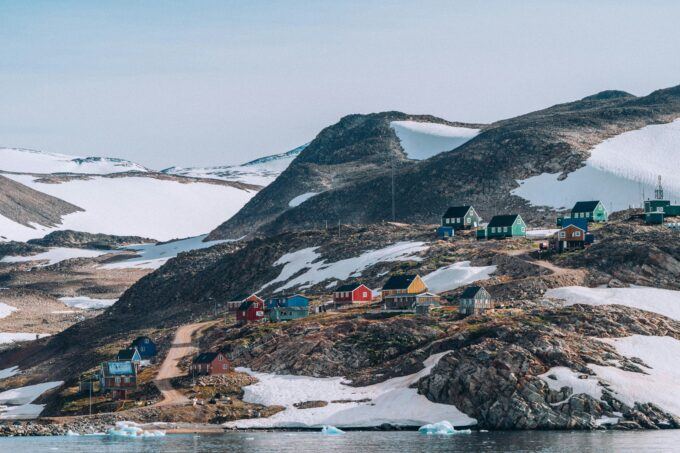
Image by Rod Long.

President Trump, in his March 4 State of the Union address, stated:

“And I also have a message tonight for the incredible people of Greenland. We strongly support your right to determine your own future, and if you choose, we welcome you into the United States of America. We need Greenland for national security and even international security. And we’re working with everybody involved to try and get it. But we need it really for international world security. And I think we’re going to get it. One way or the other, we’re going to get it. We will keep you safe. We will make you rich. And together we will take Greenland to heights like you have never thought possible before. It’s a very small population, but very, very large piece of land and very, very important for military security.”[1]

“One way or the other, we’re going to get it” sounds like a threat to me. In fact, Trump’s entire statement could have come out of a mob boss’ mouth.

It was delivered coupled with his offer to buy Greenland from Denmark and make it the 51st state (or 52nd if Trump has his way with Canada). Hence, it is in the crosshairs of U.S. imperialism, as Trump is determined to take control of the island, thus expanding the U.S. empire.

On Tuesday March 11, one week after Trump’s threat, Greenlanders went to the polls to elect their 31-seat Parliament, one factor in how Greenland is governed. Greenland is currently a semi-autonomous territory of Denmark, which controls the island’s foreign policy, defense, and other important aspects of its economy. Denmark provides around 50 percent of the budget for Greenland, providing for schools, social services, and cheap gas. And while polls show that over 85 percent of Greenlanders favor independence from Denmark, Greenlanders are divided on the pace of independence.[2]

Local issues dominated the election in Greenland, but Trump’s rhetoric did have an impact. The pro-business Demokraatit party, which favors a slow path to independence that does not disrupt social services or economic growth, won a surprise victory with 29.9 percent of the votes and will now form a coalition government. The second-place finisher was the ardent pro-independence party Naleraq, with 24.5 percent of the vote. In third place was the former governing party, Inuit Ataqatigiit, with 21.4 percent. [3]

Putting teeth into Trump’s rhetoric, just weeks after the Greenland election: Vice-President Vance, along with his wife, Second Lady Usha Chilukuri Vance; National Security Advisor Chris Waltz; and Secretary of Energy Chris Wright paid a visit to the island. The visit was confined to Pituffik Space base, a U.S. military base in Greenland, in order to avoid protests in Nuuk, the capital and largest city. During his visit, Vance accused Denmark of both underinvesting in the island and failing to provide for its defense.[4]

One consequence of the Vice President’s visit was the firing of the base commander, Col. Susannah Meyers, for allegedly undermining the chain of command and subverting President Trump’s agenda. Her sin—sending an email stating that she disagreed with Vance’s criticisms of Denmark.[5]

Why Greenland and Why Now?

Greenland has a population of approximately 56,500 people. This tiny population inhabits the largest island in the world, with an area of 836,330 square miles, more than a fourth of the area of the lower-48 states. And the Greenlanders are sitting on a treasure trove of oil, mineral wealth, and fisheries. What’s more, Greenland straddles increasingly important Arctic Sea lanes that shorten the distance of shipping routes, and therefore the cost of transporting goods from Europe to Asia. Further, the island is militarily significant because it acts as a barrier between Russia and the U.S.

According to the U.S. Geological Survey, Greenland has approximately 31.4 billion barrels of oil and natural gas. Extraction of these resources is blocked by the Greenland government, which instituted a moratorium on all oil and gas exploration in 2021, citing the environmental costs to the island. Greenland also has deposits of coal and uranium. In addition, Greenland has vast deposits of rare earth elements (REEs) essential for modern technology, renewable energy, and the military industrial complex.[6] Access to this mineral wealth is not only blocked by the government moratorium: Greenland lacks the infrastructure of ports, roads, and pipelines needed to extract this wealth. Nevertheless, Greenland is an important part the Trump administration’s seeking to secure access to mineral wealth across the globe – a strategy necessary for economic domination.[7]

In early April, China, which the U.S. considers its chief competitor, placed restrictions on the export of rare earth elements (REE) and on REE magnets. The REE are essential to many modern technologies such as lasers, computers, and missiles. Powerful REE magnets are used in auto factories and are essential to jet fighters. Ninety percent of the world’s REE magnets are produced in China.[8] Together, these restrictions, directed at U.S. technology and war industries, could cripple the U.S. military.[9] Should China ban exports of REE and REE magnets completely, the U.S. would be even more desperate to find alternative sources – hence the interest in Greenland.

A History of U.S. Intervention

The Inuit people make up over 87 percent of Greenland’s current population. Archeological evidence suggests they arrived on the island at least 3,500 years ago, but as with the evidence for other native peoples we know that this most likely underestimates the date of their arrival. The Norse-Icelandic explorer Erik the Red later established two settlements on the island around 980 CE, giving the island its European name in the hopes of attracting settlers. These European settlements died out or were abandoned in the early 1500s. This did not stop Denmark from claiming the island and asserting control over the native people in 1720.

The U.S. considered buying Greenland from Denmark in 1868, when Secretary of State William Seward (yes—the same Seward who engineered the purchase of Alaska) proposed the purchase of Greenland from Denmark. In 1910 the U.S. again tried to acquire Greenland from Denmark by offering to exchange Greenland for islands in the Philippines, which were then a U.S. colony. This deal also fell through.[10]

U.S. intervention began in earnest with the 1940 German invasion of Denmark. The U.S. took military control of the island to prevent it from falling under German control. Over the course of World War II, tens of thousands of U.S. planes used the island as a stopover on the way to Europe. The weather forecasts from Greenland proved crucial to the success of the D-Day invasion.

After World War II, the island became an important part of the U.S. Cold War against the USSR. The U.S. offered to buy the island again from Denmark for $100 million U.S. dollars. The Danish government rejected the offer. They did, however, sign, in 1951, a treaty giving the U.S. significant rights to station military troops in Greenland. The U.S. constructed the Thule Air Base in northwestern Greenland, which at its peak housed 10,000 U.S. troops. The base still exists, renamed Pituffik Space Base; it’s under the control of U.S. Space Force. The U.S. had also built a second base, which was secret. Located under the Greenland ice cap, about 150 miles from Thule Air Base, it no longer exists but was called Camp Century and powered by a nuclear reactor.[11]

On January 21, 1968, a B-52 from Thule Air Base crashed on the Greenland ice cap carrying four hydrogen bombs. The U.S. tried to clean up as much of the contaminated ice as possible, but one of the bombs is still missing.[12] This missing nuclear weapon could be a major environmental catastrophe should it leak in the melting ice cap. The crash also revealed that during the Cold War with the USSR, the U.S. stationed B-52s and nuclear weapons at Thule Air Base to strike at the USSR. Construction of new U.S. bases in Greenland would be considered crucial to any U.S. plans for nuclear war and would threaten Russia and China.

How might future U.S. intervention play out?

There are several possible scenarios for future U.S. intervention, based on historical precedence.

In the first, the U.S. could invade directly with military, as Trump has threatened. But Greenland is part of Denmark. Both the U.S. and Denmark are members of NATO, whose sole purpose is as a military alliance. NATO countries are obligated to defend any member that is invaded. If the U.S. were to invade Greenland, this would mean one NATO member, Denmark, being invaded by another, the U.S. This would trigger a crisis in NATO.

In a March 13, 2025 meeting at the White House between Trump and Mark Rutte, NATO Secretary-General Rutte told Trump that NATO would not stop a U.S. military intervention in Greenland, essentially giving the U.S. a green light for a possible invasion. [13]

I think of this as the Spanish-American War scenario. In 1898 the U.S. went to war with Spain, at the time a weak and declining colonial power, to seize the Spanish colonies of Cuba, Puerto Rico, Guam, and the Philippines.[14]

In case this seems farfetched, note that the U.S. now has an Arctic division – a division consists of 10,000 and 15,000 troops – specialized in fighting in polar regions. In mid-February the Arctic division, the 11th Airborne, deployed to the Arctic regions of Finland in a training exercise.[15] While part of a NATO exercise aimed at Russia, the training served as a practice run for any potential invasion of Greenland.

The U.S. has a history of invading island nations. The most recent case was the island nation of Grenada in 1983 when a force of fewer than 8,000 U.S. troops seized the tiny island nation of fewer than 100,000 on the pretext of protecting American students during a coup within the government. That invasion was hastily planned and powerfully executed. Still, it took the U.S. less than a week to totally control the island. A U.S. invasion of Greenland will be better planned and will most likely start with the seizure of the international airport in Nuuk, the capital and largest city.

In the second scenario, the U.S. would employ non-military means or soft power. It would encourage independence and then meddle in local politics, cultivating pro-U.S. politicians and parties, and extracting considerable economic and political concessions. These concessions would likely include mining rights and additional military bases. Trump has already started this process and may have found a willing partner in Kuno Fencker. A prominent leader of the second-place Naleraq party, Fencker attended Trump’s inauguration and then toured the White House at Trump’s invitation. Fencker has publicly defended Trump in his podcasts and speeches, saying that Trump is misunderstood. Fencker has been called a traitor by leaders of the other parties. Naleraq wants immediate independence from Denmark and closer ties with the U.S.[16]

This second scenario appears to be the current U.S. strategy. In a bombshell front-page article in The New York Times on April 11, it was reported that the White House, under the leadership of the National Security Council (NSC), is moving “forward on a plan to acquire the island from Denmark.” The NSC has sent directives to multiple arms of the U.S. government, is developing a propaganda plan to persuade Greenlanders to join the U.S., and is considering a direct payment to each Greenlander of $10,000 per year, approximately the same amount of money that Denmark gives to the island for education, healthcare, and other social services.[17] At the same time that President Trump is trying to persuade Greenlanders, he is making his case to the American people.

I think of this as the Panama Scenario because it is similar to what the U.S. did in Panama when it encouraged local elites to break away from Colombia and then extracted significant concessions from the new government, including the right to build and control the Panama Canal Zone and maintain a massive U.S. military presence.[18]

In the third, and least likely, scenario, the U.S, would encourage independence, meddle in the political affairs of Greenland, and encourage U.S. investment in and immigration to the island. The immigrants and pro-U.S. Greenlanders could then demand annexation by the U.S. I think of this as the Hawaii Scenario, because it is similar to what the U.S. did when it annexed the Kingdom of Hawai’i in 1893.[19]

If one of these scenarios plays out, there will be two big losers and one big winner. The losers will be the people of Greenland and the environment of their island nation. The big winner will be U.S. imperialism, more specifically the corporate elite that will pillage the resources of the island for their own profit and power. While standing in solidarity with the rights of the Greenlanders to make their own decisions for their nation and independence, we must also oppose all U.S. intervention and exploitation. We must especially raise our voices against Trump and his efforts to convince the American people that “we” need to acquire the island. Greenland belongs to the people of Greenland, not the U.S. capitalist elite!

Michael Livingston is a long-time activist and writer in the Peace and Antiwar Movement. He is a current member of and participant with the Minnesota Peace Action Coalition. Contact him at M.LIVINGSTON@retiree.csbsju.edu

It’s not just Greenland: Inside the fight the U.S. faces to keep a tiny Pacific island out of China’s grasp

Story by James Liddell
 • MAY 1, 2025 • 
The Independent

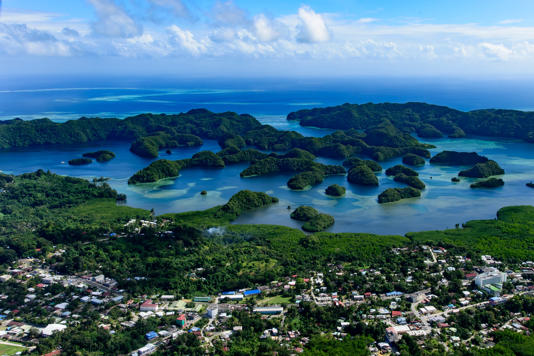
A tiny island nation in the middle of the Pacific Ocean is the staging ground of a major geopolitical tussle.

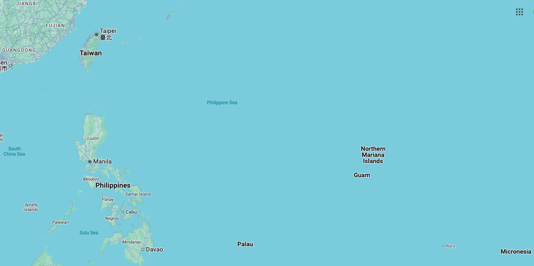
Palau is made up of more than 340 coral and volcanic islands perched on the Kyushu-Palau Ridge, dotting Micronesia’s edge. It is geographically closer to China than any other Pacific Island nation and still formally recognizes Taiwan.

And now it is on the front line of a battle for influence, with China on one side and the U.S. on the other.

The former colony, which won independence in 1994 from the U.S.-administered United Nations Trust Territory of the Pacific, is home to approximately 17,000 people.

It holds close ties to the United States, with Washington providing aid and defense support to Palau while its citizens can live and work in the U.S.

It was one of the few countries spared Trump’s sweeping tariffs. And it plays host to American-controlled airstrips with a soon-to-be-completed long-range radar system that could become critical for keeping an eye on Chinese activities.

But Reuters says its investigations have found evidence of a concerted influence campaign by individuals with ties to the Chinese government, aimed at preventing the U.S. from expanding its military infrastructure on Palau.

Joel Ehrendreich, the U.S. ambassador to Palau, says China is using the same tactics in Palau that it has deployed elsewhere in the Pacific.


Palau, at the bottom centre of the map, is a tiny island east of the Philippines (Google Maps)

“We’ve seen the playbook over and over again throughout the region, and it’s been very effective,” Ehrendreich said. “Get in with predatory investment, corrupt officials through elite capture, and try to destabilize the society through drug and human trafficking and other crime. And it’s easy to do when you go one by one through these little countries that you can overwhelm.”

China has strongly pushed back on the claims.

Palau’s strategic position puts it in a prime spot for a geopolitical tug-of-war, chief executive officer at the United States Studies Centre in Sydney Dr Michael Green explained. “These small islands that few people know about suddenly become the objects of major strategic competition,” he told the Guardian last November.

The Trump administration is no stranger to attempting to exert influence on islands while competing with rival powers - Greenland has famously been in the U.S. president’s crosshairs since he returned to power in November. In March, China touted efforts to deepen co-operation between Beijing and Greenland despite Trump’s bluster.

Reuters now claims that Chinese efforts to influence the future of Palau run deep. The news agency has reviewed intelligence reports, police files, court records and land filings, and conducted interviews with more than 20 diplomats and local law enforcement officials as part of its investigation.


Palau is in a key spot for a geopolitical tug of war, experts say (Getty Images/iStockphoto)

U.S. intelligence reports state that people from China allegedly linked to illicit activity—including drug smuggling and prostitution—are attempting to foster relationships with senior Palau officials. They have been accused of making donations to court the island’s political figures and attempting to facilitate meetings between Chinese and Palauan officials.

Tamara Hutzler, the country's anti-corruption prosecutor, said political donations by foreign nationals are illegal in Palau.

“The only evidence my office has received is via anonymous sources,” she said. “Everyone knows foreigners give money, but without evidence our hands are tied.”

“The corruption is just pervasive,” added Hutzler. It is tough to combat, she said, in part because law enforcement lacked resources.

Meanwhile, Chinese businesspeople have leased land near some of the U.S. military facilities, including radar stations and airstrips, according to land records. Foreign nationals cannot purchase land in Palau, but they can lease it for decades-long periods.

Ehrendreich believes the leases were almost certainly strategic.

“All around there are various plots of land that are now being leased to Chinese interests,” the ambassador said. “I don’t think it’s any coincidence at all that it happens to be physically close to our projects.”

The land-lease tactic, he said, was “how they maybe are able to keep an eye on what we’re trying to do here.”


Palau president Surangel Samuel Whipps Jr has said a strong U.S. is important for Palau (Copyright 2023 The Associated Press. All rights reserved)

A spokesperson for China’s foreign ministry told Reuters that the claims that China is undermining Palau’s stability “are far-fetched, slanderous, and completely fabricated nonsense.”

“Who is building military bases in Palau? Who wants to turn Palau into a strategic military outpost?” they added. “We urge the U.S. side to stop smearing and slandering China … and stop provoking trouble in the region.”


Asked about Palau’s relationship with Taipei, the Chinese foreign ministry spokesperson urged countries that “still maintain so-called ‘diplomatic relations’ with the Taiwan region not to be blindly arrogant and stubborn.”

Surangel Whipps Jr., Palau’s president, has expressed support for the U.S. In February Whipps Jr invited Donald Trump to go snorkeling with him to highlight the climate change challenges Palau faces. And in his first presidency, Trump brought three Pacific Islands leaders to the White House to engage on security issues.

“What Palau sees as important is a strong United States that's able to continue to be strong, is good for Palau and good for the planet," Whipps Jr said earlier this month.

The Palau president did not respond to a Reuters request for comment on the allegations of Chinese influence.

But speaking at a think tank in Sydney, Australia, earlier this month, he did address the issue of crime on the island: “Drugs, human trafficking, all of these kinds of activities have a way of undermining the political structure.


“Online scamming or gaming that happens, they end up influencing politicians and things that go on in Palau.”

The Independent has always had a global perspective. Built on a firm foundation of superb international reporting and analysis, The Independent now enjoys a reach that was inconceivable when it was launched as an upstart player in the British news industry. For the first time since the end of the Second World War, and across the world, pluralism, reason, a progressive and humanitarian agenda, and internationalism – Independent values – are under threat. Yet we, The Independent, continue to grow.
Canadian rock band Nickelback is set to headline the 2025 edition of Rock the Country across the United States

RED NECK MAGA CANADIAN BAND
SHOULD STAY IN U$A, 
DON'T COME BACK!

Story by Katie Scott


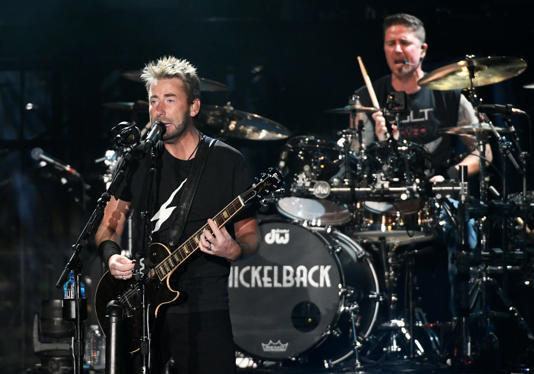
Chad Kroeger (L) and Daniel Adair of Nickelback perform during the band's Get Rollin' tour at Toyota Amphitheatre on July 08, 2023 in Wheatland, California.© Tim Mosenfelder/Getty Images

Canadian rock band Nickelback is set to headline the 2025 edition of Rock the Country across the United States between April and July.

The upcoming travelling festival, with co-headliner Kid Rock, will make stops in 10 small towns across the U.S., beginning in Cullman, Ala., from June 19 to 21 and ending in Anderson, S.C., from July 25 to 26.


Rock the Country will also bring other big artists along for the multi-city festival, including Three Doors Down, Lynyrd Skynyrd, Ella Langley, Gavin Adcock, Hank Williams Jr., Big & Rich and more. Nickelback appears to be the only Canadian band on the docket.
"We’re really looking forward to hitting the road and visiting some amazing towns, especially in places we’ve never played before. There’s something special about connecting with fans in these communities, and we’re ready to bring our best and truly rock the country. Can’t wait to see you all out there!" Nickelback bassist Michael Kroeger said in a statement.

"It's this simple, Rock The Country isn't just a music festival, it's a movement," Kid Rock added. "It’s a place for hard-working, god-fearing patriots to gather as one and celebrate freedom, music and the party of the year."

Tickets for the festival range from US$140 for a general day pass to $620 for a weekend two-day VIP pass. Camping passes are also available, starting at $371.

"Yes, it's a music festival. But many of us know now it's more than just that. It's a movement. It's a celebration of hard-working, God-fearing patriots who love America. A gathering place where the beer pours, love flows and live music rains down like a monsoon," Kid Rock said in a video announcing the festival. "A festival where we celebrate our military, first responders, Jesus and freedom. Do you believe in the power of music to bring people like us together?"

Nickelback formed in 1995 in Alberta, and has been playing ever since. They were inducted into the Canadian Music Hall of Fame in 2023.

In 2019, Kid Rock and Nickelback were set to perform at the highly anticipated Roxodus music festival in Clearview Township, Ont., before it was cancelled when organizers said "rainy weather" at the airport site in Clearview made the surface at the venue too unstable to host the four-day festival.

The company behind Roxodus Music Fest, MF Live Inc., filed for bankruptcy after cancelling the music festival. According to a statement of affairs, signed by MF Live’s Principal Fab Loranger, the company owes more than $18 million to almost 200 creditors, including more than $11 million to Taurus Site Services and $5 million to Eventbrite.

"We understand that the event did not generate sufficient ticket sales to cover the expected costs, leaving MF Live Inc. insolvent," a document by Grant Thornton Ltd., the licensed insolvency trustee of MF Live’s estate, read. "We also understand that earlier wet weather posed certain challenges in preparing the site for the event and prevented MF Live Inc. from being able to host a safe event."

The festival was supposed to feature artists like Aerosmith, Kid Rock, Nickelback, Billy Idol and Blondie.

— With files from Global News

Border Insecurity: Canadian musicians face volatile tour life under Trump

Story by David Friend
• MAY 1, 2025

    
Country singer Robert Adam, as shown in this handout image, says they're skipping plans to tour the United States, in part over concerns about how non-binary musicians might be treated at the border. THE CANADIAN PRESS/HO-Brandynn LP *MANDATORY CREDIT*© The Canadian Press

TORONTO — Canadian country singer Robert Adam recorded their new album in Nashville, but under the political tumult of U.S. President Donald Trump, the musician doesn’t plan to travel stateside to promote it.

The Calgary-based non-binary artist says they contemplated their decision for several months, weighing past negative experiences as a queer person visiting the United States against the importance of the U.S. market for emerging musicians.

But after hearing about the obstacles faced by some transgender musicians in obtaining U.S. working visas, Adam said they are confident they've made the right decision to skip the country on their upcoming tour.

“(I’m) pretty non-binary presenting, pretty femme ... it's hard not to see that I kind of stick out,” they said in a phone interview.

“I don't want to spend my life stressed out over whether I feel like I have to … tone down my image, or what I have to say, just to exist and play a show."

An order issued in January by the Trump administration declared that the United States will only recognize two sexes, male and female, and that government documents must reflect the one assigned at birth.

This would mean trans and non-binary entertainers might have to misgender themselves in hopes of getting approval.

Some Canadians also have an X gender marker on their passport, and while Adam doesn't, they said the possibility of invasive questions about their gender or being detained at the U.S. border far outweighs the upside.

And so, they will tour elsewhere.

After several Canadian dates, Adam plans to head to the United Kingdom and Japan, where they feel their brand of queer country music will be more warmly received.

"It's important to me that we go to spaces where I can do those things freely and ... inspire others to do the same," they added.

Other Canadian artists, both within the LGBTQ+ community and outside it, are asking themselves whether touring the United States is worth the ethical compromise or safety risks it may present.

Last week, the Canadian Independent Music Association held a virtual town hall to address the growing concerns about performing stateside.

More than 200 musicians, managers and other industry players attended a panel that included two U.S. immigration lawyers who specialize in visas for the arts community.

“I think everybody is right to be anxious, worried and concerned about coming into the U.S. right now,” said Will Spitz, a lawyer in the performing arts division of New York-based firm CoveyLaw.

“It seems like every day there's a new horror story of someone getting detained, hassled or deported.”

Despite heightened tension at the border, Spitz noted "not that much has changed" for most travellers who are not trans, gender non-conforming or intersex.

Many visa rejections, which may seem like Trump-era actions, are actually due to common paperwork errors, he noted.

"Does that mean it can't change tomorrow? No," Spitz added.

"I think there's a very real chance that they expand their focus to include anyone who's been vocal in support of Palestine and other issues the current administration doesn't like."

Statistics Canada data suggests that many Canadians have soured on going stateside. In March, the number of those returning from the United States by car was down nearly 32 per cent compared to last year, marking the third consecutive month of year-over-year declines.


U.S. Customs and Border Protection data shows the number of Canadian citizens turned away at the land border also fell 44 per cent in the same month. In March, 1,747 people were found inadmissible — for reasons as varied as criminal records or improper documents — compared to 3,126 a year earlier. It was the fourth consecutive month of declines.

Still, many are worried. Amid the turmoil, some musicians are choosing to stay silent over fears that any negative comments about the American administration might wind up in a Google search by a border agent.

Nearly a dozen musicians and managers declined to be interviewed for this story, with some explaining they couldn't risk losing access to the lucrative U.S. tour circuit.

“They're terrified of getting stuck at the border and being interrogated for social media posts," said Eric Alper, a publicist representing several performers who wouldn't speak out.


"A lot of the Canadian artists are leaning towards just surviving."

Others are thinking more about how to better prepare for their U.S. tours.

Khalid Yassein of Toronto folk act Wild Rivers said his band is upgrading the status of everyone on their team to an O1 visa, which recognizes workers in the arts. Before, some of them held O2 visas, which are for assistants to O1 workers.

The band hopes it will streamline the process and eliminate potential hurdles, he said. They also plan on crossing into the United States at the same time.

"We’re having conversations with our team on how to be extra prepared," he said.

"It's a huge, important music market for us. Granted, we’re excited every time we come home because we’re a little bit less stressed out."

Indie rock newcomer Drew Tarves, who performs under the moniker Young Friend, took a different approach. In March, he announced he was cancelling plans for shows in New York and Los Angeles to promote his debut album “Motorcycle Sound Effects.”


The Vancouver musician said he would dedicate his energy to 17 Canadian dates across six provinces instead. Tarves blamed Trump's tariff war and his aspirations to annex Canada as deciding factors in why he chose to focus on his home country.

“I didn't feel great about going down there,” the 26-year-old said in a recent interview.

“It was a hard decision,” he added. “Playing there in the past has always felt pretty key to being a developing artist. It's like the hub for music.”

Last month, pop singer T. Thomason also announced he was backing out of U.S. shows after concluding "it does not feel safe to attempt to cross the border" as a trans person.

His decision came shortly after fellow trans singer-songwriter Bells Larsen cancelled a U.S. tour over new policies that suggested he would likely be denied a visa based on his gender identity.

Those boycotts still seem to be rare, according to Liana White, executive director at the Canadian Federation of Musicians. She said the interest expressed by Canadian musicians in touring the United States remains “huge,” even with the current unpredictability.


She advises travelling artists to take extra precautions when planning their U.S. dates. For instance, visa processing times have slowed in recent years, an issue that predates the current Trump administration.

Musicians should account for those delays by planning further ahead, she said, and budgeting to pay a premium that expedites approval.

Other things to consider: carry medication in prescription bottles, purchase vitamins south of the border and keep food in its original packaging.

“If it is possible to fly, I would recommend that,” White added, noting it's easier to withdraw a request to enter the United States at many airports, because the person is still on Canadian soil.

Even with the extra hurdles and turbulent political climate, some Canadian musicians say they couldn't imagine abandoning U.S. audiences.

Montreal feminist punk act Nobro, whose debut album was partly inspired by a concert they played hours after the U.S. Supreme Court overturned abortion rights, said performing stateside isn't just about promoting their music but empowering their fans.


“We don’t play big shows, we play 200-capacity gigs, and there are a lot of kids out there that can actually afford our tickets,” said bassist Kathryn McCaughey.

“It’s really important to uplift those communities and for them to feel like they’re being seen and heard and especially just to have fun.”

Toronto band the Beaches recently hit the stage at California music festival Coachella and last year played in Florida, a conservative state with several anti-LGBTQ laws.

Keyboardist Leandra Earl said the band felt it was essential to "go down there and meet all of our fans who really need an escape from life sometimes."

“I personally, as a queer woman, think it’s really important for us to keep playing in all of those cities that are looking for representation,” she added.

“Wherever people want us, we’ll go there.”

This report by The Canadian Press was first published May 1, 2025.

David Friend, The Canadian Press
Scientists warn an underwater volcano off Oregon coast is about to explode


Story by Julia Musto
The Independent

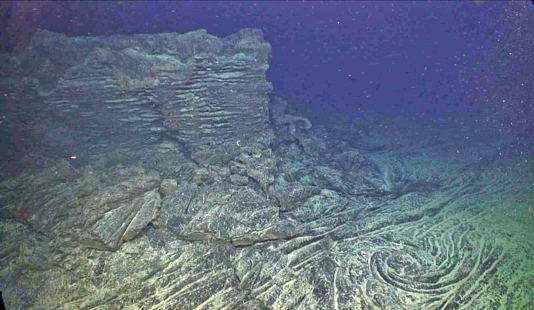
The Axial Seamount – located hundreds of miles off the coast of Oregon and nearly 5,000 feet below the Pacific Ocean’s waves – erupted in April 2015, spewing a mile’s worth of lava onto the sea floor.

And now, the Pacific Northwest’s most active underwater volcano is getting ready to erupt again - although no one is exactly sure when or what will happen.

“Axial is under a state of critical stress now,” noted Maya Tolstoy, a marine geophysicist and the Maggie Walker Dean of the University of Washington College of the Environment. “At high tide the weight of the ocean presses down on the crust, and when that weight is ever so slightly decreased at low tide, the number of earthquakes increases.”

“What will be really interesting to see is whether those factors also affect the likelihood of an eruption by putting additional stress on the magma chambers,” Tolstoy added.


The Axial Seamount previously erupted in 2011 and 2015. But, there’s still a lot researchers are hoping to find out about the submarine volcano (Credit: UW/OOI-NSF/WHOI; J2-980; V17)

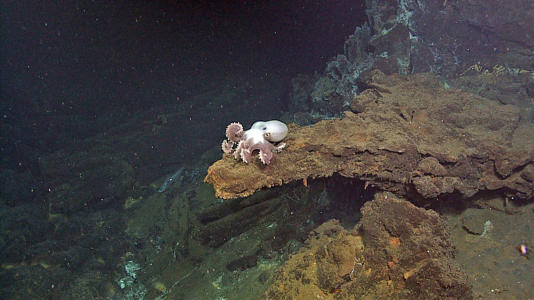
Underwater volcanoes can create unique habitats for marine life, often acting to deflect food-carrying currents upward, attracting fish and other species. Hydrothermal vents on the seafloor where seawater is heated by magma and ejected are an “oasis of life,” and gases the volcanoes emit can help microbes in the deep sea survive. But, they can also lead to ocean acidification and harm marine life.

If the volcano does erupt soon, Pacific Ocean dwellers can expect a startling sound. While whales attuned to low-frequency sounds are unlikely to be harmed by the loud implosion, it will be a different outcome for the creatures that live on Axial Seamount’s hydrothermal vents.

“In 2011, we saw one of the venting areas become completely covered in lava flows,” Kelley said. “It wiped everything out. But what’s fascinating is that when we came back three months later, there were animals and bacteria colonizing the area again. They’re surprisingly resilient ecosystems.”

In any volcanic eruption, magma rises from the depths of the Earth to the surface. The magma contains dissolved gases that form bubbles as the pressure on it is released during its ascent, according to the Smithsonian. An explosive eruption occurs when the gases are released.

Underwater, however, that magma faces the pressure of the ocean. When magma comes in contact with water, the temperature change is so dramatic that it solidifies in a process called quenching.


Marine life that thrives on Axial Seamount’s hydrothermal vents could be in the line of fire. But, the Seamount’s ecosystems are resilient (Credit: UW/NSF-OOI/CSSF; ROPOS Dive R1719; V14.)

The Axial Seamount is formed by a hotspot, which is an area in the Earth’s mantle where plumes of molten material rise into the planet’s crust. As that crust moves over the mantle, the hotspot stays in place. That results in the formation of long chains of volcanoes over time.


“Three-quarters of all of the volcanic activity on Earth takes place at mid-ocean spreading centers,” Deborah Kelley, another professor at the university, explained. “But people have never directly witnessed an eruption along this mountain chain, so we still have a lot of unanswered questions.”

The Independent has always had a global perspective. Built on a firm foundation of superb international reporting and analysis, The Independent now enjoys a reach that was inconceivable when it was launched as an upstart player in the British news industry. For the first time since the end of the Second World War, and across the world, pluralism, reason, a progressive and humanitarian agenda, and internationalism – Independent values – are under threat. Yet we, The Independent, continue to grow.

[Updated] South Asian left statements on the Pahalgam terrorist attack and current India-Pakistan tensions


[Editor’s noteActivists from Communist Party of India (Marxist-Leninist Liberation) and Haqooq-e-Khalq Party (Pakistan) will be speaking at Ecosocialism 2025, September 5-7, Naarm/Melbourne, Australia. For more information on the conference visit ecosocialism.org.au.]

Joint statement by Indian and Pakistani peace activists: On and aftermath of Pahalgam tragedy

April 29, 2025

We the concerned neighbouring citizens of the subcontinent unequivocally condemn terrorism against the innocent tourists in the Pahalgam valley, and at any place on whatever pretext.

We demand a thorough and fair investigation into Pahalgam terrorism to uncover the terrorists and the perpetrators of crime in order to bring culprits to justice.

We express our deepest concern over the aggravation of ongoing dangerous tension between India and Pakistan and call for cessation of hostilities and war mongering.

We are of the considered view that fanning war hysteria and perpetuating ongoing tension into any kind of military conflict would be extremely destructive for our countries and peace-loving people.

We are of the view that the current tension needs to be diffused to initiate negotiations for a peaceful resolution of inter-state disputes.

We appeal to the governments of India and Pakistan to save the situation from going out of their hands. The logic of dialogue must prevail over the madness of the weapons of destruction.”

The leading peace activists who issued the above call for De-escalation of tension and peaceful resolution of inter-state conflicts include:

Pakistan: Imtiaz Alam, Secretary General SAFMA; Tariq Khsa, Former IG Police Punjab; Mujeeb ur Rehman Shami, Editor Pakistan; Hussain Naqi, Human Rights Commission of Pakistan (HRCP); Afrasian Jhatak, National Democratic Movement, KP; Rashid Rehman, Senior Editor
Saleema Hashmi, leading artist; Khawar Mumtaz, Woman Action Forum; Farooq Tariq, President Haqooq e Khalq Party, Gen Sec Kissan Rabita Committee; Dr Abdul Maalik, President National Party
Ayub Malik, NP Punjab; Sheema Kirmani, Tehreek I Niswan; Khawar Mumtaz. Woman Action Forum; Mohammed Tehseen, Convener Pakistan India Peoples Forum for Peace and Democracy; Syed Akhtar Ali Shah, Former IGP KP; Tasneem Rizvi, architect; Imtiaz ul Haq, MKP;
Beena Sarwar, peace activist, SAPAN; Khalid Farooqi, Editor Awaz (Jang Group); Dr Jabbar Khattak, Editor Awani Awaz Sindh; Senator Buledi, National Party (Baluchistan); Mahesh Kumar, Editor Daily Sindh; Kamran Chaudhary, peace activist; Allama Siddique Azhar, Anjuman Taraqi Pasand Musanafeen.

India: O. P. Shah, leading peace activist; Tarun Basu, peace activist; John Dayal, Senior journalist and peace activist; Satish Jacob, Gen Secretary Safma India; Kumar Ketkar, MP, leading editor; Satnam Singh Manak, Editor Ajeet, Hind-Pak Dosti Manch; Rumesh Yadev, Amritsar Lok Academy; Prof Anand Kumar, academic; Nizamuddin Bhat, peace activist; M Y Tarigami, political activist; Sunil wattal, peace activist; Anita Katyal, Senior Journalist, Safma India; Rita Manchanda, author, peace activist; Qurban Ali, peace activist; D Khajuria, peace activist; Rana Siddiqui Zaman, peace activist.


Communist Party of India (Marxist-Leninist) Liberation statement on the Pahalgam terrorist attack

Central Committee of CPI(ML) Liberation, New Delhi, April 22, 2025

The CPI(ML) Liberation strongly condemns the terrorist attack on April 22 in Baisaran, Pahalgam, where unarmed tourists were targeted, resulting in several deaths and injuries. We extend our deepest condolences to the victims and stand in solidarity with their families.

The Modi government's claim of normalisation of the situation in J & K and chest-thumping on national security stands exposed, as such attacks continue unabated in the region. There has been a disturbing rise in attacks on civilians — residents, migrant workers, and now tourists.

The BJP’s repeated proclamations of “complete normalcy” in Jammu & Kashmir ring hollow in the face of such continuing violence. While the ruling party has declared on every platform that all issues in the region have been resolved, the reality tells a different story. Jammu & Kashmir remains heavily militarized, and terror attacks persist under the watch of this regime. The Modi government’s strategy — suppressing democratic voices while indulging in aggressive posturing — has failed to deliver either peace or security.

We must reject any attempt to use this tragic incident as a pretext to stoke jingoistic and communal narratives. At this critical moment, it is essential for people across the country to stand united and push back the divisive forces seeking to exploit such tragedies for political gain.


Haqooq-e-Khalq Party (HKP, People’s Rights Party) statement on present India-Pakistan conflict 

Haqooq-e-Khalq Party, April 26

HKP strongly condemns the attack in Pahalgam. We believe terrorism has no place in our society, our region, or anywhere in the world. 

Such acts of violence only serve to deepen divisions and suffering among our peoples. We stand in solidarity with the victims and their families during this difficult time.

We believe India has acted in an unwarranted and belligerent way by suspending the Indus Water Treaty. 

This unprecedented action violates a long-standing agreement that has survived previous conflicts and threatens the water security of millions of Pakistani citizens. 

We view this as a dangerous escalation that contradicts international law and norms of peaceful coexistence between neighboring states.

We condemn continuation of atrocities and dictatorial measures against Kashmiris by Indian ruling class. We stand for demilitarization of Kashmir and the right of self-determination of Kashmiris on both sides. 

War drums are not the solution to the challenges we face. We call upon progressive forces on both sides of the border to push for peace, security, and prosperity. 

The people of South Asia deserve better than conflict and instability. Our shared future depends on dialogue, mutual respect, and cooperation rather than confrontation and hostility.


The Pahalgam terror attack in Jammu and Kashmir: Questions the Modi government must answer


Published 
Email]]
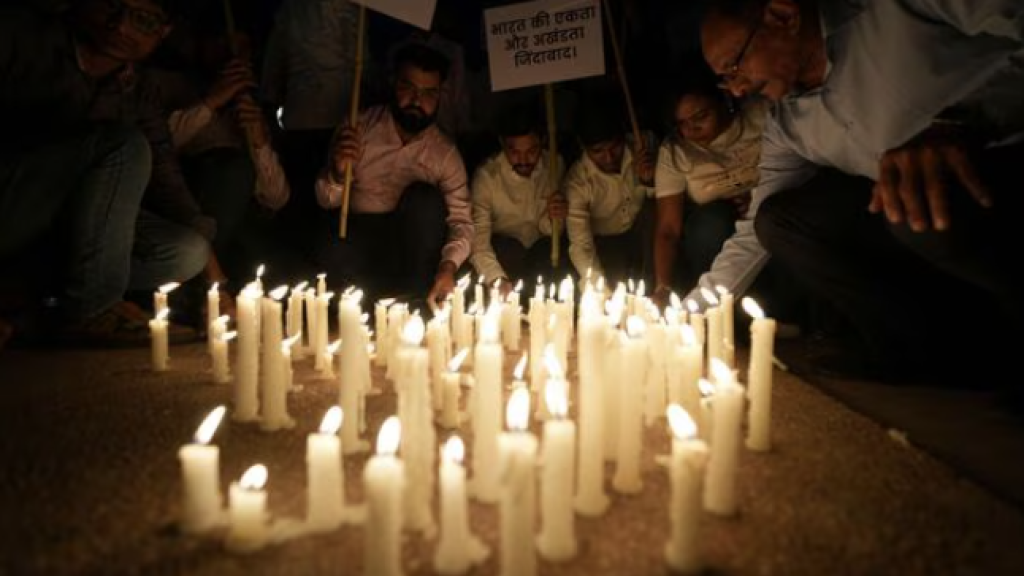
Pahalgam terror attack vigil

[Editor’s noteCommunist Party of India (Marxist-Leninist) Liberation activist N Sai Balaji will be speaking at Ecosocialism 2025, September 5-7, Naarm/Melbourne, Australia. For more information on the conference visit ecosocialism.org.au.]

First published at CPI(ML) Liberation.

The heinous Pahalgam attack has once again brought us face to face with the brutality of terrorism. The brutal killing of as many as twenty-six tourists, including a tourist from Nepal and a local pony operator from Pahalgam has shocked the world. The perpetrators of this ghastly crime must be brought to justice. Accountability for the many lapses and omissions on multiple levels that enabled the perpetrators to kill at will and flee unobstructed after carrying out this cold-blooded terror attack, must be fixed.

When the United Progressive Alliance (UPA) government was in power, Narendra Modi as Chief Minister of Gujarat used to demand answers from former Prime Minister Manmohan Singh for every terror attack which took place in Jammu and Kashmir. The video of an eloquent Modi asking Singh to explain how terrorists could cross the border and kill people at will when the powers that be in Delhi have complete control over the country’s borders and over the flow of funds, information and communication, has been watched by millions over the last decade and more. The Pahalgam attack is the first instance of tourists having been targeted on this scale in the valley. The same questions are today all the more pertinent, yet the deafening silence of Modi as India’s prime minister seems to be mocking at the questions raised by Modi as Gujarat CM.

Jammu and Kashmir is today a Union Territory, which means that the law and order in this region is an exclusive responsibility of the Union Government. The unified central command dealing with the challenge of terrorism is headed not by the elected CM but by the Lieutenant Governor appointed by the Union Government. Just two weeks before the April 22 Pahalgam terror attack, Union Home Minister Amit Shah had visited the state to review the security situation and CM Omar Abdullah was kept out of that meeting. After the meeting Shah told the media how the Modi government had freed Kashmir from the scourge of terrorism and restored normalcy in the state. Today Shah, National Security Advisor Ajit Doval and Lieutenant-Governor Manoj Sinha should take primary responsibility for the Pahalgam tragedy and heads should roll. But abdication of responsibility and refusal of accountability remain the hallmark of the Modi regime.

There are now reports about the establishment having prior intelligence inputs about a possible terror attack. The fact that Modi’s scheduled visit to Jammu & Kashmir on 19 April was called off at the last moment only lends credence to such reports. Reports suggest that the perpetrators of the terror attack were around for quite a few days and had perfected their plans with due reconnaissance. This makes it all the more shocking and indefensible that some two thousand tourists were left in a state of utter vulnerability without an iota of police or military presence in an otherwise massively militarised state. Many victim families, security analysts and Kashmir watchers have flagged this crucial intelligence and security lapse but the government and dominant media are conspicuously silent about it.

The dominant media and the Sangh-BJP IT cell are instead busy demonising Kashmiris and the entire Muslim community over the Pahalgam terror attack. If the terrorists targeted tourists, and particularly so for their religious identity, local Kashmiri Muslims risked and even sacrificed their lives to ferry tourists to safety and rush the injured to hospitals. In the absence of any security and with no official help for no less than an hour and a half, it was the local people’s intervention which saved many lives and kept the death toll limited. People came out on the streets to condemn this horrific attack and this huge blow to tourism, a major base of Kashmir’s economy and many people’s livelihood, and there was a spontaneous shutdown across the state in protest. In the wake of the Pahalgam massacre, while airlines are busy fleecing the stranded tourists desperate to return home, Kashmiris have opened their hearts and homes to extend a warm helping hand. Yet Kashmiri Muslims are being vilified and the result of the toxic hate campaign of the Sangh brigade and the Godi Media can be seen across India in increased threats and violence against Kashmiri students, traders and labourers.

As with the Pulwama incident six years ago, the government is once again busy harvesting the shock and anger of the people for electoral gains. The PM cut short his visit to Saudi Arabia and cancelled his scheduled programme in Kanpur on 24 April not to visit Kashmir but to address a rally in Bihar where elections are due later this year. He also did not bother to attend the all-party meeting in Delhi to discuss the Pahalgam attack.

The decisions taken by India to suspend the Indus waters treaty, cancel visas granted to Pakistani citizens, downsize the High Commission strength and stop the Attari check point on the Indo-Pak border, and the retaliatory measures announced by Pakistan will curtail legal diplomatic ties and interaction between the two countries, intensify tensions between the two neighbours and put citizens of both countries to inconvenience in their legitimate activities, but are unlikely to put any real curb on terrorist activities. The focus is on creating a jingoistic climate to divert people’s attention from the Modi government’s many failures and whip up an Islamophobic hysteria. There is, needless to say, no attempt to address the pain of the people of Kashmir for whom the paradise of the valley has long been marred by mass killings, disappearances, and incarcerations, and who since 2019 have faced a further escalation of militarization and repression, suppression of their democratic aspirations and the loss of Constitutionally guaranteed rights.

The orchestrated loud clamour for revenge attacks and collective punishment of Kashmir has already put Kashmiri students and traders at grave risk in many parts of India. Reports of violent hate campaigns against Bengali-speaking Muslim workers are also coming in from Gujarat and Maharashtra. Within Kashmir, family homes of individual suspects and accused are being blown up in direct contravention of the recent Supreme Court ruling, and blanket mass arrests are yet again underway. The government which completely abdicated its responsibility to provide security to the people is now busy feeding the Islamophobic frenzy with spectacles of performative retribution.

Meanwhile, the voices of the families of the Pahalgam attack victims demanding answers and accountability from the Modi government are being deliberately silenced. The anger of Shital Kalathiya of Surat, who lost her banker husband Shailesh Kalathiya in Pahalgam, against the VIP-obsessed security culture which left tax-paying tourists at grave risk, reflects the pain of every Indian who lost their kin in a context of government indifference and callousness, whether in the COVID-19 pandemic or the Mahakumbh stampede or now in the Pahalgam terrorist attack. While tourists paid with their lives in Pahalgam for the total absence of security, there are now reports of Jharkhand BJP MP Nishikant Dubey, notorious for his irresponsible remarks against opposition leaders and even the Chief Justice of India, celebrating his 25th wedding anniversary in Gulmarg, Kashmir amid tight security arrangements just a few days before the Pahalgam terror attack. Meanwhile, the recent denial of responsibility for the attack by the Lashkar-e-Taiba offshoot The Resistance Front, which had ostensibly claimed responsibility earlier, only makes the whole incident even murkier.

Contrary to the BJP’s claims about 'solving’ the Kashmir question, the Modi government’s Kashmir policy has only deepened the crisis. In November 2016, demonetisation was sold as a sure antidote against terrorism in Kashmir. Pulwama shattered that myth in no time. The stripping of Jammu and Kashmir’s constitutional status, including its very statehood, on 5 August 2019 was advertised as another masterstroke. Pahalgam has now thoroughly punctured this propaganda. Tourists were encouraged to visit Kashmir as part of this propaganda, but now after the Pahalgam attack, the government tells us that the tourists in Baisaran valley did not have necessary police permission to visit the meadow.

It is this innate disrespect for the lives and rights of ordinary people which makes the Modi regime an unmitigated disaster cutting across communities and regions. From Manipur to Kashmir, and Maharashtra to Chhattisgarh, the Sangh’s power games are making India bleed and burn while the Adanis and Ambanis count their billions and the BJP and its allies celebrate. Pahalgam is the latest wake-up call for India in the 75th anniversary of the republic.

The people must stand united against the fascist forces’ despicable attempts to exploit the Pahalgam tragedy to sow further hatred and polarization. And as more questions arise daily about how the heinous attack could happen, we must insist on holding those in power accountable and not allow the truth to become another casualty. The looming threat of a war between two nuclear-powered neighbours must be defused and all efforts must be made by the forces of peace on both sides of India-Pakistan border to deescalate tension and strengthen bilateral and regional unity and cooperation in South Asia.