Thursday, June 26, 2025


Evolution Of China’s Biotech Industry: Crouching Tiger, Hidden Dragon – Analysis

science researcher laboratory woman female

By 

By Lakshmy Ramakrishnan


Biotechnology is a critical emerging technology holding significant potential in addressing various challenges, particularly in healthcare. China’s dominance as a biotech powerhouse is marred by prominent narratives focusing on biosecurity. This includes the use of genetic data for discriminatory or malicious purposes, and more recently, a possible ‘DeepSeek moment’ in biotech as Chinese firms are increasingly developing innovative and globally competitive products.

While these concerns are valid, China’s biotech advancement—viewed through technological and societal lenses—reflects its early recognition of the sector as a national priority, enabling long-term strategic investment. This underscores biotech’s capacity to promote economic growth and modernisation, and offers insight for India’s aspirations as a biotech power.

Looming Threat of Technological Decoupling 

Global narratives on China’s role in biotech centre on bioethics and biosecurity concerns. Some notable instances include—the human embryonic CRISPR (Clustered Regularly Interspaced Short Palindromic Repeats) gene-editing scandal, the alleged lack of transparency in the sharing of genetic information to trace the origin of COVID-19, and the sensationalised portrayal of the applications of synthetic biology. Consequently, the Biden-era United States (US) Biosecure Act prohibits companies from receiving federal funds if they engage in business with certain Chinese biotech firms.

The Trump administration halted federal funding for dangerous gain-of-function research conducted by foreign entities in countries deemed concerning, such as China. As a result of the Biosecure Act, the United States prohibited the import of materials and equipment from certain Chinese companies, including the leading genomics firm, BGI Group (formerly known as the Beijing Genomics Institute). China responded by banning the import of equipment from its American competitor, Illumina.

Thus, the focus has been on prioritising biotechnology as part of a wider technological decoupling strategy, drawing attention away from its immense benefits. However, China can no longer be considered merely as the hub of generics or a copycat of Western medicines. Instead, it is heavily invested in innovation-based research in biologics, gene-editing therapies, and targeted cancer therapies.


China’s Supremacy in Biotech  

According to the Australian Strategic Policy Institute’s (ASPI) Critical Technology Tracker—a data-driven project that analyses trends in research and innovation in science and technology (S&T) domains—China is at the forefront of innovation in biotech.

Notable achievements include the development of the world’s first CRISPR-Cas13 RNA (ribonucleic acid) editing-based therapy to counter age-related macular degeneration by Huida Gene Therapeutics, a global biotech company based out of Shanghai and New Jersey. It recently received clearance from the US Food and Drug Administration (FDA) based on encouraging results from a first-in-human trial conducted in China. Ivonescimab—an immunotherapy for non-small cell lung cancer developed by Chinese drugmaker Akeso—outperformed one of the world’s top-selling cancer drugs, pembrolizumab (Keytruda), in phase III clinical trials. More recently, an American Artificial Intelligence (AI)-powered drug discovery start-up—Insilico Medicine—made headlines with the development of the world’s first fully generative AI-discovered drug, rentosertib.

Chemical testing and phase II clinical trials were conducted in China, where Insilico Medicine has established a research and development centre. These triumphs have been facilitated through clear-cut bridges between biomedical research and the industry, a robust clinical research infrastructure, a large talent pool proficient in life sciences, and large-scale investments in science parks and industry clusters dedicated to high-quality research and development.

An Emerging Climb 

The evolution of China’s biotech industry did not happen overnight. A long-term ambition under Deng Xiaoping’s ‘opening up and reform’ policies placed indigenous development in S&T at the forefront. China’s 863 programme, or the National High Technology Research and Development Programme—launched in 1986—focused on building infrastructural and technological capacity of the biotech industry to address domestic needs, and set up special economic zones such as Shenzhen to encourage foreign investments and knowledge transfer. These efforts led to China becoming the world’s leading manufacturer of Active Pharmaceutical Ingredients (APIs).

Nonetheless, a fragmented biotech policy ecosystem marked by limited commercial avenues, regulatory bottlenecks, and a lack of innovation-based drug discovery spurred China to launch a series of policies that placed biotech as a national priority. ‘Made in China 2025’ initiative (2015) emphasised on widening the industrial and manufacturing capacity; ‘Healthy China 2030’ plan incorporated biotech into health systems research as a means to improve population health (2016); and a Priority Review and Approval Processprogramme ensured accelerated regulatory approval of clinically important drugs (2016).

Further, under the umbrella of ‘High-End Foreign Talents Plan,’ China’s brain gain policies led to the recruitment of highly skilled workers—scientists, innovators, entrepreneurs, and students—from overseas into science and tech domains, significantly strengthening China’s talent pool and technological capacity. Reformation of best practices in the life sciences, including peer review for determining academic merit and placing primacy on applied research, has been attributed to these brain gain policies.

Moreover, DeepSeek’s entry, which sent shockwaves in the AI community, represents the efforts of researchers who were educated in China, with only a quarter of them having gained work experience in the US before returning to China. Not only did DeepSeek mark China’s prowess in disruptive technologies, but it also signifies that China is less reliant on foreign training for its tech development, which may apply to biotech as well.

In March 2025, China announced the setup of a national venture capital guidance fund—a public-private partnership (PPP)-based investment vehicle, aimed at mobilising 1 trillion yuan (US$138 billion). The fund will support entrepreneurship in disruptive technologies, including biotech and AI. This year’s ‘Two Sessions’ meeting renewed emphasis on China’s economic growth model, which is premised on the development of ‘new quality productive forces.’ The approach ‘grants innovation a leading role,’ reiterating China’s aim to achieve self-reliance in biotech and augmenting its global competitiveness in the sector.

Lessons for India 

India’s biotech industry has grown from US$10 billion to US$130 billion from 2015 to 2024 and is expected to reach US$300 billion by 2030. New policies—BioE3 (Biotechnology for Economy, Environment and Employment) and Bio-RIDE (Biotechnology Research Innovation and Entrepreneurship Development)—reflect India’s policy alignment for a biotech-driven economy. Notable Indian breakthroughs include the development of the world’s most affordable cancer immunotherapy—NexCAR9, conducting the first-in-human gene therapy trial for Haemophilia, and most recently, producing India’s first gene-edited ricevarieties.

However, India’s biotech developmental trajectory lags in innovation compared to China. Innovation is crucial for achieving biotech sovereignty, reducing reliance on foreign entities, and safeguarding essential supply chains from external disruptions. India’s R&D expenditure as a percentage of the Gross Domestic Product (GDP) is 0.7 percent, while China’s is 2.6 percent. To bridge this deficit, the Indian government recently announced an INR one crore R&D fund and the deep tech fund of funds, which need to be operationalised immediately. Further, investment is limited in emerging biotech areas and requires strengthening bridges between academic research and industry partners through institutional mechanisms. Harmonisation of regulatory pathways between various national agencies is necessary as complex, redundant, and lengthy approval processes dissuade investment and render India unable to compete with its global counterparts. Lastly, recent diplomatic and geopolitical changes to US relations, particularly new international student visa regulations and tightening of immigration rules, offer India a brain gain opportunity to absorb its talent and foster India’s biotech ecosystem.

Biotech remains a critical technology that can develop life-saving and life-altering therapies for patients. Biotech policy discourse in India needs to be premised on ensuring systematic and fluid pathways to harness the potential of biotechnology alongside a consideration of safeguards. Recent geopolitical shifts signal that biotech is part of a wider technological decoupling strategy. However, this threat must not prevent India from expanding its biotech ecosystem. The development of critical technologies is a source of power, leaving biotech’s ‘DeepSeek moment’ up for grabs. 


  • About the author: Lakshmy Ramakrishnan is an Associate Fellow with the Health Initiative at the Observer Research Foundation.
  • Source: This article was published by the Observer Research Foundation.

Observer Research Foundation

ORF was established on 5 September 1990 as a private, not for profit, ’think tank’ to influence public policy formulation. The Foundation brought together, for the first time, leading Indian economists and policymakers to present An Agenda for Economic Reforms in India. The idea was to help develop a consensus in favour of economic reforms.

‘Shrinking’ Cod: How Humans Have Altered The Genetic Make-Up Of Fish

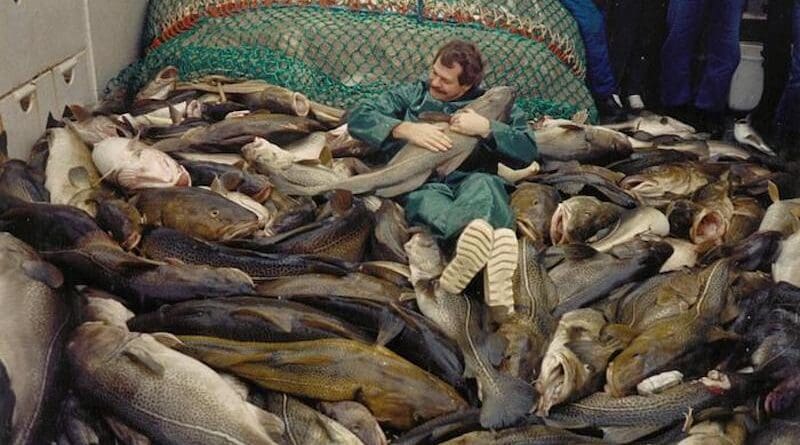
A few decades ago, Baltic cod grew to lengths of over one metre. This photo was taken during a research expedition in 1987 with Finnish fisheries biologist Eero Kalevi Aro. CREDIT Photo: Jesper Bay of the Danish Institute for Fisheries and Marine Research, March 1987

By 

Cod used to be giants. With their impressive size — over a metre in length and weighing up to 40 kilograms — and abundance, they, alongside herring, were the backbone of the Baltic fishery. Today, a fully grown cod would fit neatly on a dinner plate. That is, if fishing them were still permitted: due to the collapse of the stock, a ban on targeted cod fishing has been in place since 2019.

The shrinking of the cod population, in terms of both number and in size, is the result of human influence. In their new study, scientists from the GEOMAR Helmholtz Centre for Ocean Research Kiel have demonstrated for the first time that decades of intense fishing, combined with environmental change, have profoundly affected the genetic make-up of a fully marine species. Their findings are published today in the journal Science Advances.

“Selective overexploitation has altered the genome of Eastern Baltic cod,” explains Dr Kwi Young Han, first author of the study and a biologist who completed her PhD in the Marine Evolutionary Ecology group at GEOMAR about this topic. “We see this in the significant decline in average size, which we could link to reduced growth rates. For the first time in a fully marine species, we have provided evidence of evolutionary changes in the genomes of a fish population subjected to intense exploitation, which has pushed the population to the brink of collapse.”

Specifically, the researchers identified genetic variants associated with body growth that showed signs of directional selection — that is to say, they became systematically more or less frequent over time. These regions overlap strikingly with genes known to play a role in growth and reproduction. The study also found that a known chromosomal inversion, a structural change in the genome commonly relevant to environmental adaptation, followed a directional selection pattern. This confirms that the “shrinking” of cod has a genetic basis and that human activities have left a measurable mark on their DNA.

Strong directional selection for slow growth due to fishing pressure

To reach these conclusions, the researchers used an unusual archive: the tiny ear stones (otoliths) of 152 cod, caught in the Bornholm Basin between 1996 and 2019. Much like tree rings, otoliths record annual growth, making them valuable biological timekeepers. These samples are part of GEOMAR’s Baltic Sea Integrative Long-Term Data Series, which has been collecting annual data since 1996. This dataset enabled the scientists to conduct a genetic time-travel exercise stretching back to the period before the collapse of the Eastern Baltic cod population.

Using a combination of chemical otolith analysis and high-resolution DNA sequencing, the researchers investigated how cod growth and genetic composition have changed over 25 years under fishing pressure.


Their central finding was that the genomes of fast- and slow-growing individuals differ systematically, and that the fast growers have nearly disappeared. Cod that grow slowly but reach reproductive maturity at a smaller size have had a survival advantage under high fishing pressure.

“When the largest individuals are consistently removed from the population over many years, smaller, faster-maturing fish gain an evolutionary advantage,” explains Prof. Dr Thorsten Reusch, Head of the Marine Ecology Research Division at GEOMAR and Dr Han’s PhD supervisor. “What we are observing is evolution in action, driven by human activity. This is scientifically fascinating, but ecologically deeply concerning.”

Smaller and less diverse populations recover more slowly

The evolutionary consequences are severe. Genetic variants associated with faster growth and later maturation may already be lost, and the surviving cod now reach maturity at smaller sizes and produce fewer offspring. It also means a loss of adaptive potential with implications for the population under future environmental changes.

“Evolutionary change unfolds over many generations,” says Reusch. “Recovery takes far longer than decline, and it may not even be possible. This is evident in our 2025 length data from the current ALKOR cruise: despite the fishing ban, there’s no sign of a rebound in body size.”

The study underscores a clear message: management and protection measures must consider generational timescales. “Our results demonstrate the profound impact of human activities on wild populations, even at the level of their DNA,” says Dr Han. “They also highlight that sustainable fisheries are not only an economic issue, but also a matter of conserving biodiversity, including genetic resources.”


Early Farmers In The Andes Were Doing Just Fine, Challenging Popular Theory

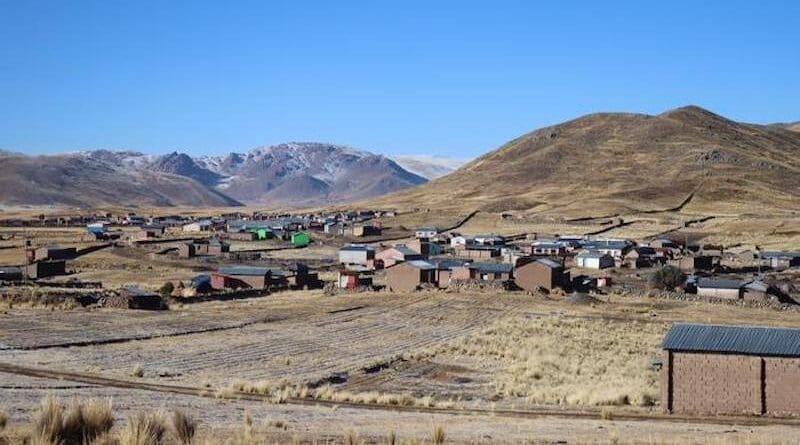
View of the Aymara community of Jachacachi, home to the archaeological sites of Kaillachuro and Jiskairumoko, which offer insights into the transition to agriculture in the Andean Altiplano. CREDIT: Luis Flores-Blanco


By 

In the Andes, the rise of agriculture to replace foraging was not the result of hardship and resource scarcity, but instead a time of economic resilience and innovation, according to a study published in the open-access journal PLOS One by Luis Flores-Blanco of the University of California Davis and Arizona State University, U.S., and colleagues.


The transition from foraging to farming was a major shift in human history that laid the foundations for the expansion of modern civilization. The current prevailing view is that this transition was a time of hardship, with communities forced to rely on crops due to growing human populations and dwindling wild food resources. In this study, Flores-Blanco and colleagues examine the diet of people living in the Andes throughout this transitional period.

The researchers interpreted ancient diets by measuring ratios of Carbon and Nitrogen isotopes from the bones of 16 individuals buried at the sites of Kaillachuro and Jiskairumoko in the Lake Titicaca Basin. Both sites were inhabited from approximately 5,000 to 3,000 years ago, during the transition from foraging to farming. Isotope signatures indicate a high proportion (84%) of plant material in the diet, supplemented by a smaller proportion of meat from large mammals. These proportions are not only consistent throughout this transitional time period at both sites, they are also identical to those of earlier foraging communities and later farming communities.

Altogether, these results contradict the image of an agricultural shift driven by hardship, and instead reveal that food resources remained consistent for thousands of years. Wild foods were increasingly managed and domesticated, creating mixed foraging-farming economies. The authors propose that this economic resilience was likely aided by certain cultural advances happening at this time, including expanding trade networks and innovations in ceramic and archery technologies.

Luis Flores-Blanco adds: “Our research shows that the origin of agriculture in the Titicaca Basin was a resilient process. Ancient Andean peoples relied on their deep knowledge of harvesting wild plants like potatoes and quinoa, as well as hunting camelids. With this understanding of their environment, they effectively managed their resources—domesticating both plants and animals—and gradually incorporated these domesticated species into their diet. So, the first Altiplano farmers continued to rely on the same foods consumed by Archaic foragers. In this research, we show that this Andean economy path made this transition both beneficial and stable.”

“These discoveries come from integrating contributions from different specialized fields, from extracting dietary information from bones, analyzing macrobotanical remains, and running statistical analyses.”


Luisa Hinostroza adds: “This article challenges the traditional idea that the transition to agriculture occurred out of necessity or periods of crisis. Our findings demonstrate, instead, that in the Altiplano, it was a process marked by stability and food sufficiency sustained for thousands of years. These results constitute crucial evidence revealing the capacity of Andean societies to efficiently manage their resources, such as tubers and grains, and maintain long-term stability.”

Ancient Canoe Replica Tests Paleolithic Migration Theory


By 

When and where the earliest modern human populations migrated and settled in East Asia are relatively well known. However, how these populations moved between islands on treacherous stretches of sea is still shrouded in mystery.


In two new papers, researchers from Japan and Taiwan led by Professor Yousuke Kaifu from the University of Tokyo simulated methods ancient peoples would have needed to accomplish these journeys, and they used period-accurate tools to create the canoes to make the journey themselves.

Evidence suggests that around 30,000 years ago, humans made a sea crossing — without maps, metal tools or modern boats — from what is now called Taiwan to some of the islands in southern Japan, including Okinawa. To find out exactly how this crossing was made, a team led by Kaifu performed various simulations and experiments, including the use of physical recreations, to learn the most plausible way this crossing was achieved. Of the two newly published papers, one used numerical simulations to cross one of the strongest currents in the world called the Kuroshio. The simulation showed that a boat made using tools of the time, and the right know-how, could have navigated the Kuroshio. The other paper detailed the construction and testing of a real boat which the team successfully used to paddle between islands over 100 kilometers apart.

“We initiated this project with simple questions: ‘How did Paleolithic people arrive at such remote islands as Okinawa?’ ‘How difficult was their journey?’ ‘And what tools and strategies did they use?’” said Kaifu. “Archaeological evidence such as remains and artifacts can’t paint a full picture as the nature of the sea is that it washes such things away. So, we turned to the idea of experimental archaeology, in a similar vein to the Kon-Tiki expedition of 1947 by Norwegian explorer Thor Heyerdahl.”

Kon-Tiki Expedition: Thor Heyerdahl's Epic Crossing of the Pacific in a Raft - World History Encyclopedia

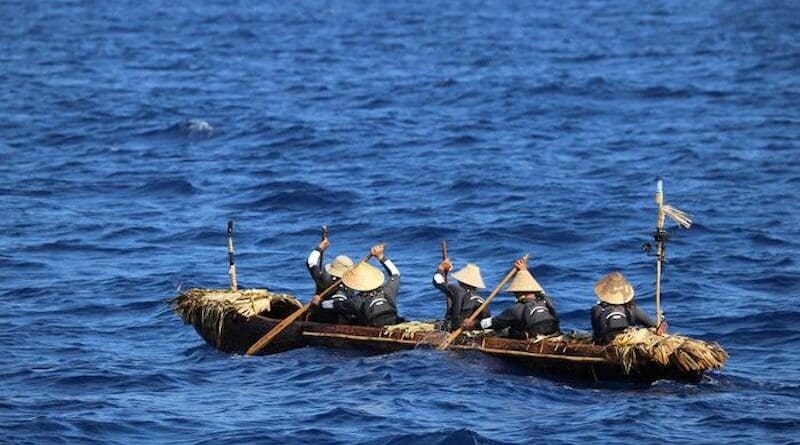
In 2019, the team constructed a 7.5-meter dugout canoe called Sugime, built from a single Japanese cedar trunk, using replicas of 30,000-year-old stone tools. They paddled it 225 kilometers from eastern Taiwan to Yonaguni Island in the Ryukyu group, which includes Okinawa, navigating only by the sun, stars, swells and their instincts. They paddled for over 45 hours across the open sea, mostly without any visibility of the island they were targeting. Several years later, the team is still unpicking some of the data they created during the experiment, and use what they find to inform or test models about various aspects of sea crossings in that region so long ago.

“A dugout canoe was our last candidate among the possible Paleolithic seagoing crafts for the region. We first hypothesized that Paleolithic people used rafts, but after a series of experiments, we learned that these rafts are too slow to cross the Kuroshio and are not durable enough,” said Kaifu. “We now know that these canoes are fast and durable enough to make the crossing, but that’s only half the story. Those male and female pioneers must have all been experienced paddlers with effective strategies and a strong will to explore the unknown. We do not think a return journey was possible. If you have a map and know the flow pattern of the Kuroshio, you can plan a return journey, but such things probably did not take place until much later in history.”

To understand whether such a journey could have been made in different circumstances, the team also used advanced ocean models to simulate hundreds of virtual voyages. These simulations tested different starting points, seasons and paddling strategies under both modern and ancient ocean conditions.

“I major in oceanography and use numerical methods and particle tracking techniques to research things like eel and salmon migrations, pumice drift after volcanic eruptions, and oil spills in the Gulf of Mexico,” said Yu-Lin Chang from the Japan Agency for Marine-Earth Science and Technology, and a visiting researcher at UTokyo and lead author of one of the papers in this study. “The Kuroshio Current is generally considered dangerous to navigate. I thought if you entered it, you could only drift aimlessly. But the results of our simulations went far beyond what I had imagined. I’m pleased this work helped illuminate how ocean voyages may have occurred 30,000 years ago.”

The simulations helped fill gaps that a one-time experiment could not. They revealed that launching from northern Taiwan offered a better chance of success than from further south, and that paddling slightly southeast rather than directly at the destination was essential for compensating against the powerful current. These findings suggest a high level of strategic seafaring knowledge among early modern humans.

“Scientists try to reconstruct the processes of past human migrations, but it is often difficult to examine how challenging they really were. One important message from the whole project was that our Paleolithic ancestors were real challengers. Like us today, they had to undertake strategic challenges to advance,” said Kaifu. “For example, the ancient Polynesian people had no maps, but they could travel almost the entire Pacific. There are a variety of signs on the ocean to know the right direction, such as visible land masses, heavenly bodies, swells and winds. We learned parts of such techniques ourselves along the way.”

Verdict expected in Italy 'forever chemicals' trial

Rome (AFP) – A verdict is expected Thursday in the trial of 15 managers of a chemical plant accused of knowingly contaminating the water of hundreds of thousands of people in Italy.


Issued on: 26/06/2025 - FRANCE24

The now-shuttered Miteni factory is accused of knowingly contaminating the water of hundreds of thousands of people in northern Italy 
© Marco BERTORELLO / AFP

The now-shuttered Miteni factory near the northeastern city of Vicenza is alleged to have polluted one of Europe's largest groundwater basins with PFAS, dubbed "forever chemicals" because they never break down.

The prosecution alleges that the plant in Trissino, which produced PFAS from 1968 and was run by three companies until its closure due to bankruptcy in 2018, leaked chemical-laced wastewater into a waterway, polluting a vast area between Vicenza, Verona and Padova.

Fifteen managers from Mitsubishi, International Chemical Investors (ICIG) and Miteni are charged with contaminating nearly 200 square kilometres (77 square miles) of drinking water, as well as soil.

Prosecutors in the trial, which began in 2021, have called for the managers to be sentenced to a total of 121 years in jail, lawyer Edoardo Bortolotto told AFP Thursday.

Over 200 civil plaintiffs have joined the trial, including Greenpeace and local mothers who united after discovering their families had the chemicals in their blood.

PFAS have been used since the late 1940s to mass produce the nonstick, waterproof and stain-resistant treatments that coat everything from frying pans to umbrellas, carpets and dental floss.

But chronic exposure to even low levels of the chemicals has been linked to liver damage, high cholesterol, reduced immune responses, low birthweights and several kinds of cancer.

The contamination was discovered in 2013 after Italy's environment ministry ordered tests of the Po River following a 2006 European project assessing exposure to such chemicals in rivers.

Of all the rivers studied, the Po had the highest concentrations of one specific PFAS called PFOA, a known carcinogen. Further investigation identified Miteni as the source.

At the time, there were no Italian or EU thresholds for PFAS content in drinking water, according to a regional report by the World Health Organization (WHO).

© 2025 AFP

Amadeo Bordiga. Murder of the Dead. Page 2. In Italy, we have long experience of "catastrophes that strike the country" and we also have a certain ...