Thursday, June 26, 2025

The Great Bulgarian Vulture Return: Europe turns over a new leaf after centuries of bird persecution


Copyright Euronews
By Cyril Fourneris
 25/06/2025 - 

Thanks to significant reintroduction efforts, Europe is one of the few places in the world where vulture populations are increasing. But human activities are making this recovery fragile.

Vultures are a fascinating and extremely useful species. These scavengers play an essential role in ecosystems, feeding on dead animal remains and thus helping to prevent the spread of bacteria and viruses.

Yet, for centuries, this animal was persecuted to the point of extinction in many parts of the continent, between the 19th and 20th centuries.

A vulture conservation movement emerged in Europe in the 1960s and was made popular by the documentaries of French ornithologist Michel Terrasse.

Various reintroduction efforts, supported by the European Union, have since succeeded in returning these fascinating animals to several regions of the continent, such as the Alps and the Pyrenees.

Soaring over the Balkan Mountains

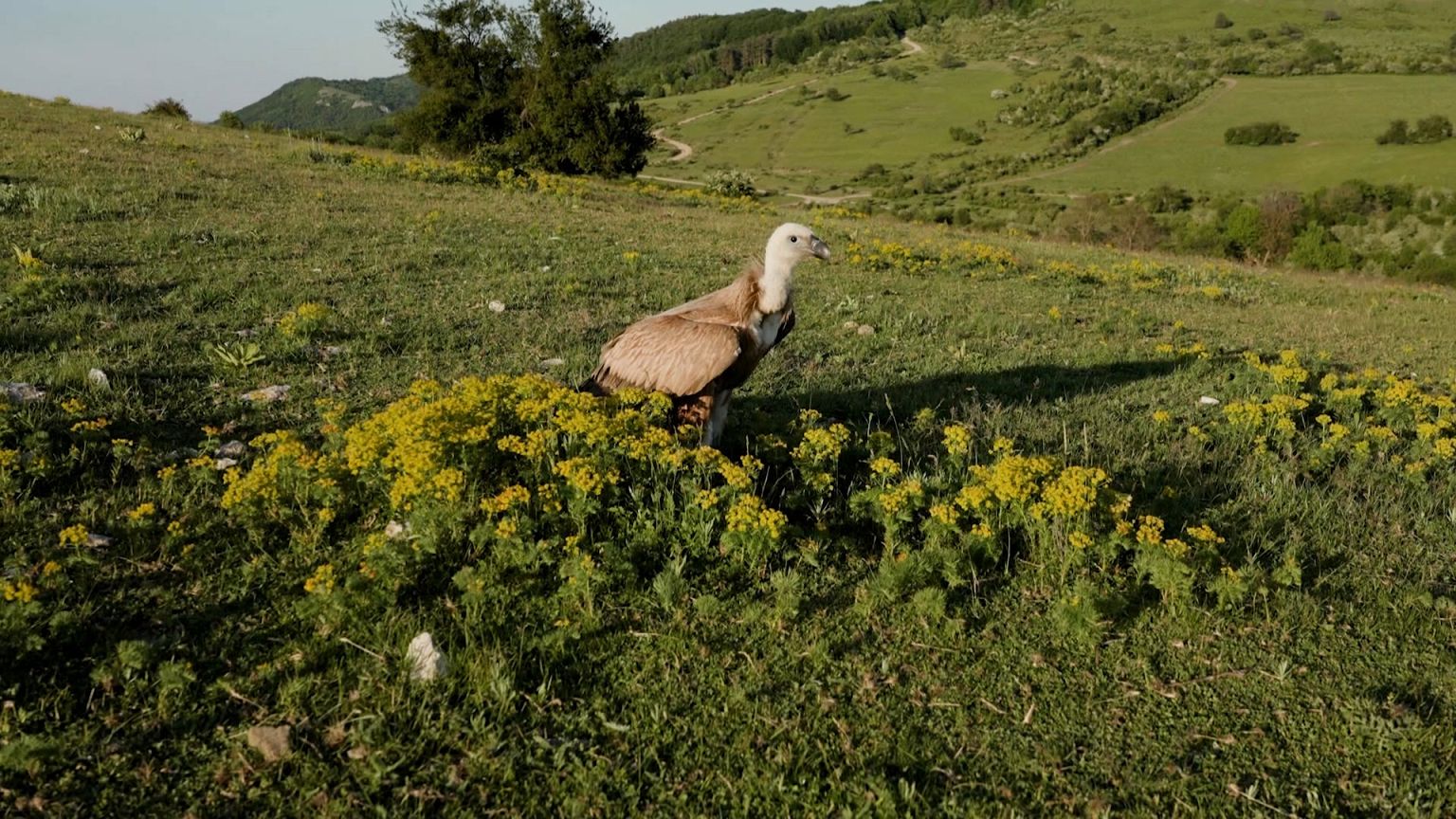
In two mountainous regions of Bulgaria, successive European LIFE projects helped re-establish the Griffon Vulture in 2010, then the Cinereous Vulture in 2018, decades after they had disappeared.

Thanks to European funding, hundreds of birds have been released by the Bulgarian NGOs Fund for Wild Flora & Fauna (FWFF) and Green Balkans, with the support of international partners such as the Vulture Conservation Foundation (VCF) and the European Association of Zoos and Aquaria (EAZA).

Recently, for the first time, Bulgaria reintroduced three specimens of the Bearded Vulture, Europe’s rarest vulture, as part of a LIFE project. It was the last of the four European vulture species still absent from the Bulgarian skies.

The Balkan Peninsula is seen by experts as a stepping stone to connect populations of the birds in Europe with those in North Africa and Türkiye, which is important for gene flow.


A fragile return

These reintroductions require significant conservation efforts to restore habitats, monitor the birds’ development and raise awareness among local communities.

Vultures remain threatened by lack of food, habitat loss, electrocution from power lines and illegal poisoning — one of the greatest conservation challenges. Some stock breeders even poison carcasses to protect their animals from predators like wolves. Vultures are collateral victims in this.

Another LIFE project, called BalkanDetox, aims to strengthen law enforcement, raise awareness among local communities about this illegal practice and improve poison detection.

Some of the vultures released are equipped with sensors that track their geolocation and body position in real time. If the bird’s position is abnormal, this allows project members to intervene quickly to treat the bird and locate the suspected feeding site.

The Birds Directive, adopted in 1979, is one of the oldest environmental laws in the EU and protects all birds living in the European Union. Around 500 bird species call Europe home.

Its aim is to halt the decline of species and ensure their long-term prosperity. States must therefore take measures such as banning the hunting of certain species or protecting areas conducive to bird reproduction.


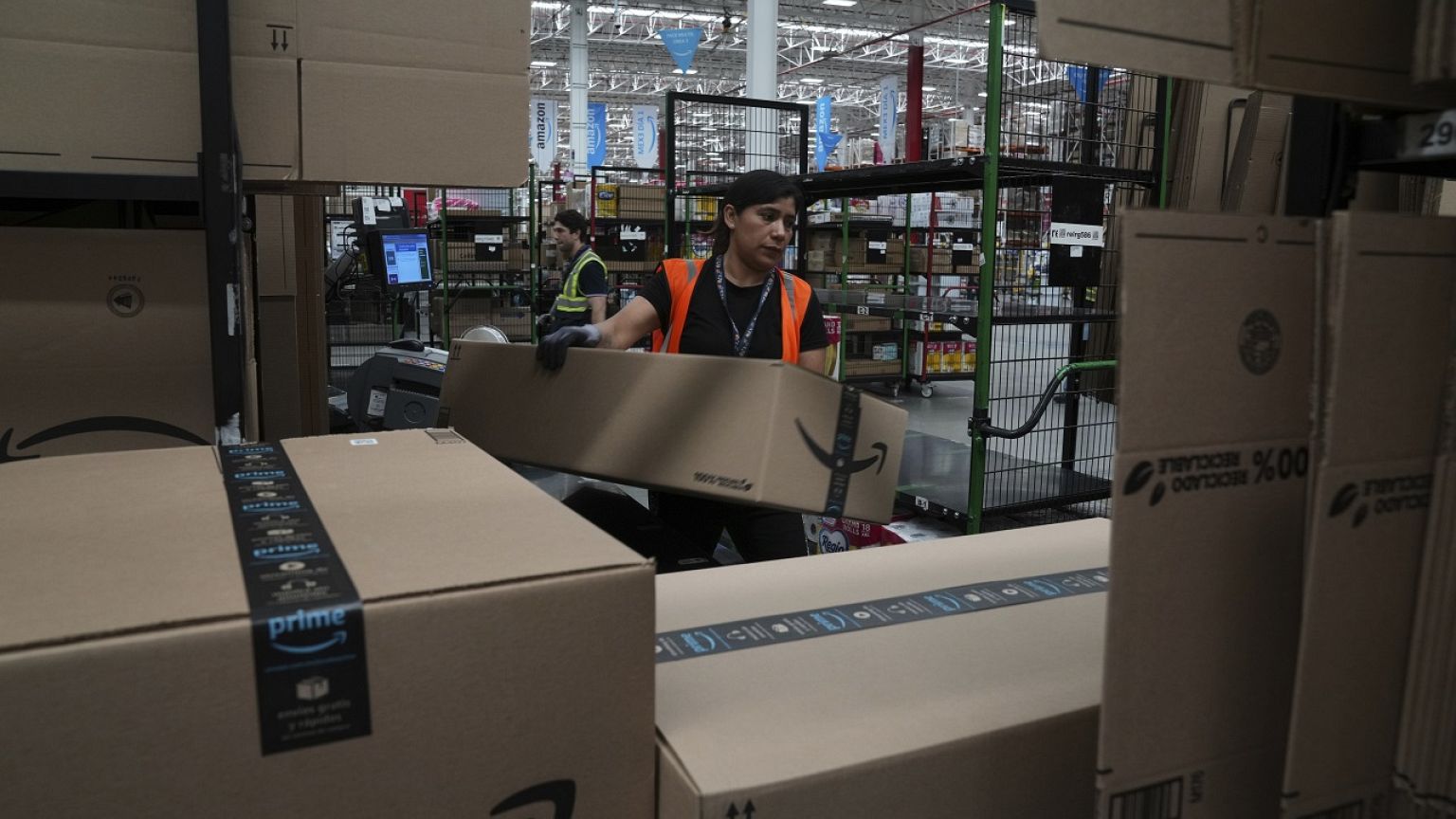
Amazon no show in European Parliament ires EU lawmakers, unions 

An Amazon employee working in a warehouse.
Copyright Marco Ugarte/Copyright 2025 The AP. All rights reserved.


By Cynthia Kroet
Published on 

Amazon’s access badges have been revoked since February 2024 after failing to attend hearings and factory visits.

Unions and lawmakers have called to increase measures on top of Amazon’s access restriction to the European Parliament after the US tech giant failed to deliver a senior manager before the Parliament’s Employment and Social Affairs Committee (EMPL) committee for a grilling on workers’ conditions on Thursday.

The Parliament has made the hearing a precondition for Amazon regaining access to its premises, after the tech giant's access badges were withdrawn in February last year because the company failed to attend a series of hearings and factory visits in 2021 and 2023 related to workers’ rights.

Amazon previously said it would send two Europe-based vice-presidents based on their expertise, rather than Senior Vice President Russell Grandinetti, who the committee had asked to see, as Euronews reported.  

The committee refused to accept the change of speakers and therefore the hearing went ahead without Amazon.

An Amazon spokesperson said the company was “disappointed” by the committee’s decision. 

“We were ready and willing to share information about our operations in the European Union and our efforts to set the standard for a safe and modern working environment in the logistics industry,” the statement said.

In a letter seen by Euronews, Amazon wrote to the President of the Parliament, Roberta Metsola, on Monday suggesting setting up a meeting with Senior Vice President for Global Affairs & Legal, David Zapolsky, in Washington, to “discuss broader policy issues of interest” to the Parliament.

EU contracts

UNI Europa Regional Secretary Oliver Roethig said at the hearing that “Amazon must face consequences for such uncooperative behaviour towards our democratic institutions.”

The union called for making public all the EU institutional contracts with Amazon and its subsidiaries, and “to suspend them pending a review of their compatibility with EU procurement laws and ILO Conventions 87 and 98, and terminate those found in breach.”

Lawmaker Liesbeth Sommen (Belgium/EPP), also called for the ban to continue. “We should keep it, it’s not OK that the management is not here, there is no respect for our house.”

Laila Chaibi (France/GUE-NGL) said more action is needed and called “to put an end to any contract with Amazon”.

Tougher measures are also demanded by NGO’s, Corporate Europe Observatory (CEO), LobbyControl and SOMO.  

“Amazon's repeated disregard for democratic scrutiny should get alarm bells ringing. It is clear the company should not regain its lobby badges, but MEPs should also stop meeting with a company which clearly does not want to play by the rules,” said Bram Vranken, a CEO researcher.

Euronews reported earlier this week that, despite the access badges being revoked, Amazon managed to secure at least 66 meetings with lawmakers to discuss technology legislation.

Will the anti-greenwashing proposal survive the tug-of-war between European institutions?

Copyright Joan Mateu Parra/Copyright 2025 The AP. All rights reserved.


By Amandine Hess
Published on 25/06/2025 -

The European Commission plans to remove a key proposal from the Green Deal, sparking controversy over greenwashing regulations and consumer protection.

Last week, the European Commission announced plans to remove one of the key proposals from the European Green Deal.

The directive aims to combat greenwashing by regulating the use of terms such as "eco-responsible" or "natural" by an independent body.

"The proposal on green claims aims to ensure better consumer protection and guarantee the competitiveness of European businesses," Sandro Gozi, a French MEP (Renew Europe), told Euronews.

"We want to justify a claim that this product is very green, this product is very sustainable. That's fine, but if you say that, if you go to market saying that, you have to follow a procedure that allows us to make sure that what is being said is true", he added.

The controversy erupted following the Commission's repeated backtracking on environmental policies.

Peter Liese, a German centre-right MEP, confirms that the EPP wants the text withdrawn.

"The EPP thinks it is good that the Commission is withdrawing this legislation, because it comes from the old days, when the Commission thought we couldn't have enough environmental legislation," Liese told Euronews.

"And we have seen that businesses, particularly SMEs, are overburdened with so many complexities."

Social Democrat, Green, and Liberal MEPs, for their part, are criticising the EPP conservatives for aligning with the hard and far right, and are threatening to cut ties with the group.

"If it is confirmed that the European Commission is withdrawing this proposal for the sole reason that it is giving in to a majority constructed by the conservatives with far-right groups, this is the moment when von der Leyen loses the support of her own majority, the liberals, the social democrats, the greens and her own EPP group", René Repasi, a German social democrat MEP (S&D), told Euronews.

The European Commission could return to the negotiating table if the agreement does not apply to micro-enterprises.

"I hope there is room for agreement between the three institutions," said Teresa Ribera, European Commission Vice-President for a clean, fair and competitive transition.

"The message coming from the Commission was that this was such a relevant change in the discussion that the Commission could consider withdrawing the directive", she concluded.


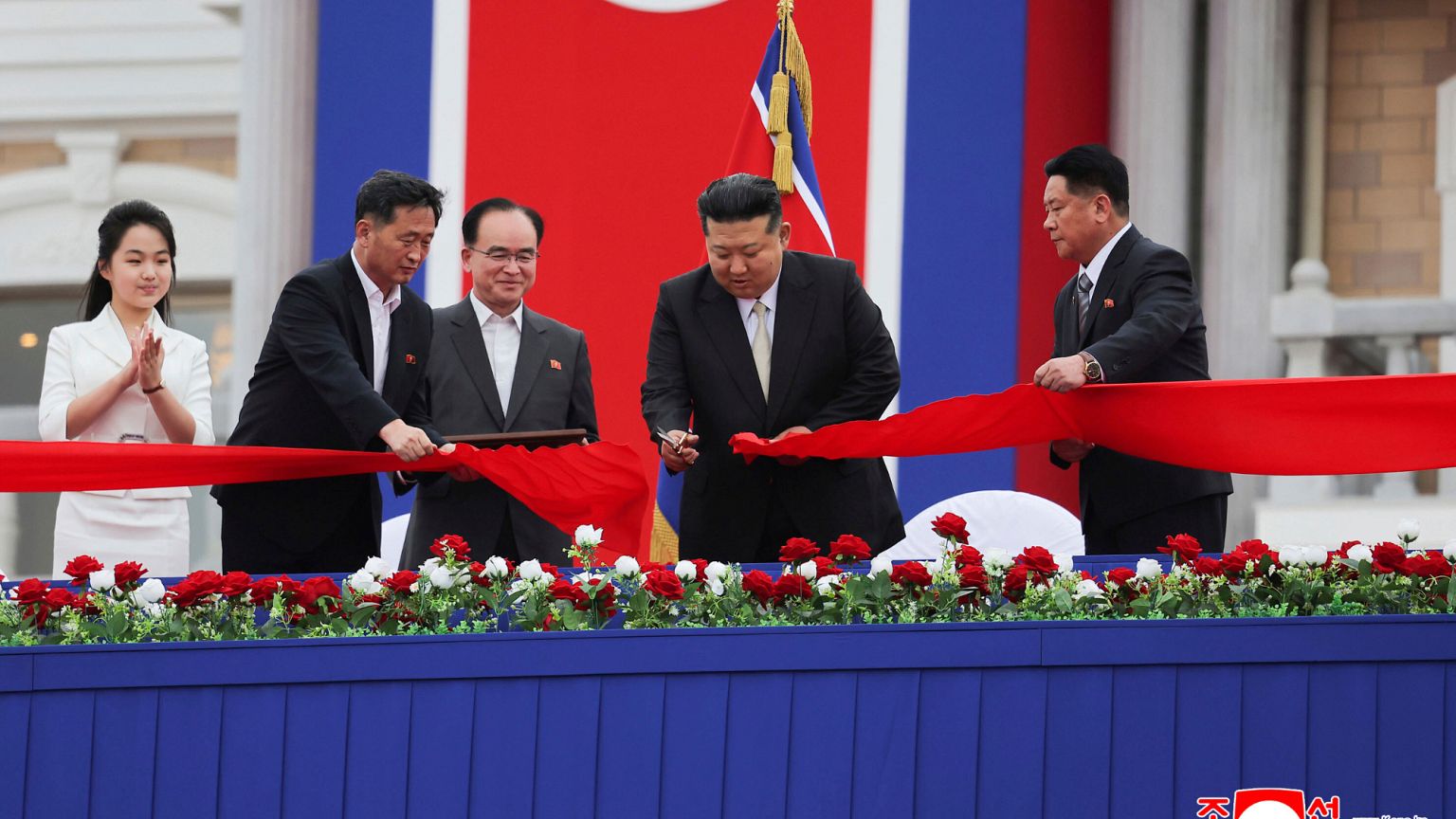
North Korea to open beach resort as Kim Jong-un eyes tourism

BEWARE; OVERHEAD MISSLES, SUBS AND MINES IN THE WATER, MINED BEACH
North Korean leader Kim Jong Un cuts the inaugural tape during a completion ceremony of the Wonsan-Kalma coastal tourist zone in North Korea.
Copyright AP Photo


By Rory Sullivan
Published on 

The Wonsan-Kalma coastal tourist zone can accommodate roughly 20,000 guests a year, according to state-run media.

North Korea will open a beach resort on its east coast next week in what authoritarian leader Kim Jong-un hopes will be the “first step” on the path to developing the country’s tourism sector.

The Wonsan-Kalma coastal tourist zone, which spans a 4-kilometre section of beach, comprises hotels, restaurants, shopping centres and a water park, according to state media.

Building began in the area in 2018, but was delayed by both construction problems and the COVID-19 pandemic.

The zone, which can accommodate roughly 20,000 guests a year, will receive its first domestic visitors on Tuesday, the Korean Central News Agency (KCNA) reported. It is not known when international tourists will follow.

At the resort’s grand opening on Tuesday, Kim was accompanied by his wife, Ri Sol-ju, and their daughter, Kim Ju-ae, who is his presumed heir.

Russian Ambassador Alexander Matsegora also attended as a special guest, the KCNA confirmed.

The state-run news agency reported Kim as saying that the completion of Wonsan-Kalma would be “one of the greatest successes this year”, adding that the site was “the proud first step” towards boosting the country’s tourism industry.

Analysts say Russian visitors will likely be granted access before other foreigners, given the close relationship between the two countries.

North Korea and Russia deepened their alliance last year by signing a mutual defence treaty. Pyongyang has also sent thousands of troops to its neighbour to help with its war against Ukraine.

“I think North Korea will soon accept Russian tourists, given the Russian embassy officials attended the ceremony,” said Lee Sangkeun, an expert at South Korea’s Institute for National Security Strategy, a think tank run by Seoul’s intelligence agency.

“There seems to be issues that North Korea hasn't yet resolved in its relations with China. But North Korea has put in too much money on tourism and plans to spend more. Subsequently, to get its money's worth, North Korea can't help receiving Chinese tourists,” Lee added.

Pyongyang’s foreign tourist ban, which was implemented in 2020 during the pandemic, still has not been fully lifted. However, Russian groups have been permitted to visit certain parts of the country.

FREE UNICORN RIDES FOR TOURISTS


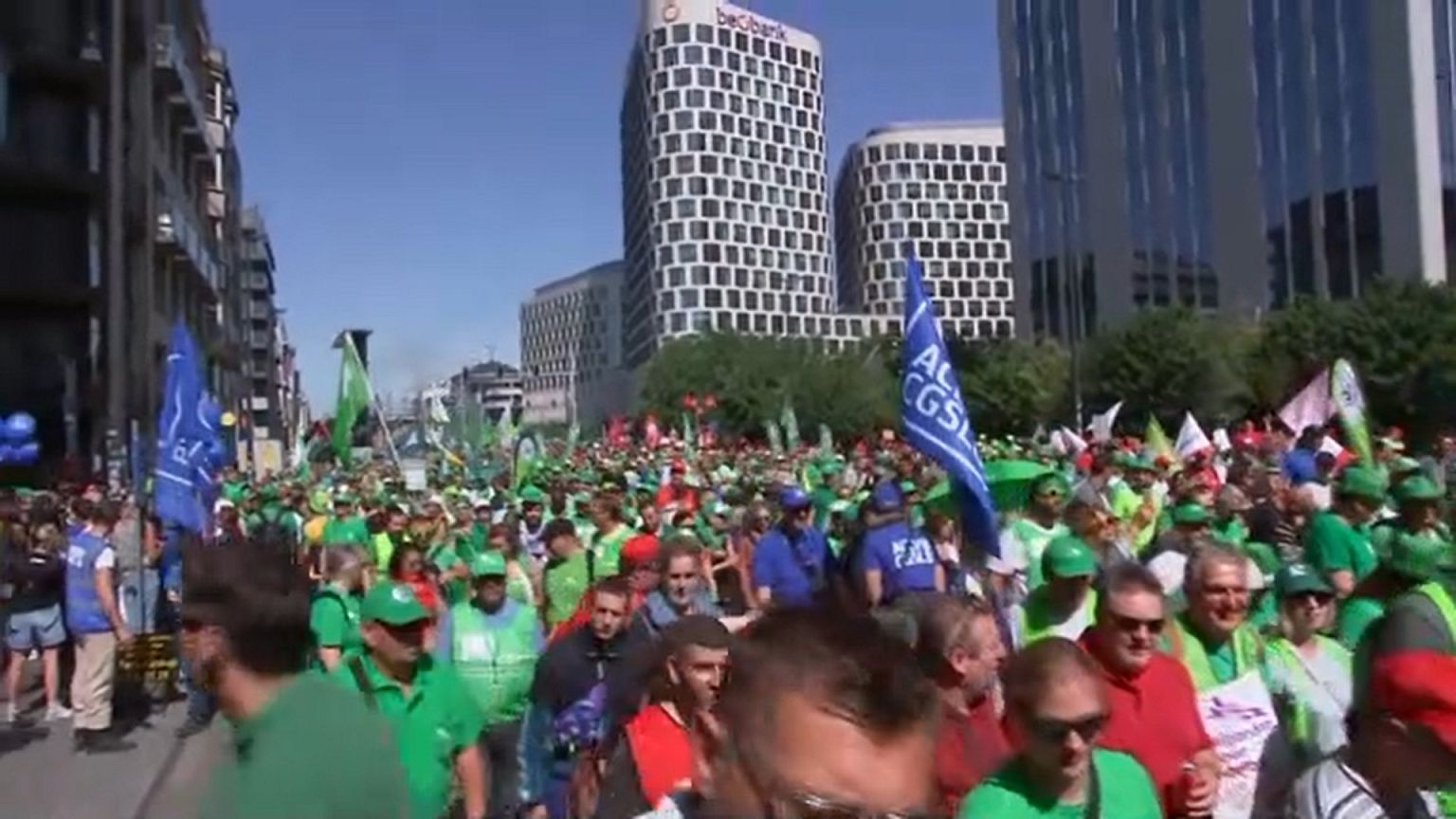
Flights cancelled in Brussels' airports amid general strikes over government plan to reform pensions

REFORM IS FRENCH FOR BRUTAL CUTS


Copyright EBU

By Malek Fouda
Published on 26/06/2025 -

Hundreds of flights were cancelled in Brussels’ Zaventem and Charleroi airports as protesters took to the streets for the fifth general strike of the year to oppose the federal government’s proposed cuts and reforms to pensions.

Transport services were severely disrupted in Belgium as general strikes took place nationwide over the proposed federal reforms and cuts to pensions.

Departure flights in Brussels Airport, also known as Zaventem, were cancelled as security and airport personnel participated in the strikes. The country’s main airport only received 103 incoming flights. 261 flights were originally set to land at the airport.

Further south of the city, Charleroi, a major European hub for low cost airlines like Ryanair, preventively cancelled all its flights on Wednesday, citing a lack of staff. All flights were grounded for the day.

“Passengers scheduled to fly via Charleroi on 25 June will be contacted by their airline for a rebooking or refund. We regret the impact of this national strike on our passengers' travel plans and apologise for any inconvenience caused,” said Charleroi Airport in a statement on their website.

“I have to wake up at six. I have to come here. I have to wait. I don't know what is going on. It's the first time for me, that kind of situation. And I'm a little bit shocked, to be honest,” said a traveller.

The coming days are expected to be extremely busy in Brussels’ two airports as airlines scrambled to rebook passengers affected by the strikes on the next flights. Zaventem airport expects to process around 90,000 passengers per day for the coming few days.

“Tomorrow will be a lot busier than initially anticipated 12,000 extra passengers and also Friday we have 2,000 more passengers than initially anticipated. So it will be busy days at the airport, also with the holiday exodus so is especially important to get to the airport on time,” said Ihsane Chioua Lekhli, spokesperson for Brussels Airport.

This is the fifth major strike to take place this year to oppose what protesters called unacceptable proposed reforms to the pension bill. The federal government had planned to scrap a special pension scheme and unify retirement age for all civil servants – to 66 – to make it in line with that of the private sector.

The proposal has enraged many workers and trade unions, who concurrently organised several major protests around the country.

“I feel very bad that half-way through our career they are going to reform our pension and that we are going to have less pension. And that we're probably going to buy tanks and other things to wage war with that money instead,” said a protester with the Christian union.

Flemish nationalist Bart De Wever was appointed prime minister in early February after months of coalition talks following Belgium’s federal elections in June of last year.

The government says pension reforms are needed as the rising life expectancy is causing costs to soar in a country already grappling with a large federal budget deficit which is in violation of European Union rules.

Belgium, a NATO member, has also pledged to increase defence spending to 5% of GDP by 2035, in line with the new NATO targets adopted on Wednesday in the summit in The Hague.


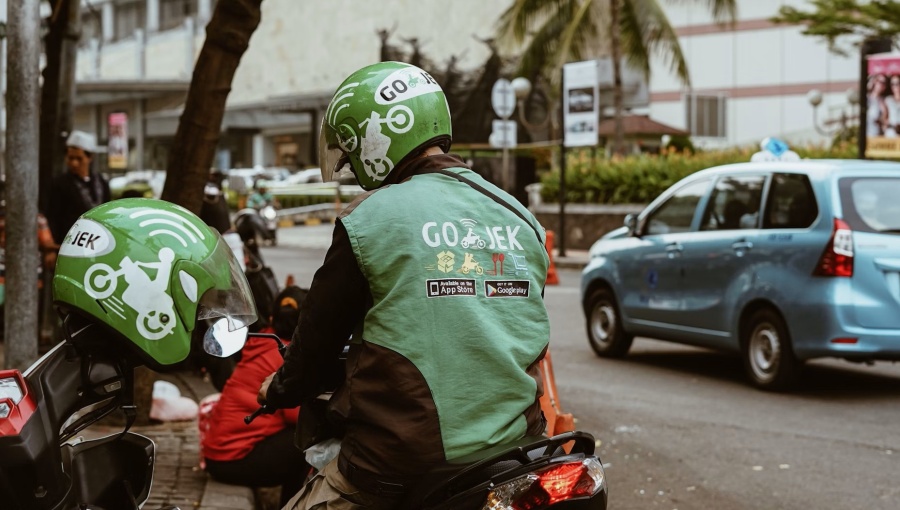
Grab-GoTo merger sparks monopoly fears, nationalist pushback in Indonesia

Grab-GoTo merger sparks monopoly fears, nationalist pushback in Indonesia
/ Afif Ramdhasuma - Unsplash
By bno - Surabaya Office June 26, 2025

The potential merger between Southeast Asia’s two ride-hailing giants, Grab and Indonesia’s GoTo Gojek Tokopedia Tbk, has triggered a wave of controversy, pushback from labour groups, and heightened scrutiny from Indonesian regulators. While the proposed deal promises operational efficiencies and improved financials, critics warn that it risks entrenching a monopoly, threatening livelihoods, and undermining national economic sovereignty.

Labour unions warn of monopoly and driver exploitation

The Indonesian Transport Workers Union (SPAI) has emerged as a vocal opponent of the merger, citing data from Euromonitor International suggesting that a combined Grab-GoTo entity would control 91% of Indonesia’s online transportation market and up to 85% across Southeast Asia. SPAI Chairperson Lily Pujiati pointed to Indonesia’s Law No. 5/1999, which prohibits monopolistic practices and unfair competition, warning that this deal would cross that legal threshold.

Lily also highlighted past consequences from the Gojek-Tokopedia merger that formed GoTo in 2021. She claimed that post-merger cost-cutting measures severely impacted driver earnings—citing an example where incentives for eight deliveries dropped from IDR30,000 ($1.84) to just IDR8,000, and bonuses for 15 deliveries fell from IDR100,000 to IDR37,500. SPAI is urging the Business Competition Supervisory Commission (KPPU) to launch a full investigation, and has called on lawmakers to fast-track legal protections for gig workers as part of the Manpower Bill, Tempo.co reports.

Regulatory ambiguity and corporate denials

While public speculation grows, both companies remain tight-lipped. Grab Indonesia’s Chief of Public Affairs, Tirza Munusamy, denied any formal discussions, claiming the rumors were “not based on verified information.” GoTo’s Corporate Secretary, R.A. Koesoemohadiani, also said there were “no agreements with any party,” despite reports that the firm had received multiple partnership offers, Tempo.co reports.

Meanwhile, KPPU Chair M. Fanshurullah Asa clarified that Indonesia’s post-merger notification system prohibits pre-emptive rulings before an official filing. However, the agency has launched an internal study to assess the potential impact of a deal and hinted at possible sanctions, including nullification, if the merger breaches competition law, according to reports by Indonesia Business Post.

Political pushback: national interests at stake

The merger’s nationalist implications have also struck a nerve. GoTo, which was born from two of Indonesia’s most celebrated startups, Gojek and Tokopedia, is widely seen as a symbol of national digital innovation. Yet its 2024 annual report shows 73.9% of its ownership is in foreign hands, including major stakes by SoftBank and China’s Alibaba.

Deputy House Speaker Sufmi Dasco Ahmad told Reuters that the government wants GoTo to be majority-owned by Indonesians, although he did not clarify how that might be achieved. Government sources cited by Reuters also indicated that any merger would require guarantees of job security, better driver benefits, and protections for consumers.

Financial motives vs public interest

Behind the scenes, the proposed deal appears financially motivated. According to Bloomberg, Grab is exploring a $2bn loan to acquire GoTo at a valuation of around $7bn. Grab, valued at $19bn, is narrowing its losses and reported $852mn in net cash from operations in 2024. In contrast, GoTo posted a $331mn loss last year, down from over $1bn in 2023. The company has made dramatic cuts to survive, spinning off Tokopedia and reducing operating expenses by 28% year-on-year, as reported by The Diplomat.

While Grab’s expansion in Indonesia has plateaued, its markets in the Philippines, Thailand, and Vietnam grew 24% in 2024, compared to just 6% in Indonesia. With profitability finally within reach, absorbing GoTo may seem like a strategic shortcut to reclaim growth and consolidate regional dominance.

The path forward: national dilemma or corporate necessity?

Despite corporate denials, reports from Reuters and The Diplomat suggest that talks are indeed underway, albeit complicated by government-imposed conditions and mounting public backlash. Grab’s recent $1.5bn convertible notes issuance, which cited acquisitions as a primary use of funds, further reinforces market suspicions.

Ultimately, the Indonesian government faces a tough balancing act: support for efficient private-sector consolidation versus the imperative to protect local workers, preserve economic sovereignty, and uphold fair market competition. Whether the merger proceeds or stalls, it has already reignited debate over how Indonesia navigates foreign capital, platform economics, and the rights of its digital workforce.


Will Ukraine's refugees go home after the war is over?

Will Ukraine's refugees go home after the war is over?
About a fifth of Ukraine's population fled the country after war broke out - mostly women and children. After three years of building a new life, only a fifth of them say they will go back to their old homes if the war ends. / photo: Maks Levin
By Ben Aris in Berlin June 26, 2025

Russia’s full-scale invasion in 2022 caused Europe’s biggest displacement crisis in decades as millions fled, most of them women and children. Three years later, there are still more than 5mn Ukrainians living abroad and only 20% say they will go home again should the war stop, the Financial Times reports.

The good news is that they have found jobs at much higher rates than is typical for refugees, according to Jean-Christophe Dumont, head of the international migration division at the OECD. In many host countries, Ukraine's refugee employment rate is twice what is typical for refugees from other countries.

Ukrainians’ employment rates appear particularly high in countries like Poland which was already working hard to attract Ukrainian economic migrants due to labour shortages in its booming economy. Faced with low wages at home, migrant workers were typically travelling to Poland for three months and sending back some $10bn a year in remittances, an important source of foreign exchange for the otherwise struggling economy. In contrast, Ukrainian refugee wages are much lower in places such as Norway, where there is a bigger language barrier, reports the FT.

But the EU worked to mitigate these problems and extended “temporary protection” status after the war started, which meant Ukrainians didn’t have to apply for individual asylum and could instantly access jobs, housing, schooling and social welfare. Many countries ban individual asylum seekers from other countries from working while their applications are processed.

And the refugees have spread out across Europe. Following the outbreak of war in February 2022, most made a dash for Poland, which took in over 1.5mn refugees. But once out of the war zone, those refugees started to work on finding more permeant accommodation and tackling the paperwork needs to settle in other EU countries. Initially, some 100,000 arrived in Germany, a favourite choice due to the high quality of life and generosity of the German government, but that number has climbed steadily to around 1.1mn today, while the Polish population has fallen back to around 950,000 now, according to the latest estimates in June.

However, after more than three years of war, the Ukrainian refugees are settling into their new homes and overcoming the language and documentation barriers to better jobs. According to the Centre for Economic Strategy, a Ukrainian think-tank, the proportion of refugees who said they had to save or borrow to afford clothing rose from 7% before the war to 28% by November 2022. But by December 2024, that share had decreased back to 7%, the FT reports.

Refugees a net economic plus

The inflow of refugees has been a boon to the Central European countries that took them in. The increased labour pool, willing to work at lower wages, has given a boost to the national economy. The National Bank of Poland estimated in 2023 that the influx of Ukrainian refugees contributed approximately 0.5 percentage points to GDP growth in both 2022 and 2023.

At the same time the more than a million refugees in Poland alone have also lifted consumption, further boosting the economy as they spent to set up new households. In 2022, the NBP and the Polish Economic Institute (PIE) estimated that Ukrainian refugees added between PLN 17bn and PLN 20bn ($4bn–$4.8bn) in additional household consumption to the Polish economy.

And the Polish government has gone out of its way to accommodate the new workers, which it wants to hang onto. By mid-2023, over 400,000 Ukrainian refugees had registered for work in Poland under simplified procedures.

Finally, the increased gross national product from the new labour comes with downward pressure on inflation as wage increases rise a lot more slowly in a large pool of refugees than if the same GNP increase was being driven by Poles.

The NBP noted that the arrival of millions of refugees in 2022 added modest inflationary pressure, especially in urban areas, as demand for housing jumped. In cities like Tbilisi in Georgia, the cost of renting an apartment has more than doubled as hundreds of thousands of both Russian and Ukrainian fled to the visa-free safe haven.

After the initial boost in inflation, as the refugees settled in, prices were then pushed down in the second year. By easing labour shortages, particularly in low- and medium-skilled sectors such as caregiving, retail, and hospitality, Ukrainian refugees helped to contain wage growth, which in turn mitigated broader inflationary pressures. PIE estimated in 2023 that the refugee-driven labour inflow had a slightly disinflationary effect over time, particularly as more refugees entered formal employment.

Quality workers, staying put

In addition to being cheap, Ukrainian refugees are skilled and well educated. A survey of EU countries found that roughly two-thirds of Ukrainian refugees have tertiary education and more than 40 per cent have a master’s degree or higher. “Not only are they more educated than most other refugee groups, they are more educated than many host country populations too,” the FT reports.

Pre-war, labour migration was a temporary phenomena: as bne IntelliNews reported at the time, typically a migrant worker planned on staying a mere three months in the host country to earn some cash and then return home.

Once the war started, in the first year three quarters of the refugees said they intended to return home if peace broke out. However, as each year passes more and more refugees are settling in for the long-term. As eight out of ten refugees are women with children, as their kids settle into new schools, master the local language and build up new lives, these families are becoming more and more reluctant to return to Ukraine, where the economy has been smashed by the Russian bombing and jobs and pay are few and low.

And it will probably stay that way for the foreseeable future. While the international community has donated or lent Ukraine a total of some €133bn to fund Kyiv’s war economy, so far there has been only limited commitments to funding Ukraine’s reconstruction.

In its latest assessment, the World Bank says that Russia has caused $528bn worth of damage, yet the International Financial Institutions (IFIs) only plan to disburse a total of $75bn over the next ten years to fund the recovery, according to a report by the Peterson Institute for International Economics (PIIE). Stay-away refugees will only make Ukraine’s recovery and rebuild harder to do.

As so many of the refugees are women, the impact on demographics will also be a disaster. As bne IntelliNews reported, Ukraine has the worst demographics in the world and the population has already fallen from some 41mn pre-war (excluding the Crimea) to an estimated 29-30mn now, but the UN estimates that the population will shrink further to 25mn by 2030 after births in 2023 fell to a historic low of 180,000, further undermining the recovery process. Ukraine’s replacement rate had already fallen to 1.1 children per woman in 2021 (you need 2.1 to keep a population size stable), but since the war started that rate has dropped off a cliff. Ukraine had one of the lowest birth rates on the planet and then a war broke out.

According to CES surveys, the share of refugees who say they definitely plan to return has dropped from 50% in November 2022 to 20 per cent in December last year.

The mitigating factor in having such a large diaspora is that remittances should surge well beyond the €10-14bn a year workers used to send home before the war, equivalent to 8-10% of GDP. That could, for example, cover the €20bn trade deficit with the EU Ukraine currently runs, but that won’t replace the missing consumers in the domestic market needed to drive a real “bounce back boom” the country needs to recover.


COMMENT: Black Sea becomes central to Europe’s evolving security order

COMMENT: Black Sea becomes central to Europe’s evolving security order
Thanks to the Russia-Ukraine conflict, the Black Sea has once again become central to Europe’s evolving security order. / bne IntelliNews

By bne IntelliNews June 23, 2025

As the war in Ukraine grinds on, the Black Sea is emerging as the key theatre in Europe’s long-term security contest with Russia, according to political analyst Dimitar Bechev of the Carnegie Endowment for International Peace.

“The balance of power in the Black Sea has shifted to Moscow’s disadvantage. Russia no longer enjoys the dominance it had after it seized Crimea in 2014,” Bechev wrote in a commentary published on June 19. “However, in the longer term, the power shift raises questions about the West’s containment strategy in the now-contested sea.”

Holding on to a piece of the Black Sea littoral is one of Ukraine’s strategic achievements thus far. The Ukrainian city of Kherson and Snake Island have been recaptured and Russian hopes of occupying the cities of Mykolayiv and Odesa have been thwarted.

While Russia continues missile and drone attacks on targets such as Odesa, the strategic balance in the Black Sea has shifted. “The Moskva, its flagship, was destroyed by Ukrainian missiles in April 2022. Kyiv has developed new unmanned sea-based weapons systems that have damaged critical infrastructure, notably the bridge across the Kerch Strait separating Crimea from the Russian mainland. In short, Russia is on the back foot, not about to cut off Ukraine’s access to the sea.”

After a blockade, Ukraine has regained its Black Sea access, an outcome with both strategic and commercial implications. “Odesa now ships out more grain than before the full-scale invasion,” Bechev noted. In 2024, exports from the port rose 15% in value and 30% in volume, Ukraine's main foreign exchange earner.

The Black Sea’s geopolitical significance, however, extends far beyond Ukraine. “It has become the fulcrum of Europe’s security order in three ways,” Bechev explained. “First, it is one of the key geographic arenas where the West is pulling its collective weight to check Russia… Second, the standoff highlights Turkey’s role as a swing actor… Third, it illustrates the uncertainty about US involvement in European security affairs.”

If there is a ceasefire, Russia will be eager to tip the balance of power in its favour. This is where Turkey comes in, says Bechev. It is both a Nato member and also friends with Moscow, but Ankara has gained from Ukraine’s successes and seen its trade balloon by ignoring sanctions on Russia.

Ankara will not be rushing to lift the ban on the passage of Russian warships it imposed in February 2022, in line with the 1936 Montreux Convention, which is venerated by the Turkish security establishment as a cornerstone of the state’s foreign policy. Turkey, which is hosting the ceasefire talks again, will make sure the Black Sea is a central part of any final agreement. Turkey has already gained from Ukraine’s success in curbing Russia’s maritime military might.

Turkey will be developing naval drones and other capabilities to maintain a favourable balance of power. The fall of the regime of former Syrian president Bashar al-Assad has restored the Black Sea’s role as a focal point in the complex Russia-Turkey dynamic, too.

Turkey is developing its own naval power, with drones and expanding its military capacity as part of its ambitions to extend its power in the region, while refusing to reopen the Bosporus and Dardanelles straits to Russian warships without a final ceasefire deal in the Ukraine conflict.

However, after three years of war, a tentative maritime ceasefire appears to be in effect, after the de facto victory of Ukraine over Russia, despite the fact that Ukraine has no navy to speak of. “Ukraine refrains from striking Russian commercial traffic… Russians keep clear of vessels carrying Ukrainian commodities,” Bechev observed. However, any permanent truce will likely hinge on broader strategic calculations.

Nato remains the security guarantor for its Black Sea members – Bulgaria, Romania and Turkey – with multinational deployments already in place. The EU, meanwhile, adopted a new Black Sea strategy in May, aiming to bolster regional resilience. Yet “few would welcome the prospect of a watered-down Nato,” Bechev cautioned.

Ultimately, despite European and Turkish efforts to shape the region’s future, “what happens next will continue to be decided on the banks of the Potomac,” Bechev concluded. “The United States remains the lynchpin that is likeliest to decide the terms of a settlement.”


Drawing the line: Indonesia settles long-running Aceh–North Sumatra dispute

Drawing the line: Indonesia settles long-running Aceh–North Sumatra dispute
/ Arto Marttinen - Unsplash
By bno - Jakarta Office June 25, 2025

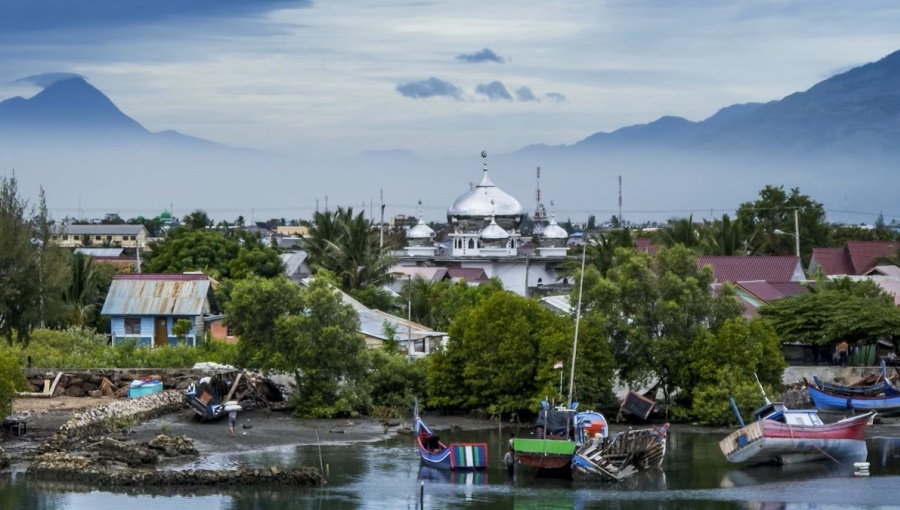
In June 2025, Indonesia settled a long-running territorial dispute between two of its westernmost provinces, Aceh and North Sumatra. At the heart of the row were four small islands off Sumatra’s coast, whose administrative status had been unclear for years.

Aceh, located at the northern tip of Sumatra, is a special autonomous province with the right to implement Sharia law. It has a distinct political identity shaped by decades of conflict, which ended with the 2005 Helsinki peace agreement. In contrast, North Sumatra, home to the major city of Medan, is a key economic hub and fully integrated into Indonesia’s standard administrative system.

The ownership of Pulau Panjang, Pulau Lipan, Pulau Mangkir Gadang, and Pulau Mangkir Ketek quickly became more than a bureaucratic issue. It touched on historical grievances, regional pride, and national unity.

Origins

The root of the disagreement stretches back over a decade. The four islands: Pulau Panjang, Pulau Lipan, Pulau Mangkir Gadang, and Pulau Mangkir Ketek, sit in a grey area between the jurisdictions of Aceh and North Sumatra. Despite their small size and sparse populations, they became the centre of a high-stakes territorial row, largely due to unclear marine boundaries and overlapping local records.

In 2008 and 2009, Indonesia’s National Geospatial Agency, as part of the Tim Nasional Pembakuan Rupa Bumi, conducted a verification and mapping initiative to classify islands across the country. Aceh reported 260 islands under its administration, but notably, the four disputed islands were not among them. North Sumatra, on the other hand, registered 213 islands, including the four in question.

By 2017, the Ministry of Home Affairs (Kemendagri) used this verification, along with spatial analysis, to tentatively designate the four islands as part of North Sumatra. However, Aceh later revised its coordinates, claiming the omission was due to clerical errors that had mistakenly referenced Pulau Banyak instead of the disputed territories.

Tensions rise

Matters escalated in early 2025 when Kemendagri issued a decree updating administrative island data. It formally placed Pulau Panjang, Pulau Lipan, Mangkir Gadang, and Mangkir Ketek under the administration of North Sumatra.

This move triggered backlash from Aceh. Residents and political figures condemned the decision, citing historical ownership, land use, and references in the 2005 Helsinki Peace Agreement - a landmark deal that ended decades of separatist conflict between the Free Aceh Movement (GAM) and the Indonesian government.

According to BBC News Indonesia, Suadi Sulaiman, Deputy Chairman of the Aceh Party and a former GAM member, warned that the decision could jeopardise the peace process and accused Jakarta of provoking tensions between the provinces.

Local sentiment and historical claims

Acehnese residents in Singkil district, particularly in the fishing community of Gosong Telaga, expressed concern over the reassignment. In an interview with BBC News Indonesia, a local named Yardi, aged 57, claimed to have personally helped establish boundary markers on Pulau Panjang and Mangkir Gadang over ten years prior. He pointed to the presence of government infrastructure, a cemetery, and past settlements as proof of Aceh’s longstanding ties to the islands.

Meanwhile, Teuku Rusli Hasan stated that the islands belonged to his family, referencing a 1965 land decree issued by the Aceh Agrarian Inspection Office. Local media also reported claims that other Acehnese residents possessed legal documents proving ownership of the disputed land.

The Aceh provincial government presented further evidence, including administrative documents from the 1960s, a government-built jetty, and memorial structures erected in 2008 and 2018. One key piece of evidence was a joint decision signed in 1992 by the then-governors of both provinces, with the Minister of Home Affairs acting as witness.

In response, the Ministry of Home Affairs defended its stance by pointing to the physical location of the islands, which lie close to the coastline of Central Tapanuli, North Sumatra. As the maritime boundary between the two provinces remains unsettled, proximity to land was used to determine jurisdiction.

Safrizal Zakaria Ali, Director General of Regional Administration at the Ministry, told Kompas that Aceh’s official 2008 submission to the national mapping team had not included the four islands. He also said that multiple inter-provincial meetings had taken place over the years but had failed to reach a resolution.

Mediation attempts

Then, on June 4, Governor Bobby Nasution of North Sumatra visited Banda Aceh alongside Central Tapanuli’s regent to meet Aceh’s Governor Muzakir Manaf. According to BBC News Indonesia, the meeting was brief as Muzakir was reportedly preoccupied. Nasution stated that the aim was to cool tensions and explore a shared solution.

Following earlier objections from Aceh in 2022, the central government agreed to a joint field survey between May and June. Despite these efforts, and each province presenting its own interpretation of historical boundaries, a consensus could not be reached.

On June 17, the government announced its decision through State Secretary Minister Prasetyo Hadi: the four islands would remain under the administration of North Sumatra. President Prabowo Subianto approved the resolution after reviewing reports and supporting data from the Ministry of Home Affairs.

The central government acknowledged both sides had submitted strong claims. However, Prasetyo stated the decision aimed to ensure clarity and maintain national unity.

What next?

Although the matter is now officially closed, policy experts note that the handling of the dispute highlights deeper flaws in the country’s decentralised governance structure. According to Armand Suparman from the Regional Autonomy Monitoring Committee (KPPOD), similar conflicts are likely unless the government develops clearer frameworks for resolving inter-regional claims.

As national focus intensified around the four islands, Governor Nasution shared his vision for joint resource management with Aceh, BBC Indonesia reports. He proposed that natural wealth, including tourism and resource extraction, be developed collaboratively to benefit both provinces. His remarks were quoted in BBC News Indonesia.

According to the Ministry of Energy and Mineral Resources (ESDM), offshore areas near Singkil are believed to contain substantial oil and gas reserves. This finding adds another layer to the dispute, with implications for future regional development.

However, the existence of oil and gas potential should not be used to justify actions that undermine community rights, environmental protection, or the cooperative relationship between Aceh and North Sumatra. Sustainable and inclusive management must remain at the heart of any plans moving forward.

 

Asia’s fruit boom: how the continent is feeding the world’s sweet tooth

Asia’s fruit boom: how the continent is feeding the world’s sweet tooth


Mangosteen / Art Rachen - Unsplash


By bno - Taipei Office June 24, 2025

Across Asia, from hillsides in Thailand to plantations in the Philippines, and highland farms in Vietnam, Asian fruit exports are booming, and global consumers are increasingly developing a taste for everything from mangoes and mangosteens to durians and dragon fruit.

Asia has long been a powerhouse in the global food trade, but in recent years, the continent’s share of global fruit exports has expanded significantly. Thanks to rising demand from the growing middle-classes in China in particular, the United States, the Middle East, and Europe coupled to improved cold chain logistics, Asian growers are now tapping into global markets more aggressively than ever before.

Diversity reigns

What sets Asia apart in the fruit trade is not just volume but variety. The region is home to a rich biodiversity of tropical and subtropical fruits, many of which are not grown widely enough outside the continent to make commercial. Thailand’s durians, Vietnam’s dragon fruit, and pineapples from Taiwan and the Philippines are prime examples. Each has become a flagbearer of its country’s export ambitions.

Thailand is the world’s largest exporter of durian, often dubbed the “king of fruits” for its pungent aroma and creamy texture. In 2023 alone, Thailand exported over $3.5bn worth of durian, with China accounting for more than 90% of that figure. To meet demand, Thai growers have expanded plantations and embraced improved grading and packaging techniques to maintain quality over long distances.

Meanwhile, Vietnam has seen a dramatic rise in dragon fruit exports. The fruit, known for its striking pink skin and speckled purple or white flesh, has become a symbol of Vietnam’s rise as a horticultural exporter. In 2022, dragon fruit made up nearly 40% of the country’s fresh fruit exports, with shipments reaching over 40 countries.

Indonesia is following a similar path in coconut production and export too while Taiwan is carving out a similar market in the mango, lychee and longan sectors.

The Philippines remains a global leader in pineapples and bananas. Its long-standing partnerships with multinational firms such as Dole and Del Monte have helped ensure steady supplies to North America, the Middle East, and East Asia. Despite competition from Latin American producers, Philippine bananas remain the top choice in markets like Japan, Taiwan and South Korea.

Global demand

Part of Asia’s fruit export success lies in its ability to align with evolving global preferences. Consumers in Europe and North America are increasingly seeking exotic and health-conscious foods. Tropical fruits, rich in fibre, vitamins, and antioxidants thus come under the spotlight. As awareness grows, so too does willingness to pay a premium for freshness, flavour, and novelty value.

China has emerged as a particularly important driver of this regional demand for freshness. As Chinese consumers become wealthier and more health-conscious, they are seeking high-quality imported fruit – seen as a status symbol by many. Cross-border trade deals and improved logistics have also made it easier for countries like Laos, Cambodia, and Malaysia to gain entry into the 1.4bn strong Chinese market.

Malaysia's Musang King durian, once a domestic delicacy is a classic case in point and has become a sought-after item in China, often sold at luxury prices in high-end supermarkets from Hong Kong in the south to Beijing in the north. Malaysia’s durian exports to China alone are now expected to exceed $500mn annually within the next few years.

Back end support

Behind the export surge lies a quiet transformation in logistics and infrastructure. Cold chain networks which keep fruit fresh from farm to market have expanded dramatically. Vietnam, Thailand, and the Philippines as well as Taiwan, Indonesia and elsewhere in Asia have all invested in refrigerated trucks, improved warehousing, and air freight capacity. This has allowed for more distant and time-sensitive markets to be reliably served.

Moreover, digital agriculture is playing a growing role. Farmers and cooperatives are increasingly using data tools to forecast demand, monitor crop health, and plan harvests. Even blockchain technology is gaining traction in some areas to help in verifying quality and traceability, especially for premium fruit categories destined for export.

Challenges ahead

Despite the success, Asian fruit exporters face a number of challenges. Climate change is an ever-present threat, with extreme weather patterns affecting crop yields and quality. Droughts, typhoons, and rising temperatures can devastate harvests, especially for water-intensive fruits like mangoes and bananas. Citrus fruit are similarly affected.

Market access remains another hurdle. Although bilateral agreements have opened doors, non-tariff barriers such as packaging regulations, and border inspections continue to limit market entry, particularly in the regulation loving EU and US markets. Some exporters also face competition from Latin American producers, who benefit from larger-scale farms and long-standing trade ties with the West.

Labour shortages and rural depopulation are pressing concerns as well. Many Asian countries are seeing young people leave agriculture for urban jobs, making it harder to maintain and expand orchards. Mechanisation is limited in many fruit sectors, particularly those relying on delicate hand-maintenance and harvesting techniques.

A fruitful future

Still, the future for Asian fruit exports looks bright. Rising demand, improved technology, and expanding trade routes all suggest continued growth in the years ahead. As markets diversify with the Gulf states, India, and even the richer parts of Africa showing increasing appetite for tropical fruits Asian producers are well positioned to lead.

Governments across the region are also stepping up. With support for farmer training, irrigation infrastructure, and trade facilitation, many are laying the groundwork for long-term export resilience. Ultimately, Asia’s fruit boom is about more than economics. It represents a region making its mark on the global palate one bite at a time.