UC Davis and Proteus Space to launch first-ever dynamic digital twin into space
University of California - Davis
image:
UC Davis graduate students Ayush Patnaik (left) and Adam Zufall (right) working on a payload that will travel into space this fall. The payload is a digital twin that will use AI software to measure the activity and predict the future state of the battery. Developed at the UC Davis Center for Space Exploration Research, it is a step towards fully autonomous spacecraft. The project is in collaboration with a company, Proteus Space.
view moreCredit: Mario Rodriguez/UC Davis
The Center for Space Exploration Research at the University of California, Davis, has partnered with Proteus Space to launch a US government-sponsored satellite into space with a custom AI-enabled payload in a brand-new, first-ever rapid design-to-deployment small satellite.
The team will launch the satellite and payload in October 2025 from Vanderberg, CA. From the time the project was fully approved, the design and launch will occur within an unprecedented 13 months. (The normal pace for small satellites is often measured in years.)
The UC Davis-designed payload, developed by Professor of Mechanical and Aerospace Engineering Stephen Robinson’s Human/Robotics/Vehicle Integration and Performance Laboratory, or HRVIP Lab, is a dynamic digital twin that models the current condition and predicts the future condition of the spacecraft’s power system. The novel aspect of this payload is that the system-state model is running in real time onboard the spacecraft, instead of in ground-based mission control.
“The spacecraft itself can let us know how it’s doing, which is all done by humans now,” said Adam Zufall, a graduate student in the HRVIP Lab who is overseeing the UC Davis side of the project.
The satellite, which includes multiple commercial and research payloads, will monitor its own health in space using sensors that assess voltage and measurements of the batteries it is running on. The digital twin software will continually analyze the health and charge capacity of the battery. Using artificial intelligence, the digital twin will be aware of its own state and learn to predict its future state.
“It should get smarter as it goes,” said Robinson, “and be able to predict how it’s going to perform in the near future. Current satellites do not have this capability.”
Besides the team at Proteus, Zufall and Robinson are working with Associate Professor of Mechanical and Aerospace Engineering Xinfan Lin, whose research specializes in intelligent battery management systems. The team also includes mechanical and aerospace engineering Ph.D. students Jackson Fogelquist and Ayush Patnaik, and Ancha Prashanth, a master’s student in computer science.
The satellite, which is about the size of a half refrigerator, will launch from Vandenberg Space Force Base in California in October. It will settle into low Earth orbit and operate for up to 12 months. After three years, the satellite will naturally fall back to Earth, burning up in the atmosphere.
Method of Research
News article
Subject of Research
Not applicable
By AFP
June 26, 2025

(L-R) ISRO astronaut Shubhanshu Shukla, Hungarian astronaut Tibor Kapu, US astronaut Peggy Whitson and Polish astronaut Slawosz Uznanski-Wisniewski posed for a picture ahead of the Axiom-4 mission - Copyright AFP -
Issam AHMED
A US commercial mission carrying astronauts from India, Poland and Hungary docked with the International Space Station on Thursday, marking the first time in decades that these nations have sent crew to space.
Axiom Mission 4, or Ax-4, lifted off early Wednesday from NASA’s Kennedy Space Center in Florida aboard a brand-new SpaceX Crew Dragon capsule riding a Falcon 9 rocket.
Onboard are pilot Shubhanshu Shukla of India; mission specialists Slawosz Uznanski-Wisniewski of Poland and Tibor Kapu of Hungary; and Commander Peggy Whitson of the United States, a former NASA astronaut now with Axiom Space, which organizes private spaceflights.
The capsule, the fifth and final Dragon in the SpaceX fleet, was christened “Grace” after reaching orbit.
It made “soft capture” with the orbital lab Thursday at 6:31 am Eastern Time (1031 GMT).
“We are honored to be here, thank you,” Whitson said over a live stream of the docking.
The crew will complete docking procedures and spend about 14 days aboard the station, conducting some 60 experiments — including studies on microalgae, sprouting salad seeds, and the hardiness of microscopic tardigrades in space.
The last time India, Poland or Hungary sent people to space, their current crop of astronauts had not yet been born — and back then they were called cosmonauts, as they all flew on Soviet missions before the fall of the Iron Curtain.
Shukla is the first Indian to reach space since Rakesh Sharma, who flew to the Salyut 7 station in 1984 as part of an Indo-Soviet mission.
India’s space agency, ISRO, sees this flight as a key step toward its first independent crewed mission, slated for 2027 under the Gaganyaan (“sky craft”) program.
“What a fantastic ride,” Shukla said in Hindi after liftoff. “This isn’t just the start of my journey to the International Space Station — it’s the beginning of India’s human space program.”
Each country is funding its astronaut’s seat.
Poland has spent 65 million euros for its astronaut’s flight, according to the Polish Space Agency. Hungary announced a $100 million deal with Axiom in 2022, according to spacenews.com, while India has not officially commented.
The Ax-4 launch comes after technical issues delayed the mission, originally slated for early June.
It also follows an online spat between US President Donald Trump and SpaceX chief Elon Musk, the world’s richest person and, until recently, Trump’s ally and advisor.
Trump threatened to yank SpaceX’s federal contracts — worth tens of billions of dollars — prompting Musk to threaten an early retirement of Dragon, the only US spacecraft currently certified to carry astronauts to the ISS.
Musk walked back the threat a few hours later and in the days that followed continued to deescalate, stating on X that he had gone “too far.”
Any falling out between SpaceX and the US government would be massively disruptive, given NASA and the Pentagon’s reliance on Falcon 9 and Falcon Heavy to send up crew, cargo, satellites and probes.
But for now, analysts believe both sides are too entangled to risk a serious break.
The Vera C. Rubin Observatory unveils the first images of the sky obtained with the world’s largest camera
image:
This image combines 678 separate images taken by NSF-DOE Vera C. Rubin Observatory in just over seven hours of observing time. Combining many images in this way clearly reveals otherwise faint or invisible details, such as the clouds of gas and dust that comprise the Trifid nebula (top right) and the Lagoon nebula, which are several thousand light-years away from Earth.
view moreCredit: © NSF-DOE Vera C. Rubin Observatory
The NSF-DOE Vera C. Rubin Observatory in Chile has unveiled the very first “mega” images of the cosmos obtained thanks to the extraordinary features and wide-field view of its LSST camera—the largest in the world. The camera took nearly two decades to build and involved hundreds of scientists across the globe, including a number of CNRS teams. The world-wide First Look unveiling event is held on 23 June at the National Academy of Sciences in Washington, D.C.
The impressive, car-sized Legacy Survey of Space and Time camera is like nothing seen before: thanks to its 3200-megapixel resolution and the wide field of view of the telescope at the Vera C. Rubin Observatory1, the LSST camera can photograph 45 times the area of the full moon in the sky with each exposure. The high-definition images, which use six different colour filters, capture the entire southern night-sky in just three nights of shooting. One year after its journey from the United States to the Vera C. Rubin Observatory in Chile, the first “mega” images will be unveiled on 23 June at a press conference held at the National Academy of Sciences in Washington, D.C. This worldwide premiere is the culmination of 25 years of research and construction by international teams, including several research teams from CNRS2.
The exceptional quality of these initial images show that the telescope is ready to start its mission: to scan the entire southern hemisphere sky by taking 1,000 high-definition photographs using six colour filters, every three nights for the next ten years. Studied end-to-end, these scans will provide a high-definition, four-dimensional film of the evolving processes of the Universe. The ten-year project will also generate unprecedentedly rich and profound views of the southern sky and reveal the faintest and furthest-away objects of the cosmos. For the first time on a large scale, this vast survey will reveal the slightest changes in the Universe, from nearby celestial phenomena, such as asteroids and comets, to very distant ones, like supernovae. The project paves the way for major advances in cosmology in dark matter and dark energy, as well as our understanding of our solar system.
CNRS: a key component of this international project
The project is funded by the U.S. Department of Energy and the U.S. National Science Foundation (NSF). The SLAC National Accelerator Laboratory built the Legacy Survey of Space and Time (LSST) camera. As historic partners, SLAC called on CNRS scientists to help build the focal plane of the camera and help design and build its robotic filter exchange system, which will automatically change the camera’s colour filters—each weighing 24-38 kgs—5-15 times per night. By measuring the quantity of light emitted by night-sky objects, and by converging the images taken through the different filters, it will make it possible to precisely determine their position and distance in relation to the Earth. Other CNRS scientists helped develop the computing infrastructure for the quantitative and qualitative data analysis of the gigantic trove of images that will be collected from the 17 billion observable stars and 20 billion observable galaxies. The goal of this painstaking effort is to create the most comprehensive catalogue of data on the universe.
Twenty terabytes of collected data will be stored every night. In France, the France Data Facility (IN2P3) (CNRS) in Lyon will store and process 40% of the collected raw image data. This data will be released to scientists around the world at regular intervals to foster groundbreaking discoveries and breakthroughs over the coming decades.
Why develop a ground-based telescope?
Even with 25 space telescopes currently in use, ground-based observation remains essential in documenting the Universe in its entirety. Larger and more sensitive, ground-based instruments produce higher-precision exposures as a result. These instruments also record larger volumes of data than space-based ones, as the remote downloading of data from the latter remains a complex process. Last but not least, ground-based telescopes can also be repaired and improved with increasingly efficient tools. With this state-of-the-art camera, the Vera C. Rubin Observatory is the latest addition to the fifty or so structures operating equipment and infrastructure to observe the universe from Earth and space.
Photograph of the camera with one of the colour filters in position.
Credit
© Olivier Bonin/SLAC National Accelerator Laboratory.
Notes :
- Named after the American astronomer Vera C. Rubin, who was the first to establish the presence of dark matter in galaxies.
- From the IN2P3 Computing Centre (CNRS), the Marseille Particle Physics Centre (CNRS / Aix-Marseille Université), the Astroparticle and Cosmology Laboratory (CNRS / CEA / Université Paris Cité / Observatoire de Paris), the Annecy Laboratory of Particle Physics (CNRS / Université Savoie Mont-Blanc), the Clermont Auvergne Physics Laboratory (CNRS / Université Clermont Auvergne), the Subatomic Physics and Cosmology Laboratory (CNRS / Université Grenoble Alpes), the Nuclear Physics and High Energy Laboratory (CNRS / Sorbonne Université / Université Paris Cité), the Institute of Physics of the 2 Infinities in Lyon (CNRS / Université Claude Bernard Lyon 1), the Laboratory of the Physics of the 2 Infinities Irène Joliot-Curie (CNRS / Université Paris-Saclay / Université Paris-Cité), and the Montpellier Universe and Particles Laboratory (CNRS / Université de Montpellier).
'How much longer?' Musk rebuked as exploded rocket debris kills marine life
Robert Davis
June 26, 2025RAW STORY
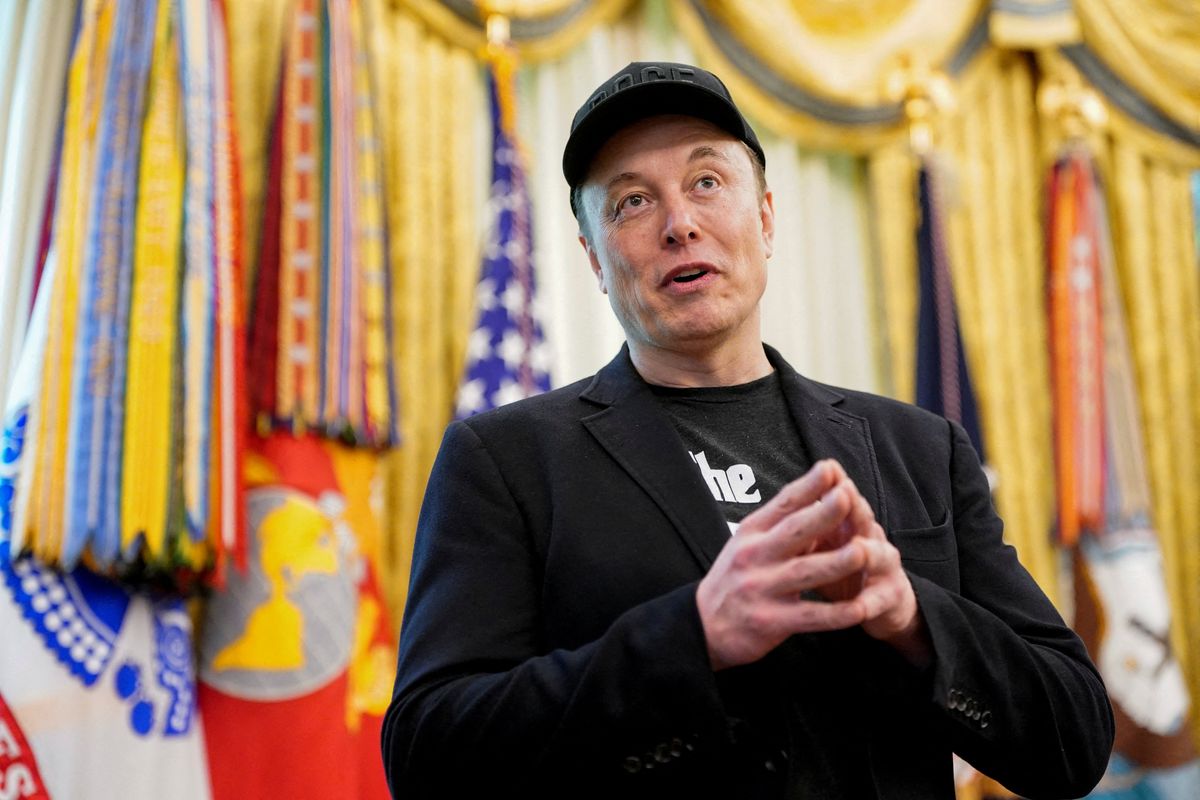
Elon Musk speaks during a press conference with U.S. President Donald Trump (not pictured), at the White House in Washington, D.C., U.S., May 30, 2025. REUTERS/Nathan Howard/File Photo
A Mexican professor on Thursday chided SpaceX CEO Elon Musk after debris from a recent rocket explosion caused fish, turtles, and sea dolphins to die.
In early June, one of Musk's rockets exploded while its engines were being fueled ahead of a test firing. The debris from the explosion rained down on the northern Mexican state of Tamaulipas and enflamed tensions between Mexican President Claudia Sheinbaum and Musk.
María Elena Álvarez-Buylla Roces, who teaches molecular genetics at the National Autonomous University of Mexico, called the event "unacceptable" in a post on X, the social media platform Musk owns.
“How much longer will the greed of a few be allowed to marginalize the many and put life and our planet at risk or in peril of destruction?” the post reads.
The explosion happened at a time when Musk and SpaceX are preparing for a potential mission to Mars in 2026. However, technical issues have hampered the company's last few attempted launches.
For instance, a SpaceX rocket exploded minutes after lift-off in March, causing the Federal Aviation Administration to halt air traffic in parts of Florida. In May, another rocket broke apart, causing damage to at least one vehicle in the island nation of Turks and Caicos.
Mexican President Sheinbaum has said she will launch an investigation into the explosion and the debris field left behind.
“We are reviewing everything related to the launching of rockets that are very close to our border,” Sheinbaum told The New York Times at a recent news conference, adding that her office will file " any necessary claims" against Musk and SpaceX as a result of the investigation.
Robert Davis
June 26, 2025
Elon Musk speaks during a press conference with U.S. President Donald Trump (not pictured), at the White House in Washington, D.C., U.S., May 30, 2025. REUTERS/Nathan Howard/File Photo
A Mexican professor on Thursday chided SpaceX CEO Elon Musk after debris from a recent rocket explosion caused fish, turtles, and sea dolphins to die.
In early June, one of Musk's rockets exploded while its engines were being fueled ahead of a test firing. The debris from the explosion rained down on the northern Mexican state of Tamaulipas and enflamed tensions between Mexican President Claudia Sheinbaum and Musk.
María Elena Álvarez-Buylla Roces, who teaches molecular genetics at the National Autonomous University of Mexico, called the event "unacceptable" in a post on X, the social media platform Musk owns.
“How much longer will the greed of a few be allowed to marginalize the many and put life and our planet at risk or in peril of destruction?” the post reads.
The explosion happened at a time when Musk and SpaceX are preparing for a potential mission to Mars in 2026. However, technical issues have hampered the company's last few attempted launches.
For instance, a SpaceX rocket exploded minutes after lift-off in March, causing the Federal Aviation Administration to halt air traffic in parts of Florida. In May, another rocket broke apart, causing damage to at least one vehicle in the island nation of Turks and Caicos.
Mexican President Sheinbaum has said she will launch an investigation into the explosion and the debris field left behind.
“We are reviewing everything related to the launching of rockets that are very close to our border,” Sheinbaum told The New York Times at a recent news conference, adding that her office will file " any necessary claims" against Musk and SpaceX as a result of the investigation.
Mexico president threatens to sue over SpaceX rocket debris
By AFP
June 25, 2025

SpaceX's launch facility is located on the south Texas coast near the Mexican border - Copyright AFP/File CHANDAN KHANNA
Mexican President Claudia Sheinbaum on Wednesday threatened legal action over falling debris and contamination from billionaire Elon Musk’s SpaceX rocket launches across the border in the United States.
Mexico’s government was studying which international laws were being violated in order to file “the necessary lawsuits” because “there is indeed contamination,” Sheinbaum told her morning news conference.
Last week, a SpaceX Starship rocket exploded during a routine ground test at the Starbase headquarters of Musk’s space project on the south Texas coast near the Mexican border.
The explosion — which sent a towering fireball into the air — was the latest setback to Musk’s dream of sending humans to Mars.
Mexican officials are carrying out a “comprehensive review” of the environmental impacts of the rocket launches for the neighboring state of Tamaulipas, Sheinbaum said.
The US Federal Aviation Administration approved an increase in annual Starship rocket launches from five to 25 in early May, stating that the increased frequency would not adversely affect the environment.
The decision overruled objections from conservation groups that had warned the expansion could endanger sea turtles and shorebirds.
A lawsuit would be the latest legal tussle between Mexico and a US corporate giant.
In May, Sheinbaum’s government said it had sued Google for renaming the Gulf of Mexico the “Gulf of America” for Google Maps users in the United States following an executive order by President Donald Trump.
EU aims to create a ‘competitive’ single market for space services
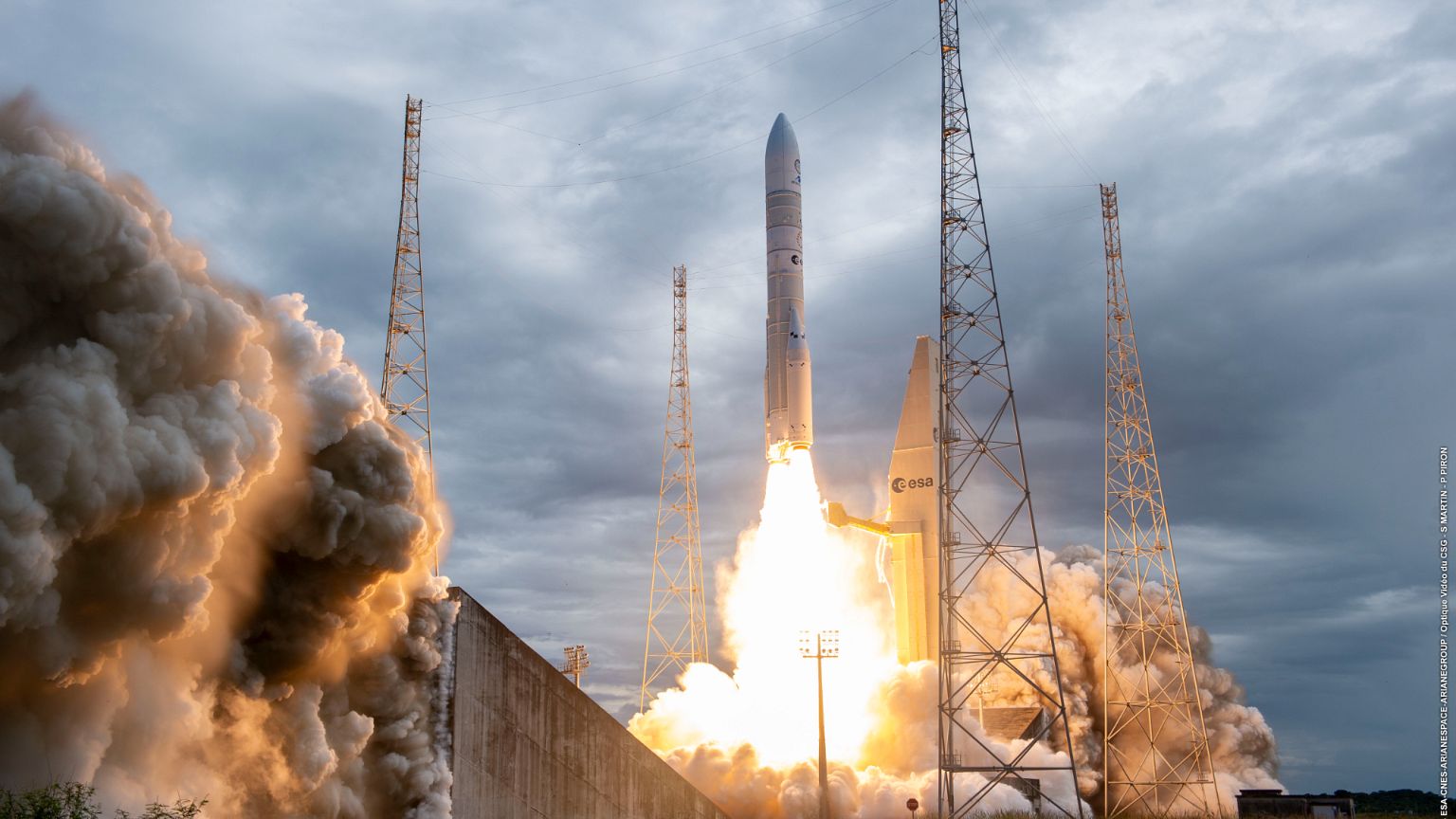
The initiative comes as Europe risks further lagging behind global competitors such as the US and China. It would apply to EU and non-EU operators—excluding military activities—and it foresees support for small and medium-sized enterprises.
The EU Commission is aiming to create a competitive single market for space services and data by cutting red tape, protecting space assets and ensuring a level playing field for all businesses, in a new EU Space Act proposed on Wednesday.
“The Space Act will allow us to grow in space,” EU Commissioner for Defence and Space Andrius Kubilius told reporters. “Growth in space means growth and jobs on Earth and in space,” he added.
The regulation also seeks to address Europe’s fragmented space rules by harmonising national measures to make the bloc’s space market cleaner, safer, and more resilient.
“This fragmentation is bad for business, bad for competitiveness, bad for our future in space,” Kubilius argued, stressing that Europe wants a stronger stake in the global space economy.

In 2023, the global space economy was valued at €572 billion and is expected to grow by around 9% annually until 2035, potentially reaching €1.6 trillion.
So far, however, the space market has largely depended on public investment and institutional programmes—areas where Europe risks falling behind.
According to the European Space Agency (ESA), Europe accounted for 11% of global public space funding in 2023 (€12 billion), while the US contributed 64% (over €65 billion) and China 12%.
Europe’s share of global private investment follows a similar pattern, with European investments totalling €980 million compared to the €3.6 billion invested by the US.
To support the development of Europe’s industrial and economic presence in space, the EU executive also presented on Wednesday “A Vision for the European Space Economy,” a communication outlining 40 proposed measures intended to help the bloc expand its participation in the global space market.
Space increasingly 'congested and contested', says Kubilius
“The European industry, although very competitive, can only capture one third of the accessible upstream market and one fifth of the downstream market,” a senior EU official said ahead of the proposal.
The space economy is typically divided into three key areas: the upstream segment, which covers research, development, manufacturing, and launches; the downstream segment, focused on applications using space-based technologies; and a derived market, which includes all economic activities benefiting from space advancements, such as photovoltaic panels.
Kubilius also warned that space is becoming increasingly congested and contested. “It’s time to put in place rules of the road for space to prevent damage and disasters and protect space services,” he said.
Over the next decade, an estimated 50,000 new satellites and around 140 million pieces of debris will enter orbit, according to EU figures.
Space assets are increasingly exposed to threats, both intentional and accidental. Kubilius pointed to rising cyber and physical risks.
“We know there is continuous radio-frequency interference with our systems, jamming, and spoofing. We know there are many cyberattacks. So, with our Space Act, we will increase the resilience of our satellites and space operations,” he said.
If adopted, the regulation would apply to EU and national space assets, as well as non-EU operators providing services in the European market. However, it would not cover military activities.
To ease the transition, the Commission plans to provide support to help businesses—especially small and medium-sized enterprises—manage any costs tied to compliance.
MEP Christophe Grudler (France/Renew), co-chair of the Parliament's intergroup on sky and space, welcomed the proposal as an important first step toward building a space industry on an EU scale. "This, together with the upcoming EU Space Programme, will set the EU into orbit for the global space race,” he said in a press release.
The Space Act also includes steps to boost the EU’s presence in the satellite launcher market, which is currently dominated by Elon Musk’s SpaceX. One measure would make a single launch authorisation valid across the entire EU.
"This is a strong signal to encourage innovation and strengthen the competitiveness of the European space sector, which we want to see grow," Grudler concluded.
After Elon Musk’s Starlink, France’s Eutelsat is the second-largest low Earth orbit (LEO) satellite company in the world. Some Europeans see it as a solution to reining in Musk’s influence and reducing dependence on the US, even though homegrown technologies lag far behind the competition.
Issued on: 25/06/2025
FRANCE24
By: Joanna YORK

Two days after Russia began its invasion of Ukraine in February 2022, the amount of damage already done to internet and communication infrastructure left Ukrainian leaders with one option: tweeting a direct plea to SpaceX owner Elon Musk to activate his satellite internet service, Starlink.
Starlink is the world’s largest low Earth orbit (LEO) satellite constellation, providing internet to around 130 countries with over 6 million users.
LEO satellites operate just a few hundred kilometres above the Earth – at lower altitudes than geostationary satellites – and play a crucial role in telecommunications, space exploration and defence as they can transmit data extremely efficiently and provide high-speed internet even in remote locations.
In Ukraine, Starlink has become a lifeline, enabling civilians, military and the government to stay connected, despite ongoing attacks by Russia.
“Starlink technologies have changed this war," said Ukrainian Minister of Digital Transformation Mykhaïlo Fedorov, in November 2022.
But use of the service comes with caveats, largely defined by Musk, who has threatened to withdraw access in Ukraine multiple times.
In 2022, Musk denied requests from Ukraine to extend coverage into Crimea ahead of a planned drone attack on the Russian fleet, reportedly saying Ukraine was “going too far” by seeking to use Starlink satellites for the mission.
'A matter of sovereignty'
For some European leaders, this dynamic highlights the risks of relying on US tech to ensure European security, which have only increased since the January inauguration of isolationist President Donald Trump.
Faced with a pressing necessity to develop home-grown alternatives, France on Friday announced a $1.55 billion investment in European telecommunications company, Eutelsat, making the French state the company’s largest shareholder.
"It's a matter of sovereignty," French President Emmanuel Macron said as he warned that Europe was on the verge of being “completely” squeezed out of the LEO satellite constellation market.
"SpaceX has disrupted the market, Amazon is also getting involved. China is not far behind, and I think we all need to be very clear-headed," Macron said. "Eutelsat is the only non-American and non-Chinese player with these low-earth orbit constellations and such a wide range of services.”
Britain also holds a 10.9 percent share in Eutelsat, and Germany now pays for Ukraine to access the service.
In April 2025, Berlin set up 1,000 Eutelsat terminals in Ukraine with the goal of providing an alternative, rather than a replacement for the 50,000 Starlink equivalents in the country.
“When you're in a situation as you see in Ukraine today, you want to have all your options open,” Eutelsat’s chief executive, Eva Berneke, told Reuters.
Playing catch-up
With around 650 satellites in orbit, Eutelsat is the only other largescale LEO satellite provider in the world, but still lags far behind Starlink’s 7,500 units.
Closing the gap between the two companies is more than a matter of financial investment.
“Although Europe is trying to catch up, it's a way behind in terms of the technology,” says Barry Evans, professor of satellite communication at the University of Surrey, UK.
In the US, Starlink is already providing a service that beams internet direct to handheld devices – a capability that does not yet exist in Europe.
While Eutelsat provides a more reliable service as its terminals must be professionally installed, Starlink’s satellites are located at lower altitudes, thereby reducing latency.
And as much as European leaders see Musk as a liability, Starlink’s biggest advantage may be its owner. “Starlink is part of the Musk empire and very much involved with SpaceX,” Evans says. “Musk produces the satellites. He produces the launchers. He produces the terminals. The whole system is vertically integrated.”
Synergy between SpaceX and Starlink means innovations such as the partially reusable Falcon launcher can be used to rapidly scale up the number of satellites Starlink sends in to space.
The company aims to launch some 42,000 satellites into its LEO constellation overall.
Transforming Eutelsat into a direct competitor is, currently, a tall ask. Evans says, “it’s difficult to see how Europe can really catch up on that”.
