Sunday, December 28, 2025

CRIMINAL CAPITALI$M

Cambodian tycoon Chen Zhi linked to scams: Authorities to seize more assets in Singapore

On Oct 14, the US and Britain announced sweeping sanctions on Cambodian businessman Chen Zhi and Prince Group, as well as their known associates.


PHOTO: PHNOM PENH POST/ASIA NEWS NETWORK

Dec 29, 2025


SINGAPORE - More assets in Singapore linked to Cambodian businessman Chen Zhi and his firm, Prince Group, may be seized after their existence was disclosed in a court hearing.

The Straits Times understands that the Commercial Affairs Department (CAD) is looking to seize cheques of more than $3.7 million, bonds valued at over US$200,000 (S$257,000), and security deposits worth $362,200.

A former employee of Chen’s Singapore-based family office, DW Capital, had filed an application on Nov 18 for the release of funds from the family office, according to affidavits seen by ST.

The application in court was filed by the former human resources manager of DW Capital on behalf of the firm’s sole remaining director, Karen Chen Xiuling.

The former HR manager is understood to have made the application for the release of funds from DW Capital, high-value warehouse storage firm Capital Zone Warehousing, car financing firm Skyline Investment Management, and IT consultancy business Citylink Solutions.

All four firms are linked to the 38-year-old Fujian-born Chen, either directly or through his British Virgin Islands-registered family office, Global Treasure Development.

DW Capital, Capital Zone Warehousing and Skyline Investment Management are among firms sanctioned by the US Treasury. Citylink Solutions is not on the list.
Sydney could see army patrols after Bondi attack, New South Wales Premier says

ISLAMOPHOBIC WAR


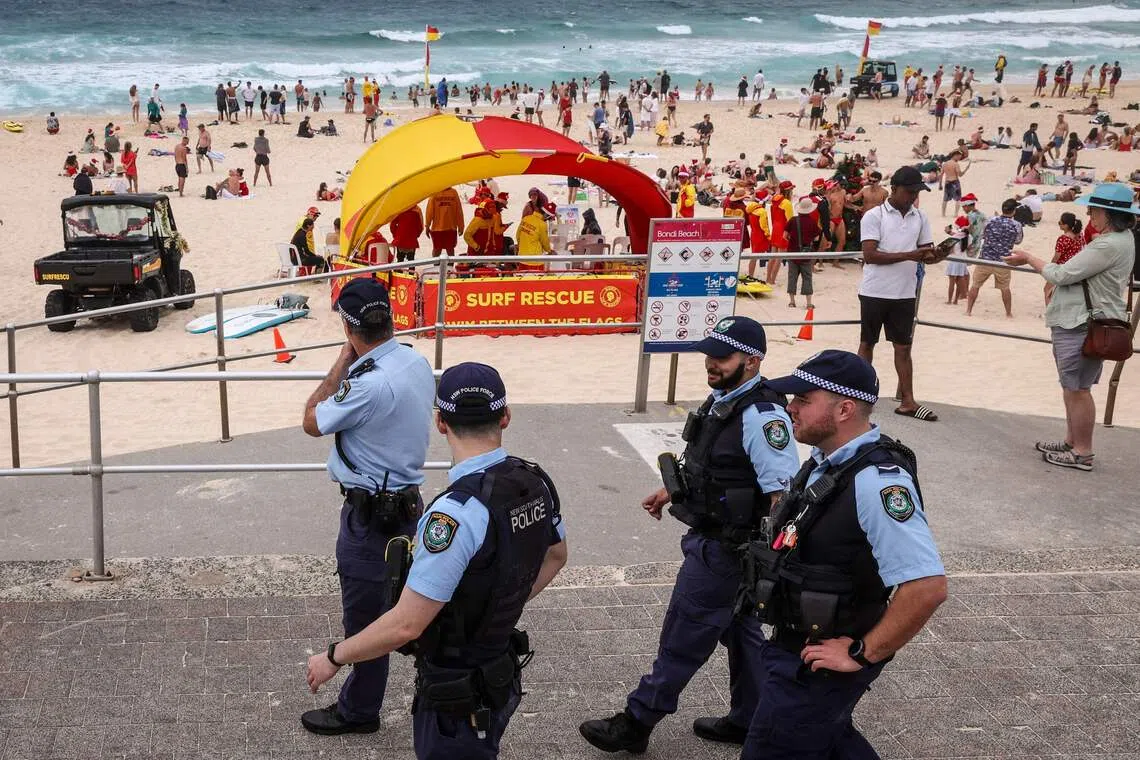
Police officers patrolling Bondi Beach in Sydney on Dec 25.
PHOTO: AFP

Updated Dec 28, 2025

SYDNEY – Australia’s most populous state will tighten security across its capital Sydney following a deadly attack at Bondi Beach in December, with the authorities leaving open the possibility of military support as the country reassesses its counter-terrorism posture.

New South Wales Premier Chris Minns said on Dec 28 that residents should expect to see more police officers carrying long-arm firearms through New Year’s Eve and beyond as officials review security arrangements.

The remarks come two weeks after the Bondi terrorist attack, in which

two ISIS-inspired gunmen killed 15 people at a Hanukkah celebration.

Officials have called the Dec 14 massacre, carried out by a father and son, Australia’s worst terrorist attack. The father was killed in an ensuing shoot-out, while the son – identified as 24-year-old Naveed Akram – has been charged with 59 offences including murder and terrorism.

Mr Minns said the government was considering measures that include the potential deployment of troops, and confirmed that discussions on additional security options were ongoing. “We’re going to look very closely at security programmes and measures in the future,” Mr Minns said. “There’s a big challenge ahead of us to rebuild Jewish life in Sydney. So I’m not going to take anything off the table.”

Both the state and federal governments have rolled out a series of responses, pledging stronger action against extremism, including coordination with intelligence agencies and community leaders in the wake of the attack.

Last week, the Minns government convened an emergency session of Parliament to approve measures such as limiting the number of firearms an individual can own. The state is also banning the public display of extremist symbols such as an ISIS, Hamas or Hezbollah flag.
Syrian military deploys in coastal cities following violent clashes by former regime loyalists

Yenişafak 
 28/12/2025, Sunday


AAFile photo
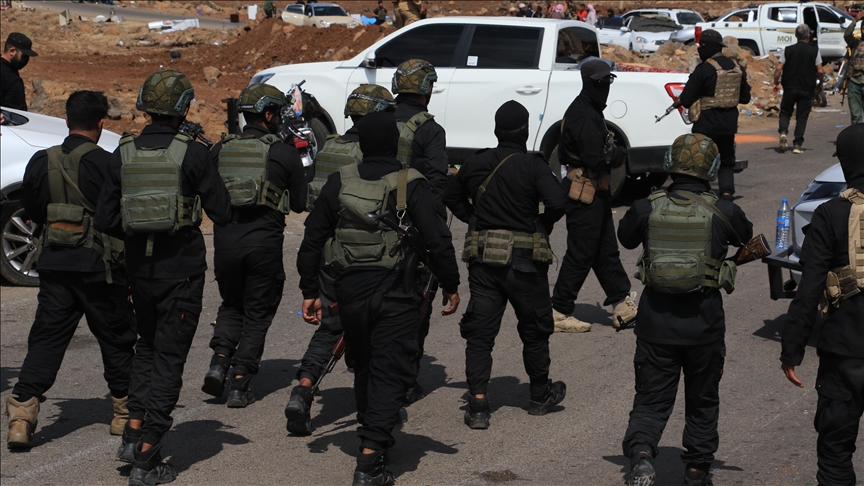
The Syrian army moved into the centers of Latakia and Tartus on Sunday after armed groups linked to the ousted Assad regime targeted civilians and security forces. The Defense Ministry stated the operation aims to restore order amid escalating violence that has left several dead and dozens wounded during recent protests.

The Syrian Defense Ministry announced that army units, supported by armored vehicles, have been deployed to the central areas of the coastal cities of Latakia and Tartus. This security operation was launched to restore stability following attacks by armed groups affiliated with the former regime of Bashar al-Assad against civilians and state security personnel.

Escalation of Violence During Protests


The decision for a military deployment came after a sharp increase in violence on Sunday. Official Syrian media reported that three people were killed and at least 60 others were wounded in Latakia when remnants of the fallen regime attacked security forces and civilians during demonstrations. Similar protests, calling for federalism and opposing the Damascus government, were also reported in Tartus, Hama, and Homs.

Calls for Federalism and Regional Tensions

The protests were reportedly sparked by a call from Ghazal Ghazal, head of the Alawite Supreme Council, following a deadly mosque attack in Homs on Friday. Ghazal, known for his ties to the former Baathist government, urged supporters to demand "political federalism and international protection." Despite heavy security measures at the gatherings, some protesters in Latakia and Jableh assaulted security forces and damaged their vehicles.

New Administration Pursues Security Crackdown

This unrest presents a direct challenge to the new transitional administration under President Ahmad al-Sharaa, which was formed in January after Assad fled to Russia. The administration has pledged to tighten security nationwide and pursue elements of the former regime accused of stirring instability. The current military intervention in these key coastal cities underscores the ongoing struggle to establish control and secure the country after the end of the decades-long Baath Party rule.

Clashes erupt in Syria as Alawite minority protests deadly Homs mosque bombing


Clashes broke out on Sunday during rallies held by members of Syria’s Alawite minority in the coastal cities of Latakia and Tartous, as well as in other areas, following Friday's deadly bombing at an Alawite mosque in Homs. According to a war monitor, at least two people were killed when security forces tried to disperse the demonstrators.


Issued on: 28/12/2025 
By: FRANCE 24

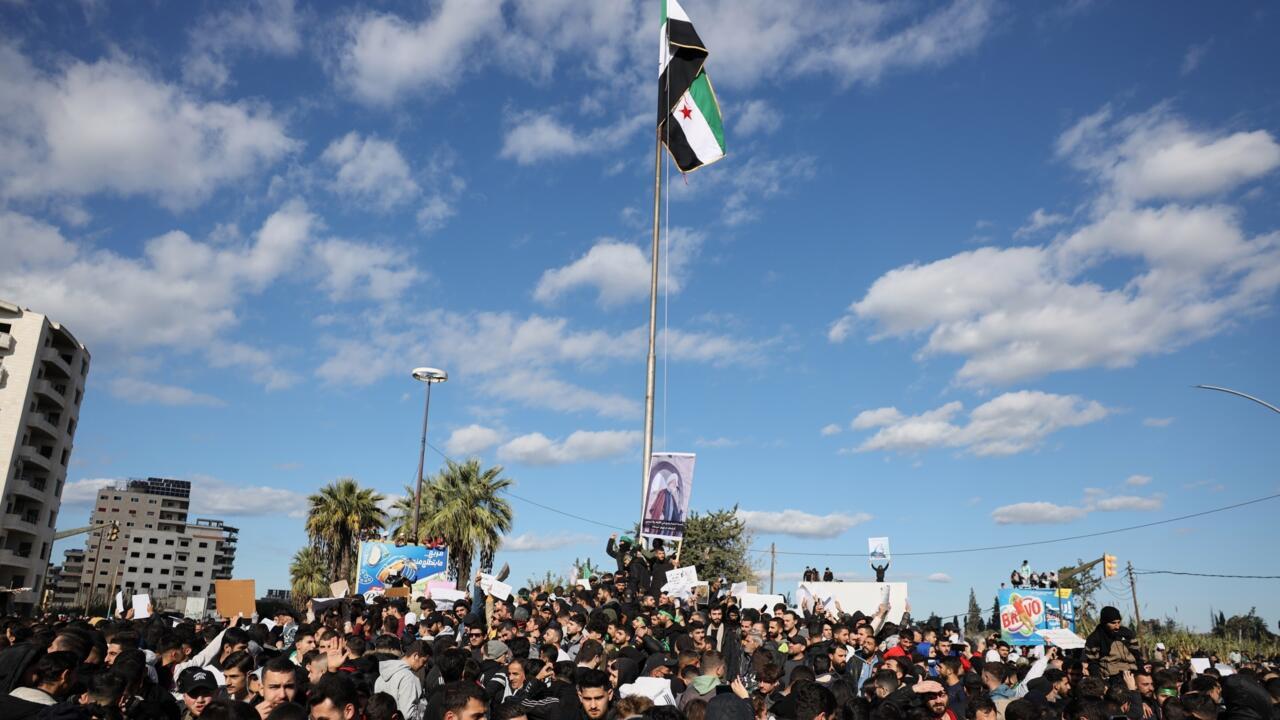
Protesters from the Alawite religious minority in Latakia, Syria's coastal region, on December 28, 2025. © Omar Albam, AP

Clashes broke out on Syria’s coast between protesters from the Alawite religious minority and counter-demonstrators on Sunday, two days after a bombing at an Alawite mosque in the city of Homs killed eight people and wounded 18 others during prayers.

Thousands of protesters gathered in the coastal cities of Latakia and Tartous, and elsewhere. Officials have said that preliminary investigations indicate that explosive devices were planted inside the mosque in Homs, but authorities haven’t publicly identified a suspect yet in Friday’s bombing. Funerals for the dead were held on Saturday.

A little-known group calling itself Saraya Ansar al-Sunna claimed responsibility for the attack in a statement posted on its Telegram channel, in which it indicated that the attack intended to target members of the Alawite sect, an offshoot of Shiite Islam whom hard-line Islamists consider to be apostates.

Sunday’s demonstrations were called for by Ghazal Ghazal, an Alawite sheikh living outside of Syria who heads a group called the Supreme Alawite Islamic Council in Syria and the Diaspora.

Monitor claims two dead

An Associated Press photographer in Latakia saw pro-government counterprotesters throw rocks at the Alawite demonstrators, while a group of protesters beat a counterdemonstrator who crossed to their side.

According to The Syrian Observatory for Human Rights, at least two people were killed as security forces tried to disperse the protests – and a medical source said two bodies had been taken to a local hospital.

Syrian authorities did not confirm they had opened fire but said they had “contained the situation”. They accused what they called “remnants” of former ruler Bashar al-Assad’s government of attacking security forces.

Syria’s state-run television also reported that two members of the security forces had been wounded in the area of Tartous after someone threw a hand grenade at a police station. Cars belonging to security forces were also set on fire in Latakia.

Waves of sectarian violence since Assad’s downfall

The country has experienced several waves of sectarian clashes since the fall of former president Assad in a lightning rebel offensive in December 2024 that brought to an end nearly 14 years of civil war. Assad, an Alawite, fled the country to Russia.

In March, an ambush carried out by Assad’s supporters against security forces triggered days of violence that left hundreds of people dead, most of them Alawites. Since then, although the situation has calmed, Alawites have been targeted sporadically in sectarian attacks. They have also complained of discrimination against them in public employment since Assad’s fall and of young Alawite men detained without charges.

During the rein of the Assad dynasty, Alawites were over-represented in government jobs and in the army and security forces.

Government officials condemned Friday’s attack and promised to hold perpetrators accountable, but have not yet announced any arrests.

(FRANCE 24 with AP and AFP)


Three killed in clashes in Syria after deadly Alawite mosque bombing

Thousands gathered in the coastal cities of Latakia and Tartous, and elsewhere, on Sunday.


Counter-protesters chant pro-government slogans at Alawite demonstrators (Omar Albam/AP) (Omar Albam/AP)

By Omar Albam,
 Associated Press
December 28, 2025 

At least three people have been killed in clashes on Syria’s coast between protesters from the Alawite religious minority and counter-demonstrators.

The violence came two days after a bombing at an Alawite mosque in the city of Homs killed eight people and wounded 18 others during prayers.

Thousands of protesters gathered in the coastal cities of Latakia and Tartous, and elsewhere, on Sunday.

Officials have said preliminary investigations indicate explosive devices were planted inside the mosque in Homs, but authorities have not publicly identified a suspect.
Protesters from the Alawite religious minority demonstrate in Latakia (Omar Albam/AP) (Omar Albam/AP)

Funerals for the victims were held on Saturday.

A little-known group calling itself Saraya Ansar al-Sunna claimed responsibility for the attack in a statement posted on its Telegram channel, in which it indicated the attack intended to target members of the Alawite sect, an offshoot of Shiite Islam whom hard-line Islamists consider to be apostates.

Sunday’s demonstrations were called for by Ghazal Ghazal, an Alawite sheikh living outside of Syria who heads a group called the Supreme Alawite Islamic Council in Syria and the Diaspora.

An Associated Press photographer in Latakia saw pro-government counter-protesters throw rocks at the Alawite demonstrators, while a group of protesters beat a counter-demonstrator who crossed to their side.

Security forces tried to break up the two sides and fired into the air in an attempt to disperse them.
Syria has experienced several waves of sectarian clashes since the fall of former president Bashar Assad (Omar Albam/AP) (Omar Albam/AP)

Syria’s state-run television reported two members of the security forces were wounded in the area of Tartous after someone threw a hand grenade at a police station, and cars belonging to security forces were set on fire in Latakia.

Later, state-run news agency Sana reported a member of the security forces was killed by gunfire. Local health officials said three people were killed and 60 others wounded.

The country has experienced several waves of sectarian clashes since the fall of former president Bashar Assad in a lightning rebel offensive in December 2024 that brought to an end nearly 14 years of civil war.

Assad, an Alawite, fled the country to Russia.

In March, an ambush carried out Assad supporters against security forces triggered days of violence that left hundreds of people dead, most of them Alawites.

Protesters from the Alawite religious minority demonstrate in Latakia (Omar Albam/AP) (Omar Albam/AP)

Since then, although the situation has calmed, Alawites have been targeted sporadically in sectarian attacks.


They have also complained of discrimination against them in public employment since Mr Assad’s fall and of young Alawite men detained without charges.

During the rein of the Assad dynasty, Alawites were overrepresented in government jobs and in the army and security forces.

Government officials condemned Friday’s attack and promised to hold perpetrators accountable, but have not yet announced any arrests.


Security member killed during protests calling for ‘federalism’ on Syria’s coast

Security source says gunmen attacked forces guarding demonstrations in coastal and central cities


Anadolu Staff |28.12.2025


LATAKIA, Syria / ISTANBUL

A Syrian security member was killed and others were wounded after gunmen attacked security forces assigned to protect demonstrations calling for “federalism” in coastal and central parts of the country, local media said.

Demonstrations took place in the coastal provinces of Latakia and Tartus, as well as in the central provinces of Hama and Homs, according to an Anadolu correspondent. The protests followed a call by Ghazal Ghazal, head of the Alawite Supreme Council in Syria and abroad.

The state-run Alikhbariyah TV reported that “outlaw elements” opened fire on civilian vehicles in the village of al-Mahrousa in western rural Hama as security forces deployed to protect civilians.

Citing an unnamed security source, the channel said one member of the Internal Security Forces was killed and others were wounded while securing protests in Latakia after attacks carried out by remnants of the former regime of Bashar al-Assad.

Crowds gathered at several locations, including Azziraa and al-Azhari roundabouts in Latakia; Amara Roundabout and Hospital District Roundabout in the city of Jableh; al-Marija Roundabout in Qardaha; and al-Qusour Roundabout in Baniyas.

Protests were also reported at al-Saadi Roundabout in Tartus, as well as in Masyaf, Wadi al-Dhahab, Imam Ali bin Abi Talib Mosque Square and the Zahraa neighborhood in Homs, and the Wadi al-Uyun area in Hama province.

During the demonstrations, which were held under tight security measures, protesters chanted slogans calling for “federalism” and voiced opposition to the government in Damascus.

Some protesters in Latakia and Jableh attacked security personnel and their vehicles despite heightened security.

Clashes involving sticks and stones erupted between demonstrators and opposing groups in the centers of Latakia and Homs, while security forces fired shots into the air at some locations to disperse crowds.

Ghazal issued his call for protests after a deadly attack on a mosque in a predominantly Alawite neighborhood of Homs on Friday that killed eight people. In statements following the attack, he urged supporters to demand “political federalism and international protection.”

The new Syrian administration is working to tighten security conditions nationwide and to pursue remnants of the former regime accused of stirring security unrest.

Assad, Syria’s leader for nearly 25 years, fled to Russia, ending the Baath Party regime, which had been in power since 1963. A new transitional administration headed by President Ahmad al-Sharaa was formed in January.


Israeli Occupation Forces intrude into Syrian territory, detaining 6 people

QNA/Damascus
 December 29, 2025 


The Israeli occupation forces renewed their incursion into Syrian territory on Sunday, detaining six people.The Syrian Arab News Agency (SANA) said that the Israeli forces detained these young men from the Daraa governorate as they were searching for wild mushrooms in farmlands near the town of Qudna, in the southern Quneitra countryside.SANA added that the occupation forces transferred the detainees to the Tal Al Ahmar Al Gharbi military base, with no information available regarding their fate or the reason behind their detention.The Israeli forces, driving four military vehicles, also carried out an incursion into Saida Al Hanout village in southern Quneitra countryside, where it detained a local young man.


Israel Detains Santa amid Raid on Haifa Christmas Celebration


  • December, 26, 2025 - 
Israel Detains Santa amid Raid on Haifa Christmas Celebration

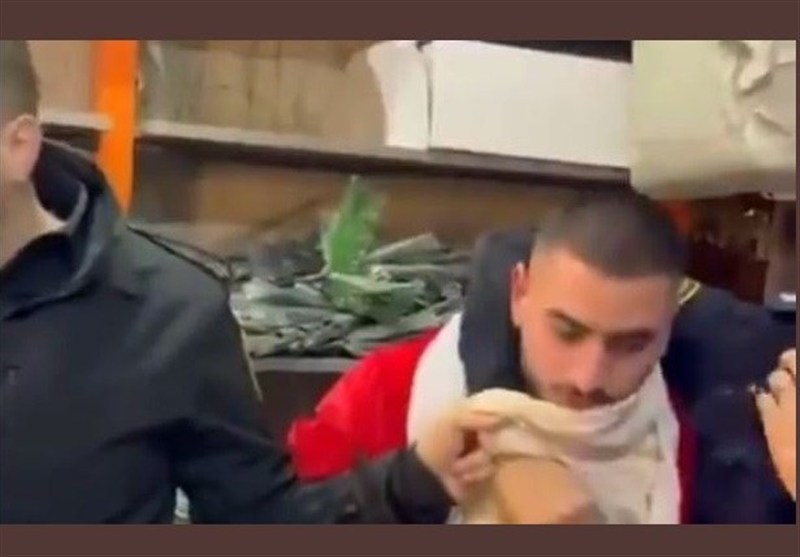
TEHRAN (Tasnim) – Israeli police have arrested a Palestinian man dressed as Santa Claus during a raid on a Christmas celebration in the northern city of Haifa.

On Sunday, officers moved to shut down the event, seizing sound equipment and detaining three individuals, among them a man dressed as Santa Claus, a DJ, and a street vendor, while video footage circulating online captures police pushing the men to the ground and handcuffing them as onlookers watched.

In a statement, Israeli police claimed the man wearing the Santa Claus outfit resisted arrest, Al Mayadeen reported.

The Mossawa Center, a rights group that advocates for Palestinians from the territories occupied in 1948, said police used excessive force and carried out the raid on the music hall without legal authority.

Palestinians marked Christmas across the occupied West Bank and Gaza amid ongoing restrictions imposed by Israeli forces on daily life.

In Beit Lahm, celebrations took place for the first time since the outbreak of war on Gaza, with marching bands playing bagpipes through the streets of Jesus’ birthplace. Worshippers attended Mass at the Church of the Nativity, while children sang carols as the city lit up with festive decorations.

In Gaza, where over 70,000 people have been killed and much of the infrastructure destroyed by Israeli bombings, a small Christian community held its first Christmas celebrations since a fragile ceasefire began, with Christmas trees and glitter adding bursts of color amid the rubble scattered across the Strip.

Despite the holiday, Israeli operations continued. Israeli settlers uprooted olive groves in Turmus Ayya near Ramallah, and Israeli soldiers raided homes and seized vehicles near al-Khalil, according to the Palestinian news agency WAFA. Attacks targeting Christians have also increased, with a report in March documenting 32 assaults on church properties and 45 physical attacks against Christian individuals.

Israel Reframing the Iran Threat


  • Israel now views Iran’s ballistic missile program as a more urgent threat than its nuclear activities, citing lessons from the June conflict.

  • Netanyahu is pressing Washington to treat missiles as weapons of mass destruction and to consider strikes on Iranian missile production infrastructure.

  • Iran insists its missile program is non-negotiable, while analysts warn that enforcement and monitoring would be extremely difficult even under a new agreement.

As Israeli Prime Minister Benjamin Netanyahu prepares to meet US President Donald Trump in Florida on December 29, the agenda centers on Iran -- with a twist.

Israel is laser-focused on Iran’s ballistic missile program, which it views as the most urgent existential threat after the US-Israeli strikes severely damaged Iran's nuclear infrastructure during a 12-day aerial campaign in June.

This shift highlights a growing US-Israel divergence. Trump has repeatedly described Iran's nuclear threat as "obliterated," crediting wartime bombings of sites in Isfahan, Fordow, and Natanz. Israel agrees the program is set back by a year or two.

However, it warns that missiles -- which Iran is working to amass -- could soon overwhelm defenses, as demonstrated when 36 out of 550 missiles struck Israeli soil in June, causing widespread damage.

Missiles As 'Immediate' Priority

Israeli officials, speaking to NBC News and Axios, describe Iran's missile ramp-up as "more pressing" than its nuclear program.

Israel says the Islamic Revolutionary Guards Corps (IRGC) has carried out drills and has warned Washington that Tehran might use the exercises as cover for surprise attacks.

This comes amid contradictory reports in Iran over whether missile tests are actually taking place. Iranian media, including the IRGC-affiliated Fars news agency, reported on December 22 that the armed forces were conducting drills, with users on social media sharing videos and footage of contrails in the skies over central and western Iran. However, the state broadcaster swiftly denied the reports, citing an unnamed "informed source" who insisted the contrails were from "high?altitude aircraft" and claimed that no exercises were underway.

Israel Defense Forces (IDF) chief Eyal Zamir hinted at readiness for new strikes against Iran "wherever required," prioritizing production lines that Israel fears could churn out 3,000 missiles annually.

Netanyahu plans to present Trump with strike options -- Israeli-led, joint, or US-backed -- arguing missiles enable proxy wars via Hezbollah and Houthis while shielding Iran’s nuclear revival.

Farzin Nadimi, a senior fellow at The Washington Institute, told RFE/RL's Radio Farda that Israel is pressing the United States to reclassify missiles as weapons of mass destruction.

“Israel is trying to shift this view, using the recent war's experience to convince the United States that Iran's missile capabilities are as existentially threatening as its nuclear ones,” Nadimi said.

He noted US reluctance, viewing nukes as the core danger, now degraded, but added, “From Israel's standpoint, these should count as weapons of mass destruction for its people.”

Nadimi warned that total missile destruction could force a doctrinal pivot in Tehran.

“If Israel fully destroys Iran's offensive missile capabilities... it would either have to surrender or make a fundamental doctrinal shift,” he said, adding that Iran's technical path to nuclear warheads remains feasible in a secure lab using 90-percent enriched uranium stocks.

Iran’s Missile Red Line

Iran has long maintained that its missile program is non-negotiable, asserting it is purely defensive. Foreign Ministry spokesman Esmail Baqaei reiterated this on December 22:

“The defensive capabilities of the Islamic Republic of Iran have been designed with the aim of deterring aggressors from any thought of attacking Iran. Under no circumstances are they a matter that can be discussed or negotiated.”

Hamidreza Azizi, a fellow at the German Institute for International and Security Affairs, noted that while the United States and Israel may want different things from Iran, they converge on one point: “Iran is weakened now, so it's time to extract more concessions.”

Iran has capped the range of its missiles at 2,000 kilometers, though in recent months it has hinted it could increase the limit if it deems necessary. Azizi said the United States and Israel want Iran to reduce the range of its missiles -- a non-starter for Tehran.

Even in the unlikely scenario of an agreement on Iran’s missile program, he noted that Washington is aware enforcement would be difficult, given the absence of any international monitoring body or safeguards regime for missile programs.

Against this backdrop, Azizi argued that missiles serve as pressure leverage:

“First, to make Iran fully abandon [uranium] enrichment on its soil; second, to secure concessions on arms transfers to groups such as Hezbollah or the Houthis.”

Iranian Media Gleeful Yet Concerned

Israeli rhetoric around Iran’s missile program has been met with a mixture of delight and alarm in Iranian media.

Highlighting Iran’s pace in replenishing its missile arsenal following the June war, the IRGC-affiliated newspaper Javan said Israel was “terrified” of Iran’s ability to launch hundreds of missiles in a potential conflict. The same sentiment was echoed by other hard-line outlets, such as Mehr news agency.

But others have urged caution. Bultan News argued that Netanyahu was exaggerating Iran’s ability to restore its missile stockpile to justify an attack. It added that Tehran must take the rhetoric seriously.

“Every piece of news or report that is published can be part of a larger puzzle. Distinguishing which news is real and which is psychological warfare is not easy. But making that effort is a national security necessity,” it argued.

By RFE/

Iran in ‘comprehensive war’ with US, Israel, Europe, president says

December 28, 2025 

Iranian President Masoud Pezeshkian speaks during a press conference after arriving at Mehrabad Airport in Tehran, Iran on September 27, 2025. [Iranian Presidency – Anadolu Agency]

Iran is in a state of “comprehensive war” with the United States, Israel, and Europe, Iranian President Masoud Pezeshkian said Saturday, Anadolu reports.

“We are in a state of comprehensive war with the United States, Israel, and Europe,” Pezeshkian said in an interview published on the official website of Iran’s Supreme Leader Ali Khamenei.

“This war is more dangerous, more complex, and more difficult than the war with Iraq” between 1980 and 1988, he added.

The Iranian leader accused the US, Israel and some European countries of supporting the collapse of Iran.

“The situation during the war with Iraq was clear: they fired missiles and we knew where to strike. But today, they surround us from all sides, apply pressure on us, obstruct our trade, and raise public expectations inside society in various fields.”

During a 12-day war with Israel in June, the US military struck three major Iranian nuclear facilities – Fordo, Natanz, and Isfahan – using bunker-buster bombs.

The strikes came more than a week after Israel launched a surprise attack on Iran, killing senior military commanders and nuclear scientists and also targeting some nuclear sites.


ANTI ZIONIST PRO PALESTIAN LIBERATION 

Anti-Israel activists disrupt Boxing Day shopping in London, Toronto malls

Boxing Day mall protests in London and Toronto saw activists hang Palestinian flags and disrupt shoppers while demanding an arms embargo on Israel.

Demonstrators from the "Palestine Coalition" gather in support for Palestinians, after a ceasefire between Israel and Hamas in Gaza went into effect, in London, Britain, October 11, 2025.
(photo credit: REUTERS/JAIMI JOY)

DECEMBER 28, 2025
JERUSALEM POST

Anti-Israel activists disrupted Boxing Day shopping in London and Toronto malls on Friday, demanding that the UK government free jailed activist vandals and that the Canadian government impose a two-way arms embargo on Israel.

Activists associated with Prayers for Gaza hung Palestinian flags and banners from the banisters in the Westfield Stratford City shopping center. As activists chanted for the release of Palestine Action vandals, fliers calling for the boycotting of all Israeli goods and services on Boxing Day were dropped from upper floors to the bottom of the shopping center.

Instagram posts by activists showed them struggling with security, who tried to pull their banners and flags from the banisters.

Prayers for Gaza said that the “takeover” of the mall was done to raise awareness about their demands to the UK government to cut defense industry ties, ban goods from Israeli settlements, and end the operations of Israeli defense firm Elbit Systems in the country.

The group also demanded the release of 24 Palestine Action activists jailed in connection with an August 2024 attack on Elbit Systems UK’s South Gloucestershire Horizon facility and the June raid on the Brize Norton base in Oxfordshire.

Seven of the Palestine Action activists had begun a hunger strike on November 2 in a bid to secure their release, expel Elbit subsidiaries from the country, and deprescribe their organization, but by Wednesday, three had ended their protest.
A woman walks with shopping bags on Oxford Street during Boxing Day sales, in London, Britain, December 28, 2025. (credit: REUTERS/Isabel Infantes)


Protests in Toronto

Toronto activists held a similar Boxing Day protest at the Eaton Centre, according to the Palestinian Youth Movement Toronto, also hanging banners from upper floors and dropping pamphlets to disrupt shopping.

A PYM representative said that protesters acted “on the busiest day for shopping day for so-called Canada” because while “people are spending money,” the Canadian government was supposedly sending weapon components to Israel.

“Demonstrators are demanding that the Canadian government impose a full, two-way arms embargo, close the US export loophole, and end Canada’s political and military support for Israel’s actions,” PYM Toronto said on social media.

Netanyahu ‘Wanted’ posters plastered across London

December 28, 2025 
MEMO


Pro-Palestinian protesters holding a pan with a photo of Netanyahu gather at Parliament Square during a demonstration calling for an end to the blockade on Gaza and a halt to arms sales to Israel in London, United Kingdom. 
[Raşid Necati Aslım – Anadolu Agency

Activists have plastered “Wanted” posters of Israeli Prime Minister Benjamin Netanyahu across London’s buses, streets and busy landmarks in a protest highlighting his role in war crimes and genocide linked to the Gaza conflict, Anadolu reports.

The campaign, staged by pro-Palestine campaigners, depicts images of Netanyahu alongside text referencing an International Criminal Court (ICC) arrest warrant issued in November 2024, accusing him of war crimes and crimes against humanity committed in Gaza since October 2023.

The Israeli army killed over 71,000 Palestinians, mostly women and children, in Gaza over a two-year period. Although a ceasefire took effect on Oct. 10, Israel has not stopped its attacks.

Living conditions have also not significantly improved, as requirements such as agreed quantities of food, aid, medical supplies, and mobile housing into the enclave have not been met.

UK leader criticized for applauding return of man freed from Egyptian prison as old tweets resurface

A WHIFF OF SLANDER 


The U.K. prime minister is facing criticism after celebrating the return of human rights activist Alaa Abd el-Fattah from Egypt

FROM THE UK RIGHT WING


By DANICA KIRKA 
Associated Press
December 28, 2025


LONDON -- The U.K. prime minister is facing criticism after he celebrated the return to Britain of a human rights activist who was recently released from an Egyptian prison but whose past social media posts apparently contained violent and antisemitic language.

Successive British governments have campaigned for the release of Alaa Abd el-Fattah, a dual national who had been imprisoned in Egypt for most of the past 14 years. He returned to the U.K. on Friday after Egyptian authorities lifted a travel ban that had forced him to remain in the country since he was freed in September.

But a senior member of the opposition Conservative Party on Saturday criticized Prime Minister Keir Starmer for giving a “personal, public endorsement” to Abd el-Fattah when Starmer said he was “delighted” the activist had been reunited with his family in Britain.

Robert Jenrick, the Conservative spokesman on justice issues, demanded to know whether Starmer knew about historical social media posts in which Abd el-Fattah allegedly endorsed killing “zionists’’ and police. Jenrick also called on Starmer to condemn Abd el-Fattah’s statements and withdraw his “unalloyed endorsement” of the activist.

“Nobody should be imprisoned arbitrarily nor for peaceful dissent,’’ Jenrick wrote. “But neither should the prime minister place the authority of his office behind someone whose own words cross into the language of racism and bloodshed."

The Foreign, Commonwealth and Development Office said in a statement that it had been “a long-standing priority” of governments under both major parties to work for Abd el-Fattah’s release. But that does not imply an endorsement of his social media posts, the spokesman said.

“The government condemns Mr. El-Fattah’s historic tweets and considers them to be abhorrent,” the statement said, using a slightly different style for his last name.

Abd el-Fattah’s family in the U.K. had vigorously campaigned for his release, arguing that he had spent most of the past 14 years behind bars because of his opposition to the government of President Abdel-Fattah el-Sissi.


His mother, Laila Soueif, 69, staged a 10-month hunger strike to pressure British authorities to do more to secure her son’s release.

Starmer on Friday paid tribute to Abd el-Fattah’s family and all the others who campaigned for his freedom.


“I’m delighted that Alaa Abd El-Fattah is back in the U.K. and has been reunited with his loved ones, who must be feeling profound relief,” Starmer said.

But soon after Abd el-Fattah arrived at London’s Heathrow Airport, critics began circulating historical social media posts in which he appeared to endorse the killing of Zionists and police.

The Times of London reported that Abd el-Fattah has previously said the comments were taken out of context and were part of a “private conversation” that took place during an Israeli offensive in the Gaza Strip.

Abd el-Fattah’s press team didn’t immediately response to a request for comment, and it was not immediately clear whether the posts were authentic.
Illegal Israeli settlers damage Palestinian properties in West Bank attacks

3 vehicles burned, house doors stolen by illegal settlers, according to local sources


Aysar Alais and Betul Yilmaz |28.12.2025 - TRT/AA

Occupied West Bank (Photo by Mamoun Wazwaz)

RAMALLAH, Palestine / ISTANBUL

Illegal Israeli settlers attacked and damaged Palestinian properties in the occupied West Bank on Sunday, local sources said.

The sources told Anadolu that a group of settlers stormed two houses in Hawara town, south of Nablus in the northern West Bank, and spray-painted threatening messages on walls.

Two Palestinian vehicles were also burnt in the attack.

According to the official news agency Wafa, a third car was burned by illegal Israeli settlers in the Al-Jaba town of Bethlehem in the southern West Bank.

Another group of illegal settlers raided Turmus Aya town in northeastern Ramallah, attacking private property and stealing doors of houses under construction, Wafa said.

In the town of Mukhmas, northeast of East Jerusalem, illegal settlers uprooted 40 olive trees, according to the agency.

Recently, a settlement outpost was established near the town, where illegal settlers gather and plan attacks targeting Palestinian farmers, Wafa added.

On Thursday, the Palestinian Agriculture Ministry said the Israeli army and illegal settler attacks have destroyed over 8,000 olive trees in the occupied West Bank in one week, causing nearly $7 million in losses.

According to the Colonization and Wall Resistance Commission, an official body, illegal Israeli settlers carried out 621 attacks against Palestinians and property in the occupied West Bank in November.

The number of Israeli settlers in the West Bank reached about 770,000 in more than 180 settlements and 256 settlement outposts by the end of 2024, official Palestinian data showed.

In a landmark opinion last July, the International Court of Justice declared Israel’s occupation of Palestinian territory illegal and called for the evacuation of all settlements in the West Bank and East Jerusalem.

A GLOBAL CRISIS

‘Hope of having a lot of money’: Desperate youngsters drive gambling surge in African countries

The lure of hitting it big in a continent where many are out of work drives many gamblers online.

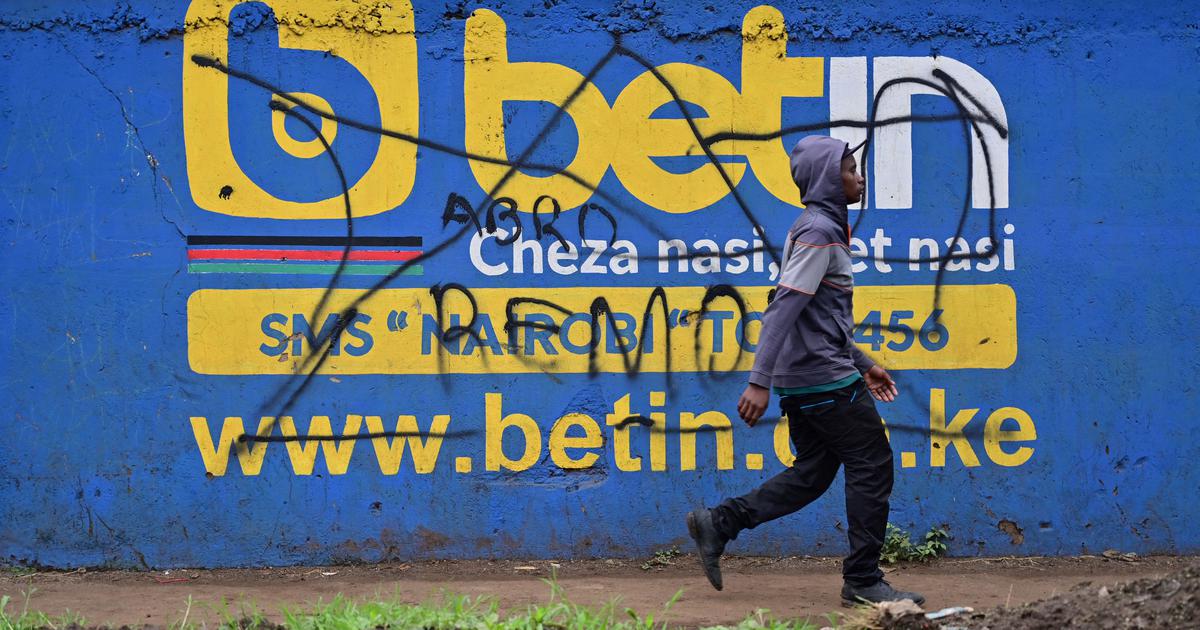
A young man walks past a defaced advertisement for a sports betting company in Nairobi, Kenya in 2019. | AFP

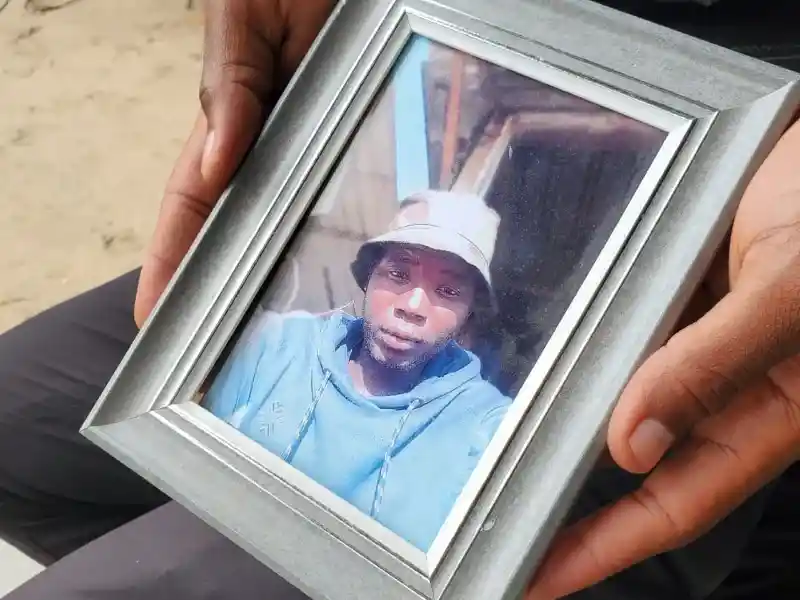
Sitting on the veranda of his home on the outskirts of Mozambique’s capital, João Vasco held a framed photo of his younger brother Pinto, who died by suicide this year after losing around $850 gambling.

“I helped him with school fees and everything I could,” João, 37, recalled, pausing to fight back tears.

Pinto, 21, was in his second year at university, studying to become a history teacher, when João learned he was gambling and confronted him. He thought he had gotten through to Pinto.

“Two months later, I found out that he was no longer going to university. He told me, embarrassed, that he had debts because he had lost the tuition money.”

One Sunday morning in May, Pinto hung himself at home.

“When I saw the boy hanging from the rafter, I nearly collapsed,” João said.

A photograph of Pinto Vasco, who died by suicide after incurring high gambling debts, held by his brother, João Vasco, Maputo, Mozambique, November 8, 2025. Credit: Thomson Reuters Foundation/Samuel Comé.

Police data showed at least 10 mostly young people died of suicide last year in cases linked to gambling in Mozambique.

Pinto’s losses exceeded the country's average income of $650 a year.

On the outskirts of Maputo, billboards have sprouted up, promising big wins in a country where about 20 million people live in poverty, according to the World Bank.

Some 25,000 people place a bet every hour on websites and mobile apps, according to the country’s General Inspectorate of Games, which is responsible for licensing betting companies.

Minimum stakes on most online sites range from $0.15 to $0.30, and many gamblers are young in a country where 60% of the population of 35 million people is under the age of 24.


Debt trap

The lure of hitting it big in a country where nearly a fifth of the population is out of work drives many gamblers online.

“I’ve been gambling since 2021. I don’t stop, because I still hope that one day I’ll win a lot of money,” said 26-year-old Osvaldo Assane, who works odd jobs in construction and was forced to sell his motorbike last year to cover gambling losses.

“But what can I do? I need something that gives me hope of having a lot of money.”

Across Africa, online gambling, particularly sports betting, is soaring.

Six African operators rank among the world’s top 20 most-visited gambling websites, according to online sports publisher Tribuna, and their rise is being fuelled almost entirely by mobile users in Nigeria, South Africa, Kenya and East Africa.

Almost a quarter of Mozambique’s population, or about 8 million people, are online.

Betting platforms pay digital influencers handsome fees to promote their sites and spend big on television adverts and text message campaigns sent to thousands of people.

A billboard advertising a betting company in Maputo, Mozambique. November 17, 2025. Thomson Reuters Foundation/Samuel Comé

But influencer Ângelo do Rosário has bucked the trend to speak out against gambling, after previously promoting a betting company and then deciding the activity was penalising the poorest in the country.

“The money the state earns does not match the harm that gambling causes,” he said, calling for regulations to limit the operations of betting companies.

The Centre for Community Development in Health and Environment works with people addicted to gambling, helping about 300 people across the country.

It also gives talks at universities and other institutions to discourage young people from taking up the habit.

“One of the people we are currently supporting is a woman who worked at a bank and who, since she started gambling in 2020, has already lost more than $31,000 ... (and) lost her job,” Centre for Community Development in Health and Environment’s technical director Arlindo Covane said.

Another gambler fell into a depression after losing more than $1,550 in a single day, he added.

The Centre for Community Development in Health and Environment also offers support to those in debt, including debt restructuring plans and advice on employment.

It wants the government to implement stronger regulations, better protection for players and public awareness campaigns, particularly targeting young people.

Existing regulations require online betting companies to provide on their websites control mechanisms that allow players to set limits, contact details of organisations that offer support to people with gambling addiction and warnings against excessive gambling.

But the Centre for Community Development in Health and Environment says these rules are not always enforced and it would like to see legislation requiring betting companies to introduce automatic exclusion mechanisms for people who show a pattern of consecutive losses.

A billboard advertising a betting company in Maputo, Mozambique. November 10, 2025. Credit: Thomson Reuters Foundation/Samuel Comé.


Reinforcing inequality

According to the General Inspectorate of Games, Mozambique has 30 betting operators, of which 21 are active and nine are waiting for their licences.

Deputy inspector Macário Gusse said most operators were foreign-owned but with some Mozambican participation.

Betting companies paid approximately $17 million in direct tax revenue this year, Gusse told Context, compared to around $18 million last year.

“The media says gambling causes more suicides, but for us, people take their lives because of pressure from loan sharks, where they borrowed money to gamble - this is not directly linked to betting companies,” said Gusse.

But sociologist Vasco Adão said gambling is a symptom of persistent inequalities and the lack of social inclusion policies, youth employment and financial literacy.

“Many young people use family savings, informal income or even take loans to keep gambling, entering a cycle of loss and attempted recovery,” he said.

And the hope of winning against the odds blinds vulnerable people to the consequences of their habit, said clinical psychologist Mario Ngulele.

That was the case for 24-year-old Zacarias Mathe, who stood outside a betting shop in Maputo where people who do not have smartphones can place bets online.

“I hope to win some money, maybe to start a business, because I have no job and no secure source of income,” he said.

This article first appeared on Context, powered by the Thomson Reuters Foundation.


MUSK PUTIN ALLIANCE
Why Russia Is Equipping Its Drones with Starlink Terminals


December 28, 2025
By: Brandon J. Weichert
NATIONAL INTEREST


Russia’s use of Starlink terminals on its drones has complicated Ukraine’s efforts at electronic anti-drone warfare—and raised a difficult conundrum for Elon Musk.

At the start of the Ukraine War, the Russian Armed Forces were intent on cutting the Ukrainians off from the outside world. They targeted the country’s telecommunications network, destroying key land-based communications arrays. But the Russians discovered that the Ukrainians were unaffected by these attacks—specifically because Elon Musk initially allowed Ukraine to use his dynamic Starlink satellite network for free.

This kept the Ukrainians going, as they were able to use the Starlink systems to evade Russian disruptions across the electromagnetic (EM) field and continue running their drone attacks against Russian lines

Moscow naturally protested. The Americans praised Musk. That is, until Musk realized the dangers to his investment.

Russia Is Adapting Starlink for Its Own Purposes

As the war went on, the Russians (and Chinese) began focusing their efforts on developing countermeasures against Starlink. Moscow and Beijing both made it clear that if SpaceX continued allowing for its supposed civilian satellite constellation, Starlink, to be used in combat they would attack the Starlink system.

That attack has yet to occur.

Interestingly, the Russians have chosen to simply use the strange loophole the Americans created that allows for one of their companies—SpaceX—to engage in combat operations without being considered a combatant. Reasoning that Starlink could hardly protest if Ukraine was already using its services, the Kremlin began to place Starlink aboard its own drones. This has allowed for Russian forces to evade much of the EM jamming that the Ukrainians have deployed to stunt the effectiveness of Russian drones against their lines.

And Starlink cannot shut down Russia’s access to their system now without also degrading Ukraine’s access to that system. It’s a giant mess.

Understanding Russia’s Molniya-2 DroneYear Introduced: August 2025
Number Built: Unknown (likely many thousands)
Length: 8.2 ft (2.5 m)
Wingspan: 5 ft (1.5 m)
Weight: 110–150 lb (50–70 kg)
Engines: Electric motors with propellers
Top Speed: 60–120 mph (100–200 km/h)
Range: 19 mi (30 km)
Service Ceiling: Over 18 mi (30 km)
Loadout: Carries a fragmentation or explosive warhead

There are also reports that the Russians integrated powerful processors (such as the NVIDIA Jetson Orin) along with high-quality sensors, like the Sony IMX477, for autonomous target detection, recognition, and attack.

Ukrainian sources have been monitoring the progress that the Russians have made at using makeshift Starlink interfaces with their drones. Initially, they were haphazard and poorly installed. According to the Ukrainians, though, the Russians have now fully integrated Starlink terminals into their offensive drones—and the lethality of those systems has increased tenfold.

One of the Russian Molniya-2 loitering munitions that was successfully downed by Ukrainian defenders was displayed for Western journalists. The crashed drone had a Starlink satellite terminal directly installed to ensure the system had constant contact with its operator as it traversed the battlefield to its intended target.


Starlink Isn’t Designed for War—but It’s Used for It Anyway

Starlink was designed by SpaceX to bring wireless internet connectivity to regions of the world that had little or no reliable internet or wider telecommunications infrastructure—giving places like Sub-Saharan Africa the benefits of access to the internet. Meanwhile, in places, like the United States, users could link up to the internet via Starlink satellites in orbit from anywhere.


The money made from Starlink usage globally, according to Musk, will be used to directly fund SpaceX’s larger mission of getting people to Mars.

Now that Ukraine (and Russia) have weaponized the system, though, Musk and SpaceX find themselves in a bind.

This system was never meant to be used militarily. Musk understands that the longer the system is used in a military capacity, the more likely it is to be targeted—and if the Starlink system becomes the first victim of a major war, then the entire economic model undergirding SpaceX is put at risk.

In response to the development of people weaponizing Starlink, Musk has created a separate but similar system designed specifically for military use. It’s called Starshield. The US military is the primary customer. It remains to be seen if other countries, like Ukraine, will be given direct access to that network or if it will remain an exclusively American military project.

Reciprocity is a key principle in both international relations and warfare.

Or “what’s good for the goose is good for the gander.” The Ukrainians deftly utilized a workaround for preventing their electronic isolation at the start of the war. The Russians figured out that workaround and shoved it down the Ukrainians’ throats.

Now, if NATO wants Russia’s drone systems to be degraded, they are in the uncomfortable spot of having to insist Musk terminate Starlink usage over Ukraine—which means ending Ukraine’s Starlink usage, too. And that would further stymie whatever combat effectiveness remains in the Ukrainian defense.

About the Author: Brandon J. Weichert

Brandon J. Weichert is a senior national security editor at The National Interest. Recently, Weichert became the host of The National Security Hour on America Outloud News and iHeartRadio, where he discusses national security policy every Wednesday at 8pm Eastern. Weichert hosts a companion book talk series on Rumble entitled “National Security Talk.” He is also a contributor at Popular Mechanics and has consulted regularly with various government institutions and private organizations on geopolitical issues. Weichert’s writings have appeared in multiple publications, including The Washington Times, National Review, The American Spectator, MSN, and the Asia Times. His books include Winning Space: How America Remains a Superpower, Biohacked: China’s Race to Control Life, and The Shadow War: Iran’s Quest for Supremacy. His newest book, A Disaster of Our Own Making: How the West Lost Ukraine is available for purchase wherever books are sold. He can be followed via Twitter @WeTheBrandon.


Image: Shutterstock / Jose HERNANDEZ Camera 51.


Russia Bypasses Ukrainian Air Defenses via Belarus, Zelensky Says

Vladyslav Khomenko
December 28, 2025
militaryi.com


The Shahed kamikaze drone. Photo credits: IMAGO/Andreas Stroh via Reuters Connect
News

Ukrainian President Volodymyr Zelensky said Russian drones are attempting to bypass Ukraine’s air defense and interception systems by using Belarusian territory.

He said this explains the recent increase in Shahed drone attacks on western regions of Ukraine, RBC-Ukraine reported.

Zelensky mentioned attacks on the city of Kovel, which were discussed during a meeting of the Headquarters of the Supreme Commander-in-Chief.

“They see our interceptor lines and try to bypass them. They do this using Belarusian territory and the technical capabilities that Belarus provides,” the president said.

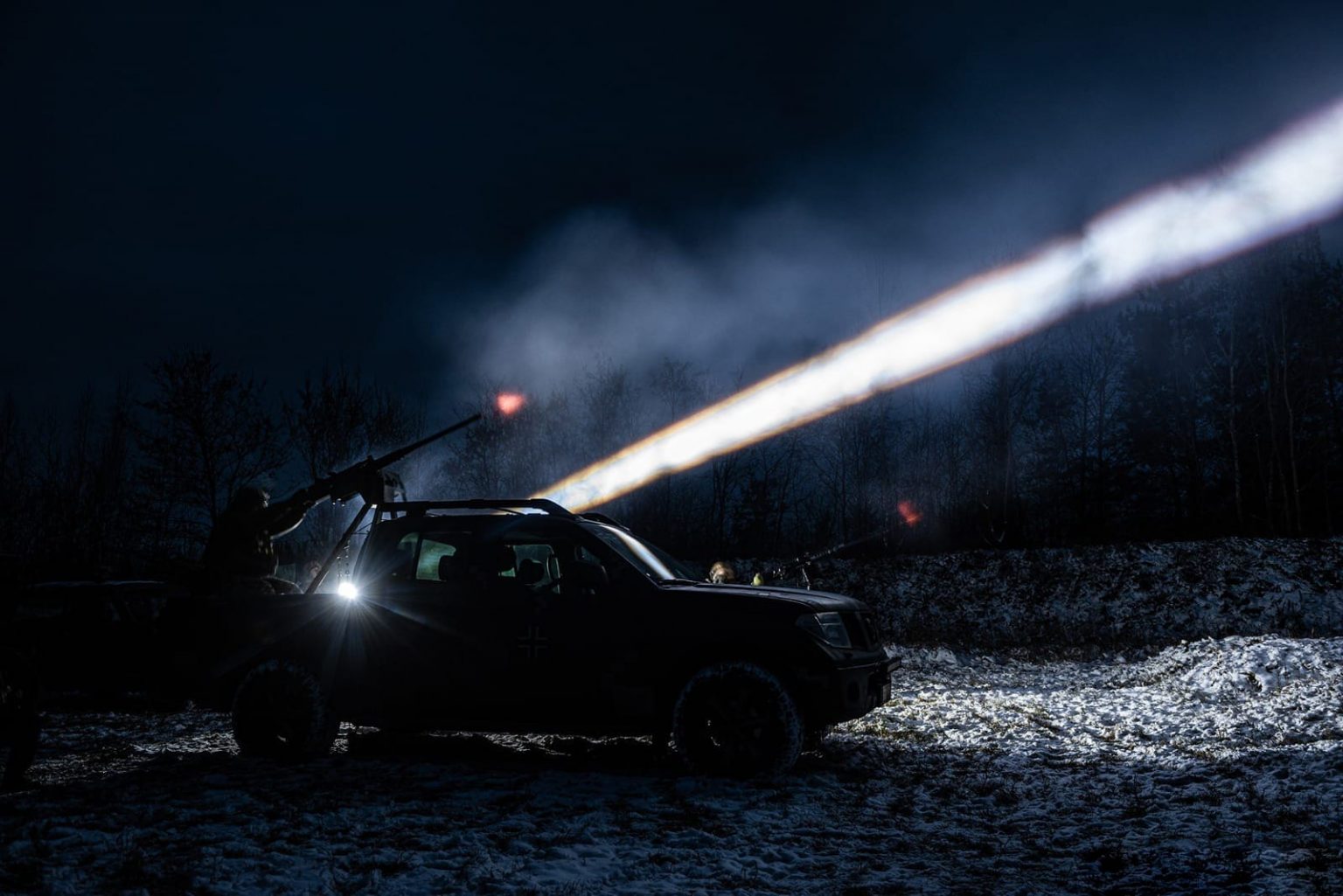
He added that on December 26, he convened a Headquarters meeting focused on countering Russian drones and developing appropriate defensive measures.A mobile fire group fires at air targets. Photo credits: Air Command South

It was reported that the Defense Forces are expected to receive Swedish Kreuger interceptor drones ‘this winter,’ Zelensky said earlier.

After receiving feedback from Ukrainian military units, the manufacturer is ready to move to mass production, potentially producing thousands or even tens of thousands of drones per month.