Thursday, April 28, 2022

The five conspiracy theories that Putin encouraged and ended up believing

The head of the Kremlin produced a speech before and during the invasion of Ukraine to justify it in the eyes of the world and for his own citizens. Earlier, he had broadcast them on his network of parastatal media


April 25, 2022
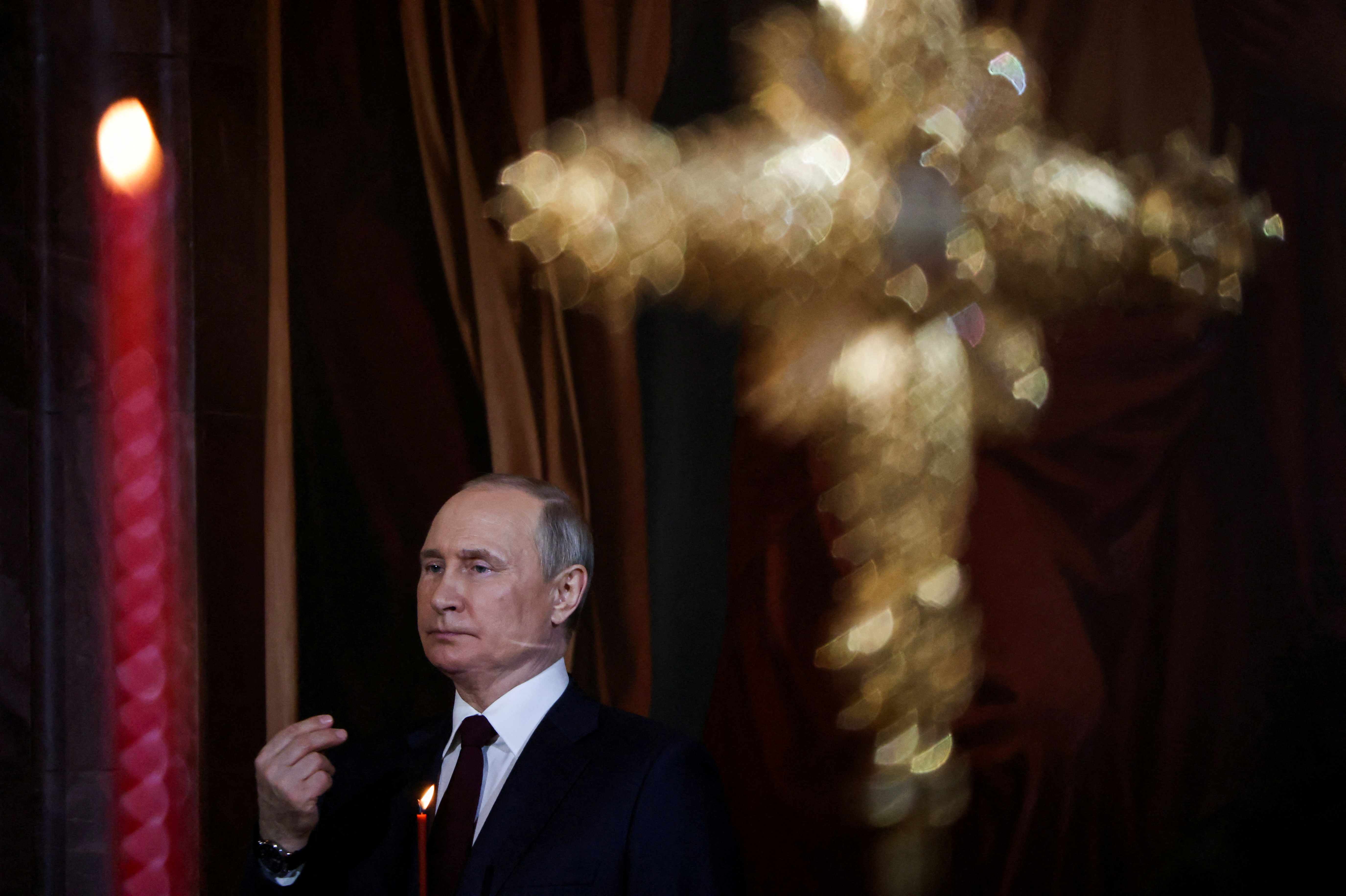
Russian President Vladimir Putin holds a candle as he attends the Orthodox Easter service at the Cathedral of Christ the Saviour in Moscow, Russia April 23, 2022. REUTERS/Maxim Shemetov TPX IMAGES OF THE DAY

Vladimir Putin's Russia is carried away by conspiracy theories.

For two decades, journalists and officials, according to the Kremlin, have happily spread misinformation. However unlikely or fantastic they were — that the CIA was plotting to evict Mr. Putin from power, for example — these stories served an obvious purpose: to strengthen the regime and ensure public support for his actions. Regardless of the personal opinions of members of the political class, it seemed clear that theories played no role in political calculations. They were stories designed to make sense of what the regime, for its own purposes, was doing.

It's not like that anymore. Since the beginning of the Russian invasion of Ukraine two months ago, the gap between conspiracy theory and state policy has been closed until it disappears. Conspiracy thought has completely taken over the country, from top to bottom, and now it seems to be the driving force behind the Kremlin's decisions. And Mr. Putin - who used to stay away from conspiracy theories, leaving its circulation to the state media and second-rate politicians - is its main promoter.

It is impossible to know what is inside Mr. Putin's head, of course. But judging by his bellicose and passionate speeches before the invasion and ever since, he may believe in the conspiracy theories he repeats. Here are five of the most common theories that the president has supported, with increasing fervour, over the past decade. Together, they tell the story of a regime that is disintegrating into a swamp of misinformation, paranoia and mendacity, at a terrible cost to Ukraine and the rest of the world.

The West Wants to Share the Territory of Russia


In 2007, at his annual national press conference, Putin was asked a strange question. What did you think about former US Secretary of State Madeleine Albright's comment that Russia's natural wealth should be redistributed and controlled by the United States? Putin responded that such ideas were shared by “certain politicians”, but that he was not aware of the comment.

That's because it was totally made up. Journalists from Rossiyskaya Gazeta, a state newspaper, had invented the quote claiming that Russian intelligence was able to read Mrs. Albright's mind. For years, there didn't seem to be any mention of it. Then, in 2015, the Secretary of the Security Council of the Russian Federation, Nikolai Patrushev, repeated it. She calmly reported that she had said that Russia should not control Siberia or its Far East, and that is why the United States was involved in Ukraine, where Russia was occupied fueling conflict in the eastern part of the country. At that time, it seemed that Mr Putin's colleague had lost her way.

But in May 2021, Putin proved that the theory had not been forgotten. Everyone, the president declared, “wants to bite or tear off a piece of Russia from us” because “it is unfair that only Russia possesses the riches of a region like Siberia.” A made-up quote had become a “fact”, legitimizing Mr. Putin's increasingly hostile approach to the West.

NATO has turned Ukraine into a military camp


NATO is Putin's worst nightmare: his military operations in Serbia, Iraq and Libya have sown fears that Russia will be the next target of the military alliance. He is also a convenient bogeyman who encourages the anti-Western element of Putin's electorate. In its rhetoric, NATO is synonymous with the United States, the military hand of the “collective West” that will suffocate Russia when it weakens.

So it makes sense that NATO is the subject of some of the regime's most persistent conspiracy theories, which see the organization's hand behind popular uprisings around the world. Since 2014, they have focused on Ukraine. Ever since the Ukrainian Maidan revolution that year, in which Ukrainians forced the removal of Russia's partisan Viktor Yanukovych, Putin and his subordinates have spread the notion that Ukraine was becoming a puppet state under the control of the United States. In a lengthy essay published in July 2021, Mr. Putin gave full expression to this theory, stating that Ukraine was totally controlled by the West and that NATO was militarizing the country.

His speech on 21 February, a few days before the invasion, confirmed that NATO activities in Ukraine - which dragged the country into the orbit of the West - were, for Mr. Putin, the main reason for Russian aggression. Crucially, NATO was what divided Russians and Ukrainians, who were otherwise, in their opinion, one people. It was the military activity of the West that turned Ukraine into an anti-Russian country, harboring enemies seeking the humiliation of Russia.

The opposition wants to destroy Russia from within - and is backed by the West


NATO and the West are not only threatening Russia abroad. They also cause problems indoors. Since at least 2004, Mr. Putin has been wary of the internal opposition, fearing a Ukrainian-style revolution. The fortress Russia, always undermined by foreign enemies, became a feature of the Kremlin propaganda. But it was the Maidan revolution that brought about a confluence in the Kremlin's messages: dissidents not only brought discord to Russia, but also did so under the orders of the West. The goal was to turn Russia into chaos like that of Ukraine.

In this line of thought, the opposition forces were a fifth column that infiltrated the country, which was otherwise pure, which led to the marking of activists, journalists and organizations as foreign agents. Although Mr. Putin never dared to speak the name of his most staunch critic, Alexei Navalny, Putin stated that Mr. Navalny was a CIA agent whose research work used “materials from the US special services”. Even Mr. Navalny's poisoning in August 2020 was, according to the president, a plot perpetrated to tarnish Mr. Putin's reputation.

The cleansing of the domestic opposition — ruthlessly undertaken by the Kremlin in recent years — can now be seen as a prerequisite for the invasion of Ukraine. Since the war began, the last vestiges of independent media have been closed and hundreds of thousands of people have fled Russia. Any criticism of the war can lead the Russians to jail for 15 years and win them the title of traitors, who work nefariously in the service of Russia's Western enemies. In a sign that the association of dissent with foreign enemies is now complete, Mr. Putin's supporters have begun to mark the doors of opposition activists.

The global L.G.B.T.Q. movement is a plot against Russia

This statement — starkly captured by Mr. Putin's statement that in the West “children can play five or six gender roles”, which threatens Russia's “core population” — has been brewing for a decade. A criminal case in 2012 against Pussy Riot, an anarchic punk band critical of the regime, was the turning point. The Kremlin tried to portray the band and its followers as a group of sexually subversive provocateurs whose goal was to destroy the Russian Orthodox Church and traditional values. The allegations were extended to foreign non-governmental organizations and L.G.B.T.Q. activists, accused of corrupting Russians since childhood. Soon, alarmism against L.G.B.T.Q. became a fundamental pillar of Kremlin policy.

It was remarkably effective: in 2020, one-fifth of Russians surveyed said they wanted to “eliminate” lesbians and gays from Russian society. They were responding to a propaganda campaign, carried out by the state media, which claimed that the rights of gays and lesbians were an invention of the West, with the potential to destroy Russian social stability. Putin, in presenting his party's manifesto ahead of the 2021 parliamentary elections, went one step further: he stated that, when the West did not attempt to abolish the concept of gender, teachers in schools were allowed to decide the sex of children, regardless of wishes of parents. It is, he said, a crime against humanity.

The West's progressive attitudes towards sexual diversity ended up playing in favor of the Ukrainian war effort. In March, Patriarch Kirill, head of the Russian Orthodox Church, stated that the invasion was necessary to protect Ukrainian Russian-speakers from a West that insists that any participant in his club of nations hold a gay pride march. The alleged depredations of the rights of the LGB.T.Q. had to be answered with just force.

Ukraine is preparing biological weapons for use against Russia


This conspiracy theory, the most recent of the Kremlin's great hoaxes, has flourished since the beginning of the war, although it echoes Putin's statements in 2017, when he accused Western experts of collecting biological material from Russians for scientific experiments.

In the second week of the war, regime-related bloggers and later high-ranking politicians, including Foreign Minister Sergei Lavrov, claimed that Russian intelligence had obtained evidence that the United States and Ukraine were developing biological weapons — in the form of bats and sick birds - to spread viruses in Russia. The Ministry of Defence suggested that it had unearthed documents confirming the collaboration.

To add weight to the claim, state media repeated a comment made by Tucker Carlson, a Fox News anchor, that the White House was involved in biological warfare against Russia in Ukraine. There was, of course, no credible proof of any of that. But the story spread throughout Russia, and the Kremlin even convened a meeting of the UN Security Council to discuss it. After all, Hunter Biden was probably funding it.

All these five conspiracy theories, and many more, have found their place in wartime Russia. They are used to justify the war in Ukraine, both by ordinary citizens and by the Kremlin. In addition, conspiracy theories have become a way of rejecting the growing evidence of Russian atrocities, which instead present themselves as foreign traps. Bucha's crimes, for example, were immediately blamed on Ukrainians, who apparently staged the photos or killed innocent people to start the Russian army. Meanwhile, Hollywood is believed to be working hard to produce scenes of mass poisoning to further discredit Russia. The CIA is weaving its net.

From word battles on talk shows and online, conspiracy theories have effectively become a weapon that kills real people. That's scary enough. But the most frightening thing is that Mr. Putin, waging war without brake, seems to believe them.

(C) The New York Times.


SEE 


Anger in Japan as Ukraine links Emperor Hirohito to Adolf Hitler

An official Ukrainian government Twitter account issued an apology 

An edited version of the video without Japan's wartime Emperor Hirohito's
 picture was appended to the post. 
PHOTO: UBERFEEL8/TWITTER

UPDATED
APR 25, 2022, 
12:20 PM SGT

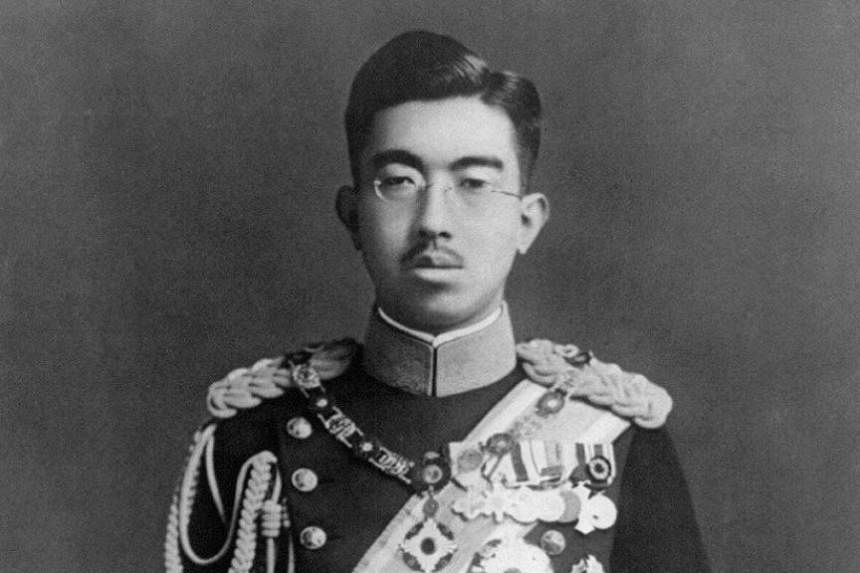
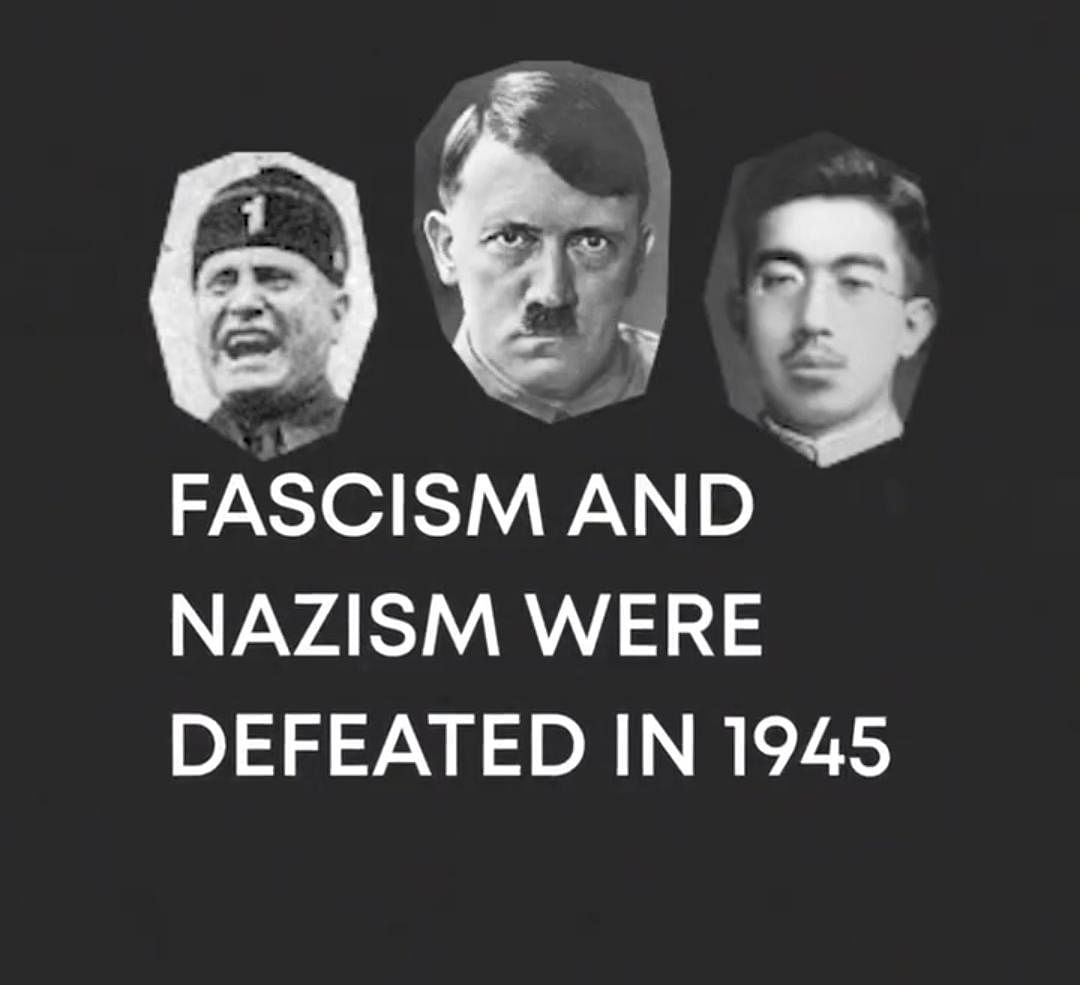
TOKYO (BLOOMBERG) - An official Ukrainian government Twitter account issued an apology after showing a picture of Japan's wartime Emperor Hirohito alongside Adolf Hitler and Benito Mussolini in a social media video about the defeat of fascism.

"Our sincere apologies to Japan for making this mistake," read a message on the Ukrainian twitter feed. "We had no intention to offend the friendly people of Japan."

An edited version of the video without Hirohito's picture was appended to the post. The tweet had circulated widely over the weekend and prompted an official protest from Japan. It also threatened to alienate some conservatives from the Ukrainian cause in a country that has been strongly supportive of President Volodymyr Zelensky since the Russian invasion began.

Japan has joined its ally the US and other leading democracies in sanctions against Russian President Vladimir Putin's regime and has broken with its pacifist tradition by sending non-lethal military equipment to Ukraine. It has also taken the unusual step of opening its doors to a few hundred refugees fleeing the war.

Masahisa Sato, the head of the ruling Liberal Democratic Party's foreign policy panel, said on Sunday (April 24) on Twitter that he had urged the Foreign Ministry to protest to the Ukrainian government. He later added the ministry appeared to have done so, and the "problematic" video was removed.

Emperor Hirohito alongside Adolf Hitler and Benito Mussolini were shown in a social media video about the defeat of fascism. 
PHOTO: HITOTSUBRIDGE/TWITTER

While some Twitter users said they had lost interest in supporting Ukraine over the post, others said it would have been more appropriate to use a picture of Hideki Tojo, who was prime minister of Japan during most of World War II and later hanged as a convicted war criminal.
TOJO ON TRIAL 1948


The Japanese public has backed a tough line to punish the Kremlin for the invasion. A poll carried out by the Nikkei newspaper between April 22 and April 24 found 42 per cent of respondents said Japan's sanctions against Russia should be made harsher, while 44 per cent said current sanctions were appropriate.

More than 62 per cent of respondents said they approved of the government's overall handling of the war.


One-fifth of reptiles worldwide face risk of extinction

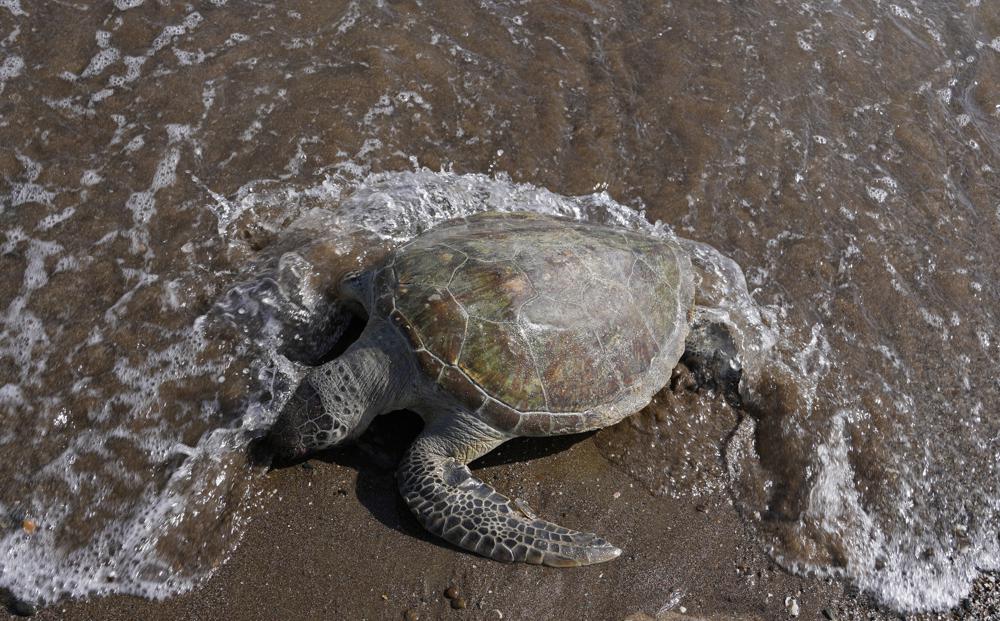
A dead green sea turtle washes up on the beach in the Khor Kalba Conservation Reserve, in the city of Kalba, on the east coast of the United Arab Emirates, Tuesday, Feb. 1, 2022. More than one in five species of reptiles worldwide, including the green sea turtle, are threatened with extinction, according to a comprehensive new assessment of thousands of species published Wednesday, April 27, 2022, in the journal Nature. (AP Photo/Kamran Jebreili, File)


WASHINGTON (AP) — Even the king cobra is “vulnerable.” More than 1 in 5 species of reptiles worldwide are threatened with extinction, according to a comprehensive new assessment of thousands of species published Wednesday in the journal Nature.

Of 10,196 reptile species analyzed, 21% percent were classified as endangered, critically endangered or vulnerable to extinction — including the iconic hooded snakes of South and Southeast Asia.

“This work is a very significant achievement — it adds to our knowledge of where threatened species are, and where we must work to protect them,” said Duke University ecologist Stuart Pimm, who was not involved in the study.

Similar prior assessments had been conducted for mammals, birds and amphibians, informing government decisions about how to draw boundaries of national parks and allocate environmental funds.

Work on the reptile study – which involved nearly 1,000 scientists and 52 co-authors – started in 2005. The project was slowed by challenges in fundraising, said co-author Bruce Young, a zoologist at the nonprofit science organization NatureServe.

 
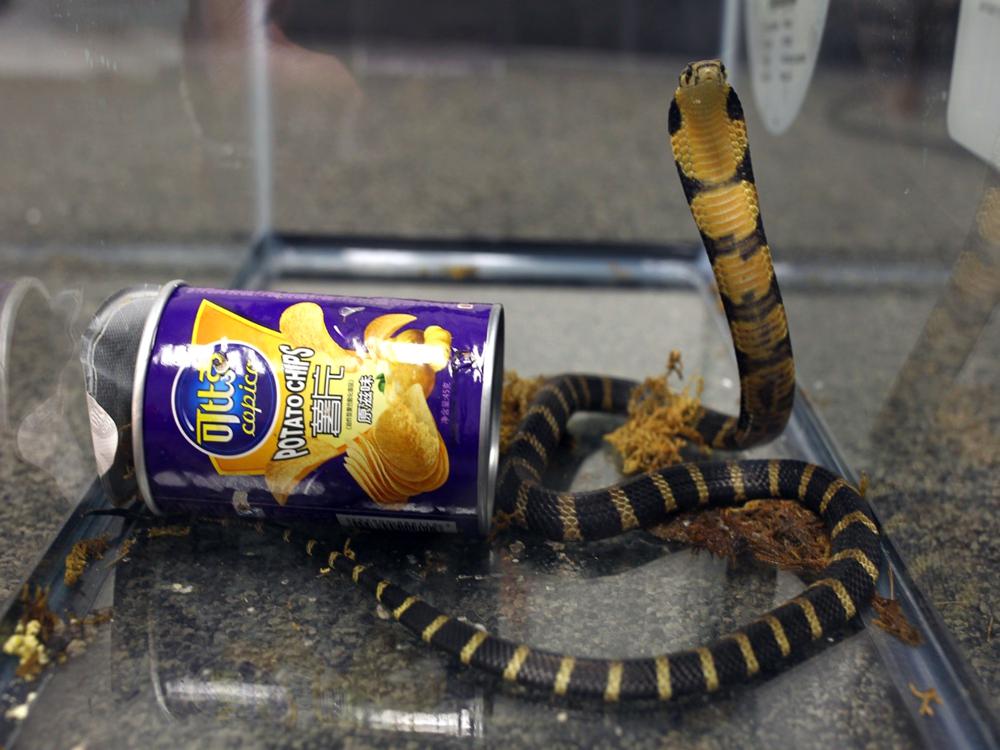
This undated photo provided by U.S. Fish and Wildlife shows a king cobra snake hidden in a potato chip can that was found in the mail in Los Angeles. More than one in five species of reptiles worldwide, including the king cobra, are threatened with extinction, according to a comprehensive new assessment of thousands of species published Wednesday, April 27, 2022, in the journal Nature.
 (U.S. Fish and Wildlife via AP, File)

“There’s a lot more focus on furrier, feathery species of vertebrates for conservation,” Young said, lamenting the perceived charisma gap. But reptiles are also fascinating and essential to ecosystems, he said.

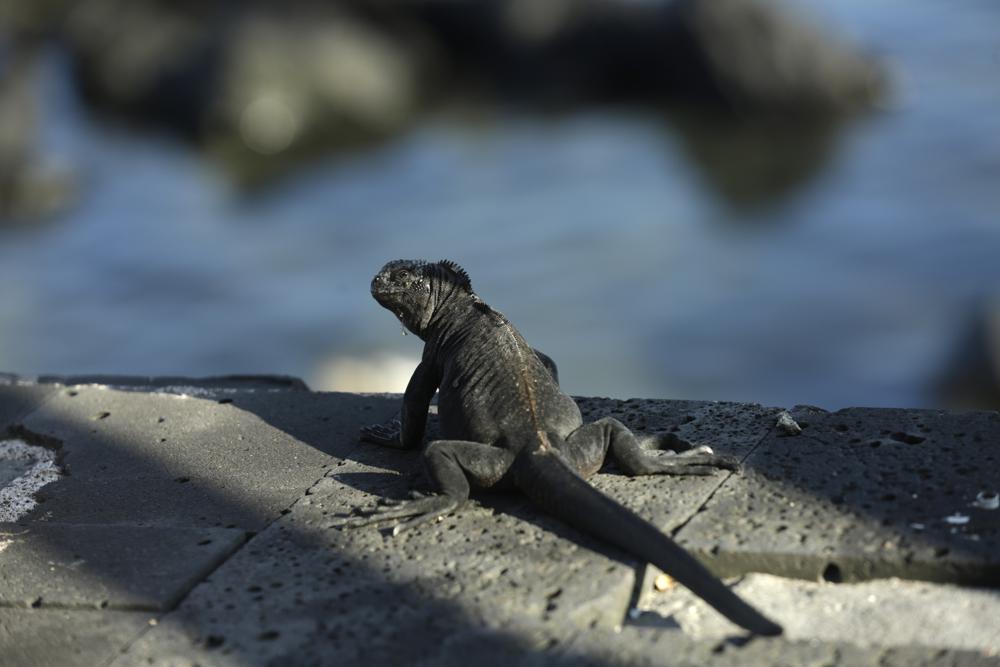
The Galapagos marine iguana, the world’s only lizard adapted to marine life, is classified as “vulnerable” to extinction, said co-author Blair Hedges, a biologist at Temple University. It took 5 million years for the lizard to adapt to foraging in the sea, he said, lamenting “how much evolutionary history can be lost if this single species” goes extinct.

Six of the world’s species of sea turtles are threatened. The seventh is likely also in trouble, but scientists lack data to make a classification.


A marine iguana suns itself on the edge of a boardwalk in San Cristobal, Galapagos Islands, Ecuador on May 2, 2020. More than one in five species of reptiles worldwide, including the marine iguana, are threatened with extinction, according to a comprehensive new assessment of thousands of species published Wednesday, April 27, 2022, in the journal Nature

Worldwide, the greatest threat to reptile life is habitat destruction. Hunting, invasive species and climate change also pose threats, said co-author Neil Cox, a manager at the International Union for the Conservation of Nature’s biodiversity assessment unit.

Reptiles that live in forest areas, such as the king cobra, are more likely to be threatened with extinction than desert-dwellers, in part because forests face greater human disruptions, the study found.


The Associated Press Health and Science Department receives support from the Howard Hughes Medical Institute’s Department of Science Education. The AP is solely responsible for all content.

Litter of red wolf pups born for first time in four years

April 26 (UPI) -- A litter of six red wolf pups were born for the first time since 2018 at the Alligator River National Wildlife Refuge in North Carolina.

The litter includes four females and two males, the Red Wolf Recovery Program announced on Facebook alongside photos of the newborns.

"This red wolf pair was formed through the combination of several management actions and the two red wolves subsequently following their natural instincts in pairing, establishing their territory and mating," the Red Wolf Recovery Program said.

"Every generation yields a new born hope for the red wolf...a cause of joy and celebration!" the organization continued.

Red wolves are one of the most endangered animals on the planet with an estimated 15 to 17 red wolves living in the wild and another 241 existing in captivity.

In March, an endangered black lion tamarin named Grace was born at the Jersey Zoo in Jersey, which is fighting to keep the species from going extinct.


String of 85,000 earthquakes struck near Antarctica in 2020, researchers say


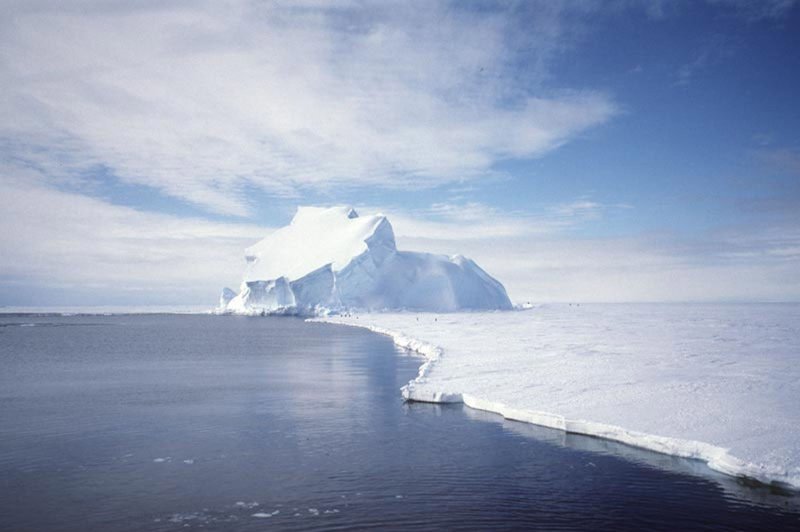
Researchers say that a series of about 85,000 earthquakes occurred in the waters near Antarctica for a few months in 2020 near an underwater volcano. 
File Photo by Ben Holt Sr./NASA/UPI | License Photo

April 27 (UPI) -- According to new research, scientists have discovered that a series of more than 80,000 earthquakes occurred about two years ago near a long-dormant underwater volcano in the sea off Antarctica.

The report published by an international team of researchers said the earthquakes -- which occurred mainly between August and November of 2020 -- were likely caused by a "finger' of hot magma penetrating slightly into the Earth's crust.

The researchers said that the collection of quakes was the strongest seismic activity ever recorded in Antarctica.

The two strongest earthquakes that occurred during the seismic stretch measured magnitudes of 6.0 and 5.9, the study says.

Simone Cesca, the report's lead author, is a seismologist at the GFZ German research Center for Geosciences in Potsdam.

"There have been similar intrusions in other places on Earth, but this is the first time we have observed it there," he told Live Science.

The paper said that the large collection of quakes, about 85,000, were the result of a rapid transfer of magma from the Earth's mantle to near the surface.

"During the second half of 2020, a swarm of at least 85,000 earthquakes occurred beneath the Bransfield Strait, a sea channel that divides the Antarctic mainland from the South Shetland Islands," Cesca wrote in a post titled, "Behind The Paper."

Cesca wrote that the Orca underwater volcano is "a large submarine shield volcano" that rises roughly 3,000 feet above the seafloor. It's named after the Orca whale, which is frequently seen in the region's waters.

The researcher also noted that performing a geophysical study at such a remote location is challenging because seismological and geodetic stations are sparse. Further, the amount of ice and the frequently cloudy weather cut down on the study potential.

"Data could not provide any direct evidence for an undersea eruption," Cesca wrote. "Only a future marine survey may be able to prove whether a submarine eruption took place or not."
Southern California's severe drought prompts water shortage emergency


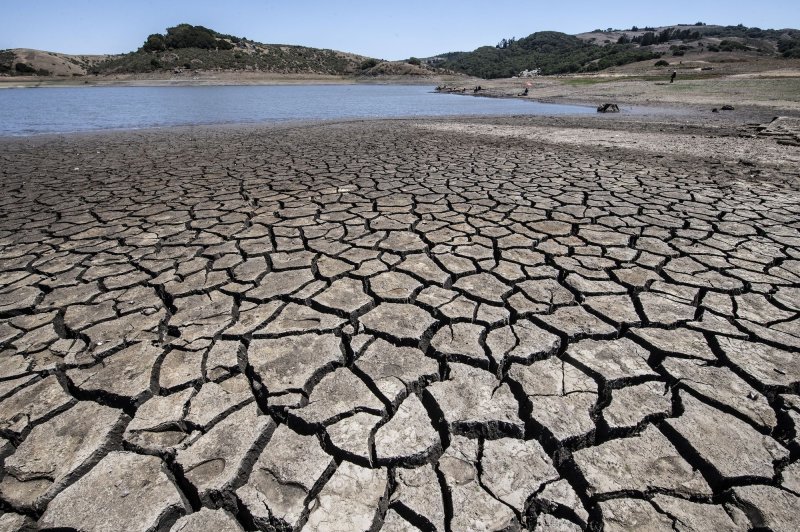
Dried lake bed bakes in the sun at Nicasio Reservoir in Nicasio, Calif., on July 10, 2021.
Photo by Terry Schmitt/UPI | License Photo

April 27 (UPI) -- Around 6 million Southern Californians are under a water shortage emergency amid unprecedented dry conditions in parts of Los Angeles, Ventura and San Bernardino counties, officials said, as the state's drought enters its third year.

Beginning June 1, the Metropolitan Water District of Southern California's conservation efforts will require businesses and residents to limit outdoor water usage to one day per week following a unanimous vote as the state endures its driest-recorded drought.

Non-compliant suppliers could face fines up to $2,000 per acre-foot on any water coming from the water district that exceeds monthly allocation limits.

Scorching heat fueled by climate change has exacerbated California's ongoing dry spell, and the water district has reported low water levels in the state's major reservoirs.

The Metropolitan Water District's water comes from the State Water Project and the Colorado River, serving water to 19 million people.

Millions of people impacted by the restrictions rely on water from Northern California, officials said, but those limited supplies aren't enough to meet normal demands in affected areas for the rest of 2022.

"For the summer, we have half the water that we need right now in these communities," the Metropolitan Water District of Southern California's program manager, Rebecca Kimitch, told CNN.

Despite substantial rainfall in October and December 2021, precipitation in Northern California fell to the driest levels on record between January and March, according to water district officials.

The state's warming climate is "shifting the historical relationships between temperature, precipitation, and runoff," a water district report said.

Even California's record snowfall last year was not enough to alleviate drought conditions.

Berkeley's Central Sierra Snow Laboratory at the University of California saw its snowiest December ever after 17 feet of snow fell, but precipitation dropped off significantly between January and March -- the driest period "by a huge margin" in a 101-year period.

California's governor, Gavin Newsom, asked his state's residents in July to cut down on their water use by 15%, voluntarily.

In preparation for shortages, Newsom last month called for more aggressive implementation of water conservation efforts ordering urban water suppliers to activate what is known as Level 2 of their drought contingency plans.
Jordan’s restoration efforts push back on degrading land

By OMAR AKOUR and WANJOHI KABUKURU

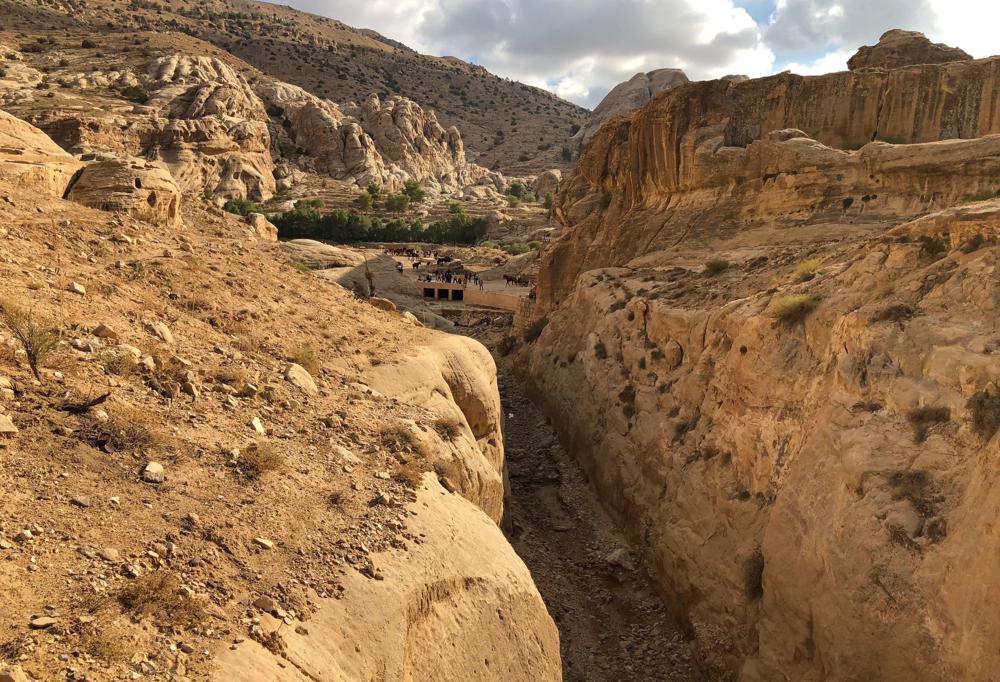
FILE - A dam built in the 1960's by the Department of Antiquities, and the ancient Mudlim tunnel, both built to protect the area from flooding, in Petra, Jordan, Nov. 15, 2018. Efforts to restore damaged but once fertile land in Jordan's desert is sprouting hope for one of the world’s most water-scarce nations, as a land assessment report Wednesday, April 27, 2022 warns about the effects of degradation. 
(AP Photo/Laure Van Ruymbeke, file)


SABHA, Jordan (AP) — Efforts to restore damaged but once fertile land in Jordan’s desert are sprouting hope for one of the world’s most water-scarce nations, as a land assessment report Wednesday warned of the growing scale of global degradation.

Local organizations believe projects that reintroduce native plants and implement smart water harvesting systems will cushion the impacts of climate change and desertification, which are only set to worsen, according to the United Nations report.

The U.N. desertification agency says 40% of land globally is currently degraded, blaming unsustainable land and water management, poor agricultural practices, mining, urbanization and infrastructure development for the land’s deterioration.

Mira Haddad, from the International Center for Agricultural Research in the Dry Areas said several other factors, including “overexploitation of vegetation cover, overgrazing, and...new land practices” as well as climate change are also contributing to land degradation in Jordan.

But environmentalists are already pursuing options to ward off further damage. One of the efforts, run by the Watershed and Development Initiative, is introducing four native plants to 10,000 acres (41 square kilometers) of desert in the Sabha reserve, roughly 56 miles (90 kilometers) east of the Jordanian capital Amman.

“We’re working on the water, we’re working on the green cover and we’re working also with the habitats of the creatures, from insects to animals and all living parts of that ecosystem,” Deyala Tarawneh, a WADI founding member, said. “The success rate of these plants is 85%, which is considered a very high percentage, and they only need to be watered once, which is also reducing the amount of water needed for the irrigation of the green areas.”

But despite the success of WADI’s planting initiative, land restoration in Jordan is still facing several challenges: the number of land unit areas available for restoration is lacking, and the willingness of local communities to leave the land for at least one or two rainy seasons without grazing is also hindering efforts, said ICARDA’s Haddad.

Jordan is one of several countries already grappling with the effects of degradation, with more than 2.3 billion people currently living in water-stressed countries, according to the U.N. report. It warned that more food supply disruptions, forced migration and greater pressure on species survival are also expected as climate change intensifies and poor land management practices continue. By 2030, it warns that 700 million people could be displaced by drought.

“The situation we have right now is unhealthy and certainly not acceptable,” Ibrahim Thiaw, the executive secretary of the U.N. desertification agency, told the Associated Press. “The more you degrade land the more you emit carbon and the more you contribute to climate change.”


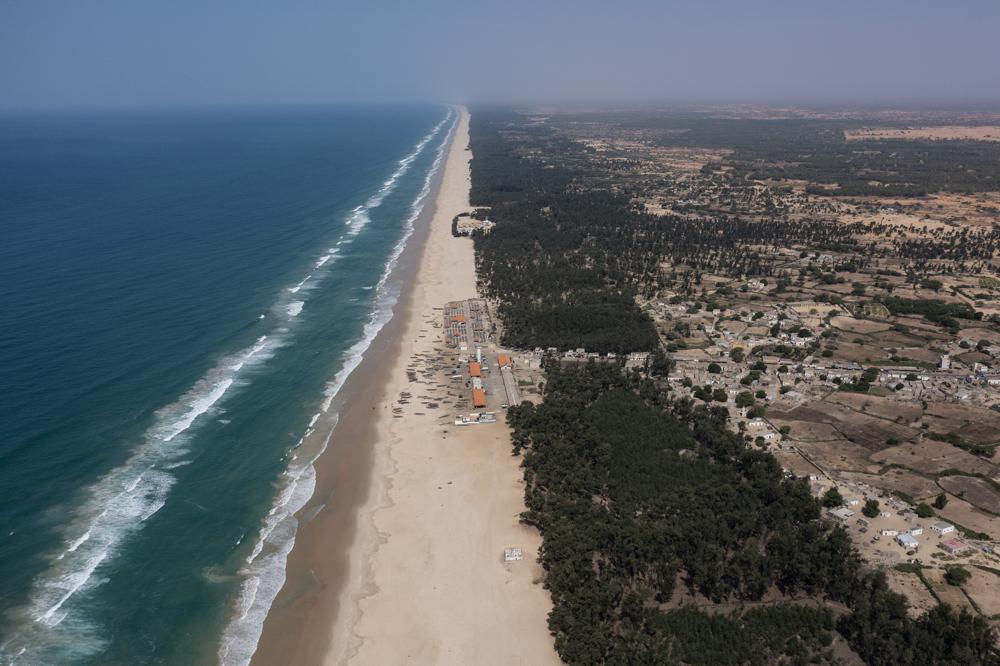
 Filao trees form a curtain that protects the beginning of the Great Green Wall, planted to slow coastal erosion along the Atlantic Ocean, in Lompoul village near Kebemer, Senegal, Nov. 5, 2021. Efforts to restore damaged but once fertile land in Jordan's desert is sprouting hope for one of the world’s most water-scarce nations, as a land assessment report Wednesday, April 27, 2022 warns about the effects of degradation. Like Jordan, several other countries addressing their own land issues, from drought preparedness programs in Mexico, the USA and Brazil, to the 11-country Great Green Wall in Africa aimed at restoring 100 million hectares of degraded landscapes along the Sahel. 
(AP Photo/Leo Correa, file)

The report calls for financial support to bolster conservation and restoration in developing countries. It says the expansion of protected areas and conservation hotspots, better water management, smart agriculture, and the rewilding of biodiversity can be boosted by appropriate funding.

If these kinds of measures are implemented on a wider scale, the U.N. agency’s restoration scenario predicts reduced biodiversity loss and improved soil health, with the benefits particularly felt in North and Sub-Saharan Africa, the Middle East, and Latin America.

But it also notes that inaction would lead to 16 million square kilometers (6 million square miles) — nearly the size of the entire South American continent — of land degradation by 2050.

The report also recommends scaling up land rights for Indigenous peoples and local communities, urging farmers to draw on ample lessons about land restoration, crop adaptation and livestock from established customs and traditional knowledge.

“We welcome new allies to this battle, including economic actors who are increasingly interested in avoiding climate risk, but we must make clear that we will not be used for greenwashing,” José Gregorio Diaz Mirabal, the leader of the Congress of Indigenous Organizations of the Amazon Basin, said in a statement. “Partnering with Indigenous peoples requires embracing transformative change.”

The U.N.’s Thiaw agreed that support for restoration projects should be ramped up. He said addressing land degradation is “the cheapest solution to the climate crisis and biodiversity loss. It is possible to do it by 2050, which is just one generation.”

He added: “It does not require high tech nor a PhD to undertake. Land restoration is accessible and democratic.”

Several countries, like Jordan, are already addressing their own land issues, from drought preparedness programs in Mexico, the USA and Brazil, to the 11-country Great Green Wall in Africa aimed at restoring 100 million hectares (390,000 square miles) of degraded landscapes along the Sahel.

“Land restoration is a win for the environment, economy, society, and for biodiversity,” said Thiaw. “What we are calling for now is the acceleration of such programs.”

___

Wanjohi Kabukuru reported from Mombasa, Kenya.

___

Associated Press climate and environmental coverage receives support from several private foundations. See more about AP’s climate initiative here. The AP is solely responsible for all content.
CRIMINAL CAPITALI$M 
Lawmakers scrutinize McKinsey’s opioid, FDA consulting work


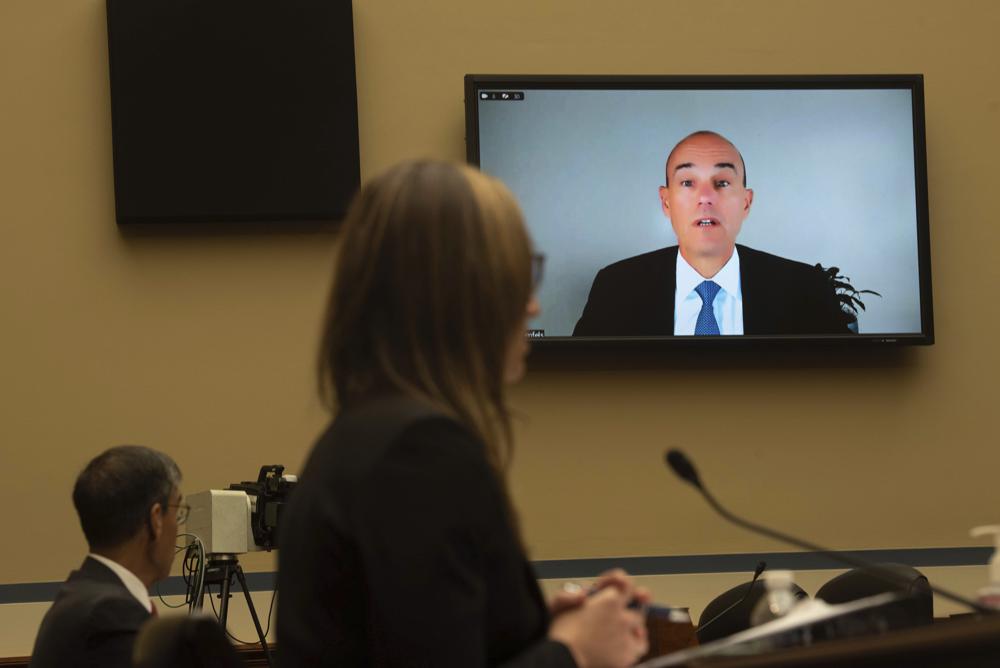
Bob Sterfels, Global Managing Partner, McKinsey & Company, testifies remotely at a House Oversight and Reform committee hearing on Wednesday, April 27, 2022, in Washington. (AP Photo/Kevin Wolf)

WASHINGTON (AP) — House Democrats vowed to continue investigating consulting giant McKinsey’s work with opioid drugmakers after a Wednesday hearing detailed how the firm had advised companies pushing painkillers as well as U.S. health regulators.

The hearing before a House committee is part of an ongoing probe into McKinsey’s role in the U.S. opioid crisis that has been linked to over 500,000 overdose deaths from both prescription pain medications and illicit drugs like fentanyl.

McKinsey’s top executive challenged some of the committee’s findings but said the company has overhauled how it does business and no longer works with opioid manufacturers, including OxyContin-maker Purdue Pharma.

“I’ve apologized for our work for Purdue and other opioid manufacturers and we fully recognize it fell short of our standards,” said Bob Sternfels in testimony before the House Oversight and Reform Committee. He said the company would continue

Last year the consulting powerhouse agreed to pay $600 million to settle lawsuits over its work advising opioid makers, though it admitted no wrongdoing.

Lawmakers questioned Sternfels for three hours about revelations that his company allowed consultants working for Purdue Pharma to simultaneously advise the Food and Drug Administration, the agency tasked with overseeing drug safety.

“McKinsey was advising both the fox and the hen-house — and getting paid by both,” said Chairwoman Rep. Carolyn Maloney, D-N.Y. ”Clearly, McKinsey should not be setting strategy for both drug companies and the FDA.”

A preliminary report from the committee found 22 McKinsey consultants who worked for both the FDA and an opioid manufacturer over the span of a decade. The overlapping work included McKinsey staffers advising the FDA on overhauling its drug safety division, according to the committee’s review of thousands of company documents.

Meanwhile, McKinsey consultants recommended “cash prizes” and “unrivaled recognition” for top OxyContin sales reps to increase Purdue’s revenue, according to a 2013 strategy presentation released Wednesday.

Lawmakers heard conflicting accounts of whether McKinsey’s work helped Purdue avoid tighter FDA regulation.

Massachusetts Attorney General Maura Healey, testifying remotely, said that her state’s own investigation into McKinsey uncovered emails recommending Purdue “band together” with other drugmakers in 2009 to “defend against strict treatment by the FDA.”

Sternfeld said McKinsey did not share FDA documents or intelligence with Purdue and said claims of information sharing were inaccurate.

He also testified that McKinsey was open with FDA about its pharmaceutical consulting work.

“We made very clear that we were working both with the industry and with opioids in particular,” Sternfeld said. FDA officials have previously stated they were aware of McKinsey’s pharmaceutical consulting.

Maloney and other Democrats repeatedly suggested McKinsey’s work may have violated federal contracting rules on disclosing potential conflicts of interest.

On Wednesday, Maloney introduced legislation that would bolster requirements for contractors to disclose potential conflicts. A bipartisan group of Senators previously introduced similar legislation in their chamber.

The committee’s Republicans spent most of their allotted time undercutting the relevance of the hearing, noting the vast majority of opioid overdoses are now caused by fentanyl and heroin, not prescription drugs. They urged tighter border security, noting nearly all illicit opioids enter the U.S. through the southern border.

“We have a new opioid crisis, folks, and it’s not from big pharma in the United States— it’s from the drug cartels who operate sites in Mexico,” said Rep. Byron Donalds, R-Florida.

House Democrats spotlighted several examples of McKinsey touting its FDA connections when soliciting consulting business from drugmakers. The company also submitted advice on dealing with the opioid epidemic to members of the Trump administration, according to the report. It’s unclear if the information had any effect on federal policy.

For decades, McKinsey has been the preeminent corporate consulting firm, advising many of the world’s biggest companies on strategy and operations. The company has also made inroads into government consulting, receiving nearly $1 billion in federal contracts.

The Oversight Committee scrutinized McKinsey’s work on three dozen FDA contracts worth more than $65 million, stretching from 2008 to 2021.

At a separate Senate hearing Tuesday, the head of FDA’s drug center told lawmakers McKinsey’s work dealt with “organizational design and did not entail involvement in product regulation.” The agency currently has no contracts with McKinsey, she noted, and no new awards are expected while Congress investigates the firm.

The House report did not conclude that McKinsey’s FDA consulting resulted in lighter regulation of OxyContin or any other opioids.

For years the FDA has attempted to discourage doctors from overprescribing the drugs, mainly by adding starker warnings to their labeling. Prescriptions have fallen from their peak in 2012, but mainly due to new prescribing limits imposed by state and local governments, insurers and hospital systems.

___

AP Writer Geoff Mulvihill contributed to this story from Cherry Hill, N.J.
JAR JAR BOLSONARO
EXPLAINER: Brazil’s Bolsonaro, top court on collision course

By MAURICIO SAVARESE and DÉBORA ÁLVARES
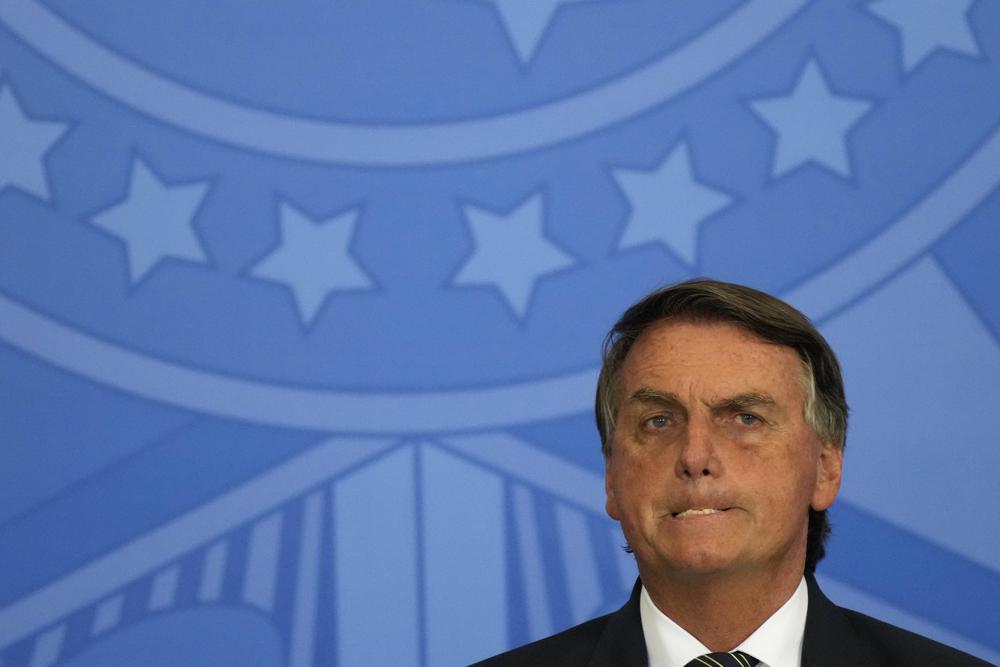
Brazil's President Jair Bolsonaro attends a meeting with parliamentarians at the Planalto Presidential Palace, in Brasilia, Brazil, Wednesday, April 27, 2022. (AP Photo/Eraldo Peres)

SAO PAULO (AP) — Brazil’s President Jair Bolsonaro is once again at odds with the country’s Supreme Court, pardoning a congressman who had just been convicted by high court justices for urging violence against one of them.

Justices may review the pardon, and the case threatens to become an institutional crisis as Bolsonaro is gearing up to seek a second term.

CONVICTION AND PARDON


In a nearly unanimous vote, Brazil’s top court on April 20 sentenced freshman lawmaker Daniel Silveira to almost nine years in prison for inciting physical attacks against Supreme Court justices — particularly Justice Alexandre de Moraes, who presides over a separate investigation into the dissemination of fake news that had already led to a conviction of Silveira.

“May the people enter the Supreme Court, grab Alexandre de Moraes by his collar, shake his egghead and throw him in a garbage can,” Silveira said in a broadcast on social media in February 2021.

The day after Silveira’s conviction, Bolsonaro issued a decree pardoning him, citing the right to free speech. Three opposition parties have challenged the decree, claiming Brazil’s constitution doesn’t allow pardons based on personal motives, such as protecting an ally.

Brazilian presidents traditionally issue year-end pardons based on studies by legal experts at the Justice Ministry. Those have been criticized for freeing corrupt politicians along with other people convicted of nonviolent crimes. But it’s almost unheard of to pardon a specific presidential ally in the way that U.S. leaders have sometimes done in cases such as those of Richard Nixon (by Gerald Ford), Marc Rich (by Bill Clinton) or Steve Bannon (by Donald Trump).

And Bolsonaro’s move was especially provocative, according to Francisco Caputo, a constitutional law expert and member of the national council of Brazil’s bar association. “The way this one was written, mentioning he was trying to correct the Supreme Court, is defiant. Bolsonaro’s decree says he had better understanding of the case than the country’s top court.”

A commission of Brazil’s bar association on Wednesday said that Bolsonaro’s pardon is unconstitutional as it is not in the public interest. The commission also said it was biased and lacking in morality.

WHY MIGHT THIS ESCALATE?

The far-right president has long accused court justices — most of whom were confirmed during past leftist administrations — of trying improperly to frustrate his policies, and he has tried to stir up public opposition to them.

He rallied nationwide demonstrations in September in which protesters shouting “Let’s invade!” pushed past police containment barriers at the Supreme Court, prompting justices to beef up their personal security.

Bolsonaro has been especially resentful of de Moraes, who will assume the presidency of the nation’s top electoral court later this year — overseeing the upcoming presidential election. Last September, he threatened to ignore rulings by the justice, though he never did so.

Four of the justices, who spoke to The Associated Press on condition of anonymity to avoid further inflaming tensions, said they worry Bolsonaro could incite more violent demonstrations against the judiciary if they annul his pardon of Silveira.

An annulment may be a possibility in a Brazilian system whose courts appear to be more willing to intervene in pardon decisions than U.S. judges are.

HOW ARE SUPREME COURT JUSTICES RESPONDING?

So far, the Supreme Court’s justices haven’t publicly challenged the legality of Bolsonaro’s pardon, though at least two have written that the pardon will be reviewed by the court, though no date for that has been set. One of them, Rosa Weber, ruled Monday that that Bolsonaro’s administration must provide justification for the pardon within 10 days.

The other, de Moraes, wrote in a document sent to Silveira’s defense team on Tuesday that the pardon, while wiping away his jail time, would not free him to run for another congressional term.

Further stoking tensions between the executive and the judiciary, Justice Luis Roberto Barroso said during an April 24 speech that the armed forces “are being directed to attack the (electoral) process and try to discredit it.” He was referring to military leaders who had publicly echoed Bolsonaro’s doubts about the reliability of Brazil’s voting system.

HOW IS BOLSONARO’S ADMINISTRATION REACTING?


Brazil’s Defense Ministry, which oversees the armed forces, issued a statement saying Barroso’s comments were “irresponsible and constitute a grave offense.”

The issue of the military’s role hangs over the conflict in part because Bolsonaro has often praised the 1964 coup that put Brazil under military control until 1985. Bolsonaro’s hard-core supporters frequently call on him to use a constitutional clause that lets presidents deploy the armed forces to enforce “law and order” alongside police and other agencies.

Some have suggested troops should be used against the court in some way, though experts overwhelmingly say that would be unconstitutional.

With elections set for October, Bolsonaro has frequently attacked the reliability of the electronic voting machines and claimed the race will be rigged unless there are printed receipts for voters, though experts say there’s no evidence for that. Brazil’s electoral authority oversees the electronic system, and includes some Supreme Court justices among its members.

Two of Bolsonaro’s Cabinet ministers as well as one close ally told the AP that the president has been privately discussing the possibility of invoking the constitutional clause to deploy the armed forces because of Supreme Court actions that have impeded or undermined his decisions, though it isn’t clear what exactly the purpose would be. Two of them said they have relayed that information to Supreme Court justices. All spoke on condition of anonymity because they aren’t authorized to discuss the matter publicly.

___

Álvares reported from Brasilia.


The AP Interview: UN nuke chief wants Ukraine plant access

By DAVID KEYTON and CARA ANNA

1 of 6
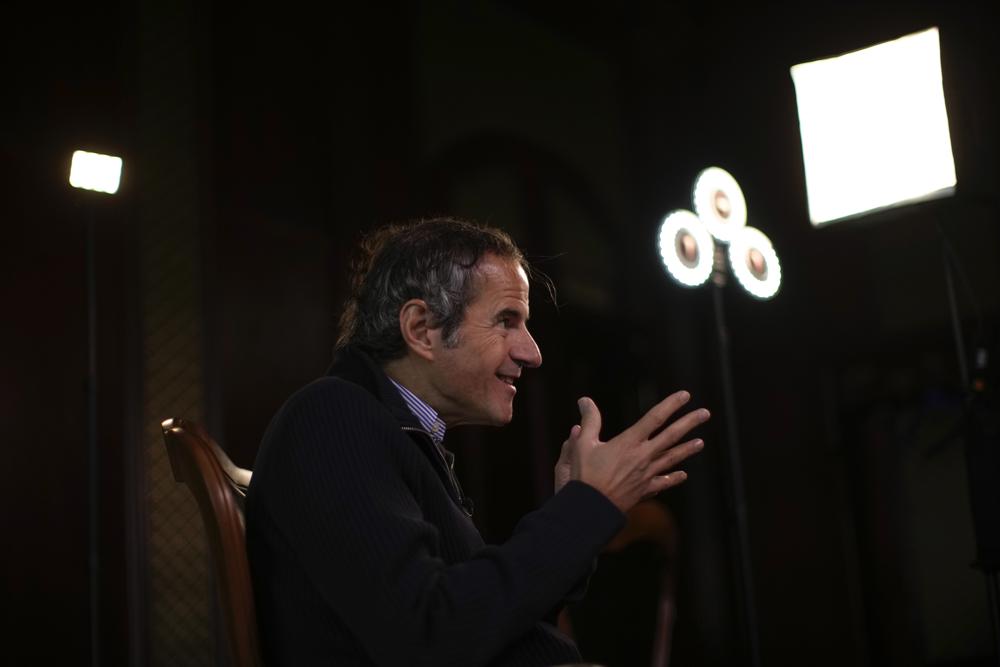
Director General of the International Atomic Energy Agency (IAEA) Rafael Grossi talks during an interview with Associated Press in Kyiv, Wednesday, April 27, 2022. (AP Photo/Francisco Seco)


KYIV, Ukraine (AP) — The International Atomic Energy Agency’s director-general says the level of safety at Europe’s largest nuclear plant, currently under Russian occupation in Ukraine, is like a “red light blinking” as his organization tries in vain to get access for work including repairs.

Rafael Grossi, in an interview with The Associated Press, turned the focus to the nuclear plant at Zaporizhzhia — a day after the 36th anniversary of the Chernobyl disaster in 1986. That plant was also taken over by Russian forces.

Grossi said that the IAEA needs access to the Zaporizhzhia plant in southern Ukraine so its inspectors can, among other things, reestablish connections with the Vienna-based headquarters of the U.N. agency. And for that, both Russia and Ukraine need to help.

The plant requires repairs, “and all of this is not happening. So the situation as I have described it, and I would repeat it today, is not sustainable as it is,” Grossi said. “So this is a pending issue. This is a red light blinking.”

He spoke in an interview Wednesday, a day after meeting with Ukrainian President Volodymyr Zelenskyy about the issue.

“Understandably, my Ukrainian counterparts do not want the IAEA inspectors to go to one of their own facilities under the authority of a third power,” Grossi said. “I had a long conversation about this with President Zelenskyy last night, and it’s something that will still require consultations. We are not there yet.”

The IAEA chief continues to press Russia’s government for access to the Zaporizhzhia plant.

“I don’t see movement in that direction as we speak,” he said. But he is meeting with the Russian side “soon.”

“There are two units that are active, in active operation, as you know, others that are in repairs or in cool down. And there are some activities, technical activities and also inspection activities that need to be performed,” Grossi said.


With 15 reactors and one of the largest nuclear power capacities in the world, the war has essentially turned parts of Ukraine into a nuclear minefield. Again and again since the invasion, nuclear experts have watched in alarm as Russian forces have come uncomfortably close to multiple nuclear plants in Ukraine.

A Chernobyl security worker told the AP that the Russians flew aircraft over the damaged reactor site and dug trenches in highly radioactive dirt.

On Monday, Russian cruise missiles flew over the Khmelnitsky nuclear plant in western Ukraine.

“There cannot be any military action in or around a nuclear power plant,” Grossi said, adding that he has appealed to Russia about this.

“This is unprecedented to have a war unfolding amidst one of the world’s largest nuclear infrastructures, which, of course, makes for a number of fragile or weak points that could be, of course, exploited wittingly or unwittingly,” he added.

“So this requires a lot of activity on our side and cooperation. Cooperation from the Russian side. Understanding from the Ukrainian side so that we can avoid an accident.”

On Iran, Grossi said his agency is still trying to clarify answers from Tehran on outstanding questions involving traces of human-made enriched uranium at three sites in the country. The Islamic Republic and the IAEA have been trying to resolve a series of issues between them since the collapse of Tehran’s nuclear deal with world powers, including regaining access to footage from surveillance cameras at atomic sites in the country.

He also acknowledged Iran’s ability to enrich uranium since the deal’s collapse had expanded as it uses more-advanced centrifuges. Tehran recently moved a centrifuge workshop to its underground Natanz nuclear facility after a suspected Israeli attack.

“They are transferring the centrifuge producing capacity to a place where they feel they are more protected,” Grossi said.

Russia’s invasion of Ukraine, along with U.S. and European support for Ukraine in the conflict, have increased tensions between Russia and the West, but it’s “imperative for us to look for common denominators in spite of these difficulties,” he said.

He added: “We cannot afford to stop. We have to continue. It’s in the world’s interest, it’s in their own interest that the nuclear situation … is successful. I cannot imagine a geostrategic scenario where more nuclear weapons, proliferation, in the Middle East would help anybody or anything.”

Iran long has insisted its nuclear program is peaceful. However, U.S. intelligence agencies and the IAEA assess Tehran had an organized military nuclear program through 2003.

___

Associated Press reporters Jon Gambrell in Lviv, and Oleksandr Stashevskyi in Kyiv, contributed to this report.

___

Follow AP’s coverage of the war in Ukraine at https://apnews.com/hub/russia-ukraine