Monday, August 29, 2022

Compact QKD system paves the way to cost-effective satellite-based quantum networks

Researchers demonstrate successful quantum key distribution between space lab and four ground stations

Peer-Reviewed Publication

OPTICA

Space-to-ground QKD experiment 

IMAGE: RESEARCHERS EXPERIMENTALLY DEMONSTRATED A SPACE-TO-GROUND QKD NETWORK USING A COMPACT QKD TERMINAL ABOARD THE CHINESE SPACE LAB TIANGONG-2 AND FOUR GROUND STATIONS. view more 

CREDIT: CHENG-ZHI PENG, UNIVERSITY OF SCIENCE AND TECHNOLOGY OF CHINA

WASHINGTON — Researchers report an experimental demonstration of a space-to-ground quantum key distribution (QKD) network using a compact QKD terminal aboard the Chinese Space Lab Tiangong-2 and four ground stations. The new QKD system is less than half the weight of the system the researchers developed for the Micius satellite, which was used to perform the world’s first quantum-encrypted virtual teleconference.

The demonstration represents an important step toward practical QKD based on constellations of small satellites, a setup considered one of the most promising routes to creating a global quantum communication network.

“QKD offers unconditional security by using single photons to encode information between two distant terminals,” said research team member Cheng-Zhi Peng from the University of Science and Technology of China. “The compact system we developed can reduce the cost of implementing QKD by making it possible to use small satellites.”

Peng and researchers from other institutions in China describe their new system and experimental results in OpticaOptica Publishing Group’s journal for high-impact research. They also found that QKD performance can be boosted by building a network of satellites orbiting at different angles, or inclinations, in relation to the equator.

“Our new work demonstrates the feasibility of a space-ground QKD network based on a compact satellite payload combined with constellations of satellites with different orbit types,” said Peng. “In the near future, this type of QKD system could be used in applications that require high security such as government affairs, diplomacy and finance.”

Shrinking the QKD system

QKD uses the quantum properties of light to generate secure random keys for encrypting and decrypting data. In previous work, the research group demonstrated satellite-to-ground QKD and satellite-relayed intercontinental quantum networks using the Micius satellite. However, the QKD system used aboard that satellite was bulky and expensive. About the size of a large refrigerator, the system weighed around 130 kg and required 130 W of power.

As part of China's quantum constellation plan, the researchers sought to develop and demonstrate a more practical space-ground QKD network. To do this, they developed a compact payload that allowed the Tiangong-2 Space Lab to act as a satellite QKD terminal. The QKD payload — consisting of a tracking system, QKD transmitter and a laser communication transmitter — weighed around 60 kg, required 80 W of power and measured about the size of two microwave ovens.

“This payload was as integrated as possible to reduce volume, weight and cost while achieving the high performance necessary to support space-to-ground QKD experiments,” said Peng. “It also had to be very durable to withstand harsh conditions such as the severe vibration experienced during launch and the extreme thermal vacuum environment of space.”

The researchers performed a total of 19 QKD experiments during which secure keys were successfully distributed between the Space Lab terminal and four ground stations on 15 different days between October 2018 and February 2019. These experiments were conducted at night to avoid the influence of daylight background noise.

The researchers found that the medium (~42°) inclination orbit of the space lab allowed multiple passes over a single ground station in one night, which increased the number of keys that could be generated. They also built a model to compare the performance of satellite-based QKD networks with different orbit types. They found that combining satellites with a medium-inclination orbit like the space lab with a sun-synchronous orbit that travels over the polar regions achieved the best performance.

Next steps

The researchers are now working to improve their QKD system by increasing the speed and performance of the QKD system, reducing cost, and exploring the feasibility of daytime satellite-to-ground QKD transmission. “These improvements would allow a practical quantum constellation to be created by launching multiple low-orbit satellites,” said Peng. “The constellation could be combined with a medium-to-high-orbit quantum satellite and fiber-based QKD networks on the ground to create a space-ground-integrated quantum network.”

Although not part of this work, an even smaller quantum satellite developed by Hefei National Laboratory and University of Science and Technology of China and other research institutes in China was successfully launched into space on July 27. This satellite, known as a micro/nano satellite, weighs about a sixth the weight of the Micius satellite and contains a QKD system that is about a third of the size of that demonstrated in the Optica paper. That satellite is designed to carry out real-time satellite-to-ground QKD experiments, representing another important step toward low-cost and practical quantum satellite constellations.

Paper: Y. Li, S.-K. Liao, Y. Cao, J.-G. Ren, W.-Y. Liu, J. Yin, Q. Shen, J. Qiang, L. Zhang, H.-L. Young, J. Lin, F.-Z. Li, T. Xi, L. Li, R. Shu, Q. Zhang, Y.-A. Chen, C.-Y. Lu, N.-L. Liu, X.-B. Wang, J.-Y. Wang, C.-Z. Peng, J.-W. Pan, “Space-ground QKD network based on a compact payload and medium-inclination orbit,” 9, 8 (2022).
DOI: 10.1364/OPTICA.458330.

About Optica

Optica is an open-access journal dedicated to the rapid dissemination of high-impact peer-reviewed research across the entire spectrum of optics and photonics. Published monthly by Optica Publishing Group, the Journal provides a forum for pioneering research to be swiftly accessed by the international community, whether that research is theoretical or experimental, fundamental or applied. Optica maintains a distinguished editorial board of more than 60 associate editors from around the world and is overseen by Editor-in-Chief Prem Kumar, Northwestern University, USA. For more information, visit Optica.

About Optica Publishing Group (formerly OSA)

Optica Publishing Group is a division of Optica (formerly OSA), Advancing Optics and Photonics Worldwide. It publishes the largest collection of peer-reviewed content in optics and photonics, including 18 prestigious journals, the society’s flagship member magazine, and papers from more than 835 conferences, including 6,500+ associated videos. With over 400,000 journal articles, conference papers and videos to search, discover and access, Optica Publishing Group represents the full range of research in the field from around the globe.


CAPTION

Satellite-based QKD transmission could be used to create a highly secure global quantum communication network.

CREDIT

Cheng-Zhi Peng, University of Science and Technology of China

CAPTION

The researchers created the compact payload — shown here in ground experiments— that allowed the Tiangong-2 Space Lab to act as a satellite QKD terminal. It included a tracking system, QKD transmitter and a laser communication transmitter.

CREDIT

Cheng-Zhi Peng, University of Science and Technology of China

'Everybody is happy now'

A world of genetically modified babies, boundless consumption, casual sex and drugs ... How does Aldous Huxley's vision of a totalitarian future stand up 75 years after Brave New World was first published, asks Margaret Atwood

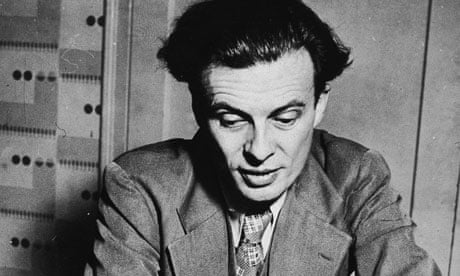
British writer Aldous Huxley (1894 - 1963) sits with a newspaper on his lap, 1930s. 
Photograph: Hulton Archive/Getty Images

Margaret Atwood
Sat 17 Nov 2007 

"O brave new world, that has such people in't!" - Miranda, in Shakespeare's The Tempest, on first sighting the shipwrecked courtiers

In the latter half of the 20th century, two visionary books cast their shadows over our futures. One was George Orwell's 1949 novel Nineteen Eighty-Four, with its horrific vision of a brutal, mind-controlling totalitarian state - a book that gave us Big Brother and thoughtcrime and newspeak and the memory hole and the torture palace called the Ministry of Love and the discouraging spectacle of a boot grinding into the human face forever.

The other was Aldous Huxley's Brave New World (1932), which proposed a different and softer form of totalitarianism - one of conformity achieved through engineered, bottle-grown babies and hypnotic persuasion rather than through brutality, of boundless consumption that keeps the wheels of production turning and of officially enforced promiscuity that does away with sexual frustration, of a pre-ordained caste system ranging from a highly intelligent managerial class to a subgroup of dim-witted serfs programmed to love their menial work, and of soma, a drug that confers instant bliss with no side effects.

Which template would win, we wondered. During the cold war, Nineteen Eighty-Four seemed to have the edge. But when the Berlin Wall fell in 1989, pundits proclaimed the end of history, shopping reigned triumphant, and there was already lots of quasi-soma percolating through society. True, promiscuity had taken a hit from Aids, but on balance we seemed to be in for a trivial, giggly, drug-enhanced spend-o-rama: Brave New World was winning the race.

That picture changed, too, with the attack on New York's twin towers in 2001. Thoughtcrime and the boot grinding into the human face could not be got rid of so easily, after all. The Ministry of Love is back with us, it appears, though it's no longer limited to the lands behind the former iron curtain: the west has its own versions now.

On the other hand, Brave New World hasn't gone away. Shopping malls stretch as far as the bulldozer can see. On the wilder fringes of the genetic engineering community, there are true believers prattling of the gene-rich and the gene-poor - Huxley's alphas and epsilons - and busily engaging in schemes for genetic enhancement and - to go one better than Brave New World - for immortality.

Would it be possible for both of these futures - the hard and the soft - to exist at the same time, in the same place? And what would that be like?

Surely it's time to look again at Brave New World and to examine its arguments for and against the totally planned society it describes, in which "everybody is happy now". What sort of happiness is on offer, and what is the price we might pay to achieve it?

I first read Brave New World in the early 1950s, when I was 14. It made a deep impression on me, though I didn't fully understand some of what I was reading. It's a tribute to Huxley's writing skills that although I didn't know what knickers were, or camisoles - nor did I know that zippers, when they first appeared, had been denounced from pulpits as lures of the devil because they made clothes so easy to take off - I none the less had a vivid picture of "zippicamiknicks", that female undergarment with a single zipper down the front that could be shucked so easily: "Zip! The rounded pinkness fell apart like a neatly divided apple. A wriggle of the arms, a lifting first of the right foot, then the left: the zippicamiknicks were lying lifeless and as though deflated on the floor."

I myself was living in the era of "elasticised panty girdles" that could not be got out of or indeed into without an epic struggle, so this was heady stuff indeed.

The girl shedding the zippicamiknicks is Lenina Crowne, a blue-eyed beauty both strangely innocent and alluringly voluptuous - or "pneumatic", as her many male admirers call her. Lenina doesn't see why she shouldn't have sex with anyone she likes whenever the occasion offers, as to do so is merely polite behaviour and not to do so is selfish. The man she's trying to seduce by shedding her undergarment is John "the Savage", who's been raised far outside the "civilised" pale on a diet of Shakespeare's chastity/whore speeches, and Zuni cults, and self-flagellation, and who believes in religion and romance, and in suffering to be worthy of one's beloved, and who idolises Lenina until she doffs her zippicamiknicks in such a casual and shameless fashion.

Never were two sets of desiring genitalia so thoroughly at odds. And thereon hangs Huxley's tale.

Brave New World is either a perfect-world utopia or its nasty opposite, a dystopia, depending on your point of view: its inhabitants are beautiful, secure and free from diseases and worries, though in a way we like to think we would find unacceptable. "Utopia" is sometimes said to mean "no place", from the Greek ou-topos; others derive it from eu, as in "eugenics", in which case it would mean "healthy place" or "good place". Sir Thomas More, in his own 16th-century Utopia, may have been punning: utopia is the good place that doesn't exist.

As a literary construct, Brave New World thus has a long list of literary ancestors. Plato's Republic and the Bible's book of Revelations and the myth of Atlantis are the great-great-grandparents of the form; nearer in time are More's Utopia, and the land of the talking-horse, totally rational Houyhnhnms in Jonathan Swift's Gulliver's Travels, and HG Wells's The Time Machine, in which the brainless, pretty "upper classes" play in the sunshine during the day, and the ugly "lower classes" run the underground machinery and emerge at night to eat the social butterflies.

In the 19th century - when improvements in sewage systems, medicine, communication technologies and transportation were opening new doors - many earnest utopias were thrown up by the prevailing mood of optimism, with William Morris's News from Nowhere and Edward Bellamy's Looking Backward foremost among them.

Insofar as they are critical of society as it presently exists, but nevertheless take a dim view of the prospects of the human race, utopias may verge on satire, as do Swift's and More's and Wells's; but insofar as they endorse the view that humanity is perfectible, or can at least be vastly improved, they will resemble idealising romances, as do Bellamy's and Morris's. The first world war marked the end of the romantic-idealistic utopian dream in literature, just as several real-life utopian plans were about to be launched with disastrous effects. The Communist regime in Russia and the Nazi takeover of Germany both began as utopian visions.

But as had already been discovered in literary utopias, perfectibility breaks on the rock of dissent. What do you do with people who don't endorse your views or fit in with your plans? Nathaniel Hawthorne, a disillusioned graduate of the real-life Brooke Farm utopian scheme, pointed out that the Puritan founders of New England - who intended to build the New Jerusalem - began with a prison and a gibbet. Forced re-education, exile and execution are the usual choices on offer in utopias for any who oppose the powers that be. It's rats in the eyes for you - as in Nineteen Eighty-Four - if you won't love Big Brother. Brave New World has its own gentler punishments: for non-conformists, it's exile to Iceland, where Man's Final End can be discussed among like-minded intellects, without pestering "normal" people - in a sort of university, as it were.

Utopias and dystopias from Plato's Republic on have had to cover the same basic ground that real societies do. All must answer the same questions: where do people live, what do they eat, what do they wear, what do they do about sex and child-rearing? Who has the power, who does the work, how do citizens relate to nature, and how does the economy function? Romantic utopias such as Morris's News from Nowhere and WH Hudson's A Crystal Age present a pre-Raphaelite picture, with the inhabitants going in for flowing robes, natural settings in abodes that sound like English country houses with extra stained glass and lots of arts and crafts. Everything would be fine, we're told, if we could only do away with industrialism and get back in tune with nature, and deal with overpopulation. (Hudson solves this last problem by simply eliminating sex, except for one unhappy couple per country house who are doomed to procreate.)

But when Huxley was writing Brave New World at the beginning of the 1930s, he was, in his own words, an "amused, Pyrrhonic aesthete", a member of that group of bright young upstarts that swirled around the Bloomsbury Group and delighted in attacking anything Victorian or Edwardian. So Brave New World tosses out the flowing robes, the crafts, and the tree-hugging. Its architecture is futuristic - electrically lighted towers and softly glowing pink glass - and everything in its cityscape is relentlessly unnatural and just as relentlessly industrialised. Viscose and acetate and imitation leather are its fabrics of choice; apartment buildings, complete with artificial music and taps that flow with perfume, are its dwellings; transportation is by private helicopter. Babies are no longer born, they're grown in hatcheries, their bottles moving along assembly lines, in various types and batches according to the needs of "the hive", and fed on "external secretion" rather than "milk". The word "mother" - so thoroughly worshipped by the Victorians - has become a shocking obscenity; and indiscriminate sex, which was a shocking obscenity for the Victorians, is now de rigueur.

"He patted me on the behind this afternoon," said Lenina.

"There, you see!" Fanny was triumphant. "That shows what he stands for. The strictest conventionality."

Many of Brave New World's nervous jokes turn on these kinds of inversions - more startling to its first audience, perhaps, than to us, but still wry enough. Victorian thrift turns to the obligation to spend, Victorian till-death-do-us-part monogamy has been replaced with "everyone belongs to everyone else", Victorian religiosity has been channelled into the worship of an invented deity - "Our Ford", named after the American car-czar Henry Ford, god of the assembly line - via communal orgies. Even the "Our Ford" chant of "orgy-porgy" is an inversion of the familiar nursery rhyme, in which kissing the girls makes them cry. Now, it's if you refuse to kiss them - as "the Savage" does - that the tears will flow.

Sex is often centre stage in utopias and dystopias - who can do what, with which set of genital organs, and with whom, being one of humanity's main preoccupations. Because sex and procreation have been separated and women no longer give birth - the very idea is yuck-making to them - sex has become a recreation. Little naked children carry on "erotic play" in the shrubberies, so as to get a hand in early. Some women are sterile - "freemartins" - and perfectly nice girls, though a little whiskery. The others practise "Malthusian drill" - a form of birth control - and take "pregnancy surrogate" hormone treatments if they feel broody, and sport sweet little faux-leather fashionista cartridge belts crammed with contraceptives. If they slip up on their Malthusian drill, there's always the lovely pink-glass Abortion Centre. Huxley wrote before the pill, but its advent brought his imagined sexual free-for-all a few steps closer. (What about gays? Does "everyone belongs to everyone else" really mean everyone? We aren't told.)

Huxley himself still had one foot in the 19th century: he could not have dreamed his upside-down morality unless he himself also found it threatening. At the time he was writing Brave New World he was still in shock from a visit to the United States, where he was particularly frightened by mass consumerism, its group mentality and its vulgarities.

I use the word "dreamed" advisedly, because Brave New World - gulped down whole - achieves an effect not unlike a controlled hallucination. All is surface; there is no depth. As you might expect from an author with impaired eyesight, the visual sense predominates: colours are intense, light and darkness vividly described. Sound is next in importance, especially during group ceremonies and orgies, and the viewing of "feelies" - movies in which you feel the sensations of those onscreen, "The Gorillas' Wedding" and "Sperm Whale's Love-Life" being sample titles. Scents are third - perfume wafts everywhere, and is dabbed here and there; one of the most poignant encounters between John the Savage and the lovely Lenina is the one in which he buries his worshipping face in her divinely scented undergarments while she herself is innocently sleeping, zonked out on a strong dose of soma, partly because she can't stand the awful real-life smells of the "reservation" where the new world has not been implemented.

Many utopias and dystopias emphasise food (delicious or awful; or, in the case of Swift's Houyhnhnms, oats), but in Brave New World the menus are not presented. Lenina and her lay-of-the-month, Henry, eat "an excellent meal", but we aren't told what it is. (Beef would be my guess, in view of the huge barns full of cows that provide the external secretions.) Despite the dollops of sex-on-demand, the bodies in Brave New World are oddly disembodied, which serves to underscore one of Huxley's points: in a world in which everything is available, nothing has any meaning.

Meaning has in fact been eliminated, as far as possible. All books except works of technology have been banned - cf Ray Bradbury's 1953 novel Fahrenheit 451; museum-goers have been slaughtered, cf Henry Ford's "History is bunk". As for God, he is present "as an absence; as though he weren't there at all" - except, of course, for the deeply religious John the Savage, who has been raised on the Zuni "reservation", where archaic life carries on, replete with "meaning" of the most intense kinds. John is the only character in the book who has a real body, but he knows it through pain, not through pleasure. "Nothing costs enough here," he says of the perfumed new world, to where he's been brought as an "experiment".

The "comfort" offered by Mustapha Mond - one of the 10 "controllers" of this world, direct descendants of Plato's guardians - is not enough for John. He wants the old world back - dirt, diseases, free will, fear, anguish, blood, sweat, tears and all. He believes he has a soul, and like many an early 20th-century literary possessor of such a thing - think of the missionary in Somerset Maugham's 1921 story, Miss Thompson, who hangs himself after sinning with a prostitute - he is made to pay the price for this belief.

In a foreword to a new edition of Brave New World published in 1946, after the horrors of the second world war and Hitler's "final solution", Huxley criticises himself for having provided only two choices in his 1932 utopia/dystopia - an "insane life in Utopia" or "the life of a primitive in an Indian village, more human in some respects, but in others hardly less queer and abnormal". (He does, in fact, provide a third sort of life - that of the intellectual community of misfits in Iceland - but poor John the Savage isn't allowed to go there, and he wouldn't have liked it anyway, as there are no public flagellations available.) The Huxley of 1946 comes up with another sort of utopia, one in which "sanity" is possible. By this, he means a kind of "high utilitarianism" dedicated to a "conscious and rational" pursuit of man's "final end", which is a kind of union with the immanent "Tao or Logos, the transcendent Godhead or Brahmin". No wonder Huxley subsequently got heavily into the mescaline and wrote The Doors of Perception, thus inspiring a generation of 1960s dopeheads and pop musicians to seek God in altered brain chemistry. His interest in soma, it appears, didn't spring out of nowhere.

Meanwhile, those of us still pottering along on the earthly plane - and thus still able to read books - are left with Brave New World. How does it stand up, 75 years later? And how close have we come, in real life, to the society of vapid consumers, idle pleasure-seekers, inner-space trippers and programmed conformists that it presents?

The answer to the first question, for me, is that it stands up very well. It's still as vibrant, fresh, and somehow shocking as it was when I first read it.

The answer to the second question rests with you. Look in the mirror: do you see Lenina Crowne looking back at you, or do you see John the Savage? Chances are, you'll see something of both, because we've always wanted things both ways. We wish to be as the careless gods, lying around on Olympus, eternally beautiful, having sex and being entertained by the anguish of others. And at the same time we want to be those anguished others, because we believe, with John, that life has meaning beyond the play of the senses, and that immediate gratification will never be enough.

It was Huxley's genius to present us to ourselves in all our ambiguity. Alone among the animals, we suffer from the future perfect tense. Rover the Dog cannot imagine a future world of dogs in which all fleas will have been eliminated and doghood will finally have achieved its full glorious potential. But thanks to our uniquely structured languages, human beings can imagine such enhanced states for themselves, though they can also question their own grandiose constructions. It's these double-sided imaginative abilities that produce masterpieces of speculation such as Brave New World

To quote The Tempest, source of Huxley's title: "We are such stuff / As dreams are made on." He might well have added: "and nightmares".


SEE  


https://plawiuk.blogspot.com/search?q=LSD


https://plawiuk.blogspot.com/search?q=MKULTRA

https://plawiuk.blogspot.com/search?q=CIA


LA REVUE GAUCHE - Left Comment: Search results for ALDOUS HUXLEY 


Aldous Huxley - somaweb.org
The intellectual, satirical, spiritual, hypnotic, and philosophical world of Aldous Huxley.


LA REVUE GAUCHE - Left Comment: Search results for SOMA 


New study estimates over 5.5 million U.S. adults use hallucinogens

Past 12-month LSD use rate increased from 0.9 percent in 2002 to 4 percent in 2019

Peer-Reviewed Publication

COLUMBIA UNIVERSITY'S MAILMAN SCHOOL OF PUBLIC HEALTH

August 18, 2022 -- Hallucinogen use has increased since 2015, overall and particularly among adults 26 and older, while use decreased in adolescents aged 12–17 years according to a new study by Columbia University Mailman School of Public Health and Columbia University Irving Medical Center. Estimates of over 5.5 million people in the U.S. used hallucinogens in the past year in 2019, which represents an increase from 1.7 percent of the population ages 12 years and over in 2002 to 2.2 percent in 2019. 

LSD use between 2002 and 2019 increased overall and in all age groups with the past 12-month rate increasing from 0.9 percent in 2002 to 4 percent in 2019 for those 18-25 years of age.  Conversely, PCP use between 2002 and 2019 decreased, as did the drug Ecstasy since 2015. The study is the first to provide formal statistical analyses of trends in prevalence of hallucinogen use overall and by age groups during the last two decades. 

The findings are published online in the peer-reviewed journal Addiction.

To assess trends in hallucinogen use in the U.S. general population, the researchers analyzed data from the National Survey on Drug Use and Health (NSDUH) from 2002 to 2019 for participants 12 years of age and older.

The use of hallucinogens -- a broad category of psychoactive substances, including “classic” psychedelics such as LSD -- are mostly designated as Schedule I drugs in the U. S., and may entail risk for adverse consequences including anxious reactions, confusion, acute delusional states and a prolonged sense of fear and dread. LSD and Ecstasy and several other hallucinogens are associated with an increased risk of autonomic, endocrine, cardiovascular and neurological adverse effects including elevated blood pressure, heart rate and loss of appetite, tremors and seizures. PCP is considered to be one of the most dangerous hallucinogens, and known to cause adverse effects similar to LSD and ecstasy, but unlike those drugs, PCP can lead to hostile and violent behaviors that may result in severe trauma. 

“While new findings suggesting benefits from use of certain hallucinogens among a range of cognitive areas are being published at a rapid rate, there are still gaps in knowledge concerning safe hallucinogen use, and evidence for potential adverse effects even with professionally supervised use that warrant attention.” said Ofir Livne, MD, MPH, postdoctoral fellow in the Department of Epidemiology at Columbia Mailman School, and first author. 

From 2002 to 2019, the prevalence of 12-month LSD use increased significantly overall and among respondents aged 12–17 years. However, the prevalence of great risk for regular LSD use decreased significantly overall for the years 2002–14, and among all age groups.

“Our finding of an upward trend in 12-month LSD use, overall and by age, matches our finding of a downward trend in perception of LSD as risky,” said Deborah Hasin, PhD, professor of epidemiology (in psychiatry) at the Columbia University Irving Medical Center, and senior author. “Factors such as changes in risk perception, in the specific types of drugs available and in expectations of beneficial effects of ‘microdosing’ may all have led to increased use of certain hallucinogens in recent years.”

According to author Livne, “Given the recent media coverage showing that an increasing number of adults may be reporting positive effects of ‘microdosing’ and expecting therapeutic benefits of hallucinogens without negative effects, our findings merit a comprehensive examination of time trends and motives for hallucinogen frequency and quantity of use.”

“In light of popular media reports of a forthcoming ‘psychedelic revolution’ with commercialization and marketing that may further reduce public perception of any risk, researchers, clinicians and policymakers should increase their attention to the rising rates of unsupervised hallucinogen use among the general public,” observes Hasin. “Our results highlight such use as a growing public health concern and suggest that the increasing risk of potentially unsupervised hallucinogen use warrants preventive strategies.“

Co-authors are Dvora Shmulewitz, Department of Psychiatry, Columbia University Irving Medical Center, and Claire Walsh, New York State Psychiatric Institute.

The study was supported by the National Institute on Drug Abuse (T32DA031099). 

Columbia University Mailman School of Public Health

Founded in 1922, the Columbia University Mailman School of Public Health pursues an agenda of research, education, and service to address the critical and complex public health issues affecting New Yorkers, the nation and the world. The Columbia Mailman School is the fourth largest recipient of NIH grants among schools of public health. Its nearly 300 multi-disciplinary faculty members work in more than 100 countries around the world, addressing such issues as preventing infectious and chronic diseases, environmental health, maternal and child health, health policy, climate change and health, and public health preparedness. It is a leader in public health education with more than 1,300 graduate students from 55 nations pursuing a variety of master’s and doctoral degree programs. The Columbia Mailman School is also home to numerous world-renowned research centers, including ICAP and the Center for Infection and Immunity. For more information, please visit www.mailman.columbia.edu.

SHUNNING

Social exclusion more common form of bullying than physical, verbal aggression

MU study finds perceptions of popularity, social status at school impact social exclusion.

UNIVERSITY OF MISSOURI-COLUMBIA

COLUMBIA, Mo. – Bullying is typically portrayed in popular culture as either physical aggression, such as pushing and kicking, or verbal aggression, such as threats and derogatory insults.  

However, a new study at the University of Missouri highlights the damaging social and emotional toll caused by “relational aggression,” which is the most common form of bullying and involves socially excluding peers from group activities and spreading harmful rumors. 

“Previous studies suggest when a kid is excluded from social activities by their peers at school, the outcomes for that kid both short-term and long-term will be just as detrimental as if they got kicked, punched or slapped every day. So this study sheds light on the social exclusion youth often face,” said Chad Rose, an associate professor in the MU College of Education and Human Development and director of the Mizzou Ed Bully Prevention Lab. 

In the study, Rose analyzed survey results that were part of a broader school climate assessment conducted in 26 middle and high schools across five school districts in the southeastern United States. More than 14,000 students were asked if they agreed or disagreed with statements reflecting pro-bullying attitudes, perceived popularity and relational aggression.  

Examples of survey statements included “A little teasing does not hurt anyone,” “I don’t care what mean things kids say as long as it’s not about me,” “In my group of friends, I am usually the one who makes decisions,” and “When I am mad at someone, I get back at them by not letting them be in my group anymore.”  

“What we found is kids that perceive themselves as socially dominant or popular endorse pro-bullying attitudes, yet they don’t perceive themselves as engaging in relational aggression,” Rose said. “There was another group that did not perceive themselves as socially dominant or popular, but they endorsed pro-bullying attitudes and engaged in relational aggression. So, the first group thought bullying was OK but did not see themselves as engaging in it even if they actually were excluding others. While the second group that admitted to engaging in relational aggression may have been excluding others as an attempt to jockey for the position of being more socially dominant and climb the social hierarchy.” 

Rose added there was a third group of respondents who reported both low levels of pro-bullying attitudes and low levels of relational aggression, known as non-aggressors or bystanders.  

“What’s interesting about bystanders is that they often perpetuate bullying, meaning they serve as social reinforcers and are around when it’s happening,” Rose said. “We teach the famous tagline, ‘See something, say something,’ but in practice, it is hard for kids to intervene and assess conflicts quickly – it’s hard even for adults. If we see two kids in a physical fight, we feel an obligation to break it up. But when we see kids being excluded by their peers, adults don’t always seem to view it as equally damaging, and that’s the scary part.” 

Teachers, parents and community members can all assist at-risk youth by celebrating their individuality, Rose said.  

“When kids are in school, sameness often gets celebrated, but when kids grow up to become adults, individuality is what makes us stand out and excel in our jobs and in life,” Rose said. “Individuality should be interwoven in some of the messages we as adults send in our schools, in our families and in our neighborhoods.” 

Another practical tip teachers can implement right away is embedding social communication skills within their daily curriculum, Rose said.  

“In addition to establishing academic objectives for group projects, teachers can monitor how well the students are inviting the input of others’ ideas through positive, encouraging conversations,” Rose said. “Teachers should give specific praise when they see respectful and inclusive behavior in action, because teaching and reinforcing these skills are just as important as the math, science and history lessons.” 

Rose has been researching bullying for 17 years and became interested in the topic during his first job after college as a high school special education teacher working with at-risk youth who engaged in violent or aggressive behavior.  

“I had kids coming back to school from juvenile detention facilities and realized I didn’t just want to only work with the most academically gifted and well-behaved kids, I wanted to help every kid that comes through the door, especially those who have been traditionally marginalized,” Rose said. “Rather than simply suspending or expelling kids from school, I focused on helping them build skills and develop interventions that emphasize social communication, respect and empathy.” 

Rose added that if kids aren’t taught the skills to effectively communicate their thoughts, wants and needs, they may be more likely to show aggressive behavior, and although not all kids have to be friends, showing respect to all is essential. 

“Bullying does not begin or end with the school bells, it is a community issue,” Rose said. “I think, as adults, we have to be more aware of what we’re teaching our kids in terms of how we interact socially, as schools are a reflection of our communities.” 

“Survey of secondary youth on relational aggression: impact of bullying, social status, and attitudes” was published in Preventing School Failure: Alternative Education for Children and Youth

Assessing the toxicity of Reddit comments

Peer-Reviewed Publication

PEERJ

Researchers analyze over 2 billion posts and comments from cross-community Redditors to assess how toxicity changes depending on the community in which they participate

New research, published in the Open Access journal PeerJ Computer Science, which analyses over 87 million posts and 2.205 billion comments on Reddit from more than 1.2 million unique users, examines changes in the online behavior of users who publish in multiple communities on Reddit by measuring “toxicity”.

User behavior toxicity analysis showed that 16.11% of users publish toxic posts, and 13.28% of users publish toxic comments. 30.68% of users publishing posts, and 81.67% of users publishing comments, exhibit changes in their toxicity across different communities – or subreddits - indicating that users adapt their behavior to the communities’ norms.

The study suggests that one way to limit the spread of toxicity is by limiting the communities in which users can participate. The researchers found a positive correlation between the increase in the number of communities and the increase in toxicity but cannot guarantee that this is the only reason behind the increase in toxic content. 

Various types of content can be shared and published on social media platforms, enabling users to communicate with each other in various ways. The growth of social media platforms has unfortunately led to an explosion of malicious content such as harassment, profanity, and cyberbullying. Various reasons may motivate users of social media platforms to spread harmful content. It has been shown that publishing toxic content (i.e., malicious behavior) spreads--the malicious behavior of non-malicious users can influence non-malicious users and make them misbehave, negatively impacting online communities.

“One challenge with studying online toxicity is the multitude of forms it takes, including hate speech, harassment, and cyberbullying. Toxic content often contains insults, threats, and offensive language, which, in turn, contaminate online platforms. Several online platforms have implemented prevention mechanisms, but these efforts are not scalable enough to curtail the rapid growth of toxic content on online platforms. These challenges call for developing effective automatic or semiautomatic solutions to detect toxicity from a large stream of content on online platforms,” say the authors, PhD (ABD) Hind Almerekhi, Dr Haewoon Kwak and Professor Bernard J. Jansen.  


“Monitoring the change in users’ toxicity can be an early detection method for toxicity in online communities. The proposed methodology can identify when users exhibit a change by calculating the toxicity percentage in posts and comments. This change, combined with the toxicity level our system detects in users’ posts, can be used efficiently to stop toxicity dissemination.”


The research team, with the aid of crowdsourcing, built a labeled dataset of 10,083 Reddit comments, then used the dataset to train and fine-tune a Bidirectional Encoder Representations from Transformers (BERT) neural network model. The model predicted the toxicity levels of 87,376,912 posts from 577,835 users and 2,205,581,786 comments from 890,913 users on Reddit over 16 years, from 2005 to 2020. This study utilized the toxicity levels of user content to identify toxicity changes by the user within the same community, across multiple communities, and over time. For the toxicity detection performance, the fine-tuned BERT model achieved a 91.27% classification accuracy and an Area Under the Receiver Operating Characteristic Curve (AUC) score of 0.963 and outperformed several baseline machine learning and neural network models. 


Researchers track twitter to learn what people valued in New York City parks after COVID-19 pandemic

Peer-Reviewed Publication

NORTH CAROLINA STATE UNIVERSITY

North Carolina State University researchers found they could use Twitter to understand changes in what New York City park users valued most about four iconic city parks before and after COVID-19 lockdowns went into effect. The researchers also found Twitter useful for tracking complaints about individual parks.

The findings indicate social media could be an important tool for park managers, park planners or others to respond in real time to changes in users’ needs or to plan for future parks, potentially faster than using traditional survey-based methods.

“We found that you can pull out detail about individual parks, as well as track what people value in parks, complaints they had about specific events, and even broader societal issues that people are talking about,” said study co-author Aaron Hipp, associate professor of community health and sustainability at NC State. “While we have some additional work to automate this and get closer to real-time monitoring, we think our findings indicate that parks can monitor this information and feel confident that some of the social media traffic can be a pretty reliable reflection of public sentiments.”

For the study, researchers tracked tweets about Central Park in Manhattan, Prospect Park in Brooklyn, Flushing Meadows in Queens and the Bronx Park from March 2019 to February 2020, and then from March 2020 to February 2021. They used natural language processing and topic modeling techniques to analyze a total of 71,792 tweets, which excluded retweets, tweets from influencers, bots, and tweets containing fewer than three words. Overall, they found tweets about Central Park grew 18% and tweets about Prospect Park grew by 87%. Meanwhile, tweets about Flushing Meadows declined 71% and tweets about Bronx Park fell 32%.

Researchers said the findings reflect the effects of a COVID-19 stay-at-home order. Since outdoor recreation was limited to solitary exercise, parks and trails became popular destinations after March 2020. However, this trend did not seem to hold true across all parks due to their distinct offerings.

“Flushing Meadows is famous for sports events, but during the pandemic, those were mostly canceled,” said the study’s lead author Jing-Huei Huang, postdoctoral research scholar at NC State. “In Bronx Park, people tended to tweet about the zoo and Botanical Garden, but those were closed, so that was reflected in the decline in tweets.”

Tweets about physical activity such as walking, jogging and biking grew in all four parks during the pandemic. The researchers also saw concerns about social distancing and related issues in all four.

“In all four parks, we saw participating in physical activity outdoors was particularly important when people had to keep distant from each other, and they were not able to participate in social activities,” Huang said. “We were also able to capture negative feelings when people were upset seeing crowds in parks, or when people weren’t wearing masks,” Huang added. “It’s sending useful signals to the management team.”

They also captured tweets about specific incidents in each park that reflected larger social concerns. For example, they saw a peak in tweets about racial discrimination in May 2020 after the Central Park birdwatching incident, when Amy Cooper, a white woman, called the police on a Black man, Christian Cooper, who was birdwatching. They also saw complaints about Flushing Meadows becoming a “giant parking lot” amid advocacy for a new greenway to increase access and ensure pedestrian safety.

In a follow-up study, they’re planning to compare data gathered using traditional surveys to what they found on social media.

“A long-range goal is to be able to get this feedback in real time, so park managers could launch programming in response,” Hipp said. “For example, amid a surge in demand, you could open a street nearby for waking or biking. There is also big potential here for the evaluation of programs and events especially when decisions are made on the fly, such as during COVID. This social media data can provide a retrospective opportunity to evaluate what people were saying about the park, a specific program or event.”

The paper, “Exploring values through Twitter data associated with urban parks pre- and post-COVID-19,” was published online in Landscape and Urban Planning. Co-authors included Myron F. Floyd and Laura G. Tateosian. The study is part of the project “Greenspace Characteristics and their Associations with Population Health” funded by USDA Forest Service Grant/Agreement Number: 16-JV-11330144-065

-oleniacz-

Note to authors: The abstract follows.

“Exploring values through Twitter data associated with urban parks pre- and post-COVID-19”

Authors: Jing-Huei Huang, Myron F. Floyd, Laura G. Tateosian and J. Aaron Hipp

Published online in Landscape and Urban Planning.

DOI10.1016/j.landurbplan.2022.104517

Abstract: Since school and business closures due to the evolving COVID-19 outbreak, urban parks have been a popular destination, offering spaces for daily fitness activities and an escape from the home environment. There is a need for evidence for parks and recreation departments and agencies to base decisions when adapting policies in response to the rapid change in demand and preferences during the pandemic. The application of social media data analytic techniques permits a qualitative and quantitative big-data approach to gain unobtrusive and prompt insights on how parks are valued. This study investigates how public values associated with NYC parks has shifted between pre- COVID (i.e., from March 2019 to February 2020) and postCOVID (i.e., from March 2020 to February 2021) through a social media microblogging platform –Twitter. A topic modeling technique for short text identified common traits of the changes in Twitter topics regarding impressions and values associated with the parks over two years. While the NYC lockdown resulted in much fewer social activities in parks, some parks continued to be valued for physical activity and nature contact during the pandemic. Concerns about people not keeping physical distance arose in parks where frequent human interactions and crowding seemed to cause a higher probability of the coronavirus transmission. This study demonstrates social media data could be used to capture park values and be specific per park. Results could inform park management during disruptions when use is altered and the needs of the public may be changing.

Study first to explore ‘walking’ sharks on the move in early life stages

Researchers compare walking, swimming in neonates with bulging bellies and slender juvenile epaulette sharks

Peer-Reviewed Publication

FLORIDA ATLANTIC UNIVERSITY

"Walking" Sharks - Neonate and Juvenile Epaulette Sharks 

VIDEO: RESEARCHERS INVESTIGATED HOW WALKING AND SWIMMING CHANGES IN THE EPAULETTE SHARK’S EARLY DEVELOPMENT. view more 

CREDIT: CONNOR R. GERVAIS, PH.D.

A newly-discovered walking shark that breaks all of the rules for survival is the focus of a first-of-its-kind study by Florida Atlantic University and collaborators in Australia. Researchers investigated how walking and swimming changes in the epaulette shark’s (Hemiscyllium ocellatum) early development. This small (about 3 feet), reef-dwelling, benthic shark walks both in and out of water by wriggling its body and pushing with its paddle-shaped fins.

Found within the reef flats around Australia’s southern Great Barrier Reef, epaulette sharks experience short periods of elevated CO2 and hypoxia (low oxygen) as well as fluctuating temperatures as reef flats become isolated with the outgoing tide. Remarkably, this walking shark is capable of surviving complete anoxia (no oxygen) for two hours without adverse effects, and at a much higher temperature than most other hypoxia-tolerant animals.

The epaulette shark’s ability to move efficiently among micro-habitats under these challenging environmental conditions could directly impact their survival and physiological responses to climate change. Yet, very few studies have examined their kinematics (body movements). Those that have, only focused on adult-life stages. No study has specifically examined their locomotion (how they move) during early-life stages, until now.

As locomotor performance may be key to the epaulette sharks’ robust response to challenging environmental conditions, FAU researchers in collaboration with Australia’s James Cook University and Macquaire University examined differences in walking and swimming in neonate (newly-hatched) and juvenile walking sharks.

Neonates retain embryonic nutrition via an internalized yolk sac, which results in a bulging belly. In contrast, juveniles are more slender because they actively forage for worms, crustaceans and small fishes. During development, the yolk that the neonate sharks are storing starts to diminish as they develop into juveniles. As the yolk is depleted, the shark then begins to actively forage.

Because of dissimilarities in body shapes, researchers expected to see differences in locomotor performance in these walking sharks. To test their hypothesis, they examined neonate and juvenile locomotor kinematics during the three aquatic gaits they utilize – slow-to-medium walking, fast-walking and swimming – using 13 anatomical landmarks along the fins, girdles and body midline. They quantified axial body kinematics (velocity, tail beat amplitude and frequency and body curvature) and axial body bending, fin rotation and duty factor and tail kinematics.

Surprisingly, results published in the journal Integrative & Comparative Biologyshowed that differences in body shape did not alter kinematics between neonate and juvenile walking sharks. Overall velocity, fin rotation, axial bending and tail beat frequency and amplitude were consistent between early life stages.

Data suggest that the locomotor kinematics are maintained between neonate and juvenile epaulette sharks, even as their feeding strategy changes. These findings suggest that submerged locomotion in neonates is not impacted by the yolk sac and the effects it has on body shape, as all aspects of submerged locomotion were comparable to that of the juveniles.

“Studying epaulette shark locomotion allows us to understand this species’– and perhaps related species’– ability to move within and away from challenging conditions in their habitats,” said Marianne E. Porter, Ph.D., senior author and an associate professor, Department of Biological Sciences, FAU’s Charles E. Schmidt College of Science. “In general, these locomotor traits are key to survival for a small, benthic mesopredator that maneuvers into small reef crevices to avoid aerial and aquatic predators. These traits also may be related to their sustained physiological performance under challenging environmental conditions, including those associated with climate change – an important topic for future studies.”

Studying the link between locomotion and the physiological mechanisms required to tolerate challenging environmental conditions represents an essential next step in understanding how this group of important mesopredators will respond to future ocean conditions.

“Investigating how locomotor performance changes over the course of early ontogeny – perhaps the most vulnerable life stages, in terms of predator-prey interactions and environmental stressors – can offer insights into the kinematic mechanisms that allow animals to compensate for constraints to meet locomotor and ecological demands,” said Porter.

Study co-authors are Andrea V. Hernandez, an undergraduate student in FAU’s Department of Biological Sciences; Connor R. Gervais, Ph.D., a research associate at Arc Centre of Excellence for Coral Reef Studies, James Cook University, and Macquarie University, Sydney, Australia; and Jodie L. Rummer, Ph.D., a professor of marine biology in the College of Science and Engineering, James Cook University, and a research associate at Arc Centre of Excellence for Coral Reef Studies.

This work was supported, in part, by a National Science Foundation CAREER award to Porter (IOS 1941713), and in part, by an Australian Research Council (ARC) Super Science Fellowship, ARC Early Career Discovery Award, and ARC Centre of Excellence for Coral Reef Studies research allocation awarded to Rummer.

- FAU -


About Florida Atlantic University:
Florida Atlantic University, established in 1961, officially opened its doors in 1964 as the fifth public university in Florida. Today, the University serves more than 30,000 undergraduate and graduate students across six campuses located along the southeast Florida coast. In recent years, the University has doubled its research expenditures and outpaced its peers in student achievement rates. Through the coexistence of access and excellence, FAU embodies an innovative model where traditional achievement gaps vanish. FAU is designated a Hispanic-serving institution, ranked as a top public university by U.S. News & World Report and a High Research Activity institution by the Carnegie Foundation for the Advancement of Teaching. For more information, visit www.fau.edu.