Thursday, September 26, 2024


Previously unknown Neolithic society in Morocco discovered: shining light on North Africa’s role in Mediterranean prehistory


University of Cambridge
Oued Beht ridge and river 

image: 

Aerial photograph of the Oued Beht ridge and river, highlighted in colour.

view more 

Credit: Toby Wilkinson


  • Multi-disciplinary archaeological survey at the site of Oued Beht, Morocco, reveals a previously unknown 3400–2900 BC farming society.
  • This is the earliest and largest agricultural complex yet found in Africa beyond the Nile.
  • It shares similar features with contemporaneous sites in Iberia.
  • This suggests the Maghreb was instrumental to the shaping of the western Mediterranean during the fourth and third millennia BC.

Archaeological fieldwork in Morocco has discovered the earliest, previously unknown farming society from a poorly understood period of north-west African prehistory.

This study, published today in Antiquity, reveals for the first time the importance of the Maghreb (north-west Africa) in the emergence of complex societies in the wider Mediterranean.

With a Mediterranean environment, a border with the Sahara desert and the shortest maritime crossing between Africa and Europe, the Maghreb is perfectly located as a hub for major cultural developments and intercontinental connections in the past.

Whilst the region’s importance during the Palaeolithic, Iron Age and Islamic periods is well known, there is a significant gap in knowledge of the archaeology of the Maghreb between c. 4000 and 1000 BC, a period of dynamic change across much of the Mediterranean.

To tackle this, Youssef Bokbot (INSAP), Cyprian Broodbank  (Cambridge University), and Giulio Lucarini (CNR-ISPC and ISMEO) have carried out collaborative, multidisciplinary archaeological fieldwork at Oued Beht, Morocco.

Prof Broodbank states: "For over thirty years I have been convinced that Mediterranean archaeology has been missing something fundamental in later prehistoric north Africa. Now, at last, we know that was right, and we can begin to think in new ways that acknowledge the dynamic contribution of Africans to the emergence and interactions of early Mediterranean societies"

As the authors state: "For more than a century the last great unknown of later Mediterranean prehistory has been the role played by the societies of Mediterranean’s southern, Africa shores west of Egypt. Our discoveries prove that this gap has been due not to any lack of major prehistoric activity, but to the relative lack of investigation, and publishing. Oued Beht now affirms the central role of the Maghreb in the emergence of both Mediterranean and wider African societies."

These results reveal that the site was the largest agricultural complex from this period in Africa outside of the Nile region. All of the evidence points to the presence of a large-scale farming settlement—similar in size to Early Bronze Age Troy.

The team recovered unprecedented domesticated plant and animal remains, pottery and lithics, all dating to the Final Neolithic period. Excavation also revealed extensive evidence for deep storage pits.

Importantly, contemporaneous sites with similar pits have been found on the other side of the Strait of Gibraltar in Iberia, where finds of ivory and ostrich egg have long pointed to African connections. This suggests that the Maghreb was instrumental in wider western Mediterranean developments during the fourth millennium BC.

Oued Beht and the north-west Maghreb were clearly integral parts of the wider Mediterranean region. As such, these discoveries significantly change our understanding of the later prehistory of the Mediterranean and Africa.

As the authors of the Antiquity article state: “It is crucial to consider Oued Beht within a wider co-evolving and connective framework embracing peoples both sides of the Mediterranean-Atlantic gateway during the later fourth and third millennia BC—and, for all the likelihood of movement in both directions, to recognise it as a distinctively African-based community that contributed substantially to the shaping of that social world.”


Rio Tinto boosts efforts to win public support for Serbia lithium mine

Cecilia Jamasmie | September 25, 2024 | 

Jakob Stausholm speaks at the Serbian Critical Raw Materials Summit in Belgrade in July, 2024. (Image courtesy of Jakob Stausholm | LinkedIn.)

Rio Tinto (ASX, LON, NYSE: RIO) is boosting efforts to win public support for its $2.4 billion Jadar lithium project in Serbia, which has been halted since 2022 because of stern opposition due to environmental concerns.


The world’s second largest miner has been pushing since to resume work on the project, expected to be Europe’s biggest mine of the battery metal. With projected production of 58,000 tonnes of refined battery-grade lithium carbonate per year, Jadar could supply enough lithium to power one million electric vehicles and meet 90% of Europe’s current lithium needs.

Last month, Serbia reinstated Rio Tinto’s licence to develop Jadar. The miner will have to secure approvals to move towards production at the site, which will hinge on its environmental impact study, Energy Minister Dubravka Djedovic Handanovic said last month.

Experts estimate it could take Rio two years to obtain the permits needed to start construction.

Chief executive officer Jakob Stausholm visited western Serbia in early September, joining President Aleksandar Vučić, to discuss the issue with locals face to face.

Stausholm noted that Rio Tinto was “very good” at learning from mistakes and not repeating them.

“The topic of the project’s development confuses, disturbs, and divides people,” he wrote in an opinion column published by Politika newspaper, according to Beta news agency.

The Jadar project has an estimated production capacity of 58,000 tonnes per year. (Image courtesy of Rio Tinto.)

Rio’s boss also noted there was plenty of incorrect and misinterpreted information circulating about the project and the company, calling it “a carefully designed and well-organized campaign to spread misinformation”.

Vucic’s administration has touted the project as a boost to the economy. Finance Minister Sinisa Mali has said that lithium mining, if complemented by local production of batteries and electric vehicles, could add as much as €12 billion ($13.4 billion) annually to Serbia’s economic output.

“You’re not going to get to talk about economic benefits, which are immense for the people of Serbia, until you deal with the concerns over environmental impacts, human health,” Chad Blewitt, Rio Tinto’s managing director for Serbia, told the Financial Times in an interview on Tuesday.

Jadar would propel Rio Tinto onto the world’s top 10 lithium producers podium. Its original estimated cost of $2.4 billion has likely climbed above $3 billion, accounting for inflation and currency movement, Barclays said in a recent research note.
Battery ambitions

Over the past six years, Rio has been expanding its footprint in the battery market. In 2018, it reportedly attempted to buy a $5bn stake in Chile’s SQM, the world’s second largest lithium producer.

In April 2021, the miner kicked off lithium production from waste rock at a demonstration plant located at a borates mine it controls in California.

Rio took another key step into the lithium market in 2022, completing the acquisition of the Rincon lithium project in Argentina, which has reserves of almost two million tonnes of contained lithium carbonate equivalent, sufficient for a 40-year mine life.

The company plans to develop a battery-grade lithium carbonate plant at Rincon with an annual capacity of 3,000 tonnes and has earmarked $350 million to invest in the project.
British Columbia renews Seabridge’s KSM licence of occupation for 20 years

Staff Writer | September 25, 2024 | 

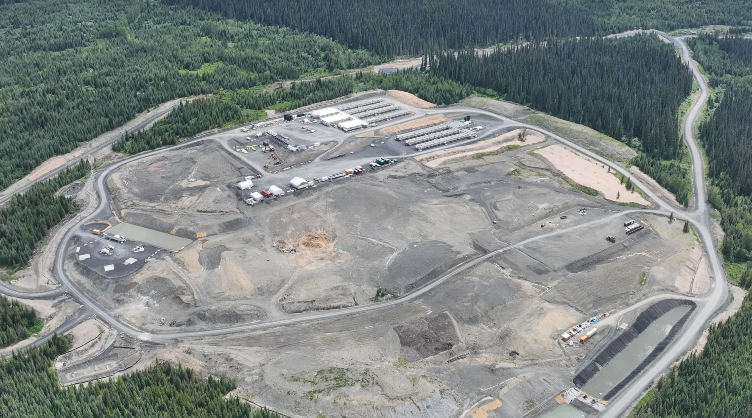
The Kerr-Sulphurets-Mitchell (KSM) project site in British Columbia. (Image courtesy of Seabridge Gold.)

The government of British Columbia has renewed the licence of occupation for Seabridge Gold’s (TSX: SEAL; NYSE: SA) Kerr-Sulphurets Mitchell (KSM) copper-gold project for a further 20 years, granting the company clarity on the land where it plans to build the Mitchell Treaty tunnels (MTT).


With proven and probable reserves containing 47.3 million oz. gold, 7.3 billion lb. copper and 160 million oz. silver, KSM is one of the largest deposits of its kind and is ranked as the largest gold project in the world.

The licence gives Seabridge subsidiary KSM Mining ULC the right to occupy the area in which it intends to construction the MTT, consisting of two, 23-km-long parallel tunnels planned to connect the east and west sides of the KSM mine site.

The MTT route passes through 11 mineral claims owned by a joint venture of Tudor Gold (TSXV: TUD), Teuton Resources (TSXV: TUO) and American Creek Resources (TSXV: AMK). The new licence replaces the one granted in 2014, which included the words “subject to the prior rights” of the holder of the 11 mineral claims owned by the joint venture.

The licence removes that phrase as it served no purpose, and further obstructs the three partners from obstructing, endangering or interfering with KSM Mining’s activities regarding the MTT project. The new licence grants no interest in the minerals within the licence to Seabridge or its subsidiary.

“We are pleased the renewed LOO provides greater clarity on the priority rights of KSMCo’s MTT across the Treaty Creek project Seabridge chair And CEO Rudi Front commented. “Furthermore, the renewal is for a 20-year term whereas the previous LOO was for 10 years.

“Seabridge continues to invite Tudor to enter into discussions with us on how we may be able to accommodate the progression of the Treaty Creek project while constructing and operating our MTT,” he noted.

In addition to the licence, KSM Mining holds two additional permits associated with the MTT. The Mines Act permit M-245 currently authorizes the company to conduct various activities, including both temporary and long-term surface infrastructure, construction of all portals, and a tailings management facility.
Tudor’s response

However, Tudor Gold, as operator of the JV whose mineral rights cross the MTT, said in a follow-up release that section 50(1)(a)(ii) of the Land Act restricts any disposition of Crown lands, including this licence of occupation, from interfering with mineral tenure rights, citing government documents.

It also took the position that the Mineral Tenure Act cannot grant mineral title rights to any party and cannot interfere in any way with pre-existing rights. This applies to both conditional mineral reserve grants and non-staking mineral reserve grants.

The “prior rights” of the Treaty project claim holders are subject to a conditional mineral reserve established in 2012. Seabridge’s licence was previously granted in 2014 and is up for renewal this month.

Kamala Harris vows to create US critical minerals stockpile, incentives

Bloomberg News | September 25, 2024 | 

US Vice-President Kamala Harris. (Image by Gage Skidmore, Flickr.)

Vice President Kamala Harris vowed to create a national stockpile of critical minerals, saying a cache of the materials used in everything from batteries to defense systems is needed for economic and national security.


The plan, part of a broader $100 billion industrial policy vision Harris’ campaign laid out Wednesday, also called for new incentives and the use of emergency government powers under the Cold War-era Defense Production Act to increase domestic processing of critical minerals.

“Increased domestic production will be paired with innovative and sustainable steps to build stronger critical mineral supply chains alongside our allies and partners, including by incentivizing investments that expand U.S. and allied production of these resources,” the Harris campaign said in a statement. “These efforts will reduce our dependence on China, which leads production on many critical minerals.”

Critical minerals — which include dozens of materials including antimony, lithium, and cobalt — are those are considered essential to the economy and at risk of supply disruption. The House Select Committee on Strategic Competition between the US and the Chinese Communist Party in December recommended creating a reserve of critical minerals “to insulate American producers from price volatility” and protect against China’s “weaponization of its dominance in critical mineral supply chains.”

The committee also recommended spending $1 billion to expand an existing National Defense Stockpile, an inventory of critical minerals managed by the Defense Department that is used to provide emergency access to domestic manufacturers for defense purposes.

(By Ari Natter)
Fortescue electrifies iron ore trucks in $2.8 billion deal


Bloomberg News | September 24, 2024 

Image courtesy of Liebherr.

Fortescue Ltd., the world’s fourth-biggest iron ore miner, will pay $2.8 billion to replace two-thirds of its fleet of haulage trucks and equipment in Western Australia with electric versions, as it seeks to cut diesel consumption and meet ambitious emissions-reduction targets.


The miner will buy 475 emissions-free machines, including 360 autonomous battery-electric trucks, from Germany’s Liebherr Group, it said in a statement Wednesday. The fleet, which was developed using Fortescue’s battery technology, will service its sprawling iron ore operations in the remote Pilbara region and is aimed at reducing costs in the longer term.


Perth-based Fortescue, led by executive chairman and billionaire Andrew Forrest, has plans to decarbonize its entire iron ore mining operations by 2030. Reducing industrial pollution from mining is a significant challenge, with Fortescue consuming 631 million liters of diesel last financial year alone.

“You will watch the breath sucked out from CEOs’ chests when they realize this is a $2.8 billion order,” Forrest said in a phone interview after the announcement. “This is the future of heavy industry. And it’s zero emissions.”

Fortescue shares surged as much as 6.4% in Sydney after the announcement, and closed 4.7% higher to A$18.85 apiece. Since reaching a record high early this year, they have tumbled about 37%, as falling demand in China for iron ore has pressured prices of the steelmaking material.

The deal with Liebherr also includes purchasing 55 electric excavators and 60 battery-powered dozers, the company said in its statement, adding that the technology “will be available to the rest of the mining industry in the near future.”

Emissions from “stationary energy”, which includes emissions from direct combustion of fuels in mining, accounts for more than 20% of Australia’s air pollution, according to the government. Pollution from the global industry sector is continuing to increase faster than any other segment, according to researcher Systems Change Lab.

Earlier this month, fellow iron ore major Rio Tinto Group announced it would develop seed farms in Australia to test biofuel as a replacement to diesel.

(By Paul-Alain Hunt)


BHP to test Caterpillar’s new energy transfer system on its mining trucks

Reuters | September 25, 2024 |

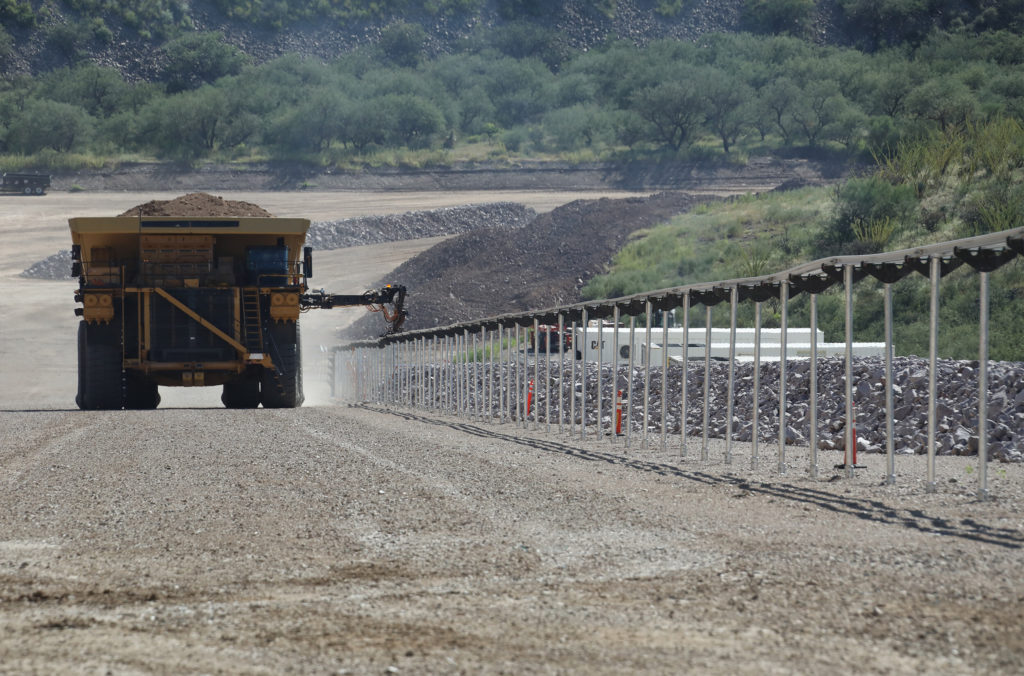
Cat Dynamic Energy Transfer system prototype under development at Caterpillar Tucson Proving Ground. Credit: Caterpillar

BHP Group said on Thursday it plans to test US-based equipment manufacturer Caterpillar’s new technology, which transfers energy to diesel-electric and battery-electric large mining trucks while they are working on a mine site.


Caterpillar launched its Cat Dynamic Energy Transfer (DET) system earlier this month, saying that the use of this technology would lead to lower operating costs for miners and a reduction in greenhouse gas emissions


The DET system can also charge the batteries of electric trucks while they are under operation, providing extra speed and upgraded efficiency.

Mining giant BHP would become the first to try this new system, starting planned trials at its iron ore and copper businesses, including at its Escondida operations in Chile.

BHP, in 2021, had announced a collaboration with Caterpillar to work towards zero-emission mining truck deployment at its sites to cut back on its emissions of operational greenhouse gas.

(By Rajasik Mukherjee; Editing by Alan Barona)
Australia clears coal mine expansions in hit to green goals

Bloomberg News | September 24, 2024 | 1

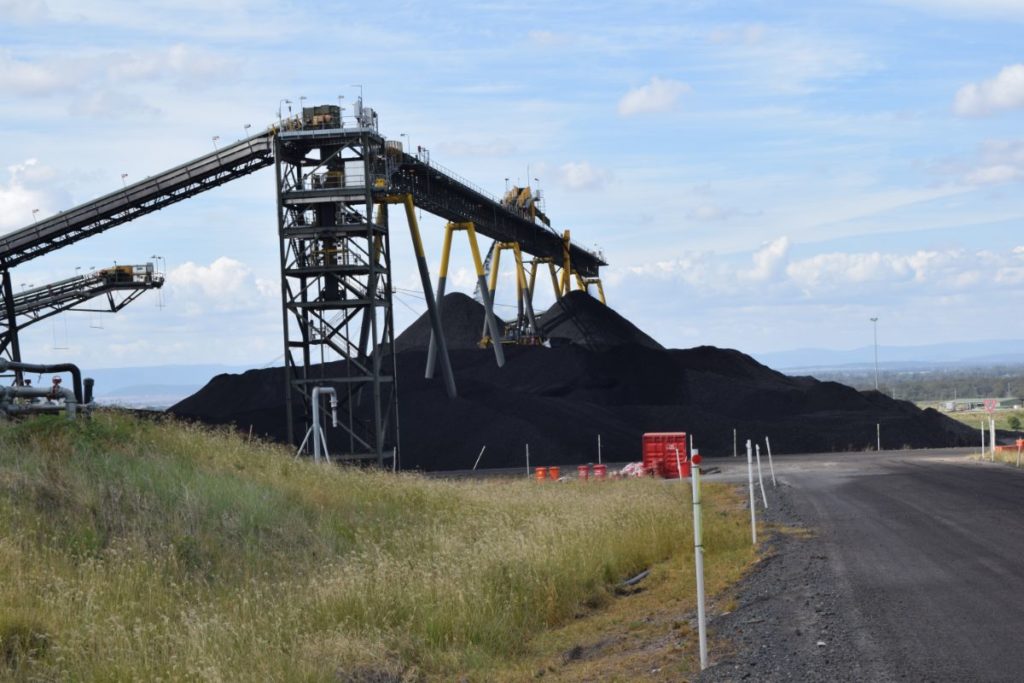
Narrabri coal mine. Credit: Whitehaven Coal

Australia approved the expansion of three coal mines, sparking criticism of Prime Minister Anthony Albanese’s administration and its efforts to keep emissions in check.


The government cleared an extension of operations at Whitehaven Coal Ltd.’s Narrabri, MACH Energy Australia Pty’s Mount Pleasant and Ashton Coal Operations Pty’s Ravensworth thermal coal mines in New South Wales. The Narrabri underground mine was granted permission to operate until 2044 and Mount Pleasant to 2048.

Australia, one of the world’s biggest exporters of fossil fuels, has been criticized for continuing to support massive coal and natural gas projects while pursuing more ambitious cuts to domestic emissions. Miners argue that their fuel is cleaner than supplies from other nations and that delays to approvals risk jobs and Australia’s reputation as a reliable partner.

“Whitehaven’s high quality thermal coal has an important role to play in supporting global energy security during the multi-decade energy transition, particularly in Asia where there continues to be strong demand for its use in high-efficiency, low-emissions, coal-fired power stations,” the Sydney-listed company said Wednesday.

The three mines will emit about 1.4 billion tons of carbon dioxide over their lifetime, according to the Australia Institute, about three times national annual emissions. They take the total number of coal projects approved by Albanese’s government to seven.

“These are not new projects,” but extensions of existing operations, said Environment Minister Tanya Plibersek. “The emissions from these projects will be considered by the Minister for Climate Change and Energy under the government’s strong climate laws.”

Australia’s thermal coal exports are set to fall to about A$28 billion ($19 billion) in the year through June 2026, from A$37 billion in the 2023-2024 period, according to government forecasts. Volumes are likely to be stable.

(By Stephen Stapczynski)


US backs Australian lithium, rare earths projects for up to $786 million

Reuters | September 23, 2024 | 

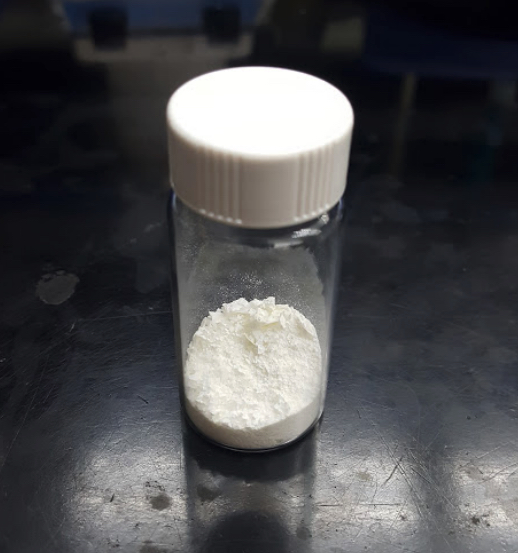
Anson Resources’ first vial of lithium hydroxide product from its Paradox project in Utah. (Image courtesy of Anson Resources.)

The United States has backed an Australian lithium and a rare earths project with up to $786 million in debt funding as Western countries seek to build supply chains for critical minerals.


Australia’s American Rare Earths said on Tuesday it had received a letter of interest for a debt funding package of up to $456 million from the Export-Import Bank of the United States (EXIM) to support construction of the Cowboy State Mine area at its Halleck Creek project in Wyoming.

“We are hopeful that it will serve as an anchor to help attract private funding into the project,” said Melissa Sanderson, a member of the company’s board of directors.

The bank has also offered $330 million to finance the construction of Anson Resources’ lithium production plant in the Paradox Basin, Utah, the Australian company said on Tuesday.

Earlier this year, the bank backed two Australia-listed listed rare earths projects by Australian Strategic Materials and Meteoric Resources with up to $850 million of funding.

The United States and Australia established a critical minerals taskforce last year as Australia seeks to attract investment in minerals processing from allied countries, aiming to reduce reliance on China, which currently controls more than 80% of the global supply.

(By Roshan Thomas; Editing by Mohammed Safi Shamsi and Subhranshu Sahu


Wallenius Wilhelmsen Upsizes Car Carriers to Be World’s Largest

car carrier
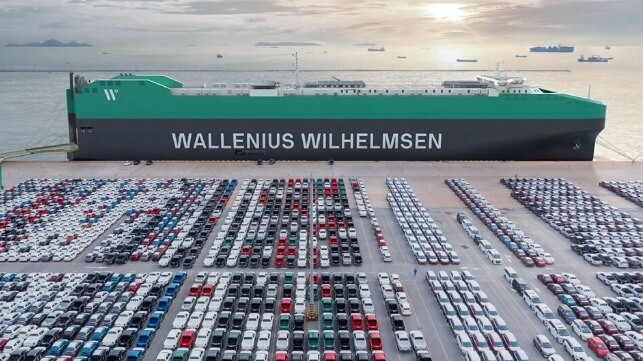
Wallenius Wilhelmsen is set to claim the title for the largest car carriers with a capacity fo 11,700 units (WW)

Published Sep 25, 2024 4:00 PM by The Maritime Executive


Reflecting strong demand across the sector along with the need to improve operating and environmental performance, the car carrier sector is moving to a new generation of larger and more efficient vessels. The major carriers have been “leapfrogging” their competition and today Wallenius Wilhelmsen which takes credit for developing the sector reports it will build the world’s largest capacity pure car and truck carriers.

Wallenius Wilhelmsen will “upsize” four of the 12 vessels currently on order with the Jinling Shipyard in China which is due for delivery starting in 2026. The company revealed in the spring the order for the 12 ships highlighting the increased efficiency and lower environmental impact with a capacity of 9,300 units. Dimensions were not reported but the company said the last four vessels of the class will increase capacity by 25 percent handling approximately 11,700 vehicles, making them the largest PCTCs ever to sail.

The sector’s recent focus had reached a maximum capacity of approximately 8,500 units before the orders for the next generation. In August, Höegh Autoliners celebrated the naming of what it highlighted was the largest car carrier, Höegh Aurora with a capacity of 9,100 units, and the start of its new class which will include an ammonia-ready vessel. CSSC late in 2023 highlighted its new design with a capacity of 10,800 units and Seaspan ordered six of the vessels with an option for four more. They will go under charter to Hyundai Glovis. At the same time, China Merchants received Approval in Principle for an 11,000-unit design.

Wallenius Wilhelmsen reports it will take delivery on the first of the upsized 11,700 unit vessels in late 2027. They highlight that the increased size will reduce costs and contribute to the company’s net-zero ambition.

“Specifically designed for our needs and trading patterns, prepared for net-zero from day one, and purpose built with significant economies of scale, we believe the new upsized Shaper vessels are a class apart,” said Xavier Leroi, EVP & COO Shipping Services at Wallenius Wilhelmsen. “Providing significant savings on fuel and emissions in comparison to the current fleet and with both unparalleled capacity and the highest ramp strength in the order book, these vessels are truly fit for the future.”

When the class was first announced in the spring, the company highlighted designs for alternative fuels, including being equipped for methanol and ammonia ready. They will be outfitted for shore power and a battery system will optimize power generation and reduce energy during maneuvering. The vessel will also have solar panels and air lubrication for the hulls.

The hull form has been optimized both for cargo handling and energy efficiency. Two of the four movable decks will be electrically hoistable. Fire safety will also be enhanced including introducing two fire zones as opposed to the single zone required by regulation.

The lines are working to introduce new capabilities and advantages as competition continues to grow in the sector. Majors including CMA CGM and MSC Mediterranean Shipping have both entered the sector this year while due to capacity constraints, Chinese car manufacturers launched their first dedicated vessels. Vehicle transport is currently one of the fastest-growing segments in the shipping industry.


Pirates Hijack Tug and Barge in Indonesia Robbing Crew, Stealing Cargo

tugboat
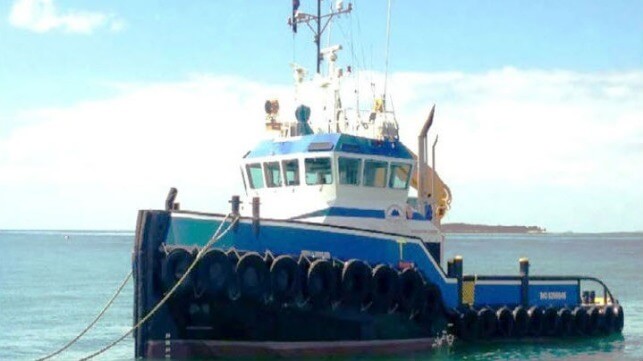
The crew of the tug and barge were kidnapped and robbed off the south coast of Borneo (file photo)

Published Sep 25, 2024 7:15 PM by The Maritime Executive


The crew working a tugboat and barge were overpowered and robbed by a group being called pirates by the local police. The crewmembers are safe in the custody of the police after telling a harrowing tale of piracy. 

According to the police report, five men wearing face masks and armed with knives and firearms overpowered the crew of 14 working the tug named Royal TB 17 which was moving a barge. The vessel had departed Bagendang Port on the island of Kalimantan (Borneo) in the western part of Indonesia bound for Stagen at the southern tip of the island. As they were sailing near the southern part of the island near Tanjung Malatayur they were attacked by the pirates in a small boat.

The pirates took the 14 crewmembers hostage and began to rob the individuals and the tug and barge. According to the police the pirates took over $1,000 in cash as well as 21 mobile phones, nine communications radios from the crew as well as a rope-throwing device, a radar unit, binoculars, and the GPS from the tug and barge. They also stole the cargo of FAME (Fatty Acid Methyl Ester).

The vessel had departed on September 19 and the crew was hijacked the following day. It is unclear when or how they were released. 

The police reported that they were interviewing the crew and seeking additional details about the incident. The crew is also receiving medical attention after their ordeal. The police said they are committed to tracking down the pirates and arresting the perpetrators who attacked the Royal 17. Indonesian authorities reported success in stopping previous groups of pirates operating in areas around the islands.

Regional authorities have warned of continuing incidents of piracy but most of the occurrences have been in and around the Singapore Strait. Typically it is pretty crime where the boarders seek to steal supplies or equipment and flee when they are discovered. They are rarely armed or at most have knives. In most cases, there is little interaction between the crew and perpetrators. 


Report: Russia May Give Houthis a Supersonic Antiship Missile

Oniks
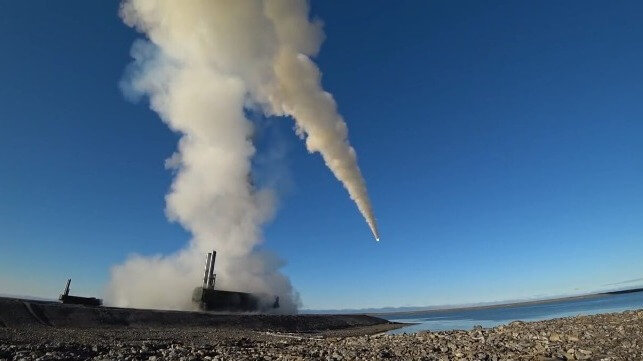
Bastion coastal defense battery launches an Oniks missile (Russian Ministry of Defense)

Published Sep 25, 2024 7:13 PM by The Maritime Executive


Iran is helping Yemen's Houthi rebels to negotiate with Russia on the possiblity of acquiring high-end supersonic antiship missiles, multiple sources told Reuters. Houthi officials likely met with Russian representatives in Tehran twice this year, and talks are ongoing. 

Iran is the primary sponsor and weapons supplier for the Houthi movement. U.S. forces have repeatedly intercepted Iranian antiship missile components aboard dhows bound for Houthi recipients in Yemen, and extensive open-source footage of the Houthi missile and drone inventory shows clear Iranian characteristics, even if Houthi forces claim that these weapons are indigenous.

Houthi forces have hit dozens of ships in the Red Sea, sinking two and damaging countless others in varying degrees. The risk is high enough to raise insurance rates and drive shipowners out of the Red Sea, but the majority of Houthi attacks fail to hit the target. Russian missile technology could change the equation, and Iran - which is a major weapons supplier for Russia's invasion of Ukraine - is well-placed to broker a deal.

According to Reuters, the Houthis would like to acquire the P-800 Oniks antiship missile. The Oniks (Onyx, Yakhont) was designed during the late years of the Cold War to engage NATO warships. It is a ramjet-powered missile capable of Mach 2 speeds, with a sea-skimming flight profile during terminal approach. It is in service with Russian coastal-defense batteries and on the Nakat-class missile ships, and has been used against ground targets in Ukraine with varying degrees of success. It is a comparatively modern design, and is the basis for the joint Russian-Indian BrahMos missile system.

Moscow has previously supplied Oniks antiship missiles to the Iranian-backed regime in Syria. Analysts have long believed that some of this Syrian missile inventory was transferred to the Lebanese terrorist group Hezbollah - another Iranian proxy and a longtime opponent of Israel and the United States. 

Multiple sources told Reuters that it appears that Russia has not yet decided whether to export the Oniks to Houthi forces as well, though talks continue. If delivered, and paired with appropriate targeting, the system would give the Houthis a modern active-homing antiship missile that could reach anywhere in the southern Red Sea within as little as 90 seconds.


Bangladesh Suspends Scrapper and Orders Compensation After Fatal Incident

ship recycling
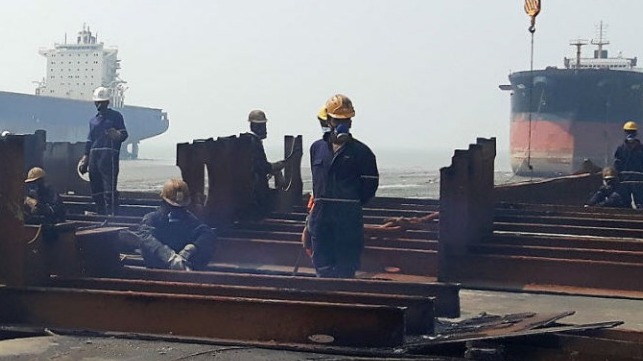
Bangladesh remains one of the most active areas for ship recycling (file photo)

Published Sep 24, 2024 4:00 PM by The Maritime Executive


The Ministry of Industries is imposing a series of stiff penalties on a shipbreaker in Chattogram, Bangladesh after a fatal incident while workers were cutting the tanks on a retired tanker. The move comes as Bangladesh is attempting to improve its safety record as the IMO’s new regulations are set to take effect and scrutiny remains high on the industry.

An explosion and fire happened on September 7 as a team was said to be cutting into the engine spaces aboard a former tanker that had been mostly dismantled. Some reports said they were attempting to open one of the fuel tanks while others said the explosion occurred in a pump room. 

A total of 12 workers were injured with most of them suffering severe burns. One succumbed to his injuries that day as he was being transferred to a specialized hospital. Reports indicate the death toll has risen to six with the other six workers remaining in hospitals.  

The authorities immediately suspended the license of the SM Corporation and issued a show cause order giving the company three days to give a reason why it should not be permanently closed. Work on the tanker, the Swarajya (32,900 dwt) was also ordered suspended.

The Ministry of Industries reports it completed an investigation into the incident citing the company with numerous violations. They included safety violations, failing to ensure safe working conditions, and operational misconduct. The breaker is being fined approximately $29,000 and its operating license was suspended for three months.

In addition, the shipbreaker has been ordered to compensate each of the families of the deceased providing approximately $5,900 per family. The company was also ordered to pay all the medical expenses of the six individuals still in the hospital. Each person will also receive one year’s wages.

Bangladesh in 2023 ratified the Hong Kong Convention with the IMO that seeks to set new safety and environmental standards when it goes into force in 2025. Despite an overall downsizing in the industry, the country remains one of the most active recycling operations for retired ships.

Bangladesh established standards for the industry in 2011 and after this latest incident conducted a review of the practices. The ministry included a 20-point recommendation in its report designed to improve safety. They called for prohibiting simultaneous hot and cold work, ensuring proper ventilation when cutting into tanks, engine rooms, and pump rooms, and ensuring that gases are evacuated before issuing a hot work permit. They also called for the hiring of trained and experienced workers and providing personal protective equipment.

The ministry is urging the companies to strictly follow the Ship Cutting Plan and ensure proper firefighting and rescue arrangements are in place when working in high-risk areas. 

Critics however say that there is lax enforcement of the regulations. They also contend the yards use outside contractors to avoid some of the regulations. The NGO Shipbreaking Platform frequently cites Bangladesh for its lax safety records and high injury rates.

Citing data from the Labour Resource and Support Center, the Dhaka Tribune said that 124 people have died of accidents in the past nine years at the scrapyards. The newspaper reported that in the first six months of 2024, there have been 12 accidents at the yards resulting in 12 injuries and one death, before this most recent incident.