Friday, May 02, 2025


Politicians aiming to win over mining sector ahead of Australian election

Source: mining.com

Australians will head to the polls on May 3 and while cost of living and the housing crisis are the main issues for voters, both sides of politics recognize the need to win over the country’s powerful mining sector.

Australia has two major political parties, Labor and Liberal, though the Liberal Party and National Party have an alliance known as the Coalition.

Before the election was called in late March, the two main parties were neck and neck in the polls.

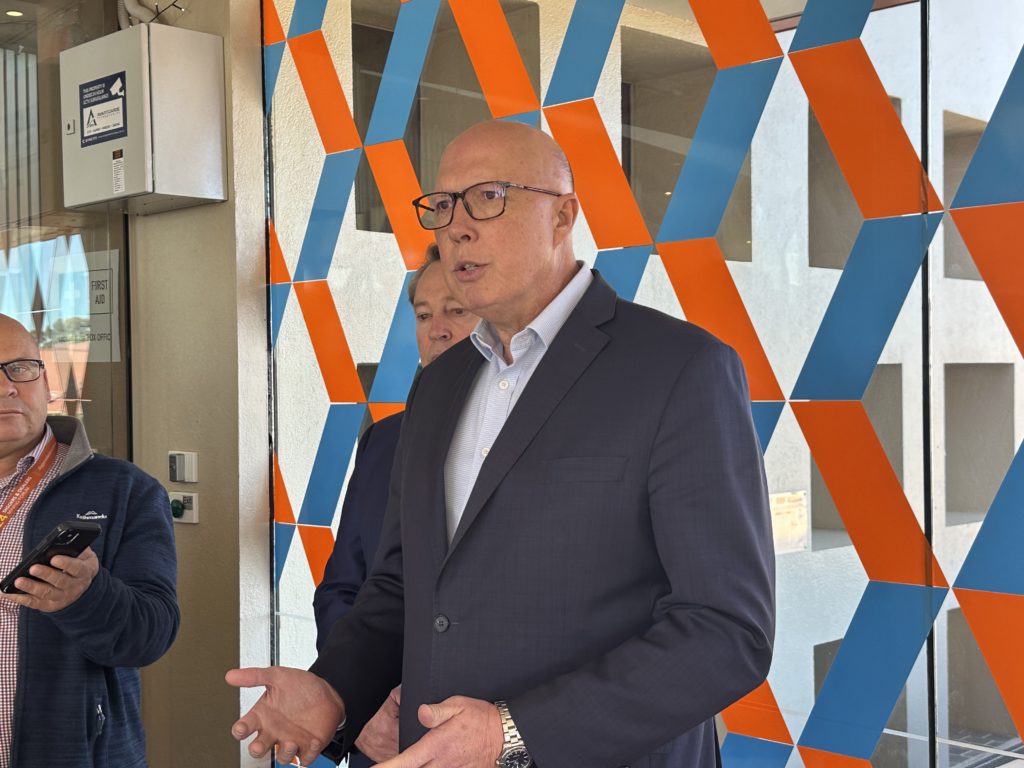
Peter Dutton, leader of the conservative Liberal Party, initially leaned into the early popularity of US President Donald Trump, a move that has led to him being nicknamed “Trump Lite” or “Temu Trump”.

That strategy seems to have backfired in recent weeks, with Dutton and the Liberals slipping in the polls.

While the Australian Labor Party, led by Prime Minister Anthony Albanese, is leading on a two-party preferred basis, if it can not win a majority, it will likely look to the Australian Greens for support to be able to form government.

Campaigns launched

Both Labor and the Coalition formally launched their campaigns on Sunday, April 13.

Albanese held his campaign launch in Perth in a nod to the importance of Western Australian resources sector.

He was introduced by popular WA Premier Roger Cook, who won re-election last month in a landslide.

Two days before the launch, Albanese and Resources Minister Madeleine King were hosted by Rio Tinto during a visit to the Pilbara town of Karratha.

Labor did not outline any new policies to support the resources sector but has pledged A$8 billion ($5.1 billion) of additional investment in renewable energy and low emissions technologies via an expansion of the Clean Energy Finance Corporation. 

Dutton launched his campaign in Sydney and promised to be a “friend of the mining and resources sector”.

He has warned Labor would shut down mining, particularly if it needs the support of the Greens.

Dutton and Shadow Resources Minister Susan McDonald unveiled the Coalition’s “Plan for a Strong Resources Industry”, which promises to cut red and green tape, expand the critical minerals list to include uranium, zinc, bauxite, alumina, aluminium, potash, phosphate and tin, and refocus the critical minerals strategy to better align with the defence and strategic needs of Australia and its allies.  

The plan also included a A$3.4 billion investment in Geoscience Australia over 35 years to map all of Australia, an announcement slammed by Albanese.

“That was in last year’s budget, last year’s budget that the Coalition, now, more than a year later, they’ve decided to pretend that it’s a new policy announcement at this election,” he told reporters. 

Three years of Albanese

The current government has a mixed record when it comes to mining.

One of the initiatives popular with the mining sector was the establishment of the Critical Minerals Production Tax Incentive (CMPTI), a 10% tax credit for processing and refining costs of Australia’s 31 critical minerals from July 1, 2027.

The bill was passed by the Senate in February.

“This is the first time any Australian government has put their money where their mouth is for the critical minerals industry,” the Association of Mining and Exploration Companies (AMEC) CEO Warren Pearce said.

“This will stimulate billions in new investment in critical minerals processing, which will be far more valuable than the incentives on offer.”

One of the low points of the government’s relationship with miners was the rejection of Regis Resources’ (ASX: RRL) McPhillamys gold mine last year.

After a lengthy approvals process, the proposed mine was approved by New South Wales and federal regulators but was overturned by federal Environment Minister Tania Plibersek on Aboriginal heritage grounds.

“That is a really bad message for Australia and the rest of the world,” Minerals Council of Australia (MCA) chair Andrew Michelmore told the Melbourne Mining Club in March.

Last year, the government introduced the ‘Same Job, Same Pay’ industrial relations legislation, which was slammed by BHP (ASX: BHP) as requiring it to pay inexperienced labor hire workers the same as a worker with decades of experience, impacting costs and productivity.

Dutton said he would not repeal the law.

“I understand the difficulty for some of the companies who are facing already a fairly militant union sector and want reforms but that’s our position,” he said on April 3.

Coalition all-in on nuclear

One of the Coalition’s key election policies is a plan to introduce nuclear energy into Australia’s power mix, which has been estimated to cost A$331 billion.

The policy has won the support of the MCA, while BHP is open to nuclear being considered.

“For Australia to be able to compete globally – and let’s face it, there’s economic headwinds that we’re leaning into in the coming years and decades in Australia – we have to be able to keep existing businesses competitive and to be able to grow new industries to overcome some of those headwinds,” BHP CEO Mike Henry told reporters in February.

“That requires affordable, reliable supply of electricity, whilst meeting this long-term ambition of being net zero. In order to achieve that, we have been strong proponents of a technology neutral strategy, and so, are we supportive of nuclear being part of the mix for consideration? Yes.”

Fortescue (ASX: FMG) founder and executive chairman Andrew Forrest has a different view, telling a Perth event on April 10 that he was close to the nuclear industry and knew it well after weighing up its potential for the past two decades.

He questioned why the taxpayer should have to pay for technology he described as “high cost and high risk” when compared to renewables.

“I know young males think nuclear is pretty cool but all I can say is, that’s until they’re educated. That’s until they’re told it’s not cool, it’s highly expensive to build, it’s almost impossible to take down and its power costs are nothing fancy at all,” Forrest said.

Permitting in focus

Lengthy approvals processes are a sticking point for the mining sector, something the Coalition has promised to address.

In a speech to the WA Mining Club in March, MCA chief executive Tania Constable accused the Albanese government of taking “a particular bent against our industry”.

“There is no reason in 2025 that environmental assessments and approvals could not move from years to hours, with the use of AI and enhanced environmental data,” she said.

Miners have been particularly vocal in its opposition against the government’s now-defunct Nature Positive legislation, which proposed the establishment of a national environmental protection agency, in addition to existing state agencies.

The bill never passed the Senate after protests from the resources sector and WA Premier Roger Cook, with even the Greens opposing it.

Plibersek says Labor is still keen to establish a federal environmental protection agency, but rather than duplicating approvals processes, she maintains it would speed up permitting.

“Our laws are 25 years old. They’re not fit for purpose, they don’t protect the environment, they’re not good for business,” she told the ABC on April 12.

“We want better environmental protections and faster, clearer decision making. We can do both, but it’s going to take common sense and compromise.”

The same day, WA Liberal Senator Michaelia Cash told reporters the policy would have a “devastating” impact on mining projects.

Incentive schemes under threat

The Coalition has committed to repeal the CMPTI, with Dutton long maintaining that projects needed to be economically viable on their own.

Former WA Nationals leader turned federal Nationals candidate Mia Davies criticised the stance.

“Good policy deserves support,” she told the ABC on April 15. 

Her comments were welcomed by AMEC CEO Warren Pearce, which described the CMPTI as a policy that focused on realising more value from Australia’s minerals.

“Right now, it is the only policy that does so – that’s the truth of it,” he said.

In March’s federal budget, it was revealed that it would not extend the Junior Minerals Exploration Incentive (JMEI).

Earlier this year, modelling by BDO, commissioned by AMEC, found the JMEI had stimulated A$404 million in greenfield exploration activity since 2017, at a cost to taxpayers of A$182.2 million in credits.

The Coalition has vowed to reintroduce the JMEI, pledging A$100 million for the scheme.

“The reinstatement of the incentive is necessary to decrease the risk for junior explorers,” MCA’s Constable said.

“Australia’s vibrant junior exploration sector plays a crucial role in the mining ecosystem by driving innovation, discovering new mineral deposits, and providing the foundation for future large-scale mining operations.”

Strategic minerals reserve

In a statement responding to US tariffs on April 3, Albanese announced that if re-elected, his government would establish a Critical Minerals Strategic Reserve.

Albanese and King have each said more details of the policy would be provided before the election.

King’s office did not respond to requests for comment.

Cook confirmed he was working “closely” with Albanese on the details of the policy.

AMEC’s Pearce suggested a Critical Minerals Strategic Reserve could further incentivize critical minerals exploration and production and create a strategic stockpile that provided greater resilience against global trade measures, and greater influence over critical mineral supply chains.

“Make no mistake. Australia is a critical minerals powerhouse. We can be the reliable supplier of critical minerals to the world, including the United States,” he said.

“Given the ground is moving so quickly, the onus is now on our political parties, to figure out how best to take advantage of this opportunity.”

The future for Alaska mining is golden

North of 60 Mining News - May 2, 2025
Shane Lasley, Mining News | 


Kinross Gold Corp. 
Kinross' Fort Knox mine north of Fairbanks, Alaska, has produced nearly 10 million ounces of gold over the past 29 years.


Record gold prices and rising production are expected to push Alaska's 2025 gold output value north of $3.4 billion.

With the gold shattering the $3,000-per-ounce ceiling without hesitation and Alaska mines poised to break above the 1-million-oz mark this year, the future of Alaska's mining sector is golden.

This combination of record gold prices and production positions Alaska's mining industry to crush all previous records this year when it comes to the value of the minerals and metals produced in the state.

The U.S. Geological Survey (USGS) calculates that Alaska's mining operations produced $4.7 billion of non-fuel minerals – gold, zinc, silver, lead, and aggregate products – in 2024. Adding the coal produced for in-state power plants bumps this total up to roughly $4.8 billion.

The roughly 959,000 oz of gold produced at six hardrock and more than 200 placer mines contributed $2.3 billion, or nearly half, of Alaska's mineral production value during 2024. With gold prices more than 40% higher than they were at this time last year and production on the rise, more than $3.4 billion of this precious metal could be recovered from Alaska mines this year.

This would push Alaska's mineral production value up to around $6 billion this year, even with a 20% drop in the production of zinc, the second largest contributor to the state's mining sector, expected at the Red Dog mine.


John Paulson

While breaking above the 1-million-oz-per-year gold production threshold is a momentous milestone for Alaska, output of the precious metal is expected to continue climbing and could break above 2 million oz if the new Donlin Gold owners push that world-class mine project across the finish line.

"With 39 million ounces of gold at double the industry average grade, and an optimal location in the prime jurisdiction of Alaska – already the second largest gold-producing state in the United States – we believe that the project could create value for decades to come," said John Paulson, a hedge fund billionaire that recently bought most of Barrick's 50% interest in the world-class gold project.
Kinross Gold output climbs

At 337,258 oz, the Kinross Alaska mill at the Fort Knox mine, about 20 miles north of Fairbanks, accounted for roughly 39% of Alaska's gold production in 2024.

Since operations began in 1996, the Fort Knox mine has produced nearly 10 million oz of gold. Most of those ounces have come from ore mined at Fort Knox and adjacent properties.

Last year, however, the Kinross Alaska mill began processing ore from the newly developed Manh Choh mine about 200 miles to the southeast, marking a new era for the operation and gold production across much of Alaska.

This new era is the product of an initiative launched by Kinross Gold Corp. in 2020 to enhance gold production in Alaska by supplementing the primarily heap leach-grade ore mined from the Fort Knox property with higher-grade mill feedstock from satellite deposits within a roughly 300-mile radius of the mine.

Operated under a joint venture between Kinross (70%) and Contango ORE Inc. (30%), Manh Choh is the first mine to be developed under the Kinross Alaska initiative.

The first Manh Choh ore was fed into Kinross Alaska mill around midyear, and over the final six months of 2024, nearly 254,000 oz of gold was recovered at Fort Knox.

While the operation may not quite hit the 500,000 oz mark indicated by second-half 2024 production, the combination of Fort Knox and Manh Choh ore is expected to push gold output from the Kinross Alaska mine above 400,000 oz this year.

If production from all other Alaska gold-producing operations remains steady, the increased output at Fort Knox will likely be enough to push gold production in the state above the 1-million-oz mark.

Northern Star Resources Ltd.
Northern Star Resources' Pogo Mine in Alaska is expected to produce more than 300,000 oz of gold this year.


Rising prices lift all mines

With operational improvements at some of Alaska's other big gold producers and rocketing prices attracting new placer miners, Fort Knox is not the only operation expected to push Alaska's gold production higher.

Northern Star Resources Ltd. believes Pogo, the second-largest gold-producing mine in Alaska, is poised for a breakout year.

Since acquiring the Pogo mine toward the end of 2018, Australia-based Northern Star has steadily upgraded operations and expanded the mill at Pogo.

Last year, this underground mine about 85 miles southeast of Fairbanks produced 279,427 oz of gold, roughly 10% higher than the 254,492 oz produced in 2023.

With continued improvements on both the mining and processing sides of the operation, Northern Star expects Pogo gold production to top 300,000 oz this year – an improvement that will help push total Alaska production above the 1-million-oz mark.

Production is also trending higher at the third-largest gold-producing operation in the 49th State – Coeur Mining Inc.'s Kensington mine in Southeast Alaska.

Thanks to a steady rise in production throughout the year, Kensington produced 95,671 oz of gold last year, a 13% rise over 2023. With gold output increasing steadily every quarter of 2024, from 21,183 oz during the first quarter to 25,839 oz during the final three months, Coeur's Southeast Alaska mine is on pace to top 100,000 oz of gold in 2025.

While Hecla Mining Company's Greens Creek mine is best known for the roughly 9 million oz of silver it produces each year, the Southeast Alaska operation also recovers significant gold, zinc, and lead byproducts.

During 2024, Greens Creek produced 55,275 oz of gold, which is about 10% less than in 2023 but close to the average for this silver mine that typically produces between 48,000 and 60,000 oz per year.

Sundance Mining Group's Dawson mine in Southeast Alaska adds about 12,500 oz of gold to Alaska's annual production total. While Dawson is the smallest of the hardrock gold mines, its steady output could make the difference whether 2025 Alaska gold production pushes above the 1-million-oz threshold.

Alaska's more than 200 placer gold mining operations will also help push the state's gold production total higher, as owners of these mostly family-run operations are eager to begin pushing pay dirt through wash-plants to recover $3,000/oz-plus gold.


Novagold Resources Inc.
So far, drills have outlined 39 million ounces of gold at Donlin, and geological evidence suggests the deposit is much larger.


One million-oz gold mine

As momentous as breaking above 1 million oz would be, the Donlin Gold project has the potential to single-handedly accomplish this feat – more than doubling Alaska's current gold production.

This 39-million-oz gold mine project in the Yukon-Kuskokwim region of Southwest Alaska has been on the cusp of development for more than a decade but has been delayed by optimization studies and permitting challenges.

After nearly two decades of exploration, engineering, and permitting, Barrick Gold Corp. is selling its 50% joint venture ownership of Donlin Gold to hedge fund billionaire John Paulson and project partner Novagold Resources Inc. for $1 billion.

The cash from the sale will likely be reallocated to a more diverse mining portfolio. This wider focus is reflected in the company's new name, Barrick Mining, which was announced on April 28.

With Barrick's exit, the project's owners, Novagold (60%) and Paulson (40%), are expected to make the final push toward a construction decision.

This will begin with updating a feasibility study completed in 2011 and refreshed in 2021 that details plans for a mine at Donlin that would produce 1.1 million oz of gold annually for 27 years.

The new partnership is also expected to resume the exploration of Donlin's larger potential, which is estimated to be in the 100-million-oz realm.

"Our management team welcomes this enormous vote of confidence and looks forward to initiating an updated Feasibility Study, as well as to allowing our new drill program to move towards reserve and resource expansion," said Novagold President and CEO Greg Lang.

While a mine at Donlin remains a few years out, this 1-million-oz-per-year operation could help ensure Alaska's golden future continues much deeper into the 21st century.

Author Bio
Shane Lasley, Publisher   

Over his more than 16 years of covering mining and mineral exploration, Shane has become renowned for his ability to report on the sector in a way that is technically sound enough to inform industry insiders while being easy to understand by a wider audience.
Teck, tariffs, and the Red Dog zinc mine

North of 60 Mining News - 
Shane Lasley, Mining News 
| May 01, 2025


The escalation of tariffs and counter-tariffs may impact the final destination of critical minerals-enriched concentrates from the Red Dog zinc mine in Northwest Alaska.

Teck's Red Dog mine accounts for roughly 5% of the global zinc supply.


Having zinc concentrates frozen in Northwest Alaska offers Teck time to see if trade relations thaw before the Arctic ice.

Teck Resources Ltd. CEO Johnathan Price says the diversified Canadian miner's portfolio of American mining operations delivering metals critical to 21st-century energy and technologies are well-positioned to weather a geopolitical storm that threatens to hobble the global economy, fuel inflation, and disrupt supply chains.


Jonathan Price

"Despite these headwinds, we believe that the fundamentals for our key metals, copper and zinc, are robust over the medium and long term as several macro factors continue to drive demand," he informed analysts and investors during an April 24 earnings call. "These metals are essential for global manufacturing and development, industrial policy and national security, electrification infrastructure, as well as the growth of the digital economy."

While the market dynamics for copper and zinc help galvanize Teck as it navigates the uncharted waters of an escalating international trade war, the Canadian mining company must maintain a vigilant lookout for escalating tariffs, resource nationalism, and other trade hazards as it delivers copper, zinc, and other metals to safe ports of call.

"Although the situation is fluid and evolving rapidly, we do not expect announced tariffs to materially impact our business," Price told shareholders and analysts. "That said, a global trade war could weigh on global economic growth with potential implications for metals demand."

Even with the potential for cooling demand, Teck does not see any shortage of buyers for the germanium- and silver-enriched zinc and lead concentrates produced at Red Dog. However, tariffs and counter-tariffs may impact where the metals produced at the world's largest zinc-producing mine are shipped.

With the port that delivers Red Dog concentrates to international markets locked in ice until June, Teck executives have time to finalize the destination of the metals produced at the Northwest Alaska mine as it waits for Arctic shipping lanes – and hopefully international trade relations – to thaw.

"Fortunately, at this time of the year, given the shipping seasons at Red Dog, we're not moving material from the site," the Teck CEO said. "So, we're pretty well covered at present."

Alaska Industrial Development and Export Authority
The offshore conveyor for loading Red Dog concentrates extends into a frozen Chukchi Sea.


Strategic zinc in a tight market


While Red Dog is an American mine, best known for delivering concentrates to Teck's Trail refinery in British Columbia for processing, the U.S.-Canada trade conflict, aggravated by President Trump's tariffs, is not the shipment issue for the Northwest Alaska zinc-lead-silver-germanium mine.

Instead, the escalating reciprocal tariffs between the U.S. and China have Teck reassessing destinations for Red Dog concentrates.

Nearly 20% of the metal concentrates produced at Red Dog are typically shipped to China for processing. The escalating tariffs, counter-tariffs, and export restrictions, however, could take the Middle Kingdom off the list of potential buyers for 2025.

Given the tight zinc markets and relations Teck has built with other Asian nations, striking China from the list may be more of a ship rerouting exercise than a problem with metals-laden ships with nowhere to go.

Teck estimates that there is only enough zinc stockpiled in warehouses to meet six days of global demand for this metal essential to auto manufacturing, renewable energy, transportation infrastructure, construction, and other sectors of the economy.

On average, over the past 25 years, warehouses have held enough of this galvanizing metal to last about 18.7 days. Having less than a week's worth of zinc stockpiled leaves an extremely tight margin for error in the event that supplies already having a tough time keeping up with demand are disrupted.

While Teck expects that the global trade war and associated inflation will cool the demand for zinc, production of this galvanizing metal is also falling.

Currently, there is only enough zinc being mined to meet about half of the global smelter capacity, which has resulted in smelting companies lowering what they charge to upgrade concentrates into useable metals.

In early April, Korea Zinc agreed to discount the fee it charges Teck for refining zinc concentrates from Red Dog and other mines by 40%.

Considering that Red Dog has traditionally accounted for roughly 5% of the global zinc supply, the fee for smelting concentrates from this mine is often considered a benchmark for the sector.

The lowered charges are a sign that Korea Zinc needs more concentrates for its smelter and would welcome some of the shipments redirected from China.

"Over the past few years, we have successfully developed a regionally diverse customer base, which gives us greater optionality while trade negotiations are ongoing," said Price. "Red Dog is a highly valued concentrate in the zinc market, and we have several longstanding customers for this product."


NANA Corp.


Red Dog metals dodge tariffs

While the trade war may impact Red Dog zinc shipments bound for Asia, concentrates sent to Teck's Trail Operations in B.C, as well as the metals sold back to the U.S., are not impacted due to being covered under the United States-Mexico-Canada trade agreement (USMCA).

"Refined zinc, lead, and specialty metals such as germanium, indium, and sulfur products are sold into the U.S., but they are exempt from U.S. tariffs as they are compliant with the USMCA," Price said, referring to the metals produced at Trail.

Considering that Red Dog metals must cross the U.S.-Canada border twice – first in a concentrate bound for Trail and then as refined metals delivered to U.S. markets – this exemption is good news for Teck and its Alaska mine.

However, the tariff exemption may be even better news for American manufacturers, which will have a source of zinc, lead, silver, germanium, and indium sans tariffs.

Germanium, indium, and zinc are on the list of minerals critical to the U.S., and the demand for silver is on the rise due to its use in solar panels and electronic devices.

Having a secure and reliable supply of germanium and indium is especially important to American manufacturers, considering that China banned exports of these tech metals to the U.S.

China produces 70% of the world's indium, a rare metal used as a transparent conducting film applied to virtually every smartphone and computer touchscreen on the market, which leaves high-tech manufacturers with limited options.

China is also a significant supplier of germanium needed for modern communications, modern chipmaking, military thermal imaging devices, and infrared imaging systems for driver assist and autonomous vehicles.


www.theodoregray.com

China's export bans have limited supply and increased prices for germanium and indium.
Trail capitalizes on tech metals

Teck's Trail Operation is one of the most significant producers of germanium and indium outside of China.

The Southern B.C. refinery produces six different germanium products tailored for fiber optics, high-speed computer chips, quantum computer transistors, solar cells, light-emitting diodes (LEDs), night vision goggles, and other high-tech applications.

Trail also produces 99.995% pure indium metal and has expanded its capacity to meet the growing demands of indium-tin-oxide for touchscreen devices.

China's germanium and indium export bans are boosting Trail's bottom line.

In addition to pushing up the price of these specialty metals, Teck is incentivized to produce more of them.

With the market for minor metals like germanium and indium being limited, refineries typically only recover enough to meet market demands. Recovering all of these byproduct metals contained in zinc, lead, copper, and other concentrates would oversaturate the market, driving down prices and making the recovery uneconomic.

With the largest critical minerals-producing country cutting off supplies to the U.S., Teck has the opportunity to optimize byproduct indium and germanium production at Trail and sell into an American market without being penalized by tariffs.

As a result, Trail profits soared to $58 million (C$80 million) during the first quarter, more than triple the $18 million (C$25 million) realized by the refinery a year ago.

"At Trail Operations, we generated strong profitability in the quarter, reflecting increased production of byproducts such as silver, germanium, and other critical metals, as well as the successful implementation of initiatives to improve profitability and cash flow generation," Teck Resources CFO Crystal Prystai informed analysts and investors.


Teck Resources Ltd.
Teck"s Trail refinery in B.C. produces zinc, lead, silver, germanium, indium, and other specialty materials.


Road to Red Dog's future

The tariffs and resource nationalism stemming from the ongoing trade war have increased the strategic value of having a globally significant supply of zinc, silver, and germanium on American soil.

The world-class orebodies that have fed the mill at Red Dog for the past 35 years, however, are nearly depleted – raising concerns about whether this Northwest Alaska mine can continue to be a significant supplier of critical metals moving forward.

Teck estimates that there are currently enough reserves at Red Dog to keep the mine in operation until 2031. With the quality and quantity of ore dwindling, the company says metals production is slated to plummet dramatically starting this year.

Fortunately, Teck has discovered two enormous zinc-lead-germanium-silver deposits on state land about 10 miles northwest of the current operation that could keep the mine in operation deep into the 21st century.

Teck had hoped to be further along in delineating and developing these deposits, but delays in issuing federal permits needed to build a 12-mile road to access them have slowed progress.

The U.S. Army Corps of Engineers finally issued the road permits last December, and Teck has redoubled its efforts to establish the road and complete the work necessary to ensure that mining these deposits can be done sustainably and economically.

If these efforts are fruitful, the U.S. and its allies will have a secure and reliable supply of zinc, silver, and germanium for decades to come. If not, the destination of critical minerals-laden Red Dog concentrates will not be a concern if the specters of tariffs, resource nationalism, and trade wars arise in the future.


Author Bio
Shane Lasley, Publisher   

Over his more than 16 years of covering mining and mineral exploration, Shane has become renowned for his ability to report on the sector in a way that is technically sound enough to inform industry insiders while being easy to understand by a wider audience.
Nations Rising – A story of Nisga'a strength

North of 60 Mining News - May 2, 2025
A.J. Roan, Mining News |


Nisga'a Nation 
The Nisg̱a'a territory stretches from the mouth of the K'alii Aksim Lisims (the Nass River) to the Hazelton Mountains, with main communities located in the Nass Valley.


New documentary tells the story of overcoming oppression to reclaim home and power, enabling future generations to thrive.

For more than a century, the Nisg̱a'a people of Northern British Columbia's Nass Valley fought to reclaim their land, their rights, and their voice, a long journey brought to life in Nations Rising – A Nisg̱a'a Story, which weaves the tale of history, culture, resilience, and modern self-determination into a living portrait of a nation rising anew.


Wikimedia Commons
Map of the Nisg̱a'a Nation's ancestral territory, stretching from the mouth of the K'alii Aksim Lisims to the Hazelton Mountains in northern British Columbia.

Long before modern boundaries were drawn, the Nass River valley of northwestern B.C. served as a gathering place for many Indigenous peoples, a basin of life where rivers, forests, and mountains sustained generations.

From this shared and sacred landscape, the ancestors of the Nisg̱a'a Nation built enduring communities, guided by ancestral law and deep ties to the land that remain at the heart of their identity today.

In time, however, alien interests began to encroach upon the natural order of the basin, carrying with them a different vision of land, law, and ownership.

Colonial governments, seeing only the resources and opportunity before them, began encroaching on the Nass Valley without negotiation or consent, undermining Indigenous relationships to the lands that had long shaped their governance and identity.

Where once the Nass River peoples stewarded a living basin, they were confined to shrinking reserves, their ceremonies outlawed, their kinship ties strained, and even the pursuit of justice silenced under a system designed to suppress Indigenous identity and governance.

Yet through the quiet endurance of memory and tradition, the Nisg̱a'a held fast to their obligations to the land even as colonial laws tightened their grip, with B.C.'s entry into Confederation in 1871 declaring vast stretches of Indigenous lands Crown property without negotiation, extinguishing title in direct contradiction to the Royal Proclamation of 1763.

"It is just and reasonable, and essential to our Interest, and the Security of our Colonies, that the several Nations or Tribes of Indians with whom We are connected, and who live under our Protection, should not be molested or disturbed in the Possession of such Parts of Our Dominions and Territories as, not having been ceded to or purchased by Us, are reserved to them," declared King George III in 1763.

"We do hereby strictly forbid, on Pain of our Displeasure, all our loving Subjects from making any Purchases or Settlements whatever, or taking Possession of any of the Lands above reserved, without our especial leave and Licence for that Purpose first obtained."

With no effective recourse left under the laws that once promised them protection, the Nisg̱a'a turned to their own leadership, uniting houses, villages, and clans in a cause that would span generations – a determined, lawful fight to reclaim their lands, their titles, and their voice.

The strength to fight

Though the Royal Proclamation had affirmed Indigenous title to land, its protections proved fragile in the face of colonial ambition.

By the time B.C. joined the Confederation, Crown oversight had weakened, leaving provincial leaders largely free to act without meaningful restraint. In the absence of enforceable authority, B.C.'s government moved quickly to dispossess First Nations of their lands, ignoring past promises and rejecting the legitimacy of Aboriginal title outright.

The introduction of the Indian Act in 1876 codified this systemic disenfranchisement into Canadian law.

Under its authority, Indigenous peoples were not only confined to small reserves but stripped of the ability to pursue land claims, organize politically, or practice key cultural ceremonies such as the potlatch – a traditional gift-giving feast central to the social and political life of many Indigenous nations on the Pacific Northwest Coast.

Royal BC Museum / BC Archives, E-07668
Chief Mountain, wearing a grizzly fur robe, in Gitlax̱t'aamiks, formerly known as New Aiyansh, circa 1912.

Far from protecting Indigenous rights, the Indian Act entrenched policies of assimilation and suppression that would endure for more than a century.

In response to the erasure of their rights and cultural practices, the Nisg̱a'a turned inward to the strength of their own leadership, choosing resilience over despair.

Drawing from the authority of their chiefs, elders, and matriarchs, they moved to assert their rights not through violence but through law and diplomacy – a course first embodied by Chief Mountain, a respected Nisg̱a'a leader chosen to carry their voice to Victoria in 1881 in a direct appeal for recognition of their land rights, only to be dismissed without recourse.

Undeterred, they returned five years later, this time joined by Tsimshian leaders. However, they were once again barred from entering the legislature.

Representing the colonial government's growing intransigence, Premier William Smithe – a leader who denied the existence of Aboriginal title and championed the dispossession of Indigenous lands – met the Nisg̱a'a and Tsimshian delegation not with respect, but with open contempt.

Mocking their appeals, Smithe derided the assembled leaders as having been "little better than wild beasts" before the arrival of settlers, a humiliation that deepened the Nisg̱a'a resolve to pursue justice through organized, lawful means.

Joseph Gosnell, Sr.

"Back in 1887, our ancestors pressing to settle the Nisg̱a'a land question climbed into their canoes and paddled down the coast of British Columbia to Victoria's inner harbor where on the steps of the parliament buildings they were sharply turned away by Premier Smithe. And like a handful of politicians today, Smithe refused to discuss the Nisg̱a'a land question, wrongly convinced that assimilation of Aboriginal people was inevitable. As a result of that decision, he plunged the province into 100 years of darkness for the Nisg̱a'a and other Aboriginal peoples," Nisga'a Treaty negotiator Joseph Gosnell, Sr. said in 1998.

Rather than falter in the face of racism, they adapted, and by 1890, the Nisg̱a'a Land Committee had formed – the first organized Indigenous political body in B.C. devoted to asserting that their connection to the Nass Valley had neither been extinguished nor surrendered.
The land question

By the early 20th century, the Nisg̱a'a and their neighboring First Nations faced a stark reality. Piecemeal petitions and scattered appeals had failed to move colonial authorities, and the mechanisms of Canadian law seemed only to tighten the barriers against Indigenous rights.

If they were to be heard, they would have to stand not as fragmented voices, but as one nation united.

Collier Azak

"If you think of the 1913 petition, where our hereditary leaders decided that we need to settle with the white men who came to our lands," said Collier Azak, former CEO of Nisg̱a'a Lisims Government, as recounted in Nations Rising – A Nisg̱a'a Story. "Our leadership all spoke with one voice, to pull together all of the tribes and our people, united in pursuing the land question."

The land question – as it came to be known – was not merely a matter of territory. It was a fight for the recognition of a people's existence, their governance, and their rightful place within their own ancestral homeland.

The first full expression of that fight came in 1913, when the Nisg̱a'a Land Committee presented the Nisg̱a'a Memorial to Parliament – a formal legal petition asserting that their title to the Nass Valley had never been surrendered.

Addressed originally to Prime Minister Sir Wilfrid Laurier, the memorial carefully laid out their historic occupation of the land, the injustices they had endured under colonial policies, and their demand for a treaty to recognize their rights.

Though ignored at the time, the 1913 petition became the foundation of a legal and political movement that would sustain the Nisg̱a'a struggle for land, recognition, and self-governance for nearly a century.

However, this new hope to reclaim their home was met with what appeared to be the final nail in the coffin.

In 1927, the Canadian government amended the Indian Act to make it illegal for Indigenous nations to raise funds for land claims – effectively cutting off the very means by which the Nisg̱a'a and others could seek justice.

Yet even as the path to justice was further stymied, the Nisg̱a'a cause endured, biding its time for the right moment to rise.

Robert McLeod

That opening came in 1969, when Frank Calder, a Nisg̱a'a leader, and the Nisg̱a'a Tribal Council brought their land claim to the Supreme Court of Canada.

"In 1949, the first Indigenous person ever elected to any legislative body in Canada was Frank Calder," Robert McLeod, CEO and director of Nations Royalty Corp. "Frank used to come up to Stewart. He used to hang out with my dad and work on strategies for lobbying federal and provincial government, for government services, for education, for health care, for transportation. My dad was a white man. Frank was Indigenous, working together as Northerners."

After years of legal battle, the court's decision in 1973 was split, but it marked the first time Canadian law acknowledged that Aboriginal title had existed long before colonization – a ruling that reshaped the national conversation on Indigenous rights.


Frank Calder

Even after the Calder case, progress remained slow. Negotiations stretched across decades, with governments reluctant to cede power or acknowledge historic wrongs. Yet the Nisg̱a'a, undeterred by delay or dismissal, remained resolute.

Finally, after generations of struggle, a breakthrough emerged. In 1998, the Nisg̱a'a Nation signed a final agreement with Canada and British Columbia, formally recognizing their land rights, governance, and the enduring truth of their connection to the Nass Valley.

Ratified into law in 2000, the treaty ended a century of darkness and opened a new era of self-determination.

Reflecting on the treaty negotiations he participated in, Azak recalled how, at the time, he was not sure if the treaty would actually succeed.

"I don't know if this is going to work at all," he said. "Well, 20 years later, the treaty is very much alive and it's moving forward."

"The initialing of the final agreement is a triumph for the Nisga'a people, the people of British Columbia, and indeed the people of Canada," said Gosnell during the ratification speech. "Today, we make history as we correct the mistakes of the past and send a signal of hope around the world. Today, let us talk about reconciliation and new understanding between cultures."

Gary Fiegehen, Courtesy of Nisga'a Lisims Government.
Nisg̱a'a chiefs and members of the treaty negotiating team outside the entrance to the parliament building in Ottawa.


Nations Royalty

Having reclaimed recognition of their ancestral lands, governance, and cultural identity through the landmark treaty, the Nisg̱a'a Nation turned toward securing lasting economic independence.

Guided by the vision of bridging traditional stewardship with contemporary economic opportunities, Nisg̱a'a leaders sought innovative ways to leverage the resource agreements forged with industry operating in their territory, establishing a pioneering model of Indigenous participation in Canada's capital markets.

Out of this vision emerged Nations Royalty, a groundbreaking venture born from a deep commitment to safeguarding Nisg̱a'a prosperity and autonomy for generations to come.

This vision was not born out of necessity alone, but from a longstanding tradition of resource stewardship that has defined the Nisg̱a'a Nation for millennia.

Long before European explorers arrived on the shores of the Nass River, the Nisg̱a'a were already skilled in metalworking, using copper, silver, and gold found in their territory to create symbols of wealth, dignity, and respect.

The copper shield – known as hayatskw – was a powerful symbol, both of cultural significance and of the Nisg̱a'a's inherent connection to the land.

Andrew Robinson

"It's quite unique because that's one of the most powerful pieces of symbolism that we have," Andrew Robinson, CEO of Nisga'a Lisims Government, said in Nations Rising – A Nisga'a Story.

The copper shields were not merely artifacts but held deep spiritual meaning, serving as gifts to symbolize respect and a welcoming invitation to their lands. It was a reminder that the Nisg̱a'a had long recognized the value of the earth's resources, understanding the metals beneath their feet long before Westerners arrived with their knowledge of mining.

"It was a symbol of stature, a symbol of dignity, a symbol of respect. And it symbolizes our nation," said Robinson. "We actually give it as a gift and call it a passport to come onto our lands."

This rich history of resource utilization shaped the Nisg̱a'a's approach to modern industry. By the late 20th century, as the Nisg̱a'a navigated the challenges of negotiating benefit agreements with the mining industry, they emerged not only as stewards of the land but as partners in resource development.

The 1980s marked another turning point, with the Nisg̱a'a challenging mining companies over environmental concerns and ensuring that their people were included in the economic benefits of the land they had long safeguarded.

Over time, this evolved into a positive and productive relationship with the industry, resulting in direct revenue payments and job opportunities for Nisg̱a'a citizens.

In establishing Nations Royalty, the Nisg̱a'a leaders sought to build on this legacy, transforming their mineral wealth into an asset that would empower their nation economically for generations.

By creating a publicly traded royalty company, Nations Royalty is not only securing a steady revenue stream but also solidifying the Nisg̱a'a's role as a major player in the global mining sector.

Through strategic partnerships and visionary leadership, Nations Royalty serves as both a modern economic engine and a testament to the Nisg̱a'a's enduring strength, resilience, and commitment to self-determination.

This article draws from historical records, public statements, and insights featured in Nations Rising – A Nisg̱a'a Story, a documentary offering an intimate portrayal of the hardships and triumphs of the Nisg̱a'a Nation.
Yukon and PwC wrangle over Eagle Mine

North of 60 Mining News - 
A.J. Roan, Mining News | Last updated May 01, 2025

A safety berm completed at Eagle Gold Mine in late 2024 as part of court-ordered site stabilization.

Yukon Department of Energy, Mines and Resources 
A settling pond holds treated runoff at Eagle Mine during environmental management activities in February.

Government of Yukon 
A safety berm completed at Eagle Gold Mine in late 2024 as part of court-ordered site stabilization.


Legislature may charge Victoria Gold receiver with contempt over not testifying on cleanup, testing limits of legislative authority.


Months after the collapse at Eagle Gold Mine triggered one of Yukon's most significant mining crises, tensions have escalated between the Yukon Legislative Assembly and PricewaterhouseCoopers Inc., the court-appointed receiver overseeing the mine's clean-up, as lawmakers demand testimony on the cleanup efforts while PwC maintains that only a court order can mandate its appearance.

On June 24, 2024, the Eagle Gold Mine suffered a multi-bench failure of its heap leach pad, resulting in cyanide-saturated ore cascading down the hillside and forcing an immediate shutdown of operations.


In the days that followed, the mine's previous owner and operator, Victoria Gold Corp., the Yukon government, and the First Nation of Na-Cho Nyäk Dun worked to contain contaminated water, assess damage, and launch investigations into the cause and impacts of the collapse.

Over the following weeks, government officials, First Nations, and the public closely monitored the situation as efforts to stabilize the site, protect downstream waterways, and assess the environmental impacts continued.

However, concerns about long-term contamination, the safety of local water sources, and the broader consequences for the region's mining sector steadily grew, prompting increased regulatory oversight and political scrutiny of the mine's management and future.

Additionally, worries deepened regarding the pace of remediation, the transparency of communication from the site, and the ballooning costs associated with ongoing environmental management.

Questions emerged not only about the stability of the mine's critical infrastructure but also about the long-term financial liabilities tied to the cleanup, further straining trust between Victoria Gold, the Yukon government, and affected First Nations.

By August, roughly two months after the incident, mounting financial pressures and operational challenges led the Yukon government to seek and obtain a court-ordered receivership over Victoria Gold.

Though initially opposed and prepared to contest the forced seizure of its company and assets, Victoria Gold relented following the resignation of its board of directors.

This opened the way for PricewaterhouseCoopers to be appointed as the court-authorized receiver, tasked with managing the Eagle Mine's remediation efforts and overseeing the company's remaining obligations under the supervision of the Ontario Superior Court of Justice.

With PwC assuming court-ordered control of Eagle, attention refocused on stabilizing the site and managing the environmental risks left in the wake of the collapse.

However, as the scale, cost, and complexity of the cleanup efforts became clearer, scrutiny from lawmakers and First Nations intensified, setting the stage for a growing political dispute over stewardship and transparency of the site's long-term recovery.
Rising tensions

The growing tension surrounding the Eagle Mine cleanup came to a head in April, when members of the Yukon Legislative Assembly moved to formally summon representatives of PwC to answer questions regarding the management and progress of the site's remediation efforts.

However, what began as concerns over costs, transparency, and the pace of recovery soon escalated into a broader dispute over accountability and the competing authorities of the receiver, the courts, and the legislature.

In late March, PwC sought and received court approval to significantly increase its borrowing limit from the Yukon government to continue funding remediation activities.

Around the same time, concerns among Yukon lawmakers intensified over the lack of direct public oversight of PwC's management of taxpayer-funded remediation efforts, as the firm remained answerable only to the court and not to the legislature or the public.

Seeking greater transparency, Scott Kent – the Official Opposition Yukon Party's critic for Energy, Mines and Resources – introduced a motion at the end of March calling for senior PwC executives to appear before the Committee of the Whole to answer questions about the Eagle Mine remediation.

A few days later, on April 7, Yukon Energy, Mines and Resources Minister John Streicker formally sent a letter inviting PwC to voluntarily appear during the spring sitting of the legislature, emphasizing that the assembly had an "enduring responsibility to oversee public expenditures and environmental stewardship."

PwC declined the invitation in an April 11 letter, stating that as a court-appointed receiver operating under the exclusive supervision of the Ontario Superior Court of Justice, it could not legally testify without explicit court authorization.

"PwC is not authorized to attend or provide testimony before the Yukon Legislative Assembly without leave of the Court," the firm wrote in its response.

Despite a private briefing from PwC executives to members of all three political parties, lawmakers remained dissatisfied with the lack of sworn, public testimony.

As a result, on April 16, the Yukon Legislative Assembly unanimously passed Motion 1261, ordering PwC representatives to appear before the Standing Committee on Public Accounts.

The motion sought sworn testimony from senior officials regarding the status of the cleanup, the management of funds, and the challenges faced at the site.


Government of Yukon

A safety berm completed at Eagle Gold Mine in late 2024 as part of court-ordered site stabilization.
Motion of contempt

Even after the passage of Motion 1261, PwC held its position, insisting that court permission was required before participating in any legislative proceedings.

The firm's refusal triggered heated debate within the assembly over whether to pursue a formal finding of contempt, setting up a potential constitutional confrontation between the legislature's traditional privileges and the judicial oversight of the receivership process.

"We have heard many stories and concerns about the receivership process, wasteful spending on the site, concerns around water treatment, procurements, leaking water storage ponds, human resource practices, and the list goes on and on," said Scott Kent during the assembly debate, summarizing frustrations that had built among lawmakers and the public alike.

Although the legislature had moved decisively, the dispute over PwC's refusal to testify soon shifted from the political arena toward the courts.

In the days following the motion, PwC filed an application with the Ontario Superior Court of Justice seeking direction on whether it was obligated to comply with the Yukon Legislative Assembly's order to appear.

At the same time, Yukon lawmakers prepared a contempt motion against PwC, accusing the firm of defying the authority and privileges of the assembly – a rare and potentially precedent-setting escalation for the territory.

Speaker Jeremy Harper, citing parliamentary procedure, ruled that the firm's refusal could constitute an affront to the dignity and authority of the assembly, thereby clearing the way for a contempt finding if lawmakers chose to proceed.

In supporting correspondence, legal counsel for the speaker emphasized that the assembly's contempt power "may be invoked to address any conduct that is an affront to its dignity and authority," and that the courts could not interfere with how the legislature exercised its privileges.

As of late April, the contempt debate inside the assembly was adjourned, with lawmakers choosing to wait for the Ontario Superior Court of Justice to issue a ruling on PwC's application.

In the meantime, PricewaterhouseCoopers reiterated that it would abide by any direction the court provided, stating it would appear before the assembly only if authorized to do so by the court.

The outcome of this legal proceeding carries significant implications for the territory, potentially setting a precedent for how far a legislature's authority extends over court-appointed receivers operating under federal jurisdiction.

Until the court renders its decision, both the legislature's pursuit of contempt proceedings and PwC's obligations to testify remain suspended – prolonging the uncertainty surrounding the Eagle Mine's long-term remediation and public accountability.


RMI Releases New Standard Suite for Social, Environmental, OHS and Governance Risks

The Responsible Minerals Initiative (RMI), an initiative of the Responsible Business Alliance (RBA), today announced the release of its new standard suite that provides a common framework against which companies can assess environmental, social, occupational health and safety, and governance performance in their operations and mineral supply chains.

ALEXANDRIA, Va., April 30, 2025 – The Responsible Minerals Initiative (RMI), an initiative of the Responsible Business Alliance (RBA), today announced the release of its new standard suite that provides a common framework against which companies can assess environmental, social, occupational health and safety, and governance performance in their operations and mineral supply chains.

The new standard suite expands the due diligence toolkit for responsible sourcing, processing and manufacturing of raw materials to meet new and emerging regulatory requirements and to encourage continuous improvement of supplier practices across a comprehensive set of indicators.

The new standard suite includes the revised Facility Standard for Social, Environmental, OHS and Governance Risks, applicable for assessment of a mineral processor’s operations; and the Supply Chain Due Diligence Module Plus, focused on risk management systems for sourcing primary and secondary materials. The module is an add-on available only in combination with the RMI’s Responsible Minerals Assurance Process (RMAP) standards or Downstream Assessment Program (DAP).

The new standard suite provides a strengthened framework for risk management, based on internationally recognized guidelines including the United Nations Guiding Principles on Business and Human Rights and the OECD Guidelines on Responsible Business Conduct. The standards were also designed to support requirements outlined in new mandatory due diligence regulations, including the EU Battery Regulation and the EU Corporate Sustainability Due Diligence Directive. These RMI standards help companies identify, assess and mitigate risks, remedy impacts, monitor and report on sustainability management systems, and enhance transparency and accountability within their supply chains.

The RMI recognizes that the evolving regulatory landscape and voluntary standards present a significant expansion of expectations, actions, and investment by companies all along the minerals value chain. Thus, in concert with the new standard suite, the RMI has also expanded its team providing technical assistance, as well as new trainings, guidance and tools available to mineral processors engaged in an RMI assessment, free of charge.

“With this new standard suite and accompanying training and technical assistance resources, the RMI has significantly expanded its due diligence support to RMI members and mineral processors in our assessment program. The RMI standards remain rooted in longstanding international norms while now reflecting newly emerging company needs and stakeholder expectations for regulatory compliance, managing sustainability risks and impacts, and fostering responsible mineral supply chains,” said Jennifer Peyser, Executive Director of the Responsible Minerals Initiative (RMI).

The standard suite underwent an extensive review process in 2024-2025, beginning with benchmarking against new and incoming regulations, including the EU Battery Regulation, the EU Corporate Sustainability Due Diligence Directive, and the German Supply Chain Due Diligence Act. The review process included consultations with RMI members, the public, and the RMI’s Multi-Stakeholder Standards Advisory Committee to ensure alignment with regulatory developments, stakeholder priorities, and industry practices and practicalities.

Learn more about the new RMI standards and associated tools here on the RMI website.

About the Responsible Minerals Initiative (RMI)
The Responsible Minerals Initiative (RMI), an initiative of the Responsible Business Alliance (RBA), is a multi-industry initiative with more than 500 member companies. Its members contribute to the development and international uptake of a range of tools and resources focused on minerals supply chain due diligence, including independent third-party assessments for smelters, Minerals Reporting Templates, supply chain risk assessment tools, and guidance documents on responsible sourcing of all minerals/metals. RMI members also have access to specialized due diligence tools, including country of origin data and the RMI Facility Database. The RMI runs regular workshops on responsible sourcing issues and contributes to policy development with civil society organizations and governments. For more information, visit ResponsibleMineralsInitiative.org

US says Ukraine minerals deal will strengthen Trump in talks with Russia

Reuters | May 1, 2025 

Ukrainian President Volodymyr Zelenskiy. Credit: Volodymyr Zelenskiy’s official X page


Kyiv and Washington on Thursday hailed a deal giving the United States preferential access to new Ukrainian minerals as a milestone that a top US official said would strengthen President Donald Trump’s negotiating position with Russia.


The Kremlin was silent on Wednesday’s agreement, but former Russian President Dmitry Medvedev said it meant Trump had “broken the Kyiv regime” because Ukraine would have to pay for US military aid with mineral resources.

The accord, which was signed in Washington and heavily promoted by Trump, establishes a joint investment fund for Ukraine’s reconstruction as the US president tries to secure a peace settlement in Russia’s three-year-old war in Ukraine.


The agreement grants the US preferential access to new Ukrainian minerals projects. It is central to Ukraine’s efforts to mend ties with the White House, which frayed after Trump took office in January.

The deal will show the “Russian leadership that there is no daylight between the Ukrainian people and the American people, between our goals,” US Treasury Secretary Scott Bessent told Fox Business Network in an interview.

“And again, I think this is a strong signal to the Russian leadership, and it gives President Trump the ability to now negotiate with Russia on even a stronger basis,” he said.

His remarks appeared to send a signal to Russia that Washington remains aligned with Kyiv despite question marks over its commitment to its ally since Trump’s return to power upended US diplomacy.

The Ukrainian parliament must still approve the pact.

Ukraine’s First Deputy Prime Minister Yulia Svyrydenko, who signed the accord, told reporters in an online briefing that would happen in the next few weeks.

“We want to ratify it as soon as possible. So we plan to do it within the coming weeks,” Svyrydenko said, adding that some technical details had to be completed before a joint US-Ukraine investment fund could become operational.

“We really need to be more sustainable and more self-sufficient, and this is a real tool that can help us achieve this goal,” she said.

Ukraine’s Economy Ministry said the two sides did not expect the agreement to begin generating revenue this year.

Vatican talks were key

Senior Trump administration officials said three agreements had been signed – a framework deal and two technical accords – and that they expected Ukraine’s parliament to approve them within a week.

Ukrainian President Volodymyr Zelenskiy said he hoped there would be no delays in securing parliament’s approval, although some lawmakers said they expected it to take longer than a week.

Prime Minister Denys Shmyhal met parliamentary factions at a closed meeting on Thursday. Some members complained they had not seen the text of the agreement or been properly consulted.

“The agreement has changed significantly in the preparation process,” Zelenskiy said in a video posted on Telegram, hailing what he called a “truly equal agreement” that created opportunities for investment in Ukraine and the modernization of industry and legal practices in his country.

He and Bessent both underlined that talks between Zelenskiy and Trump in Rome during Pope Francis’ funeral on April 26 played an important role in securing a deal.

“In fact, now we have the first result of the Vatican meeting, which makes it truly historic,” Zelenskiy said.

Kyiv has been highly dependent on US military supplies since Russia’s full-scale invasion in February 2022 and says Moscow has intensified attacks on Ukraine since the US stepped up efforts to secure a peace settlement.

Washington has signalled its frustration with the failure of Moscow and Kyiv to agree on terms, and Trump has shown signs of disappointment with Russian President Vladimir Putin for not moving faster towards peace.

Medvedev, who is now a senior security official in Russia, suggested Ukraine had been forced into the agreement.

“Trump has broken the Kyiv regime to the point where they will have to pay for US aid with mineral resources,” he wrote on Telegram. “Now they (Ukrainians) will have to pay for military supplies with the national wealth of a disappearing country.”

Ukraine’s international debt rallied after the signing of the deal, which financial analysts said had come with better terms for Ukraine than they had originally thought likely.

Ukraine is rich in natural resources including rare earth metals used in consumer electronics, electric vehicles and military applications, among others. Global rare earth mining is dominated by China, which is locked in a trade war with the US after Trump’s sharp tariff increases.

Ukraine also has reserves of iron, uranium and natural gas.

(By Doina Chiacu, Susan Heavey, David Lawder, Anastasiia Malenko, Tom Balmforth, Karin Strohecker, Yuliia Dysa and Timothy Heritage; Editing by Philippa Fletcher)
ECOCIDE
US Export-Import Bank lifts curbs on coal plant loans after Trump order

Bloomberg News | May 1, 2025 | 


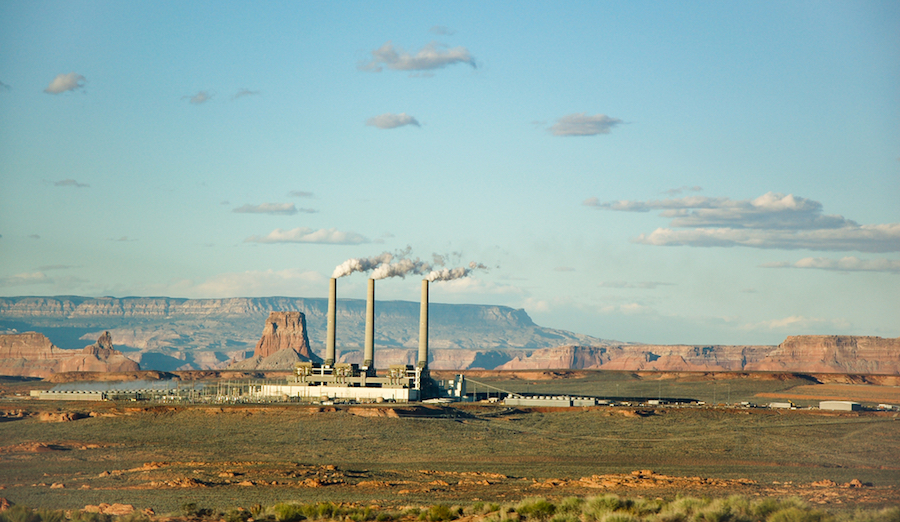
Coal-fired power plant in Arizona. Stock image.


The US Export-Import Bank is getting back in the business of helping to finance foreign coal power plants, after its board voted unanimously Thursday to lift roughly 12-year-old curbs on its lending.


The decision comes just weeks after President Donald Trump signed an executive order directing Ex-Im, the International Development Finance Corporation and other federal agencies to ensure their policies don’t deter coal mining and power projects.

The now-jettisoned restrictions, first adopted in 2013 following a lawsuit by the environmental group Friends of the Earth, barred Ex-Im support for coal projects in most countries unless carbon capture and storage technology was used to cut their emissions. The bank hadn’t financed any coal plants since the restrictions took effect.

Coal is the most carbon-intensive fossil fuel and supplies about one-third of the world’s electricity generation, according to the International Energy Agency. Demand for coal has fallen in developed countries but is still rising globally.

The board’s vote means the bank’s internal Environmental and Social Due Diligence Procedures and Guidelines (ESPGs) now are aligned with a separate Trump mandate, signed his first day in office, to put the interests of the US first in developing international agreements, Ex-Im said in an emailed statement.

“Coal-fired power projects will continue to be subject to the remaining provisions of the ESPGs in the same manner as other projects,” the bank said.

Conservationists blasted the move to unleash taxpayer dollars for foreign coal projects at a time when the Trump administration is moving to slash government funding and international aid.

And, they said, it’s only the latest disappointment by the Export-Import Bank. Although it has long been seen as a potential lender for emission-free energy projects overseas, the bank has instead been a persistent source of support for fossil fuel projects, under Democratic and Republican presidents alike.

For example, under former President Joe Biden, the bank continued providing loans for overseas oil and gas projects, with Ex-Im’s supporters stressing that its charter bars the denial of financing “based solely on the industry, sector or business.” The bank’s charter also empowers it to block support for projects based on environmental concerns.

Thursday’s decision “basically says the US government is no longer supporting projects that save people, it is supporting projects that kill people,” said Kate DeAngelis, international finance program manager for Friends of the Earth. “Why are we still allowing this agency to exist?”

Before Trump returned to the White House, the EU, UK and US pushed to limit export-credit agency finance for global fossil fuel projects, in what was seen as a bid to protect against a shift like Thursday’s. But that effort broke down last year in the final weeks of the Biden administration.

The bank’s decision is likely to intensify scrutiny of its role and stoke more questions from critical lawmakers about whether its congressional authorization should be allowed to lapse next year.

The change shifts Ex-Im’s policies back to a time when it was “one of the largest financiers of overseas coal projects in the world,” said Jake Schmidt, senior strategic director of international climate for the Natural Resources Defense Council, another environmental nonprofit. “Congress needs to realign this rogue agency when it considers its reauthorization next year.”

(By Jennifer A Dlouhy)


What Mark Carney’s victory means for the mining industry

MINING.COM Editor | April 29, 2025 |


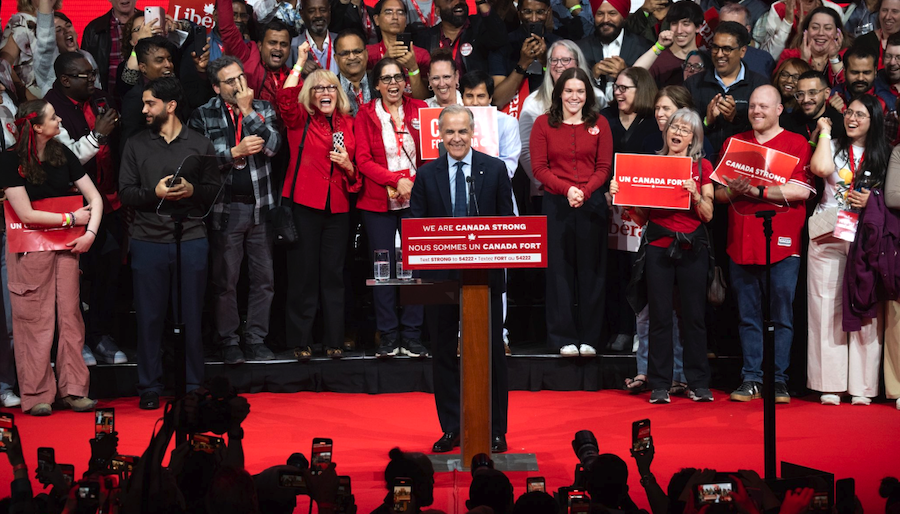
Prime Minister Mark Carney delivering his victory speech 
(Image courtesy of Mark Carney’s X account..)

Mark Carney’s extremely tight victory in Canada’s federal election is poised to significantly impact the mining industry, particularly the extraction and processing of critical minerals essential for the global energy transition.


Fast-tracking approvals

Carney’s administration plans to establish a “Major Federal Project Office” with a “one project, one review” mandate. This initiative aims to streamline environmental assessments by eliminating duplication between federal and provincial processes, thereby accelerating the approval of mining projects. Such a move is poised to benefit companies involved in critical mineral extraction, including lithium, nickel, and cobalt, by reducing bureaucratic delays.

Carney has not provided clarity on how the consent process would be expedited to meet the timeline pressures of energy and infrastructure development. This ambiguity is notable, particularly as his promise to avoid forcing projects through appears to contradict his assurances that major projects will proceed swiftly. Past provincial experiences, such as B.C.’s attempts to expedite development under similar consent commitments, suggest that balancing these priorities is fraught with legal and political difficulty.

Canadian election may herald increased mining activity

Carney’s approach implies an acknowledgment of a de facto Indigenous veto over resource projects—but rather than confronting this head-on, he proposes to “buy in” Indigenous participation through public financing mechanisms. This creates a practical route around a hard veto by offering Indigenous communities ownership stakes that align their interests with project success.

Reconciling the urgency of certain projects with the potentially time-consuming process of obtaining consent from multiple Indigenous nations will prove tricky. It begs the question of whether or not this model serves the public interest.

On one hand, it represents a constructive shift from conflict to partnership, promoting reconciliation and potentially leading to more stable and inclusive development. It avoids the legal and ethical risks associated with imposing projects on unwilling nations. On the other hand, it raises questions about the use of taxpayer-backed funds as a means of securing project approval. There is a risk that such financing becomes a permanent cost of doing business, even for projects that may not deliver strong returns to the public.

Whether this is sustainable or fair depends on how transparent and equitable the resulting arrangements are — and whether public funds are being used to create true partnerships or merely to neutralize opposition.


Investment in critical minerals


The Carney-led government plans to invest in the development of critical minerals by: Connecting critical mineral projects to supply chains via the new First and Last Mile Fund (FLMF), enhancing integration within the Canadian economy;
Supporting clean energy and critical minerals projects through the FLMF to reduce reliance on other countries and protect Canadian jobs;
Accelerating exploration and extraction, including from recycling, by investing in prospecting activities and
Attracting and de-risking investment in critical mineral exploration and extraction through additional investments and expanded tax credits.

US tariffs

In response to US President Donald Trump’s imposition of tariffs on Canadian imports, Carney has pledged a firm stance. His administration plans to invest billions to reduce Canada’s economic dependence on the southern neighbour, including a $2 billion strategic response fund to protect Canadian workers and fortify the auto supply chain.

This shift towards trade diversification and economic resilience is likely to open new markets for Canadian mining exports, particularly in Asia and Europe, thereby reducing vulnerability to US trade policies.

Energy superpower

Mark Carney’s campaign message on energy, echoing Stephen Harper’s “energy superpower” mantra, signals a sweeping ambition — but with a broader, more climate-conscious twist. In his election night speech, Carney declared it was “time to build Canada into an energy superpower in both clean and conventional energy” and pushed for an industrial strategy that boosts competitiveness while addressing climate change.

Now leading a Liberal government, Carney faces the challenge of balancing economic growth with environmental responsibility. His platform includes plans for national “energy corridors” designed to fast-track approvals for infrastructure such as pipelines and transmission lines. He has also pledged to streamline regulatory processes to reduce delays that have long hindered energy and resource development.


Carney supports carbon capture and storage technology, a key strategy for the oil and gas sector to reduce emissions. His promise of federal backing extends to major infrastructure and extraction efforts, notably the Ring of Fire in northern Ontario. The region is rich in critical minerals essential for electric vehicles, batteries and other technologies vital to a low-carbon economy.

Some First Nations groups with claims in the area oppose development, which could take a decade to implement judging by other projects. Environmentalists say it will release the same global warming gases from the region’s muskeg that the electric-battery vehicle metals it would produce are supposed to limit.

Canada’s elected Prime Minister has also committed to advancing transportation and energy projects in the Arctic, paired with a planned expansion of the country’s military presence in the region.

Environmental commitments

While promoting mining development, Carney’s administration also maintains environmental commitments, such as upholding the industrial carbon tax and imposing caps on oil and gas emissions. This approach aims to ensure that mining growth aligns with Canada’s climate goals.

Despite facing challenges such as taxation, immigration and political influences, including Trump’s rhetoric, Canada’s natural resource development was a common topic brought up by the two main political parties.

Carney’s recent victory signals a proactive approach to strengthening Canada’s mining industry, a significant contributor to the country’s economy. The sector accounted for nearly 20% of the country’s gross domestic product in 2022, alongside C$422 billion ($305 billion) in exports.


US Commerce Department launches steel and aluminum ‘inclusions process’


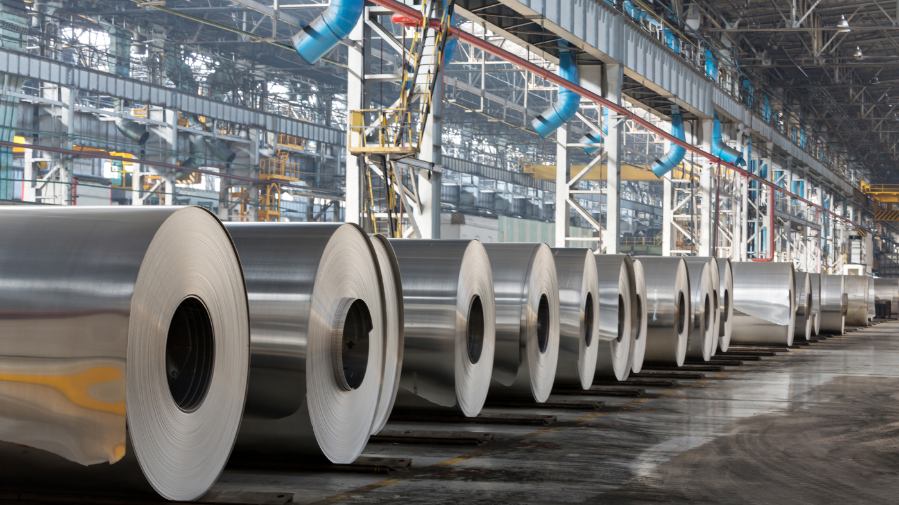
Stock image.

The US Commerce Department said on Thursday it had commenced a new process to allow US manufacturers and trade associations to request the inclusion of derivative aluminum and steel articles under Section 232 steel and aluminum tariffs.

The inclusion process, issued through an interim final rule on Wednesday, also eliminates the Section 232 aluminum and steel exclusions process, the Commerce Department said in a statement.

The action follows proclamations by President Donald Trump to establish a mechanism for expanding the scope of steel and aluminum tariffs to cover “derivative” articles that contain steel or aluminum, the department said.

(By Jasper Ward and Ismail Shakil; Editing by Leslie Adler)