Wednesday, May 28, 2025


Kremlin Hopes ‘Russian Community’ Violence Will Channel Veterans’ Nationalism – Analysis


Members of Russian Community nationalist organization. Photo Credit: VKontakte/obshina_rus


By 

The Russian Community, today the largest Russian nationalist organization, is rapidly evolving from an ideological group that supports Russian President Vladimir Putin and the Russian Orthodox Church into a criminal band. It is ready to engage in violence against the Kremlin’s opponents and is backed and directed by the Russian Federal Security Service (FSB) (see Meduza, May 5; Kavkaz.Realii, May 22).


Unsurprisingly, given the Putin regime’s general approach, the Russian Community is doing so in ways that allow both its leaders and the Kremlin deniability. This allows the group to pass under the radar and become ever more similar to other smaller and more extreme nationalist groups in Russia in the last several years. It has additionally come to resemble groups such as the Black Hundreds at the end of the tsarist period in Russia or the Freikorps in Germany in the wake of World War I (see EDM, October 15, 2024; Window on Eurasia, April 7).

As of now, the Kremlin appears confident it can use the Russian Community to exploit nationalist energy to control the most extreme forms of Russian nationalism, especially among veterans returning from its war against Ukraine and other conflicts abroad. There is a very real risk, however, that it is creating a monster that will further divide Russia’s ethnically and religiously diverse population or transform the regime ruling over it in the direction of full-blown fascism. This appears to be a result that many near the top of the Russian political system would like to see (see EDM, January 19, 2024).

Over the last year, there has been an increasing number of violent, even deadly, attacks on minorities of various kinds by individuals and groups, which have sometimes proudly identified themselves as members of the Russian Community (Kavkaz.Realii, September 8, 2024).

The organization’s leadership have sometimes denied that those involved in these attacks were members, only to take them in and even suggest that those who engage in such violence are the kind of people who should form the core of the Russian Community as it grows (Telegram/obshina_ru, May 8; Kavkaz.Realii, May 22).

Russian officials, as is their custom, often refuse to acknowledge that these attacks were motivated by ethnic hatred. Leaders of the non-Russian republics of Chechnya and Ingushetia, whose citizens were among those attacks as well and who had earlier sought to ban the Russian Community, however, have made it clear that they believe these attacks were ethnically motivated  (Telegram/adelimkhanov_95, May 8; Telegram/news_ingushetii1, May 8).


Most of these attacks have involved relatively small numbers of attackers and victims, and have been far from Moscow or other major Russian cities, with a few notable exceptions, most recently in St. Petersburg (Fontanka.ru, May 6; Arminfo.info, May 5). As a result, the attacks have not garnered the attention of Moscow’s media or experts. As a result, there have been few attempts by Russian analysts to analyze these attacks and suggest the broader implications of the role that the Russian Community is now assuming in the social and political life of that country. Asmik Novikova, the leading Russian specialist on vigilante groups who works at the Public Verdict rights organization, however, is an exception. She says that both the timing and the manner of recent attacks against minorities and the connection of these attacks with the Russian Community deserve careful scrutiny because they highlight how the Kremlin’s involvement and how it may be threatened by that involvement (Telegram/publicverdict, May 20).

Novikova argues that these attacks are the work of organized groups and target members of ethnic or religious minorities in almost all cases. Therefore, the organizer, in this case, the Russian Community, meets the characteristics in Russian law of “an organized criminal group” and should be subject to criminal sanction. That, however, has not happened. Far too often, she points out, those most directly involved are let off with no charges or minimal penalties, and the organization itself is able to continue its work unimpeded. This indicates that the Russian Community and its violence have the support of the Kremlin and the FSB (Telegram/publicverdict, May 20). She suggests that even more compelling evidence for this conclusion is that the Russian Community was founded five years ago, but it has exploded in size only now (Telegram/publicverdict, May 20). The timing and rapid growth can be explained only by one development, given how the Kremlin has increasingly sought to control all nominally independent social groups. The explanation, Novikova continues, is that today,

“[V]eterans of armed conflicts are trickling back into Russian society in thin streams not only from the war in Ukraine but from other conflicts in general. No matter how hard the government tries to contain such people, either by keeping them in war zones or nearby, they are coming back  (Telegram/publicverdict, May 20).

That creates a reservoir of people “who are capable of very quickly resorting to violence against others”  (Telegram/publicverdict, May 20). Having a group like the Russian Community, which is more than ready to take action against groups the Kremlin dislikes, is a safety valve and a convenience, even though any group powerful enough to take such actions could become one that its creators may soon lose control over. 

Re-integrating veterans of Putin’s war against Ukraine was always going to be a serious problem, as Moscow’s experience with veterans of its war in Afghanistan and the experience of other countries with returning veterans suggested (see EDM, April 14, 2022). As more and more veterans have returned, Putin has promoted a much-ballyhooed program to integrate veterans as the new “heroes” of his Russia (see EDM, May 22). That program, however, has not had much success, especially as ever more people are worried about how returning veterans are producing a crime wave in Russia (see EDM, September 25, 2024, February 25).

Up to now, the crimes being committed by the Russian Community have gotten lost in this larger phenomenon. Because the Kremlin and its FSB are behind these groups, however, they are likely to have a greater impact over the longer term. They cannot be stopped by a militia alone, and the transformations they are promoting are goals that at least some of those at or near the top of the political hierarchy share and want to see implemented (Verstka, October 11, 2024).

The question now is whether Moscow will pull the plug on the Russian Community, as some commentators suggest, or whether it will not, either because of its own choices or because it may soon lack the ability to do so without incurring costs far greater than it is prepared to pay (Radio Svoboda, May 10).


Paul Goble

Paul Goble is a longtime specialist on ethnic and religious questions in Eurasia. Most recently, he was director of research and publications at the Azerbaijan Diplomatic Academy. Earlier, he served as vice dean for the social sciences and humanities at Audentes University in Tallinn and a senior research associate at the EuroCollege of the University of Tartu in Estonia. He has served in various capacities in the U.S. State Department, the Central Intelligence Agency and the International Broadcasting Bureau as well as at the Voice of America and Radio Free Europe/Radio Liberty and at the Carnegie Endowment for International Peace. Mr. Goble maintains the Window on Eurasia blog and can be contacted directly at paul.goble@gmail.com .




 

Borders Of Influence: Soft Power Diplomacy In A Fragmented South Asia – Analysis


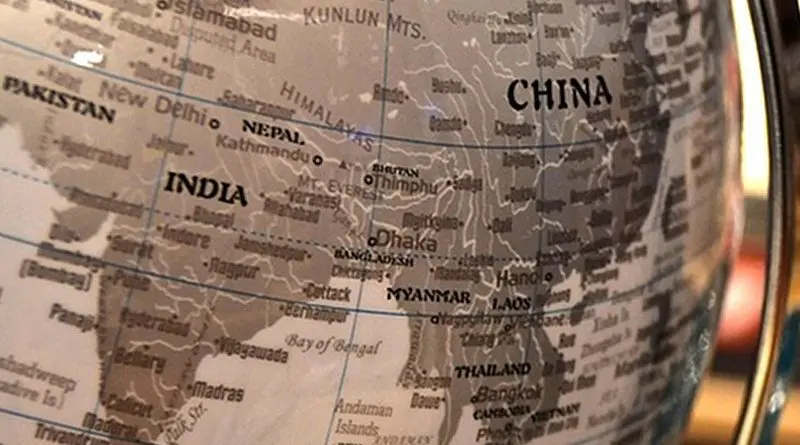
china nepal pakistan india globe map south asia


By 

Despite a rich tapestry of shared culture, religion and history, South Asia today remains a deeply fragmented region. Political rivalries, border disputes, and competing nationalisms continue to shape its strategic landscape. Yet, amid the tumult, one quiet force has begun to define regional diplomacy: soft power.


Soft power — the ability to influence others through appeal and attraction rather than coercion — is becoming an essential component of foreign policy in the subcontinent. From India’s cultural diplomacy to China’s language institutes and development outreach, soft power is shaping perceptions and altering alliances. This article examines how South Asian nations, especially India, deploy soft power, and whether it can transcend the region’s enduring divides.

India’s civilizational diplomacy

India’s soft power draws strength from its ancient civilization, vibrant culture and democratic ethos. Unlike economic or military leverage, this influence flows through ideas, heritage, media and people-to-people connections.

India’s religious and historical ties with Nepal, Bhutan, Sri Lanka and Afghanistan offer a foundation for engagement. Buddhist diplomacy, for instance, remains a cornerstone of India’s cultural outreach. Efforts to renovate historic temples in Sri Lanka and promote Buddhist sites in India to foreign pilgrims are key components of New Delhi’s soft power strategy. Beyond religion, Indian cinema plays an enormous role in shaping perceptions. Bollywood films and music remain wildly popular across borders, even in Pakistan and Bangladesh. This cultural export fosters familiarity and sometimes admiration for Indian society, softening political divides.

India’s development diplomacy has also been crucial. Through the Indian Technical and Economic Cooperation program, New Delhi provides scholarships, training and technical support across South Asia. India’s educational institutions, particularly in medicine and engineering, attract students from the region. At the same time, the Indian diaspora acts as informal ambassadors of Indian culture and values in countries like the Maldives and Nepal.

China’s expanding influence

While India has historically held cultural sway in the region, China is fast becoming a soft power rival. Its Belt and Road Initiative has placed it at the center of infrastructure and economic development in South Asia. But alongside highways and ports, Beijing is investing in education, media and language diplomacy.


Confucius Institutes have been established in Pakistan, Nepal, and Sri Lanka to promote Mandarin and Chinese culture. These institutions offer scholarships, training programs and student exchanges, enhancing China’s visibility and appeal. Chinese media outlets like CGTN and Xinhua now publish in multiple South Asian languages. Their coverage often frames China as a benevolent development partner, contrasting with Western portrayals of authoritarianism.

However, China’s soft power is complicated by perceptions of economic overreach. The leasing of Sri Lanka’s Hambantota Port and rising debt concerns in countries like Pakistan has triggered fears of “debt-trap diplomacy.” This undermines Beijing’s attempts to project a benevolent image, even as it continues to deepen ties through non-coercive means.

Small states, subtle strategies

Smaller South Asian nations have also adopted soft power strategies, not just to assert identity but to navigate between larger regional powers.

Bhutan, for example, champions its Gross National Happiness index as a model of holistic development, earning it international acclaim. Nepal leverages its status as the birthplace of the Buddha to promote cultural diplomacy with East Asia. Sri Lanka, with its rich Buddhist heritage and vibrant artistic traditions, positions itself as a cultural hub. Bangladesh has shifted its image from a disaster-prone country to a development success story. Its garment exports, cultural vibrancy and growing digital economy have allowed it to reposition itself on the global stage. Through literature, cuisine and sport, it is beginning to project an identity distinct from its historical ties to India. The Maldives, vulnerable to rising sea levels, uses climate diplomacy as a form of soft power. By championing environmental causes, it garners support and raises its profile internationally.

Roadblocks to regional integration

While soft power offers promise, it remains constrained by South Asia’s deep-rooted tensions.

India and Pakistan’s adversarial relationship has frozen cultural and sporting exchanges, often seen as vehicles for soft power. The South Asian Association for Regional Cooperation remains paralyzed, with regional cooperation shifting to subgroups like the Bay of Bengal Initiative for Multi-Sectoral Technical and Economic Cooperation.

Rising nationalism in several countries has also made soft power efforts politically sensitive. India’s initiatives are sometimes viewed with suspicion, seen as hegemonic or interfering. For example, anti-India protests in Nepal or backlash against Bollywood in Bangladesh reflect the fragility of cultural diplomacy in politically charged environments.

Moreover, India’s soft power efforts are often decentralized and inconsistent. Lacking a dedicated cultural diplomacy agency, initiatives are spread across ministries with little coordination. Unlike China’s state-backed campaigns, India’s approach is largely ad hoc, limiting its strategic impact.

Opportunities for a new approach

Despite the challenges, soft power diplomacy holds untapped potential in reshaping South Asia’s regional dynamics.

First, invest in shared cultural platforms. South Asia’s shared history can be harnessed through cross-border festivals, literary exchanges and collaborative art projects. Joint museum exhibitions or regional cinema festivals can create narratives of togetherness rather than division.

Second, prioritize youth and education. Establishing regional scholarship schemes, student summits and academic partnerships can forge generational connections. Universities can serve as incubators of regional integration, where future leaders learn to collaborate across borders.

Third, empower civil society. NGOs, media, artists and local organizations often operate below the radar of high politics. Supporting people-to-people diplomacy through grassroots initiatives and digital storytelling can circumvent the barriers posed by state-to-state tensions.

Finally, institutionalize soft power strategy. India in particular needs a centralized body—like a “South Asia Cultural Council”—to streamline efforts, plan long-term, and respond flexibly to political developments. Training cultural attachés and investing in regional language diplomacy can enhance credibility and effectiveness.

A bridge over troubled waters?

In a region often defined by military standoffs and political deadlocks, soft power offers a subtle but effective means of engagement. It appeals not to fear, but to fascination; not to authority, but to aspiration. India, with its civilizational depth and democratic diversity, is uniquely positioned to lead this effort—but only if it treats neighbors as equals rather than satellites. China’s rise has prompted a recalibration of regional alignments, but its soft power remains constrained by suspicion and limited people-to-people resonance. The future of South Asian diplomacy may not be written in treaties or summits, but in classrooms, cinemas and cultural corridors. If borders continue to divide, influence may still unite.

In the end, the power that changes minds and wins hearts may do more for regional peace than armies ever could.


Yukti Gupta

Yukti Gupta is an Assistant Professor of Political Science at JECRC University, Rajasthan (India) and a Ph.D. scholar at Banasthali Vidyapith, Rajasthan (India). A published researcher and Young Leaders for Active Citizenship Fellow (New Delhi), her work focuses on soft power, diplomacy, and governance. She is a frequent speaker at national and international forums. Ms. Gupta can be contacted at guptayukti51@gmail.com


Australia’s Reclaim Bid Of Port Darwin Irks China – Analysis

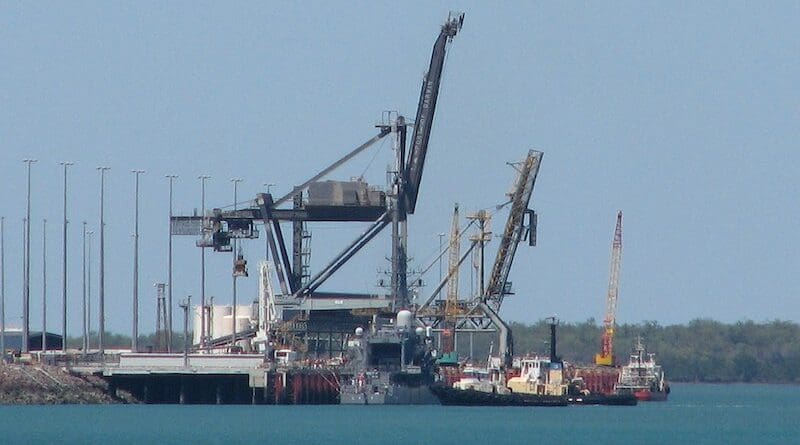
Port Darwin, Australia. Photo Credit: Ken Hodge, Wikipedia Commons


By 

Amid the escalating trade and tariff wars unleashed by the US President Donald Trump with almost all of the US trading partners, tensions are brewing up in the South Pacific theatre between China and Australia not on trade and tariff issue but on the control and ownership of the strategic Port Darwin in Australia’s north. As China continues to expand its strategic footprint much beyond its frontiers and towards the South Pacific islands to the consternation of Australia, the strategic relevance of the Darwin port assumes sudden significance. 


The genesis of the controversy lie when the port, vital to regional economies and national security and is currently under Chinese company Landbridge after a 2015 deal is now being claimed back by the Australian government. In a move that sparked diplomatic tensions, China’s ambassador to Australia Xiao Qian openly criticised the Australian government’s intentions to reclaim Darwin Port from Chinese ownership. The strategic port, leased to China’s Landbridge Group in 2015 for 99 years under a deal originally approved by the Northern Territory government is poised for transfer back to local hands under Prime Minister Anthony Albanese’s administration as it cites national interests as the main driving factor.  

When the deal was done in 2015, it was criticized by then-U.S. President Barack Obama as he was aware that the Darwin Port plays host to regular exercises by thousands of U.S. Marines. As part of the strategic defense arrangements, approximately 2,000 U.S. Marines conduct exercises in Darwin, underlining the port’s strategic importance. The port’s importance is underscored by its role in the regional economy and national infrastructure, a fact reiterated by Australian officials as they intensify efforts to return it to domestic control. Amid diplomatic discourse, Landbridge insists the port is not for sale and continues usual operations. Meanwhile, Australian government remains firm on its intent to have Darwin Port returned to Australian hands. With the government prioritising national interest, a direct purchase is being considered if unable to secure a private buyer, highlighting the site’s significance in the burgeoning defence cooperation with the U.S. This move comes as part of a broader strategy to bolster defense ties with the United States in the northern region. During his re-election campaign, Albanese had indicated that his government was prepared to directly intervene and buy the port if it could not find a private buyer.

The strategic significance of Darwin Port came to the limelight for the first time when on 19 February 1942, 242 Japanese aircrafts in two separate raids attacked the town, ships in Darwin Harbour and the town’s two airfields in an attempt to prevent the Allies from using them as bases to contest the invasion of Timor and Java during World War II. That was the largest single attack ever mounted by a foreign power on Australia. That time the bombing of Darwin was called the Battle of Darwin.   

Darwin was lightly defended relative to the size of the attack, and the Japanese inflicted heavy losses upon Allied forces at little cost to themselves. More than half of Darwin’s civilian population left the area permanently, before or immediately after the attack. In 1942, Darwin, the capital of the Northern Territory, was a small town with limited civil and military infrastructure. Due to its strategic position in northern Australia, the Royal Australian Navy (RAN) and Royal Australian Air Force (RAAF) had constructed bases near the town in the 1930s and the early years of World War II. Since then, the port’s strategic relevance has increased manifold. 

Beijing is aware of the strategic significance of the Darwin Port and is thus unwilling to surrender the advantage it has enjoyed for the past decade when its ambitions as a global power is on the upswing. The Chinese ambassador therefore expressed disapproval of Australia’s plan to reclaim Darwin Port from its current Chinese owners, citing concerns about ethical practices. Prime Minister Albanese aims to ensure the strategic port’s ownership aligns with national interests, amidst Australia-US military collaborations in the region. The Chinese ambassador highlighted that the Chinese company, Landbridge, which currently manages the port, should not face consequences for their investment. Hitting out at Australia’s “questionable” Darwin Port return plan, Xiao Qian argues that the Landbridge Group with a 99-year lease right has made significant investments in the port and contributed to the local economy. Albanese’s government of Australia is seriously working on a plan to buy back Darwin Port from its Chinese owners on national interest grounds, saying the port needed to be “in Australian hands”.  


Xiao Qian argued that the Landbridge Group had made significant investments in maintaining and building the port’s infrastructure, optimising its operations and management, and expanding its customer sources, thereby contributing to the local economy. He argued that these efforts have brought remarkable improvements to the port, turning its financial situation from losses to profits and contributing positively to local economic and social development.

He further argues that such an enterprise and project deserves encouragement, not punishment. He says: “It is ethically questionable to lease the port when it was unprofitable and then seek to reclaim it once it becomes profitable.” Xiao Qian argued that the Landbridge Group had secured the lease through an open and transparent bidding process and expressed hope that Australia would view the project “objectively”.

Though the two countries are comprehensive strategic partners and need to foster mutual trust aligning shared interests for mutually beneficial cooperation, the reality is that the current state of bilateral relations is marred by contending claims of trade discrimination, thereby eroding the vital element of mutual trust.  As a result, it is difficult to restore the pre-existing fair, transparent and predictable business environment for Chinese companies in Australia that led to the booming economic ties between the two countries in the past two decades. The Chinese ambassador’s criticism came at a time when relations between Australia and China had begun to show signs of improvement. This included Beijing’s decision to lift trade bans on Australian exports in December 2024. The trust deficit nevertheless remains. 

Despite tensions in bilateral relations, trade between the two continues to flourish. China continues to dominate Australia’s trade landscape, accounting for approximately 28% of Australia’s total trade in goods and services in the financial year 2024-2025. The total trade volume between Australia and China reached AUD 285 billion, with exports to China valued at AUD 195 billion and imports at AUD 90 billion. Australia’s exports to China remain heavily reliant on natural resources, with iron ore, coal, and natural gas constituting over 75% of total exports. Iron ore alone contributed AUD 120 billion, underscoring its critical role in the bilateral trade relationship.

Despite ongoing geopolitical tensions, the trade volume has remained robust, driven by China’s demand for Australia’s natural resources. However, the diversification of Australia’s export markets has gained momentum, with increased focus on Southeast Asia and India. The financial year 2024-2025 also saw a partial recovery in Australian agricultural exports to China, particularly barley and wine, following the easing of some trade restrictions. Yet, Beijing threatens to ban nearly US$400 million worth of Australian wheat imports.

For Australia however, the strategic consideration underpinning the country’s foreign policy goal needs to be seen in the perspective of the Darwin Port as a strategic asset, where US marines conduct exercises. Australian authorities discussed ways to deal with the port following concerns that the Chinese firm was facing financial difficulties and after Chinese warships conducted live-fire drills in international waters near Australia in February 2025.

The strategically important northern Australian port has been a hotly debated national security issue since it was leased to the Chinese firm Landbridge by the NT government for 99-years in 2015. Members of the previous NT government that leased the port to Landbridge have said the decision was made to lease it after the federal government of the day failed to fund needed infrastructure upgrades. 

Federal Labor MP and special envoy for defence and northern Australia Luke Gosling says he has been meeting with potential buyers of the port’s lease. During the last federal election campaign, both Labor and the Coalition made duelling pledges to get the port “back into Australian hands”. Federal Infrastructure Minister Catherine King said the port was a “critical infrastructure asset of national importance”.

The key question that arises is, Darwin Port has been controversial for years, so why the new thinking by the Albanese government now? The port’s lease to Landbridge has outclassed successive prime ministers. Therefore the reasons why major parties are talking about cancelling it now beg answers. The Albanese government is yet to give a firm indication of exactly how it will do that, but has repeatedly said it has been speaking with Australian firms to possibly take over the lease. In the meantime, Beijing calls upon the NT and federal governments to “honour its binding commitments” under the contract and “respect the autonomous decisions made by businesses made by development needs”. The ambassador argued that it is ethically questionable to lease the port when it was unprofitable and then seek to reclaim it once it becomes profitable. 

The larger consideration of the Albanese government seems to be to keep in check Beijing’s aggrandizement plans and larger strategic design. In particular, Australia is building up its northern military bases, which will host US bombers and fighter jets on a rotational basis, as it increases defence cooperation with the US. So, the strategic competition for larger space by either shall continue to remain. 


Dr. Rajaram Panda

Dr. Rajaram Panda is former Senior Fellow at Pradhanmantri Memorial Museum and Library (PMML). Earlier Dr Panda was Senior Fellow at MP-IDSA and ICCR Chair Professor at Reitaku University, JAPAN. His latest book "India and Japan: Past, Present and Future" was published in 2024 by Knowledge World. E-mail: rajaram.panda@gmail.com


Involving communities in nature-based solutions to climate challenges leads to greater innovation, study shows


University of Exeter


Involving communities in nature-based solutions to tackle urban climate and environmental challenges leads to innovation and multiple benefits, a study shows.

Participation of citizens in NBS projects leads to innovation in design and quality, as well as people gaining greater benefits from green and blue spaces (for access, recreation and health and wellbeing), researchers found. The study showed that involving communities.

Projects are also more likely to be successful in supporting nature renewal when they involve policymakers from across different sectors, rather than being carried out in silos, and when they align with government policy and strategy.

Researchers carried out interviews and workshops in three European cities – Paris Region, France, Velika Gorica, Croatia, and Aarhus, Denmark as part of the EU Horizon 2020-funded REGREEN project.

They found the size and complexity of the urban area and the ways the cities were governed had an impact on the outcome of the NBS.

In all areas the increased prevalence and severity of climate change effects (e.g. flooding, heat effects) and witnessing initiatives from other countries were drivers of NBS innovation.

Also influential were shifts in public and media perception around climate change, a tradition of use of public spaces by citizens and support from politicians and political leaders.

However, the research found that encouraging participation by residents and others, and experimentation may not necessarily lead to desired outcomes where there are also strong external (top-down) policy drivers (e.g. housing development pressures).

The study, by Carolyn PetersenDuncan Russel and Nick Kirsop-Taylor from the University of Exeter, and Anne Jensen and Anders Branth Pedersen, from Aarhus University, is published in the journal Discover Cities.

Dr Petersen said: “When NBS projects aligned with and were integrated into government strategy with support from local leaders, this helped promote innovation in all three cities, as did involving local people in the co-design of NBS initiatives.

“We also found key differences. In the Paris Region there was more evidence of citizens and local NGOs developing their own NBS initiatives, based on tackling external factors and priorities such as increasing the liveability of urban areas, biodiversity, health and wellbeing, and climate adaptation, without government assistance, at least initially. Whereas, in Velika Gorica the barriers to local groups doing this, such as funding, were reported to be greater.

“Key differences that led to differing NBS outcomes included the size and complexity of urban areas, the effectiveness of enforcement of planning regulations, and the extent to which the governing architecture enabled citizens and local NGOs to develop their own NBS initiatives.

“The analysis indicates that where citizen participation and consultation were built into NBS projects, this brought both innovation in terms of the design, quality, biodiversity and or multi-functionality of green/blue spaces—whether this was greening of schoolyards, redesign of under-used green spaces or river restoration.”