Trump Slashes US Humanitarian Aid Pledge as His Cuts Kill Hundreds of Thousands Globally
One tracker estimates that the Trump administration’s assault on foreign aid programs has killed more than 700,000 people so far—a majority of them children.
One tracker estimates that the Trump administration’s assault on foreign aid programs has killed more than 700,000 people so far—a majority of them children.
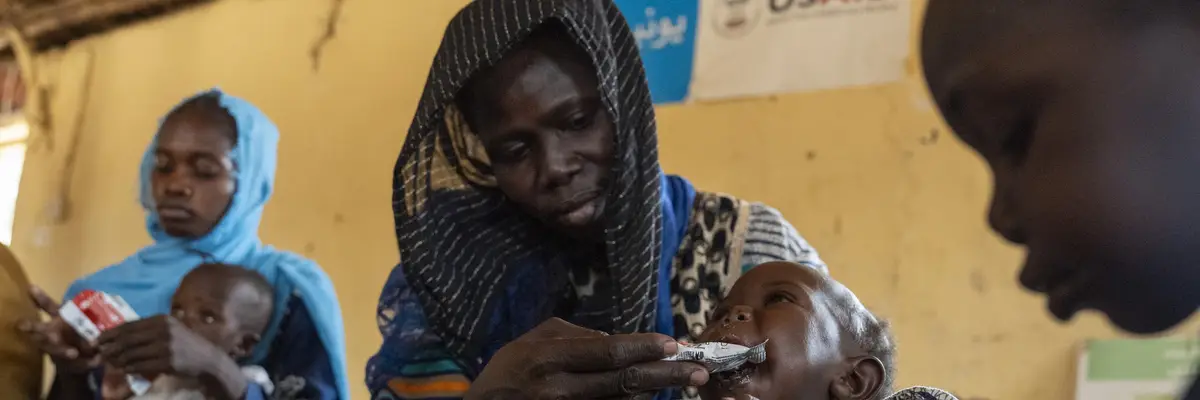
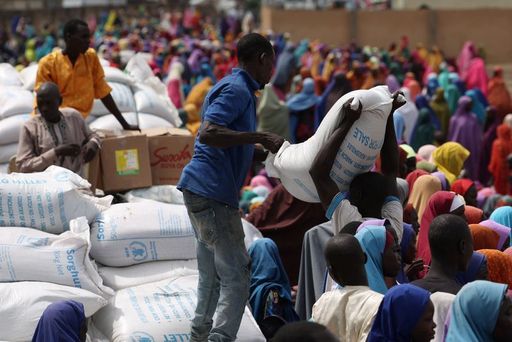
People receive aid at Almanar feeding center in Mayo Mandala on the outskirts of Omdurman,
Sudan on May 25, 2025.
(Photo: Carolyn Van Houten/The Washington Post via Getty Images)
Jake Johnson
Dec 29, 2025
COMMON DREAMS
The Trump administration on Monday announced a commitment of $2 billion to United Nations humanitarian assistance efforts, a fraction of what the US has previously provided as President Donald Trump’s foreign aid cuts continue to wreak deadly havoc worldwide.
The US State Department said the funds will be tied to reform efforts pushed by the administration, as it warns individual UN agencies to “adapt, shrink, or die”—all while giving massive handouts to billionaires.
“The agreement requires the UN to consolidate humanitarian functions to reduce bureaucratic overhead, unnecessary duplication, and ideological creep,” said the State Department.
Al Jazeera reported that the reduced commitment “is a sharp contrast to the assistance of up to $17 billion the US has provided as the UN’s leading funder in recent years.”
“The $2 billion will create a pool of funds that can be directed at specific countries or crises, with 17 countries—including Bangladesh, the Democratic Republic of the Congo, Haiti, Syria, and Ukraine—initially targeted,” the outlet noted. “Afghanistan is not included on the list, nor is Palestine, which officials say will be covered by money included in Trump’s yet-to-be-completed Gaza plan.”
The Associated Press observed that “even as the US pulls back its aid, needs have ballooned across the world: Famine has been recorded this year in parts of conflict-ridden Sudan and Gaza, and floods, drought, and natural disasters that many scientists attribute to climate change have taken many lives or driven thousands from their homes.”
The new funding pledge comes after the Trump administration’s lawless dismantling of the US Agency for International Development (USAID), which was the United States’ primary body for foreign aid.
Experts say the destruction of USAID at the hands of billionaire Elon Musk and others inside the Trump White House has killed hundreds of thousands of people across the globe—and could kill millions more in the coming years.
A conservative tracker maintained by Boston University epidemiologist Brooke Nichols estimates that the Trump administration’s assault on foreign aid programs has killed more than 700,000 people—a majority of them children.
In a blog post for the Center for Global Development earlier this month, Charles Kenny and Justin Sandefur wrote that “while quantification is difficult, there is little doubt many people have died as a result, and without action many more will die in the future.”
(Photo: Carolyn Van Houten/The Washington Post via Getty Images)
Jake Johnson
Dec 29, 2025
COMMON DREAMS
The Trump administration on Monday announced a commitment of $2 billion to United Nations humanitarian assistance efforts, a fraction of what the US has previously provided as President Donald Trump’s foreign aid cuts continue to wreak deadly havoc worldwide.
The US State Department said the funds will be tied to reform efforts pushed by the administration, as it warns individual UN agencies to “adapt, shrink, or die”—all while giving massive handouts to billionaires.
“The agreement requires the UN to consolidate humanitarian functions to reduce bureaucratic overhead, unnecessary duplication, and ideological creep,” said the State Department.
Al Jazeera reported that the reduced commitment “is a sharp contrast to the assistance of up to $17 billion the US has provided as the UN’s leading funder in recent years.”
“The $2 billion will create a pool of funds that can be directed at specific countries or crises, with 17 countries—including Bangladesh, the Democratic Republic of the Congo, Haiti, Syria, and Ukraine—initially targeted,” the outlet noted. “Afghanistan is not included on the list, nor is Palestine, which officials say will be covered by money included in Trump’s yet-to-be-completed Gaza plan.”
The Associated Press observed that “even as the US pulls back its aid, needs have ballooned across the world: Famine has been recorded this year in parts of conflict-ridden Sudan and Gaza, and floods, drought, and natural disasters that many scientists attribute to climate change have taken many lives or driven thousands from their homes.”
The new funding pledge comes after the Trump administration’s lawless dismantling of the US Agency for International Development (USAID), which was the United States’ primary body for foreign aid.
Experts say the destruction of USAID at the hands of billionaire Elon Musk and others inside the Trump White House has killed hundreds of thousands of people across the globe—and could kill millions more in the coming years.
A conservative tracker maintained by Boston University epidemiologist Brooke Nichols estimates that the Trump administration’s assault on foreign aid programs has killed more than 700,000 people—a majority of them children.
In a blog post for the Center for Global Development earlier this month, Charles Kenny and Justin Sandefur wrote that “while quantification is difficult, there is little doubt many people have died as a result, and without action many more will die in the future.”
HUMANITARIAN AID
United States pledges €1.7bn for UN humanitarian aid, lower than previous years
The United States on Monday unveiled a €1.7 billion pledge for United Nations humanitarian aid, even as President Donald Trump’s administration continues to scale back foreign assistance and warns UN agencies to “adapt, shrink or die” in line with new financial realities.
Issued on: 29/12/2025 - RFI

United States pledges €1.7bn for UN humanitarian aid, lower than previous years
The United States on Monday unveiled a €1.7 billion pledge for United Nations humanitarian aid, even as President Donald Trump’s administration continues to scale back foreign assistance and warns UN agencies to “adapt, shrink or die” in line with new financial realities.
Issued on: 29/12/2025 - RFI
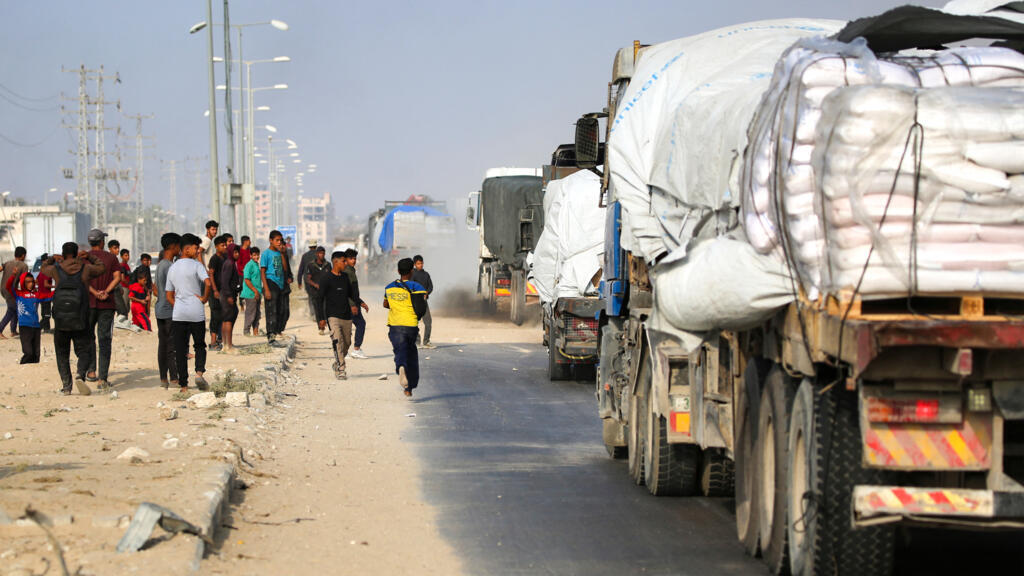
Displaced Palestinians chase after trucks travelling along Salah al-Din road in the central Gaza Strip, near Deir al-Balah, as they attempt to obtain humanitarian aid on 9 November, 2025. AFP - EYAD BABA
The sum represents a fraction of previous US contributions but is presented as a generous commitment designed to preserve America’s position as the world’s largest humanitarian donor.
The money will be placed in a central fund and distributed to UN agencies under a new system of stricter oversight, a key condition of Washington’s push for sweeping reform that has alarmed aid groups and forced deep cuts to services.
In recent years, total US humanitarian funding for UN-backed programmes has reached as much as €14.4 billion annually, according to UN data, of which €7– 9 billion came as voluntary contributions. Critics argue the drastic cut risks worsening hunger, displacement and disease and undermines US soft power overseas.
“We are watching the lifeline for millions of people disintegrate before our eyes,” according to Cindy McCain, executive director of the World Food Program.
Turbulent year
The announcement caps a turbulent year for UN bodies such as the WFP, the refugee agency UNHCR and the International Organisation for Migration, all of which have faced severe budget strain following massive US aid reductions.
Other western donors, including Britain and Germany, have also reduced contributions.
The new pledge forms part of a preliminary agreement with the UN Office for the Coordination of Humanitarian Affairs (OCHA), headed by former British diplomat Tom Fletcher.
Despite global needs soaring – with famine declared in parts of Sudan and Gaza and extreme weather disasters displacing thousands – OCHA has been forced to lower its fundraising targets.
The US seeks what officials describe as “more consolidated leadership authority” in how aid is delivered.
Under the plan, OCHA will act as a central conduit for funding rather than separate US allocations to individual agencies.
“This humanitarian reset should deliver more aid with fewer tax dollars,” said US ambassador to the UN, Michael Waltz.
Reduce bureaucratic overhead
According to the State Department, “the agreement requires the UN to consolidate humanitarian functions to reduce bureaucratic overhead, unnecessary duplication, and ideological creep”.
“Individual UN agencies will need to adapt, shrink, or die,” the statement said.
It called the arrangement “a critical step” in reforming how humanitarian operations are funded and monitored.
Initially, the funds will focus on 17 countries, including Bangladesh, the Democratic Republic of Congo, Haiti, Syria and Ukraine. Afghanistan and the Palestinian territories are not on the list, with US officials saying they will be addressed under Trump’s proposed Gaza peace plan.
The United Nations estimates that some 240 million people – in conflict zones, suffering from epidemics, or victims of natural disasters and climate change – are in need of emergency aid.
In 2025, the UN's appeal for more than €38 billion was only funded to the €10 billion mark, the lowest in a decade.
That only allowed it to help 98 million people, 25 million fewer than the year before.
(With newswires)
The sum represents a fraction of previous US contributions but is presented as a generous commitment designed to preserve America’s position as the world’s largest humanitarian donor.
The money will be placed in a central fund and distributed to UN agencies under a new system of stricter oversight, a key condition of Washington’s push for sweeping reform that has alarmed aid groups and forced deep cuts to services.
In recent years, total US humanitarian funding for UN-backed programmes has reached as much as €14.4 billion annually, according to UN data, of which €7– 9 billion came as voluntary contributions. Critics argue the drastic cut risks worsening hunger, displacement and disease and undermines US soft power overseas.
“We are watching the lifeline for millions of people disintegrate before our eyes,” according to Cindy McCain, executive director of the World Food Program.
Turbulent year
The announcement caps a turbulent year for UN bodies such as the WFP, the refugee agency UNHCR and the International Organisation for Migration, all of which have faced severe budget strain following massive US aid reductions.
Other western donors, including Britain and Germany, have also reduced contributions.
The new pledge forms part of a preliminary agreement with the UN Office for the Coordination of Humanitarian Affairs (OCHA), headed by former British diplomat Tom Fletcher.
Despite global needs soaring – with famine declared in parts of Sudan and Gaza and extreme weather disasters displacing thousands – OCHA has been forced to lower its fundraising targets.
The US seeks what officials describe as “more consolidated leadership authority” in how aid is delivered.
Under the plan, OCHA will act as a central conduit for funding rather than separate US allocations to individual agencies.
“This humanitarian reset should deliver more aid with fewer tax dollars,” said US ambassador to the UN, Michael Waltz.
Reduce bureaucratic overhead
According to the State Department, “the agreement requires the UN to consolidate humanitarian functions to reduce bureaucratic overhead, unnecessary duplication, and ideological creep”.
“Individual UN agencies will need to adapt, shrink, or die,” the statement said.
It called the arrangement “a critical step” in reforming how humanitarian operations are funded and monitored.
Initially, the funds will focus on 17 countries, including Bangladesh, the Democratic Republic of Congo, Haiti, Syria and Ukraine. Afghanistan and the Palestinian territories are not on the list, with US officials saying they will be addressed under Trump’s proposed Gaza peace plan.
The United Nations estimates that some 240 million people – in conflict zones, suffering from epidemics, or victims of natural disasters and climate change – are in need of emergency aid.
In 2025, the UN's appeal for more than €38 billion was only funded to the €10 billion mark, the lowest in a decade.
That only allowed it to help 98 million people, 25 million fewer than the year before.
(With newswires)

Critics say the Western aid cutbacks have been shortsighted, driven millions toward hunger, displacement or disease, and harmed US soft power around the world.
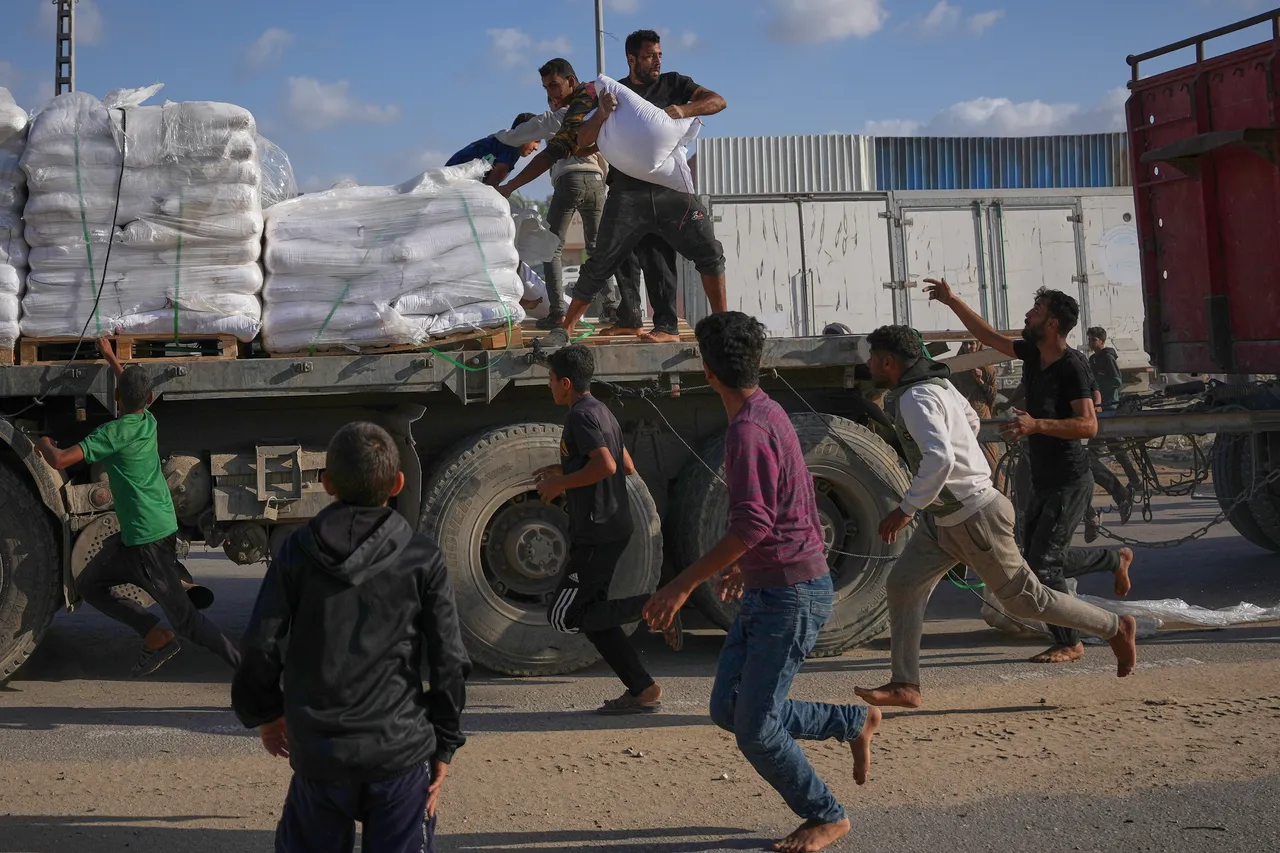
The cuts have major implications for UN affiliates like the International Organization for Migration, the World Food Program and refugee agency UNHCR. / AP
The United States on Monday announced a $2 billion pledge for UN humanitarian aid as President Donald Trump’s administration continues to slash US foreign assistance and warns United Nations agencies to “adapt, shrink or die” in a time of new financial realities.
The money is a small fraction of what the US has contributed in the past but reflects what the administration believes is a generous amount that will maintain the United States’ status as the world’s largest humanitarian donor.
The pledge creates an umbrella fund from which money will be doled out to individual agencies and priorities, a key part of US demands for drastic changes across the world body that have alarmed many humanitarian workers and led to severe reductions in programs and services.
The $2 billion is only a sliver of traditional US humanitarian funding for UN-backed programs, which has run as high as $17 billion annually in recent years, according to UN data. US officials say only $8-$10 billion of that has been in voluntary contributions. The United States also pays billions in annual dues related to its UN membership.
Critics say the Western aid cutbacks have been shortsighted, driven millions toward hunger, displacement or disease, and harmed US soft power around the world.
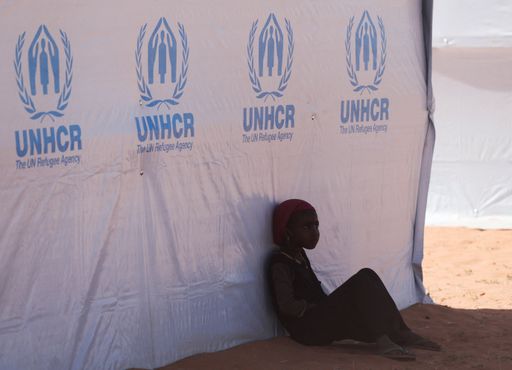
RelatedTRT World - UN refugee agency hails record early donations amid US aid cuts
A year of crisis in aid
The move caps a crisis year for many UN organisations like its refugee, migration and food aid agencies. The Trump administration has already cut billions in US foreign aid, prompting them to slash spending, aid projects and thousands of jobs. Other traditional Western donors have reduced outlays, too.
The announced US pledge for aid programs of the United Nations, the world’s top provider of humanitarian assistance and biggest recipient of US humanitarian aid money, takes shape in a preliminary deal with the UN Office for the Coordination of Humanitarian Affairs, or OCHA, run by Tom Fletcher, a former British diplomat and government official.
Even as the US pulls back its aid, needs have ballooned across the world: Famine has been recorded this year in parts of conflict-ridden Sudan and Gaza, and floods, drought and natural disasters that many scientists attribute to climate change have taken many lives or driven thousands from their homes.
The cuts will have major implications for UN affiliates like the International Organization for Migration, the World Food Program and the refugee agency UNHCR. They have already received billions less from the US this year than under annual allocations from the previous Biden administration, or even during Trump’s first term.
Now, the idea is that Fletcher’s office, which last year set in motion a “humanitarian reset” to improve efficiency, accountability and effectiveness of money spent, will become a funnel for US and other aid money that can then be redirected to those agencies, rather than scattered US contributions to a variety of individual appeals for aid.
US seeks aid consolidation
The United States wants to see “more consolidated leadership authority” in UN aid delivery systems, said a senior State Department official, speaking on condition of anonymity to provide details before the announcement at the US diplomatic mission in Geneva.
Under the plan, Fletcher and his coordination office “are going to control the spigot” on how money is distributed to agencies, the official said.
“This humanitarian reset at the United Nations should deliver more aid with fewer tax dollars, providing more focused, results-driven assistance aligned with US foreign policy,” said US Ambassador to the United Nations Michael Waltz.
US officials say the $2 billion is just a first outlay to help fund OCHA’s annual appeal for money, announced earlier this month. Fletcher, noting the upended aid landscape, already slashed the request this year. Other traditional UN donors like Britain, France, Germany and Japan have reduced aid allocations and sought reforms this year.
“The agreement requires the UN to consolidate humanitarian functions to reduce bureaucratic overhead, unnecessary duplication, and ideological creep,” the State Department said in a statement. “Individual UN agencies will need to adapt, shrink, or die.”
“Nowhere is reform more important than the humanitarian agencies, which perform some of the UN’s most critical work,” the department added. “Today’s agreement is a critical step in those reform efforts, balancing President Trump’s commitment to remaining the world’s most generous nation, with the imperative to bring reform to the way we fund, oversee, and integrate with UN humanitarian efforts.”
At its core, the reform project will help establish pools of funding that can be directed either to specific crises or countries in need. A total of 17 countries will be targeted initially, including Bangladesh, Congo, Haiti, Syria and Ukraine.
One of the world’s most desperate countries, Afghanistan, is not included, nor are the Palestinian territories, which officials say will be covered by money stemming from Trump’s as-yet-incomplete Gaza peace plan.
The project, months in the making, stems from Trump’s longtime view that the world body has great promise, but has failed to live up to it, and has, in his eyes, drifted too far from its original mandate to save lives while undermining American interests, promoting radical ideologies and encouraging wasteful, unaccountable spending.
Fletcher praised the deal, saying in a statement, “At a moment of immense global strain, the United States is demonstrating that it is a humanitarian superpower, offering hope to people who have lost everything.”
SOURCE:AP
The United States on Monday announced a $2 billion pledge for UN humanitarian aid as President Donald Trump’s administration continues to slash US foreign assistance and warns United Nations agencies to “adapt, shrink or die” in a time of new financial realities.
The money is a small fraction of what the US has contributed in the past but reflects what the administration believes is a generous amount that will maintain the United States’ status as the world’s largest humanitarian donor.
The pledge creates an umbrella fund from which money will be doled out to individual agencies and priorities, a key part of US demands for drastic changes across the world body that have alarmed many humanitarian workers and led to severe reductions in programs and services.
The $2 billion is only a sliver of traditional US humanitarian funding for UN-backed programs, which has run as high as $17 billion annually in recent years, according to UN data. US officials say only $8-$10 billion of that has been in voluntary contributions. The United States also pays billions in annual dues related to its UN membership.
Critics say the Western aid cutbacks have been shortsighted, driven millions toward hunger, displacement or disease, and harmed US soft power around the world.
RelatedTRT World - UN refugee agency hails record early donations amid US aid cuts
A year of crisis in aid
The move caps a crisis year for many UN organisations like its refugee, migration and food aid agencies. The Trump administration has already cut billions in US foreign aid, prompting them to slash spending, aid projects and thousands of jobs. Other traditional Western donors have reduced outlays, too.
The announced US pledge for aid programs of the United Nations, the world’s top provider of humanitarian assistance and biggest recipient of US humanitarian aid money, takes shape in a preliminary deal with the UN Office for the Coordination of Humanitarian Affairs, or OCHA, run by Tom Fletcher, a former British diplomat and government official.
Even as the US pulls back its aid, needs have ballooned across the world: Famine has been recorded this year in parts of conflict-ridden Sudan and Gaza, and floods, drought and natural disasters that many scientists attribute to climate change have taken many lives or driven thousands from their homes.
The cuts will have major implications for UN affiliates like the International Organization for Migration, the World Food Program and the refugee agency UNHCR. They have already received billions less from the US this year than under annual allocations from the previous Biden administration, or even during Trump’s first term.
Now, the idea is that Fletcher’s office, which last year set in motion a “humanitarian reset” to improve efficiency, accountability and effectiveness of money spent, will become a funnel for US and other aid money that can then be redirected to those agencies, rather than scattered US contributions to a variety of individual appeals for aid.
US seeks aid consolidation
The United States wants to see “more consolidated leadership authority” in UN aid delivery systems, said a senior State Department official, speaking on condition of anonymity to provide details before the announcement at the US diplomatic mission in Geneva.
Under the plan, Fletcher and his coordination office “are going to control the spigot” on how money is distributed to agencies, the official said.
“This humanitarian reset at the United Nations should deliver more aid with fewer tax dollars, providing more focused, results-driven assistance aligned with US foreign policy,” said US Ambassador to the United Nations Michael Waltz.
US officials say the $2 billion is just a first outlay to help fund OCHA’s annual appeal for money, announced earlier this month. Fletcher, noting the upended aid landscape, already slashed the request this year. Other traditional UN donors like Britain, France, Germany and Japan have reduced aid allocations and sought reforms this year.
“The agreement requires the UN to consolidate humanitarian functions to reduce bureaucratic overhead, unnecessary duplication, and ideological creep,” the State Department said in a statement. “Individual UN agencies will need to adapt, shrink, or die.”
“Nowhere is reform more important than the humanitarian agencies, which perform some of the UN’s most critical work,” the department added. “Today’s agreement is a critical step in those reform efforts, balancing President Trump’s commitment to remaining the world’s most generous nation, with the imperative to bring reform to the way we fund, oversee, and integrate with UN humanitarian efforts.”
At its core, the reform project will help establish pools of funding that can be directed either to specific crises or countries in need. A total of 17 countries will be targeted initially, including Bangladesh, Congo, Haiti, Syria and Ukraine.
One of the world’s most desperate countries, Afghanistan, is not included, nor are the Palestinian territories, which officials say will be covered by money stemming from Trump’s as-yet-incomplete Gaza peace plan.
The project, months in the making, stems from Trump’s longtime view that the world body has great promise, but has failed to live up to it, and has, in his eyes, drifted too far from its original mandate to save lives while undermining American interests, promoting radical ideologies and encouraging wasteful, unaccountable spending.
Fletcher praised the deal, saying in a statement, “At a moment of immense global strain, the United States is demonstrating that it is a humanitarian superpower, offering hope to people who have lost everything.”
SOURCE:AP

No comments:
Post a Comment