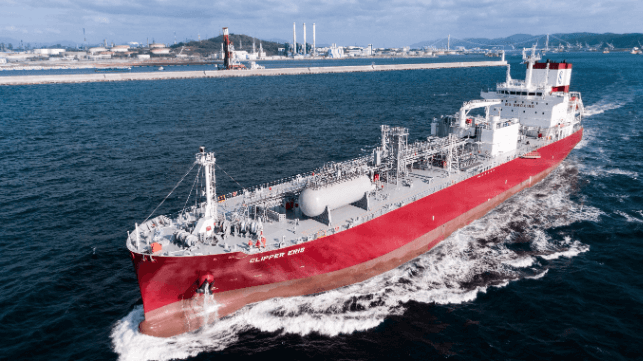
Peak Performance
The right coating can go a long way toward reducing drag and saving on fuel.
(Article originally published in May/June 2025 edition.)
FuelEU came into force this January, applying to all commercial vessels over 5,000 gross tons transporting passengers or cargo.
It's part of the E.U.'s "Fit for 55" legislative package, aimed at reducing greenhouse gas emissions by at least 55 percent by 2030 and achieving climate neutrality by 2050. The regulation promotes increased use of renewable, low-carbon fuels and alternative energy sources at sea.
The IMO's Carbon Intensity Indicator (CII) is a valuable tool for supporting "Fit for 55" goals. CII requires ships to assess their annual operational carbon intensity, measured in grams of CO2 emitted per cargo carrying capacity per nautical mile. A vessel's CII rating will decline over time unless continual improvements are made to reduce carbon intensity.
Taken together, these initiatives highlight two key focus areas: the type of fuel used and how efficiently the vessel moves through water. The latter is where modern hull-coating technology plays a crucial role.
CHOOSE WISELY
The first step in optimizing hull coating is selecting the right solution.
AkzoNobel, maker of International Paint, has developed Intertrac Vision – a predictive tool, supported by a team of hull performance experts, that helps shipowners identify the most suitable coating. Chris Birkert, Marine Segment Manager, says the company "worked with a record number of customers last year to support selection of the right underwater hull schemes to comply with the Carbon Intensity Indicator."
Recent updates to the tool include CII rating prediction, E.U. Emissions Trading System (EU ETS) cost impact and detailed savings analysis across multiple drydockings, thereby enhancing data-driven decisions on fouling-control coatings for global operators. It provides forecasts over a 120-month cycle, enough to cover two 60-month dockings.
This allows owners and operators to assess the long-term benefits of proper coating selection. Combined with AkzoNobel's technical expertise, Intertrac Vision offers insight into operational improvements and supports smarter investment decisions.
HIGH-PERFORMANCE COATINGS
The largest factor affecting ship performance is resistance caused by water friction on the hull.
Hull fouling increases resistance and reduces efficiency, making a smooth hull that is free of biofouling essential. Your coating is the foundation of performance.
GIT Coatings (Graphite Innovation & Technologies Inc), a Canadian company, develops sustainable graphene-based hull and propeller coatings. Its XGIT-FUEL, a graphene-based, hard foul release coating, creates an ultra-low friction surface, reducing drag by 15 percent compared to soft foul release coatings. The patented XGIT® technology forms a hydrated layer that deters biofouling settlement and attachment as the vessel moves through water.
Efficiency gains from XGIT-FUEL have been independently verified by Lloyd's Register, showing an average 10 percent shaft power reduction at various speeds.
The key lies in the coating's toughness. More resistant to mechanical damage than traditional SPC and foul release coatings, it's ideal for frequent underwater grooming and cleaning without compromising performance.
GIT's XGIT-GROOM program pairs this ultra-hard coating with routine hull grooming delivered by approved partners.
Traditional hull cleaning is typically reactive and relies on equipment that damages coatings and reduces antifouling effectiveness. Modern hull grooming is proactive – using underwater robots for frequent, gentle cleaning and consistent vessel performance.
To achieve optimal results, a hard, smooth coating is essential, and that's exactly what GIT delivers.
INDUSTRY-FIRST APPLICATION METHOD
Selecting the right coating is the first step. Applying it to the hull comes next.
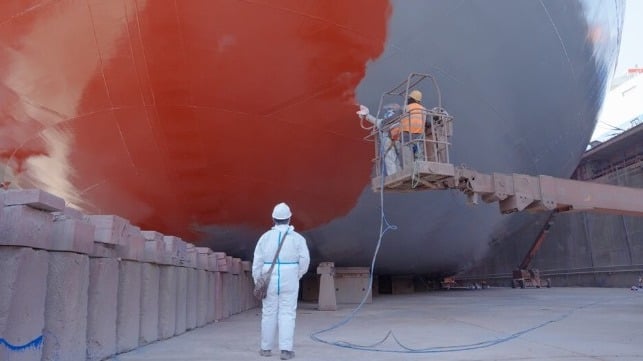
Pittsburgh-based PPG brings 40 years of electrostatic coating experience from the automotive, aerospace and manufacturing sectors to the maritime industry. It's the first company to introduce electrostatic application to shipping, supported by specially developed, high-tech coatings.
This technology boosts transfer efficiency over traditional spraying. EDR Antwerp shipyard achieved a 40 percent reduction in overspray through the electrostatic application of PPG SIGMAGLIDE 2390 fouling release coating. The project was carried out on the underwater hull of the ro-ro passenger vessel Stena Transporter.
"Electrostatic application increases the weather window for painting and drastically reduces overspray," notes Philippe Trouillard, Commercial Manager, EDR. "Less masking and dock-covering also save time and costs."
With continued investment in R&D, PPG has developed coatings that offer superior durability while meeting strict environmental standards. Longer-lasting performance reduces the need for reapplication, delivering both environmental and economic advantages for shipowners.
HIGH-TECH GROOMING
When it comes to hull grooming technology, Greensea IQ (a GIT Coatings-approved partner) offers the most robust autonomous solution in the industry with more deployments on its software platform than any competitor.
Greensea EverClean® is the industry's leading provider of robotic hull-cleaning services – like a Roomba for ship hulls, except with a double Ph.D. in machine learning and robotics.
Traditional navigation systems rely on magnetics, gravity and a universal coordinate system, all ineffective when stuck to the bottom of a ship. Instead, Greensea took a first-principles approach, developing a system that focuses not on where the robot is, but where it has been, with 100 percent accuracy.
This is combined with a system using dead reckoning, sonar and video data to detect and identify hull features to build a map of the hull. The map is relayed to the operator, who can quickly align it with the ship's hull, make sense of the environment and assess the completion of the service.
The robot does more than clean. It gathers real-time data on hull condition including damaged areas, defective coatings and surface roughness. This data is uploaded to Greensea's cloud platform, called EverClean IQ, and produces a service and hull-condition report, helping Asset Managers take early action to maintain peak vessel performance.
Hull grooming is hygiene, like brushing your teeth. But its greatest value is allowing coating manufacturers to focus on hardness, durability and hydrodynamic performance without compromising biofouling prevention.
Greensea's 2025 theme is expansion with services launching in fifteen new ports including Freeport and Nassau, plus support in anchorages. The company will also enter Rotterdam, Southampton and Hamburg by year-end.
Greensea's business isn't robotics. It's ship efficiency. Its cleaning operations deliver unmatched precision, minimal repetition and accurate data collection, offering an "always clean hull" maintenance solution with a condition report after every service.
MONITORING PERFORMANCE
Hull coating management is no longer a "one and done" task confined to drydockings.
Modern technology now allows operators to optimize inspection intervals and manage the coating lifecycle from drydock to drydock. Jotun's HullKeeper platform offers a suite of tools to support this approach.
The core of this platform is the alerts service. Open-source data – including AIS vessel movements, oceanographic data and existing hull protection specs – is fed into Jotun's proprietary algorithm that triggers inspection notification when the fouling risk reaches a certain threshold, based on accumulated marine growth.
Inspections can be carried out at one of Jotun's 75 inspection sites with results registered into the platform to validate the algorithm on the actual underwater hull condition. This data-driven approach helps operators avoid unnecessary cleaning, which can damage or strip coatings.
The platform also includes advisory services for optimizing idling time plus oceanographic evaluation, key factors in managing biofouling risk.
Jotun's goal is to become a long-term partner in optimizing the sailing interval between drydocks, which often receives the least attention but has the greatest impact. HullKeeper bridges that gap, supporting shipowners with a dock-to-dock solution.
FULL LIFECYCLE SOLUTIONS
With ever more stringent requirements driven by a need for continuous improvement, every aspect of a hull coating's lifecycle must be optimized. High tech coatings, new application methods and a system of continuing maintenance and monitoring all provide measurable results in improving efficiency and reducing emissions.
As we move towards our decarbonization goals as an industry, every improvement helps.
SEAN HOGUE is Executive Vice President at Baker Marine Solutions.
The opinions expressed herein are the author's and not necessarily those of The Maritime Executive
Oil and Water
Lube oils and additives have evolved alongside innovations in maritime.
(Article originally published in Mar/Apr 2025 edition.)
The concept of lubrication dates back millennia. Evidence indicates that Egyptians used olive oil to facilitate the movement of massive pyramid stones, reducing friction and easing transportation. Similarly, analyses have shown that they applied tallow – animal fat – to wheels, serving as an early form of industrial lubricant.
In the maritime context, the transition from sail to steam in the 19th century introduced high-speed mechanical components that required more effective lubrication. Initially, natural oils proved to be sufficient, but as engine designs became more complex, generating greater friction and heat, the demand for better lubricants led to the development of mineral-based oils.
The 20th century, with its advances in modern propulsion such as high-speed diesels and turbines, inspired further progress with the introduction of additives to enhance oil performance. These additives reduced corrosion by improving the longevity of the oil itself and boosting characteristics that allowed oils to suspend particles that otherwise might lead to excessive mechanical wear and early failure.
The evolution continues today. "We're always focusing on innovation and supporting shipowners and operators in new ways," says Eda Gökay, Global Marine and Energy Marketing Manager at Castrol.
CBM & AI
Not only are advances in lube oil continuing to improve the overall quality of the fluid itself, but the ability to monitor and test the condition of lubricants is simultaneously evolving.
Condition-based monitoring (CBM), as an example, allows for better prediction of engine maintenance requirements based on chemical, contaminant and even behavioral analysis of the fluid within the system or equipment. "The maritime industry is evolving rapidly, with increasing demands for sustainability, efficiency and adaptability to new regulations," adds Gökay. "We're pioneering the lubrication-as-a-service approach in response."
According to MAN ES analyses, half of all engine issues stem from lubricating oil.
The good news is that up to 70 percent of those issues are detectable before they lead to unnecessary wear or failure. Castrol, itself a stalwart of oil and additives in heavy industry for over 125 years, considers CBM as the key to detecting faults before they become serious, particularly when dealing with the complexities and unknowns of new fuels like biodiesels and LNG.
With these complexities and unknowns in mind, Castrol has launched Castrol Smart Monitor. Similar to a medical exam that relies on blood testing to provide evidence of a person's overall wellbeing, Castrol Smart Monitor provides constant testing and analysis to determine the "health" and operating condition of critical machinery. While lube oil analysis is nothing new in maritime, traditional used oil analyses offer only an average of four data points annually, depending on the application.
Castrol Smart Monitor, by comparison, provides up to 8,000 data points annually, allowing customers to monitor oil quality in real time. This potentially avoids unnecessary downtime and, more importantly, prevents potential harm to personnel and equipment by predicting problems before they result in failure.
Add artificial intelligence (AI) to the mix, and companies across the industry are leveraging the real-time data advantages that CBM and AI offer to assist their clients in improving operational efficiency and reliability. AI algorithms analyze sensor data to predict potential failures, allowing for proactive maintenance.
Shell has developed its own smart oil condition-monitoring system, offering real-time insights to minimize operational disruptions. The company's LubeMonitor system is a platform that integrates onboard oil testing data with engine operating conditions to optimize maintenance strategies.
COMPLIANCE CHALLENGES
Regulatory compliance is a key consideration for maritime operators.
Agencies such as the U.S. Environmental Protection Agency (EPA) and its Vessel General Permit (VGP) mandate the use of biodegradable lubricants in certain applications including propulsion and hydraulic systems. While conventional mineral oils may be cheaper, non-compliance with VGP standards exposes operators to significant environmental and financial risks.
Any infraction can lead to staggering financial penalties. But lubricant providers and vessel operators have struggled with finding VGP-compliant lubricants that adequately reduce that risk but still offer prolonged fluid life, reduced maintenance and fewer unplanned outages.
Several companies are leveraging technology with this concern top of mind. Collaboration between industry, the EPA and international organizations such as the IMO are helping establish practical standards that mitigate environmental impact.
Interestingly, the evolution of lubricants and additives seems to be coming full circle with the re-introduction of non-mineral based oils that satisfy all of these concerns for heavy industrial applications.
"Traditionally, vegetable-based environmentally acceptable lubricants (EALs) struggled to match the performance of mineral oils," says Ronald Boffa, Chevron's Lead Inland Marine Specialist. Early EALs were notorious for degrading seals, for example. However, advances in synthetics and plant-derived base stocks have made great strides in resolving these issues.
"Next-generation synthetic EALs now offer wear protection, superior material compatibility and integrate seamlessly with modern equipment," adds Boffa, "reducing the risk of breakdowns and lowering lifecycle costs."
Modern synthetic EALs such as those developed by Chevron are formulated with renewable base oils, offering both biodegradability and superior performance. Some exceed the VGP's requirement of breaking down by 60 percent or more within 28 days. These lubricants also deliver excellent stability, service life and enhanced protection.
Operators now benefit from extended oil change intervals, reduced maintenance needs and an overall improved return on investment.
While synthetic EALs may have a higher initial cost compared to traditional lubricants, their long-term financial advantages far outweigh the upfront investment. In addition, the extensive technical support both onsite and remotely – thanks to AI and CBM – allow Chevron, Shell, Castrol and others to provide fleet surveys, fluid condition monitoring and customized maintenance plans that support safety and operational efficiency.
COLLABORATION & GROWTH
Successful adoption of any innovation requires wide collaboration.
OEMs work with lubricant manufacturers to develop oils tailored to specific engine designs while regulators and class societies ensure compliance with safety and environmental standards. Industry forums and training sessions provide operators with the knowledge needed to leverage modern fluid technologies.
"We want to empower operators with the knowledge and resources needed to make informed decisions," emphasizes Chevron's Boffa. "Education ensures the full potential of these advancements is realized."
The marine lubricants market is poised for growth, driven by increased adoption of AI, IoT and sustainable technologies. Real-time oil condition monitoring and predictive maintenance will become standard practice.
"We're unlocking a new generation of condition monitoring for our customers," notes Castrol's Gökay, "allowing the industry to capture, enrich and display real-time data on lubricant health and performance."
Additionally, the shift toward biodegradable and low-toxicity lubricants in response to global regulations will drive further product innovation. With high-performance, biodegradable lubricants setting a new performance standard, maritime operators can enhance their environmental stewardship while maintaining operational excellence. Staying informed on regulatory trends and embracing technological innovations will be crucial for long-term success in the evolving maritime landscape.
TRANSFORMATIVE SHIFT
The maritime sector is currently experiencing a transformative shift, driven by the push for carbon reduction, technological progress and stricter regulation. Operators must increasingly maintain reliable, compliant operations while keeping up with evolving performance standards and requirements.
Fluid technology innovations are playing a key role in meeting these challenges.
Entrepreneur and maritime consultant CHAD FUHRMANN is a regular contributor to The Maritime Executive.
The opinions expressed herein are the author's and not necessarily those of The Maritime Executive.
The Maritime Executive's Annual Shipbuilding Edition is Available Online
(Article originally published in May/June 2025 edition.)
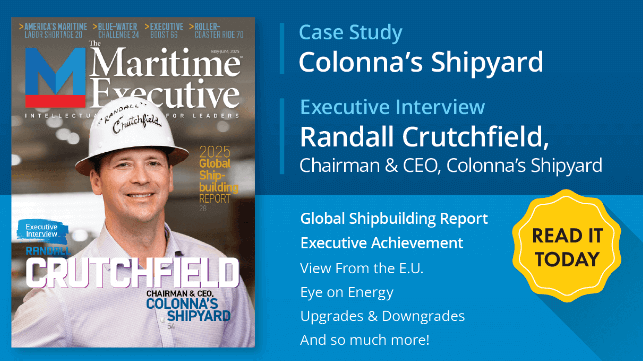
150 YEARS!
That’s how long Colonna’s Shipyard in Norfolk, Virginia has been around, and that’s why we put Randall Crutchfield, a fifth-generation family member and current CEO, on the cover of this, our annual Shipbuilding & Repair edition. We wanted you to know about it, and we wanted you to celebrate with us. So check out the Case Study and Executive Interview to learn how this family-owned and operated shipyard has survived and thrived over the years and why Crutchfield thinks the best is yet to come.
The same may be true of shipbuilding in general. As News Editor Paul Benecki points out in his Global Shipbuilding Report, both the U.S. and E.U. have ambitious plans to bolster their flagging shipbuilding sectors and regain some of the market share they long ago ceded to China. That could take years, but every long journey begins with a single step.
In the U.S., that step is the Trump Administration’s determination to “Restore America’s Maritime Dominance,” which – among other things – includes construction of a 250-vessel Strategic Commercial Fleet and the creation of a Maritime Action Plan, or MAP, to show us the way.
Can it be done?
Senior Editor Jack O’Connell asked Matt Paxton, President of the Shipbuilders Council of America, that question in this edition’s Executive Achievement feature, and his answer may surprise you. Jack also devoted his own column, Upgrades & Downgrades, to an examination of the proposed SHIPS for America Act, which in many respects mirrors the Administration’s proposals.
Eye on Energy columnist Allen Brooks puts his finger on one of the biggest challenges in “America’s Maritime Labor Shortage.” He also has a potential solution. Sean Hogue discusses the evolving role of ship repair yards – like Colonna’s – in expanding beyond traditional maritime activities in “From Keels to Coatings and Beyond” while Pat Zeitler shows how MAP could benefit even seals and bearings makers in his cleverly titled “Executive Boost.”
European correspondent Erik Kravets turns a gimlet eye on the E.U.’s latest plans to triple offshore wind capacity by 2030 in his View from the E.U. feature, “Sowing the Wind,” pointing out that Europe lacks the grid infrastructure to absorb all the new output. Professor Mia Bennett gives us a fascinating overview of classification societies and their critical role in “Charting a Digital and Decarbonized Future” for maritime while Chad Fuhrmann shows how naval architects combine the old and the new to design the vessels of the future in “Legacy and Innovation.”
Lots of intellectual capital there!
Rounding out this edition and coming full circle is Tom Peters’ fine article on Ro-Ro Ports, which are struggling with the effects of tariff uncertainty – another aspect of MAP – but nonetheless continuing to invest in new facilities. It’s aptly titled “Roller-Coaster Ride.”
New beginnings, 150-year anniversaries! Lots to celebrate and lots to calibrate. We’re here to help you do that, and we’re grateful for your continued readership and support. Enjoy! -- MarEx
Tony Munoz is the Publisher and Editor-in-Chief of The Maritime Executive.
To read the latest edition of the magazine, go to The Maritime Executive May/June 2025 Shipbuilding Report. To subscribe to the magazine, please go to https://www.maritime-executive.com/subscribe.
The opinions expressed herein are the author's and not necessarily those of The Maritime Executive.