WAIT, WHAT?!
Ruble world’s best-performing currency in 2025 despite sanctions and weak oil prices
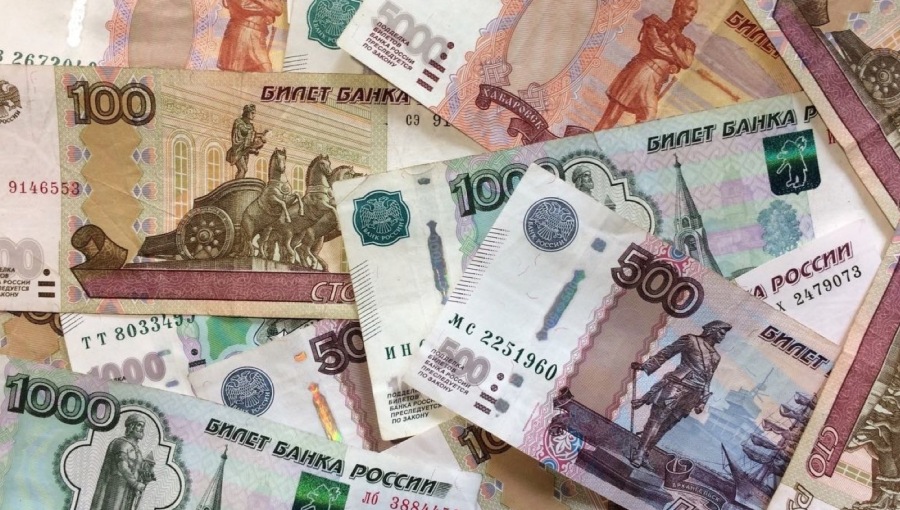
The Russian ruble surged 44% against the dollar in 2025, becoming the world’s best performing currency, being only beaten by gold (72%) and silver (159%) prices amongst the major traded commodities, The Bell reported on December 24.
The appreciation, which took the exchange rate from RUB103 to RUB79 per dollar in less than twelve months, has occurred in defiance of conventional economic indicators, amid international sanctions, falling oil revenues and continued war in Ukraine.
According to the Central Bank, the ruble has been steadily strengthening since the beginning of 2025. In less than nine months, the exchange rate has weakened by almost 20% – from RUB103.4 at the beginning of the year to RUB83.35 per dollar on September 24. The last time the dollar exceeded RUB100 rubles was on January 21 (RUB101.9 per dollar), and exceeded RUB90 rubles on February 20 (RUB90.4 rubles).
At the heart of the ruble’s rally lies a confluence of domestic policy, suppressed imports, and Russia’s on the battlefield bringing the end of the almost four-year long war into sight.
The historically high key interest rate — averaging 19% over the year and cut to 16% in December — also played a central role in curbing demand for foreign currency while encouraging ruble-denominated savings. “This is one of the highest rates among developing economies,” The Bell noted, citing data from the Central Bank of Russia.
Imports declined by 2.4% in the first ten months of the year, compared to the same period in 2024, further easing demand for foreign exchange. Although exports dropped more sharply — down 4.2% y/y largely due to falling oil prices — Russia maintained a positive trade balance. The ruble's use in international transactions also rose sharply, with 54.6% of imports now paid in rubles, up from 30.4% at the start of the year. In December, Russian President Vladimir Putin said that almost all Russia’s foreign trade with China and the Eurasian Economic Union (EUU) is now settled in national currencies and not dollars.
Exporters sold $85.7bn in foreign exchange revenues during the same ten-month period, down from $121.5bn a year earlier. Nonetheless, the lower demand for foreign currency helped sustain the ruble's strength in a restricted market.
Speculation over a shift in US foreign policy under President Donald Trump, who released a new aggressive National Security Strategy (NSS) in December, has also contributed to the ruble's appreciation. “Geopolitical factors played in favour of the Russian currency,” said Natalia Orlova, Chief Economist at Alfa-Bank, citing market optimism about Russia’s potential reintegration into the global economy.
Analysts at Alfa-Bank also pointed to robust domestic demand for quasi-currency bonds — debt instruments tied to foreign currencies but settled in rubles — as another factor supporting the exchange rate. Issuance of such bonds reached RUB1.7 trillion ($18.4bn) in ruble equivalent this year, according to the Central Bank of Russia.
The downside to a strong ruble is that it negatively impacts the federal budget revenues. Oil revenues in the budget are denominated in dollars, but expenditure is in rubles, so a stronger ruble reduces the number of rubles available for spending. The Finance Ministry has not commented publicly on whether any adjustments to the fiscal rule are under consideration.
The strength of the ruble remains an important factor in Russia’s economy which is export orientated thanks to its raw material production. In 2024, exports of goods and services accounted for 21.9% of GDP. The sectors most vulnerable to ruble appreciation are oil and gas, forestry and wood processing, and transport engineering. Federal oil and gas revenues fell by 22% compared to 2024 on FX effects alone.
However, at the same time, a stronger ruble has helped slow inflation in Russia by making imported goods and services cheaper for Russian consumers, according to CBR. Inflation has been one of the major economic headaches for the CBR, but inflation fell faster than expected in 2025 and by late November had dropped from over 10% at the start of the year below 7%, which has allowed 500bp of rate cuts in 2025 – probably the most important macroeconomic management action of the year.
It is highly unlikely that 2026 will be as favourable for the ruble as 2025, The Bell said in a commentary. Oil prices tumbled in the last months of 2025, with the price of Brent dropping below $60 a barrel and the price of the Russian Urals blend falling below $40 on deep discounts offered following the Trump administration harsh new oil sanctions. At the same time, a record surplus in global oil supply is forecast for 2026 due to OPEC production increases. The International Energy Agency forecasts an average Brent crude price of $52 per barrel for the coming year that will cut into the current account surplus.
“In this configuration, I would call the ruble overvalued. It’s not a classic bubble, but the margin of safety in terms of fundamental flows is no longer very strong. Some momentum for appreciation is still possible, but the balance of risks is shifting toward a weaker ruble over the coming months,” Vladimir Chernov of Freedom Finance Global told The Bell. Chernov expects the dollar to trade in the range of RUB77–82 by year-end.
Factors weighing on the ruble in 2026:
- Weak oil and gas revenues: Brent near or below $60 per barrel would reduce foreign exchange earnings and worsen the current account balance; a global oil surplus limits price recovery prospects.
- Central Bank rate cuts: Planned reduction of key interest rate to 13–15% will make ruble assets less attractive, increasing demand for foreign currency.
- Reduced foreign currency sales from the National Wealth Fund: Lower oil price thresholds and a more balanced budget will limit currency interventions, per Central Bank Governor Elvira Nabiullina.
- Growth in imports and domestic demand: Rising business purchases of equipment and consumer goods may boost demand for foreign currency and widen the import-export gap.
- Possible new sanctions: Lack of progress in Ukraine ceasefire talks may lead to further sanctions, fuelling investor risk aversion and demand for safe-haven currencies.
On September 24, the Russian Ministry of Economic Development revised its ruble exchange rate forecast. The average annual value for 2025 is expected to be RUB86.1 per dollar, compared to RUB94.3 per dollar in the April version.
For 2026, the forecast has improved to RUB92.2 per dollar, up from RUB100.2 per dollar.
In 2027, the ministry predicts the ruble will weaken to RUB95.8 per dollar, and in 2028, to RUB100.1 per dollar. Previously, the forecasts were RUB103.5 and RUB106 per dollar, respectively.

No comments:
Post a Comment