Friday, June 20, 2025


Rio Tinto agrees on $139M settlement to end Mongolian copper mine lawsuit

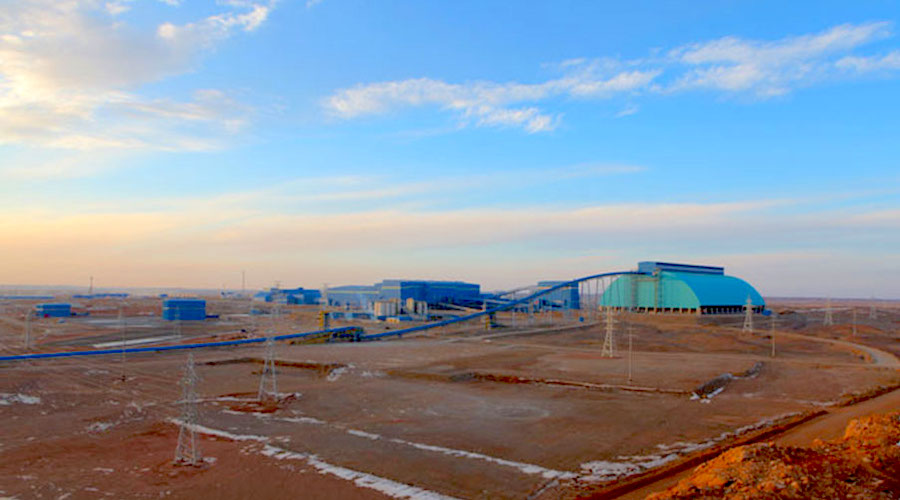
Oyu Tolgoi mine in Mongolia. (Image courtesy of Turquoise Hill.)

Rio Tinto (ASX, LSE: RIO) has agreed to pay nearly $139 million to settle a long-running class action lawsuit accusing the company of concealing development delays at its $7 billion giant copper mine in Mongolia.

The lawsuit, led by US hedge fund Pentwater Capital, alleged that the Australian miner had failed to accurately disclose the status of the underground expansion of the Oyu Tolgoi mine over a one-year period between 2018 and 2019.

Specifically, Pentwater claimed that Rio, together with its Canadian subsidiary Turquoise Hill Resources, had violated federal securities laws by making assurances that the expansion was going as planned, when it was in fact 2.5 years behind and more than $1 billion over budget.

Turquoise Hill had been a single-asset company owning 66% of the Oyu Tolgoi mine, with Mongolia’s government owning 34%. Rio held 51% of Turquoise Hill prior to buying out the remaining stake for $3.3 billion in 2022. A year later, the project came online.

The case against the companies was filed in the US District Court in Manhattan, New York, in 2020, seeking damages for Turquoise Hill’s shareholders.

On Wednesday, Rio filed a preliminary settlement of $138.75 million to end the case, pending approval of a District Court judge. In a statement to Reuters, it said “the proposed settlement has been concluded without any admission by Rio Tinto or the individual defendants.”

According to court documents, Rio entered the settlement to “avoid the uncertainty and expense of continued litigation.” Lawyers plan to seek legal fees of up to 13% of the settlement amount, or about $18 million excluding interest, plus up to $2.6 million for expenses, documents also showed.

The settlement also resolved claims against Rio’s former CEO Jean-Sebastien Jacques, who stepped down in March 2021 amid controversies surrounding the company’s destruction of two culturally significant Aboriginal rock shelters in Australia.


Greenland grants 30-year permit to EU-backed Molybdenum mine

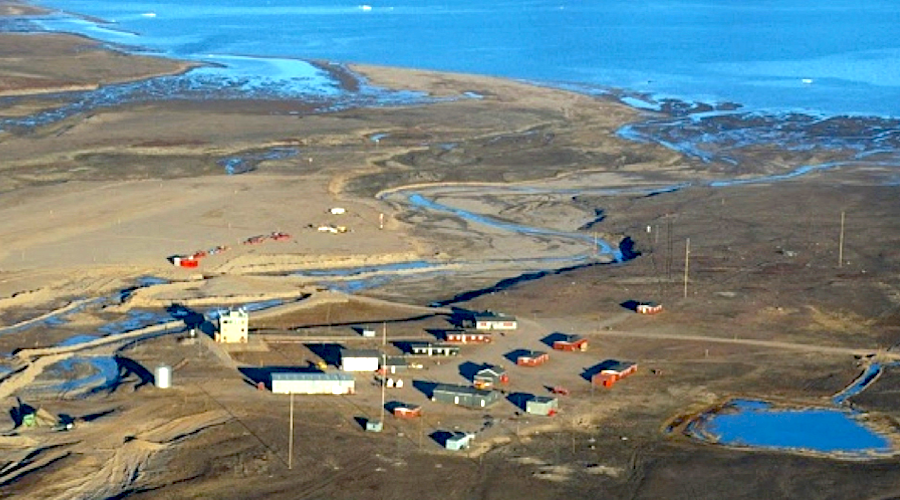
The Malmbjerg Molybdenum project is 20 Km from Mestersvig airport, pictured here. (Image courtesy of Greenland Resources.)

Greenland Resources (Cboe CA: MOLY)(FSE: M0LY) secured on Thursday a 30-year permit for its Malmbjerg molybdenum project, a major development backed by the European Union.

The open-pit mine is expected to supply roughly 25% of the EU’s annual molybdenum demand over its first decade of operation, producing an average of 32.8 million pounds of the metal each year.

Molybdenum, a silvery-white element used to strengthen steel and improve heat and corrosion resistance, is critical to sectors such as aerospace, energy and defence. China, the dominant global supplier, recently introduced export restrictions on the metal, in response to US President Donald Trump’s tariff on Chinese goods.

The Malmbjerg project is supported by the European Raw Materials Alliance (ERMA) and has already attracted interest from key industrial players. Earlier this year, Greenland Resources signed off-take agreements with Finland’s Outokumpu and Italy’s Cogne Acciai Speciali.

Greenland grants 30-year permit to EU-backed Molybdenum mine
The Malmbjerg Molybdenum project. (Image courtesy of Greenland Resources.)

Greenland’s Minister for Business, Mineral Resources, Energy, Justice and Gender Equality, Naaja H. Nathanielsen, called the project a step forward for the territory’s economic autonomy.

“The progress we are experiencing in the mineral resources sector is good news for all of us,” she said.  

Nathanielsen noted that projects like Malmbjerg contribute to the Greenland Government’s goal of a self-sustaining economy through job creation, local business opportunities and other direct benefits for communities.”

According to the project’s feasibility study, Malmbjerg could generate nearly $1 billion in tax revenue over its 20-year operational life.

The Malmbjerg approval comes amid a broader uptick in Greenland’s mining activity. Last month, authorities granted an exploitation licence to a Danish-French mining group, and earlier this month, the EU included a Greenland graphite initiative among 13 new critical material projects.

These moves followed the bloc’s March endorsement of 47 raw material projects within EU borders.

Last week, the US Export-Import Bank (EXIM) said Critical Metals Corp. (NASDAQ: CRML), which is developing the Tanbreez rare earth project in Greenland, had met initial requirements to apply for a $120 million loan.

Interest in Greenland’s mineral potential has grown since Donald Trump floated the idea of purchasing the Arctic island, a semi-autonomous territory of Denmark that holds as many as 40 items on the US and EU critical minerals list.


Barrick’s next risk in Mali is loss of key gold-mining permit

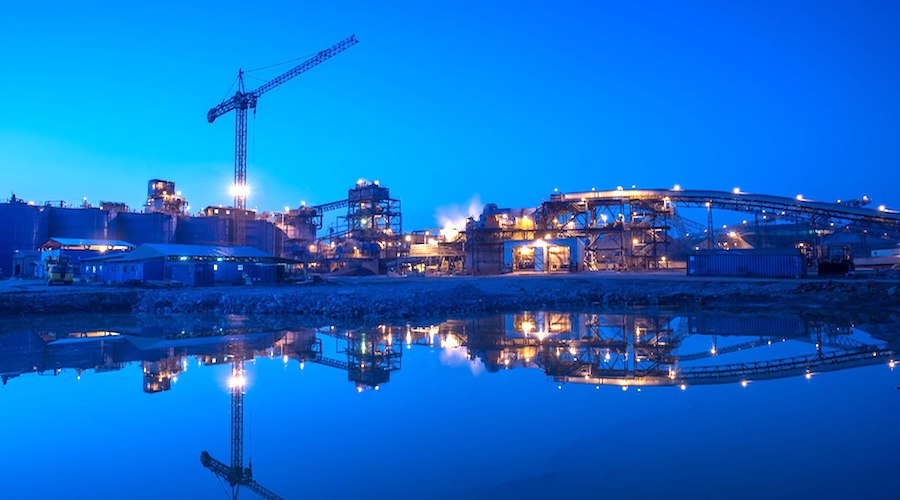
The Loulo-Gounkoto gold complex. (Image courtesy of Barrick Gold.)

One of the next major hurdles in Barrick Mining Corp.’s saga in Mali will be renewing a key gold mining license, after the state temporarily took over the vast Loulo-Gounkoto complex this week.

The permit for Loulo, where processing facilities are located, expires in February, shortly after the period of provisional administration is supposed to end. Barrick filed a renewal request four months ago, a spokesperson for the company said, adding that a separate license for Gounkoto runs for another 17 years.

Barrick’s woes in the West African nation experienced a dramatic escalation on Monday when a Malian court ruled that management of one of the Canadian miner’s biggest operations should be handed over to a state-appointed accountant and former health minister for six months.

A dispute over mining proceeds has already seen Mali detain four Barrick employees and block gold exports from the mine, which the company shuttered in January. The standoff means the world’s No. 2 gold producer has been unable to fully capitalize on bullion’s record-breaking rally, after only its flagship Carlin mine in Nevada contributed more output and income than Loulo-Gounkoto in 2024.

A spokesperson for Mali’s Mines Ministry didn’t respond to questions about whether the government plans to extend the Loulo license. The Barrick spokesperson said the company is yet to receive any feedback from the government.

Finance Minister Alousseni Sanou raised the possibility of letting the license lapse in a letter sent in October to Barrick chief executive Mark Bristow during discussions over a settlement that’s so far remained elusive. He wrote that Mali “reserves the right not to renew” the permit.

Barrick said on June 16 it remains committed to negotiating a “mutually acceptable solution” with the government, while condemning the state’s interventions as unlawful. The company has filed an appeal against this week’s court order, the spokesperson said.

The owners of other gold mines in the country, including B2Gold Corp. and Allied Gold Corp., have reached settlements with authorities.

The current troubles began in 2023 when Mali revised mining legislation and audited the sector. The government subsequently demanded foreign investors make payments for alleged back taxes and adhere to the new law granting the government higher royalties and bigger stakes in joint ventures.

Barrick has initiated international arbitration proceedings, asking a tribunal to declare that its local subsidiaries possess binding conventions which are “not subject to any legislative or regulatory changes under Malian law.”

Mali, however, alleges that Loulo’s convention – fixing a stable fiscal regime for a specified period – expired in April 2023 and therefore the updated legislation should apply to the mine.

(By William Clowes)


Barrick stripped of gold mine operation for six months by Mali court


By AFP
 June 16, 2025 

The logo for Barrick Gold Corp.  (Handout)

A Mali court ruled Monday that western gold mines held by Canadian giant Barrick would be managed for six months by an appointee, effectively stripping operation of one of the world’s largest gold complexes from the firm.

The decision allows Mali’s military government to appoint a new administrator in charge of the Loulo-Gounkoto complex and comes amid rising tensions between the junta and the Toronto-based company over taxes and mining.

The court named the administrator as Zoumana Makadji. The ruling marked the first time Mali has placed a mining company under such a status.

Makadji will be tasked with “ensuring the mine is opened as quickly as possible”, a magistrate from Bamako’s commercial court told AFP, adding that after six months a judge will assess the progress of negotiations or an agreement with Barrick.

The military junta running Mali has tightened regulations on the mining sector, which is key to the economy.

It introduced a new industry code in recent years that grants the government a bigger share of profits from mining activities in the name of national sovereignty.

Mali “accused Barrick of not properly paying taxes, royalties and dividends owed to the state, of having a contract that does not reflect Mali’s legitimate interests, and of keeping the state out of the effective management of the mine and its revenues,” a source representing the government’s interests told AFP.

For these reasons, Mali “has decided to place the site under temporary administration through legal channels”, the source said.

Barrick has an 80-percent stake in the Loulo-Gounkoto complex, while the Malian state holds the rest.

“While Barrick’s subsidiaries remain the legal owners of the mine, operational control has been transferred to an external administrator,” Barrick said in a statement immediately following the decision.

It said that an arbitration process was “fully under way” via the International Centre for Settlement of Investment Disputes (ICSID), a World Bank arbitration panel.

“The arbitration tribunal has been constituted, and Barrick has submitted a request for provisional measures to prevent further escalation and to safeguard its rights under binding mining conventions with the state of Mali,” the company said.
Intense escalation

Tensions have escalated in recent months between the government and company, and in November four Malian employees of the firm were detained.

Malian authorities issued national arrest warrants in December for the company’s South African CEO and the complex’s Malian general manager on allegations of “money laundering”.

In mid-January, activities at the mine were suspended after Malian authorities carried out an order to seize gold stocks at Loulo-Gounkoto, taking some three tonnes of gold.

Last month, authorities ordered the closure of Barrick’s offices in the capital Bamako for alleged non-payment of hundreds of millions of dollars of taxes.

The Malian government filed its request with Bamako’s commercial court to place the Loulo-Gounkoto site under provisional administration on May 8.

Barrick says the escalation came despite it having paid Mali some $85 million in October “as part of the ongoing negotiations” aimed at resolving “all outstanding disputes”.

One of the poorest countries in the world, Mali is ruled by a military junta which came to power in back-to-back coups in 2020 and 2021.

Loulo-Gounkoto, which is situated in western Mali near the border with Senegal, was opened two decades ago and the first gold from underground operations was produced in 2011.

It consists of both open pit and underground mining. According to the trade publication Mining Technology, the mine contributed around $1 billion to the Malian economy in 2023.


Glencore pushes for Australia’s support to save Mount Isa smelter


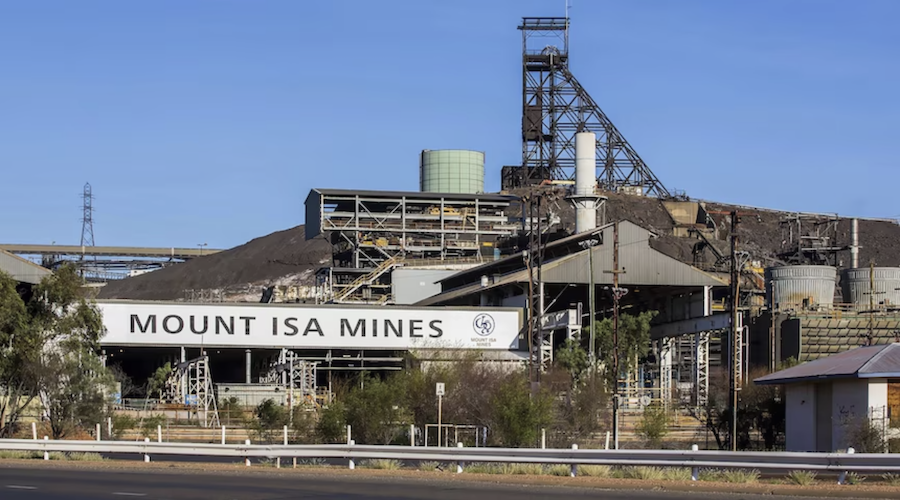
Mount Isa Mines has been operating for over 100 years. (Image courtesy of Glencore Australia.)

Glencore (LON: GLEN) has declared its Mount Isa copper smelter unviable and is awaiting a response from Australia’s federal and Queensland’s governments regarding requests for financial assistance to keep the facility running.

The mining and commodities giant blamed “unprecedented smelting market conditions,” high energy, gas and labour costs, and a shortage of copper concentrates for the smelter’s unsustainable position.


The Swiss company first announced the closure of its Mount Isa copper mines and associated operations in October 2023. At the time, it said all assets that made up in the complex as well as the Lady Loretta zinc mine, located 140KM north-west of Mount Isa, would close in the second half of 2025.

Glencore initially said the closures would impact more than 1,200 jobs, but in April this year, it revised that estimate to around 500 roles, citing progress in workforce planning. “We are also actively working to redeploy as many people as possible over the coming months,” Sam Strohmayr, chief operating officer for Glencore’s Australian zinc and copper assets said then.

Glencore reiterated its hope that authorities will intervene to support continued operation of the smelter and refinery.

Federal Minister for Industry and Innovation and Minister for Science, Tim Ayres, said his office is closely monitoring the situation.

“As a vital industrial site for the Mount Isa community and the broader region, any closure of the Mount Isa copper smelter would have a detrimental impact on Australia’s sovereign capability and other facilities downstream that rely on the smelter,” he said in a statement after visiting the plant on Friday. 

Ayres did not outline any specific support measures under consideration.

Queensland’s Minister for Natural Resources and Mines, Dale Last, stressed the economic importance of the site.

“The Mount Isa copper smelter is a cornerstone of Queensland’s economy and supports the viability of nationally significant supply chain infrastructure like the Mount Isa to Townsville rail line and the Port of Townsville,” he said. “But we can’t make decisions for Glencore. We are continuing to engage in good faith with Glencore, and we expect Glencore to do the same.”

Glencore responded by saying it had maintained regular communication with authorities but has yet to receive any concrete proposal to help sustain operations at Mount Isa.


New Silverback Truckable Tug with SCHOTTEL RudderPropellers

SCHOTTEL

Published Jun 19, 2025 8:58 PM by The Maritime Executive


[By: SCHOTTEL]

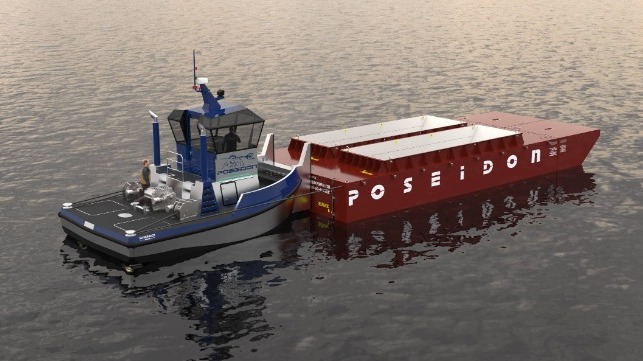
SCHOTTEL is to equip a new OX series tractor tug from U.S.-based aluminum workboat builder Silverback Marine with two SCHOTTEL RudderPropellers type SRP 100. Designed in collaboration with Seattle headquartered Elliott Bay Design Group, the truckable tug will have a bollard pull of almost seven tons and ensure excellent manoeuvrability with an extremely compact size of just 7.9 metres (26’-0”) in length and 4.4 metres (14’- 6”) in width. The vessel, being built for the U.S. Department of Defense, is expected to be delivered in late 2025.

“SCHOTTEL as the top choice in tug propulsion”
“Silverback spent a little over 3 years refining the design of the OX, and a huge part of this was identifying key vendors that we could be confident in”, explains Ian Gracey, CEO of Silverback Marine. “Part of our approach was to consult not only highly experienced and seasoned tug captains but also mechanics servicing tugs. We identified a consistent trend of both captains and mechanics expressingappreciation for the SCHOTTEL product. A strong emphasis on manoeuvrability, user experience and performance seemed to trend towards SCHOTTEL as the top choice in tug propulsion”, he reflects the research for the optimal thruster solution.

“We all know every boat to sail the seas needs regular maintenance and support, and SCHOTTEL has definitely established itself as a leader in that respect. Our team is passionate about bringing a new era to the mini tug market, and SCHOTTEL has clearly proven itself to be the partner of choice for not only Silverback but, more importantly, our customers. We look forward to exploring new horizons with SCHOTTEL”, Ian Gracey concludes.

Maximum manoeuvrability, compact design
Silverback’s tug will be equipped with two SRP 100 azimuth thrusters, each with an input power of 216 kW and a propeller diameter of 850 mm. The design of the SRP fits perfectly into the overall concept of the new tug series, which aims to offer the greatest possible performance in an extremely compact vessel. For this purpose, the 360-degree steerable SRP provides the vessel with maximum manoeuvrability and combines bollard pull with a compact thruster design, that allows a space- saving installation on the tug.

Exceptionally versatile ship design
The compact yet powerful tugboat, which will be used for towing and pushing activities, can be easily transported to job sites by truck and will perform operations normally only possible with much larger tugs. Thanks to its agility, minimal draft and ease of transport, the vessel is exceptionally versatile.

The products and services herein described in this press release are not endorsed by The Maritime Executive.


Pilbara Ports Launches Roadmap for Ammonia Bunkering

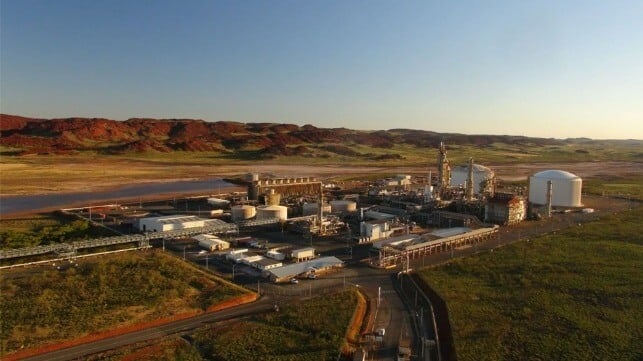
The Yara Pilbara ammonia production plant next to Port Dampier (file image courtesy Yara)

Published Jun 18, 2025 1:44 PM by The Maritime Executive


Australia’s Pilbara Ports Authority has launched a clean fuel bunkering roadmap that is intended to position the region as a global leader in maritime decarbonization. The roadmap explores the creation of Australia’s first ammonia fuel bunkering hub in the Pilbara, a key region for iron ore mining.

This comes almost a year after a consortium led by the Global Center for Maritime Decarbonization (GCMD) carried out two pilot ship-to-ship ammonia transfers at anchorages within Port of Dampier in Pilbara. The trial project was aimed at simulating ammonia bunkering operations in a port scenario. The trial included assessing factors such as the technical, logistical, safety and regulatory requirements associated with ammonia transfer within an operating port’s anchorage.

With the success of the pilot project, Pilbara Ports hopes that establishing a clean fuel bunkering hub would greatly cut its carbon footprint. Some studies estimate that lower carbon ammonia fuels could cut regional shipping emissions by up to 94 percent.

The Pilbara region in Western Australia hosts the country’s largest iron ore mines. Based on this, Pilbara Ports Authority operates some of the world’s largest bulk export ports, including Dampier and Port Hedland.

Pilbara is uniquely placed to become a global ammonia bunkering hub, with ports in the region serving on of the world’s busiest iron ore export corridors. In 2023-24, Pilbara Ports facilitated over 7,700 vessel visits, primarily on the Pilbara-China iron ore route.

“The launch of Pilbara Ports’ Clean Fuel Bunkering Hub Strategy is a pivotal step forward for Western Australia’s clean energy future. By enabling clean fuel bunkering in Pilbara, we are helping global shipping reduce emissions while we unlock new economic opportunities for the state,” said Stephen Dawson, Western Australia Ports Minister.

To finalize critical workstreams of the project, Pilbara Ports has said that is working with industry partners, with another trial scheduled at the Port of Hedland in 2026. Yara Clean Ammonia, a subsidiary of the Norwegian fertilizer manufacturer Yara, is one of the partners. The company has pledged to utilize its assets in the Pilbara, primarily the Yara Pilbara Fertilizers plant to supply ammonia fuel. To ramp up ammonia production, Yara Pilbara Fertilizers is also a partner in the Yuri Renewable Hydrogen to Ammonia Project, scheduled to start next year in Karratha, Western Australia.

The ammonia fuel value chain in the shipping industry is steadily maturing, with the first two-stroke dual-fueled ammonia engine expected to be operational early next year. In addition, the Maersk Mc-Kinney Møller Center for Zero Carbon Shipping (MMMCZCS) this week unveiled a design for a 3,500 TEU container feeder to be powered by ammonia. The vessel features advanced safety features, such ammonia leak detection systems and a “safe refuge” crew area.

Australian mining giant Fortescue has also reached an agreement with CMB.TECH to charter an ammonia dual-fuel Newcastlemax, scheduled for delivery by the end of next year. Fortescue wants to decarbonize all of its Scope 3 emissions - including its shipping emissions - by 2040. 


The Swedish Club Puts People First: Crew Wellbeing Takes Centre Stage

The Swedish Club
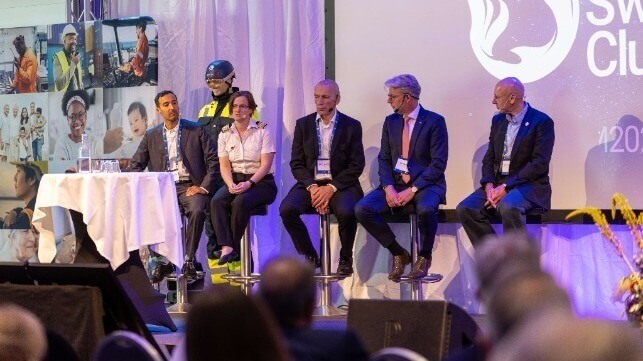
The Swedish Club AGM Speaker Panel (L-R) Charles Watkins, CEO MHSS; Capt. Anne Pletschke, Director Trinity Maritime; Simon Crainge, CEO ISWAN; Tim Ponath, CEO NSB Group; Professor Neil Greenberg, Defence Mental Health King's College London

Published Jun 19, 2025 8:49 PM by The Maritime Executive


[By: The Swedish Club]

At its 153rd Annual General Meeting (AGM), The Swedish Club reaffirmed its commitment to crew wellbeing, placing it firmly at the core of its message. The Club underscored the need for a holistic approach to care — one that addresses not just operational excellence but the human beings who keep global trade moving.

With a record turnout, this year’s AGM underscored the industry’s growing recognition that supporting the human element at sea is critical to operational resilience and long-term success. Managing Director Thomas Nordberg addressed members with a clear message: wellbeing is no longer an add-on. “The Club’s wellbeing programme, Check Your Pulse, has evolved beyond a standalone initiative,” he said. “It is now a fundamental part of risk management, business performance, and industry responsibility. We talk a lot about operational resilience, but resilience starts with people. When we care for our people — physically, mentally, and emotionally — we reduce risk at every level.” 

In 2024, the Club expanded its wellbeing efforts with a range of new resources for members and their crews. These include a practical family guide and the children's book Our Family and the Sea, currently being translated into multiple languages. Designed to support emotional connection and ease long separations, these materials address the often-overlooked social pressures of maritime life.

The AGM’s Members’ Day reflected this focus, welcoming a line-up of powerful speakers who brought diverse perspectives on mental health and resilience at sea:

  • Simon Grainge, CEO of ISWAN, opened the event by sharing how his organisation responds to hundreds of seafarer distress calls each month.
  • Tim Ponath, CEO of NSB Group, offered insights into how shipowners can take active responsibility for crew mental health.
  • Captain Ann Pletschke moved the room with honest, lived experience from her time onboard, shedding light on the emotional realities of life at sea.
  • In the second half, Professor Neil Greenberg of King’s College London and Charles Watkins, CEO of MHSS, explored how to create resilient, psychologically safe working environments.
  • The day concluded with Clas Malmström, who delivered an engaging session blending science, leadership, and humour to bring the themes together.

The day was moderated by Phil Parry, Chairman of Spinnaker Global, whose expert facilitation helped drive thoughtful and insightful discussion from start to finish.

“The level of engagement we saw this year confirms that our industry is ready to put wellbeing at the centre,” said Nordberg. “It’s no longer a luxury — it’s a business-critical priority.”

Embedding A Culture of Care
The commitment to care that is extended to members and their crews is also embedded within the Club’s own culture and business practices. “Care at The Swedish Club is not just a service we offer — it’s a value we live by,” Nordberg added. Crew wellbeing, member engagement, and staff development were high on the AGM agenda, reflecting a deep commitment to nurturing a healthy, resilient organisation from the inside out. “People remain the engine of this industry and by embedding care into everything we do — from underwriting to wellbeing — we’re building a Club that is resilient, responsible, and fit for the future.”

The products and services herein described in this press release are not endorsed by The Maritime Executive.


Birdon Begins Construction on First Waterways Commerce Cutter

Birdon

Published Jun 19, 2025 9:07 PM by The Maritime Executive


[By: Birdon]

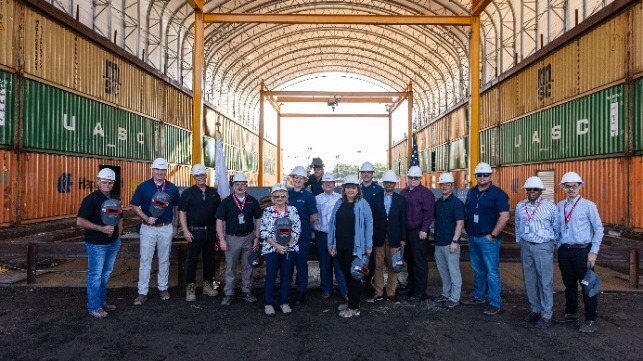
Today, Birdon announced it has started construction on the first new Waterways Commerce Cutter (WCC), a critical milestone in achieving the U.S. Coast Guard’s goal to recapitalize the aging Inland Waterways fleet.

Birdon has made significant proactive investments in engineering, design, facilities, equipment, and workforce development to be able to begin construction on these vessels. With its investment of more than $27 million in capital improvements underway at its shipyard in Bayou La Batre, Alabama, Birdon has demonstrated its commitment to delivering this critical capability to the Coast Guard. Those investments will result in the capacity to build six or more WCC vessels at a time, and will create an enduring, modern shipyard capable of delivering high-quality complex and multi-mission vessels into the future.

“Our entire team is thrilled to be entering this next phase of the WCC program with start of construction,” said Tony Ardito, President of Birdon. “We are grateful for our partnership with the U.S. Coast Guard, and look forward to continuing to deliver on this critical program.”

Birdon has prioritized growing the workforce in the Gulf Coast through partnerships with local community colleges and high schools, relationships with regionally based contract labor firms, and strong community engagement. The company is providing on-site training and skill upgrade programs, and recently launched the Birdon Futures Apprenticeship program, which provides on-the-job training in a variety of shipbuilding specialties.

“We aren’t just hiring talent, we are growing the shipbuilding workforce through apprenticeships, on-the-job training, and other strategic opportunities,” Ardito added.

The WCC program includes significant small business participation. Birdon has worked to identify small businesses that meet the rigorous quality standards needed for the program and has invested substantial time and effort to ensure those businesses are able to successfully participate in a U.S. Government program of this size. More than 70% of the contract will be performed by small businesses, many of which are located in the Gulf Coast.

Birdon was awarded a $1.187 billion contract in 2022 to design and build 27 new WCC vessels for the U.S. Coast Guard, including 16 River Buoy Tenders (WLRs) and 11 Inland Construction Tenders (WLICs). The WCCs are essential to maintain and protect the United States’ intra-coastal and inland Marine Transportation System. This System spreads over 12,000 miles of commercially active inland waterways through which 630 million tons of cargo moves annually, accounting for more than $5.4 trillion in annual economic activity and supporting 30.7 million jobs for the U.S. economy. To support the safe and efficient flow of economic activity along these U.S. rivers, lakes, intercoastal waterways and harbors, WCCs establish and maintain over 28,200 inland Aids to Navigation (ATON). Additional missions include search and rescue (SAR), marine safety, marine environmental protection, and security of ports, waterways, and coasts. Many of the current

Inland Waterways fleet are over 50 years old and are increasingly difficult and expensive to maintain. The new WCCs will greatly enhance the Coast Guard’s ability to perform their Marine Transportation System missions.

The products and services herein described in this press release are not endorsed by The Maritime Executive.


Gov. González-Colon, Crowley Celebrate Puerto Rico's US-Flagged LNG Carrier

LNG carrier

Published Jun 19, 2025 8:45 PM by The Maritime Executive


[By Crowley]

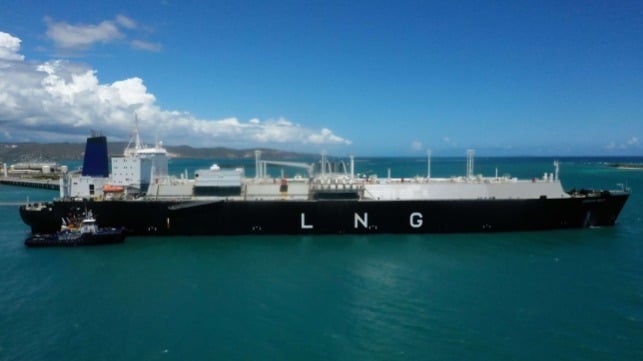
Crowley, a U.S.-owned shipping and logistics company, alongside Puerto Rico Governor Jenniffer González-Colón, celebrated the successful operation of American Energy, during an event Wednesday, June 18 at Crowley’s LNG Loading Terminal in Peñuelas. American Energy is the first U.S.-flagged liquefied natural gas (LNG) carrier to deliver U.S.-sourced LNG to Puerto Rico.

The Crowley-owned, 900-foot-long (274 meters) vessel began service in March 2025. At full capacity, American Energy is capable of transporting up to 34.4 million gallons (130,400 cubic meters) of  LNG per voyage. Operating under a multi-year agreement with Naturgy, American Energy provides regular service between the U.S. Gulf Coast and EcoEléctrica’s LNG facility in Peñuelas, ensuring a reliable, efficient energy supply of cleaner-burning LNG to support the island’s growing power demands.

“American Energy demonstrates the power of partnership,” said Tom Crowley, chairman and CEO of Crowley Corporation. “Together, we are building upon a shared commitment to dependable, sustainable energy solutions for Puerto Rico. We are not only enhancing the resilience of the island’s power infrastructure but also supporting its economic growth and ensuring long-term energy security for the communities and businesses that rely on it every day.”

"The entry into service of the American Energy marks a significant step in our efforts to increase energy supply sources, marking the first time that an American-flagged tanker will transport liquefied natural gas from the mainland to Puerto Rico. This represents a major step forward in fuel supply reliability to stabilize our electric grid, which will greatly benefit our population," said Governor Jenniffer González-Colón, who congratulated the crew of the American Energy, especially the Puerto Rican mariners working aboard the vessel.

"Just in time for the start of the peak energy consumption season, this natural gas supply route from U.S. sources expands our options for stabilizing our electric grid, as we work to provide our residents and businesses with a more reliable and consistent source of power generation."

At the event, Crowley crew members and leaders were joined by Josean González Febres, Mayor of Peñuelas; Josue Colon, Puerto Rico Energy Czar and Executive Director of the Puerto Rico Public-Private Partnership Authority; Mary Carmen Zapata, executive director, Puerto Rico Electric Power Authority; Norberto Negrón, executive director, Puerto Rico Ports Authority; and Carlos Ríos, deputy secretary, Puerto Rico Economic Development & Commerce Department.

American Energy builds on Crowley’s 70-plus years of commitment to Puerto Rico, where Crowley also operates the full-service Isla Grande cargo terminal in San Juan, supporting its container and roll-on/roll-off vessels, including two LNG-fueled ships and logistics services. Crowley annually delivers more than 94 million gallons of LNG through its LNG Loading Terminal in Peñuelas as well as provides ocean delivery and land transportation using ISO tank containers to meet the island’s energy needs. Additionally, as part of Crowley’s broader energy initiatives, the company is advancing innovative LNG microgrids that bolster energy resilience for businesses and communities, offer lower emissions and drive long-term growth.
 

The products and services herein described in this press release are not endorsed by The Maritime Executive.


Gas Power is Making China Dependent on LNG Shipping

Gas power has grown quickly in the past four years, but geopolitical and economic uncertainties make it a vulnerability

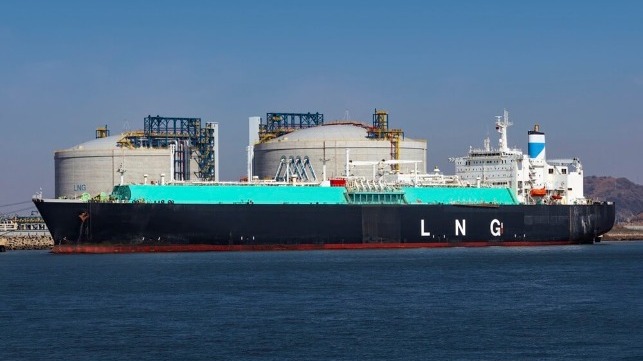
LNGC
iStock / Sky Blue

Published Jun 18, 2025 8:11 PM by Dialogue Earth


[By Yu Aiqun and Maggie Zheng]

In many ways, China’s energy sector follows the path of “slowly, then suddenly all at once.”

More gas-fired power capacity was installed there in 2024 than in any other country, according to Global Energy Monitor (GEM). The addition of 19.5 gigawatts (GW) of gas power, although far less than of coal (30.5 GW) or renewables (355 GW), is more than the new capacity of the next seven countries combined.

The United States continues to operate the largest overall fleet of gas power plants (556 GW), but China is catching up quickly (152.8 GW).

The industry tries to promote gas power as a clean alternative to coal and a helpful partner to renewable energy. However, gas has struggled to find a solid footing in these roles due to high costs and supply uncertainties. As it is difficult to imagine these obstacles disappearing, gas power is an unnecessary detour in China’s energy transition.

An ambiguous role in the energy transition

Unlike many other countries, gas plays a minor role in China’s power mix. It accounts for just 3.2% of total generation, compared to 43% in the United States. As the Chinese government pursues its “dual carbon goals” (to peak carbon emissions before 2030 and reach carbon neutrality before 2060), the positioning of gas power in a supporting role is both unclear and sometimes contradictory.

Gas is considered a “clean” energy in China, where more than half of its electricity is generated by coal. However, gas is a fossil fuel that emits greenhouse gases during its extraction, transportation and combustion.

Gas does have some advantages over coal power generation. It is more efficient, generates fewer carbon emissions per kilowatt-hour (if methane leakage is not factored in), and its power stations require half the land. But gas power is unable to meaningfully replace coal due to its higher cost and uncertain supply, as explored in a report last year by the Institute for Energy Economics and Financial Analysis.

Over the past decade, the share of gas in China’s power mix has remained almost unchanged, while that of renewables has risen rapidly. As renewables develop, China is increasingly aiming to find a foothold for gas in the energy transition. Proponents argue gas power’s ability to quickly start and stop production makes it well-placed to deliver power when demand peaks, if the sun is not shining nor the wind blowing.

The “Natural Gas Utilization Management Measures” issued by the Chinese government in June 2024 encourage the use of gas power for this kind of “peak-valley” load management. However, GEM data finds that almost all the gas power units installed in recent years are combined-cycle gas turbines, often with large power capacity. This technology is highly efficient and can be used for meeting peak demand, but is actually better suited to generating baseload power.

Moreover, two-thirds of combined-cycle plants built in China over the past four years have been designed not only to generate electricity, but also to supply heat. To ensure reliable heat delivery, these units must run continuously and steadily, further constraining their operational flexibility. Being less able to ramp up or down quickly, they are poorly suited to supporting variable wind and solar.

Other countries, such as Australia, primarily use open-cycle gas turbines for meeting peak demand. These can start up within minutes and provide high operational flexibility. They are clearly positioned as a backup for the intermittency of renewable energy.

Supply challenges hinder gas power

Although China ranks fourth globally in gas production (after the United States, Russia and Iran), it is struggling to meet fast-growing demand for gas. Over the past two decades, the country has experienced gas supply shortages on a few occasions.

The most notable was in 2017, when China launched a bold campaign to switch from coal to gas in household heating. Meanwhile, new gas power installations doubled compared to 2016. The consequent demand surge caused a supply shortage and left many families without heating in winter, especially in rural areas.

Gas supply for industry was also heavily impacted. In Chongqing, a subsidiary of the German chemicals maker BASF had to break delivery contracts, citing the gas shortage as a force majeure (a serious, unexpected event). Households, industry and power plants – China’s three biggest gas consumers – have continuously competed for gas supply in subsequent years.

China currently imports around 40% of its gas, either through pipelines or on ships as liquified natural gas (LNG). Insufficient supply and dependence on imports push up prices: power generated from gas in China tends to cost USD 30-40 per megawatt-hour more than coal.

As a result, gas power strongly relies on government subsidies. It is therefore highly concentrated in coastal and economically advanced regions, where governments can afford to subsidise it to reduce local pollution and land-use pressure.

A potential exception is Sichuan, a landlocked province in south-west China that is rich in gas sources and produces a quarter of China’s gas. In 2024, Sichuan’s gas power increased to 2.88 GW from just 0.7 GW after two gas power projects were commissioned. Seven other gas power plants, totalling 8.33 GW, are currently under construction and expected to begin operating in 2025. Within two years, the province’s gas power capacity will increase 15-fold from its 2023 level.

This explosive increase is the result of a surge in gas power permits after 2021, when Sichuan experienced blackouts during an extreme heatwave and severe drought that significantly reduced hydropower generation. As a stress response, an unprecedented amount of gas power was proposed and quickly entered construction. These plants are designed to meet peak load when hydropower is reduced. They will inevitably compete for gas supply with gas exports to other provinces.

Sichuan currently exports 12 billion cubic metres (bcm) of gas to other provinces every year through a 2,000-kilometre pipeline. From 2027, it plans to export an additional 20 bcm every year through a new pipeline. Though its average annual gas production growth is 4 bcm, the new gas power capacity is estimated to consume 8.4 bcm of gas every year. With both the gas plants and the pipeline commissioned at a similar time, this gas-rich province may be facing a shortage.

Energy security concerns with an economic price

While China’s overall power consumption is still growing rapidly, gas power may yet manage to find space to grow. But if power demand slows or stagnates, it will be hit first. This is especially the case for Guangdong, which operates the biggest fleet of gas power plants in the country.

The province accounts for more than a third of China’s operating gas power capacity, based on GEM’s data; in 2024 alone, it commissioned more new capacity than the rest of the country combined.

This rapid growth was boosted by the quick build-up of LNG terminals along Guangdong’s coast. Currently, 70% of Guangdong’s gas power plants rely on imported LNG. Such dependence presents a potential risk, as the global gas price is vulnerable to geopolitical turbulence. For example, when Russia invaded Ukraine in 2022, soaring LNG prices caused many gas power units in Guangdong to stop running. That year, gas power generation dropped 7% and only two out of 37 gas power companies in the province saw profits.

In response to the impacts from the war in Ukraine and a widespread power supply shortage during the previous year, the provincial authority approved 10 coal power units in late 2022. Much of the related documentation cites unreliable gas supply caused by geopolitical risks as one of the key reasons to build additional coal power.

But these energy security concerns did not pause the gas power build-up. In fact, Guangdong’s gas power capacity increased by 70% between 2022 and 2024. This increase was motivated in part by sunk costs: a number of projects had advanced through planning and permitting stages, while others had already broken ground. In addition, the province continued to experience power shortages. But probably most importantly, large investment projects like gas plants were one way to kick-start the sagging local economy as it re-emerged from its Covid-19 downturn.

In the coming two years, 23 GW of coal and 13.5 GW of gas power capacity will be commissioned in Guangdong. According to GEM, that’s the equivalent to around one-third of its current coal capacity and a quarter of its gas. A nuclear power unit will begin operating as well, expected to generate three times more electricity than Guangdong’s 2024 consumption increase. An overcapacity is looming.

On top of this issue, a new wild card surfaced in April when the Trump administration began its tariff war on the world, targeting China specifically.

The tariff war will hit Guangdong especially hard. Its export value accounts for a fifth of China’s total exports, and 16% of its exports go directly to the American market. If power demand declines due to slowed exports, the province will need even longer to absorb the overcapacity – and gas power will be the first to feel the pain of financial losses, being the most expensive and vulnerable power type.

Jiangsu and Zhejiang are facing a similarly uncertain future. These provinces have the most gas power capacity after Guangdong and are also heavily reliant on exporting to the American market.

China has just five years to reach the goal of peaking its carbon emissions. The country needs to focus on its commendable renewable energy build-up and improve the grid for better management of these intermittent sources. Given the jaw-dropping speed of China’s renewable energy growth, the time for its great leap into gas-power generation may have passed before it has arrived.

Yu Aiqun is a research analyst on China at Global Energy Monitor.

Maggie Zheng is a China researcher on oil and gas at Global Energy Monitor.

This article appears courtesy of Dialogue Earth and may be found in its original form here

The opinions expressed herein are the author's and not necessarily those of The Maritime Executive.