Friday, June 20, 2025


Texas Oil Family to Benefit From Potential $8-Billion Mitsubishi Deal

Father and son, Albert and Gordon Huddleston, part of the Texas oil dynasty of H.L. Hunt, are expected to become even richer if a rumored $8-billion deal with Mitsubishi Corp goes through.

Albert and Gordon Huddleston are descendants of Haroldson Lafayette Hunt, who founded and grew the family oil business in the 1930s and 1940s with hundreds of producing wells in East Texas.

Reports emerged earlier this week that Mitsubishi Corp. is about to acquire the shale and pipeline assets of Aethon Energy Management, founded by Albert Huddleston, who is also the CEO.

Aethon Energy is a private investment firm focused on asymmetric opportunities in onshore energy assets in North America, and has sprawling operations in the Haynesville shale gas basin in East Texas and Louisiana.

Mitsubishi is said to be ready to pay up to $8 billion for Aethon’s assets, Reuters reported this week, citing unnamed sources.

The deal would give Mitsubishi a solid presence in shale gas, the publication said, adding the assets were conveniently located close to the Gulf Coast and all the LNG plants already operating and getting built there.

Aethon Energy Management has been exploring options for its natural gas assets since last year. At the time, the assets were valued at some $10 billion. Originally, the company considered either a sale or an initial public offering for the assets, which include over 1,400 miles of pipelines.

Mitsubishi Corp., a major player on the global LNG market, recently indicated it might become an investor in the Alaska LNG project—a priority energy project for the Trump administration. Mitsubishi is already one of the five joint venture partners in the LNG Canada project on the country’s West Coast, which is nearing completion and set to ship out its first LNG export cargoes by the middle of this year.

By Tsvetana Paraskova for Oilprice.com


ExxonMobil Steps Up Exploration in Guyana as Production Surges

ExxonMobil is intensifying exploration efforts in Guyana’s prolific Stabroek Block, with the drilling of two new wells — Hamlet-1 and Lukanani-2 — as it seeks to expand on the more than 11 billion barrels of recoverable resources already discovered offshore.

Drilling of the Hamlet-1 prospect began on June 15, 2025, using the Stena Carron drillship. Located about 193 kilometers southeast of the Guyanese coast, Hamlet-1 is seen as a promising oil play that could unlock new volumes. This well is part of ExxonMobil Guyana Limited’s (EMGL) broader 2025 campaign, which also includes 30 development wells supporting projects such as Yellowtail, Uaru, and Whiptail.

Simultaneously, Exxon is appraising the Lukanani-2 well, following its 2022 discovery of hydrocarbon-bearing sandstones at Lukanani-1. The Stena Carron, fresh off drilling the Barreleye-2 well, is handling both campaigns.

EMGL holds a 45% operating stake in the Stabroek Block, alongside Hess Guyana (30%) and CNOOC Petroleum Guyana (25%). The block is the cornerstone of Guyana’s oil boom, where three floating production storage and offloading units — Liza Destiny, Liza Unity, and Prosperity — currently produce around 650,000 barrels per day. With the Yellowtail project due online by 2027, total output is projected to reach 810,000 bpd. Exxon also plans to deploy at least five more FPSOs by 2030.

Meanwhile, political developments may slow new licensing activity. Vice President Bharrat Jagdeo announced that no new oil blocks or key gas agreements will be signed ahead of Guyana’s general elections scheduled for September 1. Negotiations with Fulcrum LNG — the low bidder for an offshore gas gathering system — and winners from the country’s first competitive offshore round will be paused until after the vote.

Oilprice.com


ConocoPhillips Confirms Norwegian Sea Oil Find with Promising Appraisal Well

ConocoPhillips Skandinavia has completed drilling a key appraisal well in the Norwegian Sea, further confirming the scale and quality of its 2020 Slagugle oil discovery. The well, 6507/5-12 S, was drilled in production license 891, located roughly 22 kilometers northeast of the Heidrun field and 270 kilometers north of Kristiansund.

The operator, which holds an 80% stake in the license alongside partner Pandion Energy (20%), targeted the delineation of the Slagugle find and carried out a successful formation test to assess reservoir quality and connectivity.

Drilled using the Deepsea Yantai semi-submersible rig, the well encountered several oil columns across a 188-meter interval in the Ã…re Formation and Grey Beds. Of this, 75 meters comprised high-quality sandstone with excellent reservoir properties. A maximum production rate of 650 standard cubic meters (Sm³) of oil per day was recorded during testing through a 36/64-inch nozzle.

Preliminary estimates suggest the discovery contains between 30.8 and 61.6 million barrels of oil equivalent (boe), primarily in Triassic-age rocks. Further upside potential exists in additional zones—the Lower Ã…re and Upper Grey Beds formations—which were not included in the current production testing.

This appraisal marks the third exploration well in PL 891, a block awarded under Norway’s APA licensing round in 2016. The well has now been permanently plugged and abandoned as planned.

ConocoPhillips and Pandion are now analyzing the collected data to evaluate commercial development options. The site’s proximity to established infrastructure—including the Heidrun and Skarv fields—could facilitate future tie-back opportunities.

The Deepsea Yantai rig is now set to drill a new well in production license 586 for VÃ¥r Energi and partners, continuing activity in the resource-rich Norwegian Sea. The Slagugle results, meanwhile, solidify ConocoPhillips' growing position in Norway’s offshore oil sector.\

By Charles Kennedy for Oilprice.com


Mozambique Ready to Lift Force Majeure on LNG Plant

The government of Mozambique is ready to lift the force majeure imposed on TotalEnergy’s LNG project in the country as soon as the company applies for this, the country’s energy minister said.

Noting that the security environment in the area had improved considerably, Estevao Pale said that “We, as government, are doing everything that we can to be able to resume the project,” adding that “We are working together with all partners on the project to create the security conditions favourable to restart the project.”

The Mozambique LNG project—which is under construction—suspended activities in 2021 under force majeure conditions caused by violence from rebel groups in the area. With a price tag of $20 billion, Mozambique LNG will liquefy gas from two offshore fields, Golfinho and Atum, with an annual processing capacity of 13.12 million tons.

The facility is the biggest liquefied natural gas project in Africa and the biggest foreign investment on the continent as well. TotalEnergies is operator with 26%, in partnership with Japan’s Mitsui & Co, Thailand’s PTTEP, and Mozambique’s state energy firm ENH.

Meanwhile, one of the funders of the project, the UK government, was earlier this year reported to be looking for a way to get out of its investment commitment, in line with its net-zero policies. Earlier this week, the Financial Times reported that the UK Export Finance agency had commissioned a human right review for the project on allegations of abuse, made by Mozambican soldiers that were deployed to protect the facility.

The government agency had employed the services of legal firm Beyond Human Rights Compliance to investigate the allegations, the FT said, citing unnamed sources. TotalEnergies, however, was a step ahead, having asked the Mozambican authorities to investigate these allegations last year. The Mozambican government launched the investigation in March this year.

By Irina Slav for Oilprice.com


Equinor’s New Arctic Field Reaches Peak Oil Production

The Johan Castberg oilfield in the Barents Sea has reached full capacity of 220,000 barrels per day (bpd), operator Equinor said on Friday, noting that peak capacity has been reached just three months after the field in Norway’s Arctic waters came on stream.

Seventeen of a total of 30 wells have now been completed. The wells that have come on stream are producing as expected, Equinor said.

At the end of March, Equinor started up the Johan Castberg oilfield, following several months of delays due to inclement winter weather in the waters of Norway’s Arctic.

The project is expected to recoup the $8 billion investment in less than two years, according to the Norwegian energy major

As Norway’s newest oilfield, Johan Castberg, is now on stream, it will produce crude for 30 years, boost Norway’s oil exports, and bolster the role of Western Europe’s biggest oil and gas producer as a reliable and long-term supplier of energy, Equinor said.

Recoverable volumes at Johan Castberg are estimated at between 450 and 650 million barrels of oil.

Equinor aims to increase the reserves at the major oilfield by between 250-550 million barrels, Kjetil Hove, Equinor's executive vice president for Exploration & Production Norway, said on Friday.

“Johan Castberg represents a gamechanger for the importance of the Barents Sea for Norway's future as an energy nation,” Hove added.

“We are already planning six new wells to extend plateau production. The Isflak project will be a rapid field development with an investment decision at the end of the year and start-up in 2028,” the executive said.

Equinor also plans to drill one or two exploration wells annually near Johan Castberg.

Norway expects its oil liquids production to rise by 5.2% in 2025 from 2024, also thanks to the start-up of Johan Castberg.

Yet, further exploration efforts and new discoveries would be crucial to slowing the expected decline in Norway’s oil and gas production in the 2030s, the authorities of Western Europe’s largest oil and gas producer have said in recent years.

By Tsvetana Paraskova for Oilprice.com


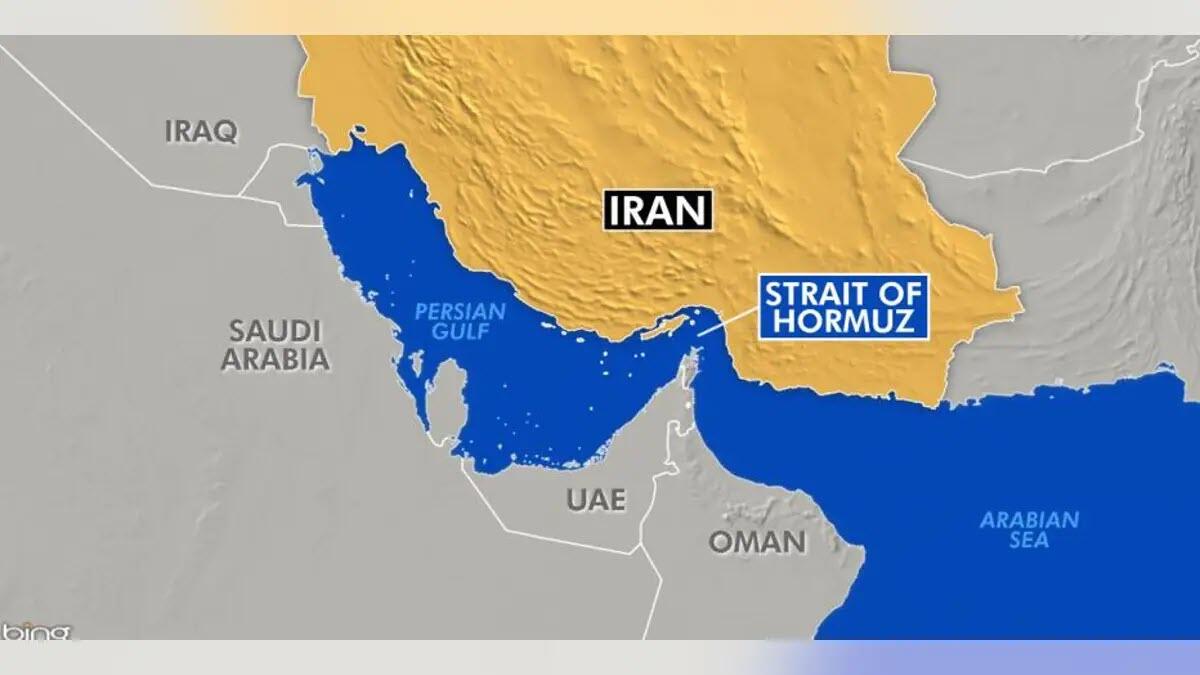
Hormuz Tensions Drive European Diesel Prices Higher

  • European diesel prices are rising sharply due to concerns that the conflict between Israel and Iran could disrupt critical shipping lanes in the Strait of Hormuz.

  • Europe has become increasingly dependent on fuel shipments through the Strait of Hormuz since it banned Russian diesel imports, making it highly vulnerable to regional instability.

  • The market is showing key signs of strength, including a jump in diesel's premium to crude and a widening of backwardation, as importers rush to restock in anticipation of potential prolonged disruptions.

European diesel prices rallied for a fifth straight session, driven by mounting anxiety that critical Middle East shipping lanes could be choked off. The conflict between Israel and Iran has raised alarm bells across the EU, which has become increasingly dependent on fuel shipments transiting the Strait of Hormuz since losing access to Russian supplies. 

"Supply-security fears are driving the surge in European diesel prices," Eugene Lindell, head of refined products at energy consultancy FGE NexantECA, told Bloomberg. "Many importers are rushing to restock now, in case a prolonged disruption occurs due to a potential blockade of the Strait of Hormuz," he added.

Here are the key points of strength in the European diesel market because of Hormuz blockade fears:

  • Diesel's premium to crude jumped above $25 a barrel, highest since March 2024.
  • Backwardation widened sharply, with July diesel now $21.25/ton above August, and December 2024 trading $45.25/ton above December 2025 — up from just $0.50 on June 9.
  • Traders rushed to unwind bearish bets, closing out over 100,000 gasoil futures contracts, the most in any 4 days since 2021.

According to Bloomberg estimates, Europe imported approximately 850,000 barrels a day of diesel last year through the Strait of Hormuz. This critical maritime chokepoint leaves Europe highly vulnerable to regional instability and potential supply disruptions.

Europe has become more susceptible to disruptions in the Strait of Hormuz due to a combination of increased structural dependency, limited local refining capacity, and a post-Russia supply realignment:

  • Europe banned Russian diesel imports following the Ukraine invasion, cutting off its largest and most reliable supplier.
  • As a result, Europe pivoted heavily to the Middle East, especially the UAE and Saudi Arabia, to fill the gap—much of that supply transits Hormuz.

The Strait of Hormuz stands as a massive single point of failure—any disruption in this critical chokepoint risks triggering a shockwave across European energy markets. Fresh data shows vessel traffic through the strait is already slowing (read more here). 

By Zerohedge.com 


Trump’s Climate Subsidy Cuts Face Red-State Rebellion

  • Former President Trump's goal to eliminate green energy subsidies faces significant opposition from Republican-led states that have greatly benefited from Inflation Reduction Act investments.

  • A large majority of new energy transition projects and jobs funded by the IRA are located in Republican districts, leading GOP lawmakers to advocate for keeping the energy tax credits.

  • While some concessions have been made to soften subsidy phaseout language, concerns remain from the clean energy industry that these changes could still harm ongoing and future projects.

One of President Trump’s top priorities when he took office was to remove generous subsidies for things like wind and solar power that, critics have argued, are a drain on federal coffers. The panic that this intention caused in transition industries suggested it would be an easy job. It’s not. A lot of the subsidy billions have gone into Republican-led states.

The warnings have been coming in for months. A lot of the companies that have taken advantage of IRA funds for energy transition projects have done so in red states. Toyota, for instance, is planning on building one of the biggest battery plants in the world in GOP-run North Carolina. Thanks to the IRA, the company has boosted its originally planned investment for the battery factory by $8 billion to a total $13.9 billion. Toyota still plans on moving ahead with the project, at least it was in December last year, after Trump won the elections.

In total, new energy transition projects in Republican districts account for as much as 85% of total IRA investments, one survey conducted last year by a business leader group dubbed E2 found. These projects also accounted for close to two-thirds of all new transition jobs promised by those taking advantage of the subsidies. 

In this context, it is not that hard to see why representatives of such states would be reluctant to support the Big, Beautiful Bill in its original form. Indeed, back in April, four Republican senators wrote a letter to Senate Majority Leader John Thune, advocating for keeping the energy tax credits from the IRA in the budget reconciliation bill. 

“Our country is blessed with abundant natural resources and an entrepreneurial spirit that uniquely positions us to power both our economy and the world—enabling U.S. leadership in innovation, energy production, and manufacturing alike,” the letter said, as cited by Reuters. “Many of the investments that make this possible are enabled by current tax provisions, including some from the Inflation Reduction Act.”

House Republicans also wrote a letter—a group of 27 of them—asking for the tax credits under the IRA to be preserved. No wonder, then, that the Senate Finance Committee made some concessions to IRA backers, softening the subsidy phaseout language of the original budget bill. For instance, wind and solar projects can still qualify for full subsidies under specific stipulations from the IRA, but only if they begin construction by the end of the year. If they start construction in 2026, they could get 60% of the original subsidy size. For construction starting in 2027, the portion of the original tax credit they could claim falls to 20%, going down to zero from 2028 onwards.

That sounds like a reasonably fair deal. Those enterprises that sprouted only thanks to the IRA or the large international companies that the IRA funds motivated to plan massive investments will now have the chance to make that money work, faster. Even so, not everyone is happy with the concessions.

“For wind and solar, you have particularly large-scale projects that are very much in development,” said the head of Advanced Energy United’s federal policy team said, as quoted by Utility Dive. “They’re in interconnection. They are in permitting processes that have pilot agreements, but they are likely not to go to construction until ’27 or ’28, so this effectively kills those projects.”

“We could essentially shut them down if the market goes away, which is what (removing) these credits will do,” said the chief executive of PanelClaw, a company that manufactures solar panel racks in Utah, as quoted by Reuters.

It is understandable that elected officials from states that have seen federal money pour in to support various transition enterprises might have a problem with the removal of that federal money. But it might be a good time to ask an important question inadvertently highlighted by PanelClaw’s CEO: how viable is a market created entirely thanks to subsidies?

By Irina Slav for Oilprice.com