Thursday, June 26, 2025

Six Ways a 78-Year-Old Law is Still Screwing US Workers


 June 25, 2025

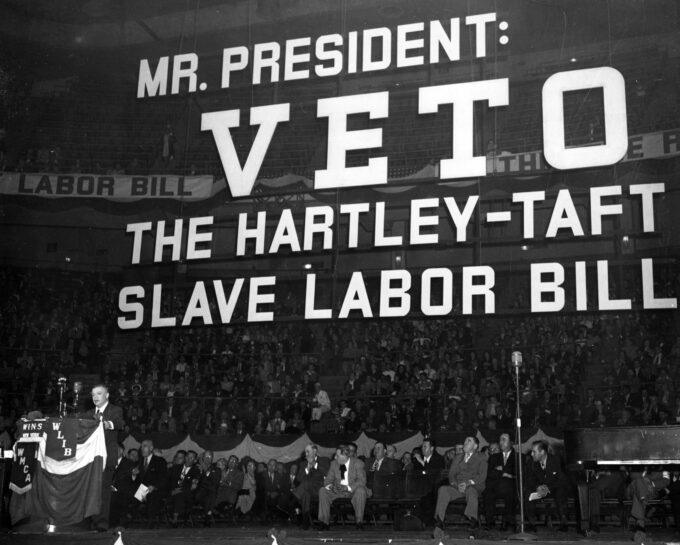
David Dubinsky of the International Ladies Garment Workers Union speaks against the Taft–Hartley Act, May 4, 1947

If you’ve ever watched a union campaign get crushed by employer intimidation, wondered why you see so few strikes, or been frustrated that unions don’t demand more on climate or racial justice, you’re seeing the effects of a US law passed 78 years ago today.

On June 23, 1947, the United States Congress overrode a presidential veto to enact the Labor Management Relations Act, better known as the Taft-Hartley Act. Pushed through by a coalition of conservative Southern Democrats and Republicans during a wave of postwar strikes and growing public support for unions, the law gave employers new legal weapons and undercut some of organized labor’s most powerful tactics. Nearly eight decades later, most of its provisions are still in place.

Taft-Hartley marked the beginning of a long-term strategy to isolate, weaken, and demobilize organized labor in the United States. It sought to narrow the scope of what unions do by restricting what they bargain over, limiting their political activity, and constraining the tactics they can legally use. This helped shape public perception of unions as narrow, service-oriented entities rather than vehicles for broader economic and social change  a legacy that haunts the US labor movement to this day. As workers across the country seek to rebuild their collective power, it’s worth taking a look at the legal behemoth making their mission harder to achieve.

So, without further ado, here are six ways that Taft-Hartley rigged the system against workers.

1. Gave Employers the Power to Interfere in Union Elections

Prior to Taft-Hartley, employers’ legal ability to interfere in union organizing drives and elections was relatively circumscribed by the National Labor Relations Act (NLRA) of 1935. The idea was that workers, and only workers, should be allowed to decide whether they wanted to be part of a union; it’s not the employer’s decision to make, so there’s no reason they should have a say in the matter. Taft-Hartley, however, substantially loosened these restrictions, ostensibly to protect the employer’s right to “free speech.” So long as they avoided explicit threats or promises of benefits, employers were now free to fully exploit their inherent power advantage to sabotage union organizing drives. It was this provision that brought us the captive audience meeting, in which workers are required to sit through hours of their employer’s anti-union propaganda. Many of the surveillance and intimidation tactics that are so common today got their start in 1947 with this section of the Taft-Hartley Act. The provision did create jobs, though — jobs for anti-union lawyers and consultants.

2. Banned Solidarity Strikes and Boycotts

Before the Taft-Hartley Act, US workers could engage in secondary or “solidarity” strikes, where workers from one company would strike or picket to support workers at another company. Unions could refuse to handle goods from a struck employer. These actions gave workers at different workplaces significantly more power and leverage in negotiating with their employers, enabling workers across a supply chain to join forces and exert pressure. Solidarity actions particularly benefited workers in industries where a strike would be less disruptive for the economy as a whole. They also reinforced the idea of a labor movement that encompassed the entire working class, rather than one that was siloed by workplace or industry.

Taft-Hartley changed this by explicitly forbidding solidarity strikes. In doing so, it fractured cross-union support and isolated labor struggles within individual employers. It also weakened the workers’ negotiating power and helped chip away at the burgeoning class consciousness that had powered solidarity actions. While other countries with more powerful labor movements continue to utilize solidarity actions to great effect, the power of organized labor in the US has continued to decline.

3. Undermined Unions Financially and Paved the Way for ‘Right-to-Work’ Laws

Prior to Taft-Hartley, closed union shops were fairly common. Workers in a union shop benefited from the efforts of those who negotiated and enforced their contract, and all were expected to share in covering the costs of that collective work. This kept unions well-funded and unified, eliminating potential free-rider problems where workers benefit from union representation without contributing to its costs. The Taft-Hartley Act changed this by banning union security agreements — agreements between unions and employers that require workers who are covered by a union contract to join the union. Union contracts, however, were still legally required to cover everyone eligible to join the union, regardless of whether those workers chose to join the union officially as members. The Taft-Hartley provision created a potential unfunded mandate for unions by requiring them to represent all workers covered by the contract, including those who refused to join or pay dues. It also paved the way for so-called right-to-work laws, which ban unions from recouping the cost of representing non-members in the form of non-member agency fees. Nearly half of US states now have such laws, which send a clear anti-labor message despite their “right to work” moniker.

4. Allowed Employers to Push for Union Decertification During Strikes

The Taft-Hartley Act took aim at what is arguably workers’ most significant weapon: the ability to withhold their labor. Before 1947, the law viewed decertification votes — effectively votes to disband the union — during ongoing labor disputes with great skepticism, generally interpreting them as a form of employer coercion or retaliation. Section 9(c)(1)(B) of the Taft-Hartley Act, however, allowed employers to petition for a decertification vote during a strike by arguing that the union had lost majority support. Employers could hire scabs to replace striking workers and then call for a decertification vote, which would drain union resources even if the union ultimately prevailed in the election. Allowing employers to file such petitions in the first place also reinforced the employer’s unwarranted role in union decision-making. In practical terms, the new law meant employers could exploit a strike to destroy a union. The specter of union decertification also served to dissuade union workers from striking in the first place, significantly eroding their leverage at the bargaining table and beyond.

5. Required Union Members to Sign Anti-Communist Affidavits

In the mid-20th century, many of the most successful union organizers were proud leftists. Wary of growing class-consciousness, however, the authors of the Taft-Hartley Act inserted a political litmus test for union officers, requiring them to swear that they weren’t communists. Those who refused could not access the National Labor Relations Board (NLRB), rendering them unable to file unfair labor practice charges, hold union elections, or petition for recognition. Although this particular provision was later repealed, it still caused significant damage. The Congress of Industrial Organizations — the CIO in the AFL-CIO — expelled a dozen unions that refused to comply with the new edict, purging many of the labor movement’s most effective and militant leaders. The expulsions created long-lasting rifts in the working class, especially among Black, immigrant, and left-wing workers who had been central to earlier organizing drives. The affidavit requirement was also part of a broader anti-communist crackdown that encouraged exactly the kind of anti-worker surveillance that has become common today.

6. Limited the Scope of Union Work

When the Taft-Hartley Act was passed, courts were still determining the boundaries of the topics covered by the NLRA’s requirement that employers bargain in good faith. Many unions pursued broad workplace demands, touching on everything from hiring practices to community environmental issues. Class-conscious unions were also empowered to spend members’ dues on political advocacy and campaigns. Taft-Hartley sought to significantly narrow the scope of union work, however, by restricting mandatory subjects of bargaining and banning the use of membership dues for direct political contributions. Employers were required only to negotiate over “wages, hours, and other terms and conditions of employment,” and unions needed to solicit additional member contributions for anything besides direct representational work. Together, these provisions shrunk the role of unions in shaping the workplace and their power in society as a whole. This means that unions aren’t directly involved in fighting for environmental justice, even as their employers’ pollution poisons the homes of their families. It also helped usher in “business unionism,” which avoided class struggle in favor of a narrow focus on wages and contracts. Business unionism treated union membership more like a dues-for-service insurance policy than a means to structural change.

Today is the anniversary of a strategic legal assault on worker solidarity and class struggle. Most of its provisions are still in effect today, and the one on this list that isn’t nevertheless did lasting damage. It is worth remembering, however, that workers weren’t benevolently handed the 1935 version of the NLRA. The pro-worker protections of the NLRA were a response to militant labor uprisings and mass pressure, a victory for those who advocated for a fairer system in the face of often violent repression. While Taft-Hartley rolled back many of those gains, the fact that the US had them in the first place (and that workers in other countries still enjoy such protections) shows that a more pro-worker system is both possible and winnable. This isn’t to say it won’t be an uphill battle on an uneven playing field; the law has long reflected the interests of capital more than those of working people, and those in power didn’t get that way by making the system easy to change. But if labor rights were won through struggle once, they can be won again — if workers are willing to fight for them.

This first appeared on CERP.

Hayley Brown is a Research Associate at the Center for Economic and Policy Research.

USA

State of the Resistance


Wednesday 25 June 2025, by Against the Current Editors

A BIG, BEAUTIFUL popular resistance is trickling up to some of the sites of political power, including the federal courts — although not fast or far enough, by a long shot. That’s been the important takeaway from the first 100-plus days of the Trump administration. But we’re barely at the beginning of what will be a long battle with ups and downs.

The June 14 “No Kings” rallies were both cheeky and inspirational. An estimated five million people turned out, importantly not only in big but also smaller cities and towns, as the Trump/MAGA assault threatens to squeeze the life out of rural as well as urban America.

A powerful report from the Tempest Collective, “The battle of Los Angeles” chronicles the early days of the immigration defense and resistance there. At the same time, the Trump regime is ramping up the repressive apparatus. Threats are proliferating against leftwing and movement forces, and more National Guard and illegal military troop mobilizations may be coming to suppress protests and defense of immigrant communities living under a reign of terror. Unleashing enough fear leads to self-deportation.

Added to all of this are acts of pure sadism and cruelty, such as state bans on gender-affirming care for youth, which have now been sanctioned by the U.S. Supreme Court.

It may often seem that protest marches and rallies, petitions, showing up at town halls, or all the other activist possibilities available (without holding levers of power), are useless because those at the top aren’t listening. But that’s partly because they want people to think they aren’t listening.

Without popular anger and revulsion bubbling up from below, there wouldn’t be nearly so many court rulings slowing down the administration’s obscene violations of law, the refusal of a few companies like COSTCO to wipe out their remaining DEI programs, or the (inadequate) response to its drive to turn academic centers like Harvard into Trump University.

Elsewhere in this issue we discuss the mixed-at-best response of university administrations to the Trump attacks, such as the “premature capitulation” by the University of Michigan and the police-state atmosphere on that campus. And while Harvard, with its show of resistance, has become the darling of liberal media, the university preemptively gutted its Center for Middle Eastern Studies and purged its faculty leadership. This was an attempt at surrender, which the Trump gang ignores as it openly seeks to destroy Harvard as an example to others.

As the Chronicle of Higher Education among others has pointed out, it’s fatal to compromise about Diversity, Equity and Inclusion (like Harvard agreeing with Trump that there are “excesses”). DEI is basically about removing obstacles to equality, while the Trump approach is about normalizing inequality as natural and acceptable.

In short, the protests so far aren’t remotely enough to meet the five-alarm social and political emergency we face — but they do help reveal that activism matters. The courageous Columbia students at graduation, defying the appalling new interim university president with chants of “Free Mahmoud,” set an example that echoes through the country and globally. The decades-long isolation of Palestinian rights from progressive politics has been broken — a big advance, even though the Democratic Party national leadership disgracefully refuses to touch the issue.

In exploring here the state of the resistance and its prospects, we won’t overstate what it’s accomplished or overlook its shortcomings. It hasn’t sidelined the hulking blob in the White House, or the nitwit with the famous family name in charge of wrecking Health and Human Services and bringing back measles, polio and other childhood epidemics.

The resistance so far hasn’t prevented the genocidal destruction and starvation of Gaza at the hands of Israel and the United States, or the bipartisan complicity of the U.S. Congress. But it has broken through the media near-blackout of the horror in Palestine, and increased public dismay over Israel’s blockade-and-starvation strategy.

Resistance hasn’t stopped the mass-deportation horror hanging over immigrant communities, with heartbreaking consequences, although community activism in some cities and states has noticeably slowed the momentum and annoyed the managers of the police-state operations. (The danger of crippling the agriculture, construction and hotel industries has caused factional debate among the Trump/MAGA gangsters.)

It gave space for courts to challenge the kidnap-and-rendition of Kilmar Ábrego Garcia to a Salvadoran dungeon, which “shocks the conscience” as the district court judge Paula Xinis put it, because there are at least sectors of the public with a conscience to be shocked. That’s why he was brought back to the United States — with the government filing trumped-up “trafficking” charges as a way of keeping him locked away from his family and keeping immigrant communities in perpetual fear.

Popular anger also makes an ongoing difference as equally horrifying cases come to light, including the peremptory deportation of migrants to places like South Sudan.
Why the Limitations?

That moral outrage is absolutely necessary, but equally essential is an understanding of why it’s hard to derail the so-called Trump agenda.

First, much of it is a ruling-class agenda, or at least that of important sectors of the U.S. capitalist class. This comes through on consideration of Trump’s big, barf-bag budget bill, adopted with a one-vote majority in the House of Representatives. (It’s on the Senate agenda as this statement is being written.)

You might ask what’s attractive to capital in a massive-deficit budget that points the country firmly on the long road to bankruptcy, in tariff wars that threaten to sink the bond market — and simultaneously in brutal cuts that will sink millions of Americans into poverty without health care, including in Trump country heartlands.

The business press, led by the Wall Street Journal, is savage in denouncing Trump’s tariffs and their incoherent vacillations. But permanent tax cuts for the affluent and billionaires panders to the greed of these sectors, as does the ideological appeal of the “need for fiscal discipline” to slash Medicare, Medicaid, food assistance and essential services for the population. Tax cuts for the rich of course will balloon the deficit way beyond anything that can be paid for by the grotesque cruelties imposed on the majority.

As for the tariff debate, there’s some valid imperial logic in the argument that for the United States to continue ruling the world — which is not our socialist agenda of course, but most definitely is the U.S. capitalist ambition — it needs reliable domestic industries in things like steel, aluminum, computer chips and semiconductors.

This hardly makes sense of tariffs on Central American bananas or Mexican avocados. And in view of the central imperialist rivalry in the world between the United States and China, there is hardly a rational motivation for crippling tariffs on the United States’ most important strategic allies in Europe, Australia and Canada.

Yet despite the incompetent muddles of Trump’s economic nationalism and the destruction wrought by what economist Paul Krugman calls the “attack of the sadistic zombies” in the federal budget, there is a level of elite support for the core of the Republican program — especially indifference to the damage inflicted on immigrant and poor communities, Palestinians living and dying under genocide, and starving children in the Global South left adrift by the instant dismantling of U.S. aid.

Many of these same countries are now on Trump’s expanded travel ban list, perhaps a bargaining chip for their accepting more people he plans to deport.

Second, and most important from a strategic perspective, the resistance to Trump is a large movement but fundamentally not yet a deeply class-rooted one. We see the central task of the left as the work of building the core of the working-class centered movement that’s needed in the present emergency and in the long run.

To be more precise, there are most certainly large numbers of working-class people and families participating in the protest rallies and marches, but the institutions of organized labor and the African American community are generally not present. How to begin overcoming these obstacles requires additional discussion.
Needed: A Broad Class Movement

A striking expression of class solidarity is the support for Kilmar Ábrego Garcia by his sheet metal workers’ union, SMART Local 100 in Maryland. SEIU California has rallied to the defense of its popular president David Huerta, arrested and roughed up trying to protect migrant workers. These examples are only the beginning of what’s needed.

The United Auto Workers endorsed the Hands Off! demonstrations of May 19, but we saw few if any signs of organizing members to turn out. On the contrary, UAW president Shawn Fain — who gave the union’s endorsement in the 2024 presidential election to Kamala Harris, with no membership discussion or democratic decision-making — has turned around to support Trump’s auto tariffs, a destructive break of solidarity with Canadian and Mexican autoworkers. (See “A Setback for Auto Workers’ Solidarity”, in our previous issue ATC 236 May-June 2025.)

Equally difficult is the fact that the Black community’s struggle against the vicious racism of Trump’s policies — the shredding of the federal work force, cancellation of consent decrees for police reform, forcibly wiping out DEI programs not only in government but throughout academia and corporate America, and much more — is critically important for the resistance but not adequately represented in the protest demonstrations.

In the April 5 and 19 Hands Off! demonstrations, African American participation appeared to be mostly low. This reflects the general weakness of union involvement and probably inadequate outreach to Black community and faith-based institutions. The leadership shown by Rev. William Barber of the New Poor Peoples Campaign demonstrates the potential for a mass movement that could be a diverse and more powerful resistance force.

Understandably, participation by immigrant communities under threats of arbitrary detention and pe­remptory deportation will likely remain limited until there’s a qualitatively larger resistance capable of protecting them.
Moving Forward in the Crisis

The everywhere-all-at-once, multi-front quality of Trump’s far-right assaults makes them daunting. How is it possible to respond when there are new atrocities, not to mention what in “normal” times would be multiple impeachable presidential offenses, every single day?

At the same time, the potential for a more powerful resistance is carried in the very fact that Trump, the extreme right, and the “sadistic zombies” are attacking every sector of the working class, although not evenly, and although many working-class people don’t yet recognize it.

Popular anger will grow as the full impact of the budget-cut atrocities, tariff idiocies and austerity begin hitting millions of people, including many who haven’t recognized that they would be among the targeted victims. The possibility of a “stagflation” staring us in the face.

Some kind of political explosion is looming in the United States — although whether it takes the form of a more powerful resistance, fragmented responses, or possibly reactionary and racist mobilizations is an open question — and will be influenced in part by how today’s movement and those of us on the left confront the growing crisis.

We stated at the outset that popular anger and revulsion is “trickling upward” to the courts and elite institutions. While those are good things as far as they go, they do not mean that the decisive battles will be fought at the top, or that the movement can look to the Democratic Party establishment for solutions.

Much less can we wait and hope for the outcome of the 2026 midterm elections (where Democrats in their usual noisy triumphal arrogance are already predicting victory without saying what they intend to do with it).

The path forward, as the crisis intensifies, must be helping bringing together the sectors and struggles at the grassroots into common cause — broadly speaking, a united front of the working class in all its diversity. By no stretch of fantasy do we suggest that the socialist left in the United States can pull this off on our own. But building on June 14, our central responsibility is to contribute to this effort toward the biggest and most effective resistance.

Source: July-August 2025, ATC 237.


Attached documentsstate-of-the-resistance_a9066.pdf (PDF - 920.6 KiB)
Extraction PDF [->article9066]


Against the Current Editors
Against the Current is published by Solidarity, USA, a sympathizing organization of the Fourth International. It is a bi-monthly analytical journal explaining its goal: as part of our larger project of regroupment and dialogue within the U.S. Left, the journal presents varying points of view on a wide variety of issues. As such, debates are frequent and informative, with the goal of promoting discussion among activists, organizers, and scholars on the Left.

International Viewpoint is published under the responsibility of the Bureau of the Fourth International. Signed articles do not necessarily reflect editorial policy. Articles can be reprinted with acknowledgement, and a live link if possible.
Argentina

Cristina Kirchner condemned and banned from election


Tuesday 24 June 2025, by M. N.


The Argentine political field is (again) in turmoil. A few months before the mid-term legislative elections, and only a few days after the announcement of her candidacy as a regional deputy, the Supreme Court has just confirmed former president Cristina Kirchner’s conviction for corruption: 6 years in prison and lifetime ineligibility.


Did Cristina Kirchner become rich during her term in office? Enormously. Did she do it illegally? Certainly. Argentina is a country where politicians are very corrupt, fill their pockets with public money. Does this exonerate Cristina Kirchner? Absolutely not.
A very political condemnation

But we have to understand the case in which she was convicted. This is the weakest case that the justice system has against the former president. A case launched under the right-wing government of Mauricio Macri, for embezzlement of funds in public works, for the benefit of business cronies. Nothing new under the sun. In Argentina, most public works are delayed or never completed, with or without corruption. Prices are often inflated. The accusations against Cristina Kirchner should, at the very least, also apply to all construction companies, to all executives — local, regional or national. For example, the father of another former president, Mauricio Macri, made his fortune in this way in the 1990s. And the evidence directly implicating the former president is weak. It is a trial which was triggered by her political opponents.
Clashes and a campaign against "proscription"

Immediately after the announcement, Peronism launched a campaign against the proscription and organized rallies. Some ended in clashes, and a news channel (known for an editorial line very hostile to Peronism) suffered damage. Peronism remains a very popular movement, capable of mobilizing poor workers to exert pressure. Its methods of mobilization are certainly clientelistic, and it has been largely absent from the struggles against the austerity imposed by Milei. But when it wants to mobilize, it knows how to do it.

The campaign against the proscription, however, was complex. Peronism is not alone in denouncing it. The Argentine far left also — with different nuances and tactical lines — denounced a very political trial, without supporting the ex-president or Peronism. Conversely, the Radical Party and other centrist forces have defended the judgment by insisting on the widely shared perception in the middle class: Cristina Kirchner is seen as a corrupt politician. And this despite the evidence of an Argentine justice system that is far from being independent.

The question for the Argentine far left is therefore the following: how can it not isolate itself from the popular strata that retain confidence in Kirchnerism, while opposing a political trial led by a cynical right and a corrupt judiciary? And how can we continue to fight corruption that neither begins nor ends with Kirchnerism?

17 June 2025

Translated by International Viewpoint from l’Anticapitaliste.

Attached documentscristina-kirchner-condemned-and-banned-from-election_a9060.pdf (PDF - 905 KiB)
Extraction PDF [->article9060]


M. N. is a member of the NPA in France.

International Viewpoint is published under the responsibility of the Bureau of the Fourth International. Signed articles do not necessarily reflect editorial policy. Articles can be reprinted with acknowledgement, and a live link if possible.
A mixed success for the President in Mexico

Thursday 26 June 2025, by Fabrice Thomas


On 1 June 2025, judges at all levels of the judiciary were elected by direct suffrage throughout Mexico. From local judges to members of the Federal Supreme Court, all positions were subject to a popular vote.


An unprecedented reform, led by the governing party MORENA, which is profoundly reshaping the institutional landscape. But criticism of the transparency of the process and the growing control of power by the presidential party temper this historic turning point.

A reform promising a rupture

This fundamental reform, backed by former president Andrés Manuel López Obrador (AMLO), taken up by his successor Claudia Sheinbaum and voted for by their party, MORENA (National Regeneration Movement), has profoundly changed the country’s judicial architecture.

For decades, Mexico’s judiciary has been largely corrupt, dominated by right-wing forces and economic powers, and sometimes even infiltrated by drug traffickers. Reforming this system was one of AMLO’s key commitments when he was elected in 2018. However, it was only at the end of his term that he launched the process, which was taken up and implemented by Sheinbaum.
A supported but contested project

The reform has been met with fierce opposition from right-wing parties, which are closely linked to the old judicial system. But it has also met with resistance from many justice workers and officials, who denounce a reform imposed without consultation, with questionable social effects. On the other hand, it enjoyed broad popular support, so deep was the rejection of the judicial system.

Politically, the measure is defensible, especially in view of recent experiences in Brazil and Argentina, where the judiciary has been used against progressive governments. But its shortcomings are notable: opaque criteria for selecting candidates, unclear campaign conditions, the possibility of manipulation and so on. All these elements reinforce the suspicions of a concentration of power. MORENA now controls the presidency, Congress and a significant part of the judiciary.
A modest but symbolic turnout

The right and the mainstream media had called for a boycott, banking on the complexity of the election and the massive abstention that characterises the country. They were hoping for a turnout of less than 10%. In the end, nearly13 million Mexicans, or 13% of those registered, turned out. This result remains limited, but it still marks a historic turning point.

This shift is embodied by the election of Hugo Aguilar Ortiz, an indigenous Mixtec and former close associate of the Zapatistas, as president of the Supreme Court. But in a context where Claudia Sheinbaum enjoys record popularity (more than 70%), the concentration of power does not guarantee that this will serve the interests of workers. This is evidenced recently by the government’s refusal to repeal an ultra-neoliberal reform of the civil service, a repeal promised at the end of a long teachers’ strike.

19 June 2025

Translated by International Viewpoint from l’Anticapitaliste.

Attached documentsa-mixed-success-for-the-president-in-mexico_a9059.pdf (PDF - 905.1 KiB)
Extraction PDF [->article9059]

Fabrice Thomas is a Fourth Internationalist in France, member of the NPA and its International Commission.

International Viewpoint is published under the responsibility of the Bureau of the Fourth International. Signed articles do not necessarily reflect editorial policy. Articles can be reprinted with acknowledgement, and a live link if possible.

PKK dissolution is not an end, but a new stage in the Kurdish struggle

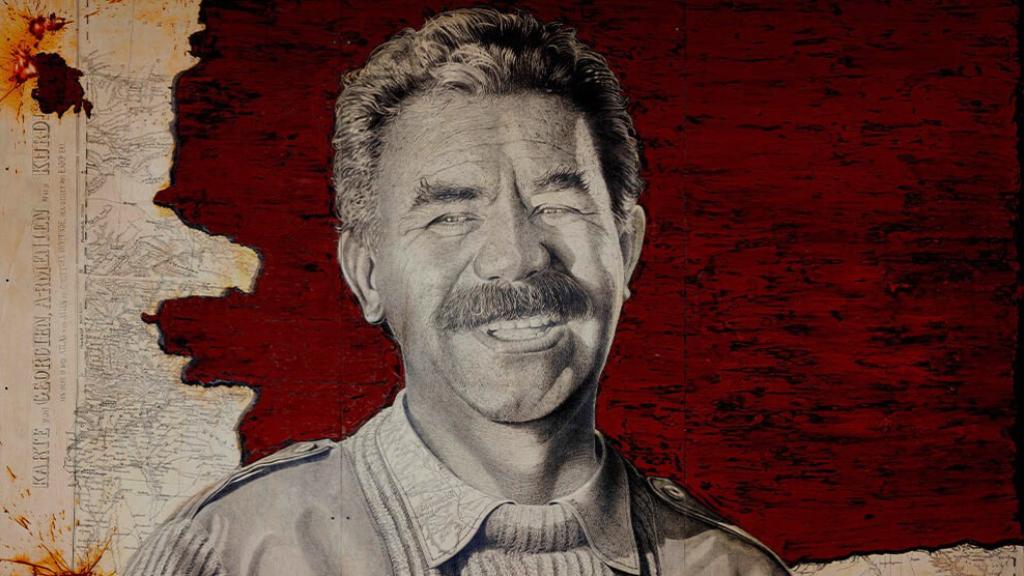
Ocalan graphic

A version of this article first appeared in Kurdistan Report

When it is necessary, when their existence is at stake, when they are faced with the loss of their freedom and their dignity, it is inevitable for the peoples to resist. No method other than resistance can lead to the preservation of their existence, their freedom, and their dignity. The resistance in Kurdistan was a method of defending existence even before freedom and liberation. 
Abdullah Öcalan*

What kind of oppression, assimilation, annihilation and denial is necessary to bring a person or a collective society to the point of denying its own existence? Think about what has been done to a society such as the Kurdish one to make them ashamed and even afraid of their own identity. I am not asking for sympathy, I just want you to think about it for a moment. Life in the region historically known as Kurdistan and inhabited by a majority of Kurds, especially that within the borders of the Republic of Turkey founded in 1923, is subject to a monistic state doctrine (enshrined in the constitution) that denies anything that deviates from Turkishness. It goes without saying that a social collective, in this case Kurdish society, cannot simply accept and endure such a situation.

Abdullah Öcalan began his legitimate struggle in the 1970s against this historical injustice and tyranny. The legitimacy of these endeavours is also enshrined in the preamble to the United Nations Charter of Human Rights, which explicitly mentions the right to revolt against tyranny and oppression as a last resort. With the founding of the Kurdistan Workers‘ Party (PKK) on November 27, 1978, the struggle to overcome the annihilation and denial of the Kurdish people began. In 1984, a guerrilla war started that was supported by millions of Kurds, who placed in it their hope for change.

Despite all the difficulties and the war of annihilation waged by NATO’s second largest army, this struggle has continued unabated for 47 years. Since then, the Kurdish people have been waging a just resistance struggle for a dignified life. Tens of thousands have sacrificed their lives for these ideals. No one has the right to blame the Kurds for their struggle or demand remorse from them. On the contrary, the Turkish state must come to terms with its past of persecution and oppression and apologise to the Kurdish people. However, this is an important step that should be taken when the conditions are right.

In a historic appeal on February 27, Öcalan, the leader of the PKK and undoubtedly its most politically significant prisoner, called on the PKK to lay down its arms, convene a congress, and decide to dissolve itself. This call made waves and led to intensive discussions in Turkey and around the world.

Öcalan’s appeal is the result of months of mediation, several meetings with Öcalan and letters and talks held by a delegation from the Peoples‘ Equality and Democracy Party (DEM Party) with various political actors in the conflict.

Although the laying down of arms was made a condition by the Turkish government under Recep Tayyip Erdoğan, the search for a solution to this problem, which Öcalan described as a “Gordian knot”, has a long history. The founding of the PKK and the start of the armed struggle are not a cause, but a consequence of the Turkish state’s policy of denial and assimilation.

It is generally accepted that this policy is the reason for the enormous support of Kurdish society for the PKK resistance. The years in which the PKK emerged, coincided with a period of numerous national liberation struggles worldwide. It developed with a socialist party program and was influenced by the national liberation struggles of the time. It set itself the goal of establishing a nation state based on the peoples‘ right to self-determination. 

In his most recent appeal, Öcalan explained that this objective was also strongly influenced by actually existing socialism, which was very present internationally at the time. However, the armed struggle that began in 1984 gained decisive influence when actually existing socialism collapsed. Yet, the PKK was not weakened by the end of actually existing socialism but retained its social base and support. It was even able to expand it by placing the path to a more society-oriented democratic socialism at the centre of its struggle due to its criticism of state-led actually existing socialism.

With the first ceasefire in 1993, Öcalan and the PKK (via various mediators) sought a political solution with then Turkish President Turgut Özal, who was also trying to find a solution. However, Özal died under suspicious circumstances on the very day that he wanted to respond to the ceasefire. The efforts towards a ceasefire and a solution were obviously sabotaged. In this vacuum, the conflict once again shifted to military approaches by Turkey’s political leaders. 

In the years that followed, labelled the “dirty war”, it came to developments that caused much destruction. Turkey was taken over by military policy and Turkish society was intimidated under the guise of “security policy”. To deprive the PKK of social support, more than 4000 Kurdish villages were destroyed by the Turkish military in the 1990s. 

Thousands of “unsolved” (in Turkish faili meçul) murders were committed and millions of Kurds were driven to Europe and the metropolises of Turkey through systematic ethnic cleansing. Numerous massacres, rapes, cases of torture, and arrests can be found in the documents of human rights organisations such as the IHD. Turkish society’s grappling with the consequences of this dirty war, which was waged in its name, is one of the steps towards a political solution, as these degrading and inhumane practices against the Kurds were carried out by the military, police, and paramilitary forces of the state amid widespread silence of Turkish society.

Nevertheless, the Kurdish question could not be solved. Turkey and its military apparatus were able to gain the upper hand with international NATO support. All possible concessions of a political, economic and geo-strategic nature were made. In return, the PKK’s resistance struggle was criminalised in many countries, with the PKK being listed as a terrorist organisation (in the USA and in 2002 in the European Union). 

The international community viewed the PKK solely through the lens of Turkish nationalism. The truth was distorted beyond recognition by systematic agitation and anti-propaganda in the media and politics, victims were turned into perpetrators and perpetrators into victims. 

Nevertheless, Öcalan persisted in his search for contacts in Turkish politics. He tried with great perseverance to solve the problem with political and peaceful means. When this failed, he even tried to bring the matter to the international stage. Before he was abducted to Turkey on February 15, 1999 as part of an international conspiracy by NATO members and countries such as the US, Israel, Greece, Kenya, Turkey and their secret services in Kenya, he spent months in Italy in search of international support for a political solution.

Anyone in Turkey and the rest of the world who believed that the PKK and Öcalan would be weakened by the conspiracy of his abduction and isolation on the prison island of Imrali was sorely mistaken. On the contrary, the PKK, as the pioneer of the liberation struggle in Kurdistan, has gained influence and persuasive power on the basis of the ideological, theoretical and political foundation created by Öcalan, which can be read in Öcalan’s prison writings.

By criticising the destructive nature of capitalist modernity, Öcalan developed a counter-project: constructive democratic modernity. With the project of democratic confederalism (based on democratic socialism), he showed perspectives and solutions for the creation of a democratic, ecological society centred on women’s freedom. 

The Kurdish women’s movement plays a decisive role in the implementation of democratic confederalism wherever it is organised. Öcalan’s formula “Jin, Jiyan, Azadî”, which runs through all his defence writings, stands not only for resistance, but also for the will, the strength and the organisation to build a new democratic system beyond patriarchy under the leadership of women.

In mid-September 2022, Kurdish women, who were later joined by tens of thousands of women in Iran, began a protest movement that caused a worldwide sensation. The multi-ethnic and multi-religious Democratic Autonomous Administration of North and East Syria (DAANES) is also modelled on Öcalan’s ideas and theoretical framework.

As a result, he continues to influence not only millions of Kurds and numerous political parties and movements in Turkey, Syria, Iraq and Iran, but also offers democratic solutions for the entire conflict-ridden Middle East and for wherever oppression prevails. History shows that equating the right to self-determination with the establishment of a new nation state does not lead to a solution but only adds to the existing problems. 

The current conflicts, which must be seen as part of the Third World War taking place today, do not need more weapons and violence, but dialogue as the basis for creating space for democratic politics. The realisation of freedom, equality, and democracy in Kurdistan, as in other regions, does not require new borders, but the softening and overcoming of these borders. 

It is not the state that should dominate and control society, as is the case in Turkey and many other centralised nation states, but the other way round: if society develops a democratic consciousness and democratic structures, it can also democratically control the state. Therefore, a democratic and peaceful development is also an opportunity for Turkish society to control its state through democratisation and democratic structures. As such, Öcalan’s compromise of “democracy plus the state as a general public authority” could serve as a future basis for Kurds and Turks to live in the same region without mutual marginalisation.

Against this backdrop, Öcalan’s February 27 call is not a surprise, but the expression of a decades-long search for a democratic solution. Öcalan writes in his statement: “The PKK, the longest and most extensive insurgency and armed movement in the history of the Republic, found a social base and support and was primarily inspired by the fact that the channels of democratic politics were closed.” And if today, after years of resistance, the PKK and its weapons are an obstacle to “opening the channels of democratic politics“, then the Kurdish liberation struggle is also in a position to overcome this obstacle. 

This is because Öcalan and the PKK are taking away from the Turkish state the reason and thus the “weapon” or pretext to ignore a just, peaceful, and democratic solution or to delay it for tactical reasons or political calculation, as was the case of the first ceasefire and the last dialogue process in 2012-2015. After Öcalan’s call, the ball is now in the Turkish state’s court. Öcalan has tied his demand to one condition: “Undoubtedly, the laying down of arms and the dissolution of the PKK require democratic politics and the recognition of the legal basis in practice.”

Öcalan has shown the maturity of his liberation struggle, if necessary to discontinue its previous methods, armed struggle and the party (PKK), and to lead it in a new form under democratically developed conditions. It is therefore not a question of ending the liberation struggle, but of changing its means and form accordingly.

The PKK agrees with Abdullah Öcalan’s call for peace and announced a ceasefire on March 1. It declared: “we agree with the content of the call as it is and we say that we will follow and implement it.”

The PKK convened its 12th party congress between May 5-7 under extremely difficult conditions. Due to massive Turkish attacks, 232 delegates gathered at two different locations. The PKK declared that it has successfully achieved its historic mission, having “dismantled the policies of denial and annihilation.” The Kurdish question could now be solved through democratic politics. Therefore, the congress decided “to dissolve the PKK’s organisational structure and end the armed struggle”.

Returning to Öcalan’s prison writings, in the book Beyond State, Power and Violence, published in 2004, he develops possible solutions. He proposes a redefinition of the understanding of the state that prevails in Turkey and throughout Kurdistan: 

It would be better to agree on a lean state that only fulfils tasks to protect internal and external security and to provide social security systems. Such an understanding of the state no longer has anything in common with the authoritarian character of the classical state but would correspond to the character of a social authority.

In a newly defined democratic Republic of Turkey, the Kurds would enjoy all civil rights and freedoms. A democratic space could be created in which a democratic society (Turks, Kurds and other ethnic groups) could realise their identity under constitutional law. 

In the same book (also emphasised in the current appeal), Öcalan adds: 

For the Kurds to recognise the republic as a people, the republic must recognise them as a cultural group and as holders of political rights. Recognition must therefore be mutual and based on legal guarantees.

The PKK made it clear that the congress decision did not herald an end, but a new stage in the struggle for freedom, democracy, and socialism. The declaration states that the Kurdish people, especially women and youth, will take on the tasks of the new phase of democratic struggle and self-organisation for the creation of a democratic society.

To implement the congress resolutions, Öcalan must lead the peace processes. His right to participate in democratic politics and corresponding legal guarantees must be recognised. At the same time, the participation of parliament, extra-parliamentary forces and social movements is crucial for the peace process. Öcalan’s release would be one of the most important steps in accelerating this process.

This means that the practical implementation of these resolutions cannot be achieved with Turkey’s current legal system, its anti-democratic understanding, autocratic and arbitrary governments with their anti-terror laws, and political instrumentalisation of the judiciary. Rapid changes are needed in politics, the legal system, and society. 

Recognising the Kurds and other ethnic and religious identities living in Turkey requires democracy, political awareness and justice. If the Turkish state and Turkish society carry out the democratic transformation and change envisioned by Öcalan, they will also become “democratic”, something they have renounced since their foundation.

After years of isolation and 26 years in prison, Öcalan’s latest appeal proves once again that he is still the key figure for a just solution in Turkey, a process which will also have great influence in the region. On an international level, representatives of the UN, the US, the EU, Britain, Germany, and many other countries emphasised in their statements the importance of Öcalan’s appeal and the subsequent resolutions of the PKK as steps towards a solution to the Kurdish question. But statements alone are not enough. Instead, Turkey must be encouraged to democratise and find a peaceful solution. 

In Turkey, the reactions to Öcalan’s call from political representatives, including President Erdogan and his government partner Devlet Bahçeli, the leader of the Nationalist Movement Party (MHP), but also representatives of the largest opposition party, the Republican People’s Party (CHP), so far contain positive signals.

In this context, Bahçeli issued a statement on May 18 calling for a non-partisan parliamentary committee to draw up a strategy. The parliamentary committee should be chaired by the Speaker of Parliament and consist of 100 members. In addition to members of all parties represented in parliament, non-partisan experts should also be involved. 

However, both Bahçeli’s and other political representatives’ rhetoric still retain its familiar authoritarian tone. This is also evident from Erdoğan’s May 22 statement, according to which society cannot be “united” on a constitution written by the putschists. (Notably, the current constitution was written after the military coup of 1980, under the direction of the military. The constitution at the time of the founding of the republic was rewritten with a special emphasis on Turkishness). 

Erdoğan emphasised the need and willingness to draft a new constitution. At the same time, he said that he does not have any problems with the first four articles of the constitution. However, the fundamental problem lies precisely in these first four articles, which ignore and deny the numerous ethnic identities — including Kurds — that are not Turkish. 

But the rights of Kurds and other ethnic identities — whether social, cultural, or political — must not and cannot be ignored. If we get at the root of the problem, then the PKK and the political struggle of the Kurds are not the cause but the consequence of this anti-democratic and autocratic state doctrine.

The organisation of Kurdish society as a democratic community, along with its willingness to work toward a solution and peace, as well as the steps taken in that direction so far, have been met by state officials with the traditionally authoritarian mindset prevalent in Turkey. The coming weeks and months will reveal whether Turkey is genuinely embarking on a serious path toward democratization and a peaceful resolution, or whether entrenched authoritarian thinking will continue to dictate its practice.

Devriş Çimen is a Kurdish journalist and politician.

  • *

    Excerpt from the fifth volume (Turkish title: Kürt Sorunu Ve Demokratik Ulus Çözümü – Kültürel Soykırım Kıskacında Kürtleri Savunmak) of Öcalan’s Manifesto of the Democratic Civilization (2010).


Kurdistan National Congress calls all forces in Rojhilat (Iranian Kurdistan) to quickly establish joint strategy


KNK logo

First published at Kurdistan National Congress.

Drawing attention to the dangers facing Rojhilat Kurdistan, the Kurdistan National Congress (KNK) announced that it is working to form a common platform among political parties and institutions in the region.

The recent escalation of tensions between Israel and Iran has evolved into a dangerous war that goes beyond these two countries and directly impacts the region and its peoples. Highlighting the implications of this war on Kurdistan, the KNK emphasized the urgent need for national unity and called Iran, Israel and the USA for a peaceful resolution. The KNK statement, which was released on June 23, is published below.


The war between Israel and Iran is not new; it is the result of decades of conflict and disputes. Until recently, it was primarily waged through proxy forces allied with Iran. However, in the past ten days, it has turned into a direct war between Iran and Israel. As of yesterday, the United States has also become involved. This means the war is expanding and escalating further. It began in Gaza and has now spread to Lebanon, Syria, Yemen, and most recently, Iran. The issue has moved beyond a bilateral conflict and has become an international and global crisis.

As the Kurdish people, we are not a party to this war. Even though we are not directly involved, it deeply concerns us and has serious impacts on our people and our land. Many Iranian military bases and facilities in Rojhilat Kurdistan have been targeted, and our people living in these areas are suffering from the consequences. In addition, warplanes and missiles from these countries are flying over Kurdistan. We, the Kurdish people, are not parties to this war and seek the peaceful resolution of all issues in our region through dialogue. We did not start this war, but we are caught in the middle of it.

Kurdish national unity is crucial

The war that began and continues in the Middle East in the 21st century could have major consequences. The Sykes-Picot and Lausanne order is being shaken. As a result of this war, the map of the region may be completely redrawn. The key question is: how prepared are we, the Kurdish people, for these changes? This is a vital and urgent matter. In this context, Kurdish national unity is absolutely essential. All Kurdish forces, especially those in Rojhilat, must act in greater unity during this critical time.

We are working for the establishment of a common platform

As KNK, we have always worked for Kurdish national unity, and we will intensify our efforts. Particularly now, with Rojhilat Kurdistan under grave threat, we will focus our attention on this part of Kurdistan. Therefore, we are currently working to create a joint platform among parties and institutions in Rojhilat. These efforts are ongoing. In the coming days, we will initiate more dialogue, visit parties and organizations, and do our utmost to establish a coordination mechanism among the structures in Rojhilat Kurdistan.

With this in mind, we call on all forces, parties, institutions, and formations in Rojhilat Kurdistan to support our efforts for Kurdish national unity and come together as soon as possible to act with a common strategy.

Our message to Iran, Israel, and the United States is this: End this war immediately and strive to resolve your conflicts through dialogue and peace.


Political self-determination for Kashmir


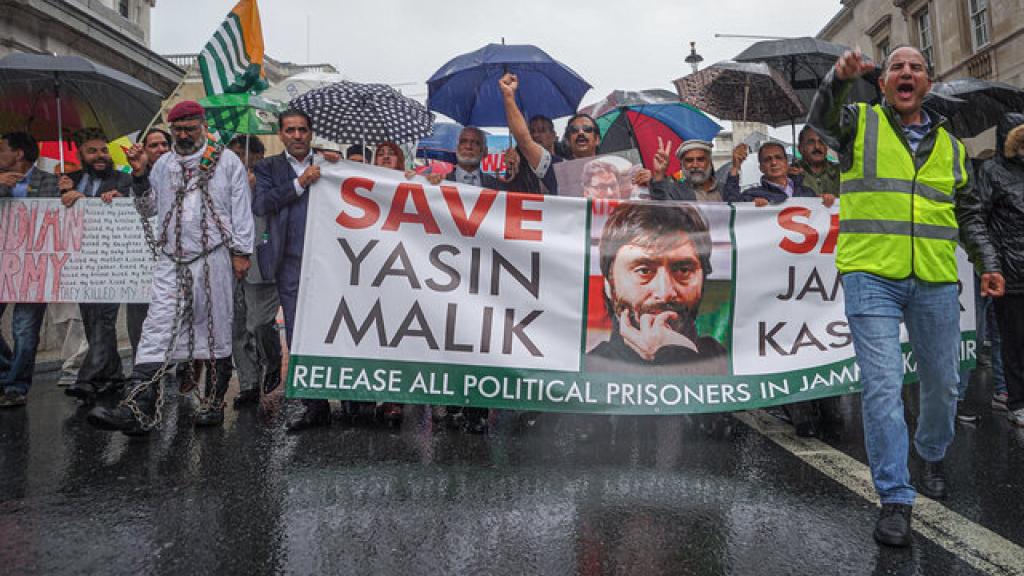
Jammu Kashmir protest

First published at Amandla!.

The recent Indo-Pakistani armed conflict, accompanied by bellicose rhetoric and jingoism between the nuclear-armed neighbours, has heightened tensions in the South Asian region. Ultimately, US President Donald Trump reportedly brokered a ceasefire. Among the most affected by this conflict are the people of Kashmir, who find themselves ensnared in this geopolitical rivalry, living in a security state with little hope for the future.

The Kashmir dispute

Kashmir is a long-standing occupied territory, with both countries asserting absolute rights over it, yet neither fully controls the entire region. It serves as a significant flashpoint in South Asia, having led India and Pakistan to engage in warfare on two occasions. The demand for autonomy and independence has endured since India’s independence and the subsequent partition. Moreover, Kashmir has experienced an armed insurgency over the past forty years and remains one of the most militarised zones in the world.

The Kashmir Valley, along with the Jammu and Ladakh regions of the former princely state, is predominantly under Indian control, while Pakistan governs a portion of the valley and the Gilgit-Baltistan area. Additionally, India is involved in territorial disputes with China over Aksai Chin, which was previously part of the British Indian Empire. Following the partition of India, the princely state had the choice to join either India or Pakistan or to remain independent. However, the Maharaja of Kashmir ultimately chose to accede to the Indian Union in 1948, under particular circumstances. Initially, he favoured independence but agreed to join India with the stipulation that the state would retain autonomy in all matters except defence, currency, and foreign affairs.

In 1947, the Kashmir conflict between newly independent nations led to UN intervention and a resolution calling for a plebiscite to determine the territory’s final status. However, India refused to conduct the plebiscite. The 1972 Shimla Accord between India and Pakistan significantly undermined the case for Kashmir’s independence, as both parties committed to upholding the 1948 ceasefire line and resolving differences peacefully through negotiation. Even though the agreement left the ‘final settlement’ of the Kashmir question unresolved, it is still a benchmark for all bilateral discussions on the issue.

Autonomy of Kashmir

Sheikh Abdullah, a prominent leader of Kashmir’s anti-monarchical movement, advocated for the region’s integration into a secular and democratic India, contingent upon the respect for its autonomy. His efforts culminated in the inclusion of Kashmir’s special status in the Indian Constitution through Article 370 in 1952. The central government granted the Jammu and Kashmir constitutional assembly the authority to determine additional subjects. Article 35A safeguarded Kashmir’s right to define its permanent residents and imposed restrictions on land ownership for outsiders within the state.

Between 1955 and 1977, the Congress government in India diluted Article 370 through more than 25 presidential orders. Since 1948, the government has suppressed dissent, which resulted in greater popular support for Kashmiri discontent by 1986. The government’s continued suppression of dissent further eliminated democratic space. Consequently, Kashmiri youth turned to militant insurgency, crossing into Pakistan for arms and training. There emerged a division among major militant organisations, with some advocating independence for Kashmir and others supporting accession to Pakistan. In the late 1980s, these groups targeted pro-India Kashmiri politicians and Hindu families, contributing to a gradual exodus of Hindus from the valley. Following the 1989 general elections, the Jammu and Kashmir Liberation Front and other militant groups escalated their attacks, prompting a significant crackdown by the state.

There are nearly 650,000 armed soldiers in the valley, making it one of the most militarised areas in the world in terms of population. In addition, the Armed Forces Special Powers Act (AFSPA) has been in force for the last two decades without a break. More than anything else, it has facilitated violations of human rights on account of several of its draconian provisions. Although it was originally intended to be in effect for a limited period, the Armed Forces Special Powers Act (AFSPA) has now become a permanent feature.

Abrogation of Article 370

On 5 August 2019, the Indian government announced the abrogation of Article 370 and the repeal of Article 35A, effectively revoking Jammu and Kashmir’s autonomy under the Indian constitution. Furthermore, the government dissolved the statehood of Jammu and Kashmir, dividing it into two union territories that would be administered directly by the central government. This decision, which alters the status of a contested region in South Asia, and the unilateral manner in which it was executed, reflect the rise of assertive Hindu nationalism in India. It also signifies a significant departure from India’s previous carrot-and-stick approach towards Kashmir.

The primary motivation behind the BJP government’s overt political and military occupation, supported by the Sangh Parivar, arose from a deep-seated animosity towards Muslims, particularly as Jammu and Kashmir was the only Muslim-majority state in India. The Sangh Parivar aimed to humiliate the Kashmiris, and the abrogation of Article 370 serves as a stark manifestation of this intent. Moreover, the Indian government has deployed an additional 35,000 troops on top of the already significant force of over 650,000 armed personnel. It has also imposed house arrests on leaders of mainstream Kashmiri parties, enacted curfews, and enforced a sweeping communications blackout across the entire valley. These constitutional violations of the rights of Kashmiris are critical steps in furthering the agenda of establishing a Hindu Rashtra.

Since assuming power in 2014, the BJP government, under Modi’s leadership, has actively propagated Islamophobia within the country and intensified hostility towards Pakistan. This has effectively dismantled previous efforts to ease tensions along the border. Through its actions in Kashmir, India has also conveyed geopolitical messages to Pakistan, the United States, and the broader international community. It asserts that there is no longer a “regional dispute” requiring bilateral resolution with Pakistan and that it should not feature in any UN or international discussions, all while neglecting humanitarian concerns. Successive central governments, in collaboration with the administrations of Jammu and Kashmir, have systematically eroded the provisions of autonomy. This, combined with the extensive militarisation of the region, has rendered the autonomy that Kashmir once enjoyed largely symbolic, although it was significant.

The situation is not only humiliating for the people of the valley, who have fought for either outright independence or greater autonomy within the Indian union, but it has also resulted in Kashmiris being effectively reduced to a status of second-class citizenship. The BJP, despite its ideological stance, would not have been able to revoke Article 370 had previous Congress governments not diminished its significance, rendering it almost redundant. The BJP has overtly exploited the covert actions of earlier regimes to its advantage. The abrogation of Article 370 has nullified the accession and serves as an official recognition that India operates as an occupying force in Jammu and Kashmir.

The Indian government asserts that the revocation of Kashmir’s special status is intended to integrate Kashmiris into the Indian mainstream and provide them with the same rights as other Indians. However, the government’s actions, as well as the surreptitious manner in which this decision was reached, contradict this assertion. There was no consultation with the people of Kashmir, and the government employed the guise of a terrorist threat to impose a stringent lockdown on the region. The government also employed subterfuge and disinformation tactics against the rest of India. The government rationalised this lockdown by using rumours about imminent terrorist attacks and the recovery of weapons along the border with Pakistan. The home minister’s abrupt announcement of the government’s decision to revoke Kashmir’s autonomy left no opportunity for discussion in the Indian Parliament.

According to the Indian Constitution, any constitutional modification must receive the approval of two-thirds of the members in both houses of Parliament. Despite possessing the necessary numbers, the BJP opted not to pursue this route, instead leveraging its retrospective majority to implement its majoritarian agenda. Furthermore, the Constitution includes a clause that prohibits amending Article 370 without the consent of the Kashmir Constituent Assembly. Following the assembly’s dissolution in 1956, the government argued that the legislative assembly of Kashmir could fulfil this role. However, the collapse of the coalition government in November 2018 led to the suspension of the legislative assembly, necessitating approval from the centrally appointed governor of Kashmir. Replacing the functions of a legally elected legislative body with a centrally appointed figure is, at most, a legal ploy.  The ease and quickness with which the government amended a fundamental constitutional promise raises questions about India’s position as a constitutional democracy, eroding the constitutional protections provided to its citizens.

Solidarity with Kashmir

The Modi government has managed to generate a sense of euphoria across the country in celebration of its unconstitutional and, above all, unprincipled actions. This situation illustrates the deep-rooted influence of muscular Hindu nationalism within the very fabric of the nation’s society. Furthermore, it highlights a failure on the part of the Congress party and other opposition groups, including the mainstream Left. These opposition parties have not succeeded in establishing any substantial resistance against the anti-secular and anti-democratic measures propagated by the Sangh Parivar, which are presented as initiatives to foster a strong India. This way of thinking has become substantially hegemonic, necessitating a long-term fight by a new intransigent Left.

The democratic, progressive, and secular citizens of India must recognise the dangers posed by the Hindutva project and actively oppose it. They should stand united with the people of Kashmir. Justice and respect for the Kashmiri people necessitate the immediate demilitarisation of the valley, along with their right to express legitimate grievances and to protest democratically in whatever manner they choose. We must resolutely challenge this exclusivist, culturally racist, and militaristic nationalism. Ultimately, we must reaffirm the right to full political self-determination for the oppressed people of Kashmir.