Friday, June 27, 2025


Carl Von Clausewitz And The Clausewitzian Viewpoint Of Warfare: A Theoretical Approach – Analysis

Carl von Clausewitz, while in Prussian service. Detail of painting by Wilhelm Wach in early 1830s, Wikipedia Commons

The focal questions about war

In dealing with both theoretical and practical points of view about war, at least six fundamental questions arise: 1) What is war?; 2) What types of war exist?; 3) Why do wars occur?; 4) What is the connection between war and justice?; 5) The question of war crimes?; and 6) Is it possible to replace war with the so-called “perpetual peace”?


Probably, up to today, the most used and reliable understanding of war is its short but powerful definition by Carl von Clausewitz: 

“War is merely the continuation of politics by other means” [On War, 1832].   

It can be considered the terrifying consequences if, in practice, Clausewitz’s term “merely” from a simple phrase about the war would be applied in the post-WWII nuclear era and the Cold War (for instance, the Cuban Missile Crisis in 1962). 

Nevertheless, he became one of the most important influencers on Realism in international relations (IR). To remind ourselves, Realism in political science is a theory of IR that accepts war as a very normal and natural part of the relationships between states (and after WWII, of other political actors as well) in global politics. Realists are keen to stress that wars and all other kinds of military conflicts are not just natural (meaning normal) but even inevitable. Therefore, all theories that do not accept the inevitability of war and military conflicts (for instance, Feminism) are, in fact, unrealistic. 

The art of war is an extension of politics

A Prussian general and military theorist, Carl Philipp Gottfried von Clausewitz (1780−1831), the son of a Lutheran Pastor, entered the Prussian military service when he was only 12, and achieved the rank of Major-General in his 38. He was studying the philosophy of I. Kant and became involved in the successful reform of the Prussian army. Clausewitz was of the opinion that war is a political instrument similar to, for instance, diplomacy or foreign aid. For this reason, he is considered to be a traditional (old) realist. Clausewitz echoed the Greek Thucydides, who had described in the 5th century B.C. in his famous The History of the Peloponnesian War the dreadful consequences of unlimited war in ancient Greece. Thucydides (ca. 460−406 B.C.) was a Greek historian but had a great interest in philosophy too. His great historiographical work, The History of the Peloponnesian War (431−404 B.C.), recounts the struggle between Athens and Sparta for geopolitical, military, and economic control (hegemony) over the Hellenic world. The war culminated at the end with the destruction of Athens, the birthplace of both ancient democracy and imperialistic/hegemonic ambitions. Thucydides explained the war in which he participated as the Athenian “strategos” (general) in terms of the dynamics of power politics between Sparta and Athens and the relative power of the rival city-states (polis). He consequently developed the first sustained realistic explanation of international relations and conflicts and formed the earliest theory of IR. In his famous Melian dialogue, Thucydides showed how power politics is indifferent to moral argument. This is a dialogue between the Melians and the Athenians, which Thucydides quoted in his The History of the Peloponnesian War, in which the Athenians refused to accept the Melians’ wish to remain neutral in the war with Sparta and Spartan allies. The Athenians finally besieged the Melians and massacred them. His work and dark view of human nature influenced Thomas Hobbes.  


Actually, Clausewitz was in strong fear that unless politicians controlled war, it is going to degenerate into a struggle with no clear other objectives except one – to destroy the enemy. He was serving in the Prussian army during the Napoleonic Wars until being captured in 1806. Later, he helped it to be reorganized and served in the Russian army from 1812 to 1814, and finally fought at the decisive Battle of Waterloo on June 18th, 1815, which brought about NapolĂ©on’s ultimate downfall from power. 

The Napoleonic Wars influenced Clausewitz to caution that war is being transformed into a struggle among whole nations and peoples without limits and restrictions, but without clear political aims and/or objectives. In his On War (in three volumes, published after his death), he explained the relationship between war and politics. In other words, war without politics is just killing, but this killing with politics has some meaning.

Clausewitz’s assumption about the phenomenon of warfare was framed by the thought that if it is reflected that war has its origin in a political object, then, naturally, it comes to the conclusion that this original motive, which called it into existence, should also continue the first and highest consideration in its conduct. Consequently, the policy is interwoven with the whole action of war and must exercise a continuous influence upon it. It is clearly seen that war is not merely a political act, but as well as a real political instrument, a continuation of political commerce, a carrying out of the same by other means. In other words, the political view is the object while war is the means, and the means must always include the object in our conception.

Another important notice by Clausewitz is that the rising power of nationalism in Europe and the use of large conscript armies (in fact, national armies) could produce in the future absolute or total wars (like WWI, WWII), that is, wars to the death and total destruction rather than wars waged for some more or less precise and limited political objectives. However, he was particularly fear leaving warfare to the generals for the reason that their idea of victory in war is framed only within the parameters of the destruction of enemy armies. Such an assumption of victory is in contradiction with the war aim of politicians, who understand victory in war as the realization of the political aims for which they started the particular war. Nevertheless, such ends in practice could range from very limited to large, and according to Clausewitz: 

“… wars have to be fought at the level necessary to achieve them”. If the aim of the military action is an equivalent for the political objective, that action will, in general, diminish as the political objective diminishes”. This explains why “there may be wars of all degrees of importance and energy, from a war of extermination down to the mere use of an army of observation” [On War, 1832].

Generals and the war

Strange enough, but he was of the strong opinion that generals should not be allowed to make any decision concerning the question of when to start and end wars or how to fight them, because they would use all instruments at their disposal to destroy an enemy’s capacity to fight. The real reason, however, for such an opinion was the possibility of converting a limited conflict into an unlimited and, therefore, unpredictable warfare. It really happened during WWI when the importance of massive mobilization and striking first was a crucial part of the war plans by the top military commanders in order to survive and finally win the war. It simply meant that there was not enough time for diplomacy to negotiate in order to prevent war from breaking out and to be transformed into unlimited war with unpredictable consequences. In practice, such military strategy effectively shifted the decision about whether and when to go to war from political leadership to military one as political leaders had, in fact, little time to take all matters into consideration, being pressed by the military leadership to quickly go to war or to accept responsibility for the defeat. From this viewpoint, military plans and war strategies completely revised the relationship between war and politics and between civil politicians and military generals that Carl von Clausewitz had advocated a century earlier.

It has to be recognized, nonetheless, that Prussian General Carl von Clausewitz, in fact, predicted WWI as the first total war in history in which generals dictated to political leaders the timing of military mobilization and pressed politicians to take both the offensive and strike first. The insistence, in effect, of some of the top military commanders on adhering to pre-existing war plans, as it was, for instance, the case with Germany’s Schlieffen Plan and mobilization schedules, took decision-making out of the hands of politicians, i.e., civilian leaders. Therefore, in such a way, it limited the time those leaders had to negotiate with one another in order to prevent the start of the war actions and bloodshed. Furthermore, the military leaders as well as pressured civilian leaders to uphold alliance commitments and consequently spread a possibly limited war across Europe into a European total war.  

As a matter of illustration, the best-known design of such nature is Germany’s Schlieffen Plan, as it was named after German Count Alfred von Schlieffen (1833−1913), who was the Chief of the German Great General Staff from 1891−1905. The plan was revised several times before WWI started. The Schlieffen Plan, like some other war plans created before WWI by the European Great Powers, was founded on the assumption of the offensive. The key to the offensive, however, was a massive and very quick military mobilization, i.e., quicker than the enemy could do the same. Something similar was designed during the Cold War when the primacy of a nuclear first strike was at the top of military plans’ priority by both superpowers. Nevertheless, a massive and even general military mobilization meant gathering troops from the whole country at certain mobilization centers to receive arms and other war materials, followed by the transportation of them together with logistic support to the frontlines to fight the enemy. Shortly, in order to win the war, it was required for a country to invest huge expenses and significant time in order to strike the enemy first, i.e., before the enemy could start its own military offensive. Concerning WWI, the German top military leaders understood massive mobilization with crucial importance for the very reason regarding their war plans to fight on two fronts – French and Russian: they thought that the single option to win the war was by striking rapidly in the West front to win France and then decisively launching an offensive against Russia as it was the least advanced country of the European Great Powers for the reason that Russia would take the longest period for the massive mobilization and preparation for war. 

A trinitarian theory of warfare 

For Clausewitz, war has to be a political act with the intention to compel the opponent to fulfill the will of the opposite side. He further argued that the use of force has to be only a tool or a real political instrument, as, for instance, diplomacy, in the arsenal of the politicians. War has to be just a continuation of politics by other means or instruments of forceful negotiations (bargaining), but not an end in itself. Since the war has to be only initiated for the sake of achieving strictly the political goals of civilian leadership, it is logical for him that:

“… if the original reasons were forgotten, means and ends would become confused” [On War, 1832] (something similar, for instance, occurred with the American military intervention in Afghanistan from 2001 to 2021).

He believed that in the case of forgotten original reasons for war, the use of violence is going to be irrational. In addition, in order to be usable, war has to be limited. Not all unlimited wars are usable or productive for civil purposes. However, history experienced during the last two hundred years several developments like industrialization or enlarged warfare, exactly going in the direction that Clausewitz had feared. In fact, he warned that militarism can be extremely dangerous for humanity – a cultural and ideological phenomenon in which military priorities, ideas, or values are pervading the larger or total society (for instance, Nazi Germany).

The Realists, actually, accepted Clausewitz’s approach, which later after WWII, was further developed by them into a view of the world that is distorted and dangerous, causing the so-called “unnecessary wars”. In general, such kinds of wars have been attributed to the US foreign policy during and after the Cold War around the globe. For example, in South-East Asia during the 1960s the US authorities were determined not to appease the Communist powers the way the German Nazis had been in the 1930s. Consequently, in attempting to avoid a Communist occupation of Vietnam the US became involved in a pointless and, in fact, unwinnable war, arguably confusing Nazi aims of geopolitical expansionism with the legitimate post-colonial patriotism of the people of Vietnam. 

Carl von Clausewitz is by many experts considered to be the greatest writer on military theory and war. His book On War (1832) is generally interpreted as favoring the very idea that war is, in essence, a political phenomenon as an instrument of policy. The book, nevertheless, sets out a trinitarian theory of warfare that involves three subjects:

  1. The masses are motivated by a sense of national animosity (national chauvinism).
  2. The regular army devises strategies to take account of the contingencies of war.
  3. The political leaders formulate the goals and objectives of military action.

Critics of the Clausewitzian viewpoint of war

However, from another side, the Clausewitzian viewpoint of war can be deeply criticized for several reasons: 

  1. One of them is the moral side of it, as Clausewitz was presenting war as a natural and even inevitable phenomenon. He can be condemned for the justification of war by reference to narrow state interest instead of some wider principles, like justice or so. However, such his approach, therefore, suggests that if war serves legitimate political purposes, its moral implications can be simply ignored, or in other words, not taken at all into account as an unnecessary moment of the war. 
  2. Clausewitz can be criticized for the reason that his conception of warfare is outdated and therefore not fitting to modern times. In other words, his conception of war is relevant to the era of the Napoleonic Wars, but surely not to modern types of war and warfare for several reasons. First, modern economic, social, cultural, and geopolitical circumstances may, in many cases, dictate that war is a less effective power than it was at the time of Clausewitz. Therefore, war can be today of obsolete policy instrument. If contemporary states are rationally thinking about war, military power can be of lesser relevance in IR. Second, industrialized warfare, and especially the feature of total war, can make calculations about the likely costs and benefits of war much less reliable. If it is the case, then war can simply stop being an appropriate means of achieving political ends. Thirdly, most of the criticism of Clausewitz stresses the fact that the nature of both war and IR has changed and, therefore, his understanding of war as a social phenomenon is no longer applicable. In other words, Clausewitz’s doctrine of war can be applicable to the so-called „Old wars“ but not to the new type of war – „New war“. Nevertheless, on the other hand, in the case that Clausewitz’s requirement that the recourse to war has to be based on rational analysis and careful calculation, many modern and contemporary wars would not have taken place. Facebook


Dr. Vladislav B. Sotirovic

Dr. Vladislav B. Sotirovic is an ex-university professor and a Research Fellow at the Center for Geostrategic Studies in Belgrade, Serbia.
EU inaction on Israel could erode international order, NGO Avaaz warns
Copyright Harry Nakos, AP PhotoBy Evelyn Ann-Marie DomPublished on 27/06/2025 -

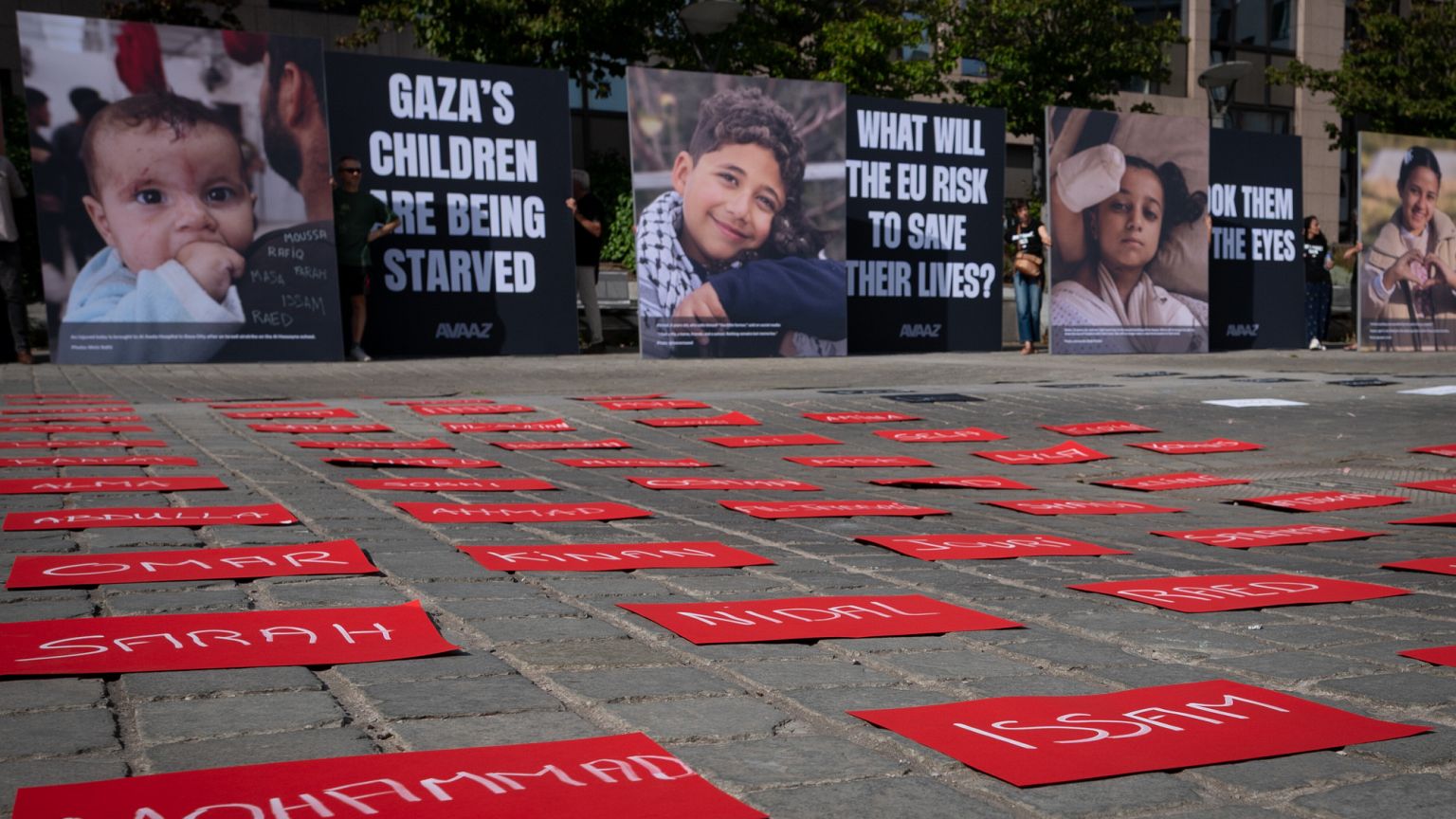
The NGO Avaaz organised a street installation in Brussels on the suffering of children in Gaza, calling on EU leaders to not look away.

The European Union's lack of action on Israel regarding its actions in Gaza and occupied Palestinian territories could result in a complete erosion of the international order and set a dangerous precedent, a legal expert has warned.

"We're seeing the unravelling of the international rules-based order which the EU is founded to uphold and promote," Nick Flynn, head of legal of the global campaign organisation Avaaz, told Euronews, adding that inaction could indicate a lack of leadership "that others will take note of and exploit."

It comes as the European Union failed to agree on what to do with a review ordered by the majority of EU countries on the bloc's trade and cooperation deal with Israel over its ongoing offensive in Gaza. The EU is currently Israel's biggest trading partner, with annual trade valued at over €45 billion.

Last week, the bloc's diplomatic service found indications that Israel had breached its human rights obligations in Gaza, citing the blockade on humanitarian aid, military strikes against hospitals, the forced displacement of Palestinians, mass arrests and arbitrary detentions. The document also cites the expansion of illegal settlements in the Occupied Territories and violence committed by settlers.

Article 2 of the EU-Israel Association Agreement, a pact that defines trading and diplomatic ties, states that relations between the parties "shall be based on respect for human rights and democratic principles, which guides their internal and international policy."

However, after gathering at their council summit on Thursday, European countries could only agree "to continue discussions on a follow-up."

"Israel is not respecting human rights right now, manifestly so, and the EU should act now," Flynn urged. "It has the power to impose meaningful sanctions on Israel, for example, suspending its preferential trade status under the association agreement."

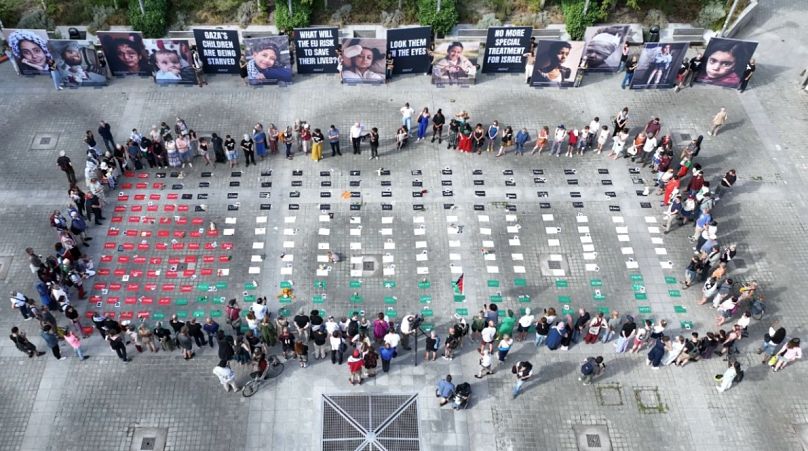
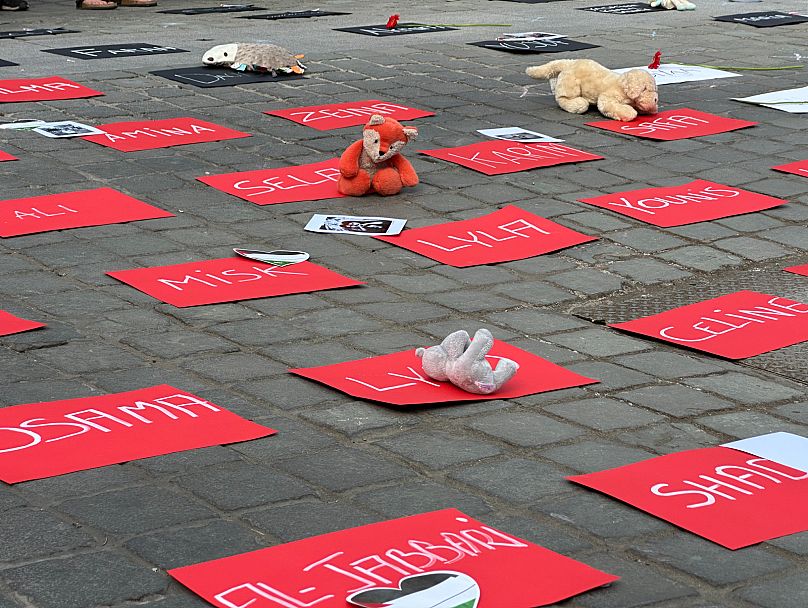
Flynn spoke against the backdrop of a street installation organised by Avaaz in the Belgian capital on Wednesday and Thursday, which included giant portraits of Palestinian children, overlooking hundreds of names, flowers, stuffed animals and other toys.

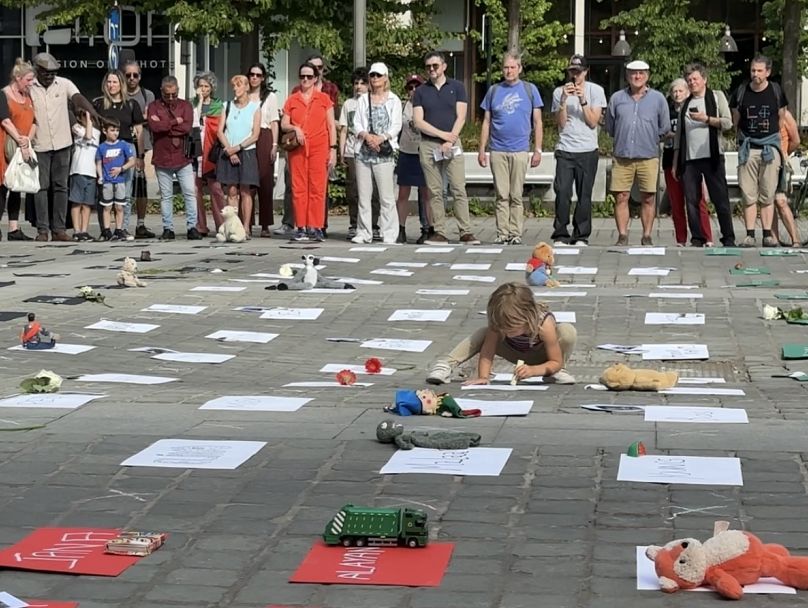
Dozens of people, including families and children, gathered to honour the youth of Gaza.

"We're here to bring the voices of Gaza's children into the EU," Flynn said.

The installation, called "Look Them in the Eyes", aimed to confront leaders, foreign ministers and heads of state of the ongoing catastrophic humanitarian crisis in Gaza and urge them to take decisive and urgent action.


A child writes on one of the name placards at street installation “Look Them in the Eyes” organised by Avaaz, in honour of Gaza's children. Brussels, Belgium, 25.06.2025.Evelyn Dom, Euronews

Also present at the installation were several volunteer doctors who recently returned from Gaza, including Dr Graeme Groom, a British-Irish trauma and orthopaedic surgeon. Dr Groom recently operated on 11-year-old Adam, the sole surviving son of Palestinian doctor Alaa al-Najjar, whose nine children and husband were killed in an Israeli air strike in May.

Dr Groom, who is an orthopaedic surgeon at King's College Hospital in London and co-chair of the IDEALS Charity, said a third of the patients entering his operating theatre are children and "would all be mangled bodies and mutilated limbs."


A drone shot of street installation “Look Them in the Eyes” organised by Avaaz, in honour of Gaza's children. Brussels, Belgium, 25.06.2025.Mister Drone

Thousands of children have lost limbs as a result of Israeli bombardment. In March, the UN humanitarian aid organisation, OCHA, called it the "largest cohort of child amputees in modern history."

Another significant threat among children in Gaza is the rise of acute malnutrition, Dr Groom warned.

"We heard this morning (Wednesday) that there is no formula left. If it's not supplied urgently, then the death rate amongst newborn babies will be astronomical," he told Euronews.

Dr Groom observed that access to medical equipment and funding has been increasingly restricted, with the situation deteriorating significantly after the closure of the Rafah crossing in May 2024 with Egypt and since Israel's humanitarian aid blockade began on 2 March.

The British-Irish surgeon reported 47% of essential medication and 65% of consumables are at zero stock.

"Our cash allowance was reduced from $2,800 (€2,388) to about $300 (€256). We were allowed one suitcase, which should contain all the food we needed for 28 days, our personal belongings, water for four days, and no equipment. We were threatened with exclusion if we brought any equipment, a pair of scissors, a suture," he said.


Name placards at street installation “Look Them in the Eyes” organised by Avaaz, in honour of Gaza's children. Brussels, Belgium, 25.06.2025.Evelyn Dom, Euronews.

In terms of equipment, Dr Groom testified to Euronews that Israeli forces deliberately destroyed critical machines when taking over hospitals.

"At Al-Amal Hospital, in the radiology department, they cut all the cables of every ultrasound machine, which are used for pregnant women and injured patients."

In addition to a severe shortage of aid and medical equipment, Gaza is also facing a critical lack of doctors and medical staff. The doctor said that he and his colleagues had been treating patients every day for more than three consecutive weeks, compared to the usual two or three operating days per week under normal conditions.

Despite this dire need, he noticed an increase in denied entry requests by Israel. He said he was refused entry in both February and March, without any explanation.

"Out of almost 40 people booked, only 19 were granted access. And amongst those 19, there was only one doctor," he told Euronews.

Last month, UNICEF said more than 50,000 children have reportedly been killed or injured in the Gaza Strip since October 2023.

"The children of Gaza need protection. They need food, water, and medicine. They need a ceasefire. But more than anything, they need immediate, collective action to stop this once and for all," the statement by the UN children's fund read.

Though EU leaders on Thursday decided they could only agree to "continue discussions" regarding the bloc's partnership with Israel, EU foreign policy chief Kaja Kallas told Euronews earlier this week there was consensus "to put pressure on Israel," with a focus on improving the situation on the ground and ensuring the necessary humanitarian aid reaches the people of Gaza.

KING OF THE BONGO BACK BEAT

Celebrated musician Lalo Schifrin, composer of the 'Mission: Impossible' theme, dies aged 93

Lalo Schifrin, composer of the 'Mission: Impossible' theme, dies aged 93
Copyright AP Photo

By David Mouriquand & AP
Published on 

Schifrin won four Grammys and was nominated for six Oscars, and was best known for his TV themes for Mission: Impossible and The Man From U.N.C.L.E., as well as film scores for 'Cool Hand Luke', 'Bullitt' and 'Dirty Harry'.

Lalo Schifrin, the Argentine-American composer who wrote the iconic theme for Mission: Impossible and more than 100 other arrangements for film and television, has died aged 93.

Schifrin’s son Ryan confirmed that Schifrin died on Thursday due to complications from pneumonia.

Schifrin won four Grammys and was nominated for six Oscars, including five for original score for Cool Hand LukeThe FoxVoyage of the DamnedThe Amityville Horror and The Sting II.

His other best-known compositions include the scores to BullittTHX 1138Enter The DragonThe Eagle Has Landed, and his collaborations with Clint Eastwood from the late 1960s to the 1980s, particularly the Dirty Harry films.

He also composed the TV themes for The Man From U.N.C.L.E., Mannix and Starsky and Hutch, and famously wrote the grand finale musical performance for the World Cup championship in Italy in 1990, in which the Three Tenors - Plácido Domingo, Luciano Pavarotti and JosĂ© Carreras - sang together for the first time. The work became one of the biggest sellers in the history of classical music. 

Schifrin, also a jazz pianist and classical conductor, had a remarkable career in music that included working with Dizzy Gillespie and recording with Count Basie and Sarah Vaughan. But perhaps his biggest contribution was the instantly recognizable score to television’s Mission: Impossible, which fueled the decades-spanning feature film franchise led by Tom Cruise – which apparently wrapped up this year with Mission: Impossible – The Final Reckoning.

Written in the unusual 5/4 time signature, the theme was married to an on-screen self-destruct clock that kicked off the TV show, which ran from 1966 to 1973. It was described as “only the most contagious tune ever heard by mortal ears” by New Yorker film critic Anthony Lane and even hit No. 41 on the Billboard Hot 100 in 1968.


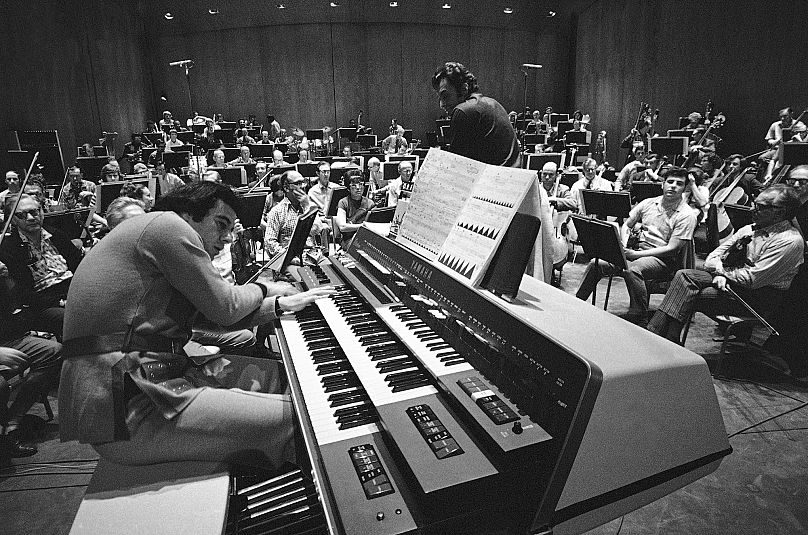
Lalo Schifrin rehearses with the Los Angeles Philharmonic under Zubin Mehta's direction for the world premiere of his "Pulsations" in Los Angeles - 27 January 1971AP Pho

Born Boris Claudio Schifrin to a Jewish family in Buenos Aires - where his father was the concertmaster of the philharmonic orchestra - Schifrin was classically trained in music, in addition to studying law.

After studying at the Paris Conservatory - where he learned about harmony and composition from the legendary Olivier Messiaen - Schifrin returned to Argentina and formed a concert band. Gillespie heard Schifrin perform and asked him to become his pianist, arranger and composer. In 1958, Schifrin moved to the United States, playing in Gillespie’s quintet in 1960-62 and composing the acclaimed 'Gillespiana'.

The long list of luminaries he performed and recorded with includes Ella Fitzgerald, Stan Getz, Dee Dee Bridgewater and George Benson. He also worked with such classical stars as Zubin Mehta, Mstislav Rostropovich, Daniel Barenboim and others.

He's survived by his sons, Ryan and William, daughter, Frances, and wife, Donna. 


Lalo Schifrin (1932-2025) - Memorial Video


 Lalo Schifrin – My Life In Music – 

Compilation 


Beijing confirms that it has signed a trade agreement with the US

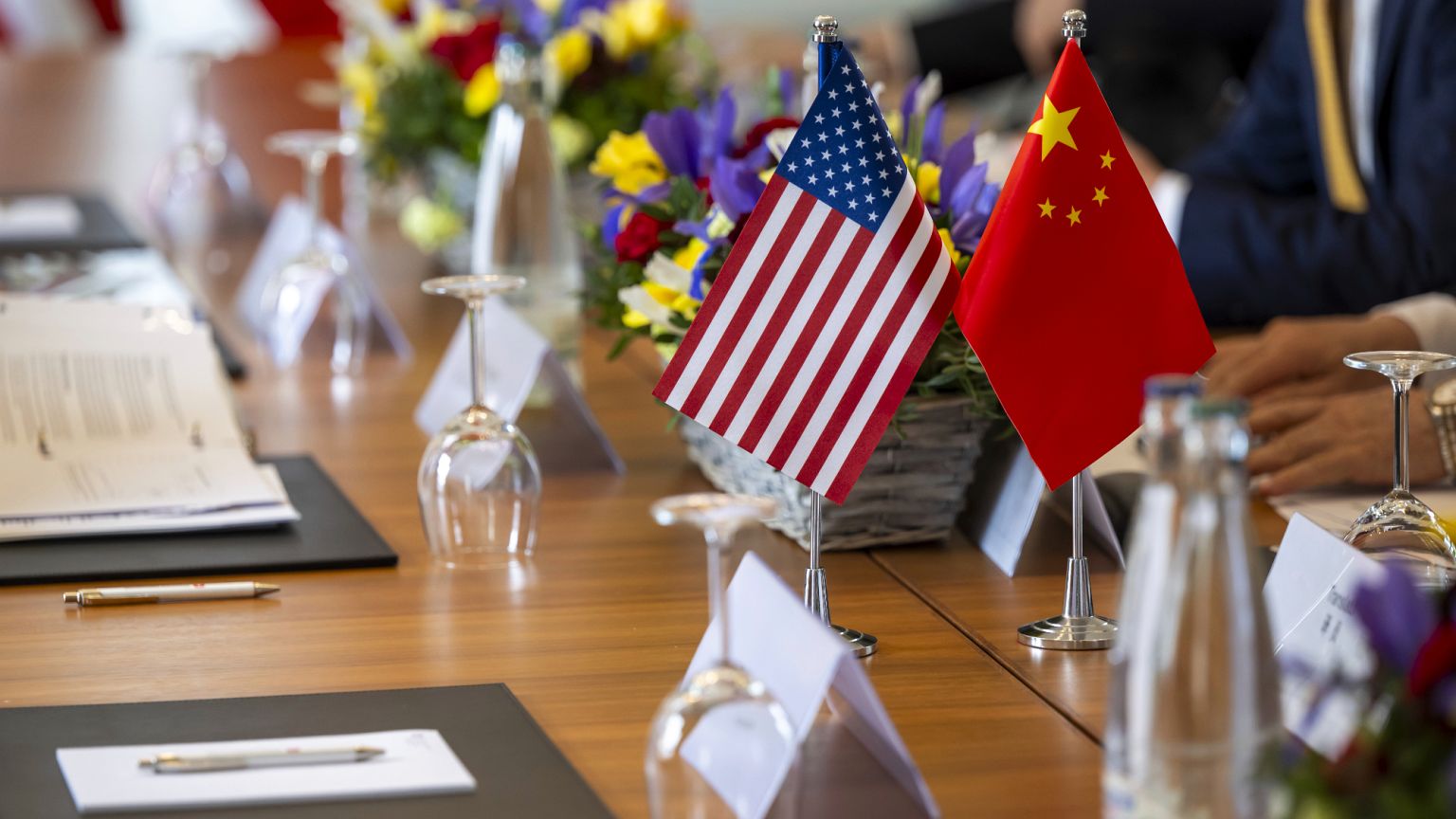
The American and Chinese flags are photographed on the negotiating table during a bilateral meeting between the United States and China, in Geneva, Switzerland. 10 May 2025.
Copyright Mark Schiefelbein/Copyright 2025 The AP. All rights reserved.


By Doloresz Katanich with AP
Published on 

China said on Friday that it had further confirmed details of a trade framework, including the export of rare earths.

The US and China have now signed a trade agreement, said China's Ministry of Commerce on Friday, bringing the two economies further into alignment after the threat of a major trade war.

A released statement said that China would continue to approve export permits of controlled items, and that the US would "cancel a series of restrictive measures taken against China accordingly".

The statement comes after US President Donald Trump told reporters at the White House late on Thursday that the two nations had reached an agreement.

“We just signed with China yesterday,” he said, offering no further details.

Initial talks in Geneva in early May led both China and the US to postpone massive tariff hikes that were threatening to freeze much of the trade between the two countries. Later talks in London set a framework for negotiations, and the deal mentioned by Trump appeared to formalise that agreement.

What the framework could be all about

China announced earlier this week that it was speeding up export approvals of rare earths, materials used in high-tech products such as electric vehicles. Beijing's limits on exports of rare earths have been a key point of contention.

The Chinese Commerce Ministry said on Thursday that Beijing was accelerating a review of export license applications for rare earths and had approved "a certain number of compliant applications."

Export controls of the minerals apparently eclipsed tariffs in the latest round of trade negotiations between Beijing and Washington after China imposed permitting requirements on seven rare earth elements in April, threatening to disrupt production of cars, robots, wind turbines and other high-tech products in the US and around the world.

The agreement struck in May in Geneva called for both sides to scale back punitive tariff hikes imposed as Trump escalated his trade war and sharply raised import duties.

Some higher tariffs, such as those imposed by Washington related to the trade in fentanyl, as well as duties on aluminium and steel, remain in place.

The rapidly shifting policies are taking a toll on both of the world's two largest economies.

The US economy contracted at a 0.5% annual pace from January through March, partly because imports surged as companies and households rushed to buy foreign goods before Trump could impose tariffs on them.

In China, factory profits sank more than 9% from a year earlier in May, with automakers suffering a large share of that drop. They fell more than 1% year-on-year in January to May.

Trump and other US officials have indicated they expect to reach trade deals with many other countries, including India.

"We're going to have deal after deal after deal," Lutnick said.


Delay to EU's 2040 climate goals ‘a mistake’, Ribera answers Macron

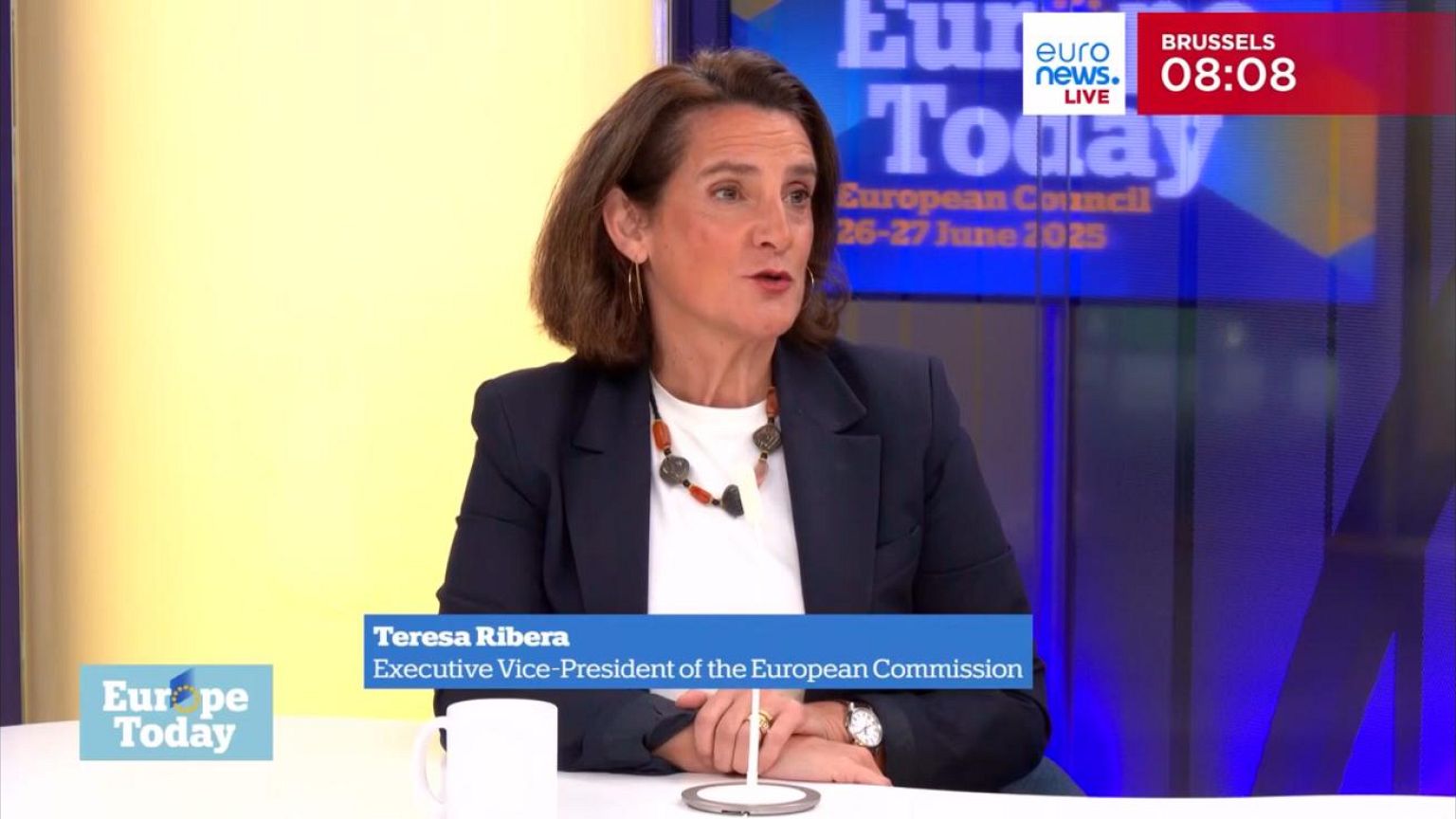
Teresa Ribera on Europe Today
Copyright Euronews


By Meabh McMahon, Jeremy Fleming-Jones & Alice Tidey
Published on 

European Commission Executive Vice President Teresa Ribera was quizzed on Euronews' Europe Today morning show and asked for reaction to French President Emmanuel Macron's call to delay the Commission's 2040 climate targets.

It would be a mistake for the European Commission to follow French President Emmanuel Macron’s advice and slam the brakes on its proposals for 2040 climate targets, the Commission's Executive Vice-President Teresa Ribera told Euronews' Europe Today show on Friday morning.

Ribera, responsible for the EU's green transition portfolio, is slated to present the 2040 targets after next Wednesday's meeting of the college of commissioners.

The French president raised his opposition to the EU executive's tabling of the proposal next week in an unusual intervention at the leaders' level during the EU Council summit in Brussels on Thursday.

After the summit he told reporters that the EU should take more time to come to an agreement on the new targets because "we want to make this climate ambition compatible with European competitiveness".

"I believe in the possibility of a Europe that reconciles an ambitious climate agenda with respect for the commitments of the Paris Agreement and that preserves its competitiveness. All that requires is technological neutrality, the ability to invest and consistency in trade policy,” Macron said.

Targets are essential to economic and social welfare, says Ribera

"The 2040 targets can't be a technical debate that takes just a few weeks. It has to be a democratic debate at 27 (member states). And I say this because I love Europe. And I say it because, in two years' time, I'll no longer be in charge of my country. But I would be unwise to leave my successor a situation that had been debated outside the framework of the 27," he added.

“I think it could be a mistake,”  Ribera told Europe Today, asked by presenter Meabh McMahon whether she was prepared to accede to Macron and delay the proposal.

“This year is the 10th anniversary of the Paris agreement, and we want to identify how we can keep on going in something we that we think is quite essential for the economic and social welfare of Europeans and worldwide,” Ribera said.

“We have already identified that we want to be a fully decarbonised economy by 2050, we have targets for 2030, we need some clear orientation around 2040, and the reduction of 90% is a clear goal,” the Spanish commissioner said.

“Then how we can combine the different pieces, the eventual flexibilities is the thing to be discussed, but we are working hard and we will table our proposal in the coming days.”

The EU is committed to net-zero by 2050, after bringing its carbon emissions to 55% below 1990 levels by the end of this decade. The missing element is the 2040 target, which the EU executive was originally supposed to table last year, but which has been subject to delay.