Friday, June 27, 2025


Sanctions on Ice-Class LNGCs Could Halt Russia's LNG Exports

Russian President Vladimir Putin inaugurates Novatek's first-in-class Arc7 icebreaking LNG carrier, Christophe De Margerie (Kremlin file image)
Russian President Vladimir Putin at the christening of Novatek's first-in-class Arc7 icebreaking LNG carrier, Christophe De Margerie, 2017 (Kremlin file image)

Published Jun 26, 2025 8:30 PM by The Maritime Executive


Russia's Yamal LNG plant in the Siberian Arctic is one of the country's last remaining sources of energy sales to European markets. Last year, Yamal LNG sent about 16.6 million tonnes to Europe, supplying fully 20 percent of the bloc's imported liquefied natural gas - even though the EU has largely shut off Russian oil and pipeline gas, steps taken in order to reduce the Kremlin's revenue for its war in Ukraine.

Though it continues to buy Russian LNG at record rates, the EU has taken the step of banning Russian LNG transshipments through EU ports. Yamal operator Novatek once relied upon ports in France and Belgium to transload and re-export LNG to markets overseas, like China. The use of these EU-based LNG terminals allowed Novatek to shorten the voyages of its unique icebreaking LNG carriers, freeing them up for more trips to and from Yamal. 

This arrangement has come to an end: the EU ban on Russian LNG re-exports took effect in March 2025, and is now in force. To adapt, Novatek began transshipping its Yamal cargoes off the coast of Murmansk - but these activities are still within the reach of EU and UK sanctions, according to the Center for Research on Energy and Clean Air (CREA). 

This alternative is less efficient, according to CREA's Petras Katinas. Yamal LNG's transshipment volume is down by nearly half, suggesting that Murmansk is less ideal than the EU ports that handled these cargoes previously (particularly Zeebrugge). " The increased voyage distances and operational complexity are likely contributing to higher costs, longer delivery times, and mounting logistical bottlenecks," says Katinas. 

However, there is potential for European governments to show this system down even more. Yamal LNG is wholly reliant on its fleet of 15 icebreaking LNG carriers to carry its cargo to Murmansk. Though they only serve Russia's Northern Sea Route, they are operated by shipping companies in Greece, Japan, the United Kingdom, and Singapore. All 15 are insured in nations that comply with G7 sanctions, including the UK, Japan and the Bahamas. 

These vessels are not easily replaceable: Novatek has been trying to build additional hulls at Zvezda Shipyard in the Russian Far East, with encouragement from the Russian government, but the project has been delayed by sanctions. If the Western operators of the existing hulls were forced to cease serving Yamal, it would put a significant dent in the facility's ability to export, especially during the long Arctic winter. 

In addition, most of the conventional LNG carriers that meet up with the Arc-7s for transshipment are also Western-operated, and could also be vulnerable to sanctions if implemented. 

"Moscow’s workaround relies heavily on Western-built, Western-owned, and Western-insured vessels — an undeniable vulnerability that the West has yet to exploit fully. The genuine strategic opportunity lies in targeting this dependency directly, by banning transshipment operations involving Western-controlled ships and tightening restrictions on their insurance and port access," suggested Katinas. "As long as these vessels remain operational under Western ownership and insurance, sanctions will only create bottlenecks — not a blockade — that Russia can still navigate."

Sanctioning Yamal LNG's logistics system in a way that still preserves Russian LNG exports to Europe would be a challenging balance to strike. But the EU Commission has proposed a gradual phase-out of all Russian natural gas from the European market, including LNG, which - if adopted - would bring an end to Europe's own dependence on imports from Yamal. 


Royal Navy Tracks Russian Warships in a Game of “Cat-and-Mouse”
UK warship monitoring Russian warship
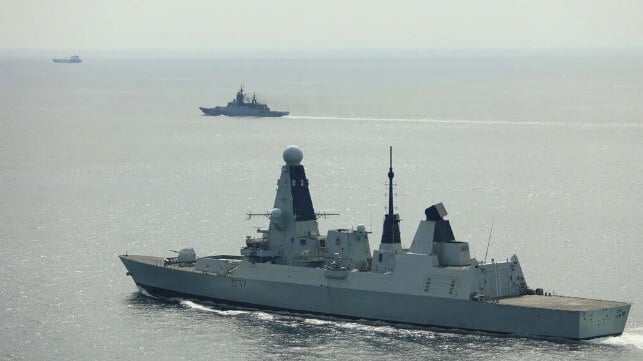
HMS Duncan tracked the Russian corvette which was "camoflaging" its ID while sailing with two shadow tankers (Royal Navy photo)

Published Jun 26, 2025 1:12 PM by The Maritime Executive


Days after it came out that a Russian warship had sailed with two sanctioned shadow fleet tankers through the English Channel and North Sea, the Royal Navy confirmed it was tracking the warship as part of its standard monitoring efforts. It was the fifth activation this year for Royal Navy vessels based in Portsmouth to track Russian warships in UK waters.

“Russian warships are increasingly sailing through the English Channel, and every time they do, a Royal Navy vessel will be keeping an eye on them,” said Luke Pollard, UK Minister for the Armed Forces. “I have every confidence, as should the British public, that our Royal Navy will continue to defend our waters and keep our undersea cables safe.”

The corvette Boikiy (2,100 tons displacement), a Steregushchy-class corvette, has drawn special attention and media coverage for its efforts transiting the English Channel. The vessel was commissioned in 2013 and, of late, has been seen on several occasions sailing with merchant ships. The Royal Navy previously reported in March and early May that it tracked the same vessel during transits of the English Channel.

BBC Verify confirmed online open source reports that Boikiy made the most recent transit last weekend concealing its identity. While it notes that it is common for warships to sail without AIS signals, Boikiy was transmitting a generic ID during its transit. BBC quotes an analyst who called the “camouflaging” episode “very, very uncommon.”
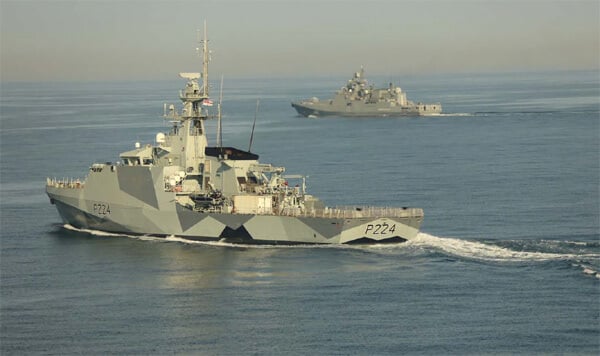
 

HMS Trent tracked a Russian frigate as part of a NATO effort (Royal Navy)


The Royal Navy reports it had been tracking Boikiy for some time deploying multiple vessels. In May, HMS Tyne tracked the corvette, and last week HMS Duncan picked up the vessel near the southwestern end of the Channel on June 20. BBC reports the corvette was traveling back from West Africa, and a diplomatic visit to Conakry, Guinea, after earlier reports had identified the ship traveling with merchant ships as it passed Gibraltar.

HMS Duncan used its sensors and radar to track Boikiy and the Royal Navy notes that they observed the corvette is now missing an anchor. HMS Mersey assumed the tracking effort off the Isle of Wight on June 21 and followed the corvette, which was with the two tankers until they exited into the North Sea.

Lieutenant Commander Daniel Wardle, Commanding Officer of HMS Mersey, noted it was “routine business for the Royal Navy,” tracking the vessels. 

The Royal Navy also reported that another of its vessels, HMS Trent was tasked to track the Admiral Grigorovich, a 4,000-ton displacement guided missile frigate. The Royal Navy vessel performed the monitoring as a joint effort with NATO, picking up the Russian warship as it passed Gibraltar. They also employed a Wildcat helicopter for the monitoring as they made their way through the English Channel and into the North Sea. HMS Trent was returning to the UK after four years overseas on missions that took it to the Mediterranean, West Africa, and the Caribbean.

 

Iranian Naval Forces Suffered Casualties From Israeli Air Strikes

Iran
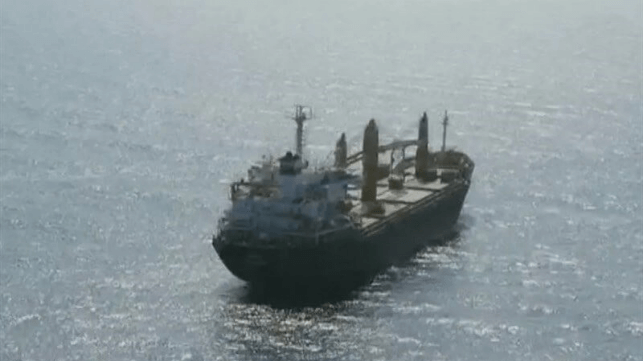
Iranian ship Saviz (Tasmin News Agency - CC BY 4.0)

Published Jun 27, 2025 11:17 AM by The Maritime Executive


Iranian naval forces did not escape unscathed in the recent 12-day Israeli aerial assault on Iran that began on June 12.

In the first two days of the Israeli attack, regular Iranian Navy (Nedaja) vessels largely remained in port. As naval vessels are at their most vulnerable when tied up in port, this move suggested that the Nedaja command was putting on a non-confrontational display, which assumed that Israel’s targeting priorities would be elsewhere. But on June 14, Nedaja vessels left the Bandar Abbas Naval Harbour - which is home base to most of the principal ships Nedaja Southern Fleet - in somewhat of a hurry, taking up dispersal positions largely in the sea area between Bandar Abbas and the islands of Qeshm and Hormuz. As of June 27, the fleet has not yet returned to port.

Seen now in retrospect, the targeting focus of the Israeli attacks was evidently air defense assets, nuclear weapons-associated research, development and scientists, key IRGC leaders, and the IRGC Aerospace Force network of ballistic missile and drone launching, storage and production sites. Except for those elements of the air defense network which were manned by the regular Iran Air Defense Force - who suffered 35 fatalities during the 12-day war - almost all of this target deck fell under the organizational structure of the Islamic Revolutionary Guard Corps (IRGC). Thus, the Nedaja’s initial assumption that they would not be a targeting priority turned out to be largely correct.

However, the regular Armed Forces (Artesh) were not exempt. The Artesh Chief of Staff Major General Mohammad Bagheri, assassinated on June 13, was probably targeted because besides being a hardline ideologue, he was determined to be significantly more competent than anyone likely to succeed him. Additionally, it has emerged that the Nedaja was targeted on a number of other occasions.


The three Nedaja fatalities of the attack on Bandar Abbas


On June 21, buildings of the Nedaja’s 1st Naval District at Bandar Abbas were attacked, and three conscripts were killed. This suggests either that a headquarters building was attacked which was not manned at the time, or that a storage depot was hit. In either case, the conscripts who died were likely to have been guarding the facility. Social media reports suggested that the targets attacked were armories containing unmanned aerial vehicles and munitions. By this time, ships of the 1st Naval District had already long since left the nearby Bandar Abbas naval harbor.

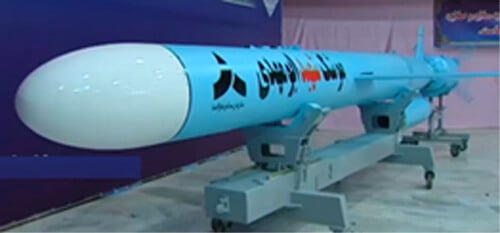
The Israelis would have had a focused interest in attacking those elements of Nedaja's capability that posed a particular threat to Israel. This target list is likely to have included stocks of Abu Mahdi 650-mile range anti-ship missiles, which can be launched either from ships or coastal defense batteries. The Israelis would also have wanted to destroy long-range drones, which the Nedaja has often demonstrated it can fire from its warships.


Abu Mahdi anti-ship missile (IRIB)


The IRGC Navy (Nedsa) suffered more attention. Also on June 21, the base of the Nedsa’s 5th (Imam Mohammad Bagher) Naval District at Bandar Lengeh was attacked, which is one of the suspected locations of an IRGC coastal cavern housing missile boats; an unlocated such cavern has featured frequently in Nedsa propaganda videos released in recent months. At the same time, what the Israelis described as an IRGC intelligence gathering ship was struck in the Nedsa area of the Bandar Abbas Naval Harbour. Some external open source observers suggested that the vessel attacked was the Nedaja intelligence collection frigate IRINS Zagros (H313), but the target description better fits either the Nesda’s MV Saviz or Behshad; up-to-date imagery of the areas where these ships normally berth, in the Shahid Bahonar area in the north-west of the Bandar Abbas Naval Harbour, unfortunately, does not provide easy identification of who exactly was the targeted victim. 

As yet, a threat to shipping traffic in the Straits of Hormuz has not emerged. But ships of both the Nedsa and the Nedaja are still at sea, likely to be putting on a display of strength in the Straits area in an attempt to suggest that they are still a force to be reckoned with.

Constant GPS Jamming Disrupts Navigation in Strait of Hormuz

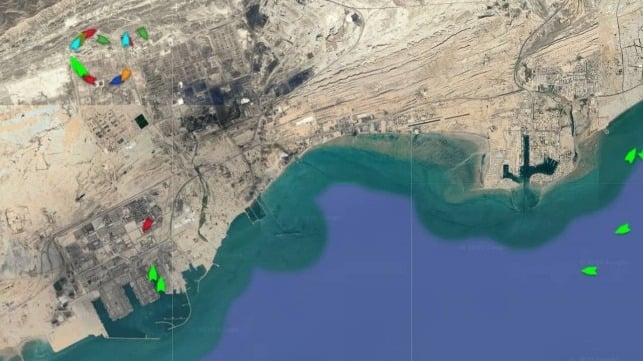
AIS signals from a dozen vessels circle over the Persian Gulf Star Refinery near Bandar Abbas, top left, June 26 (Pole Star)

Published Jun 26, 2025 5:07 PM by The Maritime Executive


With a U.S.-brokered ceasefire between Israel and Iran in effect, traffic in the Strait of Hormuz has returned to near-normal levels, including a revival of westbound transits into the Arabian Gulf. But the intense levels of GPS jamming in the region remain an issue, and are hindering navigation. 

Last weekend, GPS jamming incidents surged by 60 percent, affecting about 1600 vessels (including small craft), according to consultancy Windward. At peak, nearly one quarter of all vessels in the region experienced GPS disruption at least once in a 24-hour period. 

The jamming has affected AIS signals across the area - not just on the Iranian side of the Gulf, but in the UAE and Qatar as well. Crude tankers, product tankers, large boxships and LNGCs were among the vessels affected. 

The disruption has prompted shipping stakeholders to take precautionary measures. QatarEnergy has reportedly halted nighttime movements of tankers and LNGCs near Mesaieed, citing safety concerns from GPS jamming affecting navigation.

On Tuesday, Navios Maritime Partners CEO Angeliki Frangou told CNBC that "continuous" GPS interruption is affecting safety in the Strait of Hormuz, and that some operators are modifying their itineraries to account for it. Liners, in particular, are waiting to transit the strait in daylight hours, she said. 

"They don’t want to pass during the nighttime because they find it dangerous. So it’s a very fluid situation," Frangou said. "Safety conditions are something that is at the forefront of our minds. This is why we are constantly monitoring all this."

Windward has also found that some operators have been using AIS to broadcast conciliatory messaging in hopes of deterring Iranian attack. About 55 vessels used novel messages during the peak period of tensions from June 12-24, the firm told Reuters. Some of the messages are familiar from patterns seen in the Red Sea and Gulf of Aden during the Houthi shipping crisis, when many masters would type in the destination field on their AIS unit as "China owned" or "Russian crude" and then broadcast this signal to the world. The strategy was intended to make the vessel appear like an unsuitable target. 


Tykoflex and Kongsberg Discovery Aim to Advance Smart Subsea Infrastructure

Kongsberg Discovery

Published Jun 26, 2025 8:19 AM by The Maritime Executive


[By: Kongsberg Discovery]

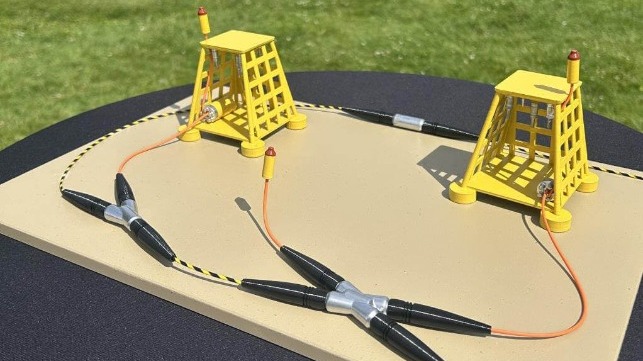
Tykoflex AB and Kongsberg Discovery have entered a strategic partnership to explore how Tykoflex’s proven fiber optic subsea closures can serve as a platform for integrating Kongsberg Discovery’s advanced sensor, communication, and positioning technologies.

The partnership aims to deliver modular, secure and intelligent subsea infrastructure solutions by combining their complementary strengths.

Kongsberg Discovery brings decades of offshore and subsea experience, including integrated solutions for surveillance, satellite connectivity, and infrastructure protection. Tykoflex contributes robust closure technology, widely deployed across the Baltic Sea and global subsea communication and power cable networks. Together, the companies offer a solid foundation for dual-use technologies that serve both civilian and defense needs.

Potential Applications
The joint solution exemplifies dual-use innovation at its finest. On the civil side, it enables continuous underwater monitoring for marine research, including the study of noise pollution and its impact on marine wildlife. For defense and civil protection, it enhances situational awareness and safeguards critical subsea infrastructure through distributed sensing and secure communications.

“This partnership has the potential to unlock something truly significant. By combining proven infrastructure with advanced sensing and communication technologies, we are laying the groundwork for a persistent, intelligent subsea network. The innovation potential is just beginning to surface, like a Starlink beneath the sea. We welcome and encourage additional partners to join us in shaping the future of resilient and innovative undersea systems,” says Richard Petersson Wigh, CEO of Tykoflex AB.

“This partnership highlights the strength of bringing together world-class Nordic expertise. By combining Tykoflex’s proven subsea technology with Kongsberg Discovery’s capabilities in radar, sensors, and autonomous systems, we can deliver integrated solutions that meet tomorrow’s challenges. Together, we are creating system-level innovation to protect the critical infrastructure that modern societies rely on, says Nils Waltre, Senior Sales Manager at Kongsberg Discovery.

Strategic Context
Recent damage to subsea cables and pipelines in the Baltic Sea has underscored the vulnerability of undersea infrastructure.

“This collaboration comes at a critical moment. Given growing geopolitical tension and increased focus from NATO and EU actors, there is a clear need for innovative, resilient solutions. Our joint development is timely, offering not only advanced monitoring but also the potential to act or mitigate threats through integrated systems, including Kongsberg Discovery’s autonomous underwater vehicles. Together, we aim to help shape new ways of protecting and securing the seabed in an era of emerging risks, says Martin Wien Fjell, President of Kongsberg Discovery.

The products and services herein described in this press release are not endorsed by The Maritime Executive.


Japan’s Imabari Consolidates Shipbuilding for Lower Costs and Competition

JMU shipbuilding
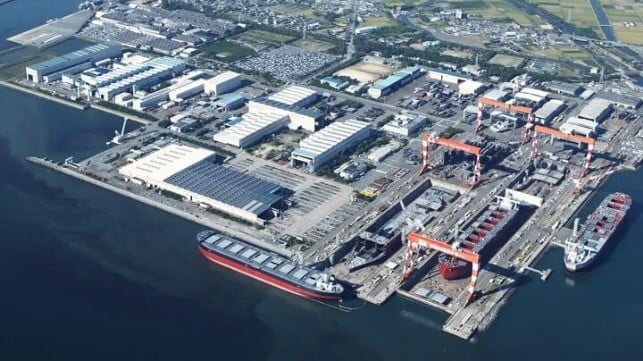
JMU operates seven shipyards in Japan and combined with Imabari will be the world's fourth largest shipbuilder (JMU)

Published Jun 27, 2025 2:21 PM by The Maritime Executive


In what is seen as a strategic move aimed at strengthening Japan’s shipbuilding industry, its largest builder, Imabari Shipbuilding, will consolidate JMU (Japan Marine United) to become a fully-controlled subsidiary. Japan has been losing market share as a builder for more than two decades and now looks to leverage the emerging opportunities with the U.S. to rebuild its industry.

Imabari, which operates 10 shipyards for the construction of tankers, bulkers, and containerships, has been an investor in the smaller JMU since 2020. The companies also launched a joint venture for ship design as well as agreeing to efforts to standardize parts to increase manufacturing efficiency. Imabari is doubling its investment in JMU and will now hold 60 percent ownership of the shipbuilding group. JMU was formed in 2013 as a merger of JFE and IHI.

The companies explain the restructuring as a key competitive step. Imabari will have management control and looks to realize further economies of scale in design and material costs. They pointed to the potential cost savings for purchases, including steel and engines. JMU also adds new specializations in warships and niche categories to the combined company.

Imabari ranks as the world’s sixth largest shipbuilder producing more than 3.28 million tons annually, while JMU is ranked twelfth building about 1.4 million tons annually. The deal is drawing attention in Korea, as the combined Japanese company will surpass Hanwha Ocean to become number four globally behind HD Hyundai and Samsung Heavy Industries. China State Shipbuilding Corporation (CSSC) is the leader in shipbuilding.

 Japan was once the world’s leading shipbuilder producing as much as 50 percent of the industry’s annual output into the 1990s. As competition grew from South Korea and China, Japan slipped and today is a distant third in the market to the lower-cost producers. Data from Japan’s Ministry of Land, Infrastructure and Transport showed total shipbuilding output of approximately 10 million tons in 2023, which was down 30 percent over the preceding five years.

Reports indicate that the Japanese government has involved shipbuilding as a key bargaining chip in its trade negotiations with the United States. Japanese shipyards have already performed maintenance work for the U.S. Navy, including last month Mitsubishi Heavy Industries (MHI) in Yokohama highlighted its largest project, a five-month overhaul of a USN expeditionary mobile base. With the Trump administration looking to expand U.S. shipbuilding and the Navy, and the Navy looking to increase overseas maintenance, Japan believes it has a strong opportunity in the shipbuilding sector. It also looks to benefit as the U.S. imposes fees on Chinese-built ships.

This week, it came out that Japan's conservative Liberal Democratic Party has a new proposal to address the rebuilding of the Japanese shipbuilding industry. It is calling for a $7 billion shipyard investment used to modernize the yards and adopt technologies such as automation and robots. 


Civmec to Acquire Luerssen Australia Consolidating Defense Shipbuilding

Australian patrol ship
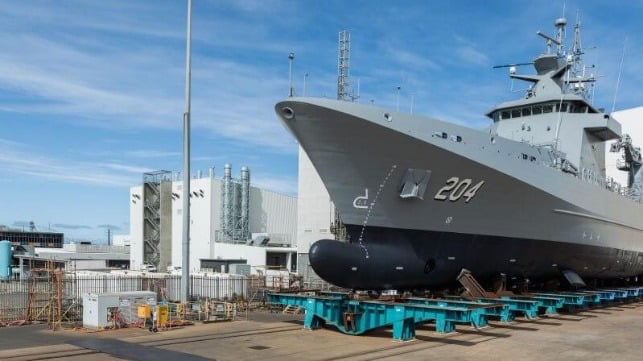
Luerssen Australia was lead contractor for patrol boats built by Civmec (Luerssen Australia)

Published Jun 26, 2025 4:26 PM by The Maritime Executive


In a move designed to consolidate Australia’s defense shipbuilding industry and build sovereign capabilities, construction and engineering services company Civmec has reached terms to buy Luerssen Australia. Civmec had announced its intention to acquire the shipbuilder last October as a key move to strengthen its position in a competition for a new contract from the Australian government.

Civmec said the acquisition represents a pivotal step in its long-term strategy to strengthen its position as a sovereign Australian shipbuilder. Civmec, which has operations in Western Australia and has been working with Luerssen on offshore patrol vessels, reports it will pay A$20 million (US$13 million) and expects to complete the acquisition by July 1.

“This Acquisition enhances Civmec’s ability to deliver end-to-end naval shipbuilding solutions, from design through to commissioning, and unlocks opportunities to drive production efficiencies, accelerate delivery schedules, and secure future shipbuilding contracts. It also fast-tracks the development of Civmec’s sovereign shipbuilding capabilities,” the company said explaining the strategic rationale for the acquisition.

Luerssen Australia was launched eight years ago as a subsidiary of NVL (Naval Vessels Lürssen) of Germany to pursue the SEA 1180 contract, a program to build offshore patrol boats. NVL was selected as the preferred prime contractor and designer for the SEA 1180 Offshore Patrol Vessel program. The first two were built by BAE Systems, and four additional vessels were built by Civmec in a partnership with Luerssen Australia. 

The focus on Luerssen Australia was expanded with the company reporting it specializes in the design, manufacture and servicing of yachts, naval, and coastguard vessels.

The Australian government has announced that its next major project will be the development of a new generation general purpose frigate to replace aging vessels. It is planning to order 11 vessels with the plan calling for the three lead vessels to be built internationally and eight additional vessels to be built in Western Australia.

The competition for the designer and lead for the project is reported to be between Japan’s Mogami and Germany’s Meko 200, but each would partner with a Western Australia company. The plan calls for three vessels to be built immediately in Western Australia and the five additional vessels to be built also in Western Australia with a revised design based on experience with the first ships.

Civmec says that by combining with Luerssen Australia, it will expand its experienced workforce, systems, and technical know-how. The group, which is viewed as a leading contender for the construction of the eight frigates, says that with the increased scale, its defense operations will be able to deliver five vessels over the next 3.5 years.


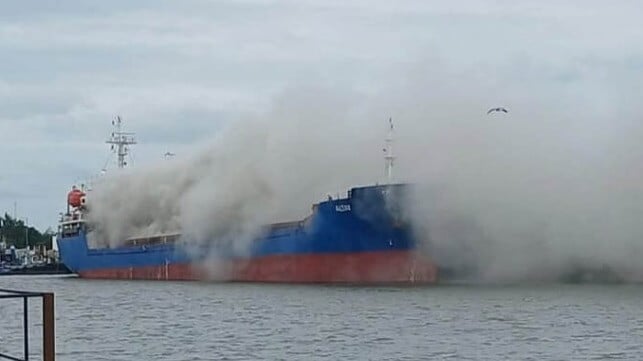
Cargo Ship Fire Blankets English City in Smoke

ship fire
Ship burning at the dock in Hull, England (Facebook)

Published Jun 27, 2025 10:50 AM by The Maritime Executive


Residents in Hull on the east coast of England are complaining of smoky conditions and a strong smell with some businesses in the city center reporting they were remaining closed while the police have also closed roads and are warning motorists to use caution. It is all due to a smoky fire that started at mid-morning on a cargo ship docked at the port’s Albert Dock.

Humberside Fire and Rescue reports it dispatched four engines and a ladder platform to the scene, and they are working the smoky fire aboard a small dry bulk cargo ship named Altay. Ambulances and the Hull Coastguard Rescue Team were also on hand.

“Due to the wind, smoke from the incident is drifting into Hull city center. We’re asking people to keep windows and doors closed and to be mindful of the smoke if you’re out and about and avoid the area near the dock,” the fire service wrote in a public notice.


The vessel had arrived from Ijmuiden in the Netherlands on Monday, June 23. It is 8,814 dwt and registered in the Marshall Islands. Records show it has been owned by a Turkish company since 2017.

The police reported that everyone aboard the vessel has been accounted for and there are no reports of injuries. The vessel was transporting scrap metal and they believe the fire began in the cargo hold.

Altay was cited for several deficiencies, including maintenance of life saving, readiness of life saving equipment, and lack of training as it related to bridge operations during an October 2024 Port State inspection in Venice, Italy. It resulted in a two-day detention, but since then, the vessel has been inspected in Boulogne, France with a clean report.


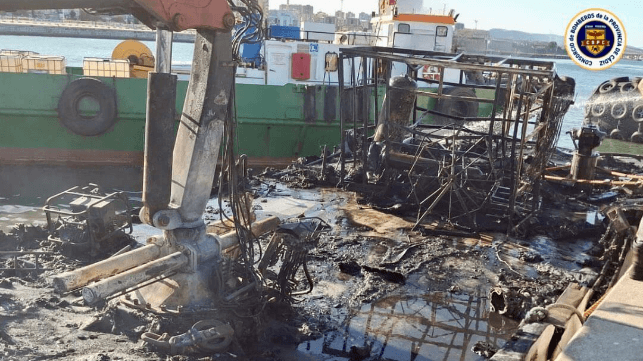
Fire Breaks Out on Supply Boat in Bay of Gibraltar

The burned-out Ceutamar 5 (Courtesy CBPC)

Published Jun 26, 2025 10:05 PM by The Maritime Executive


On Wednesday, a major fire broke out aboard a supply boat in the Bay of Gibraltar, forcing seven crewmembers to abandon ship over the side. 

On Wednesday afternoon, the supply boat Ceutamar 5 was alongside a container ship to deliver goods at a position within Spanish waters. A fire broke out at about 1730 hours, sending a column of smoke up over the bay. 

The crew managed to separate their vessel from the boxship before they jumped over the side. All were safely rescued by responders from Salvamento Maritimo, according to local media. First responders then turned to extinguishing the fire and ensuring the damaged supply boat's stability. 

Gibraltar's port authority offered its assistance for the response, but Spanish authorities declined.

No pollution was reported after the incident. The burned-out supply boat was towed to a nearby pier, where local firefighters applied cooling water and ensured that the blaze was out. An investigation into the cause of the casualty is under way. 

Local environmental group Verdemar noted the smoke from the incident and said that it would be seeking further information from the authorities on any impacts. 


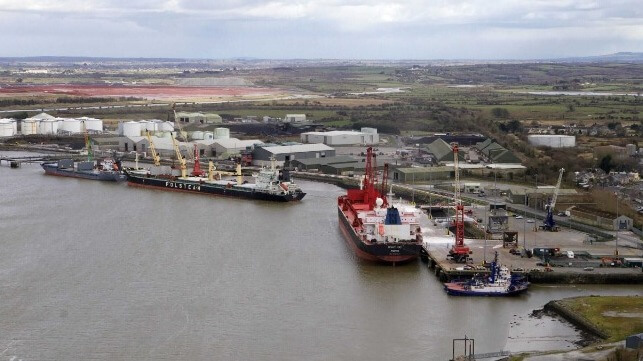
Explosion Aboard Chemical Tanker in Irish Port Seriously Injures Two Crew

Shannon Foynes Port
Operations were suspended in the port during the emergency response (Shannon Foynes Port file photo)

Published Jun 25, 2025 4:39 PM by The Maritime Executive


Operations were suspended Tuesday evening, June 24, in the Irish port of Shannon Foynes in County Limerick, Ireland, after reports of an explosion aboard the docked chemical tanker. The port operator later confirmed that two crewmembers had been seriously injured in an accident aboard their vessel.

The Bow Hercules(40,847dwt) operated by Odfjell Tankers and registered in Norway had docked at the Irish port earlier in the day, coming from Purfleet in the UK near Tilbury port. Reports were of an explosion and a major emergency response to the port around 6:30 p.m. local time.

Multiple ambulances were seen on the pier. An air ambulance was brought in to evacuate the most seriously injured crewmember, while a second crewmember was evacuated in an ambulance. The port is saying they suffered serious injuries in the incident. Both are reported to be from the Philippines.

According to the media reports, the tanker, which was built in 2017 and is 183 meters (600 feet) in length, was conducting routine maintenance. The blast was caused by a gas cylinder explosion, and the two injured crew were reported to be performing routine work near the vessel’s lifeboat. They were close to the area where the detonation occurred.

Shannon Foynes is Ireland’s largest bulk and breakbulk port. Operations were resumed after the situation had been stabilized. Bow Hercules remains in the port undergoing safety checks and an investigation into the cause of the explosion.


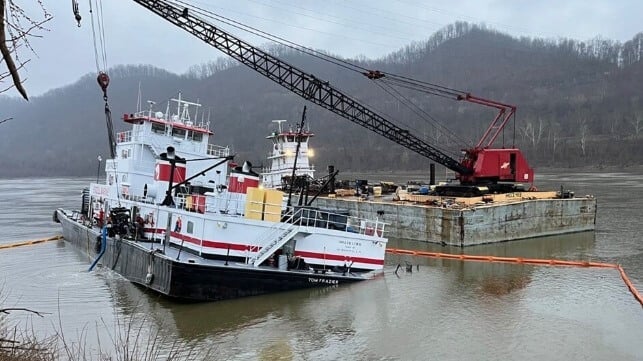
NTSB: Human Error Caused Towboat Grounding on Ohio River

Tom Frazier aground
Courtesy USCG

Published Jun 25, 2025 7:31 PM by The Maritime Executive


The National Transportation Safety Board has concluded that a grounding on the Ohio River last year occurred because an experienced captain made a navigational error. 

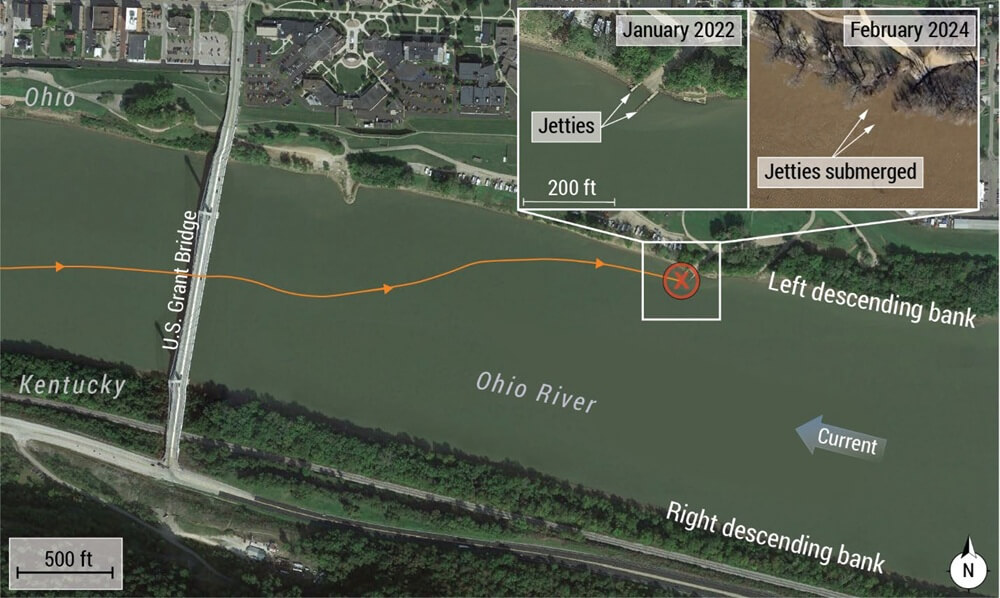
On February 10, the towboat Tom Frazier was under way on the Ohio, upbound with 15 empty hopper barges. The light barges were drawing about two feet of water, while the Frazier herself was drawing about 11 feet. 

At about 1838 hours, the Frazier passed under the Carl D. Perkins Bridge, then the U.S. Grant Bridge, two back-to-back spans over the Ohio at the town of Portsmouth. The towboat Debi Sharp was downbound on the river about 1.5 miles away, and was pushing 25 barges. As the downbound boat, Debi Sharp had right of way, and the captain of the Frazier made arrangements to meet her starboard-to-starboard and get out of her way. The Sharp had a following current and a heavier tow, and had to line up to pass under the two bridges. 

In accordance with the passing arrangements, Frazier's master - an experienced mariner with 23 years in the industry - navigated closer to the right descending bank as the towboats neared each other. At this location, two stone jetties protrude out from the bank on either side of a boat ramp, protecting the ramp structure. They were charted and marked on the towboat's ECS, but the water level was high enough that the jetties were submerged. While moving to give Sharp space to maneuver, the master navigated the barge tow over top of the jetties without making contact. However, the towboat's own draft was too deep to pass over, and at 1855, the Tom Frazier's hull grounded on one of the jetties. The rocks penetrated the hull, flooding a forward compartment. 

Courtesy NTSB

As water poured in, Tom Frazier began to take on a starboard list, and the engine room flooded as well. With help from local first responders, the nine crewmembers from Tom Frazier abandoned ship and made it safely to shore.

A second towboat took over the barge tow and moved it safely to a fleeting area. Salvors went to work on refloating the Frazier and removed it on February 13, assisted by rising waters. 

The cost to repair the damage from the grounding - including hull plating and framing - came to about $260,000. Only minimal pollution was reported, and no one was injured. 

"The probable cause of the grounding of the towing vessel Tom Frazier on submerged jetties was the captain maneuvering his tow too close to the bank in order to avoid a downbound tow, and not identifying the hazard posed by the charted jetties," NTSB concluded.


Ship Recycling Convention Enters into Force with Uncertainty and Criticism

shipbreaking
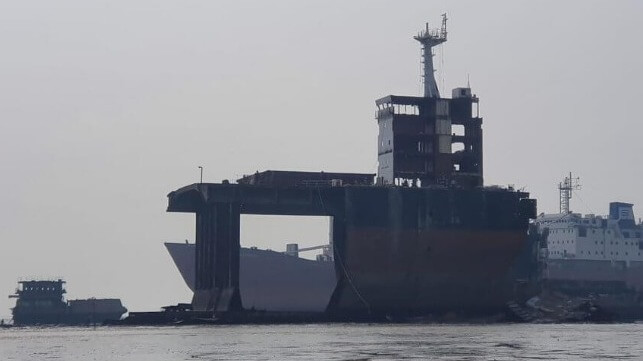
HK Convention sets global standards for shipbreaking but faces many critics (NGO Shipbreaking)

Published Jun 26, 2025 3:07 PM by The Maritime Executive


The long-awaited Hong Kong International Convention setting standards for the industry to dismantle end-of-life vessels has gone into force. It comes, however, amidst criticism that the agreement fails to address many key issues in safety and sustainability, and the concerns of beaching in ship recycling.

On June 26, the Hong Kong International Convention for the Safe and Environmentally Sound Recycling of Ships (HKC) entered into force two years after adoption by Bangladesh and Liberia triggered the effort which had been two decades in the making. The International Maritime Organization (IMO) and the shipping industry called the move a landmark step towards safer and greener ship recycling.

In essence, HKC is designed to ensure that the ship recycling industry operates safely and sustainably, aiming to protect both workers and the environment from the dangers posed by hazardous materials on ships. This will be achieved by ensuring that vessels over 500 gross tonnage maintain an Inventory of Hazardous Materials (IHM) throughout the process of dismantling ships for recycling.

Considering that about 500 ocean-going commercial vessels reach the end of their service life and undergo the process of shipbreaking annually, the industry is upbeat that the entry into force of the convention is bound to make shipping more sustainable.

This, however, is not the view of everyone. Critics are complaining of legal ambiguities in the regulation. Many are saying that the rules, which were drafted more than 15 years ago, need to be refined to remove uncertainties and reflect advancements.

The NGO Shipbreaking Platform is one of the vocal critics raising concerns that despite its entry into force, HKC could end up having little impact owing to the fact that it fails to address the environmental injustice and human rights violations that continue to overhang the shipping industry.

The Platform contends that HKC does not prevent the most dangerous and polluting form of shipbreaking that happens to be beaching in the tidal mudflats of South Asian countries like Bangladesh, India, and Pakistan. Apart from exposing workers to life-threatening risks, beaching remains a risk to fragile coastal ecosystems because it does not prevent hazardous materials such as oil sludge and heavy metal-laden paints from getting into coastal waters.

The clean shipbreaking advocate asserts that by failing to prohibit beaching, the HKC rubber stamps a practice that has long been banned in all major ship-owning countries.

China, the European Union, North America, and the United Arab Emirates have not only banned beaching but have gone beyond the dictates of the HKC by adopting a new regulation that also bans landing. That regulation also entered into force on June 26. 

“The HKC does not set a roadmap for sustainable ship recycling, but will instead serve the interests of shipping companies that want to avoid paying the true cost of safe and environmentally sound end-of-life management. Tragically, it also risks to undercut efforts to level the playing field for responsible ship recyclers to compete,” said Ingvild Jenssen, NGO Shipbreaking Platform Executive Director & Founder.

HKC was adopted at a Diplomatic Conference held in Hong Kong in May 2009. The IMO contends that the convention addresses concerns about the working and environmental conditions in many of the world’s ship recycling facilities. This includes understanding that ships sold for scrapping may contain environmentally hazardous substances such as asbestos, heavy metals, hydrocarbons, ozone-depleting substances, and others. The fact that ships being sent for recycling will be required to carry an IHM and provide a Ship Recycling Plan is being touted as a significant intervention designed to make shipbreaking sustainable.

The NGO Shipbreaking Platform, however, remains critical of the HKC, asserting that it does not address the rampant cases of defective flag-state control in which cash buyers change the registry of vessels to flags with poor implementation of maritime law before sending them to South Asia beaches. It has fallen to others, such as the UAE, which in its rules created a provision to stop EU-registered ships from making a “pitstop” in the Middle East to avoid regulations before heading to the beaches of South Asia.

The convention also fails to impose binding labor and environmental protections, and lacks a downstream waste accountability, something that means ship owners can continue to operate with impunity.

According to the Platform, HKC should not be a substitute for existing, more robust legal instruments like the Basel Convention and the EU’s Ship Recycling Regulation, which restricts the global trade of hazardous waste and bans the dumping of toxic waste in developing countries.


ECSA Welcomes the Hong Kong Convention Entering into Force Globally

International Chamber of Shipping

Published Jun 26, 2025 8:28 AM by The Maritime Executive


[By: International Chamber of Shipping]

The International Chamber of Shipping (ICS) and European Shipowners | ECSA welcome the Hong Kong International Convention for the Safe and Environmentally Sound Recycling of Ships (Hong Kong Convention) entering into force globally today.

The International Maritime Organization (IMO) adopted the Hong Kong Convention on the 15th May 2009. The aim of the Convention is to reduce risks to health, safety and the environment, ensuring that ships when being recycled after reaching the end of their operational lives, do not pose any unnecessary risk to human health and safety or the environment.

The International Chamber of Shipping and European Shipowners | ECSA have been advocating for the Hong Kong Convention to come into force since adoption at IMO to ensure international safe and sustainable ship recycling processes.

Thomas A. Kazakos, Secretary General of the International Chamber of Shipping, comments: “Today marks a welcome and historical development after two decades of work on the issue. At ICS we have long been championing for safe and sustainable ship recycling practices. Now that the Hong Kong Convention has entered into force we can look forward to even more progress in improving ship recycling around the world.

As the industry pushes forward on its decarbonisation journey the lifespan of the merchant fleet is likely to reduce, through global instruments such as the Hong Kong Convention we can progress, safely, efficiently and sustainably. A global industry needs global regulations.”

Sotiris Raptis, Secretary General, European Shipowners | ECSA adds: “The entry into force of the Hong Kong Convention is a milestone for our industry. It sends a strong signal that multilateral cooperation in IMO can and should continue to deliver. The global requirements entering into force today already represent significant progress for the sustainability of our industry. We now need to build on this foundation and further strengthen the Hong Kong Convention to raise the bar and continue to make meaningful progress towards safe and sustainable ship recycling practices. One global standard is essential to deliver environmentally sound and safe ship recycling and to ensure the competitiveness of European shipping”.

The products and services herein described in this press release are not endorsed by The Maritime Executive.


“Enough is Enough”: MarinePALS CEO Slams Overload of Tasks on Board

Chawla

Published Jun 26, 2025 3:31 PM by MarinePALS


The maritime industry has pushed the workload on seafarers to unsustainable extremes and must do a comprehensive review of the number of tasks required to be done on board compared to the number of people available on board, if it wants to attract and retain a skilled workforce, says Captain Pradeep Chawla, CEO of MarinePALS. 

Captain Chawla has delivered a critical assessment of the maritime industry’s overbearing demands placed on seafarers. 

“For an industry that relies entirely on the professionalism and resilience of its crew, we have created an exhausting burden on the seafarers by continuously adding tasks, without studying the time required for these tasks,” said Captain Chawla. “Every person involved in management of the ships and every study is hearing the seafarers saying, ‘Enough is Enough’ about what is demanded from them.” 

With decades of firsthand experience at sea and over 31 years in senior leadership before retiring from Anglo-Eastern Ship Management, and as Chairman of GlobalMET, Captain Chawla is uniquely placed to call out what many in the sector quietly acknowledge. The system is broken, and it is crushing morale. 

“A ship typically has over 2,000 maintenance tasks listed in the Planned Maintenance System. A simple study of time required for each task, versus the number of days and number of people available on board to carry out the tasks, will show the problems that the seafarers face. They need to handle navigation watches, fog and heavy weather, hectic schedules in port with PSC and charterers’ inspections, storing and bunkering and handling overload of ship/shore communications with various internal and external stakeholders.”

Welcoming the decision in the IMO MSC meeting to review the Resolution on the “Principles of Safe Manning” Captain Chawla stated that the industry has reached a point where the manning scales regulations need to be “comprehensively reviewed” keeping a clear-eyed perspective and hearing the anguish of the seafarers. “The problem of workload is not the same on a VLCC on a long voyage and say a chemical tanker on a short sea trade,” he says.

 He admits that getting consensus on manning scales is a very difficult task but insists that there is a need to patiently work through different scenarios and to create legislation and guidelines that may need to be more “prescriptive” for certain ship types and certain trades.  

Now leading MarinePALS, a company focused on simplifying and modernising seafarer training, Captain Chawla says small adjustments are not enough. 

“What we need is a detailed discussion. Regulators, flag states, ship managers and associations representing seafarers, need to come up with genuine solutions and not guidelines that are interpreted differently by different stakeholders,” he says.

His message is clear.  We say we care about wellbeing of the seafarers. Well, here is where it starts.  Let us “hear” the seafarers. 

The opinions expressed herein are the author's and not necessarily those of The Maritime Executive.