Friday, June 27, 2025

 LITHIUM

SQM cuts 5% of Chile workforce as prices fail to bounce back
(Image courtesy of SQM)

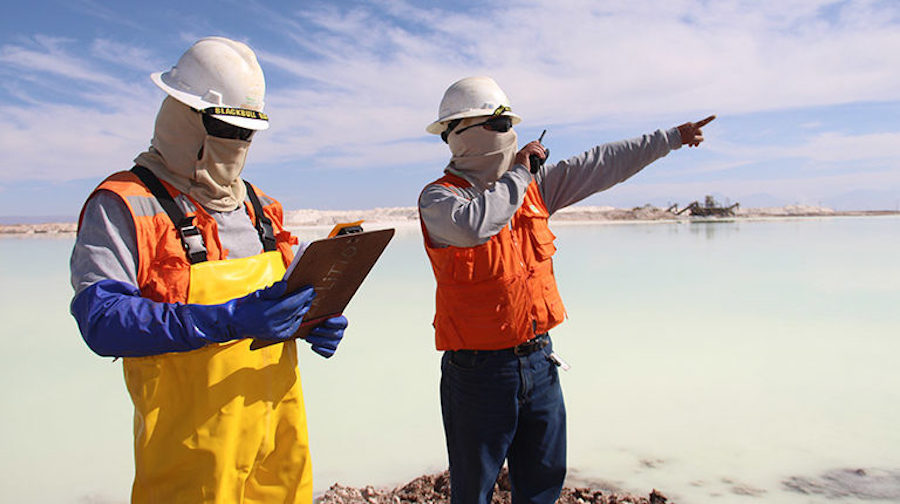
The world’s second-biggest lithium miner SQM has begun laying off 5% of its Chilean workforce as it contends with a protracted slump in global prices for the battery metal, according to a company source and a union memo to workers seen by Reuters on Wednesday.

Lithium prices have plunged nearly 90% since their peak in late 2022 due to overproduction in China and slower-than-expected demand for electric vehicles, forcing some miners to slash jobs and halt expansions.

SQM, which missed first-quarter profit estimates, previously said it expects weak prices through the first half of the year. It declined to comment on the layoffs.

A company source said the cuts – to both the lithium and fertilizer units – would not affect core operations and or production guidance. SQM had no immediate plans for further layoffs, the person added.

Reuters could not determine the exact number of dismissals.

SQM employed 8,344 people in Chile and elsewhere at the end of last year, according to its annual report, with three-quarters working at the northern Chile operations where it extracts and processes lithium.

A memo from the Sindicato SQM Salar union, dated Tuesday, said company management had informed the group’s president that 25% to 30% of the layoffs would correspond to “general roles,” and the rest to supervisors. They would take place at SQM’s offices in Santiago, as well as the Atacama salt flat and its lithium processing plant in northern Chile, the memo said.

“As a union we regret the decision taken by the company, which affects our members, and we categorically question the reasons behind it,” the memo said, without providing further details. It also offered support to workers who lost their jobs.

US firm Albemarle, the only other lithium miner in Chile, cut workers last year as part of cost-cutting measures that it said helped to offset low lithium prices.

(By Fabian Cambero and Daina Beth Solomon; Editing by Sarah Morland, Brendan O’Boyle and Aurora Ellis)

CHART: The brutal economics of EV battery lithium

Fragile market. Image by Stradablog Licence

News this week that the world’s second-biggest lithium miner – SQM –  has begun laying off 5% of its Chilean workforce would not come as a surprise to those following the market for the battery raw material.

Battery lithium prices have been decimated since reaching a peak less than three years ago with prices slumping to $8,450 a tonne in June from above $80,000 in November 2022. 

A wait and see approach on production cuts by lithium miners, particularly in China where government support keeps loss-making mines on life support, and slower than expected demand growth from the electric vehicle industry provides little prospect for a return to the boom years.
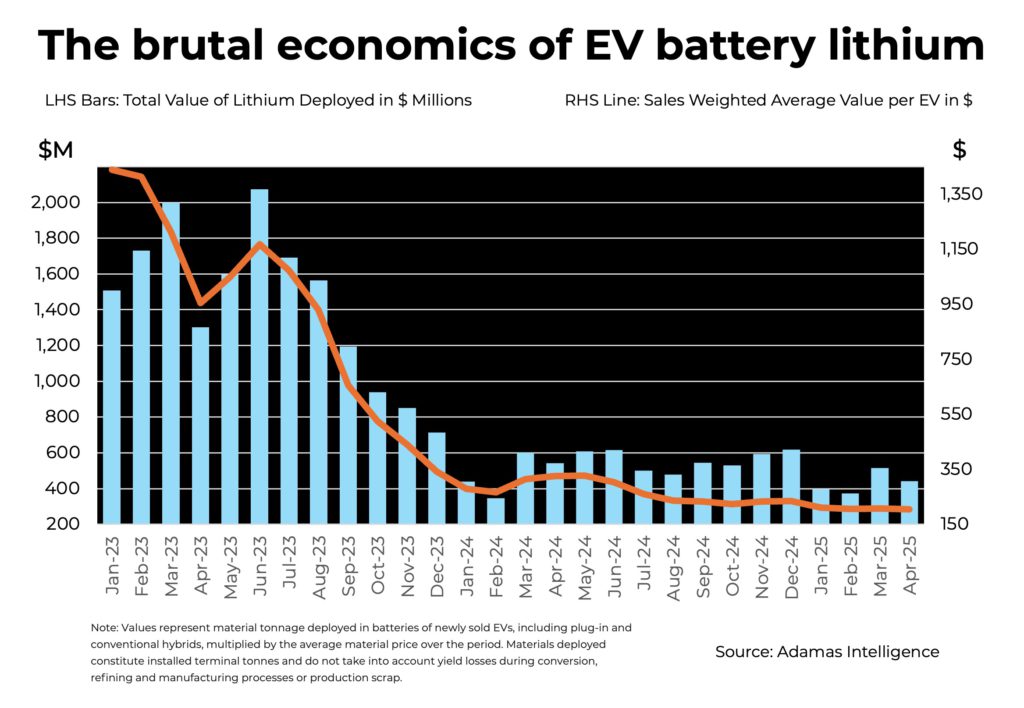
The value of terminal lithium tonnes deployed in EVs, including plug-in and conventional hybrids, sold around the world from January through May totalled $2.15 billion. 

The extent of the slump is illustrated by the monthly EV battery nickel tally, which is now higher than that of lithium, despite the significant move towards nickel-free batteries such as lithium iron phosphate chemistries and a cooling of nickel prices at the same time. 


The value of the lithium contained in the batteries of EVs sold in December 2022 alone reached $3.2 billion despite the fact that global unit sales were a fraction of what they are now and shipments skewed towards hybrids, which have inherently smaller batteries and therefore less contained metal than full electric cars. 

On a per EV basis the economics of lithium carbonate and hydroxide look even worse. From a peak of more than $1,900 per sales weighted average EV in December 2022, the installed lithium so far this year only averages just above $200 per vehicle. 

For a fuller analysis of the battery metals market check out the latest issue of the Northern Miner print and digital editions.

* Frik Els is Editor at Large for MINING.COM and Head of Adamas Inside, providing news and analysis based on Adamas Intelligence data.


CAPITALI$M 101

Lithium industry bemoans ‘paradox’ of low prices, rising demand

Image courtesy of SQM.

An ongoing slide in lithium prices even as demand for the battery metal continues to climb is a frustrating “paradox” not likely to be resolved before at least 2030, the world’s largest producers told a major industry conference this week.

Once a niche metal used primarily in greases, ceramics and pharmaceuticals, lithium’s use in electric vehicles, large-scale battery storage and other electronic applications has grown rapidly, with demand up 24% last year and likely to grow 12% annually for the next decade, according to data from consultancy Fastmarkets.

Oversupply from China, however, has dragged prices down more than 90% in the past two years, fueling layoffs, corporate buyouts and project delays across the globe.

“We’ve got market pain, but on the other side is the strategic gain. That is the lithium paradox,” Dale Henderson, CEO of Australian lithium miner Pilbara Minerals, told the Fastmarkets Lithium and Battery Raw Materials Conference in Las Vegas.

One long-time conference attendee described the mood at this year’s conference using the stages of grief as a metaphor. Last year’s conference reflected denial, with the sentiment in 2025 one of acceptance, he said.

Despite the price drop, attendance at the conference – considered the world’s largest annual gathering of lithium investors, executives and consumers – fell only 9% from last year to roughly 1,000, according to organizers.

“It’s quite hard to imagine a future where lithium doesn’t play a central role in the global economy,” said Paul Lusty, head of battery raw materials research at Fastmarkets.

Chinese miners have stockpiled supply that likely will only come down later this decade and lessen the market imbalance, he added.


Others have seen an even longer timeframe. Project Blue, another minerals consultancy, does not expect lithium demand to exceed supply until 2033 at the earliest.

“Lithium has no chill mode. It really is more volatile than a lot of other markets out there,” said Peter Hannah, head of pricing at Albemarle, the world’s largest lithium producer, which has cut staff and delayed expansion projects in response to the price drop.

Much of the conference side chatter focused on efforts to curb spending, with various lithium projects – especially direct lithium extraction (DLE) projects – touting efforts to lower costs.

“The issues with lithium are which mines can produce the highest quality product at the lowest cost,” said Ken Hoffman, a commodity strategist with mining investment bank Red Cloud Securities.

EnergyX, a DLE developer backed by General Motors, unveiled a study showing it could produce the metal in northern Chile with operating costs below $3,000 per metric ton. The estimates are preliminary, but underscore the industry’s push to spend less.

“Innovation is the solution to building a resilient battery supply chain,” said Chris Doornbos, CEO of E3 Lithium, which is developing a DLE project in Alberta.

Adding to the market tension, SQM – the world’s second-largest lithium producer – laid off 5% of its workforce this week.

“We do have other factors impacting the behavior of the market participants than just pure economics,” Andres Fontannaz, commercial vice president of SQM’s international lithium division, told the conference, a reference to how electric vehicles have become a political target in some countries.

The tension is even higher for lithium projects under construction and hoping prices rise by the time they open.

“This is a really tough industry to be in,” said Jon Evans, CEO of Lithium Americas, which is building North America’s largest lithium mine in Nevada. “It’s periods of euphoria followed by periods of pain and suffering, which we’re in now.”

(By Ernest Scheyder, Daina Beth Solomon and Fabian Cambero; Editing by Marguerita Choy)

Russia captures village in eastern Ukraine near lithium deposit

Stock image.

Russian troops have taken control of a village in eastern Ukraine which is close to a lithium deposit after fierce resistance from Ukrainian forces, a Russian-backed official said on Thursday.

The village of Shevchenko is located in Donetsk, one of four Ukrainian regions – in addition to Crimea – that Moscow has claimed as its own territory in annexations that Kyiv and Western powers reject as illegal.

The Russian Defence Ministry announced earlier on Thursday that Shevchenko had been taken along with another settlement called Novoserhiivka.

Reuters could not independently confirm the battlefield report and there was no immediate comment from Ukraine. Open source mapping from Deep State, an authoritative Ukrainian military blogging resource, showed Shevchenko under Russian control.

Soviet geologists who discovered the lithium deposit there in 1982 suggested it could be significant. It sits at a depth that would allow commercial mining, and Russian-backed officials have suggested it will be developed when the situation permits.

“The village of Shevchenko, which is located on the border with the Dnipropetrovsk region, is another settlement that has a lithium deposit. This was one of the reasons why the Ukrainian armed forces sent a huge number of their soldiers to hold it,” Igor Klimakovsky, a Russian-appointed official in Donetsk, was cited by the state TASS news agency as saying on Thursday.

The Ukrainian Geological Survey says the deposit is located on Shevchenko’s eastern outskirts and covers an area of nearly 40 hectares.

Parts of the Russian press incorrectly claimed in January that the Shevchenko deposit had already been captured, confusing it with the seizure of another settlement of the same name elsewhere.

Lithium is a coveted global resource because of its use in a host of industries and technologies from mobile phones to electric cars. Ukraine has reserves of about 500,000 tons, and Russia has double that, according to US government estimates.

(By Andrew Osborn; Editing by Mark Trevelyan)


ABS Expands Network of Learning Hubs with New Hellenic Ship Safety Center

ABS
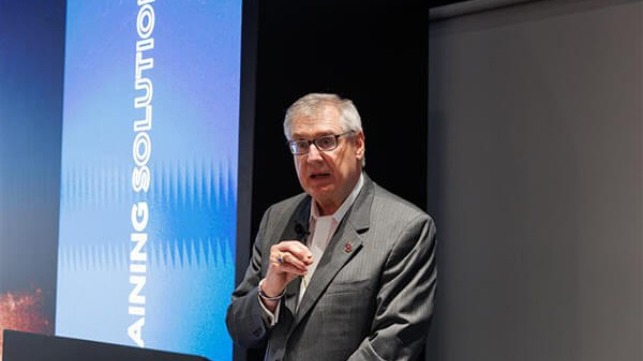
ABS Chairman and CEO Christopher J. Wiernicki speaks at the opening of the ABS Hellenic Ship Safety Center in Athens.

Published Jun 26, 2025 8:52 PM by The Maritime Executive


[By: ABS]

ABS opened the doors on its latest training center, the Hellenic Ship Safety Center in Athens, harnessing the power of new immersive training techniques, game-based learning and virtual reality environments for the Greek shipping community.

Greek shipping leaders joined ABS executives at the opening celebration for the new facility that features computer simulation stations, collaboration areas and a training room for virtual reality and game-based scenarios and interaction.

ABS Chairman and CEO Christopher J. Wiernicki said: “The ABS Hellenic Ship Safety Center is expressly designed to equip our people with the knowledge, tools, and confidence to operate safely in a rapidly evolving maritime landscape. This center will pioneer immersive learning techniques, using virtual and augmented reality to create powerful, hands-on training experiences. Through simulated environments, learners can walk through a ship, interact with systems, and practice procedures, all before ever stepping on board.”

Among the honored guests was Dimitrios Fafalios, President of Fafalios Shipping S.A., who said: “Shipping is the daily management of change, and shipping is facing many challenges with new technologies and alternative fuels. It falls to our seafarers to be trained to overcome these challenges and this is why the ABS Hellenic Ship Safety Centre (HSSC) is so important.”

The Athens location is the latest in a family of dedicated centers from ABS, others are in Doha and Singapore, that are designed to prepare seafarers to handle a multi-dimensional industry with alternative fuels and emerging technologies.

The training facilities also feature the new ABS MetaSHIP Fleet: the ABS Spirit, the ABS Eagle, and the ABS Integrity, are highly realistic virtual vessels, built to scale from actual ship drawings. They allow learners to conduct virtual field trips, select vessel types and ages, and perform inspections, surveys, and documentation—all in a safe, controlled environment.

“With MetaSHIP, a trainee can spend hours on the deck plate of a vessel—inspecting equipment, reviewing certificates, and documenting findings—before ever setting foot on a gangplank. This is the future of maritime training, and it’s happening right here in Athens,” said Wiernicki.

The Athens center, which has the support of the Hellenic Ministry of Maritime Affairs and the Union of Greek Shipowners, will address critical emerging safety issues such as handling dynamic fuels, risks generated by cyber-enabled systems, hybrid battery propulsion and other technological driven changes onboard.

ABS Training Solutions offers a premium curriculum of targeted training to meet the technical, operational and management needs of the marine and offshore industries. Learn more here. Explore the catalogue of available courses through ABS Training Solutions here.

The products and services herein described in this press release are not endorsed by The Maritime Executive.


Shanghai Demonstrates Ship-to-Ship Transfer for Captured CO2

CO2 STS
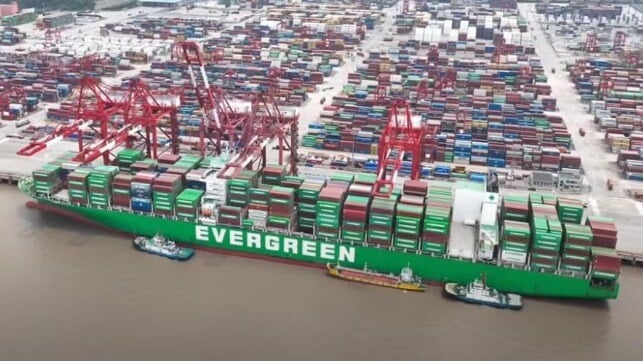
Ever Top docked in Shanghai with the CO2 barge vessel alongside for first STS operation

Published Jun 25, 2025 7:15 PM by The Maritime Executive


The Port of Shanghai was the location for the first demonstration of a ship-to-ship transfer of CO2 captured from a large Evergreen containership during its operations. According to the Chinese officials, it was a key advancement in the efforts to develop CO2 capture for in-service vessels to meet emission regulations.

The operation took place on June 19 at the Yangshan Deepwater Port’s Shengdong Terminal, where the Ever Top (152,300 dwt) was docked for container handling. The vessel was retrofitted in 2024 by China State Shipbuilding (CSSC) with a CO2 capture system designed by Shanghai Marine Diesel Research Institute. The Ever Top was fitted with an absorption module, a regeneration module, compression refrigeration, and storage. According to the reports, it can capture over 80 percent of CO2 emissions with 99.9 percent purity, and it is then stored aboard the vessel until being offloaded in port.

The offloading and storage component is cited as one of the challenges to making shipboard CO2 capture economical and practical. In the past, the vessel has offloaded to trucks, and in May 2024, a tank was offloaded from the vessel. This process is slower and more cumbersome, and limited to where it can be conducted.

A barge vessel, De Jin, similar to a bunker barge was positioned alongside the docked containership for the transfer. Chinese authorities report it was the first ship-to-ship transfer from a CO2capture system.

Among the advantages they highlight is a greater capacity than the trucks and greater flexibility where the CO2 can be offloaded. Using STS, they report addresses bottlenecks and will be significantly cheaper than land transport for the captured CO2.

The CO2 once captured from the vessel’s operations and transferred to shore is designated for reuse in a broad range of industrial applications. The Chinese authorities contend it could also become a source of income for a vessel, with the possibility of generating up to $8 million per year from the sale of the CO2.

CO2 capture is seen as an economical step for retrofitting in-service vessels to extend their service life in the face of emerging emissions regulations. Evergreen reported spending about $10 million to retrofit the Ever Top with the onboard system, far less than the cost of a new vessel or converting the ship to operate on alternative fuels.


U.S. Coast Guard Cutter Healy Departs Seattle for 2025 Arctic Deployment

USCH Healy departing Seattle
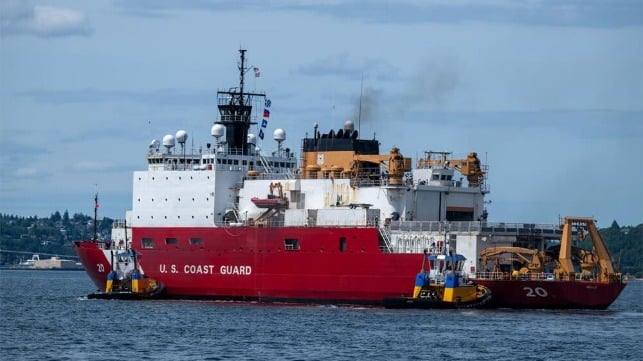
Healy departed Seattle on June 19 for its 2025 mission to the Arctic (USCG)

Published Jun 25, 2025 7:20 PM by The Maritime Executive


The U.S. Coast Guard Cutter Healy is again underway for its annual mission to the Arctic as one of only two large icebreakers currently operational for the United States. She departed her homeport of Seattle, Washington, on June 19 for what the USCG reports will be a “months-long” deployment. 

The icebreaker, which was commissioned in 1999, provides the USCG’s primary presence each year in the Arctic. She completed her last deployment returning to Seattle on December 12, 2024, after a 73-day Arctic mission that included scientific research, search and rescue, and training exercises.

Her 2024 deployment, however, was interrupted by an electrical fire in the engine room, which forced her to return to Seattle for repairs at the beginning of August. The USCG said it was a precaution to ensure the vessel would be fully operational, and they rushed her back into the Arctic in October. Healy is the United States' only icebreaker designed and equipped with scientific instruments to support high-latitude Arctic research. 

This year, the 420-foot icebreaker will support two high-latitude missions to study the formation and movement of sea ice and the pathways followed by Atlantic and Pacific waters in the Arctic, and ocean circulation patterns in the East Siberian and Laptev seas. 

The first mission will be a collaboration with the Office of Naval Research (ONR) to deploy and service instruments for its Arctic Mobile Observing System (AMOS). The system advances autonomous, mobile observing methodologies to enable studies of sea ice dynamics and improve understanding of the circulation of water masses in the Arctic. AMOS focuses on developing technologies and approaches for creating a scalable observing system for sustained, persistent presence in the ice-covered Arctic.

The second mission will be in partnership with the U.S. National Science Foundation (NSF) and will include recovering, servicing, and deploying long-term subsurface mooring arrays. They will also be conducting multidisciplinary surveys in support of the Nansen and Amundsen Basins Observational System (NABOS).

“We are eager to return to the Arctic,” said Healy’s Commanding Officer, Capt. Kristen Serumgard. “Healy is uniquely positioned to advance scientific understanding of the Arctic environment, directly supporting security and defense of the nation’s northernmost borders and maritime approaches.”

Serumgard assumed command of Healy earlier this month, having previously served as chief of operational forces at the Coast Guard’s Atlantic Area Command.

The USCG has been working to keep the aging vessel operational while it awaits a new generation of polar security cutters, which are badly delayed and behind schedule. The USCG acquired a commercial icebreaker as an interim measure while Donald Trump has committed to expanding the icebreaker fleet.

Five Crewmembers Caught Smuggling Drugs on Tanker in Zeebrugge

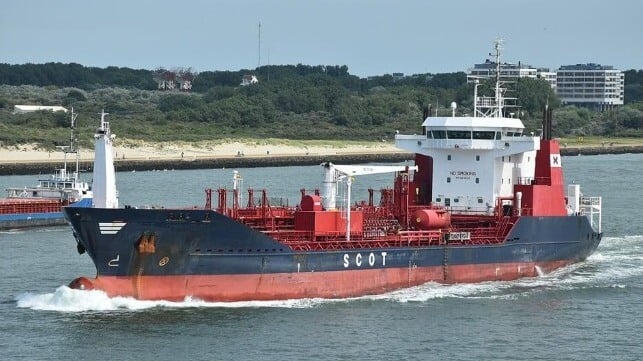
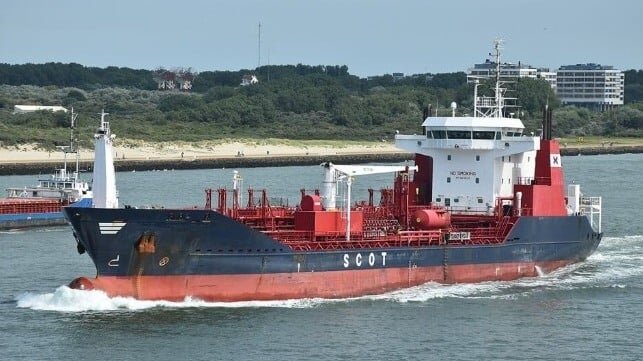
A sister ship of Scot Bremen (Niels Johannes / CC BY SA 4.0)

Published Jun 26, 2025 11:53 PM by The Maritime Executive


Five crewmembers from the product tanker Scot Bremen have been arrested after the vessel's master found out that they were concealing packages of narcotics, operator Scot Tankers said Thursday. The update adds new dimensions to the story of the seizure, which Belgian authorities announced earlier this week

On Friday, Scot Bremen arrived off Ostend, Belgium on a voyage from the small port of Pecem, Brazil. She anchored to await a pilot and her entrance into port. 

Two days later, the master of Scot Bremen discovered that five ratings "were concealing suspected packages" on board, Scot Tankers said in a statement. He canceled the pilot boarding, notified Belgian authorities, isolated the crewmembers, and collected their cell phones. 

Weather at the time was too poor for police to come out to the anchorage and board the ship for an inspection, so the tanker waited overnight. On Monday evening, Scot Bremen navigated to the nearby port of Zeebrugge, where Belgian customs boarded her and seized "significant quantities" of cocaine. 

Five members of the crew were detained by Belgian police. The master was questioned as a witness and released, and the Scot Bremen has been cleared to continue on her commercial voyage. 

"Both the police and the Public Prosecutor’s office have commended the master for his conduct in reporting the matter, preserving evidences, and assisting the investigation," said Scot Tankers in a statement. 

Scot Tankers arranged for replacement crewmembers to join the ship on Thursday, after which the ship will depart for its next port of call, the small town of Zelzate, Belgium. The company continues to work with Belgian authorities on the matter of the smuggling case. 

In addition to the five suspects from Scot Bremen, eight men were arrested while launching a boat at a marina in nearby Blankenberge, Belgium on Sunday. Local media reports suggest that they are suspected of attempting to retrieve the cocaine from the tanker while it was off the coast. They have been held on suspicion of forming a gang while the investigation continues, according to Belgian news agency Belga. 

Top image: A SCOT-8000 tanker (Niels Johannes / CC BY SA 4.0)


Belgian Police Bust Cocaine Smuggling Attempt on Product Tanker

A sister ship of Scot Bremen (Niels Johannes / CC BY SA 4.0)

Published Jun 25, 2025 9:22 PM by The Maritime Executive


On Monday, authorities in Belgium seized a cargo of cocaine from a small tanker - along with eight men who may have been preparing to head out to sea to pick it up. 

At about 2100 hours GMT last Friday night, the Turkish-owned product tanker Scot Bremen arrived off the coast of Ostend, Belgium on a voyage from Brazil. She anchored offshore for the next three days. At about 1500 hours on Monday, she got under way once more and put into port at Zeebrugge. On her arrival, customs agents found hundreds of kilos of cocaine on board, according to local media. 

The case is believed to be linked to an arrest that local police accomplished on Sunday. That night, eight men were spotted launching a boat into the water at the Blankenberge marina, roughly 15 nautical miles to the southeast of where Scot Bremen was anchored at the time. All eight men were arrested, and an investigating judge in Bruges has ordered them held on suspicion of forming a gang. 

So far, prosecutors have not specifically charged them with smuggling offenses, but Belgian news agency Belga reports that the men are suspected of attempting to head out to sea to retrieve cocaine - and their arrest led to the drug intercept aboard Scot Bremen. 

Scot Bremen is a 2003-built chemical tanker flagged in Malta. Formerly Wappen von Bremen, she is one of eight specially-constructed sister ships acquired in 2015 by a Turkish shipmanager. The Scot Bremen usually trades between North America, Northern Europe and the Mediterranean, but this year she made two runs to the small port of Pecem, Brazil - one call in April and one more in early June, according to AIS data provided by Pole Star. 

Brazil's biggest seaports are well-known as powerhouses of the global cocaine trade; the risk of smuggling at smaller ports like Pecem is also growing, local authorities say. Focused enforcement at the main hubs may be squeezing criminal activity out into regional ports, according to Brazil's Federal Revenue Service. 

"While larger port complexes such as Santos, Paranaguá, and Rio de Janeiro rank among the top exporters of cocaine . . . all Brazilian ports – regardless of their location and size – are susceptible to varying degrees to the actions of sophisticated and powerful criminal organizations," warns P&I correspondent Proinde. 

Top image: A SCOT-8000 tanker (Niels Johannes / CC BY SA 4.0)


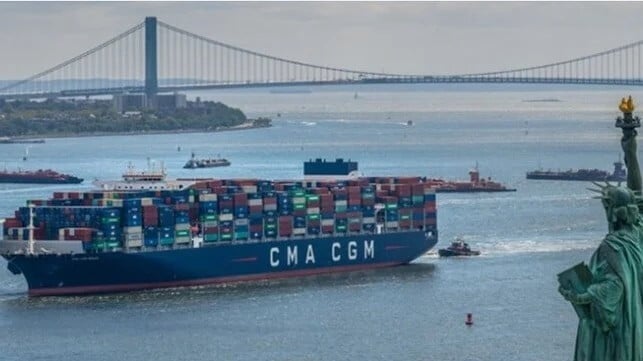
Port of NY/NJ Claims Title of Busiest U.S. Port in May

Port of New York and New Jersey
Port of New York and New Jersey claimed title of busiest U.S. container port in May (Port Authority)

Published Jun 27, 2025 12:35 PM by The Maritime Executive


For the second year in a row, the Port of New York and New Jersey is claiming the title of the busiest U.S. container port in May. The East and West Coast pros have a running rivalry, but this year SoCal was hindered by the tariffs against Chinese imports which were far more severe than the Trump administration's plans for Europe.

Data released today from the Port of New York and New Jersey shows a total of 774,698 TEU in May, which compares with 716,619 TEU for the Port of Los Angeles and 639,160 TEU for the Port of Long Beach. Californians, however, argue the two SoCal ports should be calculated as one entity for the full picture on imports.

The East Coast port commented that its May performance shows “strong resilience through its diversified supply lines despite tariff-related uncertainties across the supply chain.”

The volume in the Port of New York and New Jersey was up three percent of April 2025 but it was down two percent from May 2024 when the port notes it was absorbing additional cargo volume due to the closure at the Port of Baltimore due to the collapse of the Francis Scott Key Bridge struck by the containership Dali. Compared to pre-pandemic, New York and New Jersey note volumes are up 20 percent versus May 2019.

East Coast ports are showing a strong May this year despite the uncertainty of tariff policies. Savannah, Georgia, also recorded its second-busiest May, handling 500,900 TEU. Georgia Ports noted that it was the third month in a row that the port was over half a million containers.

West Coast ports, by contrast, were calling for a comprehensive trade policy, saying that May was strongly impacted by the Trump trade policy and tariffs. The Port of Los Angeles said May 2025 was the first decline after 10 months of year-over-year growth. Los Angeles volume was off five percent year-over-year, while Long Beach recorded a more than eight percent decline in volumes for May 2025.

Both ports were confident that they would see a rebound in volumes first with the temporary agreement between the U.S. and China, and now, today, June 27, both countries confirmed the first terms of a trade framework. China said it would involve rare earth minerals and a relaxation of restrictions on technology. The White House confirmed the agreement saying it was a further step in the previous agreement for the framework reached in Geneva and called the new agreement a further “de-escalation” of trade tensions. 

A further easing would be good news for the West Coast ports, which are the primary gateway for Chinese goods. Port officials are hopeful that it was a temporary situation noting that for the first five months of 2025, the two California ports remain the leaders in the U.S. Each handled approximately 4 million TEU in five months compared to just over 3.7 million in the Port of New York and New Jersey so far in 2025.

New York and New Jersey’s volume this year increased 6.5 percent over 2024 and is more than 22 percent ahead of the first five months of 2019. Los Angeles, by comparison, was up 4 percent so far in 2025, while the Port of Long Beach had the strongest start to the year up more than 17 percent in the first five months.
 

Norway Awards $15M in Grants for Nine Port Improvement Projects

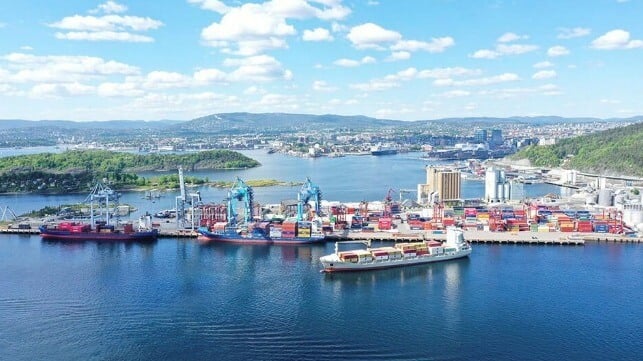
Oslo Norway
Oslo receives three grants as part of the government's investment in ports (Oslo Havn)

Published Jun 26, 2025 7:21 PM by The Maritime Executive


The Norwegian government is committed to strengthening the country’s coast and maritime transport system. This year, it has selected nine port projects from a long list of proposals, which will receive government support, while it also plans future programs focusing on the green transition.

The government reports it has pledged a total of NOK 155 million ($15 million) in support for nine projects through a subsidy scheme for efficient and environmentally friendly ports. The funds will contribute to more efficient ports, better logistics, and lower emissions.

Among the proposals selected are three projects for Oslo, as well as projects in Bodø, Kristiansand, and three other ports. They include projects for digitalization, upgrading of quays, better access roads, and dredging to reduce waiting times and increase capacity.

“State support for investments in port infrastructure is crucial for realizing good projects that would otherwise not have been implemented,” said Minister of Fisheries and the Oceans Marianne Sivertsen Naess. “Efficient and environmentally friendly ports are important for businesses that depend on safe and efficient transport to and from the market.”

Norway launched the subsidy scheme for efficient and environmentally friendly ports in 2019, and it is run by the Norwegian Coastal Administration. The scheme provides financial support for up to 80 percent of the total investment and can be used for both physical facilities and digital solutions. It aims to promote green transition in the transport sector and strengthen the role of maritime transport in the national transport system.

The Norwegian Coastal Administration reports that this year it received 19 applications for more than 300 million kroner ($30 million). 

In Norway’s National Transport Plan 2025-2026, the government announced that the subsidy scheme will be reviewed to align even more closely with the green transition. During the plan period, it is proposed to allocate 125 million kroner ($20 million) annually to the scheme.


Maersk Sues as Controversy Emerges Over Bidding for Santos’ New Terminal

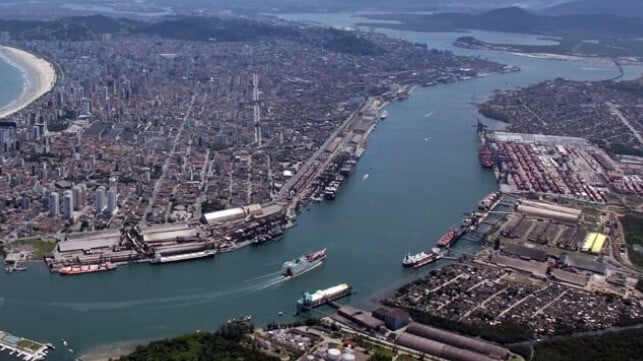
Santos Brazil
Santos is the largest port in South America (file photo)

Published Jun 26, 2025 5:19 PM by The Maritime Executive


While the final rules are still being reviewed and contested for what stands to be Brazil’s largest ever port auction, controversy is swirling around the auction, which is due to launch late this year. Reuters is reporting that Maersk’s AMP Terminals has taken the first step to contest the rules by filing a lawsuit in the Brazilian courts, while MSC’s TiL told Reuters it was also considering a legal action.

The port of Santos is not only Brazil’s largest container port, but it is also the largest in South America, and its expansion is viewed as a major prize for the international carriers. Antaq, the government agency that oversees the ports, has said Santos will run out of capacity in a matter of years and called the plans for Tecon 10 a critical step in the future of the port.

Antaq announced its plans for the auction earlier this month, and despite strong international interest, it said the bidding would be limited to exclude companies with current operations in Santos. They contend it will draw new investment to the port for a project that is expected to require an investment of nearly $1 billion on the 25-year concession. 

Reuters speculates that the rules, however, open the opportunity for Asian rivals to gain a major foothold in the port and South America. China has been investing heavily in developing ports in South America, including the new Chancay megaport in Peru, which was dedicated in November 2024. China Merchants Port Holdings Co. reported in February 2025 that it completed an agreement calling for it to acquire 70 percent of Vast Infraestrutura, owner of Brazil’s only privately operated VLCC terminal. 

Among the domestic competitors for the new terminal, Reuters reports Brazilian meat packer JBS could be a contender. The company took over the container terminal at Itajal in southern Brazil.

Maersk and MSC have both been posturing to expand their positions in Santos and the Brazilian market despite opposition from domestic operators. In 2023, APM Terminals announced plans to invest up to $1 billion in its terminal operations in Brazil. The company shares the operation of an existing terminal in Santos with MSC. At the end of 2023, it was reported that Brazil’s Ministry of Ports and Airports, together with Santos Port Authority, had renewed the concession for Brasil Terminal Portuário (BTP) for 20 years after a more than two-year review. 

The companies committed to increasing their investment in the operations at the port of Santos. They said in 2023 that the terminal, which has a capacity to handle 1.5 million TEU, was at 95 percent of capacity.

Under the terms proposed for the new auction, companies with existing operations would only be eligible if a second round is required after no viable proposals were submitted in the first round. Even then, the operators would have to commit to divesting their other holdings in the port to win the concession for the new terminal.

Maersk declined to comment to Reuters on the legal action but said it wants “a more transparent process.” It is calling for a fair competition for the new terminal concession.


Santos Grants ADNOC Six Weeks for $19 Billion Takeover Review

Santos has granted exclusive due diligence access for six weeks to the consortium led by Abu Dhabi’s ADNOC that has made an $18.7 billion non-binding takeover bid for the Australian energy giant. 

Santos, which earlier this month received – and plans to accept – the offer, has now entered into a process and exclusivity deed with XRG, a subsidiary of Abu Dhabi National Oil Company and lead investor of a consortium including Abu Dhabi Development Holding Company and Carlyle, the Australian gas giant said on Friday. 

The XRG Consortium has submitted a non-binding indicative proposal to acquire 100% of the issued shares of Santos for US$5.76 (A$8.89) per share in cash. This would mean an US$18.7 billion deal, which would be the biggest cash transaction in Australia in recent history. 

The XRG Consortium has also agreed to a confidentiality agreement with Santos, the Australian company said.  

“Santos notes that there is no certainty that the XRG Consortium will enter into a binding SID or that a Potential Transaction will proceed,” it added. 

Santos operates two large LNG facilities in Australia: Darwin LNG and Gladstone LNG. Santos is also the majority shareholders in the PNG LNG project in Paua New Guinea, after taking over Oil Search back in 2021. PNG LNG is considered one of the lowest-cost LNG projects globally and, according to Reuters, is the most attractive of its assets. The company also recently got the green light on another gas project, this time an onshore coal seam project, which will supply the local market and which will cost $2.3 billion to develop. 

While the Australian company’s leadership may be in favor of the deal, regulators may have misgivings, which makes the future of the deal uncertain. Santos controls critical energy infrastructure in Australia, MST Marquee senior energy analyst Saul Kavonic said, as quoted by Reuters, which could make regulatory approval of its takeover by a foreign company a challenge.  

By Tsvetana Paraskova for Oilprice.com