Friday, June 27, 2025

Why Ukraine's NATO and EU Bids Stalled This Week

  • Ukraine experienced significant setbacks in its ambitions to join both NATO and the European Union at recent summits, failing to secure concrete progress or invitations.

  • The NATO summit in The Hague, with Donald Trump as a key figure, provided no explicit language on Ukraine's future membership, shifting focus to financial support.

  • Hungary's continued opposition, supported by a consultative referendum, blocked Ukraine's progress in EU accession talks at the Brussels summit, despite the readiness of other member states.

This could have been a momentous week in Ukraine’s long-term wish of joining the European Union and NATO. In the end, it wasn't.

As leaders of the two institutions met for key summits in Brussels and The Hague respectively, Kyiv’s eventual membership of both should have been a centerpiece.

Instead, Ukraine is no closer to joining either — and the many obstacles in the war-torn country's path to the Euro-Atlantic community were on full display.

Just like in Vilnius a year ago, Ukraine was frustrated that it didn’t get an invitation, but the final declaration gushed about the country.

“We fully support Ukraine’s right to choose its own security arrangements and decide its own future, free from outside interference. Ukraine’s future is in NATO,” the text reaffirmed before adding “as Ukraine continues this vital work, we will continue to support it on its irreversible path to full Euro-Atlantic integration, including NATO membership.”

Joe Biden, the US president at the time, was reluctant to go further, with Kyiv engaged in direct conflict with Russia.

Germany was quietly backing Washington’s stance but the warm language and “the guest of honor” treatment of Ukrainian President Volodymyr Zelenskyy at the summit was indicative of an aspirant country that soon would transform to a full-fledged ally.

At this year’s NATO summit in The Hague, the scenes could not have been much starker.

Biden is no longer president. In his place is Donald Trump, who has openly dismissed Ukraine’s chances of joining for years.

And the new reality was on display everywhere.

There was no NATO-Ukraine Council on leaders’ level. No one talked openly about Ukraine’s eventual membership and there were no words about it in the final declaration.

Instead, there was just a line that allies can count financial support to Kyiv as part of the military alliance’s new defense spending target.

Granted, Zelenskyy was present at the summit dinner. He met all relevant leaders, including a bilateral with Donald Trump that according to all read-outs went well. Trump even said he was nice, opened up for potential Patriot deliveries to Ukraine, and seemed to show willingness to press the Russian President Vladimir Putin to come to the table.

But in reality, Ukraine got nothing concrete, niceties aside.

Washington is still reluctant to sanction Russia, the Europeans are shying away from their signature proposal to lower the Russian oil price cap, and when it comes to NATO membership, Kyiv is further away now than it was a year ago.

The fact that officials said it was a success that Trump didn’t treat Zelenskyy badly and that the Ukrainian didn’t complain about the lack of outcomes shows how low expectations were.

"I don't consider the summit a failure for Ukraine. On the contrary, we got the maximum of what is realistically possible for today," Volodymyr Fesenko, a Ukrainian political scientist told Current Time.

"The fact is, even in the highly condensed NATO communiqué, there’s a dedicated point about continued support for Ukraine under current conditions -- and that’s exactly what we need. Not some abstract statement or vague promise that we’ll join NATO at some undefined point in the future."

At an EU summit in Brussels a day later, the story of dashed hopes was eerily similar.

At the same June summit in 2022, Ukraine was granted EU candidate status and exactly a year ago the same gathering decided to formally start accession talks.

This year, the stated goal from both Kyiv and Brussels was to officially open several of the six negotiation clusters needed to become a member.

Both the European Commission and 26 of the 27 EU member states believe that Ukraine is ready for this, but there is a need for unanimity to make it happen.

And so far, Hungary has not played ball. Quite the opposite.

In the run-up to the summit, Hungarian Prime Minister Viktor Orban presented the results of a consultative referendum in the Central European country in which over 2 million people, or 95 percent of those who cast ballots, had voted against Ukrainian EU membership.

Going into the meeting he said that “the problem is the war, if we integrate Ukraine, we integrate the war.” When pressed by RFE/RL if he would change his mind if there is a cease-fire, he simply retorted that there isn’t one.

The fact that draft summit conclusions of just EU-26 had been drawn up in advance shows that the Budapest blockage is taken for granted.

The text notes member states invite "the Council to take the next steps in the accession process in line with the merit-based approach, with clusters being opened when the conditions are met. It takes good note of the assessment of the Commission that the fundamentals cluster is ready to be opened. The European Council will revert to this issue at its next meeting.”

It's symbolic support of Kyiv’s EU integration, but practically it means nothing.

It was also indicative that Zelenskyy didn’t show up in person in Brussels, addressing the leaders via videolink instead.

EU officials cited “logistical reasons” for his absence, which is curious considering that he managed to be in both The Hague and that he addressed the Council of Europe in Strasbourg the day before.

While there are hopes that Hungary might give in soon, perhaps even later this summer, most European officials concede that the veto might last all the way up to the Hungarian parliamentary election slated for April 2026 as the issue of Ukrainian EU integration now has crept into the national debate.

It is also telling that no more EU countries have put bigger pressure on Hungary to give the green light.

But there are other things that are more important right now.

Take the need to get the country onboard when it comes to agreeing on new Russia sanctions and to roll over those imposed in the last three years, something that happened at the summit.

But then there is a sense in European capitals that some countries secretly are quite comfortable with slowing down Ukraine’s EU accession.

And this goes beyond Hungary and Slovakia, which has expressed reservations on moving forward too quickly.

Poland recently elected a new president, Karol Nawrocki, who didn’t shy away from criticizing Ukrainian agricultural imports to the EU or raise thorny historical issues between Warsaw and Kyiv. Czechia might elect a government in the autumn that would be decidedly less enthusiastic about Ukraine in general.

Ukraine’s most immediate neighbors clearly see that Ukraine will fight for the same EU funds that they are counting on in the coming years. And even further West, there are reservations about being too quick in taking in a big and poor country locked in a bloody conflict with a nuclear superpower.

The club itself must undergo reforms for such an addition to the family and those reforms are both politically and financially painful.

Unlike its NATO bid, Ukraine’s EU membership is not off the table.

But this week has shown that the ambitious goal of getting Kyiv in by 2030 might have to be revised. “Let’s just say that the 2030s sounds more feasible now,” as one diplomat put it.

By RFE/RL 

UK Car Output Hits 76-Year Low

  • UK car production in May plunged to 49,810 units, marking a 33% year-on-year drop and the worst monthly performance since 1949, outside of COVID-19 lockdowns.

  • The significant decline was largely driven by Donald Trump's steep tariffs on foreign-made cars, leading British firms like Aston Martin and Jaguar Land Rover to suspend US-bound shipments.

  • A new UK-US trade deal, effective June 30th, will reduce automotive import tariffs, offering a potential boost to the struggling UK car manufacturing sector, which also faces pressures from the zero-emission vehicle mandate.

UK car production plunged to its lowest level since 1949 last month, as Aston Martin and other British carmakers halted exports to the United States amid president Donald Trump’s escalating trade war.

Data released on Friday by the Society of Motor Manufacturers and Traders (SMMT) found that UK factories turned out just 49,810 cars and vans in the month of May, down 33 per cent on the year and the worst monthly performance in 76 years, outside the COVID-19 shutdowns of 2020.

The collapse comes after Trump imposed steep tariffs on foreign-made cars, prompting British firms like Aston Martin and Jaguar Land Rover to suspend US-bound shipments from April.

Exports to the US fell by 55 per cent in May, slashing the American market’s share of UK automotive exports from 18 per cent to just 11 per cent.

Exports to the EU, meanwhile, dropped 22.5 per cent.

The trade standstill could ease next week, however, when a new UK-US trade deal comes into force.

Under the agreement, the US will reduce its automotive import tariff from 27.5 per cent down to 10 per cent of the first 100,000 UK-made vehicles shipped annually.

The deal, announced by Trump on 16 June during the G7 summit in Canada, follows weeks of turbulence triggered by his so-called ‘liberation day’ tariffs blitz, which raised levies across steel, car and aluminium imports from US trading partners.

Aston Martin in the spotlight

Aston Martin, which had slashed exports to the US at the end of April in response to tariff chaos, saw its shares plunge from 119p to below 60p during the height of the fallout.

Although the FTSE 250 stock rallied nearly 13 per cent on the day the deal was announced, it has since remained stuck in a rut, closing at 70p on Wednesday.

The carmaker’s chief executive, Adrian Hallmark, said the firm was now scrambling to capitalise on the new trade window.

He said: “It comes live on the 30th June… so we’re planning to invoice three months’ worth of sales in a 24-hour period.”

Still, Hallmark welcomed the deal, noting that British carmakers were now “less worse off than some of (their) European and non-European competitors”.

Wider industry pressures

Mike Hawes, chief executive of the SMMT, acknowledged the damage inflicted by the tariff war: “While 2025 has proved to be an incredibly challenging year for UK automotive production, there is the beginning of some optimism for the future”.

He remained optimistic, pointing to the trade truce and the UK’s new industrial strategy, which promises to cut energy costs for manufacturers by up to 25 per cent.

Even before the tariff flare-up, Britain’s carmakers were facing growing pressures.

The government’s zero-emission vehicle (ZEV) mandate, which compels manufacturers to hit rising EV sales targets, has triggered structural changes across the sector.

Stellantis last year cited the cost of ZEV compliance in its decision to close its Luton factory and consolidate products at Ellesmere Port.

Ford, meanwhile, cut 800 UK jobs as part of a broader European retrenchment.

Cyril Aboujaoude, co-founder of private equity firm Tioopo Capital, said: “This deal has the potential to mark a positive shift in the UK-US industrial trade, but its long-term value will depend on more than short-term quota relief.”

He added: “Long term visibility is essential – not just for the major auto manufacturers, but for the mid-sixed, high spec engineering firms that represent the future of UK innovation”.

By City AM 

Oil-Rich Alberta Forecasts Unexpected Budget Surplus

Alberta expects to have booked a budget surplus of about US$4.2 billion (C$5.8 billion) for the fiscal year 2024-2025 that ended in March, as Nate Horner, the finance minister of Canada’s oil-producing province, prepares to deliver the year-end fiscal update later on Friday. 

The unexpectedly large surplus for 2024-2025 was due to higher resource royalties, RBC said earlier this year.   

However, Alberta expects a large deficit of about US$3.8 billion (C$5.2 billion) for the current fiscal year 2025-2026 which began in April.  

The expected deficit, which would be the first after four consecutive years of surpluses, is attributed to the U.S. trade risks and weaker oil and gas revenues.  

Alberta is actively working to boost oil production and export outlets, to diversify its oil exports from the United States. 

Alberta could receive within weeks a proposal from a private company for a new pipeline from the oil-rich province to British Columbia’s northwest coast, Alberta Premier Danielle Smith told Bloomberg News in an interview earlier this week. 

A new pipeline to Canada’s northwest Pacific coast “is the most credible and the most economic of all of the pipeline proposals the private sector would consider,” Smith told Bloomberg, declining to name any companies potentially involved in the project.

Earlier this month, Smith said that Alberta is working to engage private backers for a new pipeline to ship about 1 million barrels per day (bpd) of crude from Canada’s oil-producing province to British Columbia.

The expanded Trans Mountain route is currently the only pipeline shipping Alberta’s landlocked crude for exports on tankers from the West Coast.

Alberta has been a vocal supporter of increased pipeline takeaway capacity from the province and now looks to have more options to sell crude to non-U.S. customers.

Earlier this month, Canadian Prime Minister Mark Carney pledged that the federal government would work to fast-track major projects to make Canada an energy superpower.   

By Charles Kennedy for Oilprice.com


ASM reaches commercial production at Virginia mineral processing operations 


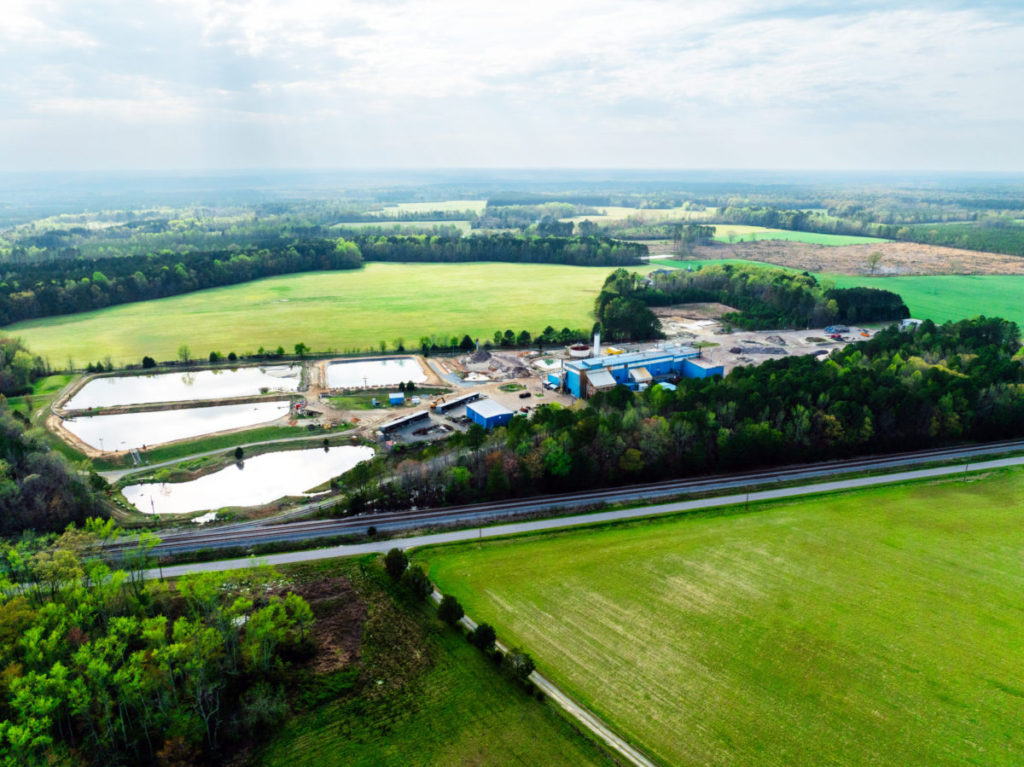
Atlantic Strategic Minerals’ mineral processing facilities in Virginia. Image: ASM.

Atlantic Strategic Minerals (ASM) announced Thursday it has reached commercial production at its commissioned mining and mineral processing facilities in Virginia.  ASM said historical and current investment in the project and its related facilities exceeds $200 million, including initial construction and the recent refurbishment.  

ASM is majority owned by Appian Capital Advisory and its Virginia operations represent the 12th mining project that Appian has brought into production since 2016. 

The company said the project comprises high-grade mining assets and processing facilities, including a concentrator plant and the largest mineral separation plant in North America.  

ASM said its opening of its Virginia mining and processing facilities marks a significant milestone for US economic security with the production of critical minerals ilmenite, which is a feedstock for titanium and pigment industries, and zircon, essential resources for industries ranging from consumer goods to advanced manufacturing and defense.   

Titanium and zirconium have been designated by the U.S. Government as critical minerals with domestic industries currently heavily relying on international imports to meet demand.    

ASM said the operation offers capacity to process domestic and imported critical minerals – building more secure US supply chains.   

The company said it has already delivered its first shipments of ilmenite and zircon, as part of long-term offtake agreements, to US industrial customers.   

In the next phase of development at its Virginia operations, ASM said it plans to produce monazite, a key mineral feedstock used in the production of rare earth oxides. Studies indicate that ASM’s monazite has significant concentrations of praseodymium (Pr) and neodymium (Nd), key materials for magnets used in electric vehicles (EVs), wind turbines and defense applications.   

With China currently processing approximately 90% of rare earths, the company said the project’s monazite production has the potential to significantly diversify and strengthen the US’ critical supply chains.  
“We are proud to officially commence production in Virginia, a project that not only strengthens the domestic supply of critical minerals but also plays a vital role in bolstering US economic and national security,” ASM CEO Chris Wyatt said in a news release.  


“It is a case study of how to responsibly and successfully bring a strategically important project into production, while also ensuring lasting benefits to local communities.”  


Greenland miner eyes US, EU deals after Trump boosted interest

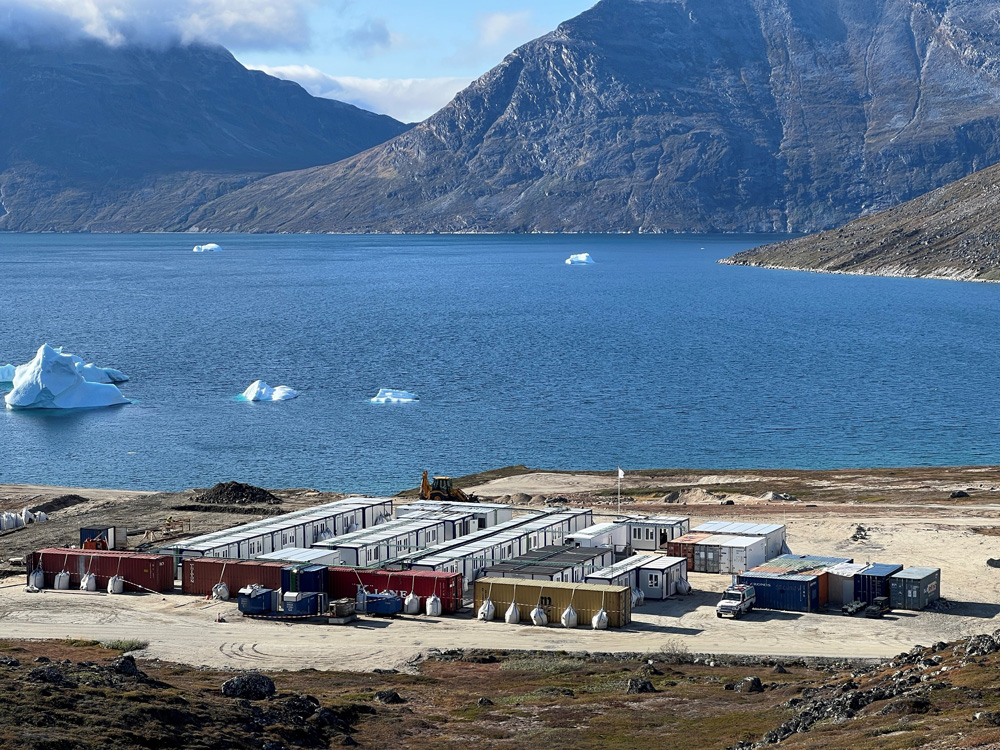
Amaroq’s principal asset is a 100% interest in the Nalunaq gold project. Credit: Amaroq Minerals

Greenland’s biggest miner Amaroq Minerals Ltd is in talks with several state-backed agencies as Donald Trump’s political spotlight translates into concrete investor interest, the company’s chief executive officer said.

The US and Europe are racing to secure critical minerals and reduce reliance on China, which currently dominates global supply chains for materials used in electric vehicles, wind turbines and defense technologies. Once dismissed as remote and inaccessible, Greenland is gaining strategic relevance as melting ice improves access to its mineral-rich terrain.

Amaroq, which operates a newly opened gold mine and holds the largest portfolio of mineral exploration licenses in Greenland, is in talks with a number of government-backed lenders and institutions in the US and the European Union about state loans, offtake agreements and direct investments, CEO Eldur Olafsson said in an interview. He declined to provide specific names.

“They are looking for ways to either back businesses, back mining projects, back energy projects,” Olafsson said. “They’re looking for ways to secure supply of certain minerals to the US, for example. And we see the same thing on the Danish side and the European side.”

His Toronto-based company saw a rush of investors from both sides of the Atlantic to its oversubscribed funding round earlier this month as Amaroq raised $61 million. Denmark’s state-backed investment fund EIFO pledged $15.4 million. The CEO said the company wasn’t in need of seeking capital but took advantage of the surging interest.

Trump has said the US needs control over Greenland for security reasons, while Republican lawmakers have also pointed to the island’s vast mineral wealth, especially rare earth elements, as a key strategic asset.

Amaroq has enjoyed growing investor focus already since Trump first took office in 2019, and as geopolitical competition for critical minerals heated up, Olafsson said. He noted that Trump’s renewed interest in Greenland during his second presidential term clearly brought motivation to some investors.

“We’ve seen a lot of interest,” he said. “And it’s all beneficial for Greenland.”

For the Arctic island, which is betting on its mining sector to help diversify the economy and lay the groundwork for future independence from Denmark, there’s a lot at stake. Greenland currently relies heavily on fishing and receives an annual grant of about $600 million from Copenhagen, which also funds key public services such as policing and defense.

Despite Greenland’s vast untapped reserves, commercial extraction remains limited so far. Harsh operating conditions, high production costs and relatively low mineral concentrations have deterred large-scale development. Without guaranteed buyers or government support, mining projects face significant risk and often struggle to get off the ground.

Still, signs of state-backed momentum are growing. The US Export-Import Bank is considering a loan of as much as $120 million for a Greenland-based rare earths project. The EU, meanwhile, has designated a graphite mine in southern Greenland as a strategic project, making it eligible for support under the bloc’s critical raw materials strategy.

(By Sanne Wass)


BHP faces UK contempt charge for funding case over Brazil dam collapse


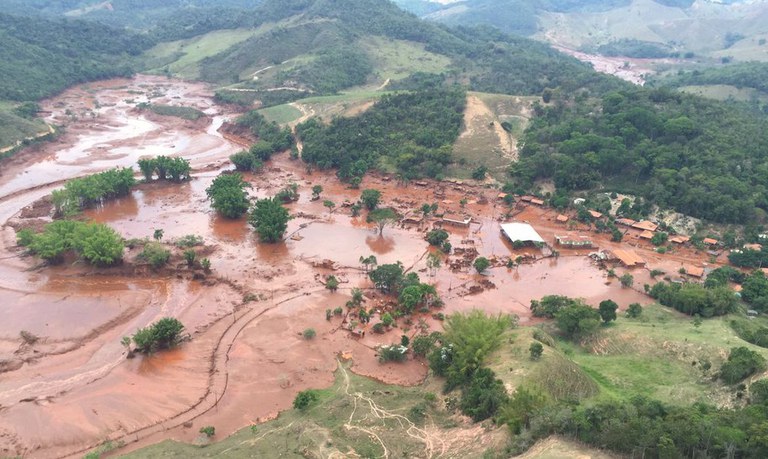
The November 2015 dam collapse at the Samarco iron ore mine near the town of Mariana, Minas Gerais state, caused a vast flow of mud and mining waste that buried a nearby village, killing 19 people. (Image: Corpo de Bombeiros/MG)

BHP faces a full contempt of court hearing in Britain for funding litigation to try to prevent some Brazilian municipalities suing the mining giant over one of Brazil’s worst environmental disasters, London’s High Court ruled on Thursday.

Thursday’s ruling is the latest development in long-running litigation over the collapse in 2015 of the Mariana dam in southeastern Brazil that was owned and operated by BHP and Vale’s Samarco joint venture.

Judge Adam Constable said it was arguable that BHP, the world’s biggest miner by market value, funded Brazilian litigation to stop the municipalities suing in London “with the purpose … of interfering with the administration of justice”.

It is not yet known when the contempt hearing will take place.

BHP, meanwhile, awaits judgment in a London lawsuit that the claimants’ lawyers have valued at up to 36 billion pounds ($49.3 billion).

A BHP spokesperson said the ruling did not determine the merits of the contempt application made by the municipalities that it “will continue to vigorously defend”.

Lawyers representing the claimants suing BHP – which include more than 600,000 Brazilians, 46 local governments and around 2,000 businesses – welcomed the decision as “a significant step forward in holding BHP to account”.

The dam burst and unleashed a wave of toxic sludge that killed 19 people, left thousands homeless, flooded forests, polluted the length of the Doce River – and led to one of the largest lawsuits in English legal history.

The trial began in October and finished in March. Judgment on whether BHP can be held liable for the collapse is pending.

BHP denies liability and says the case duplicates legal proceedings and reparation and repair programs in Brazil. In the trial’s first week, Brazil signed a 170 billion reais ($30.6 billion) compensation agreement with BHP, Vale and Samarco.

(By Sam Tobin; Editing by Barbara Lewis)


Informal mining boom is biggest fear for Peru’s copper investors

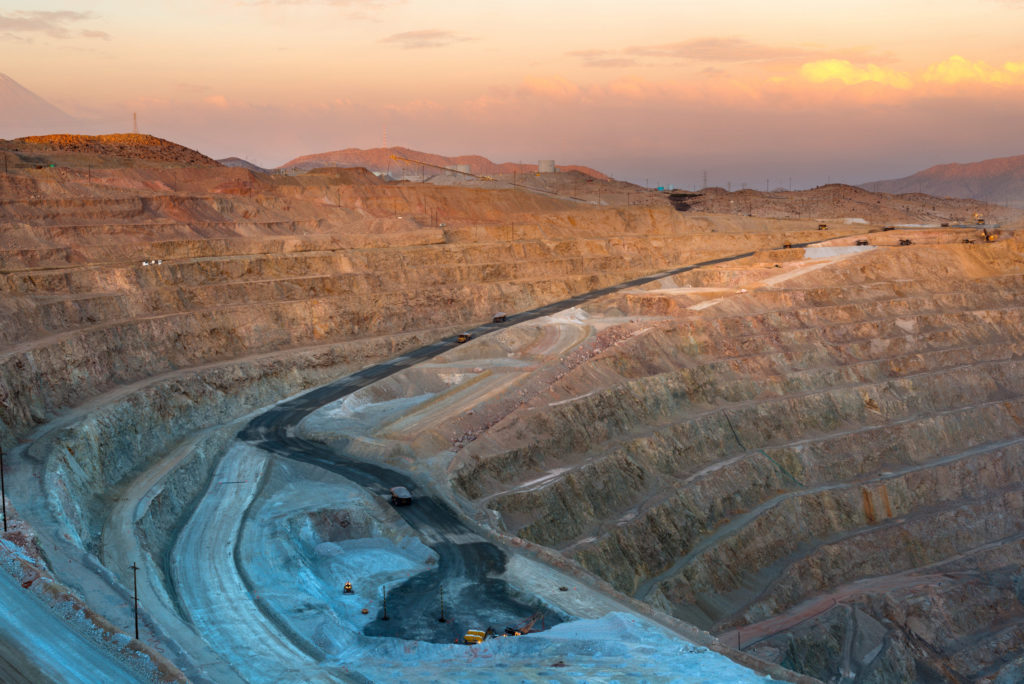
View from above of an open-pit copper mine in Peru. Stock image.

The biggest threat to Peru tapping more of its giant copper deposits is rising informal and illegal mining activity, according to the head of the country’s main industry association, SNMPE.

Peru has slipped to third in the global copper-production ranking and last year posted its first decline in output in five years. This year it should be able to get back to growth, albeit slightly, and reach a record 3.4 million metric tons by decade-end, according to Julia Torreblanca, SNMPE’s President.

But much depends on containing informal operations that are encroaching on concessions — a trend that opens the door to criminal groups, Torreblanca said. More than 20 companies — including Southern Copper Corp., MMG Ltd., First Quantum Minerals Ltd. and Teck Resources Ltd. — have been affected, with tens of billions of dollars in investments on the line that depend on the nation’s ability to navigate the issue.

“The biggest fear among investors is the increase in informal activity,” she said in a Wednesday interview. Besides security issues, another barrier to mining investments is red-tape, she said.


To be sure, informal copper output is still minimal compared with formal production. But Peru’s government is starting to acknowledge the existence of large-scale informal mining of copper, warning that high prices could see the activity grow in the near future.

Conflicts between property and concession holders have become key issue, with the government struggling to strike a balance. Peru’s rich copper and gold deposits have attracted hundreds of thousands of small-scale miners, who work predominantly on lands where they do not hold mineral rights. An estimated 40% of Peru’s gold exports originate in informal mines.

Many use a temporary registry call Reinfo, which allows them to operate as they go through the process of formalizing. Reinfo, which has just been until the end of 2025, is widely opposed by the industry, which sees the permits as a cover for illegal activity.

Now, proposed legislation for artisanal and small-scale mining, dubbed the MAPE Law, has been sent to Congress. But the industry warns a current draft being debated could end up legitimizing informal activity and further weakening formalization efforts.

“It’s a big worry,” Torreblanca said.

(By James Attwood)

China opens first offshore gold vault in Hong Kong

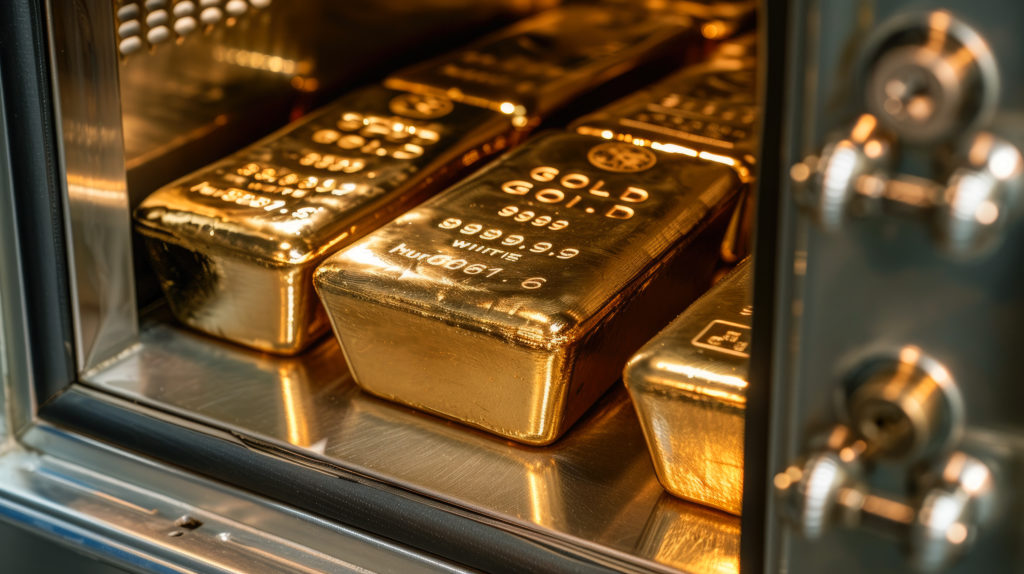
AI-generated image. (Credit: Adobe Stock)

The Shanghai Gold Exchange has expanded outside mainland China for the first time, with the rollout of two new contracts and a bullion vault in Hong Kong.

The launch serves a number of purposes, from broadening the Shanghai bourse’s international reach, to strengthening China’s clout in commodity and currency markets and Hong Kong’s status as a financial center.

Trading will be conducted in yuan and settled by cash or physical delivery, including to the new vault operated by Bank of China Ltd.’s Hong Kong unit, the SGE said in a statement. The two contracts covering different purity levels will debut on Thursday. To attract traders, the exchange said it’ll waive fees at the vault through the end of the year.

As the world’s top producer and consumer of gold, China wants to wield greater influence in pricing the commodity. The denomination of the SGE’s new contracts is particularly important given Beijing’s ambition to reduce reliance on the US dollar and promote wider use of the yuan in international trade.

“The buying and selling of gold at the new vault will also significantly improve the transaction volume of offshore yuan,” said Doris Bao, the founder of Gold Harvest Consulting. “The vault also means that China can now import gold in yuan rather than dollars,” further supporting de-dollarization, said Bao, who is also a consultant for London Bullion Market Association.

The SGE was established in 2002 by the People’s Bank of China as the country’s primary platform for trading bullion. In 2014, it set up the International Board to allow foreigners to participate directly in China’s market. That effort is now accelerating for other commodities. The Shanghai Futures Exchange, the country’s top venue for trading raw materials, recently unveiled a proposal to enhance access to overseas investors.

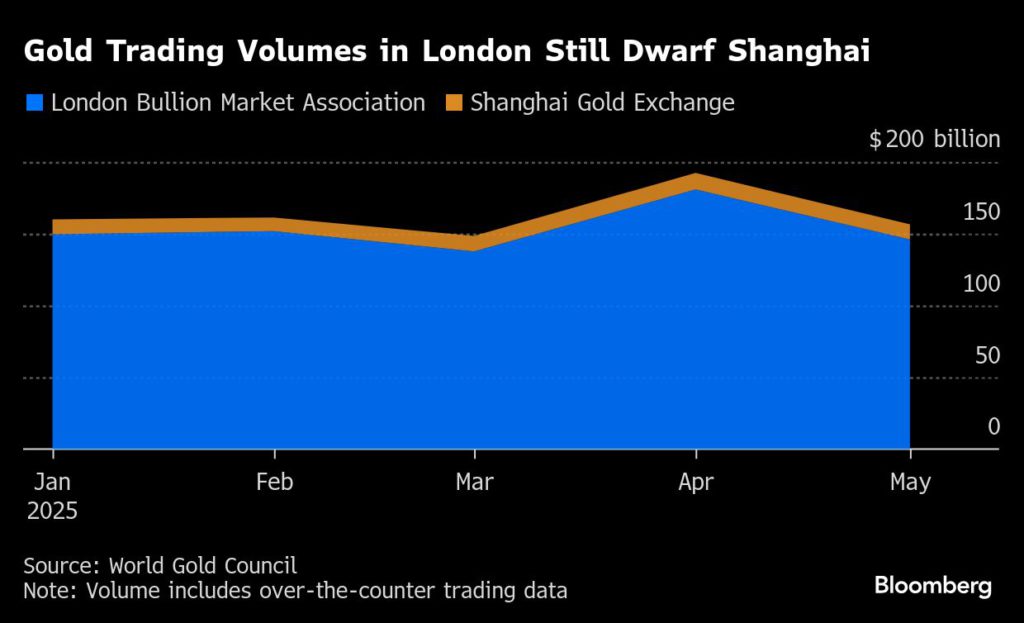
Although the SGE is the single largest exchange for physical gold, London remains the market’s undisputed center. Other hubs including Singapore are also trying to wrest some of the action away from the centuries-old UK market. Interest has only grown after the precious metal staged a massive rally to record levels, with prices more than doubling since the turn of the decade.

Much of gold’s appeal is its reputation as a reliable store of value, and China’s central bank has been a major buyer over the past three years, in part to diversify reserves away from the dollar.

Hong Kong, meanwhile, is a well-established banking center that’s seeking to keep pace with the expansion of other financial hubs in the region. The former British colony has a plan to bolster its presence in commodities, from warehousing to trading and logistical services across markets, including bullion.

“It’ll bring, if anything, more comfort for new players to enter the game,” said Joshua Rotbart the founder and managing partner at gold dealer J. Rotbart & Co. However, there are still some questions that could pose potential hurdles for the exchange to become truly global, he said.

“Limiting the access to the Hong Kong facility, in the same manner international players are limited in terms of being able to operate in the mainland, will definitely undermine the project,” Rotbart said.

(By Yihui Xie and Sybilla Gross)