President Donald Trump said Monday that the United States had destroyed a docking facility used by alleged Venezuelan drug traffickers, marking what appears to be the first land strike in Washington’s expanding pressure campaign on Caracas.
Issued on: 30/12/2025
By: FRANCE 24
The United States has hit and destroyed a docking area for alleged Venezuela drug boats, President Donald Trump said Monday, in what could amount to the first land strike of the military campaign against trafficking from Latin America.
The US leader's confirmation of the incident comes as he ramps up a pressure campaign against Venezuela's leftist President Nicolas Maduro, who has accused Trump of seeking regime change.
"There was a major explosion in the dock area where they load the boats up with drugs," he told reporters at his Mar-a-Lago resort in Florida as he hosted Israeli Prime Minister Benjamin Netanyahu.
"So we hit all the boats and now we hit the area, it's the implementation area, that's where they implement. And that is no longer around."
The US leader would not say if it was a military or CIA operation or where the strike occurred, saying only that it was "along the shore."
Asked if he had spoken to Maduro recently, following an earlier phone call in November, Trump said they had talked "pretty recently" but said that "nothing much comes out of it."
Trump had been asked to elaborate on apparent throwaway comments he made in a radio interview broadcast Friday that seemed to mention a land strike for the first time.
"They have a big plant or a big facility where they send, you know, where the ships come from," Trump told billionaire supporter John Catsimatidis on the WABC radio station in New York.
"Two nights ago we knocked that out. So we hit them very hard."
Trump did not say in the interview where the facility was located or give any other details.
There has been no official comment from the Venezuelan government.
The Pentagon earlier referred questions to the White House. The White House did not respond to requests for comment from AFP.
READ MORETrump refuses to rule out war with Venezuela as US sanctions Maduro family members
Trump has been threatening for weeks that ground strikes on drug cartels in the region would start "soon," but this is the first apparent example.
Fresh US strike in Pacific
US forces have also carried out numerous strikes in both the Caribbean Sea and eastern Pacific Ocean since September, targeting what Washington says are drug-smuggling boats.
The administration has provided no evidence that the targeted boats were involved in drug trafficking, however, prompting debate about the legality of these operations.
International law experts and rights groups say the strikes likely amount to extrajudicial killings, a charge that Washington denies.
READ MOREVenezuela accuses US of 'greatest extortion in history' at UN over naval blockade
After Trump spoke Monday, the US military announced on X that it had carried out another deadly strike on a boat in the Eastern Pacific, killing two and bringing the total killed in the maritime campaign to at least 107.
It did not specify where exactly the strike took place.
The Trump administration has been ramping up pressure on Maduro, accusing the Venezuelan leader of running a drug cartel himself and imposing an oil tanker blockade.
(FRANCE 24 with AFP)
.jpg)
US President Donald Trump confirmed American forces destroyed a docking area for alleged Venezuelan drug boats in what could represent the first land strike of the military campaign against Latin American trafficking, Trump stated on December 29.
"There was a major explosion in the dock area where they load the boats up with drugs," Trump told reporters at his Mar-a-Lago resort in Florida whilst hosting Israeli Prime Minister Benjamin Netanyahu.
The president did not specify the nature of the facility, and his administration has not yet commented on the attack. If confirmed, it would be the first land attack in an anti-drug campaign that has so far been conducted in the international waters of the Caribbean.
"So we hit all the boats and now we hit the area, it's the implementation area, that's where they implement. And that is no longer around."
Trump declined to specify whether it was a military or CIA operation or where the strike occurred, stating only that it was "along the shore".
Asked if he had spoken recently to Venezuelan President Nicolas Maduro following an earlier telephone call in November, Trump stated they had talked "pretty recently" but "nothing much comes out of it".
“The U.S. military is the most lethal and decisive fighting force in the world. The increased U.S. military presence in the Caribbean deters cartels and transnational criminals and strengthens security and prosperity for our homeland and our neighbours in the Western Hemisphere,” US Hegseth published on his X social media account.
For several weeks, Trump has been warning that as part of his pressure campaign against the Nicolás Maduro administration, which has involved the destruction of some thirty vessels and the death of more than 100 of their occupants, Washington was going to start attacking targets on land.
US officials quoted by The New York Times said the president was referring to a drug production facility in Venezuela and specified that it was destroyed last week, without elaborating.
Since the summer, the US has maintained a large air and naval deployment in the Caribbean, near Venezuelan waters, which it claims is aimed at combating drug trafficking, but which Caracas interprets as "threats" and an attempt to bring about regime change.
Tensions escalated after Trump announced a blockade of sanctioned oil tankers travelling to and from the South American country, and the seizure of two ships carrying Venezuelan crude in recent weeks.
From Powell to Venezuela: The High Cost of Evidence-Free Escalation
We are witnessing the reemergence of a dangerous repetition: one where the pattern of assertion becomes the prelude to action, and where action can lead to irreversible consequences.
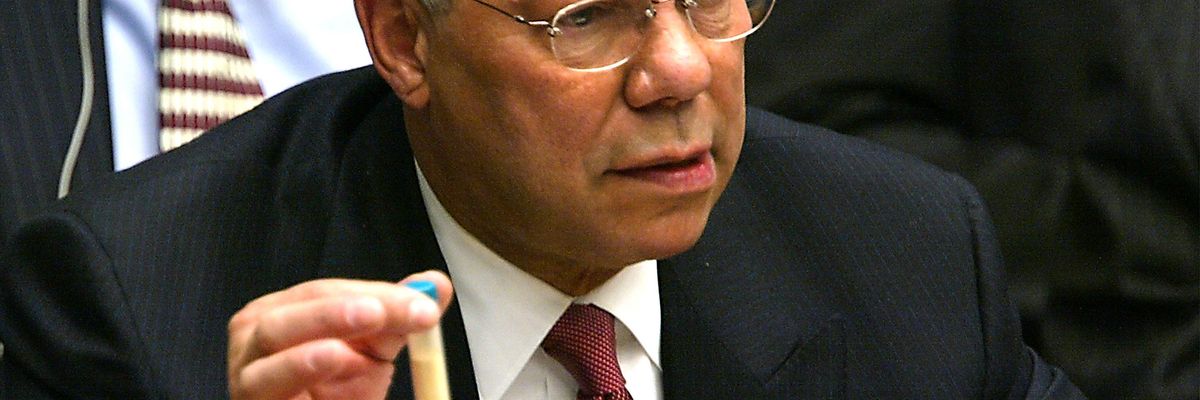
US Secretary of State Colin Powell holds a vial representing the small amount of Anthrax that closed the US Senate in 2002 during his address to the UN Security Council on February 5, 2003 in New York City.
(Photo by Mario Tama/Getty Images)
Angel Gomez
Dec 29, 2025
In the annals of modern international relations, few moments carry as heavy a legacy as the speech given by US Secretary of State Colin Powell to the United Nations Security Council on February 5, 2003. With solemn authority, Powell presented what he called “facts and conclusions based on solid intelligence” regarding Iraq’s weapons of mass destruction. The world watched. The Security Council listened. The invasion of Iraq soon followed.
Yet nearly every core assertion Powell made that day collapsed under post-war scrutiny. Iraq, it turned out, had no active WMD program. The biological labs, the chemical weapons, the nuclear revival—none existed. The damage, however, had been done: hundreds of thousands of lives lost, regional instability that persists two decades later, and a critical blow to the credibility of the international system.
The latest fact-checking report on statements made by the US ambassador to the United Nations at the Security Council emergency meeting on December 23, 2025 evokes Powell’s fateful moment with uncomfortable clarity. Assertions regarding Venezuela—about narco-terrorism networks, stolen oil, and naval interdictions—were advanced with the same kind of urgency and confidence that once shaped the Iraq invasion narrative. But just like 2003, these claims are not being matched by publicly verifiable evidence.
The Dangerous Shortcut from Assertion to Action
At the center of the current controversy is the claim that Venezuelan oil revenues finance a powerful criminal entity known as the “Cartel de los Soles.” Yet no evidentiary chain has been produced to establish this link: no verifiable financial tracing, no adjudicated findings, and no independent corroboration by multilateral investigative bodies. Even UN human-rights experts have questioned the coherence and existence of the cartel as a unified organization.
What the 2003 Iraq experience makes painfully clear is that institutional credibility depends on the ability to separate fact from political fiction.
Equally troubling is the claim that this alleged cartel poses a major narcotics or terrorist threat to the United States. The US Drug Enforcement Administration’s own 2025 National Drug Threat Assessment identifies Mexican transnational criminal organizations—not Venezuelan entities—as the principal threat. The Venezuelan organization does not even appear in the assessment.
Assertions have also been used to justify naval interdictions—military actions that, in legal terms, dangerously approach the definition of a blockade. But UN experts have been clear: Unilateral sanctions do not confer a right to enforce them through armed action. Under Article 2(4) of the UN Charter, the use of force is prohibited unless specifically authorized by the Security Council or justified in self-defense under Article 51. Neither condition has been met.
Finally, the idea that Venezuelan oil is “stolen” US property collapses under legal scrutiny. Venezuela nationalized its oil industry in 1976. While disputes over contractual terms and compensation have existed, these have historically been handled through arbitration and diplomacy—not force. No international court has ruled these oil shipments to be stolen under law.
Repeating the Iraq Mistake—This Time at Sea
What the 2003 Iraq experience makes painfully clear is that institutional credibility depends on the ability to separate fact from political fiction. Colin Powell’s posthumous regret—that his speech was a “blot” on his record—remains a chilling reminder that when unverified intelligence is used as justification for coercive action, the cost is not borne by the speaker, but by the people affected on the ground.
The December 2025 Security Council meeting reminds us how dangerous it is when urgency displaces evidence, as happened in Iraq in 2003. Unverified assertions create policy momentum. That momentum can foreclose diplomacy, manufacture inevitability, and normalize coercive actions like blockades or seizures—justified not through law, but through narrative inertia.
The Need for Procedural Rigor and Accountability
For policy analysts and scholars of international relations, this moment demands clarity. We are not debating ideology or even the internal legitimacy of a foreign government. The question is one of process: Do the claims being made meet minimum evidentiary thresholds before they are used to rationalize actions with international consequences?
Especially when coercive measures—economic or military—are on the table, the evidentiary bar must be high, not symbolic.
The UN Security Council’s authority rests not just on its legal charter, but on its credibility as a deliberative body. When that credibility is weakened by unsourced or politically convenient assertions, the council itself becomes a platform for escalation—not prevention.
The lesson from Iraq is not rhetorical—it is institutional. Intelligence must not be permitted to morph into justification before it becomes verification. Assertions, no matter how confidently delivered, are not evidence. When the international system forgets that distinction, the consequences are paid in blood and legitimacy.
Conclusion: Proof Before Policy
It is not enough to feel certain. Policy must be grounded in demonstrable truth. Especially when coercive measures—economic or military—are on the table, the evidentiary bar must be high, not symbolic.
We are witnessing the reemergence of a dangerous repetition: one where the pattern of assertion becomes the prelude to action, and where action can lead to irreversible consequences. Whether in Baghdad or Caracas, this is a pattern we cannot afford to repeat.
Our work is licensed under Creative Commons (CC BY-NC-ND 3.0). Feel free to republish and share widely.
Angel Gomez
Mr. Angel Gomez is a researcher specializing in the societal impact of government policies. He has a background in psychoanalytical anthropology and general sciences.
Full Bio >
Explainer: Why Chevron still operates in Venezuela despite US sanctions
Chevron’s continued presence in Venezuela looks like an anomaly amid intensifying US sanctions. In fact, the contradiction is rooted in selective enforcement to maintain leverage over Caracas, as well as decades of oil politics.
The United States has spent years tightening sanctions on Venezuela, attempting to choke off the oil revenues that sustain President Nicolás Maduro’s government.
Washington has imposed sweeping restrictions on Venezuela’s state oil industry, threatened to seize or block tankers carrying the South American country's distinctive heavy crude and warned companies around the world against doing business with Caracas.
In early December, the US seized a sanctioned oil tanker off the coast of Venezuela, the first such seizure tied to Venezuelan oil under the current pressure campaign.
The vessel involved, widely reported as the Skipper, added a geopolitical risk premium to oil markets and drew sharp condemnation from Caracas as “theft”.
Washington has since seized a second oil tanker east of Barbados. US authorities are also actively pursuing a third tanker linked to Venezuela that attempted to evade boarding and is under a judicial seizure order.
Officials say the vessel is part of a so-called shadow or ghost fleet used to bypass sanctions, and if captured the US intends to retain the ship and its cargo.
Yet amid this near-total blockade, one American oil major continues to operate inside the country: Chevron.
The apparent contradiction has fueled accusations of hypocrisy and confusion over how US sanctions are applied. In reality, Chevron’s presence in Venezuela highlights the underlying causes of Washington’s fraught relationship with the country and helps illuminate the background to the latest escalation.
Once the largest oil exporter in the world
Venezuela’s rise to prominence began with early 20th-century oil discoveries that made it a global exporter by the 1940s, with successive governments negotiating terms with foreign firms until PDVSA’s creation in 1976 formalised state control.
At the start of the 20th century, Venezuela was a poor, agrarian country on the margins of the global economy. That changed abruptly in the 1910s and 1920s, when vast oil reserves were discovered beneath Lake Maracaibo and the eastern plains, triggering a rush of foreign investment led by US and European companies.
By the interwar years, global oil majors — including predecessors of Chevron, Shell and Exxon — dominated Venezuela’s oil sector. The Venezuelan state, weak and authoritarian under military strongmen such as Juan Vicente Gómez, offered generous concessions in exchange for royalties and taxes. Oil revenues quickly eclipsed agriculture, transforming Venezuela into one of the world’s leading exporters by the 1940s.
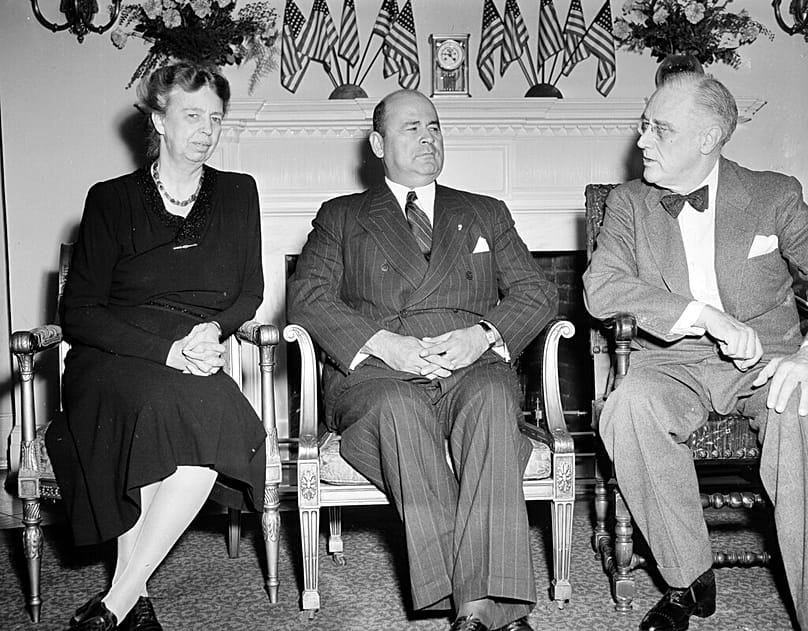
Under President Isaías Medina Angarita, Venezuela reformed its oil sector without rupturing relations with the United States, raising taxes on foreign companies through negotiated changes that preserved production and investment. A pro-western moderniser who aligned Venezuela with the Allied war effort and cut ties with the Axis powers during the Second World War, Medina was nonetheless overthrown in 1945 — a move Washington did not actively oppose or intervene to prevent.
First wave of Western-led nationalisation
Venezuela’s repeated military coups in the first half of the 20th century entrenched dependence on foreign oil companies, who relied on oil for revenue and stability, while the end of military rule after 1958 created the political stability that ultimately made nationalisation possible.
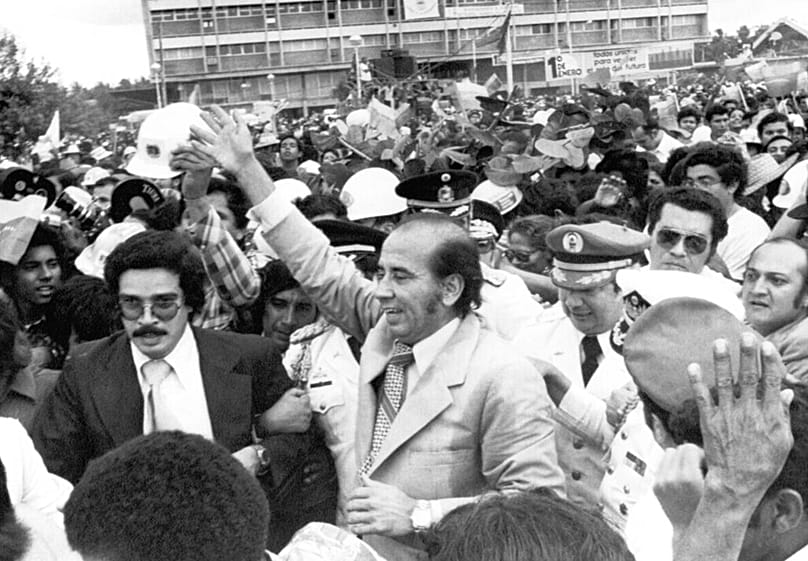
During the presidency of Carlos Andrés Pérez, whose economic plan, "La Gran Venezuela", called for the nationalization of the oil industry, Venezuela officially nationalized its oil industry on 1 January 1976 at the site of Zumaque oilwell 1. This was the birth of Petróleos de Venezuela S.A. or PDVSA.
Unlike some nationalisations elsewhere, this was initially seen as a technocratic success, since PDVSA was run by Western-trained managers, reinvested profits and maintained close ties with international markets.
For two decades, PDVSA became one of the most respected national oil companies globally. It expanded refining capacity abroad, including in the United States, and kept production high. Venezuela remained a reliable supplier, and foreign firms continued to operate through partnerships and service contracts.
Mismanagement and decline in oil prices
By the 1980s and 1990s, however, the cracks widened. Oil prices fell, debt rose, and economic mismanagement eroded living standards. The political system — dominated by two centrist parties — lost legitimacy, accused of corruption and elite capture of oil wealth.
It was in this context that Hugo Chávez, a former army officer who had led a failed coup attempt, emerged as a national figure. He channelled widespread anger at inequality, foreign influence and the perceived betrayal of Venezuela’s oil riches.
Chávez and the US
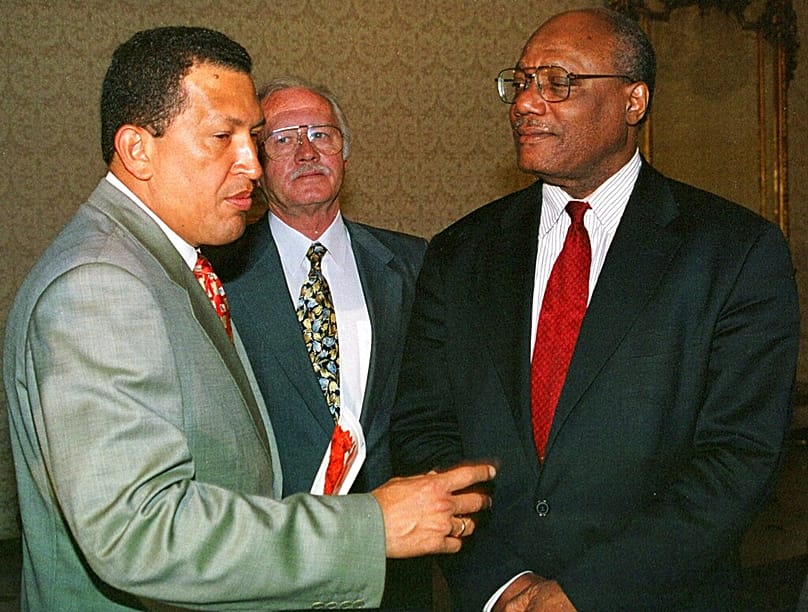
For much of Chávez’s presidency, US oil companies including Chevron and ExxonMobil operated openly in Venezuela, supplying US refineries with heavy crude even as political relations deteriorated.
In the 2006-07 period, Chávez ordered all foreign oil companies operating in the Orinoco Belt to convert their projects into majority state-owned joint ventures with PDVSA holding at least 60%.
Companies that accepted stayed on under worse terms, and companies that refused were effectively pushed out. ExxonMobil refused the new terms, its assets were nationalised and Exxon exited Venezuela and later won arbitration cases against the Venezuelan state.
ConocoPhillips also refused the new terms, its assets were seized and the company exited, and it also filed major international arbitration and largely won.
Chevron accepted renegotiation, stayed in Venezuela throughout Chávez’s presidency and beyond, operating minority stakes under PDVSA control.
US sanctions during the Chávez years were limited and targeted, focusing mainly on arms restrictions and a small number of individuals accused of illicit activity, rather than the economy as a whole.
US tensions escalate under Maduro
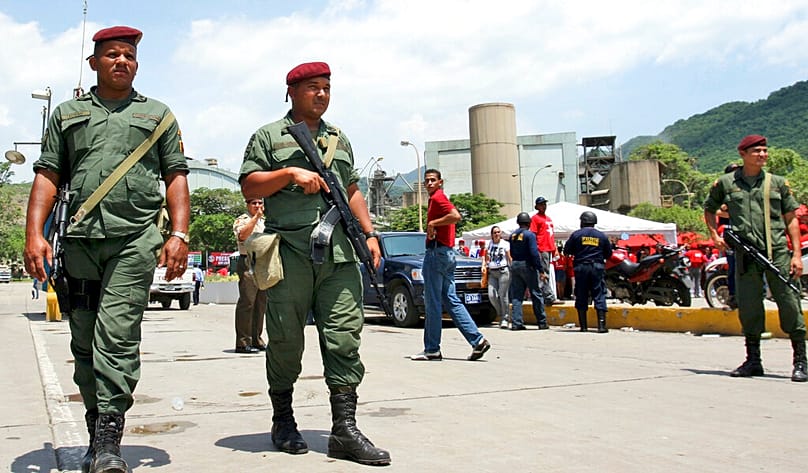
It was only after Chávez’s death, and amid the deepening political and economic crisis under Nicolás Maduro, that Washington shifted strategy — first imposing financial sanctions in 2017 and later, in 2019, targeting Venezuela’s oil sector directly, marking a decisive break in the more transactional relationship that had existed before.
Since 2019, US sanctions have targeted PDVSA and the broader oil trade, blocking financial access and outlawing most exports. The measures were designed to deny Maduro access to hard currency, while pressuring his government into negotiations with the opposition.
Enforcement has included aggressive action against shipping. Tankers suspected of carrying Venezuelan crude have been threatened with seizure, denied insurance or barred from ports. The US has also sanctioned intermediaries accused of disguising the origin of Venezuelan oil and routing it through third countries.
The result has been a shadow oil trade, with Venezuelan crude sold at steep discounts, often to buyers in Asia, through opaque networks of traders and ship-to-ship transfers.
Chevron’s exception
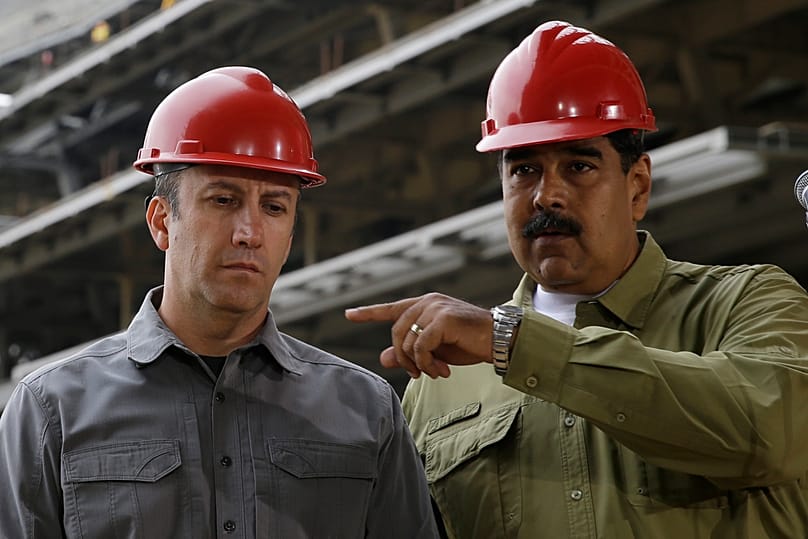
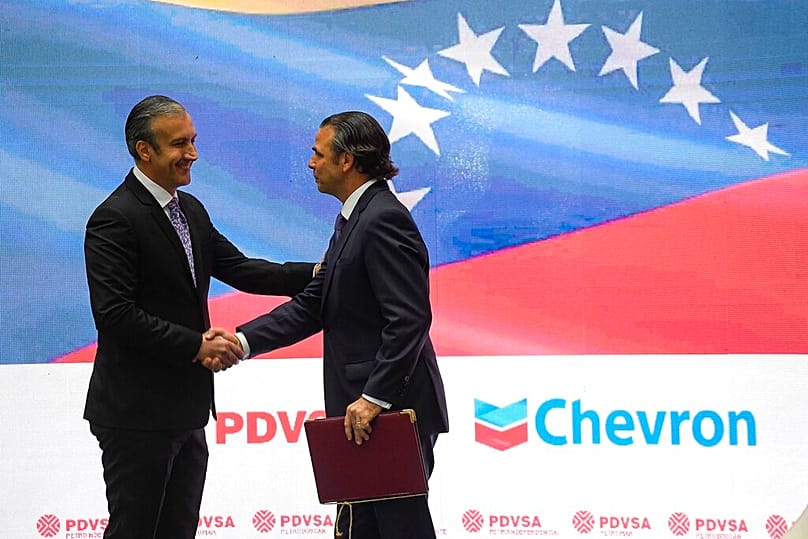
Chevron is the sole major US oil company still operating in Venezuela because it has been granted a specific licence by the US Treasury. Issued by the Office of Foreign Assets Control (OFAC), the licence allows Chevron to produce and export Venezuelan oil under strict conditions.
Chevron is allowed to operate in Venezuela only in oil projects it already shared with PDVSA. It cannot start new projects or significantly increase production.
Chevron’s operations are structured so that cash flows and profits do not directly benefit PDVSA or the Venezuelan state under current sanctions licences.
The funds are instead used to cover basic operating costs such as staff, maintenance and transport for between a third and a fourth of Venezuela's oil production.
Chevron is paid in... oil?
PDVSA failed for years to pay its share of operating costs and bills in their joint ventures. In effect, Chevron is being repaid in oil, rather than paying Venezuela in cash. The Venezuelan government does not receive fresh revenue from these operations — no dividends, no budget income, no direct cash transfers.
The licence is temporary and must be renewed periodically, giving Washington the ability to revoke it if political conditions deteriorate.
Why Washington allows it
US officials argue that Chevron’s continued presence actually strengthens sanctions enforcement rather than undermining it.
First, Chevron provides transparency. Oil produced under its licence is traceable, insured, and sold through formal channels, reducing Venezuela’s reliance on illicit traders and hard-to-monitor shipments.
From Washington’s perspective, allowing limited, supervised exports is preferable to driving all Venezuelan oil sales underground.
Second, Chevron’s operations are tied to debt repayment. PDVSA owes Chevron hundreds of millions of dollars after failing for years to cover its share of joint-venture costs. Allowing Chevron to recover those losses through oil shipments settles existing obligations without injecting fresh cash into the Venezuelan state.
Third, the arrangement offers leverage. The licence can be tightened, expanded, or revoked depending on Caracas’s behaviour, particularly around elections and negotiations with the opposition. In this sense, Chevron functions as a pressure valve rather than a reward.
Critics, including Venezuelan opposition figures and human rights groups, argue that any oil production ultimately benefits the Maduro government and weakens the moral force of sanctions.
If US President Donald Trump, who has deployed warships to Venezuela’s coast, were to attack and overthrow the government, no company would be better placed than Chevron to help rebuild the country’s battered oil industry.
If, instead, Trump were to strike a deal with Maduro, Caracas would need to maximise oil exports to generate cash — again playing to Chevron’s advantage.