Tuesday, December 30, 2025


OPINION


‘This Is an Act of War’: CIA Carried Out Drone Strike on Port Facility Inside Venezuela

One expert called the reported drone strike a “violation of Article 2(4) of the UN Charter and the Take Care Clause of the Constitution.”
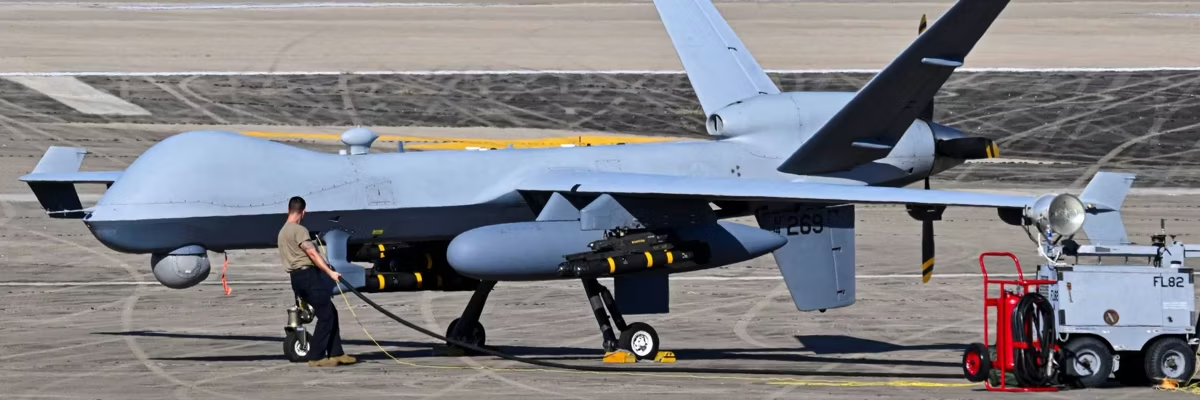


US Air Force personnel prepare an MQ-9 Reaper drone for a mission on the tarmac at Rafael Hernandez Airport in Aguadilla, Puerto Rico on December 27, 2025.
(Photo by Miguel J. Rodriguez Carrillo/AFP via Getty Images)


Jake Johnson
Dec 30, 2025
COMMON DREAMS

The US Central Intelligence Agency reportedly carried out a drone strike earlier this month on a port facility inside Venezuela, marking the first time the Trump administration launched an attack within the South American country amid a broader military campaign that observers fear could lead to war.

CNN on Monday was first to report the details of the CIA drone strike, days after President Donald Trump suggested in a radio interview that the US recently took out a “big facility” in Venezuela, prompting confusion and alarm. Trump authorized covert CIA action against Venezuela in October.

Trump ‘Choosing From the War Crimes Menu’ With ‘Quarantine’ on Venezuela Oil Exports

‘Unquestionably an Act of War’: Trump Declares Naval Blockade Against Venezuela

According to CNN, which cited unnamed sources, the drone strike “targeted a remote dock on the Venezuelan coast that the US government believed was being used by the Venezuelan gang Tren de Aragua to store drugs and move them onto boats for onward shipping.”

To date, the Trump administration has not provided any evidence to support its claim that boats it has illegally bombed in international waters were involved in drug trafficking. No casualties were reported from the drone strike, and the Venezuelan government has not publicly commented on the attack.

“This is an act of war and illegal under both US and international law, let’s just be clear about that,” journalist Mehdi Hasan wrote in response to news of the drone strike.

Brian Finucane, senior adviser with the US Program at the International Crisis Group, called the reported drone attack a “violation of Article 2(4) of the UN Charter and the Take Care Clause of the Constitution.”

“Seemingly conducted as covert action and then casually disclosed by POTUS while calling into a radio show,” he added.

CNN‘s reporting, later corroborated by the New York Times, came after the Trump administration launched its 30th strike on a vessel in international waters, bringing the death toll from the lawless military campaign to at least 107.

The Times reported late Monday that “it is not clear” if the drone used in last week’s mission “was owned by the CIA or borrowed from the US military.”

“The Pentagon has stationed several MQ-9 Reaper drones, which carry Hellfire missiles, at bases in Puerto Rico as part of the pressure campaign,” the Times added.


U.S. Counter-Smuggling Operation Hits its First Land Target
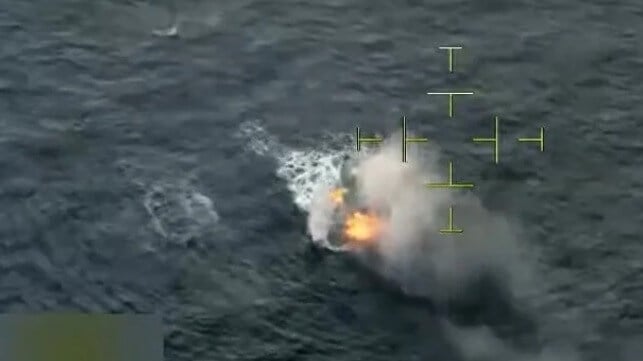
A previous U.S. strike on a smuggling boat target, Dec. 22 (U.S. Southern Command)

Published Dec 29, 2025 8:31 PM by The Maritime Executive


The U.S. military has repeatedly attacked suspected drug-smuggling boats in international waters off South and Central America over the past few months, including a new strike announced Monday. But it has held off on striking land targets - at least, until last week. On Monday, U.S. President Donald Trump said that American forces had hit a dock allegedly used by smugglers. 

"There was a major explosion in the dock area where they load the boats up with drugs," Trump said, adding new clarification to earlier comments. "We hit all the boats and now we hit the area. It's the implementation area. That's where they implement. And that is no longer around."

Trump did not name the country where the strike occurred, nor would he confirm which American units carried out the explosion. "I know exactly who it was, but I don't want to say who it was. But you know it was along the shore," he said. However, U.S. officials later confirmed to the New York Times that it was a CIA operation, and was conducted in Venezuela.

On Friday, Trump told press that American forces had hit a "big plant" where suspected smuggling vessels start their journeys. U.S. assets had hit that facility "very hard" midweek, he said.  

Trump did not discuss the location of the site, or whether there may have been any possible casualties on scene. 

The announcement is a significant escalation of the administration's effort to fight cocaine traffickers in the southern approaches to the U.S. market. So far, American forces have destroyed 30 suspected smuggling boats, killed more than 100 people, and rescued and repatriated two survivors. The latest attack was announced on Monday night, and targeted a suspected narco-trafficking boat in the Eastern Pacific. U.S. Southern Command released a video of the attack, below.

The strike campaign began as a way to pressure the regime of Venezuelan dictator Nicolas Maduro. The drug is not manufactured in Venezuela, but it is widely known to be trafficked through the country in substantial quantities, much of it headed for Caribbean seaports and onwards to European consumer markets.

Given the scale and the value of the Venezuelan cocaine transport corridor, the Maduro regime and its military officials are widely suspected to be aware of and benefitting from the illegal trafficking network. White House officials view the strikes on suspected Venezuelan drug trafficking operations as a way to pressure Maduro, along with other stringent economic measures like steep restrictions on the country's gold and oil exports. 

The strikes have since expanded into the Eastern Pacific, targeting the boats that depart Colombia and transit north to Central America, where the drugs are offloaded for onward delivery over land or for infiltration into containerized freight. One burned boat has been recovered by locals in a town on Colombia's Guajira Peninsula, located on the Gulf of Venezuela, according to the New York Times.


The Venezuela Escalation Ignores a Long History of U.S. Hypocrisy on Drugs


 December 30, 2025

Image by Jon Tyson.

Every accusation is a confession. This is clearly true of the Trump administration’s insistence that Venezuela operates as a “narco-state,” exporting terrorism to the U.S. via fentanyl, now labeled as a “weapon of mass destruction.” The charge is not only false, given that virtually no fentanyl enters the country from Venezuela, but transparently political and pretextual.

This hypocrisy was made unmistakable with Trump’s recent pardon of former Honduran president Juan Orlando Hernández, who was convicted in 2024 in a U.S. federal court on drug trafficking charges. Hernández presided over a regime long treated as a strategic ally within Washington’s regional security architecture, a reminder that the label of “narco-state” is applied not according to fact but according to the shifting imperatives of U.S. imperial power.

This accusation collapses further when placed in broader historical context. For decades, the most powerful state actors facilitating and protecting narcotics trafficking have not been Washington’s adversaries but Washington itself. Throughout the Cold War and the so-called War on Drugs, the United States, above all through the CIA, repeatedly subordinated drug enforcement to geopolitical priorities, enabling narco-networks so long as they advanced perceived U.S. interests.

These dynamics became especially pronounced in the 1980s, with disastrous consequences both at home and abroad. The decade marked an intensification of the Cold War under Ronald Reagan. His administration insisted that communist “advances” could not only be contained but rolled back. Upon taking office, Reagan launched his promised global offensive, intervening wherever alleged Soviet influence appeared. Turning a blind eye to drug trafficking became a central feature of this crusade, as anti-communism consistently took precedence over anti-narcotics efforts.

Carter and the Crisis of Confidence

Reagan’s rise followed a brief but meaningful thaw. In the wake of Watergate and the Vietnam War, Americans’ faith in political institutions had been profoundly shaken. Years of economic stagnation, inflation, and the reverberations of the 1973 OPEC oil embargo convinced many that the postwar promise of endless upward mobility, the ideological core of the American dream, was collapsing.

It also became impossible to ignore that the U.S. was not only failing to deliver on its economic promise but had also long abandoned the democratic values it claimed to champion. In 1975, the Church Committee laid bare what much of the Global South had known for decades: the United States had been operating as a global anti-democratic force, orchestrating coups and assassinations, sabotaging leftist movements (at home and abroad), and imposing political outcomes that served the interests of American capital rather than the aspirations of people around the world.

Then, in 1977, came Jimmy Carter. Carter promised a new foreign policy rooted not in reflexive anti-communism but a commitment to human rights. In doing so, he broke, at least in his rhetoric, with decades of bipartisan Cold War orthodoxy. For the first time, a president openly challenged the axiomatic belief that every leftist movement was a Kremlin proxy that demanded immediate U.S. intervention.

As Carter put it, “we are now free of that inordinate fear of communism which once led us to embrace any dictator who joined us in that fear,” acknowledging that “for too many years, we’ve been willing to adopt the flawed and erroneous principles and tactics of our adversaries, sometimes abandoning our own values for theirs.” Washington, he admitted, had “fought fire with fire, never thinking that fire is better quenched with water,” a strategy that had ultimately backfired.

Carter would also come to critique not only the misguided zealotry of U.S. foreign policy but, to an extent, capitalism itself. As he turned toward the root causes of the nation’s intersecting crises, he warned that “too many of us now tend to worship self-indulgence and consumption,” and that “human identity is no longer defined by what one does, but by what one owns.” Conservatives responded with derision, quickly dubbing it the “malaise speech,” a framing that captured many Americans’ refusal to confront the deeper structural problems Carter had identified.

The Reagan Rollback

Reagan ran on this response. He rejected everything Carter had come to represent. Carter, for his part, presided over a series of perceived foreign policy blunders, not all of them self-inflicted, including the Sandinista Revolution in Nicaragua, the Iran Hostage Crisis, and the Soviet invasion of Afghanistan, and his actual record was far less radical than his rhetoric suggested. But Reagan seized the moment, casting Carter as weak, naïve, and insufficiently committed to American power and the American way of life, and he won in a landslide.

When Reagan assumed office in 1981, he claimed a mandate to pursue his promised program of unfettered capitalism at home and militant anti-communism abroad, raising the military budget to what were then unprecedented levels. Yet even with this political momentum, he faced constraints. Among them was a public skepticism toward foreign intervention, labeled “Vietnam syndrome,” which posed a direct challenge to his effort to reassert American military primacy on the global stage.

Reagan, however, was not inclined to let public sentiment, democratic constraints, or questions of legality impede his objectives. This saw its most notorious expression in the Iran-Contra Affair, in which administration officials sold weapons to Iran, then in a war of attrition with Saddam’s Iraq, whom the U.S. was backing, in exchange for assistance pressuring Hezbollah to release American hostages in Lebanon, while simultaneously generating funds to support the Contras in Nicaragua. Both were illegal: Congress barred aid to the Contras with the 1982 Boland Amendment, and arms sales to Iran violated U.S. law once it was designated a state sponsor of terrorism in 1984.

Drug Traffickers and “Freedom Fighters”

Another method in which Reagan sought to bypass political constraints on his policies was through the funding of “freedom fighters” in covert proxy wars, an expensive endeavor financed not only by taxpayer dollars but also by enabling allies to engage in drug trafficking. The tactic was hardly new. Imperial powers had long leveraged drugs to consolidate geopolitical control, from alcohol’s role in Indigenous dispossession to Britain’s forced export of opium into China.

Nor was this unprecedented for the United States. During the American war in Vietnam, U.S. intelligence enabled local traffickers to fold an existing regional drug trade in support of their counterinsurgency effort. As historian Alfred McCoy has demonstrated, this helped transform the Golden Triangle into the world’s largest opium-producing region. Estimates during the conflict suggested that up to 25% of U.S. troops stationed in Southeast Asia used heroin in some units, and thousands returned home with addictions seeded with the complicity of Washington.

Under Reagan, such complicity only grew. As the administration aggressively expanded punitive anti-drug policing at home under the banner of the “War on Drugs,” it tolerated and indirectly facilitated the cultivation and transport of narcotics when doing so served Cold War priorities. This dynamic was most visible in two of the bloodiest proxy wars of the Reagan era: the Soviet-Afghan War and the Contra War in Nicaragua.

After the 1979 Soviet invasion of Afghanistan, the United States funneled billions of dollars to the mujahideen in an attempt to mire the Soviets in a Vietnam-like quagmire, ultimately producing the most expensive covert operation in U.S. history. It was clear at the time that this policy risked significant “blowback,” although the result was much worse than imagined, but the chance to bleed the Soviets was not one Reagan was willing to forgo.

The extent of U.S. support, indispensable to sustaining the anti-Soviet insurgency, led political scientist Mahmood Mamdani to refer to the insurgency as an “American Jihad.” But the flow of money and arms was not enough on its own, and drug trafficking helped to supplement the effort. Before the war, heroin production in Afghanistan was negligible. By 1989, Afghan-Pakistan supply routes dominated global markets, destabilizing the country and region and creating the conditions for a catastrophic CIA and drug-money enabled, warlord-led civil war that ultimately led to the Taliban’s consolidation of power in 1996.

This heroin not only fueled death and destruction in Afghanistan, where the American-Afghan victory was paid for with the lives of millions of Afghan civilians, but it also boomeranged back. As Mamdani documents, during the Soviet-Afghan jihad, this heroin came to account for some 60 percent of the heroin circulating on U.S. streets. The consequences were immediate and severe. As a White House drug-policy adviser acknowledged at the time, New York City witnessed a 77 percent increase in drug-related deaths.

In Central America, a parallel “logic” emerged. The Contras needed cash, and cocaine networks supplied it. The Contras needed cash, and cocaine networks supplied it. The Kerry Committee, convened in the wake of Iran-Contra, and tasked with investigating these links, concluded in 1989 that there was substantial evidence the Contras engaged in drug smuggling and that U.S. officials allowed them to operate without interference.

This support for traffickers unfolded at the very moment the U.S. was intensifying its domestic crackdown on cocaine. During this period, lawmakers and prosecutors entrenched and weaponized legal asymmetries between crack and powder cocaine, driving the militarization of policing and expanding infrastructure of mass incarceration, a campaign that disproportionately targeted and destabilized Black communities across the country.

When Gary Webb, an investigative journalist for the San Jose Mercury News, revealed in 1996 an even more direct connection between CIA awareness of Contra-linked cocaine profits entering the United States and the simultaneous domestic “War on Drugs,” the backlash was swift. Government officials and major media outlets launched a concerted campaign to discredit him, all but ending his career. Nonetheless, many of his findings would soon be corroborated, at least in part, by internal investigations conducted by the CIA and DOJ.

The Failures of the “War on Drugs”

Trump’s latest invocation of drugs as a pretext for war with Venezuela is unconvincing on its face. But situated within the long historical record of U.S. complicity in, or calculated indifference to, drug trafficking when it served strategic ends, even when those decisions inflicted direct harm on Americans, it becomes little more than farce. For decades, Washington has treated narcotics not as a public health challenge but as a political instrument, inflating them into an existential national security threat when expedient and minimizing them when inconvenient.

The “war on drugs” has never been a genuine campaign to curb the sale or use of narcotics or to protect Americans. Rather, it has functioned as a mechanism for advancing American power. This history makes clear that the U.S. cannot credibly condemn other nations for their entanglements in the drug trade until it reckons with its own record as a facilitator of state-sponsored terrorism and narco-trafficking.

Eric Ross is an organizer, educator, researcher, and PhD Candidate in the History Department at the University of Massachusetts Amherst. He is a coordinator of the national Teach-In Network sponsored by the RootsAction Education Fund.

CIA officials livid as Trump throws agency under the bus: 'Near-universal dismay'


Daniel Hampton
December 30, 2025
RAW STORY


The CIA reportedly has a bone to pick with President Donald Trump after he let slip details of a secret strike on a dock in Venezuela.

The Wall Street Journal reported Tuesday that some CIA officials expressed unhappiness that Trump publicly discussed an operation typically meant to be kept secret and with no obvious ties to the U.S. government.

Trump this week indicated the U.S. carried out a strike on a dock facility along Venezuela's shoreline as his administration ramps up pressure on alleged drug trafficking in the country.

“There was a major explosion in the dock area where they load the boats up with drugs,” Trump said during a meeting in Florida with Israeli Prime Minister Benjamin Netanyahu. “So we hit all the boats and now we hit the area and that is no longer around.”

He added: “I know exactly who it was, but I don’t want to say who it was. But you know it was along the shore.”

His comments irked the CIA.

“There was near-universal dismay among former intelligence officials that President Trump chose to disclose what almost certainly was intelligence community covert action,” Marc Polymeropoulos, a former senior CIA operations officer, told the Journal.

Polymeropoulos said such operations generally allow for plausible deniability, with the overarching threat that further action could come.

Trump’s decision to use the CIA for the strike could be due in part to resistance from Congress over whether he needs lawmakers' sign-off to conduct military operations against Venezuela, Geoff Ramsey, who follows Venezuela at the Atlantic Council, told the outlet.


Despite U.S. "Blockade," Foreign-Flagged Tankers Arrive in Venezuela

PDVSA tanker
File image courtesy PDVSA

Published Dec 30, 2025 7:09 PM by The Maritime Executive


Foreign-flagged tankers continue to call in Venezuela despite a White House "quarantine" order and the new U.S. policy of seizing Venezuela-linked ships, according to TankerTrackers.com.

The independent consultancy told Reuters that it was aware of at least two sanctioned vessels that have arrived in Venezuela in recent days. Two more unsanctioned vessels are reportedly en route. Lloyds List has identified these vessels as the Thousand Sunny and the Xing Ye, both Chinese-flagged. Xing Ye is reportedly loitering off the coast of French Guiana. China has opposed U.S. intervention in Venezuela's tanker trade, and the arrival of unsanctioned, Chinese-flagged tonnage would complicate Washington's geopolitical calculations for enforcement of the "blockade."

Two laden VLCCs have been captured to date, and one has already arrived at an anchorage off Galveston in U.S. custody. One more noncompliant ship - the Bella 1 - is being "pursued" in the Atlantic, and the crew has decided to paint a Russian flag on the vessel in an attempt to deter an American boarding, officials told the New York Times on Tuesday. Russia is a longtime ally of Venezuela, and has recently spoken out against the U.S. naval cordon. 

"The illegal US blockade of Venezuela's coastline is a genuine act of aggression," Russian diplomat Vassily Nebenzia told a UN gathering last week. "Unfortunately, there is every reason to believe that these are not one-off acts by the US vis-a-vis Venezuela."

Bella 1 has reportedly altered course northwards, and is said to be headed in the general direction of the Greenland-Iceland-UK Gap. The ship ceased broadcasting on AIS several weeks ago, and her position and heading were not possible to verify independently. 

Coast Guard officials earlier told the Times that any interdiction of the Bella 1 would have to wait for the arrival of a specially-trained boarding, search and seizure team. 


Chinese Oil Tankers Challenge US Blockade off Venezuela


NEWSWEEK
DEC 30, 2025 
By Amira El-Fekki‎
Middle East News Reporter

Chinese oil tankers are pressing ahead with Venezuela-linked voyages despite a U.S. blockade and an escalating campaign of tanker seizures.

Two Chinese-flagged VLCCs are operating near Venezuelan waters, with the Thousand Sunny due to arrive in mid-January and the Xing Ye waiting off French Guiana, according to a new report by Lloyd's List.

Newsweek has reached out to the U.S. State Department for comment.


Why It Matters


The movements come as China said it opposed U.S. oil seizures and naval pressure on Venezuela. President Donald Trump is tightening maritime enforcement to choke off oil revenues to Caracas, which has in turn said the blockade won’t deter its oil shipments, and is reportedly deploying vessels to escort commercial vessels carrying petroleum products.

President Nicolás Maduro accused Washington of illegally targeting its sovereign oil exports and natural resources, calling the move "utterly irrational," but Trump vowed to expand the U.S. military presence, claiming Venezuela is using oil revenues to fund drug trafficking and crime.

The U.S. has conducted more than 20 military strikes on alleged Venezuelan drug-smuggling boats in international waters since September and appears headed toward more military escalation against Maduro's regime in the coming weeks.


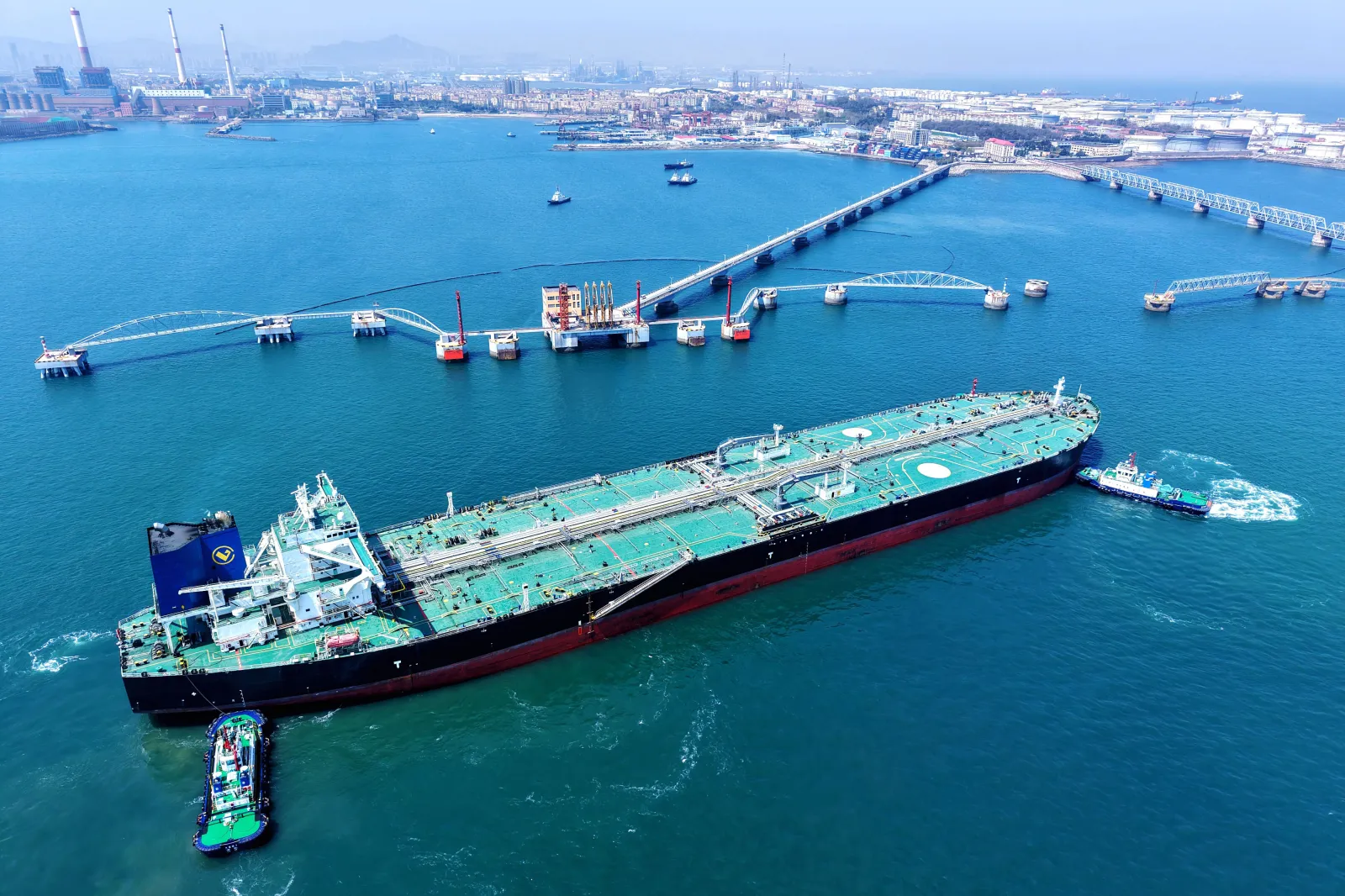
The crude oil tanker New Odyssey arrives at the port in Qingdao, in China's eastern Shandong province on April 15, 2025. | Photo by STR/AFP/Getty Images
What To Know

The report published Tuesday said Thousand Sunny was in the southern Atlantic on Monday, having sailed around the Cape of Good Hope without cargo, and has not diverted or slowed since Trump announced an oil blockade on Venezuela in mid-December. The Chinese-flagged tanker of unknown origin is not sanctioned by the U.S. and has been transporting Venezuelan Merey crude to China for a half-decade.


Meanwhile, the second unsanctioned Chinese-flagged VLCC, Xing Ye, is currently slow-steaming off French Guiana as it waits to load crude at Venezuela’s Jose Terminal. Like the Thousand Sunny, its ownership remains undisclosed, and its post-Venezuela destination is unclear. The tanker last loaded crude in Venezuela in August.

China has extended tens of billions of dollars in loans to Venezuela over the years, repaid by Caracas largely through oil shipments, and backed Venezuela in an emergency meeting of the U.N. Security Council on Tuesday.

Stepping up its blockade on Venezuelan oil, the U.S. seized the Panama‑flagged Centuries and the VLCC Skipper while pursuing the Bella 1, which officials say is a sanctioned Venezuelan vessel flying a false flag under a judicial seizure order.

Venezuelan gunboats have begun escorting vessels carrying oil and petroleum products but their coverage appears limited to the nation’s territorial waters, according to The New York Times.

Petroleos de Venezuela SA (PVDSA) has begun shutting oil wells in the Orinoco Belt as storage fills and exports are squeezed by the U.S. blockade, Bloomberg reported Monday, adding that it aims to reduce production by at least 25% to 500,000 barrels a day. At the same time, U.S. company Chevron has continued exporting Venezuelan crude under a special U.S. government license.


What People Are Saying


China's ambassador to the U.N. Sun Lei said during a Security Council meeting last week: "The US actions and rhetoric have led to continued tensions in the region, raising serious concerns among regional countries and the international community…We call the United States to heed the just call of the international community, immediately halt relevant actions, and avoid further escalation of tensions."

Russia's U.N. representative Vassily Nebenzia told the meeting: "For several months now, the entire world has been watching the United States deliberately fomenting tensions around Venezuela, which is a friend of ours…The illegal US blockade of Venezuela's coastline is a genuine act of aggression…Unfortunately, there is every reason to believe that these are not one-off acts by the US vis-à-vis Venezuela…"

What Happens Next

As the Thousand Sunny nears Venezuela's Jose Terminal in weeks and the Xing Ye waits nearby, the U.S. enforcement or otherwise of the declared blockade will shape whether the standoff will develop into a wider geopolitical confrontation.


Anti-ICE Resistance Sprang Up Across Red States in 2025


In Texas, North Carolina, Alabama, Tennessee, Florida, and beyond, grassroots resistance to ICE is growing.
December 29, 2025

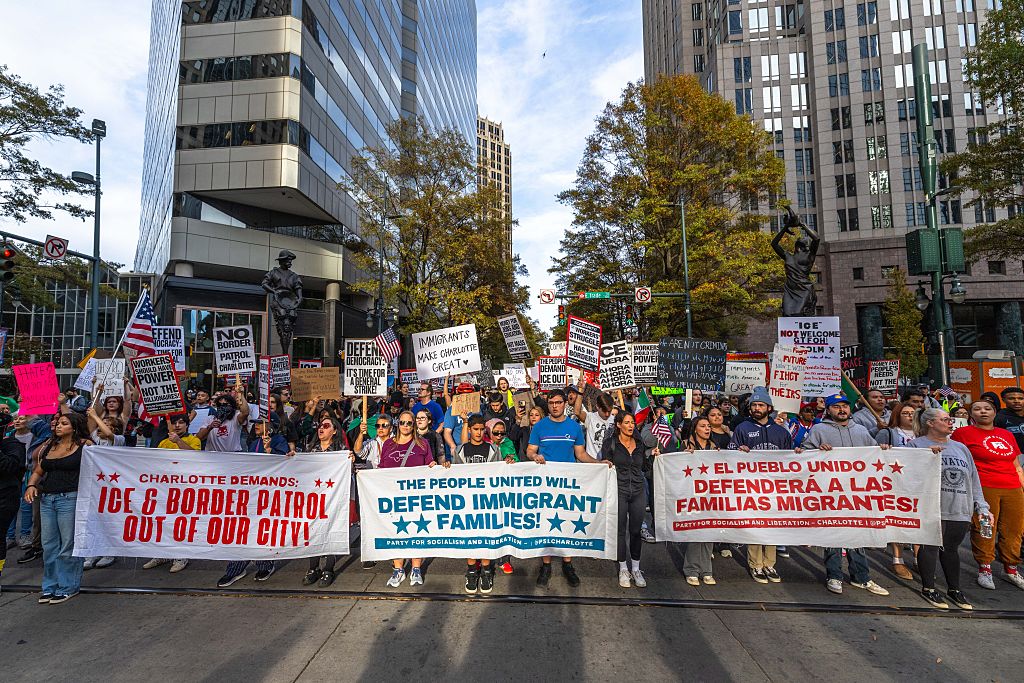
Protesters march through uptown after gathering at First Ward Park for the "No Border Patrol In Charlotte" rally on November 15, 2025, in Charlotte, North Carolina.Grant Baldwin / Getty Images


Grassroots organizations around the United States, with little to no support from local authorities, have spent much of the past year defending themselves against President Donald Trump’s deployments of Immigration and Customs Enforcement (ICE) agents and the National Guard. While community defense efforts in large urban metropolises such as Los Angeles, New York City, Chicago, and Portland have attracted the most media coverage, anti-ICE activity is also thriving in Republican-controlled states like Texas and North Carolina.

Many grassroots groups in conservative-leaning states are documenting their own work on Instagram, using social media accounts as hubs to update local communities on ICE activity, recruit volunteers, and announce trainings. They may face a more challenging terrain than those organizing in Democratic-controlled states, given the active collaboration of law enforcement agencies with ICE.

While red state anti-ICE organizing may be less likely to feature whistlesbullhorns, and other confrontational tactics seen in cities like Chicago and Los Angeles, common themes are emerging, consistent with organizing in liberal cities. The anti-ICE playbook in red states involves creating a hotline for residents to report ICE activity, “Know Your Rights” sessions that give people legal advice on what information they should withhold when confronted by ICE, and ICE-watch trainings for observers documenting arrests. Many groups are also ensuring that the families of those arrested and detained have legal and financial support.

The anti-ICE playbook in red states involves creating a hotline for residents to report ICE activity, “Know Your Rights” sessions, and ICE-watch trainings.

This non-comprehensive roundup of anti-ICE activities is an indication of how widespread resistance to fascism became in 2025.


North Carolina


In North Carolina cities such as Raleigh and Charlotte, a grassroots organization called Siembra NC is leading efforts to protect community members from ICE. Siembra NC was founded in 2017 in direct response to the first Trump administration and offers a hotline for residents reporting ICE arrests, as well as abusive employers and landlords. If ICE agents attempt to enter people’s home or car, Siembra NC advises locking the door and starting a livestream on social media to document the interaction.

In an Instagram post in mid-November, Siembra NC also documented its members showing up outside grocery stores in Charlotte when ICE agents arrested shoppers. Volunteers who were trained as part of Siembra NC’s “Safe to Work, Safe to School” patrols ensured that those being arrested were informed of their right to remain silent and knew not to sign any documents.


Jail Support for Immigrants Held in Missouri Offers Resistance in a Red State
Local communities resist ICE by reaching inside jails and building networks of support.
By Brian Dolinar , Truthout/TheAppeal 
December 6, 2025

In a piece for Teen Vogue, Siembra NC’s co-executive director Nikki Marín Baena explained how her organization began training people in the parking lots of immigrant neighborhoods on how to identify ICE agents. “After a volunteer confirmed an officer’s identity, they would alert neighbors to the agent’s presence, and our dispatch team would send a text message to our contacts in the area,” she wrote. Siembra NC’s efforts are effective. According to Baena, “in every case we worked on, when the agents realized they were being watched, they abandoned their stakeout.”

Having learned how to respond to anti-immigrant attacks in Trump’s first term, Siembra NC has published a downloadable playbook as part of its “Defend and Recruit” campaign, and on July 23, held a virtual event specifically designed for organizers in red states engaged in ICE-watch activities.


Pennsylvania


The People’s Defense Front (PDF) in Northern Appalachia, which is located in central Pennsylvania, offers community defense trainings against “police violence, landlord cruelty, white supremacists and abusive bigots.” Its Instagram account documents the August 19 arrests of 26 workers by ICE agents and state troopers. Labeling the effort as “Know Your Enemy,” PDF published photos of those armed agents and asked community members for help in identifying them.

PDF offers a Centre County Rapid Response Network hotline for community members to report ICE activity, and recruits volunteers to sign up for and get trained in conducting anti-ICE patrols. “We patrol every morning and night,” said the group in an online post, and “maintain close contact with workers and the community.”

PDF is also collaborating with the Student Committee for Defense and Solidarity (SCDS) in State College where Penn State’s campus is located, and where ICE activity was documented in July 2025. SCDS explained in a post that, “In confronting ICE through our patrols, we raise the cost of ICE’s violence with the aim to undercut their power and deter their presence in the area.”


Texas


In Dallas and Fort Worth, Vecinos Unidos DFW is holding “Know Your Rights” and ICE-watch trainings, and organizing people by neighborhoods. “People who know both how to defend their rights and how immigration agents are operating nearby are less likely to be separated from their families,” said the group on Instagram. Like many other organizations, they have a community defense hotline that people can call to report ICE activity.

Vecinos Unidos DFW also began a court watch program after immigrants were arrested when they showed up to their court dates. The grassroots organization is calling on local residents to be present at immigration hearings. “With ICE activity picking up in our area,” said Vecinos Unidos DFW on Instagram, “it’s crucial to stay vigilant and learn our rights to protect ourselves and our neighbors.” The group is also organizing people to prevent Dallas police from cooperating with ICE agents, and raising funds as mutual aid for immigrant families who have been separated by detention and deportation.


Alabama


The Alabama Coalition for Immigrant Justice, along with other organizations local to Birmingham, has set up an ICE-watch program called Bham Migra Watch, alerting local communities of the locations, times, and dates of ICE arrests.

In September 2025, after dozens of people were arrested in Russellville, Franklin County, on their way to work, the group urged people to call their hotline with any information or requests for legal and other help.

Bham Migra Watch also informs residents of their rights if they are approached by ICE agents, and recruits volunteers to sign up for trainings for “all Birmingham friends interested in fighting against ICE aggression,” and for those located in Montgomery and Montevallo to “fight for the community around you.”


Florida


Defensa Gulf Coast is a Florida-centered effort in and around Pensacola, describing itself as a group “formed to defend our immigrant neighbors against the racist deportation machine.” Operating out of the “Pensacola Liberation Center,” Defensa Gulf Coast has participated in efforts to shut down the notorious immigrant jail known as “Alligator Alcatraz,” and, like other groups, established a hotline to report ICE sightings.


Tennessee


An effort centered in Nashville called Music City Migra Watch is encouraging local residents to carefully document ICE activity and send it to them. The group conducts ICE-watch and court-watch trainings “meant to empower our community, build safety, and support those who need it most.” It also supports trainings in surrounding localities including Springfield, Murfreesboro, and Mount Juliet. Beyond local community defense, Music City Migra Watch is leading a boycott of Avelo Airlines, a company known for collaborating with ICE to transport arrested immigrants.


“How many of us would it take to put the focus on the attacks that will touch nearly every American, not simply those terrorizing immigrants?”


Looking Toward Resistance in 2026


Given the increasing number of U.S. citizens caught in ICE’s dragnet, organizers are warning that attacks on immigrants are just the beginning. Siembra NC’s Baena issued a challenge to those who want ICE out of their communities, saying, “How many of us would it take to put the focus on the attacks that will touch nearly every American, not simply those terrorizing immigrants?”

After a year of ICE violence, groups like hers are bracing themselves for increased staffing at the federal agency and a greater armed presence on city streets. The 2025 “Know Your Rights” sessions and trainings on anti-ICE defense offer a strong foundation for local communities to ramp up activism in many forms. “We are more ready than ever if ICE accomplishes its goal of hiring 600 percent more officers,” said Baena.

And readiness means expanding activities from the streets to the halls of power. “In 2026 we are going to switch from ‘defense’ to ‘offense,’ ensuring we don’t simply watch out for ICE agents but create the conditions necessary to hold elected officials accountable for guaranteeing dignity for everyone in our state,” Baena promised.

This article is licensed under Creative Commons (CC BY-NC-ND 4.0), and you are free to share and republish under the terms of the license.


Sonali Kolhatkar

Sonali Kolhatkar is a monthly contributor to Truthout. She is an award winning multimedia journalist and author. She is the host and executive producer of Rising Up With Sonali, a nationally syndicated weekly television and radio program airing on Pacifica stations and Free Speech TV. She was most recently Senior Editor at YES! Media covering race, economy, and democracy, and is currently Senior Correspondent for the Economy for All Project at the Independent Media Institute, and a monthly columnist for OtherWords, a project of the Institute for Policy Studies. Her writings have been published in LA Times, Salon, The Nation, In These Times, Truthdig, and more. Her books include Talking About Abolition: A Police-Free World is Possible (Seven Stories, 2025), Rising Up: The Power of Narrative in Pursuing Racial Justice (City Lights, 2023), and Bleeding Afghanistan: Washington, Warlords, and the Propaganda of Silence (Seven Stories, 2006). Her first novel, Queen of Aarohi will publish in 2027 by Red Hen Press. Her website is www.SonaliKolhatkar.com.
'Big issue': Analysts reveal Trump's true intentions behind focus on Minnesota fraud

Robert Davis
December 29, 2025 
RAW STORY


President Donald Trump is not being honest about his intentions for focusing his attention on social services fraud committed in Minnesota.

The fraud cases gained renewed attention over the weekend after a right-wing influencer named Nick Shirley posted a video on X that claimed to find $110 million in child care fraud committed by Somalians in Minnesota. Trump and several MAGA voices have focused intently on the cases, using them to attack Trump's political foes like Minnesota Gov. Tim Walz, a Democrat.

Former Trump communications director Anthony Scaramucci and British journalist Katty Kay discussed the story on a new episode of the podcast "The Rest is Politics US." They argued that Trump's true intentions for focusing on the story is to change the subject of the 2026 midterm from the economy to immigration.

"The step-back, the bigger picture is about welfare and fraud and government and trust in government and thrown into that [is] immigration, particularly Muslim immigrants, because these most Somali immigrants will be Muslim immigrants and you've got a kind of toxic mix there of things that will be brought up," Kay said. "I can imagine the Haitian immigrants and eating the dogs and the cats was brought up in the last election campaign. This is going to resurface in the midterms."

"That's the big issue for me," Scaramucci said. "If I look at the midterms coming up and giving people a a preview of this, it's going to be about presidential approval rating. It's going to be about jobs and inflation. It's going to be about the state of the economy."

Trump's approval rating has steadily fallen since he took office in January. According to The Economist, his approval rating stands at 39%, which represents a 17-point decline since the beginning of the year.

Trump's approval rating on the economy is also hovering in the mid-30s, according to polls.

A recent AP-NORC poll found that immigration is one of Trump's strongest issues, with a 49% approval rating.


'Turned off the money spigot': Trump admin freezes all Minnesota child care funding

Matthew Chapman
December 30, 2025 
RAW STORY


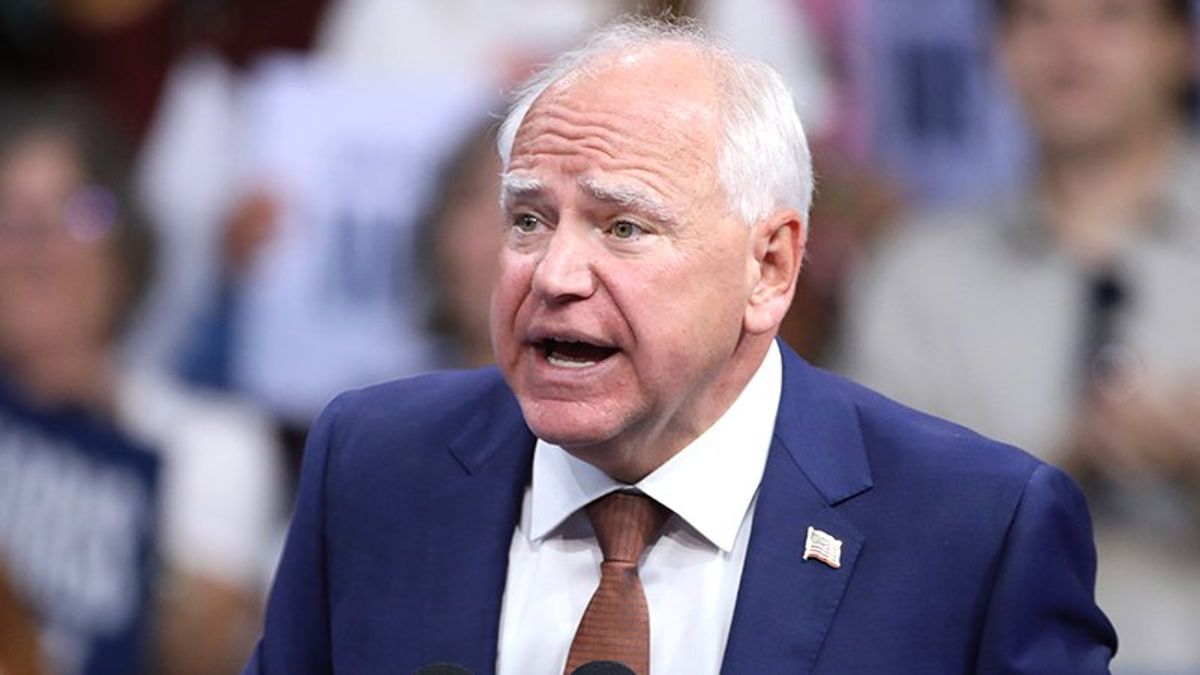
Gov. Tim Walz (D-MN) (Photo: Gage Skidmore/Flickr)


The Trump administration is clamping down on federal funding for child care programs in Minnesota.

The announcement came from Deputy Secretary of Health and Human Services Jim O'Neill, who posted the specifics to X on Tuesday evening.

"We have frozen all child care payments to the state of Minnesota," he wrote. "You have probably read the serious allegations that the state of Minnesota has funneled millions of taxpayer dollars to fraudulent daycares across Minnesota over the past decade."

As part of the crackdown, wrote O'Neill, all payments from the Administration of Children and Families "will require a justification and a receipt or photo evidence before we send money to a state," and in Minnesota specifically, Gov. Tim Walz is being ordered to provide "a comprehensive audit" of day care centers. Additionally, a fraud-reporting hotline and email address have been established.

"Whether you are a parent, provider, or member of the general public, we want to hear from you," O'Neill concluded. "We have turned off the money spigot and we are finding the fraud."

The controversy began with a right-wing freakout over a New York Times deep dive into a criminal investigation that took place in 2022 into fraud in Minnesota pandemic relief programs, where some of the perpetrators were part of the Somali diaspora community in the Twin Cities. Even though the Biden administration already cracked down on this fraud, conservative influencers went looking for more examples, and YouTuber Nick Shirley purported to uncover day care centers in Minnesota Somali neighborhoods that were taking in millions in federal money while not actually having any kids enrolled in them.

So far, experts have reacted to this report with skepticism, and a CBS News fact-check indicated that a day care at the heart of the accusations, while it was investigated by the state for code violations, actually did have kids enrolled.

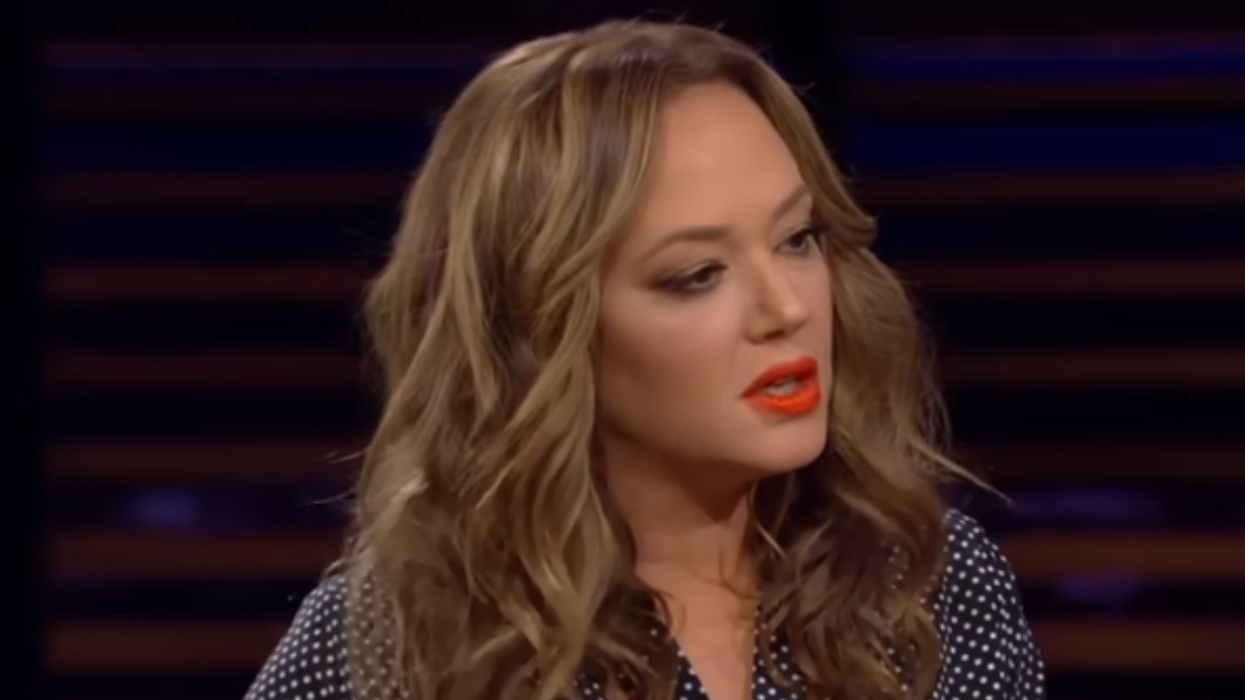
'Very scary': Leah Remini says Trump's inner circle has been 'infiltrated' by Scientology

JUST TWO SCIENTOLOGISTS,
NEITHER ARE TOM CRUISE


Leah Remini talking to comedian Chelsea Handler on May 21, 2017
 (Image: Screengrab via Netflix Is a Joke / YouTube)
December 30, 2025
ALTERNET


Former Scientologist Leah Remini is warning that members of the religious group she escaped from have successfully carried out an "infiltration" of President Donald Trump's inner circle.

On Tuesday, Redstate founder Erick Erickson tweeted that there were a "lot of Scientologists hanging out in the President's orbit lately," which could be a reference to two Scientologists prominent in conservative politics. Real estate developer Grant Cardone — who spoke at Trump's Madison Square Garden rally in October of 2024 — was also given a speaking slot at Turning Point USA's annual Americafest event in Phoenix, Arizona this month.

Cardone is also a featured content creator on far-right PragerU's website, where he is described as "an entrepreneur, real estate investor and sales trainer recognized for his high-energy approach to business and personal growth." In 2011, the Village Voice reported that Cardone had reached OT VIII (Operating Thetan Level Eight), which is the highest level within the organization.

In addition to Cardone, Scientologist Patricia Duggan is also close to Trump, as he appointed her to the board of the Kennedy Center for the Performing Arts earlier this year. Duggan's level within the organization is not publicly known, though she is the largest single donor to the group, with the Tampa Bay Times reporting that the Church of Scientology created the donor category "Patron of Legend" just for her. Her then-husband Robert Duggan said in 2016 he donated ore than $360 million to the group.

"Yes, this is accurate, Erick, and very scary," Remini wrote in a response to Erickson's tweet. "Thank you for always being aware of the dangers of Scientology and their successful infiltration of the Trump administration and the federal government overall."

The act of infiltrating government agencies is a longstanding practice of the organization, according to a 1980 St. Petersburg Times report that won the Pulitzer Price, In the 1970s, the Church of Scientology carried out a plan dubbed "Operation Snow White" in which approximately 5,000 Scientologists sought to gain access to 136 government agencies, embassies and private organizations to purge all documents casting the organization in an unfavorable light. An IRS librarian spotted two Scientologists at its Washington D.C. office, which led to a federal raid on the group's buildings resulting in the seizure of more than 48,000 documents.
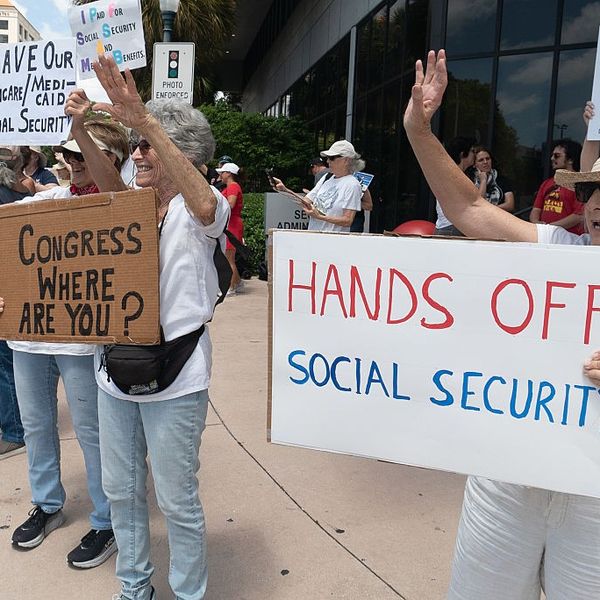
Social Security Administration ‘In Turmoil’ as New Reporting Details Damage Done by Trump Cuts


In-depth reporting from the Washington Post found the Social Security Administration is dealing with “record backlogs that have delayed basic services to millions of customers.”


Brad Reed
Dec 30, 2025
COMMON DREAMS

An in-depth report published by the Washington Post on Tuesday offers new details about the damage being done to the Social Security Administration during President Donald Trump’s second term.

The Post, citing both internal documents and interviews with insiders, reported that the Social Security Administration (SSA) is “in turmoil” one year into Trump’s second term, resulting in a customer service system that has “deteriorated.”


Senators Demand Trump Admin Come Clean on Plan to ‘Quietly Kill’ Social Security Offices


Nearly Half of Americans Say Their Financial Security Is Getting Worse Under Trump

The chaos at the SSA started in February when the Trump administration announced plans to lay off 7,000 SSA employees, or roughly 12% of the total workforce.

This set off a cascade of events that the Post writes has left the agency with “record backlogs that have delayed basic services to millions of customers,” as the remaining SSA workforce has “struggled to respond to up to 6 million pending cases in its processing centers and 12 million transactions in its field offices.”

The most immediate consequence of the staffing cuts was that call wait times for Social Security beneficiaries surged to an average of roughly two-and-a-half hours, which forced the agency to pull workers employed in other divisions in the department off their jobs.


Commissioner of the Social Security Administration Frank Bisignano looks on as US President Donald Trump speaks in the White House in Washington, DC on August 14, 2025.
(Photo by Mandel Ngan/AFP via Getty Images)

However, the Post‘s sources said these employees “were thrown in with minimal training... and found themselves unable to answer much beyond basic questions.”

One longtime SSA employee told the Post that management at the agency “offered minimal training and basically threw [transferred employees] in to sink or swim.”

Although the administration has succeeded in getting call hold times down from their peaks, shuffling so many employees out of their original positions has damaged the SSA in other areas, the Post revealed.

Jordan Harwell, a Montana field office employee who is president of American Federation of Government Employees (AFGE) Local 4012, said that workers in his office no longer have the same time they used to have to process pay stubs, disability claims, and appointment requests because they are constantly manning the phones.

An anonymous employee in an Indiana field office told the Post that she has similarly had to let other work pile up as the administration has emphasized answering phones over everything else.

Among other things, reported the Post, she now has less time to handle “calls from people asking about decisions in their cases, claims filed online, and anyone who tries to submit forms to Social Security—like proof of marriage—through snail mail.”

Also hampering the SSA’s work have been new regulations put in place by Tesla CEO Elon Musk’s Department of Government Efficiency that bar beneficiaries from making changes to their direct deposit information over the phone, instead requiring them to either appear in person at a field office or go online.

The Indiana SSA worker told the Post of a recent case involving a 75-year-old man who recently suffered a major stroke that left him unable to drive to the local field office to verify information needed to change his banking information. The man also said he did not have access to a computer to help him change the information online.

“I had to sit there on the phone and tell this guy, ‘You have to find someone to come in... or, do you have a relative with a computer who can help you or something like that?’” the employee said. “He was just like, ‘No, no, no.’”

Social Security was a regular target for Musk during his tenure working for the Trump administration, and he repeatedly made baseless claims that the entire program was riddled with fraud, even referring to it as “the biggest Ponzi scheme of all time.”