Tuesday, December 30, 2025


China's Navy Conducts Final Test of Ship-Launched Hypersonic Missile

The Wuxi launches a YJ-20 ASBM (China Military Bugle)

Published Dec 29, 2025 10:05 PM by The Maritime Executive


On Sunday, Chinese state media unveiled the final test launch of a new maneuvering hypersonic missile from a multirole destroyer. The operational test shows that the PLA Navy will soon field a weapon that is far harder for American missile defense systems to intercept, augmenting the PLA's formidable anti-ship ballistic missile portfolio.

The test of the new YJ-20 hypersonic missile was announced by official military media outlet China Military Bugle, and was accompanied by video footage of the launch from a Type 055 destroyer, the Wuxi. The video suggests that the YJ-20 is ejected from a VLS cell before ignition of its rocket motor ("cold launch").

Capabilities like the YJ-20 could allow China to stretch its presence further out into the Pacific or the Indian Ocean, allowing the Type 055 class to operate with a top-of-the-line, long-range antiship missile system - if it works in practice. Hypersonics still require offboard surveillance of the target in order to complete the "kill chain," and U.S. defense officials have said that China's network of remote-sensing and guidance capabilities would be targeted in the event of a conflict.

In addition to the YJ-20, the PLA operates multiple distinct classes of antiship ballistic missiles, several designated hypersonic. (In the defense context, "hypersonic" means that the device is both faster than Mach 5 and maneuverable on terminal approach.) The YJ-17 sub-launched medium-range ballistic missile has a hypersonic glide vehicle payload and an antiship capability, with enough range to reach Yokosuka and Subic Bay. The DF-26, an intermediate range ballistic missile, can reach out to 4,000 kilometers - enough to range Guam, where the U.S. maintains key military installations.

The newly-produced DF-27 - not yet announced by China, but acknowledged by the Pentagon - is an intercontinental antiship ballistic missile with enough range to threaten U.S. Navy ships across half the world. Launched from a truck within China's borders, it could theoretically reach the North Atlantic, Europe, Australia, the Solomon Islands, Pearl Harbor, or San Francisco Bay. 

Now, with the YJ-20, China can bring an advanced antiship ballistic missile threat to any theater where the Type 055 destroyer can reach. Eight of these 12,000-tonne warships are in service, and eight more are planned.

 

MULTIPOLARITY; HALF A BRIC

Russia, China and Iran Join Naval Exercises off South Africa

Mosi-3 transit
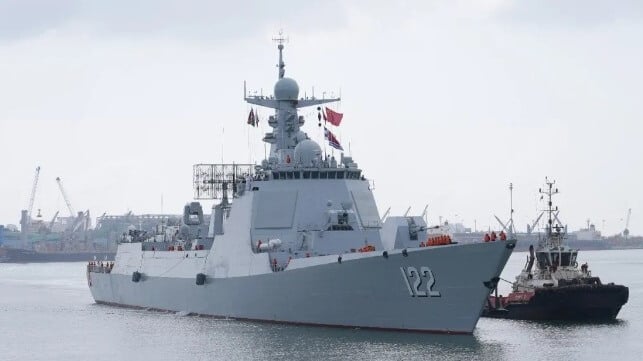
PLA Navy destroyer Tangshan calls Mombasa, Dec. 25 (PLA)

Published Dec 29, 2025 11:16 PM by The Maritime Executive


Naval contingents from Russia, China and Iran are converging in South Africa in anticipation of the start of Exercise Mosi-3 in early January. Mosi-3 is labelled a BRICS initiative, albeit participation identified so far seems rather thin.

Making a port call in Mombasa en route to South Africa on Christmas Eve were two naval vessels of the People Liberation Army (PLAN), the Type 052DL guided-missile destroyer Tangshan (D122) and the Type 903A replenishment ship Taihu (K889).  The remaining ship of the 48th Flotilla, the Type 054A guided-missile frigate Daqing (F576), appears to have been left behind to keep watch over the Red Sea and Gulf of Aden.

Heading down the west coast of Africa are the Russian Steregushchiy Class corvette Stoykiy (F545) with a Ka-27PL ASW helicopter on board, and its escorting Altay Class oiler Yelnya (A168). This flotilla came into Pointe-Noire, in the Republic of the Congo, on December 21, and is programmed to be away from its Baltic Fleet base for six months. It was tracked through the English Channel in late November, and after its participation in Exercise Mosi-3 is scheduled to make calls in Tanzania, Guinea, and Mozambique. It may well then provide the Russian participation in the Iranian annual Exercise Maritime Security Belt 2026, alongside vessels from the PLAN’s 48th Flotilla.

Somewhere out there are the 103rd and 104th Flotillas of the regular Iranian Navy (Nedaja), of which the 103rd is slated to take part in the exercise. The Nedaja may not follow the Chinese into Mombasa, as Iranian-Kenyan relations are somewhat poor; earlier this year the Kenyan Navy seized an Iranian-crewed ship smuggling a huge consignment of drugs off the Kenyan coast, which followed an incident when the Iranian ambassador attempted to fly out two members of the IRGC who had been arrested in Kenya on terrorism charges. The Iranians may be relying on resupply at sea rather than making landfall; the long-range resupply vessel IRINS Makran (K441) was still missing from its berth in Bandar Abbas late on December 28.

On a previous expedition to South Africa in January 2017, the Nedaja’s Bandar Abbas Class resupply vessel IRINS Bushehr (K422), which was escorting the Moudge Class frigate IRINS Alvand (F71), suffered hull damage after hitting a container adrift at sea, and was stranded in Durban for some time while the cost of repair was negotiated. In April 2023, when Nedaja vessels of the global circumnavigating 86th Flotilla were given permission to dock in Cape Town on the way back to Iran, the US Embassy warned the South African authorities that "entities and individuals that provide support, including maritime services to designated entities, could be subject to sanctions risk under US authorities." Similar issues may arise again over Exercise Mosi-3.

U.S. Coast Guard Saves (And Detains) Two Migrants Who Jumped Off a Barge

migrants
Courtesy USCG

Published Dec 29, 2025 3:48 PM by The Maritime Executive


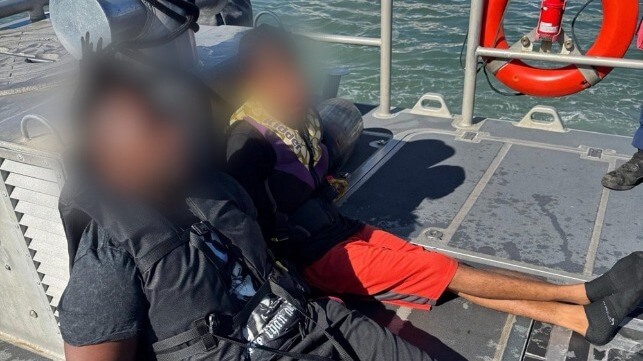
A U.S. Coast Guard response team rescued two migrants who jumped into San Juan's harbor from a commercial barge, marking the latest in a series of incidents involving stowaways attempting to reach Puerto Rico.

The incident unfolded around mid-morning when a Coast Guard response vessel received an alert from the tug Southern Dawn's crew, who suspected that unwanted passengers might be concealed on board the barge, the Charlotte bridge. The migrants then leapt from the barge in an apparent escape attempt as the tow approached the port.

Coastguardsmen retrieved both of the men, handcuffed them and transferred them to shore, where immigration officials took them into custody. 

Commander Matt Romano, who oversees response operations for the regional maritime security command, emphasized the severe risks associated with such actions. "Attempting to board or abandon moving maritime vessels presents extreme peril," Romano stated, praising the effort that saved the two men while maintaining U.S. border controls.

Afterwards, multiple agencies carried out thorough inspections of the barge. Federal immigration enforcement, customs officers, criminal investigators, and local police searched it to make sure that no additional unauthorized passengers were still concealed.

San Juan Harbor has seen several episodes involving migrants hiding aboard commercial barges in recent years, and at least one incident in 2023 ended in a man-overboard situation, when three stowaways jumped off a barge under tow by the tug Sarah Dann. All would-be migrants face removal under federal policy, with repatriation either to their home nation or the place where they boarded as stowaways.


Three-Alarm Fire Damages Working-Waterfront Businesses in Portland, Maine

Firefighters climb atop one of the burning buildings in an attempt to control the blaze (PMFD)

Published Dec 29, 2025 7:33 PM by The Maritime Executive


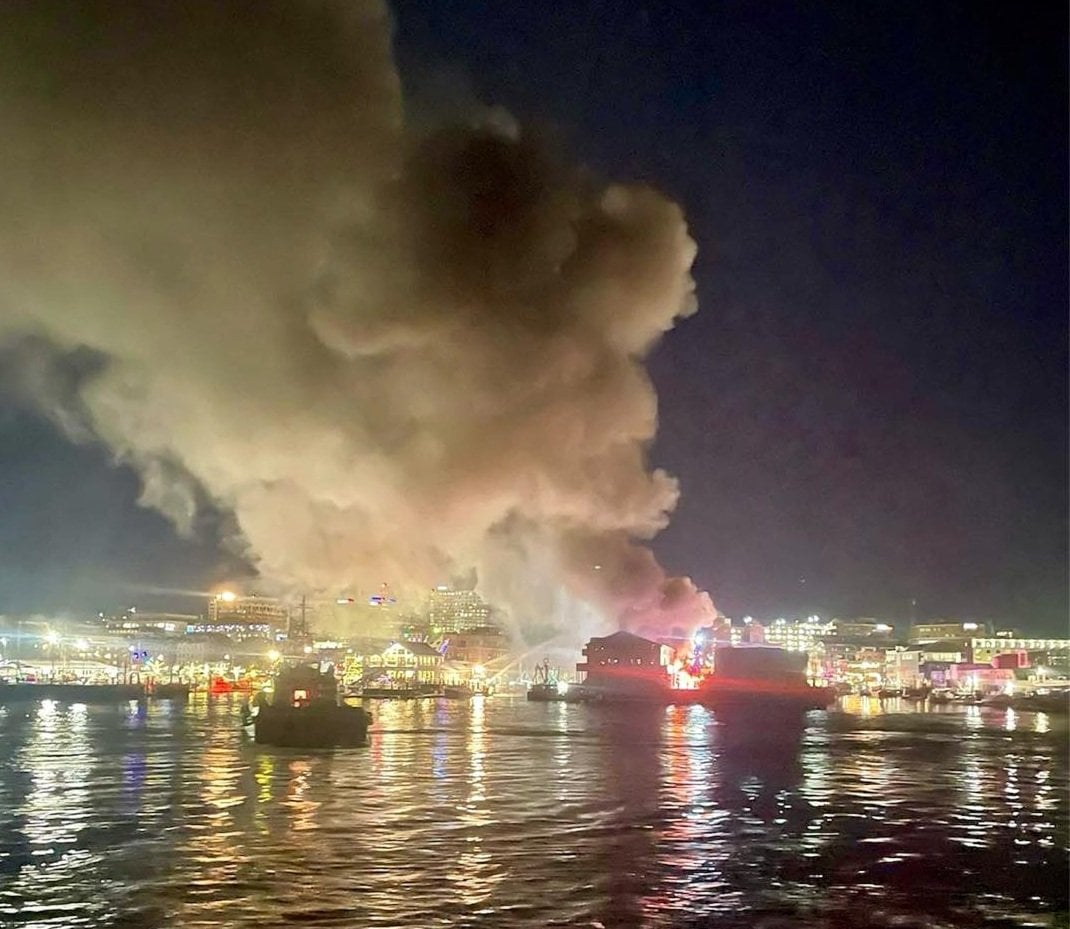
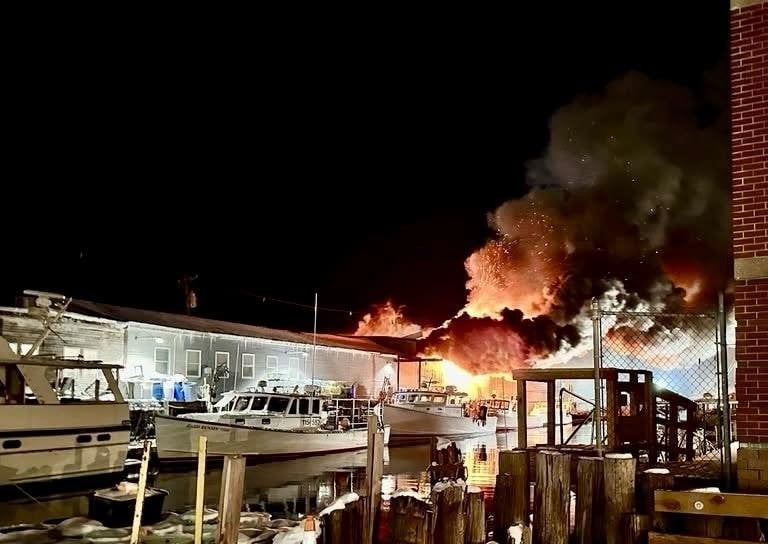
A fire along the waterfront in Portland, Maine last weekend seriously damaged four businesses and multiple boats, causing hardship for more than a dozen lobstermen. 

At about 1730 hours on Friday, a fire was reported at downtown Portland's Custom House Wharf. Despite a rapid response, the blaze spread to four neighboring business establishments, burning their roofs off and causing extensive damage before the fire was put out at about 1920 hours. A maritime antique store, a nautical-themed bag shop, and a fishermen's gear storage building were affected by the fire. Several boats sank due to fire damage, a fishermen's association spokesperson told the Boston Herald, and others were damaged. 

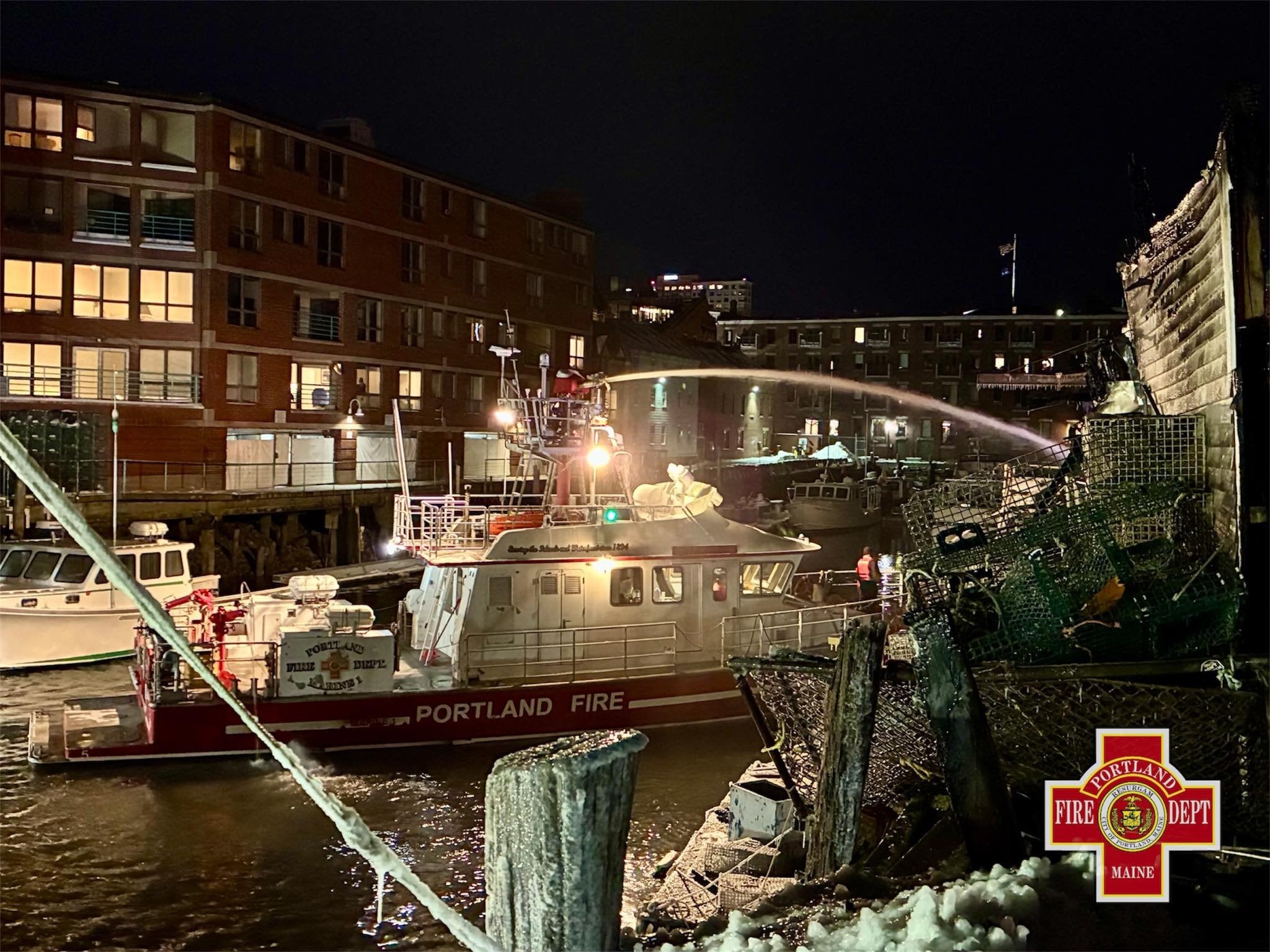
The firemen had to deal with difficult conditions: restricted access to wharf-side structures, collapsing structures, freezing weather made operations challenging, and frozen-shut hydrants impeded firefighting from shore. A fireboat applied water from the harbor side to help douse the flames. Unfortunately, two responders sustained minor injuries, but no harm to occupants or bystanders was reported.

The wharf is used by more than a dozen lobstermen, according to the Portland Press Herald. Local businesses are stepping in to provide extra support to the lobster-boat operators as they look for alternatives. The Maine Coast Fishermen's Association has launched a fundraising page for the public to offer donations to help out. Over $12,000 has been raised so far, the association told the Boston Herald. 

So far, no foul play is suspected, according to the local fire department. An investigation into the cause of the blaze is under way.  


Passengers on Grounded Cruise Ship in Papua New Guinea Will be Flown Home

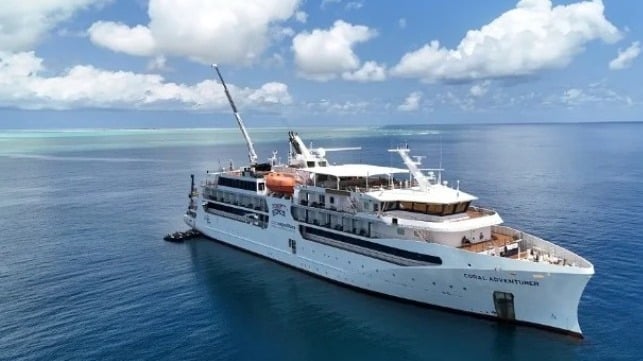
Coral Adventurer
Coral Adventurer (file image courtesy Coral Expeditions)

Published Dec 29, 2025 11:06 PM by The Maritime Executive


The cruise ship Coral Adventurer has been detained in Papua New Guinea after running aground on a reef, and the passengers will be flown home on a charter flight, according to the operator. 

The ship ran aground on a reef near Dreghafen Point off the east coast of the island, about 15 nautical miles from the port of Lae. Strong currents were a likely contributing factor, according to Travel and Tour World. The site of the grounding is known as a shallow coral ridge, and local navigators tend to avoid it, regional governor Rainbo Paita told ABC. On a nautical chart provided by Pole Star Global, the site is marked with the symbol for breakers, indicating shallow water. 

The cruise ship has a slight list of about six degrees to port, but no damage to the vessel has been found, nor has any pollution been reported, the master told local authorities. All 124 personnel aboard are safe, according to Papua New Guinea's National Maritime Safety Authority.

Separately, the Australian Maritime Safety Authority (AMSA) has detained Coral Adventurer on "reasonable suspicion that it is not seaworthy due to potential damage sustained during grounding." The ship is in foreign waters, but it is Australian-flagged and therefore within AMSA's jurisdiction. AMSA also asserted that Coral Adventurer is "sub?standard as a result of failures in the implementation of its Safety Management System under the International Safety Management Code," though did not provide further details. 

On Sunday, an initial high-tide refloat attempt using the ship's own engines was not successful. Another attempt is expected, and the operator is making contingency plans if this does not work, the authority said in a statement.


Kidnapped LPG Carrier Crew Released from Captivity in West Africa

gas carrier
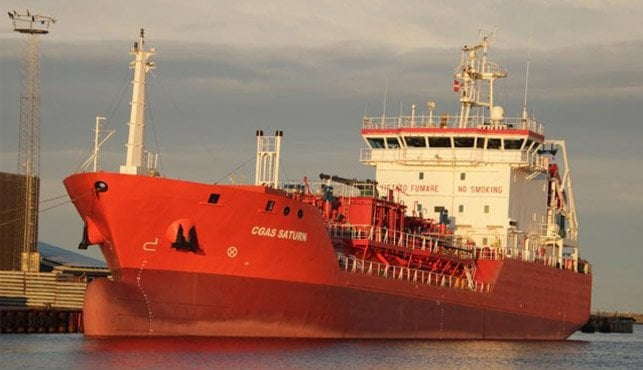
Nine kidnapped crewmembers from the CGAS Saturn were released (photo by René Nielsen, courtesy of VesselFinder)

Published Dec 30, 2025 6:14 PM by The Maritime Executive


The nine members of the crew aboard the LPG gas carrier CGAS Saturn have been released and are reported to be safe after their ordeal in West Africa. The owner of the vessel, Christiania Gas, announced on December 29 that the crew was released and being repatriated.

The incident began on December 3 while the CGAS Saturn (3,090 dwt) was underway approximately 50 nautical miles west of the African coast, bound for Malabo, Equatorial Guinea. The reports said the 13 crewmembers were rounded up by an unknown number of pirates who boarded the ship. Personal belongings were also stolen.

The pirates abducted nine of the crewmembers when they left the ship. They left four people behind on the ship, and Christiania later said that one of them had sustained light injuries. Initially, the injured individual was treated on the ship and later transferred for medical care in an onshore hospital. They were able to sail the vessel to a safe port in West Africa after the incident.

The company did not provide any details on the release of the individuals or their nationalities. Poland’s Ministry of Foreign Affairs, however, said today that a Polish sailor had been freed and was now home with family.

While the level of piracy activity has declined in the region, security consultants continue to emphasize that the danger remains high off West Africa. There were at least 17 armed robbery or piracy incidents reported in the Gulf of Guinea over the past 12 months, according to the Neptune P2P Group. Between January and September, the International Maritime Bureau calculated that a total of 14 crewmembers had been kidnapped. Robberies and kidnap-for-ransom remain a key threat to vessels operating in the region.
 

Top photo by René Nielsen, courtesy of VesselFinder


Cargo Removal Completed Six Months After Fire Damaged Wan Hai 503

contasinership fire
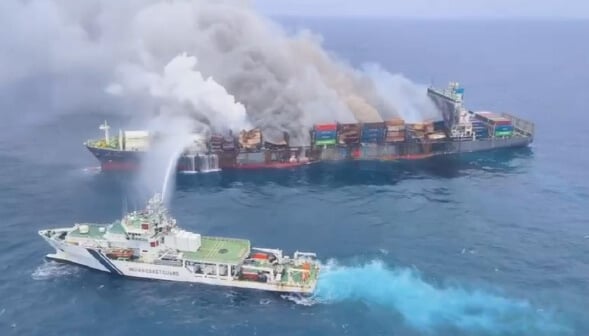
Container fire spread consuming more than two-thirds of the Wan Hai 503 (DGS)

Published Dec 30, 2025 6:42 PM by The Maritime Executive


After more than three months of salvage operations and approximately six months after the fire was put out on the container vessel Wan Hai 503, owners Wan Hai Lines reported that the removal of cargo from the ship had been completed. While clean-up efforts continue on the ship, which has been berthed at the Port of Refuge in Jebel Ali, United Arab Emirates, it marks a key step in the long process.

The company had highlighted earlier in the month that only a small amount of debris remained in the cargo holds, with most of it being damaged or twisted containers that had been subjected to the brunt of the fire. It had become increasingly difficult to identify individual containers as they are discharged due to their condition after the fire.

They report that a total of 1,696 containers were discharged from the vessel. Most are fire-damaged, as only the stacks that the stern had been shielded by the deckhouse from direct exposure to the fire. The salvage teams had highlighted the challenges of removing each of the boxes as they had to be individually slung and hoisted from the ship to the dock storage area for inspections. 

The removal of cargo residue and waste from cargo holds 3 & 4, however, is still ongoing. Wan Hai notes that cargo hold 4 will require additional time due to the large amount of slurry present.

The salvage team has also pumped a total of approximately 11,675 tonnes of firefighting water from the vessel.

The fire began on June 9 in the Indian Ocean while the vessel was 54 nautical miles off the west coast of India. The Indian authorities organized the evacuation of the 22 crewmembers who were aboard. Four individuals, two from Taiwan, and one each from Indonesia and Myanmar, were reported missing, presumed to have died in the explosion and subsequent fire aboard the vessel. Six of the surviving crewmembers were also later transferred to hospitals in India for medical care.

The Indian authorities led the firefighting efforts, fighting the stubborn fire that consumed more than two-thirds of the vessel. Fearing a possible environmental impact, they had ordered the ship towed further out to sea and ultimately refused a port of refuge, leading to a long search. The ship was eventually towed across the Indian Ocean to the UAE, where it arrived in September.

One outcome of the situation has been discussions among the Indian authorities to establish capabilities for a port of refuge. The Indian Coast Guard (ICG) in November proposed that the state government in Paradip establish jetties capable of handling vessels in distress. It is also recommending deploying bigger coast guard vessels at every port in the state. 

It was highlighted that in addition to the Wan Hai 503, Indian had faced other situations, including the X-Press Pearl containership that had sought refuge when a dangerous container was found leaking. The Indian ports said they did not have the capabilities, and the container ultimately caught fire, resulting in the newly built ship becoming a major casualty. Government officials highlighted that refuge capabilities would also be important for fishermen in situations such as typhoons. 


Video: Drifting Tanker’s Prop Catches Neighboring Ship's Anchor Chain

product tankers off Turkey
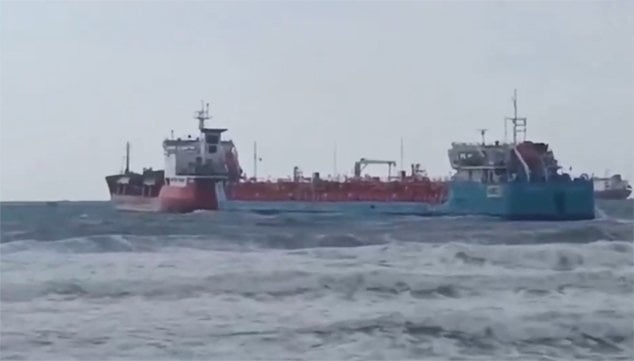
One product tanker became fouled on the other's anchor chain

Published Dec 30, 2025 7:17 PM by The Maritime Executive


Turkish authorities responded to urgent calls for assistance as two tankers anchored off Istanbul became caught in an unusual situation. Because the ships were close to the shore and strong winds were blowing tugs and shoreside emergency services were dispatched.

Two small product tankers were in the anchorage close to Istanbul. According to the reports, the Azerbaijan-flagged Kalbajar was empty and, due to the strong winds, was being dragged toward the Turkish-flagged Alatepe, which was laden with 2,500 tons of a chemical cargo. There was a total of 31 crewmembers between the two ships.

The Alatepe (7,786 dwt) and 463 feet (141 meters) in length was attempting to hold its anchored position. However, the Kalbajar (6,239 dwt), which was built in 1995 and is 377 feet (115 meters) in length, also was drifting in the high winds.


While the vessels nearly collided in the rough seas, the report said the propeller shaft of the Kalbajar somehow became fouled on the anchor chain of the Alatepe. The Turkish tugs responded and stood by to prevent a further collision or the danger that the vessels might drift to the shoreline.

The owners of the Kalbajar, Azerbajian Caspian Shipping (ASCO) report that the crews worked diligently to free the two ships. They were able to restart the engine and eventually maneuvered their vessel away from the shallow waters and to safety. They were able to secure a new anchorage in deeper waters. According to some reports, the Alatepe ultimately grounded and salvage operations are now underway.

While there were no injuries or pollution, the Turkish authorities are investigating to confirm that both vessels were in their proper anchorage positions. 


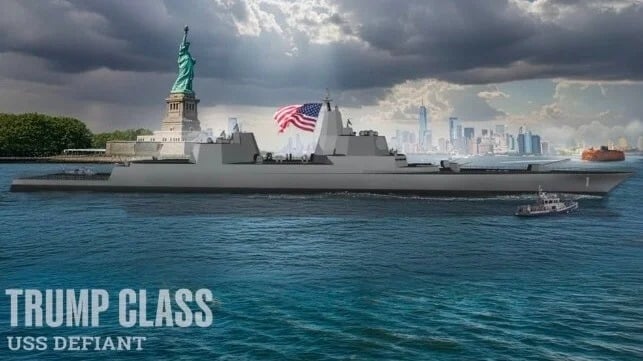
Analysts Question Whether Trump-Class Battleship Will be Built

Future Trump class battleship
Courtesy of the White House

Published Dec 30, 2025 8:33 PM by The Maritime Executive


The announcement of a new Trump-class battleship design last week prompted considerable commentary about its equipment, capabilities and exceptional size. At 35,000 tonnes, it would rival a small amphibious assault ship for displacement. Amidst the discussion of the merits of such a large combatant, key questions about its survivability loom in the procurement process: where could it be built, when would it deliver, how much would it cost, and what would be the tradeoffs made in order to build it? 

The Navy has resolved the "where" question, at least for the first two hulls. Initial design awards are going to Bath Iron Works, Huntington Ingalls Industries, and Leidos' Gibbs & Cox, suggesting that one or both of the two major U.S. surface combatant shipbuilders may be in line to secure orders. 

Design timeline and shipyard selection feed into the question of when delivery would occur. BIW and HII are both busy with existing programs, and have had challenges in competing for skilled workers. Given the labor and supply chain issues across the sector, all current naval shipbuilding programs are behind schedule, according to Navy Secretary John Phelan. 

The Navy confirmed to The War Zone that steel-cutting for the first Trump-class hull is going to begin in the early 2030s, which would be in the second half of a proposed third term for President Trump. After construction starts, the timetable for delivery of a large first-in-class combatant vessel would likely be in the mid-2030s. The most comparable recent U.S. Navy shipbuilding project, first-in-class USS Zumwalt, took five years to build from keel laying to commissioning at Bath Iron Works. Assuming a construction start in 2030, and completion of the lead ship with the same speed as the much-smaller Zumwalt, the commissioning date would be in 2035.

Cost would be substantial. Assuming the Congressional Budget Office's estimate of about $300,000 per tonne for a destroyer, plus the added cost of a first-in-class hull, the future USS Defiant would be priced well in excess of $10 billion for the lead ship, calculates CSIS analyst Mark Cancian - before inflation, which is higher in shipbuilding than in the rest of the economy. This price range is roughly comparable to one Ford-class aircraft carrier, three Virginia-class attack subs or five Arleigh Burke Flight III destroyers. An even larger number of future medium-sized unmanned combatant vessels could be purchased for this price. 

In the 2030s, other presidential administrations will be making the decision on whether to build Trump-class battleships or to focus on these other budgetary options, Cancian noted. Budget pressures will be key: Defiant would deliver at the same time as an expected jump in other U.S. Navy expenditures in the mid-2030s. From an annual budget of about $255 billion today, the Navy's spending is on track to rise by $45 billion a year by the end of the next decade, the Congressional Budget Office estimates - before adding the cost of the new Trump-class battleship program. 

Over the same time period, naval warfare is expected to evolve as more nations field unmanned platforms and hypersonic missiles - both well-suited for attacking large, high-cost combatant vessels like battleships. "The size and the prestige value of [the Trump-class] make it an even more tempting target, potentially for your adversary," suggested Bernard Loo, senior fellow at Singapore’s S. Rajaratnam School of International Studies, who likened the vessel to a "bomb magnet" in conversation with CNBC.

Ongoing Attacks on Ukraine’s Ports Damage Loading Bulker and Detained Ship

bulker damaged in attack on Ukraine
Bulker in Ukraine to load wheat was damagedi n the latest Russian attack (Ukrainian Navy)

Published Dec 30, 2025 6:27 PM by The Maritime Executive


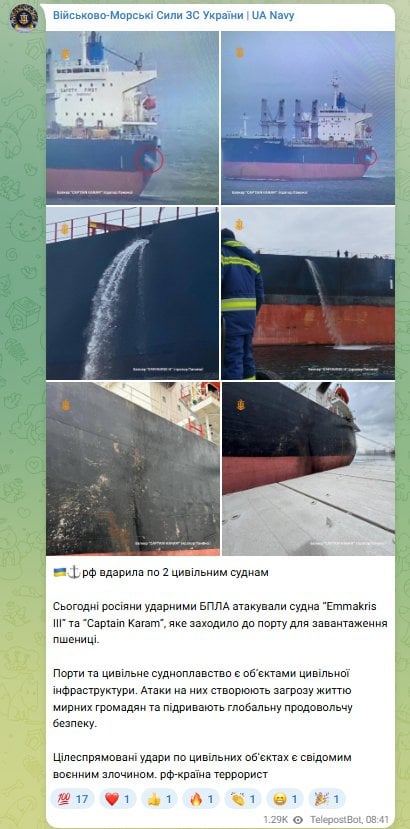
Ukraine’s Black Sea ports are experiencing unrelenting daily attacks by Russian drones and missiles during the current offensive despite the push by the United States and European leaders to complete a peace agreement. Ukraine’s Navy reported the mounting damage to port infrastructure while commercial vessels continue to also be caught in the line of fire.

Reports said the drone attacks focused overnight on Chornomorsk and Pivdennyi. The two ports emerged with increasing importance as an alternative to Odesa and replacing eastern ports that were damaged or taken earlier in the invasion. Odesa has also felt the brunt of the recent attacks, with reports saying there one one casualty injured overnight.

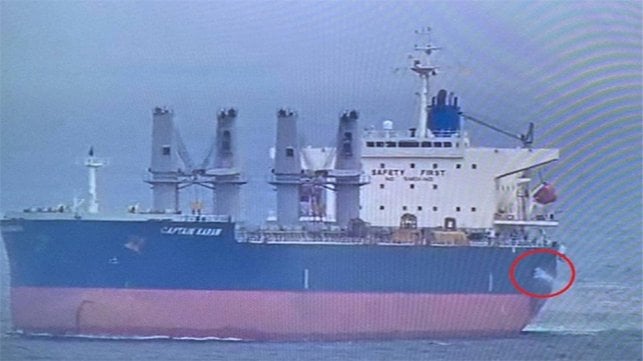
The Greek-owned vessel Captain Karam was the latest to be caught in port during the attacks. The 56,000 dwt bulker was built in 2006 and is registered in Panama. The reports said the vessel was loading wheat when the drone attack commenced.


A second vessel was also reported to have been damaged. It was the hapless bulker named Emmarkis III, which Ukraine first detained in July 2022. They have asserted that the 73,000-dwt vessel, which was built in 2000, was Russian-owned. A Ukrainian court ordered the seizure of the vessel, and as of 2024, they had begun searching for a manager for the ship. They, however, reported in 2025 that the intention was to sell the ship to raise money for Ukraine. Reports indicate the Emmarkis III sustained damage overnight at Chornomorsk, where it has remained under Ukrainian control.

Ukrainian Deputy Prime Minister Oleksiy Kuleba reiterated his assertions that Russia is targeting port infrastructure in this campaign. He said, “The enemy is trying to disrupt logistics and complicate shipping.”

In addition to the damage to the two ships, reports said a privately owned storage tank in the port for vegetable oil had been damaged in the port. Elsewhere in Ukraine, attacks included manufacturing plants.