It’s possible that I shall make an ass of myself. But in that case one can always get out of it with a little dialectic. I have, of course, so worded my proposition as to be right either way (K.Marx, Letter to F.Engels on the Indian Mutiny)
Wednesday, June 25, 2025
Mark Carney names Kirsten Hillman chief negotiator with U.S.
Ambassador to the United States Kirsten Hillman, left, and Intergovernmental Affairs Minister Dominic LeBlanc prepare to leave following a meeting between Prime Minister Mark Carney and U.S. President Donald Trump at the White House in Washington, D.C., May 6, 2025. THE CANADIAN PRESS/Adrian Wyld
OTTAWA — Canada’s Ambassador to the U.S. Kirsten Hillman will take on the role of top negotiator for Canada as the country seeks a new trade and security pact with the Donald Trump administration.
Prime Minister Mark Carney’s office confirms Hillman has been named to the position, making her U.S. Trade Representative Jamieson Greer’s opposite number in the bilateral trade talks.
Emily Williams, Carney’s director of communications, also confirms Hillman will stay on as Canada’s ambassador to the U.S., as first reported by The Globe and Mail newspaper.
Hillman has worked at the Canadian embassy in Washington since 2017 and has served as ambassador since her acting appointment in 2019.
There is no fixed term limit for Canadian ambassadors in the U.S. but it’s rare for someone to last longer than seven years in the role.
Hillman was a key Canadian negotiator under the first Trump White House when Canada renegotiated NAFTA, and served as Canada’s chief negotiator for the Trans-Pacific Partnership trade deal.
This report by The Canadian Press was first published June 23, 2025.
Trade clarity to help Canada’s economy rebound after modest recession: Deloitte
Deloitte Canada expects the Canadian economy will hit a recession in 2025, but may avoid the worst-case outcome. Steel workers work at the ArcelorMittal Dofasco steel plant in Hamilton, Ont., on Wednesday, March 12, 2025. THE CANADIAN PRESS/Nathan Denette
OTTAWA — Some economists are putting an increasingly optimistic slant on Canada’s tariff dispute with the United States, arguing the economy should be able to avoid “worst-case” scenarios from the trade war.
That doesn’t mean the Canadian economy gets off scot-free — a new forecast published by Deloitte Canada on Wednesday calls for a modest recession to hit in the second and third quarters of the year as uncertainty and weakness caused by tariffs start to bite.
“We do think the economy really is going to be considerably slower,” said Dawn Desjardins, chief economist at Deloitte Canada.
After a surprisingly strong first quarter that saw many businesses rush their orders to get ahead of looming tariffs, Canadian exports were already showing signs of a steep decline in April.
Weakness in the manufacturing side of the labour market is expected to broaden in the months ahead, Deloitte Canada said. The unemployment rate is forecast to rise to 7.3 per cent by the fall from May’s level of seven per cent.
But Desjardins said this downturn could be much worse if Canada hadn’t secured tariff exemptions for CUSMA-compliant exports in early negotiations with the United States.
U.S. President Donald Trump’s move to double steel and aluminum tariffs to 50 per cent earlier this month means those sectors are still set to take steeper hits, she said, particularly if Canada levies more reciprocal tariffs at the end of a 30-day negotiation deadline in July.
Deloitte said parts of eastern and Central Canada, as well as British Columbia, will see subdued growth this year from the tariff dispute while the prairie provinces and Newfoundland and Labrador will see their output rise, thanks largely to energy exports.
Overall, Desjardins said the status quo — if maintained — does not mark the “worst-case outcome” for Canada’s economy that some might have feared a few months ago when tariff talks were ramping up.
Deloitte expects that, even with two negative quarters, Canada will post real GDP growth of 1.1 per cent this year. That would accelerate to 1.6 per cent in 2026 — not headline shattering growth by any means, but better than a protracted downturn.
Unemployment would also drop back below seven per cent early next year, the report said.
Deloitte is not the only one bringing a bit of optimism to the forecast.
RBC published a report June 13 that also focuses on Canada’s upside risks — economist shorthand for ways things might turn out for the better — amid what it called a “gloomy” outlook on the trade war to date.
“While Canada’s economic path forward remains challenging, it appears considerably less treacherous than it did just a few months ago — a narrative that has yet to permeate the Canadian psyche,” the RBC report read.
Consumer and business confidence has taken a hit as Canadians wait for an outcome from trade negotiations with the United States, but RBC noted the hard data so far shows households are still spending despite the uncertainty.
Desjardins also believes that once businesses get a bit more clarity on the trade front — talks so far appear productive, she said — they will also have the confidence to pick up investment again.
She projects that will set up an economic recovery starting in the second half of the year, fuelled in part by a pair of additional quarter-point rate cuts from the Bank of Canada in the coming months.
RBC, on the other hand, believes the economy is showing enough life that it doesn’t need any support from additional rate cuts this year.
That could change if cracks start to form in the economy, but RBC’s assistant chief economist Nathan Janzen said he expects the central bank will remain on hold given “resilience” in the economy.
“There is still room for the Bank of Canada to respond with more monetary policy support if the economy needs it,” he said.
Both RBC and Deloitte point to recent steps taken by the federal government as girding Canada’s economy from a steeper economic downturn.
The House of Commons passed Bill C-5 at the end of last week, a sweeping set of legislation that aims to reduce interprovincial trade barriers and speed up major project development.
Desjardins said the bill helps address long-standing reputational issues that Canadian industry is slow-moving and gets mired in red tape before getting shovels into the ground.
While economists have long been banging the drum to draw attention to Canada’s weak business investment levels and flagging productivity, she said the “jolt” of the trade war has finally “brought this to the top of this agenda.”
“This signals to business that Canada is now ready to move to a stronger playing field,” she said.
RBC agreed that “action on interprovincial trade barriers could pay long-run dividends helping to support investment and productivity growth.”
Uncertainty about the U.S. market in the global trade upheaval also offers an opportunity for resource-rich Canada to support growing worldwide demand for critical minerals necessary to power artificial intelligence and defence products, RBC said.
Desjardins said it could be years before today’s steps to knock down interprovincial trade barriers and build out national infrastructure pay dividends. It takes time to reorient supply chains, and manufacturing industries in some provinces will still take a hit during the adjustment.
But she argued that the signal is nearly as important as the outcome when it comes to giving businesses the confidence they need to invest.
Adopting this “One Canadian Economy” framework, as Ottawa has dubbed it, “is not a magic wand that changes the landscape,” Desjardins said.
“It is building more resilience in the economy and more room for growth.”
This report by The Canadian Press was first published June 25, 2025.
Craig Lord, The Canadian Press
Competition Bureau reaches deal with Canadian Natural Resources over gas processing
A flare stack burns off excess gas at a processing facility near Crossfield, Alta., Tuesday, June 13, 2023. (Jeff McIntosh / The Canadian Press)
OTTAWA — The Competition Bureau says Canadian Natural Resources Ltd. has agreed to sell 75 per cent of its interest in its Seiu Lake natural gas processing plant to address competition concerns related to its proposed acquisition of Schlumberger N.V.’s (SLB) interest in the Palliser Block joint venture.
Under a consent agreement with the regulator, Canadian Natural will sell a majority interest in the plant to North 40 Resources Inc., an oil and natural gas exploration company operating in the area.
Financial terms of the agreement were not immediately available.
North 40 will be the operator of the plant, while Canadian Natural will hold a non-operating 25 per cent interest in the facility.
The SLB assets being acquired by Canadian Natural include SLB’s 87.5 per cent stake in 16 natural gas processing plants in southeastern Alberta.
The Competition Bureau had raised concerns the deal would reduce competition for gas processing services in the region.
---
This report by The Canadian Press was first published June 20, 2025.
Review of fossil fuel subsidies stalls as Argentina ceased communication with Canada
A flare stack lights the sky from the Imperial Oil refinery in Edmonton Alta, on Friday December 28, 2018. THE CANADIAN PRESS/Jason Franson
OTTAWA — A peer review of fossil fuel subsidies between Canada and Argentina — already years behind schedule — stalled after Argentina ceased communication following its 2023 election and subsequent change in government.
The review was first launched in 2018 as part of a G20 commitment to eliminate all “inefficient” subsides to the fossil fuel sector. It was only supposed to take about two years to complete.
But it was clear as early as 2019 that it would be behind schedule and it now seems to have fallen off the rails entirely.
Canada says Argentina ceased communication and participation in the process after Argentines voted into office President Javier Milei — a right-wing populist who has referred to climate change as a “socialist lie.”
“Following its 2023 election, Argentina’s domestic policies with respect to the environment and climate change shifted significantly,” a spokesperson for Environment and Climate Change Canada said in a statement to The Canadian Press.
Argentina’s negotiators left the annual UN climate talks in 2024 and reports earlier this year suggested Milei was considering withdrawing from the Paris climate pact altogether.
The department declined an interview request. It said in a followup statement that while Canada had some engagement with Argentina on the planning for a peer review process, “no additional progress has been made since Argentina’s election.”
Argentina’s embassy in Canada forwarded a request for comment to authorities in Buenos Aires but did not provide a response.
Similar peer reviews undertaken between the United States and China, Germany and Mexico, and Italy and Indonesia took between 12 and 24 months to complete. As of 2021, 11 G20 peer reviews had been completed.
The studies serve as a way to independently take stock of a country’s fossil fuel subsidies, better define what constitutes a subsidy and determine whether a subsidy is achieving the desired impact.
“I would not say that it had a lot of impact in phasing out subsidies,” said Jonas Kuehl, a policy adviser in the energy program at the International Institute for Sustainable Development.
“It maybe has some impact on, like, what’s the transparency about it and how do you structure them in such an inventory.”
In 2023, Canada ended federal subsidies specific to the oil and gas sector. It still pays subsidies to the industry through programs which are also available to companies in other sectors.
Environmental organizations say Canada still spends billions of dollars to support oil and gas companies. A report by Environmental Defence says Canada spent close to $30 billion in 2024 to support the sector.
It’s not clear if that money is part of general corporate subsidies also paid to companies in other sectors — like the Canada Growth Fund, which helps to support clean growth projects, or tax credits for technology that help companies lower their emissions.
This report by The Canadian Press was first published June 24, 2025. Nick Murray, The Canadian Press
DHL Express, union reach tentative agreement, Unifor says
The union says a tentative agreement has been reached to end the DHL Express lockout. Workers have been off the job since June 8.
Unifor says it has reached a tentative agreement with DHL Express Canada, paving the way for the company to resume operations.
The union says details of the agreement will not be disclosed until after a ratification vote is held which is expected in the coming days.
DHL Express Canada locked out workers on June 8 and as of last Friday, temporarily halted its operations.
Unifor represents more than 2,100 truck drivers, couriers and warehouse and clerical workers at the company.
The company and its union have sparred over the use of replacement workers as federal legislation banning the practice took effect during the work stoppage.
Jobs Minister Patty Hajdu said she met with both sides last week after DHL asked her last week to intervene in the standoff by compelling work to resume.
This report by The Canadian Press was first published June 25, 2025.
This city saw the highest average asking rent for a two-bedroom apartment, according to StatCan
Surrounded by condo towers, heavy equipment is used in the demolition of three-storey walk-up apartment buildings where highrise towers will be built, in Burnaby, B.C., on Wednesday, Dec. 18, 2024. THE CANADIAN PRESS/Darryl Dyck
OTTAWA — Statistics Canada says Vancouver saw the highest average asking rent for a two-bedroom apartment in the first quarter.
The average asking price in B.C.’s largest city for a two-bedroom unit was $3,170, down from $3,440 in the first quarter of 2024.Latest updates on investing here
The average asking price in Toronto in the first quarter of this year was $2,690 compared with $2,850 a year ago, while Victoria came in at $2,680, down from $2,690 in the same quarter last year.
Prices for a two-bedroom apartment in Ottawa rose to $2,490 in the first three months of the year compared with $2,290 in the first quarter of 2024.
Alberta Premier Danielle Smith speaks at the Global Energy Show in Calgary on Wednesday, June 11, 2025. THE CANADIAN PRESS/Lauren Krugel
CALGARY — Alberta Premier Danielle Smith has expressed confidence one or more private-sector pipeline operators will come forward with a plan to ship oilsands crude to the Port of Prince Rupert, B.C., and test the federal government’s new regime to speed along projects deemed in Canada’s national interest.
But if pipeline companies are keen on proposing a new West Coast pipeline project in the near future, they’re not saying so publicly.
“We’ve been in active conversations with many pipeline companies, and I feel like we’re pretty close to having either one or a consortium come forward,” Smith told reporters on Tuesday.
Enbridge Inc. is Canada’s biggest shipper of crude oil with a vast cross-border network. It’s also the company behind the scrapped Northern Gateway oilsands pipeline to the B.C. port of Kitimat, south of Prince Rupert and further inland.
The company said in a written statement Wednesday that it would explore market-diversifying projects, provided the demand is there from customers.
It would also take “real provincial and federal legislative change” around climate policy, regulatory timeliness and Indigenous participation.
“We will be there to build what is needed for our shippers, for Alberta and for Canada — that’s our job, our mission as a company — but only when the conditions make sense and the right framework is in place,” Enbridge said.
Meanwhile, South Bow Corp. would only say it “carefully evaluates all opportunities, especially those that complement our current assets and strengthen our existing corridor.”
South Bow has no infrastructure in B.C. Its Keystone system serves U.S. Midwest and Gulf Coast refineries.
The CEO of federally owned pipeline operator Trans Mountain Corp. told reporters earlier this month that his company is among those Smith has spoken to about spearheading a new pipeline.
But Mark Maki said “optimizing the existing kit” is a priority over building something new for now.
Trans Mountain flows to the B.C. Lower Mainland is currently the only way Alberta producers can meaningfully access Asia-Pacific markets.
The new pipeline Smith envisions would ship one million barrels of oil per day, and would be the “anchor tenant” on a corridor that houses other infrastructure.
Richard Masson, an executive fellow at the University of Calgary’s School of Public Policy, said it’s hard to see how Smith can entice a private company to get on board.
“She’s pushing to be seen to be doing something and to try and take advantage of the mood in the country,” he said.
“And my concern is that if you only put one option on the table and that option has lots barriers to being realized, you’re going to end up with a lot of disappointed people later.”
For Enbridge, Masson said one stumbling block would be how a potential new West Coast system may affect the economics of its Mainline system, which on any given day is the largest-single conduit for Canadian crude flowing by pipeline to the United States.
A new pipeline would likely have to be underpinned by decades-long commitments from customers to pay to use it, whereas the Mainline is more flexible, he said.
If customers are already locked into paying to use any potential West Coast system, there’s more incentive to move crude on that before the Mainline.
“That means volumes that would be going down the Enbridge Mainline get pulled off and put on to the new system,” Masson said. “So Enbridge seems like an unlikely company unless there is some kind of industry or government support, so that they weren’t worse off on the Mainline system.”
South Bow, which was spun off last year from TC Energy, is a smaller company and is unlikely to have the capacity for such an undertaking, Masson said.
Trans Mountain — a Crown corporation — delivered its expansion last year at a massively higher cost than when it was first proposed.
“So, not easy to see that happening unless the federal government says, ‘We want you to do it, so do it,’” Masson said.
As for other Canadian energy infrastructure players like Keyera Corp. and Pembina Pipeline Corp., a crude pipeline wouldn’t be a fit as they’re more geared toward natural gas, he added.
“Their investors would be unhappy if they got into it because it’s such a big project compared to the size of the company and it’s outside their core expertise.”
Another major obstacle is the federal government’s tanker ban on the West Coast, which ultimately spelled the end of Northern Gateway.
During the pitched debate over that defunct project, First Nations and environmental groups were vehemently opposed to crude oil tankers sailing along the rugged, island-dotted northern B.C. coast and raised alarm over the ecological damage that could result from a spill.
Smith and industry players have been pushing Ottawa to lift the ban, but to date there’s no sign the Liberal government will oblige.
“This is simply not an area where we can have a pipeline,” said Anna Barford, oceans campaigner with Stand.Earth in Vancouver.
“When Alberta says pipelines, for us that means tankers.”
This report by The Canadian Press was first published June 25, 2025.
Enbridge Looks to Raise Canada’s Oil Flows to U.S. via New Pipeline
Enbridge and Energy Transfer are exploring a new Illinois pipeline link to expand Canadian oil shipments by 200,000 bpd amid surging oil sands production.
Oil sands production is on track to hit a record 3.5M bpd in 2024, with forecasts of 3.9M bpd by 2030.
Alberta plans a new pipeline to British Columbia’s northwest coast, aiming to reduce reliance on U.S. markets and boost overseas oil exports.
Rising Canadian oil production and continued demand for more shipping capacity at the key U.S. refining hubs have prompted Canada’s pipeline giant Enbridge to test interest from potential shippers for a new pipeline in Illinois linked to the Mainline system.
Enbridge is considering raising the crude shipment capacity from Canada to the United States via the pipeline that could boost oil flows by 200,000 barrels per day (bpd).
Enbridge and its partner Energy Transfer are gauging potential shippers’ interest in an open season until mid-July for a proposed new link, the Southern Illinois Connector, Enbridge has told Bloomberg in response to questions.
Southern Illinois Connector would entail reconfiguring and upgrading existing systems and building a new segment. The pipeline is expected to receive Canadian crude from Enbridge’s Mainline system and connect to Energy Transfer’s crude oil Pipeline at Patoka, sources with knowledge of the plans told Bloomberg.
The open season for the Southern Illinois Connector is in response to increased demand for additional capacity from Illinois to the U.S. Gulf Coast, Enbridge said.
Enbridge operates the Mainline system, moving more than 3 million barrels a day of crude oil and liquids from Western Canada to the demand markets in the United States. Overall, Enbridge moves 30% of the crude oil produced in North America, for 65% of all U.S.-bound Canadian oil exports, 40% of U.S. oil imports, and about 25% of North American oil exports.
More shipping capacity out of Canada would be welcome news for producers who are raising output from the oil sands to record highs and will continue to smash records this decade.
Despite lower oil prices, Canada’s oil sands production is expected to reach an annual all-time high of 3.5 million barrels per day (bpd) this year, thanks to optimization and efficiency at producing assets, S&P Global Commodity Insights said in its latest 10-year outlook earlier this week.
Oil sands volumes are expected to top 3.9 million bpd by 2030, per S&P Global Commodity Insights. Efficiencies, optimization, and favorable economics are expected to drive production growth at Canada’s oil sands, S&P Global Commodity Insights says
Despite market volatility, Canada’s energy producers have maintained spending and production guidance so far this year, showing more resilience compared to some of their counterparts in the United States.
The potential increase in Canada’s oil flows to the U.S. via the new Illinois pipeline proposed by Enbridge and Energy Transfer would accommodate rising Canadian oil production and meet industry demand at the U.S. refining centers.
Canada’s oil-producing province of Alberta is also seeking additional shipping capacity within Canada to boost Canadian oil exports to customers outside the United States.
Alberta could receive, within weeks, a proposal from a private company for a new pipeline to British Columbia’s northwest coast, Alberta Premier Danielle Smith told Bloomberg News in an interview earlier this week.
Earlier this month, Smith said that Alberta is working to engage private backers for a new pipeline to ship about 1 million barrels per day (bpd) of crude from Canada’s oil-producing province to British Columbia.
The pipeline would run from the oil sands in Alberta to the Port of Prince Rupert on British Columbia’s northwest coast, and to international markets afterwards, according to the plans of the province.
Amid soured relations with its top trading partner under U.S. President Donald Trump, Canadian policymakers at both the federal and provincial levels have started to realize they may have too hastily scrapped over the past decade Alberta-to-coast pipeline projects that could have diversified Canada’s oil and gas exports.
The expanded Trans Mountain route is currently the only pipeline shipping Alberta’s landlocked crude for exports on tankers from the West Coast.
Alberta is also betting on a restart of its dialogue with the federal government after Canadian Prime Minister Mark Carney pledged that the federal authorities would work to fast-track major projects to make Canada an energy superpower.
By Tsvetana Paraskova for Oilprice.com
Alberta is Gearing Up for a New Oil Pipeline to Prince Rupert
Alberta's top provincial leader believes that now that Canada has a growing national consensus on the need to fast-track seaborne oil exports, a privately-backed proposal to build a new oil pipeline from Alberta's tar sands fields to the port of Prince Rupert could be announced sometime this summer.
The oil industry is the province's economic mainstay, and its desire for export capacity has long been a source of friction with its neighbors. For years, activists and politicians in British Columbia opposed an expansion of the only pipeline system from Alberta to the Pacific - the Trans Mountain line - and the Canadian federal government finally nationalized the project to complete it (at great financial cost).
That existing 900,000 bpd line ends in a terminal in Burnaby, B.C., which is restricted to partial loads on small Aframax tankers because of draft restrictions in Vancouver's harbor. The tanker size limit increases transport costs.
Albertan exporters would rather have access to a deeper harbor, and Prince Rupert more than qualifies. It is the deepest ice-free natural harbor in North America, with a depth at the inner harbor entrance of 115 feet. This is deep enough to navigate a fully-laden VLCC, the most economical tanker class for long-distance trade.
At present, however, that would be illegal: Canada has a federal ban on large tankers in northern British Columbia's Inside Passage, one of the most remote and environmentally-pristine coastlines in North America. But with changing geopolitical winds and strained relations with Canada's biggest oil buyer, the United States, Canada's political leaders have reached a consensus agreement that diversified energy exports must now come first. This time, B.C. premier David Eby has raised only one objection: if a new pipeline happens, it must be privately funded.
That plan appears to be in the works. Alberta Premier Danielle Smith told Bloomberg that it is "probably weeks" before a private party puts out a proposal for a new pipeline to Prince Rupert. It would be "the most credible and the most economic of all of the pipeline proposals the private sector would consider," she told Bloomberg this week.
The last comparable proposal - Enbridge's Northern Gateway line to Kitimat, a small port in the Great Bear Rainforest - was rejected by Prime Minister Justin Trudeau in 2016.
Canada’s First Large-Scale LNG Facility Starts Production
Cooldown cargo inbound in April as LNG Canada prepared for its first production milestone (LNG Canada)
LNG Canada confirmed that it produced its first LNG last weekend and remains on track to begin export shipments in the coming days or weeks. It marks a major milestone for the project, which has been years in the making, and becomes Canada’s first large-scale LNG export terminal.
The project is reported to have cost as much as C$40 billion (US$29 billion) and is also the first LNG terminal in proximity to the Pacific Coast offering shorter transport distances to Asia. It is a joint venture led by Shell and includes Malaysia’s Petronas, Mitsubishi, Korea Gas, and PetroChina. The Canadian government has called it the “largest single private sector investment” in the history of Canada.
While confirming the production, LNG Canada has not announced the details for its first export. Reuters, however, reports that LNG carrier Gaslog Glasgow is approaching the Canadian coast and appears ready to take the shipment. They are estimating its arrival date as June 29, and reports are that two other gas carriers also appear bound for the terminal, which is located approximately 400 miles from Vancouver.
The facility remains on schedule with the details released by the operator. In April, it received its first inbound cargo to begin the cooldown process ahead of production. Once fully operational by late this year or in 2026, it will have a capacity of 14 million metric tons (mtpa). The partners are also considering a plan to double production to 28 mtpa with an investment decision expected in 2026.
The exports will be targeting Asia and are expected to start a shift of Canada’s LNG exports from the United States to Asian customers. In addition to China, Japan’s Mitsubishi is expected to begin its first imports of LNG from this facility.
The LNG is being shipped via pipeline from the northeast reaches of British Columbia to the plant near Vancouver for processing and preparation for export. While it will be the first Canadian facility, it is expected that over the next few years, Canada will continue to develop its export capacities. Already, two smaller facilities, Woodfibre LNG and Cedar LNG, are under construction due to be completed in 2027 and 2028.
Canada is poised to become a significant supplier to Asia. It is expected to be a strong competitor to both the United States, which ships LNG from the Gulf Coast, and Qatar, which is completing a major expansion project for its LNG operations.
NATO=AUSTERITY
Prime Minister says Canada’s mines to help pay $110 billion NATO bill
Mark Carney in a file photo of the 2022 Future Minerals Forum in Saudi Arabia. Credit: FMF
Prime Minister Mark Carney said Canada can meet a steep expected increase in its North Atlantic Treaty Organization obligations spending partly by leaning on the country’s bounty of critical minerals.
The 32-member military alliance is meeting in The Hague and discussing a new total spending target of 5% of gross domestic product — 3.5% in core defense funding and 1.5% in related investments including infrastructure.
Leaders are “likely to all agree tomorrow” about the new headline figure, and they are “likely to agree” about the core defense aspect rising over 10 years, Carney said in an interview on CNN Tuesday.
For Canada that 5% comes out to about C$150 billion ($109 billion), he said, before clarifying “a little less than a third of that overall number is spending on things that quite frankly we’re already doing to build the resilience of our economy.”
Some of the spending on extracting, processing and exporting Canada’s critical minerals in partnerships with allies “counts towards that 5% — in fact, a lot of it will count towards that 5%, because it’s infrastructure spending,” he said, such as ports, railroads and “other ways to get these minerals out.”
If Carney hits his surprise pledge from June 9 to meet the old NATO target — 2% of GDP — this fiscal year, which isn’t guaranteed, that still leaves an enormous 75% uplift in core military spending.
Echoing remarks from his foreign minister earlier in the day, he said “we’re going to do a review in four or five years” on the plan, because “the nature of warfare is changing very rapidly,” according to a transcript of the interview shared by Carney’s office, some of which was cut before its broadcast.
“You don’t need an aircraft carrier any more — well, some do, but most of us don’t,” but rather drones, integrated with cybersecurity and satellites, he said.
At a dinner welcoming the NATO leaders and other guests, Secretary General Mark Rutte said, “For decades, the United States sought to get Europe to truly step up. Now European allies and Canada will equalize their defense spending.”
In the CNN interview, Carney also spoke about his conversations with US President Donald Trump as they aim to reach a trade deal within about three weeks. Asked if Trump was still saying he wants to “annex” Canada, Carney said he was not.
“He admires Canada, I think it’s fair to say, and maybe for a period of time coveted Canada,” he said. “We’re two sovereign nations who are discussing the future of our trade relationships, our defense partnership, which has been very strong in the past; how is that going to evolve?”
(By Thomas Seal)
WELFARE NOT WARFARE!
Canada commits to new NATO pledge to spend 5% of GDP on defence by 2035, marking biggest increase since WWII
Prime Minister Mark Carney is committing that Canada — along with other NATO allies — will invest five per cent of GDP on defence by 2035, a pledge that will mean billions more in spending per year and the biggest increase since the Second World War.
All NATO members – except for Spain, which secured an exemption – made the new commitment at the alliance’s annual leaders’ meeting in The Hague on Wednesday, with an agreement to review the target in 2029.
The five per cent will be broken down into two parts, with the first 3.5 per cent aimed at core defence needs including jets and weapons, and the remaining 1.5 per cent on defence-related investments including infrastructure.
“Throughout Canada’s history, there have been turning points when the world’s fortunes have been in the balance, and each time Canada has chosen to step up to lead on the path of democracy and freedom,” Carney said to reporters at the summit following the announcement. “We’re once again at one of those moments. If we want the world of tomorrow to be shaped by our values, Canada must be ready.”
Earlier this month, Carney announced Canada would spend an additional $9.3 billion on defence spending and meet NATO’s previous two per cent of GDP target this fiscal year, after years of pressure to do so from allies. Up until then, Canada had never hit that mark despite its 2014 pledge to do so. The federal government is expected to spend about $62 billion on defence this year.
In an interview with CNN International on Tuesday, Carney said reaching five per cent of GDP would amount to $150 billion per year.
“It is a lot of money,” Carney told CNN host Christiane Amanpour.
But Carney also told CNN that Canada will reach the five per cent target through measures the federal government is already doing or about to do – like the development of critical minerals.
“A little less than a third of that overall number is spending on things that quite frankly we’re already doing to build the resilience of our economy,” the prime minister said. “So, it would be domestic resilience, it would be defending the areas that are important to defend, but also supporting critical minerals development.”
When asked on Wednesday about whether Canada’s new defence spending commitments will mean Canadians will need to make sacrifices in other places, Carney said “we’re not at a trade-off” and the investments will “help build our economy as it improves our defence.”
But Carney did concede that the federal government may need to make concessions later this decade or into the next one to afford spending more on defence.
“Depending on how the threat environment evolves globally, if we are moving to the higher and higher levels of defence spending because that’s necessary, then we will have to make considerations about what less the federal government can do in certain cases and how we’re going to pay for it,” he added.
Asked directly if he has an estimation on what 3.5 per cent of GDP on core defence spending will look like in 2035, Carney said “no” in part due to the changing threat environment.
“We should spend for the environment, not for what could be an arbitrary number,” Carney said.
‘We don’t need to waste money’
In an interview with CTV’s Power Play with Vassy Kapelos last week, Parliamentary Budget Officer (PBO) Yves Giroux said the federal government’s latest move to add more than $9 billion towards defence to hit two per cent of GDP this year does track from a fiscal perspective, adding that the dollar amount will “be increased year after year” as GDP changes, amid inflation and economic growth.
“Eventually the number might have to be much bigger,” Giroux said. “And the important point to keep in mind is it’s not the amounts allocated to defence, it’s the amounts that actually get spent on defence that matters for NATO.”
When pressed if Canada’s new commitment implies high deficits unless there are tax increases or program cuts, Carney reaffirmed his election promise to balance the operational budget in three years.
“We’ll grow this economy. We’ll balance our operational budget in three years. That’s our commitment,” Carney said. “But we will also invest in this country including in our defence industry.”
Conservative defence critic James Bezan says he is looking for details to ensure Carney and the Liberal government “aren’t using creative accounting” to hit the new spending targets.
“We just don’t need to waste money. We actually want to see this invested in capabilities,” Bezan said in an interview with CTV News Channel on Wednesday. “We want to make sure that those members that serve in the Canadian Armed Forces are well taken care of.”
Bezan also affirmed his party’s call for a federal budget, saying “we need to know where this money is coming from.”
Following the election this spring, the federal government did not present a budget before the House of Commons rose for the summer, but Carney has said his government will table a budget this fall.
Former prime minister Justin Trudeau’s government did present a fiscal update in late December — which showed the finances were much worse than expected — but it was overshadowed by the sudden resignation of then-finance minister Chrystia Freeland. Trump calls new commitment ‘big win’
Speaking to reporters at the Hague, NATO Secretary General Mark Rutte said the new pledge will shift the burden on the alliance away from the United States.
“The decisions made today will make NATO much stronger. They also make NATO a fairer alliance with Europe and Canada stepping up and carrying their fair share of the responsibility for our shared security,” Rutte said.
U.S. President Donald Trump has long pushed for NATO allies to increase defence spending and publicly voiced discontent over allies like Canada for taking advantage of U.S. security.
On Wednesday, Trump touted the new pledge as a “big win” for the U.S. and the West.
“I’ve been asking to go up to five per cent for a number of years and they’re going up to five per cent, from two per cent and a lot of people didn’t even pay the two per cent. I think that’s going to be very big news. NATO’s going to become very strong with us,” Trump said at the summit.
Following the announcement, Rutte praised Trump for pushing allies to boost defence spending and said Trump has reaffirmed his commitment to NATO despite his past criticisms of the alliance.
“President Trump has been clear. America is committed to NATO. He affirmed it again today in no uncertain terms,” Rutte said. “At the same time, he made clear that America expects European allies and Canada to contribute more, and that is exactly what we see them doing.”
According to NATO estimates in 2024, the U.S. spent 3.38 per cent of its GDP on defence last year, accounting for two-thirds of NATO spending.
Tim Hodgson, Minister of Energy and Natural Resources, provides an update on the forecast for the 2025 wildfires season at the National Press Theatre in Ottawa on Thursday, June 12, 2025. THE CANADIAN PRESS/Sean Kilpatrick
Canada’s Energy and Natural Resources Minister is calling for a wartime effort to build big national infrastructure projects as envisioned by recently passed bill C-5.
In a keynote address to the Toronto Region Board of Trade, Tim Hodgson issued a call to action to business leaders to “bring your best ideas forward” as the country attempts to retool the economy like it did at the end of the Second World War.
Hearkening back to a time when Canada faced “such a transformational upheaval of the world order,” Hodgson reminded the room that eight decades ago, instead of hesitating, Canadians came together to do great things.
“Now, we must stand side-by-side once again, from coast to coast to coast, Indigenous and non-Indigenous, industries, small businesses, and entrepreneurs,” said Hodgson. “We need that same spirit today.”
The “One Canadian Economy Act” passed in the House last week and is awaiting first reading in the Senate. It must pass third reading before getting Royal Assent and then becoming law -- a process that could happen this week as the Upper Chamber is expected to rise for the summer on Thursday or Friday.
Hodgson says the bill will create conditions to get projects off the ground more quickly with the establishment of a major projects office, whose goal is to give proponents one point of contact “to make sure things stay on track,” said the minister.
That office will be a central coordination point with an Indigenous Advisory Council to consult with indigenous, first nations and Metis communities. Coupled with a “rigorous” environmental review, Hodgson says it will inform a “single set of binding federal conditions for the project,” said Hodgson.
The goal is to expedite reviews and focus on how the project will be built as opposed to whether it will be built, Hodgson said.
Last Friday, Prime Minister Mark Carney announced he will be holding working sessions and public roundtables in Ottawa with First Nations rights holders on July 17, then with Inuit leadership in late July and Metis leadership at a later date. That came after the Assembly of First Nations National Chief Cindy Woodhouse Nepinak raised concerns about the lack of consultation, saying during the legislative process, indigenous rights holders had been “shut out”.
“It’s why we’re starting with the literal launch of the process of this nation-building process is with First Nations, literally in full partnership,” Carney told reporters last Friday.
Hodgson praised Ontario’s nuclear energy program as an example of how “Canada can do great things”, pointing out how 58 per cent of electricity in that province comes from nuclear energy. That technology has been exported around the world to help other countries “achieve energy security and avoid over 30 million tonnes of pollution annually,” according to Hodgson.
Ontario is also working with Alberta and New Brunswick on the development of small modular reactors to advance that form of energy.
“Nuclear power is one of our greatest strategic assets. It is clean. It is reliable. And it is built here, by Canadian workers and engineers, using Canadian uranium and technology,” said Hodgson.
Hodgson also underlined how developing Canada’s critical minerals can help to drive investment while growing exports and raising wages in the country.
“At the G7, all of the countries said they wanted to buy Canadian critical minerals,” said Hodgson. “Right now, at the NATO what the prime minister is hearing is that all of those countries want to buy our critical minerals, this is an opportunity for us.”
The government believes there will be a demand for responsibly sourced minerals that could support new mining projects across the country.
NUKE NEWS
Shuttered Three Mile Island Nuclear Plant Poised for 2027 Restart
Constellation Energy announced Tuesday it is accelerating plans to restart Unit 1 of the Three Mile Island nuclear plant by 2027, as mounting power demand and evolving energy policy breathe new life into the once-retired facility. The proposal could make Three Mile Island the first U.S. nuclear plant to resume operations after decommissioning, a powerful symbol amid renewed bipartisan support for nuclear power.
Speaking to reporters and regulators, Constellation CEO Joseph Dominguez emphasized the grid’s growing need for clean baseload electricity, particularly as AI data centers and electrification efforts pressure legacy infrastructure. The company is currently navigating discussions with the Nuclear Regulatory Commission (NRC) to determine licensing and safety pathways for the restart.
Politically, the move comes as both Congress and the White House intensify backing for nuclear energy. The Biden administration’s 2022 Inflation Reduction Act included production tax credits for existing reactors and funds for advanced nuclear development. Meanwhile, Pennsylvania lawmakers have expressed cautious support, seeing potential economic revival through jobs and tax revenue.
Yet the plan faces hurdles. Local opposition remains vocal, especially following recent NRC hearings where residents raised concerns over transparency, waste storage, and long-term safety. Environmental advocacy groups warn that reviving an aging facility with a complicated history demands far stricter oversight than currently proposed.
Still, energy policy analysts note the timing aligns with federal goals to triple nuclear capacity by 2050. A successful restart would deliver over 800 MW of zero-emission power to the PJM Interconnection—key to stabilizing one of the nation’s largest and most strained regional grids.
Constellation has not disclosed investment figures, but experts estimate the effort could run into the billions if infrastructure upgrades and regulatory compliance are factored in.
New York plans to build an advanced nuclear power plant north of New York City to meet rising electricity demand from data centers and industrial growth.
The project aligns with national efforts under the Trump administration to fast-track nuclear energy development and streamline regulations.
Environmental groups caution that nuclear expansion should not replace the pursuit of broader renewable energy initiatives.
The U.S. is investing heavily in a future in nuclear power, through the development of new conventional reactors and power plants, as well as small modular reactors (SMRs). While several states with nuclear plants plan to expand operations in the coming decades, to help deliver more clean power, one area that has big plans for new nuclear power projects is New York. This month, New York’s Governor Kathy Hochul announced plans to develop an advanced nuclear plant to provide reliable, clean electricity.
The U.S. has developed a strong nuclear energy sector over the past more than half century, and after several years of underinvestment, it is back on track to expand its nuclear power sector over the coming decades. In 2024, there were 94 operational nuclear reactors in the U.S., producing almost 97 GW, which is the largest commercial nuclear power generation fleet in the world, according to the Energy Information Administration (EIA). Nuclear plants currently produce around 19 percent of the country’s electricity, down 4 percent from their 2012 peak.
There are 54 nuclear power plants across the country. Plant Vogtle in Georgia is the biggest facility, with four nuclear reactors and a total generating capacity of around 4.5 GW, while New York’s R.E. Ginna plant is the smallest, with its one 0.6-GW reactor. Twelve U.S. nuclear power reactors have permanently closed since 2013, but several companies have announced plans to construct new ones, as the public perception of nuclear power improves and government support for new projects continues under the Trump administration.
This month, New York’s Governor Kathy Hochul announced plans to build an advanced nuclear plant with the ability to produce at least 1 GW of power, which Hochul says will be one of the first new U.S. reactors in a generation. As the power demand grows, particularly with the rollout of data centres across the country and the electrification of multiple industries, the need for greater clean power is evident.
While several states are investing heavily in wind and solar power projects, others are concerned about the unreliability of these energy sources, which has encouraged many to look to stable, clean energy solutions. “We need electricity that is reliable all day long,” Hochul stated during a press conference. “Harnessing the power of the atom is the best way to generate steady zero-emissions electricity.”
The projected cost and timeline of project development are not yet clear, but New York will partially fund the plant, as well as buy electricity from the facility once it is operational. Hochul has directed the state’s power authority – the NYPA – to develop and construct the zero-emission advanced nuclear power plant. The state is currently seeking partners for the development, which is planned for north of New York City in upstate New York.
Hochul published a Master Plan for Responsible Advanced Nuclear Development in January to better understand the public perception of nuclear power and interest in the development of new projects. In May, President Donald Trump signed several executive orders in support of nuclear energy, directing the U.S. independent nuclear regulatory commission to weaken regulations and fast-track new licenses for reactors and power plants.
New York’s governor stated, “As New York state electrifies its economy, deactivates ageing fossil fuel power generation and continues to attract large manufacturers that create good-paying jobs, we must embrace an energy policy of abundance that centres on energy independence and supply chain security to ensure New York controls its energy future.”
The decision to expand New York’s nuclear power capacity is largely in response to plans to expand its data centre capacity, in line with tech companies' aims to deploy artificial intelligence and other complex technologies, which require vast amounts of energy to power. Hochul hopes to establish upstate New York as a tech centre, similar to Silicon Valley, which should be achievable given the region’s geography, water supply, and proximity to IBM and university tech research centres.
This is not the first nuclear energy project planned to support the expansion of data centres in the U.S. In 2024, Microsoft signed a 20-year purchase agreement with the nuclear power company Constellation to buy power from a soon-to-be restarted reactor at Three Mile Island in Pennsylvania. Meanwhile, Google and Amazon both plan to purchase nuclear power from SMR operators.
The Trump administration’s support for nuclear power could help New York to kick-start its new nuclear plant development, following decades of sectoral stagnation. However, several environmental groups have warned that the development of New York’s nuclear power industry should not detract from the need to expand the state’s renewable energy sector, to provide residents and industry with more clean power.
By Felicity Bradstock for Oilprice.com
New York Governor announces plans for new nuclear plant
Tuesday, 24 June 2025
State Governor Kathy Hochul has directed New York's public electric utility to develop and construct an advanced nuclear power plant in Upstate New York.
(Image: Darren McGee/Office of Governor Kathy Hochul)
The New York Power Authority (NYPA), in coordination with the Department of Public Service (DPS), "will seek to develop at least one new nuclear energy facility with a combined capacity of no less than one gigawatt of electricity, either alone or in partnership with private entities".
The announcement builds on Hochul's State of the State address, delivered in January, in which she outlined plans to develop a Master Plan for Responsible Advanced Nuclear Development in New York as part of a USD1 billion proposal to achieve a more sustainable - and affordable - future for the state. The development of the master plan is being led by York State Energy Research and Development Authority (NYSERDA) working with the Department of Public Service.
“As New York State electrifies its economy, deactivates aging fossil fuel power generation and continues to attract large manufacturers that create good-paying jobs, we must embrace an energy policy of abundance that centres on energy independence and supply chain security to ensure New York controls its energy future" Hochul said.
The New York Power Authority is to begin evaluation of technologies, business models, and locations for the first nuclear power plant immediately, and will secure the key partnerships needed for the project. This will include site and technology feasibility assessments as well as consideration of financing options. Candidate locations will be assessed for suitability based on public safety, strength of community support, compatibility with existing infrastructure, as well as skilled labour and land availability.
Four nuclear reactors - all operated by Constellation Energy - currently provide some 21.4% of all New York's electricity, and 41.6% of its carbon-free electricity, according to information from the Nuclear Energy Institute. The state has already supported the continued operation of those facilities - two units at Nine Mile Point and the single-unit Ginna and Fitzpatrick plants - by explicitly recognising the zero-carbon contribution of the plants in its 2016 Clean Energy Standard as critical in enabling it to meet its climate change targets.
"To power New York's future we need three things: reliability, affordability and sustainability - and nuclear drives all three," Hochul said as she announced the new initiative. The state will be looking for private partners to help finance the new plant, and will draw on support and lessons learned from other new nuclear projects including from the Tennessee Valley Authority and in Ontario. Hochul said she had "just last week … sat down with" Ontario's Premier Tom Ford "and had a great conversation about creating a memorandum of understanding because they are taking the lead on small modular reactors".
In May, President Donald Trump signed a raft of executive orders aimed at quadrupling the USA's nuclear energy capacity by 2050. Hochul said New York will also be looking for support from the White House to accelerate its plans for new nuclear, and said she had had some "very frank interesting conversations" with the President.
"There's a reason people don't embrace nuclear energy, a lot of reasons. One of them is it just takes too long and the barriers are in Washington," she said, with projects needing to go through "a decade of regulatory bureaucracy and red tape".
"With financial planning and hopeful support we can move as fast as possible both affordably and safely," she added.
Although the three so-called upstate plants have continued to operate, one New York nuclear power plant Indian Point - closed in 2021 after the state opposed Entergy's application to renew the operating licences for the plant which was located only 24 miles (39 kilometres) from New York City. Hochul said she "understood" some anxieties of people living near that plant - "but let's be honest: in doing that we turned off one quarter of New York City's power and it was almost all clean energy and overnight without an alternative". The state had been forced to turn to fossil fuels and as a result, "greenhouse emissions are up in downstate New York", she said.
"We cannot have trade-offs like that and this is not your grandparents' nuclear reactor: you're not going to see this in a movie starring Jane Fonda," she said, referencing 1979 film The China Syndrome, a thriller based on a fictitious meltdown at a nuclear power plant. "The new plant will be a model of 21st century nuclear design with safety at the forefront."
The State of New York is supporting Constellation Energy as it pursues the early site permitting process for a new project at its Nine Mile Point Clean Energy Center.
Constellation's EVP Chief Legal and Policy Officer David Dardis said Hochul's announcement "highlights the essential role of nuclear power in delivering clean, reliable electricity to New Yorkers while supporting long-term grid stability and affordability".
"It is yet another recognition of nuclear energy’s critical role in achieving the nation’s leading clean energy goals. We look forward to working with the Governor and state leaders to ensure nuclear energy continues to power economic growth and a clean, affordable and reliable energy future for New York," Dardis said.
Amentum, Multiconsult to assess Norway's nuclear options
Monday, 23 June 2025
Norway's Nuclear Power Committee has selected US-based engineering company Amentum and Norwegian consulting firm Multiconsult Norge AS to report on technology options for a potential nuclear power programme.
(Image: terimakasih0 / Pixabay)
The Norwegian government appointed the committee in June 2024 to conduct a broad review and assessment of various aspects of a possible future establishment of nuclear power in the country. It must deliver its report by 1 April 2026.
The 12-person committee has now appointed Amentum and Multiconsult Norge to conduct a study providing an overview of various reactor technologies and power plant designs, including small modular reactors (SMRs) and advanced modular reactors. It will examine their technological maturity, estimated timeline for implementation and commercial availability, construction and operational costs, and their capability for flexible operation and associated costs. In addition, the committee requested a comparative assessment of vulnerability related to the supply chain and waste management.
"Nuclear power can become an important future energy technology in Norway, and it is crucial to have a good knowledge base now in order to best plan and utilise the technology in the future," said Snorre Treimo, head of Multiconsult Norge's energy and industry business area. "We are therefore very pleased that we will carry out this exciting assignment together with Amentum, who is our nuclear power partner in several assignments."
"We will provide expert, impartial analysis to assist the Commission in developing a comprehensive knowledge base on nuclear power as a potential energy source in the Norwegian power system," said Andy White, senior vice president of Amentum Energy & Environment International. "Drawing on our previous experience in Poland and the United Arab Emirates, we understand the journey that new nuclear power nations need to undertake."
Amentum noted the latest contract builds on its previous work with Multiconsult to assist Halden Kjernekraft AS to evaluate the potential for SMRs to meet energy needs and support employment growth in the Halden municipality in south-east Norway.
Also in Norway, Amentum together with Multiconsult recently secured a safety case framework with Norwegian Nuclear Decommissioning, the state decommissioning organisation, in addition to work the two companies have previously done on decommissioning planning at two research reactors.
Leak tests completed for Rooppur I's containment structure
Wednesday, 25 June 2025
The tests for tightness and strength of the containment building at Bangladesh's first nuclear power plant unit have been carried out successfully.
(Image: Rosatom)
During the process a compressor was used and the pressure was increased to the design value of 4.6kgf/cm2 and a series of tests was carried out to "confirm the tightness of the structure and its ability to withstand internal loads that occur in abnormal conditions".
Rosatom describes the reactor's hermetic enclosure as "a physical barrier made of prestressed reinforced concrete with an internal sealing steel lining. It is designed to prevent the release of radioactive substances into the environment in the event of an emergency and to localise them, as well as to protect against possible external influences. The enclosure serves as the last protective barrier in the event of a hypothetical accident".
Alexey Deriy, vice president for projects in Bangladesh at Atomstroyexport JSC, said: "A number of operations carried out during these tests are unique and are carried out once, only after the full completion of construction and installation work in the reactor building. The results of the tests confirm that the hermetic enclosure system fully complies with all design and regulatory requirements. This is an important step towards commissioning the first power unit and evidence of the high quality of work at all stages of construction."
The Rooppur project
In February 2011 Russia's Rosatom signed an agreement for two reactors to be built at Rooppur, about 160 kilometres from the capital Dhaka, for the Bangladesh Atomic Energy Commission. The initial contract for the project, worth USD12.65 billion, was signed in December 2015. The Bangladesh Atomic Regulatory Authority issued the first site licence for the Rooppur plant in June 2016, allowing preliminary site works, including geological surveys, to begin.
Construction of the first unit began in November 2017. Construction of the second unit began in July 2018. They have an initial life-cycle of 60 years, with a further 20-year extension possible.
The first batch of nuclear fuel was delivered to the site in October 2023 - the moment that the site got its status as a nuclear facility. In March Rooppur unit 1's turbine installation was completed, as were hydraulic tests to check the primary circuit systems and equipment, paving the way for hot functional tests to begin. Rosatom has included grid connection for Rooppur unit 1 as one of its key targets for the current year.
SMR considered for deployment in southern Sweden
Wednesday, 25 June 2025
Swedish lead-cooled small modular reactor technology developer Blykalla has signed a letter of intent with Hörby Municipality to jointly investigate the possibility of siting a SEALER reactor in Stavröd in Skåne County, southern Sweden.
Municipal Councilor Anders Hansson and Legal Counsel at Blykalla, Martin Bengtsson, signed the letter of intent (Image: Hörby Municipality)
The feasibility study is planned to last for 18 months and includes a broad investigation of the conditions for establishing both energy production and component manufacturing at the site. Blykalla will carry out soil analyses, including field studies and drilling, assess infrastructure needs, and map potential recipients of electricity and heat from the facility. The study also includes a business and technical assessment of the suitability of the site. Hörby Municipality contributes within the framework of its powers, including through planning support, coordination and access to key contacts.
Blykalla is a spin-off from the KTH Royal Institute of Technology in Stockholm, where lead-cooled reactor systems have been under development since 1996. The company - founded in 2013 as a joint stock company - is developing the SEALER (Swedish Advanced Lead Reactor) lead-cooled SMR.
Blykalla plans to construct its first reactor, SEALER-One, in Sweden. It will function as a demonstration of its technology, and at the same time be used for pyrolysis, whereby industrial customers can utilise its steam for, among other things, decarbonised biochar production. The company aims to achieve criticality of SEALER-One by 2029. Blykalla has a letter of intent in place with nuclear operator Studsvik to develop SEALER-One on its site in Nyköping, Sweden. Licensing work is currently under way.
In the long-term, Blykalla plans to deploy up to 1000 SMRs by 2050, delivering 500 TWh of clean energy annually to industrial users that cannot rely on intermittent power sources. It says SEALER is designed to serve sectors such as hydrogen production, process heat, and pyrolysis, with the potential of significantly reducing global carbon dioxide emissions and securing industrial resilience and growth.
The partners said their collaboration responds to a growing need for stable and emission-free electricity in southern Sweden – "a region that is currently characterised by high electricity prices, capacity shortages and a deficit in plannable power". According to Hörby's energy plan for 2024–2028, increased local energy production is required to strengthen the robustness of the electricity system and enable both industrial growth and new housing development.
"Southern Sweden is facing an enormous electricity demand, and Hörby is becoming a pioneering municipality that dares to take the lead in the energy transition with a project that puts them on the map internationally," Blykalla CEO Jacob Stedman said. "With our technology, we can offer stable fossil-free electricity production where there are otherwise few alternatives. This strengthens both the region's energy security and future competitiveness, which will be crucial for Swedish growth going forward."
"By collaborating with Blykalla, we are faced with a unique opportunity to become the hub in the development of a new future technology, an engine for the future energy supply in Skåne," said Anders Hansson, Chairman of the Municipal Board in Hörby. "Hörby will become a place where innovation, stability and growth go hand-in-hand. We create new jobs, strengthen our business sector and make Hörby municipality more attractive to live and work in."
Later this year, the municipality, together with Blykalla, will hold a number of information meetings in several locations to engage in dialogue with residents about the project.
Ameresco to help customise Terrestrial IMSR plants
Wednesday, 25 June 2025
Terrestrial Energy is to collaborate with US engineering services company Ameresco Inc to advance the commercial deployment of its Integral Molten Salt Reactor plant in the USA.
A power plant based on the IMSR reactor (Image: Terrestrial Energy)
The partners said the collaboration covers site identification and Integral Molten Salt Reactor (IMSR) plant project development, design, licensing, construction and operation.
"The collaboration is strategically focused on delivering customised, scalable, reliable, clean, and cost-competitive energy for data centre and industrial applications, combining the competitive capabilities of Terrestrial Energy's innovative IMSR nuclear plant with Ameresco's expertise in energy systems' design, hybridisation, integration and operation," they said in a joint statement.
"Integration of energy systems is expected to include the use of a natural gas-fired energy bridge in IMSR plant operation to enable early electricity delivery well in advance of IMSR nuclear systems being completed and brought to commercial operation," Terrestrial Energy and Ameresco added.
Terrestrial's IMSR is a 4th generation reactor that uses molten salt as both fuel and coolant, with integrated components, which can supply heat directly to industrial facilities or use it to generate electrical power. The use of molten salt as both fuel and coolant also enables passive, or inherent, safety features to be built into the reactor design. The design integrates the primary reactor components, including the graphite moderator, into a sealed and replaceable reactor core unit with an operating lifetime of seven years. The plants' thermal and electric power supply systems can be customised to meet specific site demand requirements, and can support distributed generation for energy-intensive industry.
"Site- and use-specific customisation of IMSR plant output and its hybridisation with other systems including natural gas are essential to capture today's market for near located supply of reliable clean nuclear energy," said Terrestrial Energy CEO Simon Irish. "Our IMSR plant excels in its capacity to be adapted and customised to market needs in a grid congested world. Ameresco's proven track record in energy system integration creates a powerful platform to develop IMSR plant projects that meet the emerging requirements of rapidly growing demand for reliable, carbon-free energy across multiple industrial sectors."
Nicole Bulgarino, president of Federal Solutions and Utility Infrastructure at Ameresco, added: "Our collaboration with Terrestrial Energy reflects our commitment to expanding the capabilities of our clean energy portfolio. By exploring hybrid energy systems that leverage the IMSR plant's heat and power output, we're enhancing our ability to deliver reliable, cost-effective, and sustainable solutions tailored to the evolving needs of data centres and industrial customers."
ABS approves second Korean floating SMR plant design
Wednesday, 25 June 2025
Maritime classification society the American Bureau of Shipping has issued approval in principle to HD Hyundai Heavy Industries and HD Korea Shipbuilding & Offshore Engineering for a concept of a floating small modular reactor-powered power module.
Kwang-Sik Won, Senior Executive Vice President of HD HHI Offshore Business Division (left), with Patrick Ryan of ABS (Image: ABS)
The design developed by HD Hyundai Heavy Industries (HHI) and HD Korea Shipbuilding & Offshore Engineering is intended to generate electricity offshore and near shore, supporting port facilities and onshore communities.
The American Bureau of Shipping (ABS) completed design reviews based on the ABS Requirements for Nuclear Power Systems for Marine and Offshore Applications. Launched in October 2024, ABS says these are the industry's first comprehensive rules for floating nuclear power plants. At the time of the launch, ABS noted it is the responsibility of nuclear regulators to license the reactor and applicable nuclear safety structures, systems and components.
As part of the Novel Concept Class Approval process, ABS grants an Approval in Principle at an early conceptual design phase to assist the client in demonstrating project feasibility to its project partners and regulatory bodies. Approval in Principle confirms that the proposed novel concept that includes the new technology complies with the intent of the most applicable ABS Rules and Guides as well as required appropriate industry codes and standards, subject to a list of conditions.
"Floating nuclear power facilities show promise in supporting power grids, microgrids, industrial and port operations, data centres, and other uses," said Patrick Ryan, ABS Senior Vice President and Chief Technology Officer. "Additionally, today's advanced nuclear technology has a different risk profile from traditional reactor technology with state-of-the-art designs and with lower enrichment fuels, making commercial offshore and maritime applications more viable."
An HD Korea Shipbuilding & Offshore Engineering spokesperson said: "The floating nuclear power plant is expected to play a key role in building a future powered by clean energy. We will remain fully committed to developing the necessary technologies and ensuring its successful realisation."
This is the second Approval in Principle for a floating nuclear power barge design granted to HD Korea Shipbuilding & Offshore Engineering by the ABS. In October 2023, it issued Approval in Principle for a floating offshore nuclear power barge intended to serve as offshore power generation for remote communities and island electrification.
HD Korea Shipbuilding & Offshore Engineering previously obtained approval in principle from the ABS for a 15,000 TEU-class container ship design model applying small modular reactor (SMR) technology.
In February this year, HD Korea Shipbuilding & Offshore Engineering unveiled another nuclear-powered container ship model utilising SMR technology. It said the new design model features enhanced economic efficiency and safety by incorporating actual equipment and safety design concepts.
Czech regional court decides against EDF case
Wednesday, 25 June 2025
EDF had taken its case to the regional court relating to the tender for new nuclear in the Czech Republic.
(Image: CEZ)
The Czech Republic is planning new nuclear capacity and in July last year announced Korea Hydro & Nuclear Power (KHNP) was the preferred bidder, ahead of EDF. The KHNP bid was said to be for around CZK200 billion (USD8.6 billion) per unit, if two were contracted. France's EDF brought a case to the Czech competition authority challenging the tender process, which was dismissed in April on the basis that the tender was run under a security exemption, so did not fall within the competition authority's remit.
That decision cleared the way for the planned signing of the official contracts with KHNP on 7 May. However EDF succeeded in securing a last-minute court injunction in a Czech regional court on 6 May to stop the contract being signed until its case relating to the tender process - whether the competition authorities should be able to consider EDF's arguments relating to it - had been heard in court.
In response, the project development company Elektrárna Dukovany II and KHNP both appealed to the Czech Supreme Administrative Court and succeeded in getting the injunction lifted, before signing the contracts for the new nuclear earlier this month.
The regional court in Brno has now heard the substance of EDF's argument that the competition authorities should have been able to consider its objections to the tender process. Because of the interest in the case, a limit was imposed of 20 members of the public to be allowed into the hearing.
The Brno regional court's decision has been reported in a variety of Czech media outlets, including Radio Prague International which said the court "sided with the Competition Authority, which had rejected EDF’s objections, stating that since the selection process relied on a national security exemption, formal objections were not allowed under Czech law". It is possible to appeal against this decision, although at the time of writing there has been no comment from EDF.
EDF's objections to the tender process include the belief that the KHNP offer price and the inclusion of a guarantee that the construction would not be delayed or become more expensive, would be "unfeasible without illegal state aid given the prices in the nuclear industry". EDF says that if their rival bidder had state support it would breach European Union rules. As well as the court action in the Czech Republic, the European Union is conducting a preliminary review "to assess whether potential foreign financial contributions received by the Party (KHNP) constitute foreign subsidies and, if so, whether those foreign subsidies distort the internal market with respect to the project".
KHNP rejects that case and welcomed the supreme court's decision earlier in June to dismiss the regional court's original injunction, saying it reaffirmed "the integrity and transparency of the Czech Republic’s tender process and clears the way for the timely advancement of this strategically important project".
The Dukovany II Power Plant (EDU II) project company said earlier this month that the tender for the supplier of the new nuclear units "was carried out in all phases in a fully transparent manner and under fair conditions". The Czech government says that according to the "expert opinion of the Ministry of Industry and Trade, the EPC contract with the company KHNP was not subject to the Regulation on Foreign Subsidies. This was due to both the nature of the contract itself and the fact that the tender procedure had been initiated before the effective date of this Regulation".
Nuclear power in the Czech Republic
The Czech Republic currently gets about one-third of its electricity from the four VVER-440 units at Dukovany, which began operating between 1985 and 1987, and the two VVER-1000 units in operation at Temelín, which came into operation in 2000 and 2002.
Blank for first Finnish copper disposal canister produced
Wednesday, 25 June 2025
Finnish radioactive waste management company Posiva announced that the first copper casting blank has been produced for the fabrication of a final disposal canister to be used in the Onkalo used nuclear fuel repository.
(Image: Posiva)
The casting campaign of the first six canister blanks started earlier this month at the Pori foundry of copper manufacturer Luvata, a subsidiary of Japan's Mitsubishi Materials. Finland's Radiation and Nuclear Safety Authority (STUK) oversaw the casting process.
The casting of the first blank - weighing over 17 tonnes - was completed during one shift, Posiva noted. A preliminary analysis sample was taken of the casting before it was measured and weighed. The cast blank will next be transferred to the sawing process where its front and rear end will be sawn to measure and official sample slices cut for material analysis.
"The casting process was a great success," said Jouko Lammi, who is the canister manufacture coordinator at Posiva. "A good casting quality is important for the subsequent canister production phases. New investments have been made in the foundry to improve the quality and the processing of the casting. One of the most important accomplishments has been the increase in the diameter of the casting with a larger gravity die."
Once the casting blank has been sawn to the required length it will have its surfaces machined. At the next step, the casting blank machined to measure undergoes non-destructive testing, a visual inspection and a dye penetrant inspection.
The final step is Posiva's inspection of the casting and the associated documentation. Once the casting has passed the inspection, it will be packed ready for transport for delivery to the canister manufacturer. The final delivery weight of the blank will be about 12 tonnes.
At the repository, used fuel will be placed in the bedrock, at a depth of about 430 metres. The disposal system consists of a tightly sealed iron-copper canister, a bentonite buffer enclosing the canister, a tunnel backfilling material made of swellable clay, the seal structures of the tunnels and premises, and the enclosing rock.
The copper cylinder produced from the casting blank, together with the copper bottom and cover that will be welded onto it, forms a leak-tight copper canister with walls 5cm thick. In final disposal, the canister acts as a corrosion barrier for the canister insert made of cast iron. The insert accommodates 12 fuel assemblies.
Once it receives the operating licence, Posiva can start the final disposal of the used fuel generated from the operation of TVO's Olkiluoto and Fortum's Loviisa nuclear power plants. The operation will last for about 100 years before the repository is closed.
The Orano logo at La Defense business district, outside Paris, on Jan. 23, 2018. (AP Photo/Michel Euler)
DAKAR, Senegal — Niger’s government said Thursday it would nationalize the Somaïr uranium venture operated by French company Orano and accused it of taking a disproportionate share of the uranium produced at the site.
The announcement comes as military authorities in the west African country tighten their grip on foreign companies and civil society. Tensions have simmered for months between Niger’s military government and the French company, and relations between Niamey and Paris have deteriorated.
“Faced with the irresponsible, illegal, and unfair behavior by Orano, a company owned by the French state — a state openly hostile toward Niger since July 26, 2023 ... the government of Niger has decided, in full sovereignty, to nationalize Somaïr,” the authorities said in a statement.
The authorities allege that Orano took a disproportionate share of the uranium produced at Somaïr. They added that the company has also been accused of other “irresponsible actions” at the site, without elaborating.
Orano did not immediately reply to The Associated Press’ request for a comment.
Somaïr is a joint venture between Orano and Niger’s state-owned Sopamin, which operates the only active uranium mine in the country. But last year, authorities took operational control of Somaïr. They also withdrew Orano’s operating permit for the Imouraren uranium mine, with reserves estimated at 200,000 tons.
Orano is involved in several arbitration processes with Niger. Last month it sued the Nigerien authorities after the disappearance of its director and the raiding of its local offices.
Orano has been operating in Niger, the world’s seventh biggest supplier of uranium, for over 50 years and holds majority shares in three main uranium mines in Niger.
Nigerien military authorities seized power in 2023 with a pledge to cut ties with the West and review mining concessions. Before that, the country was the West’s major economic and security partner in the Sahel, the vast region south of the Sahara Desert that has been a hot spot for violent extremism.


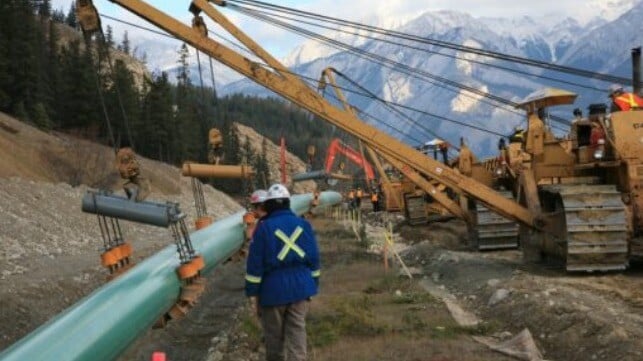

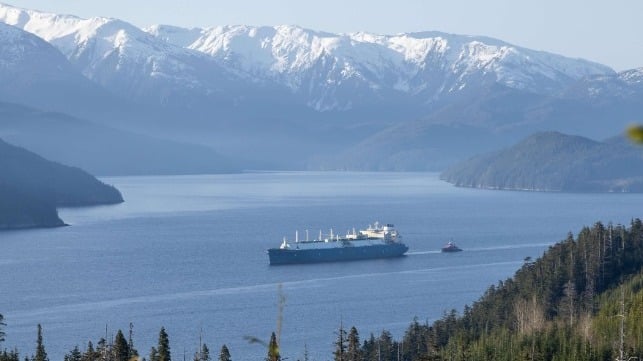
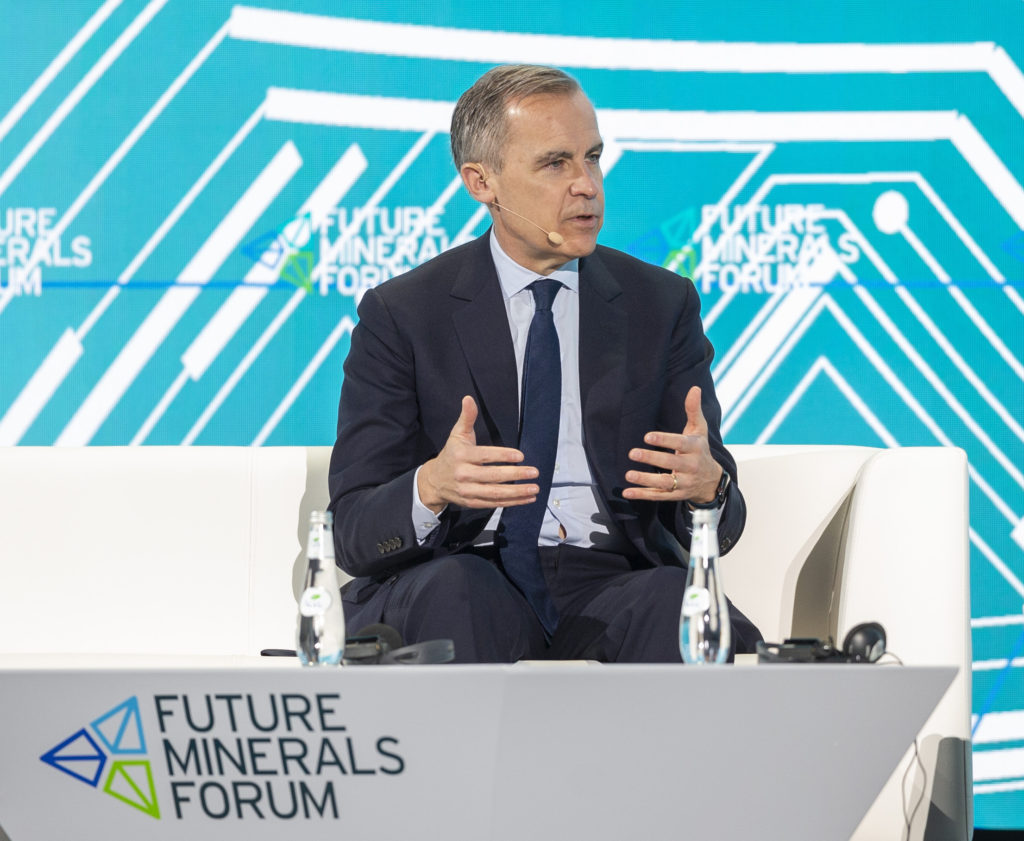


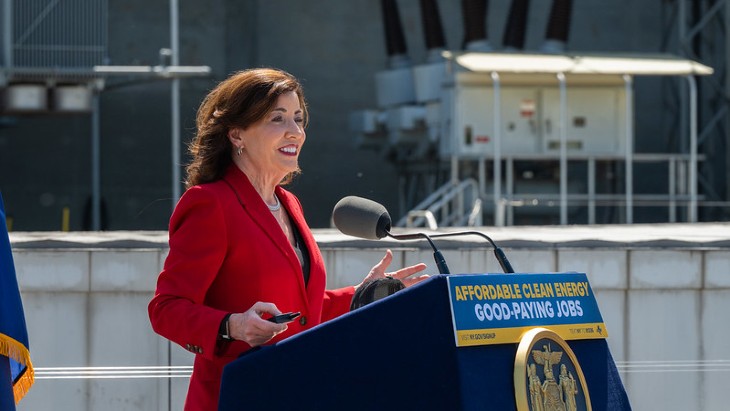
_73016.jpg)
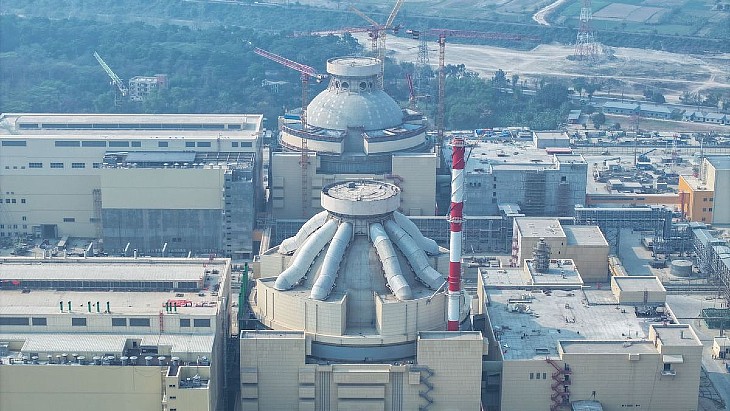
_81458.jpg)
_16128.jpg)
_65954.jpg)
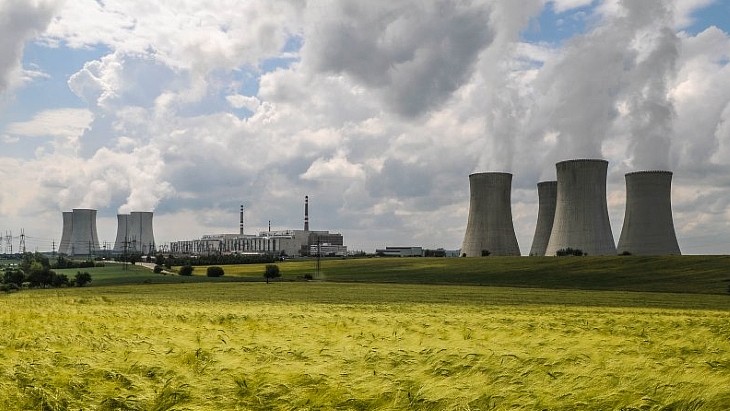
_52896.jpg)
