NUKE NEWS
Shuttered Three Mile Island Nuclear Plant Poised for 2027 Restart

Constellation Energy announced Tuesday it is accelerating plans to restart Unit 1 of the Three Mile Island nuclear plant by 2027, as mounting power demand and evolving energy policy breathe new life into the once-retired facility. The proposal could make Three Mile Island the first U.S. nuclear plant to resume operations after decommissioning, a powerful symbol amid renewed bipartisan support for nuclear power.
Speaking to reporters and regulators, Constellation CEO Joseph Dominguez emphasized the grid’s growing need for clean baseload electricity, particularly as AI data centers and electrification efforts pressure legacy infrastructure. The company is currently navigating discussions with the Nuclear Regulatory Commission (NRC) to determine licensing and safety pathways for the restart.
Politically, the move comes as both Congress and the White House intensify backing for nuclear energy. The Biden administration’s 2022 Inflation Reduction Act included production tax credits for existing reactors and funds for advanced nuclear development. Meanwhile, Pennsylvania lawmakers have expressed cautious support, seeing potential economic revival through jobs and tax revenue.
Yet the plan faces hurdles. Local opposition remains vocal, especially following recent NRC hearings where residents raised concerns over transparency, waste storage, and long-term safety. Environmental advocacy groups warn that reviving an aging facility with a complicated history demands far stricter oversight than currently proposed.
Still, energy policy analysts note the timing aligns with federal goals to triple nuclear capacity by 2050. A successful restart would deliver over 800 MW of zero-emission power to the PJM Interconnection—key to stabilizing one of the nation’s largest and most strained regional grids.
Constellation has not disclosed investment figures, but experts estimate the effort could run into the billions if infrastructure upgrades and regulatory compliance are factored in.
By Charles Kennedy for Oilprice.com
New York to Become a Major Nuclear Power Hub
New York plans to build an advanced nuclear power plant north of New York City to meet rising electricity demand from data centers and industrial growth.
The project aligns with national efforts under the Trump administration to fast-track nuclear energy development and streamline regulations.
Environmental groups caution that nuclear expansion should not replace the pursuit of broader renewable energy initiatives.
The U.S. is investing heavily in a future in nuclear power, through the development of new conventional reactors and power plants, as well as small modular reactors (SMRs). While several states with nuclear plants plan to expand operations in the coming decades, to help deliver more clean power, one area that has big plans for new nuclear power projects is New York. This month, New York’s Governor Kathy Hochul announced plans to develop an advanced nuclear plant to provide reliable, clean electricity.
The U.S. has developed a strong nuclear energy sector over the past more than half century, and after several years of underinvestment, it is back on track to expand its nuclear power sector over the coming decades. In 2024, there were 94 operational nuclear reactors in the U.S., producing almost 97 GW, which is the largest commercial nuclear power generation fleet in the world, according to the Energy Information Administration (EIA). Nuclear plants currently produce around 19 percent of the country’s electricity, down 4 percent from their 2012 peak.
There are 54 nuclear power plants across the country. Plant Vogtle in Georgia is the biggest facility, with four nuclear reactors and a total generating capacity of around 4.5 GW, while New York’s R.E. Ginna plant is the smallest, with its one 0.6-GW reactor. Twelve U.S. nuclear power reactors have permanently closed since 2013, but several companies have announced plans to construct new ones, as the public perception of nuclear power improves and government support for new projects continues under the Trump administration.
This month, New York’s Governor Kathy Hochul announced plans to build an advanced nuclear plant with the ability to produce at least 1 GW of power, which Hochul says will be one of the first new U.S. reactors in a generation. As the power demand grows, particularly with the rollout of data centres across the country and the electrification of multiple industries, the need for greater clean power is evident.
While several states are investing heavily in wind and solar power projects, others are concerned about the unreliability of these energy sources, which has encouraged many to look to stable, clean energy solutions. “We need electricity that is reliable all day long,” Hochul stated during a press conference. “Harnessing the power of the atom is the best way to generate steady zero-emissions electricity.”
The projected cost and timeline of project development are not yet clear, but New York will partially fund the plant, as well as buy electricity from the facility once it is operational. Hochul has directed the state’s power authority – the NYPA – to develop and construct the zero-emission advanced nuclear power plant. The state is currently seeking partners for the development, which is planned for north of New York City in upstate New York.
Hochul published a Master Plan for Responsible Advanced Nuclear Development in January to better understand the public perception of nuclear power and interest in the development of new projects. In May, President Donald Trump signed several executive orders in support of nuclear energy, directing the U.S. independent nuclear regulatory commission to weaken regulations and fast-track new licenses for reactors and power plants.
New York’s governor stated, “As New York state electrifies its economy, deactivates ageing fossil fuel power generation and continues to attract large manufacturers that create good-paying jobs, we must embrace an energy policy of abundance that centres on energy independence and supply chain security to ensure New York controls its energy future.”
The decision to expand New York’s nuclear power capacity is largely in response to plans to expand its data centre capacity, in line with tech companies' aims to deploy artificial intelligence and other complex technologies, which require vast amounts of energy to power. Hochul hopes to establish upstate New York as a tech centre, similar to Silicon Valley, which should be achievable given the region’s geography, water supply, and proximity to IBM and university tech research centres.
This is not the first nuclear energy project planned to support the expansion of data centres in the U.S. In 2024, Microsoft signed a 20-year purchase agreement with the nuclear power company Constellation to buy power from a soon-to-be restarted reactor at Three Mile Island in Pennsylvania. Meanwhile, Google and Amazon both plan to purchase nuclear power from SMR operators.
The Trump administration’s support for nuclear power could help New York to kick-start its new nuclear plant development, following decades of sectoral stagnation. However, several environmental groups have warned that the development of New York’s nuclear power industry should not detract from the need to expand the state’s renewable energy sector, to provide residents and industry with more clean power.
By Felicity Bradstock for Oilprice.com
New York Governor announces plans for new nuclear plant
State Governor Kathy Hochul has directed New York's public electric utility to develop and construct an advanced nuclear power plant in Upstate New York.
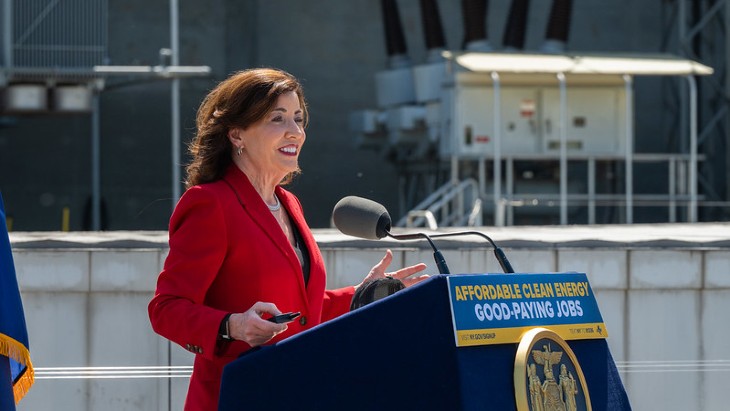
The New York Power Authority (NYPA), in coordination with the Department of Public Service (DPS), "will seek to develop at least one new nuclear energy facility with a combined capacity of no less than one gigawatt of electricity, either alone or in partnership with private entities".
The announcement builds on Hochul's State of the State address, delivered in January, in which she outlined plans to develop a Master Plan for Responsible Advanced Nuclear Development in New York as part of a USD1 billion proposal to achieve a more sustainable - and affordable - future for the state. The development of the master plan is being led by York State Energy Research and Development Authority (NYSERDA) working with the Department of Public Service.
“As New York State electrifies its economy, deactivates aging fossil fuel power generation and continues to attract large manufacturers that create good-paying jobs, we must embrace an energy policy of abundance that centres on energy independence and supply chain security to ensure New York controls its energy future" Hochul said.
The New York Power Authority is to begin evaluation of technologies, business models, and locations for the first nuclear power plant immediately, and will secure the key partnerships needed for the project. This will include site and technology feasibility assessments as well as consideration of financing options. Candidate locations will be assessed for suitability based on public safety, strength of community support, compatibility with existing infrastructure, as well as skilled labour and land availability.
Four nuclear reactors - all operated by Constellation Energy - currently provide some 21.4% of all New York's electricity, and 41.6% of its carbon-free electricity, according to information from the Nuclear Energy Institute. The state has already supported the continued operation of those facilities - two units at Nine Mile Point and the single-unit Ginna and Fitzpatrick plants - by explicitly recognising the zero-carbon contribution of the plants in its 2016 Clean Energy Standard as critical in enabling it to meet its climate change targets.
"To power New York's future we need three things: reliability, affordability and sustainability - and nuclear drives all three," Hochul said as she announced the new initiative. The state will be looking for private partners to help finance the new plant, and will draw on support and lessons learned from other new nuclear projects including from the Tennessee Valley Authority and in Ontario. Hochul said she had "just last week … sat down with" Ontario's Premier Tom Ford "and had a great conversation about creating a memorandum of understanding because they are taking the lead on small modular reactors".
In May, President Donald Trump signed a raft of executive orders aimed at quadrupling the USA's nuclear energy capacity by 2050. Hochul said New York will also be looking for support from the White House to accelerate its plans for new nuclear, and said she had had some "very frank interesting conversations" with the President.
"There's a reason people don't embrace nuclear energy, a lot of reasons. One of them is it just takes too long and the barriers are in Washington," she said, with projects needing to go through "a decade of regulatory bureaucracy and red tape".
"With financial planning and hopeful support we can move as fast as possible both affordably and safely," she added.
Although the three so-called upstate plants have continued to operate, one New York nuclear power plant Indian Point - closed in 2021 after the state opposed Entergy's application to renew the operating licences for the plant which was located only 24 miles (39 kilometres) from New York City. Hochul said she "understood" some anxieties of people living near that plant - "but let's be honest: in doing that we turned off one quarter of New York City's power and it was almost all clean energy and overnight without an alternative". The state had been forced to turn to fossil fuels and as a result, "greenhouse emissions are up in downstate New York", she said.
"We cannot have trade-offs like that and this is not your grandparents' nuclear reactor: you're not going to see this in a movie starring Jane Fonda," she said, referencing 1979 film The China Syndrome, a thriller based on a fictitious meltdown at a nuclear power plant. "The new plant will be a model of 21st century nuclear design with safety at the forefront."
The State of New York is supporting Constellation Energy as it pursues the early site permitting process for a new project at its Nine Mile Point Clean Energy Center.
Constellation's EVP Chief Legal and Policy Officer David Dardis said Hochul's announcement "highlights the essential role of nuclear power in delivering clean, reliable electricity to New Yorkers while supporting long-term grid stability and affordability".
"It is yet another recognition of nuclear energy’s critical role in achieving the nation’s leading clean energy goals. We look forward to working with the Governor and state leaders to ensure nuclear energy continues to power economic growth and a clean, affordable and reliable energy future for New York," Dardis said.
Amentum, Multiconsult to assess Norway's nuclear options
Norway's Nuclear Power Committee has selected US-based engineering company Amentum and Norwegian consulting firm Multiconsult Norge AS to report on technology options for a potential nuclear power programme.
_73016.jpg)
The Norwegian government appointed the committee in June 2024 to conduct a broad review and assessment of various aspects of a possible future establishment of nuclear power in the country. It must deliver its report by 1 April 2026.
The 12-person committee has now appointed Amentum and Multiconsult Norge to conduct a study providing an overview of various reactor technologies and power plant designs, including small modular reactors (SMRs) and advanced modular reactors. It will examine their technological maturity, estimated timeline for implementation and commercial availability, construction and operational costs, and their capability for flexible operation and associated costs. In addition, the committee requested a comparative assessment of vulnerability related to the supply chain and waste management.
"Nuclear power can become an important future energy technology in Norway, and it is crucial to have a good knowledge base now in order to best plan and utilise the technology in the future," said Snorre Treimo, head of Multiconsult Norge's energy and industry business area. "We are therefore very pleased that we will carry out this exciting assignment together with Amentum, who is our nuclear power partner in several assignments."
"We will provide expert, impartial analysis to assist the Commission in developing a comprehensive knowledge base on nuclear power as a potential energy source in the Norwegian power system," said Andy White, senior vice president of Amentum Energy & Environment International. "Drawing on our previous experience in Poland and the United Arab Emirates, we understand the journey that new nuclear power nations need to undertake."
Amentum noted the latest contract builds on its previous work with Multiconsult to assist Halden Kjernekraft AS to evaluate the potential for SMRs to meet energy needs and support employment growth in the Halden municipality in south-east Norway.
Also in Norway, Amentum together with Multiconsult recently secured a safety case framework with Norwegian Nuclear Decommissioning, the state decommissioning organisation, in addition to work the two companies have previously done on decommissioning planning at two research reactors.
Leak tests completed for Rooppur I's containment structure
The tests for tightness and strength of the containment building at Bangladesh's first nuclear power plant unit have been carried out successfully.
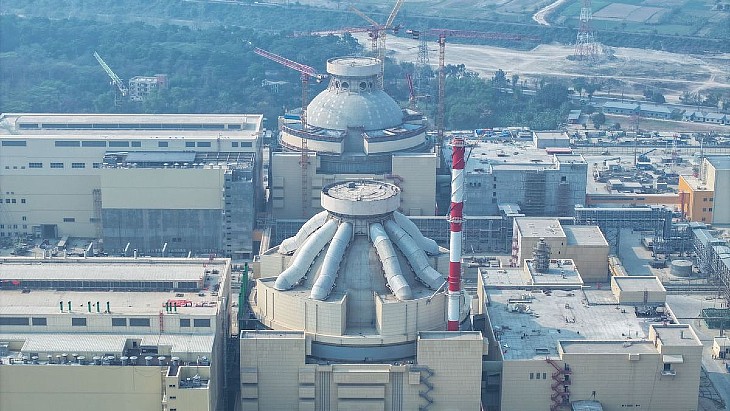
During the process a compressor was used and the pressure was increased to the design value of 4.6kgf/cm2 and a series of tests was carried out to "confirm the tightness of the structure and its ability to withstand internal loads that occur in abnormal conditions".
Rosatom describes the reactor's hermetic enclosure as "a physical barrier made of prestressed reinforced concrete with an internal sealing steel lining. It is designed to prevent the release of radioactive substances into the environment in the event of an emergency and to localise them, as well as to protect against possible external influences. The enclosure serves as the last protective barrier in the event of a hypothetical accident".
Alexey Deriy, vice president for projects in Bangladesh at Atomstroyexport JSC, said: "A number of operations carried out during these tests are unique and are carried out once, only after the full completion of construction and installation work in the reactor building. The results of the tests confirm that the hermetic enclosure system fully complies with all design and regulatory requirements. This is an important step towards commissioning the first power unit and evidence of the high quality of work at all stages of construction."
The Rooppur project
In February 2011 Russia's Rosatom signed an agreement for two reactors to be built at Rooppur, about 160 kilometres from the capital Dhaka, for the Bangladesh Atomic Energy Commission. The initial contract for the project, worth USD12.65 billion, was signed in December 2015. The Bangladesh Atomic Regulatory Authority issued the first site licence for the Rooppur plant in June 2016, allowing preliminary site works, including geological surveys, to begin.
Construction of the first unit began in November 2017. Construction of the second unit began in July 2018. They have an initial life-cycle of 60 years, with a further 20-year extension possible.
The first batch of nuclear fuel was delivered to the site in October 2023 - the moment that the site got its status as a nuclear facility. In March Rooppur unit 1's turbine installation was completed, as were hydraulic tests to check the primary circuit systems and equipment, paving the way for hot functional tests to begin. Rosatom has included grid connection for Rooppur unit 1 as one of its key targets for the current year.
SMR considered for deployment in southern Sweden
Swedish lead-cooled small modular reactor technology developer Blykalla has signed a letter of intent with Hörby Municipality to jointly investigate the possibility of siting a SEALER reactor in Stavröd in Skåne County, southern Sweden.
_81458.jpg)
The feasibility study is planned to last for 18 months and includes a broad investigation of the conditions for establishing both energy production and component manufacturing at the site. Blykalla will carry out soil analyses, including field studies and drilling, assess infrastructure needs, and map potential recipients of electricity and heat from the facility. The study also includes a business and technical assessment of the suitability of the site. Hörby Municipality contributes within the framework of its powers, including through planning support, coordination and access to key contacts.
Blykalla is a spin-off from the KTH Royal Institute of Technology in Stockholm, where lead-cooled reactor systems have been under development since 1996. The company - founded in 2013 as a joint stock company - is developing the SEALER (Swedish Advanced Lead Reactor) lead-cooled SMR.
Blykalla plans to construct its first reactor, SEALER-One, in Sweden. It will function as a demonstration of its technology, and at the same time be used for pyrolysis, whereby industrial customers can utilise its steam for, among other things, decarbonised biochar production. The company aims to achieve criticality of SEALER-One by 2029. Blykalla has a letter of intent in place with nuclear operator Studsvik to develop SEALER-One on its site in Nyköping, Sweden. Licensing work is currently under way.
In the long-term, Blykalla plans to deploy up to 1000 SMRs by 2050, delivering 500 TWh of clean energy annually to industrial users that cannot rely on intermittent power sources. It says SEALER is designed to serve sectors such as hydrogen production, process heat, and pyrolysis, with the potential of significantly reducing global carbon dioxide emissions and securing industrial resilience and growth.
The partners said their collaboration responds to a growing need for stable and emission-free electricity in southern Sweden – "a region that is currently characterised by high electricity prices, capacity shortages and a deficit in plannable power". According to Hörby's energy plan for 2024–2028, increased local energy production is required to strengthen the robustness of the electricity system and enable both industrial growth and new housing development.
"Southern Sweden is facing an enormous electricity demand, and Hörby is becoming a pioneering municipality that dares to take the lead in the energy transition with a project that puts them on the map internationally," Blykalla CEO Jacob Stedman said. "With our technology, we can offer stable fossil-free electricity production where there are otherwise few alternatives. This strengthens both the region's energy security and future competitiveness, which will be crucial for Swedish growth going forward."
"By collaborating with Blykalla, we are faced with a unique opportunity to become the hub in the development of a new future technology, an engine for the future energy supply in Skåne," said Anders Hansson, Chairman of the Municipal Board in Hörby. "Hörby will become a place where innovation, stability and growth go hand-in-hand. We create new jobs, strengthen our business sector and make Hörby municipality more attractive to live and work in."
Later this year, the municipality, together with Blykalla, will hold a number of information meetings in several locations to engage in dialogue with residents about the project.
Ameresco to help customise Terrestrial IMSR plants
Terrestrial Energy is to collaborate with US engineering services company Ameresco Inc to advance the commercial deployment of its Integral Molten Salt Reactor plant in the USA.
_16128.jpg)
The partners said the collaboration covers site identification and Integral Molten Salt Reactor (IMSR) plant project development, design, licensing, construction and operation.
"The collaboration is strategically focused on delivering customised, scalable, reliable, clean, and cost-competitive energy for data centre and industrial applications, combining the competitive capabilities of Terrestrial Energy's innovative IMSR nuclear plant with Ameresco's expertise in energy systems' design, hybridisation, integration and operation," they said in a joint statement.
"Integration of energy systems is expected to include the use of a natural gas-fired energy bridge in IMSR plant operation to enable early electricity delivery well in advance of IMSR nuclear systems being completed and brought to commercial operation," Terrestrial Energy and Ameresco added.
Terrestrial's IMSR is a 4th generation reactor that uses molten salt as both fuel and coolant, with integrated components, which can supply heat directly to industrial facilities or use it to generate electrical power. The use of molten salt as both fuel and coolant also enables passive, or inherent, safety features to be built into the reactor design. The design integrates the primary reactor components, including the graphite moderator, into a sealed and replaceable reactor core unit with an operating lifetime of seven years. The plants' thermal and electric power supply systems can be customised to meet specific site demand requirements, and can support distributed generation for energy-intensive industry.
"Site- and use-specific customisation of IMSR plant output and its hybridisation with other systems including natural gas are essential to capture today's market for near located supply of reliable clean nuclear energy," said Terrestrial Energy CEO Simon Irish. "Our IMSR plant excels in its capacity to be adapted and customised to market needs in a grid congested world. Ameresco's proven track record in energy system integration creates a powerful platform to develop IMSR plant projects that meet the emerging requirements of rapidly growing demand for reliable, carbon-free energy across multiple industrial sectors."
Nicole Bulgarino, president of Federal Solutions and Utility Infrastructure at Ameresco, added: "Our collaboration with Terrestrial Energy reflects our commitment to expanding the capabilities of our clean energy portfolio. By exploring hybrid energy systems that leverage the IMSR plant's heat and power output, we're enhancing our ability to deliver reliable, cost-effective, and sustainable solutions tailored to the evolving needs of data centres and industrial customers."
ABS approves second Korean floating SMR plant design
Maritime classification society the American Bureau of Shipping has issued approval in principle to HD Hyundai Heavy Industries and HD Korea Shipbuilding & Offshore Engineering for a concept of a floating small modular reactor-powered power module.
_65954.jpg)
The design developed by HD Hyundai Heavy Industries (HHI) and HD Korea Shipbuilding & Offshore Engineering is intended to generate electricity offshore and near shore, supporting port facilities and onshore communities.
The American Bureau of Shipping (ABS) completed design reviews based on the ABS Requirements for Nuclear Power Systems for Marine and Offshore Applications. Launched in October 2024, ABS says these are the industry's first comprehensive rules for floating nuclear power plants. At the time of the launch, ABS noted it is the responsibility of nuclear regulators to license the reactor and applicable nuclear safety structures, systems and components.
As part of the Novel Concept Class Approval process, ABS grants an Approval in Principle at an early conceptual design phase to assist the client in demonstrating project feasibility to its project partners and regulatory bodies. Approval in Principle confirms that the proposed novel concept that includes the new technology complies with the intent of the most applicable ABS Rules and Guides as well as required appropriate industry codes and standards, subject to a list of conditions.
"Floating nuclear power facilities show promise in supporting power grids, microgrids, industrial and port operations, data centres, and other uses," said Patrick Ryan, ABS Senior Vice President and Chief Technology Officer. "Additionally, today's advanced nuclear technology has a different risk profile from traditional reactor technology with state-of-the-art designs and with lower enrichment fuels, making commercial offshore and maritime applications more viable."
An HD Korea Shipbuilding & Offshore Engineering spokesperson said: "The floating nuclear power plant is expected to play a key role in building a future powered by clean energy. We will remain fully committed to developing the necessary technologies and ensuring its successful realisation."
This is the second Approval in Principle for a floating nuclear power barge design granted to HD Korea Shipbuilding & Offshore Engineering by the ABS. In October 2023, it issued Approval in Principle for a floating offshore nuclear power barge intended to serve as offshore power generation for remote communities and island electrification.
HD Korea Shipbuilding & Offshore Engineering previously obtained approval in principle from the ABS for a 15,000 TEU-class container ship design model applying small modular reactor (SMR) technology.
In February this year, HD Korea Shipbuilding & Offshore Engineering unveiled another nuclear-powered container ship model utilising SMR technology. It said the new design model features enhanced economic efficiency and safety by incorporating actual equipment and safety design concepts.
Czech regional court decides against EDF case
EDF had taken its case to the regional court relating to the tender for new nuclear in the Czech Republic.
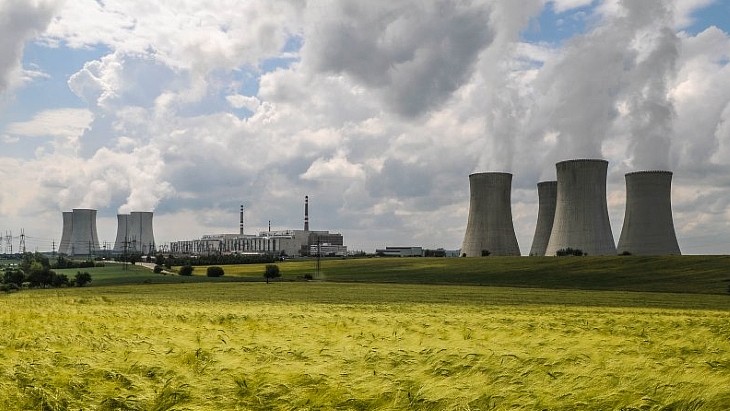
The Czech Republic is planning new nuclear capacity and in July last year announced Korea Hydro & Nuclear Power (KHNP) was the preferred bidder, ahead of EDF. The KHNP bid was said to be for around CZK200 billion (USD8.6 billion) per unit, if two were contracted. France's EDF brought a case to the Czech competition authority challenging the tender process, which was dismissed in April on the basis that the tender was run under a security exemption, so did not fall within the competition authority's remit.
That decision cleared the way for the planned signing of the official contracts with KHNP on 7 May. However EDF succeeded in securing a last-minute court injunction in a Czech regional court on 6 May to stop the contract being signed until its case relating to the tender process - whether the competition authorities should be able to consider EDF's arguments relating to it - had been heard in court.
In response, the project development company Elektrárna Dukovany II and KHNP both appealed to the Czech Supreme Administrative Court and succeeded in getting the injunction lifted, before signing the contracts for the new nuclear earlier this month.
The regional court in Brno has now heard the substance of EDF's argument that the competition authorities should have been able to consider its objections to the tender process. Because of the interest in the case, a limit was imposed of 20 members of the public to be allowed into the hearing.
The Brno regional court's decision has been reported in a variety of Czech media outlets, including Radio Prague International which said the court "sided with the Competition Authority, which had rejected EDF’s objections, stating that since the selection process relied on a national security exemption, formal objections were not allowed under Czech law". It is possible to appeal against this decision, although at the time of writing there has been no comment from EDF.
EDF's objections to the tender process include the belief that the KHNP offer price and the inclusion of a guarantee that the construction would not be delayed or become more expensive, would be "unfeasible without illegal state aid given the prices in the nuclear industry". EDF says that if their rival bidder had state support it would breach European Union rules. As well as the court action in the Czech Republic, the European Union is conducting a preliminary review "to assess whether potential foreign financial contributions received by the Party (KHNP) constitute foreign subsidies and, if so, whether those foreign subsidies distort the internal market with respect to the project".
KHNP rejects that case and welcomed the supreme court's decision earlier in June to dismiss the regional court's original injunction, saying it reaffirmed "the integrity and transparency of the Czech Republic’s tender process and clears the way for the timely advancement of this strategically important project".
The Dukovany II Power Plant (EDU II) project company said earlier this month that the tender for the supplier of the new nuclear units "was carried out in all phases in a fully transparent manner and under fair conditions". The Czech government says that according to the "expert opinion of the Ministry of Industry and Trade, the EPC contract with the company KHNP was not subject to the Regulation on Foreign Subsidies. This was due to both the nature of the contract itself and the fact that the tender procedure had been initiated before the effective date of this Regulation".
Nuclear power in the Czech Republic
The Czech Republic currently gets about one-third of its electricity from the four VVER-440 units at Dukovany, which began operating between 1985 and 1987, and the two VVER-1000 units in operation at Temelín, which came into operation in 2000 and 2002.
Blank for first Finnish copper disposal canister produced
Finnish radioactive waste management company Posiva announced that the first copper casting blank has been produced for the fabrication of a final disposal canister to be used in the Onkalo used nuclear fuel repository.
_52896.jpg)
The casting campaign of the first six canister blanks started earlier this month at the Pori foundry of copper manufacturer Luvata, a subsidiary of Japan's Mitsubishi Materials. Finland's Radiation and Nuclear Safety Authority (STUK) oversaw the casting process.
The casting of the first blank - weighing over 17 tonnes - was completed during one shift, Posiva noted. A preliminary analysis sample was taken of the casting before it was measured and weighed. The cast blank will next be transferred to the sawing process where its front and rear end will be sawn to measure and official sample slices cut for material analysis.
"The casting process was a great success," said Jouko Lammi, who is the canister manufacture coordinator at Posiva. "A good casting quality is important for the subsequent canister production phases. New investments have been made in the foundry to improve the quality and the processing of the casting. One of the most important accomplishments has been the increase in the diameter of the casting with a larger gravity die."
Once the casting blank has been sawn to the required length it will have its surfaces machined. At the next step, the casting blank machined to measure undergoes non-destructive testing, a visual inspection and a dye penetrant inspection.
The final step is Posiva's inspection of the casting and the associated documentation. Once the casting has passed the inspection, it will be packed ready for transport for delivery to the canister manufacturer. The final delivery weight of the blank will be about 12 tonnes.
At the repository, used fuel will be placed in the bedrock, at a depth of about 430 metres. The disposal system consists of a tightly sealed iron-copper canister, a bentonite buffer enclosing the canister, a tunnel backfilling material made of swellable clay, the seal structures of the tunnels and premises, and the enclosing rock.
The copper cylinder produced from the casting blank, together with the copper bottom and cover that will be welded onto it, forms a leak-tight copper canister with walls 5cm thick. In final disposal, the canister acts as a corrosion barrier for the canister insert made of cast iron. The insert accommodates 12 fuel assemblies.
Once it receives the operating licence, Posiva can start the final disposal of the used fuel generated from the operation of TVO's Olkiluoto and Fortum's Loviisa nuclear power plants. The operation will last for about 100 years before the repository is closed.
Niger says it will nationalize
a uranium venture operated
by France’s Orano
By The Canadian Press
June 20, 2025

DAKAR, Senegal — Niger’s government said Thursday it would nationalize the Somaïr uranium venture operated by French company Orano and accused it of taking a disproportionate share of the uranium produced at the site.
The announcement comes as military authorities in the west African country tighten their grip on foreign companies and civil society. Tensions have simmered for months between Niger’s military government and the French company, and relations between Niamey and Paris have deteriorated.
“Faced with the irresponsible, illegal, and unfair behavior by Orano, a company owned by the French state — a state openly hostile toward Niger since July 26, 2023 ... the government of Niger has decided, in full sovereignty, to nationalize Somaïr,” the authorities said in a statement.
The authorities allege that Orano took a disproportionate share of the uranium produced at Somaïr. They added that the company has also been accused of other “irresponsible actions” at the site, without elaborating.
Orano did not immediately reply to The Associated Press’ request for a comment.
Somaïr is a joint venture between Orano and Niger’s state-owned Sopamin, which operates the only active uranium mine in the country. But last year, authorities took operational control of Somaïr. They also withdrew Orano’s operating permit for the Imouraren uranium mine, with reserves estimated at 200,000 tons.
Orano is involved in several arbitration processes with Niger. Last month it sued the Nigerien authorities after the disappearance of its director and the raiding of its local offices.
Orano has been operating in Niger, the world’s seventh biggest supplier of uranium, for over 50 years and holds majority shares in three main uranium mines in Niger.
Nigerien military authorities seized power in 2023 with a pledge to cut ties with the West and review mining concessions. Before that, the country was the West’s major economic and security partner in the Sahel, the vast region south of the Sahara Desert that has been a hot spot for violent extremism.
Monika Pronczuk, The Associated Press

No comments:
Post a Comment