Tuesday, July 06, 2021

Kaseya Ransomware Attack by REvil Gang Is Global in Scale
By Frank Bajak | July 6, 2021
INSURANCE NEWS


Cyber-security teams worked feverishly Sunday to stem the impact of the single biggest global ransomware attack on record, with some details emerging about how the Russia-linked gang responsible breached the company whose software was the conduit.

An affiliate of the notorious REvil gang, best known for extorting $11 million from the meat-processor JBS after a Memorial Day attack, infected thousands of victims in at least 17 countries on Friday, largely through firms that remotely manage IT infrastructure for multiple customers, cyber-security researchers said. They reported ransom demands of up to $5 million.


The FBI said in a statement Sunday that it was investigating the attack along with the federal Cybersecurity and Infrastructure Security Agency, though “the scale of this incident may make it so that we are unable to respond to each victim individually.”

President Joe Biden suggested Saturday the U.S. would respond if it was determined that the Kremlin is at all involved. He said he had asked the intelligence community for a “deep dive” on what happened.

Insurers’ Own Infrastructure Could Be Next Targets of Cyber Criminals


P/C Insurers Defend Ransomware Reimbursements in New Cyber Principles


Leading by Example: How Insurers Can Manage Cyber Risk Within Their Own Operations[The attack comes less than a month after Biden pressed Russian President Vladimir Putin to stop providing safe haven to REvil and other ransomware gangs whose unrelenting extortionary attacks the U.S. deems a national security threat.

A broad array of businesses and public agencies were hit by the latest attack, apparently on all continents, including in financial services, travel and leisure and the public sector — though few large companies, the cyber-security firm Sophos reported. Ransomware criminals break into networks and sow malware that cripples networks on activation by scrambling all their data. Victims get a decoder key when they pay up.

The Swedish grocery chain Coop said most of its 800 stores would be closed for a second day Sunday because their cash register software supplier was crippled. A Swedish pharmacy chain, gas station chain, the state railway and public broadcaster SVT were also hit.


In Germany, an unnamed IT services company told authorities several thousand of its customers were compromised, the news agency dpa reported. Also among reported victims were two big Dutch IT services companies — VelzArt and Hoppenbrouwer Techniek. Most ransomware victims don’t publicly report attacks or disclose if they’ve paid ransoms.

CEO Fred Voccola of the breached software company, Kaseya, estimated the victim number in the low thousands, mostly small businesses like “dental practices, architecture firms, plastic surgery centers, libraries, things like that.”

Voccola said in an interview that only between 50-60 of the company’s 37,000 customers were compromised. But 70% were managed service providers who use the company’s hacked VSA software to manage multiple customers. It automates the installation of software and security updates and manages backups and other vital tasks.

Experts say it was no coincidence that REvil launched the attack at the start of the Fourth of July holiday weekend, knowing U.S. offices would be lightly staffed. Many victims may not learn of it until they are back at work on Monday. The vast majority of end customers of managed service providers “have no idea” what kind of software is used to keep their networks humming, said Voccola,

Kaseya said it sent a detection tool to nearly 900 customers on Saturday night.

John Hammond of Huntress Labs, one of the first cyber-security firms to sound the alarm on the attack, said he’d seen $5 million and $500,000 demands by REVil for the decryptor key needed to unlock scrambled networks. The smallest amount demanded appears to have been $45,000.

Sophisticated ransomware gangs on REvil’s level usually examine a victim’s financial records — and insurance policies if they can find them — from files they steal before activating the data-scrambling malware. The criminals then threaten to dump the stolen data online unless paid. It was not immediately clear if this attack involved data theft, however. The infection mechanism suggests it did not.

“Stealing data typically takes time and effort from the attacker, which likely isn’t feasible in an attack scenario like this where there are so many small and mid-sized victim organizations,” said Ross McKerchar, chief information security officer at Sophos. “We haven’t seen evidence of data theft, but it’s still early on and only time will tell if the attackers resort to playing this card in an effort to get victims to pay.”

Dutch researchers said they alerted Miami-based Kaseya to the breach and said the criminals used a “zero day,” the industry term for a previous unknown security hole in software. Voccola would not confirm that or offer details of the breach — except to say that it was not phishing.

“The level of sophistication here was extraordinary,” he said.

When the cyber-security firm Mandiant finishes its investigation, Voccola said he is confident it will show that the criminals didn’t just violate Kaseya code in breaking into his network but also exploited vulnerabilities in third-party software.

It was not the first ransomware attack to leverage managed services providers. In 2019, criminals hobbled the networks of 22 Texas municipalities through one. That same year, 400 U.S. dental practices were crippled in a separate attack.

One of the Dutch vulnerability researchers, Victor Gevers, said his team is worried about products like Kaseya’s VSA because of the total control of vast computing resources they can offer. “More and more of the products that are used to keep networks safe and secure are showing structural weaknesses,” he wrote in a blog Sunday.

The cyber-security firm ESET identified victims in least 17 countries, including the United Kingdom, South Africa, Canada, Argentina, Mexico, Indonesia, New Zealand and Kenya.

Kaseya says the attack only affected “on-premise” customers, organizations running their own data centers, as opposed to its cloud-based services that run software for customers. It also shut down those servers as a precaution, however.

Kaseya, which called on customers Friday to shut down their VSA servers immediately, said Sunday it hoped to have a patch in the next few days.

Active since April 2019, REvil provides ransomware-as-a-service, meaning it develops the network-paralyzing software and leases it to so-called affiliates who infect targets and earn the lion’s share of ransoms. U.S. officials say the most potent ransomware gangs are based in Russia and allied states and operate with Kremlin tolerance and sometimes collude with Russian security services.

Cyber-security expert Dmitri Alperovitch of the Silverado Policy Accelerator think tank said that while he does not believe the Kaseya attack is Kremlin-directed, it shows that Putin “has not yet moved” on shutting down cyber criminals.

Copyright 2021 Associated Press. All rights reserved. This material may not be published, broadcast, rewritten or redistributed.
MNI WISCONI WATER IS LIFE
Tribe becomes key water player with drought aid to Arizona

By FELICIA FONSECA
July 5, 2021

1 of 4
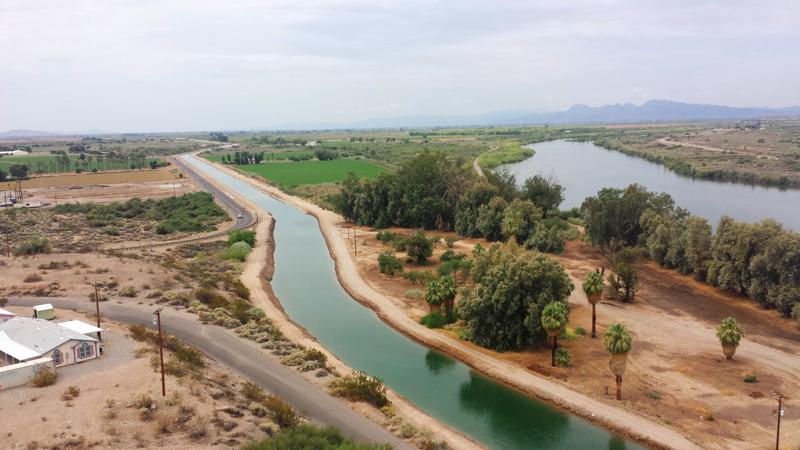
In this undated photo provided by Angie Ingram/CRIT Water Resources, a canal system on the Colorado River Indian Tribes (CRIT) reservation is seen near Parker, Ariz. The tribe has played an outsized role in Arizona to help keep Lake Mead from falling to drastically low levels. Still, Arizona is expected to face the first-ever mandatory cuts to its Colorado River water supply in 2022. (Angie Ingram/CRIT Water Resources via AP)


FLAGSTAFF, Ariz. (AP) — For thousands of years, an Arizona tribe relied on the Colorado River’s natural flooding patterns to farm. Later, it hand-dug ditches and canals to route water to fields.

Now, gravity sends the river water from the north end of the Colorado River Indian Tribes reservation through 19th century canals to sustain alfalfa, cotton, wheat, onions and potatoes, mainly by flooding the fields.

Some of those fields haven’t been producing lately as the tribe contributes water to prop up Lake Mead to help weather a historic drought in the American West. The reservoir serves as a barometer for how much water Arizona and other states will get under plans to protect the river serving 40 million people.

The Colorado River Indian Tribes and another tribe in Arizona played an outsized role in the drought contingency plans that had the state voluntarily give up water. As Arizona faces mandatory cuts next year in its Colorado River supply, the tribes see themselves as major players in the future of water.

“We were always told more or less what to do, and so now it’s taking shape where tribes have been involved and invited to the table to do negotiations, to have input into the issues about the river,” first-term Colorado River Indian Tribes Chairwoman Amelia Flores said.

Lake Mead on the Nevada-Arizona border has fallen to its lowest point since it was filled in the 1930s. Water experts say the situation would be worse had the tribe not agreed to store 150,000 acre-feet in the lake over three years. A single acre-foot is enough to serve one to two households per year. The Gila River Indian Community also contributed water.

The Colorado River Indian Tribes received $38 million in return, including $30 million from the state. Environmentalists, foundations and corporations fulfilled a pledge last month to chip in the rest.

Kevin Moran of the Environmental Defense Fund said the agreement signaled a new approach to combating drought, climate change and the demand from the river.

“The way we look at it, the Colorado River basin is ground zero for water-related impacts of climate change,” he said. “And we have to plan for the river and the watersheds that climate scientists tell us we’re probably going to have, not the one we might wish for.”

Tribal officials say the $38 million is more than what they would have made leasing the land. The Colorado River Indian Tribes stopped farming more than 15 square miles (39 square kilometers) to make water available, tribal attorney Margaret Vick said.

“There’s an economic tradeoff as well as a conservation tradeoff,” she said.

While some fields are dry on the reservation, the tribe plans to use the money to invest in its water infrastructure. It has the oldest irrigation system built by the U.S. Bureau of Indian Affairs, dating to 1867, serving nearly 125 square miles (323 square kilometers) of tribal land.

The age of the irrigation system means it’s in constant need of improvements. Flores, the tribal chairwoman, said some parts of the 232-mile (373-kilometer) concrete and earthen canal are lined and others aren’t, so water is lost through seepage or cracks.

A 2016 study conducted by the tribe put the price tag to fix deficiencies at more than $75 million. It’s leveraging grants, funding from previous conservation efforts and other money to put a dent in the repairs, Flores said.

“If we had all the dollars in the world to line all the canals that run through our reservation, that would be a great project to complete,” Flores said. “I don’t think that’s going to happen in our lifetime.”

The tribe is made up of four distinct groups of Native Americans — Chemehuevi, Mohave, Hopi and Navajo. The reservation includes more than 110 miles (177 kilometers) of Colorado River shoreline with some of the oldest and most secure rights to the river in both Arizona and California.

While much of the water goes to farming, it also sustains wildlife preserves and the tribe’s culture.

“We can’t forget about the spiritual, the cultural aspect to the tribes on the Colorado River,” Flores said. “Our songs, clan songs, river and other traditional rites that happen at the river.”

The tribe can’t take full advantage of its right to divert 662,000 acre-feet per year from the Colorado River on the Arizona side because it lacks the infrastructure. It also has water rights in California.

An additional 46 square miles (121 square kilometers) of land could be developed for agriculture if the tribe had the infrastructure, according to a 2018 study on water use and development among tribes in the Colorado River basin.

“One day,” Flores said. “That’s the goal of our leaders who have come behind me, to use all of our water allocation and develop our lands that right now are not developed.”

___

Fonseca is a member of The Associated Press’ race and ethnicity team. Follow her on Twitter at https://twitter.com/FonsecaAP.

July 6 marks World Zoonoses Day

How identifying hotspots of zoonotic disease could prevent another pandemic

Researchers have developed a tool to assess wildlife markets for risks of zoonotic outbreaks. It can help governments decide on courses of action, with strict veterinary requirements potentially more effective than bans.


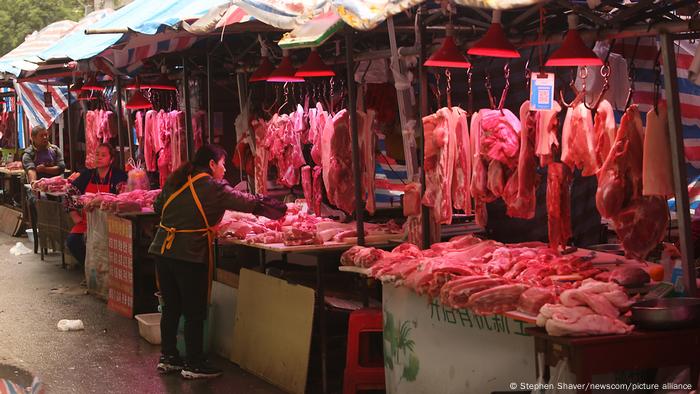
The virus may have jumped from animal to human in a local wet market, such as this one in Wuhan


July 6 marks World Zoonoses Day, the anniversary of Louis Pasteur's first successful testing of his rabies vaccine on a human subject. As the coronavirus pandemic continues to rage across the globe, active measures are required to quell further outbreaks of zoonotic diseases.


For decades, scientists have been warning of dangerous zoonoses —zoonotic diseases caused by germs that spread between animals and people. From SARS to MERS and Ebola, many infectious diseases are transmitted by viruses that have an animal origin.

According to a report by the World Biodiversity Council, there are as many as 1.7 million undetected viruses in the animal kingdom, 827,000 of which could infect humans. As humans and wild animals come into ever closer contact, it is unlikely that COVID-19 is the last pandemic in our globalized world.
Wildlife trade with a potential for zoonotic diseases

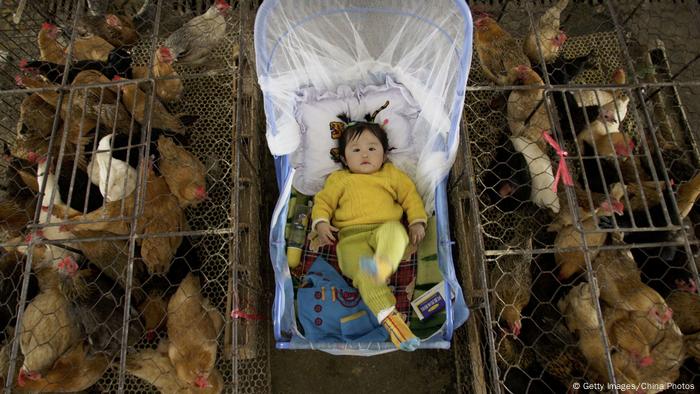
Ever since the beginning of the coronavirus pandemic, there have been calls to strictly regulate or completely ban the trade in wild animals. Wildlife markets are considered to be potential "zoonotic hotspots" because different animal species are kept in close quarters, making it easy for dangerous viruses to spread.

A zoonosis is an infectious disease caused by a pathogen that has jumped from an animal to a human

Once it was clear that the new SARS CoV-2 virus had an animal origin, the World Health Organization (WHO) called for wild animal markets, which are particularly popular in Asia and Africa, to be shut down.

China, which faces particular criticism, temporarily banned the entire trade with wild animals in January 2020, to last until the COVID-19 pandemic is over. In the end, the ban did not last quite that long, with the markets now partially open again. Still, the trade with exotic animals and food in China has dropped significantly.
Wild animals important for food and medicines

Wild animals play an important cultural, traditional and even nutritional role for many people. Plans to ban the trade or consumption of wild animals in general are unrealistic; and in addition, strict bans are almost impossible to monitor, especially in regions with poor infrastructure or weak governance.

Watch video 12:00 COVID-19 Special: When animal diseases jump to humans

Regulating hygiene, or veterinary requirements for the trade and consumption of wild animals, might be a more effective strategy. This would also provide insight into the potential sources of danger.

Risk grids to identify hotspots


The World Wide Fund For Nature (WWF) has worked with scientists from Hong Kong to develop a tool to assess wildlife markets for future risks of zoonotic outbreaks. The risk matrix, published in the One Health scientific journal, will initially be used to analyze wildlife markets in the Asia-Pacific region. The sales situation in the respective market and the animal species or the number of wild animals traded are taken into account.

The team surveyed 46 wildlife markets in Laos and Myanmar. They showed a high zoonotic risk on about half of the days when the researchers made their observations.

It is clear that there are wildlife markets that always seem to have a high risk of zoonosis, said Stefan Ziegler, Senior Conservation Advisor Asia for the WWF and one of the authors of the study.
Strict veterinary requirements vs. ineffective bans

According to WWF, millions of wild animals are traded in the region each year for food or use in traditional medicine — including wild boar and deer, as well as rodents and bats, which are considered reservoirs for a variety of pathogens.

Wild boar and deer are also consumed in Germany. "However, the trade in these products is subject to strict veterinary regulations," as Ziegler told dpa news agency.

PHILIPPINES: STUDYING BATS MIGHT HELP PREVENT ANOTHER PANDEMIC
Casting their nets
The researchers, who call themselves "virus hunters," are out to catch thousands of bats for a simulation model. They hope that this will help them prevent another pandemic on the scale of the COVID-19 crisis in the future   1234567


Preventing zoonotic diseases a global job


Stopping the illegal and unregulated wildlife trade is just as important as monitoring wildlife markets, wildlife farms and restaurants where such meats are served, according to the environmental organization. In many places the relevant authorities, which are supposed to monitor the trade and enforce applicable law, are severely underfunded, the WWF added.

Pandemic protection is a global task, according to the WWF. The global community must provide targeted assistance in building national capacities for pandemic prevention, the international organization says — and the risk matrix could help minimize risks associated with the legal trade of wildlife.
Meet the 'zombie frog,' a new species found in the Amazon

The spooky-looking amphibian is less scary than it appears to be. But it might already be endangered, as deforestation rates continue to go up.


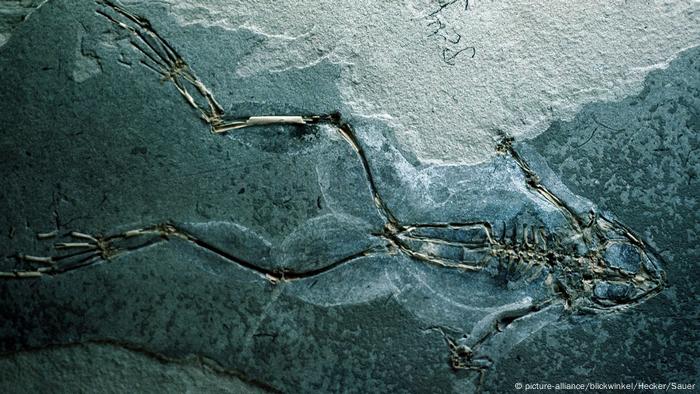
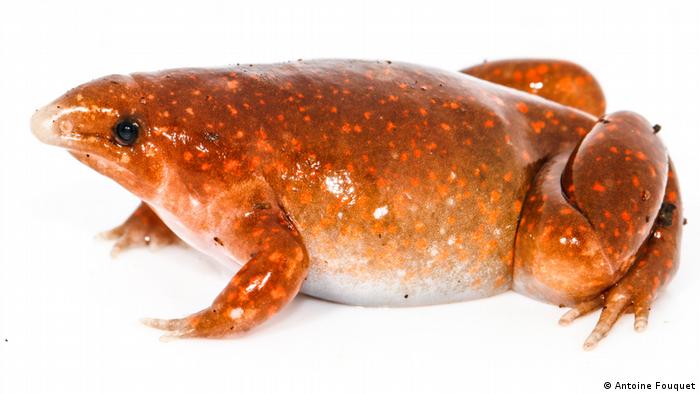
The so-called zombie frog is one of three new species recently described by scientists


Everything is dark. There's no one around. The raindrops fall heavily. Suddenly, the call ― it's time to dig. The man digs with his bare hands until he is covered in mud. But he keeps going. His goal is to find the enigmatic creature making that unique call ― a sound that has never been heard before.

At first sight, this scene could be part of a horror or a thriller movie. But it has nothing to do with the zombie apocalypse. This is how German herpetologist (an expert on amphibians and reptiles) Raffael Ernst described his experience trying to identify frogs in the Amazon. And the effort paid off.

Ernst was part of the discovery of a new species, which has been dubbed the "zombie frog." Although its orange-spotted appearance is indeed quite peculiar, the 40-millimeter (1.5 inches) amphibian is no undead monster.

"Actually, we chose this name because the researchers are the ones that look like zombies when they dig out the frogs from the ground," recounts Ernst. The animals are usually active at night and make species-specific sounds.


German herpetologist Raffael Ernst found the frog while doing field work in Guyana

"So once you hear a new call, you can be pretty sure that you actually have new species," he says. "And then you have to dig them up and you're muddy all over, because they are hidden underground, and they usually come out only when it's raining."
Discovering a new species

Ernst spent two years in the Amazon rainforest in Guyana, South America, mostly alone, doing field work for his PhD studies. His original goal was to investigate the impacts of human-caused loss of biodiversity by looking at amphibians as an example. That was when he found the frog. He describes the moment as "a mixture of knowing what to do, where to look, and a lot of luck."

Since then, Ernst has joined efforts with a group of international researchers to find out more about the animal. They ended up describing three different species, all from the same genus, called Synapturanus. The amphibians were identified across the so-called Guiana Shield, which encompasses tropical rainforest areas across Guyana, French Guiana and Brazil. Little is known about the frogs since they are found in such remote places.

"It's not so easy to find them or actually collect them because they have really short activity times," Ernst explains. Based on their research, the scientists estimate that there may be six times more species belonging to the same genus, which have not yet been spotted.

SAVE THE FROGS
200 million years
Frogs have been around for some 200 million years, during which time they have shown an ability to adapt to changing habitats. Today there are almost 5,000 species of frogs. Human activities, habitat destruction, disease, pollution, climate change, invasive species and overuse for food and pets all contribute to declining frog numbers.

Ernst's passion for amphibians and reptiles goes way back. "I got my first snake when I was seven or so," he says. For someone so emotionally connected to the profession, it was naturally exciting to discover a new frog. However, he clarifies that in the case of amphibians, it is not uncommon to come across new species: "The amount of newly discovered species is pretty big for vertebrates, and most of the people who do fieldwork will eventually probably come across new taxa."

But the discovery brings mixed emotions, since amphibians are among the most endangered vertebrate groups. "Whenever we discover new species, we always have in mind that we are losing species at the same time, probably more than we discover, and before we even have the chance to describe them," Ernst says.

It is in fact possible that the zombie frog is endangered, even though it was just recently discovered.


Amphibians such as the zombie frog are among the most endangered animals in the world, even in pristine environments such as the Guiana Shield in the Amazon


'The threats are multiple'

The Amazon rainforest is the world's biggest biodiversity hot spot, especially for amphibians. Most amphibian species known in the world come from the region, which is home to more than a thousand types of frogs. Because they breathe through their skin, amphibians are highly sensitive to water quality and environmental degradation, including toxic chemicals, habitat destruction, pollution, and diseases, to name a few examples. The so-called global amphibian decline, a term used by experts to designate systematic decreases in amphibian populations, indicates that around 70% of amphibian species are threatened with extinction. This phenomenon is a warning that ecosystems, even remote ones, may be out of balance.

In the case of the Amazon, Ernst affirms that there is increasing pressure, caused by numerous human activities ― most of them illegal ― such as mining, timber extraction, logging, poaching and large-scale infrastructure projects, particularly in northern Brazil. "The threats are multiple and on top of that, we have climate change problems as well," he says.

Humble lodgings in the Iwokrama forest in the Guiana Shield, where the researchers spent about two weeks doing field work

Unprecedented destruction

The Amazon's dry season, which runs from May to September, is the time of the year when deforestation peaks. Fires spread easily, as forest areas succumb to illegal activities such as logging, land-grabbing and land clearing ― mostly to turn the jungle into cattle pastures for agrobusiness.

According to Brazil's national space research institute (INPE), May 2021 was the third consecutive month to break deforestation records: 1,180 square kilometers (455 square miles) were lost in May alone (40% more than over the same period in 2020). And the trend looks worrying for the months to come.

"We are losing biodiversity at an unprecedented rate, and the current administration in Brazil has unfortunately been a disaster for that," says Ernst.

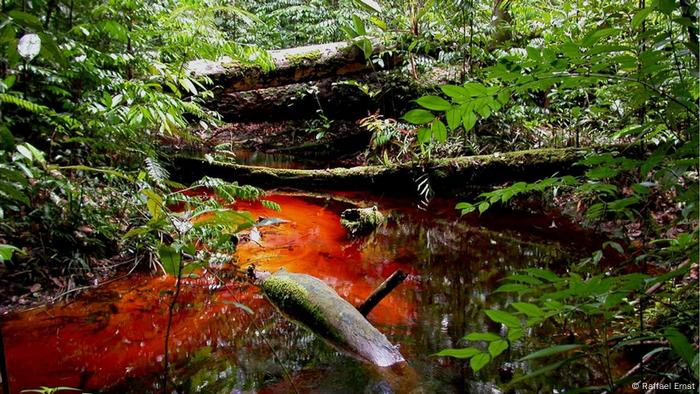
Ernst reportedly found the zombie frog just a couple hundred meters from this creek in Mabura Hill


Environmentalists from Brazil ― the country that is home to more than two-thirds of the Amazon rainforest ― continuously denounce the purposeful weakening of official environmental protection agencies and enforcement rules under the Bolsonaro administration. Brazil's former environment minister Ricardo Salles quit in June 2021 amid a criminal investigation of his involvement in an illegal logging scheme in the Amazon.

Environmental destruction affects all aspects of life in the Amazon, including amphibians and possibly the zombie frog. Should its habitat conditions be altered, the species ― despite its name ― will not come back from the dead.

Watch video01:06 Frog species believed extinct reappears in Ecuador


The Colombian frog farm trying to put animal traffickers out of business

In one of the world’s most biodiverse countries, thousands of animals fall victim to poaching each year. Could captive breeding projects help save some from extinction?


Opinion: The global tax revolution is coming

One hundred and thirty countries have reached an agreement on implementing a better system of taxation, under the aegis of the OECD. This could be real, historic progress, says Bernd Riegert.


Escaping to tax havens should no longer be worth the while for large corporations


The world is truly on the verge of a "colossal" upheaval of the tax system applied to big companies. This was how German Finance Minister Olaf Scholz hailed the agreement reached in principle by 130 countries, under the guidance of the Organization for Economic Cooperation and Development (OECD). It really can be described as historic. For the first time in 100 years, the global community is set to agree on a radical restructuring of the tax system that would make it fairer with regard to the global economy, including online business.

The agreement envisages that international corporations will no longer pay taxes in the country where they register their headquarters for tax purposes, but where they generate their sales. This would affect not just the big American internet giants, like Google's parent company Alphabet and online retailers such as Amazon, but also Chinese corporations, French firms, and German companies such as Volkswagen, Daimler and Siemens, which would in future pay more tax in the countries that are their principal markets.


DW's Bernd Riegert

Initially, it would only apply to highly profitable companies with a turnover of more than $20 billion (€16.8 billion). Nonetheless, it is a genuine revolution that will make the tax avoidance models offered by Luxemburg, Ireland, the Netherlands, and many financial havens in the Caribbean or the British Channel Islands, less attractive.

The second mainstay of the system would be the introduction of a minimum global tax of 15% of profits, applicable initially to companies with a turnover of more than $750 million. This aims to prevent competition among countries with low taxation levels. Even notorious suspects like Panama and the Cayman Islands have agreed to it — which is suspicious, to say the least. Perhaps the agreement does still have loopholes, after all?
Exceptions reduce chances of success

Of course, even this "revolution" has unfortunate exceptions. Big banks and financial service providers have been exempted, in response to pressure from Britain. So has the oil industry — the result of some brilliant lobbying by Saudi Arabia, Russia, and oil multinationals like Exxon. There are special rules for smaller states, i.e. the former tax havens. Investment in physical production facilities or logistics centers will reduce tax liability.


The United States is keen to move things along. Its new secretary of the treasury, Janet Yellen, is anticipating higher tax revenues. The OECD has calculated that, in total, finance ministers can expect the agreement to bring in an additional €100-150 billion. For Germany, specifically, the increase will be relatively small — around €750 million — because German corporations would in future pay more tax in China and the United States. Digital penalty taxes, which already exist in the UK and France, and which the EU was planning to introduce, will have to be scrapped. This will enable the United States and Europe to resolve at least this element of the trade dispute.

Breakthrough has been made

The goal has not yet been achieved. This agreement on global tax reform is voluntary, and will have to be incorporated into national laws. But the most important group of 20 states will approve it. Ultimately, the European holdouts — Ireland, Hungary, Estonia and Cyprus — will probably have no choice but to follow suit, otherwise they may face sanctions. US congressional approval will be the deciding factor. This is not a given, because of the Biden administration's razor-thin majority, but it is absolutely imperative for the success of the "revolution."

Many of the details, as well as the timetable for the introduction of the new tax system, are still vague, and will need to be negotiated before October's G20 summit in Rome, Italy. However, the breakthrough toward a better and fairer taxation system has been made. Now we must keep a close eye on whether the increased taxes are indeed paid by the corporations' owners, or whether consumers — i.e. all of us end up footing the bill by way of price increases.

This opinion piece was translated from German.
Paris gets a taste of pizza-making robots

Issued on: 06/07/2021 - 11:32
The glass-enclosed kitchen is staffed by silver robots that build, bake and box up pizzas with the help of specially developed equipment, at a rate of up to 80 an hour BERTRAND GUAY AFP/File

Paris (AFP)

Behind the dark green facade of a new Paris pizzeria, arms wielding ladles and spatulas perform an intricate ballet to churn out made-to-order pies -- but no human hands are involved in the performance.

The glass-enclosed kitchen is staffed by silver robots that build, bake and box up pizzas with the help of specially developed equipment, at a rate of up to 80 an hour.

After ordering at self-service terminals, clients can watch as the machines flatten fresh dough, spread tomato sauce, add organic vegetables, cheese and other toppings, then whisk the creations into the oven.

"It's a very fast process, the timing is perfectly controlled and quality is assured because the robots are consistent," says Sebastien Roverso, 34, a co-founder and inventor of the Pazzi robot and its namesake restaurant.

"And it's a pretty cool and relaxed atmosphere," he says. "The idea is that you spend a few pleasant minutes watching the robot while waiting."

Or as the sign says in English out front: "Come for the show, Stay for the Pizza!"

Roverso and a fellow engineer and inventor, Cyrill Hamon, launched their adventure eight years ago in a family garage, securing millions of euros from venture funds including the state-owned development bank, Bpifrance.

After a first restaurant in a Paris suburb in 2019, the company has its sights on an international chain where employees would focus solely on customer service or table cleanup.

"We're finalising contracts for new spots" in Paris, "and in March or April we'll open in Switzerland," said Philippe Goldman, a former L'Oreal executive who came on as managing director for the start-up.

- Labour shortage? -

The Pazzi robots are almost completely autonomous and in theory won't be susceptible to breakdowns.

"And we have engineers who work remotely and can take control and watch with cameras, so they can correct things if necessary to make sure service continues," Roverso said.

The tricky part was dealing with fresh dough, since using frozen products was out of the question.

"The dough is alive... every hour that passes, it's different," said Thierry Graffagnino, a chef and three-time winner of World Pizza Contest in Rome, who was brought in to help elaborate Pazzi's recipes and process.

"We had to make sure the robot could figure things out alone and adapt, something that even some pizzaiolos don't always know how to do," Graffagnino said.

"Today we make a very good pizza, but we're still looking to improve it, we're not going to stop here," he said.

The robots are also seen as an answer to chronic labour shortages in restaurants and food service -- in many countries owners are struggling to rehire workers furloughed in Covid lockdowns, since many are abandoning the sector's long and stressful hours.

"Fast food is facing a crisis everywhere in terms of hiring and the ability to find employees," Goldman said.

But even if robots start supplementing cooks in the kitchen, Pazzi has no intention of trying to replace traditional pizza cooks entirely.

"You have Neapolitan pizza, Sicilian pizza, Roman pizza, and now there's Pazzi pizza -- it's made by a robot but after all, it's healthy competition," Graffagnino said.

"It's up to everyone to make a good pizza."
'Silver lining': Albania medicinal herbs bloom in pandemic

Issued on: 06/07/2021 -
Demand for medicinal plants such as cornflower is blossoming amid the coronavirus pandemic Gent SHKULLAKU AFP

Sheqeras (Albanie) (AFP)

Scents of sage, lavender and cornflowers rise from the meadows of Albania, which has seen soaring overseas demand for medicinal herbs since the coronavirus pandemic.

In Sheqeras, at the foot of the Mali i Thate mountain in Albania's south, it is the season for cornflowers, a plant traditionally valued for its ability to boost the metabolism and resistance to infections.

Early in the morning, before the heat of the day, dozens of women wearing broad-rimmed hats, hand-pick the magnificent signature-blue flowers that attract clouds of butterflies and bees.

The cornflowers are then dried in darkened rooms to preserve their colour before being shipped abroad.

For the past few years, Albania has been one of Europe's top producers of medicinal herbs, mostly wild plants harvested in the foothills.

About 95 percent are exported to the United States, Australia, New Zealand, France, Germany or Italy.

- Booming exports -

Demand has been soaring since the coronavirus pandemic increased interest in herbs believed to strengthen the immune system and amid growing enthusiasm for natural and organic products.

"Every cloud has a silver lining," says Altin Xhaja, whose company, Albrut, has, like many others in the sector, expanded areas under cultivation and intensified harvesting of wildflowers.#photo1

In 2020, Albania exported more than 14,000 tonnes of medicinal and aromatic herbs worth 50 million euros ($59 million).

That was 15 percent more compared with the previous year, official figures show.

And the trend continues, with exports 20 percent higher in the first three months of 2021 from a year earlier.

- 'We have to be quick' -

The boom is a windfall for one of Europe's poorest countries which, with a population of 2.8 million people, is largely dependent on tourism along the Adriatic coast that has been hard-hit by the pandemic.

Nettle, wild apple trees, cowslip and other medicinal plants provide a living for some 100,000 Albanians, who have long used them themselves in traditional remedies.

"It's a race against time. We have to be quick," says Xhaja.

"Cornflowers are the most expensive at the moment; a kilo of dried flowers will go for around 30 euros," he says.

Just next to the fields of cornflowers, a beautiful violet carpet of mallows can wait a bit longer before the harvest.

As dozens of workers busily select and sort plants at his factory in Lac, north of Tirana, Filip Gjoka says that the sector has also benefited from tensions between Washington and Beijing.#photo2

"The trade war between the United States and China has forced many Western players to turn towards the Albanian market," says Gjoka, who also heads the association of medicinal and aromatic herbs.

Around 30 Albanian companies are authorised to export the plants used in herbal medicine due to their anti-inflammatory, anti-septic and even anti-stress properties.

They are used to make teas rich in vitamin C and antioxidants, oils or ointments.

- 'Sage if my life' -


The rocky plateaus in Albania's north are home to sage, for which demand has increased by 40 percent, prompting farmers to increase the area under cultivation.

"It was unforeseen. It had to be done quickly to be able to respond" to the demand, says farmer Pjeter Cukaj, wiping the sweat from his forehead.

"These plants provide a living for more than 50 percent of families in the region," he adds, crediting local sage, lavender and wild herbs with "magical powers" for the health.

But farmers complain about the difficulty in finding funding for expansion and the construction of storage and drying facilities, and say that any financial aid they do get comes in dribs and drabs.

Professionals are also calling for a law for labels to guarantee quality, which would promote the sector's growth.

"Everything is pure, without pesticides, without anything," says Edlira Licaj, as she pulls weeds from around the sage along with a dozen other women.#photo3

"We do everything by hand," she says.

Meanwhile, 91-year-old Drane Cukaj attributes her longevity to the sage infusion she drinks every morning.

"Life is in the meadows, sage is my life, my love, it has always made me happy," says the mother of nine who also has 40 grandchildren.

Cukaj says she's convinced that the wild herbs "help against the coronavirus".

Still, that didn't stop her from getting the jab -- just in case.

© 2021 AFP
As Big Oil Execs Roam Free, Climate Activist Gets 8 Years in Prison

"How many years do you think ANY fossil fuel CEO will serve for knowingly destroying our planet's climate?" asked one climate group in response to Jessica Reznicek's sentence.


#NoDAPL water protectors Jessica Reznicek (L) and Ruby Montoya during a 2017 appearance on Democracy Now! (Photo: Democracy Now! screen grab)


BRETT WILKINS, STAFF WRITER
July 5, 2021

Environmentalists in recent days expressed outrage over the eight-year prison sentence handed to Jessica Reznicek—a nonviolent water protector who pleaded guilty to damaging equipment at the Dakota Access Pipeline in Iowa—while calling the fossil fuel companies who knowingly caused the climate emergency the real criminals who should be held to account.

"Why is Jessica Reznicek going to prison and Big Oil executives aren't?"
—Rebecca Parson, congressional candidate

United States District Court Judge Rebecca Goodgame Ebinger last week sentenced Jessica Reznicek to eight years behind bars, $3,198,512.70 in restitution, and three years' post-prison supervised release after the 39-year-old activist pleaded guilty to a single count of damaging an energy facility.

In September 2019 Reznicek and 31-year-old Ruby Montoya were each indicted on nine federal charges including damaging an energy facility, use of fire in the commission of a felony, and malicious use of fire. Each of the women faced up to 110 years in prison. Montoya has yet to be sentenced.

According to the U.S. Department of Justice:

Reznicek, as early as November 8, 2016, and continuing until May 2, 2017, conspired with other individuals to damage the Dakota Access Pipeline at several locations... Specifically, the defendant admitted to damaging and attempting to damage the pipeline using an oxy-acetylene cutting torch and fires near pipeline instrumentation and equipment in Mahaska, Boone, and Wapello counties [in] Iowa.

The Des Moines Register reported Ebinger said a terrorism sentencing enhancement could apply because "not only the flow of oil, but the government's continued response were targets of this action."

However, environmentalists and other observers questioned the sanity of a system that prosecutes as terrorists people protecting the planet against the existential threat of a climate emergency caused largely by fossil fuel use, while protecting and rewarding perpetrators of what a growing number of international jurists call the crime of ecocide.

Reznicek's sentencing on June 30 came on the same day as the publication of secretly recorded videos showing a senior ExxonMobil government affairs executive discussing lobbying related to infrastructure legislation, involvement with "shadow groups" that cast down on scientific consensus about the climate emergency, and "wins" during the Trump administration. ExxonMobil and other fossil fuel corporations have known about human-caused global heating for decades.

"How many years do you think ANY fossil fuel CEO will serve for knowingly destroying our planet's climate?" tweeted 350 Tacoma in response to Reznicek's sentencing.

The Nation editor-at-large Mark Hertsgaard noted in a recent opinion piece published in Common Dreams that "oil companies, the executives in charge of them, the propagandists they've employed, and the politicians they've funded have largely escaped blame, much less had to pay–whether through financial penalties or prison time—for the immense damage they have done."

Prior to her sentencing, Reznicek told the court that she acted out of concern that the pipeline—which has a history of leaks—would further contaminate Iowa's drinking water.

"The toxins we enter into our waterways here in Iowa enter into the Mississippi, which enters into the Gulf," she explained. "Going to this extreme was out of character for me."

"It wasn't an easy thing to do," Reznicek said. "It wasn't an easy decision to make. I discerned it at length. The conclusion that I made was that, in my heart, this was the right thing to do. In my heart, this was not violent. In my heart, the laws that protect this pipeline are the laws that are violent."

"The people who are constructing the pipeline are ultimately the people who are contributing to the desecration of the Earth," she added.

FBI Omaha Special Agent in Charge Eugene Kowel said following Reznicek's sentencing that "protecting the American people from terrorism—both international and domestic—remains the FBI's number one priority."

"We will continue to work with our law enforcement partners to bring domestic terrorists like Jessica Reznicek to justice," Kowel added. "Her sentence today should be a deterrent to anyone who intends to commit violence through an act of domestic terrorism."

Some activists contrasted Reznicek's sentence to the leniency shown so far toward participants in the deadly January 6 attack on the United States Capitol.

Other activists noted that direct action protests can result in the cancellation of pipeline projects. They point to President Joe Biden's rescission of the Keystone XL Pipeline's permit and, more recently, last week's cancellation of the Byhalia Connection Pipeline in Mississippi and Tennessee as proof of what grassroots organizing can accomplish.

Reznicek's sentencing came as Indigenous-led direct action protests against the Line 3 tar sands pipeline project in Minnesota and elsewhere continue—and Stop Line 3 water protectors face felony charges for engaging in peaceful civil disobedience.


Our work is licensed under Creative Commons (CC BY-NC-ND 3.0). Feel free to republish and share widely.


Context in science reporting affects beliefs about, and support for, science

UNIVERSITY AT BUFFALO

Research News

BUFFALO, N.Y. - How the media frame stories about science affects the public's perception about scientific accuracy and reliability, and one particular type of narrative can help ameliorate the harm to science's reputation sometimes caused by different journalistic approaches to scientific storytelling, according to a new study led by a University at Buffalo researcher.

"What our experiment shows is that the way the news media talk about science focuses too much attention on individuals in a way that doesn't accurately describe the way science actually works," says Yotam Ophir, an assistant professor of communication in UB's College of Arts and Sciences and the paper's lead author.

Ophir stresses that the public benefits from reports of scientific errors, but that benefit can be even greater if media coverage of failure includes mention that ongoing scrutiny is one of the hallmarks of the scientific enterprise.

Science is a process. It's not a set of eureka moments and brilliant discoveries. It's about a community of scholars who continuously, skeptically and constructively check each other's work, Ophir points out. And since much of the public's knowledge about science comes from the media, the absence of reporting on the community-based, self-correcting nature of science is worrisome.

"This becomes a problem when science makes mistakes - and science will inevitably make mistakes," says Ophir, an expert on the effect of media content on audiences. "When this happens, the narrative frequently shifts to a description of crisis, a moment that could lead people to lose faith in the reliability of science itself."

He says the media can better communicate the values of science by explaining how identifying and correcting scientific mistakes is evidence of a healthy scientific process. And the key is a new type of story, according to the study's findings published in the journal Public Understanding of Science.

Ophir and co-author Kathleen Hall Jamieson, a professor of communication at the University of Pennsylvania, call this story "problem explored." Its efficacy for explaining how science works emerged from their online study involving nearly 4,500 participants between the ages of 18 and 81.

To begin, the researchers performed a comprehensive content analysis. They identified that science stories generally fall into three broad categories:

  • There is the "honorable quest," a story that chronicles a scientific achievement with a hero scientist who has produced reliable and consequential knowledge.
  • The "counterfeit quest" is a story that initially reports a scientific success later found to be fraudulent, unethical or methodologically flawed.
  • "Science is broken" relates to issues of replicability, an inherent part of the scientific process through which scientists repeat an experiment to see if their results match those of a previous published experiment. Replicability failures are often framed as evidence that science is broken.

Ophir and Jamieson also introduced, along with a control story unrelated to science, another narrative.

"In this new condition, which we call 'problem explored,' stories of replication failures and those about prominent research that's later found to be wrong remain part of the narrative, but failures are explained to be part of the scientific process," he says.

"We found the scientific failure narratives to be most detrimental to trust in science," says Ophir. "But if you better contextualize a failure story, we found it possible to ameliorate those detrimental effects.

"Contextualizing explains the nature of science. It's this processes of reassessment and re-evaluation that makes science strong."

As an example, Ophir points to the U.S. Centers for Disease Control and Prevention's temporary halting of delivery of Johnson & Johnson's COVID-19 vaccine after reports surfaced of rare clotting events in some patients.

"The vaccine received federal approval, but was then pulled. How do you talk about this without creating distrust in science?" he asks. "The cynical way would be to use the case as evidence that science doesn't work, but that's misleading. What happened is that science worked exactly as it should. Concerns arose after approval; the data was re-examined; and scientists concluded that the risks were minimal and redeployed the vaccine."

The "problem explored" narrative, in addition to putting scientific failures in context, also generates a slipstream that restores some of the lost faith resulting from "science is broken" stories.

That the "problem explored" narrative didn't surface as part of the researchers' content analysis could be due to a number of factors. News directors might question whether such stories are newsworthy. Researchers themselves might be reluctant to share stories of successful replication as opposed to more novel advances.

But it's not just the media, and Ophir says this research is not about finger pointing.

"There is an interaction between sources and journalists," he says. "The 'science is broken' story, which is relatively recent, is something that came from scientists themselves. However well intentioned, the narrative they promoted and the way journalists accepted and framed the stories created indications of scientific unreliability."

Just as Ophir says this study suggests how a contextually framed story can provide insights into a healthy scientific process, the research also speaks to a healthy relationship between scientists and journalists.

"This is not about blame," he says. "I strongly believe that journalists do their best to serve the public. It's our job as scientists to provide them with stories that better contextualize our work."


Scientists warn on the harmful implications of losing Indigenous and local knowledge systems

The study has been published in the Journal of Ethnobiology

SIMON FRASER UNIVERSITY

Research News

IMAGE

IMAGE: ACROSS THE VAST MAJORITY OF OUR PLANET, THE HISTORICAL AND CURRENT LAND-USES OF INDIGENOUS PEOPLES AND LOCAL COMMUNITIES, TOGETHER WITH THEIR INTERWOVEN PRACTICES AND KNOWLEDGE SYSTEMS, ARE ESSENTIAL FOR SUSTAINING... view more 

CREDIT: JOAN DE LA MALLA

Five Simon Fraser University scholars are among international scientists sounding an alarm over the "pervasive social and ecological consequences" of the destruction and suppression of the knowledge systems of Indigenous Peoples and local communities.

Their paper, published today in the Journal of Ethnobiology, draws on the knowledge of 30 international Indigenous and non-Indigenous co-authors, and highlights 15 strategic actions to support the efforts of Indigenous Peoples and local communities in sustaining their knowledge systems and ties to lands.

Study co-lead, SFU archaeology professor Dana Lepofsky, says, "We worked hard to find a balance between discussing the threats to Indigenous and local knowledge and highlighting how Indigenous Peoples and local communities are taking action to turn around these threats. Around the world, Indigenous Peoples and local communities are celebrating, protecting, and revitalizing their knowledge systems and practices.

"As scientists, policymakers, and global citizens, we need to support these efforts in our professional activities, in the policies of our governmental agencies, and in our personal choices."

The authors summarize how the knowledge systems and practices of Indigenous Peoples and local communities play fundamental roles in safeguarding the biological and cultural diversity of our planet. They also document how this knowledge is being lost at alarming rates, with dramatic social and ecological consequences.

"Although Indigenous and local knowledge systems are inherently adaptive and remarkably resilient, their foundations have been and continue to be compromised by colonial settlement, land dispossession, and resource extraction," says study co-lead Álvaro Fernández-Llamazares, a post-doctoral researcher from the University of Helsinki, Finland. "The ecological and social impacts of these pressures are profound and widespread."

The paper is part of the "Scientists' Warning to Humanity" series, which highlights threats to humanity caused by climate change, biodiversity loss and other global changes.

###


Secret to weathering climate change lies at our feet

New research on the microbiome of grass shows that the future lies with healthy bacteria

UNIVERSITY OF MASSACHUSETTS AMHERST

Research News

IMAGE

IMAGE: DROUGHT-STRICKEN FARMLAND IN NEW MEXICO view more 

CREDIT: RICHARD WELLENBERGER/ISTOCK/GETTY IMAGES PLUS

AMHERST, Mass. - Researchers at the University of Massachusetts Amherst recently discovered that the ability of agricultural grasses to withstand drought is directly related to the health of the microbial community living on their stems, leaves and seeds.

"Microbes do an enormous amount for the grasses that drive the world's agriculture," says Emily Bechtold, a graduate student in UMass Amherst's microbiology department and lead author of the paper recently published in Applied and Environmental Microbiology. "They protect from pathogens, provide the grass with nutrients such as nitrogen, supply hormones to bolster the plant's health and growth, protect from UV radiation and help the grass manage drought." Yet, the increased severity and longevity of climate-change-driven drought conditions across the world is sapping the ability of the microbiome to thrive.

Since 60% of all agriculture is grass-related - think of the cows, sheep and other grass-munching livestock that provide meat, milk, cheese, leather, wool and other staples - the bacteria living on grass touches every aspect of our lives, from what we eat for breakfast to food security, economics and international development.

The new research, which is the first of its kind, focuses on two different types of grasses: those that make up the majority of grasslands in temperate zones and those that predominate in tropical regions. "The goal of this research," says Klaus Nüsslein, professor of microbiology at UMass Amherst, and the paper's senior author, "is to be able to manage the interactions between plants and the bacteria they host in order to support a truly sustainable agriculture." Until now, however, it was largely unknown how grass and its microbiome supported one another, and what effects drought might have on the bacterial communities.

The researchers, whose work was supported by the Lotta M. Crabtree Foundation and the National Science Foundation, grew their temperate and tropical grasses in two different greenhouses. Each greenhouse's climate was controlled to mimic natural climactic conditions. Once the grasses reached maturity, the researchers further divided each group into three sub-groups. The first, the control group, maintained optimum climactic conditions. A second sub-group had its climate altered to mimic mild drought conditions, while the third was subjected to severe drought conditions. Over the course of a month, the researchers counted, gathered, and sequenced the DNA of the bacteria across all the groups of grasses and compared the results.

What they found was that when the bacteria showed signs of drought-induced stress, so did the plants. As expected, the tropical grasses were better able to withstand drought than the temperate grasses, but there were significant shifts in the microbiomes of all the grasses under severe drought conditions. Not only were there fewer total bacteria, but the microbial communities became less diverse, and so less resilient to environmental stress. In some cases, there was an increase in the count of bacteria that can prove harmful to grass.

However, there is hope. A few potentially beneficial bacteria were shown to thrive under mild drought conditions. More research needs to be done, but, says Bechtold, their research indicates that plans to actively support and biofertilize with these beneficial bacteria could be the key to weathering the drought conditions that will only become more widespread in the era of global warming.

###

Contacts:
Klaus Nüsslein, nusslein@microbio.umass.edu
Daegan Miller, drmiller@umass.edu

NY PENSION FUND MANDATED

Bill pending Cuomo’s signature requires mandated savings plans for small-business employees

Employers with at least 10 workers would be required to offer the Secure Choice Program if the measure is signed into law.
JULY 5, 2021


A bill passed by both the state Senate and Assembly would create a mandated savings plan for private sector employees throughout New York. Legislation creating the Secure Choice Program goes back three years, and supporters are now lobbying for Gov. Andrew Cuomo to put his signature on an amendment that would give workers at small businesses with at least 10 employees the chance to put their money into a Secure Choice IRA. Employees also would be able to opt-out under the current legislation, which has support from Senate Majority Leader Andrea Stewart-Cousins and Assembly Speaker Carl Heastie. 

City & State caught up with Beth Finkel, New York State director for the AARP, which has been among the groups hoping to see the bill signed into law. Finkel in a Q&A interview discusses why her group representing the interests of aging New Yorkers is backing the legislation, its origins and how the latest amendmendment impacts the small businesses. 

This interview has been edited for clarity and length.

What does the Secure Choice Savings Program do and why do you want to see it signed into law?

This is a state facilitated retirement savings program, and there are over 3 1/2 million New Yorkers who haven't been able to save for their retirement through the workplace. We know that if you can save for your retirement through the workplace, then you are 50 times more likely to save for your retirement. In fact you're 20 times more likely to save for your retirement if it's automatically enrolled. This bill does both of those things. We want to empower people to save for their own retirement so that they can age with dignity and make the decisions that they want to make as they live their lives. 

Doesn’t this bill have its origins going back three years? 

There was an original bill three years ago and it got passed and which Gov. Andrew Cuomo did sign. They were supposed to create a commission and get it up and running, but it was not done within the three years that it was supposed to be done. And so they put a one-year extension on it. In the meantime, that bill was a weaker bill. It is not mandated for employers to participate and does not have an opt-out for employees. 

How is the new bill different? 

So this new bill that state Sen. Diane Savino and Assemblyman Robert Rodriguez shepherded through and which passed both houses, has both of those components in it. Any employer with 10 or more employees will be mandated to participate, which, by the way, is at no major additional cost to them. There's no matching funds from employers. This is really empowering people to save their own money for their retirement.

How badly needed is this proposed law?

Well, it's hard to believe, but that 3 1/2 million New Yorkers who can’t save for their retirement through the workplace, that’s over 50% of all the state employees who work in private industry. I don't have to tell you that it's pretty hard to live on Social Security alone when you retire. As a matter of fact, the average annual amount of Social Security paid across the country is around $20,000, but it's less than that in New York. Can you imagine retiring in New York with under $20,000 a year of income? You're not able to make any kind of decisions about the quality of your life. You are just surviving. This bill allows people to save for their own retirement, which is so essential to people's security as they age.

How likely are people going to engage in saving money for retirement after the coronavirus had such a devastating impact on the economy, and which led to job losses?

It’s Interesting you should ask that. We know that many small businesses in New York are now struggling to find employees. There are a lot of open jobs and a lot of those are in small businesses. That's the beauty of this program, because this and something that you can offer your employees as a recruitment tool and also to retain the employees that you already have. You can help them save for their retirement. 

You said this bill doesn’t come with any major economic impact on small businesses. Can you please elaborate on that? 

I'm so glad that you asked that question. It’s so negligible. The only thing that a business has to do is add another line to their payroll stub. If they use a big payroll company, it's either no-cost or a low-cost. It would not cost more than $500 a year for any business. No matter how many employees you have, it’s $500. What can you get for $500 today that makes sure that your employees are going to be able to save for their retirement. And by the way, it is absolutely against the rules for any employer to do any matching funds. And one other point, which is important, it takes away the fiduciary responsibility for the businesses. That responsibility lies solely with the state, once this state-facilitated program is up and running. We know it’s been a deterrent for small businesses for a long time, the cost of running a 401k, and having the fiduciary responsibility. Both of those pieces are taken away and the state takes them on. We know that small businesses want to do the right thing by their employees, but before this, they felt that there were barriers. With this program, there will be no more barriers.

New York City in April approved its own mandated employee retirement savings plan for the private sector. Will this compete or clash with the proposed state program?

They actually are mandated to start their savings program in August. With New York City going it alone, their program will take 1 million to 1 1/2 million employees out of the system that the state would have relied upon to join their savings system. They must ensure that they have the most people possible in the state program to make it feasible. So it’s really important for the state to jump in right now. Andrea Stewart-Cousins and Carl Heastie understand this and we know that the governor understands this and we hope that they close it up as soon as possible.

Ralph Ortega
Ralph Ortega
is City & State's Editor in Chief.