Thursday, July 08, 2021

Researchers detail the most ancient bat fossil ever discovered in Asia

UNIVERSITY OF KANSAS

Research News

IMAGE

IMAGE: RESEARCHERS BAGGING UP SEDIMENT FOR SCREENWASHING AT THE JUNGGAR BASIN FIELD SITE. view more 

CREDIT: MATTHEW JONES

LAWRENCE -- A new paper appearing in Biology Letters describes the oldest-known fragmentary bat fossils from Asia, pushing back the evolutionary record for bats on that continent to the dawn of the Eocene and boosting the possibility that the bat family's "mysterious" origins someday might be traced to Asia.

A team based at the University of Kansas and China performed the fieldwork in the Junggar Basin -- a very remote sedimentary basin in northwest China -- to discover two fossil teeth belonging to two separate specimens of the bat, dubbed Altaynycteris aurora.

The new fossil specimens help scientists better understand bat evolution and geographic distribution and better grasp how mammals developed in general.

"Bats show up in the fossil record out of the blue about 55-ish million years ago -- and they're already scattered on different parts of the globe," said lead author Matthew Jones, a doctoral student at the KU Biodiversity Institute and Department of Ecology & Evolutionary Biology. "Before this, the earliest bats are known from a couple of places in Europe -- Portugal and southern France -- and Australia. So, when they show up early in the fossil record as these fragmentary fossils they're already effectively worldwide. By the time we get their earliest known full skeletons, they look modern -- they can fly, and most of them are able to echolocate. But we don't really know anything about this transitional period from non-bats to bats. We don't even really know what their closest living relatives are among mammals. It's a really big evolutionary mystery where bats came from and how they evolved and became so specialized."

Jones' co-authors were K. Christopher Beard, senior curator at the KU Biodiversity Institute and Foundation Distinguished Professor of Ecology & Evolutionary Biology at KU; and Qiang Li and Xijun Ni of the Key Laboratory of Vertebrate Evolution and Human Origins, Institute of Vertebrate Paleontology and Paleoanthropology at the Chinese Academy of Sciences and the Center for Excellence in Life and Paleoenvironment at the Chinese Academy of Sciences.

The ancient bat teeth were discovered through painstaking fieldwork in the Junggar Basin, where the KU researchers worked at an isolated field site established by their Chinese colleagues, one of two sites in the region the team hope will continue yielding interesting fossils.

"This was concerted effort over a long period of time by our Chinese colleagues," Jones said.

"They suspected that there were fossiliferous deposits from the Paleocene and Eocene, and they spent several years going out there, identifying where to find fossils. Chris was a part of several seasons of fieldwork there. I was a part of one season of fieldwork there. What we did was collect a bunch of sediment to screen wash, which is sort of like panning for gold. You pour a bunch of sediment into a sievelike apparatus and let all the dirt and everything fall out, and you're only left with particles of a certain size, but also fossils."

Beard said the fieldwork was an outgrowth of long-standing relationships between the KU team and its Chinese counterparts.

"We've been fortunate enough to be able to host our Chinese colleagues here in Lawrence for extended research visits, and they've more than reciprocated by hosting us for research and fieldwork in China. This work in the Junggar Basin is really trailblazing work because the fossil record in this part of China is only just barely beginning to emerge, and this area is very removed and isolated. It's just a giant empty place. There are some camels, some snakes and lizards, but you don't see many people there. That remoteness makes the logistics to do fieldwork there quite difficult and expensive because you've got to bring in all your food and water from far outside -- all of that hindered research in this area previously."

Following the challenging fieldwork, the residue left behind from the screen washing at the site was sorted at the Institute of Vertebrate Paleontology and Paleoanthropology in Beijing.

"In 2017, after we got back from the field, Xijun said. 'Hey, one of the technicians picking through this sediment thinks they found a bat,'" Jones said. "Knowing I was interested in bats, they showed it to me. The next year, the other tooth was found -- so there's two teeth."

Through meticulous morphological analysis of the teeth, along with biostratigraphy -- or analyzing the position of layers of fossil remains in the deposits -- the authors were able to date the specimens to the advent of the Eocene, the earliest period when bat fossils have been found anywhere on Earth. Indeed, the presence of these ancient bat fossils in Asia bolsters a theory that bats could have emerged from there in the first place, then distributed themselves worldwide when they later developed flight.

More fieldwork in the area is ongoing, and Jones and Beard said they were hopeful to find even older specimens, perhaps even dating to the Paleocene, the epoch before the Eocene, when researchers believe bats probably originated. Yet the particulars of Altaynycteris aurora remain hazy -- for instance, it's impossible to say from teeth fragments if the animal could fly or echolocate.

"These teeth look intermediate, in between what we would expect a bat ancestor to look like -- and in fact, what a lot of early Cenozoic insectivorous mammals to do look like -- and what true bat looks like," Jones said. "So, they have some features that are characteristic of bats that we can point to and say, 'These are bats.' But then they have some features that we can call for simplicity's sake 'primitive.'"

The researchers said the new fossils help fill in a gap to understanding the evolution of bats, which remains a puzzle to experts -- and could teach us more about mammals in general.

"I can think of two mammal groups that are alive today that are really weird," Beard said. "One of them is bats, because they fly -- and that's just ridiculous. The other one is whales, because they're completely adapted to life in the ocean, they can swim, obviously, and they do a little bit of sonar echolocation themselves. We know a lot about transitional fossils for whales. There are fossils from places like Pakistan that were quadrupedal mammals that looked vaguely doglike. We have a whole sequence of fossils linking these things that were clearly terrestrial animals walking around on land, through almost every kind of transitional phase you can imagine, to a modern whale. This isn't true for bats. For bats, literally you've got a normal mammal and then you've got bats -- and anytime you've got a fossil record that's a giant vacuum, we need work that can fill partly that. This paper is at least a step along that path."


CAPTION

Upper molar of Altaynycteris aurora.

CREDIT

Li Qiang


Dubai’s Jebel Ali Port fire: A timeline of explosions in the UAE

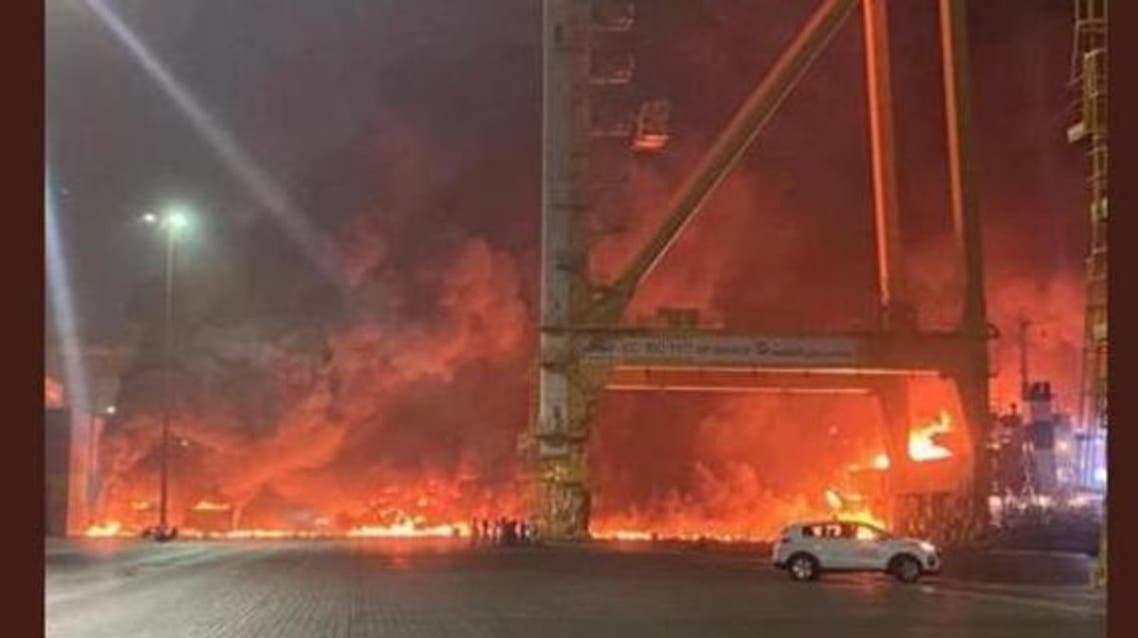
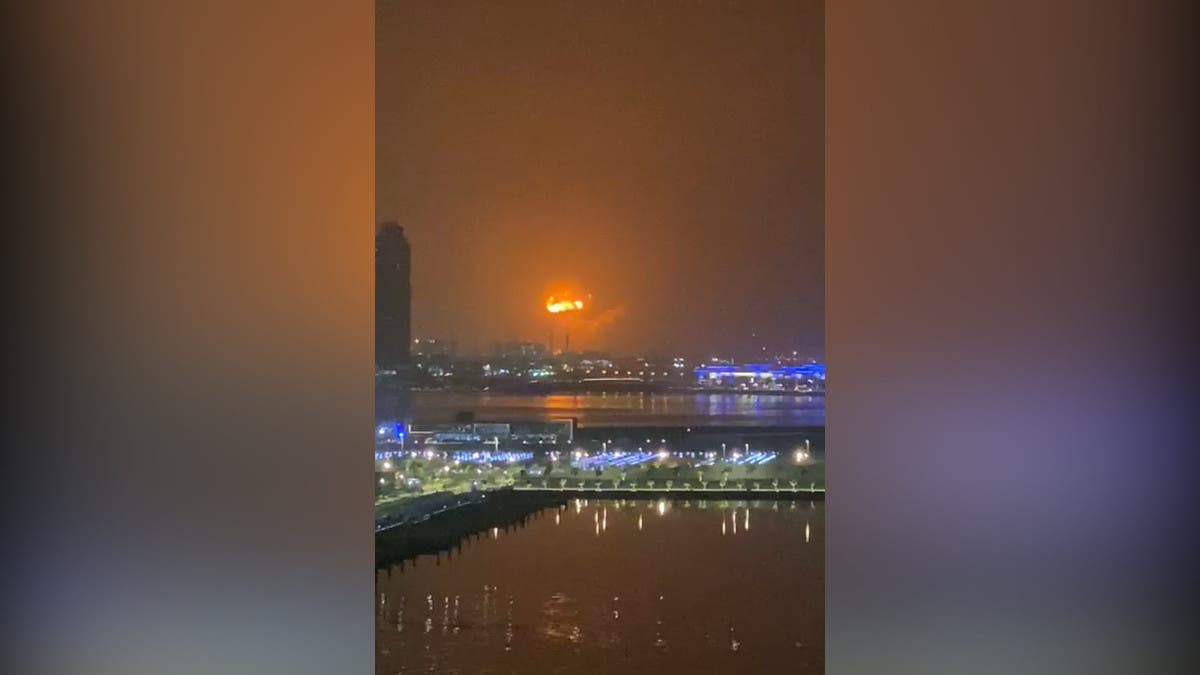
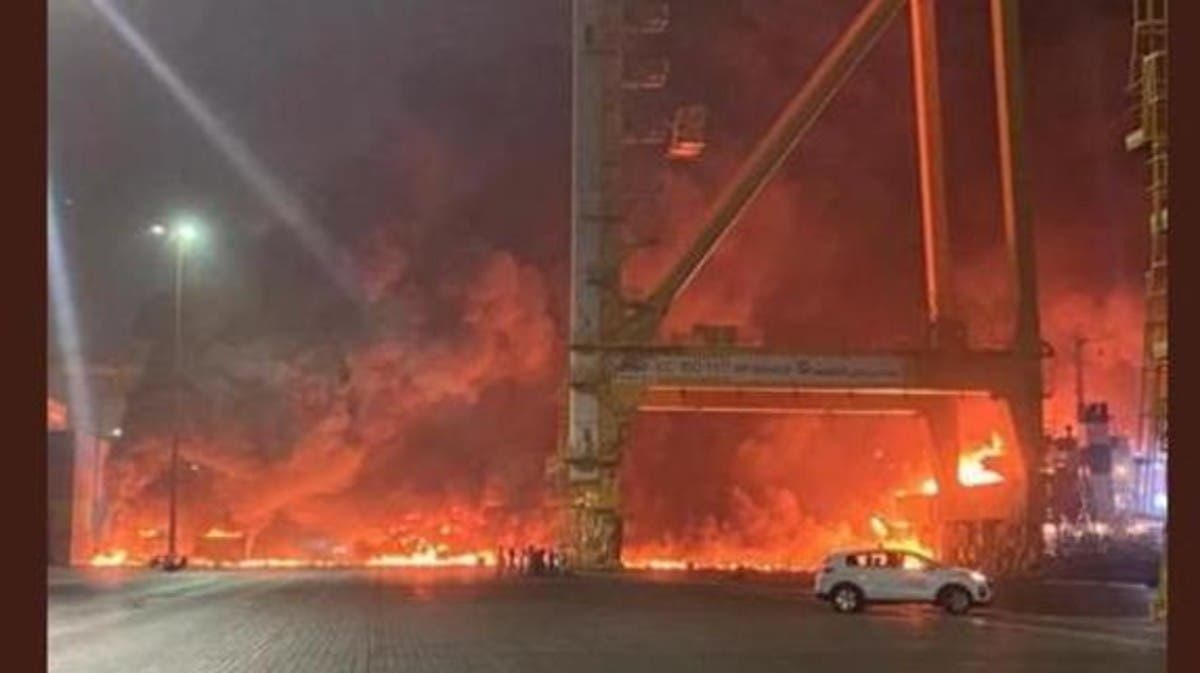
Fire crews battled an inferno on a ship anchored at Dubai’s Jebel Ali Port in the early hours Thursday after an explosion onboard the container vessel that had flammable materials. (Photo credit: Twitter)

Jennifer Bell, Al Arabiya English
Published: 08 July ,2021: 

Fire crews battled an inferno on a ship anchored at Dubai’s Jebel Ali Port in the early hours Thursday after an explosion onboard the container vessel that had flammable materials, marking one of the biggest explosions reported in the United Arab Emirates in years.

A Dubai Government official told Al Arabiya that the fire – which happened just before midnight on Wednesday - was due to a natural accident and the blaze was brought under control hours later, with all crew members safely evacuated.

The explosion is one of several blasts that have been reported in the Gulf country in recent years.


Here are some of the biggest incidents:


September 2020: Three people died, and several others were injured after a gas explosion in an Abu Dhabi building. An incorrectly installed gas canister blew up on Sheikh Rashid bin Saeed Street – also known as Airport Road – in a blast which destroyed a KFC, a neighboring Hardee’s and other shops nearby.

July 2020: Two restaurants in Al Qusais, in Dubai, after a powerful blast caused by a gas explosion.

June 2016: One person was injured in a Dubai restaurant explosion when a gas pipeline burst at an eatery in Karama.

March 2016: Fifteen people were injured after a suspected gas explosion ripped through a building in Abu Dhabi’s Al Khalidiya neighborhood, which left buildings and ten vehicles damaged.

October 2015: In another restaurant explosion, a Turkish eatery in Dubai - the Bosphorus Restaurant in Umm Suqeim - was destroyed after a suspected gas leak caused a massive explosion. No injuries were reported.

July 2015: An Emirati family escaped unharmed after a house in Fujairah caught fire following a gas cylinder explosion.

November 2014: Two men were injured in an explosion at a restaurant on Red Island in Ras Al Khaimah. Investigations revealed that the blast took place because of a leak in an LPG cylinder at the eatery.

June 2014: A Pakistani worker was killed and other one sustained severe injuries after a gas cylinder exploded inside their room in a labor accommodation in Al Sajjah area in Sharjah.

June 2014: Two Pakistanis received serious burn injuries in a gas explosion at a jewelry shop in Al Maraijah area in Sharjah. A third man received minor injuries.

October 2013: Nine people were injured as result of an explosion which occurred in a laundry shop in the Raffa area in Dubai.

May 2012: A fire broke out in an apartment in the Swan area of Ajman on Sunday night after a gas cylinder exploded. The residents were abroad.

March 2008: A massive explosion at an illegal fireworks warehouse in the Al Quoz industrial area of Dubai sparked a huge fire, with black smoke stretching for miles across the city. The explosion left two people dead and led to the evacuation of nearby schools. At the time General Saif Al Shafar, the undersecretary of the Ministry of Interior at the time, described the incident as the biggest fire in the UAE’s history.


Also Read

REPORTER'S NOTEBOOK
The dark, dangerous side of Dutch tolerance


The attempted murder of the crime reporter Peter R. de Vries is the latest sign of the growing reach of drug gangs.


Bystanders laying flowers and candles in support of journalist Peter R. de Vries in Amsterdam | Koen Van Weel/ANP/AFP via Getty Images


BY BEN COATES
POLITICO EU
July 7, 2021 


GOUDA, Netherlands — For a journalist to be gunned down in any city would be a shocking event. But in Amsterdam, famed as the most liberal city in the world, it feels like an earthquake.

Since Tuesday evening, when the famous crime reporter Peter R. de Vries was shot in the head in a busy street, Dutch media and politicians have talked of little else. This is, after all, a country where crime rates are low, prisons are being closed because there are not enough prisoners to fill them and the prime minister usually has no bodyguards and cycles around on his own. Things like this aren’t supposed to happen here.


In some ways, though, the shooting feels grimly inevitable. The Netherlands is rightly famous for its habits of tolerance and compromise — but recently there’s been growing bitterness in the public sphere, including an increasing number of threats and assaults against journalists and media outlets.

Last year, the state broadcaster NOS announced it was removing its logo from its roaming broadcast vans because “almost daily, journalists and technicians on the road to report are confronted with verbal abuse, garbage is thrown, vans are blocked [and] people bang on their sides or urinate on them.”

“It has all changed so quickly in a short time,” the NOS chief news editor said.

As in some other countries, it’s also become routine for leading politicians to denounce the press on a regular basis. Last month, for instance, the far-right politician and rabble-rouser Geert Wilders tweeted that “Journalists are — with exceptions — just scum of the ledge,” to which his fellow parliamentarian Thierry Baudet promptly agreed: “It is so.”

There’s clearly a huge difference between scorning journalists like this and shooting them, and many of those who usually enjoy taunting the press have been quick to condemn this week’s attack. But it’s also clear that the Dutch media climate is increasingly fraught: According to one government minister, reported threats and acts of aggression against journalists roughly trebled between 2019 and 2020 alone.

A couple of years ago, someone even fired an anti-tank rocket at the Amsterdam headquarters of a crime magazine. Against that backdrop, incidents like this week’s shooting feel less surprising than they should.


At the time of writing, De Vries is fighting for his life and police have arrested several suspects, but much else about the case remains unclear. However, it’s widely assumed that De Vries was attacked not simply for being a journalist, but because of his role as a confidant of a key witness in a major drug gang trial — one of a series of high-profile incidents which have exposed some other dark elements of Dutch society.

The Netherlands has been known for its unusually tolerant approach to drugs for years. Under a policy known as gedoogbeleid, marijuana is technically illegal here, but its sale and consumption are widely tolerated by authorities, including in the famous Amsterdam “coffee shops” where people consume a lot more than just coffee.

For a long time, the “ban it but tolerate it” policy seemed like a masterful bit of Dutch difference-splitting: The police were free to focus on more serious problems, and there was little evidence marijuana use harmed wider society.

The stereotypical coffee shop in Amsterdam or elsewhere looked less like a seedy drug den and more like a friendly neighborhood establishment, run by a cheerfully rumpled proprietor who’d been sitting there for decades.

In recent years, however, the Dutch drug trade has been transformed. The oddities of the gedoogbeleid mean that while soft drug use is tolerated, supplying larger quantities remains illegal. This means that the main source of large quantities of marijuana is, by definition, criminal organizations.

As demand for drugs in Amsterdam has soared due to tourism, many of the rumpled old coffee shop owners have been forced out, and professional criminal gangs have moved in, running supply networks that are headed by rich foreign masterminds and stretch across Europe.

Trade in cocaine, ecstasy and other drugs has boomed, and there have been widespread reports of new shops and bars being opened purely to launder drug money, as part of what the Telegraaf newspaper called “a golden age for the Amsterdam drug criminals.”

In 2019, a report commissioned by Amsterdam authorities warned that the city had “given free rein … to a motley crew of drugs criminals, a ring of hustlers and parasites, middle-men and extortionists, of dubious notaries and real estate agents.”

“We definitely have the characteristics of a narco-state,” the chairman of a Dutch police union told the BBC.

Faced with such challenges, the authorities in Amsterdam and elsewhere have made repeated efforts to clamp down, including trying to restrict the sale of marijuana to foreign tourists. The government itself has even tried to muscle in on the drug trade, licensing a few legal marijuana growers to keep the coffee shops supplied.

However, while some dodgy shops have closed, its effect on the bigger problems seems limited, and there have been violent gangland turf wars. In 2018, Amsterdam’s police chief Pieter-Jaap Aalbersberg gave a sensational television interview in which he complained it was almost impossible to tackle minor crimes because his force was “dealing with assassinations for 60 to 70 percent [of the time], and for the rest, mainly with radicalization and terrorism investigations.”

That may have been an exaggeration, but a visitor arriving in the Netherlands bearing cheerful clichés about laid-back liberals and endless cycle paths might still be shocked to open a newspaper, only to read how often hand grenades are left lying in doorways as threats from one gang to another. According to RTL news, in one four-month spell in 2019 alone, there were 23 incidents involving hand grenades being left at homes or workplaces, many of them in Amsterdam.

In some circles, there’s a tendency to dismiss such incidents as just “criminals hurting criminals” — and to assume that organized crime is nothing for law-abiding people to worry about. But that odd cordon sanitaire has also begun to fray lately, and violent gang disputes have spilled over to affect reporters and the public too.

In 2016, the crime blogger Martin Kok was shot dead after reporting on several controversial cases. Three years later, Derk Wiersum, a 44-year-old father of two, working as a lawyer in the same drug trial which Peter de Vries was involved in, was shot dead in front of his wife in a suburban Amsterdam street. Two months after that, another lawyer narrowly survived a shooting while walking his dog near the German border. And now De Vries himself, a Dutch celebrity known for his work exposing drug dealers, kidnappers and others, has been attacked in broad daylight.

Individually, these events would be shocking enough, but together they feel like something worse: a fresh confirmation that there are real threats to the freedoms we Dutch hold dear. On Wednesday, King Willem-Alexander denounced the latest shooting as an assault on a cornerstone of the rechtsstaat — using a hard-to-translate Dutch phrase referring to the constellation of institutions and individuals that underpin the rule of law.

It’s important to emphasize that, overall, the Netherlands remains a remarkably successful and peaceful society. Around where I live, to the south of Amsterdam, you’re still more likely to run into a dairy farmer wearing clogs than a vicious drug lord.

But it’s also clear that although Dutch tolerance brings many delights, it also has a seamy side. Underneath the country’s pretty façade there’s a dark undercurrent, which may be getting stronger.

Ben Coates is the author of the books “Why the Dutch are Different: A Journey into the Hidden Heart of the Netherlands” (Nicholas Brealey Publishing, 2015) and “The Rhine: Following Europe’s Greatest River from Amsterdam to the Alps” (Nicholas Brealey Publishing, 2018).
NGO Global Witness accused of negligence after murder of Afghan informant

Charity orders external review into security practices.


Illustration by Simon Bridgland for POLITICO

BY MATEI ROSCA
POLITICO
July 8, 2021 

LONDON — Global Witness, the high-profile investigative NGO, stands accused of failing to protect people who risk their lives to help expose injustice and corruption, following the murder of one of its sources in Afghanistan.

The source was kidnapped and killed by militants linked to the Islamic State in Afghanistan after his identity was compromised by the charity, which has built an international reputation for holding governments and corporations to account for more than 25 years.

The killing demonstrates the dangers for those who provide information to international organizations in volatile parts of the world. But multiple former employees and associates of Global Witness say that in this case, the charity did not take those risks seriously enough, leaving the source vulnerable to intimidation and deadly violence.


Following the Afghanistan case — which occurred in August 2017, but has not been reported previously — the charity pulled out of the country in 2018 after paying at least $10,000 to the victim’s family to help them relocate, according to a former employee. Global Witness confirmed a payoff had been made but would not specify the amount.

“It is a matter of enormous regret and deep sadness to us that any harm should ever come to one of our sources, simply because they had the courage to speak to us. Our thoughts remain with the family and friends of the man who was killed,” Global Witness communications director Amy Richards said.

“Following the killing, we conducted a thorough review to understand the events that had led up to this and learn lessons from what had happened,” Richards said. “Changes to our processes were made in the weeks and months following this brutal killing, and we are again reviewing the procedures and training programs in place to ensure we are doing all we can to keep sources, partners and our staff secure.”

But there are indications that the charity was not transparent about the incident. The organization informed staff about the case only after POLITICO began asking about it.

A 76-page report by Global Witness on its Afghanistan investigation into the exploitation of talc mines by the Islamic State group made no mention of the killing. A dedication on the inside of the front cover reads: “With sincere thanks to all those whose help made this report possible.”

In June this year, following inquiries by POLITICO, Global Witness opened a tender for a security “partner” to review its source security policies and make recommendations for improvement.

The review “will look across our new strategic campaigning priorities and make recommendations on how we best work with partners, sources and information networks, as well as set out any additional training requirements for our staff,” according to Richards.
Secret information

Founded in 1994, Global Witness is an influential international charity specializing in investigating environmental crime, human rights abuse and corruption. With more than 100 staff, and offices in London, Washington and Brussels, it has made a name for itself as a swashbuckling NGO that goes where others cannot, to blow the lid off conspiracies in some of the world’s most violent and corrupt countries. Its reports gather secret information from anonymous sources, covert filming, satellites and drone footage.

The charity has links to British politics, particularly the Labour Party. One of the party’s former MEPs, Arlene McCarthy, is on its Advisory Council. Richards, the communications director, is a former Labour political adviser. The former campaign director on the now-disbanded Afghanistan team, Nick Donovan, is a veteran Labour activist who ran for the party’s National Executive Committee in 2017 while employed at Global Witness.

In June, Alok Sharma, the COP26 climate conference president and Conservative Cabinet minister, delivered the keynote speech at the charity’s Time for a Climate Revolution event.

Richards said, “Global Witness has no ties to any political party.”

The charity says it is careful to protect people on the ground who help it to gather intelligence. On its website (until the page was removed in June), Global Witness said that many of its reports “start with tip-offs from anonymous sources, who take risks to share information with us. We are always vigilant in protecting their identities to keep them safe.”


But interviews with three ex-employees and contractors, as well as two of the charity’s former sources, paint a different picture.

Global Witness had a burgeoning Afghanistan bureau in 2017. It regularly published reports of natural-resources exploitation and pillaging by ruthless groups — some of them linked to Islamist extremists. But a former employee said there was little oversight of the charity’s operations in the country or the precautions staff took.

The charity habitually failed to observe established procedures around working with confidential sources in Afghanistan, according to the former employee, who wished to remain anonymous, claiming one staff member was known as “Captain Chaos” among colleagues.
Covert meeting

The death of Global Witness’ source at the hands of the extremists happened after the charity arranged a meeting with the man to gather information, according to two ex-employees. Instead of holding that meeting alone, a second Global Witness source was also present. The two sources did not have prior knowledge of each other. The second person later told the local Islamic State faction what the first source had said to Global Witness about the talc-mining business, prompting the group to exact deadly revenge, according to one of the ex-employees.

POLITICO attempted to contact the individual at Global Witness involved in the source meeting via email, phone calls and text messages, but did not receive a response. The person left the NGO after the killing. While the charity accepts that it was responsible for bringing the two people together, it disputes the timeline of events, although it declined to explain what happened on the record.

Donovan, the former campaign director of the charity’s Afghanistan team, initially declined to comment, citing source confidentiality, and later did not respond to multiple requests for comment.

One of the former employees said they found out about the killing “in the most casual way” from colleagues at Global Witness.

“I was shocked and I became obsessed with source protection after that. I brought it up many times with superiors but they did nothing,” the person said, referring both to the killing and the general practices around source protection at the charity.

A former contractor with Global Witness said that she had raised concerns about the charity’s safety procedures regarding sources and local freelancers. She also claims management did nothing about it.

In a previous incident, the former contractor said that a confidential informant and his family had to be moved out of Liberia, West Africa, on short notice out of concern for his safety after he took part in the charity’s work on links between Charles Taylor’s regime and the timber industry in 2003.

Richards, the Global Witness communications director, said it was correct that the organization paid to have a source moved out of Liberia but denied this was linked to the person’s work with the charity. It was “instead linked to campaigning by the organisation the person headed up, compounded by the ongoing war in the country, widely recognised as one of the most violent of the 21st century,” she said in an email.
Source protection

The former contractor says the organization did not sufficiently consider the risks faced by local informants. “We didn’t give as much thought as we should have to source protection or what it meant for local people to be associated with Global Witness after the investigations came out,” said the former contractor, requesting anonymity because of a nondisclosure agreement signed with the charity.

“There were a number of occasions where GW [Global Witness] had to pay to get local associates out of the country or region before the release of a big report, so they recognized that there is a risk for local people. But attention was much more focused on avoiding getting sued for libel and promoting the Global Witness brand than on properly protecting those they worked with in high-risk countries,” the ex-contractor said.

“GW employees stay in posh hotels with iron gates and security guards when they travel to high-risk foreign countries, but it’s a different story for people from those places who do important work for GW.”

Global Witness has been reluctant to speak openly about the Afghanistan incident. When POLITICO made inquiries in January, a spokesperson initially said the organization was not aware of the killing.

But in internal emails from early 2020 seen by POLITICO, chief executive Mike Davis said the Afghanistan “incident is a very sensitive one with potential ramifications for people in-country and some of those Global Witness has worked with over the years if we don’t handle it very carefully. For that reason, we took a view some time back that we’d share some of the main lessons with incoming campaign leaders who are going to be responsible for comparable investigative work at Global Witness. We aren’t in a position to share more widely, however.”

Staff were only informed about the case during a call on February 2, 2021, and donors were also told around that time. Richards said the charity’s initial silence on the matter stemmed from a desire to avoid attacks from the murderers directed at Global Witness sources and their families in Afghanistan.

Open Society Foundations, one of Global Witness’ funders, said the charity had been keeping it “informed about this horrific incident.”

“We welcome GW’s decision to open an independent review into what happened, and would expect them to use its findings to further strengthen their already robust security and operational protocols,” said a spokesman for the Open Society Foundations.
CRIMINAL CAPITALI$M
EU fines German car cartel €875M over clean emissions technology

Daimler, BMW, Volkswagen, Audi and Porsche colluded to avoid using technology’s full potential, Vestager says.


European Executive Vice-President Margrethe Vestager | Pool photo by Olivier Hoslet/AFP via Getty Images


BY SIMON VAN DORPE AND JOSHUA POSANER
July 8, 2021 

EU Executive Vice President Margrethe Vestager today slapped German carmakers with an €875 million fine for conspiring to limit the development of clean emissions technology.

Between 2009 and 2014, BMW, VW (Volkswagen, Audi and Porsche) and Daimler used so-called "circle of five" technical meetings to agree to hold back on technological innovations that could reduce harmful nitrogen oxide gases of diesel cars, Vestager said in a statement.

VW will need to pay the bulk of the penalty, €502 million, despite being granted a 45 percent reduction for having cooperated with the investigators. BMW is fined the remaining €373 million. Daimler got total immunity as it was the first participant in the cartel to denounce its existence.

“The five car manufacturers Daimler, BMW, Volkswagen, Audi and Porsche possessed the technology to reduce harmful emissions ... but they avoided to compete on using this technology's full potential to clean better than what is required by law," Vestager said in a statement.

The decision comes just before the European Commission will announce an important batch of legislative proposals to advance the EU Green Deal.

While Vestager’s focus as a competition commissioner is to ensure fair competition between companies, the fine for Germany’s powerful car makers is a strong message to industry that she will not hesitate to use her powers to pursue green objectives.

"Competition and innovation on managing car pollution are essential for Europe to meet our ambitious Green Deal objectives," Vestager said, adding that "this decision shows that we will not hesitate to take action against all forms of cartel conduct putting in jeopardy this goal.”

Cartels usually conspire to fix prices, so a cartel to delay the introduction of green technology is not a very common case. But the EU treaties clearly say that agreements limiting “technical development” restrict competition.

The Commission decided not to pursue some of the original charges against the companies, according to which they coordinated “to avoid, or at least to delay” the introduction of a new type of filter in petrol cars. Brussels said the "evidence was insufficient" to prove this part of its case.


BMW noted that the Commission "dropped most of its charges of antitrust violations" in the case. "With the withdrawal of most of the original allegations, the Board of Management of BMW AG has agreed to a settlement proposed by the European Commission that will bring these proceedings to an end," the company said in a statement.

VW said it "will carefully review today's decision" and decide whether to appeal, according to a statement.


Volkswagen, BMW fined US$1 billion by EU for pollution cartel

Volkswagen AG and BMW AG agreed to pay 875 million (US$1 billion) in fines by the European Union for collusion that regulators said curbed the rollout of AdBlue emissions-cleaning technology.

VW must pay about 502 million euros and BMW will pay nearly 373 million euros, the European Commission said in an emailed statement on Thursday. The penalty for BMW is far below its initial provision of 1.4 billion euros. BMW did a U-turn in May in agreeing to settle the probe, after previously indicating it would fight the EU.

A settlement means companies agree to the EU’s charges in return for a lower fine and usually agree not to challenge the EU decision in court. Daimler AG avoided a fine for being the first to tell the EU about the cartel. All three companies could now face compensation lawsuits from customers.

The carmakers “possessed the technology to reduce harmful emissions beyond what was legally required under EU emission standards,” Margrethe Vestager, the EU’s antitrust chief, said in the statement. “But they avoided” competing “on using this technology’s full potential.”

Volkswagen preference shares fell 1.4 per cent at 11:36 a.m. in Frankfurt. BMW shares fell 1.3 per cent.

The fines come as German automakers start to emerge from a pandemic that slashed car sales. Vestager has previously showed little sympathy for a diesel-cheating scandal that the “car industry brought upon itself.”

The EU said the three carmakers struck a deal on AdBlue technology that adds urea to exhaust gases to reduce harmful nitrogen oxide emissions from diesel cars. The companies reached an agreement on AdBlue tank sizes and ranges and a “common understanding” on AdBlue consumption.

Swapping commercially sensitive information “removed the uncertainty about their future market conduct” and restricted competition for product features useful for customers. The EU said the conduct lasted from 2009 and 2014.

Volkswagen “cooperated fully” with regulators, it said in an email statement. The EU fines punish discussions “that were never implemented and customers were therefore never harmed,” it said.


‘Large Fines’

“The large fines imposed in this case underscore the need for more comprehensive practical guidance” on how companies can cooperate without risking a breach of antitrust law. Existing rules “no longer do justice to the complex challenges facing the automotive industry in particular in the area of necessary technical cooperations.”

Volkswagen will consider an appeal before a mid-September deadline, it said, adding that regulators in China, South Korea and Turkey are also examining potential AdBlue collusion.

BMW said the EU had dropped allegations of joint development on software to restrict AdBlue dosing and efforts to curb a particle filter for direct-injection petrol engine. That lead to the lower fine, according to a company statement. BMW said the EU notice stated there’s no indication of collusion on the use of defeat devices to manipulate exhaust gas tests.

The EU case is the latest regulatory scandal for an industry that’s frequently tested the patience of authorities with emissions issues. VW is still dealing with the fallout of the so-called dieselgate affair, which has cost the company as much as 32 billion euros

The cost of net zero is a small price to pay

Jordan O'Brien

Contributing Editor
Electrical Review
July 8, 2021


I’m not sure if any of you caught Rishi Sunak’s interview on GB News, but during the segment, Andrew Neil drilled the Chancellor of the Exchequer on how much it will cost the UK to achieve net zero. Unsurprisingly, Sunak wasn’t exactly forthcoming with an answer.

Neil continuously pressed Sunak claiming that the cost of net zero is colossal, which I don’t think anyone is under any illusion that it wouldn’t be, but just how colossal is it? Well, if you believe Good Energy, a renewable energy supplier, the bill will come to around £14 billion a year.

Good Energy claims that the UK will be able to achieve net zero by 2050 by leaning on renewable energy, with it estimating that it will cost £14 billion more a year to enable renewables to provide 98% of all electricity. Last year, renewables was responsible for just 27% of all electricity generated in the UK, meaning to get to 98% by 2050 will be quite a leap.

So, how do we get there? According to Good Energy, the UK will need a total of 210GW of solar power and 150GW of wind capacity, as well as 100GW of lithium-ion battery energy storage. That energy storage will be vital to deal with the intermittency of renewables.

Additionally, the report calls for people to become responsible for their own power generation needs, with half of all houses adopting rooftop solar panels, while over 80% of heating and 90% of transport needs to be electrified. This can all be funded by interest free loans from the Government, as well as a new-look Green Homes Grant.

But how much will this all cost in total? Well, Good Energy suggests that the annual cost of the total energy system will be approximately £126 billion. That’s a smidgen more than the current £117 billion it costs now, and more than worth it for the benefits that net zero will bring.

Let’s put that figure into perspective, £126 billion is £14 billion more each year. That’s less than the cost of Hinkley Point C, a single nuclear power plant. It’s less than the £350 million a week Vote Leave claimed that the UK paid to the European Union. It’s almost a tenth of the estimated final cost of HS2, while also being less than Crossrail.

So, £14 billion a year. Sounds like a lot, but if you ask me, it sounds like a small price to pay for the multitude of benefits that net zero brings.


Growing concern over SARS-CoV-2 Lambda variant

A new report from Chile – currently available on the medRxivpreprint server – reveals how mutations in the spike glycoprotein of the severe acute respiratory syndrome coronavirus 2 (SARS-CoV-2) Lambda variant can confer protection from neutralizing antibodies and increase viral infectivity rates, which means massive vaccination campaigns should be accompanied by strict genomic surveillance.

Variants of concern and variants of interest of SARS-CoV-​2 have been a distinctive feature of the coronavirus disease (COVID-19) pandemic during 2021, demonstrating the importance of viral sequencing in our epidemiological approach.

A variant of interest is “suspected” to be more infectious when compared to the initial strain, to escape the vaccine protection or result in more severe disease. Consequently, it can become a variant of interest if there is ample evidence that it actually has one or more of the aforementioned features.

A newly described SARS-CoV-2 lineage C.37 was recently designated as a variant of interest by the World Health Organization (WHO) on June 14th and denominated as the Lambda variant. Its presence was reported in more than 20 countries as of July 2021, and most sequences to date stem from South American countries – particularly for Chile, Argentina, Ecuador and Peru.

And albeit the Lambda variant is characterized by specific mutations in the SARS-CoV-2 spike glycoprotein, their exact impact of infectivity and potential escape to neutralizing antibodies are still unknown. The latter is particularly important in countries currently undergoing massive vaccination efforts.

Since one of such countries is Chile, a research group led by Dr. Mónica L. Acevedo from the University of Chile School Of Medicine aimed to appraise the impact of the Lambda variant on the neutralizing antibodies responses stemming from the inactivated virus vaccine CoronaVac (also known as the Sinovac COVID-19 vaccine).

An emphasis on neutralization assays

In this study, volunteers employed in two health care institutions in Santiago (Chile) received two doses of CoronaVac – each dose being administered 28 days apart (in accordance with the Chilean vaccination program). Patient samples were acquired between May and June 2021.

Pseudotyped virus neutralization assays were performed in order to study functional antibody responses against SARS-CoV-2 in laboratory conditions. The researchers calculated the percentage of neutralization for each dilution, as well as the infectious dose ID50, which is an estimated number of viral particles necessary to produce infection in 50% of individuals.

This study also pursued public data analysis by using available data on SARS-CoV-2 lineages from the Consorcio Genomas CoV2 site in Chile, and vaccination data published by the Chilean Ministry of Science, Technology, Knowledge and Innovation.


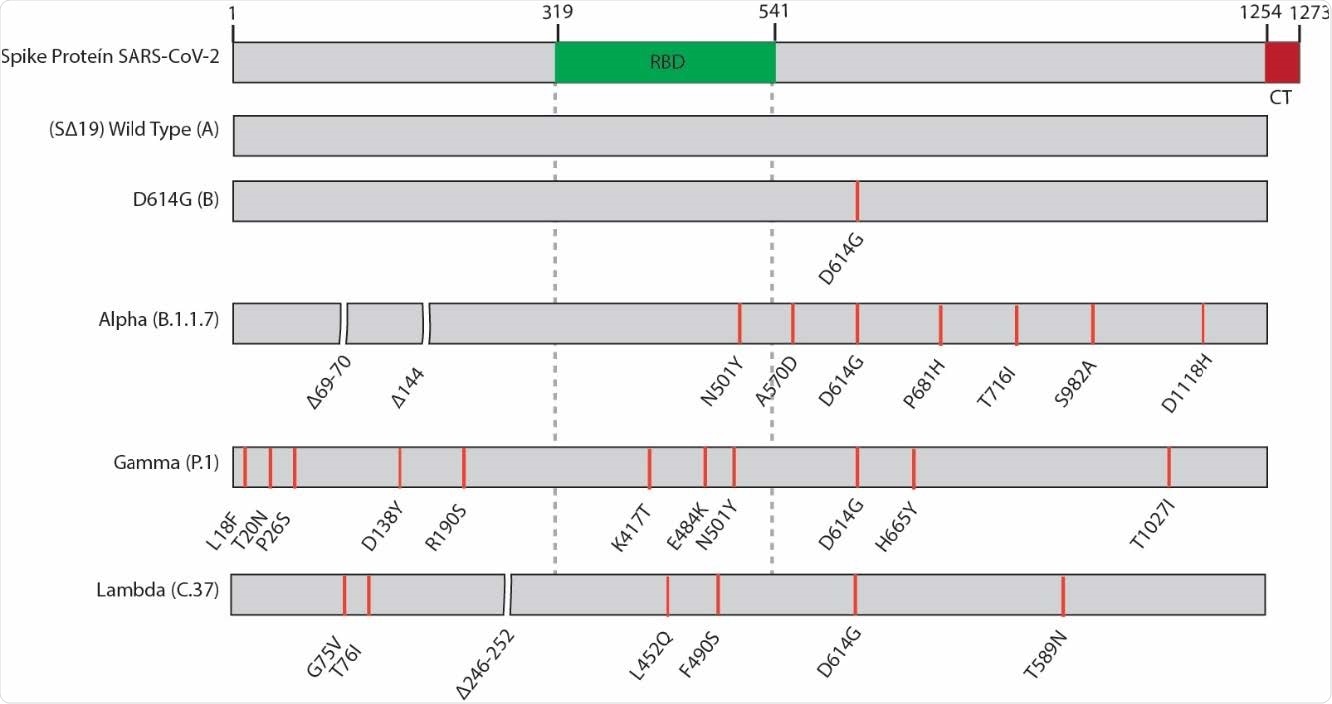
Schematic representation of the SARS-CoV-2 spike protein and the variants used in this study. Lineages are indicated in parenthesis. RBD, receptor-binding domain, CM; cytoplasmic tail.

Increased infectivity and escape from neutralization

The researchers observed an increased infectivity potential of the variant of interest mediated by the Lambda spike glycoprotein that was even higher in comparison to the D614G (lineage B) or the Alpha and Gamma variants.

More specifically, when compared to the wild-type virus (i.e., Wuhan-1 reference lineage A), the neutralization potential was diminished by 3.05-fold for the Lambda variant. For comparison purposes, this was 1.37-fold lower for the D614G, 2.03-fold lower for the Alpha variant and 2.33-fold lower for the Gamma variant.

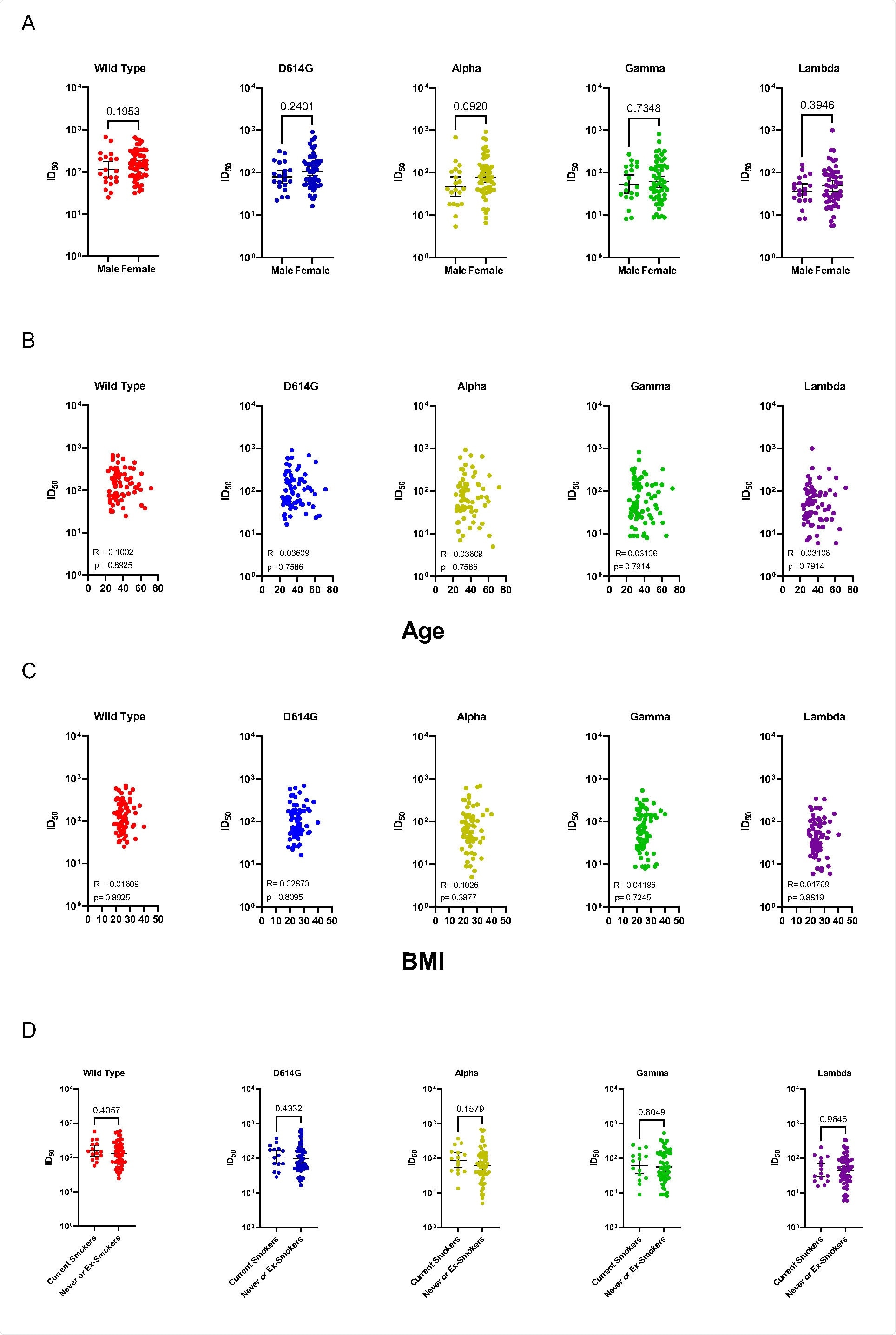
No correlation between age, sex, smoke status, or body mass index and neutralizing antibody titers has been observed in this study cohort, which means that this should be considered a relatively universal phenomenon.

Correlation of neutralizing antibody titers against SARS-CoV-2 variants and participants’ sex, age, BMI or smoke status. Stratification neutralizing antibody titres (NAbTs) against SARS-CoV-2 variants by sex (A), Age (B),
Correlation of neutralizing antibody titers against SARS-CoV-2 variants and participants’ sex, age, BMI or smoke status. Stratification neutralizing antibody titers (NAbTs) against SARS-CoV-2 variants by sex (A), Age (B),

The need for strict genomic surveillance

In a nutshell, these results indicate that mutations present in the spike glycoprotein of the Lambda variant of interest give rise to increased infectivity and enable the immune escape of this specific lineage from neutralizing antibodies elicited by CoronaVac.

“These data reinforce the idea that massive vaccination campaigns in countries with high SARS-CoV-2 circulation must be accompanied by strict genomic surveillance allowing the identification of new isolates carrying spike mutations and immunology studies aimed to determine the impact of these mutations in immune escape and vaccines breakthrough”, caution study authors in this medRxiv paper.

Such propensity of variants to escape from vaccine-induced immunity means there is still a need for next-generation vaccines that would provide broader neutralizing activity against present and potential future SARS-CoV-2 variants.

*Important Notice

medRxiv publishes preliminary scientific reports that are not peer-reviewed and, therefore, should not be regarded as conclusive, guide clinical practice/health-related behavior, or treated as established information.

Journal reference:
Dr. Tomislav Meštrović

Written by

Dr. Tomislav Meštrović

Dr. Tomislav Meštrović is a medical doctor (MD) with a Ph.D. in biomedical and health sciences, specialist in the field of clinical microbiology, and an Assistant Professor at Croatia's youngest university - University North. In addition to his interest in clinical, research and lecturing activities, his immense passion for medical writing and scientific communication goes back to his student days. He enjoys contributing back to the community. In his spare time, Tomislav is a movie buff and an avid traveler.

SHOULD BE GLOBAL FRONT PAGE NEWS
Covid 19 coronavirus: Scientists pour cold water on lab leak theory

7 Jul, 2021 

Security personnel gather near the entrance of the Wuhan Institute of Virology during a visit by the World Health Organization team in February. Photo / AP

By: Jamie Morton
Science Reporter, NZ Herald
jamie.morton@nzherald.co.nz@Jamienzherald

Top international scientists have again poured cold water on widespread claims the Covid-19 pandemic began in a Chinese laboratory.

At first dismissed, the "lab leak theory" has been given more credence after intense media coverage in the US over the past few months.

US President Joe Biden directed scientists to take a closer look, an open letter published in The Lancet called for more transparency, reports said a top Chinese official defected with sensitive information and a leaked US intelligence memo talked of several researchers at the Wuhan Institute of Virology (WIV) becoming ill shortly before the outbreak.

One theory was that Sars-CoV-2, the virus that causes Covid-19, had been deliberately engineered; another was that that scientists could simply have been growing a culture of the virus, and it escaped from there.

But, as a team of international scientists have set out in a review just published online, ahead of peer review, there's still scant evidence to support either possibility.

"All of the evidence points toward a natural, zoonotic origin," Otago University virologist and review co-author Dr Jemma Geoghegan told the Herald.


In particular, there were "striking" similarities to the early spread of the 2003 Sars epidemic to markets in Guangdong, near where the earliest-infected people lived and worked.


Already, the World Health Organisation's report on the Covid-19 pandemic's beginnings had identified that live animals like ferret-badgers and rabbits were being traded in the markets

The animals could provide an intermediate host for the virus to jump to humans – and the market was just the type of setting for a zoonosis event to happen.

By contrast, all lab escapes documented to date had almost exclusively involved viruses that were being studied specifically because of their known human infectivity.

The researchers said there was still no evidence that any of the early cases had any connection to the WIV, nor was there any evidence the institute had or worked on a progenitor of Sars-CoV-2 virus before the pandemic.

"The suspicion that Sars-CoV-2 might have a laboratory origin stems from the coincidence that it was first detected in a city that houses a major virological laboratory that studies coronaviruses," they said.

"Wuhan is the largest city in central China with multiple animal markets and is a major hub for travel and commerce, well connected to other areas within China and internationally.
The SARS-CoV-2 genome sequence happened to be 96 per cent identical to a coronavirus found in horseshoe bats. Photo / 123RF

"The link to Wuhan therefore more likely reflects the fact that pathogens often require heavily populated areas to become established."

Going deeper, the researchers addressed widespread speculation about the supposedly unusual molecular make-up of Sars-CoV-2.

In one of the earliest major studies into the virus, scientists analysed its genetic template for spike proteins, which it used to grab and penetrate the outer walls of human and animal cells.

More specifically, they focused on its receptor-binding domain (RBD) - a kind of grappling hook that grips on to host cells - and what's called the furin cleavage site, a molecular can opener that allows the virus to crack open and enter host cells.


This earliest research suggested the RBD portion of the spike proteins had evolved to effectively target a molecular feature on the outside of human cells called ACE2 - a receptor involved in regulating blood pressure.

The Sars-CoV-2 spike protein was so effective at binding the human cells, in fact, that the scientists concluded it was the result of natural selection, and not the product of genetic engineering.

Yet many theorists have surmised that the furin cleavage site was so unusual it must have been artificially inserted by scientists.

The review authors did note the cleavage site was absent from the closest known relatives of Sars-CoV-2, but they added that wasn't surprising, given the lineage leading to the virus had been poorly sampled.
"All of the evidence points toward a natural, zoonotic origin," Otago University virologist Dr Jemma Geoghegan says. Photo / Supplied

Further, they added, furin cleavage sites were common in other coronavirus spike proteins, including the last coronavirus to spark a global incident - MERS-CoV – and also feline alphacoronaviruses, most strains of mouse hepatitis virus, and endemic human betacoronaviruses.

A near identical nucleotide sequence to Sars-CoV-2's had also been found in the spike gene of the bat coronavirus HKU9-172 – and there were indications the evolution of both viruses had involved "recombination", or the natural exchange of genetic material.

"Hence, simple evolutionary mechanisms can readily explain the evolution of an out-of-frame insertion of a furin cleavage site in Sars-CoV-2," the researchers said.

They added there was "no logical reason" why an engineered virus would use such a poor furin cleavage site as Sars-CoV-2's.

That would have entailed an "unusual and needlessly complex" feat of genetic engineering, for which there were few precedents.

"Further, there is no evidence of prior research at the WIV involving the artificial insertion of complete furin cleavage sites into coronaviruses."

Although they said the possibility of a lab accident still couldn't be entirely dismissed, they concluded the explanation remained "highly unlikely, relative to the numerous and repeated human-animal contacts that occur routinely in the wildlife trade".

"Failure to comprehensively investigate the zoonotic origin through collaborative and carefully coordinated studies would leave the world vulnerable to future pandemics arising from the same human activities that have repeatedly put us on a collision course with novel viruses."


Sunak Hints U.K. Government May Stray From Pensions Triple Lock

(Bloomberg) -- Chancellor of the Exchequer Rishi Sunak hinted he may abandon the U.K. government’s “triple lock” pledge on pension rises, saying his decision will be guided by “fairness.”

The election manifesto promise means pensions rise every year by the highest of three measures: annual growth in average earnings, inflation, or 2.5%.

But the pandemic has led to volatile data, with earnings plunging last year because of the effect of millions of workers going on furlough, and rebounding strongly this year.

Average earnings rose by 5.6% in the three months to April 2021, and the Office for Budget Responsibility has said the risk is “high” that the data point feeding into the pensions decision will be as much as 8%.

Each percentage point increase in pensions adds about 900 million pounds ($1.2 billion) to annual spending. That puts Sunak in a quandary: whether to abandon an electoral promise and opt for a lower rise in the state pension, or whether to swallow a sizable and permanent increase to government spending

“I do recognize people’s concerns on this, I think they are completely legitimate and fair concerns to raise,” Sunak told the BBC on Thursday. “Our approach to these things will be driven by fairness. Fairness both to pensioners and for taxpayers.”

The OBR in March estimated the government would have to raise pensions by 4.6% next year because of surging wages. If that were to rise to 8% for average earnings in the three months through July, the data point used in the triple lock pledge, the extra 3.4 percentage points would increase annual spending on pensions by about 3 billion pounds.

In a round of broadcast interviews on Thursday morning, Sunak also:

  • Told Times Radio that he and Prime Minister Boris Johnson are “on exactly the same page” when it comes to managing public expenditure and that “we go through these things together”
  • Told LBC the 20 pound a week increase in Universal Credit “will end because it was always meant to be temporary”
  • Told BBC Radio’s ‘Today’ program that the England soccer team’s run to the final in this year’s European Championship “can have an impact” on a services-oriented economy such as the U.K.
  • Told multiple broadcasters that Health Secretary Sajid Javid is taking advice on the National Health Service Covid app because of concerns too many people are having to self-isolate after being alerted they’ve been near someone with the virus

©2021 Bloomberg L.P.