[Updated] South Asian left statements on the Pahalgam terrorist attack and current India-Pakistan tensions
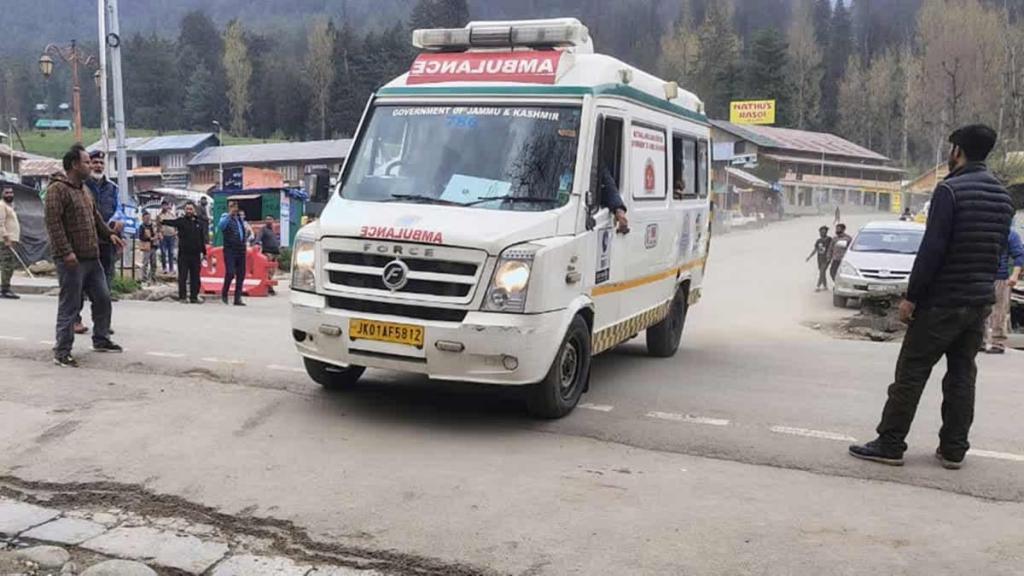
[Editor’s note: Activists from Communist Party of India (Marxist-Leninist Liberation) and Haqooq-e-Khalq Party (Pakistan) will be speaking at Ecosocialism 2025, September 5-7, Naarm/Melbourne, Australia. For more information on the conference visit ecosocialism.org.au.]
Joint statement by Indian and Pakistani peace activists: On and aftermath of Pahalgam tragedy
April 29, 2025
We the concerned neighbouring citizens of the subcontinent unequivocally condemn terrorism against the innocent tourists in the Pahalgam valley, and at any place on whatever pretext.
We demand a thorough and fair investigation into Pahalgam terrorism to uncover the terrorists and the perpetrators of crime in order to bring culprits to justice.
We express our deepest concern over the aggravation of ongoing dangerous tension between India and Pakistan and call for cessation of hostilities and war mongering.
We are of the considered view that fanning war hysteria and perpetuating ongoing tension into any kind of military conflict would be extremely destructive for our countries and peace-loving people.
We are of the view that the current tension needs to be diffused to initiate negotiations for a peaceful resolution of inter-state disputes.
We appeal to the governments of India and Pakistan to save the situation from going out of their hands. The logic of dialogue must prevail over the madness of the weapons of destruction.”
The leading peace activists who issued the above call for De-escalation of tension and peaceful resolution of inter-state conflicts include:
Pakistan: Imtiaz Alam, Secretary General SAFMA; Tariq Khsa, Former IG Police Punjab; Mujeeb ur Rehman Shami, Editor Pakistan; Hussain Naqi, Human Rights Commission of Pakistan (HRCP); Afrasian Jhatak, National Democratic Movement, KP; Rashid Rehman, Senior Editor
Saleema Hashmi, leading artist; Khawar Mumtaz, Woman Action Forum; Farooq Tariq, President Haqooq e Khalq Party, Gen Sec Kissan Rabita Committee; Dr Abdul Maalik, President National Party
Ayub Malik, NP Punjab; Sheema Kirmani, Tehreek I Niswan; Khawar Mumtaz. Woman Action Forum; Mohammed Tehseen, Convener Pakistan India Peoples Forum for Peace and Democracy; Syed Akhtar Ali Shah, Former IGP KP; Tasneem Rizvi, architect; Imtiaz ul Haq, MKP;
Beena Sarwar, peace activist, SAPAN; Khalid Farooqi, Editor Awaz (Jang Group); Dr Jabbar Khattak, Editor Awani Awaz Sindh; Senator Buledi, National Party (Baluchistan); Mahesh Kumar, Editor Daily Sindh; Kamran Chaudhary, peace activist; Allama Siddique Azhar, Anjuman Taraqi Pasand Musanafeen.
India: O. P. Shah, leading peace activist; Tarun Basu, peace activist; John Dayal, Senior journalist and peace activist; Satish Jacob, Gen Secretary Safma India; Kumar Ketkar, MP, leading editor; Satnam Singh Manak, Editor Ajeet, Hind-Pak Dosti Manch; Rumesh Yadev, Amritsar Lok Academy; Prof Anand Kumar, academic; Nizamuddin Bhat, peace activist; M Y Tarigami, political activist; Sunil wattal, peace activist; Anita Katyal, Senior Journalist, Safma India; Rita Manchanda, author, peace activist; Qurban Ali, peace activist; D Khajuria, peace activist; Rana Siddiqui Zaman, peace activist.
Communist Party of India (Marxist-Leninist) Liberation statement on the Pahalgam terrorist attack
Central Committee of CPI(ML) Liberation, New Delhi, April 22, 2025
The CPI(ML) Liberation strongly condemns the terrorist attack on April 22 in Baisaran, Pahalgam, where unarmed tourists were targeted, resulting in several deaths and injuries. We extend our deepest condolences to the victims and stand in solidarity with their families.
The Modi government's claim of normalisation of the situation in J & K and chest-thumping on national security stands exposed, as such attacks continue unabated in the region. There has been a disturbing rise in attacks on civilians — residents, migrant workers, and now tourists.
The BJP’s repeated proclamations of “complete normalcy” in Jammu & Kashmir ring hollow in the face of such continuing violence. While the ruling party has declared on every platform that all issues in the region have been resolved, the reality tells a different story. Jammu & Kashmir remains heavily militarized, and terror attacks persist under the watch of this regime. The Modi government’s strategy — suppressing democratic voices while indulging in aggressive posturing — has failed to deliver either peace or security.
We must reject any attempt to use this tragic incident as a pretext to stoke jingoistic and communal narratives. At this critical moment, it is essential for people across the country to stand united and push back the divisive forces seeking to exploit such tragedies for political gain.
Haqooq-e-Khalq Party (HKP, People’s Rights Party) statement on present India-Pakistan conflict
Haqooq-e-Khalq Party, April 26
HKP strongly condemns the attack in Pahalgam. We believe terrorism has no place in our society, our region, or anywhere in the world.
Such acts of violence only serve to deepen divisions and suffering among our peoples. We stand in solidarity with the victims and their families during this difficult time.
We believe India has acted in an unwarranted and belligerent way by suspending the Indus Water Treaty.
This unprecedented action violates a long-standing agreement that has survived previous conflicts and threatens the water security of millions of Pakistani citizens.
We view this as a dangerous escalation that contradicts international law and norms of peaceful coexistence between neighboring states.
We condemn continuation of atrocities and dictatorial measures against Kashmiris by Indian ruling class. We stand for demilitarization of Kashmir and the right of self-determination of Kashmiris on both sides.
War drums are not the solution to the challenges we face. We call upon progressive forces on both sides of the border to push for peace, security, and prosperity.
The people of South Asia deserve better than conflict and instability. Our shared future depends on dialogue, mutual respect, and cooperation rather than confrontation and hostility.
The Pahalgam terror attack in Jammu and Kashmir: Questions the Modi government must answer
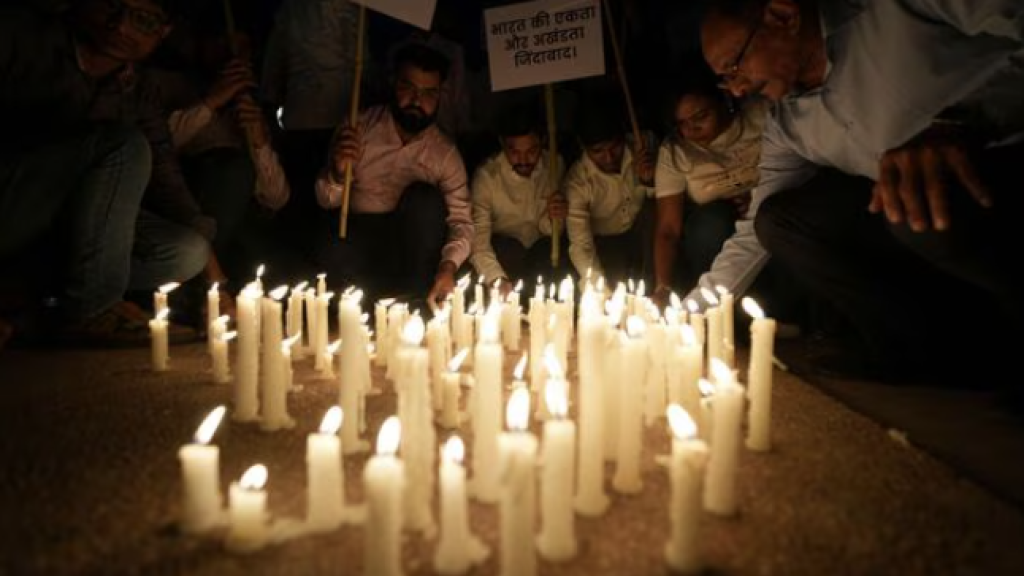
[Editor’s note: Communist Party of India (Marxist-Leninist) Liberation activist N Sai Balaji will be speaking at Ecosocialism 2025, September 5-7, Naarm/Melbourne, Australia. For more information on the conference visit ecosocialism.org.au.]
First published at CPI(ML) Liberation.
The heinous Pahalgam attack has once again brought us face to face with the brutality of terrorism. The brutal killing of as many as twenty-six tourists, including a tourist from Nepal and a local pony operator from Pahalgam has shocked the world. The perpetrators of this ghastly crime must be brought to justice. Accountability for the many lapses and omissions on multiple levels that enabled the perpetrators to kill at will and flee unobstructed after carrying out this cold-blooded terror attack, must be fixed.
When the United Progressive Alliance (UPA) government was in power, Narendra Modi as Chief Minister of Gujarat used to demand answers from former Prime Minister Manmohan Singh for every terror attack which took place in Jammu and Kashmir. The video of an eloquent Modi asking Singh to explain how terrorists could cross the border and kill people at will when the powers that be in Delhi have complete control over the country’s borders and over the flow of funds, information and communication, has been watched by millions over the last decade and more. The Pahalgam attack is the first instance of tourists having been targeted on this scale in the valley. The same questions are today all the more pertinent, yet the deafening silence of Modi as India’s prime minister seems to be mocking at the questions raised by Modi as Gujarat CM.
Jammu and Kashmir is today a Union Territory, which means that the law and order in this region is an exclusive responsibility of the Union Government. The unified central command dealing with the challenge of terrorism is headed not by the elected CM but by the Lieutenant Governor appointed by the Union Government. Just two weeks before the April 22 Pahalgam terror attack, Union Home Minister Amit Shah had visited the state to review the security situation and CM Omar Abdullah was kept out of that meeting. After the meeting Shah told the media how the Modi government had freed Kashmir from the scourge of terrorism and restored normalcy in the state. Today Shah, National Security Advisor Ajit Doval and Lieutenant-Governor Manoj Sinha should take primary responsibility for the Pahalgam tragedy and heads should roll. But abdication of responsibility and refusal of accountability remain the hallmark of the Modi regime.
There are now reports about the establishment having prior intelligence inputs about a possible terror attack. The fact that Modi’s scheduled visit to Jammu & Kashmir on 19 April was called off at the last moment only lends credence to such reports. Reports suggest that the perpetrators of the terror attack were around for quite a few days and had perfected their plans with due reconnaissance. This makes it all the more shocking and indefensible that some two thousand tourists were left in a state of utter vulnerability without an iota of police or military presence in an otherwise massively militarised state. Many victim families, security analysts and Kashmir watchers have flagged this crucial intelligence and security lapse but the government and dominant media are conspicuously silent about it.
The dominant media and the Sangh-BJP IT cell are instead busy demonising Kashmiris and the entire Muslim community over the Pahalgam terror attack. If the terrorists targeted tourists, and particularly so for their religious identity, local Kashmiri Muslims risked and even sacrificed their lives to ferry tourists to safety and rush the injured to hospitals. In the absence of any security and with no official help for no less than an hour and a half, it was the local people’s intervention which saved many lives and kept the death toll limited. People came out on the streets to condemn this horrific attack and this huge blow to tourism, a major base of Kashmir’s economy and many people’s livelihood, and there was a spontaneous shutdown across the state in protest. In the wake of the Pahalgam massacre, while airlines are busy fleecing the stranded tourists desperate to return home, Kashmiris have opened their hearts and homes to extend a warm helping hand. Yet Kashmiri Muslims are being vilified and the result of the toxic hate campaign of the Sangh brigade and the Godi Media can be seen across India in increased threats and violence against Kashmiri students, traders and labourers.
As with the Pulwama incident six years ago, the government is once again busy harvesting the shock and anger of the people for electoral gains. The PM cut short his visit to Saudi Arabia and cancelled his scheduled programme in Kanpur on 24 April not to visit Kashmir but to address a rally in Bihar where elections are due later this year. He also did not bother to attend the all-party meeting in Delhi to discuss the Pahalgam attack.
The decisions taken by India to suspend the Indus waters treaty, cancel visas granted to Pakistani citizens, downsize the High Commission strength and stop the Attari check point on the Indo-Pak border, and the retaliatory measures announced by Pakistan will curtail legal diplomatic ties and interaction between the two countries, intensify tensions between the two neighbours and put citizens of both countries to inconvenience in their legitimate activities, but are unlikely to put any real curb on terrorist activities. The focus is on creating a jingoistic climate to divert people’s attention from the Modi government’s many failures and whip up an Islamophobic hysteria. There is, needless to say, no attempt to address the pain of the people of Kashmir for whom the paradise of the valley has long been marred by mass killings, disappearances, and incarcerations, and who since 2019 have faced a further escalation of militarization and repression, suppression of their democratic aspirations and the loss of Constitutionally guaranteed rights.
The orchestrated loud clamour for revenge attacks and collective punishment of Kashmir has already put Kashmiri students and traders at grave risk in many parts of India. Reports of violent hate campaigns against Bengali-speaking Muslim workers are also coming in from Gujarat and Maharashtra. Within Kashmir, family homes of individual suspects and accused are being blown up in direct contravention of the recent Supreme Court ruling, and blanket mass arrests are yet again underway. The government which completely abdicated its responsibility to provide security to the people is now busy feeding the Islamophobic frenzy with spectacles of performative retribution.
Meanwhile, the voices of the families of the Pahalgam attack victims demanding answers and accountability from the Modi government are being deliberately silenced. The anger of Shital Kalathiya of Surat, who lost her banker husband Shailesh Kalathiya in Pahalgam, against the VIP-obsessed security culture which left tax-paying tourists at grave risk, reflects the pain of every Indian who lost their kin in a context of government indifference and callousness, whether in the COVID-19 pandemic or the Mahakumbh stampede or now in the Pahalgam terrorist attack. While tourists paid with their lives in Pahalgam for the total absence of security, there are now reports of Jharkhand BJP MP Nishikant Dubey, notorious for his irresponsible remarks against opposition leaders and even the Chief Justice of India, celebrating his 25th wedding anniversary in Gulmarg, Kashmir amid tight security arrangements just a few days before the Pahalgam terror attack. Meanwhile, the recent denial of responsibility for the attack by the Lashkar-e-Taiba offshoot The Resistance Front, which had ostensibly claimed responsibility earlier, only makes the whole incident even murkier.
Contrary to the BJP’s claims about 'solving’ the Kashmir question, the Modi government’s Kashmir policy has only deepened the crisis. In November 2016, demonetisation was sold as a sure antidote against terrorism in Kashmir. Pulwama shattered that myth in no time. The stripping of Jammu and Kashmir’s constitutional status, including its very statehood, on 5 August 2019 was advertised as another masterstroke. Pahalgam has now thoroughly punctured this propaganda. Tourists were encouraged to visit Kashmir as part of this propaganda, but now after the Pahalgam attack, the government tells us that the tourists in Baisaran valley did not have necessary police permission to visit the meadow.
It is this innate disrespect for the lives and rights of ordinary people which makes the Modi regime an unmitigated disaster cutting across communities and regions. From Manipur to Kashmir, and Maharashtra to Chhattisgarh, the Sangh’s power games are making India bleed and burn while the Adanis and Ambanis count their billions and the BJP and its allies celebrate. Pahalgam is the latest wake-up call for India in the 75th anniversary of the republic.
The people must stand united against the fascist forces’ despicable attempts to exploit the Pahalgam tragedy to sow further hatred and polarization. And as more questions arise daily about how the heinous attack could happen, we must insist on holding those in power accountable and not allow the truth to become another casualty. The looming threat of a war between two nuclear-powered neighbours must be defused and all efforts must be made by the forces of peace on both sides of India-Pakistan border to deescalate tension and strengthen bilateral and regional unity and cooperation in South Asia.

No comments:
Post a Comment